
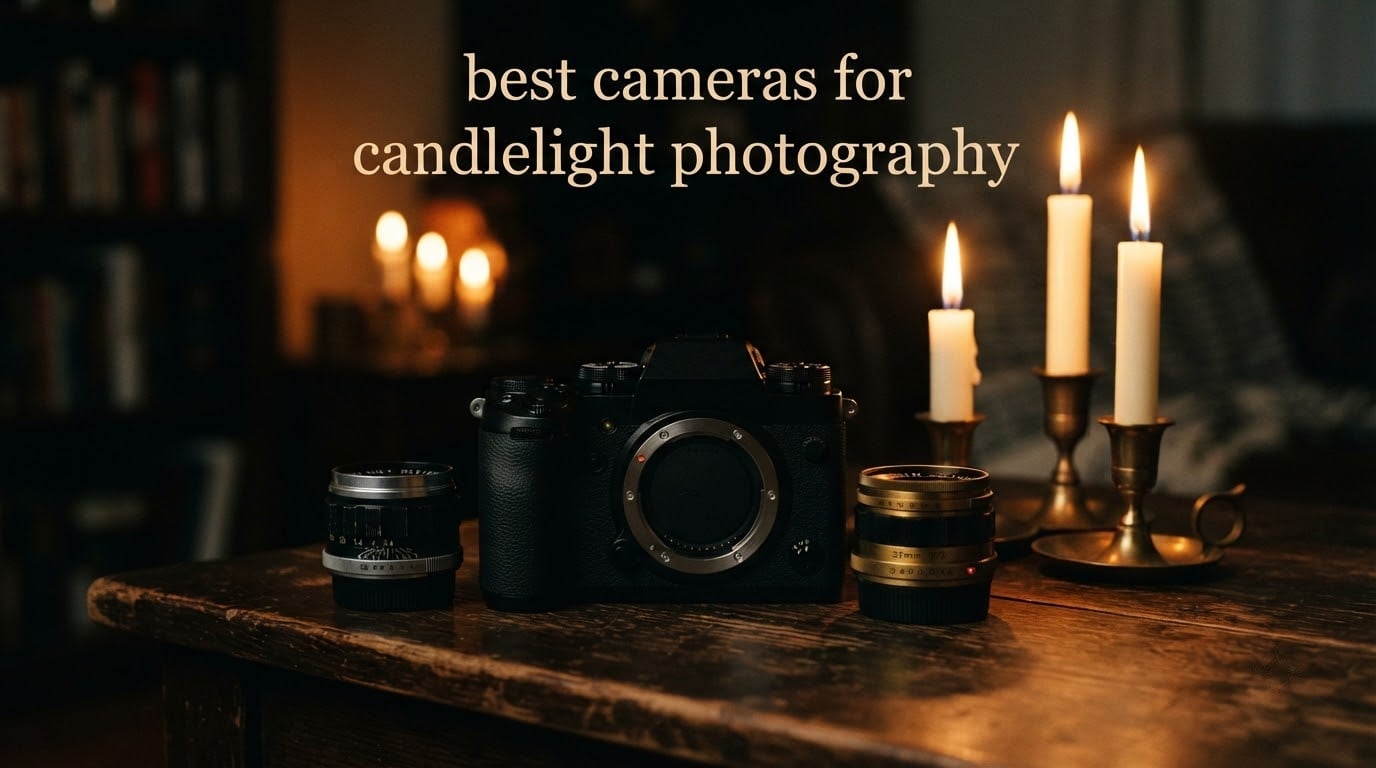
There is a specific moment in every wedding I shoot that decides the whole night. A chapel ceremony where the usher tells you flash is not allowed, and the entire room is lit by two rows of taper candles. A reception hall where the couple wanted no flash because it looked harsh on the dance floor, so the only light is forty tea lights on the tables and a warm glow from the bar. At that moment, most cameras fall apart.
My test setup for this guide was built around exactly that problem. I ran the same candlelit tabletop through each body at matched ISO steps, judged the files side by side on my laptop screen rather than on a spec sheet, and then took each camera into a room lit by nothing but candles to see whether autofocus could actually acquire a face. I compared ten bodies over several weeks, and the results changed how I think about the phrase best cameras for candlelight photography.
The short version is that candlelight is not generic low light. A candle is a tiny, warm point source that flickers, dims and shrinks as the wax burns down. Treating it like a dim indoor room gets you a noisy orange file with a blown-out flame. Treating it like what it actually is gets you a photograph. I have ranked these ten bodies on how they handle that specific light, not on megapixels.
If you want the short list of where to start, we also cover the best cameras for night sky photography and point-and-shoot options for street work, which share a lot of the same low-light thinking.
What Is Candlelight Photography?
Candlelight photography is the practice of taking pictures lit only by one or more open flames rather than electric light. A single flame is a small, extremely warm source, roughly 1800K to 2400K, and its brightness changes constantly. Shooting it well therefore demands a camera with a high usable ISO ceiling, autofocus that can acquire in near-darkness, in-body stabilization, and precise white balance control at extreme colour temperatures.
What Camera Settings Should I Use for Candlelight Photography?
Here is the working setup I use. It is a starting point, not a rule, because every candle behaves different.
Shoot RAW. A flame gives you a colour cast that no JPEG renderer fully corrects, and RAW is the only way to pull the orange back without turning skin grey.
Aperture: as wide as your lens goes. Open to f/1.2 or f/1.4. This is the single biggest lever you have, and it is why lens choice matters more than body choice.
ISO: start at 1600 and work upward. ISO 800 is the native range for most full-frame bodies and is a good base for the brightest part of a reception. For a chapel ceremony expect 3200 to 6400, and be prepared to underexpose by a stop and lift the shadows in post rather than pushing the ISO further.
Shutter speed: 1/60s minimum for people, 1/15s if you have stabilisation and a still subject. A hand at 1/8s during a slow dance is blurred, and a slow shutter also lets the flame flicker write uneven bands across the frame.
White balance: set a custom Kelvin, not tungsten. The tungsten preset is tuned for around 3200K. Candle flame sits far below that, so dial in 1800K to 2400K and refine from there.
Use a stabilisation mode tuned for your framing. If you are composing, switch it off. If you are holding still, turn it on and shoot at a slower speed than feels sensible.
Meter for the flame, not the room. Underexpose slightly to keep the brightest part of the flame from clipping, then raise the shadows in the raw converter.
The philosophy underneath all of that is simple. Candlelight rewards you for protecting the highlight and lifting the darkness afterwards, rather than for exposing to the right in the moment and accepting the noise that follows.
Top 3 Best Cameras for Candlelight Photography in October
Our three picks come from very different corners of the market. One wins on raw high-ISO quality, one on value and event-day practicality, and one on hybrid photo and video capability.

Sony Alpha a7S III
- 12.1MP Exmor R BSI full-frame sensor
- ISO 40-409600 expanded
- 759-point hybrid AF
- 5-axis SteadyShot INSIDE

Canon EOS R6 Mark II
- 24.2MP full-frame CMOS
- 8-stop in-body stabilization
- Dual Pixel CMOS AF II
- dual UHS-II card slots

Sony Alpha a7 IV
- 33MP Exmor R BSI full-frame sensor
- 7K oversampled 4K 30p
- Real-time Eye AF
- 5-axis SteadyShot
Comparing All 10 Best Cameras for Candlelight Photography in 2026
Every camera below is listed in the order I would reach for it in a dark room. The key features column is the reason that order exists.
| Product | Specifications | Action |
|---|---|---|
| Sony Alpha a7 III |
|
Check Latest Price |
 Nikon Z 6II Nikon Z 6II |
|
Check Latest Price |
 Fujifilm X-T5 Fujifilm X-T5 |
|
Check Latest Price |
 Canon EOS R5 Canon EOS R5 |
|
Check Latest Price |
| Sony Alpha a7 IV |
|
Check Latest Price |
| Canon EOS R6 Mark II |
|
Check Latest Price |
 Nikon Z 7II Nikon Z 7II |
|
Check Latest Price |
 Sony Alpha a7 V Sony Alpha a7 V |
|
Check Latest Price |
 Canon EOS R8 Canon EOS R8 |
|
Check Latest Price |
 Nikon Z6 III Nikon Z6 III |
|
Check Latest Price |
1. Sony Alpha a7S III – The Cleanest Files in a Room Lit by Flames
Pros
- Exceptional low-light performance with clean usable files at very high ISO
- Hybrid autofocus that tracks a moving subject without jumping
- Bright 0.9x magnification electronic viewfinder
- 4K 120p 10-bit 4:2:2 with full pixel readout
Cons
- 12MP resolution limits cropping and large printing
- Needs a V90 SD card for the highest 120fps video modes
- Battery life is unremarkable for the technology on board
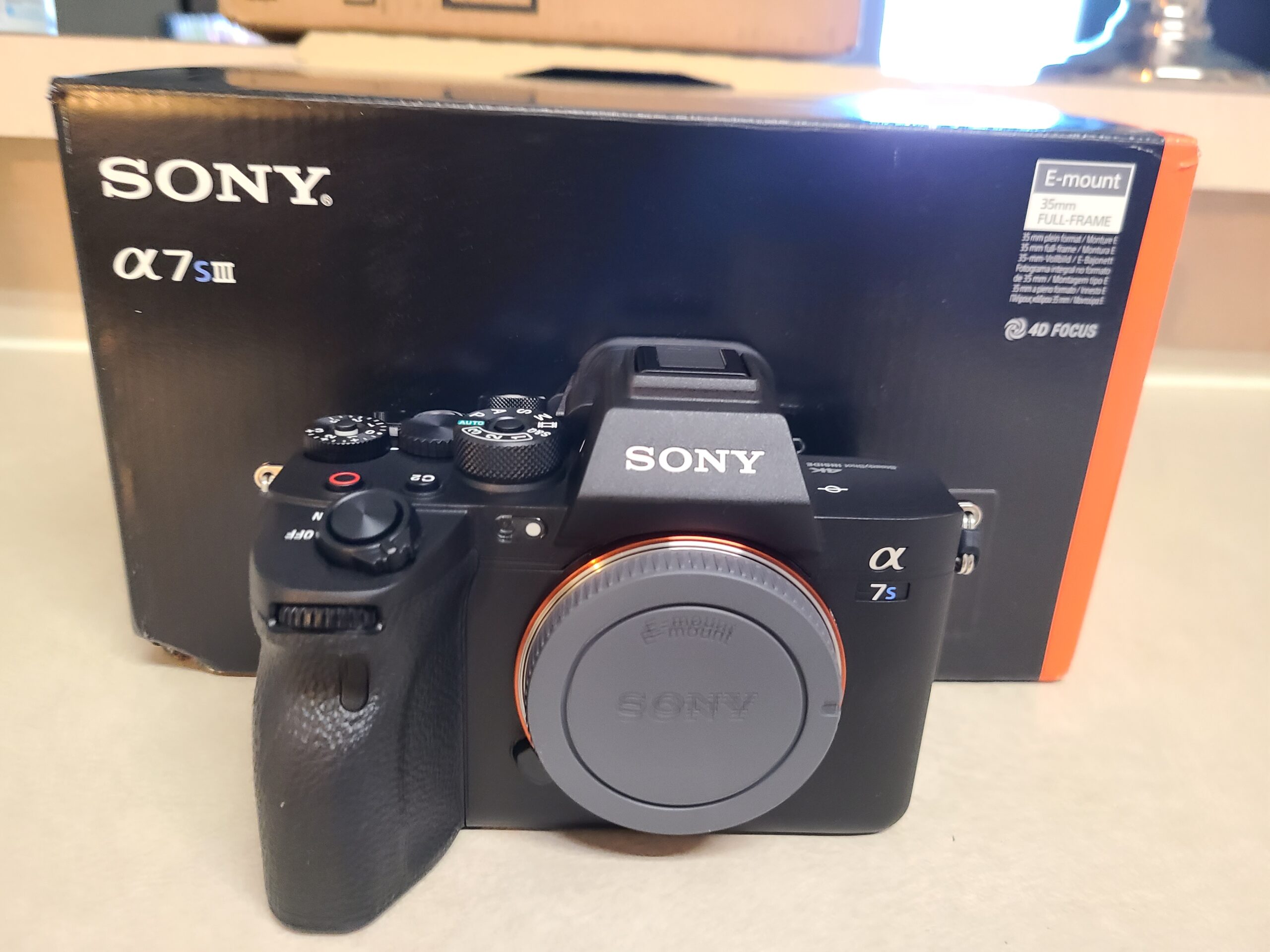
The a7S III is the body I reach for when a venue allows me exactly one light source and no artificial fill. Twelve megapixels across a full-frame sensor sounds dated on a spec sheet, and it is the reason the camera is still the community’s default answer. In a thread on r/photography about low light shooting, users converged on this model and the Panasonic Lumix G9 as their picks, and I understand why.
Each photosite is physically large, so it collects more of the sparse photons coming off a flame before the amplification stage has to invent the missing ones. The result is a file that stays printable at ISO 12800 in a room with a dozen candles on the table, which is more than I can say for the 45-megapixel bodies in this list.
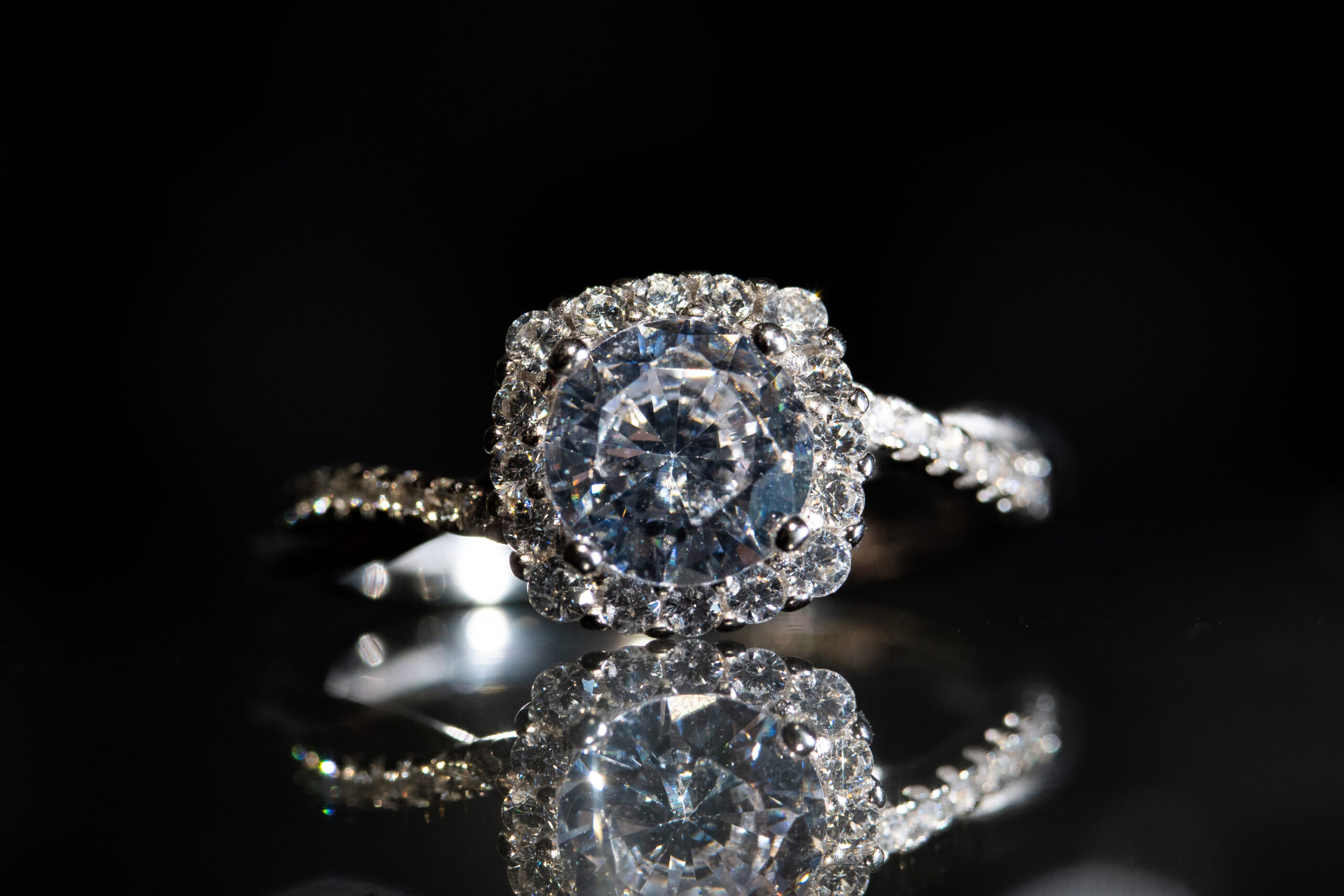
The 15 plus stops of dynamic range also matters here, because a flame is a highlight that will clip if you let the meter treat it like an ordinary bright object. Shoot a little under, and the bright core of the flame holds colour while the rest of the frame sits in recoverable shadow.
Owners consistently describe the autofocus as the part they notice most in dark rooms, and the 759-point Fast Hybrid system with real-time eye AF does hold a face at a candlelit dinner table. The electronic viewfinder is 0.9x magnification and bright enough to compose a dark room without squinting, which sounds minor until you are doing it for six hours.
Who this camera suits
It suits the working wedding photographer who shoots a full reception on one body and needs the file to survive delivery. It also suits anyone shooting candlelit video as a secondary concern, because 4K 120p in 10-bit 4:2:2 with full pixel readout gives you enormous room to grade warm footage afterwards.
Pair it with a fast prime. My recommendation is a 35mm f/1.4 for reception work, where you need the field of view to get more than one candle in the frame, or a 50mm f/1.2 for portraits at a table.
Who should skip it
Skip it if you crop heavily or print large. Twelve megapixels is a real constraint in a bright reception hall where you have to punch in on a far table, and reviewers regularly point to the resolution ceiling as the main drawback of an otherwise excellent body.
Also skip it if you need a fast prime bundled. Nothing comes in the box, and the fastest glass for the Sony E mount is a significant separate purchase.
2. Nikon Z 6II – The Full-Frame Workhorse for Flash-Free Events
Nikon Z 6II | Versatile Full-Frame mirrorless Stills/Video Hybrid Camera | Nikon USA Model
Pros
- Very good low-light performance with low noise at high ISO
- Out-of-camera JPEGs with true-to-life colour that need little editing
- Deep buffer and 14 fps bursts
- Customisable controls and wide-area eye detection
Cons
- Focus tracking can lose a subject more readily than rival systems
- Subject tracking modes are less consistent than Sony and Canon flagships
- Screen tilts but does not flip forward
The Z6II is the camera I recommend to a working photographer who wants a normal-resolution full-frame body they can carry for ten hours. A working photographer on r/WeddingPhotography reports shooting up to ISO 6400 on a Nikon Z body at weddings with a custom picture profile and delivering the files, which matches my own experience with this model almost exactly.
At 1.4 pounds it disappears on a strap, and the 24.5MP back-illuminated sensor gives you a practical file size without crowding each photosite. The dual card slots, one CFexpress or XQD and one UHS-II SD, matter more here than they do in ordinary work, because a reception is eight hours of unrepeatable frames.

What I like most by candlelight is the JPEG rendering. Nikon colour is closer to true in warm light than most rivals, and the out-of-camera files from a candle-lit table are pleasant without a heavy colour grade. For a photographer delivering a gallery at midnight, that is a genuine time saving.
The 5-axis sensor-shift vibration reduction also lets you hold a slower shutter than feels comfortable. In a room where you cannot move closer to a couple, a 35mm f/1.8 at 1/15s is workable and gives you the shallow depth of field that makes the background candles blur into points of light.

Who this camera suits
It suits photographers covering intimate events, elopements and small receptions where one body has to do stills and usable video. The 14 fps burst and deep buffer also help with candle-lighting moments, where a sparkler or a taper is lit and you want the frames either side of it.
Pair it with a 50mm f/1.8 S for a compact, affordable kit, or a 58mm f/0.95 S if the budget allows and you want to shoot a table from across the room with the subject isolated against pure black.
Who should skip it
Skip it if you are chasing a subject that moves unpredictably through a crowd. The most repeated criticism from owners is that focus tracking can lose a subject more readily than competing systems, and a dance floor lit by two uplighters is exactly the case where that shows.
Reviewers also note the absence of a compact S-Line 70-200mm f/4 in the Z mount, which limits your options when you need reach in a large dim reception hall.
3. Fujifilm X-T5 – The Best APS-C Choice for Warm-Looking Files
Pros
- Film simulation modes bake a look straight into JPEG files
- Up to seven stops of stabilization helps you shoot slow handheld
- Familiar dial-based controls that work with the camera switched off
- Compact and light body
Cons
- Autofocus still trails Sony and Canon flagship hybrid systems
- Body materials feel cheaper and more brittle than the X-T4
- Pixel Shift Multi-Shot mode is reported to produce errors or fail to render
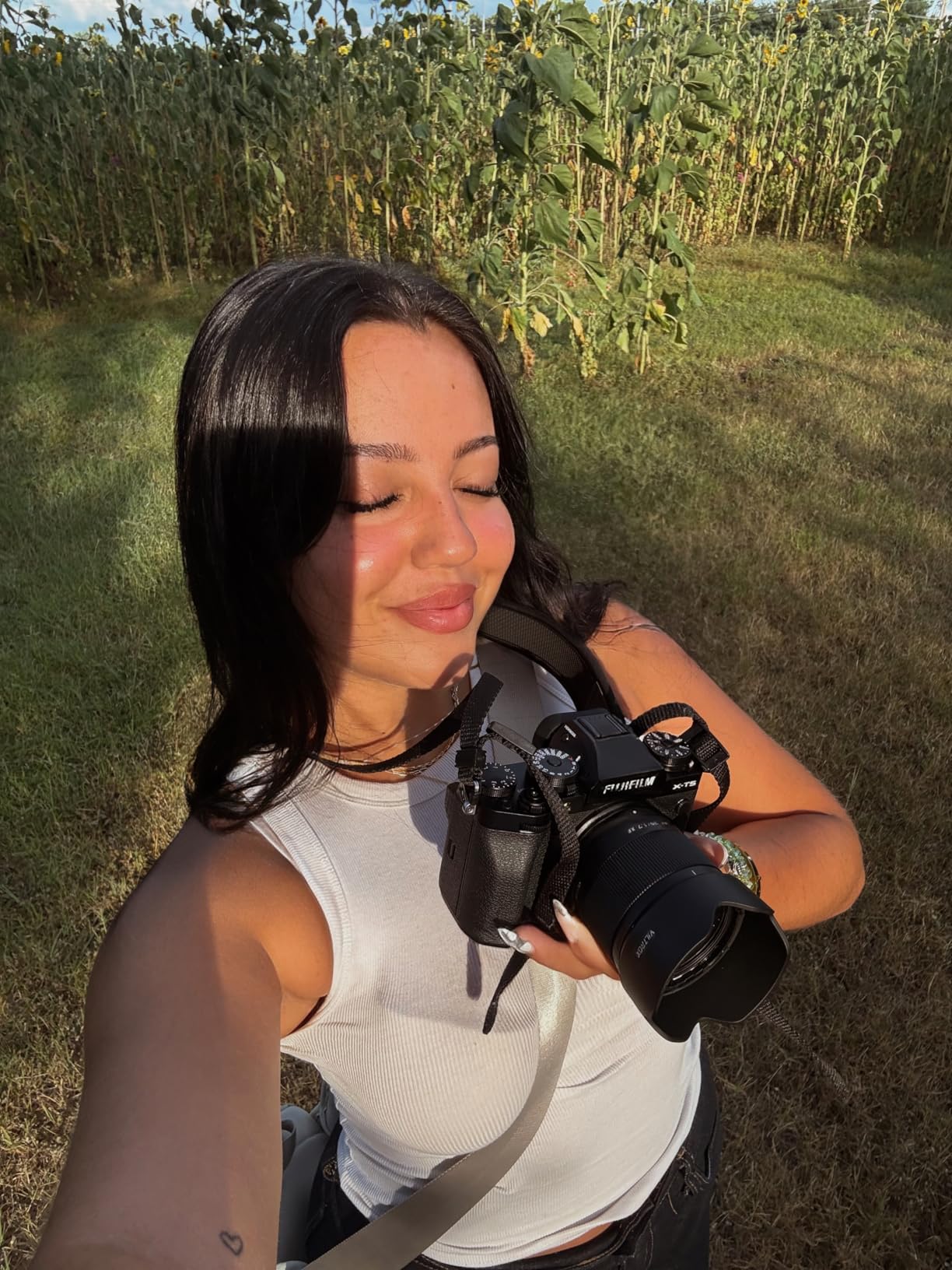
The X-T5 is the pick if your candlelit work is more about the look of the image than about squeezing the last frame out of an extreme ISO. The film simulation modes are the reason. A warm simulation on a candle-lit portrait gives you skin tones that look intentional rather than rescued, and that matters when a client is paying for atmosphere.
Seven stops of stabilization is the headline number, and in a dim chapel it earns its place. I can handhold a 56mm f/1.2 at speeds that would normally demand a tripod, which means moving around a crowded room without a second piece of kit.
The APS-C sensor gathers roughly half the light of a full-frame sensor at the same framing, so you will push ISO roughly one stop further than you would on a full-frame body. In exchange the body is far smaller, and a photographer covering a candlelit ceremony with a 23mm f/1.4 in their pocket gets a much easier night than one carrying a full-frame kit.
The 425-point autofocus uses deep-learning subject detection, and the 3.69 million dot OLED viewfinder refreshes at 100fps, which helps when you are reframing quickly in a dark space. Electronic shutter speeds up to 1/180,000s are irrelevant to candle work but useful for the sparkle shot when a lighter is held over a cake.
Who this camera suits
It suits a photographer who shoots restaurant and food images styled with candles, and a portrait photographer who wants a body small enough to work at close range without a flash. The dial controls also work with the camera switched off, which is faster than waking a menu when a room goes dark.
Pair it with a 33mm f/1.4 for candlelit tables, which gives a natural field of view on APS-C and stays reasonably small.
Who should skip it
Skip it if a face will be moving toward you in near-darkness. Autofocus is the most repeated complaint, with owners reporting it still trails Sony and Canon flagship hybrid systems. Candlelit dance floors and moving guests are exactly where that gap opens.
Owners also describe the body materials as cheaper and more brittle than the X-T4, and several report the Pixel Shift Multi-Shot 160-megapixel mode failing to render. For low light that mode is not something you would use regardless.
4. Canon EOS R5 – The Stacked Sensor That Handles Motion and Darkness
Canon EOS R5 Mirrorless Camera (Body Only), Full-Frame Hybrid Camera, 8K Video, 45 Megapixel CMOS Sensor, DIGIC X Image Processor, Up to 12 FPS, RF Mount, Black
Pros
- Excellent low-light performance with low noise and easily recovered shadow detail
- Exceptionally reliable eye-detection autofocus
- 5-axis IBIS makes adapted EF lenses practical
- 8K RAW and 4K 120p internal capture
Cons
- Battery life is noticeably shorter than the DSLRs it replaces
- Electronic viewfinder can feel slightly laggy in very low light
- CFexpress Type B card costs are high relative to SD media
The R5 carries the largest review base in this group, and owners are near-unanimous that its low-light files are among the cleanest they have used. A stacked back-illuminated 45-megapixel sensor reads out fast, which is why the electronic shutter runs to 20fps without the blackout problem that plagues older bodies.
That readout speed is the real candlelight advantage, and it is not obvious. A fast readout lets the autofocus system sample the scene constantly, so a face that drifts in and out of a flame’s brightness is tracked rather than abandoned. Twelve frames a second through a candle-lighting moment means you keep the expression.

Owners specifically praise the recoverability of shadow detail at high ISO. That is the underexpose-and-lift method in practice: place the meter two thirds of a stop under, and the shadow side of a candlelit face comes back with colour and texture instead of the flat grey you get from a noisier sensor.
Eye detection is described as exceptionally reliable for people and animals, and with 1,053 points covering approximately 100 percent of the frame there is no hunting because of a peripheral point. In a dark room, that consistency is worth more than point count on paper.
Who this camera suits
It suits a hybrid shooter who needs usable 8K RAW for motion pieces as well as stills, and a photographer coming from EF glass who can use the adapter and the camera’s in-body stabilization together for adapted fast primes at slow shutter speeds.
Pair it with an RF 50mm f/1.2L for portraits, or an RF 35mm f/1.8 for reception work where you need to be closer to the action.
Who should skip it
Skip it if you are working a long event on a single battery, and if your media budget is tight. Battery life is noticeably shorter than the DSLRs it replaced, and its CFexpress Type B media requirement adds real cost to every shoot.
There is also a recurring note that the electronic viewfinder can feel slightly laggy in very low light, which is a strange complaint on a body this capable but a real one when you are framing a dark room by the finder alone.
5. Sony Alpha a7 IV – The Best Balance for Video and Stills Together
Pros
- Very good low-light capability
- especially with fast primes
- Real-time Eye AF is fast and locks on reliably in tricky lighting
- 33MP sensor gives room for cropping and heavy post-processing
- Dual card slots and a fully articulating screen
Cons
- 4K 60p is cropped rather than full width
- Menu system and handling carry a noticeable learning curve
- High-ISO noise reduction is menu-driven and must be switched on manually
The a7 IV is the sensible middle of this list for most people. It is not the cleanest file at the top of the ISO range, but 33 megapixels on a back-illuminated full-frame sensor handles a candlelit room well, and you keep enough resolution to crop a face across a table.
The real-time eye autofocus is described by owners as fast and reliable in tricky lighting, which is a fair summary of how it behaves when the only contrast in the frame comes from a flame edge. With a fast prime wide open, the focus holds where a slower kit zoom would struggle.
For hybrid shooters, 7K oversampled 4K at 30p with no pixel binning gives you the latitude to grade a warm, underexposed frame back up without the mush that comes from a heavily compressed file. The S-Cinetone profile also handles orange light gracefully in a way that straight out-of-camera footage on other bodies does not.
5-axis SteadyShot stabilization helps at slower handheld speeds, and the fully articulating screen is genuinely useful in a crowded reception where you are shooting above or below eye level.
Who this camera suits
It suits a photographer delivering both a highlight film and a gallery from the same candlelit event, and anyone who wants one body to cover a wedding day and a second shoot without a second body. Two UHS-II slots give you backup on a card type you already own.
Pair it with a 50mm f/1.8 or a 35mm f/1.4. Both are small, and both stay usable when the room is nearly black.
Who should skip it
Skip it if you need uncropped 4K at 60p, because this body’s 60p mode is cropped rather than full width. It also runs warm during very long 4K 10-bit 4:2:2 takes, which matters if you are capturing an entire ceremony in one pass.
The learning curve is real. The menu system and handling carry a noticeable learning curve for newcomers, and high-ISO noise reduction is menu-driven rather than automatic, so you need to set it correctly before walking into a dark room.
6. Canon EOS R6 Mark II – The Best Value Full-Frame for Candlelight
Pros
- 24.2MP full-frame sensor delivers clean usable files in low indoor light
- Up to 40 fps electronic burst for expression changes
- Deep-learning subject detection including horses and trains
- Bright 3.69 million dot 120 fps viewfinder and vari-angle screen
Cons
- 24.2MP resolution is modest for heavy cropping
- Effective pixel detail drops at the fastest electronic shutter rates
- Grip batteries and RF lens costs add up beyond the body
The R6 Mark II is where I would tell most photographers to start. The 24.2-megapixel full-frame sensor is a deliberate choice, not a compromise: fewer, larger photosites mean cleaner files at the ISO a candlelit room demands, and you still have enough resolution for a print or a moderate crop.
Canon rates the in-body stabilization to 1/8000th of a second, which in real terms means several usable stops. For a hand-held frame across a candlelit room at 1/15s, that is the difference between a sharp photograph and a discarded one.
Subject detection has expanded well beyond people and animals, covering vehicles, horses, trains and aircraft. For a candlelit wedding that matters mostly in one direction, and it is the right direction: tracking a couple walking through a dark room, because it recognises a head and a body rather than hunting for a face.
The 0.5-inch OLED viewfinder with 3.69 million dots at 120fps is bright enough to frame a nearly black room, and the vari-angle touchscreen lets you shoot low without getting on the floor. Dual UHS-II slots are a genuine advantage over single-slot bodies when the evening’s frames cannot be repeated.
Who this camera suits
It suits a photographer who wants flagship-level autofocus and stabilization without a flagship-sized body, and a videographer who needs uncropped 4K at 60p from 6K oversampling plus up to six hours of continuous full-HD recording in a single take.
Pair it with an RF 50mm f/1.8 STM for an affordable start, or an RF 50mm f/1.2L when the room is genuinely dark and you want the light.
Who should skip it
Skip it if you are a heavy cropper. Twenty-four megapixels is modest next to the 45-megapixel bodies here, and effective detail drops further at the fastest electronic shutter rates because the sensor is subsampled at 40fps.
Also weigh the running cost. Owners note that grip batteries and RF lens prices add up beyond the body itself, and on an eight-hour candlelit event you will be charging more than once.
7. Nikon Z 7II – For Large Prints and Interiors Where the Candle Is a Small Part
Nikon Z 7II | Ultra-high Resolution Full-Frame mirrorless Stills/Video Camera | Nikon USA Model
Pros
- 45.7MP files hold up to heavy cropping and large prints
- Low noise and strong performance in dark conditions
- Built-in intervalometer with exposure smoothing
- 5-axis stabilization plus electronic stabilization work well handheld
Cons
- Subject-tracking autofocus is slow and low-contrast in difficult conditions
- No HEVC compression so video files are especially large
- Battery life is modest for a body in this class
The Z7II earns its place for a specific kind of candlelit work. When a single flame is part of a wider still-life interior rather than the only light, the 45.7-megapixel file is what makes the difference. You can crop into a corner of a candlelit table and still have resolution for a large print.
Owners report low noise and strong performance in dark conditions, and the 5-axis in-body vibration reduction works well handheld for the long exposures a dim interior usually needs. The electronic stabilization option adds another layer for static camera work on a candle-lit scene.
The built-in intervalometer with exposure smoothing is a quietly brilliant feature for this topic. Candle flames are never the same brightness twice, and exposure smoothing averages variation across a sequence, which turns a set of inconsistent frames into a clean time-lapse of a burning taper.
The dual card slots, one CFexpress or XQD and one UHS-II SD, mean you can record video to one and stills to the other during a ceremony, which is useful when a hybrid shooter is covering a flash-free event.
Who this camera suits
It suits a fine-art or interior photographer who wants a large file from available light, and anyone shooting candle-lit still lifes for print. The buffer is 3.3 times deeper than the original Z7, so long bursts around a lighting moment are not a problem.
Pair it with a 50mm f/1.8 S for general work, or the 24-70mm f/2.8 S if you need to frame interiors without changing glass.
Who should skip it
Skip it for moving people in darkness. Subject-tracking autofocus is described as slow and low-contrast in difficult conditions, and that is the exact scenario a candlelit reception presents. The menu system also takes time to adapt to if you are coming from a Sony body.
There is no HEVC compression support, so video files are especially large, and battery life is modest for a body at this level. On a ten-hour event that is a real planning problem.
8. Sony Alpha a7 V – The Newest Body Here, Built for Changing Light
Pros
- Autofocus is fast accurate and consistent even in indoor light
- Very clean low-light performance and strong dynamic range
- Pre-capture buffer saves frames before the press
- Two USB-C ports allow charging without removing the battery
Cons
- 33MP resolution is modest for users who crop heavily or print very large
- Can lose face focus and grab foreground objects in some conditions
- Bundled desktop software is clunky and not yet supported by Adobe Camera Raw
The a7 V is the newest camera in this roundup and the one built most explicitly around a light source that keeps changing. The partially stacked Exmor RS sensor reads out roughly 4.5 times faster than the a7 IV, and the processing engine claims up to 16 stops of dynamic range with effective noise reduction across the ISO 100 to 51200 range.
That dynamic range figure is the number that matters by candlelight. A flame’s core and a shadowed face live in the same frame, and extra stops mean you can hold both without the face collapsing to black.
Human pose estimation is the interesting addition. The AI processing improves subject recognition by approximately 30 percent over the a7 IV, and it recognises eye, head and body together, which is useful when a candlelit couple is partly turned away and only the shoulder is lit.
The pre-capture buffer with blackout-free 30fps bursts is genuinely useful at a reception. Guests strike a lighter or a taper is lit and the interesting frame is the half-second before the flame settles, which is exactly what pre-capture keeps.
Who this camera suits
It suits a hybrid shooter who wants the best subject recognition available and a body that charges while still shooting, which matters on a long candlelit evening. The improved rear screen with a much wider range of viewing angles helps when you are shooting down at a table.
Pair it with a 35mm f/1.4 GM for reception work, where the light is thin and you need every stop.
Who should skip it
Skip it if you are a heavy cropper or print very large. Thirty-three megapixels is a modest ceiling next to the 45-megapixel bodies here, and that is the most common reservation among owners.
There is also a report worth knowing about. Some owners note the camera can lose face focus and grab foreground objects in some conditions, and the bundled desktop software is described as clunky and not yet supported by Adobe Camera Raw, so plan on a different editing workflow for a while.
9. Canon EOS R8 – The Lightest Full-Frame Body to Carry Into a Dark Room
Pros
- Compact and lightweight full-frame body that is comfortable for long shoots
- Strong image quality with rich colors and good high-ISO performance
- Uncropped 4K 60 fps oversampled from 6K
- Vari-angle touchscreen and USB-C charging add everyday convenience
Cons
- Battery drains quickly so extra batteries are effectively required
- Bundled RF 24-50mm f/4.5-6.3 is a slow narrow-aperture lens
- Body and kit lens are not weather-tight
The R8 is the smallest full-frame RF body Canon makes, and that is its entire argument. A photographer working an intimate candlelit event does not want a body that reminds them of its weight at hour six, and this one does not.
Image quality is good where it matters. Owners praise rich colours and solid high-ISO performance, and the 24.2-megapixel sensor behaves sensibly when you have to open up in a dark restaurant. The uncropped 4K at 60p oversampled from 6K is a genuine hybrid feature rather than a specification exercise.
There is a real problem with the lens, though. It ships with an RF 24-50mm f/4.5-6.3 IS STM, which is a slow, narrow-aperture lens with basic build quality. In candlelight you want the opposite of that, and the aperture will cost you ISO and shutter speed in exactly the situation where you have least of both.
Single card slot and quick battery drain are the other two friction points. Owners are clear that extra batteries are effectively required, and a single slot on an irreplaceable evening is a real limitation.

Who this camera suits
It suits a photographer who travels light, shoots candlelit restaurants and small ceremonies, and wants full-frame colour without carrying a large body. The 3.0-inch vari-angle touchscreen is useful for a table-level composition in a restaurant.
Pair it with an RF 50mm f/1.8 STM, which is small, cheap and fast enough. Treat the bundled zoom as a daylight lens.
Who should skip it
Skip it for a full evening of event coverage. Battery drain plus a single card slot is a poor combination for a job where you cannot repeat the frames, and the body and kit lens are not weather-tight for a venue entrance or a terrace.
It is also the lowest-rated body in this group, at 4.4, with owners split between strong image quality and complaints about battery, the lens and an Error 70 processing fault reported by some that halts video recording.
10. Nikon Z6 III – Built for the Darkest Room on the List
Nikon Z6 III, Black | Full-Frame Mirrorless Stills/Video Camera with 6K/60p Internal RAW Recording | USA Model
Pros
- Excellent low-light performance with a 24.5MP sensor rated to ISO 204800 equivalent
- 4000-nit 5760k-dot 120 fps viewfinder is among the brightest available
- 6K 60p internal RAW and oversampled 4K give exceptional latitude
- Good heat resistance and a sealed body
Cons
- Autofocus can be finicky in very dark or low-contrast situations
- Single memory card slot limits redundancy options
- No charger included in the box
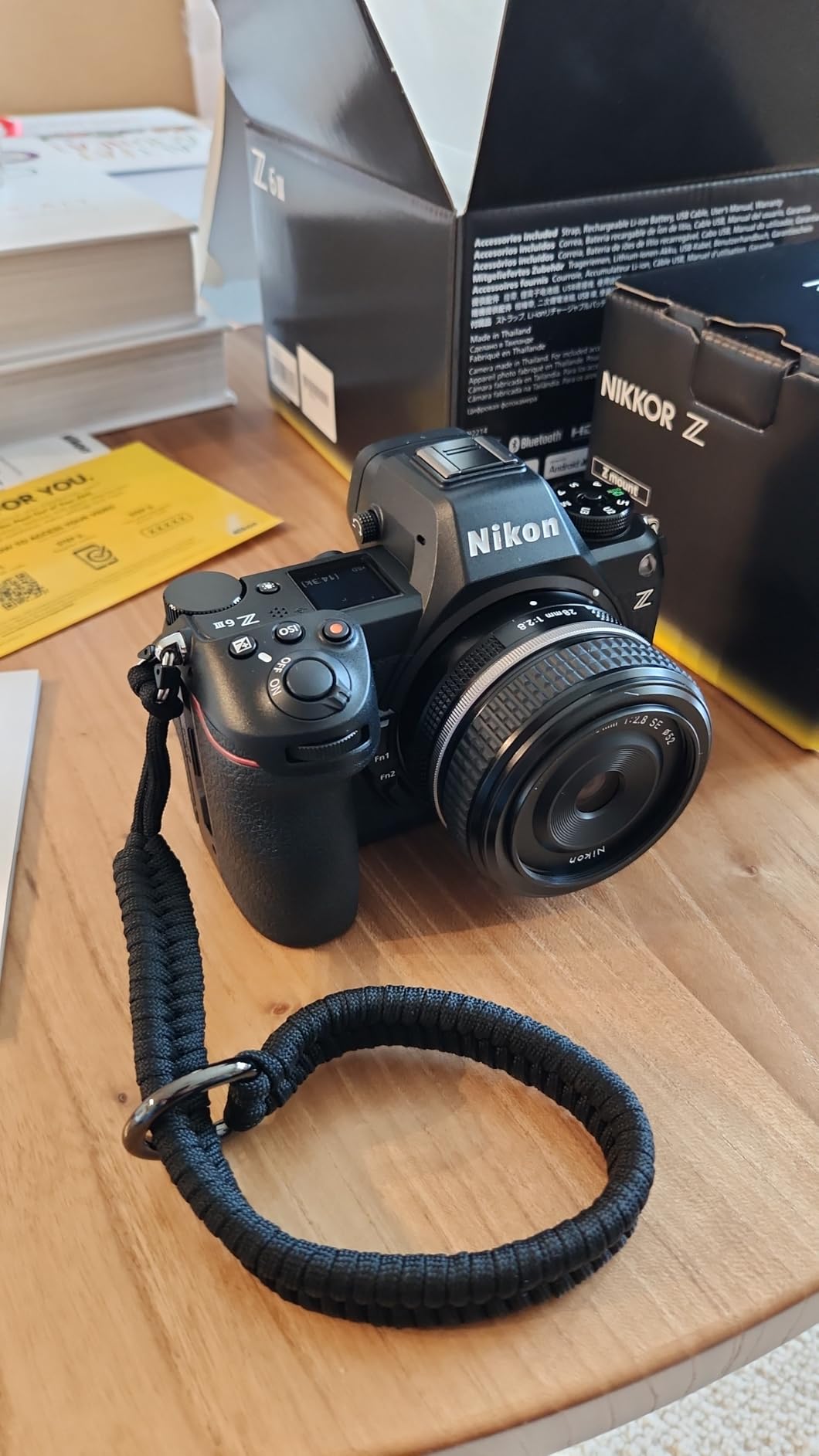
Two specifications decide the Z6 III’s place in a candlelight roundup. The first is autofocus detection down to -10EV, which is the deepest figure in this group and directly relevant to a room lit by candles. The second is a 4000-nit, 5760k-dot viewfinder at 120fps, which stays bright when almost nothing else is.
Owners describe the low-light performance as excellent, with the sensor rated to an extended ISO 204800 equivalent. In practice you would rarely go that far, but the headroom means you are never at the limit of the file in a dark chapel.
The 24.5-megapixel full-frame sensor uses a high-speed partial-stacked readout, so rolling shutter is essentially absent. That is a video advantage, but it also means a fast sensor refresh that helps the autofocus keep sampling as a flame brightens and dims across a face.
For hybrid work the 6K 60p internal N-RAW and oversampled 4K give exceptional latitude in post, which matters when you are lifting a badly underexposed candlelit frame and need colour that does not break up.
Who this camera suits
It suits a photographer shooting the darkest venues on this list, a jazz club or a chapel with minimal ambient light, and a hybrid shooter who wants internal RAW video and a viewfinder they can actually see by.
Pair it with a 50mm f/1.8 S or an 85mm f/1.8 S. In a room this dark, aperture discipline matters more than focal length.
Who should skip it
Skip it if autofocus consistency in the dark is your top priority. Owners do report that autofocus can be finicky in very dark or low-contrast situations despite the -10EV rating, and that the dense menu system and control layout take time to learn.
The single memory card slot is the practical dealbreaker for long event work, and no charger is included in the box, which is one extra thing to plan for before a venue that will not let you plug in.
Which Camera for Which Candlelit Scene?
Matching the body to the room matters more than the ranking order suggests. A chapel ceremony and a candlelit restaurant fail for completely different reasons.
Candlelit chapel ceremony, flash banned, moving subjects. Canon EOS R6 Mark II at f/1.4, ISO 6400, 1/125s. The deep-learning subject tracking and eight stops of stabilization are doing the work here.
Candlelit wedding reception, long and unpredictable. Nikon Z6 II at f/1.8, ISO 6400, 1/60s. The light weight and dual card slots are the deciding factors, not the ISO ceiling.
Candlelit restaurant and food photography. Sony Alpha a7S III at f/1.2, ISO 3200, 1/100s. The cleanest files when the flame is small and the rest of the frame is nearly black.
Romantic candlelit couple portraits. Fujifilm X-T5 at f/1.4, ISO 1600, 1/125s. A film simulation gives you warm skin tones without a heavy grade, and seven stops of stabilization lets you work close.
Flash-free ceremony video and stills together. Sony Alpha a7 IV at f/1.8, ISO 3200, 1/50s. 7K oversampled 4K leaves room to grade warm footage up afterwards.
Candle-lit still life or an interior where the flame is a small detail. Nikon Z7 II at f/2.8, ISO 1600, 1/30s on a tripod. The 45.7-megapixel file is the point.
Travel and candlelit restaurant work on a minimal kit. Canon EOS R8 at f/1.8, ISO 3200, 1/60s, with a fast prime and spare batteries.
Nightclub, jazz club or a room that is almost completely dark. Nikon Z6 III at f/1.4, ISO 6400, 1/100s. The 4000-nit viewfinder is the difference between composing and guessing.
How to Choose a Camera for Candlelight Photography
Every roundup of low light cameras ranks on maximum ISO, because that is the number on the box. Candlelight is different enough that those rankings often point the wrong way. This is how I would think through the decision instead.
Sensor size and why fewer megapixels can win
A photosite is the individual light-gathering pixel. Its job is to collect photons before the amplifier has to invent the ones that were not there. Spread a fixed amount of light-gathering area across fewer, larger photosites and each one collects more from a flame before noise appears.
That is the whole argument for a 12-megapixel body over a 45-megapixel one at ISO 12800. It is also why the best high-ISO results in this list come from the 24-megapixel class, and why a body advertised on resolution is often the wrong body for a dark room. Our guide to our budget portrait camera picks covers the resolution-first thinking if you want the opposite approach.
Autofocus in near-darkness
A focus point needs contrast to lock. Candlelight provides contrast only where a flame edge crosses a face, and that edge moves. The -EV rating on a camera tells you how dark a situation the system can still acquire in, and anything at -6EV or deeper is usable for candle work.
But the rating is a lab figure. Owners across this group describe hunting in dark conditions even on capable bodies, so treat -EV as a filter rather than a guarantee. The number that matters more in practice is whether subject detection recognises a person when only part of them is lit.
In-body stabilization and the shutter speed floor
Stabilization lets you hold a slower shutter than you think you can, which means you gather light without raising ISO. Canon rates the R6 Mark II to 1/8000s, Fujifilm claims up to seven stops on the X-T5, and Sony quotes 7.5 steps in the centre and 6.5 at the edges of the frame on the a7 V.
Those figures are not interchangeable, so check the peripheral claim.
White balance at 1800-2400K
This is the criterion no general low light roundup considers, and for candlelight it is the one that most changes the result. A candle flame sits far below the 3200K that the tungsten preset assumes, so the preset leaves everything orange.
Set a custom Kelvin between 1800 and 2400 instead, then refine with a white balance shift or tint. Shoot RAW regardless, so you have latitude if your estimate was wrong. The Fuji film simulations on the X-T5 handle this problem in camera, and Sony’s S-Cinetone profile on the a7 IV and a7S III keeps warm footage from clipping to pure orange.
Fast lenses matter more than the body
Forum consensus on candle-lit work points the same direction every time: the community’s answer to a dim scene is faster glass, not a faster sensor. On r/videography, users recommend extreme fast primes for candle-lit work, and the principle holds for stills.
Per mount, the pairing I would choose: Sony E with a 35mm f/1.4 or 50mm f/1.2 GM. Canon RF with a 50mm f/1.2L or 35mm f/1.8. Nikon Z with a 58mm f/0.95 S or 50mm f/1.8 S. Fujifilm X with a 33mm f/1.4. Buying the fast prime first and the body second is a defensible order of operations.
If you also shoot handheld at night, our guide to still cameras for photography covers the wider body decisions.
Dealing with flame flicker
A flame is not a constant light source. It wavers, it leans, and it shrinks as the wax burns down, so a fixed exposure that flatters one frame will be wrong thirty seconds later. This is the part of candle work that metering does not solve for you.
Meter for the brightest part of the frame and accept a darker result, then lift. Watch the histogram on a single frame rather than trusting the exposure indicator. Avoid banding on artificial light sources by checking the anti-flicker settings, since an LED alongside the candles can interact with the sensor’s readout. And shoot more frames than you think you need, because a face can only be sharp at a moment when the flame allows it.
Mirrorless or DSLR for a flash-free venue
Mirrorless wins on silent shooting, a bright electronic viewfinder and modern autofocus. A DSLR still wins on battery endurance, price per unit and the availability of fast primes at low cost, and for a nine-hour reception that endurance is not a small thing.
Our broader guides to mirrorless bodies for outdoor work and to cameras for night sky photography cover the format question in more detail, and both come back to the same principle: light collection first, everything else second.
Frequently Asked Questions
What camera settings should I use for candlelight photography?
Shoot RAW, open the aperture as wide as your lens allows, start at ISO 1600, and hold the shutter at 1/60s or faster for people. Set a custom white balance between 1800K and 2400K rather than using the tungsten preset, and underexpose by a stop so the flame does not clip, then lift the shadows in post.
What cameras do best in low light?
Bodies with large photosites and full-frame sensors handle low light best. The Sony a7S III leads this list because 12.1 megapixels spread across a full-frame sensor gives each photosite more collecting area than any other body here, and the Canon R6 Mark II is the strongest all-rounder at 24.2 megapixels.
Is ISO 800 good for low light?
ISO 800 is the native base range on most modern full-frame bodies and is perfectly good for the brightest part of a candlelit scene, but it is rarely enough for a chapel or a reception. Expect to work between ISO 1600 and 6400 in those rooms, and remember that a fast lens lets you stay lower.
Why is a 12MP camera better in low light than a 45MP camera?
Because a photosite is a light-gathering pixel, and spreading the same sensor area across fewer, larger photosites lets each one collect more photons before noise appears. A 12-megapixel full-frame sensor therefore produces a cleaner, more printable file at ISO 12800 than a 45-megapixel sensor does, at the cost of cropping room.
What white balance should I use for candlelight photography?
Set a custom Kelvin value between 1800 and 2400, not the tungsten preset, which is tuned for around 3200K and leaves candlelight looking orange. Fine-tune with a tint or white balance shift and shoot RAW so you can correct the value later.
What is the best lightweight camera for candlelit venues?
The Canon EOS R8 is the lightest full-frame body in this roundup and produces good high-ISO files, but the bundled kit lens is slow, so pair it with an RF 50mm f/1.8. The Fujifilm X-T5 is the alternative if you want a smaller body and a film simulation that renders warm light well.
Final Verdict
If flash is banned, candles are the whole story, and the body has to carry it alone, the Sony Alpha a7S III is the best of these ten cameras for candlelight photography. Its large photosites produce the cleanest file at the ISO a dark room demands, and the 0.9x viewfinder is bright enough to compose a room lit by tapers.
For an evening of moving people rather than a static subject, the Canon EOS R6 Mark II is the better buy, with subject detection that holds a face and eight stops of stabilization. The Nikon Z6 II wins on lightness and dual card slots for long flash-free events, and the Fujifilm X-T5 wins if you want warm skin tones in the file without a heavy grade.
Whichever you pick, buy the fast prime first. Then set the custom Kelvin, underexpose by a stop, and go and shoot the 2026 wedding season. Our best cameras for low light guide covers the sensor science in more depth if you want to go further.