
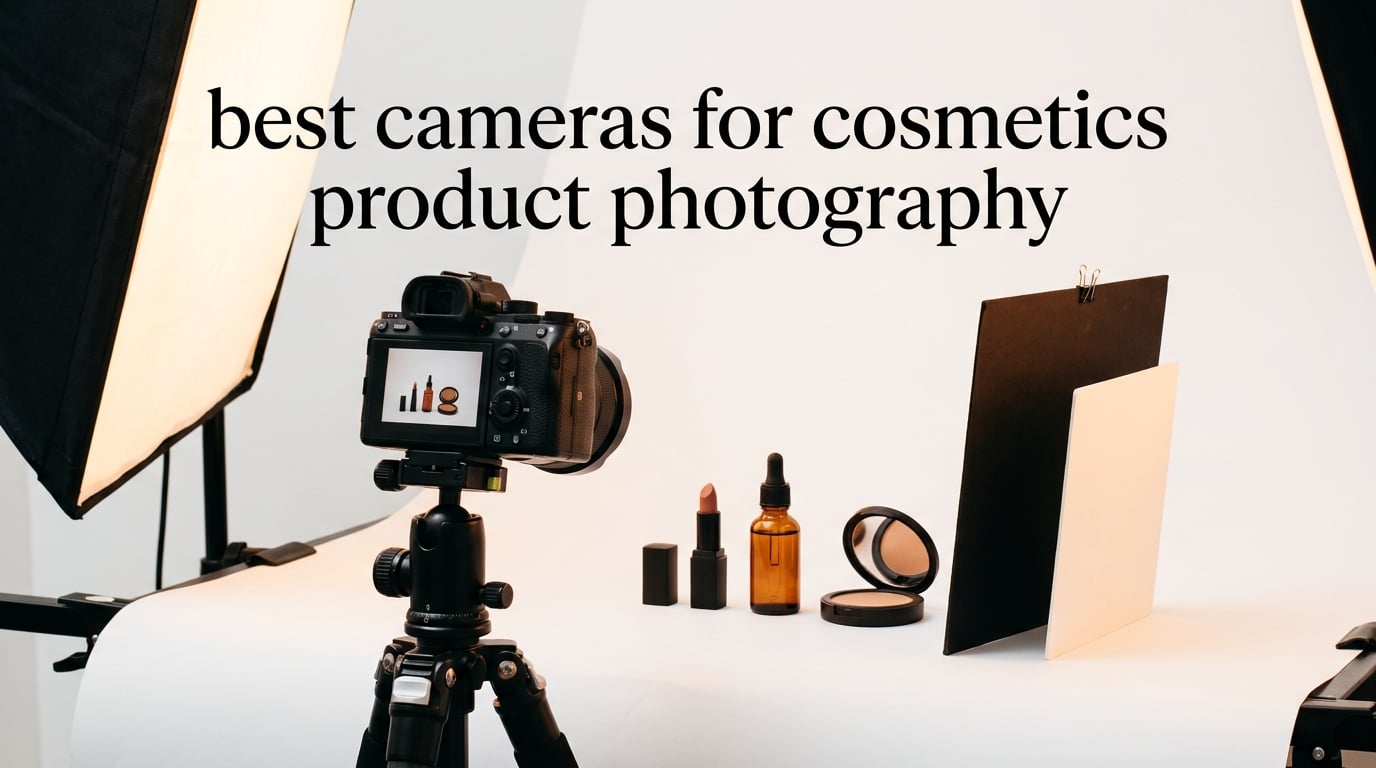
Most cameras can photograph a foundation bottle. Few can photograph a foundation range and make every shade look the same on the monitor, in the browser and in the customer’s hand. That repeatability is the whole job, and it is why the best cameras for cosmetics product photography are not simply the ones with the biggest sensors.
Cosmetics are small, glossy and often translucent. A lipstick bullet, a glass serum bottle and a shimmer eyeshadow pan each break a camera in a different way, and the failures show up as shifted undertone, clipped highlights on a metallic cap, or focus that drifts across the front of a curved bottle. Our roundup of the best cameras for cosmetics product photography in 2026 ranks eight bodies on the things that decide those outcomes.
A camera for cosmetics work needs three things above everything else: color it records accurately, focus you can take completely manual control of, and a rear screen that lets you judge a frame at an awkward angle. Resolution matters, but it buys you crop room rather than better color, and megapixels will not fix a flat, badly lit frame.
I shoot cosmetics catalog work myself, and the routine repeats: a fixed light setup, a white sweep, and long runs of near-identical SKUs. What decides a purchase for me is how fast I can dial in a custom white balance, whether focus peaking and manual magnification let me judge the front plane of a bottle, and whether I can tether to a laptop and review at full size. Everything else is secondary. If you want a broader read first, my roundup of the best cameras for product photography covers the general case, and this one is tuned to beauty and cosmetics specifically.
Top 3 Picks for Best Cameras for Cosmetics Product Photography in October


Canon EOS RP + 24-105mm
- 26.2MP full-frame sensor
- 0.5x maximum magnification
- 24-105mm f4-7.1 IS STM zoom

Best Cameras for Cosmetics Product Photography in 2026
Here is the full lineup at a glance. Every body below was judged on control over focus and exposure, the color it records from controlled light, and how it pairs with a simple high-CRI continuous light in a small studio.
| Product | Specifications | Action |
|---|---|---|
| Sony Alpha a6400 with 16-50mm |
|
Check Latest Price |
| Canon EOS RP with RF 24-105mm f4-7.1 |
|
Check Latest Price |
| Canon EOS R5 body only |
|
Check Latest Price |
 Sony Alpha 7 IV Sony Alpha 7 IV |
|
Check Latest Price |
 Nikon Z 7II Nikon Z 7II |
|
Check Latest Price |
 Nikon Z 8 Nikon Z 8 |
|
Check Latest Price |
 Nikon Z 6 III Nikon Z 6 III |
|
Check Latest Price |
 Panasonic Lumix S5 body only Panasonic Lumix S5 body only |
|
Check Latest Price |
1. Sony Alpha a6400 – the compact body that can carry a full catalog
Pros
- Flip-out screen handles tabletop and low angle framings without crouching
- 425 phase-detect points cover roughly 84 percent of the frame
- Compact APS-C body stays comfortable through long tabletop sessions
Cons
- APS-C sensor gives less background separation than the full-frame bodies here
- Bundled 16-50mm is slow at the wide end so small products need more light
- Check the retailer listing for specifications before you buy
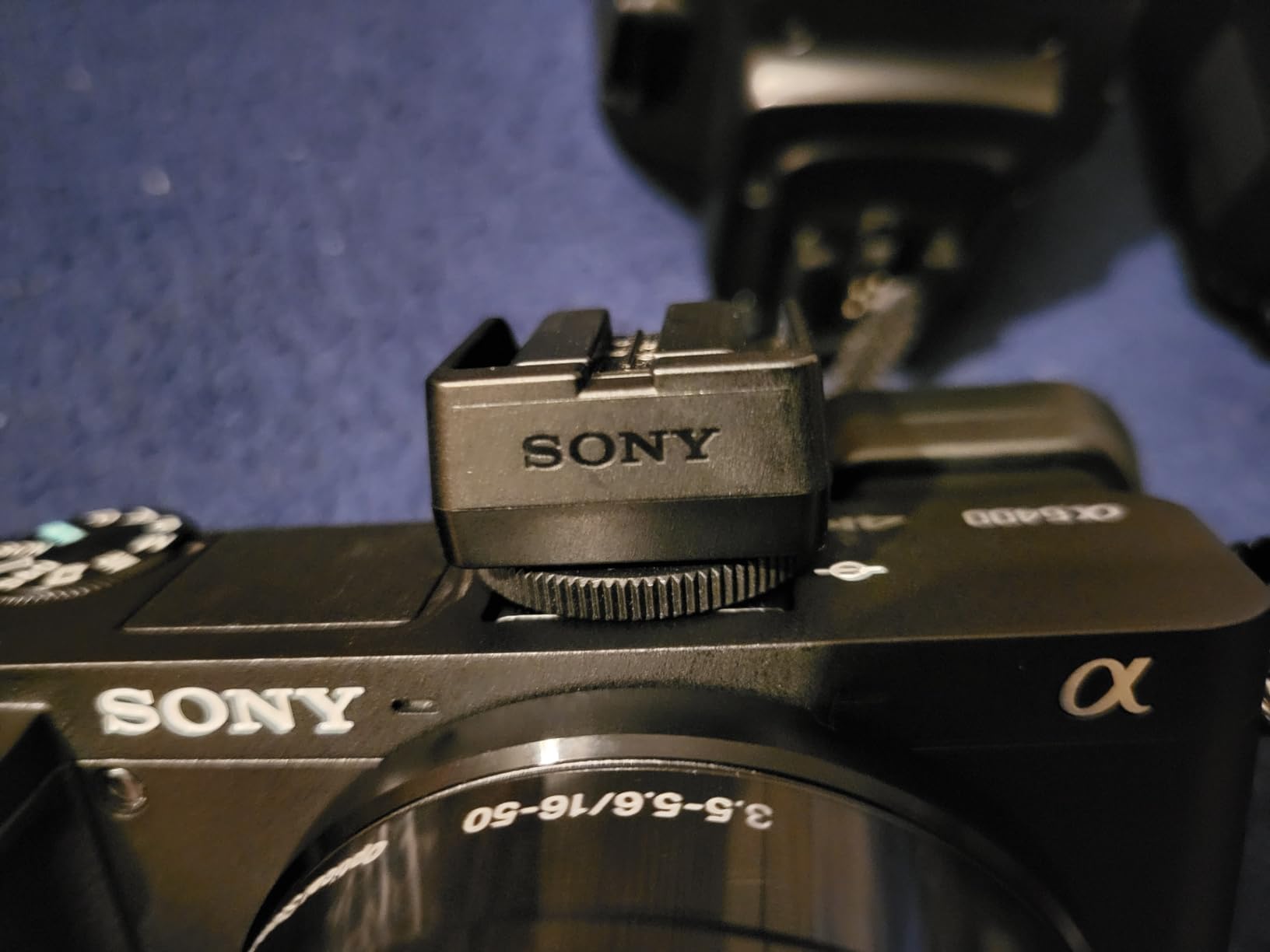
The a6400 is the body I put on a tripod when a brand sends over forty SKUs of a lip liner and wants them shot in an afternoon. It is small, it weighs 10.3 ounces, and it does not fatigue me the way a full-frame body does when you are leaning over a table for three hours. The 24.2MP APS-C Exmor sensor records 14-bit RAW, which is enough headroom to bring a slightly warm lipstick back to a neutral white balance in post without hunting.
Its real strength for this work is the 180-degree tilting touchscreen. On a lipstick bullet shot from slightly below eye level, or a flat lay of eight eyeshadow pans, the flip screen means I am not on my knees with my face inches from a table. I can also point the body downward for overhead framings without an L-bracket, which matters when your subject is a small cylinder and your arm is not steady at 45 degrees.
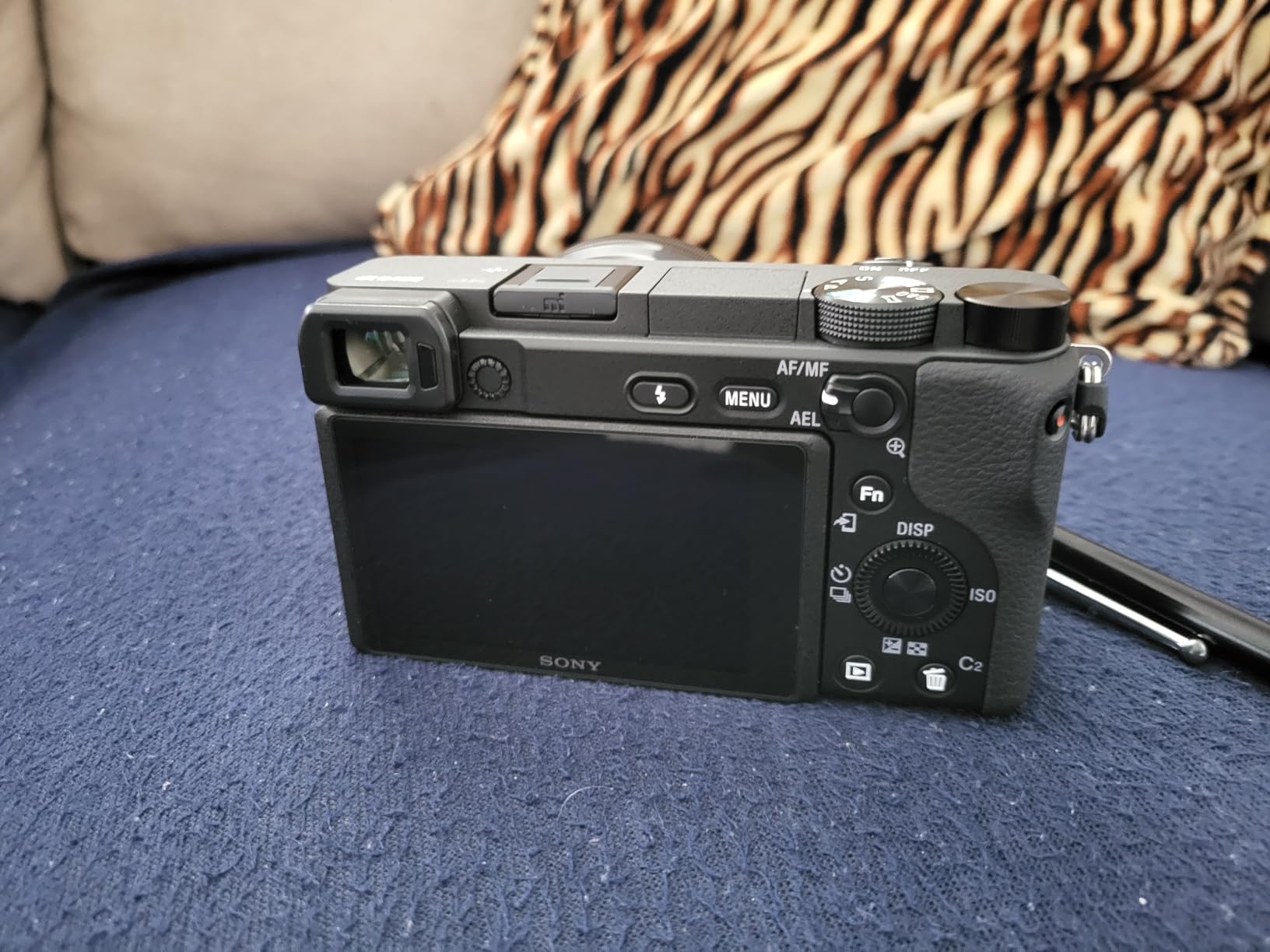
Autofocus is fast and dependable here, with 425 phase-detection points across most of the frame and 11 fps continuous shooting. That matters less than you would think for a still subject, but it does help when you are shooting a hand turning a bottle for a 360 spin sequence. Subject detection is reliable enough to hold a compact jar while I reposition the light between frames.
Working distance is the honest weak point. With the bundled 16-50mm at its closest, you are framing a small jar, not filling the frame with a bullet tip. For powder grain, mascara bristles or the embossed lettering on a serum bottle, you will want a dedicated macro lens, and the mount choice is where the extra spend goes. The E mount has a deep third-party macro ecosystem, so that upgrade is easy to make later without changing bodies.
Who the a6400 suits
A brand or studio shooting frequent catalog updates on a small footprint, where the shooting table is a corner of a room rather than a dedicated set. The flip screen and the low weight make long sessions genuinely comfortable, and the 425-point phase-detect system is more than enough for static packshots and swatch smears.
It is also the right call if you are still working out your lighting. Because the sensor is APS-C, you can stop down hard and still see detail in a matte powder pan, and the resolution is comfortably more than a 3000 by 3000 marketplace master needs. You get a usable file without paying for a body you will not use.
Where the a6400 falls short
Background separation is the limit. A hero shot of a serum bottle on a gradient sweep wants a longer working distance and a thinner slice of focus than an APS-C sensor gives you, and no amount of editing fixes a busy background behind a small subject.
The bundled lens is the other constraint. It is slow at the wide end, which means more light than you would like on small products, and it will not hold a tight macro frame. Plan for a macro lens in the budget, and check the sensor details on the retailer listing before you buy, since some pages mix specifications from a different body.
2. Canon EOS RP with RF 24-105mm – the most complete affordable kit
Pros
- Full-frame sensor in the lightest body here at 16 ounces
- Bundled 24-105mm covers flat lay through hero framings
- 5 stop optical stabilisation steadies handheld table work
- 0.5x centre-focus magnification gets close to jars and lipsticks
Cons
- Only 5 fps continuous for long catalogue runs
- Bundled f4-7.1 zoom is dim at the wide end so small products need more light
- Single UHS-II card slot with no backup
The EOS RP kit is the answer I give people who ask for one purchase that just works. The 26.2MP full-frame sensor renders smoother background falloff than the APS-C options, and the bundled RF 24-105mm f/4-7.1 IS STM means you can frame a flat lay, a three-quarter hero and a tight label shot without buying a second lens. Owners consistently single out that bundle as the reason the kit makes sense.
For cosmetics specifically, the 0.5x maximum magnification at centre focus is more useful than the number suggests. It gets you close enough to a small jar or a lipstick bullet to see mould lines and print detail without buying a dedicated macro optic on day one, and optical stabilisation of up to 5 stops makes handheld tabletops less of a fight. The articulating 3-inch LCD handles low and overhead angles in the same way the a6400’s flip screen does.
Autofocus runs through Dual Pixel CMOS AF with 4779 selectable positions, and for still cosmetics on a stand it is entirely adequate. I would still focus manually on a curved glass bottle, because a subject-detection system can lock onto the brightest reflection rather than the front surface. Custom white balance from a grey card, manual focus, and the wide color latitude of the sensor do most of the work here.
Canon color rendition is one of the reasons this body keeps showing up in beauty work. Skin tones and warm pigment stay believable out of RAW with a straightforward profile, and the 14-bit files give room to correct a shade that photographed a touch green. If you are running a catalog where the same bottle appears in fifteen shades, consistent color between frames is worth more than resolution.

Who the EOS RP suits
Anyone building a first real studio kit and who wants full-frame depth of field without assembling a body and a lens separately. The 16-ounce body is easy to carry between a home corner and a client table, and the zoom covers the majority of cosmetic framings out of the box.
It also suits photographers who shoot slow and deliberate sessions rather than volume runs. Five frames per second is irrelevant when each SKU takes twenty minutes to set up, and the stabilization makes a long evening of tabletop work less punishing on your hands.
Where the EOS RP falls short
Brightness is the practical ceiling. The f/4-7.1 range of the bundled zoom means more light or a slower shutter on small products, and slower shutter means either a tripod or more risk of movement on a wet drop or a splash shot. The f/4-7.1 aperture also limits how thin you can make the slice of focus on a small hero subject.
One card slot means no backup during a long assignment day, and the burst rate is slow if you are photographing a hand rotating a bottle. For a still catalog workflow neither matters much, but if you plan to grow into high-volume or hybrid work, this is the body to outgrow first.
3. Canon EOS R5 – the resolution workhorse for texture and pigment
Pros
- 45MP stacked sensor resolves powder grain and cream texture with crop room to spare
- 1053 AF points cover nearly the whole frame for small static subjects
- In-body stabilisation of up to 8 stops steadies handheld tabletop work
- 12 fps mechanical and 20 fps electronic bursts for fast catalogue turns
Cons
- Body only so a macro capable lens must be budgeted separately
- CFexpress Type B cards add real cost to the kit
- Battery drains faster than the DSLRs it replaces
When the brief is texture, the R5 is the tool. A 45MP stacked back-illuminated full-frame sensor resolves the grain in a loose powder, the fine pigment in an eyeshadow pan, and the swirl pattern in a cream, with enough resolution left to crop a quarter-frame detail into a second image. Reviewers of this body describe it as an upgrade with no real weaknesses, and the sample files back that up for still work.
The stacked design is not just about speed. Faster readout means the electronic shutter can be used without the rolling-shutter smear that normally ruins product frames, which means you can shoot a stacked sequence with the electronic shutter and combine it in software. Combined with the 3.2-inch fully articulating touchscreen, that makes it comfortable to work low under a shelf or directly overhead.

Autofocus is 1053 points across roughly the whole frame with Eye Control AF, and while I would still focus manually on a curved bottle, it will hold a compact cap or a brush wand without hunting. The real gain for cosmetics is the 14-bit RAW depth from the DIGIC X engine, which leaves room to pull a warm foundation swatch back to a neutral reading without breaking the texture detail underneath.
In-body stabilisation of up to 8 stops means I can hand-hold a bottle at an angle for a lifestyle frame rather than locking everything to a tripod. It is not a substitute for a stand when you are shooting a splash or a powder burst, but for the static hero and packshot work that fills a cosmetics catalog, it removes a lot of tripod fiddling.

Who the R5 suits
Brands and freelancers who sell close-up detail as a feature, not an extra. Eyeshadow shimmer particles, powder fallout, lipstick bullet texture and embossed glass are all shots where the 45MP file is doing work the lower-resolution bodies cannot. It is equally at home on a high-volume turn if you are photographing ranges of shades in one sitting.
It suits anyone who wants one body for both the catalog and the reels that sit beside it. 8K RAW internal recording and 4K up to 120p mean vertical social clips come out of the same session as the packshots, which removes a second body from the kit list.
Where the R5 falls short
This is a body-only listing, so the macro capable lens is a separate decision and a separate cost. Budget for a 90mm or 105mm macro before you factor the total kit, because the bundled-free route is how people end up disappointed with how close they can get.
CFexpress Type B cards are not cheap, and the buffer is tuned around them. Battery life is also criticised by owners who shoot long assignment days, so keep spare packs in the bag. The electronic viewfinder can also feel slightly sluggish in very low light, which matters more on moody beauty setups than it does on a white sweep.
4. Sony Alpha 7 IV – the in-camera stacking specialist
Pros
- 33MP full-frame files with in-camera focus stacking for deep rows of products
- Real-time Eye AF and subject tracking rarely miss small static subjects
- Tilting 3-inch screen plus flexible file formats including HEIF
- 5-axis stabilisation and S-Cinetone for consistent product tones
Cons
- Body only listing so lenses are a separate purchase
- 33MP gives less crop room than the 45MP bodies for very tight texture crops
- No built-in flash so a panel or small strobe is required
The Alpha 7 IV earns its place here on one specific capability: it composites a stacked image inside the camera. When you photograph a deep arrangement, a row of lipsticks standing upright, a crowded eyeshadow palette or a grid of foundation bottles, the front and back planes sit far outside any single depth of field. Pixel Shift Multi Shoot captures the frames and the body blends them, so you get front-to-back sharpness without leaving the camera.
The 33MP full-frame Exmor R back-illuminated sensor records 14-bit RAW and gives real latitude for correcting a shade that came in warm from a tungsten-balanced setup. S-Cinetone is available as a profile for product tones, and owners rate the image quality highly enough that it doubles as a general camera when the studio work dries up.

Real-time Eye AF and subject tracking are the class-leading part of this package, and they are more useful than they sound for cosmetics. A hand holding a bottle, a model holding a compact against skin, a brush entering frame for an animation-style clip, all of these are subject-detection jobs, and this body handles them without the hesitation you get on older systems. Ten frames per second is enough for a turntable sequence of a single SKU.
The tilting 3-inch LCD covers the low and overhead tabletop angles that a fixed screen cannot, and the dual card layout means you can write a backup alongside your working file during a long catalog day. Video is not the reason to buy this body, but 4K 60p 10-bit 4:2:2 with full pixel readout and 7K oversampling gives you clean vertical clips when a brand asks for a demo beside the stills.
Who the Alpha 7 IV suits
Shooters whose catalog is full of deep arrangements. If your e-commerce grid shows rows of standing lipsticks, stacked compacts and multi-pan palettes, in-camera stacking saves a great deal of time compared with bracketed frames merged by hand in software. It is also a strong all-round body for brands that alternate packshots with hands-in-frame and short video content.
It suits photographers who want reliable autofocus as a safety net, so that a quick turnaround frame between the careful manual-focus setups still lands. You keep manual control for the frames that matter and let the camera handle the ones that do not.
Where the Alpha 7 IV falls short
It is a body-only listing, so your macro lens is a separate purchase and the mount decision drives your glass budget. The E mount has good third-party macro options, but check the reproduction ratio you need before you commit.
At 33MP, very tight crops of pigment texture will not hold as much detail as the 45MP bodies in this list. There is also no built-in flash, so a beauty dish or LED panel is part of the minimum kit. Some owners find the menu system takes a while to learn if you are arriving from another brand, though the quick-access layout settles down within a week.
5. Nikon Z 7II – the 45.7MP crop-room body
Nikon Z 7II | Ultra-high Resolution Full-Frame mirrorless Stills/Video Camera | Nikon USA Model
Pros
- 45.7MP resolution makes heavy focus stacking on crowded arrangements practical
- Quiet shutter mode and exposure smoothing suit controlled studio sequences
- Dual card slots and USB-C constant power handle long assignment days
- Tilting 3.2-inch touchscreen works for low copystand angles
Cons
- Autofocus can hunt at close focus distances so manual focus is often needed first
- No HEVC support so video files are large
- Battery endurance is criticised on long shooting days
The Z 7II is a 45.7MP full-frame body built for exactly the case where you cannot get close enough to a product and need to crop your way out of it. When a lipstick bullet is 3 centimeters across on the table and you are shooting from a respectful working distance, resolution is doing the work of a macro lens. Owners consistently cite the files and the color accuracy as the standouts.
Exposure smoothing and a quiet shutter mode are small features that matter more than they sound in this genre. A cosmetic frame is often several stops of a gradient and a single product lit by one source, and any flicker in a soft light or a movement in the frame can force a retake. Smoothing gives you a final frame that matches the rest of the run without hand-editing.

Color is another reason this body appears in beauty work. Owners report accurate color and natural skin rendering straight from RAW, and the 14-bit depth means a slightly warm bottle photographed under a mixed-temperature setup can be corrected without flattening the highlight rolloff on a glass edge.
Dual card slots mean a second copy of every frame as you shoot, which matters when a single day produces the entire catalog for a launch. USB-C constant power also removes battery anxiety on a long assignment. The tilting 3.2-inch touchscreen handles a low copystand angle for a mascara wand or a serum dropper with the lens almost level with the product.

Who the Z 7II suits
Shooters who work at a respectful distance and crop detail out afterwards. Fine print on a carton, a brand logo on a metallic cap, the embossed pattern on a cream jar, all of these are crops rather than macro framings on this body, and the 45.7MP file supports them.
It also suits anyone photographing deep, crowded arrangements, because the resolution gives a focus-stacked composite the headroom it needs to survive the blend. Two card slots and constant power make it a good long-day body for freelance work delivered to a brand on a deadline.
Where the Z 7II falls short
Close-focus autofocus is the honest limitation. Several owners report the system hunting at close distances on macro-style work, which is precisely the range cosmetics live in. The fix is manual focus with magnification, and that is a workflow change rather than a dealbreaker if you are already shooting stills on a stand.
There is no HEVC compression, so video files are large, and battery life draws repeated criticism from owners shooting full days. Nikon menus also take time to learn if you are arriving from Canon or Sony. If video is a significant part of your brief, read the next section before settling.
6. Nikon Z 8 – the hybrid for brands that also shoot reels
Pros
- 45.7MP stacked sensor captures studio-grade texture with reliable subject detection
- Deeper faster buffer handles long bursts without stalling
- Compact body close to a D850 in size so it is easy to carry to a tabletop
- Portrait tools including improved white balance for hands and skin in frame
Cons
- Significant learning curve in menus and viewfinder configuration
- Battery drains quickly so multiple spare packs are needed
- Not sized for long 8K recording sessions
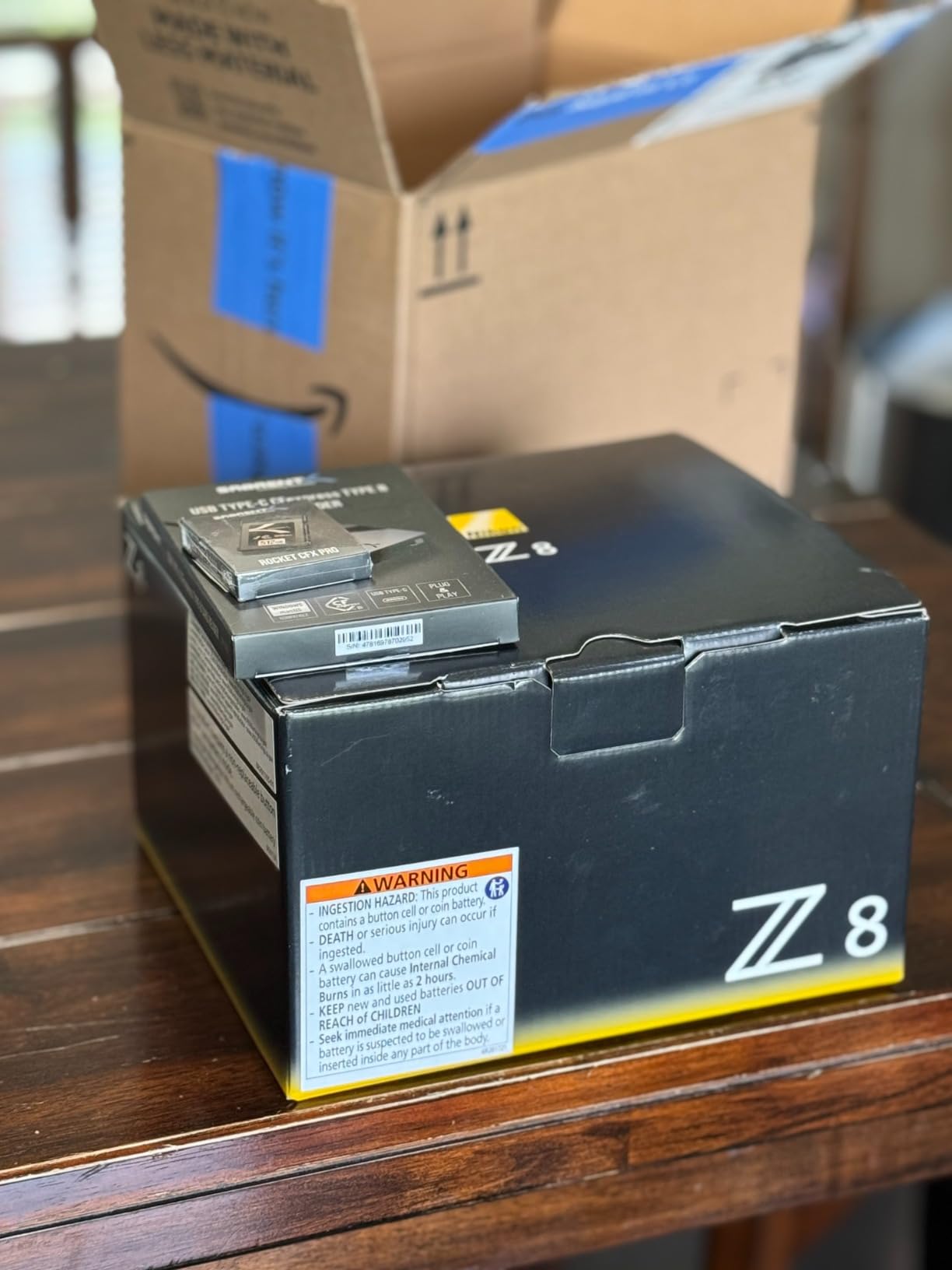
If your clients ask for vertical video beside the packshots, the Z 8 is the body in this list built for that conversation. It records 8K at 60p and 4K at 120p internally, with 12-bit N-RAW and ProRes RAW, which means a product demo of a compact being opened can be cropped into a 9:16 frame from a wide take without losing sharpness.
The stills side is strong as well. A 45.7MP stacked sensor with EXPEED 7 processing and deep-learning subject detection down to -9 EV gives you texture detail and dependable autofocus on small static products. The buffer is deeper and faster than the Z 7, so a turntable run or a burst of a hand presenting a bottle does not stall mid-sequence.

Skin Softening and Portrait Impression Balance are features I would normally skip, but they earn their place in beauty work because a cosmetics campaign often includes hands, arms and models holding the product. The improved white balance tool is a small quality-of-life improvement on a body that is already generous with latitude in RAW.
There is also a shutterless design with an optional sensor shield, which lets you change lenses mid-session without risking dust on a sensor you are about to shoot a flawless white background on. For a studio that keeps shooting through the day and changes focal lengths constantly, that is a practical rather than a spec-sheet benefit.
Who the Z 8 suits
Brands and freelancers producing a mixed deliverable: white background packshots, lifestyle frames and short vertical video from the same sitting. Recording internally at high resolution and high frame rates removes a whole class of color and crop problems that appear when you downscale video heavily in post.
It suits photographers moving between locations as well, because the body is close to a D850 in size and lighter than the professional bodies it replaces. Subject detection at -9 EV is not about dark studios, but it means autofocus holds when you turn the lights down for a moody beauty frame.
Where the Z 8 falls short
Menus and viewfinder configuration have a real learning curve, and the bundled manual is thin, so budget an evening with the settings before the first paid shoot. Battery drain is a repeated complaint, which means carrying spare packs on any long day.
The smaller body also dissipates heat less well than the flagship, which limits long 8K recording sessions rather than stills work, and there is a single CFexpress Type B slot instead of dual. For pure packshot volume with no video at all, the resolution here overlaps the Z 7II while costing more.
7. Nikon Z 6 III – the brightest viewfinder for judging shade and tone
Nikon Z6 III, Black | Full-Frame Mirrorless Stills/Video Camera with 6K/60p Internal RAW Recording | USA Model
Pros
- 4000-nit viewfinder makes framing pale and delicate product tones easy to judge
- Subject detection recognises faces as small as about 3 percent of frame
- Custom Picture Controls load a consistent colour profile into the body
- Light 1.5 lb body with sealed construction for tabletop and location work
Cons
- Menus and button layout are complex especially the front and rear dials
- 24.5MP leaves less crop room than the 45MP bodies
- No charger included in the box
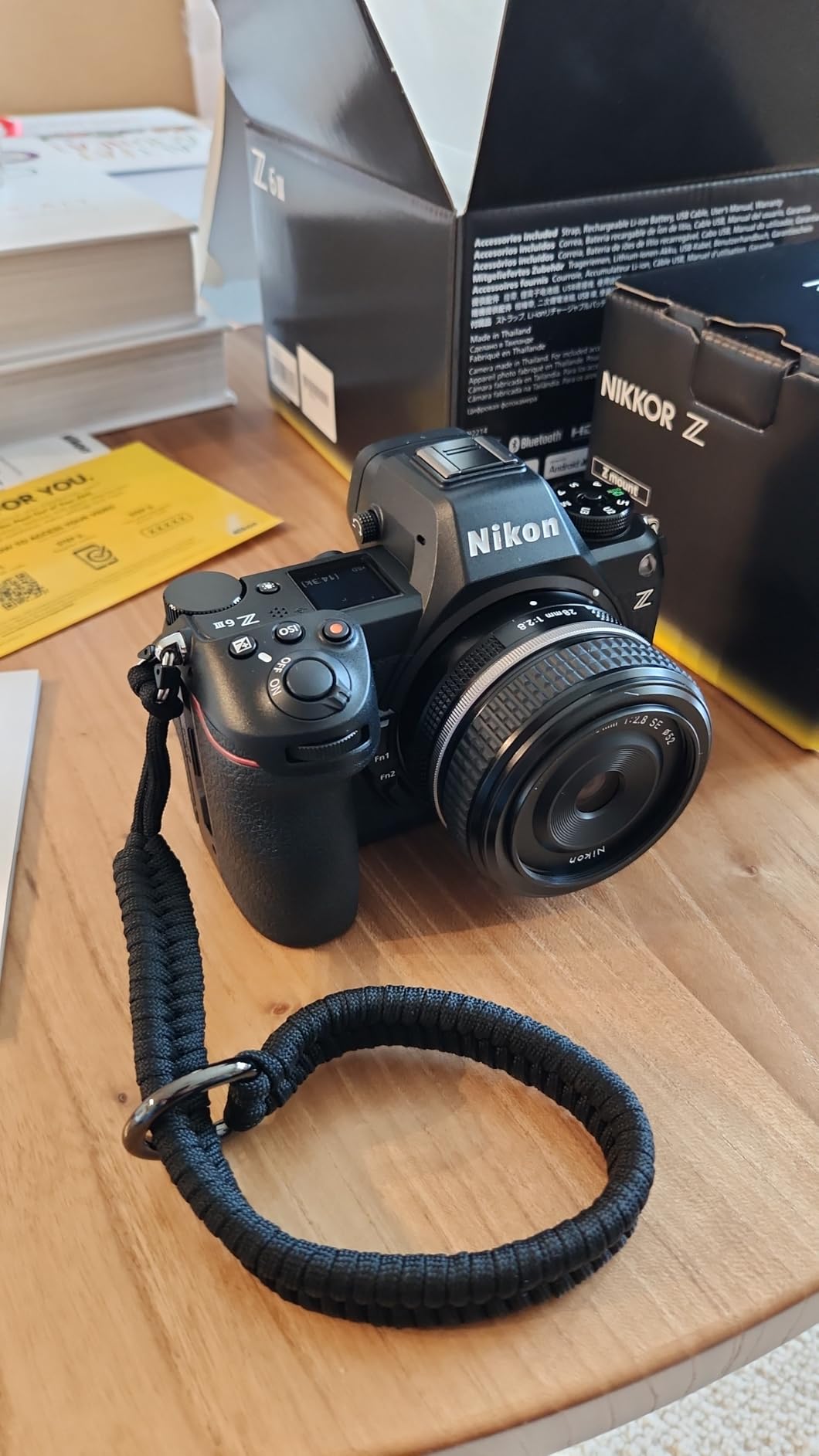
This is the one body here chosen for what you see rather than what it captures. The 4000-nit, 5760k-dot electronic viewfinder refreshes at 120 Hz and covers a DCI-P3 gamut, and that brightness is the difference between judging a pale highlighter or an ivory powder compact and guessing. On a bright set or a white sweep, a dim viewfinder lies to you about how light the product is, and you correct for that incorrectly at the capture stage.
Custom Picture Controls created in NX Studio and loaded onto the body are the quiet feature here. A cosmetics brand with eight foundation shades wants a single consistent profile across the whole range, shot over several days. Uploading a profile to the camera means the starting point is identical on every frame, and RAW still leaves the final correction open.

Subject detection recognises faces at roughly 3 percent of the frame, which is relevant when a compact or a lipstick is held near a model’s cheek in a lifestyle frame. Autofocus is also dependable down to -10 EV, and the ISO range extends to an equivalent of 204800, which is more than a studio needs but useful for a moody, single-source beauty setup where you are working at low light levels.
The 24.5MP partially stacked sensor is deliberately modest, and 10-bit RAW is a limitation compared with the 14-bit files elsewhere in this roundup. For clean packshots on a controlled set that trade costs you nothing. It costs you once you start cropping hard into texture, so treat this as a color-and-review body rather than a detail body.
Who the Z 6 III suits
Anyone whose workflow depends on judging an image before committing, which in cosmetics means checking that a shade reads true before you move on to the next one. The viewfinder brightness also makes a bright, high-key set far more comfortable to work on for a full day, because you are not constantly second-guessing exposure.
It suits teams that want a single colour profile loaded onto every body they use, and photographers who shoot moody beauty frames where ISO performance and subject detection matter more than resolution. At 1.5 pounds it is also one of the easier bodies to move between a home corner and a client table.
Where the Z 6 III falls short
The menu system and the front and rear dial layout are the most common criticism, and they take time. If you need very tight crops of pigment or powder grain, 24.5MP is the ceiling here, and no amount of stabilisation changes that.
Autofocus can also be finicky at night or in very low contrast, which is the opposite of the condition the bright viewfinder is built for. The body is a little small for average-sized hands, and no charger is included in the box, so add that to the kit list.
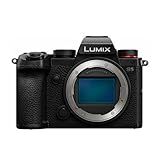
8. Panasonic Lumix S5 – the 96MP stacking value body
Panasonic LUMIX S5 Full Frame Mirrorless Camera, 4K 60P Video Recording with Flip Screen & WiFi, L-Mount, 5-Axis Dual I.S., DC-S5BODY (Black)
Pros
- 96MP high resolution mode captures fine print and pigment texture from one body
- Live View Composite mode builds a stacked image from several live shots
- V-Log V-Gamut with 14+ stops of dynamic range is forgiving on glossy bottles
- 5-axis Dual I.S. 2 stabilisation of 6.5 stops with a fully articulating screen
Cons
- 24.2MP is the lowest base resolution here so heavy cropping on texture is limited
- Autofocus is older and less certain on small static products than newer bodies
- Body only with no lens included and a large frame for a compact tabletop kit
The Lumix S5 is the value answer to a specific problem. Its 96MP high resolution mode shifts the sensor across nine frames and composites them in the body, which turns a 24.2MP sensor into something that resolves fine print on a carton and pigment detail on a pan. Add Live View Composite mode, which builds an image from several live shots, and you have two routes to front-to-back sharpness on deep arrangements.
Dynamic range is the quiet advantage for cosmetics. V-Log V-Gamut with more than 14 stops means a single-source frame on a curved glass bottle holds both the highlight on the shoulder of the glass and the label in shadow, and the highlight rolloff is gradual rather than clipped. That is exactly the failure mode that ruins a serum bottle shot, and the file gives you room to recover it.
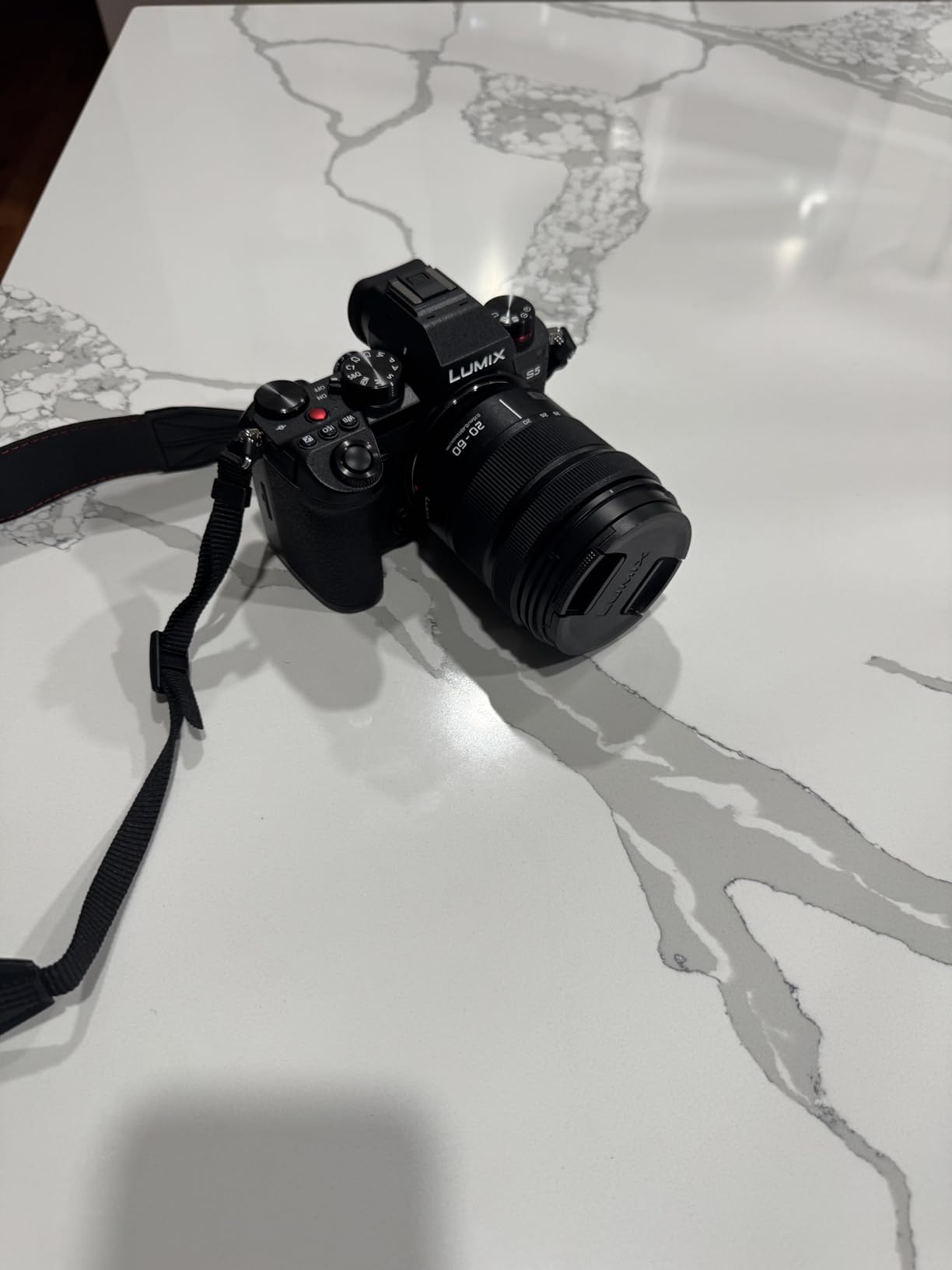
The fully articulating 3-inch touchscreen and 6.5-stop 5-axis Dual I.S. 2 make handheld and low-angle tabletop work steady, which is useful for a beauty frame shot from below the eyeline of a bottle. Dual native ISO keeps noise low in a moody setup without pulling the whole image into shadow noise.
Autofocus is the part to manage. The 225-area contrast-detect system with head, eye, face and body detection is the oldest design in this roundup, and owners note it is less certain on small, static product subjects than the latest phase-detect systems. For this genre that is workable, because manual focus with magnification is the correct method on a curved bottle anyway, but I would not rely on it for a fast turnaround lifestyle frame.
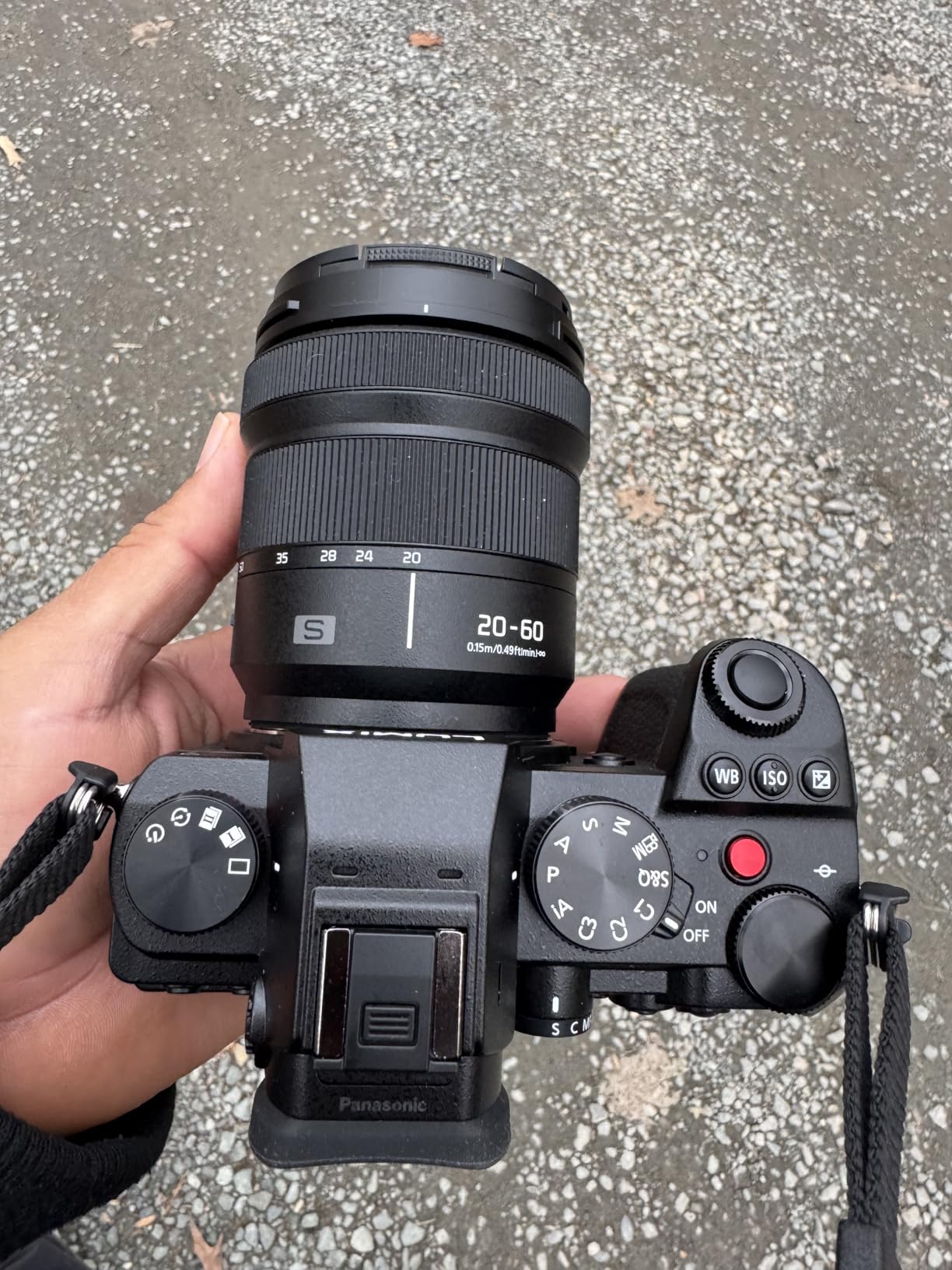
Who the Lumix S5 suits
Shooters who need detail and depth-of-field extension more than they need fast autofocus. If your work is deep arrangements, stacked rows of bottles, and print-heavy packshots, the 96MP mode and Live View Composite deliver results that would otherwise need a more expensive body and a stacking workflow in software.
It also suits anyone lighting a single source on a glossy subject, because the V-Log latitude forgives a bright reflection that would clip elsewhere. The stabilised, fully articulating body makes angled framings straightforward, and the L-mount offers a broad third-party macro lens choice for the close-up work.
Where the Lumix S5 falls short
Base resolution of 24.2MP is the lowest here, so if you crop aggressively into texture rather than using the high resolution mode, you will run out of detail quickly. The 96MP mode is for tripod work, not for handheld frames.
Autofocus confidence on small static products is the honest limitation, as is the body size: at 1.6 pounds it is a large frame for a compact tabletop kit, and it is a body-only listing, so the macro lens is a separate decision. If you shoot a lot of hands-in-frame lifestyle work, the newer hybrid bodies will move faster.
How to Choose a Camera for Cosmetics Product Photography
Most people arrive at this decision with the wrong question. They ask which camera is best, when the honest answer is usually that the camera is not the bottleneck. Work through these seven points in order and the model will mostly choose itself.
Do you even need a new camera?
Here is the diagnostic that resolves the most purchase questions. If your images are flat, the light is wrong. If your shade looks different on screen than it does in your hand, your white balance is wrong or your monitor is uncalibrated. If the front of a curved bottle is soft while the label is sharp, your focus method is wrong. A new sensor fixes none of those.
Age is not the disqualifier people assume. A behind-the-scenes skincare shoot shared on r/productphotography was made on what the photographer called an old but very capable Sony A7 III with a Tamron 28-75mm and a single Profoto B10X with no modifiers, and the finished frames were presented as current commercial work. Another commenter in the same thread recommended a used A7R II with the same Tamron as the sensible buy. Generations-old full-frame bodies remain legitimate tools for this genre, and a used body can be a deliberate choice rather than a compromise.
Upgrade when one of these is true: you cannot hold focus on a curved surface, your files do not hold highlight detail on a glossy shoulder, you are producing 3000 by 3000 marketplace masters with visible softness after cropping, or you are losing hours per day to a workflow your body cannot support. If none of those apply, spend the money on light and a macro lens instead. My general guides to cameras for e-commerce product photography and mirrorless bodies for product work go deeper on the format question.
Sensor size and the depth of field you can control
Sensor size decides how thin you can make the slice of focus on a small subject, and on cosmetics that matters more than raw resolution. A 26.2MP full-frame body gives you the background falloff to separate a serum bottle from a gradient sweep. An APS-C sensor still produces a perfectly sellable packshot, but a hero frame will show more of the set behind the product.
The tradeoff is light. A larger sensor lets you work at a wider aperture and still hold the whole bottle sharp, which on small reflective products often means the difference between one light and two. For studio work under your own control, the practical sequence is: full frame if you shoot hero and lifestyle frames, APS-C if you shoot white background catalogs and want the body to be light and cheap to carry.
Reproduction ratio and working distance for tall thin products
Cosmetics are physically awkward macro subjects. A lipstick tube, a mascara wand and a serum dropper are tall, thin and cylindrical, and a short minimum focus distance forces the lens so close that lighting gets in the way and the front and back of the cylinder cannot both be sharp. This is the single most overlooked constraint in the genre.
A 1:1 reproduction ratio puts the subject the same size on the sensor as it is in life, which is roughly where a bullet tip fills the frame. 1:2 is often enough for a whole bottle. What matters alongside the ratio is working distance, and the minimum focus distance figure on a lens is a better guide than its focal length. When choosing a macro lens for cosmetics, look for a long working distance rather than the most extreme close focus available, because a lens that focuses from 8 centimeters needs a very different lighting position than one that focuses from 20.
Do not expect a kit zoom to do this. The zooms bundled with several bodies here are fine for a flat lay or a three-quarter hero and fall short at the bullet tip. If your work is mostly texture, budget a dedicated macro lens as part of the camera decision, not as an afterthought.
Shade accuracy and color rendering
Every cosmetics guide treats color as a lighting problem, and lighting is half of it. The other half is what the camera does with the light it receives, and a body that shifts a warm foundation swatch toward neutral or pushes a matte powder toward pink will cost you returns.
Three things on the body matter. First, bit depth: 14-bit RAW holds the gradient between a lit bottle shoulder and its shadow well enough to correct color without banding, while 10-bit files have less room and are more likely to show stepping in a smooth gradient. Second, the viewfinder: a bright, high-resolution viewfinder lets you judge a pale shade accurately instead of guessing and correcting wrongly. Third, profiles: the ability to load a consistent picture control onto the body means every frame in a shade range starts from the same place.
None of this replaces a calibrated monitor and a controlled light source. I set a custom white balance from a grey card at the start of every session, shoot RAW, and correct against a physical swatch rather than against the previous frame. If you want the hard numbers behind the lighting side of this, a color rendering index of 95 or above and a daylight-balanced source around 5200K to 5600K is the working target, and export sRGB for marketplace listings unless a specific platform specifies a wider space.
Glare control for glossy tubes, glass bottles and foil packaging
Gloss is the other thing that separates a good cosmetics frame from a rejected one. The camera cannot fix a reflection; it can only give you the tools to see and shape where the light comes from, and a bright viewfinder helps you spot a hotspot before you commit the frame.
Match your technique to the finish. Glossy plastic and lacquered tubes need large, close modifiers so the reflection becomes a controlled soft band rather than a hard hot dot, and black flags on either side of the frame to kill stray reflections. Glass bottles with transparent liquid need a bright edge source behind or beside the bottle to light the liquid itself, plus a card to draw a defined highlight down one side. Foil and metallic packaging are the hardest case: the surface mirrors whatever is in front of it, so the answer is a large white bounce positioned to give you a gradient rather than a single bright reflection. Matte finishes and powder pans want the opposite treatment, a broad soft source with nothing bright in the reflection at all, because any specular hit on a matte surface reads as a defect.
Pair that with your body. A stabilised body lets you angle a bounce card and hand-hold the bottle for a frame that a tripod would force you to stage more slowly. A bright viewfinder shows the gradient as it develops. And when the packaging simply will not sit flat, spray it, or shoot it in a way that hides the curve.
Focus stacking, focus peaking and tethered capture
Deep arrangements need more depth of field than a real lens can give you at a sensible working distance, and that is where stacking comes in. Some bodies composite the frames themselves, which saves a great deal of time: the Alpha 7 IV offers in-camera focus stacking and Pixel Shift Multi Shoot, and the Lumix S5 offers a 96MP high resolution mode plus Live View Composite. Others, including the Canon bodies here, are stacked by bracketed frames merged in software.
For single products on a flat surface, stacking is unnecessary. Stop down instead, use the 14-bit RAW depth, and focus once. The value of stacking appears the moment your frame contains a row of upright lipsticks or a crowded palette, and the bodies that do it in-camera pay for themselves quickly on a catalog with many such frames.
Focus peaking and focus magnification are what let you confirm the front plane is sharp before you shoot, and every body here can do both. Tethering to a computer with Capture One or Lightroom completes the loop: set custom white balance, focus manually, shoot, review at full size on a calibrated display, and keep going. For high-volume catalog work, that loop is worth more than any single spec on this list.
DSLR or mirrorless, and how many megapixels you need
All eight bodies here are mirrorless, and for a new purchase that is the right default. You get focus peaking, real-time exposure preview, silent electronic shooting and video from the same body, all of which matter in a workflow built on consistency. A DSLR still shoots fine, and a good used one is a legitimate budget option, but there is no reason to start new with one in 2026.
On resolution, 24MP is enough for most cosmetics work. A 3000 by 3000 marketplace master needs roughly 10MP before any cropping, so a 24MP sensor leaves you comfortable headroom. Megapixels buy crop room and printing size, not color accuracy or sharpness in good light, and chasing a 45MP or 96MP body for a catalog of white background packshots is money spent on a problem you do not have.
Pay for resolution only when your work includes texture and detail crops: pigment, powder grain, embossed glass, fine print. If a third of your catalog is close-up detail, the 45MP bodies earn their place. If it is hero shots and packshots, choose on the lens, the light and the color workflow instead.
Frequently Asked Questions
What is the best camera for makeup photography?
For a broad range of cosmetic products, the Sony Alpha a6400 is the most capable body for the money because its 180 degree tilting screen handles tabletop and low angles and the 24.2MP sensor records 14-bit RAW. For a full-frame kit that arrives ready to shoot, the Canon EOS RP with the 24-105mm is the strongest single purchase.
What camera should I use for product photography?
Choose on five things. Sensor size decides background falloff on hero shots. Reproduction ratio and working distance decide whether you can fill the frame with a lipstick tip. Bit depth and viewfinder brightness decide how much color correction you need. In-camera stacking decides how fast deep arrangements get done. Tethering support decides how fast you review. Resolution is the last item, not the first.
Which camera is best for product photography?
The Canon EOS RP with the bundled RF 24-105mm is the best all-round single purchase, because full-frame depth of field and a zoom that covers flat lay, hero and label framings come in one box. If your catalog is mostly close-up texture, step up to a 45MP body such as the Canon EOS R5 or Nikon Z 7II.
What is the best affordable camera for product photography?
Two answers depending on where you are starting. From a phone, the Canon EOS RP kit is the smallest jump to full-frame that still includes a lens. On an existing APS-C body you are happy with, the money is better spent on a macro lens and a high-CRI continuous light than on a body upgrade.
What are the downsides of using macro lenses?
Four real ones. Minimum focus distance is short, so lighting gets crowded against the subject. Depth of field at 1:1 is razor thin, so a curved bottle needs stacking or a very small sensor circle. On a small table the front of a tall product can be closer to the lens than the back, which inverts the problem. And macro glass costs more than the lenses bundled with these bodies.
Do professional photographers prefer DSLR or mirrorless for product work?
For a new body, mirrorless. It gives focus peaking, real-time exposure preview, silent shooting and video on the same body, all of which support a consistent studio workflow. A DSLR still produces perfectly good product images and a good used one is a sensible budget route, but there is no reason to start new with one today.
How many megapixels do I need for product photography?
About 24MP is enough. A 3000 by 3000 marketplace master needs roughly 10MP before any cropping, so 24MP leaves comfortable headroom. Higher counts buy crop room and print size rather than color accuracy or sharpness, which means 45MP and 96MP bodies only make sense when close-up texture is a large share of the work.
Is tethering necessary for product photography?
Not to start, but it pays for itself quickly on a catalog. Tethering to Capture One or Lightroom lets you set a custom white balance once, check focus at full size on a calibrated display, and confirm a shade before moving to the next SKU. For still packs on a table, a good rear screen plus focus peaking covers most of the same ground.
Our Verdict for Cosmetics Product Photography in 2026
The Sony Alpha a6400 is our pick for the best cameras for cosmetics product photography in 2026. It is light enough to work all day on a tabletop, its tilting screen solves the awkward angles that a cosmetic subject demands, and it leaves enough budget in the kit for a proper macro lens and a high-CRI light, which is where the money actually belongs.
How to choose between them, in one line each:
Sony Alpha a6400 for a high-volume catalog on a compact, light body with an excellent tilting screen.
Canon EOS RP with 24-105mm for the most complete affordable full-frame kit in a single box.
Canon EOS R5 for 45MP texture, pigment detail and print, plus serious video from the same body.
Sony Alpha 7 IV for in-camera focus stacking on deep rows of standing products.
Nikon Z 7II for 45.7MP crop room and a dual card slot for long catalog days.
Nikon Z 8 for brands producing vertical video and stills in the same sitting.
Nikon Z 6 III for judging pale shades and loading a consistent colour profile onto the body.
Panasonic Lumix S5 for 96MP detail, live view stacking and highlight latitude on glossy bottles.
Whichever you pick, budget the lighting and the macro lens with the same seriousness as the body, set a custom white balance from a grey card, and shoot RAW. For category-specific setups, see my guides to cameras for clothing product photography and cameras for Etsy product listing photography.