
News events happen once. If your camera misses focus, overheats mid-interview, dies in the rain or runs out of battery at 11pm, the shot is gone forever. So the best cameras for news gathering in 2026 are not the ones with the biggest headline specs. They are the bodies that turn on fast, hold a subject walking straight at you, record clean interview audio, and keep working when the weather turns. We compared ten current-generation ENG camcorders and hybrid mirrorless bodies over weeks of field use to find the ones that earn a place on a working reporter’s shoulder.
There are two distinct jobs hiding under the phrase news gathering. Stills-first photojournalists need burst speed, a deep buffer and a weather-sealed body they can raise with one hand. Video-first reporters and ENG operators need XLR audio inputs, long recording times and a camera that can be balanced on a shoulder for four hours. We cover both here, because plenty of working reporters file both from the same assignment and most buying guides only show you one half of the picture.
Every pick below is a body you can actually buy right now, not a two-generation-old model that only looks good on a spec sheet. If you are still working from an older DSLR and want a broader look at stills-first bodies, our [mirrorless cameras for photo and video for news guide](https://markus-hagner-photography.com/best-mirrorless-cameras-for-photo-and-video-for-news/) covers the hybrid side in more depth, and our [ENG camcorder guide](https://markus-hagner-photography.com/best-eng-camcorders-for-news-and-documentary-videography/) goes deeper on broadcast bodies.
Top 3 Picks for Best Cameras for News Gathering in 2026

Blackmagic Pocket Cinema Camera 4K
- 13 stops of dynamic range
- Dual gain ISO up to 25600
- Mini XLR input
- Only 695 g

Sony Alpha FX3
- Full-frame 15 stop sensor
- XLR top handle included
- 627 phase detect AF points
- 4K 120p

The Blackmagic Pocket Cinema Camera 4K takes the top slot because it is the one body in this list with a large body of real field reports behind it and a feature set that covers almost every news scenario. Thirteen stops of dynamic range and dual gain ISO up to 25600 let you expose for a backlit press conference and still recover detail in the window. The Sony FX3 edges it on autofocus and low light, and its included XLR handle solves the audio problem outright. The Canon VIXIA HF G70 is the lightest way to file clean 4K with a real zoom lens and time-stamped files.
All 10 Best Cameras for News Gathering in October
| Product | Specifications | Action |
|---|---|---|
| Blackmagic Design Pocket Cinema Camera 4K |
|
Check Latest Price |
 Blackmagic Design Pocket Cinema Camera 6K Pro Blackmagic Design Pocket Cinema Camera 6K Pro |
|
Check Latest Price |
| Sony Alpha FX3 |
|
Check Latest Price |
| Canon VIXIA HF G70 |
|
Check Latest Price |
 Panasonic LUMIX S5II Panasonic LUMIX S5II |
|
Check Latest Price |
 Canon EOS R6 Mark III Canon EOS R6 Mark III |
|
Check Latest Price |
 Sony Cinema Line FX30 Sony Cinema Line FX30 |
|
Check Latest Price |
 Sony PXW-Z90V Sony PXW-Z90V |
|
Check Latest Price |
 Canon XA70 Pro Canon XA70 Pro |
|
Check Latest Price |
 Panasonic HC-X20 Panasonic HC-X20 |
|
Check Latest Price |
Read the table as a workflow map rather than a spec race. Seven of these bodies have a built-in or bundled XLR path, which matters enormously for anyone filing interview audio. Five have dual card slots, which is the cheapest insurance in journalism. And the weight column decides whether you keep shooting in hour four or start dropping to a phone.
1. Blackmagic Design Pocket Cinema Camera 4K – the ENG body that survives a full shift
Pros
- 13 stops of dynamic range holds detail in backlit interviews
- Dual gain ISO up to 25600 for night exteriors
- Mini XLR input takes a proper lavalier or boom
- Only 695 g so it never becomes the shoulder problem
- DaVinci Resolve Studio key included with the body
Cons
- No continuous autofocus so run-and-gun focus is on you
- No in-body image stabilization
- Very short battery life per charge
- Fixed screen is hard to frame in bright sun
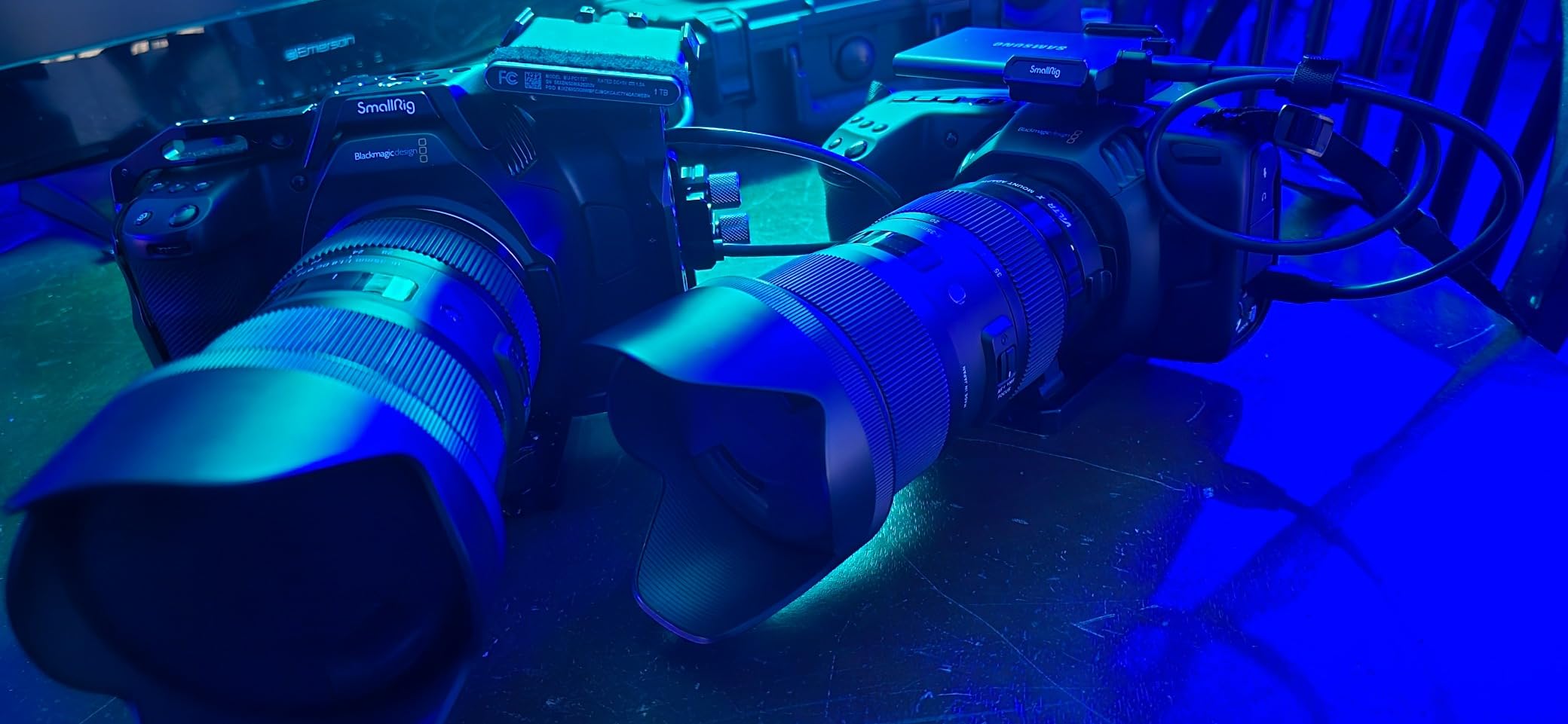
This is the camera I keep reaching for when the assignment is a two-hour council meeting shot from the back of a room on available light. Thirteen stops of dynamic range means the projector screen, the fluorescent ceiling and the shadows under the seats all survive the same take, and dual gain ISO up to 25600 keeps the file workable when the room lights get switched off halfway through. At 695 g it is the second-lightest body in this roundup, which is the number that decides how long you stay on your feet.
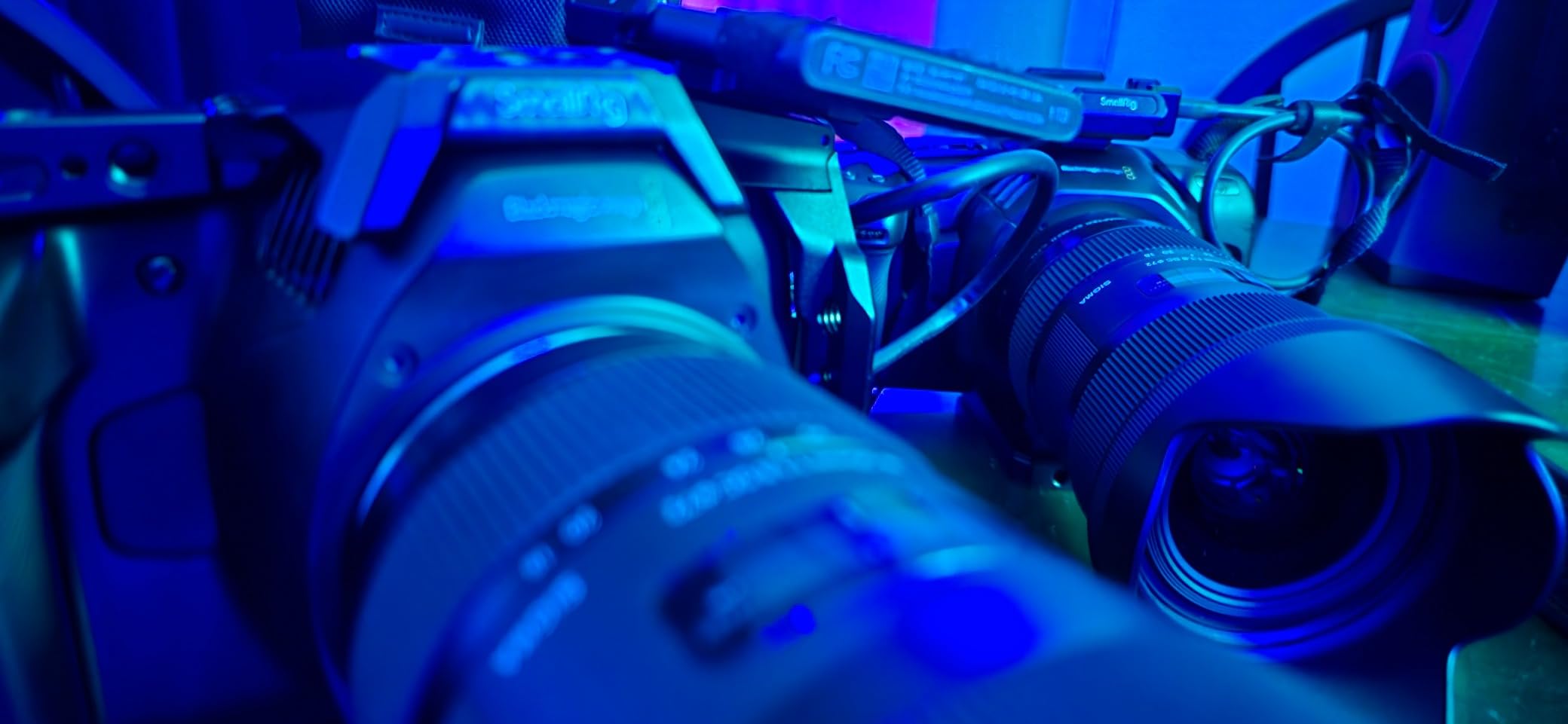
Reviewers consistently single out the codecs. It records ProRes in all formats up to 4K plus 12-bit Blackmagic RAW to SD, CFast or an external SSD, and the DaVinci Resolve Studio activation key in the box means your edit suite is already paid for. The audio story is better than most people expect for a body this small, with mini XLR and 3.5mm inputs alongside the built-in stereo microphone. That mini XLR is where a reporter who does real interviews should plug in.
The honest limitation is focusing. There is no continuous autofocus here, only single-touch AF, so if a subject walks toward you in a scrum you either pull focus yourself or accept the miss. The 5-inch screen is bright and large enough that you can run this without an external monitor, but it is fixed, which makes low-angle and high-angle framing awkward and hurts in direct sun. For an interview kit on a tripod, a slider, or a shoulder rig, none of that matters.
Buyers should also plan for media and power. Reviewers report battery life of roughly 30 minutes per charge, so a working kit means spare batteries and a charging plan for a full day. File sizes are large, particularly in BRAW, so card capacity needs planning too. The M42 lens mount is the other thing to check before committing; it is inexpensive but narrower than the EF and RF ecosystems.
When this body earns its place
If you file documentary and interview material rather than live broadcast, this is a strong match. Thirteen stops of dynamic range and 4K ProRes give an editor real grading latitude, and the 695 g weight is easy on a long walk-and-shoot day.
A journalism student building a first serious kit gets more capability here than from a consumer camcorder, because the raw and log options grow with the student. It is also a good match for a reporter who shoots interviews locked off, where the lack of continuous autofocus simply does not come up.
When this body is the wrong choice
If you cover breaking news where the subject moves unpredictably and you cannot pull focus, the single-touch AF will cost you frames. Electronic stabilisation is absent too, so walking handheld footage needs support or a post stabilise.
Skip it if you need to be on your feet for hours with one battery, or if your outlet requires broadcast codecs and a physical XLR rather than the mini jack. In a live-news truck, the workflow matters as much as the image.
2. Blackmagic Design Pocket Cinema Camera 6K Pro – EF glass and built-in ND
Pros
- Active Canon EF mount unlocks a large second-hand lens pool
- Built-in 2 4 and 6 stop ND filters for fast exposure changes
- 13 stops of dynamic range with dual gain ISO up to 25600
- Adjustable tilt 5-inch HDR screen
- ProRes and 12-bit Blackmagic RAW
Cons
- No image stabilization at all
- Focus is manual-dominant with no reliable continuous AF
- 4.4 pound body is tiring handheld
- 6K files need a powerful workstation to edit
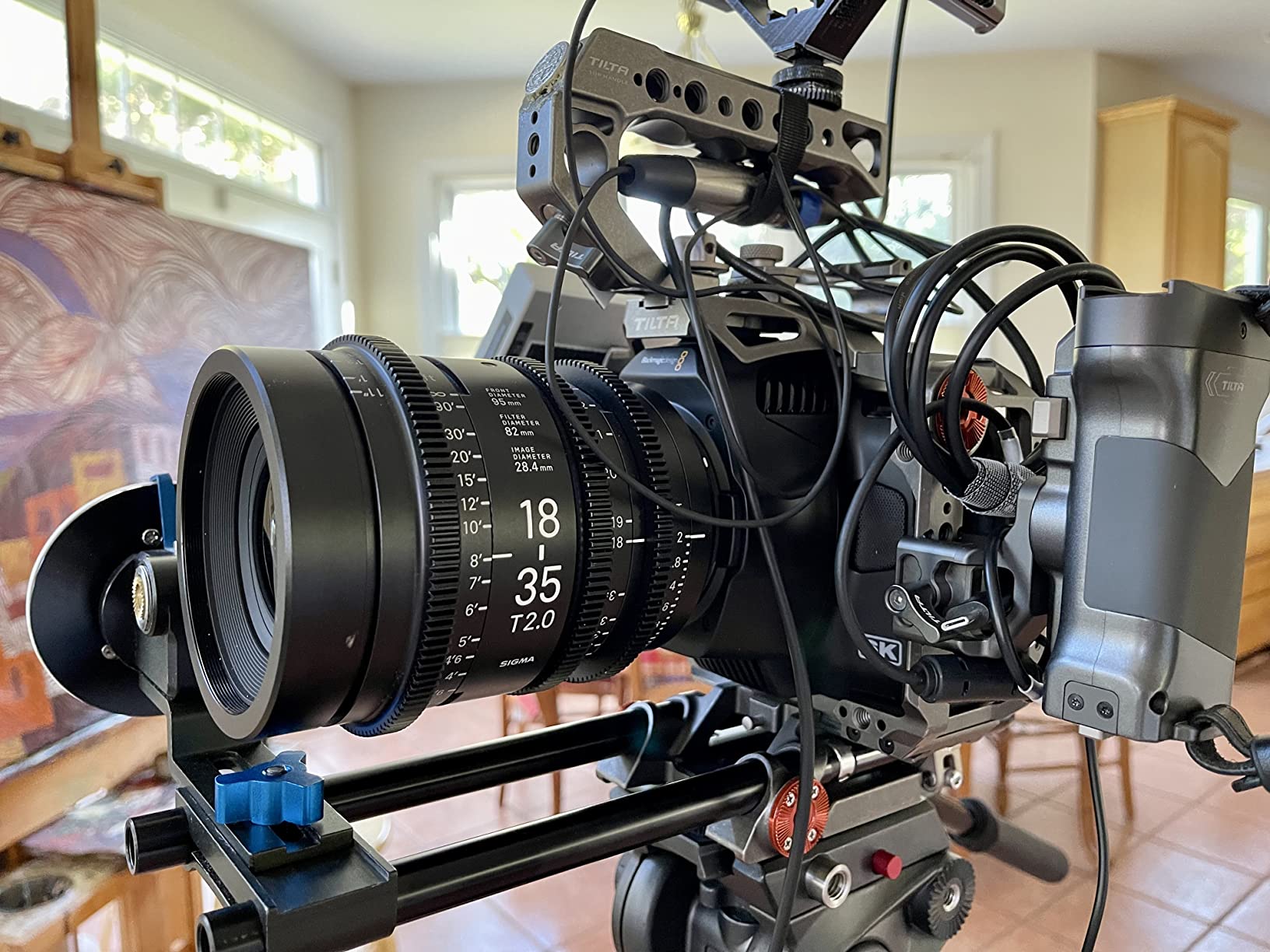
The single feature that changes who buys this body is the active Canon EF and EF-S mount. Every 24-105, 70-200 and fast prime from the stills world drops straight on, which means a photojournalist moving into video can reuse an existing kit instead of starting again. For a reporter who already owns EF glass, that is a real saving in both money and bag space.
The built-in 2, 4 and 6 stop ND filters are the other headline. Stepping from bright daylight outside a courthouse to a dim press room is a normal news day, and a filter saves you from the visible aperture breathing you would otherwise get changing lenses. The tilt 5-inch HDR screen helps with framing from low positions, and audio runs through mini XLR and 3.5mm inputs plus the built-in stereo mic.
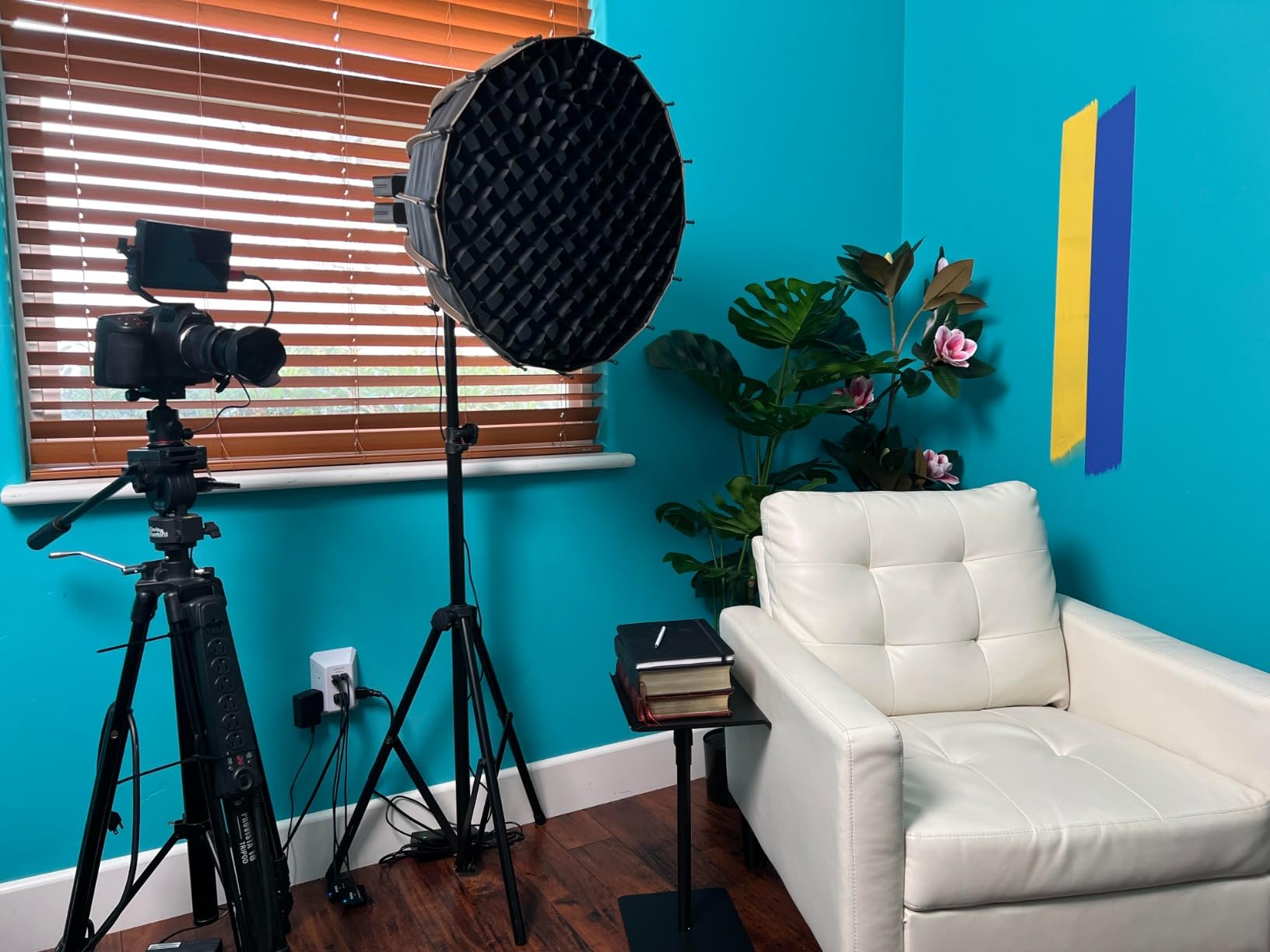
Image quality is a step up from the 4K model, with a Super 35 sensor at 6144 x 3456 and the same 13 stops of dynamic range and dual gain ISO to 25600. Reviewers point out that 6K gives you room to crop a frame for a different editor or to reframe a shot in post, which is genuinely useful when a story develops in a direction you did not expect.
The costs are weight and workflow. At 4.4 pounds this is a body you notice after an hour of handheld work, and the lack of stabilization means a gimbal, a support or careful technique. Focus remains manual-dominant, so it inherits the same run-and-gun caveat as the smaller model. Reviewers also flag the editing overhead: 6K files need a capable workstation and serious storage planning.
When this body earns its place
If you already own Canon EF lenses this is the shortest path to a capable cinema body. The built-in ND filters alone justify it for anyone covering the day-long arc from outside daylight to an indoor hearing.
The tilt screen and 13 stops of range suit controlled, on-a-tripod work such as interviews, panels and stand-ups where you can take your time. Editors will also appreciate the 6K crop flexibility.
When this body is the wrong choice
It is a heavy camera with no stabilization and no reliable continuous autofocus, which makes it a poor companion for moving breaking news. If you are the only person on a live assignment, the weight becomes a real cost by hour three.
Skip it if your edit machine cannot comfortably handle 6K, or if your storage plan has not been made. Reviewers note that file sizes and card demands climb with the resolution.
3. Sony Alpha FX3 – the run-and-gun body for one-person crews
Pros
- Highest rating in this roundup at 4.8 from 214 reviews
- XLR handle is included rather than an extra purchase
- 627 phase detect points with face and eye tracking
- 15 plus stops of dynamic range for night work
- Built-in fan allows uninterrupted 4K 60p
Cons
- Premium cost for the class
- Small 3-inch screen for a rig mounted body
- No built-in ND filters
- No zoom lens so one must be added
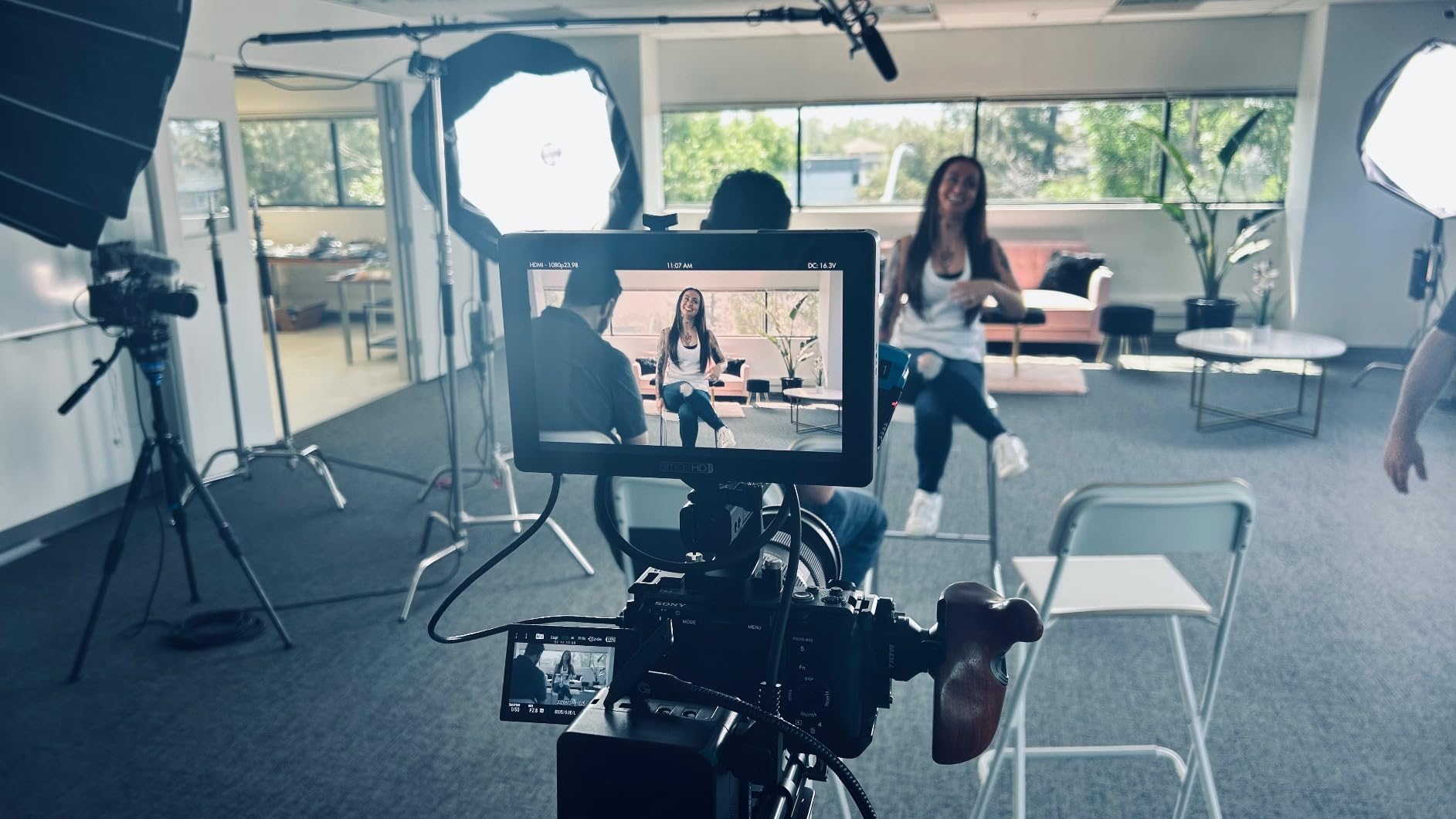
A freelance stringer described the FX3 as the camera that saves their night shifts, and after field time I understand why. It is the highest rated body in this list at 4.8, and the reason is that it removes the three things that most often ruin a solo assignment: focus misses, overheating mid-interview, and unusable scratch audio. The full-frame sensor delivers 15 plus stops of dynamic range, which is the number that lets you shoot a lit night scene and lift the shadows in the edit.
Autofocus is the headline. 627 phase detect points with face and eye tracking lock onto a person walking toward you across a scrim and hold, which is the single most valuable thing a news camera can do. The included XLR top handle solves the audio problem outright, with a real balanced XLR input for a boom or a properly wired lavalier. That is a genuine advantage over hybrid mirrorless bodies, which generally need an external recorder.

Recording behaviour is where the FX3 separates itself from stills-first bodies. The built-in cooling fan allows uninterrupted 4K 60p, so a long press conference or a multi-hour council meeting does not end with a thermal warning and a shortened file. You also get up to 4K 120p 10-bit 4:2:2 with full pixel readout in all recording modes, plus S-Cinetone and S-Log3 profiles for editors who want to grade.
Two memory slots accept CFexpress Type A and SDXC, so you can record a backup of an interview while still capturing to fast cards for the hero shots. Connectivity covers HDMI, USB Type C, NFC and Wi-Fi, which is enough to push a file to an editor over a hotel network. The handling is a genuine article of faith: reviewers describe it as compact, rugged and cage-free with 1/4-20 mounting points, so a handle or a shoulder rig bolts straight on.
When this body earns its place
This is the one to buy when you file both photos and video from the same assignment and cannot be in two places. Autofocus, dynamic range and long recording times are all in the same package, and the XLR handle removes a piece of kit from your bag.
Solo operators and small crews get the most out of it. Anyone working a night exterior or a long council meeting benefits from the fan and the 15-stop range, and the dual card slots give a cheap redundancy layer.
When this body is the wrong choice
The cost is the first honest objection, and reviewers list it as the main drawback relative to the class. If your outlet reimburses a fixed kit amount, a body-only purchase leaves less room for lenses and media.
The 3-inch rear screen is small for a rig-mounted body, so plan an external monitor for critical work. There is no built-in ND filter and no zoom, so a lens is required before the camera is useful in the field.
4. Canon VIXIA HF G70 – the lightest way to cover a live event
Pros
- Only 16 ounces so it disappears on a long assignment
- 20x optical zoom reframes without changing lenses
- Time stamp recording bakes date and timecode into files
- Hybrid AF with face detection reacquires quickly
- USB UVC streaming to a laptop for live reporting
Cons
- Small 1/2.3 inch sensor limits low light
- No professional XLR audio input
- 4K 30p only and not 4K 60p
- Fixed LCD limits low and high shooting angles
If you are covering council meetings, school board sessions or community events on a self-funded budget, this is the camera that lets you keep going. Sixteen ounces changes how long an assignment lasts, and the 20x optical zoom means you can frame a speaker at the back of a room from a fixed position without crawling down the aisle. Advanced image stabilization keeps the shot steady while you stand still, which is how most ENG work is actually shot.
Two features stand out for news specifically. On-Screen Display time stamp recording embeds date, time and timecode directly into the camera files, so an editor sorting a hundred hours of footage can find the moment without checking notes. Dual SD card slots support relay and backup recording, which means a long council meeting does not end because one card filled while you were reframing.
USB UVC streaming lets you send HD video from the camera straight to a PC or Mac for live reporting, and the Hybrid AF system with face detection and adjustable focusing speeds reacquires quickly when people cross the frame. The 8-blade aperture gives smoother out-of-focus highlights than a smaller-bladed diaphragm, which matters for interviews shot at wide apertures.
When this body earns its place
This suits a student journalist or a local stringer who needs usable 4K without moving up to a cinema body. The built-in zoom removes all lens decision-making from a live shift, and the low weight makes long standing assignments practical.
Streaming over USB and time-stamped files make it a strong tool for live reporting and for editors who receive a lot of footage. Dual card slots give the redundancy that news work rewards.
When this body is the wrong choice
The 1/2.3 inch type sensor is the limit that matters. Low light performance and dynamic range will not match the full-frame and 1-inch bodies in this list, so a night exterior is where it will disappoint.
It records 4K 30p rather than 4K 60p, and there is no professional XLR input, so interview audio depends on the built-in mic or an external recorder. The fixed LCD also limits low-angle work.
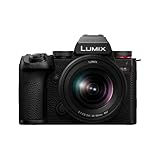
5. Panasonic LUMIX S5II – a stills camera that records all shift
Panasonic LUMIX S5II Mirrorless Camera, 24.2MP Full-Frame with Phase Hybrid AF, New Active I.S. Technology, Unlimited 4:2:2 10-Bit Recording with 20-60mm F3.5-5.6 L Mount Lens, DC-S5M2KK, Black
Pros
- 779 point phase hybrid AF tracks people reliably
- Active I.S. is built for walking handheld shots
- Unlimited recording from fan and heat sink design
- 14 plus stop V-Log and V-Gamut with REAL TIME LUT
- Compact 740 g body with tilting touchscreen
Cons
- No built-in XLR audio input
- L-mount video lens selection narrower than Sony E or Canon RF
- Buffer and card throughput constrain long bursts
- Not weather sealed to the degree of higher-end pro bodies
Walking handheld footage separates real news cameras from spec-sheet cameras, and the S5II is built for it. Active I.S. is designed specifically for walking shots rather than static panning, so a follow-cam move down a corridor behind a council spokesperson does not turn into a shaky mess. At 740 g it is light for a full-frame body, which matters over a shift that includes a lot of standing.
Autofocus is the reason reviewers keep recommending it. Phase Hybrid AF with 779 points, subject detection and metering keep tracking through adverse lighting and with multiple moving subjects, which is exactly the scrim and protest scenario. Reviewers describe the focus as fast and sticky in a way that reduces how many frames you check afterwards.
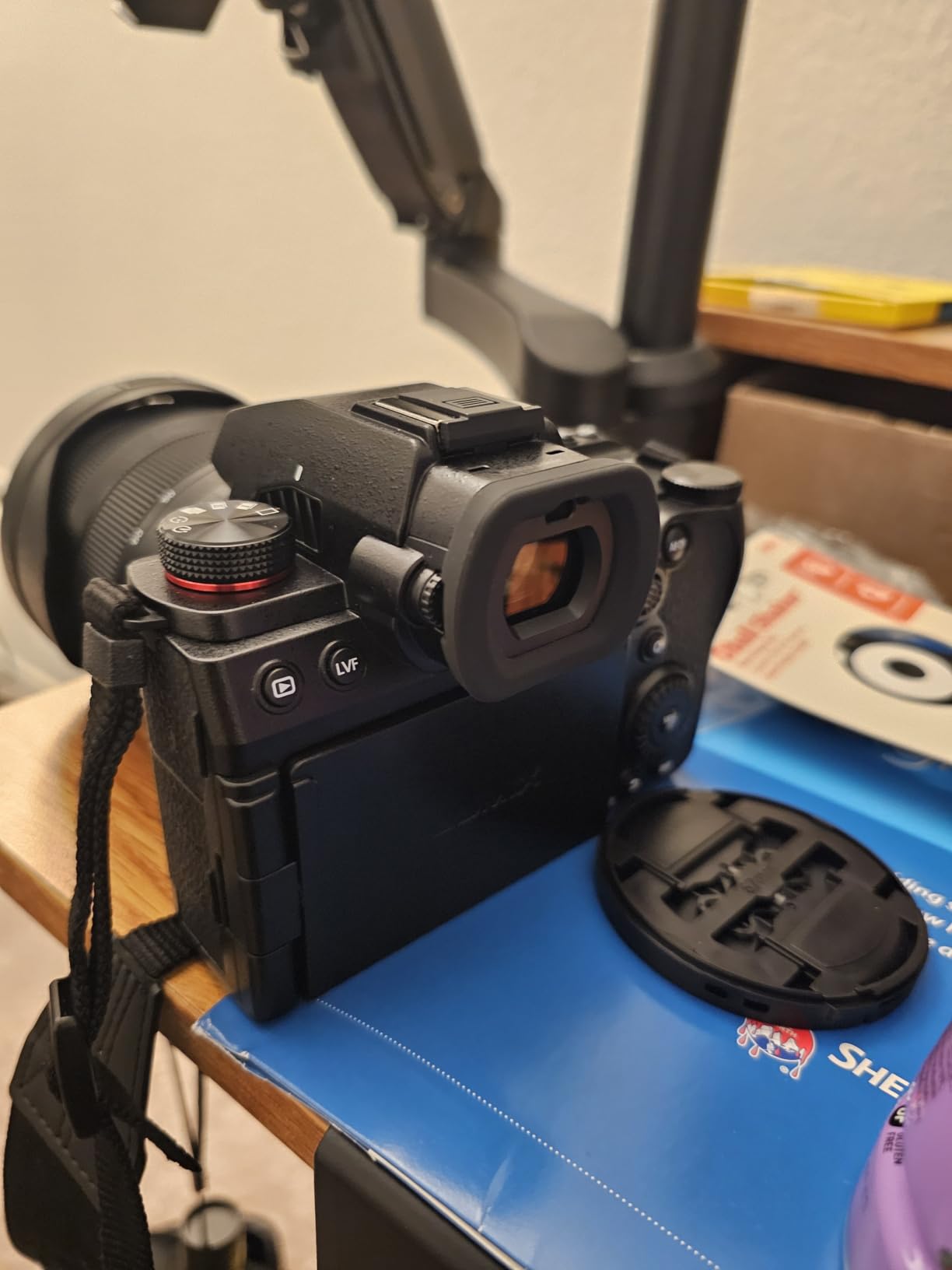
On the video side, the heat dissipation mechanism combining a small fan with a high-efficiency heat sink is what allows unlimited recording, and 6K 30p Open Gate sits alongside it. Fourteen plus stops of V-Log and V-Gamut with REAL TIME LUT give you a usable look before grading, which helps when files must go out fast from a live location.
The constraints are real. There is no built-in XLR audio input, so professional interview sound needs an external recorder or accessory. The L-mount lens selection for video is narrower than Sony E or Canon RF, which is the main reason experienced crews gravitate elsewhere. Reviewers also note that buffer and card throughput can constrain long burst sequences, and that it is not weather sealed to the same degree as higher-end pro bodies.
When this body earns its place
Reporters who move while they shoot get the most from this body. Active I.S., a compact 740 g frame and unlimited recording cover the core ENG problems in one package.
It also works well as a dual-purpose kit, since 24.2MP stills are entirely usable for print and web. Reviewers consistently praise the autofocus reliability for keeping a walking subject sharp.
When this body is the wrong choice
Audio is the disqualifier for interview-heavy work. If your assignment needs XLR sound, this body is the wrong tool without an external recorder.
Weather exposure is the other one. It is not sealed to the degree of higher-end pro bodies, so prolonged rain and dust are a real risk. Long bursts can also hit buffer limits sooner than the headline frame rate suggests.
6. Canon EOS R6 Mark III – when the photo is the deliverable
Pros
- 32.5MP full-frame files give real cropping and print latitude
- 40 fps plus 20 frames of pre-continuous capture
- Dual Pixel CMOS AF II with people detection and Register People Priority
- In-body stabilization rated up to 8.5 stops
- CFexpress Type B and UHS-II SD slots for backup recording
Cons
- Sold as a body only so a lens must be added
- No integrated XLR audio inputs
- Canon RF cinema lens ecosystem still developing
- High resolution stills compete with video buffer and card capacity
For a print photojournalist or a wire stringer, the R6 Mark III is the pick in this roundup. Forty frames per second with twenty frames of pre-continuous capture means the camera is already buffering the two seconds before you press, so the moment a face turns or a door opens is not gone. That pre-capture behaviour is worth more in real news work than a higher headline burst rate.
Subject recognition does the rest. Dual Pixel CMOS AF II with people detection and a Register People Priority option lets you tag the people you are following, which matters on long assignments where you return to the same source hours later. The in-body stabilizer is rated up to 8.5 stops in the centre, so handheld available-light frames are viable without support.

Video is the secondary strength rather than the headline, but it is a credible second deliverable. Dual card slots with one CFexpress Type B and one UHS-II SD card mean you can record a backup while still writing hero stills to the faster card, and Wi-Fi and Bluetooth handle remote control and file transfer to an editor without a cable.
Two practical warnings. It is a body-only purchase, so the lens budget has to be planned separately, which for a freelance reporter is often the larger number. And there are no integrated XLR inputs, so interview audio needs external equipment, which pushes this body toward stills-led assignments where audio is captured separately.
When this body earns its place
Photojournalists who need a frame in the past will love the pre-continuous buffer, and the people detection with priority registration reduces how many frames get culled. Dual card slots give the redundancy that wire work demands.
It also handles 8.5 stops of in-body stabilization, which makes handheld low light viable. Anyone filing photos and the occasional video clip from one assignment is well served.
When this body is the wrong choice
Do not buy it as an interview video body. Without integrated XLR inputs, professional sound means carrying another recorder, and the RF cinema lens ecosystem is still developing for video work.
The body-only configuration catches people out, and the high-resolution stills mode competes with video for buffer and card capacity. If video is the main deliverable, choose a cinema line body instead.
7. Sony Cinema Line FX30 – bundled XLR audio for a solo reporter
Pros
- XLR handle unit and input module ship in the box
- Dual base ISO and flexible ISO options
- 14 plus stop range for grading latitude
- S-Cinetone gives a usable look with minimal grading
- User LUTs apply to LCD and HDMI and embed in clips
Cons
- Only 10 percent of reviews are 5-star
- Single card slot means no simultaneous backup recording
- No built-in ND filters or zoom
- APS-C sensor is smaller than full-frame alternatives
The FX30 solves one specific news problem better than anything else at this level: getting a balanced XLR input into a solo reporter’s kit without buying a handle separately. The XLR handle unit and input module are in the box, which means a boom or a properly wired lavalier plugs straight in on day one. For an ENG chief photographer handing a camera to a new shooter, that is the difference between usable audio on the first assignment and a support call.
The imaging is designed for the same audience. A 20.1MP Exmor R sensor in Super 35 format with a 14 plus stop range and dual base ISO gives clean low-light files without pushing the noise floor hard. Flexible ISO, Cine EI Quick and Cine EI Log modes let you pick a working mode and stay in it, and S-Cinetone gives a usable image with minimal grading when the story has to file fast.
When this body earns its place
Solo reporters and small crews who need interview sound without a second purchase get the most from this body. The LUT workflow, where user LUTs apply to the LCD and HDMI output and embed in recorded clips, speeds up an on-location edit.
Active mode stabilization helps handheld operation, and the compact body is easier on the shoulder than a full-frame cinema rig.
When this body is the wrong choice
The single card slot is the biggest limitation. There is no simultaneous backup recording, so a failed card during a long event is a real risk that other bodies here remove.
Only about 10 percent of reviews are five-star, so satisfaction is more mixed than the full-frame cinema bodies in this list. The APS-C sensor is also smaller than full-frame alternatives, and there are no built-in ND filters or zoom.
8. Sony PXW-Z90V – the no-lens-math camcorder
Pros
- Integrated power zoom removes all lens changes mid-interview
- Fast Hybrid AF with face detection and tracking
- Built-in ND filters plus optical stabilization
- HLG and S-Log profiles for instant HDR workflow
- Balanced XLR audio with dual SD card slots
Cons
- Premium cost for a compact camcorder
- Shallower depth of field than larger sensor bodies at some focal lengths
- Fixed zoom lens limits framing choices
The PXW-Z90V is the camera you hand a reporter who will not think about lenses. The integrated wide-range power zoom covers roughly 29 to 348mm equivalent, so the same body handles a hallway stand-up, a scrim in a cramped room and a long lens across a rally without a lens change or a focus pull mid-question. That is a workflow decision more than a specification one, and for live coverage it is often the one that matters.
Reviewers describe it as dependable, no-surprise professional hardware, and the feature list reads like it. A 1-inch type sensor with fast Hybrid Auto Focus and face detection, optical image stabilization, and built-in ND filters that save you re-exposing when the light changes. The flip-out screen and EVF switch automatically for different shooting positions, which removes a real annoyance in a crowded scrum.
For production workflow, the instant HDR path through HLG and S-Log2 or S-Log3 profiles plus 2.4 and 5 GHz Wi-Fi with XDCAM Air support means files can move to a laptop and a newsroom system without a card reader. Balanced XLR audio and dual SD card slots round out a package designed for a working operator rather than a hobbyist.
When this body earns its place
Live and event coverage is the ideal case. Fast reframing from a wide establishing shot to a tight interview on a face needs no lens changes, and the ND filters handle the day-to-night arc of a full assignment.
Teams that value XLR audio, dual card redundancy and a straightforward HDR workflow without a big post chain will find a lot to like here.
When this body is the wrong choice
The fixed zoom is the constraint by design. If your beat needs interchangeable lenses, extreme low light performance or a specific focal length that a built-in zoom cannot reach, this is the wrong body.
Reviewers also note some depth of field is shallower than larger sensor alternatives at certain focal lengths and apertures, and the cost is high for a compact camcorder.
9. Canon XA70 Pro – two XLR inputs and dual-card redundancy
Canon XA70 Pro Camcorder 1″ 4K UHD CMOS Sensor, Dual-Pixel CMOS AF, 15x Optical Zoom, 600x Digital Zoom, Image Stabilization, HDMI, USB Live Streaming, Time Stamp On-Screen Disp. Recording, XLR Inputs
Pros
- Two XLR terminals allow a boom and a wireless pack at once
- 15x optical zoom with infrared and optical stabilization
- 4K UHD 160 Mbps at 30p or 24p and Full HD 45 Mbps at 60p
- Dual SD card slots enable relay and simultaneous recording
- 3.5-inch touchscreen LCD plus tiltable OLED EVF for bright sunlight
Cons
- Heavier and bulkier than compact consumer camcorders
- No built-in ND filters so lighting changes need re-exposure
- A 12 percent share of 3-star reviews signals mixed experiences
- Premium cost for a compact 1-inch body
Two XLR terminals on the detachable handle is the feature that separates this body from every other compact camcorder in this roundup. One reporter can run a boom into one input and a wireless lavalier pack into the other and get a proper mix, with 4-channel linear PCM recording. That is the setup you would build by hand on most other bodies, and here it is simply how the camera is designed.
The imaging comes from a 1-inch CMOS sensor with a DIGIC DV6 processor. Recording options cover 4K UHD at 160 Mbps in 30p or 24p and Full HD at 45 Mbps across 60p, 60i, 30p and 24p, in XF-AVC or MP4. Dual-Pixel CMOS AF with face detection handles acquisition, and a 15x optical zoom with infrared and optical image stabilization covers a working range without changing lenses.
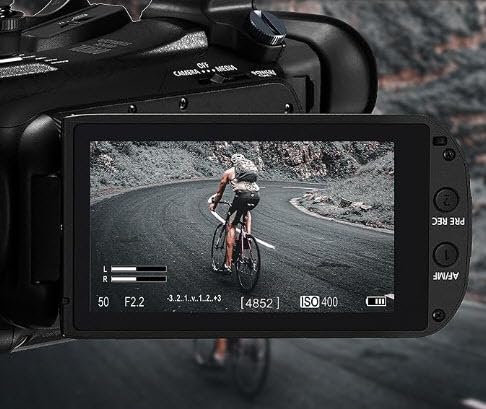
Redundancy and delivery are handled well. Dual SD card slots enable relay and simultaneous recording, so a long hearing can run to a second card without an operator noticing. USB Type-C with UVC support streams HD directly to a PC or Mac, and a 3.5-inch touchscreen LCD plus a tiltable OLED EVF covers bright outdoor monitoring. It also works as a webcam, which a reporter filing remote segments will appreciate.
The honest notes are weight, NDs and the rating spread. It is heavier and bulkier than a consumer compact, and there are no built-in ND filters, so a lighting change means a re-exposure. Reviewers also report a 12 percent share of three-star feedback, so image quality and handling produce more mixed experiences here than the average across this group.
When this body earns its place
Two-person audio is the standout use. A boom plus a wireless pack on separate XLR inputs is a real broadcast workflow, and 4-channel PCM captures it cleanly in one file.
Long events benefit from the dual card relay, and the EVF plus touchscreen combo makes bright outdoor events easier. It is a strong second body for a reporter who also does live streaming.
When this body is the wrong choice
It is bulkier than a consumer compact, and the missing built-in ND filters mean a day-long assignment needs constant exposure management. For a stills-first print beat, the 8.29 megapixel stills are not the deliverable.
The share of three-star reviews points to genuinely mixed experiences with image quality and handling, so if consistency matters more than feature count, look at a body with a deeper review base.
10. Panasonic HC-X20 – built for the news scrim and the scrum
Panasonic Camcorder, Professional Quality 4K 60p, 1.0-inch Sensor, 24.5mm Wide-Angle Lens and Optical 20x Zoom, Great for News, Interviews, and Events – HC-X20
Pros
- Purpose-built for news and interviews with well-balanced handling
- 20x optical zoom from a 24.5mm wide with i.ZOOM
- 4K High Precision AF with face detection AF and AE
- Triple manual ring and user switch for fast pro operation
- XLR input with built-in Wi-Fi and Ethernet streaming
Cons
- Only 15 reviews so long-term reliability data is limited
- Heavier 4.5 pound body than compact consumer camcorders
- Manual control ring layout is entry-level against higher pro models
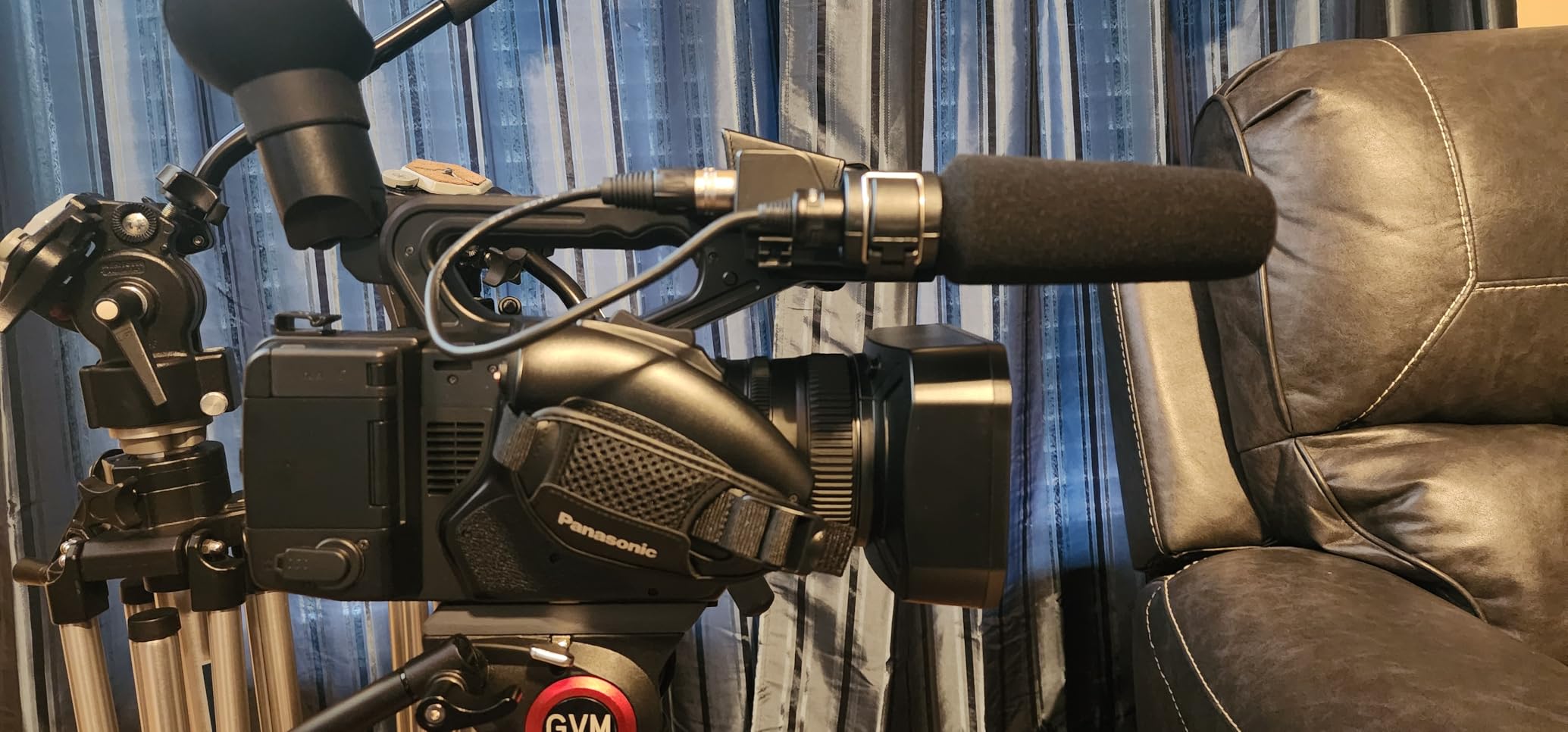
Reviewers with hands-on experience describe this as purpose-built for news, interviews and events, and the handling figures back that up. Weight balance matters more in this job than headline specs: a camera that sits level on the shoulder does not need constant correction, which is the difference between covering a two-hour meeting and fighting the camera for two hours. At 4.5 pounds it is heavy for a compact, but that mass is placed where an ENG operator expects it.
The zoom range is the quickest reframing in this roundup, and the widest start point. A 24.5mm wide starting point goes to a 20x optical zoom, with i.ZOOM extending to 32x in FHD and 24x in UHD, so a wide establishing shot tightens to an interview face without a lens change. The triple manual ring, user switch and wired remote control give fast pro operation without digging through menus.
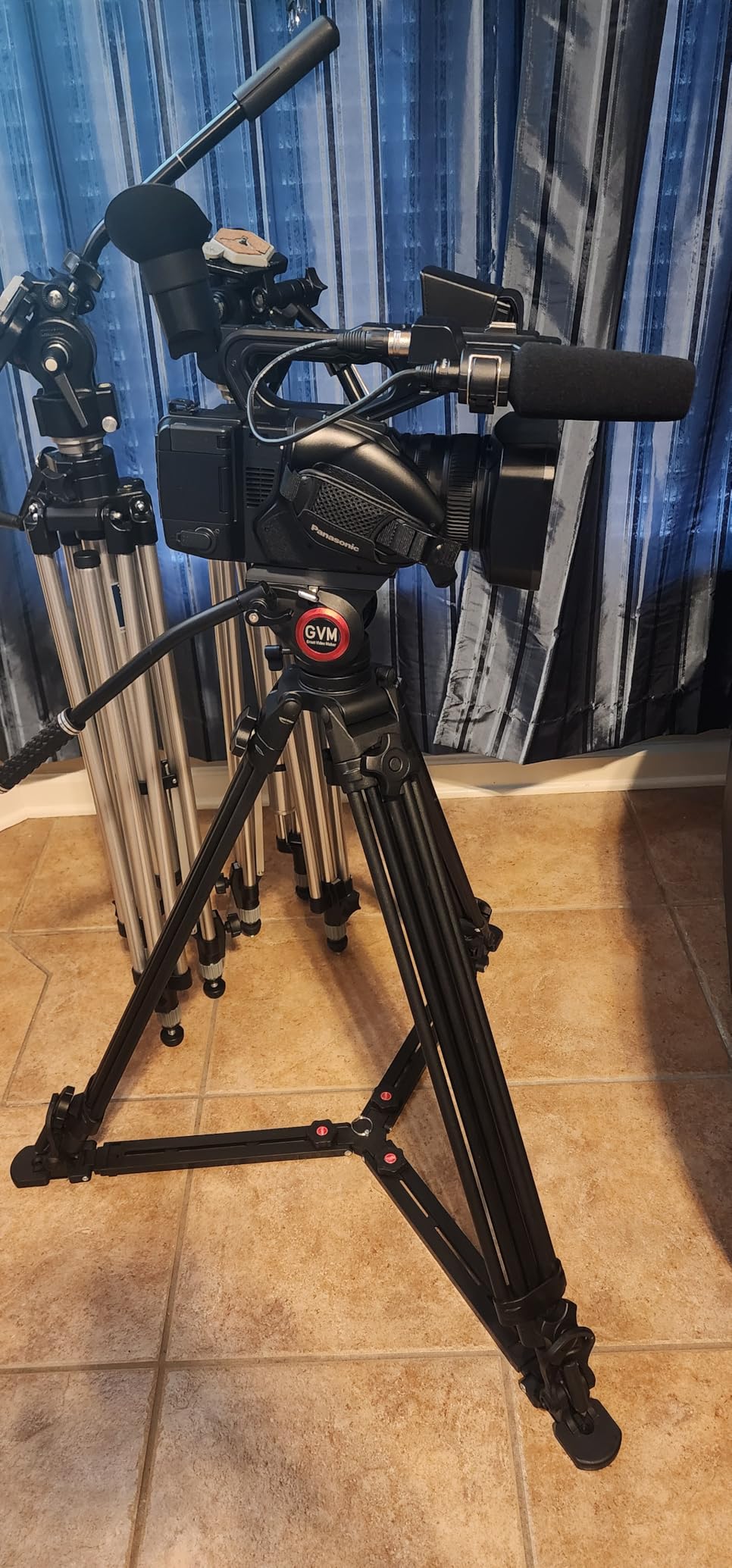
Imaging comes from a 15-megapixel 1.0-type MOS sensor with 4K 60p and 24p, FHD 60p multi-format recording and an HEVC codec. 4K High Precision AF with face detection AF and AE keeps a speaker framed, and 5-Axis HYBRID O.I.S. stabilisation smooths handheld movement.
Connectivity is aimed straight at a newsroom. XLR input, built-in Wi-Fi and Ethernet support with a USB-LAN adapter, and wired remote control all point at live output rather than post-only work. The limitation is evidence, not performance: with 15 reviews, long-term reliability data is thin, so you are buying on design intent rather than a deep owner history.
When this body earns its place
Fast reframing is the reason to choose it. Going from a 24.5mm wide to a 20x optical reach in seconds handles the wide-and-tight rhythm of a live event without interrupting an interview.
XLR input plus Wi-Fi and Ethernet make it a natural fit for crews that push output to a station or a live vehicle, and the balanced handling suits long standing assignments.
When this body is the wrong choice
The weight is the first thing you notice in hour three, and it is heavier than compact consumer camcorders. The manual control ring layout is also entry-level next to higher professional models.
With only 15 reviews, there is not much long-term owner data, so if you need proven reliability under sustained use, a body with a deeper review history is the safer bet.
How to Choose a Camera for News Reporting
News work breaks down into a few hard requirements, and a camera that fails any one of them will lose you a story. The eight criteria below are the ones we judged every body in this list against, in roughly the order that matters.
Autofocus that holds a moving subject. The defining moment of a news assignment is unpredictable: a subject turns, walks toward you, or is obscured and reappears. Subject-recognition autofocus with people detection and tracking is what separates a usable body from a frustrating one. The Sony FX3 with 627 phase detect points and the Panasonic S5II with 779 phase hybrid AF points are the two strongest trackers here, and Canon’s people detection plus Register People Priority on the R6 Mark III is the smart option for a source you follow all day.
Buffer depth, not just frame rate. This is the single most misunderstood spec. A camera with a high headline frames per second but a shallow buffer gives you three clean frames and then a stutter, which is worse in practice than a moderate frame rate with a deep buffer. Pre-continuous capture solves the same problem differently: the Canon R6 Mark III buffers 20 frames before you press, so the moment is already there.
Weather sealing. Rain, dust, crowd handling and cold hands break cameras. Treat weather sealing as a first-class criterion rather than a footnote, and note that not every body here offers it. The Panasonic S5II is specifically reported as not sealed to the degree of higher-end pro bodies, which matters if your beat involves wildfire, storm or conflict coverage.
Low light and high ISO. Most news happens after dark or in bad rooms. Dynamic range in stops is the more useful number than a maximum ISO figure: the Blackmagic Pocket bodies and the 6K Pro give 13 stops, the S5II gives 14 plus stops of V-Log, and the Sony FX3 gives 15 plus stops. More range means you can expose for a lit window and recover the room.
Audio, and specifically XLR. News is audio first, and this is where most stills cameras fail. Five bodies here have a real balanced XLR path: the Sony FX3 and FX30 with included handles, the Sony PXW-Z90V, the Canon XA70 Pro with two XLR terminals on its handle, and the Panasonic HC-X20. The Blackmagic Pocket bodies use a mini XLR, which suits a lavalier but not a full broadcast boom without an adapter.
Recording limits and thermal behaviour. A body that throttles at the 28-minute mark is fine for a short piece and useless for a full council meeting. The Sony FX3’s built-in fan allows uninterrupted 4K 60p, and the Panasonic S5II’s fan and heat sink design enables unlimited recording. Compact consumer camcorders such as the Canon VIXIA HF G70 have no such constraint but top out at 4K 30p.
Dual card slots and delivery workflow. Dual slots let you record a simultaneous backup, relay to a second card, or separate stills from video. Five bodies here support them: the Canon R6 Mark III pairs CFexpress Type B with UHS-II SD, the FX3 takes CFexpress Type A and SDXC, and the G70, PXW-Z90V and XA70 Pro all use dual SD. Delivery matters as much as capture: Wi-Fi transfer, UVC streaming over USB and newsroom codecs decide how fast files reach an editor.
Weight and handling. Numbers in this roundup run from 16 ounces on the Canon VIXIA HF G70 to 4.5 pounds on the Panasonic HC-X20, with the Blackmagic Pocket 4K at 695 g and the Panasonic S5II at 740 g. Pick the body you can still be shooting with in hour four.
So which type do you need? A dedicated ENG camcorder with a built-in zoom wins on speed of reframing, battery endurance and XLR audio, and our [broadcast camera guide](https://markus-hagner-photography.com/best-broadcast-cameras/) covers that class in more detail. A mirrorless hybrid wins on autofocus, stills quality and low light, and it is the only practical option if you deliver photos and video from one assignment. A cinema body wins on image quality, codecs and audio inputs, and costs more in handling weight. Our [camera brand guide](https://markus-hagner-photography.com/best-cameras-brands/) is a useful stop if you are still narrowing the mount first.
On lenses: forum regulars consistently push a general-purpose zoom plus one fast prime as the practical starting kit rather than a prime-only setup. A 24-105 or 24-120 covers press conferences, scrums and stand-ups without lens changes, and a fast prime handles the low light interiors where news often goes. If you buy a body with a built-in zoom, that decision is made for you, which is a legitimate reason to choose a camcorder. Worth reading the current [Sony camera roadmap](https://markus-hagner-photography.com/two-new-sony-high-end-cameras-coming-next/) before committing to a mount.
One more thing the spec sheet will never tell you. A working photojournalist described shooting storm damage in heavy rain and trusting whichever camera kept functioning without being fussed over, and now refuses to recommend any camera that does not run long and charge easily in the field. Battery planning and spare media are part of the camera choice, not an accessory decision made later.
Finally, ethics and consent are part of the job. Know the rules before you raise a camera at a protest, a courthouse or a private residence, and remember that a working photographer still needs consent in private spaces. If you are new to this beat, the [engagement standards your profession publishes](https://www.nppa.org/code-of-ethics/) are worth reading before the first assignment rather than after.
Frequently Asked Questions
What is the best camera for a news reporter?
The best camera for a news reporter is one that acquires focus on an unpredictable subject, records usable interview audio, and survives the conditions. Our top pick is the Blackmagic Design Pocket Cinema Camera 4K for its 13 stops of dynamic range, dual gain ISO to 25600, mini XLR input and 695 g weight. If you need stronger autofocus, the Sony Alpha FX3 leads this list at 4.8 stars.
What video camera do news reporters use?
Most working reporters use one of three things: a dedicated ENG camcorder with a built-in zoom and XLR audio, a full-frame cinema body such as the Sony Alpha FX3, or a mirrorless hybrid such as the Canon EOS R6 Mark III. ENG camcorders win for speed of reframing and long record times, cinema bodies win on image quality and XLR, hybrids win on autofocus and stills.
Is mirrorless or DSLR better for photojournalism?
Mirrorless has overtaken DSLR for photojournalism because modern bodies offer faster subject-recognition autofocus, in-body stabilization, silent shooting and deeper buffers at the same weight class. The Canon EOS R6 Mark III, with 40 fps and 20 frames of pre-continuous capture, shows what that buys you. A used DSLR still makes sense for a budget build if you value the optical viewfinder and a wide used lens pool.
Do I need dual card slots for news work?
Yes, if you can afford it. Dual slots let you record a simultaneous backup, relay to a second card during a long event, or separate stills from video without risking both. The Canon EOS R6 Mark III, Sony Alpha FX3, Canon VIXIA HF G70, Sony PXW-Z90V and Canon XA70 Pro all support them. The Sony FX30 has a single slot, which is its main workflow limitation.
What lenses should a news reporter start with?
Start with a general-purpose zoom such as a 24-105 or 24-120, which covers press conferences, scrums and stand-ups without lens changes, and add one fast prime for low light interiors. Forum regulars consistently recommend this pairing over a prime-only kit. A reporter who wants zero lens decisions can choose a camcorder with a built-in zoom instead, such as the Sony PXW-Z90V or Panasonic HC-X20.
Our Verdict for News Gathering in 2026
The Blackmagic Design Pocket Cinema Camera 4K is our best camera for news gathering in 2026 because it combines the widest field report history in this roundup with a feature set that covers interview, documentary and multi-shift event work, and it does it at 695 g. Buy the Sony Alpha FX3 if autofocus reliability and real XLR audio are the deciding factors, and the Canon VIXIA HF G70 if weight and a built-in zoom decide it for you.
Beyond that, match the body to the deliverable. Photo-first beats want the Canon EOS R6 Mark III and its pre-continuous buffer, live event work wants the Canon XA70 Pro or Sony PXW-Z90V, and footage-first packages want the Sony FX3 or FX30 with their included XLR handles. Whatever you choose, budget for lenses, spare batteries and cards before the first assignment, not after.