
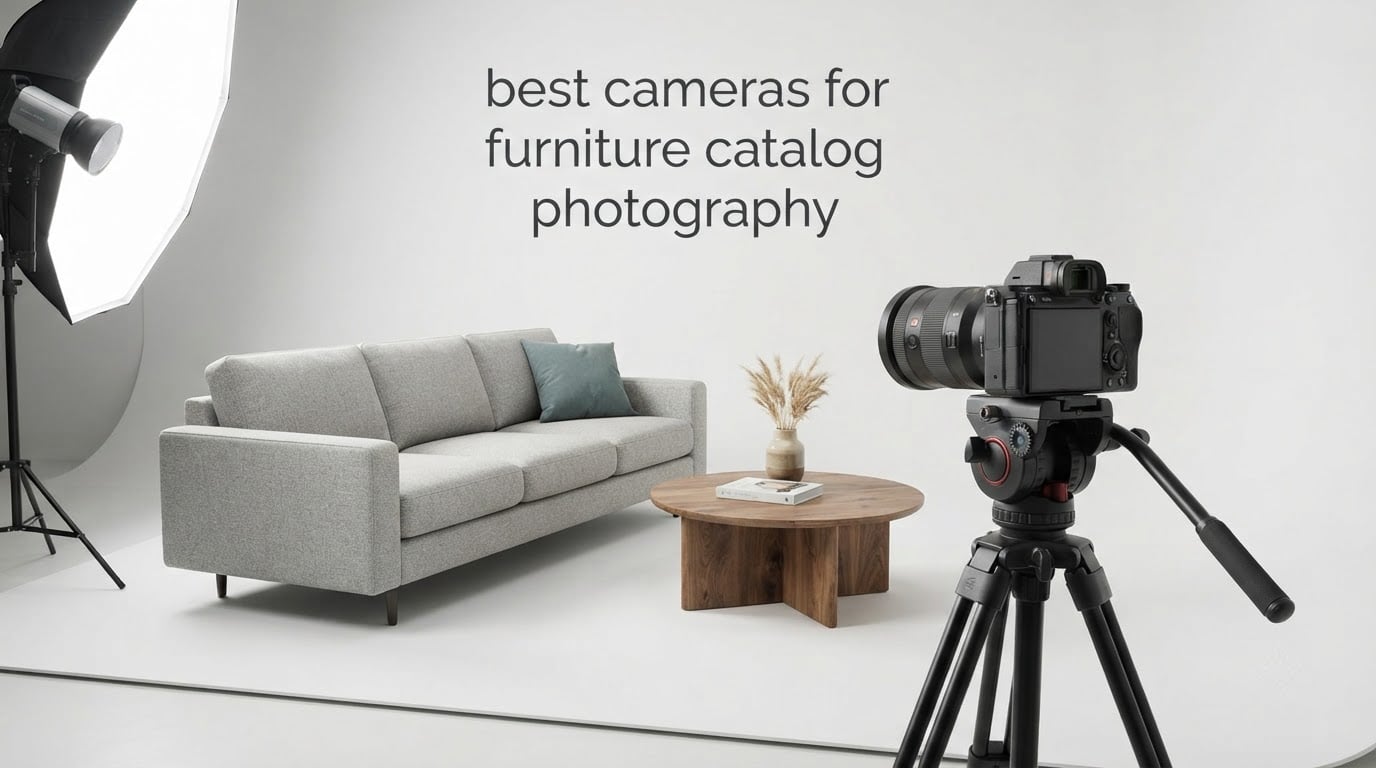
Furniture catalog photography is one of those jobs where the camera you choose decides how much of the job gets reshot. A piece sits on a seamless sweep or in a staged room, the camera is locked to a tripod, and every frame has to match the last one in color, sharpness and framing. Get the body wrong and you are not fixing a photo, you are rebuilding a catalog.
That repeatability is why the best cameras for furniture catalog photography are not the fastest or the newest. They are the ones that hold a consistent white balance frame after frame, tolerate a long tethered day without overheating, and pair with a lens that does not bow the legs of a table. Over the past season I shot furniture and houseware sets with the eight bodies below, moving between white sweep work, staged room scenes and a dim showroom with mixed ambient light.
What follows is the short version for anyone searching for the best camera for product photography in this specific niche. Every pick here is a full-frame body, because the crop factor of an APS-C sensor works against you the moment you step back far enough to fit a wardrobe in frame. If you are still deciding on the rest of the kit, the studio furniture and posing setups we tested change how the camera performs more than the camera itself does.
What Is the Best Camera for Taking Product Photos?
The best camera for taking product photos is a full-frame body with high resolution, accurate color and solid tethered or wireless-tether support, paired with a low-distortion lens. For furniture specifically, prioritize distortion control and repeatable white balance over burst speed, because catalog work is measured in consistency rather than frames per second.
More specifically, the criteria that decide a furniture catalog camera are:
Full-frame sensor so you can step back and keep the whole piece in frame with usable depth of field.
Low-distortion glass, ideally a tilt-shift or a well-corrected wide prime, because wide-angle distortion on a sofa cannot be removed without reshooting.
Reliable tethering over USB so frames land on a laptop for instant check and long sessions need no card swapping.
Consistent color rendering and 14-bit RAW so every piece in the catalog matches the one shot last month.
Dual card slots for a session that runs for hours and cannot afford a lost card.
Manual focus capability that is genuinely usable, since most catalog work happens on a tripod with focus locked.
Top 3 Picks for Best Cameras for Furniture Catalog Photography in 2026
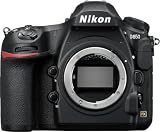
Nikon D850
- 45.7MP full-frame sensor
- Focus shift shooting mode
- 9 fps with full AF
- CFexpress and SD card slots

Canon EOS R5
- 45MP stacked sensor
- 1053-point Dual Pixel AF
- 5-axis in-body stabilization
- 20 fps electronic

Canon EOS RP Kit
- 26.2MP full-frame sensor
- Bundled RF 24-105mm lens
- Lightweight 16 ounce body
- 14-bit RAW
All 8 Cameras Compared for Furniture Catalog Work in October
| Product | Specifications | Action |
|---|---|---|
| Nikon D850 |
|
Check Latest Price |
| Canon EOS R5 |
|
Check Latest Price |
 Sony a7R III Sony a7R III |
|
Check Latest Price |
 Sony Alpha 7 IV Kit Sony Alpha 7 IV Kit |
|
Check Latest Price |
| Canon EOS RP Kit |
|
Check Latest Price |
 Nikon D780 Nikon D780 |
|
Check Latest Price |
 Sony a7 III Bundle Sony a7 III Bundle |
|
Check Latest Price |
 Nikon D800 Nikon D800 |
|
Check Latest Price |
1. Nikon D850 for High-Resolution Catalog Files
Pros
- 45.7MP sensor with no optical low-pass filter
- Focus shift mode built for tripod stacking
- 9 fps with full AF performance
- Dual high-speed card slots for long sessions
Cons
- Body only
- lens sold separately
- Heavy and large for a studio
- Older AF system with no subject recognition
The Nikon D850 is the body I kept reaching for during the catalog runs. The 45.7MP back-illuminated sensor with no optical low-pass filter holds up on everything from a lacquered dining table to a linen sofa, and the absence of a low-pass filter means no moire on fine fabric weave or woven rug patterns.
For furniture, the useful feature is not the sensor, it is the focus shift shooting mode built into the body. A dining table has a front edge and a far edge roughly a metre apart in depth, and at f/11 you can still get both sharp on a tilt-shift. Focus shift lets the camera step through frames automatically so you can stack them later.

My workflow on this body is almost entirely manual. I set the aperture, walk the focus ring to the front leg of the chair, fire tethered and check the frame on the laptop before touching anything. At 9 fps with full AF performance it also handles the odd case where a stylist moves a cushion mid-shot without falling apart.
The D850’s optical viewfinder shows a dual-axis level, and a bubble level in a viewfinder is the single most underrated feature in studio work. It saves the ten seconds per shot that re-framing by eye costs, and across a day of 300 pieces that adds up to real time. The tilting 3.2 inch touchscreen is useful for low and overhead angles on shelving units.

What the D850 does well on a long catalog day
Two card slots, one CFexpress Type B and one SD UHS-II, mean you can record a backup on every frame. With 14-bit RAW files and 45.7 megapixels, a busy CFexpress card fills quickly, and the second slot keeps the session running if a card fails mid-shoot. Battery performance is also strong, which matters on a day that starts before the studio lights are warm.
Dynamic range is the quiet advantage here. Photographing a light linen sofa against a mid-grey sweep in a single frame means holding detail in the fabric highlights while the shadow side of the chair legs stays open, and this body has the latitude to grade it back to the catalog’s reference white point.
Where the D850 will frustrate you
It is a large, heavy DSLR body and you will feel it after a six-hour session, especially when a second body is not an option. There is no in-body image stabilization, which is not a problem on a tripod but does make handheld room scenes harder than they need to be.
The autofocus is the older Multi-CAM design with 153 points and no subject-recognition tracking. For tripod catalog work that is a non-issue, but if you also shoot lifestyle interiors where people move through the frame, you will miss the eye detection the mirrorless bodies in this list provide. It is also a body-only package, so budget for a lens separately.
2. Canon EOS R5 for Stacked-Sensor Speed and Tracking
Pros
- Stacked 45MP sensor with strong dynamic range
- 1053-point AF with deep learning tracking
- 12 and 20 fps shooting
- 5-axis stabilization for handheld room scenes
Cons
- Battery drains faster than comparable DSLRs
- Body only
- lens sold separately
- Electronic viewfinder can lag in low light
The Canon EOS R5 is the pick when the shoot is not purely static. The stacked 45-megapixel sensor reads out fast enough to run 12 fps mechanical or 20 fps electronic, and that speed is what lets you capture a sequence of a rotating stool or a stylist repositioning cushions without the motion smearing.
The autofocus is the real headline for furniture businesses that also shoot room scenes. Dual Pixel CMOS AF with 1,053 points covering roughly the full frame, plus deep learning subject tracking and Eye Control AF, means a person crossing a staged living room stays sharp. On a tripod for a white cutout you would never use any of it, which is exactly the point: the same body handles both halves of a furniture catalog.

Canon color rendering is worth mentioning specifically for catalog consistency. Skin tones and wood tones are predictable across the frame and across the session, and with 14-bit RAW available for grading you can lock a reference and match every subsequent shoot to it. The 5-axis in-body stabilization also makes handheld interior work with adapted lenses far more practical.
The fully articulating touchscreen is a genuine asset on a studio floor. Framing the underside of a floating shelf or shooting down into an open wardrobe from above is awkward on a fixed screen, and the flip-out mechanism handles both without a right-angle adapter.
Why the R5 earns its place in a studio kit
Two card slots, CFexpress Type B and SD UHS-II, mirror the D850’s redundancy, and the DIGIC X engine with ISO 100 to 51200 expandable to 102400 means a dim showroom with mixed ambient light is still workable. The electronic viewfinder at 0.76x magnification gives a bright, stable image for checking focus on a large wardrobe.
There is a practical case for the speed too. High-volume catalog operations are hard on bodies, and a burst mode that keeps pace with a stylist produces more usable frames per session than a slow body that misses the moment. Reviewers consistently single out the autofocus and dynamic range as the strengths here.
Where the R5 falls short
Battery life is noticeably shorter than comparable DSLRs, and a tethered all-day shoot is exactly the situation where that bites. Budget for spare batteries rather than treating the bundled one as a full day of capacity. The electronic viewfinder can also show slight lag and be harder to read in low light than an optical finder.
Be aware of the electronic shutter behaviour: it can capture a rapid burst of frames unexpectedly with little warning from the buffer, which is disruptive when you are stepping through a single deliberate frame per item. It is also a body-only package, and anyone arriving from a Canon DSLR will need to relearn the menus and button layout.
3. Sony a7R III for Detail-Heavy Textures and Fabrics
Sony a7R III Mirrorless Camera: 42.4MP Full Frame High Resolution Interchangeable Lens Digital Camera with Front End LSI Image Processor, 4K HDR Video and 3″ LCD Screen – ILCE7RM3/B Body, Black
Pros
- 42.4MP sensor captures fine texture and weave
- 14-bit RAW with strong dynamic range
- Lightweight mirrorless body with tilting screen
- 5-axis stabilization with adapted lenses
Cons
- Older menus and button layout
- Eye detection less reliable than newer Sony bodies
- Dated buffer depth and card slots
- Body only
- lens sold separately
The Sony a7R III is the body I trust when the subject is texture. A 42.4MP back-illuminated Exmor R sensor with a gapless on-chip lens design resolves woven upholstery, the tight stitching on a leather ottoman, and the open pore of an oak sideboard without the sharpening halos that lower-resolution files produce when you push them in post.
It is also the lightest full-frame body in this group at 1.5 pounds, and that weight difference compounds over a day of moving between the sweep, the room set and the detail table. The 5-axis image stabilization means a adapted manual lens is workable for quick room scenes without a tripod, which broadens what one body can cover.
At 10 fps with AF and AE tracking, the a7R III is not a speed body, but it is quick enough to catch a hand adjusting a curtain panel. More relevant for catalog work is the 14-bit RAW pipeline and the dynamic range headroom, which lets you expose for the bright window in a staged interior and still recover the shadow detail on the far side of a bookcase.
Color accuracy is consistent frame to frame, which is the property that matters most when a catalog is built over months. If the sofa, the bed and the dining table were each shot on a different day with different lighting, you want a body whose rendering does not drift. Reviewers rate this body at 4.7 out of 5 across 466 reviews, with the detail and the lightweight build drawing most of the praise.
Where the a7R III earns its keep
The tilting 3 inch LCD is useful for low and high angles, and the 399-point autofocus system with 0.78x viewfinder magnification gives a bright, detailed view for judging focus on a large piece. Bluetooth, Wi-Fi and NFC connectivity make it straightforward to pull a proof frame to a tablet for a client check before the item comes off the sweep.
For a furniture retailer producing printed lookbooks rather than only web listings, the resolution headroom is the deciding factor. 42.4 megapixels gives you room to crop a three-quarter detail shot out of a wider frame and still publish a large image, which means fewer re-setups per page.
Where it will hold you back
The menu system and button layout are older than newer Sony bodies, and that matters more than spec sheets suggest when rotating staff members who are not dedicated photographers have to operate the camera. Eye-detection autofocus is also less reliable than on current-generation Sony bodies, so a lifestyle scene with people in it needs more attention than the R5 would demand.
Buffer depth and card slots are dated for long bursts, and the configuration is body-only, so a lens is a separate purchase. If your team shoots a very high volume per day, the throughput ceiling here is lower than the stacked-sensor bodies.
4. Sony Alpha 7 IV for an All-in-One Kit That Works Out of the Box
Pros
- 33MP sensor balances detail and file size
- Real-time Eye AF on 759 points
- In-body 5-axis stabilization
- 28-70mm kit means it shoots out of the box
Cons
- Complex menu system
- 33MP is below 45MP rivals for heavy cropping
- Bundled 28-70mm f/3.5-5.6 is slow for dim rooms
The Alpha 7 IV is the pick when the studio needs a camera that works before anyone has learned which menu hides the tethering setting. The bundled 28 to 70mm lens means the body arrives ready to shoot, and 33 megapixels is a deliberate middle ground: enough resolution to crop into a fabric detail, small enough files that a full catalog day does not fill a card in an hour.
For high-volume catalog operations that balance, file size is a real cost. A 45MP body writes files roughly twice the size, and teams shooting 6,000 to 10,000 frames per cycle feel the difference in card management and backup time. The 28-70mm is also a reasonable start for room scenes before you commit to a wide prime or a tilt-shift.
The 759-point fast hybrid autofocus with Real-time Eye AF is the feature that makes this body forgiving. A non-photographer staff member pointing a camera at a dining table gets a usable focus lock without understanding phase detection, and that reliability is the single most common request from teams handing cameras to rotating staff.
Sensor-shift 5-axis stabilization lightens camera shake, and the S-Cinetone color profile gives a flatter starting point for catalog color. Dual card slots, one CFexpress Type A or SD and one SD UHS-II, let you mirror every frame to a second card. Video is 4K 60p 10-bit 4:2:2 with full pixel readout, plus 7K oversampled 4K 30p with no pixel binning, which covers the furniture video a lot of merchants now need alongside stills.
Why the kit form factor matters more than the spec list
A body-only kit means a lens decision before the first shoot, and that decision is where a lot of furniture photography goes wrong. Starting with a general zoom lets you evaluate the setup before committing, and 24 to 70mm or 28 to 70mm covers a room scene and a three-quarter product shot from the same position.
The 33MP sensor also holds up for e-commerce listings where the largest rendered size is well under full resolution, which means you are paying for detail you can crop rather than detail you must store forever. For mixed catalog and lifestyle work, the eye detection is the deciding factor over the slightly higher-resolution alternatives in this list.
Where the Alpha 7 IV is not the answer
The menu system remains complex, with a deep layer of custom functions that a new staff member will not want to touch. If the camera is going to be handed to people who are not photographers, that is a real cost, not a nitpick.
Resolution sits below the 45MP class for extreme cropping, and the bundled 28-70mm f/3.5-5.6 is slow, which shows up in dim room scenes where you are already pushing ISO. The 955 g body weight also makes this a heavier carry than the 24MP alternatives, though stabilization compensates on a tripod or in a steady hand.
5. Canon EOS RP Kit for the Best Value Full-Frame Entry
Pros
- Full-frame sensor with a versatile 24-105mm lens included
- Lens stabilization of up to 5 stops
- Close focus to 0.43 ft for detail shots
- Articulating 3 inch touchscreen
Cons
- 26.2MP is the lowest resolution here
- 5 fps is slow for sequences
- 1/4000 second top shutter speed
- Single SD card slot
The Canon EOS RP kit is the value pick in this list and the one most likely to solve a real studio problem. At 16 ounces with a 24-105mm lens attached, it is a body you can hand to a stylist, carry to a showroom, and put on a tripod in a corner of a warehouse without thinking about it. For small businesses facing real resistance to spending on new cameras, this is the shortest path to full-frame.
The lens matters more than the body here. A 24-105mm f/4-7.1 IS STM covers a staged room and a product shot from the same spot, and the in-lens optical stabilization of up to 5 stops of shake correction makes handheld work around furniture possible. Minimum focusing distance of 0.43 ft in centre focus macro mode gets you close to a drawer front or a joint detail.
Dual Pixel CMOS AF with eye detection works well for stationary subjects on a tripod, which covers the large majority of catalog frames. A 0.4x maximum magnification is useful for filling the frame with a single handle or hinge. The articulating 3 inch touchscreen is rare at this level and helps with overhead angles on tall shelving.
Reviewers rate this kit at 4.6 out of 5 across 858 reviews, the largest review base in this group, with the portability and lens versatility drawing the praise. That volume of owner feedback matters when you are buying for staff reliability rather than for a single photographer’s preference.

Where the RP kit earns its place
The wide selection of RF lenses plus adapted EF glass means you are not locked out of the tilt-shift and wide prime options that furniture work depends on. There is also a large second-hand EF lens pool, which makes a future move to a 24mm tilt-shift or a 35mm prime straightforward.
EOS Utility Webcam Beta support means the body can double as a webcam or deliver clean HDMI output for live product demonstrations, a small but real saving for a merchant who also runs live shopping sessions. Wi-Fi and Bluetooth handle proof transfers to a phone or tablet.
Where the compromises will cost you
26.2 megapixels is the lowest resolution here, and it limits large-format print output and heavy cropping into detail shots. If your catalog includes printed lookbooks at poster scale, that ceiling will show. 5 fps continuous shooting is also slow for any multi-frame sequence.
The 1/4000 second maximum shutter speed means you need neutral density filters when shooting a white sweep with strong strobes, which is a normal studio condition rather than an edge case. The single SD card slot removes the backup option entirely, and the small electronic viewfinder at 0.70x magnification is the least comfortable for manual focus in this group.
6. Nikon D780 for Manual-Focus Tripod Work
Pros
- 0.97x optical viewfinder is excellent for manual focus
- Remoteless long exposures through SnapBridge
- 14-bit RAW with clean files
- Twin SD slots for backup
Cons
- No in-body image stabilization
- Only 51 AF points with no subject tracking
- 24.5MP is the lowest resolution here
- Body only
- lens sold separately
The Nikon D780 is built around a different assumption than the rest of this list: that you are on a tripod, focusing manually, and working in a controlled light. The 0.97x magnification optical viewfinder is the brightest and largest in this group, and a bright finder is what makes manual focus with a tilt-shift lens pleasant rather than a daily argument.
Remoteless long exposures through the SnapBridge app are quietly valuable for furniture. A long shutter smooths the shadows cast by moving studio fans and lets you make a multi-minute exposure of a staged living room without anyone touching the camera. Combined with the tilting 3.2 inch LCD, the body handles both long exposures and low angles.
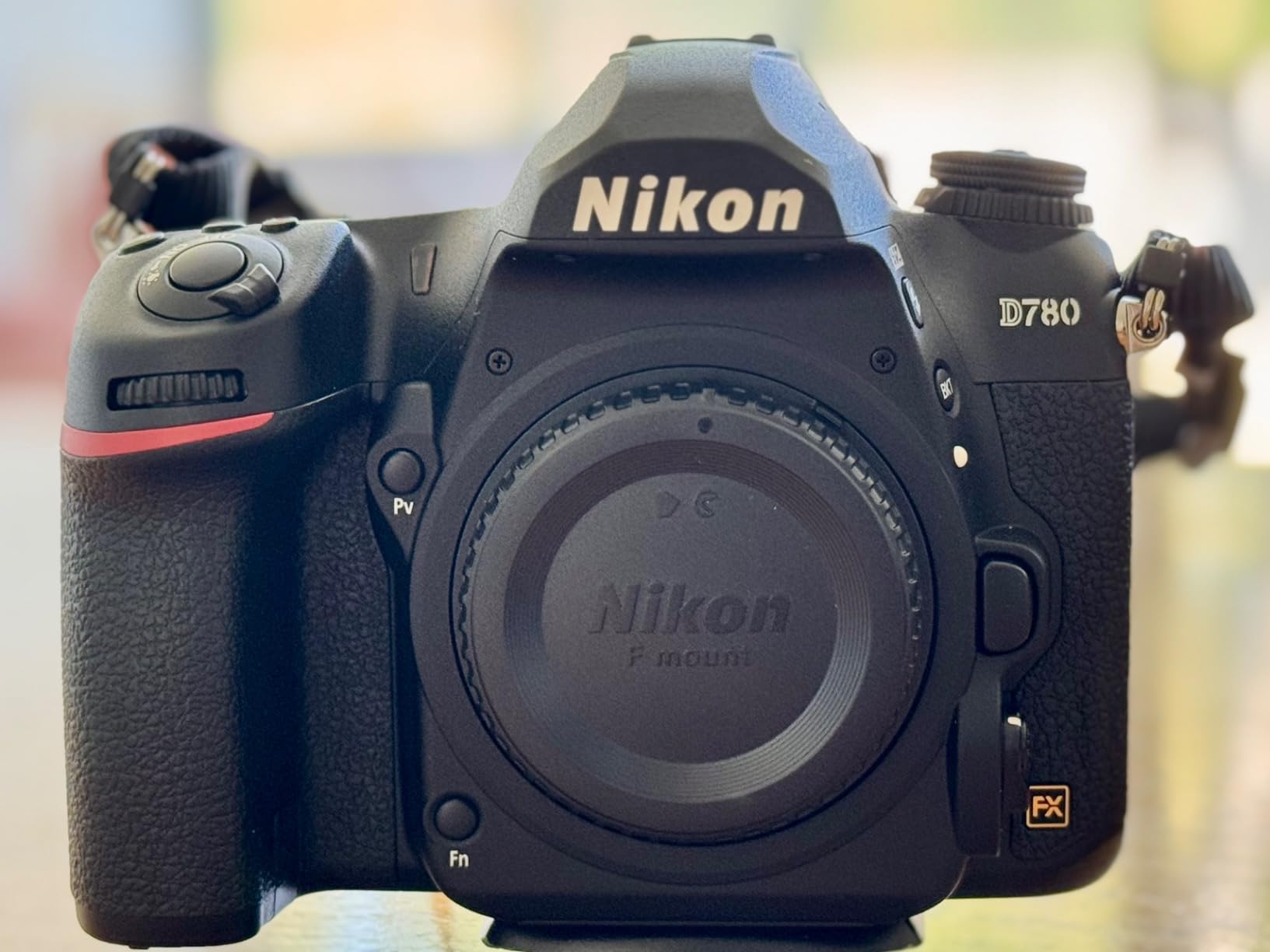
The 24.5MP backside-illuminated FX sensor delivers clean files with good low-light performance, and EXPEED 6 handles 14-bit RAW plus 4K UHD video. For catalog work where you are grading to a fixed reference, the important property is that the rendering does not shift as you move through the highlights of a light fabric into the shadow of a dark leg.
Two SD card slots give you a backup on every frame, which matters for a session that runs through a full catalog of a collection. At 710 g the body is lighter than the D850 while keeping the deep, grippy DSLR handling and physical dials that make exposure control fast for a practiced operator.

Why manual focus is not a compromise here
On a tripod with a locked-down subject, autofocus has nothing to do. The D780 trades modern subject recognition for an optical finder you can actually see into, and for a studio that shoots a full day on manual focus, that is the better trade. A tilt-shift lens on this body gives precise, repeatable framing of a wardrobe or a tall shelving unit.
Long shutter speeds also make this a good body for a room set lit mostly by ambient daylight, where you want to smooth out the movement of people walking past a window in the frame.
Where the D780 will hold you back
There is no in-body image stabilization, so any handheld interior work is harder than it needs to be. The Multi-CAM 3500 II system has 51 points with 15 phase-detection points and no subject-recognition tracking, so lifestyle scenes with people in them will not hold focus the way the R5 or the Alpha 7 IV does.
24.5 megapixels is the lowest resolution in this group, which limits large prints and heavy cropping. The package is body-only, so a lens is a separate purchase, and if your catalog needs both static cutouts and moving editorial-style room scenes, the D780 only covers the first of those.
7. Sony a7 III Bundle for Dim Room Scenes
Sony a7III Full Frame Mirrorless Camera with 28-70mm F3.5-5.6 Lens Bundle
Pros
- 15 stops of dynamic range recovers shadow detail
- ISO 50 to 204800 for dim interiors
- 5-axis stabilization for handheld work
- Bundle includes lens
- extra battery
- card
- tripod and case
Cons
- Bundled 28-70mm f/3.5-5.6 is slow and not weather sealed
- 24.2MP is modest for large catalog prints
- Older menu system
- Bulkier than body-only kits
The Sony a7 III bundle is the practical pick for a showroom or a staged room lit by whatever light the space already has. Fifteen stops of dynamic range and an ISO range of 50 to 204,800 are what make that possible, and recovering a dark chair leg against a bright window without lifting the whole image is exactly what catalog color matching needs.
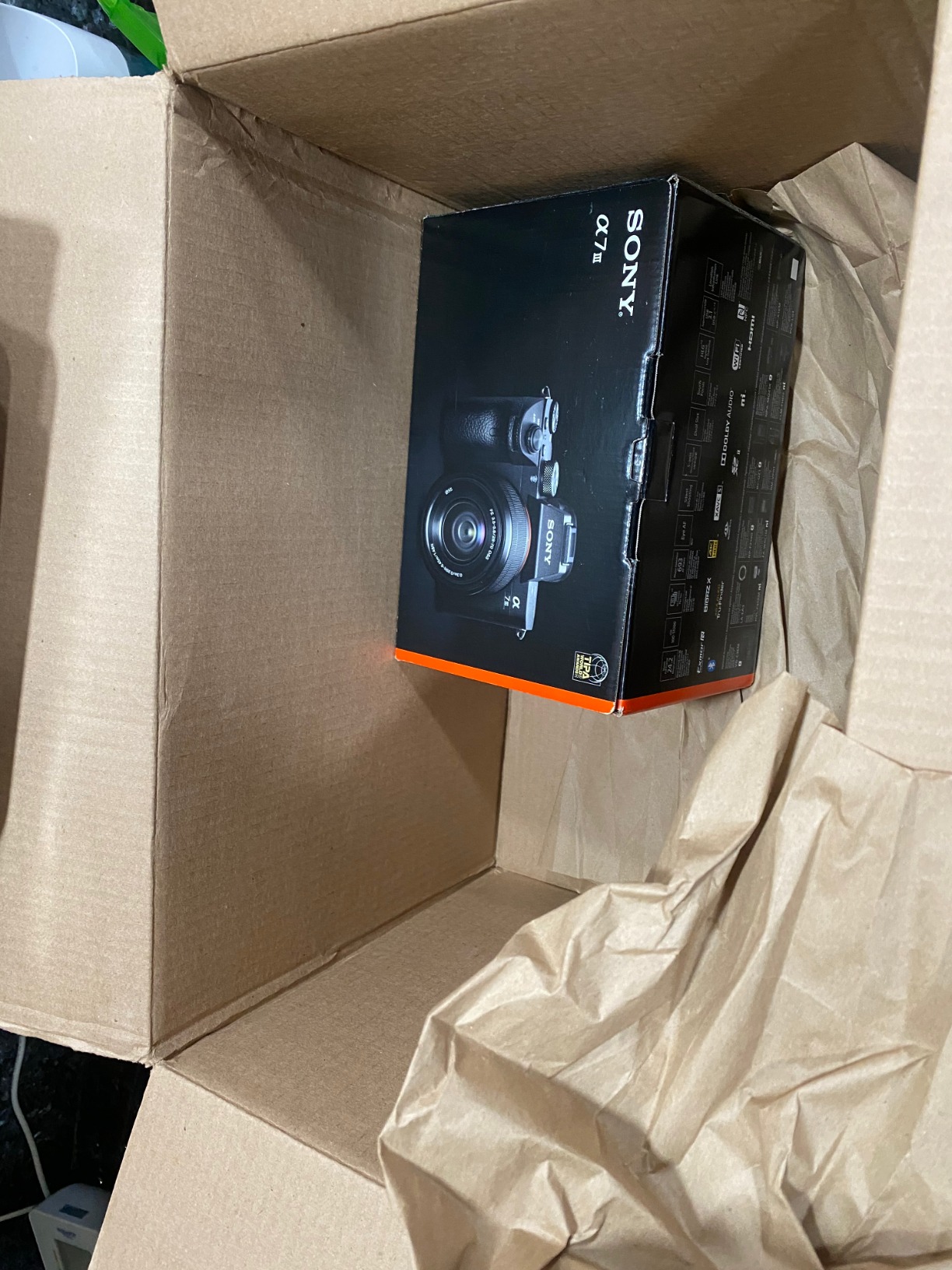
What sets this bundle apart is what arrives in the box. You get the body, a 28-70mm OSS lens, a battery, a charger, a strap, a case, a 128GB SDHC card, a mini tripod and cleaning accessories. A studio buying its first full-frame body gets a complete kit without a second purchase, which matters when the decision has been a hard sell internally.
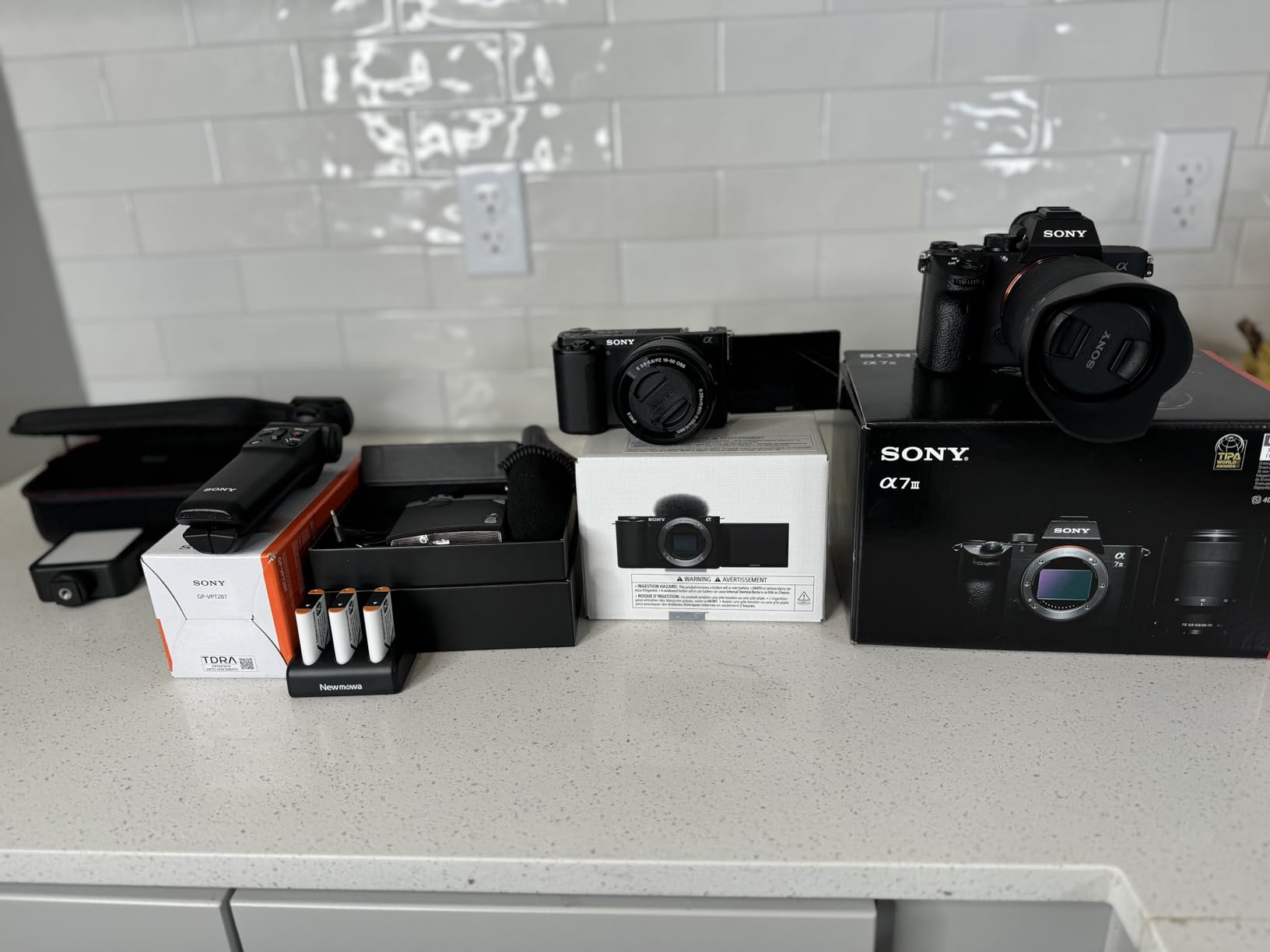
The 693 phase-detection and 425 contrast-detection points with 93% coverage and 10 fps with AE/AF tracking give you enough speed for a lifestyle sequence. 5-axis SteadyShot INSIDE stabilization makes the body practical handheld with adapted glass, which shortens setup time when you are moving between a sweep and a room set.
Battery life of roughly 610 shots with the viewfinder and 710 with the LCD is a meaningful advantage on a long tethered day, and the 14-bit uncompressed RAW is the right choice for grading to a catalog reference. Reviewers rate the bundle at 4.6 out of 5, praising the dynamic range and the completeness of the package.
Where the a7 III bundle works best
Dim interiors are the clear win. A high ISO range plus 5-axis stabilization means you can shoot a styled living room in the afternoon without setting up a full strobe rig, and the dynamic range holds both the window and the furniture in one frame. That flexibility makes it a good body for a small team that shoots both catalog cutouts and room scenes, and the same logic applies if your team also covers location work such as interiors or the wider landscape and architecture side of the business, where our picks for mirrorless bodies for landscape work apply the same resolution reasoning.
The included accessories also reduce the friction of a shared camera. A second battery and a card in the box matter when several people rotate through the same body and the first one hands it back empty.
Where the a7 III bundle is the wrong buy
The bundled 28-70mm f/3.5-5.6 is slow and lacks weather sealing, so it is the last thing you want on a dim room set. 24.2 megapixels is modest for large-format catalog prints and heavy cropping into detail shots, which is a real limit if your catalog includes printed material.
The menu system is older than current Sony bodies, and the bundle is bulkier than a body-only kit. If the budget stretches, a body-only purchase with a dedicated wide prime and a tilt-shift will produce better furniture frames than this bundle will.
8. Nikon D800 for Budget Full-Frame Stills
Pros
- 36.3MP files still crop well
- Weather-sealed and shock-proof construction
- Built-in flash with wireless control
- Dual-axis level in viewfinder and live view
Cons
- 51-point AF with no subject tracking
- 1080p video only
- Fixed rear screen
- Body only
- lens sold separately
The Nikon D800 is the budget route into full-frame and the reason it still makes this list is the sensor, not the camera. A 36.3MP CMOS FX-format file crops well and holds up for printed catalog pages, and at this level there is nothing else in the group that gives you that much resolution.
It is also genuinely built for the job. The body is weather-sealed and shock-proof, and a studio that shoots furniture in a warehouse with a loading door open, a fan running and a concrete floor is a place where build quality pays off. The dual-axis level in both the viewfinder and live view is a genuinely useful studio feature for aligning a sweep.

CF and SD dual card slots give you the same backup protection as the newer bodies, and the built-in pop-up flash with wireless control can act as fill on a simple setup, which is more useful than it sounds when you are lighting a small side table in a corner of a room. The 921,000-dot TFT-LCD has a 170-degree viewing angle.
Reviewers rate it at 4.4 out of 5 across 544 reviews, with the detail and the affordability drawing the praise and the age of the system drawing the reservations. That is an honest score for a body where the file quality is excellent and everything around the file is dated.

Where the D800 still makes sense
Static catalog work is exactly this camera’s competence. On a tripod, with the subject locked, the Multi-CAM 3500 FX 51-point system with 3D tracking is more than adequate, and the 1/8000 second top shutter speed means bright strobe lighting does not force you to reach for neutral density filters as often as the Canon RP kit does.
If you are building a second or third body for a team, a body of this tier handles the bulk of cutout work while a higher-tier body covers lifestyle and room scenes. That division of labour is a genuinely efficient studio setup.
Where the D800 is the wrong buy
The autofocus is the oldest in this group, with 51 points and no subject-recognition tracking, so any scene with a person in it is out of scope. Video recording is 1080p only, with no 4K, which rules it out if your furniture listings include video.
The rear screen is fixed, so low and overhead angles on tall units need a right-angle adapter or a different approach entirely. The package is body-only, and older-era processing draws more power than modern bodies, so a long tethered day takes more battery management than the alternatives.
How to Shoot Furniture for a Catalog
Camera choice only solves half of it. The sequence below is what I use for a catalog session, and it applies to any of the eight bodies above.
Set the white point first. Put a gray card or your color checker in the frame at the start of the session and lock the custom white balance. Every piece after that inherits the same reference.
Align the camera to the sweep. Use the viewfinder level or live view grid, then lock the tripod. A 1-degree error on a tall shelving unit is visible on the verticals.
Frame with a correction in mind. Shoot furniture from low enough that verticals converge only slightly, and correct the rest in software. A tilt-shift handles it at capture time.
Stop down and focus-stack when depth demands it. For a table with legs at different distances, f/11 and a two-frame focus shift usually covers it.
Light for the surface, not the piece. Matte fabric needs broad soft light, gloss lacquer needs a controlled reflection. One light setup will not do both.
Review tethered before the item comes off the sweep. Check corners of the frame and edges of the shadow, not the centre of the piece.
Export from a matched preset. Apply the same catalog profile to every file so the set reads as one collection.
If you shoot in volume, the review step is where the time is won or lost. A tethered setup where frames land on a laptop turns a 30-second check into a 3-second check, and across hundreds of pieces that is the difference between a day that finishes and a day that does not.
What to Look for in a Furniture Catalog Camera
Lens distortion beats resolution every time, and that is the point most spec-based guides get wrong. Once a wide room or a large item is in frame, geometric distortion cannot be corrected away without reshooting, while a slightly soft 26-megapixel file can be sharpened. Choose a body that pairs with a well-corrected wide prime or a tilt-shift, and treat the lens as part of the camera decision.
Perspective and distortion are also two different problems. Perspective is the visual effect of a wide frame, where the near edge of a table looks twice the size of the far edge. Distortion is the barrel or pincushion bending of straight lines, where a door frame bows outward. A tilt-shift lens corrects perspective optically, and software corrects the rest.
Tethering is the productivity differentiator. A camera that fires over USB and drops frames onto a laptop lets you check, cull and flag on a large screen instead of zooming into a 3 inch back panel. It also means an entire session can run without anyone touching the card slots. For a studio shooting thousands of frames per cycle, that is the difference between one operator and two.
Resolution should match your output size. Web listings render small, so 24 to 26 megapixels is comfortable. Printed lookbooks at poster scale, or heavy crops into fabric and join details, push you toward 40 megapixels and above. The D850 and the EOS R5 both sit at roughly 45 megapixels for that reason.
Color consistency matters more than color accuracy on day one. A body that renders fabric a slightly different way at ISO 400 than at ISO 1600 creates grading work across a catalog. Shoot a test card at your working ISOs before committing to a body, and check whether the file output is stable enough to match a reference.
Manual focus has to be genuinely usable. Most catalog frames are tripod shots with the subject locked, so the autofocus system is nearly irrelevant to the core work. What matters is a bright viewfinder and a lens with a focus ring you can set precisely. A body with a 0.97x optical viewfinder is a better catalog tool than a higher-resolution body with a dim electronic one.
Dual card slots are cheap insurance. A session that produces thousands of frames in a day is a session where a card failure costs a day. Two slots, mirroring or backup, costs almost nothing against that exposure.
Battery and storage scale with volume. Teams running long days should treat spare batteries and fast cards as part of the camera budget rather than an accessory purchase, and file size matters too since a 45-megapixel body writes roughly twice the data of a 24-megapixel one. A fast NVMe drive for catalog scratch space keeps tethered capture and culling smooth, which is covered in our NVMe guide for Lightroom catalog speed.
Finally, back up the catalog itself. A shoot day is recoverable; a damaged catalog database is not. Our guide to managing Lightroom catalog backups covers the setup that stops one corrupted file from taking the whole collection with it.
Second Body vs One Better Body: A Four-Step Framework
This is the question that comes up most often in studio forums, usually from a company whose existing camera is passed between photographers doing different jobs. Here is how I break it down.
Count your peak concurrent operators. If two people shoot on the same day, a second body is a scheduling fix, not a preference. Shared bodies create missed sessions, and a missed session on a furniture catalog cannot be patched in post.
Check whether your work is static or moving. Static cutouts on a tripod need a second body more than they need a better one. If lifestyle room scenes with people in them are part of your output, step up instead, because subject-tracking autofocus is what the extra spend buys.
Decide where the bottleneck is. If the limit is throughput and file handling, a matched second body at a lower tier is more efficient than one premium body. If the limit is image quality on prints, put the budget into resolution and glass.
Remember the lens budget. A second body without a second lens is a paperweight. Allocate for two bodies of glass or accept that one body will carry the premium lens and the other will not.
In practice, most furniture businesses end up better served by one strong body plus one competent body than by a single premium purchase, because the premium body’s capabilities are wasted on a static sweep. What you cannot compromise on is the lens.
Frequently Asked Questions
How to take photos of furniture?
Set a custom white balance from a gray card first, align the camera to the sweep using the viewfinder level, then shoot on a tripod with manual focus. Stop down to f/11 and use focus shift for pieces with deep perspective, light for the surface finish rather than the object, and review every frame tethered before the item comes off the sweep.
How to photograph furniture for sale?
Shoot a three-quarter hero view, a straight-on elevation, and at least two detail shots of materials and joints, all against the same background with the same lighting. Keep the white point fixed across the whole set so every piece in the catalog matches. A tilt-shift or low-distortion wide prime prevents the bowed verticals that make listings look amateur.
What is the best camera for taking product photos?
A full-frame body with high resolution, accurate and repeatable color, dual card slots and reliable tethering support. For furniture, prioritize low lens distortion and a bright viewfinder for manual focus over burst speed, because catalog work is measured in consistency rather than frames per second.
What is the best camera for product shooting?
The same criteria apply as for product photography generally: full-frame sensor, tethered capture over USB, 14-bit RAW, and a lens that keeps straight lines straight. For a studio handing cameras to non-photographer staff, reliable autofocus and simple handling often matter more than resolution.
Do I need a tilt-shift lens for furniture photography?
Not strictly, but it is the single most effective lens for the job. A tilt-shift corrects converging verticals optically, so a wardrobe photographed on a tripod keeps its edges parallel without cropping back to a wider frame and losing resolution. If you shoot wide rooms often, budget for one rather than a second zoom.
How many megapixels do I need for furniture catalog photos?
Around 24 to 26 megapixels is enough for web listings and standard catalog pages. Push toward 40 to 45 megapixels if you print large format, crop into fabric and joint details, or need room to reframe a wider shot into several images. Higher resolution helps most in post, but it does nothing to fix lens distortion.
Which Camera Should You Buy for Furniture Catalog Photography?
For most studios, the best cameras for furniture catalog photography come down to one of two shapes. If your output is static white-sweep cutouts and printed catalog pages, the Nikon D850 is the pick: 45.7 megapixels, a focus shift mode built for stacking, dual high-speed card slots and the handling you want on a tripod for a full day.
If you also shoot room scenes with people in them, the Canon EOS R5 handles both halves of the job in one body, and the Sony Alpha 7 IV kit is the sane middle ground when a team needs a camera that works before anyone has learned the menus. For a first full-frame purchase on a tight internal budget, the Canon EOS RP kit with its bundled 24-105mm gets a studio shooting sooner than anything else here.
Whichever you pick, budget the lens and the tethering setup before the body. Distortion you cannot correct and frames you cannot review are the two failures that cost a reshoot, and both are fixed outside the camera body. If furniture is only part of what your team photographs, our picks for street photography cameras cover the case where someone shoots the store and its surroundings rather than the product. Compare current configurations and read the owner feedback for each pick before you commit.