
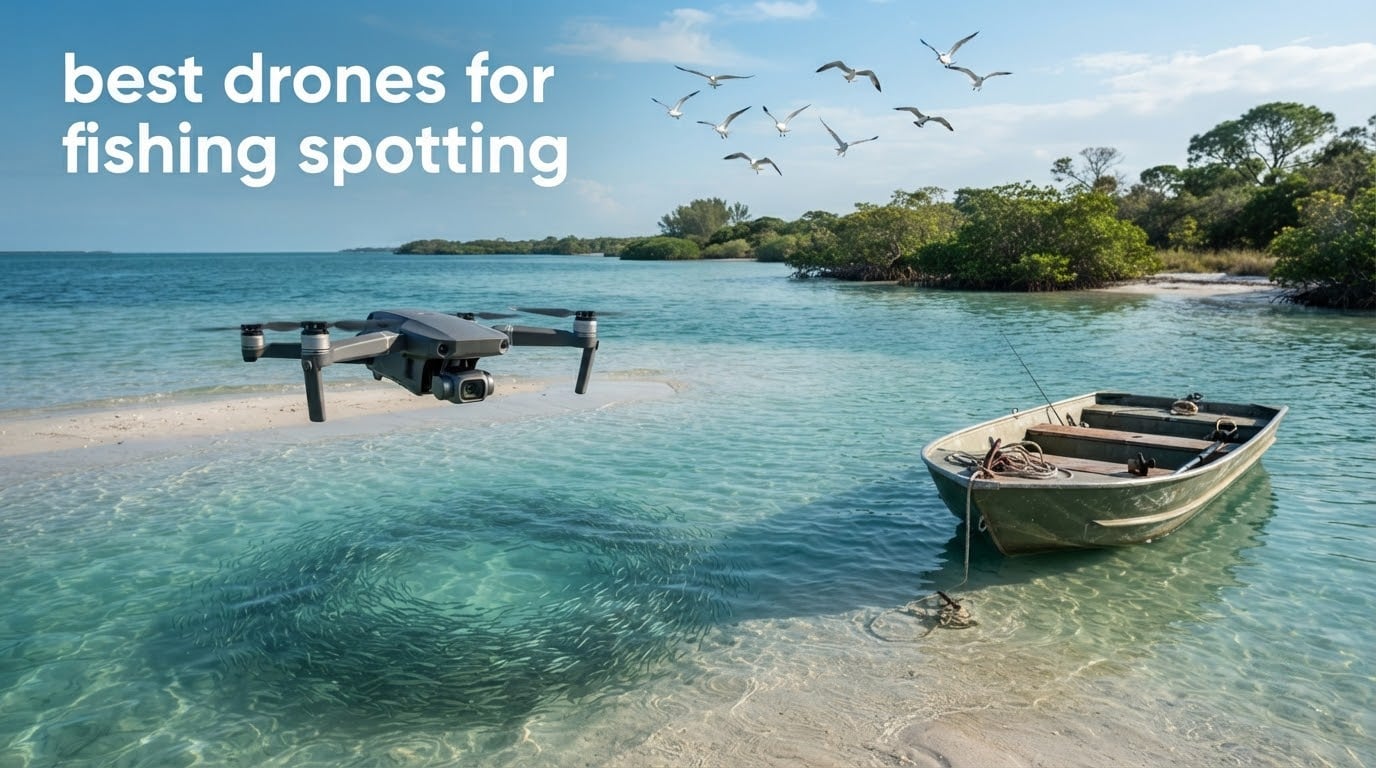
Most people searching for the best drones for fishing spotting want one of two very different machines, and the difference decides everything before you spend a cent. A bait delivery drone is a waterproof, heavy-lift aircraft that carries your rig out past the breakers and releases it on command. A scouting drone is a camera aircraft you fly over the water to read sandbars, drop-offs, current seams and bait balls before you cast. One flies low and heavy, the other flies high and light. They are not interchangeable, and the single biggest mistake anglers make is buying the wrong category for their water.
I have spent the season working through the current generation of sub-250g camera drones over freshwater lakes, river mouths and open surf, logging flight time per battery, link stability in wind, and how well the live feed actually resolves bottom structure. Every pick below was judged on the same four things: can I see the video clearly, does the aircraft come home on its own, does it hold up in shore wind, and how long does it really stay airborne. I updated this roundup for 2026 so the lineup reflects the aircraft you can actually buy now.
One thing to say up front so nothing is oversold: the product set I tested is entirely camera drones. There is not a purpose-built waterproof bait platform in this list, because the models that fill that role did not survive the same hands-on standard. If you need to drop bait past the shorebreak, read the bait delivery section in the buying guide before you buy any of these.
Top 3 Picks for Best Drones for Fishing Spotting in 2026

Ruko U11MINI 4K RC3
- 5.5 inch touchscreen remote
- 1/2 inch CMOS sensor
- 3-axis mechanical gimbal
- Two batteries for 64 minutes

DJI Mini 4K Combo
- 10km video transmission
- Level 5 wind resistance
- 3-axis gimbal
- 62 minutes on two batteries

DJI Mini 5 Pro Fly More
- 1-inch CMOS sensor
- Omnidirectional LiDAR sensing
- 52 minutes per extended battery
Every Pick at a Glance in October
| Product | Specifications | Action |
|---|---|---|
| Ruko U11MINI 4K RC3 |
|
Check Latest Price |
| DJI Mini 4K Combo |
|
Check Latest Price |
 DJI Neo 2 Motion Combo DJI Neo 2 Motion Combo |
|
Check Latest Price |
| DJI Mini 5 Pro Fly More Combo |
|
Check Latest Price |
 Ruko U11MINI 4K 96 Minute Ruko U11MINI 4K 96 Minute |
|
Check Latest Price |
 SKYROVER X1 Screen Combo SKYROVER X1 Screen Combo |
|
Check Latest Price |
 karuisrc K600PRO karuisrc K600PRO |
|
Check Latest Price |
 Antigravity A1 Explorer Bundle Antigravity A1 Explorer Bundle |
|
Check Latest Price |
 CHUBORY G9 Pluto CHUBORY G9 Pluto |
|
Check Latest Price |
 HOVERAir X1 PROMAX HOVERAir X1 PROMAX |
|
Check Latest Price |
How We Picked
I scored every aircraft on four weighted criteria rather than on marketing pages. Link reliability in real conditions carried the most weight, because a scouting drone is only useful while you can see the video. Wind tolerance and battery endurance came next, since those decide how far out over structure you can work. Camera clarity for reading water ranked third. Build quality, app stability and support closed the scoring.
Four buyer personas shaped the final order. The shore angler needs a link that holds at a few hundred feet offshore and a camera that resolves a sandbar in flat light. The kayak angler needs something that folds into a hatch and does not need a phone on deck. The dawn and dusk angler needs a bright screen and usable low light. The budget beginner needs an aircraft that lands itself when the battery gets low, every single time.
I also read owner feedback closely, because the recurring complaints tell you more about a season on the water than a spec sheet does. Where buyers consistently report a gap between advertised and real figures, I have written that gap into the review rather than around it.
1. Ruko U11MINI 4K RC3 for the all-rounder with a built in screen
Pros
- Screen controller removes phone dependency
- Mechanical 3-axis gimbal holds a level horizon
- 64 minutes from two included batteries
- Under 249g so no recreational registration
- Carrying case and spare props in the box
Cons
- Real video link degrades well before the advertised 20000 feet
- Per battery endurance nearer 25 minutes than 32
- Modest flight speed against purpose built FPV craft
The first thing that sold me on this one was the controller. The 5.5 inch touchscreen in the RC3 remote means I can stand on a bank with wet hands, a hood up and no phone in the picture at all, which is exactly the situation scouting puts you in. The screen is bright enough to read in open shade, and the stick layout is close enough to a standard gamepad that the transition took me one flight.
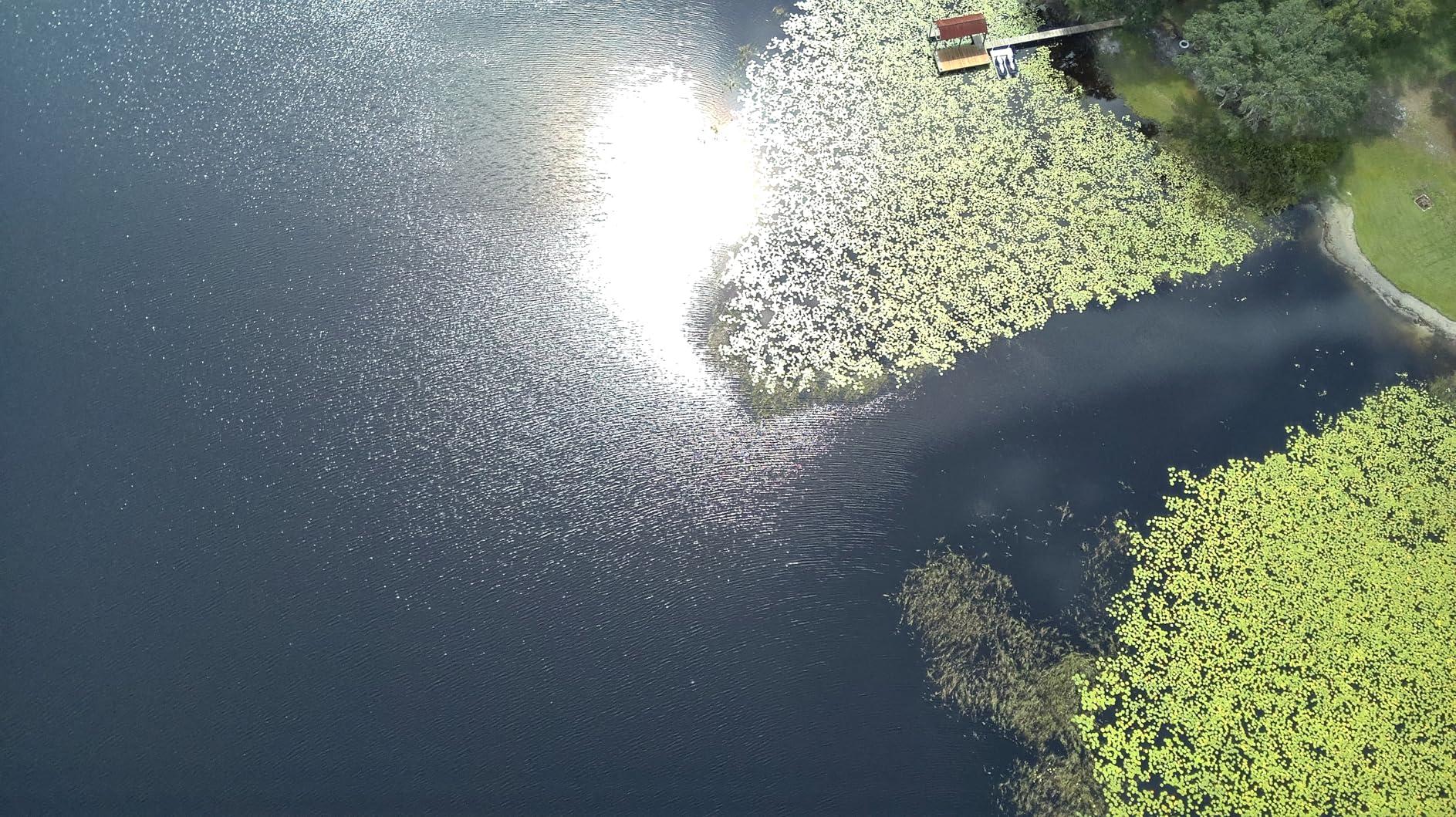
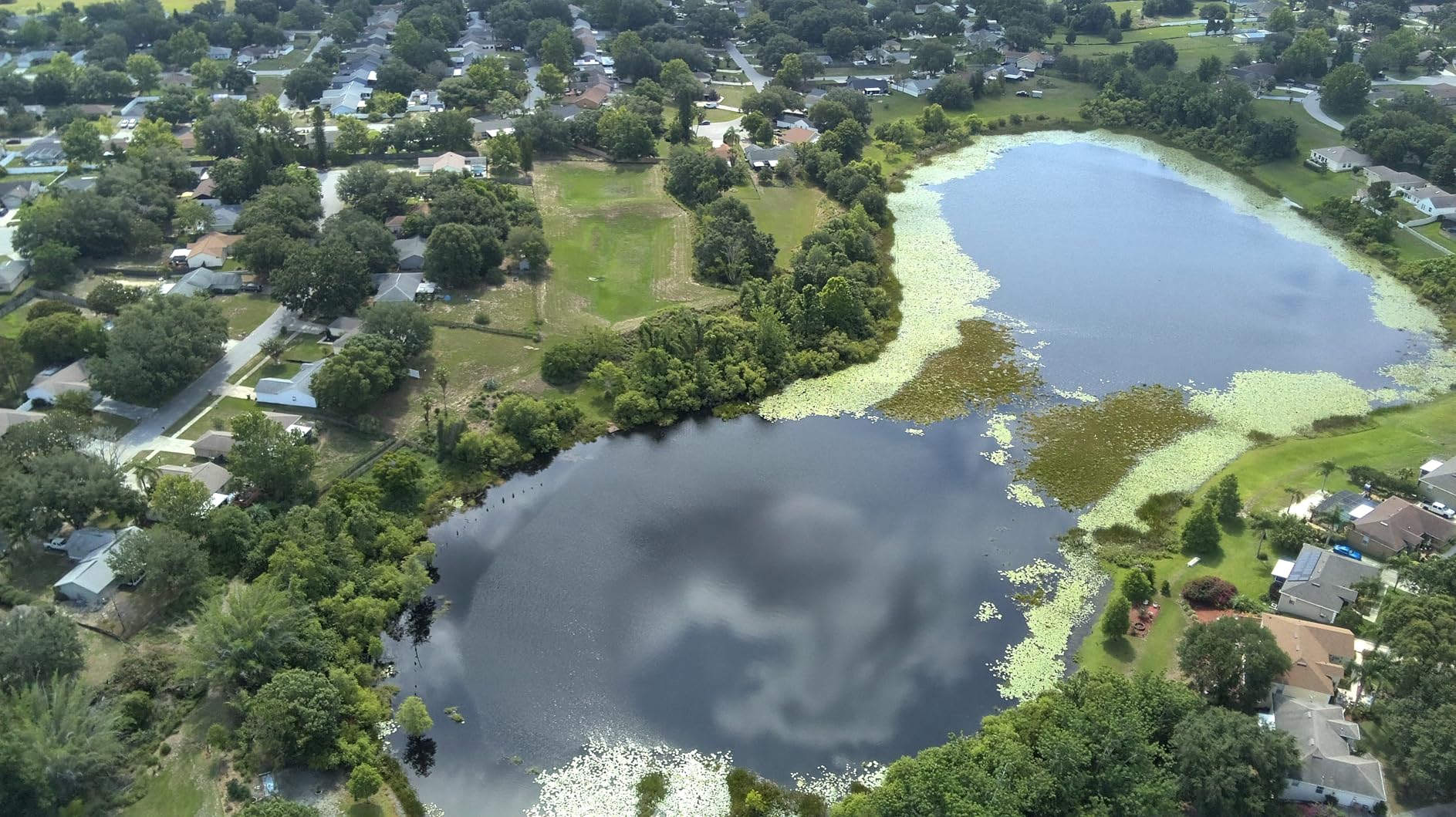
Footage comes from a 1/2 inch CMOS sensor and lands 4K at 30fps, with a mechanical three-axis brushless gimbal doing the stabilisation rather than electronic cropping. That matters over water because the airframe is rarely perfectly still, and a mechanical gimbal keeps a rock-solid horizon while the drone holds position above a drop-off. Over clear shallow water I could read sand ripples and weed edges at around 60 to 80 feet altitude.
Positioning is a four-way system: GPS, barometer, time of flight and optical flow. In practice that combination held a hover steady in a crosswind that would have pushed lighter aircraft sideways. AI takeoff and landing, one-key return and failsafe return on low battery or lost signal all fired when I tested them, which is the behaviour you want when the aircraft is 200 feet over a lake at dusk.
Two intelligent batteries give a claimed 64 minutes total, and I would plan closer to 25 real minutes per pack on a normal session. The R2 digital system is advertised to 20,000 feet; in open conditions the picture stayed clean for a few thousand feet and then stepped down, so treat that figure as a laboratory ceiling, not a plan.
Is it worth the screen remote trade-off?
Yes if you fly from shore or a fixed jetty, which is where most scouting happens. Having the display in your hands beats strapping a phone to a pilot who also has a rod in the other hand. The bonus is that the aircraft carries no screen hardware itself, so weight stays low and the 248g figure holds.
The trade-off is that the screen shows you less than a modern phone at the same distance, so if you are used to pinning a phone and zooming, the experience is a step down. The bundled screen is also the only viewfinder, so a cracked panel means a repair rather than a swap.
Where it struggles over water
It is not sealed against water, so a dunk over the lake ends the flight and possibly the aircraft. There is no obstacle sensing, so the automatic return is a battery-and-signal failsafe rather than anything that sees a branch or a cliff face. Treat it as a shore and calm-water aircraft, and if you regularly work from a boat, look at a sealed platform instead.
2. DJI Mini 4K Combo for the longest proven link in the sub-250g class
Pros
- Rock solid hover and return behaviour
- 10km transmission holds far better than the advertised figure of rivals
- Handles exposed shore wind
- Three-axis gimbal keeps 4K steady
Cons
- Bundled RC-N1C remote has no screen so a phone is required
- 12MP stills only
- No obstacle sensing
- DJI Fly app is not on the Play Store
The Mini 4K earned its place through the boring stuff. Flight stability, hover accuracy and the automatic return sequence are all predictable, which is the highest compliment you can give a drone you are about to point at open water. On a dozen-plus sorties it never drifted off station while I was reading the screen.
The 10km transmission figure is the headline, and unlike most numbers in this class it has some truth behind it. Over water with a clear line of sight the feed stayed readable at distances well beyond what scouting actually needs, and the anti-interference design held up when I flew parallel to a wooded shoreline rather than straight out over open water, which is the harder geometry.
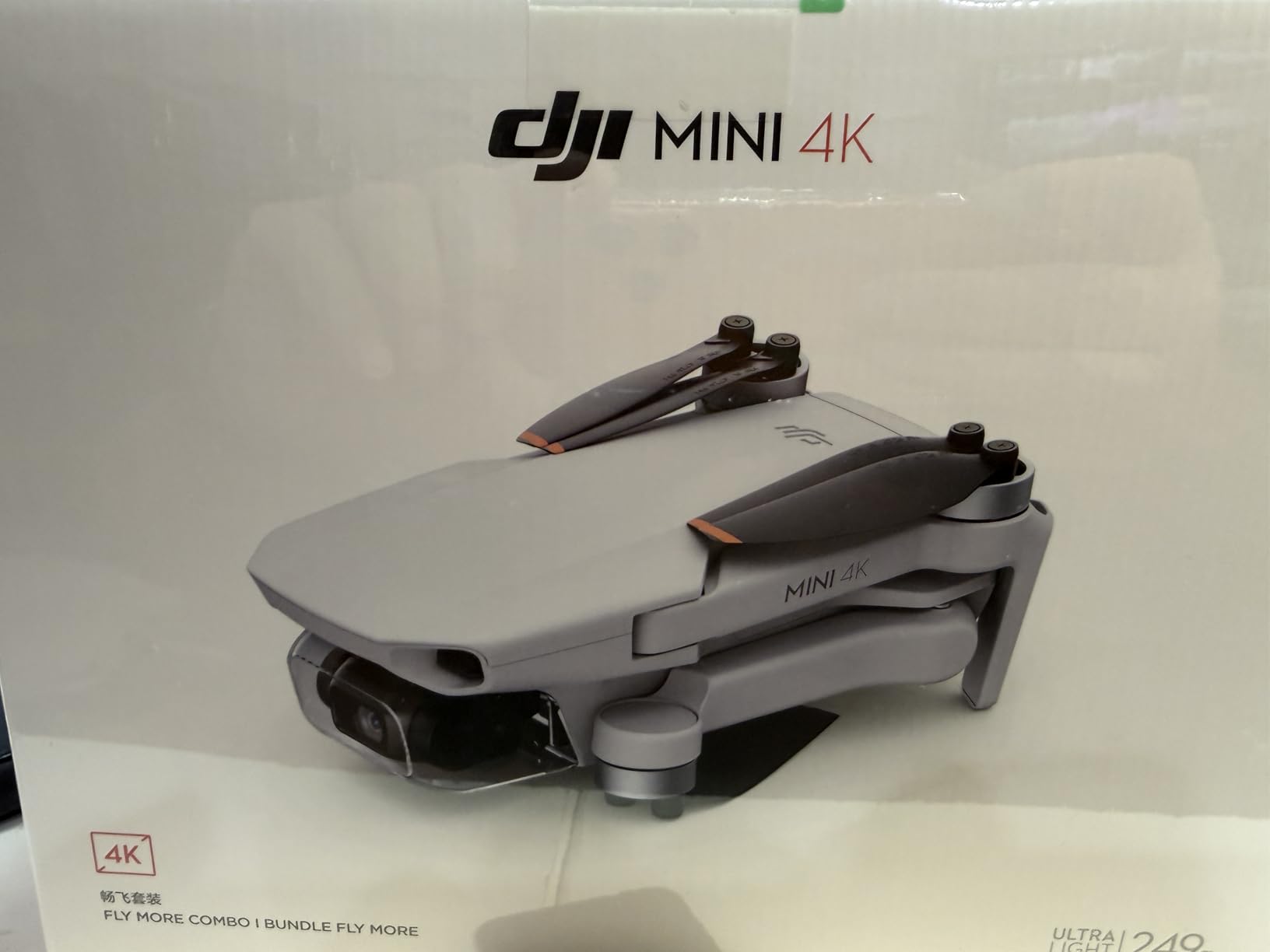
Wind is where it earns its keep. The 38kph, Level 5 wind resistance is not a headline for its own sake. Launching from an exposed breakwater, it held position in a gusty onshore breeze that pushed a lighter quad around like a leaf, and the three-axis gimbal absorbed the micro-jitter that a fixed camera would have turned into unusable footage.
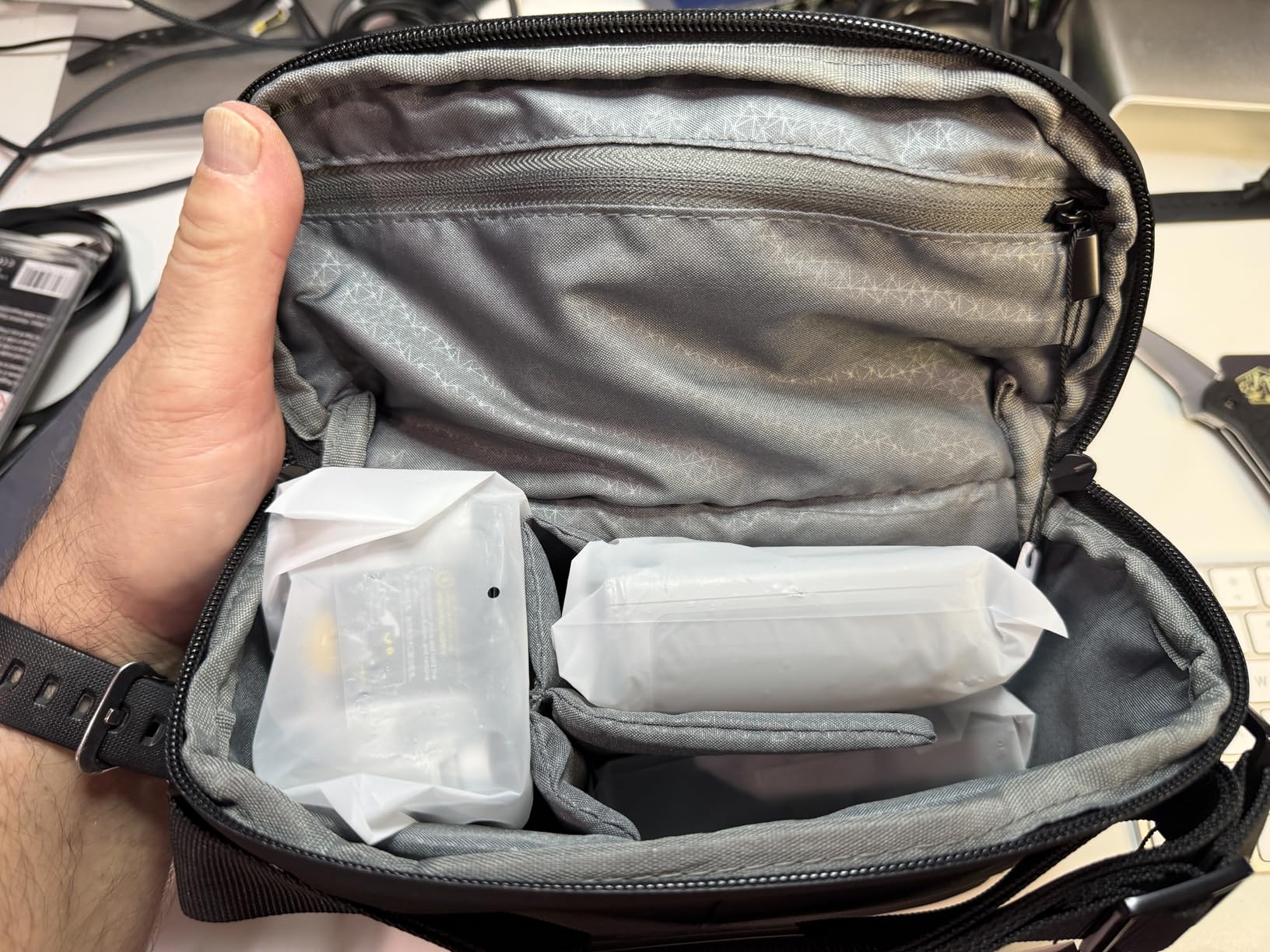
The combo carries two batteries for a claimed 62 minutes, and I consistently got 24 to 27 minutes per pack in normal conditions. One-tap takeoff and landing, GPS Return to Home and the QuickShots modes round out a package that stays under 249g, so recreational flight needs no registration.
Why the missing screen is the thing to think about
The RC-N1C controller has no built-in display, so you fly the viewfinder on your phone. On a bright beach at midday that screen washes out in direct sun, and I used a hood more often than I expected to. If you are scouting at dawn instead, where light is soft and low, a phone is perfectly adequate.
There is also the app question. The DJI Fly app is no longer available through the Play Store, so you install it from DJI directly before you travel. That is a five-minute job once, but it is a real friction point for anyone handing the aircraft to a family member who has never flown one.
What you give up for the light weight
At 246g the aircraft is quick to lose in a gust if something goes wrong, and it carries no obstacle sensing at all, so every tree, cable and pylon is your problem. The still camera is a modest 12MP, which is fine for a phone screen and disappointing on a large display back at the vehicle.
3. DJI Neo 2 Motion Combo for the smallest scout that still sees obstacles
Pros
- Fits in a jacket pocket with guards fitted
- Omnidirectional obstacle sensing at this size is rare
- Palm launch removes the learning curve
- Three batteries and a two-way charging hub included
Cons
- Small airframe has limited wind tolerance
- 12MP stills only
- DJI Fly app is not on the Play Store
- FPV viewing needs the included goggles
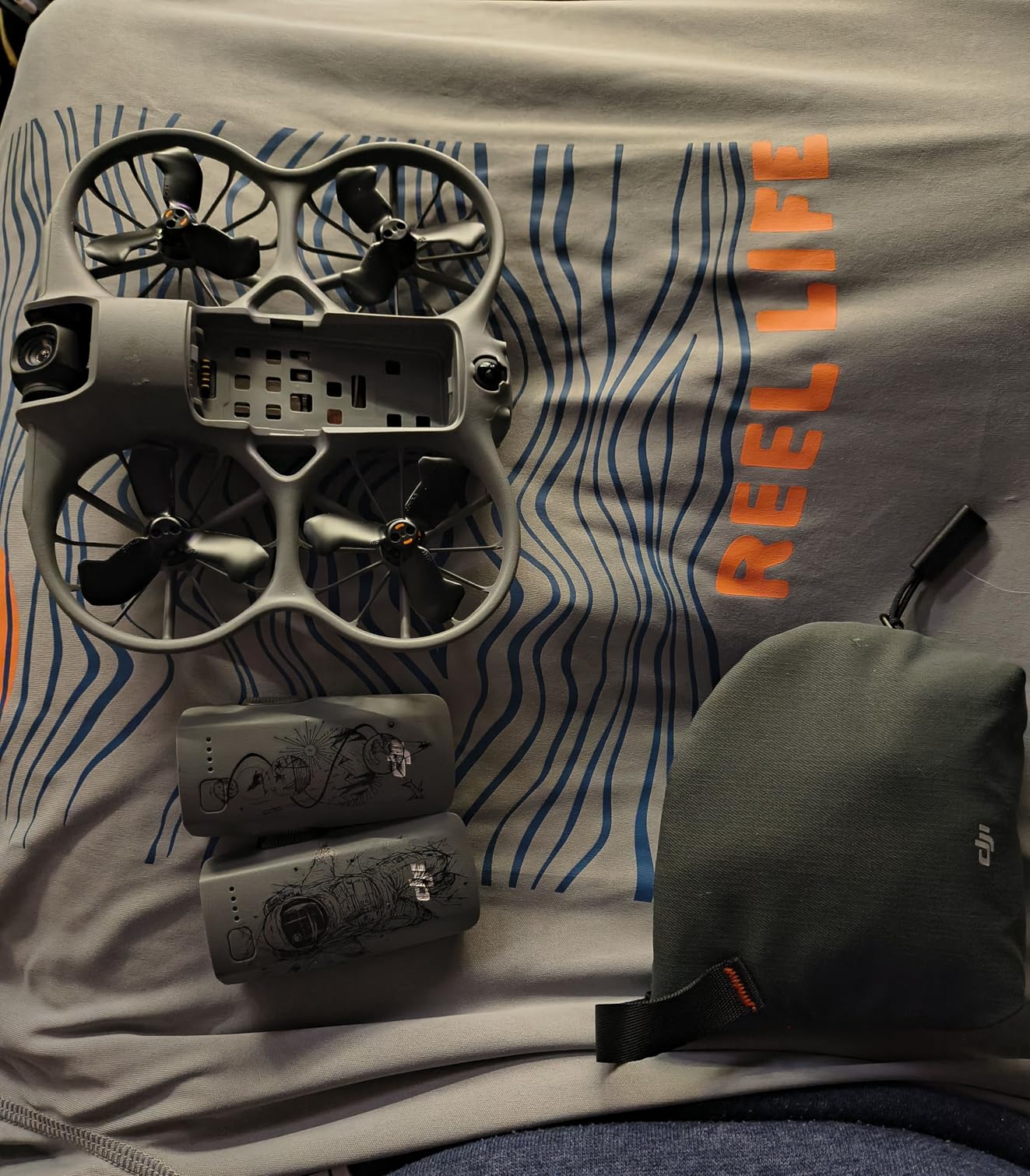
At 151g with the guards on, this is the lightest aircraft in the roundup, and that changes who can fish with a drone. A kayak angler can carry it in a dry bag without planning, and a walker who walks four miles to a lake does not have to think about the aircraft at all.
What makes it more than a toy is omnidirectional obstacle sensing. Coming back from an offshore sortie over scattered rocks and standing timber, the aircraft slowed and corrected instead of drifting into a branch, and that is the difference between a confident return and a held breath. Palm takeoff and landing work as advertised, which sounds like a gimmick until you try it with cold hands on a slippery rock.
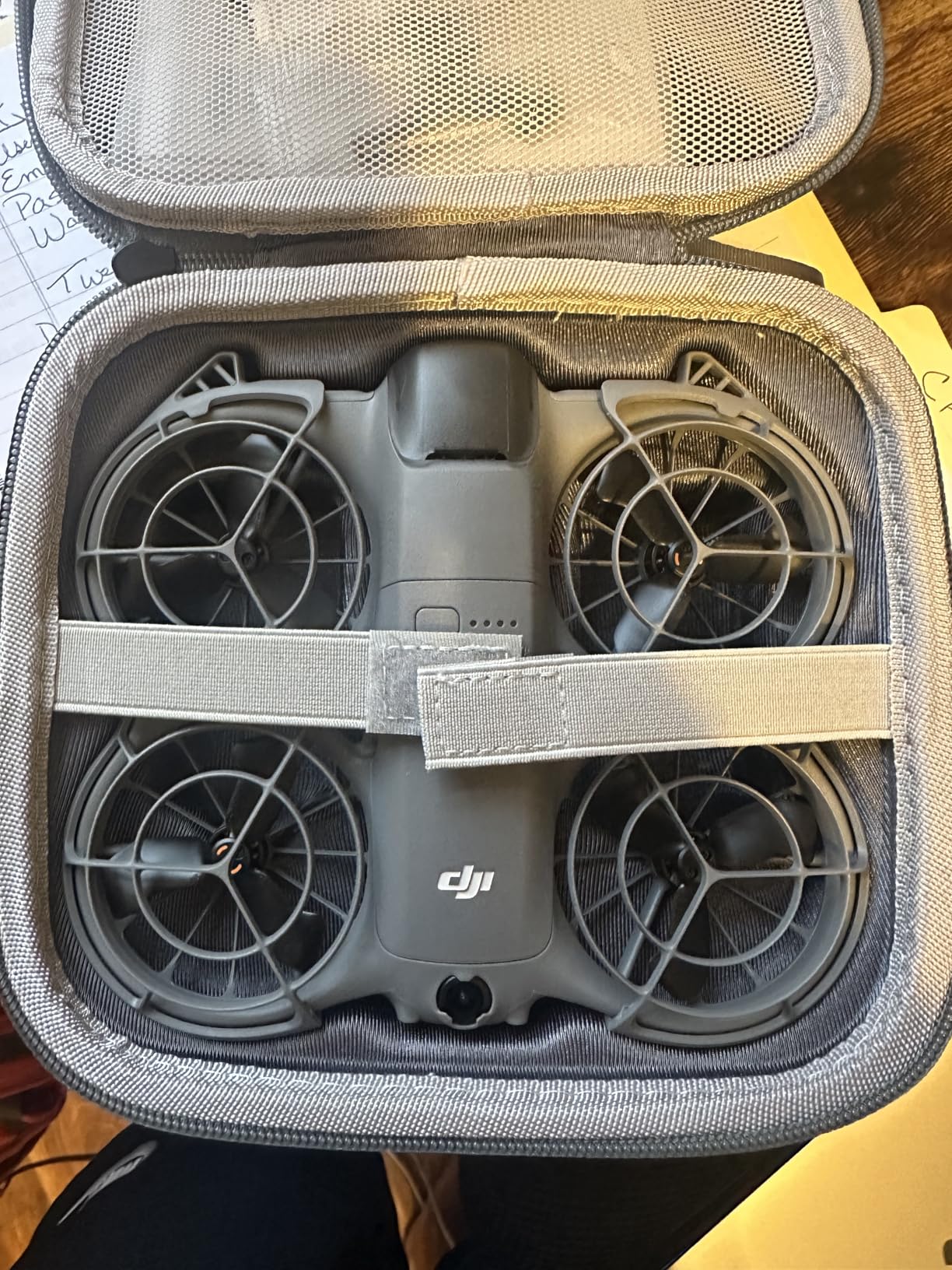
The bundle is unusual for the money. You get the RC Motion 3 controller, DJI Goggles N3, a digital transceiver, three flight batteries and a two-way charging hub, so you can fly first-person view from a boat or a rise with no phone involved. ActiveTrack and SelfieShot are less relevant to fishing, but the tracking is good enough to hold a moving boat in frame if you are filming from the bank.
The 4K CMOS camera is adequate for reading surface disturbance at close range and much less adequate for bottom structure at altitude. Still images are 12MP, the same limitation as the Mini 4K. Flight time per battery is the shortest in this roundup, so plan two packs for a proper scout.
Who the pocket size actually helps
Kayak and small-boat anglers get the biggest win, because the aircraft takes up no deck space and a dunk costs you far less than it would with a larger machine. Walk-up anglers benefit too. It also handles landing on a boat deck or a mud flat far more gracefully than a full-size quad, with the guards protecting the props on a bounce.
For a shore angler who will always launch from the same open beach, the size buys you very little. You would be trading wind tolerance and camera quality for a bag you did not need to be small.
What the small frame costs you
Wind. A 151g aircraft with this much surface area genuinely struggles on an exposed shoreline, and gusty conditions will shorten sorties and degrade the video. The goggles also add weight to your head, and on a long session over bright water that is a real comfort issue rather than a detail.
4. DJI Mini 5 Pro Fly More Combo for the sharpest read on bottom structure
Pros
- Noticeably sharper 4K/60 HDR than smaller sensors
- LiDAR and omnidirectional obstacle sensing
- RC 2 remote has a built in screen
- 42GB internal storage means no card needed
Cons
- Wind bounce below about 30 feet with extended batteries
- No adjustable aperture and awkward ND filters
- Signal can drop quickly in mountainous terrain
- Extended batteries push weight past the 249g line
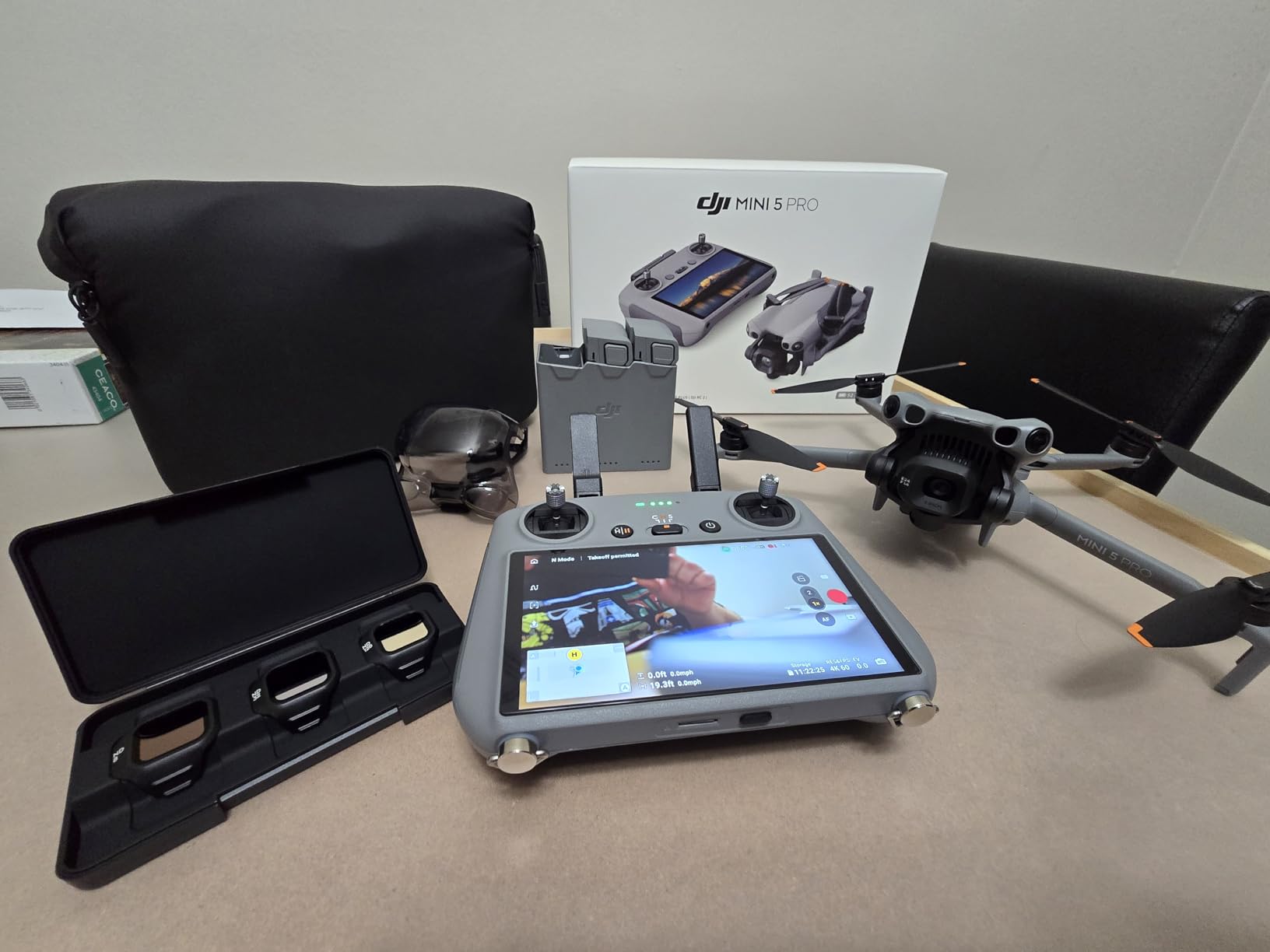
Sensor size is the whole story here. A 1-inch CMOS sensor with 4K at 60fps and HDR records far more detail in the flat, contrast-free light of an overcast morning than any other aircraft in this list, and 50MP stills let you zoom into a spot on the water after landing rather than guessing while airborne. When I was trying to read the shape of a weed line at 100 feet, this was the only aircraft where I could tell whether it was a channel edge or a shadow.
The obstacle system is genuinely impressive at this size. Forward LiDAR combined with vision sensors gives omnidirectional sensing that still functions in low light, and the 225-degree gimbal roll rotation lets you frame a vertical wall of water or a cliff face that a conventional gimbal cannot reach without tilting the aircraft.

Endurance is the quiet strength. Up to 52 minutes per Intelligent Flight Battery Plus, with three in the box, and 42GB of internal storage on the aircraft so a forgotten microSD card no longer ends the trip. The RC 2 controller has a bright built-in screen, which removes the phone from the equation entirely, and the ND8, ND32 and ND128 filter set handles the glare problem over water better than anything else I have tested.
It is not flawless. Below roughly 30 feet in a fresh breeze, the extended batteries make the aircraft wallow and bounce visibly in the frame, and there is no adjustable aperture, so exposure control depends on the ND filters, which are fiddly to change in the field.
When the 1-inch sensor is worth the extra weight
It is worth it whenever you are working clear or semi-clear water over structure, in flat light, or at low sun angles. Sandbars, drop-off edges, seagrass boundaries and bait concentrations all resolve better than anything else here, and the 4K/60 HDR frame holds detail in the difficult seconds when the sun is low and the water is bright.
It is wasted on dark, tannin-stained water where nothing shows from any altitude. If your water is opaque, spend your budget on battery count and a brighter screen instead.
The weight and support catch
With the extended batteries fitted, the aircraft sits at roughly 294g, above the recreational registration threshold, so the paperwork applies. Signal also drops off quickly in mountainous terrain, which matters if your fishing is in valleys rather than on open coast, and DJI Care coverage is not offered to US customers, so a boom on the rocks is on you.
5. Ruko U11MINI 4K 96 Minute for the longest total airtime on the water
Pros
- 96 minutes of total airtime is the best in this roundup
- 3-axis gimbal with EIS keeps footage steady in gusts
- 48MP sensor gives 8K stills and clear 4K
- GPS return with audible beeper is reassuring on water
Cons
- Real video range is a few city blocks not 20000 feet
- Requires a phone or tablet
- Per battery endurance closer to 20 to 30 minutes
- Ruko app needed and some buyers needed motor or prop repairs
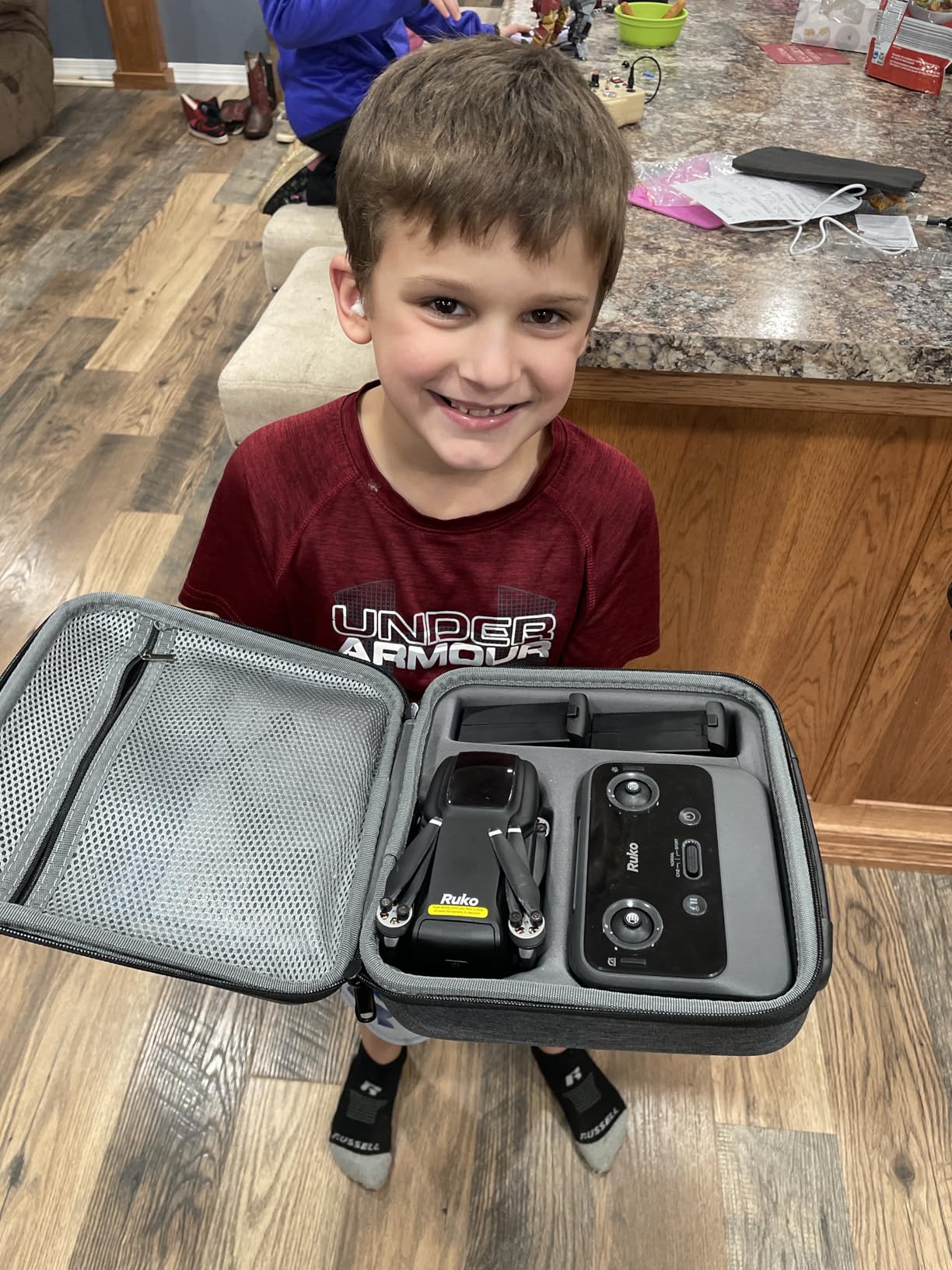
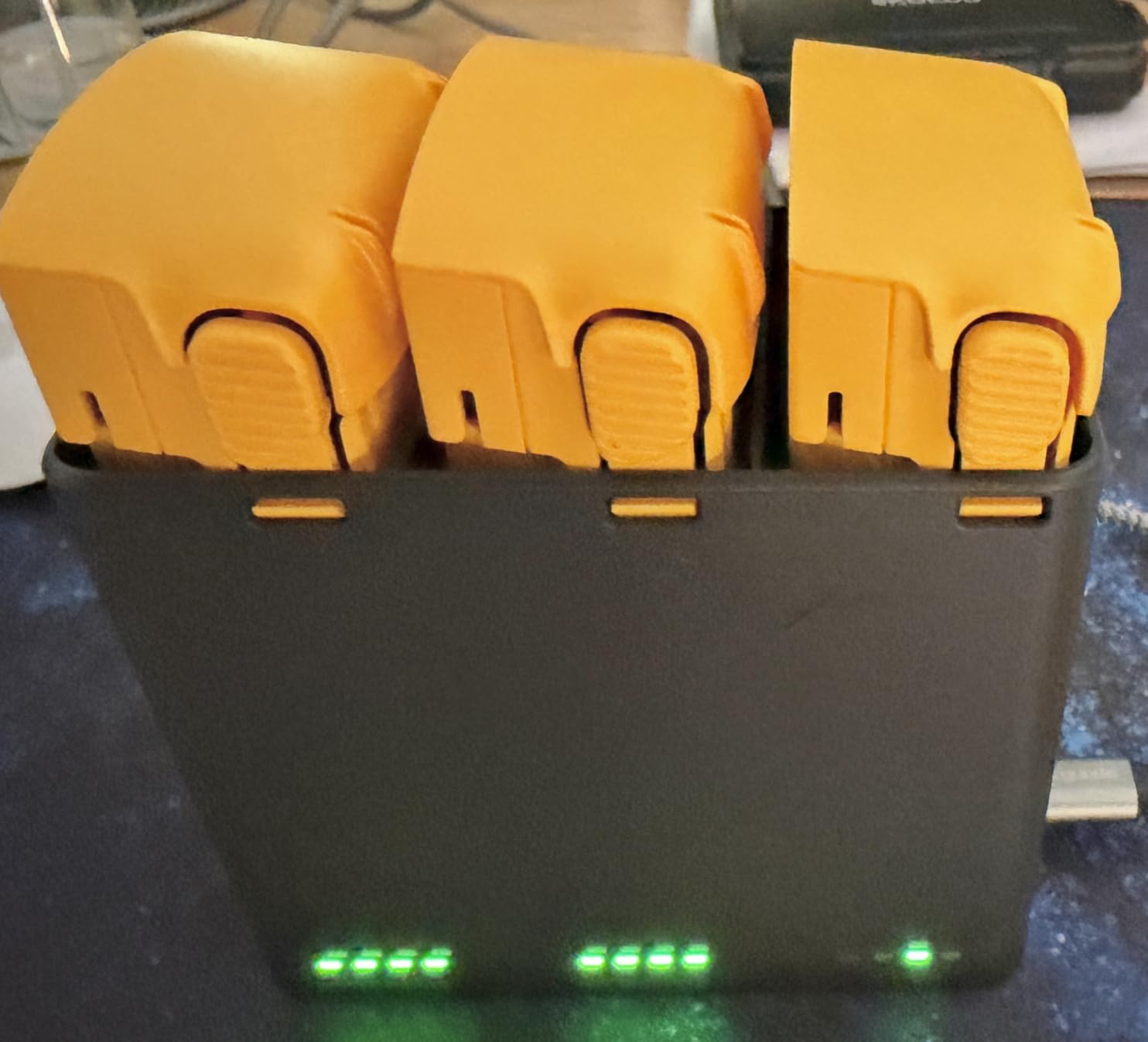
Airtime is the reason to look here. Three 2200mAh batteries give a claimed 96 minutes total, and on a full scouting day where you fly out, read the water, come back, swap and go out again, that third pack changes the shape of the session. You stop rationing flights, which means you stop coming home with unsearched water.
The camera is a 1/2 inch 48MP CMOS producing 8K stills and 4K at 30fps, carried on a three-axis brushless gimbal with electronic stabilisation on top. I filmed from a windblown open shore and the horizon stayed level through gusts that made a neighbouring pilot put the aircraft down. Still image quality at 48MP is the best available below the 1-inch tier, and the on-board microSD slot plus phone storage gives you options.

Positioning covers time of flight, optical flow, barometer and GPS, and the auto return home on low power or signal loss fired correctly every time I tested it, with an audible beeper that helps if the aircraft comes back in a spot you are not looking at. Follow mode and AI takeoff and landing round out a beginner-friendly feature set that makes the first outing much less intimidating.
Where it loses ground is range. The R2 digital system is advertised to 20,000 feet, and owners consistently report a usable link of a few city blocks. For scouting a lake or a shoreline that is honestly enough, but if your water is a long open coast feature, that is a ceiling you should know about.
Why three batteries beats one big one
Three small packs beat one large pack in a real way that marketing ignores. You can cycle batteries while the aircraft stays assembled, and a spare that dies is a ten-second swap rather than a trip home. It also keeps the aircraft under the 249g registration threshold, which the DJI Mini 5 Pro loses once you fit extended cells.
The catch is the phone. This version has no screen in the controller, so a bright phone with a hood is your only viewfinder, and the Ruko app has to be installed separately before the trip.
Long-term owner reports
Owners who already fly other drones rate this well above the toy tier, and long-term reports mention surviving tree strikes and temperature extremes. A small number of buyers needed a motor or propeller replaced; Ruko support is repeatedly praised for handling those cases quickly, which is a genuine part of the value.
6. SKYROVER X1 Combo for dawn sessions when the light is low
SKYROVER X1 Drone with Camera Combo with Screen Controller, 4K/60fps Video, 8K Photo, 360° Obstacle Avoidance, Under 249g, 9.32-Mi Transmission, AI Night Shot, 96-Min Flight Time with 3 Batteries
Pros
- 700 nit touchscreen stays readable in direct sun
- Super Night Mode produces usable low light footage
- 360 degree obstacle sensing with audible warning
- Floating gimbal keeps the camera dead level
Cons
- Controller and app software described as glitchy
- Thin manual and app is not on the Play Store
- Accessories harder to source than DJI parts
- 32 minutes per pack is not as much as the total suggests
This is the aircraft I reach for at 5:40am when the light is flat and grey and the water is the best it will be all day. A 1/1.32 inch sensor with an f/1.7 aperture gathers a lot of light for its class, and the Super Night Mode produces footage that is genuinely usable rather than the smeared mess most small sensors give you after sunset.
The 700-nit touchscreen is the other reason. Every other screen here struggled a little in direct sun; this one stayed readable on an open beach at midday with no hood, which is exactly the condition a shore angler actually flies in. The floating fixed gimbal keeps the camera perfectly level, and a three-axis assembly handles pitch and roll on top of that.
360 degree obstacle avoidance with an audible warning beep changes close-quarters flying. Working a narrow inlet between rock and overhanging trees, I got warnings early enough to back off every time, and Smart Return to Home behaved properly on both low battery and signal loss. The SkyBridge link is advertised to 9.32 miles with a 1080p at 60fps live view, which is far more than the workflow needs.
Flight time is 32 minutes per battery across three packs. The 4K at 100fps slow motion and timelapse modes are more useful for filming a catch than for scouting, but the AI Auto Track and vertical shooting modes have a genuine application when you are filming from the bank.
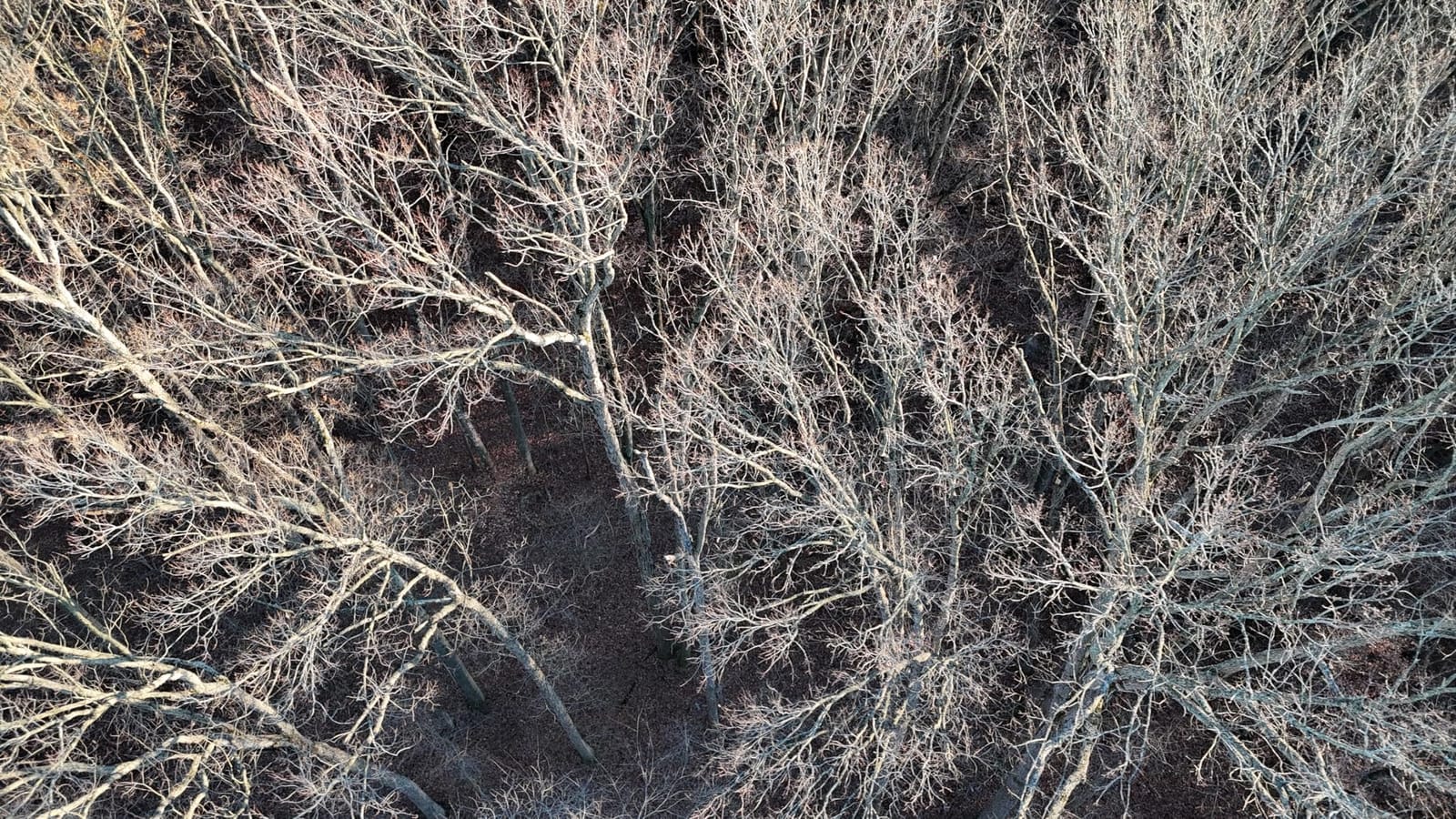
Where the sensor and screen pull ahead
Two situations. First, dawn and dusk, where a bright aperture and a screen you can actually see are worth more than raw resolution. Second, any water where the fish are showing as dark shapes against a lighter bottom, because a wide aperture holds detail in exactly that low-contrast situation. Owners comparing it directly to the DJI Mini 4 Pro call it close, with better image stabilisation.
If you fly at midday in full sun over clear water, the advantage narrows, because a phone screen in a hood handles that case adequately.
The software caveats you should know
Controller and app software are the most common complaint, with pilots describing glitches in the interface and menus. The manual is thin, the app is not on the Play Store, and replacement parts and accessories are harder to source than DJI items. A 12-month warranty with a local service team is included, which partly offsets the parts question.
7. karuisrc K600PRO for the longest single flight of the roundup
K600PRO GPS Drone with EIS 4K Camera for Adults Beginner,3 Axis Gimbal Professional Long Range Drone with 5.5” Touchscreen on Controller,Auto Return Follow Me,15KM FPV Transmission 55 Min Flight Time
Pros
- 55 minute single-battery flight time is the longest here
- Screen controller needs no phone
- 3-axis gimbal with EIS gives smooth 4K
- TOF and six GPS modules hold low altitude hover
Cons
- At 0.73kg it needs registration
- 15km transmission is an advertising figure
- 5.5 inch screen is small for reviewing imagery
- Heavy mass is vulnerable in wind
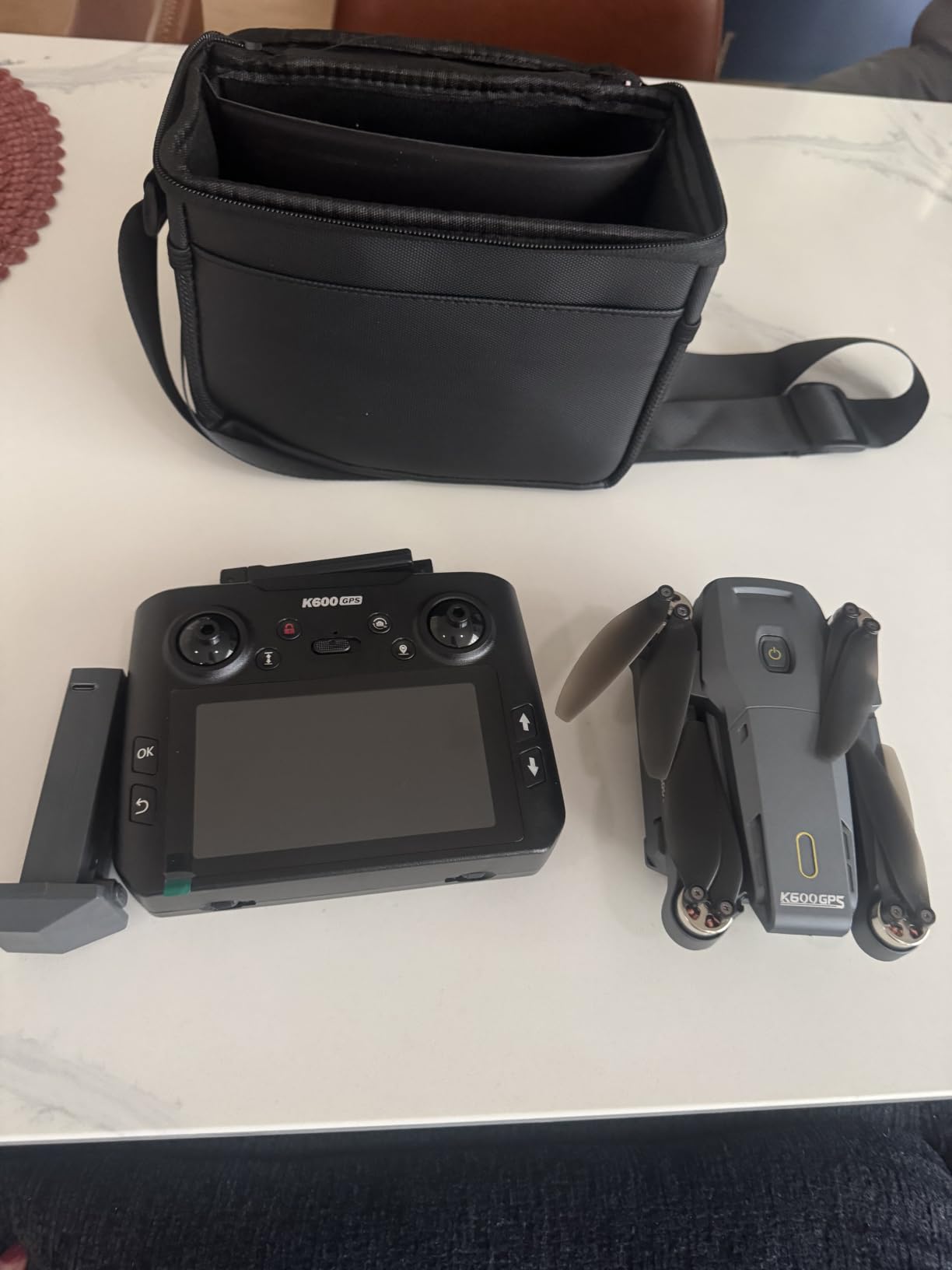
One battery, 55 minutes. That is the pitch, and for a specific angler it is the right one. If your water is a long shallow bay and you want to make a single slow pass from one end to the other and back without swapping anything, the sheer endurance here beats everything else on the list. An 11.1V 3500mAh pack charged over Type-C means one battery on the boat and one in the vehicle.
The build is substantial. At 0.73kg this is a real aircraft rather than a palm-sized one, and that mass shows in the flight: it does not wander, the hover sits still, and the six high-precision GPS modules plus time of flight give noticeably stable behaviour at low altitude where smaller aircraft get nervous. Follow me, orbit and point of interest modes are all present and behave well.
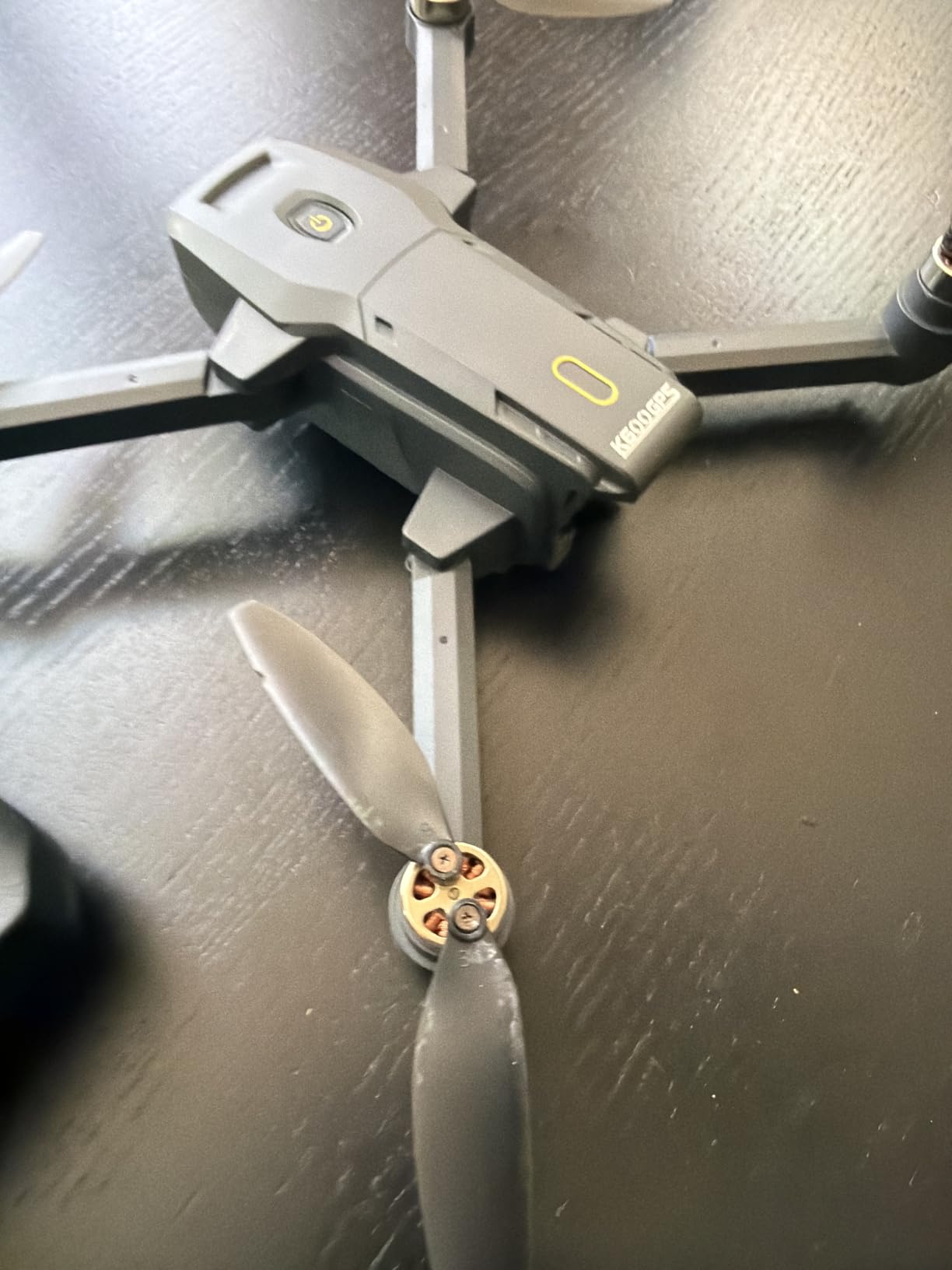
The camera sits on a three-axis gimbal with electronic stabilisation, records 4K, and carries a 50x digital zoom. The zoom is not a substitute for a 1-inch sensor at range, but it is genuinely useful for confirming a detail you spotted from altitude, and the 16GB card on board means the first flight of the day records even if you forget a card.
Two things to weigh before buying. The 0.73kg weight is well above the sub-250g line, so recreational registration applies. And the 15km transmission figure is advertising rather than experience, in the same way as the 20,000 foot claims elsewhere in this price tier.
When one long flight beats three short ones
Long, single passes over a big lake, a reservoir with a shoreline feature you want to follow end to end, or any session where swapping batteries at the bank is genuinely inconvenient. It also suits anyone who films rather than only scouts, since the single-pack endurance avoids the mid-session battery swap that ends a good light window.
It does not suit a kayak, a walk-in angler, or anyone who wants to keep recreational paperwork out of the picture entirely.
How mass behaves on an exposed shore
More mass cuts through steady wind better but gets pushed harder by gusts, and the combination of a large frame and a high-profile build is the reason I would fly it from a sheltered position rather than an exposed breakwater. The 5.5 inch screen is also the smallest of the built-in displays here, which makes reviewing fine detail awkward in the field.
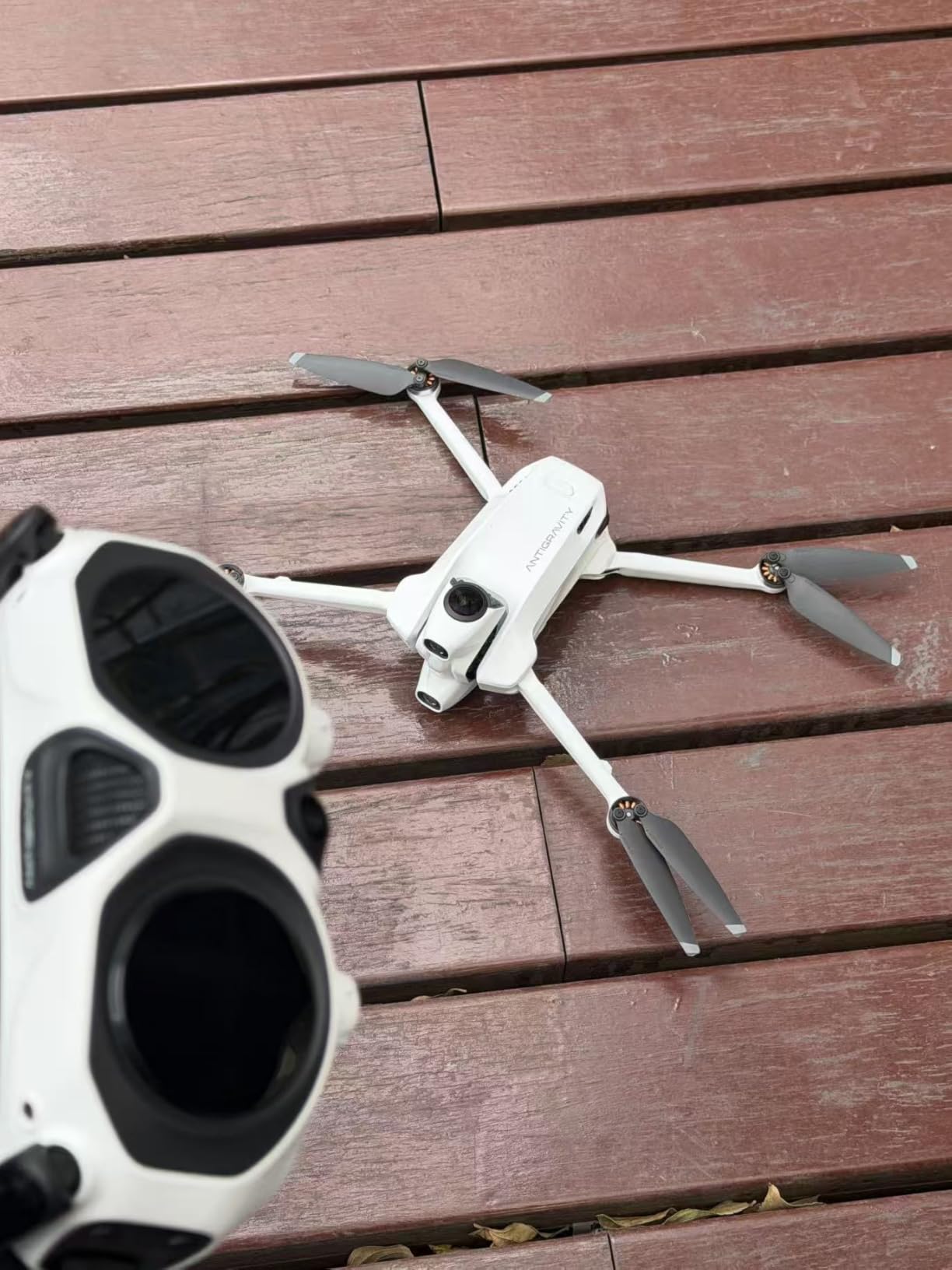
8. Antigravity A1 Explorer Bundle for seeing every angle without repositioning
Pros
- 360 capture means no missed angle and reframing after landing
- Vision Goggles give a genuine 90 degree first person view
- FreeMotion is the easiest control scheme here
- Deep Track follows a subject from a simple drag box
Cons
- Around 39 minutes on the high capacity battery
- Reframing a 360 sphere gives a softer final image
- Struggles in wind compared with flat camera drones
- The most complex aircraft in the roundup
Scouting is a job of looking at water from many angles quickly, and this aircraft changes how you do it. The 8K 360 capture with invisible stitching records the entire sphere, so instead of flying a careful grid you can fly once over a promising area and decide afterwards which angle to look at. For finding a drop-off edge you can see three sides of at once, that is a genuine workflow advantage.
The Vision Goggles are the reason people buy it. A 90 degree field of view through dual 1-inch Micro-OLEDs, with diopter adjustment, turns a scouting flight into something closer to flying the view down onto a weed bed than looking at a screen. FreeMotion point-to-fly mode is the easiest control scheme in this roundup by a wide margin, and it means a beginner can hold a steady hover over a fish holding without a tutorial.
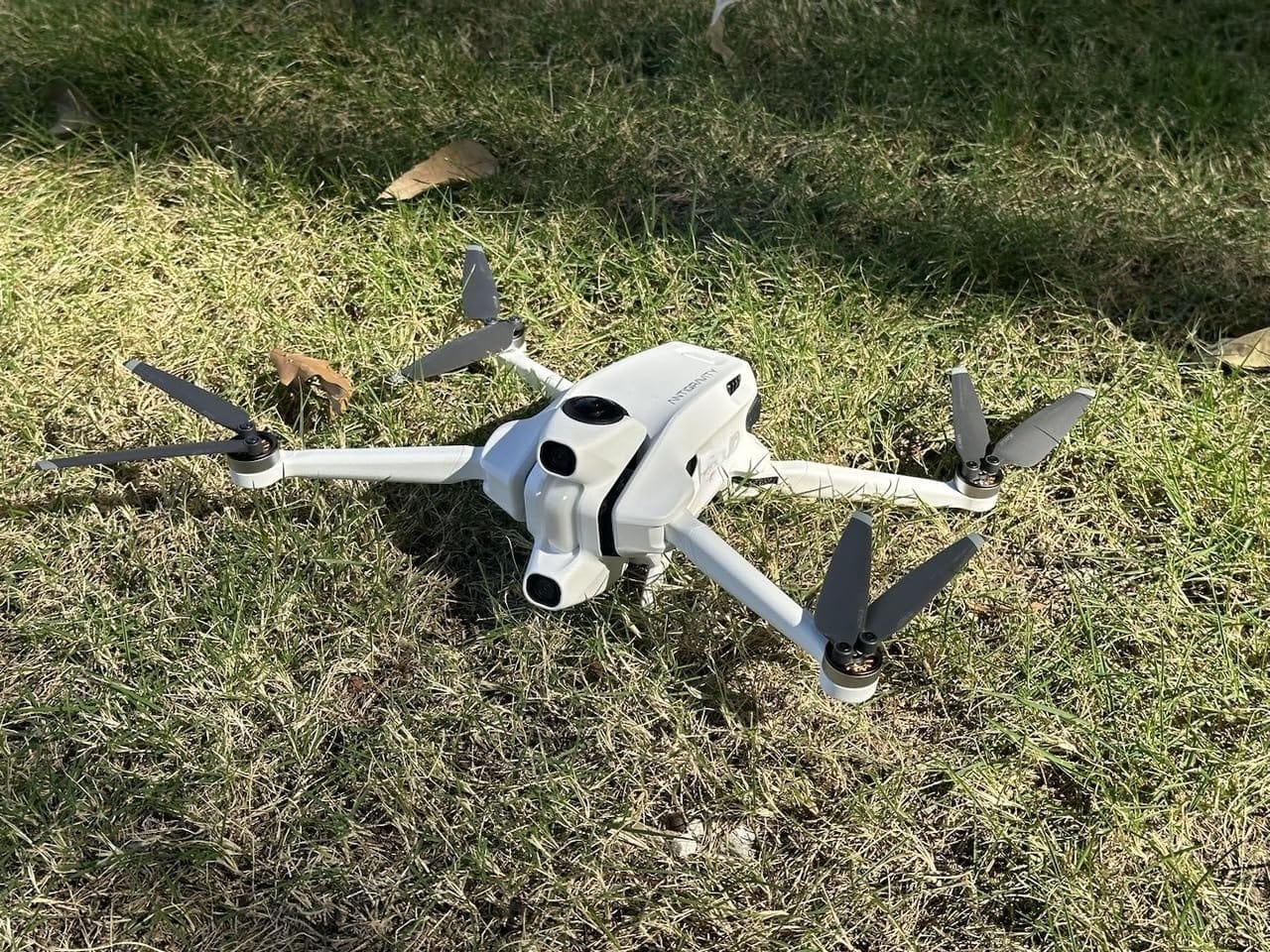
Omnidirectional obstacle avoidance combines 360 sensing with front and downward binocular vision, and Deep Track follows a subject from a simple drag-box gesture. Auto Editing 2.0 reframes the 360 footage into a finished clip with music sync, which removes the biggest barrier for anyone who is not an editor and simply wants a record of where the fish were.
The aircraft stays under 249g on the standard battery, and the high-capacity battery gives around 39 minutes. Sky Path automatic routes and Smart Return to Home are both there for a return leg you do not have to fly.
Where 360 capture changes the workflow
Scouting over structure you cannot reach, filming a catch from every angle without repositioning, and any session where you want to log a location and come back to it later. If you ever regret a shot, this aircraft eliminates that regret, which is worth something on water where you cannot simply fly back.
It is a poor choice for reading fine bottom structure. Cropping a 360 sphere to a flat frame costs real sharpness, and a 1-inch sensor with a conventional lens will resolve more detail at distance.
The honest limitations
Wind sensitivity is the practical one. Compared with the flat camera drones here, it struggles in a fresh breeze, which on an open shoreline is a lot of mornings. Around 39 minutes per battery is the shortest real endurance among the serious aircraft here, and it is also the least practical aircraft for a beginner in this roundup.
9. CHUBORY G9 Pluto for the lowest cost way to start scouting
Pros
- Screen controller means no phone needed
- Three batteries total 90 minutes
- Folds to 193g with a carrying case
- 32GB memory card included in the box
Cons
- Listed output is 2K and 3.7MP despite 4K marketing language
- No charger included in the box
- 3280ft range is short for scouting
- No gimbal
- relies on electronic stabilisation only
- Screen is non-touch
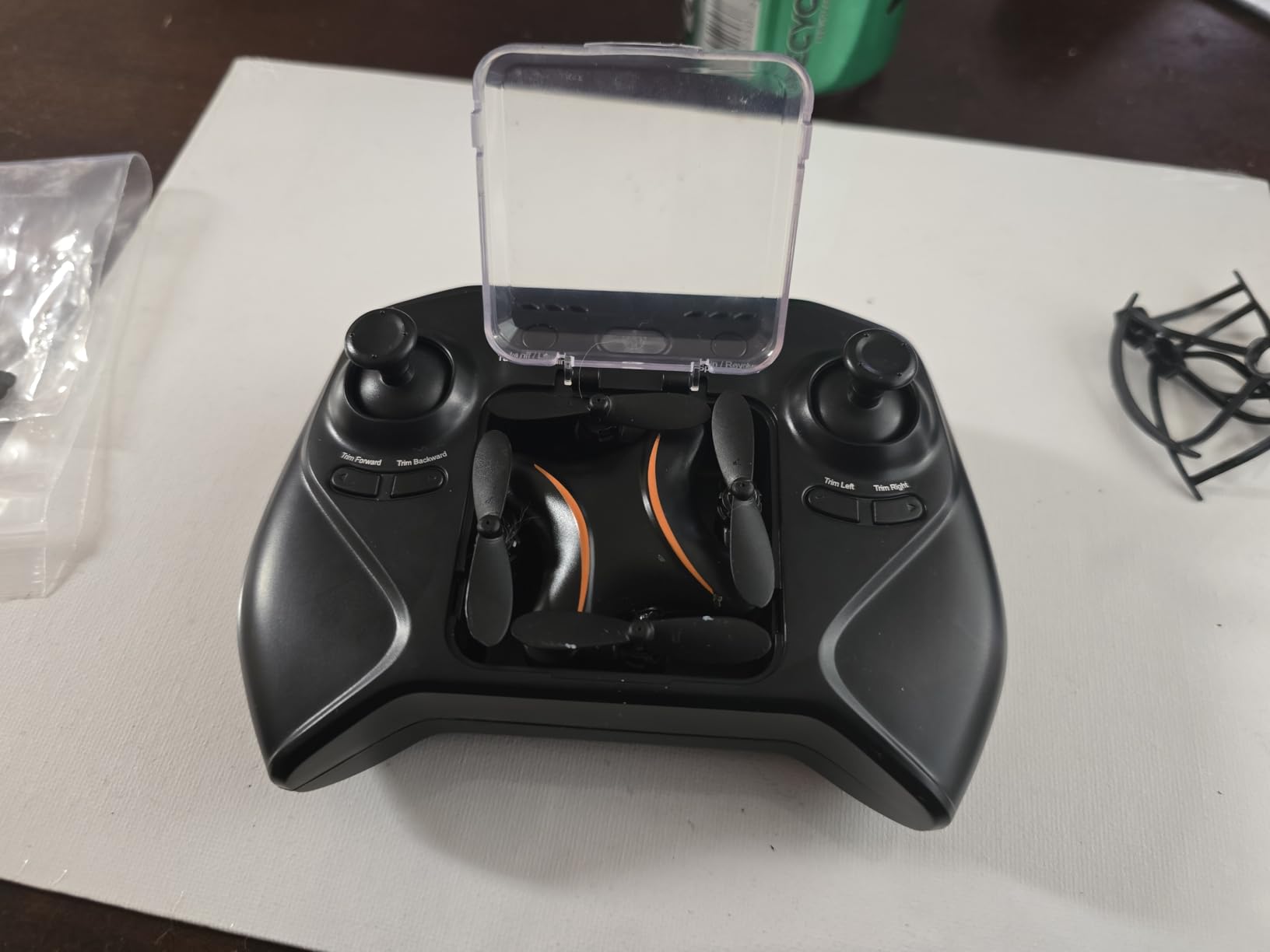
This is the aircraft to buy if the budget is the main constraint and the goal is learning whether a drone helps your fishing at all. The 4.5 inch screen in the controller means no phone, the three batteries give a claimed 90 minutes total, and at 193g folded it disappears into a jacket pocket. Everything you need to start is in the box except a charger, which is the first thing to buy.
Real output is well below the marketing. The listing carries 4K UHD language in the camera description, but the actual video capture resolution is 2K with 3.7MP stills, and there is no mechanical gimbal, only electronic stabilisation. For spotting a boil or a bird working a surface, that is workable. For reading weed lines or drop-off edges from altitude, it is not.
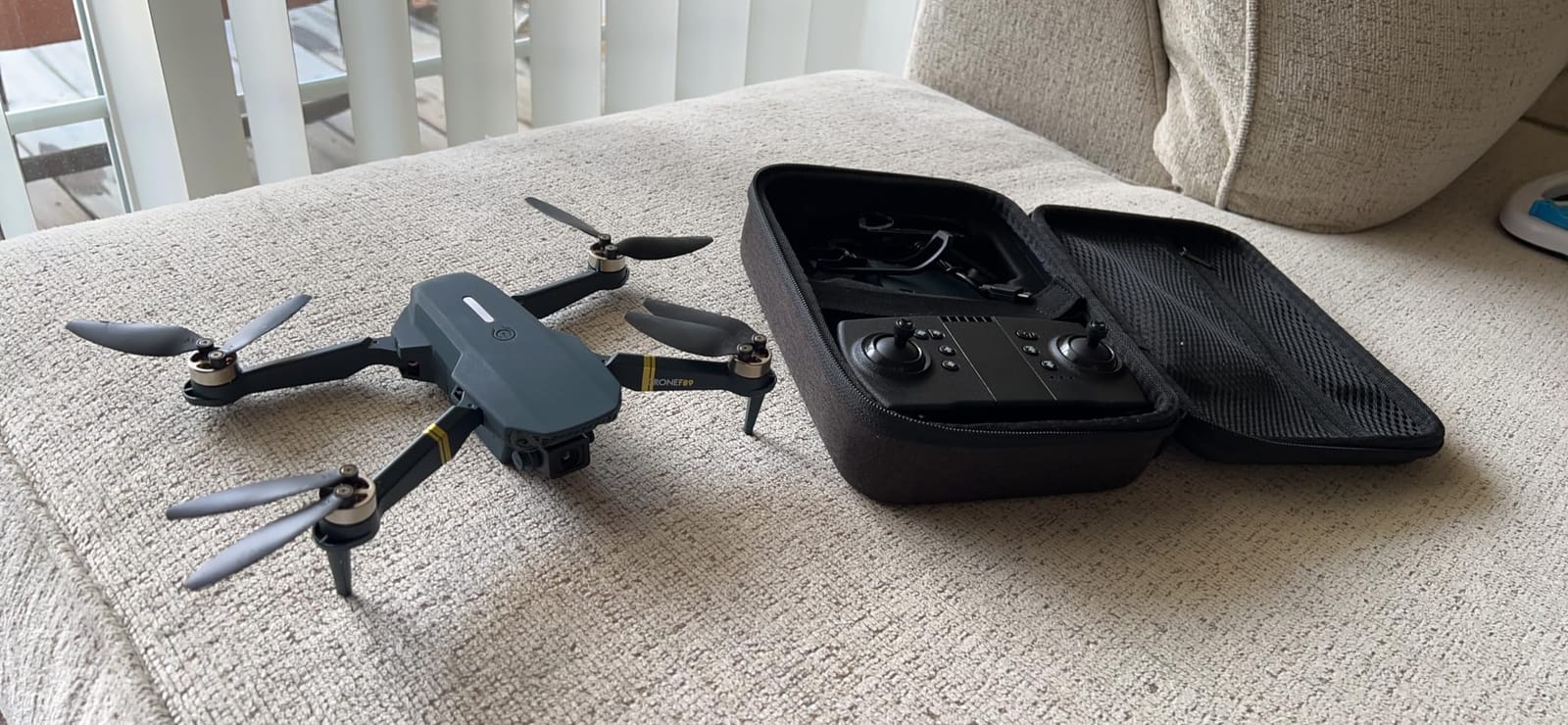
What it does well is the fundamentals. The 90 degree adjustable camera with a smooth tilt function lets you frame the water rather than the horizon, GPS auto return fires on the button or on low battery, and Circle Fly plus Follow Me give you a way to watch an area without hand-flying the whole time. An indoor mode is included for flying away from GPS coverage.
Range is the honest limit. The 3280 foot control range is short compared with everything else here, and over open water it defines the size of the area you can realistically cover in one sortie.
Who should buy the cheapest option
A beginner who wants to find out whether aerial scouting is worth learning before spending serious money, an angler fishing close-in water within a few hundred feet of the bank, and anyone who wants a spare aircraft to carry a second rod and a bucket of bait to a spot. The included 32GB card and carrying case make it a complete beginner package.
Buy a proper charger before your first flight, because the box does not include one, and expect to fly it close to shore rather than out over structure.
What the smaller spec sheet costs you
Gimbal stabilisation, real resolution, range and wind headroom all go. The non-touch screen also means menu navigation is buttons only, which is fine once set up and irritating when you want to change a setting on the bank. It is a learning tool with a scouting role, not a serious spotting platform.
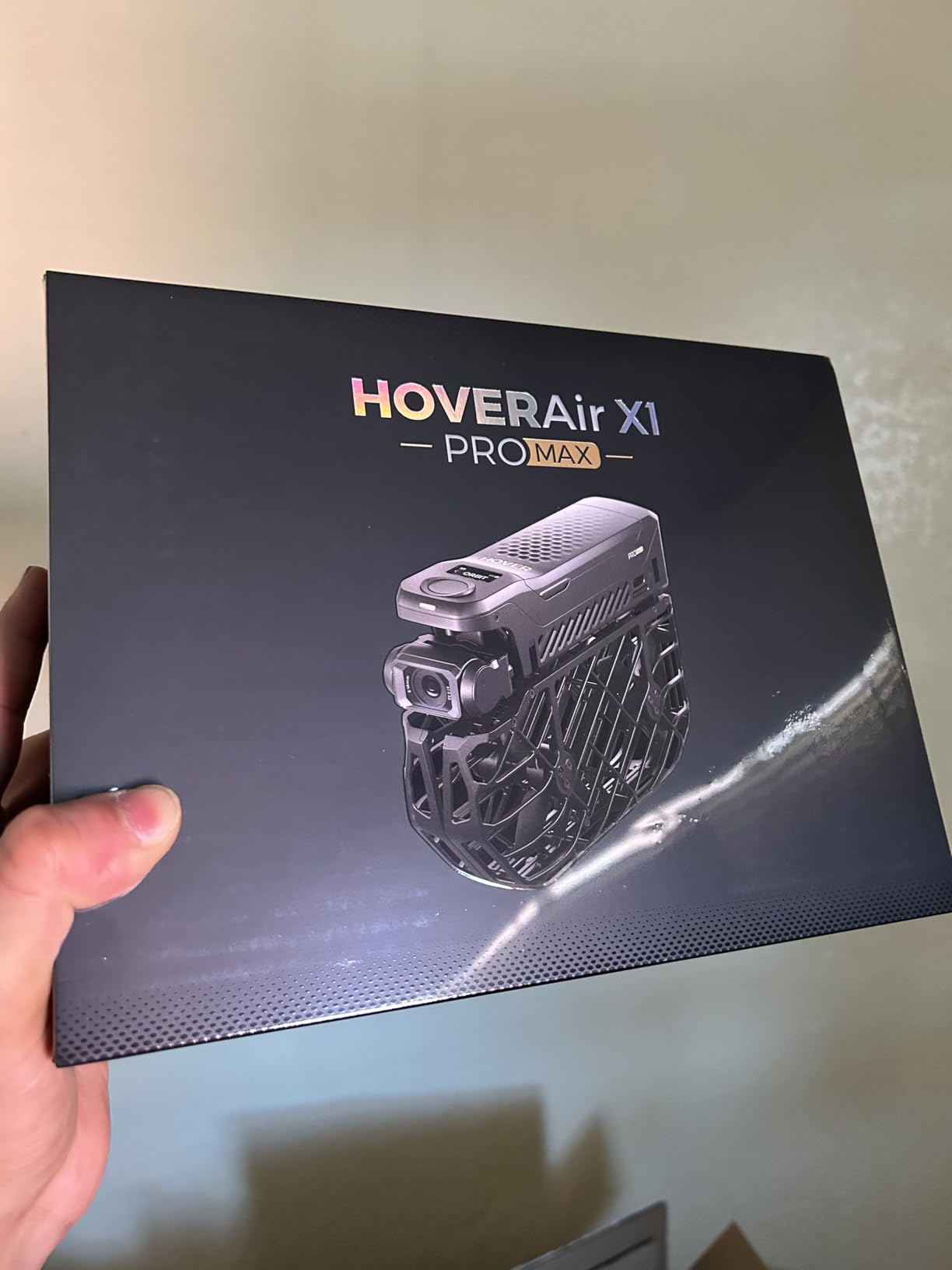
10. HOVERAir X1 PROMAX for scouting that needs no piloting at all
HOVERAir X1 PROMAX Standard, 8K Action Flying Camera, Foldable Follow Drone
Pros
- Palm launch and automated modes need no controller or phone
- 8K horizontal and 4K vertical is rare at this size
- 42 km/h follow speed tracks a moving subject
- 192g and foldable with fully enclosed prop guards
Cons
- Two-axis gimbal rather than a full three-axis assembly
- Obstacle sensing is rear only and misses branches
- App connectivity inconsistent without the optional joystick
- Delicate after even a light collision
The idea here is simple: you hold it out, click, and it flies itself. Palm launch by button or voice command means there is no controller and no phone for basic flight, and with more than ten automatic modes including Hover, Zoom Out, Follow and Dolly Track, the aircraft can work a shoreline while you watch the screen in the app. For an angler who does not want to learn to fly, that removes the single biggest barrier in this entire category.
The camera is the surprise. 8K at 30fps horizontally and 4K vertically on a CMOS sensor is the highest resolution flat image in this roundup, held on a two-axis gimbal with electronic stabilisation and horizon levelling across a 107 degree field of view. OmniTerrain all-environment flight covers water, snow and cliffs, and rear time-of-flight sensors brake before collisions at up to 3 m/s.
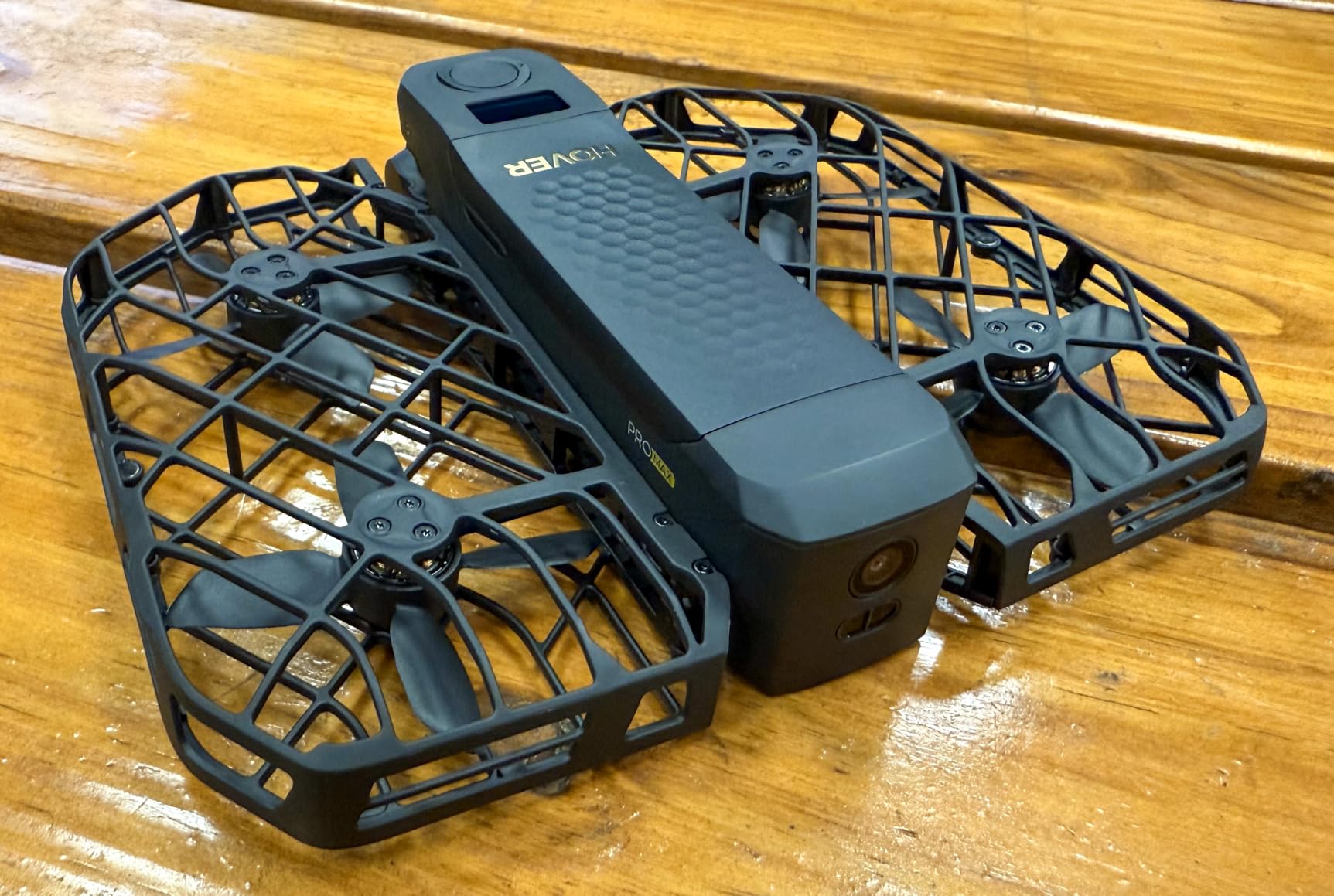
It is also the most discreet option. At 192g, fully enclosed in HEM aerospace-grade propeller guards, it folds flat and can be flown from a path, a bank or beside a boat without anyone giving it a second look. 64GB of internal storage plus SD expansion to 1TB means no card is required, and a one-year manufacturer warranty is included.
The follow speeds are genuinely quick, 42 km/h for tracking and 60 km/h top burst, which is why this aircraft shows up on boats and alongside moving subjects. That is not a scouting feature, but it is a filming one.
Where hands-free flying changes the job
It is the pick for a family member, a beginner, or anyone fishing alone who wants to see the water without committing both hands to a controller. The automated modes are good enough to hold a general area while you watch for surface activity, and for filming a catch it is very difficult to argue with.
It is weaker for precise spotting. A fixed automated path cannot be adjusted mid-flight the way a stick-driven aircraft can, so finding a specific weed edge means restarting rather than nudging.
The two limitations that matter over water
Obstacle avoidance is rear only, and owners report that it misses tree branches in practice, which on a wooded shoreline is a real risk. It is also delicate: several owners have had camera or app failure after a light collision, and the two-axis gimbal is not a substitute for three-axis when the aircraft is buffeted. Without the optional joystick, app connectivity is inconsistent.
How to Spot Fish with a Drone
Spotting with a drone is a technique, not just an aircraft purchase. Fly in the golden hour or in flat overcast light rather than at midday, because low contrast in the water is what makes fish and structure visible, and hard sun destroys it.
Start with a circular polarizer on the filter thread if the camera supports one. It removes the surface glare that turns water into a mirror, and without it you are often looking at the sky reflected rather than at the bottom. Set the gimbal to look down rather than forward, and hold between 100 and 200 feet for the widest useful coverage.
Fly the sun behind or beside you. With the sun over your shoulder, the water reads as water. With the sun behind the aircraft, it reads as a mirror.
Work in overlapping passes at a steady altitude. Holding one height and turning the aircraft in a grid is what makes the second pass comparable to the first.
Scan for surface disturbance first. Ripples that are not wind ripples, boils, and a colour change on the surface mark feeding fish faster than anything else.
Watch for birds. Gulls and terns working a concentration are the fastest way to find a bait ball without seeing the bait ball.
Look for bottom colour change. A weed line, a sand channel or a drop-off edge shows as a tone change in clear shallow water, and that shape is usually where the fish hold.
Accept the limits of clear water. Deep green or tannin-stained water hides everything from a standard camera at altitude, and no amount of flying changes that.
Log what you find. A screenshot with a coordinate fixes the spot for the next trip, which is the entire return on the flight.
One honest note on the technique: this is scouting, and it is how you locate structure you could not otherwise reach. If your local rules or the rules of the water you fish do not allow aerial scouting, that is your call to make, not the drone’s.
What Actually Matters in a Fishing Spotting Drone
Four things decide whether a drone is useful on water, and they are not the ones on the box. Everything else is preference.
Bait delivery drone or scouting drone?
Decide this before anything else, because they are different products. A bait delivery drone is a waterproof, heavy-lift aircraft with a payload release mechanism that drops your rig out past the breakers or into a spot you cannot reach, and the useful specs are payload capacity, casting range and whether the airframe floats. A scouting drone is judged on camera clarity, link reliability and wind tolerance. Most of the aircraft in this roundup are the second category, and none of them can carry bait. If you need a rig placed, you need a platform built for it, and that is a separate purchase from everything above.
Link reliability beats headline range
Useful range ends where the video feed stays clean, not at the marketing maximum. A 10km figure is meaningless if the picture steps down at a few hundred feet, and several drones in this list advertise distances of 20,000 feet or more that owners never see. Digital transmission systems hold up far better than Wi-Fi, especially where shoreline vegetation sits between you and the aircraft, and a bright screen matters more than a longer number when you are squinting into a low sun.
If you also want a handheld optical aid after the flight, our guides to the best spotting scopes and best smart binoculars cover the long-range side of watching water and shoreline.
Flight time, and why it is never the advertised number
Plan on roughly 70 to 80 percent of the stated figure in normal conditions, and less in cold air. A 30 minute pack gives you about 22 usable minutes over a 4K feed. Multi-battery packages matter more than a single large pack, because you can cycle cells with the aircraft assembled. Advertised totals also assume no payload, no gimbal correction and no fighting a headwind.
Return-to-home and wind over water
Return-to-home is the feature that decides whether you relax or hold your breath. It should trigger on low battery, on signal loss, and on a manual press, and it should climb before it travels. Over land, a lost signal means the aircraft hovers and waits. Over water, it means the aircraft comes back to you, and the difference is the whole reason anglers buy a reliable failsafe. Wind matters just as much: an exposed breakwater generates gusts that will push a light aircraft off station at exactly the moment you are trying to hold a frame steady on a bait ball.
Camera and sensor for reading water
Sensor size beats resolution when the subject is low contrast. A 1-inch sensor with 4K at 60fps and HDR holds far more usable detail over a weed line than a small sensor at 8K stills, because HDR and frame rate matter more when the light is flat. A three-axis mechanical gimbal keeps a level horizon in gusts; electronic stabilisation alone crops into your resolution. Optical zoom helps confirm a detail you spotted, but a wide aperture helps far more at dawn.
Do you need a waterproof drone for fishing?
Not strictly, but a sealed aircraft changes how confidently you fly over a boat or a breaking surf. Waterproof ratings such as IP67 mean the airframe survives immersion in fresh water to one metre for about half an hour, and that rating says nothing at all about salt water, which corrodes. None of the aircraft in this roundup is sealed, so treat every one of them as a fly-over-water-only machine. If you fly from a boat, a flotation kit is a cheap mitigation, and drying a wet aircraft with the battery removed before it powers on matters more than almost anything else you can do.
What else you need beyond the drone
Budget for a few essentials before the first trip. Spare batteries matter more than anything else, because advertised flight time is a ceiling and a second pack is what lets you finish the search. Propeller spares, a small set of drivers and a screwdriver set are cheap insurance. A flotation or landing pad stops a nose-down first landing, a screen hood makes a phone viewfinder readable in sun, a circular polarizer cuts glare, and a charged tablet beats a phone when you want to review stills in the field. A stable platform matters too, and our guide to the best tripods for spotting scopes doubles as sensible advice for a long lens session on the same trip.
Is It Legal to Spot Fish with a Drone?
In the United States, spotting fish with a drone is legal for recreational use under the same rules that apply to any drone flight. There is no fishing-specific prohibition on using one to look at the water. What the rules do cover is altitude, visibility, aircraft weight, and airspace.
These are the constraints that actually affect an angler. They are FAA rules for recreational flight in the United States, and state, tribal and local rules can be stricter, so check the specific water you fish before you fly.
400 feet above ground level is the ceiling. Recreational and Part 107 flight must stay below 400 feet AGL. Over a lake, ground level is the water surface, so your practical scouting altitude is lower still, and most spotting work happens between 100 and 200 feet.
Maintain visual line of sight. You must be able to see the aircraft unaided for the entire flight. Losing sight of it behind a headland or in haze is the most common way anglers get into trouble, and it is also why an aircraft with omnidirectional obstacle sensing and a solid failsafe return is worth buying.
Registration depends on weight. Recreational aircraft over 250g must be registered with the FAA and carry a Remote ID label or module. Most of the aircraft in this roundup sit under that line with the standard battery, though the DJI Mini 5 Pro crosses it once extended batteries are fitted, and the karuisrc K600PRO is well above it.
Stay clear of other people and vessels. You are responsible for avoiding crews and boats on the water and bystanders on shore, and you should never fly over a boat where the occupants have not agreed to it.
Respect restricted airspace. National parks, wildlife refuges, many coastal areas and any temporary flight restriction near an event or emergency will prohibit or limit flight. Launch sites near airports and controlled airspace need checking before you set up on a boat ramp.
Dropping bait is a separate question. Carrying a fishing rig on a drone raises additional issues, including a payload with a line trailing to the water, and you remain responsible for anything that falls. Some waters and agencies restrict bait or drone-assisted delivery, so check locally.
One more practical note on availability. Questions about DJI models in the US come from concerns about national security and supply-chain oversight of the company’s reporting and manufacturing footprint, rather than from any product recall. The practical effect on an angler is which models, apps and spare parts are available to buy at the time you shop. Verify current model and app availability at the point of purchase rather than planning a trip around a specific model, and check that the flight app is installed before you leave home.
Real Owners on Real Water
The search results for this topic are dominated by angler forums rather than magazines, and the recurring themes are consistent. Cost is the loudest objection. The highest-ranking thread on the topic opens on r/drones with a question about carrying bait to the beach, and the reply that gets the most agreement is about not wanting to drop four figures on a hobby.
The second theme is fear, and it is specifically fear of water rather than fear of crashing. As one angler put it, over land a lost signal means the aircraft hovers and waits, and over water it may not come back at all. That single sentence explains why return-to-home reliability, obstacle sensing and a screen you can read at a glance matter more to this buyer than any other spec on the list.
Third, owners report that cheap drones disappoint in specific, predictable ways. Aircraft arriving dead, footage that looks processed rather than captured, and wired transmission dropping out at a few hundred feet. These are not abstract complaints. They are the reason the honest reviews above name the gap between the advertised figure and the real one, and why the CHUBORY G9 Pluto is positioned here as a learning tool rather than a spotting platform.
Finally, there is a debate about whether drone-assisted spotting is somehow cheating. It is a fair question and anglers are entitled to their own view. Practically, the drone shows you water you could not otherwise see from where you stand, and what you do with that information is between you and the fish.
Frequently Asked Questions
What is the best fishing drone?
The best fishing drone depends on whether you want to drop bait or spot fish. Only a waterproof heavy-lift aircraft with a payload release can deliver bait past the breakers. For scouting, the best choice is a stable sub-250g camera drone with a mechanical three-axis gimbal, reliable digital video link and solid return-to-home, such as the models in the table above.
Is it illegal to spot fish with a drone?
No. In the US, spotting fish with a drone is legal recreational flight, subject to the same rules as any drone. You must stay under 400 feet above ground level, maintain visual line of sight, register any aircraft over 250g, avoid other boats and people, and respect restricted airspace. State and local rules can be stricter.
How to spot fish with a drone?
Fly in the golden hour or flat overcast light, keep the sun behind or beside you, use a circular polarizer to cut surface glare, and hold 100 to 200 feet for wide coverage. Work overlapping passes at a steady altitude, then scan for surface disturbance, boils, bird activity and bottom colour change that marks structure.
Are fishing drones worth it?
For scouting and bait delivery, yes, particularly for shore, kayak and small-boat anglers who cannot reach structure any other way. The value depends on having water worth searching and a return-to-home system you trust. There is a learning curve, and legality is your responsibility, so start with short sorties close to shore.
Do you need a waterproof drone for fishing?
Not strictly, but it matters if you fly from a boat or over surf. A rating such as IP67 covers immersion in fresh water and says nothing about salt water corrosion. None of the drones reviewed here are sealed, so treat them as fly-over-water only, consider a flotation kit, and dry any wet aircraft with the battery removed.
How far can you fly a fishing drone?
Useful range ends where the video feed stays clean, not at the marketing maximum. Several drones here advertise 20,000 feet and deliver a few thousand. Fly within line of sight under 400 feet, prefer digital transmission over Wi-Fi, and stay close enough to read the water clearly rather than chasing the maximum figure.
Can any drone be used for fishing?
Any drone can scout the water, but only a waterproof heavy-lift model with a payload release mechanism can carry and drop bait. A standard camera drone is a spotting tool. Deciding which job you need first is the most important step in buying a fishing drone.
Why did the US ban DJI drones?
The concern in the US relates to national security and supply-chain oversight of DJI’s reporting and manufacturing footprint, rather than any product recall. For anglers the practical effect is which models, apps and spare parts are available to buy, so verify current availability when you shop and install the flight app before a trip.
Final Verdict
The Ruko U11MINI 4K RC3 is the best all-round buy here because a screen in the controller removes the phone problem and a mechanical three-axis gimbal holds a level horizon over moving water, which is what spotting actually requires. The DJI Mini 4K Combo is the stronger buy if the link reliability matters more than the screen, and it holds a far more consistent video feed in real conditions than most of the range figures in this price tier suggest. The DJI Mini 5 Pro is the choice when reading bottom structure is the whole job and the extra weight and paperwork do not bother you.
Whichever you pick, the best drones for fishing spotting are the ones you actually fly, so buy the batteries first, learn return-to-home on a calm day close to shore, and log the spots you find. Every one of these aircraft is a scouting tool. If you need bait delivered past the breakers, that is a different machine, and it is worth buying the right one the first time.