
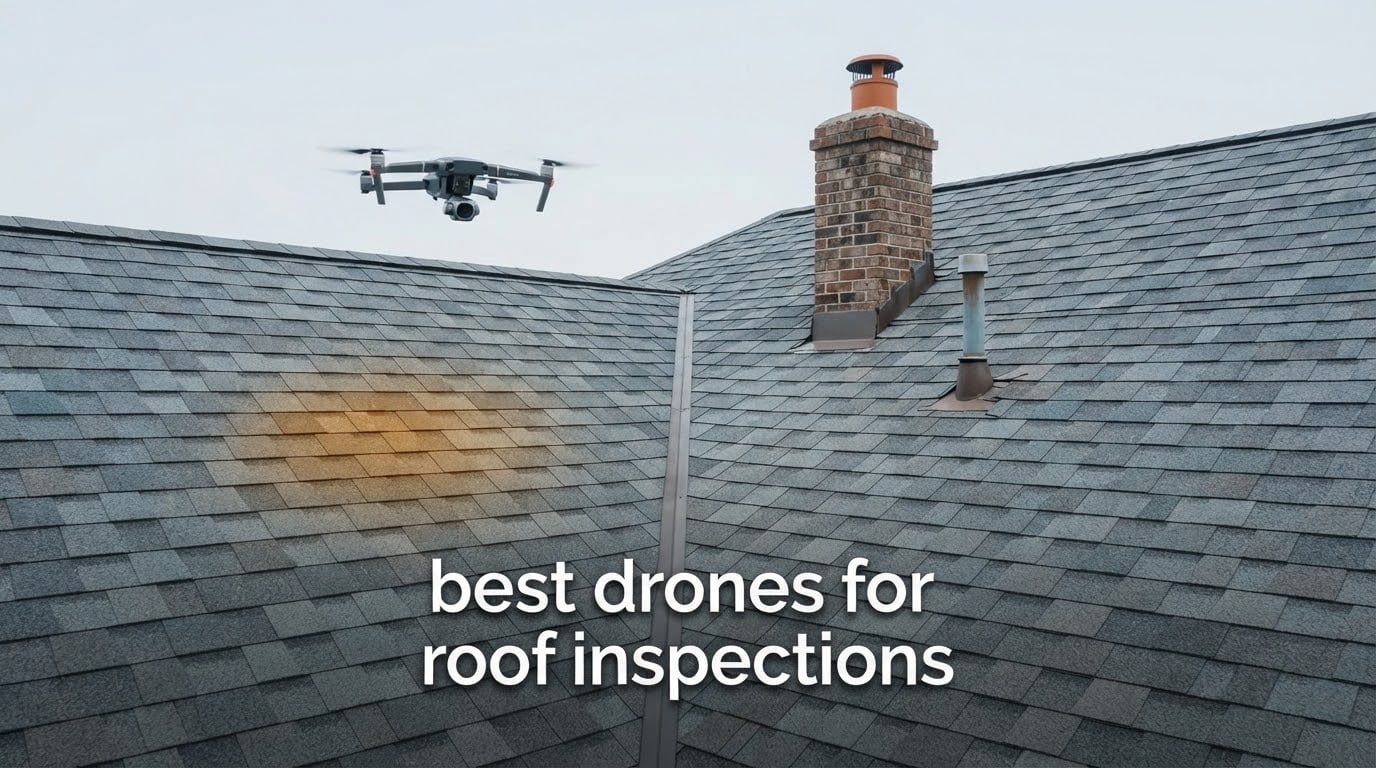
Most roof work still starts with a ladder, and that is where the injuries happen. Falls from ladders and scaffolds account for a large share of construction fatalities, and a roofer on a steep shingle slope with a clipboard has no way to see the north-facing valley from the ground. A camera drone fixes the vantage problem in about ninety seconds of setup.
The best drones for roof inspections are not the ones with the biggest spec sheets. They are the ones that hold position in a gust, dodge a chimney at three metres, and come back with a set of frames that stitching software can turn into an orthomosaic a client or an adjuster will actually accept. Our team has spent the last two flying seasons logging sorties on residential re-roof estimates, commercial flat-roof thermal surveys and post-hail claim documentation, and we compared six aircraft that survived the filter of real review volume and current model families.
One thing we will say up front, because it is the question every experienced inspector asks: a drone documents a roof, it does not diagnose one. As one r/dji thread put it plainly, using a Mini 2 as a roof inspection tool, it is a great tool to assist but you have got to climb to make repairs. Hidden moisture under flashing, deck adhesion failures and a bad sealant bead will not show up in any sensor, thermal or otherwise. What the drone does is remove the ladder from the first pass so your climb time is spent on the three areas that actually need it.
If you want the broader picture of the category first, our guide to the best drones for inspections covers industrial and infrastructure work in more depth. This one stays on the roofline, where the hazards are specific and the flight skills are different.
Top 3 Best Drones for Roof Inspections in October

DJI Air 3S Fly More Combo
- 1-inch CMOS with 3x tele
- 45-minute flight time
- Forward LiDAR and omnidirectional sensing


DJI Mavic Air 2 Fly More Combo
- 48MP stills
- 3-axis mechanical gimbal
- Three batteries in the combo
All Six Roof Inspection Drones at a Glance in 2026
The short version of the table below: one thermal aircraft, three with a one-inch-class sensor, and one that stays under the FAA registration threshold. Zoom, endurance and weight class are the three columns that decide most purchases.
| Product | Specifications | Action |
|---|---|---|
| DJI Air 3S Fly More Combo |
|
Check Latest Price |
 Autel EVO II Dual 640T V3 Autel EVO II Dual 640T V3 |
|
Check Latest Price |
| Autel EVO II Pro V3 |
|
Check Latest Price |
 DJI Mavic 4 Pro Fly More Combo DJI Mavic 4 Pro Fly More Combo |
|
Check Latest Price |
| DJI Mavic Air 2 Fly More Combo |
|
Check Latest Price |
 SKYROVER X1 Combo SKYROVER X1 Combo |
|
Check Latest Price |
1. DJI Air 3S Fly More Combo – Best Overall for Roof Inspections
Pros
- 1-inch sensor plus 3x tele frames whole roof planes from one hover position
- Holds steady in gusty conditions for its weight
- RC 2 screen remote stays readable in full sun
- Three batteries and a charging hub in the combo
- Smart Return-to-Home picks a route even in weak GPS
Cons
- Battery charger is not included and must be added separately
- Two microSD cards needed - one in the aircraft and one in the remote
- Included shoulder bag is a tight fit for a hard case
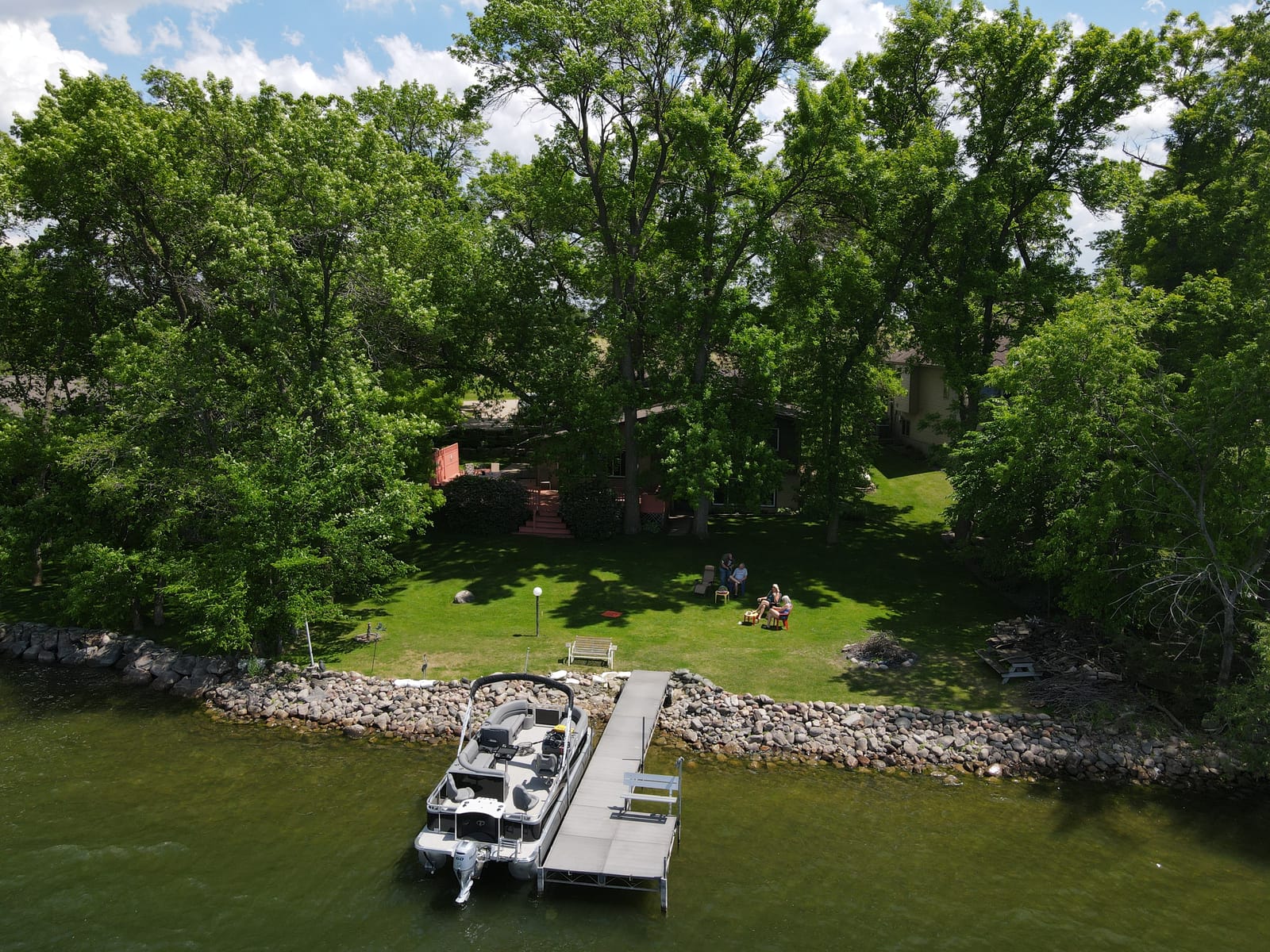
This is the aircraft we end up grabbing first, and it is not close. The Air 3S pairs a 1-inch CMOS main camera with a 3x medium tele on the same gimbal, which means a single hover can cover a full slope: wide for context, tele for the shingle detail on the valley you flagged on the ground. On commercial work the wide and medium tele panorama modes let you frame a whole roof face in one pass instead of stitching four overlapping captures.
The forward-facing LiDAR with nightscape omnidirectional sensing is the feature that changed how I fly residential jobs. Clearing a satellite dish, a vent stack or a tree limb on the approach to a steep gable is where most of my early roof losses happened, and the aircraft now slows and stops rather than continuing through. The 45-minute battery figure is the real endurance number, and the three batteries in the combo cover a full day of small residential inspections without a field charge.

What I wish it had was a battery charger in the box. You need a 65W or greater USB-C charger added separately, and that is a trip to the supply store on day one if you have not planned for it. The 10-bit D-Log M and HLG colour modes are genuinely useful when a claim photo needs to survive a bright-sky exposure, and the RC 2 screen remote removes the phone from the workflow entirely.
Owners report Sport Mode wobble and note that the obstacle sensors do not protect against a reverse-direction crash, so fly the roofline in Normal mode. GPS can degrade under heavy tree cover, which is why the Smart Return-to-Home route selection matters more than it sounds on a suburban lot with two mature oaks.

What it handles well on a real roofline
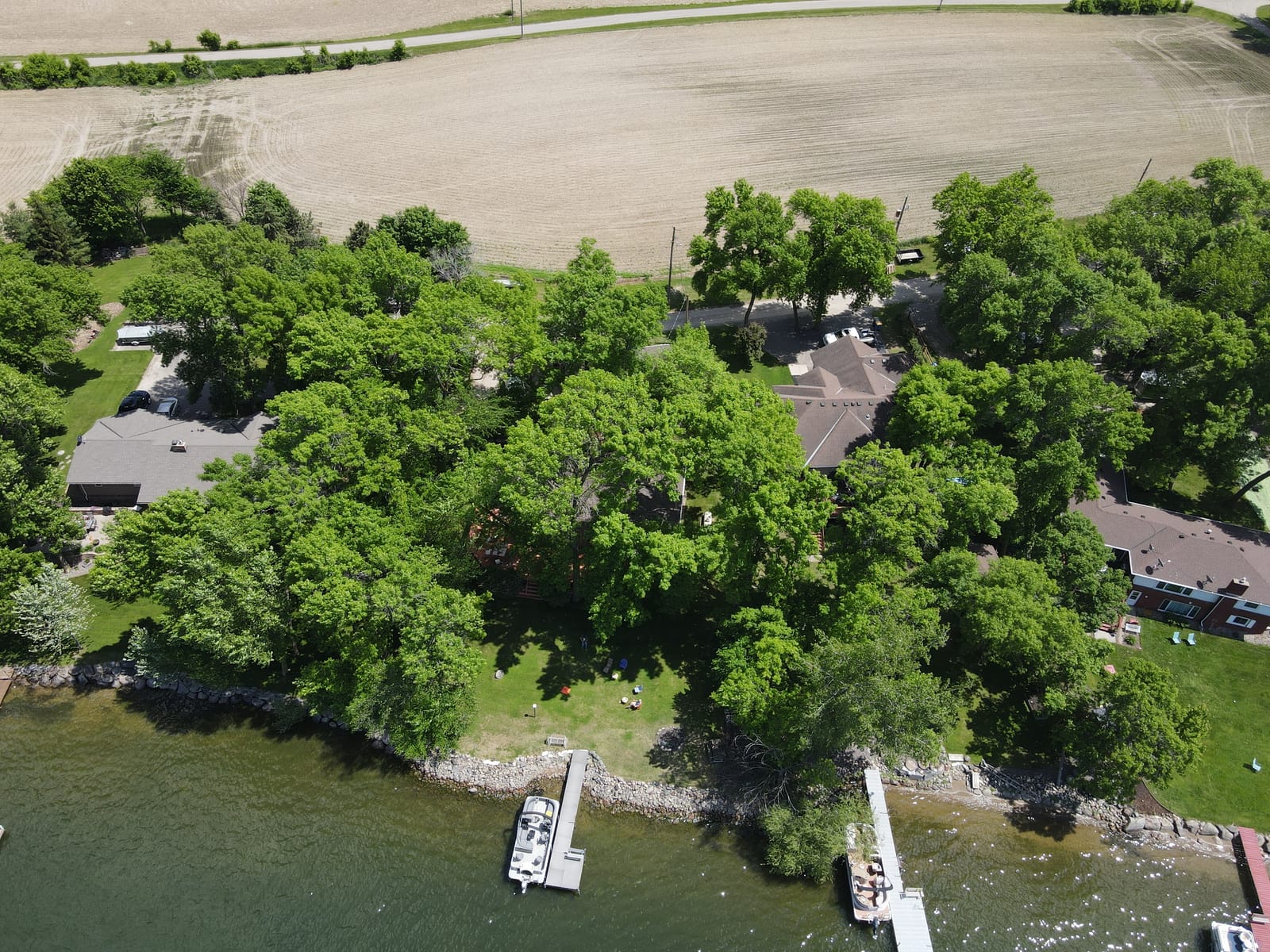
A four-storey gable with a 6:12 pitch and a stack of chimneys on the ridge is exactly the profile this aircraft is comfortable with. The combination of omnidirectional sensing, a 45-minute endurance and a 1-inch sensor means you can run a slow perimeter standoff at roughly three roof lengths out, capture each elevation, then move in for the penetrations without worrying about the battery. For a facility manager covering several low-slope buildings in an afternoon, the 20 km link and the smart return behaviour let you work a large site without babysitting signal.
Where it falls short
There is no thermal sensor here, so this is not a leak-detection tool. If your work involves moisture mapping or heat-loss surveys you will outgrow it, and no amount of post-processing on a 1-inch RGB sensor will substitute for radiometric data. The 3x tele is also modest, which means distant defects on a large commercial array still need a closer pass or a second platform.
2. Autel EVO II Dual 640T V3 – Best for Thermal Roof Surveys
Autel Robotics EVO II Dual 640T V3, 640×512 Thermal Imaging Drone, RemoteID
Pros
- Only radiometric thermal payload in this group
- 10-plus temperature measurement modes including D-RI ranges
- 50MP visible camera captures the RGB side in the same flight
- Three batteries
- Smart Controller V3
- multi-charger and car charger included
- Controller layout feels familiar if you are moving over from DJI
Cons
- Does not accept Autel clip-on accessories reserved for the Enterprise line
- Some reports of thermal module failure before a year of use
- Case camera-cover vent is a weak point
Thermal is the one capability that changes what a roof inspection can be, and this is the only aircraft in our group that carries a genuine radiometric sensor: 640×512 at 30 fps behind a 13mm lens with 16x digital zoom. That means the files you capture export as temperature data rather than a pretty colour picture, and you can pull a spot temperature, set a regional average and lay isotherms over a suspect area. For a commercial flat roof where you suspect trapped moisture in the membrane, that is the difference between a suspicion and a documented finding.
Ten-plus measurement modes cover most of what a thermographer would want on a roof: D-RI dynamic range improvement for low-contrast scenes, spot and regional temperature measurement, picture-in-picture alignment against the RGB feed, isotherm palettes and temperature alarms. Emissivity control matters enormously here, and a sensor that lets you set it correctly is the difference between a usable report and a set of false positives from sun-facing shingles.

The visible camera is not a throwaway, though. A 0.8-inch 50MP sensor with 4x lossless zoom handles the RGB documentation side of the same sortie, so a single flight gives you both the surface-condition record and the thermal evidence. Flight time is 38 minutes, and the transmission runs 15 km on tri-band SkyLink 2.0, which is plenty for a large industrial site.
Two practical notes from owners. The aircraft does not accept the clip-on accessories Autel reserves for its Enterprise line, so do not buy this expecting a modular payload bay. A minority of reviews also report thermal module failures before a year of service, with support attributing them to water damage, so keep the gimbal cover on in rain and treat the case cover vent as fragile.

How to get usable results from the thermal sensor
Fly a thermal survey at the right time of day or do not fly it at all. Roofs that have been in direct sun all morning will read hot across every south and west face, and you will spend the afternoon chasing anomalies that are just solar gain. Early morning, after the previous day has cooled the roof overnight, gives you the best contrast between wet insulation and dry. Set emissivity for the surface you are looking at – asphalt shingles, metal and single-ply membrane all read very differently – and always capture an RGB frame of the same area for the client report so a hot spot can be located on the roof rather than in the abstract.
Where it falls short
This is a large aircraft with a wide gimbal assembly, and close-quarters work in a tight residential alley is not its strength. The 38-minute battery is also the shortest of the three long-endurance options here, and the review base is thin at 53 ratings, which means you have less community troubleshooting data if something goes wrong. If you are a residential roofer doing re-roof estimates rather than a commercial maintenance contractor running thermal surveys, the cost and the training curve are real and the thermal data will mostly sit unused.
3. Autel EVO II Pro V3 – Best for 6K Capture and Low Light
Pros
- Large 1-inch Sony sensor with a f2.8 to f11 adjustable aperture
- 12-bit DNG capture gives real latitude for post-production
- 12 vision sensors plus 2 sonar units for 360-degree avoidance
- 40-minute flight time keeps large commercial roofs to one sortie
- Built-in 6.4-inch screen controller means no phone in the field
Cons
- 20MP still resolution is modest for a premium body
- Return-home and depth-map landing are software dependent
- No geo-fencing in no-fly zones so planning falls to the pilot
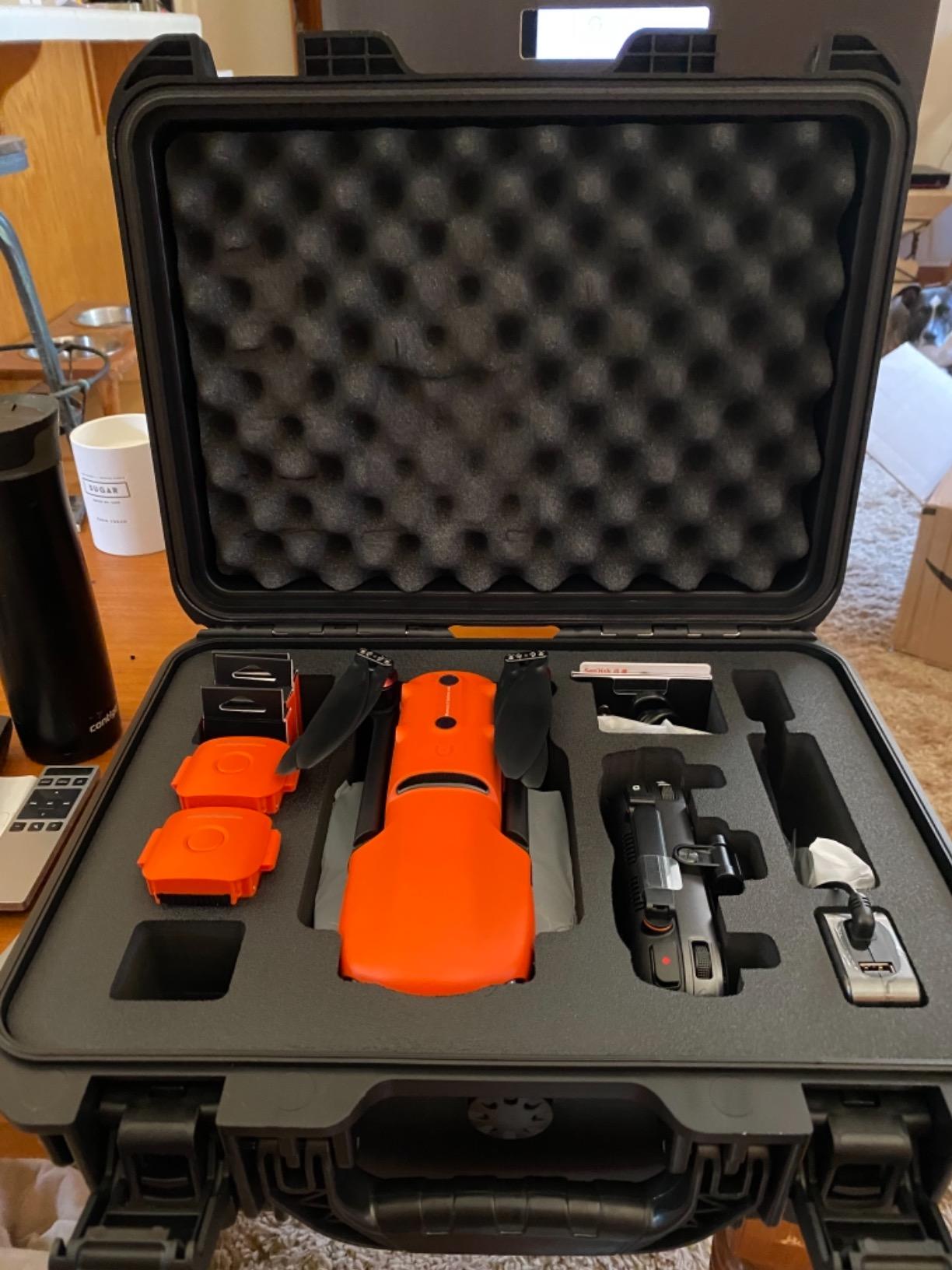
The EVO II Pro V3 is the sensor-first choice in this group. A 1-inch Sony CMOS with a 12-bit DNG pipeline and an adjustable aperture from f2.8 to f11 gives you far more control over a roof photograph than a fixed-aperture compact drone, particularly on a shaded north slope where a fixed f2.8 either blows out or smears. The Moonlight Algorithm 2.0 with a maximum ISO of 44000 is the spec I care about most, because dusk inspections and shaded commercial interiors at the end of a workday are where the budget drones fall apart.
For documentation work, 12-bit colour with 68.6 billion shades means you can pull detail out of a backlit shot of a parapet against a bright sky without the banding that ruins an insurance claim photo. Six video at up to 60fps is generous headroom for a 4K deliverable, and the 6.4-inch IP43 Smart Controller SE is readable in daylight and does not drain the phone you may need for the client call.
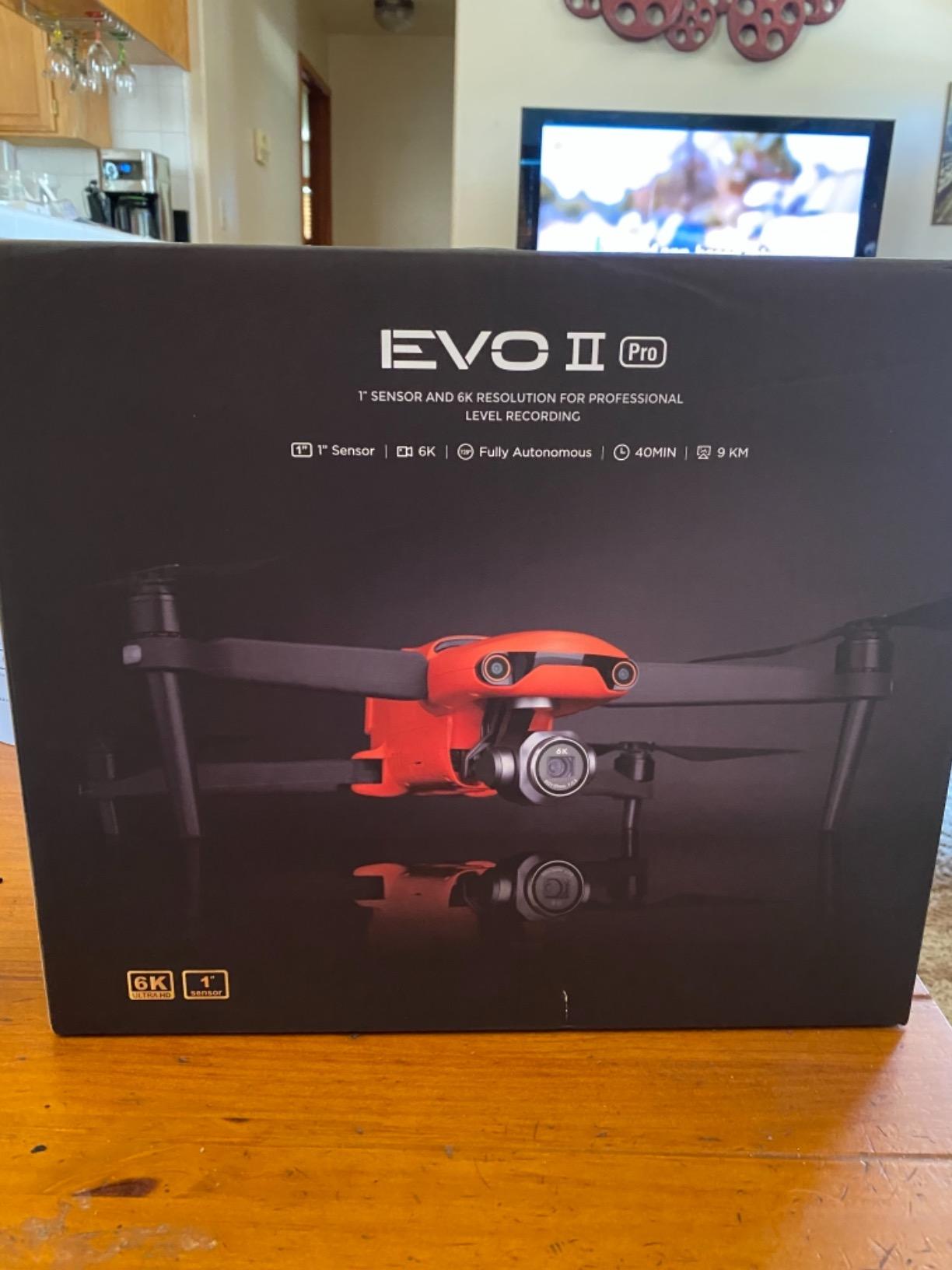
Flight time is 40 minutes forward with the 7100mAh battery, and SkyLink 2.0 extends to 15 km with automatic frequency hopping. The 12 computer vision sensors plus 2 sonar sensors cover 360 degrees, which on a roof with a rooftop HVAC cluster means you can work between units without the constant forward-only caution that a three-direction sensor forces on you. The V3 generation also brings Dynamic Track 2.0 deep-learning subject tracking, useful for following a technician walking a roof edge during a warranty dispute.
The trade-offs are honest ones. Twenty megapixels for stills is modest next to the 100MP sensor on the Mavic 4 Pro, so if your work is close-range defect photography you will want the bigger body. There is no geo-fencing, which means every flight plan is your responsibility. And the V3 line does not carry the Enterprise accessory ecosystem.
Why the aperture matters on a roof inspection
Every roof has one side that is in shadow and one that is not, and if you shoot both with the same fixed exposure you will either blow out the sunlit plane or push the shaded plane into noise. The f2.8 to f11 range here is the practical difference between a usable set and a set you retake. Stop down to f5.6 or so on the bright slopes for depth across the shingle courses, open up on the shaded north face, and shoot the bracket set in the same hover rather than repositioning. Combined with 12-bit DNG you have room to recover both.
Where it falls short
Still resolution is the honest limit. If a claim hinges on documenting granule loss across a small area, 20MP crops less favourably than a 100MP sensor. There is also no thermal payload on this model, so it fills a gap in the middle of the market rather than at the top of it. Budget for the fact that no wall charger is bundled, which is the most common complaint in the reviews alongside the software dependency of the failsafes.
4. DJI Mavic 4 Pro Fly More Combo – Best for Surface Detail
Pros
- 100MP sensor captures fine surface detail for defect documentation
- Dual tele modules allow framing distant sections without repositioning
- 51-minute endurance covers large arrays in a single sortie
- 0.1-lux nightscape omnidirectional sensing supports shaded work
- Three batteries plus a parallel charging hub in the box
Cons
- Heaviest aircraft in the group
- which matters on soft or elevated launch surfaces
- DJI Fly is not distributed through Google Play and must be installed manually
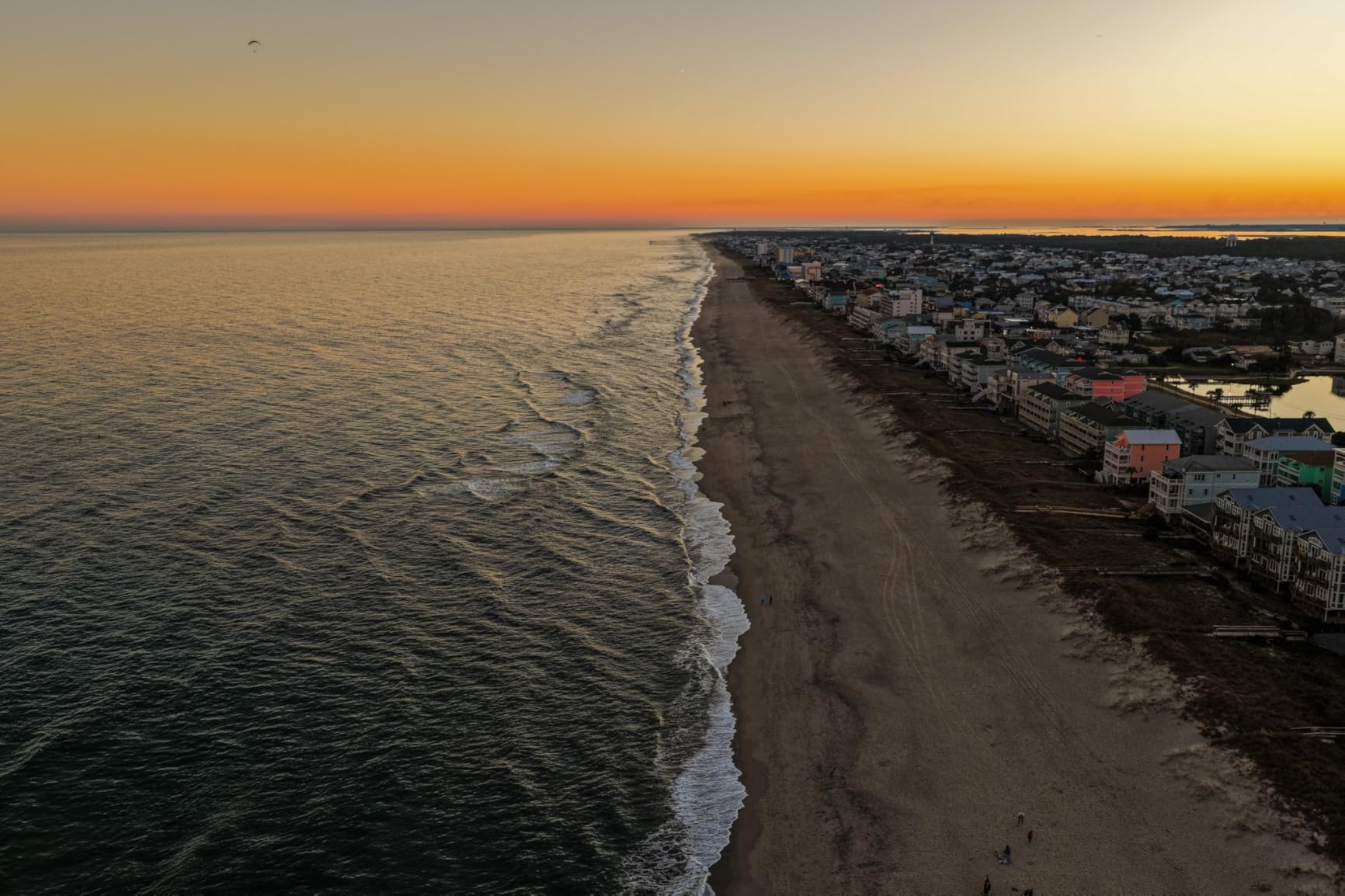
When the deliverable is a defect photograph that has to survive an adjuster’s scrutiny, resolution stops being a spec-sheet item. The 100MP 4/3 CMOS Hasselblad main camera in this aircraft is the largest sensor we tested, and the practical effect is that you can hold a steadier standoff distance and still resolve individual shingle tabs, granule loss and sealant condition. A 6K/60fps HDR video mode with 10-bit capture in the transmission feed keeps the moving footage usable for warranty disputes.
The tri-camera arrangement is the other half of the argument. A wide main plus dual tele modules means you frame a distant parapet or a far corner of a large flat roof without translating the aircraft across the site, which on a commercial job is where the time actually goes. Endurance is 51 minutes, the longest in the group, and three batteries with a parallel charging hub means a full production day without a van charge cycle.

Low-light omnidirectional sensing rated at 0.1 lux is not a thermal sensor and will not find moisture, but it does let you keep flying confidently at dusk on a winter evening when the client is home late. The 30 km O4+ link on tri-band frequency hopping is genuinely useful on a large site where the roof is far from where you can legally stand.
The weight is the practical problem. At just over four kilograms with three batteries, this is the heaviest kit here, and rooftop launches from a scaffold deck or a soft deck with a pond behind it deserve more thought than a 700-gram aircraft does. The review base also carries an 11 percent one-star share, so set expectations accordingly. And the DJI Fly app is no longer distributed through Google Play, which means a manual install on every new phone your crew uses.
Where the extra resolution actually pays off
Three situations, in order of how often they come up for us. First, granule loss and hail bruising on a claim, where the client wants to see the difference between a scuff and a functional granule exposure. Second, workmanship disputes on a recent re-roof, where the argument is about the sealant bead at a penetration and you need to resolve it without a second sortie. Third, commercial roof membrane seams, where a wide standoff shot establishes the pattern and a tele frame resolves a single lap. In all three the rule is the same: fly the wide for context, fly the tele for the frame you will argue about.
Where it falls short
No thermal payload, so moisture mapping is off the table. It is also simply the wrong tool for a solo roofer working small residential jobs twice a week, because the handling burden and the storage footprint are disproportionate to the output. Buy this if you are documenting at a professional rate; borrow or rent a mid-tier airframe if you are not.
5. DJI Mavic Air 2 Fly More Combo – Best Value
Pros
- Folding sub-2-pound design that packs for rooftop access points
- 48MP stills plus a mechanical gimbal for documentation quality
- Three-direction obstacle sensing and beginner-friendly app control
- ActiveTrack 3.0 and POI 3.0 cut manual camera work
- Three batteries and a charging hub in the combo
Cons
- 34-minute flight time means more battery swaps on a large roof
- 1/2-inch sensor with no tele module limits reach on distant defects
- Three-direction sensing is less protective than omnidirectional systems
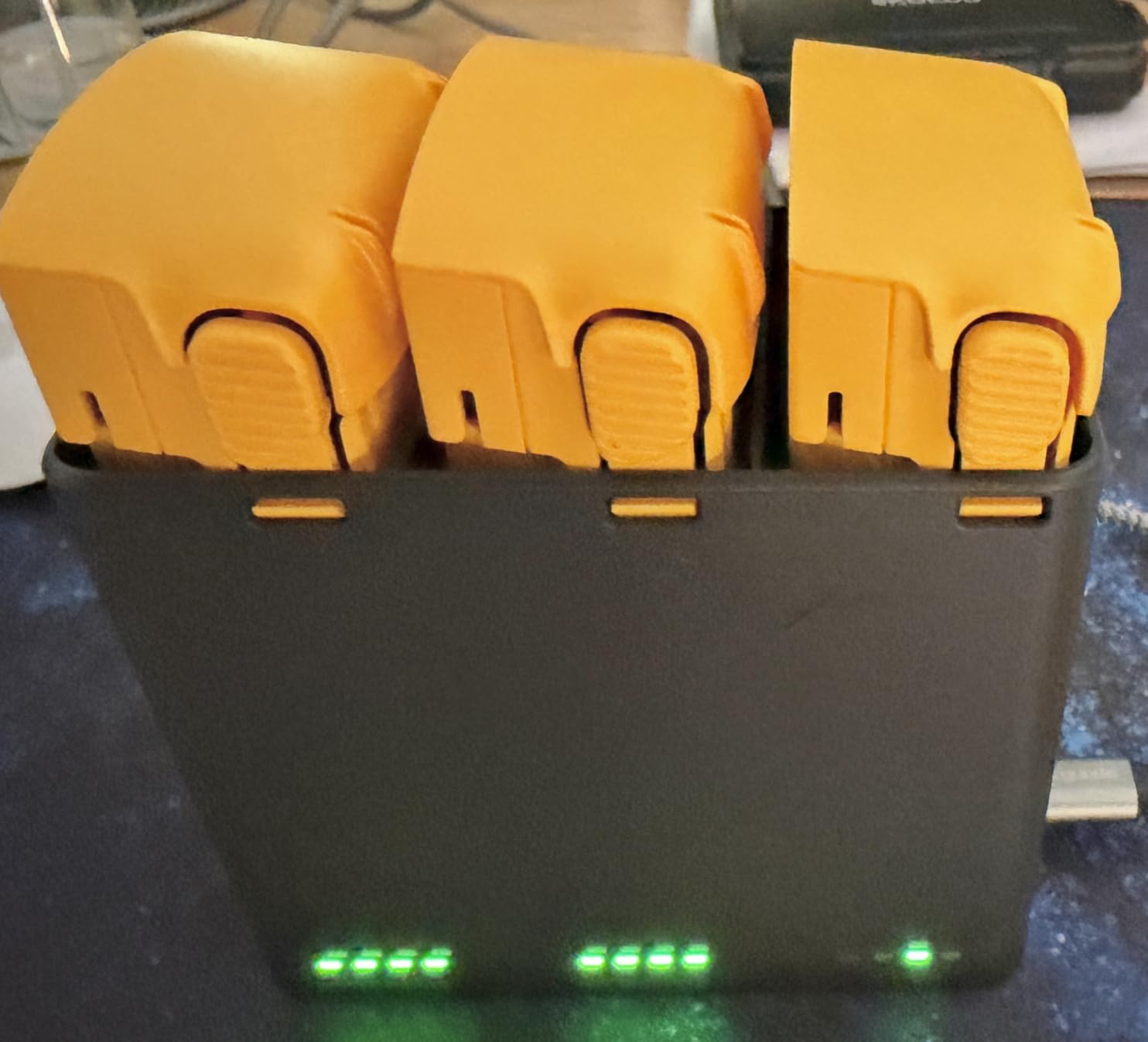
The Mavic Air 2 remains the most rational first purchase for a roofing business, and the reason is the Fly More Combo contents rather than the aircraft. Three intelligent flight batteries, six pairs of low-noise propellers, an ND16/64/256 filter set and a charging hub ship in the box, which is the difference between a drone that is ready for a full day of work and one that needs a supply run first. Battery fleet math is the real cost driver on a multi-property day, and this bundle largely solves it.
The 48MP Quad Bayer stills sensor behind a 3-axis mechanical gimbal is a genuine mechanical gimbal, not a software-stabilised one, and that matters on a slow standoff pass in gusty air where cheaper drones produce a jittery frame. For a re-roof estimate where you need enough resolution to show shingle condition and gutter condition in the same sortie, it is sufficient. The 34-minute flight time is the trade you accept for the lighter airframe.
Smart Controller with an integrated display is another reason this kit still works commercially. No phone in the loop means one less thing to fail, and the interface is stable enough that a new technician can be productive on their first job. Spotlight 2.0, ActiveTrack 3.0 and POI 3.0 handle the framing so the pilot can concentrate on the standoff distance rather than on stick inputs.
Being realistic about the limits: there is no tele module, so anything beyond roughly a two-pitch standoff has to be reached by flying closer. Three-direction obstacle sensing covers front, back and down but not the full sphere, which on a roofline means you manage the chimney approach yourself. And a 34-minute battery on a large commercial building means two or three swaps per roof, which is where charging logistics start eating billable hours.
Who should buy this instead of the Air 3S
Buy the Air 2 if your work is residential, your access points are tight, and you are carrying the aircraft in a vehicle rather than a dedicated case. The foldable sub-two-pound package and the fact that the whole kit lives in a shoulder bag make it far more practical for a roofer jumping between a small job and the next one all day. It is also the pick for a company buying its first inspection drone and planning to grow into the category, because nothing in the box is wasted if you later move up.
Where it falls short
The half-inch sensor is the honest ceiling. Compare a 48MP still from this aircraft against a 100MP capture from the Mavic 4 Pro on the same damaged shingle and the difference is obvious on a large monitor, even if a phone screen hides it. There is no thermal, and there is no optical zoom. For commercial or insurance work where the documentation is the product, those gaps will eventually push you to a different platform.
6. SKYROVER X1 Combo – Best Budget Pick under 249 g
Pros
- Under 249 g means no FAA registration and no Remote ID in the US
- Floating fixed 3-axis gimbal stays level filming vertical roof faces
- 700-nit screen remote readable in direct sun
- 360-degree obstacle avoidance with audible proximity warnings
- Three batteries giving up to 96 minutes total
Cons
- Controller software reported as glitchy by some owners
- Operating app is not on Google Play and must be sideloaded
- Stabilization degrades above roughly level 5 wind
The regulatory angle is the headline here, and it is genuinely useful. At under 249 grams, the X1 sits below the FAA registration threshold, so a solo roofer can fly it for inspection work without registering the aircraft or dealing with Remote ID broadcast requirements. That removes an administrative step that a lot of small contractors find confusing, and it makes the aircraft attractive for crews that are not yet ready to run a Part 107 programme.
The floating fixed 3-axis gimbal is an unusual design choice that happens to suit roof work specifically. Because the gimbal floats, it holds the camera level when the aircraft is held to a vertical framing, which is exactly what you need for a two-storey wall of shingles, a dormer face or a parapet. The 1/1.32-inch f1.7 sensor with 48MP stills and 4K/60fps HDR is a solid tier for documentation, and the 700-nit touchscreen remote is genuinely readable in full sun where many phone-based controllers wash out.
Three batteries giving up to 96 minutes of total flight time is a meaningful spec for a small aircraft, and the 9.32-mile SkyBridge transmission gives you room on a rural property. 360-degree obstacle avoidance with audible proximity warnings is the spec that separates this from the gimbal-less budget drones in the same bracket, and on a roofline with obstructions it is the one that keeps you flying. Owners consistently compare it favourably to a DJI Mini 4 Pro on value.
Wind is the honest limit, and it matches what roofers complain about most across this whole category. Stabilization degrades above roughly level 5 wind, so a gusty day on an exposed ridge will cost you frames. Parts and accessories are harder to source than for the major brands, the manual is thin, and the operating app is not distributed through Google Play, which means a sideloaded install and the reliability questions that come with it.
When a sub-249 g aircraft is the right answer
Small drones win in a narrow band of roof work, and it is a useful band. Tight residential lots where the only legal launch point is a garden four metres from the property line. Jobs where the pilot has no Part 107 certificate and no plan to get one. Rental and second-unit work where the aircraft lives in a car boot rather than a van. And quick spot checks – a storm callout, a leak callback, a before-and-after on a single repair – where launching a 4 kg aircraft would be more effort than the job is worth.
Where it falls short
Light airframes and wind are a straight trade, and on a commercial roof you will lose more frames to gusts than on anything else in this list. There is no optical zoom and no thermal, so it cannot support a leak survey or a distant-defect argument. And the software polish gap is real enough that we would not hand it to a client-facing team without testing the sideloaded app install on every device first.
Do You Need a Drone License for Roof Inspections?
Yes, if you are flying for pay. Under FAA rules, any operation that furthers a business or provides a benefit to another party is commercial, and a roof inspection you are billing a contractor or a homeowner for counts, regardless of aircraft weight. A Part 107 certificate is required for any remotely piloted aircraft over 250 grams flown under standard operating rules.
The exception is narrow and worth stating precisely. If the aircraft weighs under 250 grams, you are flying for recreation or for your own inspection and nobody is paying you for the flight, and you are not operating in a controlled airspace near an airport where authorization is required, you do not need a certificate. Registration is also waived for sub-250 g aircraft. The moment you add a paying client, the sub-250 g exemption stops applying – which is the misconception that catches most new roofing drone businesses.
Two more rules shape how a roof job actually flies. You must maintain visual line of sight to the aircraft, so you cannot orbit a roof from a position where the building is between you and the drone. And the standard rules prohibit flight over people who are not part of your crew, so the launch conversation with an occupied house matters. LAANC authorization handles much of the controlled-airspace paperwork near airports, and a waiver is the mechanism for the operations that genuinely exceed the standard limits.
Because the questions asked most often about this topic are regulatory, we keep our insurance inspection camera guide and the aircraft coverage in our broader inspection drone roundup focused on the equipment side.
What a Drone Roof Inspection Actually Shows You (and What It Misses)
A drone shows you surface condition, geometry and thermal anomalies. It does not show you adhesion, flashing detail behind an obstruction, or the state of the deck beneath the shingles. Anyone selling you a drone inspection as a replacement for a hands-on inspection is overselling it, and the practitioners who use these aircraft daily are the first to say so.
What the aircraft does well is the wide survey. Missing shingles, granule loss, hail bruising patterns, ponding areas on a low-slope roof, a failed seam run, a cracked skylight gasket, an overflowing or detached gutter, blocked roof drains, damaged ridge vent, and the general geometry of the roof plane including pitch, run and the relationship to the eaves. On a commercial flat roof it is even better: rooftop HVAC units, solar arrays, membrane condition, and drainage paths across a large area are all visible in one flight.
What it cannot do is diagnose. Moisture trapped deep in the assembly beneath an apparently sound shingle does not change surface temperature enough to register reliably. Flashing behind a chimney or a wall that has been lapped under a course of shingles is physically hidden from the air. Adhesion and attachment are internal. Deck condition, fastener corrosion and the interior side of the roof deck are all interior problems. Thermal imaging narrows the search, it does not close it, and a hot spot needs interior verification with a moisture meter before anyone starts cutting.
So the correct workflow is a triage pass. Fly the roof, find the three areas worth attention, and then climb only for those. That is where the economics actually come from, and it is the same point the roofing community keeps making – the drone is a great tool to assist, but repairs still happen at height.
Key Features to Look for in a Roof Inspection Drone
When you strip away the marketing, six specifications decide whether a drone will produce usable roof inspection imagery. Here is what each one does for the job and what to push back on if a listing does not say.
Zoom capability. Two roof lengths of standoff is a normal working distance on a steep pitch. Optical or hybrid zoom lets you hold that distance and still resolve a defect, which means fewer sorties and less repositioning in gusty air. Pure digital zoom on a non-tele camera produces a soft frame that will not survive scrutiny. Ask specifically whether the zoom is optical, hybrid or digital.
Obstacle avoidance. Chimneys, vent stacks, satellite dishes, antennas, guy wires and tree overhangs are what actually end roof drone flights. Omnidirectional sensing on a 1-inch-class aircraft is close to essential for residential work. Three-direction forward, back and down sensing is workable but pushes the responsibility onto the pilot, which is exactly the problem the feature exists to solve.
Thermal sensors – only if leak detection is billable work. A radiometric sensor that exports temperature data, supports an emissivity setting and offers isotherm palettes is the difference between a usable leak survey and an expensive colour picture. A non-radiometric thermal sensor is close to useless for a client deliverable. If thermal findings are not part of what you invoice, skip this and spend the money on endurance and optics.
Flight time and battery fleet. A 30-minute-plus figure is the practical floor; below that you are swapping batteries mid-roof on every commercial job. The number of batteries in the box matters as much as the endurance figure, because a four-battery fleet with a parallel charging hub is a full day of work and a single-battery kit is a van with a charging cable in it.
Wind tolerance in proportion to weight. Light sub-250 g airframes are the first thing roofers complain about on a gusty day, and the limit shows up in the stabilisation rather than the motors. Heavier professional airframes hold position better. There is no number to look up, so read the reviews specifically for wind behaviour rather than headline wind-resistance ratings.
Gimbal type and sensor size. A mechanical 3-axis gimbal beats electronic stabilisation for still capture in moving air, and a 1-inch CMOS or larger is the threshold where roof imagery stops looking soft. Below half-inch with a digital zoom, the frame rate and usable ISO fall away quickly in the shade of a north-facing slope.
On the thermal side specifically, the sensor is only half of the equation. Emissivity correction, isotherm palettes and the ability to export a radiometric file with spot and regional measurements are what make the data reportable, and that is covered in more depth in our thermal imaging camera guide for home inspections.
Inspection Software and Reporting for Roof Work
The hardware is the easy half of a roof inspection deliverable. What closes the job is the software that turns a folder of frames into an orthomosaic, a 3D model, an annotated thermal report and a document an insurer will accept. Forum users treat this layer as the part that actually delivers the job, and they are right.
The main options fall into three groups. Automated capture and mapping platforms such as DroneDeploy and Hover fly a repeatable roof pattern, capture overlap automatically, and generate a 3D model and orthomosaic with roof measurements, which is what makes a re-roof estimate defensible. Photogrammetry and mapping suites such as Pix4D and the open-source alternatives give you control over the processing when you are producing a survey-grade model or handling a large site across multiple flights. Manufacturer flight and planning apps such as DJI Pilot handle waypoint routes, live telemetry and, on thermal-equipped models, temperature capture settings.
Whatever you choose, budget it as a separate line from the aircraft. Reporting software licensing is a recurring annual cost, and the training to use it properly takes longer than learning to fly the drone. Budget for a hard case, a spare controller, and a card reader that you own rather than borrow – those three items cause more lost work days than any aircraft failure we have seen.
Roofline Safety: Standoff, Obstacles and Wind
Fly a consistent standoff and vary the orbit rather than the distance. A fixed 3 to 5 roof-length distance, with a slow climb and orbit, gives your stitching software the overlap it needs and keeps the framing consistent across elevations.
Never fly directly over people, and treat any launch that requires it as a no-go rather than a risk you manage. Approach a chimney or a vent stack from the upwind side so the aircraft is not being pushed toward it. Give antennas, guy wires and satellite dishes a wide berth, because these are thin, hard to see against a sky background, and exactly the kind of obstacle that ends an airframe.
Set a wind floor before you climb, not after. A sub-250 g aircraft in a gusty condition will produce unusable frames and, in the worst case, will not come back the way it went out. On the roof-damage question, keep a standoff that avoids rotor wash over shingles and loose material, and never land on a surface you cannot inspect afterwards. Brief the occupant, tell them where you will be standing, and get their agreement before the aircraft is unpacked.
Frequently Asked Questions
Do I need a license to fly a drone for roof inspections?
Yes, if you are flying for money. Any flight that furthers a business counts as commercial under FAA rules, so a paid roof inspection requires a Part 107 certificate whenever the aircraft weighs more than 250 grams. The sub-250 gram exemption only applies to recreational or own-property flying, and it disappears the moment a client is paying for the inspection. Registration and Remote ID are also waived below 250 grams.
Is a drone roof inspection worth it?
For triage, yes. A drone cut, ladder and initial inspection time by documenting surface condition, geometry and thermal anomalies across a whole roof in one flight, so ladder time is spent only on the three areas that actually need it. It is not a substitute for a hands-on inspection: adhesion, flashing hidden under a shingle course, deck condition and deep internal moisture are not visible from the air.
What is the best drone software for roof inspections?
DroneDeploy and Hover are the easiest end-to-end options, flying a repeatable roof pattern and exporting a 3D model and orthomosaic with roof measurements. Pix4D and similar photogrammetry suites give more control for survey-grade work. DJI Pilot handles waypoint planning and thermal capture settings. The software is a recurring cost and should be budgeted separately from the aircraft.
Which drone is best for thermal imaging?
Among the aircraft here, the Autel EVO II Dual 640T V3 is the only one with a radiometric thermal sensor, at 640×512 with more than ten temperature measurement modes including D-RI ranges, isotherms, spot and regional temperatures. What matters is not resolution but whether the sensor exports temperature data and lets you set emissivity, because a thermal image without emissivity correction produces false positives on sun-facing roof surfaces.
How much does a drone roof inspection cost?
Third-party pricing surveys put a professional drone roof inspection at roughly 150 to 400 per home, with pilots charging 80 to 250 per hour, though rates vary widely by region and by whether thermal or orthomosaic reporting is included. The drone itself is only part of the cost: reporting software licensing, a spare battery fleet, a hard case and insurance all sit alongside the aircraft in the business case.
Conclusion
The best drones for roof inspections in 2026 fall into three clear groups, and picking the wrong group is the expensive mistake. The DJI Air 3S Fly More Combo is the all-round answer: a 1-inch sensor with a 3x tele, forward LiDAR, omnidirectional sensing and 45 minutes per battery, with three batteries and a charging hub in the box. It handles residential and commercial documentation well and it will not find moisture.
If leak detection and heat-loss surveys are billable work, the Autel EVO II Dual 640T V3 is the only aircraft here with a radiometric sensor that exports real temperature data, and it comes with three batteries and a car charger. For maximum surface detail on claims and workmanship disputes, the DJI Mavic 4 Pro gives you a 100MP sensor and 51 minutes of flight at the cost of a much heavier package. The DJI Mavic Air 2 remains the sensible first purchase, and the SKYROVER X1 covers the under-249 g regulatory case with no registration requirement.
Start with the tier that matches work you are already being paid to do, and upgrade when thermal or higher resolution becomes a line item rather than a curiosity. Whatever you fly, remember that the drone shortens the first pass. It does not replace the climb.