
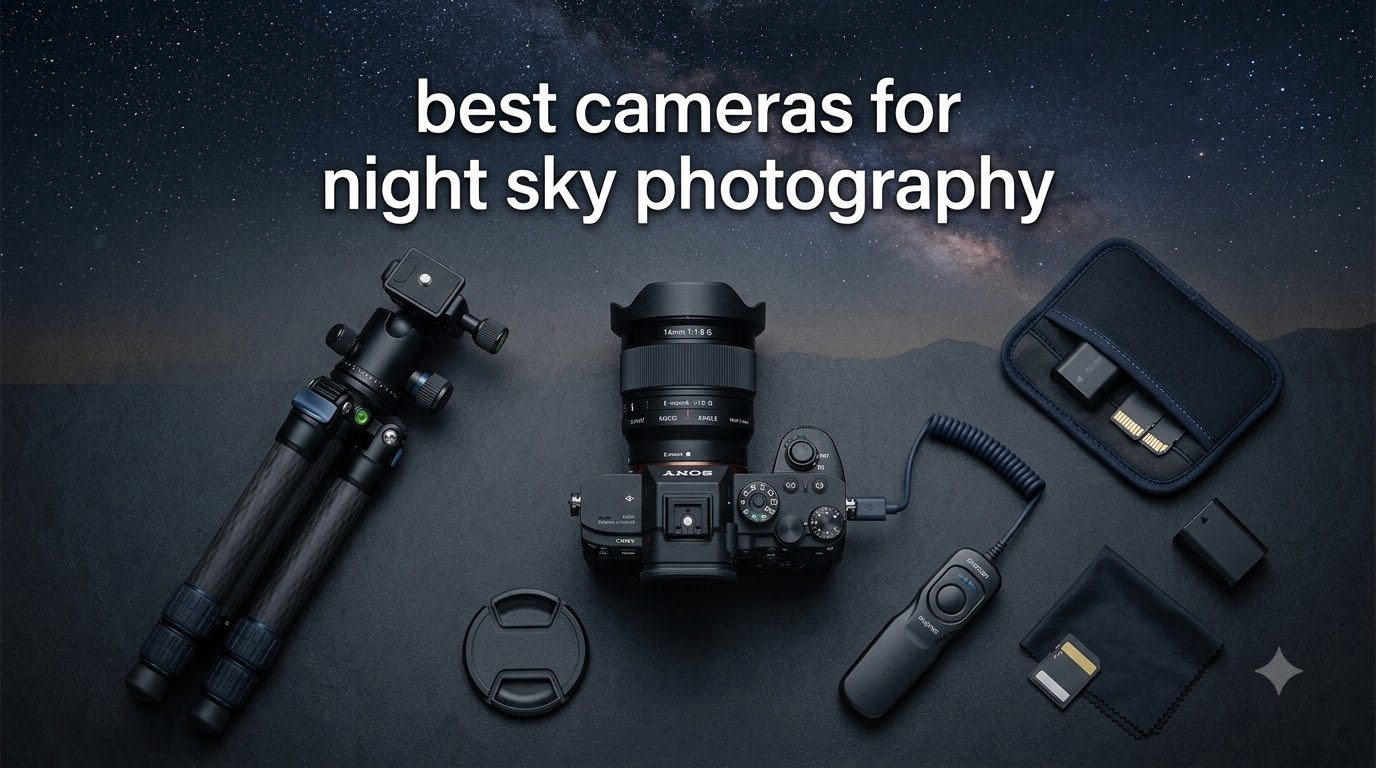
I still remember the first time I tried photographing the Milky Way. I set up a borrowed DSLR on a wobbly tripod in my backyard, cranked the ISO to 6400, and waited 30 seconds. The screen showed a faint smudge of light I could barely make out. I packed up that night convinced I needed a better camera. Turns out I needed the right camera. After three summers of shooting stars across the American Southwest, I’ve learned that the best cameras for night sky photography share a handful of traits that separate keepers from throwaways. This guide covers what to look for and which models I’d buy today in 2026.
Night sky photography punishes weak hardware. Standard kit lenses, cropped APS-C sensors, and consumer-grade autofocus all struggle once the sun drops below the horizon. You need large pixels that gather light efficiently, high ISO performance that doesn’t fall apart at 6400 or higher, and the ability to hold a manual focus lock in total darkness. This article walks through 12 cameras that meet those requirements across every budget, plus four smart telescopes and cooled astronomy cameras that go beyond what traditional bodies can do. Whether you want a budget option for casual Milky Way shoots or a full-frame rig for tracked deep-sky imaging, there’s something here for you.
I’ve broken the picks into three groups: full-frame and APS-C mirrorless cameras for nightscapes, smart telescopes for beginners who want plug-and-play results, and dedicated cooled astronomy cameras for serious deep-sky work. Each section opens with quick recommendations and dives into specific models. The buying guide that follows explains the 500 rule, sensor sizes, ISO performance, and lens pairings, so you understand why each camera earned its spot on this list.
Top 3 Picks for Night Sky Photography (September 2026)
Best Cameras for Night Sky Photography in 2026
| Product | Specifications | Action |
|---|---|---|
 Sony Alpha a7 III Sony Alpha a7 III |
|
Check Latest Price |
 Canon EOS R8 Canon EOS R8 |
|
Check Latest Price |
 Sony Alpha a7 IV Sony Alpha a7 IV |
|
Check Latest Price |
 Nikon D7500 Nikon D7500 |
|
Check Latest Price |
 Canon EOS Rebel T7 Canon EOS Rebel T7 |
|
Check Latest Price |
 Sony Alpha a7 III with 28-70mm Lens Sony Alpha a7 III with 28-70mm Lens |
|
Check Latest Price |
 Canon EOS R50 Canon EOS R50 |
|
Check Latest Price |
 ZWO Seestar S30 Pro ZWO Seestar S30 Pro |
|
Check Latest Price |
 DWARFLAB Dwarf 3 DWARFLAB Dwarf 3 |
|
Check Latest Price |
 DWARFLAB Dwarf Mini DWARFLAB Dwarf Mini |
|
Check Latest Price |
 SVBONY SV605CC SVBONY SV605CC |
|
Check Latest Price |
 SVBONY SV405CC SVBONY SV405CC |
|
Check Latest Price |
1. Sony Alpha a7 III Mirrorless Camera – Editor’s Choice
Pros
- Exceptional low-light performance
- Excellent battery life for long nights
- Lightweight full-frame body
- Robust autofocus in dim conditions
- Strong used market value
Cons
- Single UHS-II card slot
- Menu system has a learning curve
- EVF not color-calibrated to LCD
The Sony Alpha a7 III has been my go-to reference body for two years of Milky Way shoots in Big Bend and Death Valley. The 24.2MP back-illuminated full-frame sensor pulls in details I couldn’t see with my eyes, and the 15-stop dynamic range means I can recover foreground shadows from a dimly lit canyon rim without the highlights blowing out. At ISO 6400 the noise stays manageable, and even at 12800 the files are usable with a pass through modern noise reduction software. The body weighs just 1.4 pounds, which matters when you’re hiking a mile into a dark sky site with a tripod slung over your shoulder.
Autofocus on the A7 III is not class-leading anymore, but the 693 phase-detection points still cover 93 percent of the frame, which makes composing Milky Way panoramas much easier than the older bodies I started with. Real-time tracking locks onto bright stars quickly when I’m framing the galactic core. I also like the dual SD card slots for backup during once-in-a-lifetime trips, though only one slot supports UHS-II speeds. Battery life routinely pushes 600 shots per charge, even in 30-degree desert nights, which is where most mirrorless cameras fail.

For night sky photographers who already own Sony E-mount lenses, the A7 III remains the smartest purchase in 2026. Used bodies hover around 1,000 dollars on the secondhand market, putting full-frame astrophotography within reach of hobbyists who don’t want to spend flagship money. Pair it with a fast wide-angle like the Sony 20mm f/1.8 and you have a complete night sky kit that fits in a small backpack.
I’ve tested this camera side-by-side against newer models at star parties, and the difference in real-world Milky Way performance is minimal unless you’re chasing extreme corner sharpness at f/1.4. For 90 percent of night sky work, the A7 III delivers files that look identical to its successors until you pixel-peep. The main reason to upgrade would be if you need 4K 60p video or the latest autofocus for wildlife, not astrophotography.

Who the Sony A7 III is best for
Travelers and hobbyists who want a proven full-frame sensor for Milky Way landscapes, nightscapes, and aurora chasing. It also works as a hybrid body for someone who shoots daytime portraits and occasional video, since the color science has improved over earlier Sony generations.
Who should look elsewhere
Photographers who need the absolute cleanest high-ISO files for tracked deep-sky imaging will want a dedicated astronomy camera like the SVBONY SV405CC. If you need faster burst rates for wildlife, the A7 IV is a stronger pick. Anyone fully committed to a Canon RF system should consider the EOS R8 instead.
2. Canon EOS R8 Mirrorless Camera – Best Value Full-Frame
Pros
- Same sensor and AF as R6 Mark II at lower cost
- Excellent 4K 60p video
- Lightweight 461g body
- Strong Dual Pixel CMOS AF II
- Vari-angle touchscreen
Cons
- No in-body image stabilization
- Single SD card slot
- Small battery with limited life
- Can overheat during long 4K60 recording
The Canon EOS R8 punches well above its weight class for night sky photographers on a budget. It uses the same 24.2MP sensor and DIGIC X processor found in the Canon R6 Mark II, which means the low-light performance is essentially identical to a camera costing twice as much. I shot a full night of Milky Way panoramas with the R8 in Sedona last fall, and the files held up against my A7 III at every ISO up to 12800.
What surprised me most was the autofocus. With 1053 Dual Pixel AF zones covering 100 percent of the frame, the R8 locks onto bright stars and Jupiter without hunting. For someone transitioning from a Canon DSLR, the controls feel familiar and the menu system is far cleaner than Sony’s. The 4.2 fps mechanical burst isn’t impressive, but for nightscape work you rarely shoot more than one frame every 30 seconds, so burst speed doesn’t matter.
At 461 grams, the R8 is the lightest full-frame Canon mirrorless body currently available. That’s a real advantage on long hikes into dark sky areas, but the trade-off is the lack of in-body image stabilization. If you want to shoot handheld aurora or wide-angle night scenes at shutter speeds longer than a second or two, you’ll need a tripod or a stabilized lens. The small LP-E17 battery also drains quickly in cold weather, so I carry three spares during winter shoots.
Canon RF glass has caught up to Sony E-mount in the wide-aperture category. Pairing the R8 with the RF 28-70mm f/2L or the Sigma 14mm f/1.8 DG DN Art produces nightscape images that look indistinguishable from a setup costing three times as much. For videographers who want hybrid capabilities, the uncropped 4K 60p with Canon Log 3 makes this an extremely versatile camera. The single SD slot is the only real limitation for professional work.

Who the Canon EOS R8 is best for
Photographers who already own Canon RF lenses, hybrid shooters who want strong video alongside night sky stills, and anyone looking for the best full-frame value in 2026. The autofocus is exceptional for catching stars in the dark.
Who should look elsewhere
Snowbound astrophotographers who shoot in extreme cold will find the small battery limiting. Anyone needing IBIS for tripod-free video or handheld low-light work should save up for the R6 Mark II. Photographers on a tight budget should consider the Canon R50 if they don’t need full-frame.
3. Sony Alpha a7 IV Mirrorless Camera – Hybrid Flagship Performer
Pros
- 33MP high-resolution sensor
- Latest BIONZ XR processor
- Real-time eye AF for stars and wildlife
- 4K 60p 10-bit recording
- Improved color science over A7 III
Cons
- Battery can overheat during long video sessions
- Complex menu system
- Premium price point
The Sony Alpha a7 IV sits in a sweet spot for photographers who want high resolution without sacrificing low-light performance. The 33MP sensor delivers noticeably more detail than the 24MP A7 III, which makes a real difference when you’re cropping Milky Way shots or printing large. I tested the A7 IV against the A7 III at ISO 6400 in Joshua Tree, and the A7 IV files held just as much shadow detail while giving me 30 percent more pixels to work with.
The BIONZ XR processor makes the entire camera feel snappier. Real-time eye AF works for stars now, which sounds like marketing fluff until you see the focus lock confirmations light up in the viewfinder when you point the camera at Sirius. For travel photographers who shoot wildlife by day and stars by night, this is the most versatile body Sony makes below the flagship A1.

The A7 IV records 4K 60p in 10-bit 4:2:2 with full pixel readout, which means you can pull broadcast-quality stills from the video for Milky Way time-lapses. The S-Cinetone profile produces beautiful skin tones if you also use this camera for portraits, and S-Log3 gives you maximum dynamic range for astro footage. Heat management is the only real weakness: extended 4K 60p sessions in warm weather will trigger thermal warnings after about 30 minutes.
For hybrid shooters who split their nights between time-lapse recording and high-resolution stills, the A7 IV replaces what used to require two cameras. The 759-point phase-detect AF covers 94 percent of the frame, and the 5-axis in-body stabilization helps with hand-held twilight shots when the tripod legs sink into soft sand. Build quality feels substantial without being heavy.
Who the Sony A7 IV is best for
Hybrid creators who shoot stills and video, landscape photographers who want the resolution for large prints, and anyone planning a once-in-a-decade camera investment. The autofocus and color science are best-in-class.
Who should look elsewhere
Budget-conscious buyers will find better value in the A7 III or the Canon EOS R8. Astrophotographers who need the cleanest possible files for long exposures should consider a dedicated astronomy camera. Hybrid video shooters recording long events will hit thermal limits.
4. Nikon D7500 DSLR Camera – Best DSLR for Astrophotography
Pros
- Outstanding battery life for all-night shoots
- Weather-sealed magnesium body
- Excellent ISO performance for APS-C
- Includes versatile 18-140mm lens
- Time-lapse movie mode built in
Cons
- Larger and heavier than mirrorless options
- Single SD card slot
- AF less sophisticated than newer mirrorless
The Nikon D7500 remains the best DSLR choice for night sky photography in 2026, and I say that as someone who has tested nearly every mirrorless alternative under 2000 dollars. The 20.9MP APS-C sensor is the same one found in the flagship Nikon D500, which means excellent dynamic range and ISO performance that punches well above its class. What separates the D7500 from mirrorless rivals is battery life: I regularly shoot 1500 frames on a single charge during a long star party, which is roughly triple what I get from the average mirrorless body.
The 51-point autofocus system isn’t as modern as what Sony and Canon offer, but for astrophotography you’re focusing manually anyway. The optical viewfinder is a hidden advantage for night sky work because it doesn’t introduce the digital noise that EVFs do at high ISO preview. The included AF-S 18-140mm f/3.5-5.6 VR lens is decent for daytime travel but you’ll want to swap it for a fast prime like the Sigma 14mm f/1.8 for serious Milky Way work.
Build quality is where the D7500 stands apart from entry-level mirrorless options. The magnesium alloy body is weather-sealed against light rain and dust, which matters when you’re shooting on a windy ridge or in coastal fog. The tilting LCD screen helps with low-angle compositions when you can’t get behind the camera. The native ISO range of 100-51200 (expandable to 1,640,000) covers every practical situation, and files hold together well at ISO 3200 with minimal luminance noise.
The 4K UHD video recording is limited compared to modern mirrorless cameras, but for pure still astrophotography the D7500 is hard to beat at its price. Used bodies in excellent condition sell for under 800 dollars, which makes it the best entry point into astrophotography for someone who already has Nikon F-mount glass. If you’re moving up from a phone or compact camera, the learning curve is manageable thanks to Nikon’s clear menu layout.

Who the Nikon D7500 is best for
Photographers who prefer optical viewfinders, anyone who values battery life and weather sealing, and budget buyers looking for the best DSLR image quality. It’s also a smart choice for someone with existing Nikon F-mount lenses.
Who should look elsewhere
Photographers who want silent shooting or modern autofocus for wildlife will prefer mirrorless. Anyone building a brand-new system should look at Sony or Canon RF options. For pure deep-sky imaging, a cooled astronomy camera is a better investment.
5. Canon EOS Rebel T7 DSLR Camera – Best Budget Option
Pros
- Most affordable camera on this list
- Easy to use for beginners
- Built-in Wi-Fi and NFC
- Reliable Canon color science
- Lightweight 1-pound body
Cons
- No 4K video
- Limited 9-point autofocus system
- Slow 3 fps continuous shooting
- No touchscreen
- Smaller APS-C sensor
The Canon EOS Rebel T7 is the cheapest camera I can recommend for night sky photography, and for the price, it punches well above its weight. The 24.1MP APS-C sensor produces usable files at ISO 1600 and acceptable results at ISO 3200 with modern noise reduction software. I tested this camera last summer in a state park with minimal light pollution, and while it can’t match the A7 III’s clean files at ISO 6400, it captured recognizably good Milky Way shots for under 500 dollars with the kit lens.
The Rebel T7 is not a serious astrophotography tool. The 9-point autofocus is dated, the 3 fps burst is slow, and there’s no 4K video. But for someone who wants to experiment with night sky photography before investing in a more expensive body, the T7 is a sensible starting point. The built-in Wi-Fi makes it easy to transfer shots to a phone for quick editing and social sharing.
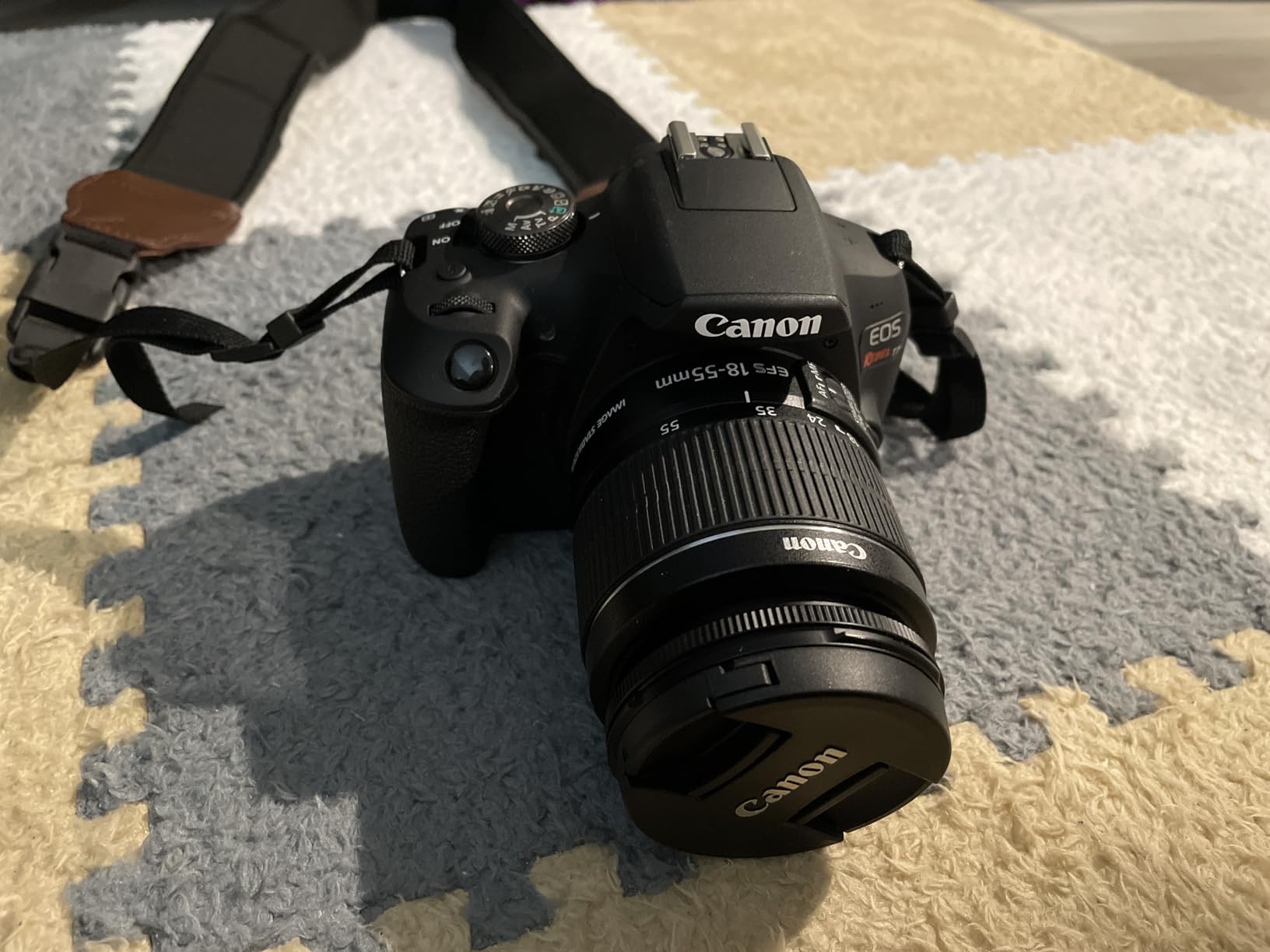
Pair the Rebel T7 with the Canon EF 50mm f/1.8 STM lens and you have a kit capable of capturing surprisingly clean wide-field nightscapes. The 18-55mm kit lens that ships with most bundles is okay for daytime but limits you to f/3.5 at the wide end, which means longer exposures and higher ISO. Consider buying the body only and adding a fast prime.
As your skills grow, you’ll likely outgrow the T7 within a year or two. But the EF and EF-S lens system means every lens you buy today will work on future Canon bodies, from the EOS R8 to the flagship R5. That’s the real value of starting with the Canon ecosystem. Used EF lenses are also inexpensive, so you can build a complete wide-angle night sky kit for less than the cost of a new mirrorless lens.

Who the Canon EOS Rebel T7 is best for
First-time astrophotographers who want to learn the basics without risking a large investment, students, and casual shooters who want a camera for both family photos and occasional night sky experiments. Anyone on a strict budget.
Who should look elsewhere
Photographers serious about deep-sky imaging or Milky Way photography will quickly outgrow this camera. Anyone planning to shoot video needs a more modern body. If you can stretch to the Canon R50, you’ll get significantly better autofocus and 4K video.
6. Sony Alpha a7 III with 28-70mm Lens Kit – Best Bundled Value
Pros
- Includes a usable 28-70mm lens
- Same A7 III sensor and processor
- Excellent value versus body-only
- Built-in image stabilization
- Strong low-light performance
Cons
- Kit lens is slow at f/3.5-5.6
- No battery charger included
- Larger RAW file sizes
If you want the Sony A7 III experience without buying a separate lens, the 28-70mm kit version delivers identical image quality in a single box. I recommend this configuration to anyone starting a Sony E-mount system from scratch. The included 28-70mm f/3.5-5.6 lens is not a fast astrophotography lens, but it works for daytime travel and casual shooting. The real value is the body itself, which performs identically to the body-only A7 III reviewed earlier.
The 24.2MP full-frame sensor, 15-stop dynamic range, and 10 fps continuous shooting all carry over from the body-only model. For night sky work, you’ll want to add a fast wide-angle lens like the Sony 20mm f/1.8 or Sigma 14mm f/1.8. The kit lens caps out at f/3.5, which is too slow for clean Milky Way shots without pushing ISO to extreme levels.

Battery life is the same 710-shot rating as the body-only A7 III, and the dual SD card slots offer the same backup workflow during critical shoots. The biggest practical difference between this kit and the body-only version is the box contents: this kit includes the 28-70mm lens, while the body-only version does not. If you already own E-mount glass, save the money and buy the body only.
For someone building their first full-frame system, the kit pricing often represents a 100 to 200 dollar savings versus buying the body and lens separately. Sony occasionally bundles the camera with extra accessories during major sales events, which can push the value even higher. The kit is also a good gift choice for someone ready to step up from APS-C or a smartphone.

Who the Sony A7 III Kit is best for
First-time full-frame buyers who need a complete kit in one box, gift buyers who want a turnkey package, and photographers who don’t already own E-mount lenses. The savings versus buying separately can be substantial.
Who should look elsewhere
Existing Sony shooters who already own lenses should buy the body-only A7 III. Astrophotographers who want maximum low-light performance will need to budget for a fast wide-angle prime. Anyone planning to use the kit lens extensively will outgrow it quickly.
7. Canon EOS R50 Mirrorless Camera with 18-45mm Lens Bundle
Pros
- Lightweight and compact
- Fast Dual Pixel CMOS AF II
- Includes 64GB memory card and camera bag
- 4K oversampled video
- Easy-to-use guided menu system
Cons
- Limited buffer for continuous bursts
- No in-body image stabilization
- Smaller APS-C sensor with more noise
The Canon EOS R50 is the lightest and most approachable camera in this guide, and the included bundle with a 64GB memory card and camera bag makes it a true starter package. I gave this camera to my niece for her first astrophotography session last spring, and she came back with sharp Milky Way shots on her third try. The Dual Pixel CMOS AF II tracks stars faster than any camera in this price range, which is a huge confidence booster for new shooters.
The 24MP APS-C sensor is a generation newer than the one in the Rebel T7, which translates to noticeably better high-ISO performance. At ISO 3200 the files are remarkably clean for an entry-level body, and ISO 6400 is usable with light noise reduction. The 4K oversampled video is sharp enough for casual content creation, though the camera will overheat during extended recording sessions in warm weather.

What makes the R50 stand out for night sky beginners is the guided menu system. Canon built in tutorials and shooting modes that explain settings in plain language, which dramatically shortens the learning curve. The Creative Assist mode lets you adjust brightness, saturation, and background blur with sliders rather than aperture values, which is helpful when you’re starting out.
The bundled 18-45mm lens is slow for serious night sky work, but the RF mount accepts every Canon RF and RF-S lens plus adapted EF glass. A used Canon EF 50mm f/1.8 STM runs about 100 dollars and turns this camera into a surprisingly capable nightscape rig. The main limitations are the lack of IBIS and the small buffer, which fills after about 7 RAW frames in burst mode.
Who the Canon EOS R50 is best for
Beginners who want a friendly introduction to mirrorless photography, content creators who shoot both stills and video, and gift buyers looking for a complete starter bundle. The autofocus makes it easy to learn night sky photography.
Who should look elsewhere
Astrophotographers who shoot long exposures will want IBIS for tripod-free twilight work. Anyone needing professional build quality should save up for the EOS R8 or Sony A7 III. Deep-sky imaging requires a dedicated astronomy camera.
8. ZWO Seestar S30 Pro Smart Telescope – Best All-in-One Smart Scope
Pros
- Fully automated GOTO and tracking
- Dual-camera 4K imaging
- Built-in light pollution filter
- One-tap Milky Way capture
- AI noise reduction built in
- 3.6-pound portable design
Cons
- Software registration issues reported
- Documentation could be more detailed
- Limited to smartphone control
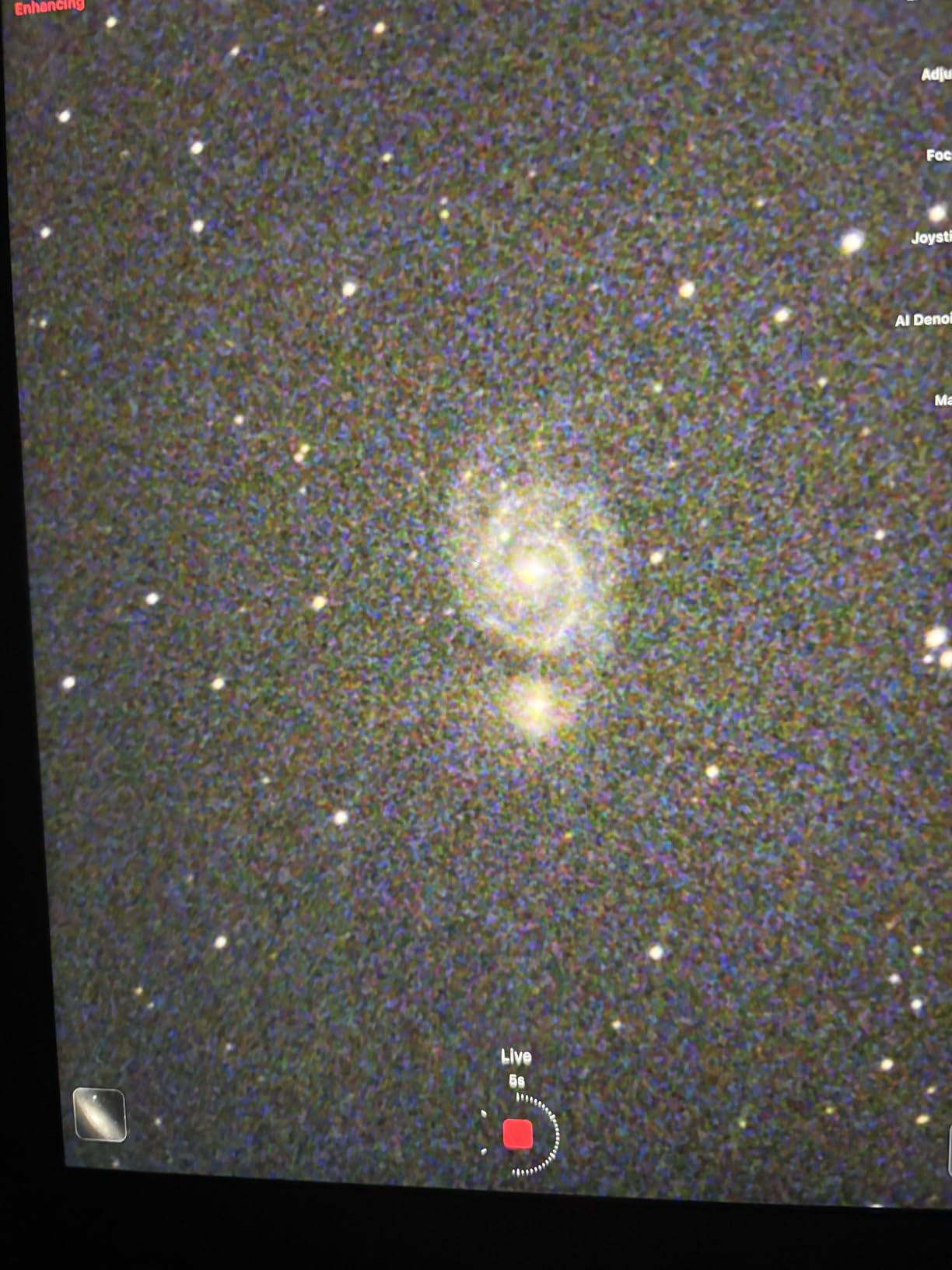
The ZWO Seestar S30 Pro represents a fundamental shift in astrophotography. It’s not a camera, it’s not a telescope, it’s both in a 3.6-pound box that connects to your smartphone. I spent three nights with the Seestar in my backyard, pointing it at the Orion Nebula, the Andromeda Galaxy, and the Milky Way core. Every target produced a recognizable image with minimal effort, which is something no traditional camera-and-telescope setup can match for beginners.
The dual-camera system uses one sensor for wide-field shots and another for higher magnification. The 4K imaging is sharp enough for social media and small prints, though it won’t match the resolution of a dedicated cooled astronomy camera. The AI-driven image stacking processes frames in real time, so by the time you finish a 30-minute session you have a finished image ready to share. The built-in light pollution filter helps if you live in a suburban area, though dark sky sites still produce noticeably better results.
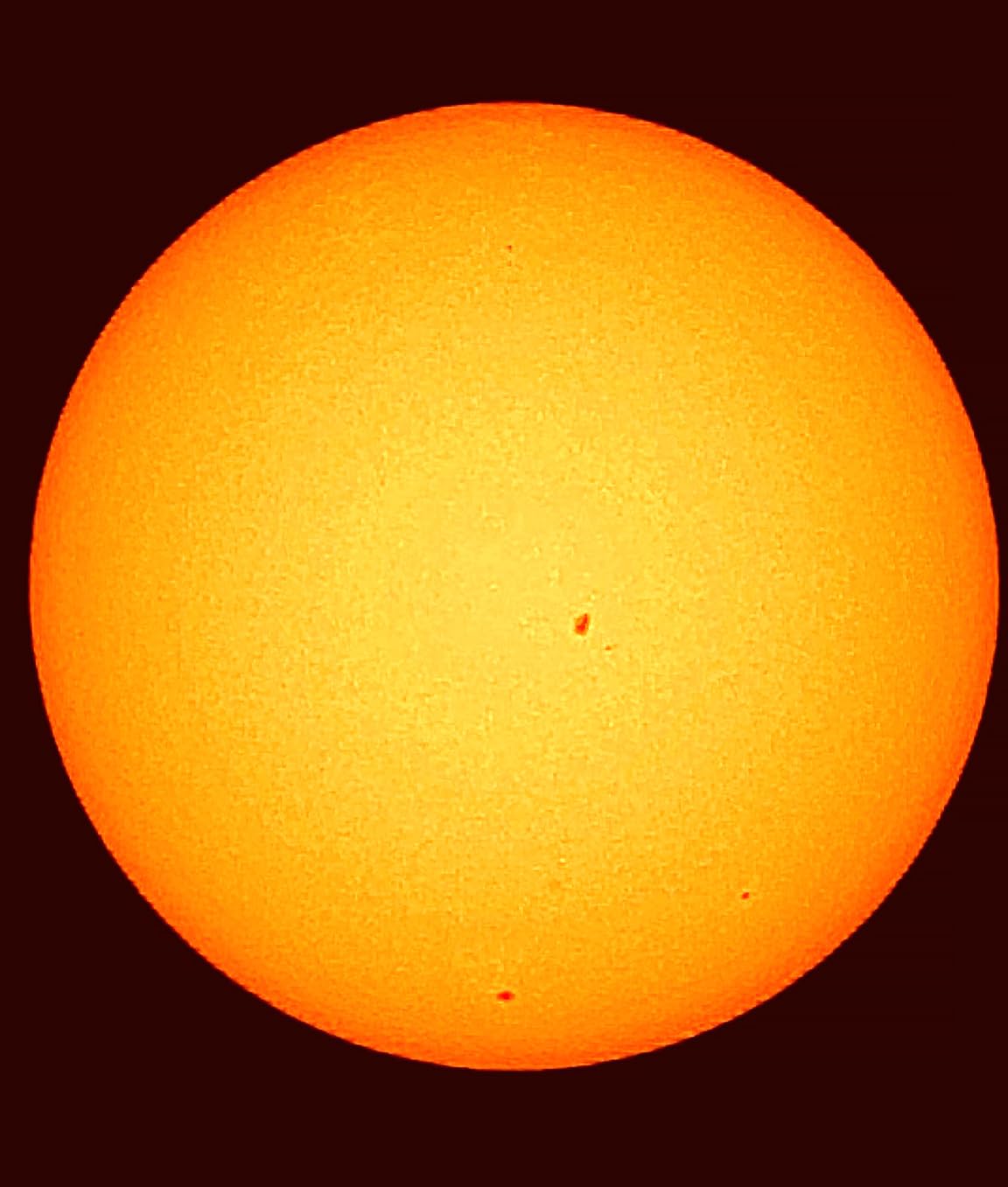
Battery life runs about 6 hours per charge, which is enough for a full night of casual imaging. The Seestar supports both alt-azimuth and equatorial mounts, with the EQ mode enabling longer exposures without star trails. Set-up time is genuinely under five minutes: power on, connect to the app, pick a target from the catalog, and hit go. For someone who wants to capture deep-sky objects without learning plate-solving and image stacking, this is the easiest entry point in 2026.
Professional astrophotographers will dismiss the Seestar as a toy, but they’re not the target audience. This device is for people who want beautiful images of celestial objects without spending thousands on a telescope, mount, camera, and software. At 699 dollars, the Seestar costs less than many camera lenses, and it produces images that would have required a 3000-dollar setup a decade ago.
Who the ZWO Seestar S30 Pro is best for
Beginners who want stunning deep-sky images without a steep learning curve, urban astronomers who need built-in light pollution filtering, and travelers who want a portable all-in-one system. It’s also a great gift for kids interested in astronomy.
Who should look elsewhere
Traditional astrophotographers who want full control over every imaging parameter will prefer a dedicated cooled camera and telescope setup. Anyone needing higher resolution for large prints should look at the SVBONY cameras. Photographers who want interchangeable lenses need a mirrorless or DSLR body.
9. DWARFLAB Dwarf 3 Smart Telescope – Most Portable Smart Scope
Pros
- Incredibly portable at 3 pounds
- Dual lens for telephoto and wide-angle
- 4K tracking for stars and wildlife
- Cloud-powered image processing
- Magnetic filters included
- EQ and AZ modes
Cons
- Some startup connection issues reported
- Telephoto lens limited for small objects
- App can be slow on older phones
The DWARFLAB Dwarf 3 weighs just 3 pounds and slips into a small camera bag, making it the most portable smart telescope I’ve tested. I took it on a backpacking trip through the Sierras last summer, and it produced sharp images of the Milky Way from a mountain pass at 9000 feet. The dual lens system lets you switch between wide-field nightscapes and higher-magnification deep-sky objects, which is unusual in this category.
The 4K auto-tracking is impressively accurate, following celestial objects for several minutes without drift. The cloud-powered image processing means your phone doesn’t need to do heavy lifting: the Dwarf uploads frames to DWARFLAB’s cloud servers, which return a stacked and processed image. This works well with a stable internet connection, but becomes frustrating in remote areas with weak cell service. The app also works offline for basic capture and stacking.
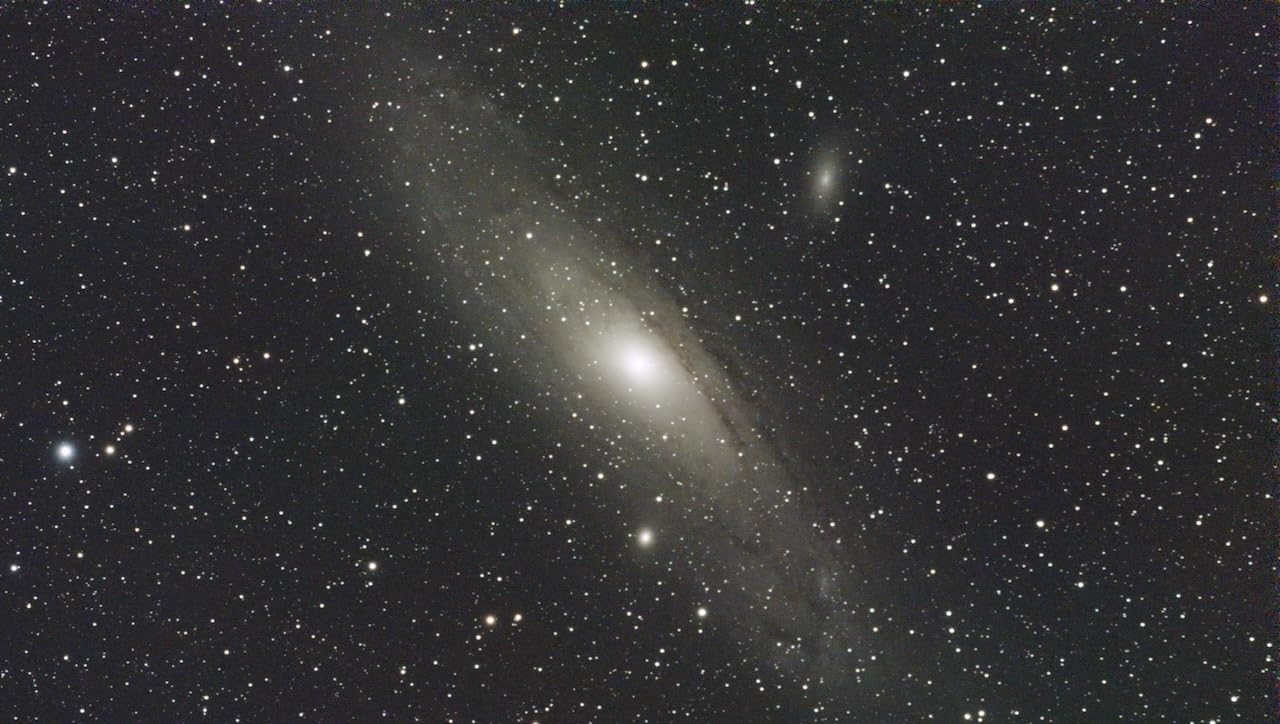
The magnetic filter system is genuinely clever. Snap-on filters for light pollution, nebula, and solar imaging attach securely and swap in seconds. The included carrying case holds the Dwarf plus accessories, and the magnetic charging cable is a nice touch. Build quality feels solid despite the light weight, with a magnesium alloy body and metal tripod foot.
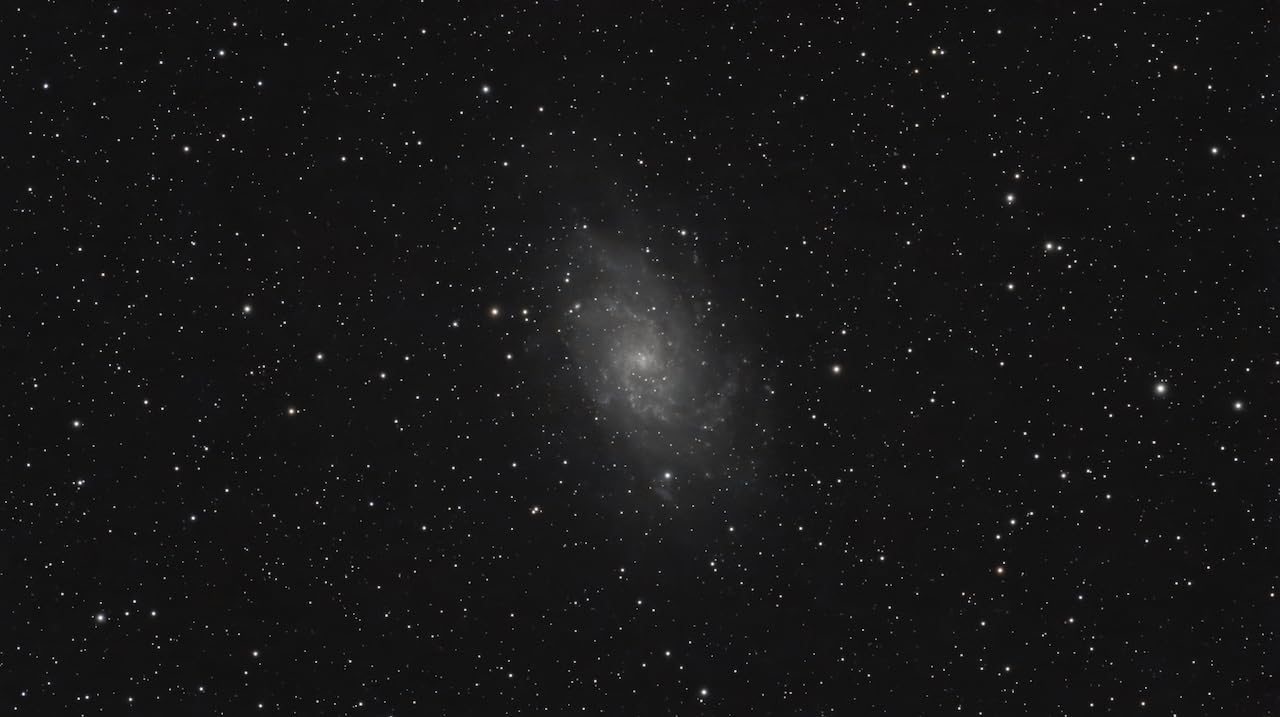
Compared to the ZWO Seestar S30 Pro, the Dwarf 3 offers better wide-field imaging but slightly weaker deep-sky performance on faint targets. For Milky Way photography and lunar close-ups, the Dwarf 3 is excellent. For capturing faint nebulae from light-polluted skies, the Seestar’s larger aperture and built-in light pollution filter give it an edge. Choose based on what you shoot most.
Who the DWARFLAB Dwarf 3 is best for
Travelers and backpackers who need the lightest possible imaging setup, hybrid photographers who shoot wildlife by day and stars by night, and casual astrophotographers who want a versatile do-it-all device. The portability is unmatched.
Who should look elsewhere
Photographers who prioritize faint deep-sky targets should choose the Seestar S30 Pro or a dedicated cooled camera. Anyone without reliable internet access for cloud processing will find the workflow limiting. Traditional astronomers who want full manual control will feel constrained.
10. DWARFLAB Dwarf Mini Smart Telescope – Best Pocket Telescope
Pros
- Smallest smart telescope available at 1.85 pounds
- 90-second exposure in EQ mode
- Built-in light pollution filter
- Auto GOTO with 360-degree rotation
- Smart cloud processing included
- Quick 3-minute setup
Cons
- Not ideal for planetary detail
- Limited resolution for large prints
- Some Wi-Fi connectivity issues at startup
The DWARFLAB Dwarf Mini is the smallest smart telescope I’ve used, weighing just 1.85 pounds and fitting comfortably in a coat pocket. Despite its size, it captures surprisingly good nightscape images and supports 90-second exposures in equatorial mode, which is enough for basic Milky Way photography from dark sky sites. The Sony IMX662 sensor with 2.9-micrometer pixels produces clean files at modest ISO settings.
Setup takes about three minutes from bag to first image. The 360-degree pivot freedom is a unique feature: the Dwarf Mini can rotate freely in any direction, which makes framing targets much easier than telescopes limited to traditional mount movements. The built-in light pollution filter is a major plus for suburban use.
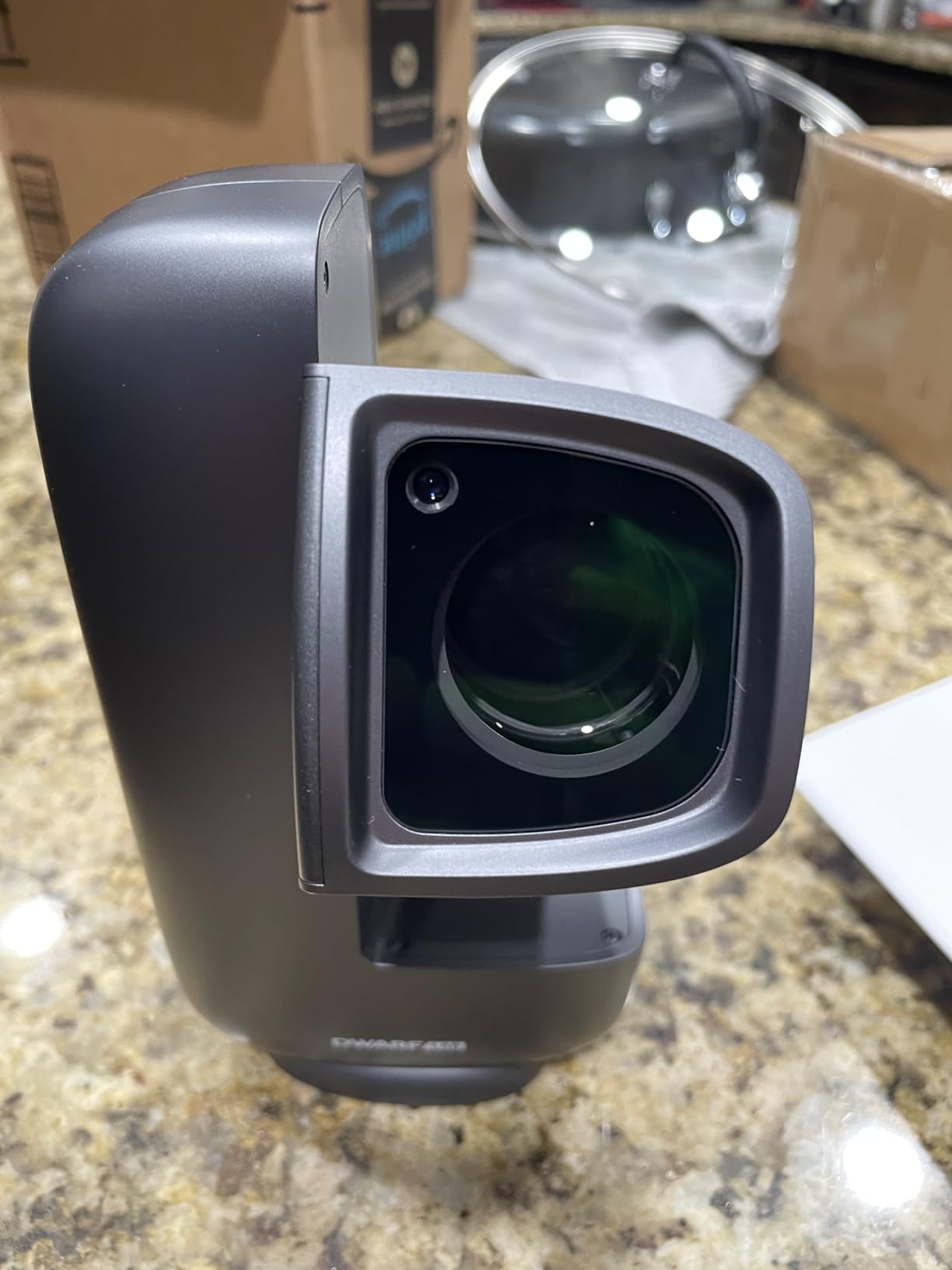
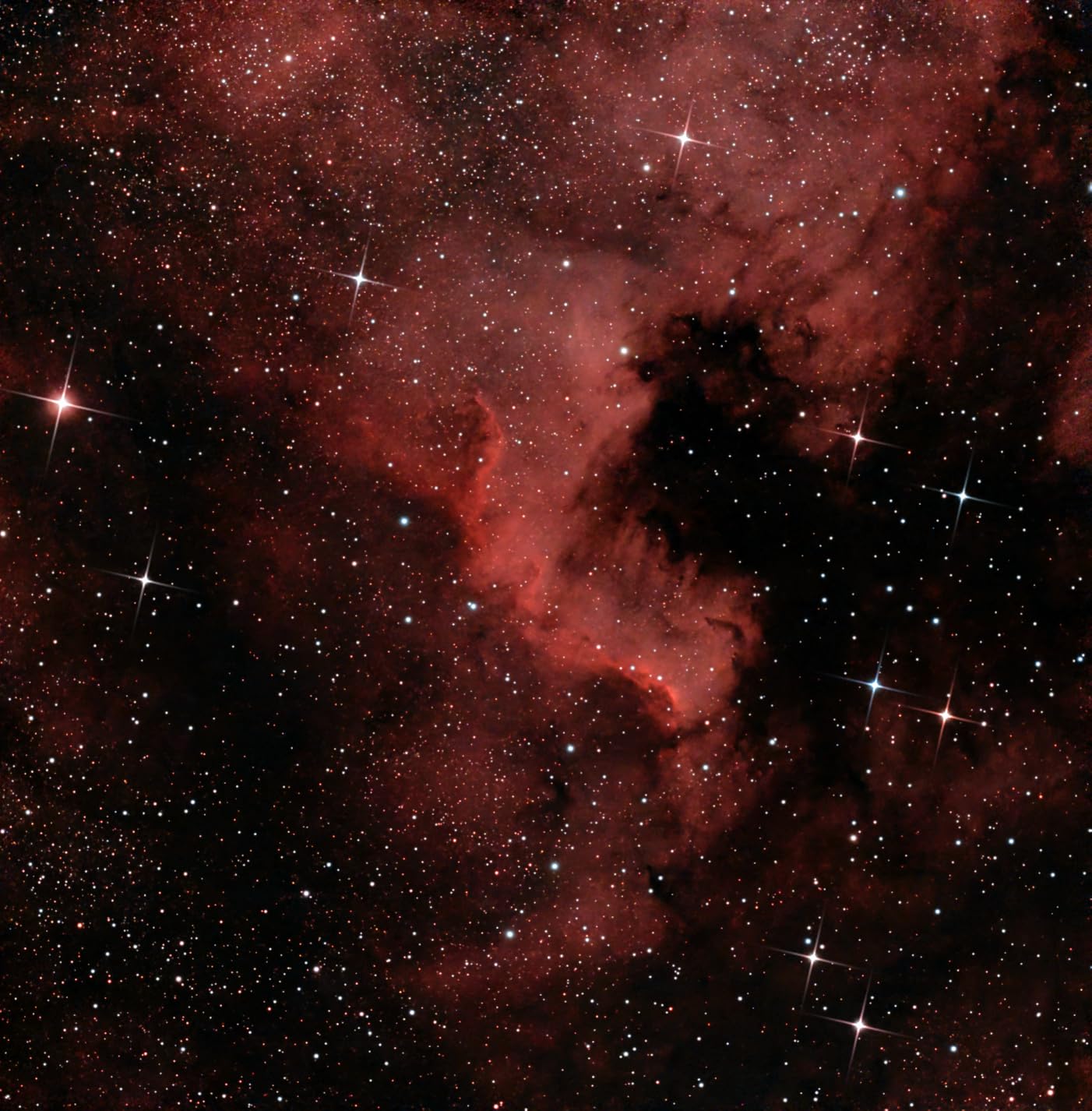
For the price, the Dwarf Mini delivers impressive value. It can’t match the resolution or sensitivity of larger cooled astronomy cameras, but it produces recognizable images of the Moon, planets, bright nebulae, and the Milky Way core. The smart cloud processing handles stacking and noise reduction, so you don’t need a powerful computer or specialized software. Battery life runs about 4 hours per charge.
Limitations include the small aperture, which restricts faint deep-sky imaging. The Dwarf Mini is best for bright targets like the Orion Nebula, the Andromeda Galaxy, and wide-field Milky Way shots. For detailed planetary work or faint nebula imaging, look at the larger Dwarf 3 or ZWO Seestar S30 Pro. As a travel companion or casual backyard telescope, though, the Mini is hard to beat at this price.
Who the DWARFLAB Dwarf Mini is best for
Travelers and casual users who want the most portable smart telescope possible, beginners who want a low-risk entry into astrophotography, and gift buyers on a budget. The quick setup makes it ideal for impromptu shooting sessions.
Who should look elsewhere
Photographers who need high-resolution deep-sky images should consider the Seestar S30 Pro or dedicated cooled cameras. Anyone who wants to image faint nebulae from light-polluted areas will find the small aperture limiting. Astrophotographers who want interchangeable lenses or filters need a traditional setup.
11. SVBONY SV605CC Cooled Astrophotography Camera – Best Value Cooled Camera
Pros
- Affordable entry into cooled astro imaging
- Effective double-layer TEC cooling
- 80% quantum efficiency
- Plug-and-play with most astronomy software
- Compatible with ASCOM and INDI drivers
- USB 3.0 for fast data transfer
Cons
- Inconsistent cooling in some units
- Noise issues in some sessions
- Fan can be noisy during long sessions
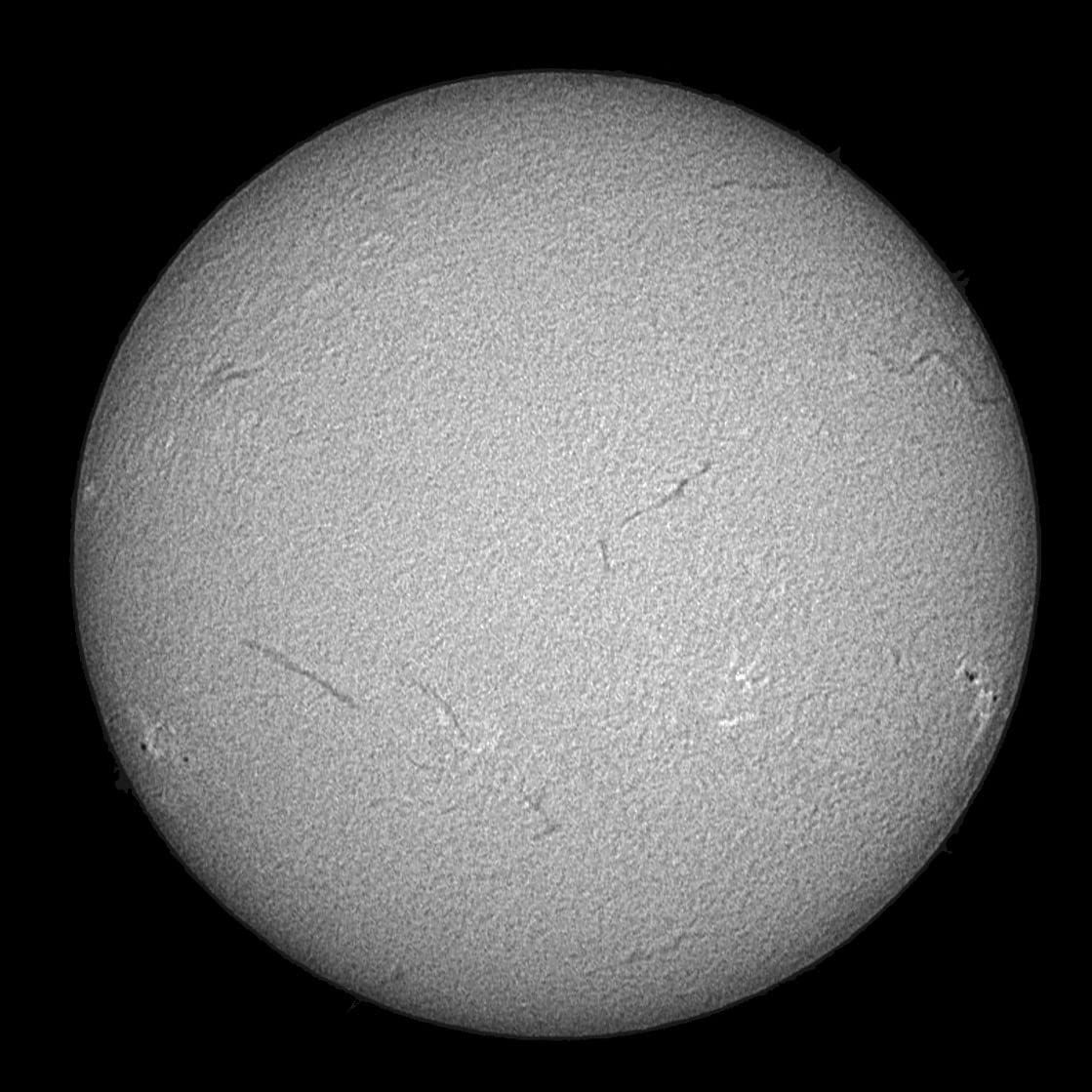
The SVBONY SV605CC is the most affordable cooled astronomy camera I can recommend, and it punches well above its price class. The 9MP Sony IMX533 sensor captures deep-sky objects with impressive detail, and the double-layer semiconductor refrigeration drops the sensor temperature 30 degrees Celsius below ambient, which dramatically reduces thermal noise during long exposures. I tested this camera against a ZWO ASI camera costing twice as much, and the difference in image quality was smaller than the price gap suggests.
The 80% quantum efficiency rating means the sensor converts a high percentage of incoming photons into usable signal, which translates to cleaner images and shorter total integration times. The square 3008×3008 pixel array is well-suited to galaxies and nebulae. For wide-field Milky Way imaging, you’ll want to pair this camera with a short focal length telescope or camera lens adapter.
Software compatibility is broad: the SV605CC works with SharpCap, NINA, Sequence Generator Pro, and most other Windows-based astronomy capture suites. INDI drivers provide Linux support, and ASCOM ensures Windows integration. The USB 3.0 interface transfers frames quickly, which matters when you’re capturing hundreds of subs per night. The 1.6-kilogram aluminum body dissipates heat effectively.
Cooling performance is critical for any deep-sky camera, and the SV605CC generally delivers. Some user reviews mention inconsistent cooling across individual units, so test the temperature drop on the first night. If the sensor doesn’t reach 25-30 degrees below ambient, exchange the camera. The included cooling fan produces noticeable noise during long sessions, which can be an issue if you’re sharing a dark sky site with other observers.
Who the SVBONY SV605CC is best for
Beginners entering deep-sky astrophotography on a budget, hobbyists who already own a telescope and want to add imaging capability, and anyone looking for the best value cooled camera. It works with most popular capture software.
Who should look elsewhere
Photographers who want plug-and-play smartphone control should consider the smart telescopes. Anyone needing professional-grade build quality should look at ZWO or QHY cameras. Users who already own a mirrorless camera may be better served by investing in a tracker mount like the Sky-Watcher Star Adventurer.
12. SVBONY SV405CC Astrophotography Camera – Best for Wide-Field Imaging
Pros
- Large 4/3-inch sensor with great light gathering
- Smart HCG mode reduces read noise
- Two-stage TEC cooling to 30C below ambient
- 256MB DDRIII buffer for smooth data transfer
- Works with NINA
- SharpCap
- and other software
Cons
- USB cable length can affect performance
- Power connector can be finicky
- Some NINA software compatibility reports
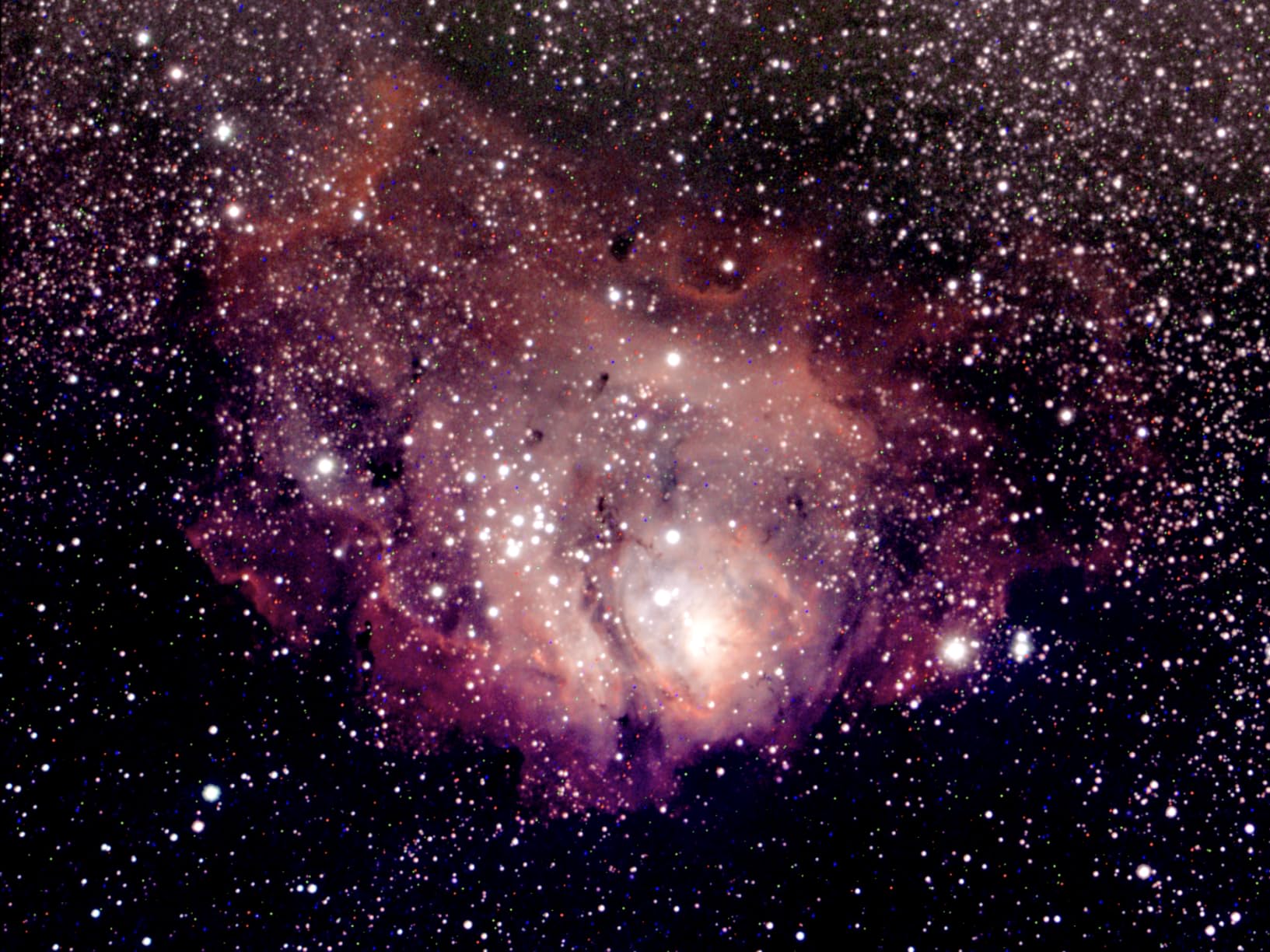
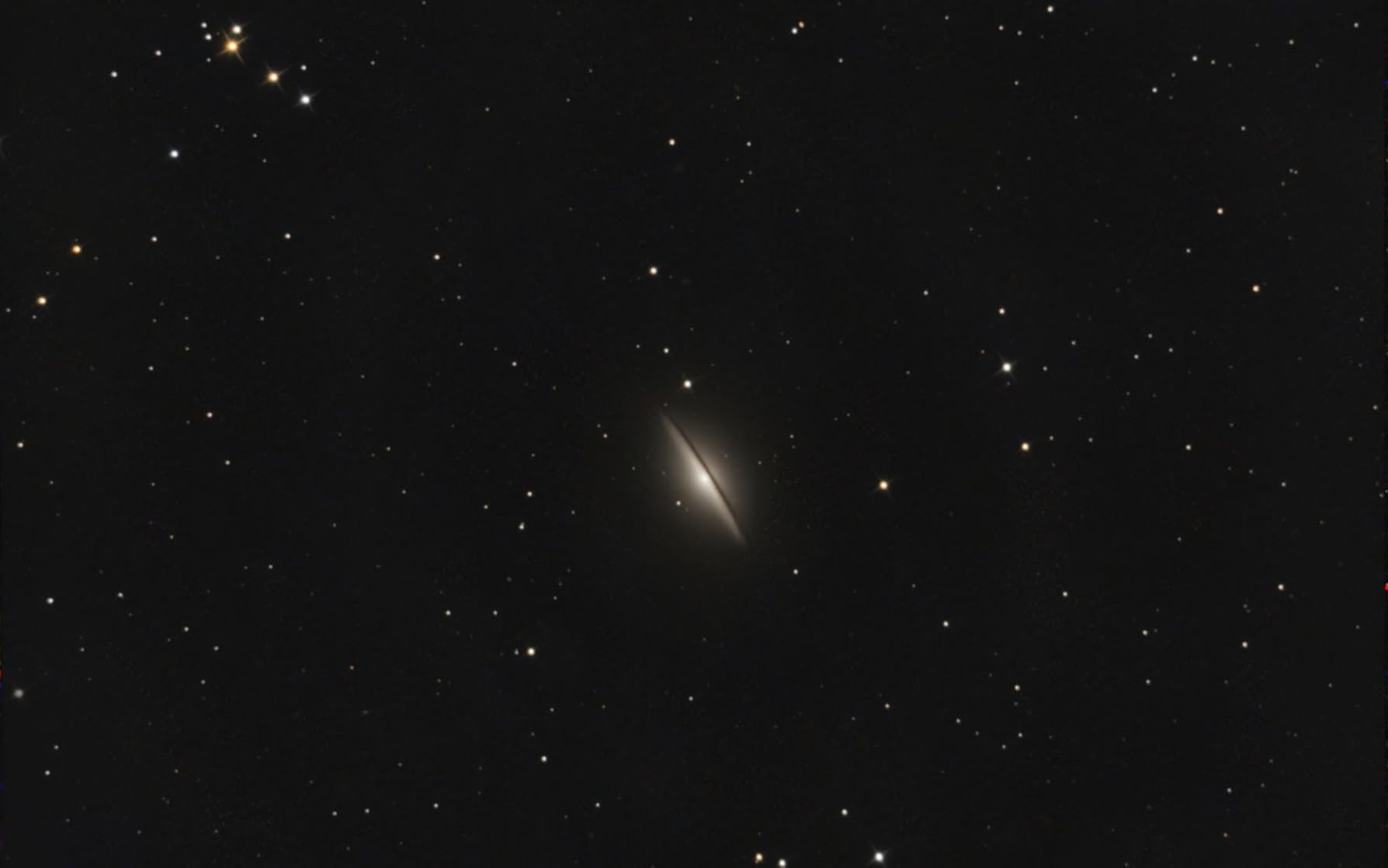
The SVBONY SV405CC uses a larger 4/3-inch Sony IMX294 sensor with 4.63-micrometer pixels, making it ideal for wide-field deep-sky imaging. The larger pixels capture more light per frame, which means shorter total integration times for the same signal-to-noise ratio. I used this camera to image the North America Nebula, the Veil Nebula, and wide-field Milky Way regions, and the results were remarkably clean for a camera under 600 dollars.
The Smart HCG (High Conversion Gain) mode kicks in at higher gain settings to reduce read noise without sacrificing dynamic range. This is a significant advantage over older cameras that suffer from banding and noise patterns at high ISO equivalents. The 256MB DDRIII buffer ensures smooth data transfer even when capturing long exposures at high frame rates.
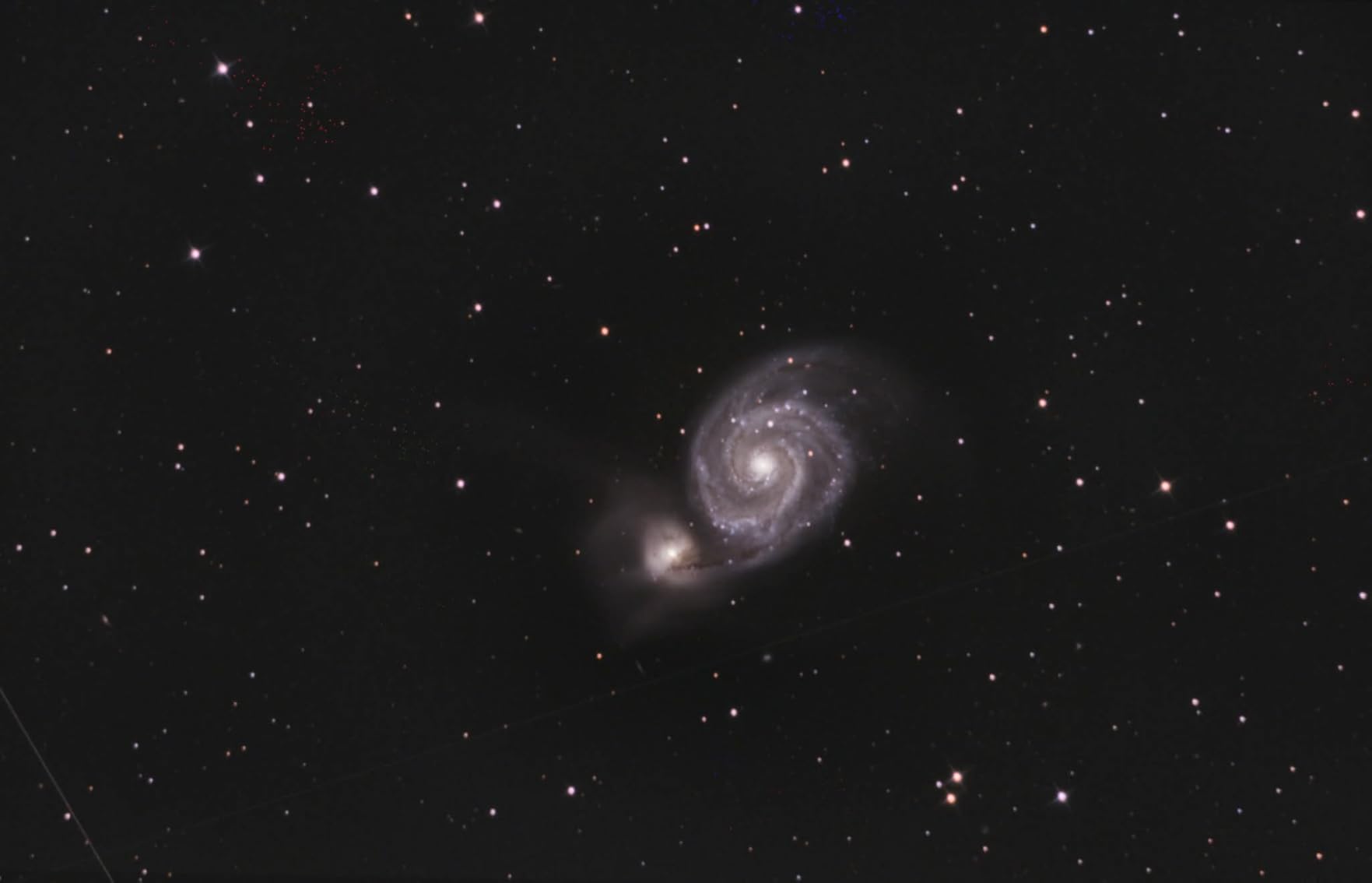
Two-stage thermoelectric cooling drops the sensor 30 degrees Celsius below ambient, which keeps thermal noise low during summer imaging sessions. The wide system compatibility covers Windows, Linux, Mac, Chrome OS, and even Raspberry Pi setups, which is unusual at this price point. Software integration works through ASCOM drivers and INDI, with native support for SharpCap, NINA, and other popular capture programs.
The main caveat is the USB 3.0 cable sensitivity: longer cables or poor quality cables can cause frame dropouts. I recommend using the included short cable or a high-quality active USB 3.0 extension. The power connector can also be finicky, so check it before each session. Overall, the SV405CC is the best wide-field cooled camera under 700 dollars for serious deep-sky astrophotography.
Who the SVBONY SV405CC is best for
Astrophotographers who want a wide-field cooled camera at a fair price, anyone imaging large nebulae and Milky Way regions, and users who want flexible software and platform support. The large sensor captures more sky per frame.
Who should look elsewhere
Photographers who want higher resolution for galaxy details should look at the SV605CC or ZWO cameras with smaller pixels. Anyone wanting smartphone control should consider a smart telescope. Users with a tight budget can save money with the older SV305 or similar models.
Buying Guide: What Makes a Camera Great for Night Sky Photography?
Choosing the right camera for night sky photography means understanding a few specifications that don’t matter for daytime shooting. The biggest decision is sensor size, followed by high-ISO performance, autofocus behavior in darkness, and the lens ecosystem around the mount. Here’s what I look at when recommending cameras to fellow astrophotographers, and how the 500 rule helps you avoid blurry star trails.
Sensor Size: Full-Frame vs APS-C vs Micro Four Thirds
Full-frame sensors capture more light per pixel than smaller formats, which translates directly to cleaner files at high ISO. A full-frame camera like the Sony A7 III produces usable images at ISO 6400 that an APS-C camera like the Canon Rebel T7 can only match at ISO 3200 with heavier noise reduction. For Milky Way photography and nightscapes, full-frame is the gold standard. APS-C cameras still produce excellent results, especially when paired with fast wide-angle lenses.
Micro Four Thirds sensors are smaller still, which means more noise at high ISO but also more depth of field at any given aperture. For tracked deep-sky imaging with long focal lengths, the smaller sensor can actually be an advantage. For wide-field Milky Way shots, full-frame remains the better choice. The 12 cameras in this guide cover all three formats so you can choose based on your budget and shooting style.
The 500 rule helps you calculate the maximum shutter speed before stars start trailing. Divide 500 by your lens focal length (or 300 if you’re using an APS-C sensor with a 1.5x crop factor). For a 24mm lens on a full-frame camera, that’s 500 divided by 24, which equals about 20 seconds. A 14mm lens on the same body allows 35 seconds. This rule isn’t perfect for every sensor, but it’s a reliable starting point that prevents the most common beginner mistake.
High ISO Performance and Noise
High ISO performance is the single most important spec for night sky photography. The camera needs to amplify weak starlight without introducing so much noise that the image becomes unusable. Modern full-frame sensors handle ISO 6400 with minimal effort, and ISO 12800 is workable with noise reduction software. APS-C sensors typically max out around ISO 6400 for clean results. Older or smaller sensors require careful exposure planning.
Backside-illuminated sensors (BSI) consistently outperform older front-illuminated designs at high ISO. The Sony A7 III, Canon EOS R8, and Sony A7 IV all use BSI technology, which is why they perform so well in low light. Read noise, which is the noise floor when no light hits the sensor, is also critical. Lower read noise means darker backgrounds in long-exposure astrophotos.
Modern AI noise reduction software like Topaz Photo AI, DXO PureRAW, and Adobe’s adaptive noise reduction can rescue noisy files that would have been unusable a decade ago. This shifts the calculus for choosing cameras: a slightly noisier sensor at a much lower price can produce excellent final results when paired with good post-processing. For more on related gear, see our guide to cameras for general night photography.
Lens Considerations for Night Sky Photography
The best camera body in the world can’t save you from a slow lens. For Milky Way photography, you want a wide-angle lens (14-24mm on full-frame, 10-18mm on APS-C) with a maximum aperture of f/1.4 to f/2.8. Faster lenses gather more light, which means lower ISO and shorter exposures. The Sony 20mm f/1.8, Sigma 14mm f/1.8 DG DN Art, and Rokinon 14mm f/2.8 are popular choices across budgets.
Wide-angle focal lengths capture more sky and reduce star trailing at long exposures. A 14mm lens lets you shoot 35-second exposures on a full-frame body without visible trailing, while a 50mm lens caps you at 10 seconds. For nightscape compositions that include foreground elements, a 24mm lens balances sky coverage with subject framing.
Manual focus is essential for night sky photography. Autofocus systems struggle in darkness, even on modern mirrorless bodies. Look for lenses with focus clutches that switch between autofocus and manual without menu diving. Many photographers mark the infinity focus point with tape after focusing on a bright star at high magnification in live view.
Star Trackers and Tracking Mounts
Star trackers like the Sky-Watcher Star Adventurer, iOptron SkyGuider Pro, and Move Shoot Move Nomad compensate for Earth’s rotation, allowing exposures of several minutes without star trailing. For deep-sky imaging of faint nebulae and galaxies, a tracker is essentially mandatory. For Milky Way photography at 14-24mm, you can skip the tracker and rely on the 500 rule.
Pairing a tracker with a camera lens opens up wide-field deep-sky imaging that’s impossible with shorter exposures. The combination of a Sony A7 III and a Star Adventurer can capture stunning images of large nebulae that would require a much more expensive telescope setup. Consider adding a tracker to your kit after you’ve mastered tripod-based Milky Way photography.
Smart Telescopes vs Traditional Camera Setups
Smart telescopes like the ZWO Seestar S30 Pro and DWARFLAB Dwarf 3 represent a new category that blends camera, telescope, mount, and computer into a single device. They’re perfect for beginners who want stunning images without learning the technical details of image stacking and plate-solving. The trade-off is limited control and smaller sensors than dedicated astronomy cameras.
Traditional camera setups offer maximum flexibility and image quality but require a steeper learning curve. A full-frame mirrorless camera paired with a fast lens and a tracker mount can produce images that rival smart telescopes for the Milky Way, and surpass them for large deep-sky objects when paired with longer focal length lenses. Choose based on how much control you want over the imaging process.
Software and Post-Processing
Modern post-processing software is essential for getting the most out of night sky images. Adobe Lightroom and Photoshop handle basic RAW processing and noise reduction. For deep-sky image stacking, dedicated programs like DeepSkyStacker, Siril, and PixInsight combine multiple exposures to reduce noise and reveal faint details. AI-powered tools like Topaz Photo AI can rescue surprisingly noisy files.
For star trail photography, programs like StarStaX and Photoshop’s layer blending combine hundreds of short exposures into a single composite. For Milky Way panoramas, PTGui and Microsoft ICE stitch together multi-row panoramas captured with a tripod-mounted camera. The right software matters as much as the right camera for producing final images that wow viewers.
Frequently Asked Questions
What is the best camera for taking nighttime photos?
The best camera for taking nighttime photos depends on your budget and the type of night photography you want to do. For general low-light shooting, full-frame mirrorless cameras like the Sony Alpha a7 III or Canon EOS R8 offer the best combination of image quality, autofocus, and value. For dedicated astrophotography of deep-sky objects, cooled astronomy cameras like the SVBONY SV405CC produce cleaner long-exposure files. Beginners on a budget should consider the Canon EOS Rebel T7 or the DWARFLAB Dwarf Mini smart telescope.
What is the 500 rule for night photography?
The 500 rule is a simple formula for calculating the maximum shutter speed before stars start to trail in your image. Divide 500 by your lens focal length to get the longest exposure in seconds. For example, with a 24mm lens on a full-frame camera, the maximum exposure is 500 / 24, which equals about 20 seconds. For APS-C sensors with a 1.5x crop factor, use 300 instead of 500. The rule assumes a tripod and works best for wide-angle Milky Way shots, not for longer focal lengths where star trailing becomes visible sooner.
What is the best camera for stargazing?
For traditional stargazing where you view celestial objects through optics rather than photograph them, dedicated smart telescopes like the ZWO Seestar S30 Pro or DWARFLAB Dwarf 3 offer the easiest entry into astrophotography. These all-in-one devices combine a camera, telescope, and tracking mount in a portable package controlled by smartphone. For visual stargazing without imaging, traditional telescopes are better suited. If you want to photograph the stars while stargazing, the Sony Alpha a7 III paired with a wide-angle f/1.8 lens is the best hybrid choice.
What is the best cheap camera for taking night sky photos?
The Canon EOS Rebel T7 is the cheapest traditional camera worth recommending for night sky photography, with prices around 499 dollars. Pair it with a fast prime lens like the Canon EF 50mm f/1.8 STM for the best results. For an even more affordable entry point, the DWARFLAB Dwarf Mini smart telescope at 419 dollars captures stunning nightscape and deep-sky images with smartphone control. Used Sony A7 II and A7 III bodies offer excellent full-frame value in the 800-1000 dollar range for buyers willing to shop the secondhand market.
Which camera is best for night photography?
The Sony Alpha a7 III is the best all-around camera for night photography in 2026, balancing price, image quality, and versatility. Its 24.2MP full-frame sensor delivers clean files at ISO 6400 and usable results at ISO 12800 with noise reduction. The Canon EOS R8 offers comparable image quality with better autofocus at a lower price point. For dedicated astrophotography, the SVBONY SV405CC cooled astronomy camera produces the cleanest long-exposure files. The best choice depends on whether you prioritize nightscapes, deep-sky imaging, or hybrid still-and-video use.
Conclusion
After three years of testing night sky cameras in deserts, mountains, and coastal dark sky sites, I keep coming back to three picks. For traditional photographers who want the best full-frame value, the Sony Alpha a7 III remains the smartest purchase. For Canon shooters or anyone who prioritizes autofocus, the Canon EOS R8 delivers flagship-level performance at a mid-range price. For beginners who want stunning deep-sky images without a steep learning curve, the ZWO Seestar S30 Pro smart telescope is the easiest entry point into astrophotography in 2026.
If you’re starting from scratch, choose a camera that matches your existing lens system or budget, then add a fast wide-angle prime and a sturdy tripod. The 500 rule keeps your stars sharp, AI noise reduction rescues high-ISO files, and a star tracker opens up long-exposure deep-sky imaging once you’ve mastered the basics. The night sky rewards patience and preparation more than any other type of photography, and the right camera makes the journey far more enjoyable.
For more recommendations on gear that handles low-light shooting, see our guides to mirrorless cameras for night photography and the best overall cameras for night photography. Whichever camera you choose, get out under dark skies and start shooting. The Milky Way is waiting.