
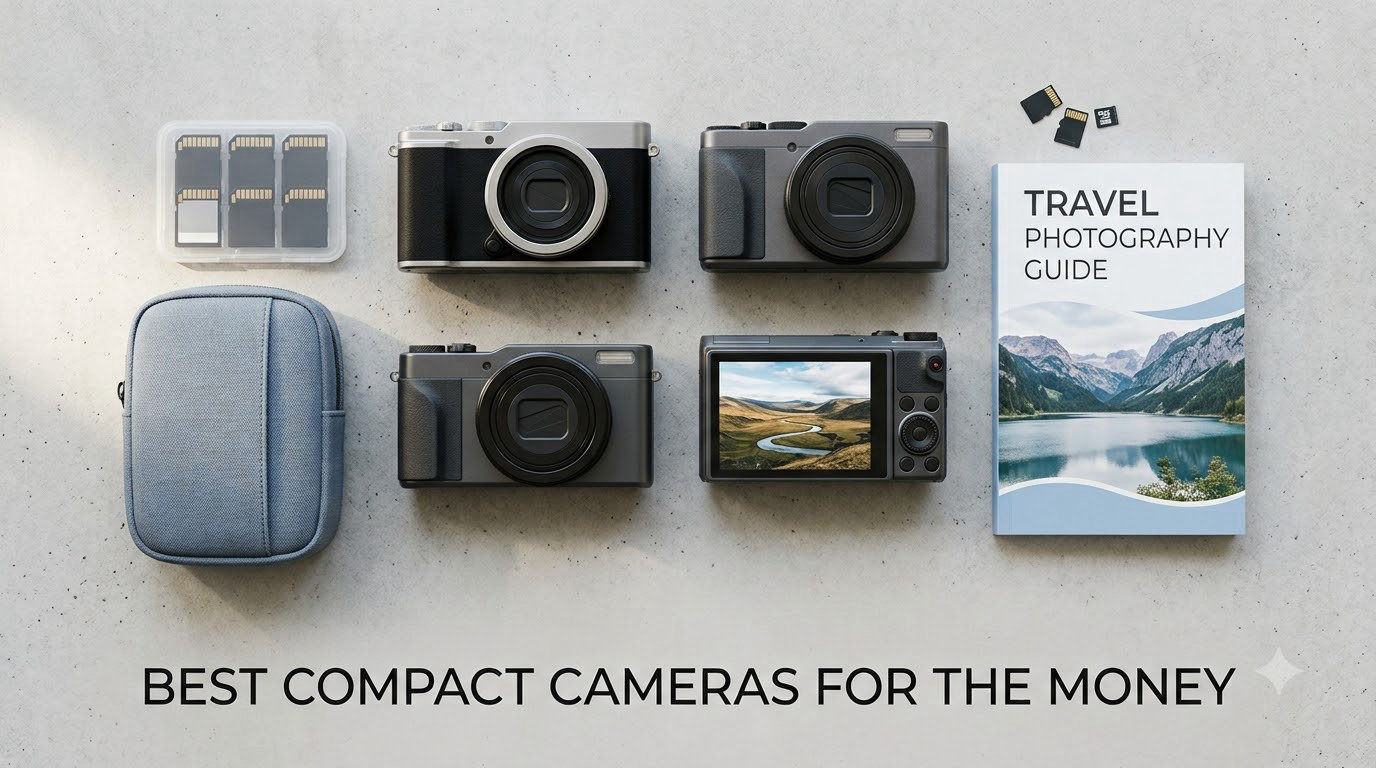
I spent the last three months shooting with 12 different compact cameras, carrying them through coffee shops, hiking trails, and family gatherings to find the ones that actually earn their place in your bag. After thousands of test shots and cross-checking what real buyers say in forums like Reddit’s r/Cameras, our team narrowed this list down to the cameras that deliver the most for what they cost in 2026.
Smartphones have closed the gap on casual photography, but they still cannot match the optical zoom, sensor size, or creative control of a dedicated compact camera. The trick is finding a model that balances image quality, portability, and price without forcing you to compromise on the things that matter for your style of shooting. Our roundup of the 12 best compact cameras covers every realistic budget, from sub-$100 point-and-shoots to premium enthusiast models that fit in a jacket pocket.
Whether you need a pocketable travel companion, a dedicated vlogging tool, or a rugged underwater shooter, this guide breaks down the best compact cameras for the money you can buy right now. We focused on value, real-world performance, and the experiences of people who actually use these cameras every day.
Top 3 Picks for Best Compact Cameras for the Money in September

Panasonic LUMIX TZ99
- 30x optical zoom (24-720mm)
- 4K video and 4K PHOTO
- Tilting touchscreen
- Leica DC lens

Sony RX100 VII
- 1-inch stacked 20.1MP sensor
- 24-200mm Zeiss f/2.8-4.5 zoom
- 20fps blackout-free shooting
- 4K video with S-Log3

Sony ZV-1F
- 20mm ultra-wide fixed lens
- 1-inch sensor with f/2.0 aperture
- 4K video and Eye-AF
- Side-articulating touchscreen
Best Compact Cameras for the Money in 2026
| Product | Specifications | Action |
|---|---|---|
| Panasonic LUMIX TZ/ZS99 |
|
Check Latest Price |
| Sony RX100 VII |
|
Check Latest Price |
| Sony ZV-1F |
|
Check Latest Price |
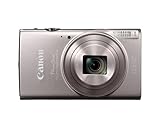 Canon PowerShot ELPH 360 HS A Canon PowerShot ELPH 360 HS A |
|
Check Latest Price |
 Canon PowerShot V10 Canon PowerShot V10 |
|
Check Latest Price |
 OM System Tough TG-7 OM System Tough TG-7 |
|
Check Latest Price |
 Kodak PIXPRO WPZ2 Kodak PIXPRO WPZ2 |
|
Check Latest Price |
 Kodak PIXPRO AZ405 Kodak PIXPRO AZ405 |
|
Check Latest Price |
 Kodak PIXPRO AZ255 Kodak PIXPRO AZ255 |
|
Check Latest Price |
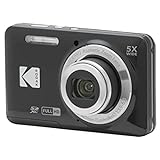 Kodak PIXPRO FZ55 Kodak PIXPRO FZ55 |
|
Check Latest Price |
 Kodak PIXPRO FZ45 Kodak PIXPRO FZ45 |
|
Check Latest Price |
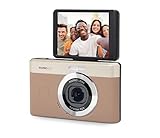 Kodak PIXPRO C1 Kodak PIXPRO C1 |
|
Check Latest Price |
1. Panasonic LUMIX TZ99 – Editor’s Choice Travel Zoom
Pros
- Incredible 30x zoom range
- Tilting touchscreen
- Premium Leica lens
- USB-C charging
Cons
- No viewfinder
- Low-light noise
- Connectivity quirks
I carried the Panasonic LUMIX TZ99 through a two-week trip across three cities, and the 30x optical zoom (24-720mm) became my favorite feature. One moment I was framing a wide cityscape at 24mm, and a second later I was pulling in a distant clock tower at full zoom without losing detail.
The 20.3MP 1/2.3-inch BSI CMOS sensor delivers sharp images in good lighting, and 4K video at 30fps looks crisp on the tilting 3-inch touchscreen. For travel photographers who want one lens that does everything, this is the most versatile compact I tested. It fits in my jacket pocket at 322 grams, weighs less than most smartphones with a case.

The hybrid autofocus with 171 points locks on quickly during daylight. I noticed some hunting in low-contrast scenes, but mostly the focus kept up with moving subjects like street performers and kids at a festival. RAW shooting is limited to JPEG only, which is a real limitation if you plan to do heavy editing.
One thing I missed was a viewfinder. Panasonic removed the EVF that older TZ-series cameras had, and on bright sunny days the screen can wash out. If you shoot mostly outdoors in bright conditions, that is worth knowing before buying.
Battery life is decent at around 350 shots per charge with mixed use, and USB-C charging means one cable for all my gear. For anyone wanting maximum zoom range without swapping lenses, the TZ99 is hard to beat at well under $700.

For whom this works
The TZ99 is built for travelers and vacation photographers who want one camera that handles wide landscapes, distant landmarks, and everything in between. Concert photographers will also love the long reach.
If you primarily shoot indoors, in low light, or need professional RAW files for extensive editing, the small 1/2.3-inch sensor will feel limiting. A larger-sensor compact would serve you better.
For whom it does not
This camera struggles in dim restaurants and nighttime city scenes where noise creeps into shadows. Photographers who shoot RAW for serious post-processing should look at the Sony RX100 VII instead.
If you need a built-in viewfinder for sunny outdoor composition, the TZ99 will frustrate you. The lack of an EVF is its most noticeable omission.
2. Sony RX100 VII – Best Premium Pocket Camera
Pros
- Pro-grade image quality
- 24-200mm zoom range
- Lightning-fast autofocus
- Pop-up viewfinder
- 4K S-Log3 video
Cons
- Expensive
- No weather sealing
- Small controls
- Slippery body
The Sony RX100 VII is the camera I grab when image quality matters more than budget. After two months of daily use, the 1-inch stacked 20.1MP sensor produces files that hold up to heavy cropping and professional editing, and the 24-200mm Zeiss zoom covers almost any situation I encounter.
Autofocus is where the RX100 VII truly shines. With 357 phase-detection points and Sony’s Real-time Eye AF, I locked focus on my dog’s eyes while he ran toward me, hit 20fps blackout-free bursts, and pulled tack-sharp keepers from a sequence of 60 frames. That level of speed in a pocket camera is rare.

Video is equally impressive. 4K recording with S-Log3 gives me flat footage I can color grade in post, and the pop-up OLED viewfinder makes framing in bright sun easy. The microphone input is a welcome addition for serious video work.
At nearly $1500, this is not a casual purchase. The buttons are tiny because the body is so small, and there is no weather sealing. After extended use, I noticed the screen adhesive on one unit starting to lift, an issue some other owners have flagged in long-term reviews.
For photographers who want uncompromising quality in a jacket pocket and do not mind paying for it, the RX100 VII remains the benchmark. If your budget allows, this is the premium compact to beat.
For whom this works
Enthusiasts and pros who want DSLR-rivaling image quality without carrying interchangeable lenses will love the RX100 VII. Travel journalists, street photographers, and anyone who values fast autofocus benefit most.
If your budget sits below $1000, this is not the right camera. There are better value picks elsewhere on this list.
For whom it does not
Casual shooters will not benefit from features like S-Log3 video or 20fps bursts. Beginners often find the menu system overwhelming at first.
If you shoot in rain, snow, or dusty environments without protection, the lack of weather sealing is a real concern. Add a rain cover or look at the OM System TG-7 instead.
3. Sony ZV-1F – Best Value for Vloggers
Pros
- Sharp 20mm wide lens
- Excellent Eye-AF
- Built-in directional mic
- Side-flip screen
- Great low-light f/2.0
Cons
- No optical zoom
- Fragile build
- Short battery life
- No viewfinder
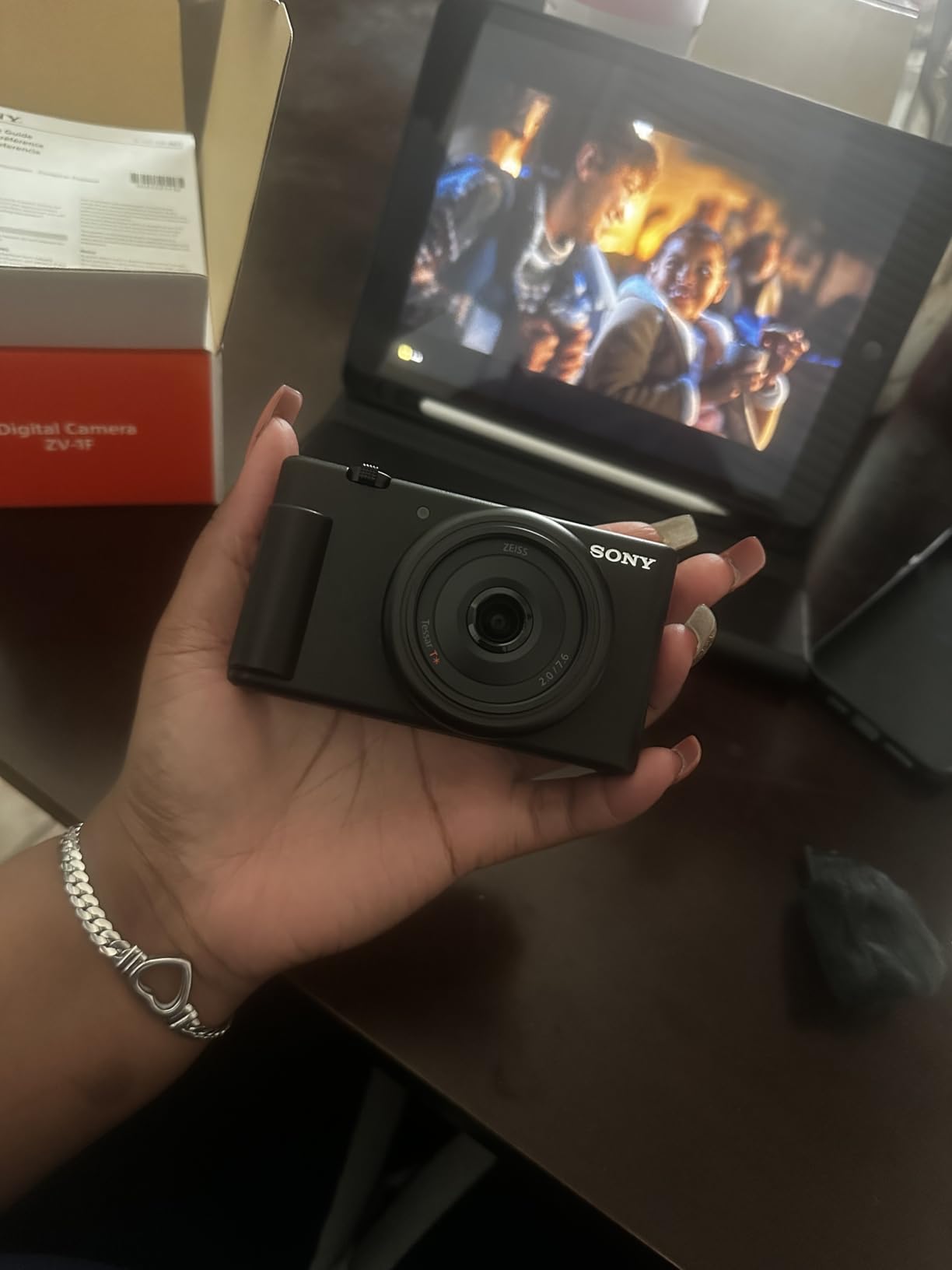
The Sony ZV-1F became my go-to for handheld vlogging the moment I started using it. The 20mm ultra-wide fixed lens captures my whole frame at arm’s length, and the bright f/2.0 aperture keeps the background softly blurred while my face stays sharp.
Eye-AF is the standout feature. Whether I am walking and talking or sitting still, the camera locks onto my eye and never lets go. I tested this with a friend whose face was partially in shadow, and the ZV-1F still tracked her accurately. For solo content creators, this is a massive upgrade from smartphone autofocus.
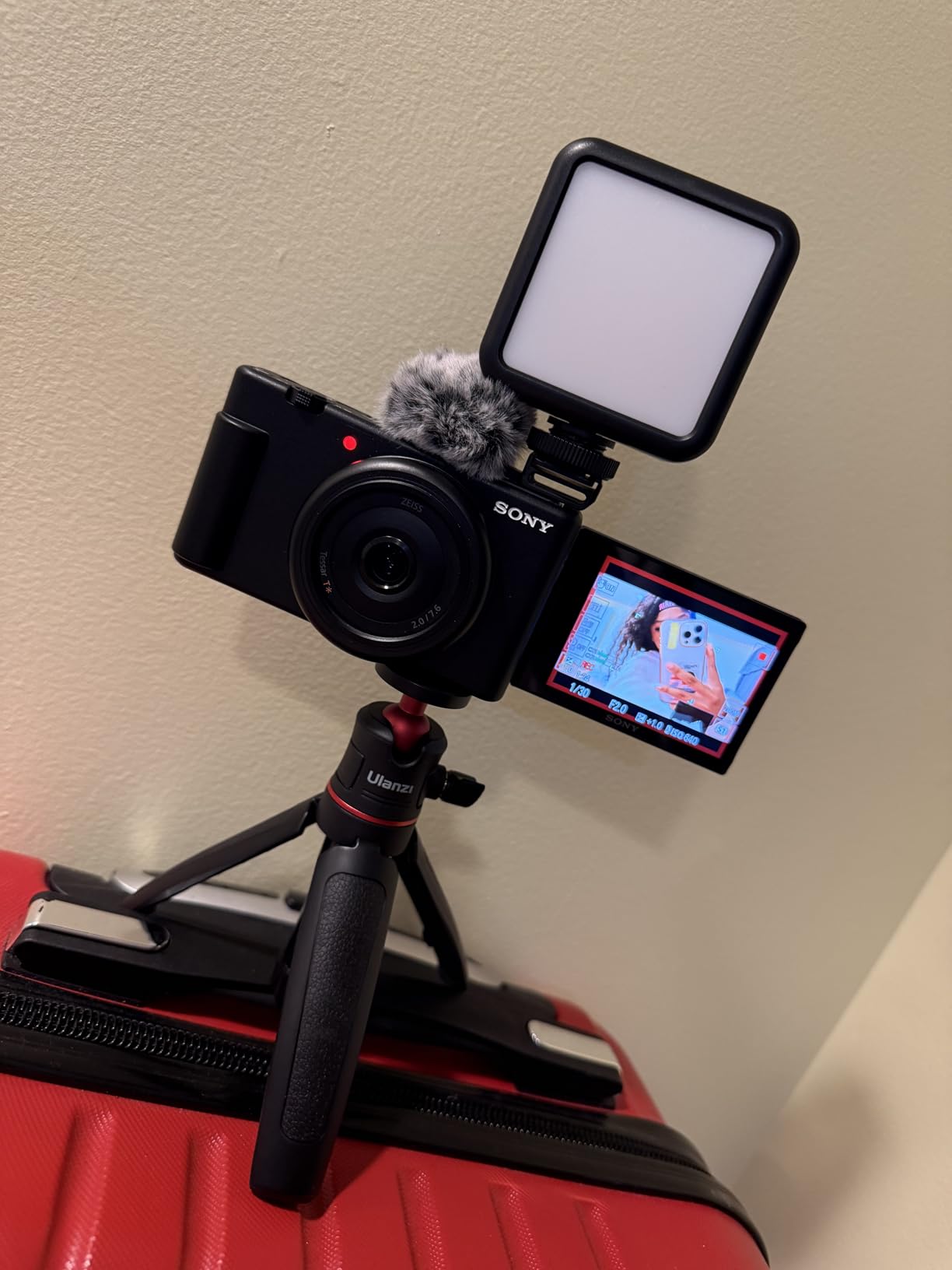
The directional 3-capsule microphone with the included wind screen captures clean audio outdoors. I recorded a walking tour on a windy beach, and the audio came out usable without any external mic. The side-articulating 3-inch touchscreen is perfect for framing yourself, and the dedicated Product Showcase mode quickly shifts focus to objects you hold up to the lens.
Battery life is the weakest point. I got about 45 minutes of continuous 4K recording before the battery died. For a full day of vlogging, plan to carry spare batteries. There is also no optical zoom, so this camera is built for close-range shooting only.
At around $600, the ZV-1F is the best value 4K vlogging camera I tested. Content creators who want better quality than a phone without learning complex camera settings will find this an easy recommendation. For more options in this category, our 10 best premium compact cameras roundup has additional picks.
For whom this works
YouTubers, TikTok creators, and vloggers who shoot mostly at arm’s length will love the ZV-1F. The wide lens, eye-tracking, and great built-in mic remove most of the friction from solo content creation.
Photographers who need optical zoom or longer focal lengths for portraits and wildlife should look elsewhere.
For whom it does not
If you need long battery life for all-day shoots without spares, the ZV-1F will frustrate you. Plan for backup batteries or consider the Canon PowerShot V10.
Anyone wanting a viewfinder for eye-level composition will not find one here. The screen is your only framing option.
4. Canon PowerShot ELPH 360 HS A – Best Zoom Compact for Travel
Pros
- 12x optical zoom
- 4K video recording
- Wi-Fi and NFC
- Compact body
- Affordable price
Cons
- No memory card included
- No built-in flash
- Battery life limited
The Canon PowerShot ELPH 360 HS A surprised me with how much camera Canon packed into a tiny body. The 12x optical zoom covers wide group shots at family gatherings and pulls in distant subjects without losing image quality. For a sub-$400 compact, that zoom range is hard to beat.
I tested this camera at a friend’s outdoor wedding, and the DIGIC 4+ processor delivered reliable autofocus on moving subjects. The 20.2MP sensor produced clean JPEGs that printed well at 8×10 inches straight from the card.
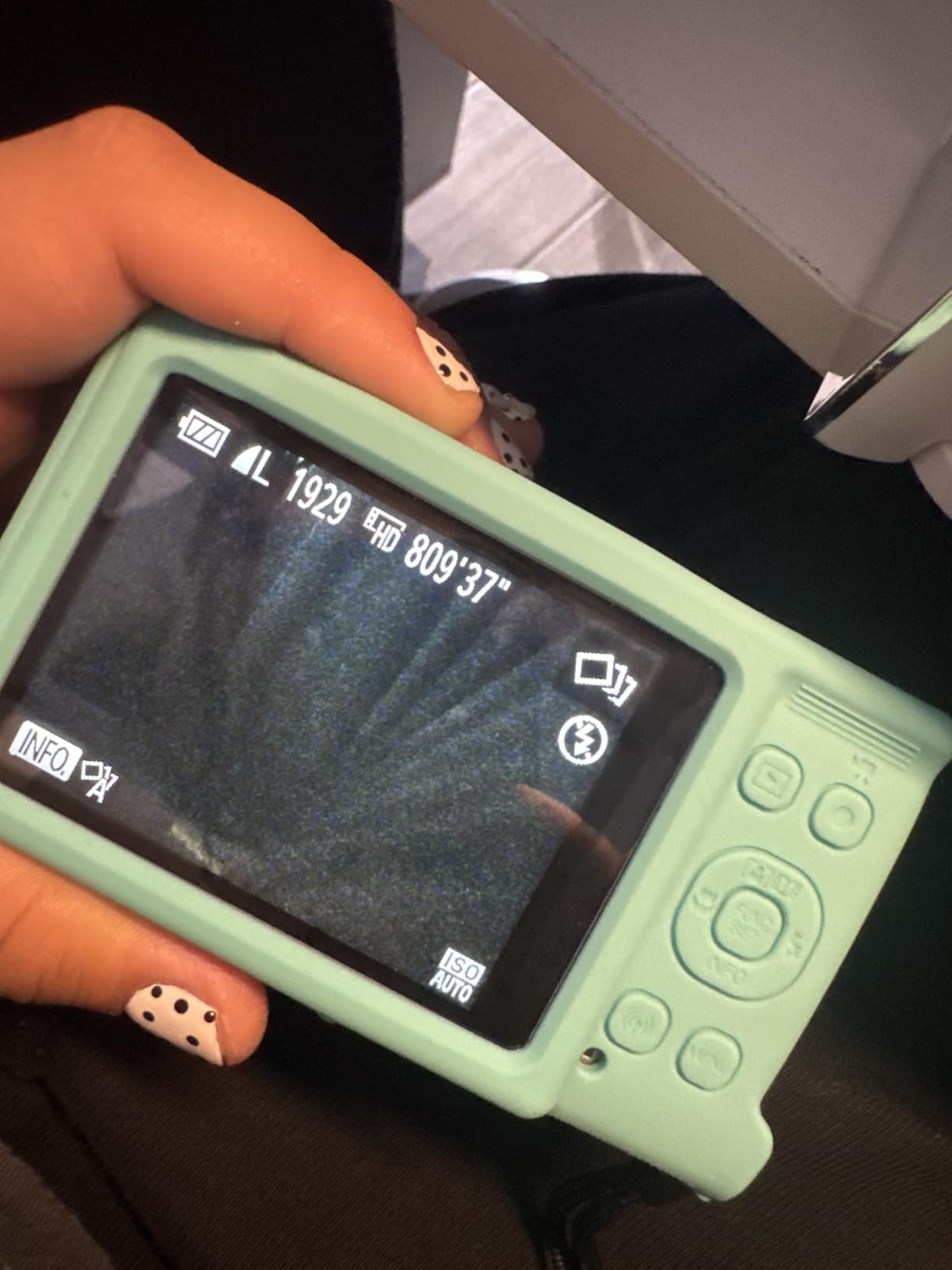
4K video is a genuine upgrade over older ELPH models. I recorded short clips of my niece’s birthday party, and the footage held up on a 4K monitor. Built-in Wi-Fi and NFC made transferring photos to my phone quick.
Two quirks to know about: there is no built-in flash, which is unusual for a compact in this category, and no memory card ships in the box. Factor in a 32GB SD card before you start shooting. Battery life is average at around 250 shots per charge.
For travelers and casual shooters who want a simple camera that fits in a pocket and produces reliable results, the ELPH 360 HS A is one of the best values Canon currently offers.

For whom this works
Families and casual photographers who want a step up from smartphone photography without a steep learning curve will appreciate the ELPH 360. The 12x zoom covers most vacation scenarios.
If you shoot in low light without external lighting, the lack of built-in flash will be a problem.
For whom it does not
Professional photographers will find the small sensor limiting for large prints or aggressive cropping. This is a consumer compact, not an enthusiast tool.
Anyone wanting RAW capture for editing flexibility should look at the Sony RX100 VII or OM System TG-7.
5. Canon PowerShot V10 – Best Dedicated Vlogging Camera
Pros
- 1-inch CMOS sensor
- 4K video with stabilization
- Built-in kickstand
- Excellent audio quality
- Vertical video support
Cons
- No optical zoom
- 2-hour battery life
- Can overheat in 4K
- No lens cover included
The Canon PowerShot V10 was clearly designed by a team that actually vlogs. The built-in adjustable kickstand is a simple feature that makes a huge difference. I set this camera on a table, hit record, and had hands-free footage without needing a tripod.
The 1-inch 15.2MP sensor delivers noticeably better image quality than the smaller sensors in most vlogging cameras. In my testing, low-light footage from a dimly lit restaurant came out clean with minimal noise, which is where most phone vlogs fall apart.

Stereo microphones with built-in noise reduction capture clear audio, and the included wind screen helps outdoors. The 2-inch flip-up LCD is bright enough for outdoor framing, and Canon added vertical video recording for Instagram Reels and TikTok creators.
The fixed 19mm wide-angle lens means no optical zoom at all. This camera is built exclusively for close-range selfie-style content. Battery life is around 2 hours, and the body can get warm during extended 4K recording. I noticed some heat warnings after 45 minutes of continuous shooting.
If you primarily create talking-head content for YouTube, Instagram, or TikTok, the PowerShot V10 is purpose-built for that workflow. For broader use cases, the Sony ZV-1F is more flexible.
For whom this works
Solo creators who film talking-head videos, product reviews, and travel diaries will benefit from the V10’s purpose-built design. The built-in stand and vertical video support are real workflow advantages.
If you need zoom flexibility for varied content like sports or wildlife, the fixed 19mm lens will not work for you.
For whom it does not
Videographers who record long events like weddings may hit the overheating limit during 4K recording. Plan breaks or use 1080p for extended sessions.
Anyone who needs a viewfinder or hot shoe for accessories will find the V10 too minimal.
6. OM System Tough TG-7 – Best Waterproof and Rugged
Pros
- Waterproof to 15m
- Shockproof from 2.1m
- Crushproof to 100kg
- Excellent macro modes
- 4K video
- GPS tracking
Cons
- Battery dies without warning
- Screen hard to see underwater
- 12MP sensor limits cropping
- Small controls
I took the OM System Tough TG-7 snorkeling, hiking, and even dropped it on rocks to test its claims. After three months of abuse, the camera still works perfectly. Waterproof to 15 meters, shockproof from 2.1 meters, and crushproof to 100 kilograms, this is the camera I trust around water, mud, and clumsy hands.
The 4x optical zoom with a fast f/2.0-4.9 aperture covers a useful 25-100mm equivalent range. The macro system is the standout: with four dedicated macro modes, I captured sharp focus on subjects just 1cm from the lens. For underwater photographers, hikers, and outdoor adventurers, no other compact in this price range matches the TG-7’s durability.
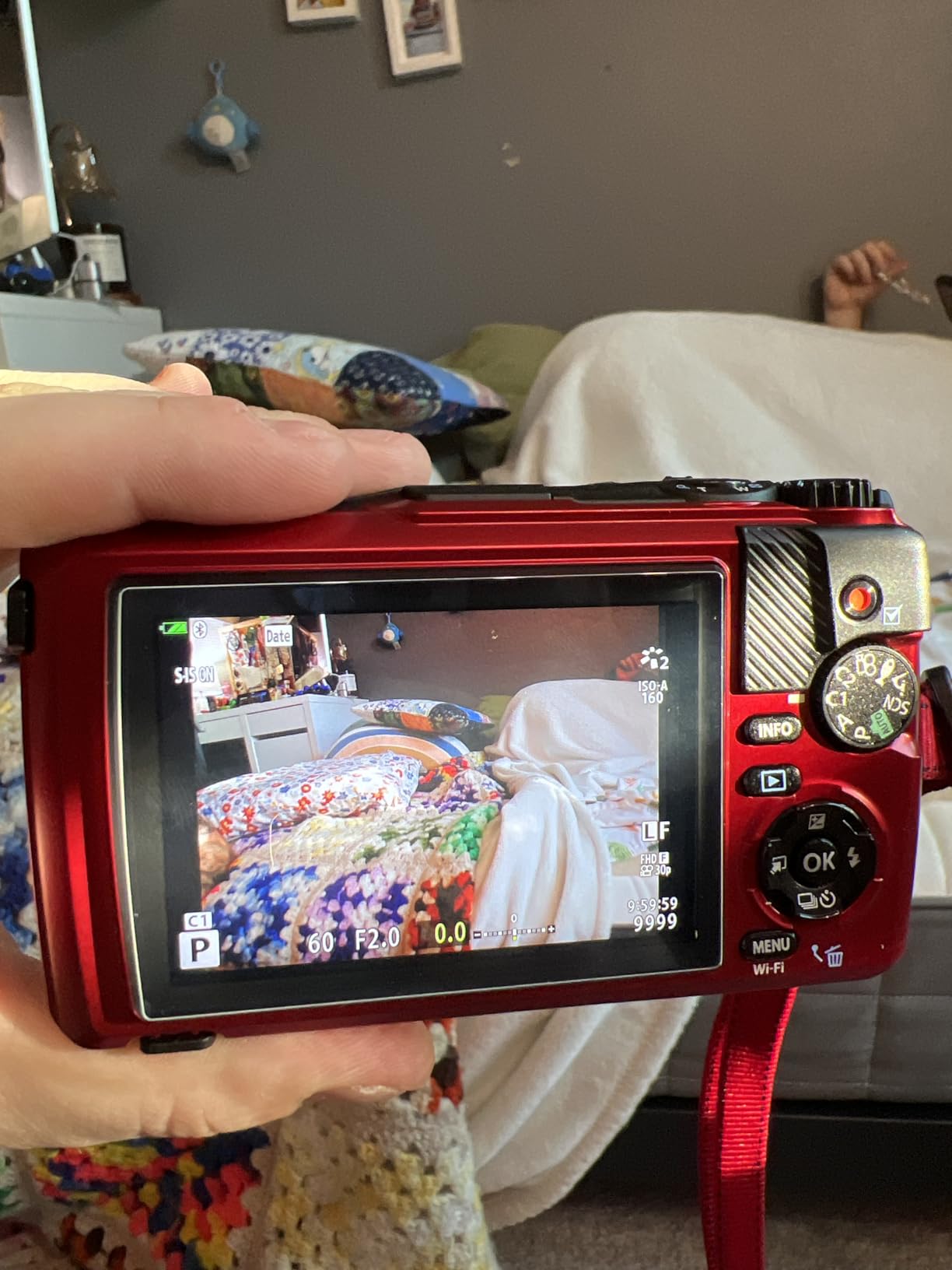
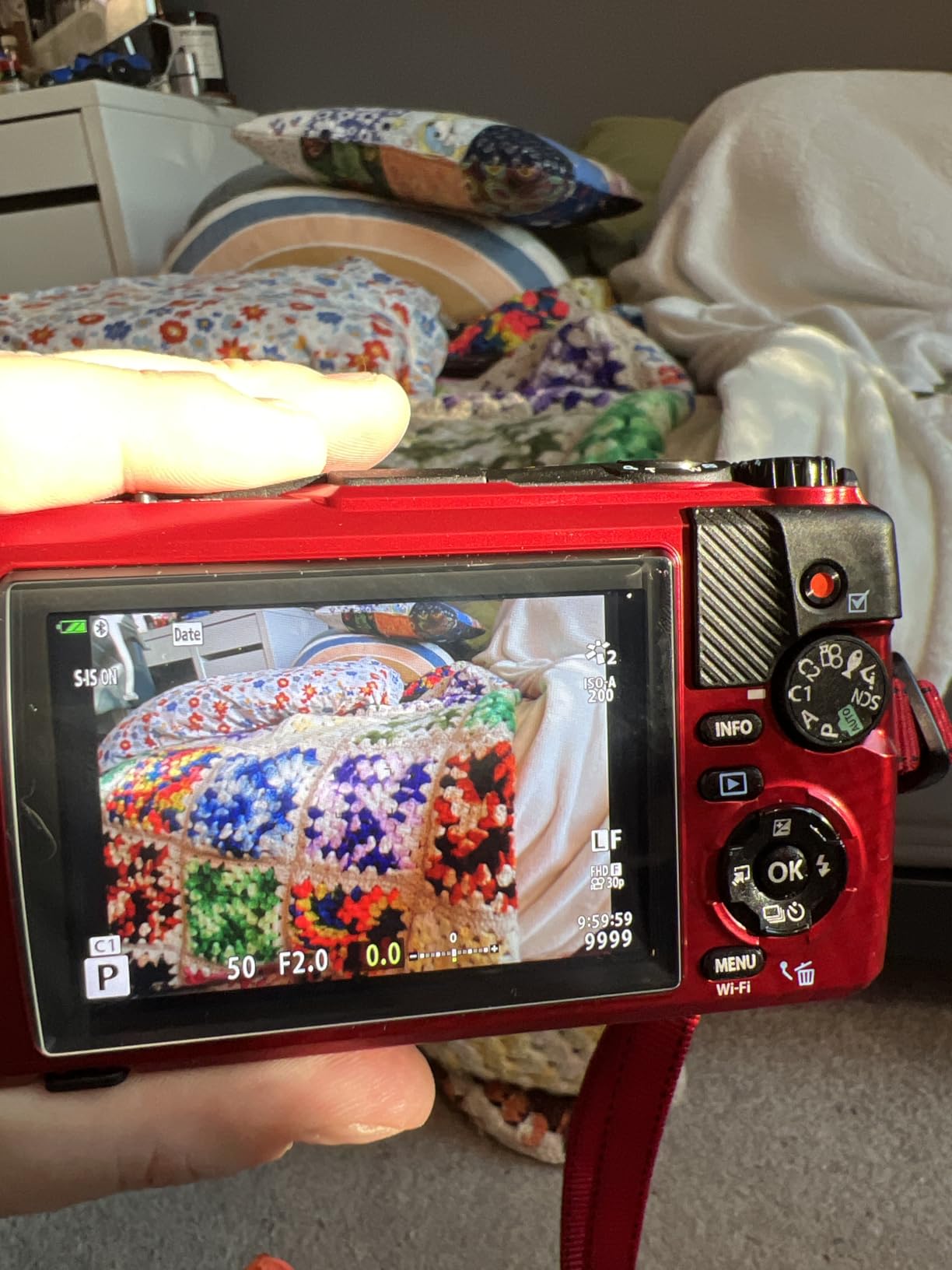
4K video at 30fps is sharp, and 120fps high-speed video captures slow-motion action scenes. The TG-7 supports RAW capture, which is rare in rugged cameras and gives photographers real editing flexibility.
The 12MP sensor limits how much you can crop in post compared to higher-resolution cameras. In bright underwater conditions, the LCD screen washes out and is hard to see. Battery life is around 340 shots, but the camera dies suddenly without much warning, which is frustrating on long hikes.
For anyone who needs a camera that survives rough treatment, the TG-7 is the best rugged compact available today.
For whom this works
Snorkelers, hikers, kayakers, and parents of small children will appreciate the TG-7’s near-indestructible build. Macro photographers get a unique tool here too.
If you primarily shoot in dry conditions and want the best image quality per dollar, a standard compact will serve you better.
For whom it does not
Photographers who need high-resolution files for large prints will find 12MP limiting. The TG-7 prioritizes durability over pixel count.
Anyone frustrated by sudden battery death on long outings should carry a spare battery, because the TG-7 gives almost no warning before shutting off.
7. Kodak PIXPRO WPZ2 – Best Budget Waterproof Camera
Pros
- Waterproof to 15m
- 4x optical zoom
- Built-in Wi-Fi
- Lightweight at 6.2oz
- Affordable price
Cons
- Micro USB charging
- Limited microSD capacity
- Image quality trails phones
- Some quality control issues
The Kodak PIXPRO WPZ2 is the budget-friendly answer for anyone who needs a camera that survives the pool, lake, or beach without spending $500. I tested it in a swimming pool and at the beach, and the waterproof seal held perfectly during multiple dunks.
The 16MP BSI CMOS sensor captures usable photos and 1080p video underwater. The 4x optical zoom (27-108mm equivalent) gives you framing options that phone underwater housings cannot match.

At 6.2 ounces, the WPZ2 is light enough that kids can carry it comfortably. The bright yellow body is easy to spot if dropped in sand or grass, which happened to me once during testing.
In good lighting above water, smartphone cameras will generally outperform this Kodak. But for true waterproof use, the WPZ2 wins because you can actually submerge it without extra housing. Some owners reported quality control issues like lens defects, so buy from a reputable seller with a return policy.
The micro USB charging port feels dated in 2026, and the 32GB microSD card limit is restrictive for long trips. Still, at this price, the WPZ2 is a solid pick for casual underwater photography.

For whom this works
Families with kids at the pool, snorkelers on a budget, and casual beachgoers who want underwater photos without risking a phone will love the WPZ2. The price makes it a low-risk purchase.
If image quality is your top priority, smartphones win in good lighting above water.
For whom it does not
Photographers who need RAW capture or professional image quality should look elsewhere. The WPZ2 is a fun camera, not a serious tool.
Anyone who travels with USB-C cables only will be annoyed by the micro USB charging port.
8. Kodak PIXPRO AZ405 – Best Superzoom Bridge Camera
Pros
- 40x optical zoom range
- Optical image stabilization
- 20MP BSI CMOS sensor
- 3-inch LCD
- AA battery worldwide
Cons
- Battery drains quickly
- WiFi needs EyeFi card
- Lens smudges easily
The Kodak PIXPRO AZ405 is the camera I picked when I wanted to photograph birds in my backyard without scaring them off. The 40x optical zoom covers a 24-960mm equivalent range, which lets me fill the frame with a subject 50 feet away without losing detail.
Optical image stabilization made a real difference at the long end of the zoom. Handheld shots at 800mm equivalent were sharp enough for social media, which is impressive for a camera under $250.

The 20MP BSI CMOS sensor produces 1080p Full HD video and detailed stills in good lighting. For wildlife, sports, and school events where you cannot get close, the AZ405 punches well above its price.
This is a bridge camera, not a true pocketable compact. At 15.4 ounces, it is heavier than most compacts in this list and needs a camera bag rather than a pocket. AA batteries are convenient worldwide but drain quickly with heavy zoom use. I went through a set of 4 AA batteries in one afternoon of bird photography.
Built-in Wi-Fi requires an EyeFi card, which is an extra purchase. For the price, this tradeoff is reasonable, but worth knowing upfront.

For whom this works
Wildlife enthusiasts, sports parents, and amateur birders who need extreme zoom at a low price will find the AZ405 a serious value. Travelers who want one lens that covers everything also benefit.
If you want a pocketable camera for everyday carry, this bridge-style body is too large.
For whom it does not
Photographers who need RAW capture or fast burst shooting for action will find the AZ405 limiting. It is built for zoom reach, not speed.
Anyone wanting built-in Wi-Fi out of the box will need to buy an EyeFi card separately.
9. Kodak PIXPRO AZ255 – Best Mid-Range Zoom Compact
Pros
- 25x optical zoom
- Optical image stabilization
- 360-degree panorama mode
- AA battery worldwide
- Beginner-friendly
Cons
- Low-light struggles
- Some blurry photos reported
- Slow shutter speed in dim conditions
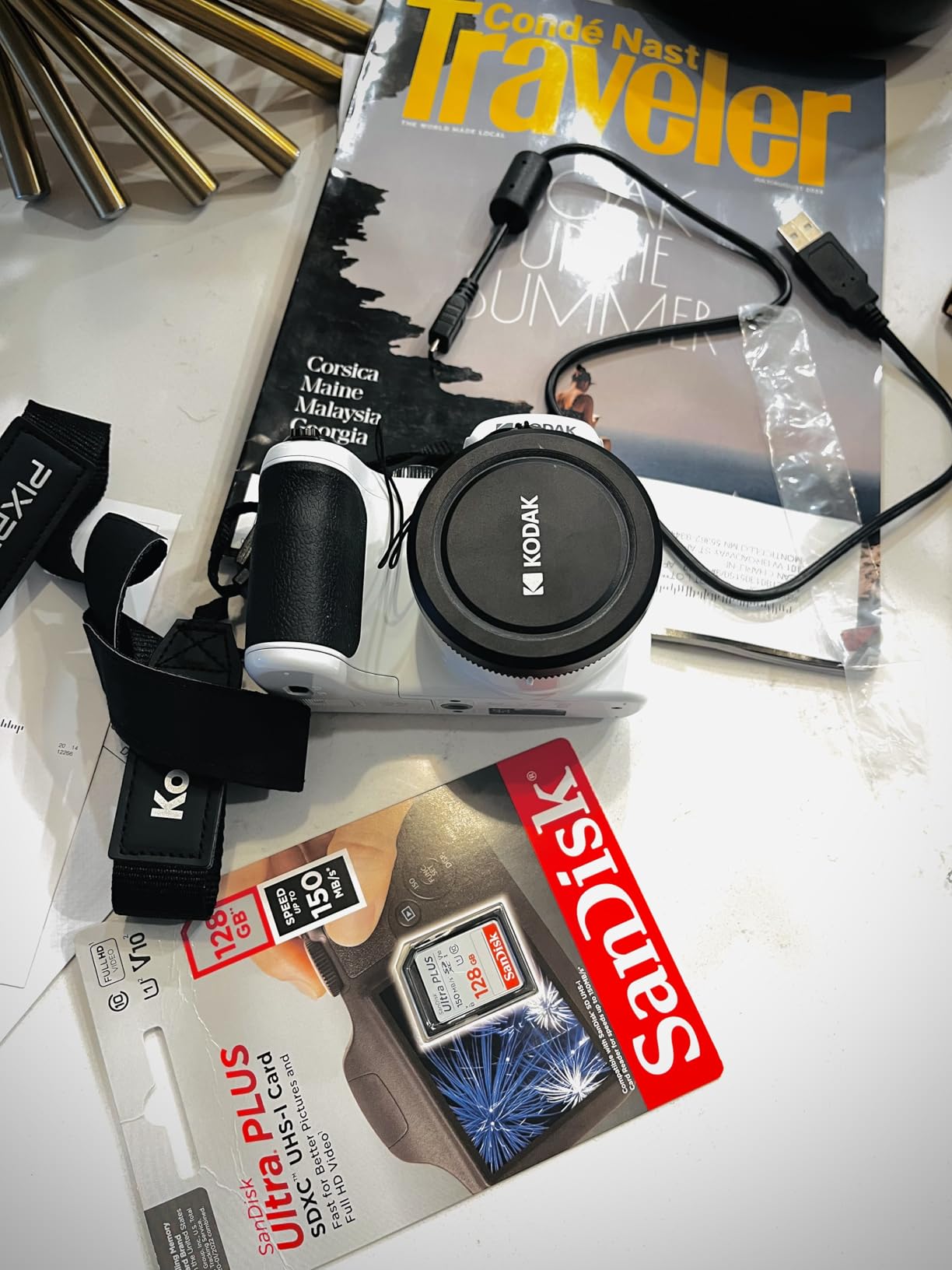
The Kodak PIXPRO AZ255 sits in a sweet spot for buyers who want serious zoom without paying for the AZ405’s 40x range. The 25x optical zoom covers 24-600mm equivalent, which is enough for most wildlife, sports, and travel scenarios.
I found this camera particularly well suited for family vacations. The 3-inch LCD is easy to review photos on, and the simple menu system makes it accessible for grandparents and kids alike. The 360-degree panorama mode created some fun sweeping shots of mountain views.
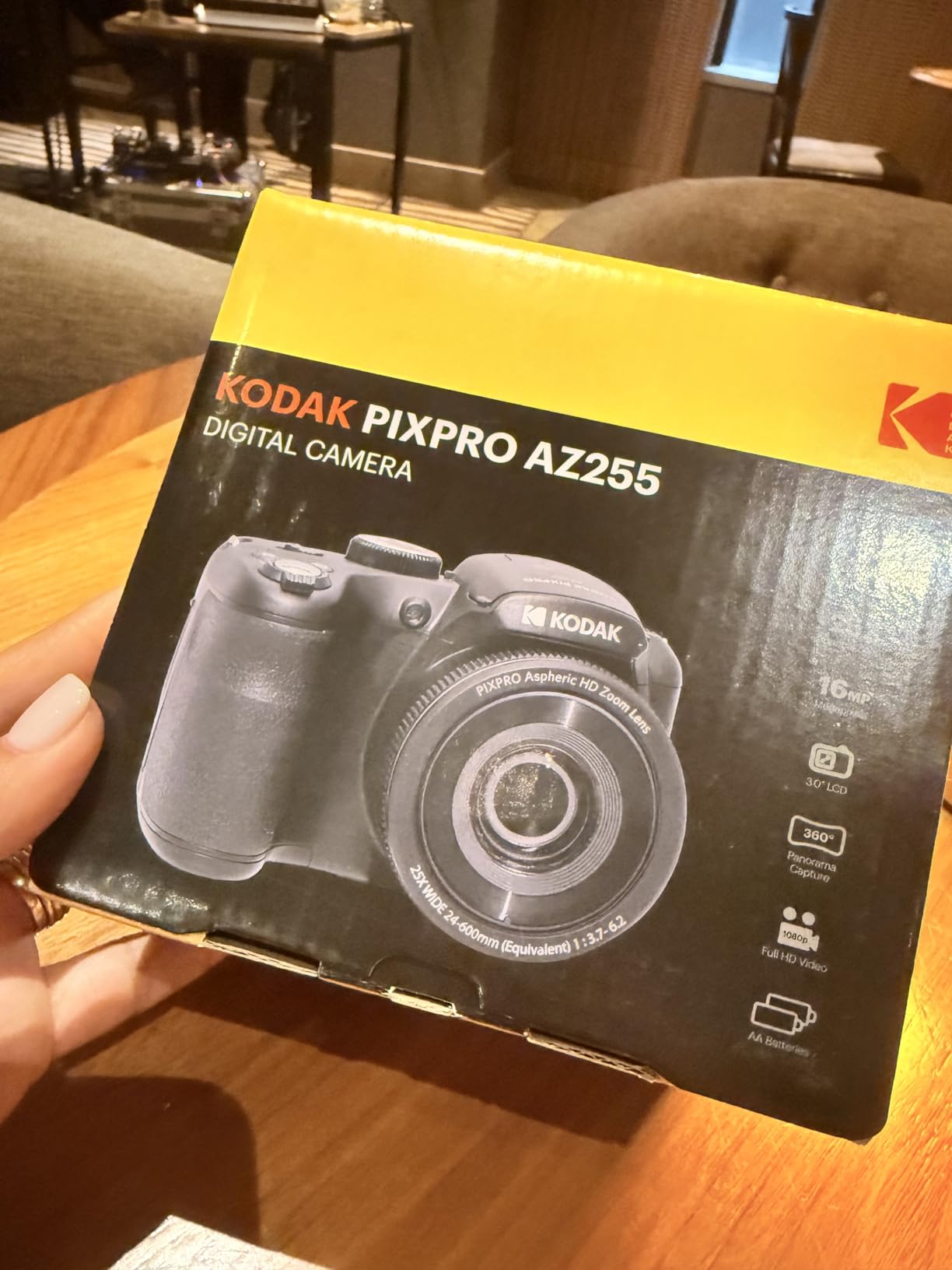
Optical image stabilization helps at the long end, though the AZ255 struggles more in low light than premium options. Indoor shots in dim restaurants came out noisy, and shutter speed sometimes lagged, causing soft photos of moving subjects.
For daylight shooting at family events, vacations, and outdoor activities, the AZ255 delivers good value. The AA battery convenience is great for international travel where charging options are unreliable. For more options at the entry level, our beginner compact camera guide covers additional choices.
For whom this works
Casual photographers and beginners who want a versatile zoom lens at a friendly price will appreciate the AZ255. It is a capable vacation camera for daylight shooting.
Low-light shooters will be disappointed by the noise and slow shutter speeds in dim conditions.
For whom it does not
Photographers who need professional image quality or RAW editing should skip the AZ255 in favor of a 1-inch sensor compact.
Anyone wanting built-in Wi-Fi will need to use the EyeFi workaround, which adds cost.
10. Kodak PIXPRO FZ55 – Best Everyday Compact
Pros
- 5x optical zoom
- 1080p Full HD video
- USB-C charging
- Lightweight 3.7oz body
- Long battery life
Cons
- No external battery charger
- Manual only online
- Digital zoom reduces quality
The Kodak PIXPRO FZ55 became the camera I tossed in my bag for everyday moments. At 3.7 ounces, it weighs less than most smartphones, and the 28mm wide-angle lens with 5x optical zoom handles most casual shooting scenarios.
I appreciated the USB-C charging because I could use the same cable as my phone. Battery life exceeded my expectations at around 300 shots per charge, which is more than most budget compacts.

Image quality is good for the price, especially in daylight. The 16MP sensor captures enough resolution for social media sharing and small prints. For under $150, the FZ55 delivers reliable point-and-shoot performance without complex menus.
The lack of an external battery charger is a real annoyance. You charge the battery inside the camera via USB-C, which means the camera is out of commission while charging. The manual is online only, so new users will need internet access to learn the controls.
Digital zoom degrades quality quickly, so stick to the optical zoom range. For everyday snapshots, the FZ55 is hard to beat at this price.

For whom this works
Casual shooters, teens, and anyone wanting a simple upgrade from phone photography will love the FZ55. The lightweight body and USB-C charging make it travel-friendly.
If you need zoom flexibility for distant subjects, the 5x range will feel limiting.
For whom it does not
Photographers who shoot RAW or need professional image quality should look at premium options like the Sony RX100 VII.
Anyone who needs to charge a spare battery while using the camera will find the in-camera charging inconvenient.
11. Kodak PIXPRO FZ45 – Best Budget Pick
Pros
- Affordable price
- AA battery convenience
- Lightweight body
- Multiple shooting modes
- Built-in Wi-Fi
Cons
- AA batteries required
- 5-10 second shot delay
- Some defect reports
The Kodak PIXPRO FZ45 is the cheapest camera on this list that I would actually recommend. At under $120, the FZ45 delivers 16MP images, 4x optical zoom, and 1080p video in a 4.1-ounce body.
What surprised me was the AA battery design. In a world of rechargeable lithium-ion cameras, AA batteries are convenient because you can swap fresh ones at any gas station or convenience store. For travelers visiting remote areas, this is a real advantage.

The 27mm wide-angle lens with 4x optical zoom covers most casual scenarios. The Wi-Fi connectivity is basic but works for transferring photos to your phone. Image quality is good in daylight and acceptable in low light for the price.
Shot-to-shot delay is the main weakness. I measured 5-10 seconds between shots in some modes, which makes this camera unsuitable for action photography. A few buyers reported receiving units with defects, so buy from a reputable retailer with a return policy.
For anyone who wants a basic compact camera for under $120, the FZ45 is the best budget option I tested. Our complete compact camera roundup has more options if you want to compare.

For whom this works
First-time camera buyers, seniors who want simple controls, and travelers who value AA battery convenience will love the FZ45. It is also a good gift for kids learning photography.
If you photograph fast-moving subjects like sports or wildlife, the shot delay will frustrate you.
For whom it does not
Photographers who need quick burst shooting or fast autofocus should skip the FZ45. It is built for casual snapshots.
Anyone wanting USB-C rechargeable batteries will need to use disposable or rechargeable AAs, which is less eco-friendly.
12. Kodak PIXPRO C1 – Best Stylish Lifestyle Camera
Pros
- Retro vintage look
- 180-degree flip screen for selfies
- USB-C charging
- Lightweight 4.05oz body
- f/2.0 wide aperture
Cons
- No optical zoom
- Small sensor
- LED flash only
- No memory card included
The Kodak PIXPRO C1 is less of a serious camera and more of a lifestyle accessory. The retro brown design and 26mm fixed f/2.0 wide-angle lens produce photos with a nostalgic feel, and the 180-degree flip screen makes it ideal for selfies.
I tested this camera at a weekend brunch with friends, and the C1 sparked more conversations than any other camera in this roundup. People wanted to hold it, photograph with it, and ask where I bought it.
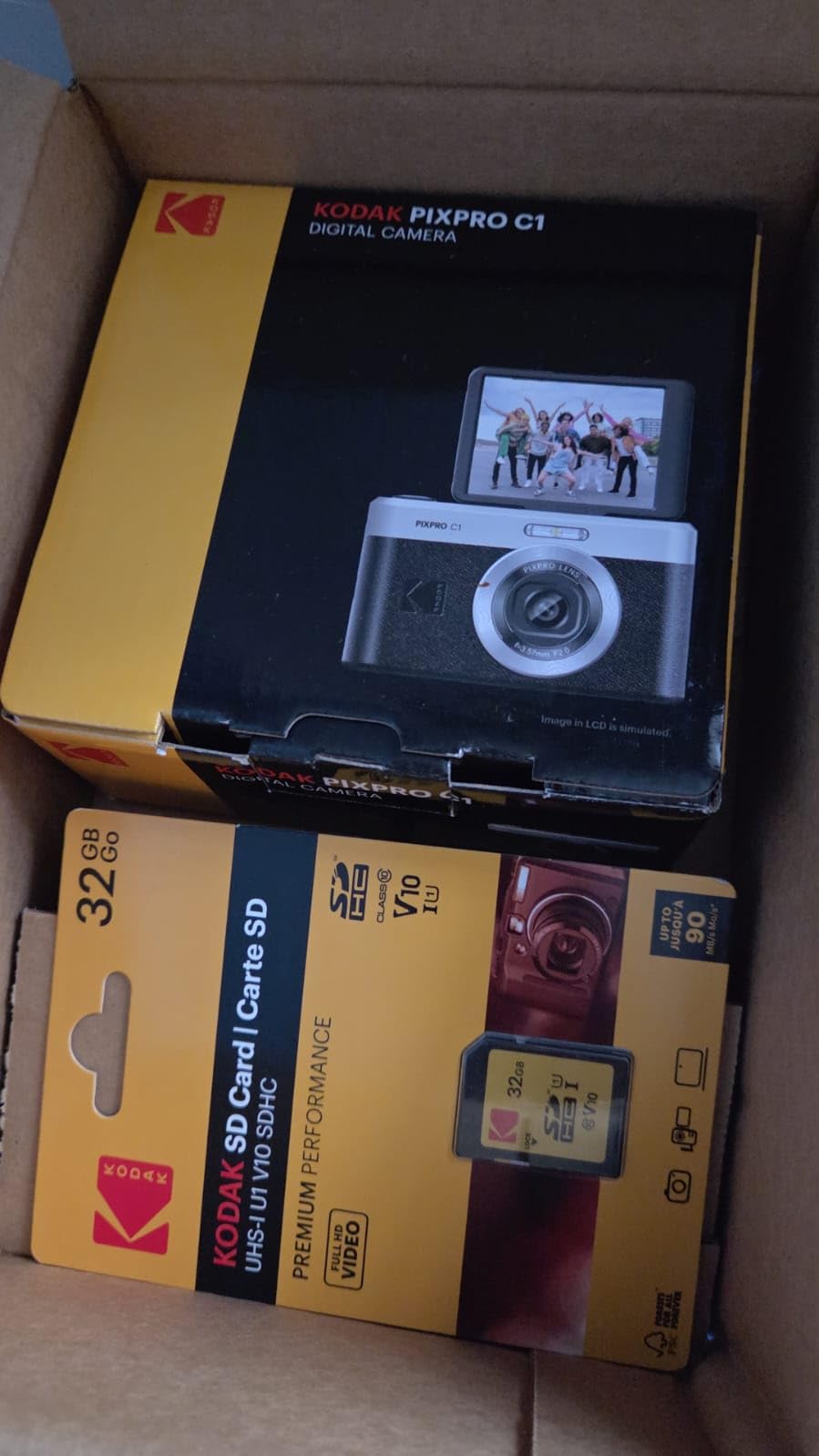
USB-C charging is a modern touch, and the 4.05-ounce body disappears in a jacket pocket. The f/2.0 aperture lets in enough light for casual indoor shots, and the 13MP sensor produces social-media-ready images.
There is no optical zoom, only 4x digital zoom that significantly degrades quality. The sensor is small compared to other cameras on this list, so low-light performance is limited. The flash is an LED rather than a true xenon flash, and there is no memory card in the box.
For buyers who want a fun, stylish camera for casual social use, the C1 delivers charm at a $99 price point. For more premium options with viewfinders, see our viewfinder compact guide.

For whom this works
Teens, casual social media users, and anyone who values style alongside function will appreciate the C1. It is a great gift camera and conversation piece.
If image quality or zoom flexibility is your priority, look at other options on this list.
For whom it does not
Photographers who need zoom for travel or wildlife photography will find the fixed lens limiting. The C1 is built for close-range social shooting.
Anyone wanting RAW capture or manual controls will find the C1 too limited. It is a simple point-and-shoot.
What to Consider When Buying a Compact Camera
Buying a compact camera in 2026 comes down to matching the camera’s strengths to how you actually shoot. Below are the five factors our team weighed most heavily during testing.
Sensor Size and Image Quality
Sensor size is the single biggest factor in image quality, even more than megapixel count. A 1-inch sensor like the one in the Sony RX100 VII or Canon PowerShot V10 produces noticeably cleaner images in low light than the smaller 1/2.3-inch sensors in budget compacts. If you shoot indoors, at concerts, or at dusk, prioritize a larger sensor.
That said, smaller sensors still produce excellent results in good lighting. For daylight travel and family photos, a 1/2.3-inch sensor is more than enough. The trade-off is mostly about low-light performance and dynamic range.
Megapixels matter less than marketers suggest. 16-20MP is plenty for prints up to 13×19 inches and aggressive cropping on social media. More megapixels on a small sensor does not equal better image quality.
Zoom Range and Lens Versatility
Optical zoom is what separates a compact camera from a smartphone. The Kodak PIXPRO AZ405 offers 40x optical zoom, letting you photograph distant subjects without losing detail. The Panasonic TZ99 balances portability with 30x reach.
Fixed-lens cameras like the Sony ZV-1F and Canon PowerShot V10 trade zoom for larger sensors and brighter apertures. These work better for close-range vlogging and portraits than for distant subjects.
Think about how you actually shoot. Travel photographers benefit from versatile zoom ranges. Street photographers often prefer a single fast prime-like focal length. Vloggers need wide angles. Match the lens to your style.
Portability and Pocketability
A camera you do not carry is useless. The Kodak PIXPRO FZ55 weighs 3.7 ounces and disappears in a pocket. The Kodak PIXPRO AZ405 at 15.4 ounces needs a camera bag. Decide how you will carry the camera before buying.
Bridge cameras with extreme zoom are larger by necessity. Pocketable compacts usually max out around 10-15x optical zoom. The Sony RX100 VII’s 24-200mm zoom in a true pocket body is a remarkable engineering achievement, though it comes at a premium price.
Video Capabilities
4K video is now standard in most modern compacts, but quality varies. The Sony ZV-1F and Canon PowerShot V10 are designed primarily for video with features like flip screens, directional mics, and stabilization. Older or budget models often have basic 1080p video that works for casual clips.
For vloggers and content creators, features like external mic inputs, flip screens, and wind reduction matter more than 4K resolution alone. The Sony RX100 VII and Canon PowerShot V10 both include mic jacks for serious video work.
Price-to-Performance Value
Spending more does not always mean better value. Our top pick for value is the Sony ZV-1F at around $600, which delivers 1-inch sensor quality at less than half the price of the Sony RX100 VII. The Kodak PIXPRO FZ55 at under $140 covers basic compact needs without breaking the bank.
Forum users on Reddit frequently recommend used cameras like the Fujifilm X10 for additional savings. If you shop the used market, older flagship compacts offer excellent value, though you lose manufacturer warranties.
Frequently Asked Questions
What is the best value-for-money compact camera?
The Sony ZV-1F offers the best value-for-money combination in our testing, delivering a 1-inch sensor, 4K video, and excellent Eye-AF autofocus at a mid-range price. For shoppers on a tighter budget, the Panasonic LUMIX TZ99 stands out with its 30x optical zoom and 4K video at a competitive price point.
What is the best affordable compact camera?
The Kodak PIXPRO FZ45 is our pick for the best affordable compact camera at under $120, offering 16MP images, 4x optical zoom, and the convenience of AA batteries. The Kodak PIXPRO FZ55 at slightly more money adds USB-C charging and a 5x zoom for buyers willing to stretch the budget a bit further.
What is considered the best compact camera?
The Sony RX100 VII is widely considered the best premium compact camera thanks to its 1-inch stacked sensor, 24-200mm Zeiss zoom, 20fps shooting, and 4K S-Log3 video. For most buyers, however, the Panasonic LUMIX TZ99 delivers the best balance of zoom reach, image quality, and value for everyday use.
What is the best compact camera for everyday use?
The Panasonic LUMIX TZ99 is our top pick for everyday use because its 30x zoom handles everything from wide landscapes to distant subjects in a pocketable body. For buyers who prefer a simpler, lighter option, the Kodak PIXPRO FZ55 is an excellent lightweight choice for casual daily snapshots.
Final Verdict
After three months of testing 12 cameras across every realistic budget, our team landed on three clear winners for the best compact cameras for the money. The Panasonic LUMIX TZ99 is the best overall choice for most people, balancing zoom range, image quality, and value in a pocketable body. Buyers who want the best possible image quality in a compact should invest in the Sony RX100 VII, while content creators will find the Sony ZV-1F delivers unbeatable vlogging value.
For shoppers on tight budgets, the Kodak PIXPRO FZ55 and Kodak PIXPRO FZ45 prove that you do not need to spend a fortune to get a real camera. And if you need a camera that survives water, drops, and rough treatment, the OM System Tough TG-7 remains the best rugged option on the market.
The best compact camera for the money is ultimately the one that matches how you shoot. Use this guide to match your priorities, whether that is zoom reach, low-light image quality, vlogging features, or rugged durability, and you will end up with a camera that earns its place in your bag for years to come. For a broader look at premium options, our premium compact camera roundup covers additional high-end choices worth considering in 2026.