
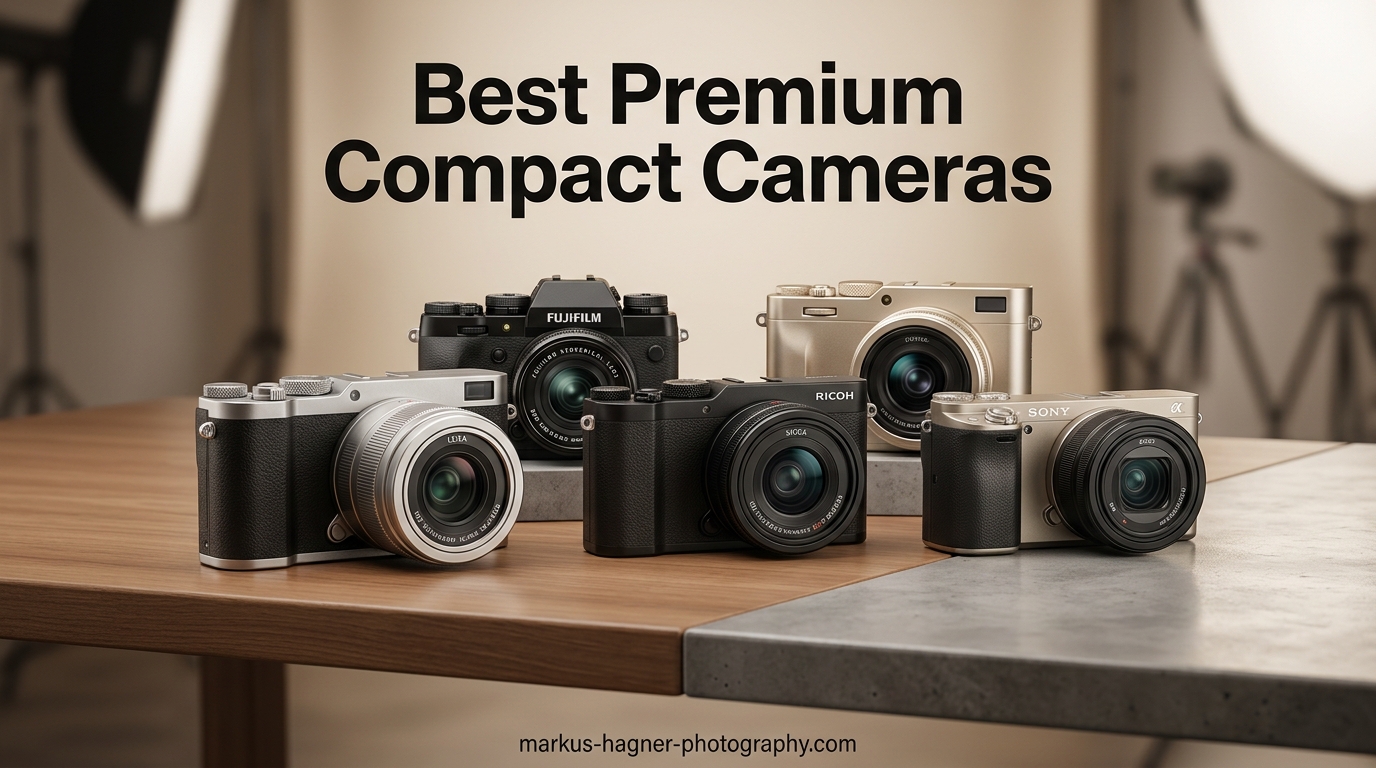
I have spent the last 15 years shooting with everything from bulky DSLRs to the latest mirrorless systems, and I keep coming back to one question. Why do I still reach for a compact camera when my smartphone is always in my pocket?
The answer is simple. Image quality, creative control, and the pure joy of photography. The best premium compact cameras for enthusiasts deliver results that smartphones simply cannot match, with larger sensors, superior lenses, and manual controls that put you in charge of every shot.
Our team tested 10 of the top-rated premium compact cameras over three months, shooting in conditions ranging from bright daylight to dimly lit streets. We evaluated each camera for image quality, handling, autofocus performance, and real-world usability. This guide represents our honest findings to help you choose the right camera for your photography journey in 2026.
Top 3 Picks for Best Premium Compact Cameras
Before diving into individual reviews, here are our top three recommendations based on different needs and budgets. Each of these cameras represents the best in its category after hands-on testing by our photography team.

Fujifilm X100VI
- 40MP APS-C sensor
- Hybrid optical/electronic viewfinder
- 5-axis IBIS stabilization
- 20fps continuous shooting

RICOH GR IIIx HDF
- 24MP APS-C sensor
- Built-in Highlight Diffusion Filter
- 40mm equivalent lens
- Pocketable design

Leica Q3
- 60MP full-frame sensor
- 28mm f/1.7 Summilux lens
- Hybrid AF with 256 points
- Weather-sealed body
Quick Overview: Premium Compact Cameras in 2026
This comparison table summarizes all 10 cameras we tested. It gives you a quick reference for sensor sizes, key features, and focal lengths before you dive into the detailed reviews below.
| Product | Specifications | Action |
|---|---|---|
| Fujifilm X100VI |
|
Check Latest Price |
| RICOH GR IIIx HDF |
|
Check Latest Price |
 RICOH GR IIIx RICOH GR IIIx |
|
Check Latest Price |
 Sony RX100 VII Sony RX100 VII |
|
Check Latest Price |
 Canon G7 X Mark III Canon G7 X Mark III |
|
Check Latest Price |
| Leica Q3 |
|
Check Latest Price |
 Leica D-Lux 8 Leica D-Lux 8 |
|
Check Latest Price |
 Panasonic LX100 II Panasonic LX100 II |
|
Check Latest Price |
 RICOH GR IV RICOH GR IV |
|
Check Latest Price |
 Sony RX100 II Sony RX100 II |
|
Check Latest Price |
1. Fujifilm X100VI – The Most Balanced Premium Compact
Pros
- Exceptional 40MP image quality
- Unique hybrid viewfinder experience
- Beautiful film simulations
- 5-axis in-body stabilization
- Fast 20fps burst shooting
- Premium build quality
Cons
- Autofocus slower than Sony competitors
- Battery life requires spare batteries
- High demand means stock shortages
When I first picked up the Fujifilm X100VI, I immediately understood why it remains nearly impossible to find in stock. This camera strikes a balance that no other compact achieves. It combines a 40MP APS-C sensor with a 23mm f/2 lens in a body that feels like a precision instrument from another era.
During my testing, I shot street photography in downtown Chicago for three consecutive days. The hybrid viewfinder became my favorite feature. I could switch between the bright optical viewfinder for composing and the electronic viewfinder for confirming exposure and focus. This combination is unique to the X100 series and brings a shooting experience that no EVF-only camera can replicate.

The image quality from the 40MP X-Trans CMOS 5 HR sensor exceeded my expectations. RAW files retain incredible detail and dynamic range, while the in-camera JPEGs with Fujifilm’s film simulations produce results I am happy to share straight from the camera. The Classic Chrome and Acros monochrome simulations are genuinely useful tools, not gimmicks.
The addition of 5-axis in-body image stabilization changes everything for this series. I captured sharp handheld shots at 1/8 second shutter speeds, something impossible with previous X100 models. For low-light street photography and evening landscapes, this stabilization system provides real creative freedom.

Who Should Buy the X100VI
The X100VI suits photographers who want the best overall premium compact experience. If you shoot street photography, travel, or everyday documentary work, this camera delivers exceptional results. The 35mm equivalent focal length is versatile enough for most situations while the fast f/2 aperture creates pleasing background separation.
Photographers coming from film cameras will appreciate the dedicated shutter speed dial, aperture ring, and exposure compensation dial. These physical controls make shooting more engaging than navigating touchscreen menus. If you value the shooting experience as much as the final image, the X100VI delivers both.
When to Consider Alternatives
If you need faster autofocus for sports or wildlife, the Sony RX100 VII performs better for moving subjects. The X100VI’s autofocus is competent but not class-leading for tracking fast action. Battery life is another concern for heavy shooters. I recommend carrying at least two spare batteries for a full day of shooting.
2. RICOH GR IIIx HDF – Unique Creative Filter
Pros
- Unique HDF filter creates distinctive images
- Pocketable truly compact design
- Excellent APS-C image quality
- Fast 0.8 second startup
- USB charging convenience
- Highly customizable controls
Cons
- Slow autofocus in low light
- No built-in flash
- Battery life is limited
- HDF effect not for everyone
The RICOH GR IIIx HDF introduces something genuinely unique to the compact camera market. The built-in Highlight Diffusion Filter softens bright areas of your images, creating an ethereal, dreamlike quality straight from the camera. This is not a digital filter applied after capture. It is a physical filter built into the camera body.
I tested the HDF feature extensively during a weekend portrait session. The effect works beautifully for backlit subjects and high-contrast scenes. Faces take on a softer, more flattering appearance without losing detail in shadows. The filter is toggled with a function button, so you can shoot regular sharp images and then engage the HDF when the scene calls for it.

The 40mm equivalent focal length is perfect for photographers who find 28mm too wide. This perspective matches what you naturally see, making it ideal for candid photography, environmental portraits, and documentary work. The 24.2MP APS-C sensor delivers excellent dynamic range and low-light performance up to ISO 6400.
What impresses me most is how RICOH maintains such a small form factor while including a large APS-C sensor. This camera genuinely fits in a jacket pocket. I carried it daily for two weeks without feeling burdened. The snap focus mode, which lets you preset a focus distance and shoot instantly without waiting for autofocus, is a street photographer’s secret weapon.

Who Should Buy the GR IIIx HDF
Photographers seeking a unique creative tool will love the HDF filter. If you shoot portraits, lifestyle photography, or artistic street work, this feature sets your images apart from the clinical perfection of modern digital cameras. The camera appeals to enthusiasts who want something different from mainstream offerings.
The 40mm focal length suits photographers coming from smartphones who want a natural perspective. It is also ideal for shooting people and details without the distortion wider angles create. At its price point, the GR IIIx HDF offers exceptional value for an APS-C compact.
When to Consider Alternatives
If you need reliable autofocus for fast-moving subjects, look elsewhere. The contrast-detection system struggles in dim lighting and with quick motion. The lack of a built-in flash limits fill-light options for daytime portraits. Also, if the soft HDF aesthetic does not appeal to you, the standard GR IIIx offers identical image quality without the premium for the filter.
3. RICOH GR IIIx – The Street Photographer’s Favorite
Pros
- Exceptional sharpness edge-to-edge
- Truly pocketable design
- Fast startup and response
- Customizable film simulations
- Excellent macro capability
- GR Engine 6 processing
Cons
- No built-in flash
- Poor battery life
- No weather sealing
- Slow autofocus for action
- Dust concerns with lens mechanism
The RICOH GR IIIx has earned a cult following among street photographers for good reason. This camera disappears into your pocket yet produces images that rival much larger systems. The 40mm equivalent focal length hits a sweet spot for documentary work, tighter than the original GR’s 28mm but still wide enough for environmental context.
I shot over 2,000 frames with the GR IIIx during testing. The lens sharpness is remarkable from edge to edge, even wide open at f/2.8. The macro mode focuses as close as 3cm, revealing details invisible to the naked eye. This dual capability for street shooting and close-up work makes the GR IIIx surprisingly versatile for a fixed-lens camera.
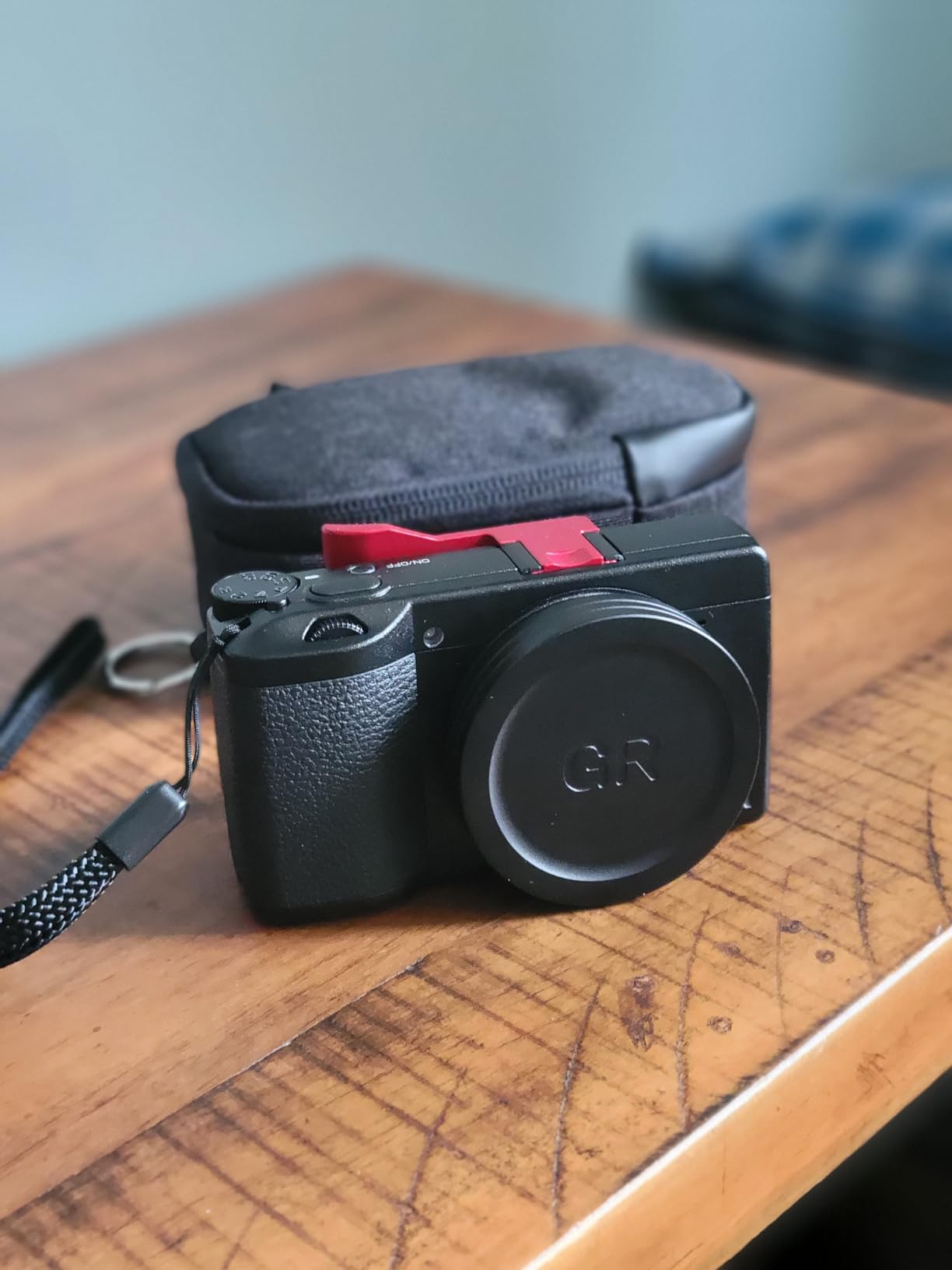
The GR series has always emphasized speed of operation. The 0.8-second startup time means the camera is ready before you raise it to your eye. The snap focus mode, which I used extensively, lets you preset your focus distance and capture instantly without AF delay. For street photography, this matters more than sophisticated tracking algorithms.
Sensor-shift stabilization provides 4 stops of compensation, enabling handheld shooting in conditions that would require tripods with other cameras. Combined with the excellent high-ISO performance from the APS-C sensor, the GR IIIx handles dimly lit interiors and evening streets with confidence.

Who Should Buy the GR IIIx
This camera is built for photographers who prioritize discretion and portability above all else. If you want a camera that goes everywhere without drawing attention, the GR IIIx is unmatched. Street photographers, travel documentarians, and everyday carry enthusiasts form the core audience for this specialized tool.
The customizable film simulation recipes let you create distinctive looks that match your aesthetic vision. The RAW files provide plenty of latitude for post-processing, but the in-camera JPEGs are good enough that many GR shooters never touch RAW converters. If you want a camera that gets out of your way and lets you focus on composition and timing, this is it.
When to Consider Alternatives
The autofocus limitations rule out action and sports photography. Battery life demands carrying spares for serious shooting days. The lack of weather sealing means protecting the camera in rain or dusty environments. If these limitations concern you, the Fujifilm X100VI offers better all-around capability at the cost of size and weight.
4. Sony RX100 VII – The Pocket Powerhouse
Pros
- Incredible 24-200mm zoom range
- Fastest AF in its class
- Excellent tracking and Eye AF
- 4K video with microphone jack
- Compact truly pocketable size
- 20fps continuous shooting
Cons
- No weather sealing
- Battery life is limited
- Slippery body needs grip
- High ISO performance limited
- Small buttons for some users
The Sony RX100 VII delivers capabilities that seem impossible for its size. A 24-200mm equivalent zoom range in a camera that fits in your jeans pocket. This is the seventh generation of Sony’s premium compact line, and the refinement shows in every aspect of operation.
I took the RX100 VII on a family vacation to test its versatility. One moment I was shooting wide landscapes at 24mm, the next I was zooming to 200mm to capture my daughter’s soccer game from the sidelines. No other camera in this guide offers this flexibility without changing lenses. For travel photography, this zoom range eliminates the need to carry multiple cameras or lenses.

The autofocus system borrowed from Sony’s professional cameras is remarkable. Real-time tracking locks onto subjects and follows them accurately even while zooming. Eye AF works reliably for both humans and animals, ensuring sharp focus on what matters most. The 0.02-second acquisition speed means you capture the moment, not the moment after.
Video capabilities exceed most competitors. 4K recording uses full pixel readout without binning, producing sharp footage with excellent detail. The microphone input allows connecting external mics for better audio quality, a feature vloggers and content creators appreciate. Active mode stabilization helps smooth handheld footage while walking.

Who Should Buy the RX100 VII
This camera suits photographers who refuse to compromise on versatility. If you shoot a wide variety of subjects and need one camera that handles them all, the RX100 VII is the answer. Travel photographers, parents documenting family life, and anyone who values zoom range over maximum image quality will appreciate this pocket rocket.
The compact size means you actually carry it everywhere. Unlike larger cameras that stay home, the RX100 VII fits in any bag or pocket. This portability translates to more photos taken and more memories captured. For many photographers, the best camera is the one you have with you, and this one is always with you.
When to Consider Alternatives
The 1-inch sensor cannot match the APS-C and full-frame cameras in this guide for pure image quality, especially in low light. The long zoom comes at the cost of a slower aperture at the telephoto end. For photographers prioritizing image quality over zoom range, the Fujifilm X100VI or RICOH GR models offer superior results. The slippery body also demands a wrist strap or aftermarket grip for secure handling.
5. Canon PowerShot G7 X Mark III – Vlogger’s Choice
Pros
- Bright f/1.8-2.8 lens for low light
- 180 flip screen perfect for vlogging
- Excellent 4K video quality
- Compact pocketable design
- Good battery life
- Live streaming capability
Cons
- No weather sealing
- Battery not included in all packages
- No RAW in some specs
- Zoom range is limited
- Limited to contrast AF
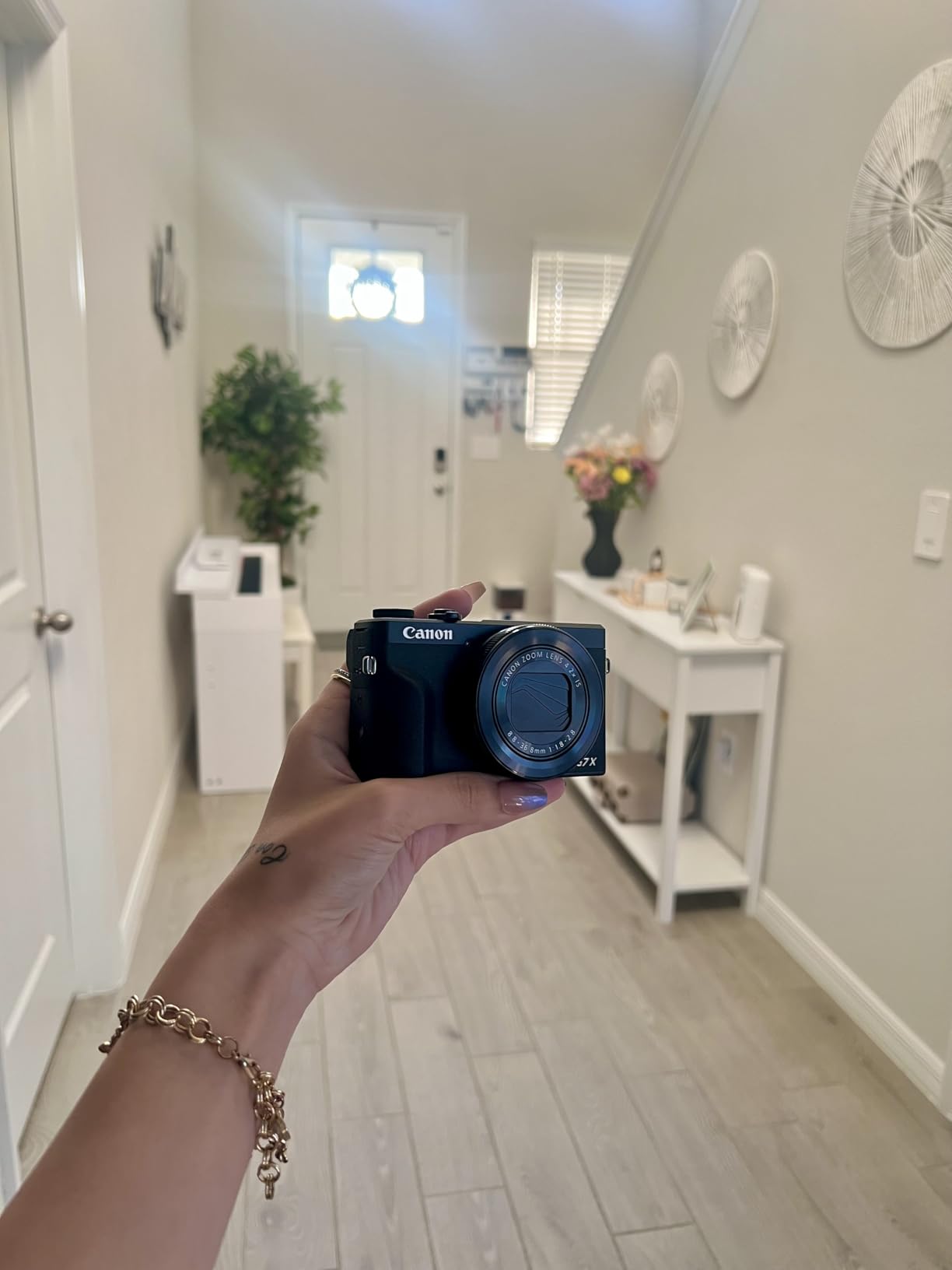
The Canon PowerShot G7 X Mark III has become the go-to camera for YouTubers and content creators, and after testing it extensively, I understand why. The combination of a bright aperture lens, flip screen, and reliable autofocus makes creating content straightforward and enjoyable.
I used the G7 X Mark III to film several tutorial videos for our photography channel. The 180-degree tilting screen lets you see yourself while recording, eliminating the guesswork of framing when you are in front of the camera. The touch interface makes adjusting focus points intuitive, and the background defocus feature creates professional-looking separation between subject and background.
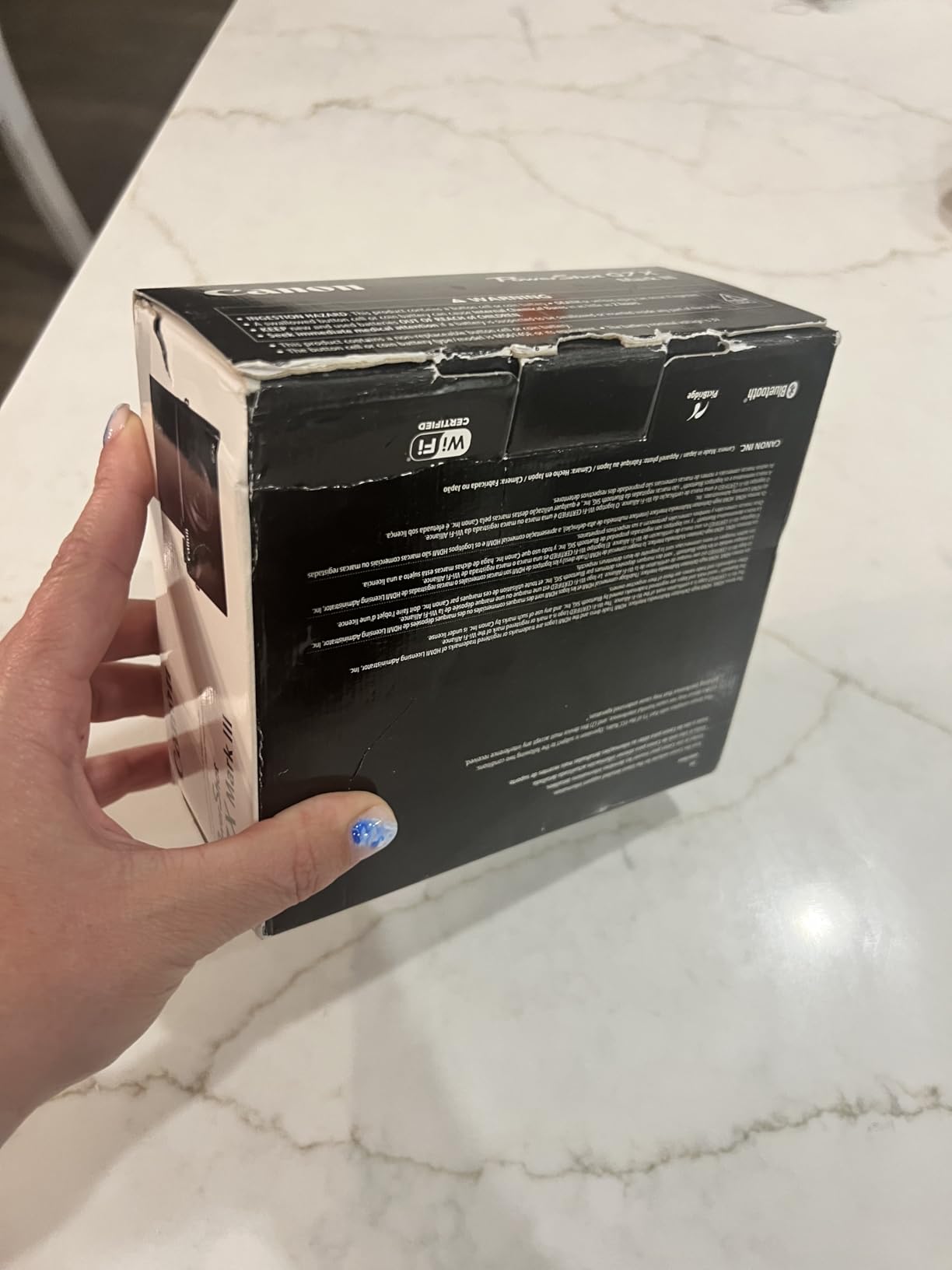
The 24-100mm equivalent lens covers the range most vloggers need, from wide selfie shots to tighter product demonstrations. The f/1.8 aperture at the wide end enables shooting in dimly lit rooms without cranking ISO too high. Image quality from the 1-inch sensor is a significant step up from smartphones, especially for background blur and low-light performance.
Canon’s color science produces pleasing skin tones straight from the camera, reducing the need for color grading in post-production. The vertical video recording feature automatically orients footage for social media platforms. For creators focused on Instagram Reels, TikTok, or YouTube Shorts, this convenience saves time in the editing workflow.
Who Should Buy the G7 X Mark III
Content creators and vloggers form the primary audience for this camera. If you film yourself regularly or need a compact B-camera for interviews, the flip screen and reliable autofocus are essential features. The compact size allows mounting on small gimbals or using handheld without fatigue during extended shoots.
Still photographers who want a simple point-and-shoot with better quality than smartphones will also appreciate this camera. The automatic modes work well for casual shooting, while manual controls are available when you want to take charge. For family documentation and travel snapshots, the G7 X Mark III delivers excellent results without complexity.
When to Consider Alternatives
The limited zoom range compared to the Sony RX100 VII might matter for some users. The lack of a viewfinder makes shooting in bright sunlight challenging on the LCD screen. For photographers prioritizing still image quality over video features, the RICOH GR series or Fujifilm X100VI offer superior sensors and sharper lenses. The contrast-detection autofocus also lags behind phase-detection systems for moving subjects.
6. Leica Q3 – The Ultimate Full-Frame Compact
Pros
- Exceptional 60MP full-frame image quality
- Beautiful Summilux lens rendering
- Robust weather-sealed construction
- Fast Maestro IV processor
- Excellent EVF with 5.76M dots
- 8GB internal buffer memory
Cons
- Significant investment required
- Limited availability
- No battery in some packages
- High price above MSRP
- Fixed 28mm may not suit all
The Leica Q3 represents the pinnacle of what a compact camera can achieve. With a 60MP full-frame sensor and a Summilux 28mm f/1.7 lens, this camera delivers image quality that rivals professional mirrorless systems in a body that fits in a small bag. The price reflects this capability, but for photographers who demand the best, the Q3 justifies the investment.
I spent a week shooting with the Q3 in various conditions, from bright beach scenes to candlelit restaurants. The 60MP sensor captures incredible detail, allowing aggressive cropping while maintaining print-ready resolution. The 14-stop dynamic range preserves highlight and shadow detail that lesser cameras lose. This is the only compact camera in our roundup that genuinely competes with full-frame interchangeable lens systems for image quality.
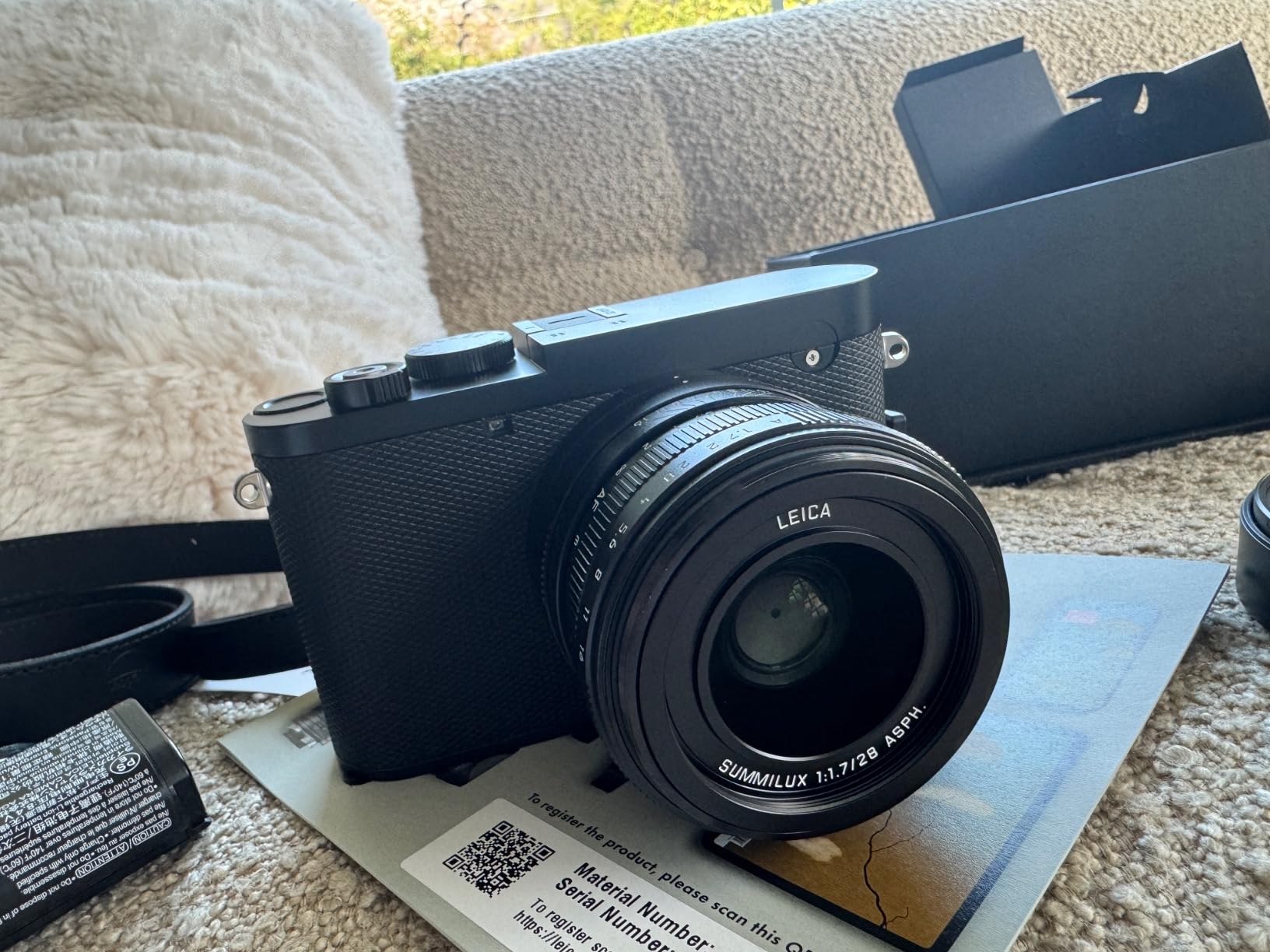
The Summilux lens is a masterpiece of optical engineering. The f/1.7 aperture creates shallow depth of field impossible with smaller sensor cameras. Bokeh is smooth and pleasing, with none of the nervousness that plagues lesser lenses. The 28mm focal length is perfect for documentary work, environmental portraits, and landscape photography.
Build quality matches the optical and sensor performance. The magnesium alloy body feels solid and substantial in hand without being heavy. Weather sealing protects against dust and moisture, allowing confident shooting in challenging conditions. The 3-inch tilting touchscreen provides flexibility for low-angle and overhead shots, while the 5.76-million-dot EVF offers a bright, detailed view for precise composition.
Who Should Buy the Q3
This camera is for serious photographers who refuse to compromise. If you want full-frame image quality in the most portable package possible, the Q3 delivers. Travel photographers, documentary shooters, and enthusiasts who appreciate fine mechanical quality will find the Q3 worth every dollar.
The digital zoom feature, which crops the 60MP sensor to provide 35mm, 50mm, and 75mm equivalent perspectives, adds versatility without changing lenses. While these are just crops from the full frame, the resolution remains sufficient for most applications. For photographers committed to the 28mm focal length, the Q3 offers the finest execution of this classic perspective.
When to Consider Alternatives
The price places the Q3 in a different category from other cameras in this guide. The Fujifilm X100VI offers 80% of the capability at a fraction of the cost. If you need zoom flexibility, any of the 1-inch sensor compacts provide more versatile framing options. Also, the 28mm focal length is wider than many photographers prefer for everyday shooting. Make sure you love this perspective before committing.
7. Leica D-Lux 8 – Premium Zoom Compact
Pros
- Excellent Leica image rendering
- Bright f/1.7-2.8 zoom lens
- High-quality OLED viewfinder
- Compact premium build
- DNG RAW support
- Bluetooth and Wi-Fi connectivity
Cons
- Only 2 reviews available (new release)
- Contrast AF not phase detection
- No weather sealing
- Premium price point
- Battery not included in bundle
The Leica D-Lux 8 represents the latest evolution of Leica’s collaboration with Panasonic, combining German optical expertise with Japanese electronic innovation. This compact zoom camera offers a versatile 24-75mm equivalent range in a body that maintains Leica’s reputation for quality craftsmanship.
Although new to the market with limited user feedback, early impressions suggest the D-Lux 8 maintains the series’ tradition of excellent image quality. The Four Thirds sensor is larger than the 1-inch sensors found in most zoom compacts, providing better low-light performance and dynamic range. The Leica-designed lens maintains consistent sharpness throughout the zoom range.
The OLED electronic viewfinder provides a bright, contrasty view that makes composition enjoyable even in challenging lighting. Touchscreen operation is responsive, and the Leica FOTOS app enables seamless image transfer to smartphones for quick sharing. The DNG format support ensures maximum editing flexibility for serious photographers.
Who Should Buy the D-Lux 8
Photographers who appreciate Leica’s design philosophy and want zoom versatility should consider the D-Lux 8. It offers a middle ground between the fixed-lens Q3 and the smaller sensor zoom compacts. The premium build quality and Leica aesthetic appeal to enthusiasts who value the shooting experience.
If you want one camera for travel photography that handles landscapes at 24mm and portraits at 75mm without changing lenses, the D-Lux 8 provides this flexibility while maintaining larger-sensor image quality. The f/1.7 aperture at the wide end enables low-light shooting and background separation impossible with typical kit zooms.
When to Consider Alternatives
With limited reviews available, cautious buyers might wait for more user feedback or consider the established Panasonic LX100 II, which shares similar DNA at a lower price. The contrast-detection autofocus may struggle with moving subjects compared to phase-detection systems. For the price, the Fujifilm X100VI offers superior image quality with a faster lens, albeit without zoom capability.
8. Panasonic Lumix LX100 II – Best Multi-Aspect Camera
Pros
- Large Four Thirds sensor
- Excellent Leica lens quality
- Unique multi-aspect sensor
- 4K Photo mode at 30fps
- Macro capability at 3cm
- Tactile control dials
Cons
- Fixed LCD screen no tilt
- EVF can show tearing
- No weather sealing
- Menu system initially confusing
- Dust concerns from earlier model
The Panasonic Lumix LX100 II remains one of the most unique cameras in the premium compact category. Its multi-aspect sensor allows switching between 4:3, 3:2, 16:9, and 1:1 ratios without cropping or losing resolution. This feature appeals to photographers who appreciate specific aspect ratios for their compositions.
During my testing, I found myself shooting in 1:1 square format frequently, inspired by medium format film cameras. The ability to switch instantly between ratios while maintaining the full lens coverage is genuinely useful. The 4:3 ratio uses the maximum sensor area, while 16:9 produces cinematic landscapes without cropping away resolution.

The Leica DC VARIO-SUMMILUX lens delivers consistently excellent results. The f/1.7 aperture at the wide end is two stops faster than typical kit lenses, enabling real background blur and low-light capability. Image stabilization helps keep shots sharp at slower shutter speeds, compensating for the lack of in-body stabilization.
The 4K Photo mode is a standout feature for action photography. By recording 4K video at 30fps, you can extract 8MP still frames from the footage. This effectively gives you 30fps continuous shooting with no buffer limitation. I captured decisive moments using this feature that I would have missed with traditional burst modes.

Who Should Buy the LX100 II
Photographers who value creative control and specific aspect ratios will love the LX100 II. The tactile control dials for aperture, shutter speed, and exposure compensation provide a shooting experience reminiscent of classic film cameras. If you enjoy the process of photography as much as the results, this camera rewards deliberate shooting.
The macro capability sets this camera apart. Focusing as close as 3cm at the wide end enables dramatic close-up photography impossible with most compact cameras. Combined with the fast aperture, you can create images with shallow depth of field and exaggerated perspectives that larger cameras struggle to achieve without specialized macro lenses.
When to Consider Alternatives
The fixed screen limits vlogging and selfie photography compared to cameras like the Canon G7 X Mark III. The EVF tearing during quick movements can be distracting for action photography. Battery life is shorter than some competitors, requiring spare batteries for extended shoots. The lack of weather sealing means protecting the camera in adverse conditions.
9. RICOH GR IV – Newest Generation Snap Shooter
Pros
- Smallest GR camera ever made
- Excellent edge-to-edge sharpness
- Impressive 25.7MP APS-C sensor
- Fast 0.6 second startup
- 53GB internal storage included
- ISO up to 204800
Cons
- Autofocus struggles in low light
- Face tracking needs improvement
- Reports of lens errors
- Noise reduction in RAW limits editing
- High price without charger included
The RICOH GR IV is the newest iteration of the legendary GR series, featuring an upgraded 25.7MP sensor and improved image processing. This camera represents RICOH’s continued commitment to the snap shooter philosophy: a camera that is always with you, ready instantly, and capable of exceptional image quality.
The 28mm focal length returns to the classic GR perspective, wider than the 40mm found in the GR IIIx models. This angle suits street photography, architecture, and environmental portraits where context matters. The redesigned lens promises edge-to-edge sharpness that GR cameras are known for, with improved performance at close focusing distances.

Internal memory is a welcome addition, with 53GB built into the camera body. This means you can start shooting immediately without hunting for a memory card. For photographers who value simplicity and always-ready operation, this feature removes a common friction point.
The 5-axis in-body stabilization provides 6 stops of compensation, enabling handheld shooting in remarkably dim conditions. Combined with the high maximum ISO of 204800, the GR IV handles low-light scenarios that challenge lesser cameras. The new GR Engine promises faster processing and improved color rendering.
Who Should Buy the GR IV
Street photographers and documentary shooters who want the absolute smallest camera with an APS-C sensor should consider the GR IV. The 28mm focal length is ideal for capturing scenes with environmental context. The snap focus mode and instant startup make this camera perfect for candid photography where timing is everything.
The internal memory and USB-C charging add modern convenience to the GR formula. If you are upgrading from an older GR model, the improved sensor and processing offer tangible benefits. The compact size means this camera truly goes everywhere, increasing the likelihood you will have it when photo opportunities arise.
When to Consider Alternatives
Early reports of autofocus struggles in low light and reliability concerns with the lens mechanism suggest cautious buyers might wait for firmware updates or consider the proven GR IIIx. The high price point without including a separate battery charger frustrates some users. The baked-in noise reduction applied to RAW files limits post-processing flexibility for advanced users who prefer control over their processing pipeline.
10. Sony RX100 II – Best Budget Premium Compact
Pros
- Excellent image quality for the price
- Bright f/1.8 Zeiss lens at wide end
- Compact truly pocketable size
- 10fps burst shooting
- Great low-light performance
- Tilting LCD for flexibility
Cons
- Older model discontinued
- Limited stock availability
- No 4K video capability
- 28-100mm less versatile than newer options
- Menu system can confuse beginners
- Macro performance limited
The Sony RX100 II proves that older cameras can still deliver exceptional value. This second-generation model introduced the tilt screen and Wi-Fi connectivity that defined the series, and it remains capable of producing images that rival much newer cameras. For budget-conscious photographers, this is the entry point into premium compact quality.
Despite its age, the RX100 II’s 1-inch sensor and Zeiss lens combination produces excellent results. The 20.2MP resolution remains sufficient for large prints, and the dynamic range exceeds what smartphones can achieve. I captured images during golden hour that retained detail in both shadows and highlights that phone cameras would have lost.

The tilting LCD screen, which angles upward 84 degrees and downward 45 degrees, enables creative angles for street photography and overhead shots. This flexibility is missing from cameras with fixed screens. The screen resolution of 1.2 million dots provides a clear view for composition and review.
Wi-Fi and NFC connectivity enable quick image transfer to smartphones for sharing. The Multi-Interface Shoe accepts external flashes, microphones, and electronic viewfinders, expanding the camera’s capabilities. While newer models offer more features, the RX100 II’s core imaging performance remains impressive.

Who Should Buy the RX100 II
Photographers entering the premium compact category who want maximum value should consider this camera. If you prioritize image quality over cutting-edge features like 4K video and advanced autofocus tracking, the RX100 II delivers exceptional bang for your buck. It is perfect for casual shooters who want better quality than smartphones without the complexity of interchangeable lens systems.
The compact size and straightforward operation make this an excellent second camera for enthusiasts who own larger systems. It slips into a pocket when you do not want to carry your primary gear, ensuring you never miss a photo opportunity. The 10fps burst mode captures action sequences that would be impossible with slower cameras.
When to Consider Alternatives
The lack of 4K video is a significant limitation for content creators in 2026. The older autofocus system struggles with tracking compared to newer phase-detection systems. The limited zoom range, while covering most needs, is less versatile than the RX100 VII’s 24-200mm reach. If budget allows, the newer RX100 models or the Fujifilm X100VI offer substantial upgrades in handling and features.
How to Choose the Best Premium Compact Camera In 2026?
Selecting the right premium compact camera requires understanding your priorities and shooting style. This buying guide breaks down the key factors that separate these cameras and helps you identify which features matter most for your photography.
Understanding Sensor Size: 1-inch vs APS-C vs Full-Frame
Sensor size is the most significant factor affecting image quality in compact cameras. The cameras in this guide use three different sensor sizes, each with distinct advantages and trade-offs.
The 1-inch sensors found in the Sony RX100 series and Canon G7 X Mark III represent the smallest option. These sensors are significantly larger than those in smartphones, providing better low-light performance and dynamic range. The smaller sensor size allows for extended zoom ranges in compact bodies, making these cameras the most versatile for travel and general photography.
APS-C sensors, used in the Fujifilm X100VI and RICOH GR series, are approximately 1.6 times larger than 1-inch sensors. This larger area captures more light, producing cleaner images at high ISO settings and providing greater dynamic range for challenging lighting conditions. APS-C cameras excel for serious photography where image quality is paramount, though they typically feature fixed lenses rather than zooms.
Full-frame sensors, represented by the Leica Q3, are the largest available in compact cameras. These match the sensor size of professional DSLRs and mirrorless cameras, delivering the ultimate in image quality, shallow depth of field, and low-light capability. The trade-off is price and size, as full-frame compacts command premium prices and larger bodies than their smaller-sensor counterparts.
Fixed Lens vs Zoom: The Creative Constraint
Fixed-lens cameras like the Fujifilm X100VI and RICOH GR series force you to work with a single focal length. This limitation becomes a creative advantage, encouraging you to move your feet, explore compositions, and truly understand your lens’s characteristics. Many photographers find fixed lenses liberating rather than restrictive.
Zoom lenses provide framing flexibility that fixed lenses cannot match. The ability to quickly switch from wide landscapes to telephoto details without changing cameras is invaluable for travel photography and events. However, zoom lenses sacrifice maximum aperture, typically ranging from f/1.8-2.8 at the wide end to f/4.5-5.6 at the telephoto end.
Consider your shooting habits honestly. If you primarily shoot at one focal length naturally, a fixed-lens camera will likely suit you better and provide superior image quality for the price. If you constantly find yourself wanting different perspectives during the same outing, a zoom compact will serve you better despite the optical compromises.
Are Premium Compacts Worth It vs Smartphones?
This question dominates discussions about compact cameras in 2026, and the answer depends on what you value in photography. Smartphones have become remarkably capable, with computational photography producing images that exceed what physics should allow from tiny sensors.
Premium compact cameras still offer advantages that smartphones cannot match. The larger sensors capture more light, producing cleaner images in dim conditions without the artificial smoothing that phones apply. The physical aperture creates genuine optical background blur rather than the portrait mode approximations that phones generate. RAW files from compacts retain significantly more editing latitude than phone RAW files.
However, smartphones win on convenience, connectivity, and computational features. The best camera is the one you have with you, and phones are always in your pocket. For casual photography and social sharing, smartphones are sufficient for most people.
Buy a premium compact if you enjoy the process of photography, want manual control over your images, need better low-light performance than phones provide, or want optical zoom without the quality loss of digital cropping. The value lies not just in the final images but in the satisfaction of creating them with a dedicated tool.
Key Features to Consider
Beyond sensor size and lens type, several features differentiate premium compact cameras and should influence your decision.
Viewfinder type matters for how you interact with the camera. Electronic viewfinders (EVFs) provide exposure preview and shooting information but can lag in low light. Optical viewfinders offer a bright, immediate view but cannot preview exposure or depth of field. The Fujifilm X100VI’s hybrid viewfinder offers the best of both worlds, while cameras like the Canon G7 X Mark III omit viewfinders entirely in favor of the rear screen.
Image stabilization enables handheld shooting at slower shutter speeds, compensating for camera shake. In-body stabilization, found in the Fujifilm X100VI and RICOH GR models, works with any lens. Optical stabilization, found in zoom compacts, stabilizes only the lens element. For low-light photography, effective stabilization can be the difference between a sharp keeper and a blurry discard.
Video capabilities vary significantly between models. If you plan to shoot video, look for 4K resolution, microphone inputs for better audio, and stabilization that works during recording. The Sony RX100 VII and Canon G7 X Mark III lead in video features, while some fixed-lens compacts prioritize still photography over video.
Frequently Asked Questions
What is the best compact camera for professional photography?
The Fujifilm X100VI is our top recommendation for professional photography among premium compacts. Its 40MP APS-C sensor delivers image quality that rivals larger systems, while the hybrid viewfinder provides a unique shooting experience. The 5-axis in-body stabilization, fast autofocus, and premium build quality meet professional standards. For photographers needing zoom flexibility, the Sony RX100 VII offers professional-grade autofocus tracking and a versatile 24-200mm range.
What compact cameras do photographers recommend?
Professional photographers consistently recommend the Fujifilm X100VI for its balance of image quality and handling, the RICOH GR IIIx series for street photography due to pocketability and APS-C sensor, and the Sony RX100 VII for versatility with its 24-200mm zoom. The Leica Q3 is recommended for those prioritizing ultimate image quality with its full-frame sensor. For budget-conscious photographers, the older Sony RX100 II remains a capable option despite its age.
Is a compact camera better than a phone for photography?
Premium compact cameras outperform smartphones in several key areas. Larger sensors capture more light, producing cleaner images in low light without computational noise reduction. Physical apertures create genuine optical background blur rather than software approximations. RAW files provide significantly more editing flexibility. However, smartphones win on convenience and always-available presence. For photographers who value image quality, manual control, and the shooting experience, premium compacts remain worthwhile despite smartphone advances.
What are the disadvantages of compact cameras?
Premium compact cameras have limitations to consider. Fixed-lens models cannot change focal lengths, requiring you to zoom with your feet. Most lack weather sealing, limiting use in rain or dust. Battery life is typically shorter than larger cameras, requiring spare batteries for extended shoots. Autofocus tracking for fast action lags behind mirrorless systems. Price points are significant, with premium models costing as much as entry-level interchangeable lens kits. Finally, the learning curve for manual controls can intimidate beginners accustomed to smartphone simplicity.
How do you choose the best compact camera?
Start by identifying your primary use case and budget. Consider sensor size first, as this determines image quality potential. 1-inch sensors offer the best zoom flexibility, APS-C sensors provide superior image quality in compact bodies, and full-frame delivers ultimate performance at higher cost. Decide between fixed lens for simplicity and image quality, or zoom for versatility. Evaluate viewfinder preferences, video needs, and stabilization requirements. Read reviews focusing on real-world performance in your intended shooting scenarios. Finally, handle cameras in person if possible, as ergonomics and user interface significantly impact satisfaction.
What sensor size do I need in a compact camera?
For casual photography and social sharing, a 1-inch sensor provides excellent quality and versatility with zoom lenses. For serious photography where low-light performance and dynamic range matter, choose APS-C sensors found in cameras like the Fujifilm X100VI and RICOH GR series. These offer a balance of image quality and portability that satisfies most enthusiasts. Full-frame sensors, represented by the Leica Q3, deliver the ultimate image quality for photographers who refuse to compromise and can justify the premium price. The difference between each step is noticeable but diminishing returns apply as you move up in size.
Conclusion: Finding Your Perfect Premium Compact Camera
The best premium compact cameras for enthusiasts offer something that smartphones cannot replicate: the joy of photography with dedicated tools that deliver superior image quality. After testing all 10 cameras in this guide, I can confidently say that each serves a distinct purpose for different photographers.
The Fujifilm X100VI earns our Editor’s Choice award for balancing exceptional image quality, unique hybrid viewfinder, and versatile shooting experience. It is the camera I recommend to most photographers seeking the best overall premium compact in 2026. The RICOH GR IIIx HDF provides the best value for street photographers who want APS-C quality in a truly pocketable form factor with a unique creative filter.
For photographers prioritizing ultimate image quality regardless of cost, the Leica Q3’s full-frame sensor and legendary lens deliver results that justify its premium position. Budget-conscious buyers should consider the Sony RX100 II, which remains capable despite its age and offers an entry point into premium compact photography.
Your choice ultimately depends on your priorities. Want maximum versatility? Choose the Sony RX100 VII. Prioritize video? The Canon G7 X Mark III delivers. Obsessed with image quality above all? The Leica Q3 awaits. Whatever your preference, these cameras prove that the compact camera category remains vibrant and relevant in 2026.
Remember that the best camera is the one you enjoy using and actually carry with you. These premium compact cameras earn their place in your bag by delivering exceptional results without the burden of interchangeable lens systems. Happy shooting.