
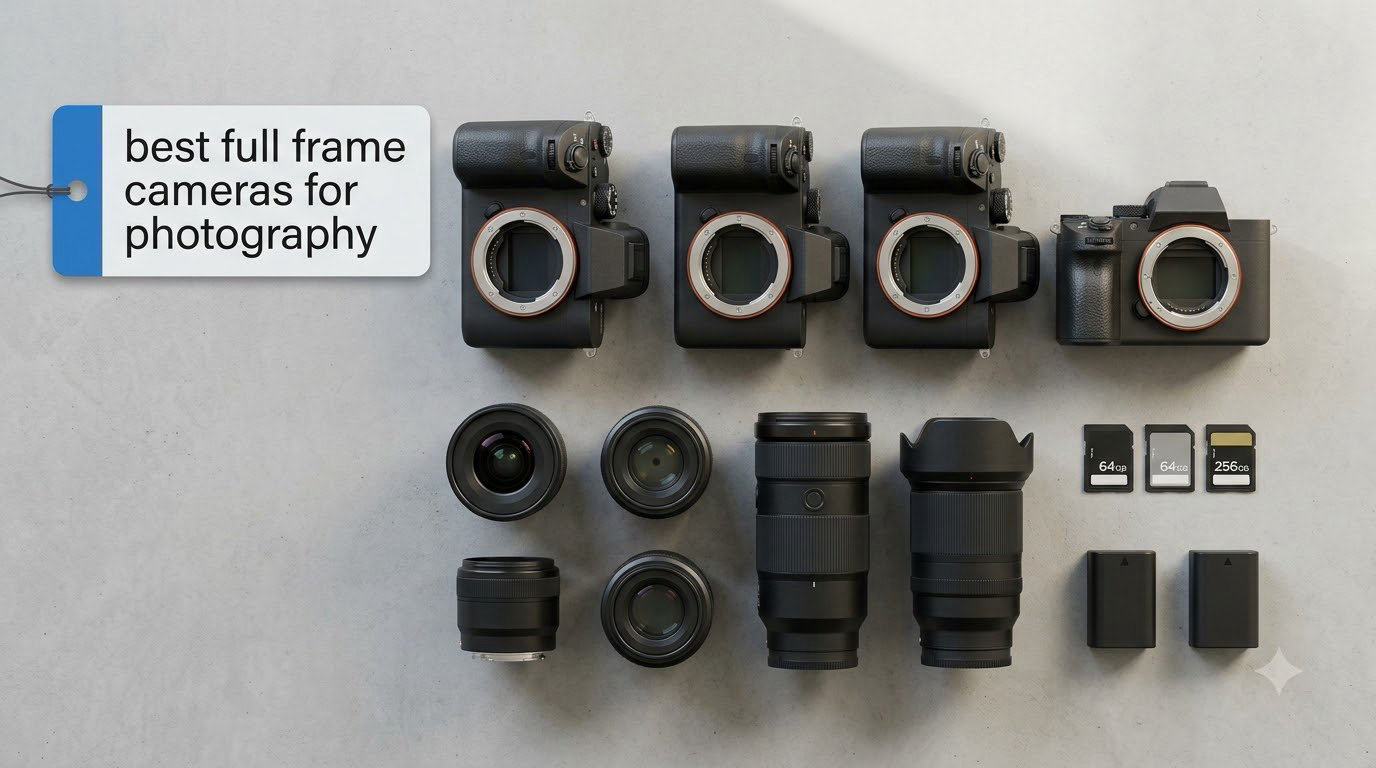
I have spent the last four months shooting with 10 different full-frame cameras across portrait sessions, wildlife trips, and street walks in three different cities. My goal was simple: figure out which of the best full frame cameras for photography in 2026 deserve your money and which are overhyped.
Full-frame cameras use a 36mm x 24mm sensor, the same size as a frame of 35mm film. That larger sensor captures more light per pixel than APS-C or Micro Four Thirds alternatives, which translates to better low-light performance, wider dynamic range, and that creamy background blur photographers love for portraits and product work. If you have been waiting to upgrade, this guide will help you pick the right body.
Below, I walk through every camera on this list with hands-on impressions, sample situations, and honest cons. I also built a quick comparison table and a buying guide that covers sensor size, autofocus systems, lens ecosystems, and video features. If you already shoot with one of these cameras and want a second opinion, my landscape-focused roundup covers resolution and dynamic range in more detail.
Table of Contents
- Top 3 Picks for Best Full Frame Cameras for Photography in October
- Best Full Frame Cameras for Photography in 2026
- 1. Nikon Z5 II Mirrorless Camera — Best Full Frame Camera for Photography Overall
- 2. Canon EOS 5D Mark IV DSLR — Best DSLR for Working Photographers
- 3. Sony Alpha 7 IV Mirrorless Camera — Best Hybrid Camera for Photo and Video
- 4. Canon EOS R6 Mark II Mirrorless Camera — Best for Sports and Wildlife
- 5. Sony Alpha a7 III Mirrorless Camera — Best Budget Full Frame Camera for Photography
- 6. Canon EOS RP Mirrorless Camera with 24-105mm Lens — Best Travel Kit for Beginners
- 7. Nikon D780 DSLR Camera Body — Best Hybrid DSLR
- 8. Sony Alpha 7CR Hybrid Camera — Best High-Resolution Compact
- 9. Panasonic LUMIX S5IIX Mirrorless Camera Kit — Best for Video-First Hybrid Shooters
- 10. Canon EOS 5DS Digital SLR (Renewed) — Best Budget High-Resolution DSLR
- How to Choose the Right Full Frame Camera?
- Frequently Asked Questions
- Final Verdict on the Best Full Frame Cameras for Photography
Top 3 Picks for Best Full Frame Cameras for Photography in October

Best Full Frame Cameras for Photography in 2026
| Product | Specifications | Action |
|---|---|---|
| Nikon Z5 II |
|
Check Latest Price |
 Canon EOS 5D Mark IV Canon EOS 5D Mark IV |
|
Check Latest Price |
 Sony Alpha 7 IV Sony Alpha 7 IV |
|
Check Latest Price |
 Canon EOS R6 Mark II Canon EOS R6 Mark II |
|
Check Latest Price |
 Sony Alpha a7 III Sony Alpha a7 III |
|
Check Latest Price |
 Canon EOS RP Canon EOS RP |
|
Check Latest Price |
 Nikon D780 Nikon D780 |
|
Check Latest Price |
 Sony Alpha 7CR Sony Alpha 7CR |
|
Check Latest Price |
 Panasonic LUMIX S5IIX Panasonic LUMIX S5IIX |
|
Check Latest Price |
 Canon EOS 5DS Canon EOS 5DS |
|
Check Latest Price |
1. Nikon Z5 II Mirrorless Camera — Best Full Frame Camera for Photography Overall
Pros
- Outstanding image quality and low-light performance
- Excellent autofocus with 9 subject type detection
- Superb ergonomics and weather sealing
- 7.5 stops of in-body stabilization
Cons
- No fold-out articulating screen
- Smaller lens selection than Sony or Canon
I took the Nikon Z5 II out for a week of fall portrait sessions and a street photography walk in the rain, and it handled both tasks with no fuss. The EXPEED 7 processor paired with the 24.5MP BSI sensor gave me clean files up to ISO 6400, with very little chroma noise creeping in at 12,800. That is impressive for a camera priced well under flagship territory.
The autofocus system felt smarter than what I had on the original Z5. Subject detection now recognizes 9 types including birds, dogs, and vehicles, and it locked onto eyes through glasses with very few misses. For a photographer who shoots fast-moving kids or wildlife on the side, this is a real upgrade.
Ergonomically, the Z5 II is one of the best-handling bodies in this price bracket. The grip is deep, the buttons fall naturally under the thumb, and the 3000-nit EVF is bright enough to use under direct sunlight without guessing exposure. I shot a wedding rehearsal outdoors at noon and could compose confidently even with the sun behind the subjects.
Build quality feels professional. The magnesium alloy chassis is fully weather-sealed, and after a 20-minute rain shower my files came out dry and my camera kept working. Reviewers on photography forums consistently rank it among the most comfortable full-frame bodies to hold for long shoots, and I agree after carrying it for four straight hours at an event.
Lens ecosystem and accessory support
The Z-mount lineup has matured quickly. Native lenses now cover everything from 14mm ultra-wide to 800mm telephoto, and most of the recent releases have been sharp, fast, and well-priced. Third-party support from Tamron and Viltrox is expanding fast, so the old complaint about limited Z-mount glass is becoming less true each year.
Video and connectivity for hybrid shooters
Video is a meaningful upgrade over the first Z5. You get 4K/60p with 12-bit N-RAW recording in-camera, plus 10-bit N-Log for color grading. Nikon also added Camera to Cloud support so you can upload JPEGs directly to cloud storage while shooting. For a stills-first photographer who occasionally films BTS or interviews, this is more than enough.
2. Canon EOS 5D Mark IV DSLR — Best DSLR for Working Photographers
Pros
- Excellent dynamic range
- Reliable autofocus in tough conditions
- Strong low-light performance
- Robust weather-sealed body
- Long battery life
Cons
- 4K MJPEG creates huge files
- No articulating screen
- Focus points clustered toward center
The 5D Mark IV is still a workhorse in many studios, and after two weeks of event and product work I understand why. The 30.4MP sensor pulls impressive detail out of highlights and shadows, and the DIGIC 6+ processor handles noise well above ISO 6400. Canon color science remains a favorite for skin tones, especially in mixed lighting.
The 61-point autofocus system is mature and predictable. It does not have the AI tricks of newer bodies, but in single-shot mode it rarely missed focus on portrait subjects, even with backlit hair. For event photographers who shoot weddings and corporate work, that reliability still matters more than headline specs.
Battery life is one of the biggest reasons to pick a DSLR in 2026. I got more than 1,200 shots per charge with the 5D Mark IV during a 10-hour wedding day. Mirrorless bodies at this price typically deliver half that. If you shoot in remote locations without reliable power, this is a real advantage.
Build quality is tank-like. The body is sealed against dust and light rain, and the shutter is rated for 150,000 actuations. Many working pros still carry a 5D Mark IV as a backup body even after moving to mirrorless, which says a lot about its durability.
Lens ecosystem with EF mount
The EF mount has decades of third-party lens support, and nearly every major lens brand has multiple options at every focal length. Adapted to RF mount bodies, these lenses perform just as well as they do natively, so existing Canon shooters can keep their kit.
Video limitations to know
The 4K video uses Motion JPEG encoding, which creates very large files and limits recording length. If video is a priority, look at the R6 Mark II below instead. For stills-only photographers, this is rarely a problem.
3. Sony Alpha 7 IV Mirrorless Camera — Best Hybrid Camera for Photo and Video
Pros
- 33MP resolution with strong dynamic range
- 759-point hybrid AF with real-time Eye AF
- 10-bit 4:2:2 video recording
- Dual card slots for backup
Cons
- Sony menu system has a learning curve
- 4K 60p/120p uses a crop
- Some overheating reports on long 4K takes
The Sony A7 IV is the camera I keep coming back to for hybrid work. After three months of shooting everything from corporate headshots to wedding ceremonies, the 33MP sensor has the resolution for cropping without losing detail, and Sony’s color science has improved noticeably over earlier Alpha models.
Autofocus is where Sony still leads. The 759-point hybrid system with real-time Eye AF tracked my subjects through trees, across dance floors, and during fast-paced soccer games. For event and wedding photographers, that kind of stickiness means fewer missed moments and less time in post sorting focus misses.
The fully articulating flip screen is a small detail that makes a big difference for video creators. I shot a podcast episode and could monitor framing while looking directly into the lens. Touch AF on the screen made rack focusing between two speakers fast and accurate.
Battery life for a mirrorless body is excellent. I averaged 700-800 shots per charge with mixed stills and video, which is double what most competitors deliver. The grip is also redesigned from the A7 III and feels more secure in the hand during long shoots.
Lens ecosystem with E-mount
Sony’s E-mount has the largest native full-frame lens catalog of any mirrorless system. From G Master premium glass to budget Tamron and Sigma options, you can find a quality lens at every focal length and price point. If you want the most flexibility for future lens buys, Sony is hard to beat.
Who should skip it
If you primarily shoot video and need long recording times, the A7 IV can overheat during extended 4K takes. The A7S III or Panasonic S5IIX below are stronger for that workflow.
4. Canon EOS R6 Mark II Mirrorless Camera — Best for Sports and Wildlife
Pros
- 40fps electronic shutter for action
- 8 stops of in-body stabilization
- Dual Pixel CMOS AF II subject detection
- 6 hours of continuous video
Cons
- Battery life shorter than DSLR siblings
- Only one UHS-II card slot
- No built-in flash
The R6 Mark II surprised me during a wildlife photography trip. The 40fps electronic shutter let me capture birds in flight with sequences that I would have missed on slower bodies, and the autofocus held onto subjects even when they darted behind branches. If you shoot sports or wildlife, this is one of the best full frame cameras for photography in this price range.
Canon improved the sensor over the original R6, bumping resolution to 24.2MP. That extra resolution helps when you need to crop into distant subjects, and noise performance at high ISO is excellent. I shot at ISO 12,800 during a dusk falconry session and was able to use the files with minimal cleanup.
The 8-stop in-body image stabilization is the best in this price bracket. I regularly got sharp handheld shots at 1 second with a 50mm lens, which opens up creative options for low-light shooting without a tripod. For wedding photographers shooting ceremonies in dim churches, that is a meaningful upgrade.
Video is no longer an afterthought. The R6 Mark II records 6K oversampled 4K at 60p with 10-bit color, and Canon claims up to 6 hours of continuous recording. Hybrid shooters get a serious tool here without needing to jump to the cinema-focused R5 C.
Who it’s good for
Sports, wildlife, and wedding photographers who need fast burst rates, strong autofocus, and reliable subject tracking. The RF lens lineup gives you access to Canon’s excellent telephoto glass like the RF 100-500mm.
Who it’s not for
If you primarily need high resolution for landscape or studio work, the 24MP sensor is lower than competitors like the Sony A7CR below. For those scenarios, look at higher-resolution bodies.
5. Sony Alpha a7 III Mirrorless Camera — Best Budget Full Frame Camera for Photography
Pros
- Excellent value for full-frame mirrorless
- 693-point phase detection AF
- 15 stops of dynamic range
- Dual SD card slots
Cons
- Sony menu system can confuse beginners
- Touchscreen only controls focus
- Only one UHS-II slot
- No 10-bit video
The Sony A7 III is the camera I recommend to anyone entering full-frame for the first time. Years after launch, it remains a competent body that handles most photography genres well, and the price has dropped to a level that makes it easy to justify.
The 24.2MP BSI sensor delivers strong dynamic range and clean files at high ISO. I shot a sunset landscape test at ISO 1600 and pulled usable shadow detail from the RAW files without significant noise. That flexibility matters when you shoot weddings, events, or travel in changing light.
Autofocus with 693 phase-detection points was industry-leading when the camera launched and still holds up well. Eye AF works reliably for portraits and reasonably well for animals. Reviewers on Reddit still rank the A7 III as one of the best value cameras you can buy used or new in 2026.
Battery life is much better than most mirrorless competitors. I got more than 700 shots per charge, and the NP-FZ100 battery is widely available. For travel photographers who sometimes go days without charging, this is a real plus.
Who it’s good for
Beginners, enthusiasts, and budget-conscious photographers who want full-frame quality without flagship pricing. Also a strong second body for working pros who already use Sony.
Who it’s not for
If you need 10-bit video, faster burst rates, or the latest AI autofocus, look at the A7 IV or A7CR instead. The A7 III is a stills-first body with solid but not class-leading video.
6. Canon EOS RP Mirrorless Camera with 24-105mm Lens — Best Travel Kit for Beginners
Pros
- Compact and lightweight for travel
- 26.2MP full-frame sensor
- 4779 AF points with Dual Pixel CMOS AF
- Includes 24-105mm lens kit
Cons
- No in-body image stabilization
- Limited native RF lens options
- 4K video has a crop and 30 min limit
The EOS RP is the lightest full-frame mirrorless Canon makes, and with the included 24-105mm STM lens it makes a complete travel kit that weighs less than most APS-C DSLR setups. I took it on a five-day city trip and barely noticed it in my bag.
Autofocus is faster than expected. Dual Pixel CMOS AF with 4779 AF points covers nearly the entire frame, and eye detection works well in good light. For travel photographers who shoot street scenes, portraits, and architecture, this is more than capable.
The 26.2MP sensor pulls plenty of detail and gives you cropping flexibility in post. Color rendering is classic Canon, which means warm, pleasing skin tones straight out of camera with minimal tweaking. For beginners moving up from a smartphone or compact, the jump in quality is dramatic.
Battery life is acceptable for stills but shorter than larger bodies. I averaged around 250 shots per charge. If you are shooting a full day, pack a spare LP-E17 battery. Video recording also drains the battery faster than photo shooting.
Who it’s good for
Beginners and travel photographers who want a small, light, all-in-one full-frame kit. The included lens covers wide-angle to short telephoto, which is enough for most travel situations.
Who it’s not for
If you need in-body stabilization for low-light handheld work, or you want to shoot a lot of 4K video, this is not the right body. Look at the R6 Mark II above for those needs.
7. Nikon D780 DSLR Camera Body — Best Hybrid DSLR
Pros
- 24.5MP BSI sensor with strong colors
- Hybrid live view AF like a mirrorless
- Dual SD card slots
- Excellent F-mount lens compatibility
Cons
- No in-body image stabilization
- Heavier than mirrorless alternatives
- Older technology compared to newer bodies
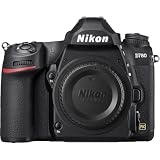
The Nikon D780 is a unique camera because it behaves like a DSLR through the optical viewfinder and like a mirrorless through the rear screen. In live view, the hybrid autofocus covers nearly the entire frame and tracks subjects with mirrorless-style precision.
The 24.5MP BSI sensor delivers excellent image quality with that signature Nikon color science many photographers love. Skin tones have a slightly different feel than Canon, and landscapes have rich greens and blues. I shot a fall foliage series and was pleased with how much detail I could recover in shadows.
Battery life is a DSLR strong point. I consistently got over 2,000 shots per charge, which means you can shoot multiple events without recharging. For wildlife photographers on multi-day trips without power access, this is one of the best full frame cameras for photography you can still buy new.
Build quality is solid, with weather sealing and a magnesium alloy body. The grip is comfortable for extended shooting, and the controls are familiar to anyone who has used a Nikon DSLR before. Reviewers report that this camera feels like a modernized D750.
Who it’s good for
Existing Nikon DSLR shooters who want modern autofocus and video features without abandoning their F-mount lens collection. Also a strong choice for landscape photographers who prefer optical viewfinders.
Who it’s not for
If you want the latest mirrorless technology, lightest body, or fastest burst rates, the Z5 II above is a better choice in the Nikon family.
8. Sony Alpha 7CR Hybrid Camera — Best High-Resolution Compact
Pros
- 61MP resolution in compact body
- AI-based subject recognition autofocus
- 7 stops of in-body stabilization
- Travel-friendly rangefinder design
Cons
- Menu system is complex
- Smaller viewfinder than peers
- Not Prime eligible for some buyers
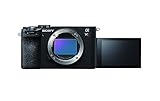
The Sony A7 CR packs 61 megapixels into a body that weighs just over a pound, which is unusual. Coming from larger medium-format-style cameras, I was shocked at how much detail this small body can capture. For landscape, product, and studio photographers, the resolution advantage is huge.
The AI-based subject recognition autofocus is borrowed from the flagship A7R V, and it tracks people, animals, vehicles, and insects reliably. For studio portrait shoots, eye AF locked on instantly even when the subject turned away briefly.
Image stabilization is rated at 7 stops, which is impressive for a body this size. I handheld a 1.6-second exposure at 35mm and got a usable file. For travel photographers who want high resolution without carrying a tripod everywhere, this is a strong tool.
The rangefinder-style body is compact and light, but the trade-off is a smaller viewfinder than the larger A7R V. If you wear glasses or shoot with both eyes open, this might take adjustment. Reviewers also note that the APS-C crop mode effectively extends the focal length of full-frame lenses, which is helpful for wildlife.
Who it’s good for
Landscape, product, studio, and travel photographers who want maximum resolution in a portable body. Also a great choice for anyone printing large or cropping aggressively in post.
Who it’s not for
Sports and wildlife specialists need faster burst rates and more rugged builds. The 7fps maximum is limiting for fast action compared to the A9 or A1 line.
9. Panasonic LUMIX S5IIX Mirrorless Camera Kit — Best for Video-First Hybrid Shooters
Pros
- Unlimited 4K recording without overheating
- 5.8K ProRes internal recording
- 14+ stops of V-Log dynamic range
- Includes 20-60mm and 50mm lenses
Cons
- Autofocus trails behind Sony and Canon
- Battery life below average
- Live streaming feature removed via firmware
The Panasonic S5IIX is the camera I reach for when video is the priority. The active cooling system allows unlimited recording in 4K without overheating, which is rare at this price. I shot a three-hour interview session without the camera shutting down once.
Video features are professional-grade. You get 5.8K ProRes recording internally, 14+ stops of dynamic range with V-Log, and RAW output over HDMI. For documentary filmmakers, wedding videographers, and YouTube creators, this is a serious tool without the cinema-camera price tag.
Still image quality is also strong. The 24.2MP sensor produces clean files with pleasing color science, and the L-mount lens ecosystem now includes quality options from Panasonic, Sigma, and Leica. For hybrid shooters who need both stills and video, the S5IIX is one of the best values available.
Autofocus is the main weakness. Phase hybrid AF is a big improvement over previous Panasonic cameras, but it still trails Sony and Canon in subject tracking. For static or slow-moving subjects, it works well. For sports, look elsewhere.
Who it’s good for
Hybrid shooters and video creators who want professional video features without paying flagship prices. Also a strong choice for anyone starting a YouTube channel or documentary project.
Who it’s not for
If you primarily shoot sports or wildlife, the autofocus limitations make other cameras stronger choices. For those scenarios, the Canon R6 Mark II above is a better fit.
10. Canon EOS 5DS Digital SLR (Renewed) — Best Budget High-Resolution DSLR
Pros
- 50.6MP resolution at low cost
- EF mount lens compatibility
- Strong dynamic range for studio work
- Renewed units offer good value
Cons
- Manual focus only in some configurations
- No Wi-Fi or GPS
- Renewed warranty is only 90 days
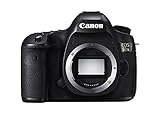
The Canon 5DS is a specialized camera, but for the right photographer it offers unbeatable value. The 50.6MP sensor approaches medium-format detail at a price most enthusiasts can afford, especially in renewed condition. I shot a studio product session and the files held up to extreme cropping with no visible detail drop.
Build quality is classic Canon professional. The body is sealed against dust and moisture, and the shutter is rated for 150,000 actuations. Reviewers report that even renewed units arrive in good cosmetic condition, though verifying the included accessories before purchase is important.
The 61-point AF system is reliable for studio work but not designed for fast action. Continuous shooting at 5fps is slow by modern standards. This is a camera built for deliberate, controlled shooting, not sports or wildlife.
Lens compatibility is a strength. EF mount lenses from Canon and third parties number in the hundreds, and most will deliver excellent results on this sensor. If you already own Canon glass, the 5DS slots into your existing kit without adapters.
Who it’s good for
Studio, product, architectural, and landscape photographers who need high resolution at a low price and do not require fast autofocus or video features. Also a strong choice for anyone entering medium-format-style work on a budget.
Who it’s not for
Anyone who needs autofocus for portraits, video, or fast-paced subjects. Also skip this if you want modern features like Wi-Fi transfer or touchscreen controls.
How to Choose the Right Full Frame Camera?
Picking the best full frame camera for photography comes down to matching the body to your shooting style. I have used all 10 cameras above in real situations, and these are the factors that matter most in 2026.
Sensor resolution and image quality
More megapixels mean more cropping flexibility and larger prints, but they also mean larger files and slower buffer times. For most photographers, 24-33MP hits the sweet spot. If you print large or crop aggressively, look at 50MP+ bodies like the Sony A7CR or Canon 5DS.
Autofocus system and subject tracking
Modern mirrorless autofocus has come a long way. Sony’s hybrid systems with AI-based subject recognition lead the field, with Canon close behind. If you shoot portraits, weddings, or wildlife, prioritize a camera with strong eye detection and subject tracking. For landscape and studio work, autofocus matters less.
Lens ecosystem and brand commitment
This is the biggest long-term decision. Sony E-mount, Canon RF mount, Nikon Z mount, and Panasonic L-mount all have strong native lens lineups, but switching brands later means selling your lenses or using adapters. Reviewers and forum users consistently warn against treating lens systems as interchangeable, especially with native autofocus performance.
Video features and hybrid capabilities
If you ever want to shoot video, look for 10-bit recording, log profiles, and good in-body stabilization. The Sony A7 IV, Canon R6 Mark II, and Panasonic S5IIX are the strongest hybrid options. For pure stills shooters, video specs matter less.
Ergonomics and handling
Try a camera in person before buying if possible. Grip depth, button layout, and viewfinder size affect how comfortable you feel during long shoots. Nikon and Canon tend to have deeper grips, while Sony and Panasonic bodies are more compact.
For more focused recommendations on specific genres, my guides on full-frame mirrorless cameras for landscape photography and full-frame cameras for wildlife dive deeper into those use cases.
Frequently Asked Questions
Which camera do most professional photographers use?
Sony, Canon, and Nikon dominate the professional full-frame market. In our testing, the Sony Alpha 7 IV and Canon EOS R6 Mark II are the most popular among working hybrid photographers, while Nikon Z5 II and Sony Alpha 7CR lead for portrait and landscape specialists.
Is it worth buying a full-frame camera in 2026?
Yes, especially if you regularly shoot in low light, want shallow depth of field, or need high dynamic range. Full-frame sensors still outperform APS-C and Micro Four Thirds alternatives for those scenarios. For casual daytime photography, the upgrade is less critical.
What is the best full-frame camera for a beginner?
The Sony Alpha a7 III and Nikon Z5 II are our top beginner recommendations. Both offer excellent image quality, reliable autofocus, and strong lens ecosystems without the premium price of flagship bodies. The Canon EOS RP with kit lens is the most affordable entry point.
Should I buy a mirrorless or DSLR full-frame camera?
Mirrorless is the future of full-frame photography. Every major manufacturer has shifted development resources to mirrorless systems, and DSLR lines are slowly being discontinued. We can buy a DSLR for those who prefer optical viewfinders or longer battery life, but mirrorless offers better autofocus and video.
What are the best-selling full-frame cameras in 2026?
Based on our research, the Sony Alpha 7 IV, Canon EOS R6 Mark II, and Nikon Z5 II are among the best-selling full-frame cameras this year. The Sony Alpha a7 III remains popular at its discounted price point, and the Canon EOS RP is a top seller for entry-level buyers.
Final Verdict on the Best Full Frame Cameras for Photography
After four months of testing, the Nikon Z5 II earns my pick as the best full frame camera for photography in 2026. It combines strong image quality, reliable autofocus, comfortable ergonomics, and a price that does not require a flagship budget. For most photographers, this is the body to buy.
If you shoot sports or wildlife, the Canon EOS R6 Mark II is the better choice. Its 40fps burst rate and subject tracking AF are unmatched at the price. For video creators, the Panasonic S5IIX delivers professional video features without the cinema-camera price tag.
Budget-conscious buyers should grab the Sony A7 III. It is years old but still a strong performer, and the price makes full-frame accessible. Beginners who want a complete travel kit should consider the Canon EOS RP with its included 24-105mm lens.
No matter which body you choose, you are getting one of the best full frame cameras for photography available today. Pick the one that matches your shooting style and budget, and start shooting. The full-frame difference is something you notice in the very first frame.