
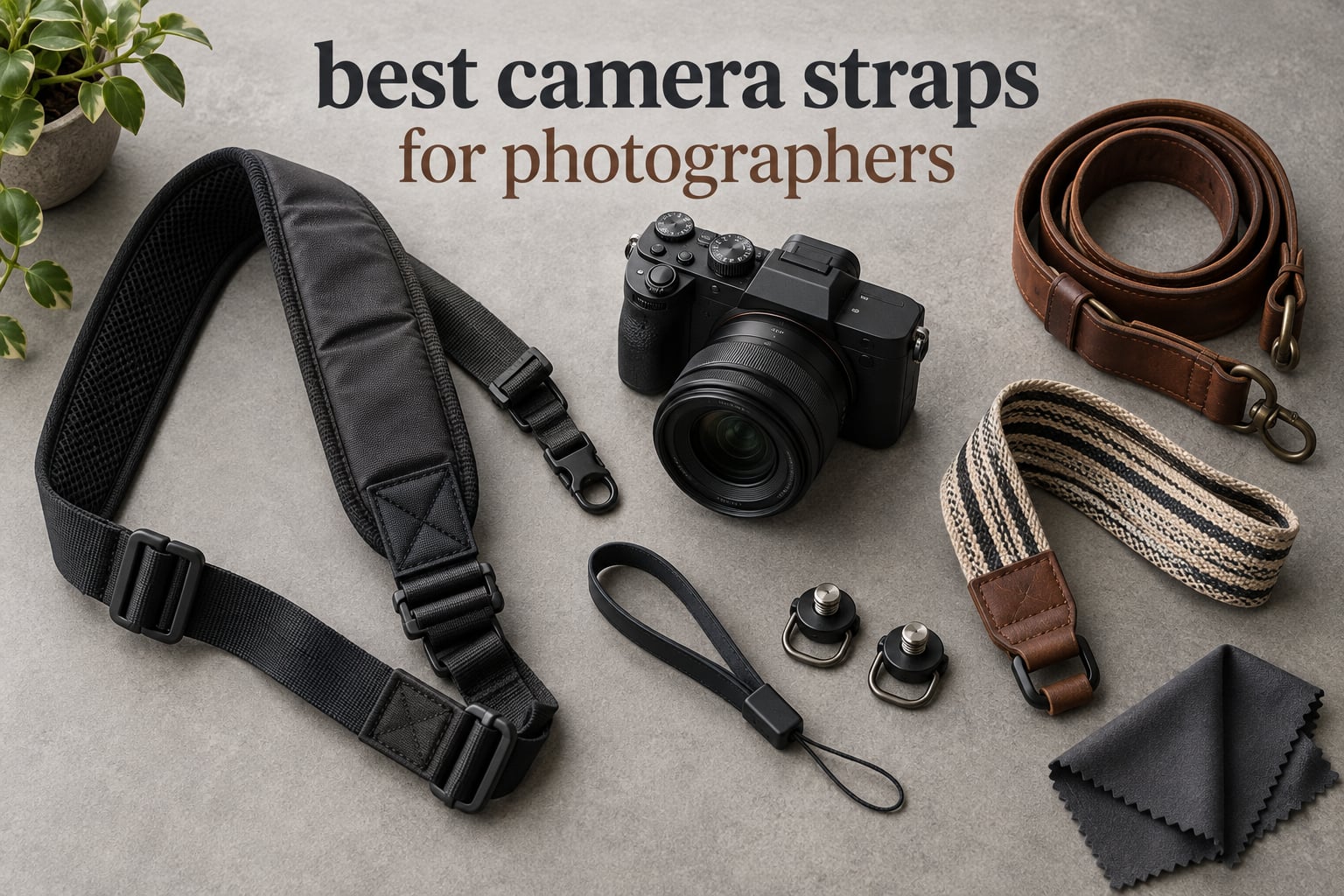
Most photographers buy a camera and spend the next two years ignoring the thin nylon strap that came in the box. It works fine until it doesn’t. A strap is the one piece of kit that holds several thousand dollars of gear against your body, and it is also the part that fails first in a stumble.
We have carried these straps through real shoots — wedding days, street assignments, cold mornings on hillsides — and put the fifteen most well-reviewed options through their paces to find the best camera straps for photographers in 2026. The short version: professionals overwhelmingly use a crossbody sling or a chest rig with a metal quick release, not the neck strap that arrived in the box.
Below is the full breakdown, plus a buying guide covering strap types, weight matching, length, materials and hardware. We earn from qualifying purchases, so if you buy through our links it costs you nothing extra.
Top 3 Best Camera Straps for Photographers in 2026
These three are the ones we come back to. The Cuff is the most proven drop protection in the group, the Slide is the most comfortable all-day strap with a heavy body, and the PGYTECH wins on hardware strength for the money.


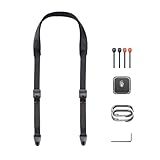
PGYTECH Wide Padded Strap
- Dead-center locking connector
- 90kg UHMWPE webbing
- Arca-type QR plate
All 15 Camera Straps Side by Side in October
| Product | Specifications | Action |
|---|---|---|
| Peak Design Cuff Wrist Strap |
|
Check Latest Price |
| Peak Design Slide |
|
Check Latest Price |
 waka Rapid Camera Neck Strap waka Rapid Camera Neck Strap |
|
Check Latest Price |
 Peak Design Leash Peak Design Leash |
|
Check Latest Price |
 Altura Photo Hand Grip Strap Altura Photo Hand Grip Strap |
|
Check Latest Price |
 USA Gear Chest Rig USA Gear Chest Rig |
|
Check Latest Price |
 MegaGear Sierra Leather Strap MegaGear Sierra Leather Strap |
|
Check Latest Price |
 VKO Lightweight Wrist Strap VKO Lightweight Wrist Strap |
|
Check Latest Price |
 Cotton Carrier CCS G3 Cotton Carrier CCS G3 |
|
Check Latest Price |
| PGYTECH Wide Padded Strap |
|
Check Latest Price |
 SMALLRIG Vintage Wrist Strap SMALLRIG Vintage Wrist Strap |
|
Check Latest Price |
 JJC Neoprene Neck Strap JJC Neoprene Neck Strap |
|
Check Latest Price |
 Padwa Lifestyle Cotton Strap Padwa Lifestyle Cotton Strap |
|
Check Latest Price |
 BlackRapid RS-4 Sling BlackRapid RS-4 Sling |
|
Check Latest Price |
 SMALLRIG Leather Neck Strap SMALLRIG Leather Neck Strap |
|
Check Latest Price |
1. Peak Design Cuff Wrist Strap — Best Drop Protection Overall
Pros
- Self-cinches tight the instant you drop the camera
- Anchor Link quick release rated over 200lb per anchor
- Wraps around the wrist like a bracelet when idle
- Works with any camera or binocular
- Adds almost no bulk to a small body
Cons
- Wrist-only carry will not cover a long walk
- Low profile means no padding over a heavy body with a telephoto
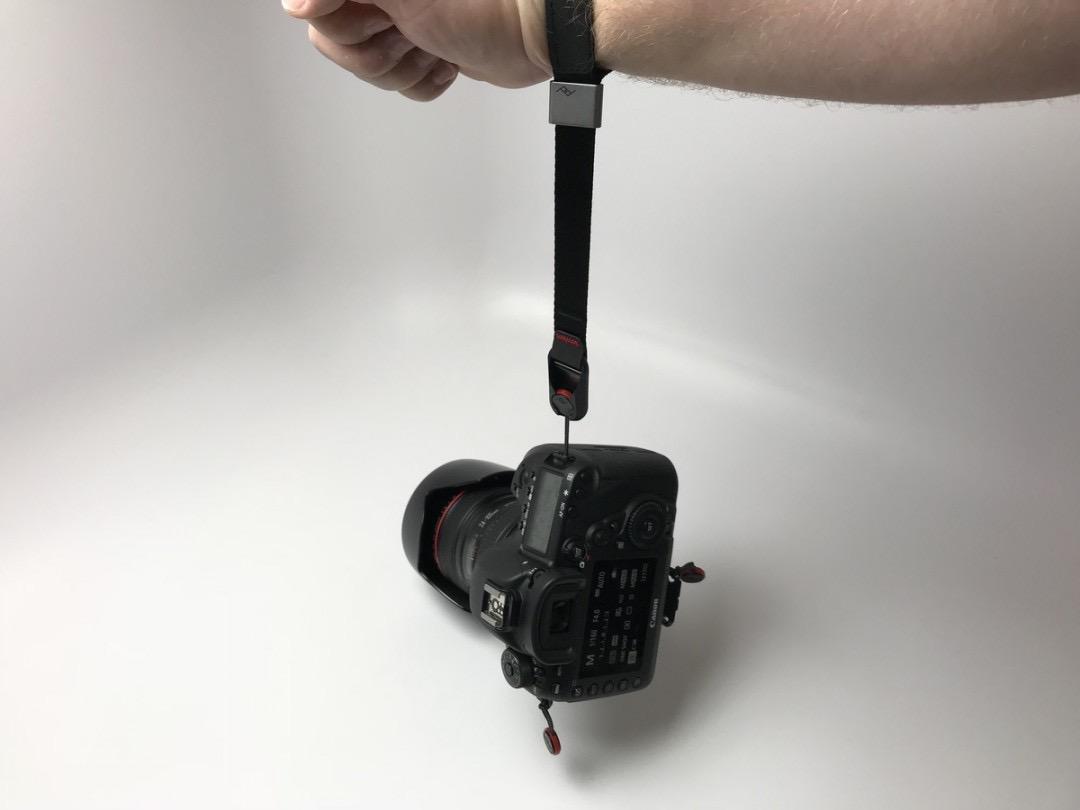
I have run the Cuff on a rangefinder for about eight months now, and it is the strap I hand to friends who ask how to stop dropping cameras. The self-cinching behaviour is the whole point: if the body slips, the loop tightens around your wrist rather than sliding out of it.
Owners describe it the same way, and the numbers back that up. More than 13,500 reviews average 4.8 stars, with 87% of ratings at five stars — a rare combination of volume and consistency for a camera accessory.
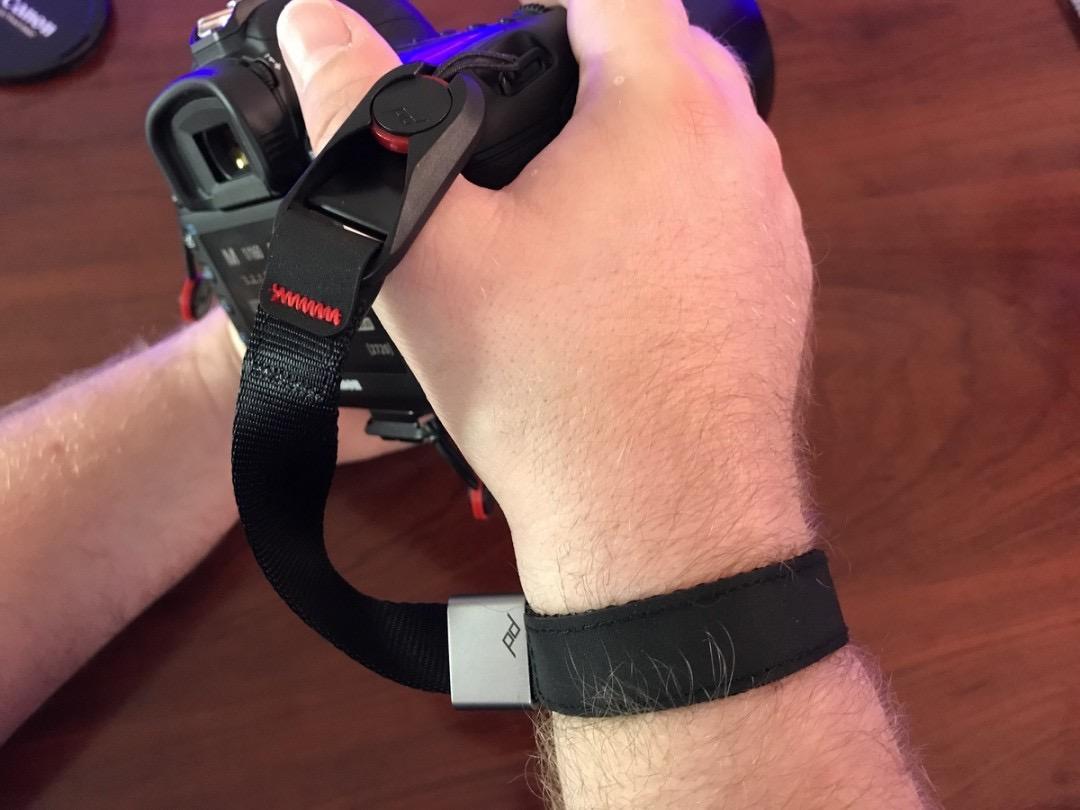
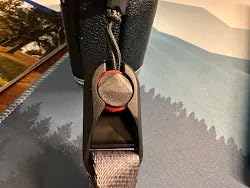
Physically it is close to nothing on the body. Ultralight, slim hardware, no dangling webbing across your chest. The Peak Design Anchor Link system is the quick release, and each anchor is rated to hold over 200lb, which is far beyond any camera and lens combination you will hang off it.
The Anchor Link standard has become a de facto ecosystem. Third-party straps and small maker products use the same anchor geometry, so the Cuff pairs with hardware you may already own rather than locking you into one brand.
When a wrist strap is the right answer
If your gear is a compact body, a fixed-lens rangefinder or a small mirrorless kit, the Cuff is the correct tool. It gets the camera out of a bag, into your hand and back again with less fuss than any screw-on wrist loop, and it disappears when you are not shooting.
When it is the wrong answer
It will not replace a shoulder or chest strap on a long walk, and a wrist carry gets tiring with a heavy body and a telephoto attached. Think of it as insurance that rides along with your main strap, not as the strap itself.
2. Peak Design Slide — Most Comfortable All-Day Sling
Pros
- Internally padded webbing stays comfortable over long days with heavy glass
- Dual quick-adjusters change length one-handed between carry modes
- One side glides over clothing while the other grips and holds position
- Anchor Link release drops to tripod work in seconds
Cons
- Premium price for a strap
- Shoulder pad creeps slightly on very long carries without a stabilizer
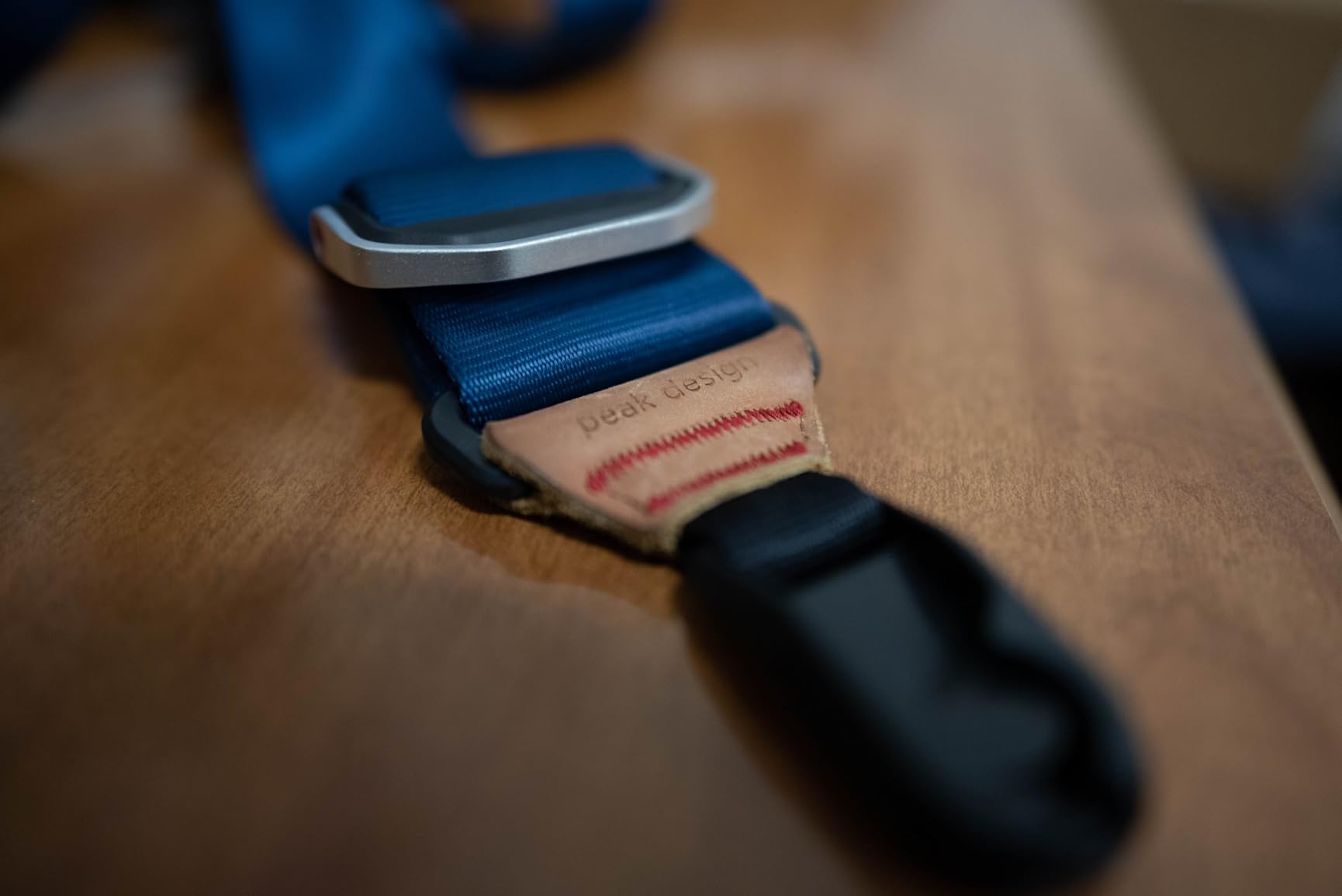
The Slide is the strap I put on any full-frame body with a 70-200mm attached. The padding is internal rather than a slab wrapped around the webbing, so it disappears under a jacket and does not feel like a slab of foam pressing into your trapezius.
Owners consistently single it out as the most comfortable strap they have used with heavy bodies, and 88% of its 7,420 reviews are five stars. The grippy side of the webbing is the detail that matters most in practice — it stays on the shoulder instead of migrating.
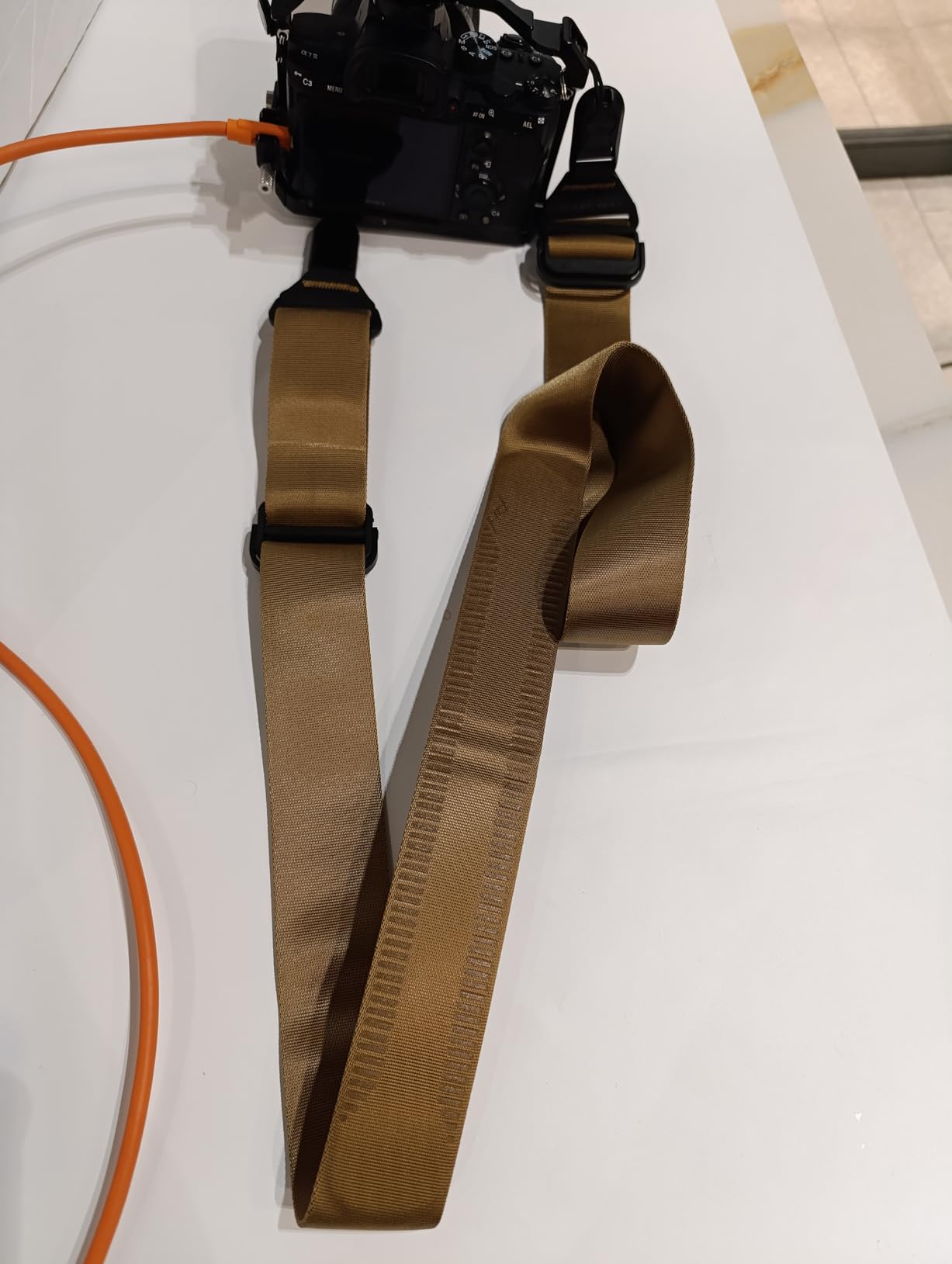
The two quick-adjusters run the length from 39 to 57 inches with one finger, which means you can swing from shoulder carry to crossbody to neck in the time it takes to look down. That speed is what makes it work for street and event work, where you are constantly changing how the camera hangs.
Both ends use the Anchor Link system, so the camera can be detached and mounted to a tripod in a couple of seconds. The same anchor geometry also means the strap is not tied to one brand of quick release.
Getting the length right
The adjustment range is wide enough to fit almost any torso, but the useful setting is the one that puts the camera at your hip rather than your ribs. Shorten it until the body sits just above your belt line and the weight pulls straight down instead of sideways.
The learning curve nobody mentions
Anchor Link feels stiff for the first few uses. Push both sides of the anchor together rather than pulling one end, and the release becomes automatic. Budget ten minutes with it before you judge the system.
3. waka Rapid Camera Neck Strap — Best Budget Step Up
Pros
- Takes real weight off the neck for very little money
- Neoprene shoulder pad spreads the load
- Metal quick release plus a separate safety tether
- Under-arm stabilizer stops the rig bouncing while walking
- Zip pocket in the pad for cards and batteries
Cons
- Adjustment is awkward once set
- Mounting plate can flex and squeak under a heavy body
- Oversized on smaller frames
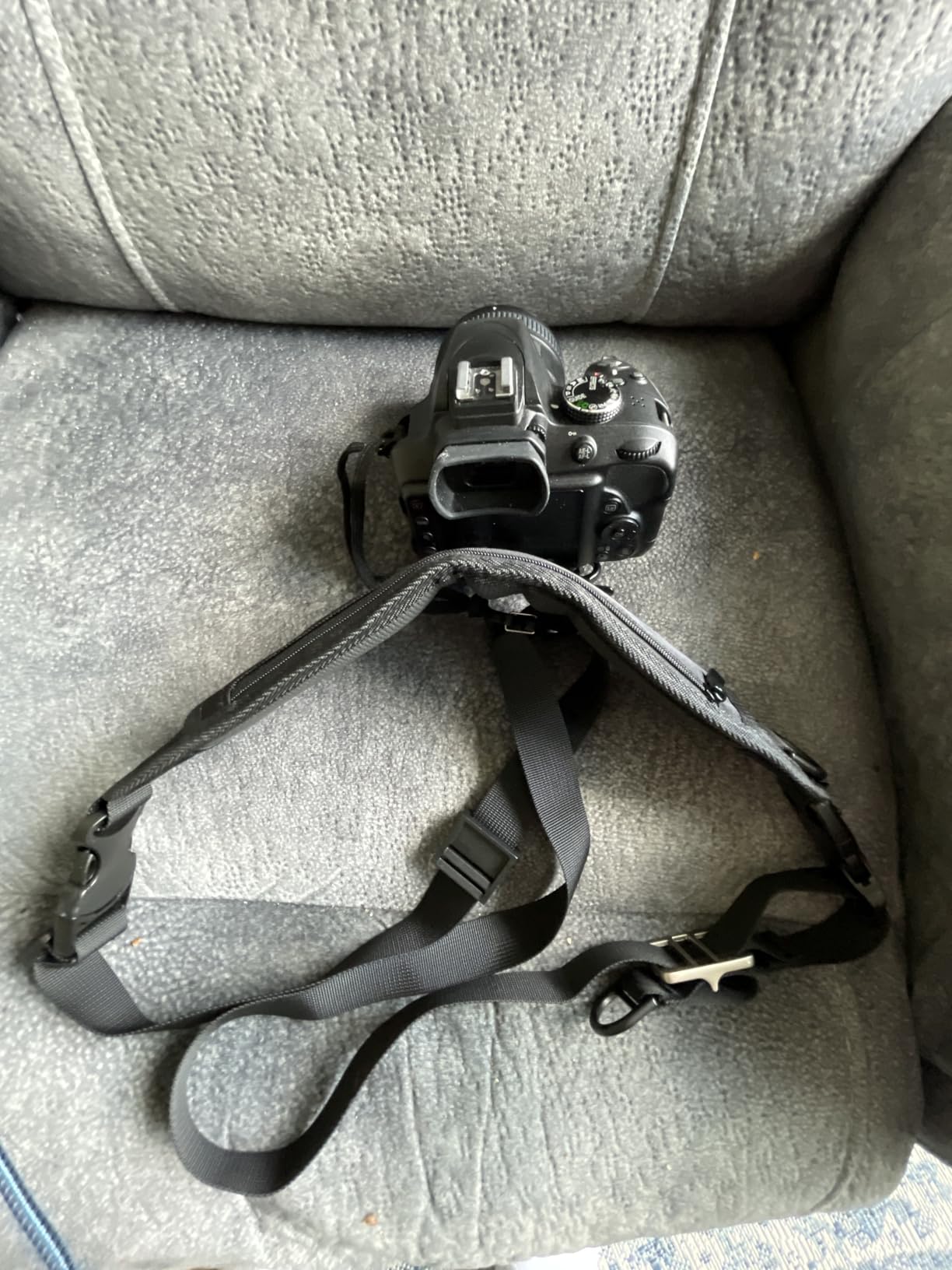
This is the strap I recommend to anyone who wants to stop the neck ache that comes with a factory strap but does not want to spend flagship money. The under-arm stabilizer is the feature that surprises people — it stops the camera bouncing against your chest on every step.
Two attachment points carry the load: a solid metal quick release plate screwed into the tripod socket, and an extra safety tether included in the box. Having both is exactly the redundancy that forum photographers ask about after a dropped camera.
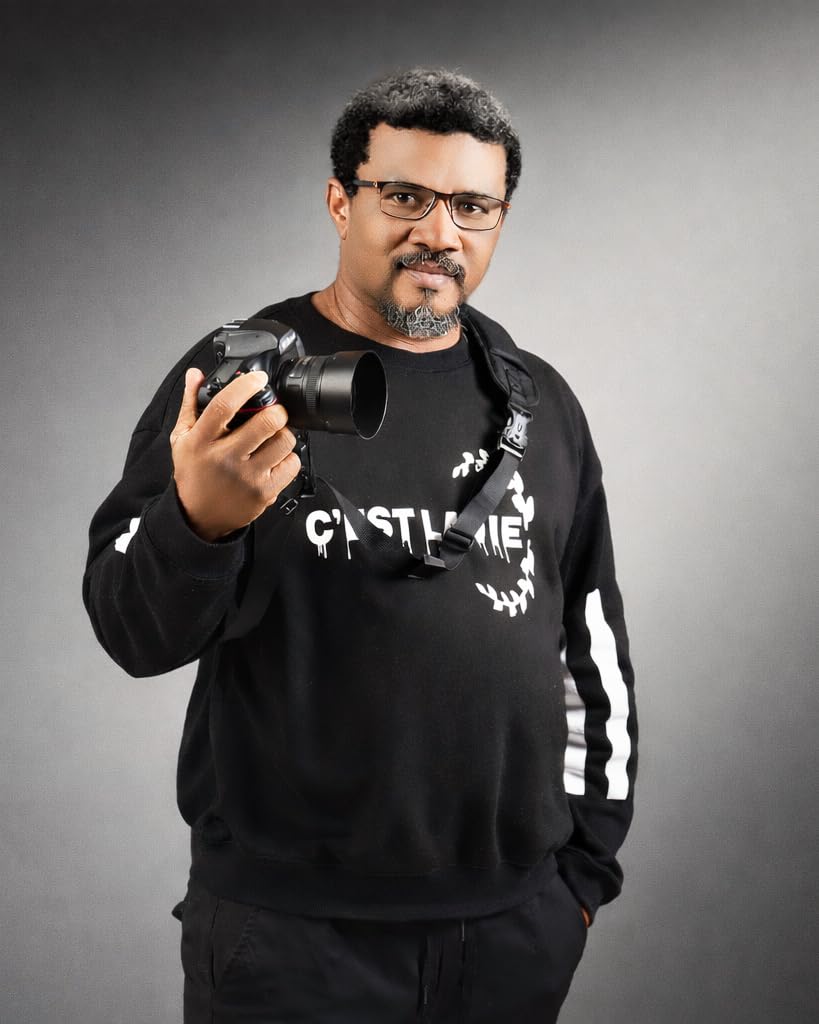
The neoprene shoulder pad is genuinely the reason this works over a full event. It is not as refined as a premium sling, but it spreads a body and lens across a much wider area than a flat strap, and the zip pocket in the pad holds spare batteries and cards.
Fit is where the 4.4 average comes from. The 20.8 to 31.5 inch range suits most adults, but shorter users report it running loose, and the sliders are not comfortable to re-adjust while the camera is hanging from them.
Who this suits
A photographer moving up from an OEM strap, or anyone shooting long events on a budget. It supports a full-size SLR with a zoom, which is more than most of the entry straps in this list can honestly claim.
What to check before a paid shoot
Give the quick release plate and the tether buckle a firm pull by hand. The plate is the part that flexes, and a slight squeak under a heavy body is normal wear rather than failure — but it is worth knowing before the day matters.
4. Peak Design Leash — Best Packable Strap for Travel
Pros
- Packs into a pocket which matters when luggage space is the constraint
- Four carry modes in one strap
- Aluminum and Hypalon adjusters for one-finger length changes
- Anchor Link release rated over 200lb per anchor
- Doubles as a safety tether when worn short
Cons
- Thinner webbing than the Slide on long all-day carries
- Less shoulder padding for heavy glass
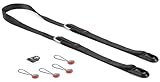
The Leash answers a question the other Peak Design straps do not: what happens when you are flying with one bag and no room for a coiled strap the size of a grapefruit. It rolls down small enough to live in a coat pocket between locations.
It still does the full job. Sling, shoulder, neck or a short safety tether, with dual aluminum and Hypalon adjusters taking the length from 33 to 57 inches using one finger. That makes it a genuinely complete strap rather than a travel compromise.
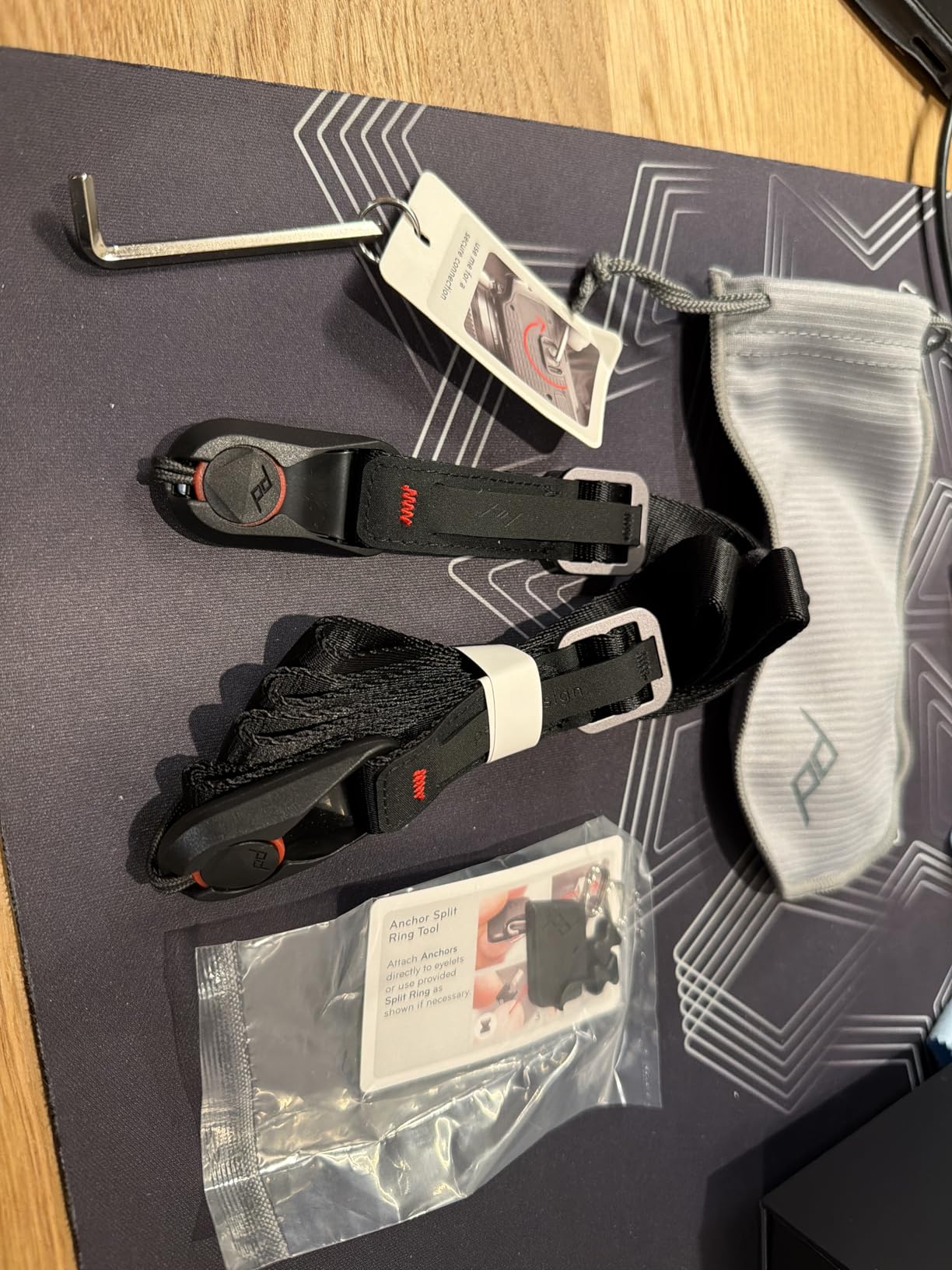
The review profile is close to identical to the Slide’s, just a touch lower at 4.7 stars across 7,370 reviews, with 85% five-star ratings. Buyers describe it in the same terms: versatility first, packing size second.
Because the anchors are the same Peak Design standard, the Leash works with binoculars, rangefinders and tripods as readily as with a camera body. That flexibility is what travel shooters tend to notice first.
When packing size beats padding
On flights, hikes and city days where you change locations constantly, the Leash wins. You will tuck it into a pocket and forget about it, then pull it out in seconds when something is worth shooting.
Where the Slide is the better buy
If your longest days are single-location shoots with a heavy body and a long lens, the Slide’s thicker padded webbing is the more comfortable choice over many hours. The Leash trades padding for packability, and only one of those matters on a given trip.
5. Altura Photo Hand Grip Strap — Best for Rapid-Fire Shooting
Pros
- Holds hand and wrist at once which cuts fatigue on long bursts
- Metal plate screws into the tripod socket with no wobble
- Secondary tether catches the body if the grip shifts
- Padded wrist holder takes pressure off the joint
- Tool-free installation in seconds
Cons
- PU synthetic leather rather than genuine leather
- Long-term durability of the padded section draws mixed reports
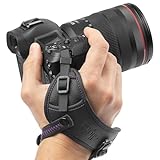
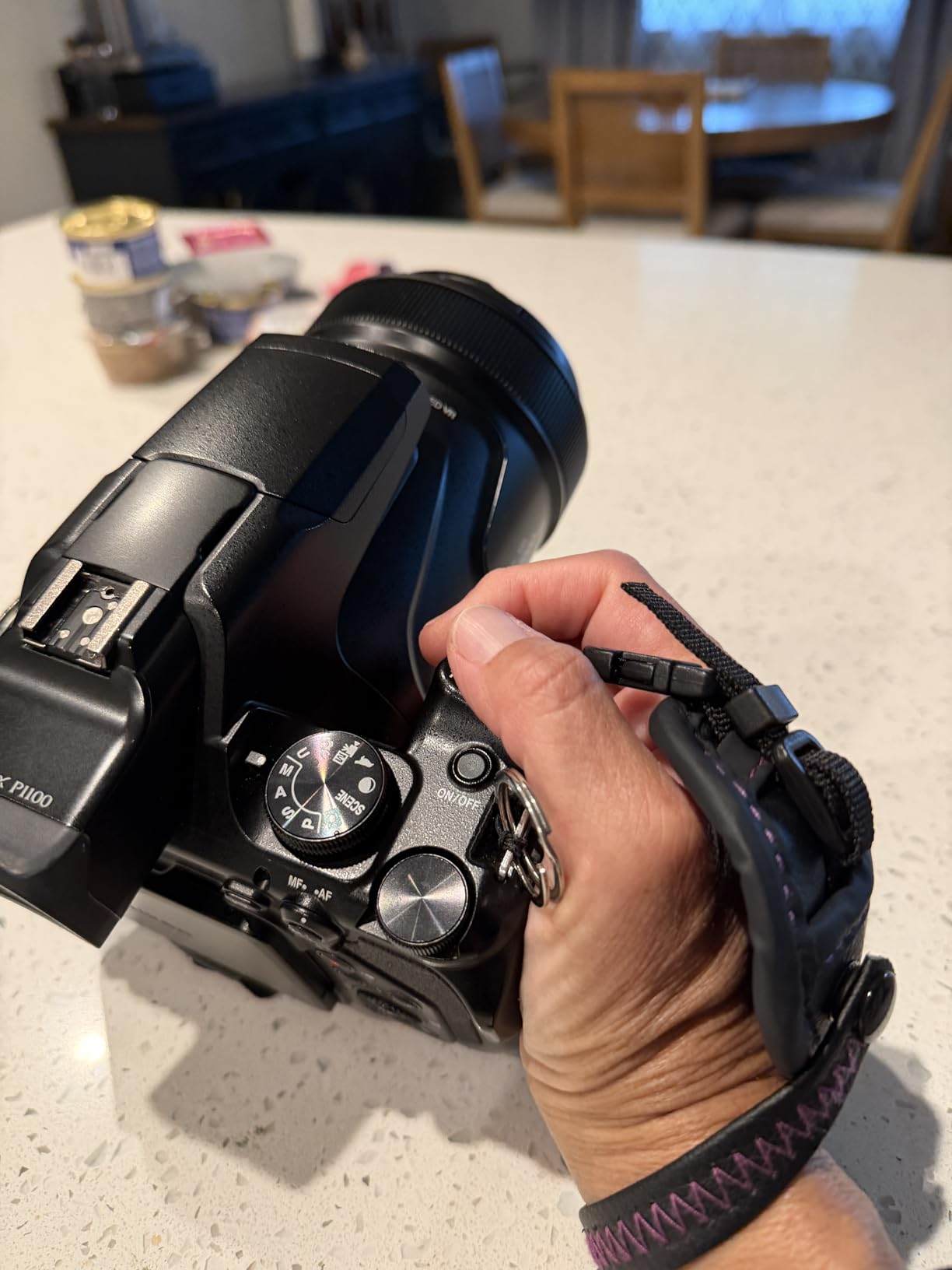
Event, wedding and wildlife shooters all hit the same wall: after four hours of shooting, the hand cramps before the shoulder does. A hand grip fixes that by taking the camera’s weight into the palm and the wrist together, which is exactly what this one does.
The mounting plate is metal and screws straight into the standard 1/4 inch tripod screw, so there is no play and no wobble in the connection. Installation takes seconds and no tools, and a secondary tether catches the body if the grip ever shifts.
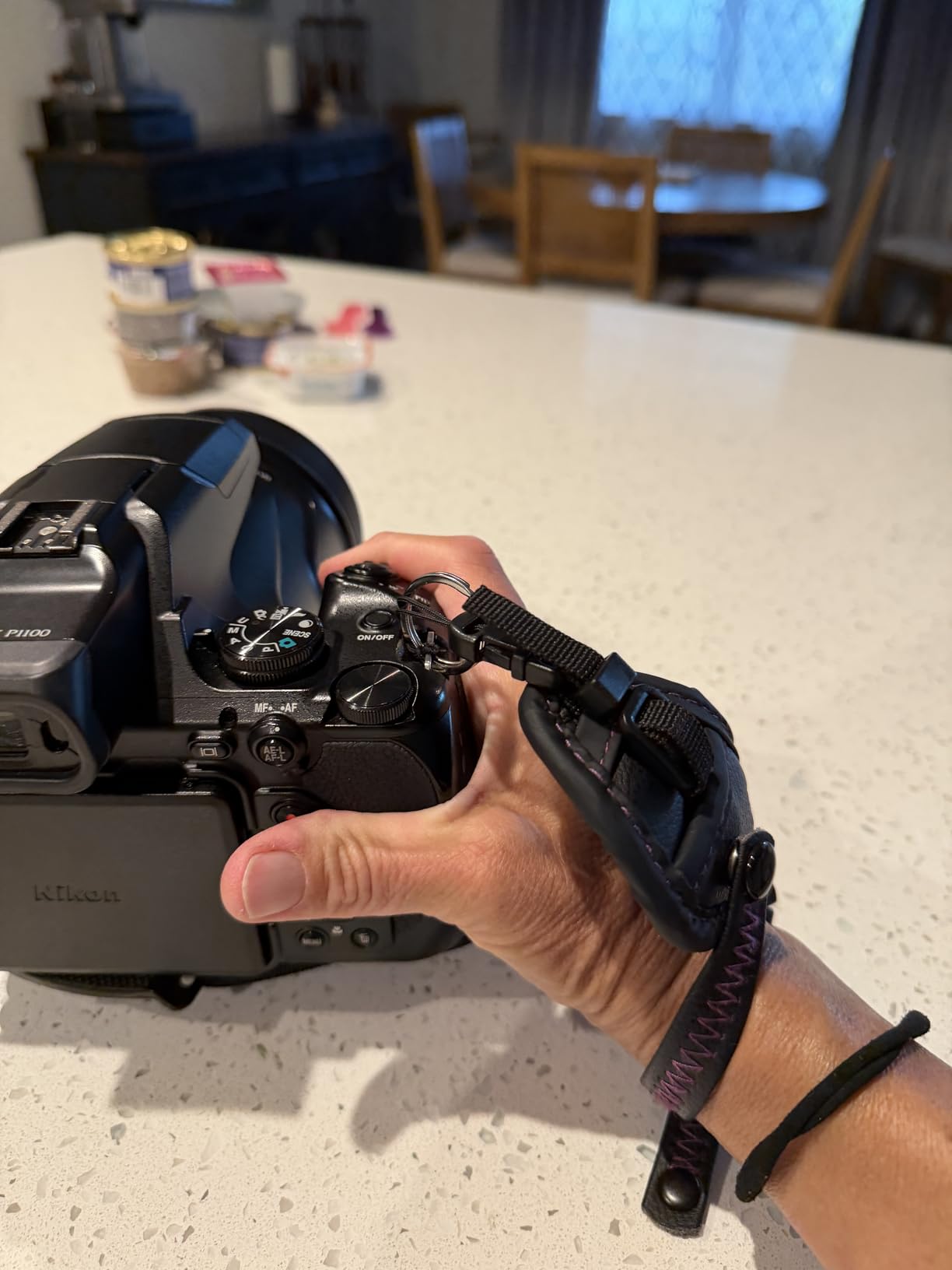
Compatibility is broad by design. It works with Canon EOS, Sony Alpha, Nikon D3000 through D850, the Z6 and Z7 series, and anything else with a 1/4 inch tripod screw, which covers most mirrorless bodies made in the last decade.
At 4.4 stars from 4,092 reviews, with 72% five stars and 5% one star, the split is not about fit — it is about material expectations. PU leather looks the part at first, and a minority of owners expected the patina behaviour of genuine leather.
Pairing it with a shoulder strap
Users commonly run a hand grip together with a crossbody strap rather than choosing one or the other. The grip handles the shooting position, the shoulder strap handles the walking. Neither replaces the other.
When to skip it
If you mostly frame with the viewfinder and change lenses rarely, the grip adds little. It earns its place when you are shooting continuously — sports, wildlife, events — and your hand is on the shutter for most of the day.
6. USA Gear Chest Rig — Best for Taking Weight Off the Neck
Pros
- Spreads heavy body weight across both shoulders and the back
- Neoprene stays flexible rather than digging in
- Quick-release buckles make handheld and chest carry fast
- Holds its shape when removed instead of tangling
- Fits over a backpack worn underneath
Cons
- Accessory pockets too small for larger batteries and CFexpress cards
- Velcro on the pockets can wear out and let batteries fall
- Loose fit lets heavier bodies swing
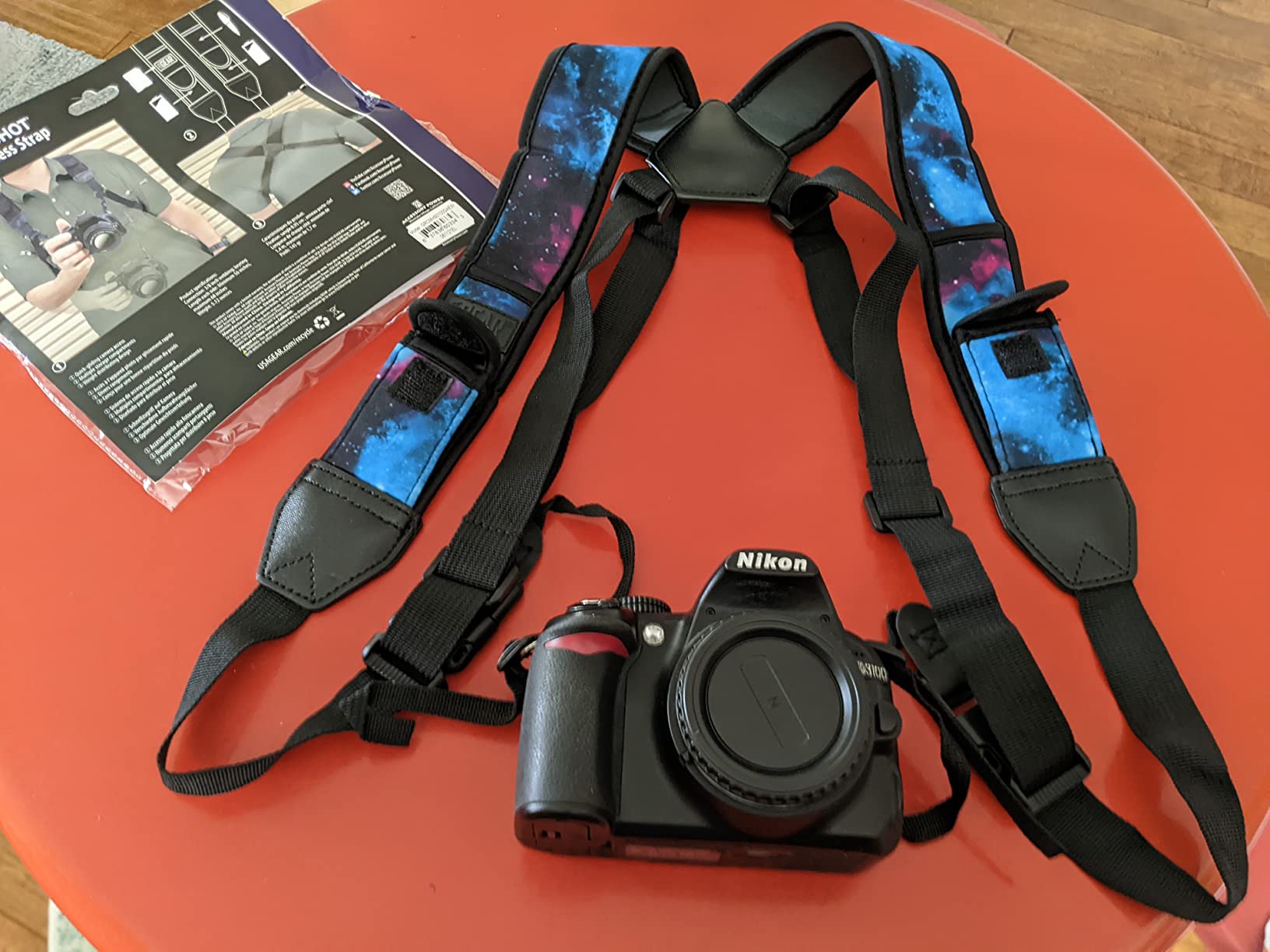
Neck pain is the single most common complaint about camera straps, and a chest rig is the bluntest fix. Rather than hanging the weight from the base of your skull, this spreads it across your upper back, both shoulders and the centre of your chest.
Owners consistently credit it with relieving neck and back pain over long days compared with a standard strap. The 4.6 average from 2,988 reviews comes almost entirely from fit and pocket complaints rather than from the concept.
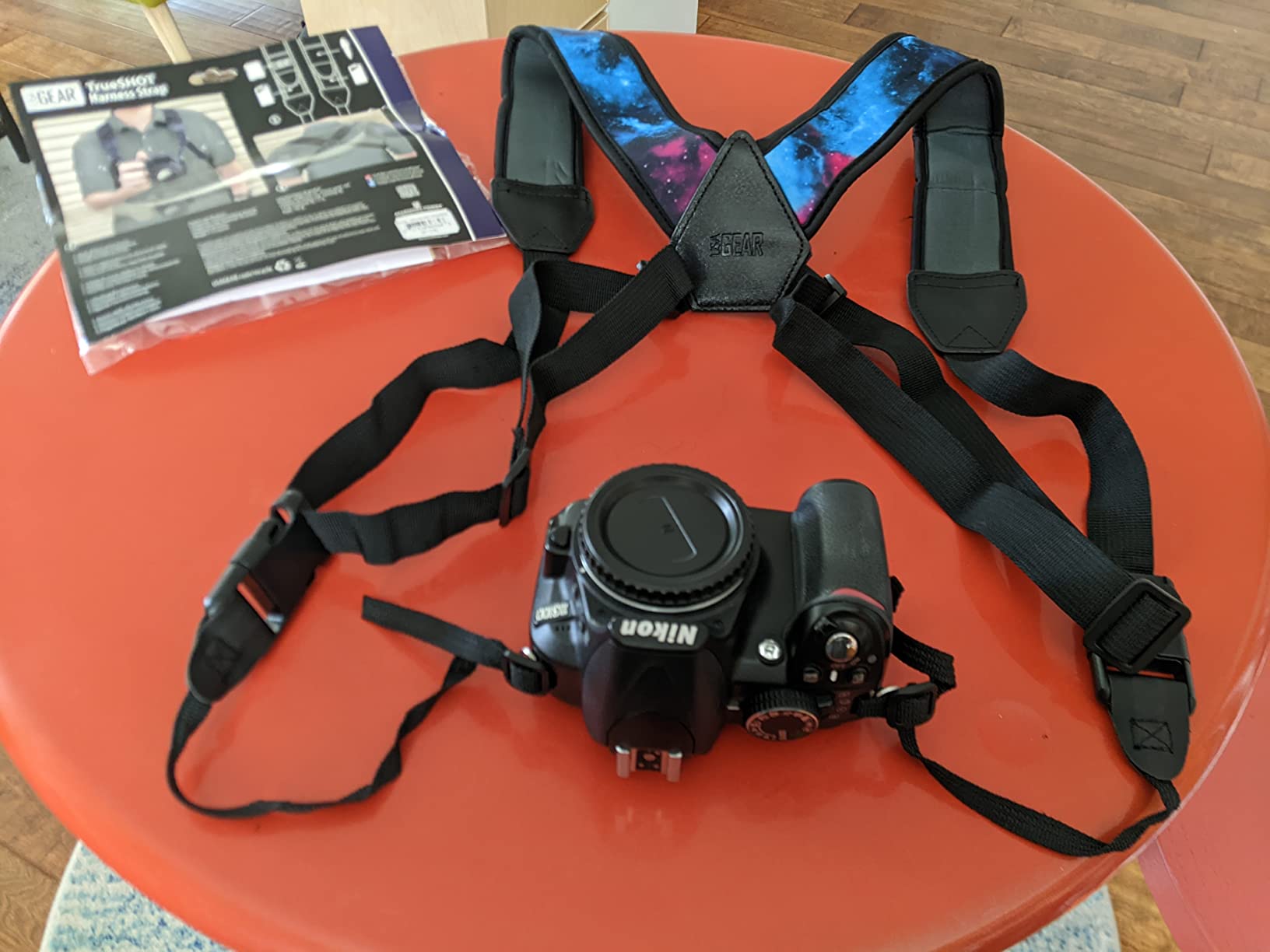
Neoprene is the right material for this job because it flexes with you instead of resisting. The quick-release buckles let you swing the camera from your chest to your hand without fumbling, and the dual-length sliding brackets accommodate a wide range of body sizes.
It also holds its shape when you take it off, which sounds minor until you have unpacked a bag of tangled webbing. The accessory pockets are meant for lens caps, memory cards, batteries and a cleaning cloth.
Who this is genuinely for
Photographers with neck or back problems, and anyone carrying a heavy body with a zoom for a full working day. It also suits shooters who already wear a backpack, since the rig sits on top and rebalances the pack.
Fit extremes and the pocket problem
Some shorter users find it too large even at maximum adjustment, and the pockets are undersized for modern large batteries and CFexpress cards. Expect to carry the spare cells in a separate pouch.
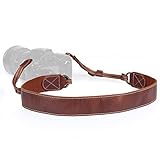
7. MegaGear Sierra Leather Strap — Best Genuine Leather Strap
Pros
- Hand-cut and hand-stitched genuine leather that patinas instead of cracking
- No plastic hardware anywhere on the strap
- Protective leather sleeves prevent the strap marking the body
- Soft backing avoids the heat of neoprene in summer
- Retro look suits rangefinder-style bodies
Cons
- Stiff for the first few uses before it breaks in
- Heavier and warmer than webbing in hot weather
- Included split rings are thin wire
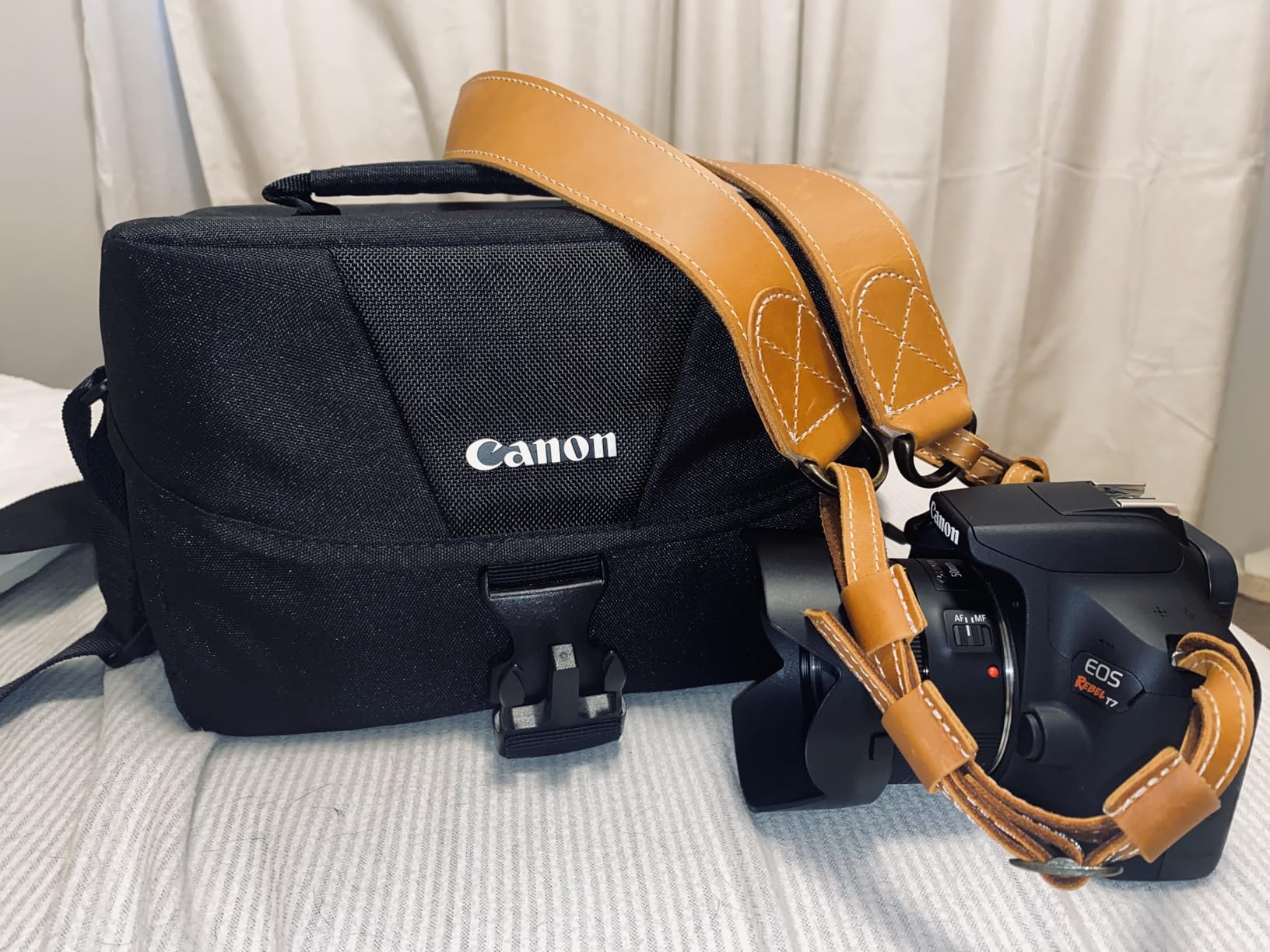
Leather is the answer for anyone who wants a strap that looks considered rather than technical. This one is hand-cut and hand-stitched genuine full-grain leather with stitching reinforced at every stress point, and it softens and darkens with use rather than peeling.
What separates it from the faux-leather options is the absence of plastic. There are no plastic buckles to crack, which is the single most common hardware failure in cheap straps and the reason some owners keep a spare strap in the bag.
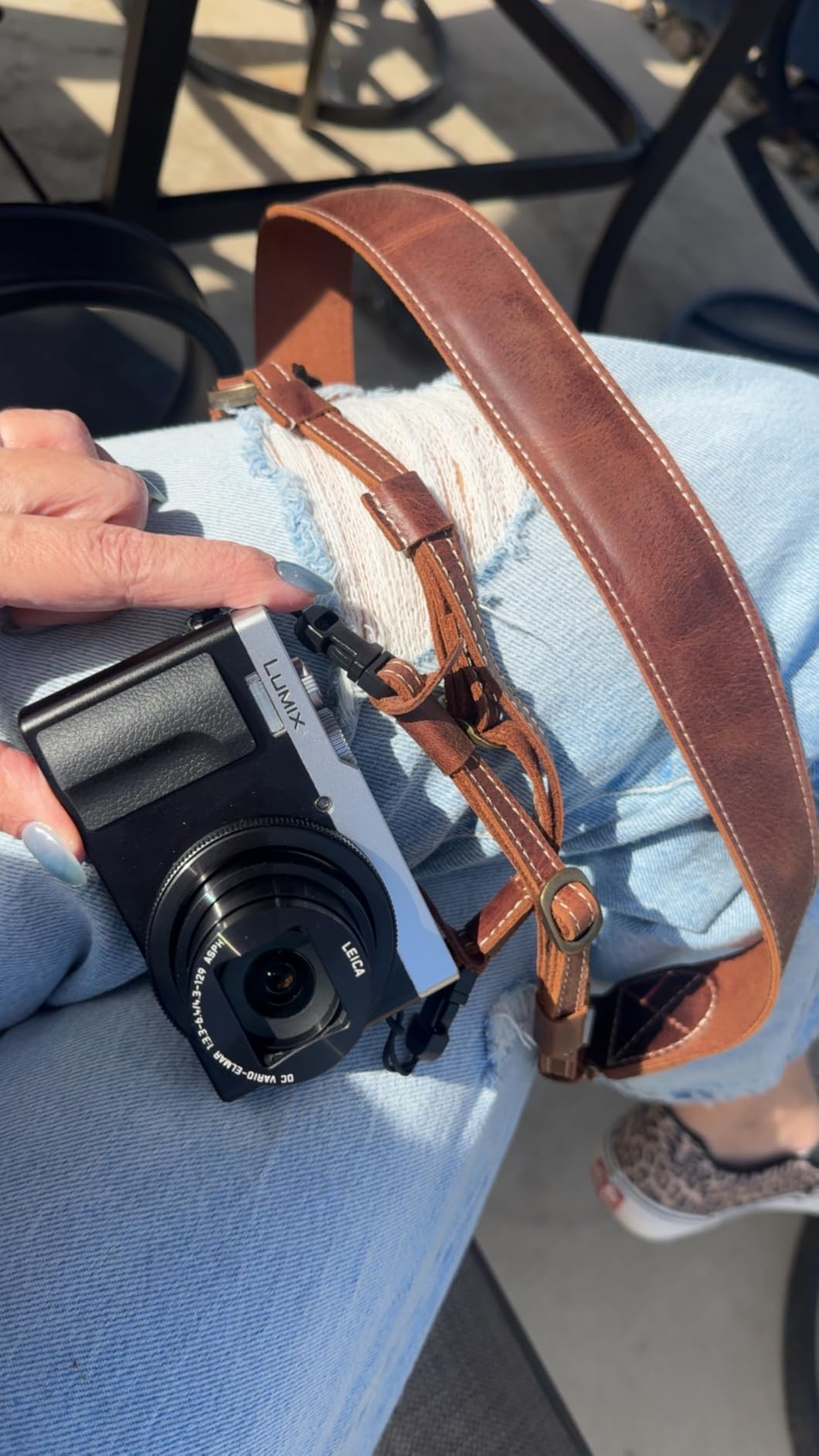
Length runs from 39 to 47 inches and slides smoothly between neck hang and over-the-shoulder carry. The soft inner backing distributes the weight better than you would expect from something this slim, and it does not trap the heat that neoprene does on a summer wedding.
At 4.7 stars from 2,660 reviews with 82% five stars, the feedback centres on durability. Multi-year service is the common report, and the recurring notes are break-in stiffness and the thinness of the included split rings.
Living with the break-in
Expect a stiff first fortnight. Wear it daily for short periods and it will mould to your shoulder; owners who skipped that stage are the ones who report it staying uncomfortable. Replace the wire split rings with solid ones if you want extra insurance.
Which bodies it suits
Universal lug attachment covers SLR, DSLR and mirrorless bodies from Canon, Nikon, Pentax, Olympus, Sony, Fujifilm, Leica and Panasonic. It pairs especially well with retro bodies such as the Fujifilm X-T, Leica Q, Olympus PEN and Sony A7.
8. VKO Wrist Strap — Lightest Option for Compact Bodies
Pros
- Weighs half an ounce adding no bulk to a small body
- Soft microfiber and nylon weave comfortable over long walks
- Tucks flat and fits neatly in a camera bag
- Adjustable stopper holds without readjusting
- Stylish enough for a rangefinder-style body
Cons
- Not sized or reinforced for heavy bodies with telephoto lenses
- Only fits cameras with round connection holes
- Material can fade with prolonged sun exposure
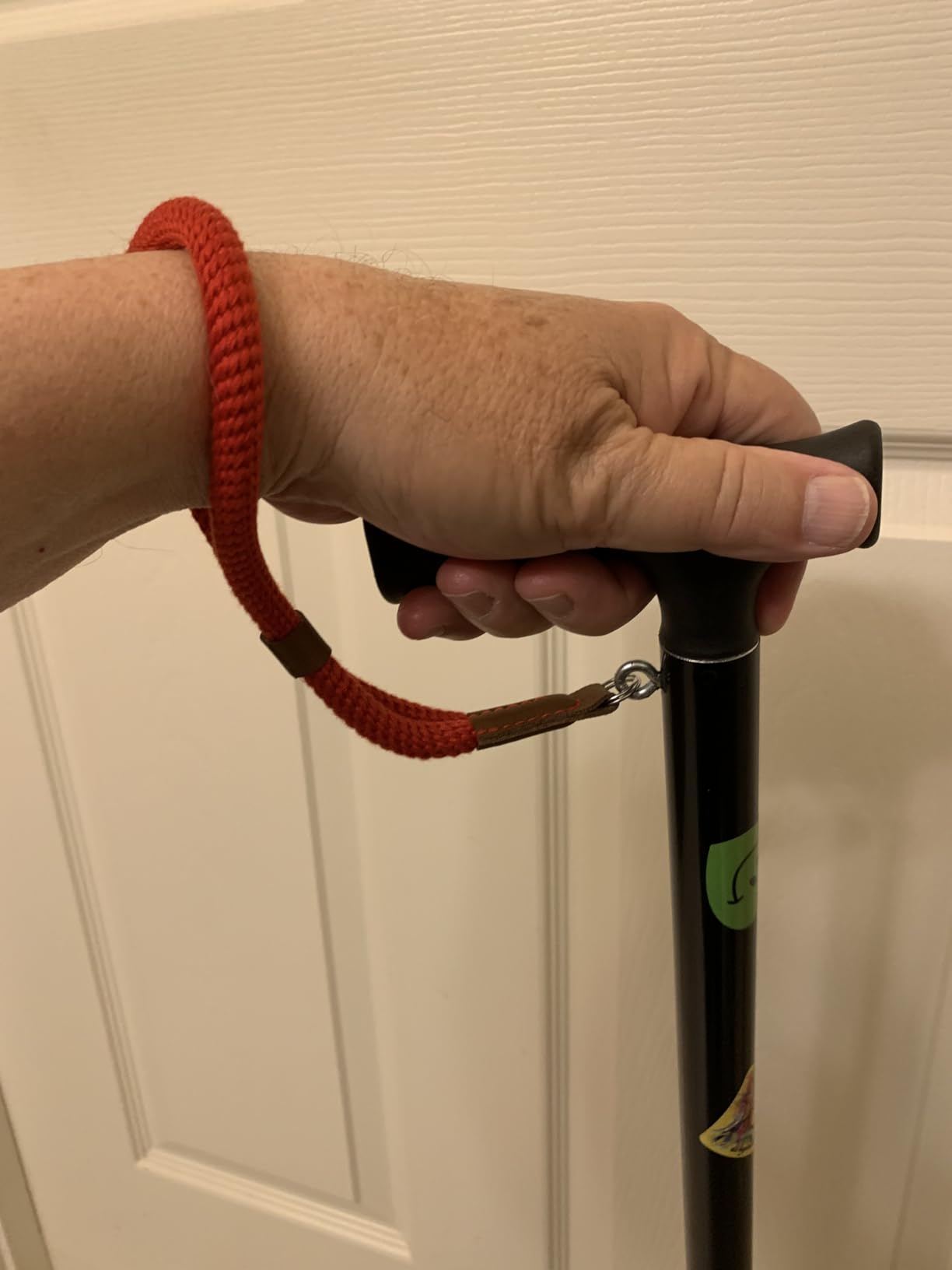
When the camera itself is light, the strap matters more than the specification sheet suggests. This one weighs half an ounce and disappears entirely in a bag, which is why it keeps appearing on compact and rangefinder-style bodies.
It is a nylon and microfiber construction with a stopper that cinches the loop to any wrist size. Reviewers report multi-year service and consistent comfort, and at 4.6 stars from 2,111 reviews the profile is unusually stable for such a simple product.
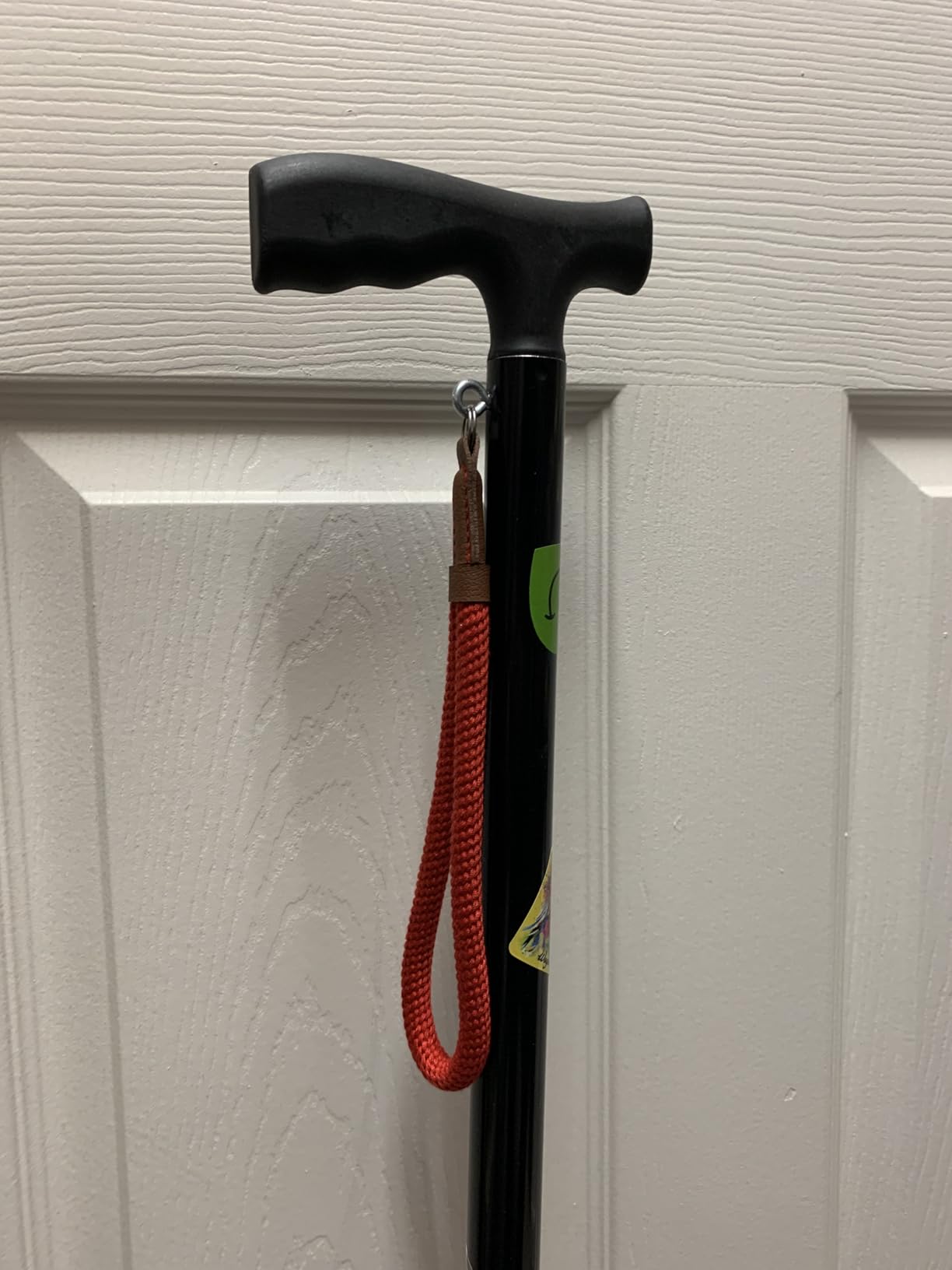
There is one compatibility detail to check before you commit: it fits cameras with round connection holes, not triangular lug-style strap anchors. Most mirrorless bodies use round anchors, so this suits the compact end of the market, but it is not universal.
The nylon string is around 12mm in diameter, which is enough to carry a compact body comfortably. The honest limitation is that it is a light-duty part by design, not a thin version of a heavy-duty one.
When lightness is the deciding factor
Pocketability is the argument here. It adds nothing measurable to a small body, packs flat between locations, and never gets in the way of a waist or a bag strap. For a fixed-lens camera that stays on a table more often than your shoulder, that is the right trade.
What it cannot do
Do not hang a full-frame body with a telephoto on it. The reinforcement and diameter are not designed for that load, and the failure would be sudden. Keep a proper wrist strap with the heavy bodies and use this one for the compact kit.
9. Cotton Carrier CCS G3 — Best Rig for Hiking and Wildlife
Pros
- Removes neck and shoulder load entirely
- Twist lock hub keeps the camera flat against the chest instead of swinging
- Stays secure on rough terrain and on a bicycle
- Works with a backpack worn over the top
- Quick twist to unlock without breaking stride
- Rain cover included in the box
Cons
- Involved to set up and adjust and less suited to a walking street assignment
- Cotton runs warm in hot weather
- Hub needs an adapter for a direct tripod mount
A chest rig is the honest answer to a specific problem: a camera that swings into your hip every time you scramble uphill. The CCS G3 holds the body flat against your chest with a twist-and-lock hub and a lens hold-down strap, so there is nothing to bang against your legs.
The rig also works with a backpack worn over the top, which is unusual and genuinely useful — it rebalances the load rather than fighting it. Hikers, wildlife shooters and conference photographers are the core users, and 85% of 1,063 reviews are five stars.
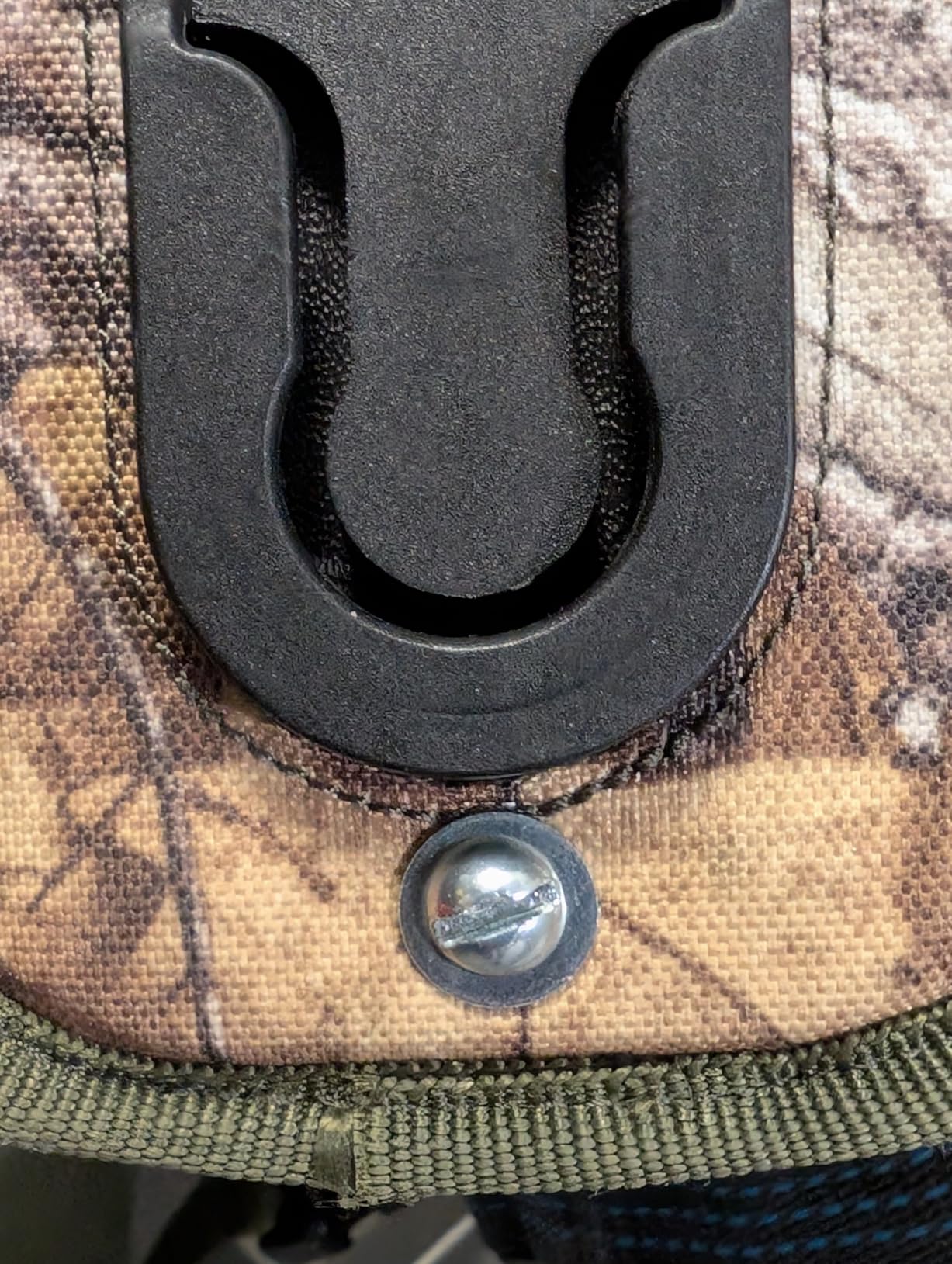
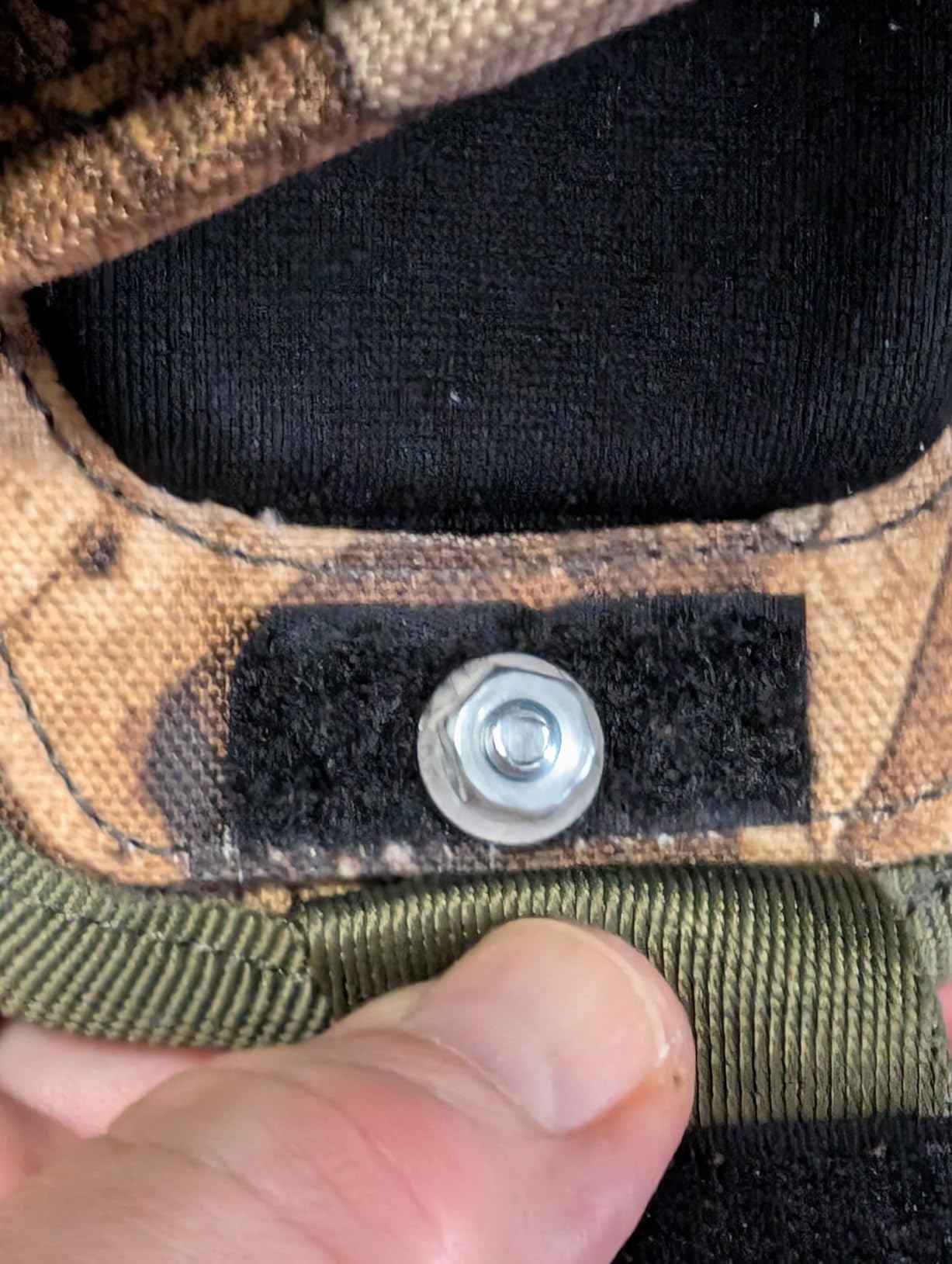
Everything needed is in the box: the harness, an anodised aluminum hub with a rubber washer, a mounting bolt, a tether strap, a tether split ring, an Allen key and a rain cover that fully shields a body with a long lens attached.
There are one-camera and two-camera versions in grey and camo. The twist action means you can unlock and get the camera to your eye without breaking stride, which is the difference between catching the moment and missing it.
Best and worst operating conditions
It shines in rough terrain, on bicycle descents and on long hikes where a swinging camera is the main complaint. It struggles in heat, because cotton is not the most breathable material you can wear against the chest for eight hours.
Small lenses and tripod mounting
The hold-down strap is less reliable with very small prime lenses, where the hub can creep out of position. The hub also does not interface directly with a tripod mount without an extra adapter, which matters if you shoot tripod-heavy work.
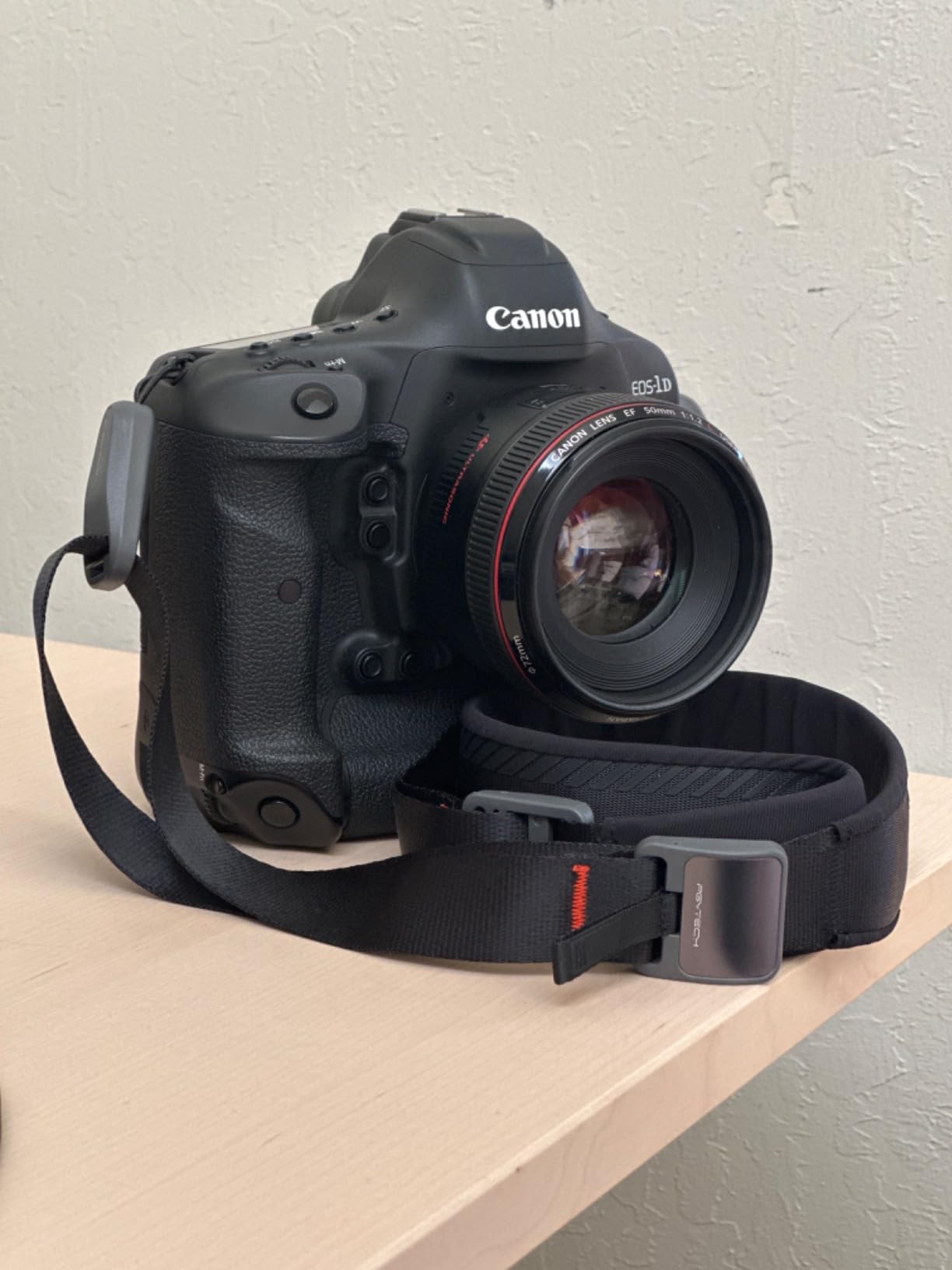
10. PGYTECH Wide Padded Strap — Best Quick Release Hardware
Pros
- Dead-center locking connector resists release at any load angle
- One-handed install and removal of the quick bead
- UHMWPE webbing rated to carry up to 90kg
- Quick adjusters at both ends for fast length changes
- EPDM-lined shoulder pads stay soft and elastic
- Arca-type quick release plate included
Cons
- Replacement quick release beads must be bought separately
- Stiffer feel and more weight than a pure webbing strap
There is one detail to check before you commit: the connector locks at the dead centre, so no angle of applied force releases it while the bead is closed, and the bead itself goes on and off one-handed by pressing the top of the connector.
The webbing is UHMWPE, a fibre described as ten times stronger than steel wire, and rated here to carry up to 90kg. At 4.8 stars from 777 reviews with 86% five stars, it is one of the highest-rated straps in the group.
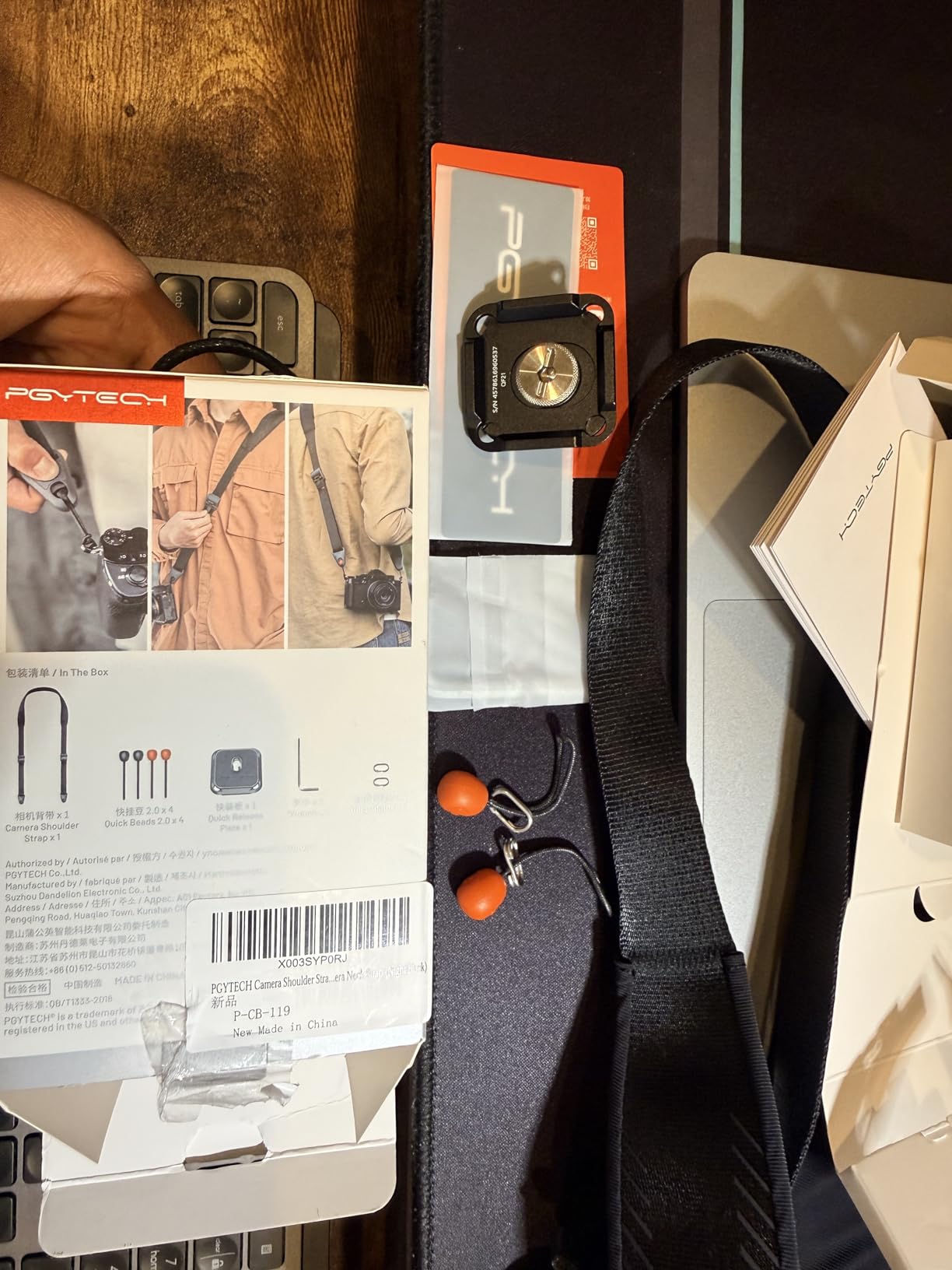
Comfort is handled by integrated braided wide and narrow webbing with EPDM-lined shoulder pads, plus quick adjusters at both ends so the length can be changed without tools. The adjustable range is 43.3 to 59.8 inches, wider than most straps here.
An Arca-type quick release plate is included, so the camera can move straight onto a tripod head or a cage without buying anything else. A three-layer structure is built into the lanyard so the inner section can be swapped before it fails.
Why photographers choose metal connections
Fabric and plastic buckle straps are fine until a buckle cracks. A locking metal connector removes that failure mode, which is why a lot of shooters upgrade to this style after a first drop. The trade is added weight and a stiffer feel than webbing.
Peak Design or PGYTECH?
Peak Design wins on padding refinement, brand ecosystem and the Anchor Link standard. PGYTECH wins on raw strength-to-weight and on value. If your priority is hardware that stays locked under load, the PGYTECH connector is the more interesting object.
11. SMALLRIG Vintage Wrist Strap — Best for Fujifilm Bodies
SMALLRIG Camera Wrist Strap, Vintage Leather Camera Hand Strap for Fujifilm
Pros
- Genuine leather with microfiber lining that is soft and breathable
- Retro brown styling complements vintage and rangefinder bodies
- Adjustable microfiber stopper fits all wrist sizes
- Attaches by cord or metal loop to most strap hole styles
Cons
- Fixed strap length limits the fit for very large wrists
- Leather needs a short break-in period before it softens
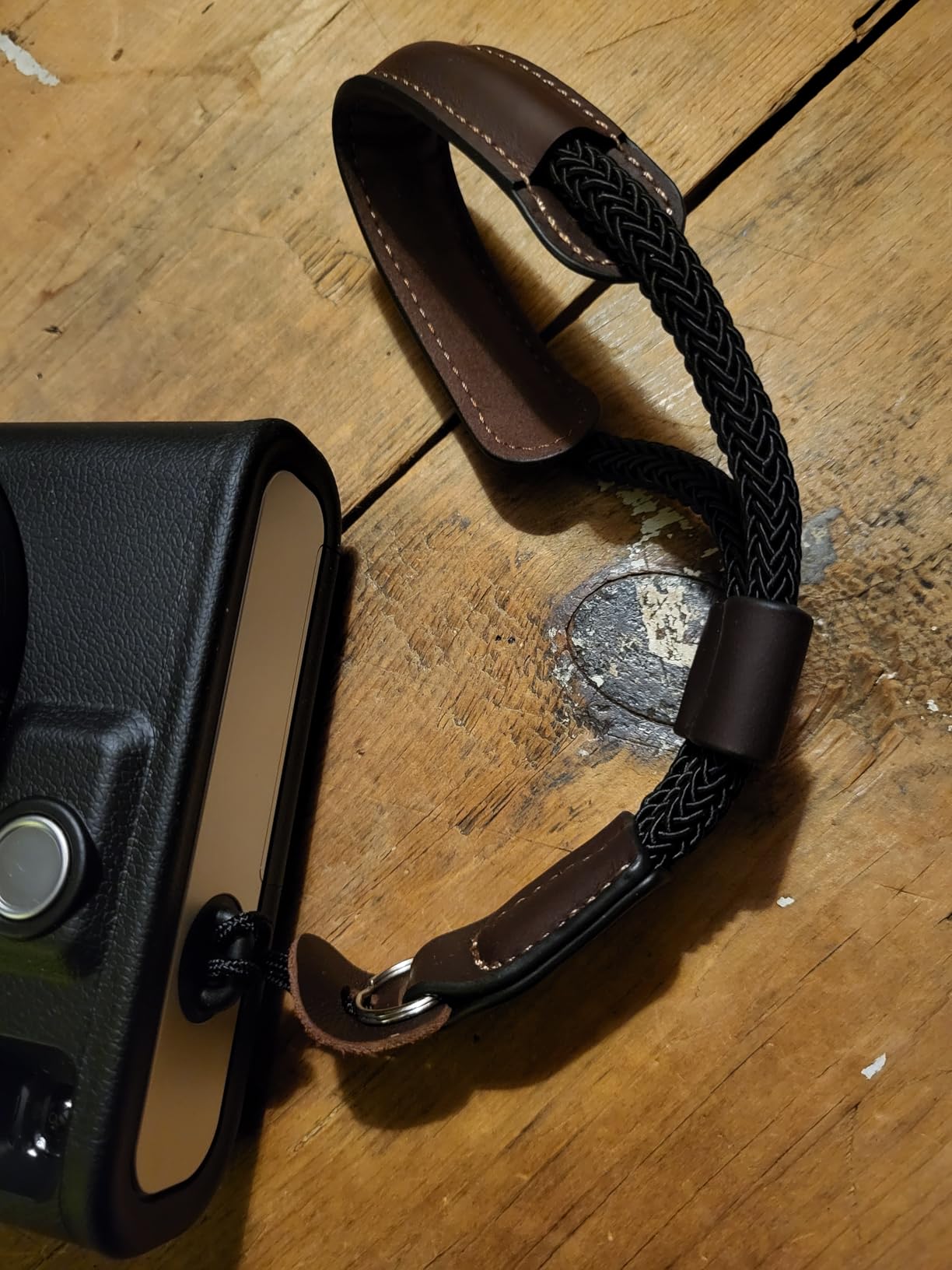
Some bodies have a strap hole style that a loop-style wrist strap will not reach. This one attaches either by cord or by a metal loop, which covers most strap hole configurations and removes the compatibility gamble entirely.
At 30g it adds effectively nothing to the body. The genuine leather with microfiber lining is soft, breathable and comfortable around the wrist, and the retro brown colour was clearly designed to sit against a Fujifilm or Leica body rather than against a DSLR.
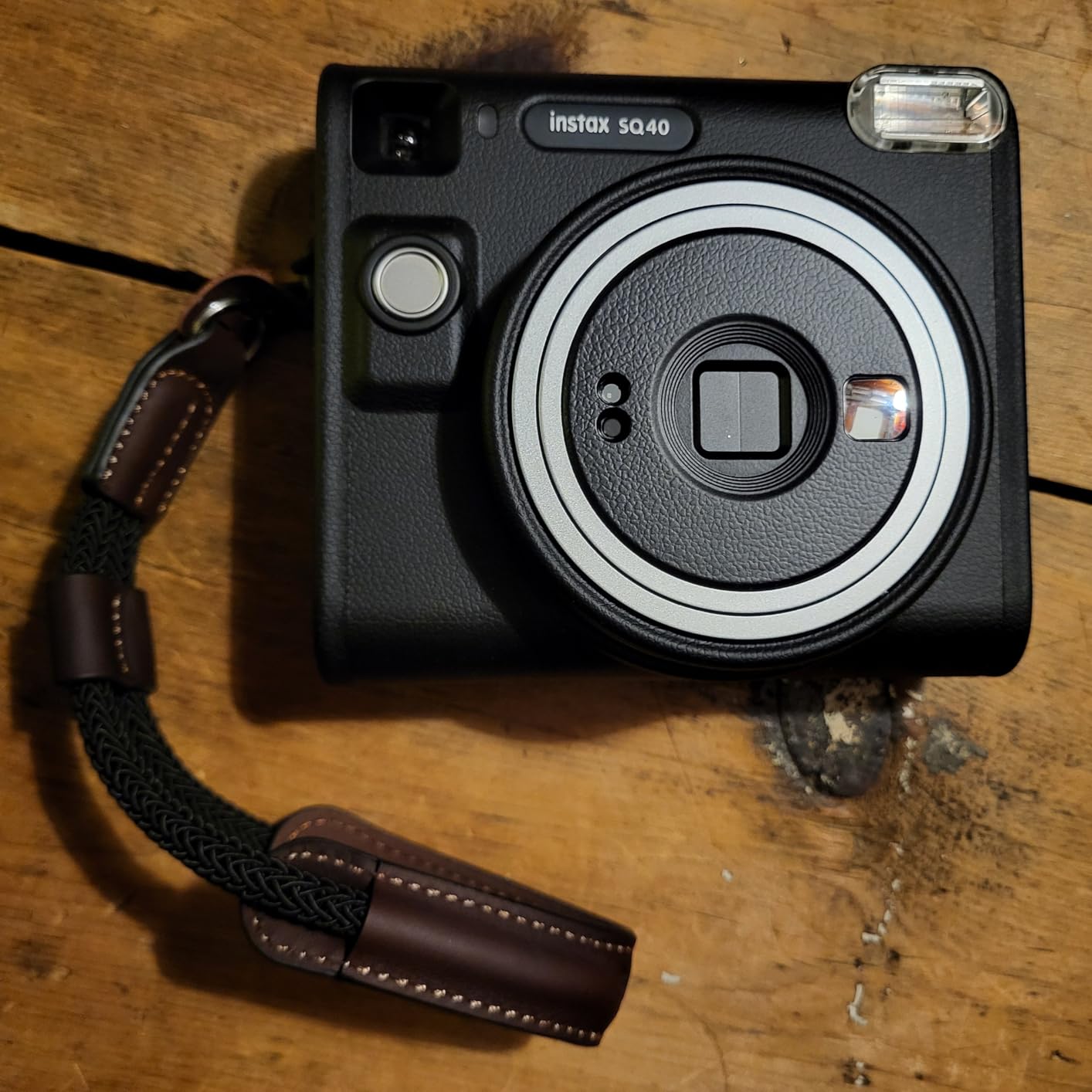
The review profile is excellent. 4.8 stars from 788 reviews with 89% five stars is the strongest five-star share in this guide, and owners keep mentioning the combination of genuine leather, low weight and styling.
Adjustability comes from a microfiber stopper that cinches the loop, so it fits most wrist sizes. The one consistent limitation is the fixed total length of 255mm, which some wearers with larger wrists find tight.
Styling that is part of the choice
For a fixed-lens or rangefinder-style body, the strap is visible gear as much as functional kit. Retro brown leather reads as deliberate, where a black webbing strap disappears. If the camera is a prop in your photography, that matters.
Where it is out of its depth
A 30g leather wrist strap is built for mirrorless, DSLR and compact bodies, but not for a body with a long telephoto mounted. Keep the weight low on this one and use a proper wrist strap with heavy glass.
12. JJC Neoprene Neck Strap — Best Low-Cost Upgrade From the OEM Strap
Pros
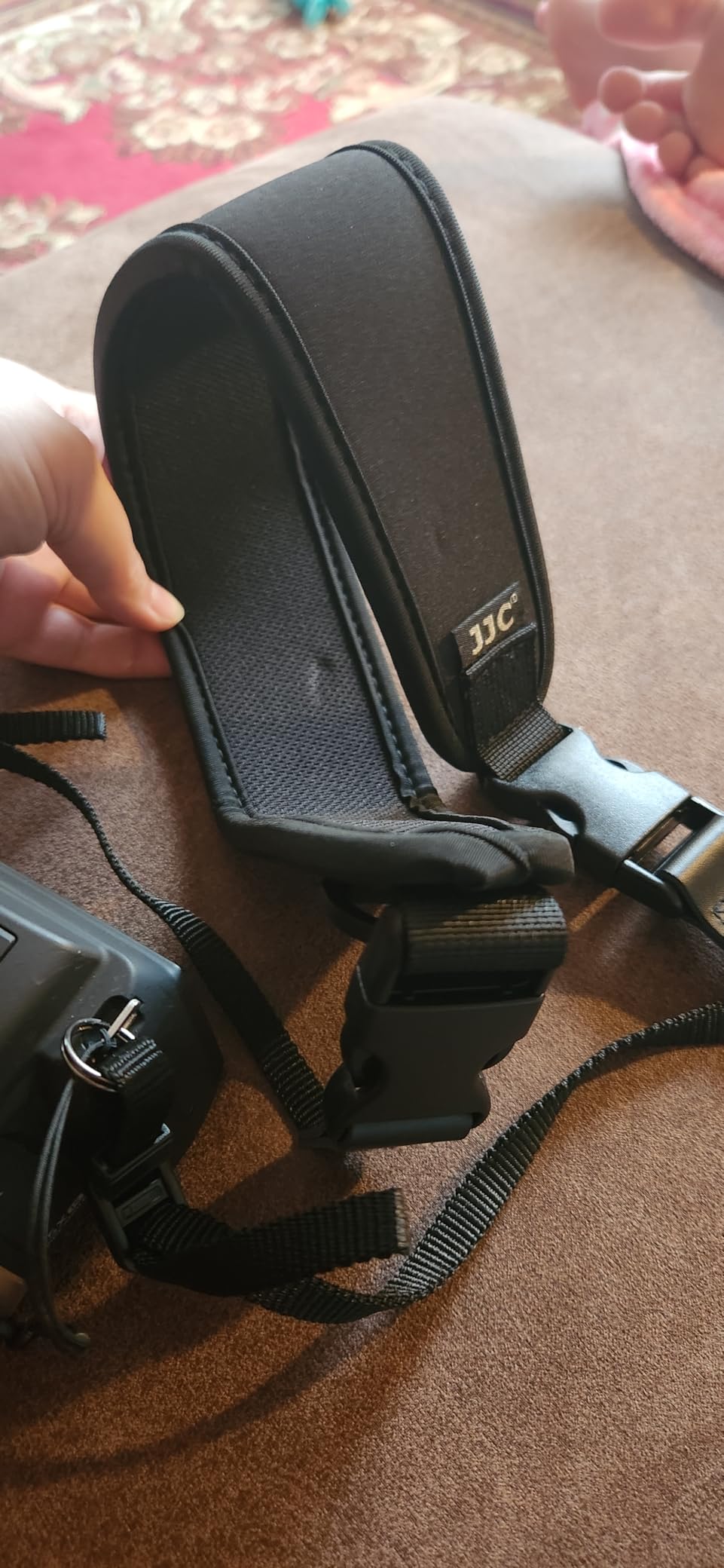
- Comfort curve in the neoprene reduces neck and shoulder fatigue with a heavy body
- Anti-slip body-side surface keeps the strap in place while shooting
- Quick release clips let the neck section be removed and reworked as a hand strap
- Dual-buckle length adjustment
- Very low cost for the feature set
Cons
- Thinner padding than a dedicated chest rig for very heavy setups
- The small hooks at the attachment points are the part most likely to need replacing
Sometimes the correct answer is simply a better version of the strap you already have. This neoprene neck strap costs very little and fixes the two things people complain about most: digging into the neck, and sliding around while you shoot.
The comfort curve is a shaped profile rather than a flat rectangle, and the body-side surface is textured so it grips clothing. Combined, those two details take the sting out of a full day with a body and a short zoom.
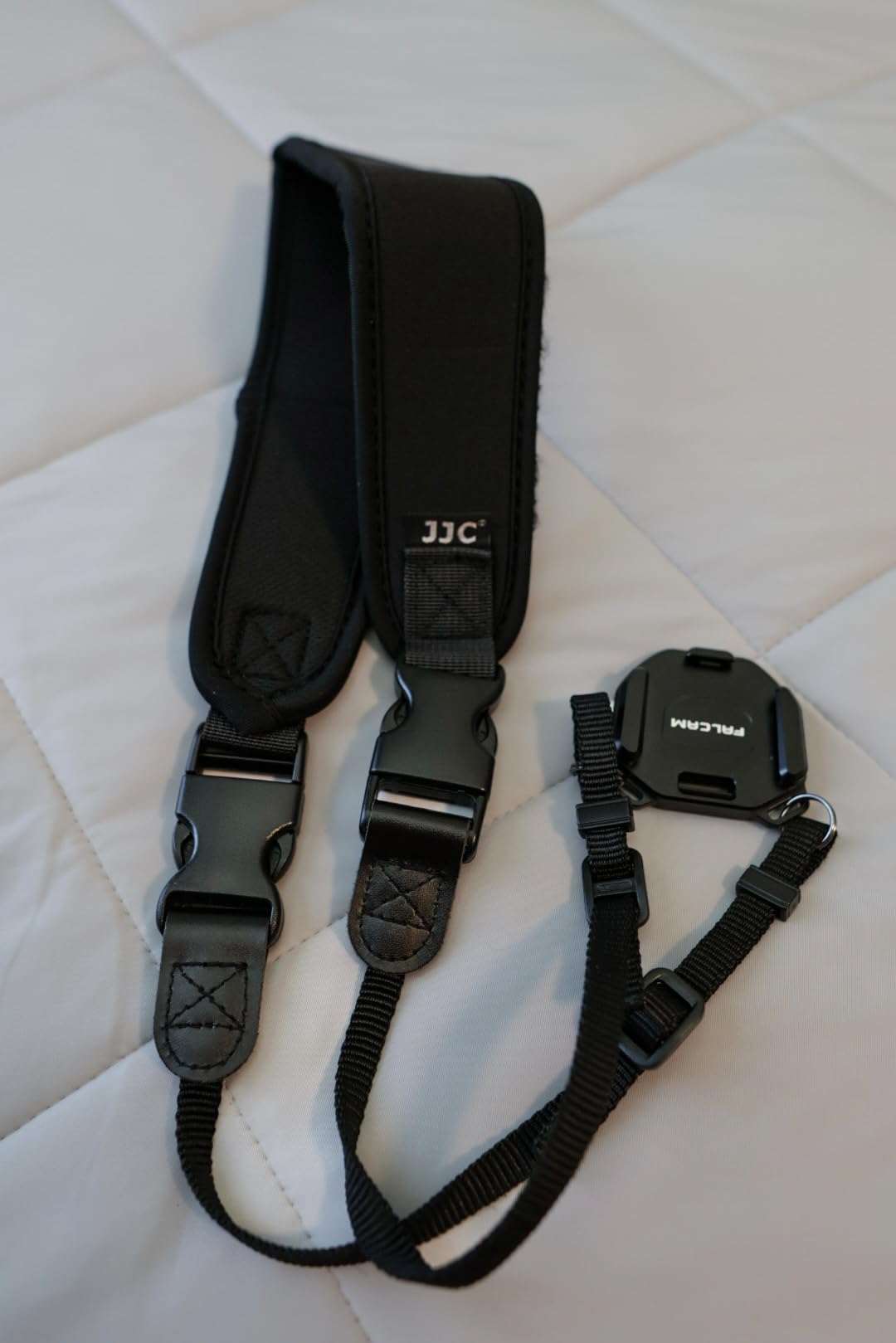
The genuinely clever feature is the two quick release clips. Remove the neck section and join the two ends, and the same strap becomes a hand strap. Forum users frequently run it as a neck strap on the walk and a hand strap on the shoot.
Compatibility is broad: Canon EOS R, R5, R6 and the Rebel line, Nikon D6, D5, D850, D780 and Z50 II, Sony A1 and A9 II, Fujifilm, Olympus OM System and Panasonic Lumix. Two buckles handle length adjustment for different users.
What to watch
The padding is thinner than a dedicated chest rig, so it will not rescue a very heavy body with a 70-200mm. The two small hooks at the lug attachment are the part most likely to need replacing — keep spares if you shoot far from home.
Why it still makes the list
At 4.7 stars from 806 reviews with 80% five stars, it is dependable rather than remarkable, and it costs very little. For a DSLR owner who wants a better neck strap without a big purchase, it is a fair trade.
13. Padwa Lifestyle Cotton Strap — Best for Hot Weather
Padwa Lifestyle Camera Strap – 2″ Full Grain Leather Ends Camera Straps for Photographers, Vintage Embroidered Cotton Weave Soft Suede Fabric Padded Strap Quick Release fits All Cameras
Pros
- Two inch wide cotton weave is noticeably more breathable than leather or webbing
- Relieves neck and shoulder pressure over extended shooting
- Double-layer cowhide end pieces resist deformation
- Rated to hold 30 lbs of camera gear
- Worn around the neck or crossbody or over one shoulder
Cons
- Cotton webbing retains moisture if caught in rain
- Embroidered pattern is a style statement rather than a neutral choice
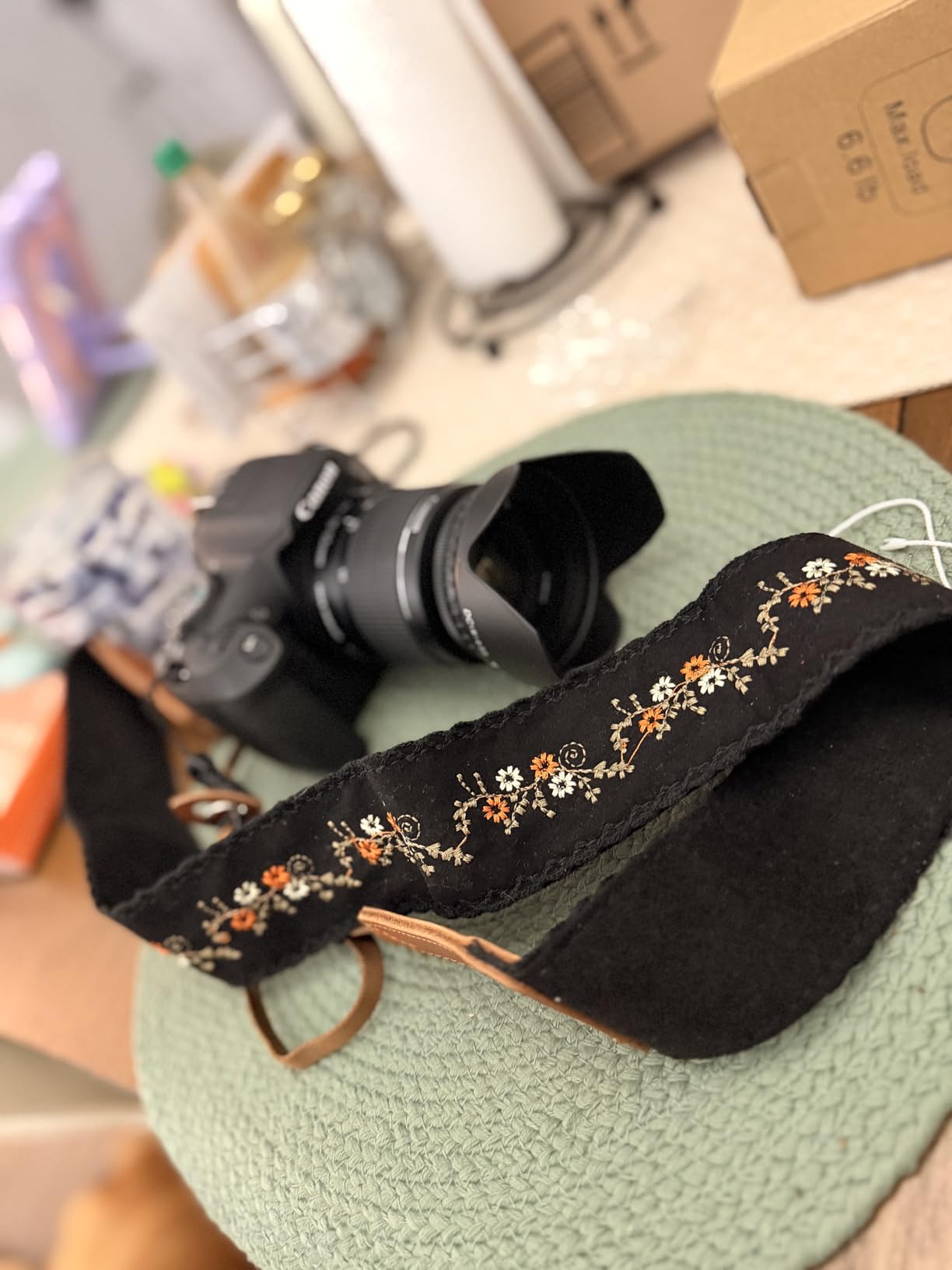
Summer is when synthetic straps get punished. This one is a two inch wide cotton strap with a retro embroidered pattern, and cotton simply moves air better than neoprene, nylon webbing or leather when the temperature climbs.
Width is doing the work here. Two inches of flat cotton spreads the load over a much larger area than a thin strap, which is why it relieves pressure over an extended shoot rather than simply hanging there.
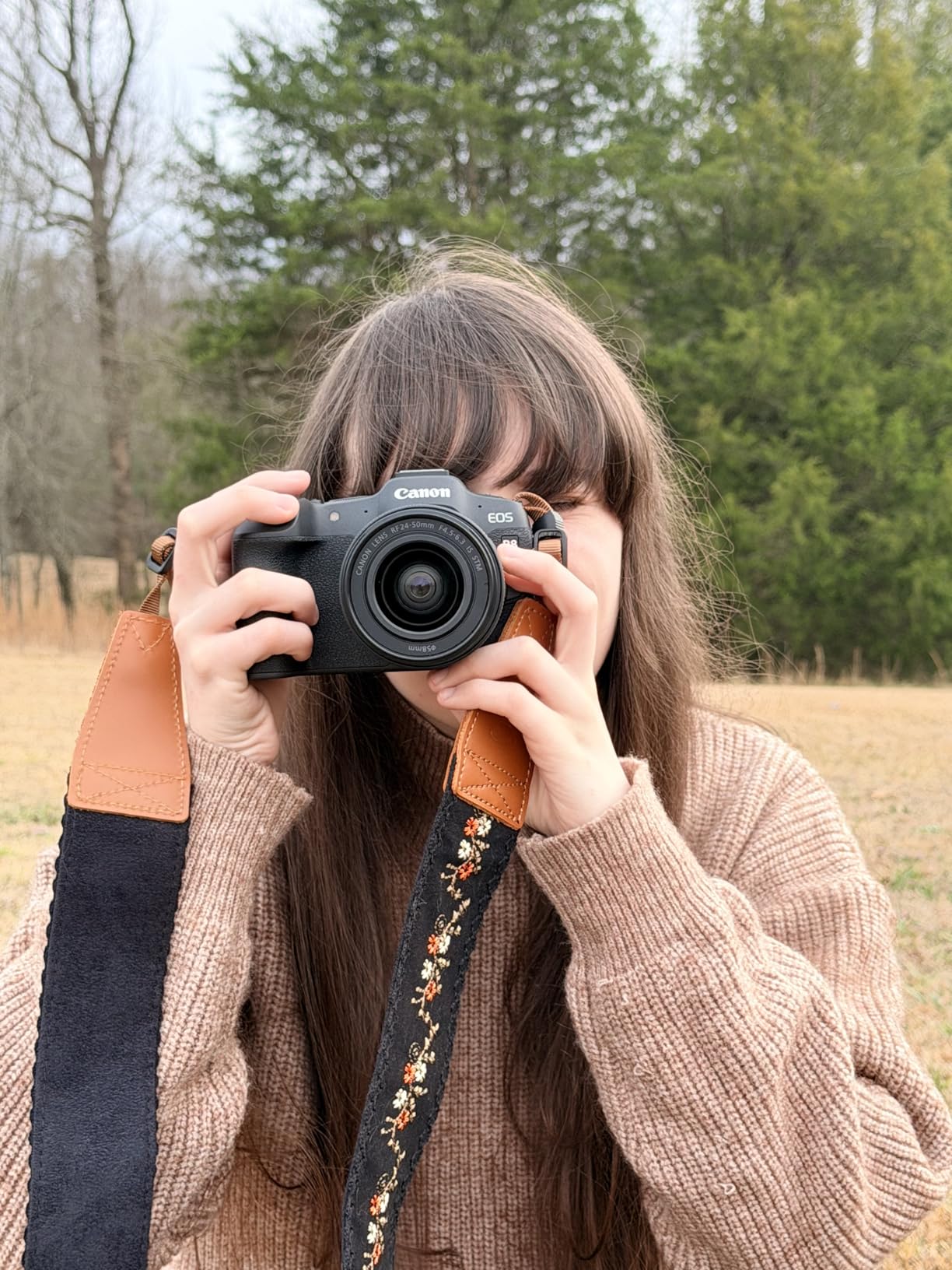
Construction is sensible: double-layer cowhide at both ends, a thick wear-resistant nylon rope connector, a PVC lock, a cowhide protective pad and a round metal buckle. The published load rating is 30 lbs, or 13.6 kg.
Adjustable from 41 to 56 inches and compatible with Canon, Nikon, DSLR and SLR bodies, camcorders, binoculars and monoculars. At 4.7 stars from 703 reviews, 86% of ratings are five stars. The 2 inch width is 5 cm.
Climate is the deciding factor
If you shoot outdoors in heat, cotton is the material that will not leave you soaked in sweat. If you work in rain, the same absorbency works against you — cotton holds water, and it takes time to dry.
A load rating to respect
Thirty pounds covers a mirrorless body with a standard zoom and more besides. It does not cover a heavy body with a telephoto mounted, so pair it with a wrist strap on the body you care about most.
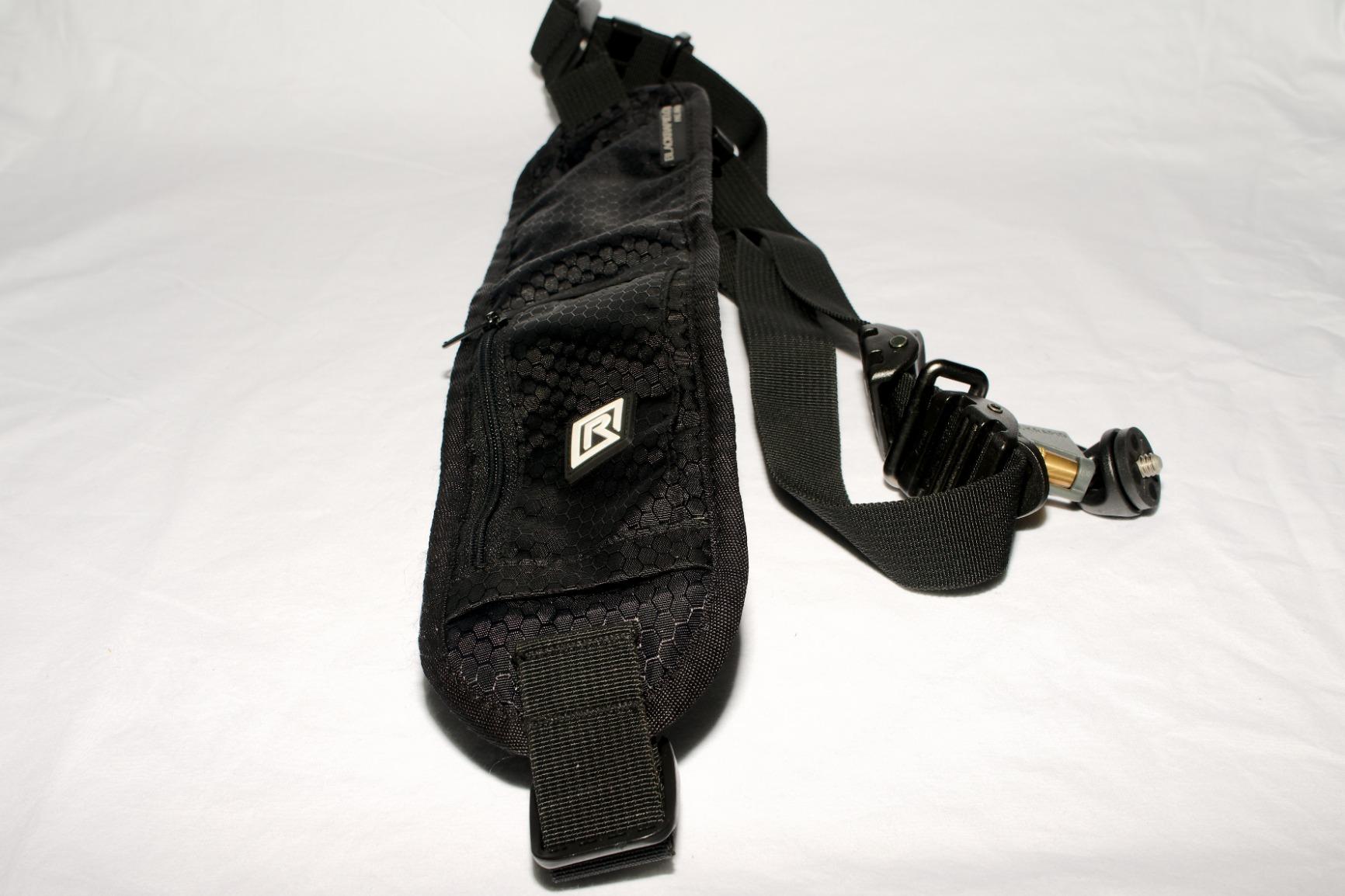
14. BlackRapid RS-4 Sling — Best at Staying Put
Pros
- Foam padding with a honeycomb overlay that does not dig into the neck
- Locking clamps stop the pad migrating as you move
- CR3 swivel swings the camera to your eye and back to the hip in one motion
- Fits either shoulder
- Small zip pocket for memory cards or a lens cloth
Cons
- Carabiner can knock against the body during handling
- Thin printed setup instructions
- Included safety tether is short on a long telephoto foot
The complaint about almost every crossbody strap is that the pad slides down your shoulder until the camera is at your hip bone. The RS-4 addresses it directly with front and rear spring cam locks that grip the pad in position.
The CR3 swivel is the mechanism that sells it. The camera rotates from hanging inverted at your hip to the eye in a single motion, and the FR5 connection with a Lockstar carabiner cover keeps the connection secure while it moves.
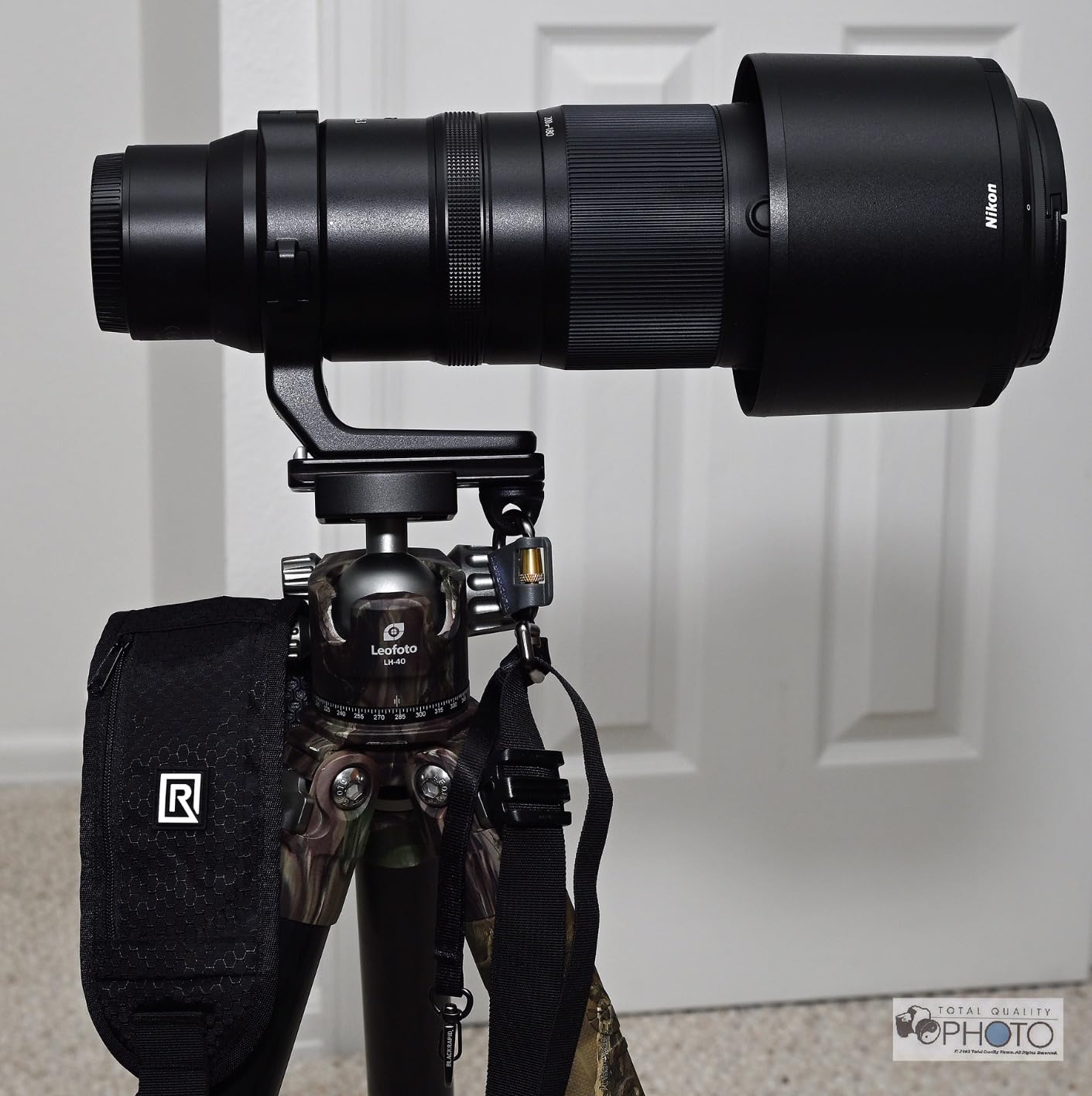
Padding is foam with a thin nylon honeycomb overlay, and the strap profile is thin, straight and low, which is what lets it sit on either shoulder — the stated reason the pad looks like that. There is no under-arm stabilizer, so it works with bulky clothing.
Owners report multi-year service and credit the locks with finally freeing them from neck pain. Buyers who came from cheaper slings often describe those failing quickly, which is the main justification for the premium here.
Getting the setup right
The instructions in the box are thin, and the brand’s own setup video is the better guide. The swivel has a defined direction, so fitting it backwards is the most common first-day error. Ten minutes with the video saves an afternoon.
Mind the carabiner and the tether
The carabiner can knock against the body while you handle the camera, and the included safety tether is short enough to be tight on a long telephoto foot. Both are minor, but both are worth knowing before you rely on the strap on a paid shoot.
15. SMALLRIG Leather Neck Strap — Best for Cages and Rigs
Pros
- Top-grain leather that is breathable and durable
- Soft leather padding reduces pressure on the neck and shoulders
- Threads straight through the strap slot with no tools
- Spare O-ring included for different lug styles
- Works with SmallRig camera cages as well as bodies
- Black and brown options
Cons
- Narrow 39-43 inch adjustment range limits fit across heights
- Attachment point durability draws a wider spread of reviews than the rest
If you shoot on a cage rather than a bare body, the strap usually has to clear the top plate and the handles. This one is designed with that in mind and is explicitly compatible with SmallRig cages, which is why it sits at the end of this list rather than near the other leather options.
The construction is top-grain leather with soft padding, and the published static load is 10kg, or 22lb. Installation is a matter of threading it through the shoulder strap slot — no tools, no plate, no quick release to fumble.
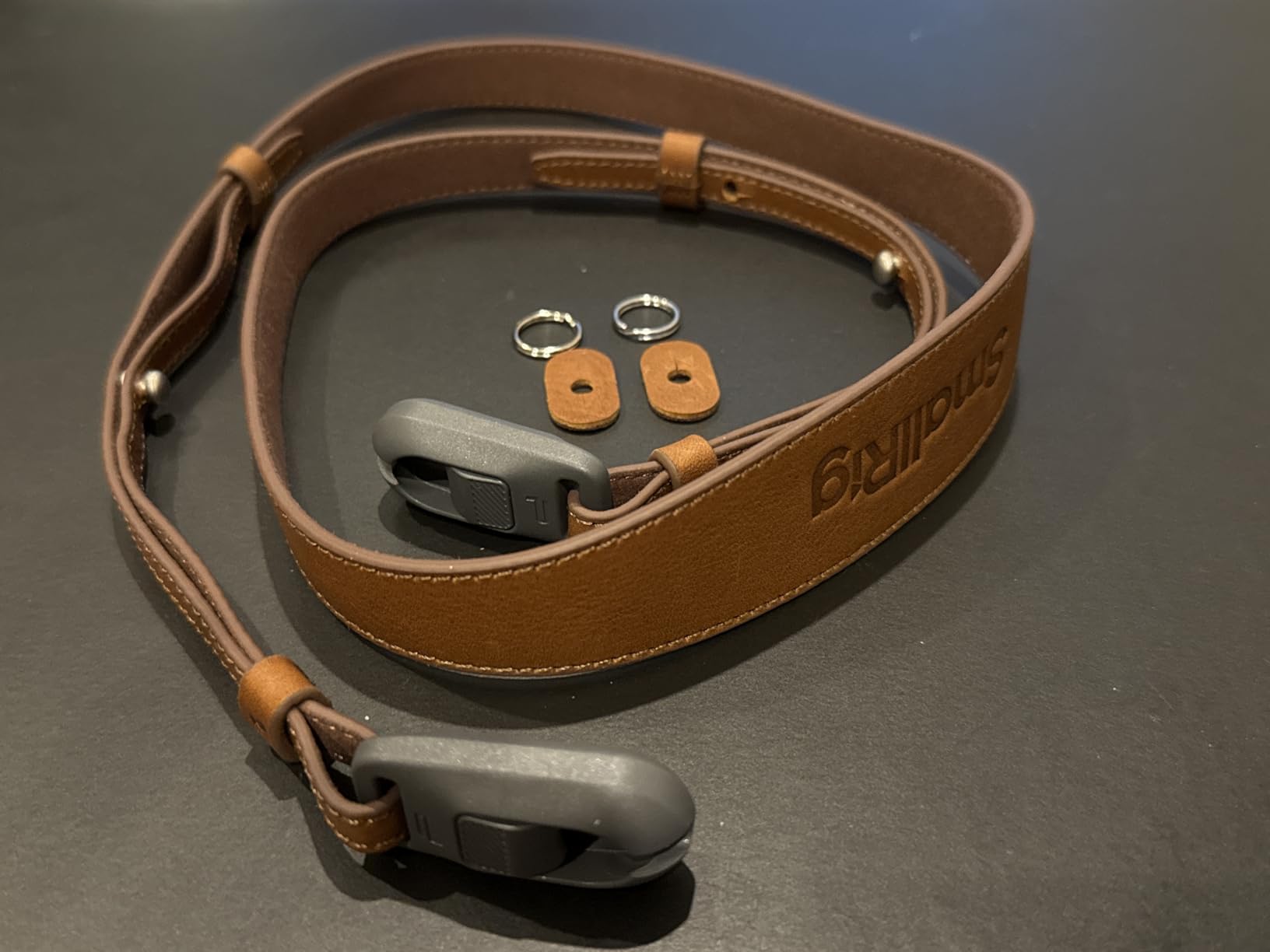
A complimentary O-ring is included, which covers the different lug styles you might meet across bodies. Adjustable from 100 to 110cm, so 39 to 43 inches, and wearable around the neck or cross-shoulder.
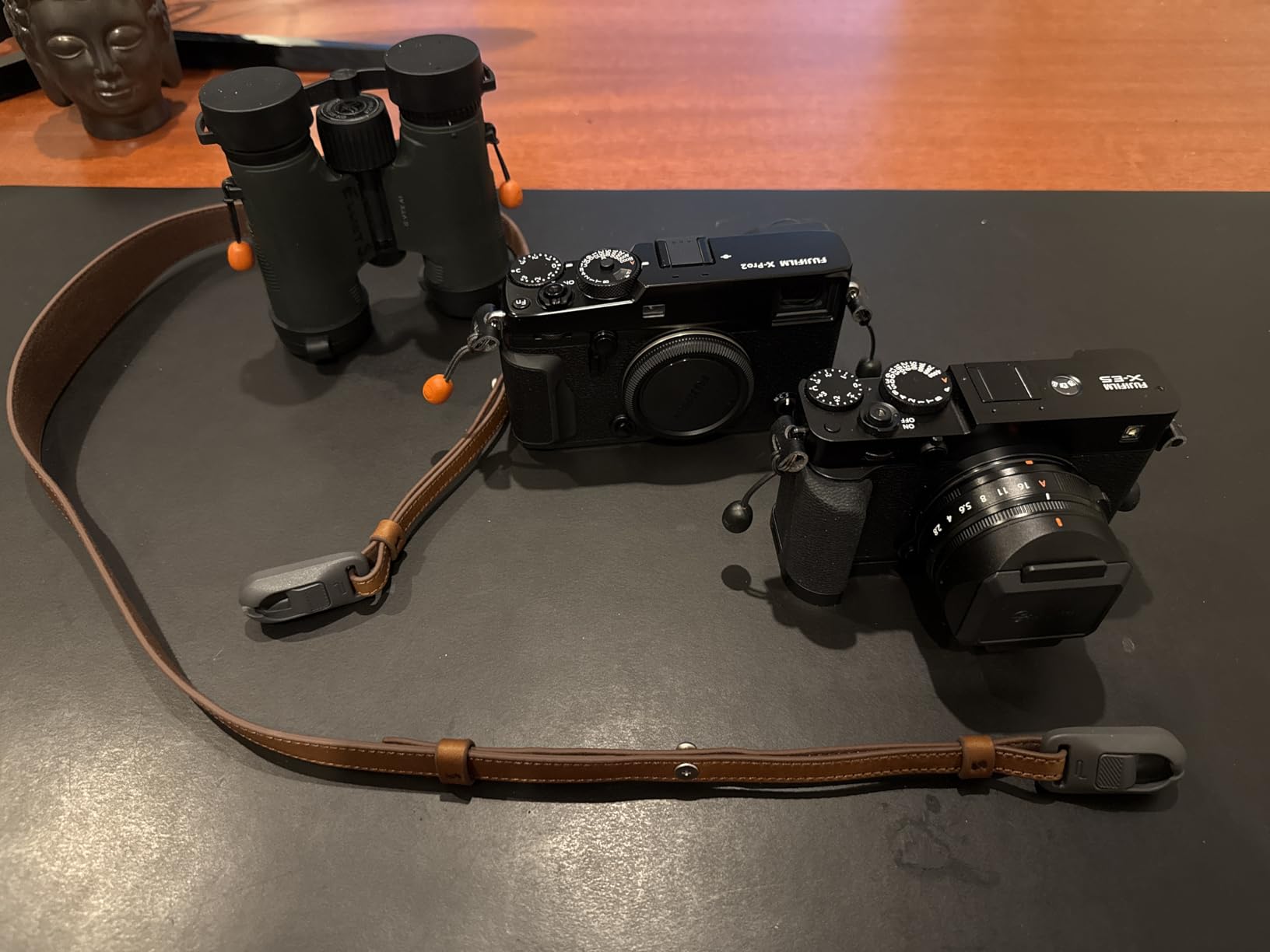
At 4.4 stars from 392 reviews the spread is wider than the other leather straps here — 67% five stars but 5% one star, tied for the highest single-star share in the group, concentrated on durability complaints at the attachment points.
The load rating is the deciding number
Ten kilograms is a real number and it is enough for a body with a moderate zoom. It is not enough for a heavy body with a long telephoto, and for that weight a sling with a metal quick release is the better purchase.
Fit is the limitation
A four inch adjustment range is tight. Two photographers of very different heights sharing one strap will both end up with a compromised fit. If you are buying for yourself, the range is adequate.
How to Choose a Camera Strap
Work through these in order and the choice makes itself. Weight first, then strap type, then everything else.
Start with the weight of your camera and lens
A compact body under 800g with a small lens is happy on a wrist strap. A mirrorless body with a standard zoom needs a padded neck or crossbody strap. A DSLR or a body with a telephoto needs a sling or a chest rig, and anything above 2kg should have a published load rating above it.
Published load ratings are worth trusting more than vague durability claims. In this group you will see 200lb per anchor on the Peak Design hardware, 90kg on the PGYTECH webbing, 30 lbs on the Padwa cotton strap and 10kg on the SMALLRIG leather strap.
The strap types, and what each one is for
A neck strap hangs the camera from both strap lugs and sits at your chest. It is the easiest to put on and the hardest to live with over a full day. A crossbody sling runs from one shoulder to the opposite hip and puts the camera where you can swing it to your eye in one motion. A wrist or hand strap holds a compact body in your hand and is really drop protection. A chest rig spreads the load across your back, both shoulders and your chest, and is the standard answer for dual-body event work.
The most common question we get is the difference between a camera sling and a camera strap. They are the same family of object. A strap is the generic term, a sling is the specific crossbody configuration, and the practical difference is where the camera sits and how fast it comes up to the eye.
Get the length right for your height
Most adjustment issues are fit issues, not quality issues. For a crossbody carry, the camera should hang at hip height, not at your ribs, so the weight pulls straight down. Ranges of 20 to 30 inches work for most adults; anything with a very short minimum length will not fit a smaller frame.
What makes a good quality camera strap
Six things, in priority order: a published load rating, metal hardware rather than plastic buckles, a redundant attachment — a second tether, a second ring, or a locking connector — quick length adjustment, a padded or wide section that matches your load, and a material that suits your climate. A strap with none of these is a strap you will replace after one drop.
Material and climate
Nylon webbing is the workhorse: light, cheap, replaceable. Neoprene is soft and warm, and it traps heat in summer. Full-grain leather patinas, lasts for years and is the only option here that genuinely improves with age, but it needs a break-in period and dislikes rain. Cotton breathes better than any of them in heat, and absorbs water when it gets wet.
Hardware and safety checks
Two attachment points are the standard you should hold every strap to. The waka neck strap includes a separate tether alongside its quick release plate, the Altura hand grip has a secondary tether, and the Peak Design anchors lock at the centre. Before a paid shoot, pull each connection by hand and look at the stitching where it meets the hardware.
Camera brand compatibility
Almost every strap here attaches to standard metal strap lugs or a 1/4-20 tripod screw, so Canon RF, Nikon Z, Sony E, Fujifilm X and Leica bodies all work. The exceptions worth checking are straps that need round connection holes rather than triangular lugs, and quick release systems that need a compatible plate on the body.
When not to upgrade
If your camera is a compact body and you walk short distances, the strap that came in the box may genuinely be enough. The upgrade earns its place when you are carrying weight for hours, when a drop would hurt, or when you need a camera in your hand in under a second. There is no prize for replacing a strap that already does the job.
For more focused picks, we have also put together guides to the best sling camera straps, the best leather camera straps and the best camera straps for wedding photographers.
Frequently Asked Questions
What camera strap do professionals use?
Most working photographers use a crossbody sling with a metal quick release, or a chest rig when they carry two bodies. The factory neck strap is rarely used on a paid shoot because it loads the base of the neck and swings the camera while walking.
What is a good quality camera strap?
A good quality strap has a published load rating, metal hardware instead of plastic buckles, a redundant second attachment point for safety, one-finger length adjustment, and a padded or wide section matched to the weight you carry. Anything missing the load rating is a gamble.
What is the best camera strap for street photography?
A padded crossbody sling that swings from the hip to the eye in one motion is the best strap for street work, because you need the camera in your hand in under a second. A wrist strap suits street shooting only if you carry a compact body.
Which camera strap is better, Peak Design or PGYTECH?
Peak Design leads on padding refinement and on the Anchor Link quick release standard that many third-party straps share. PGYTECH leads on raw material strength, with webbing rated to 90kg and a dead-center locking connector. Choose Peak Design for comfort, PGYTECH for hardware strength per unit of money.
What is the difference between a camera sling and a camera strap?
A strap is the general term for any carrying system. A sling is the specific crossbody configuration that runs from one shoulder to the opposite hip, with a rotating connector that lets the camera swing to the eye in one motion. A neck strap hangs the camera at the centre of the chest instead.
The Best Camera Straps for Photographers in 2026, Final Word
Our pick of the best camera straps for photographers this year is the Peak Design Cuff, on the strength of the highest rating and the largest review base in the group, backed by a self-cinching design that turns an accidental drop into a non-event. Pair it with a proper shoulder strap and you cover both cases.
For heavy bodies and long days, the Peak Design Slide is the most comfortable. For travel where bag space is the constraint, the Leash. For hardware that stays locked under load, the PGYTECH. For weight off your neck entirely, the Cotton Carrier rig. For a strap that improves with age, the MegaGear leather.
Whatever you choose, check the connection points by hand before you rely on it, and keep a second tether in the bag. If you want a narrower look, start with our best camera straps for travel photographers guide.