
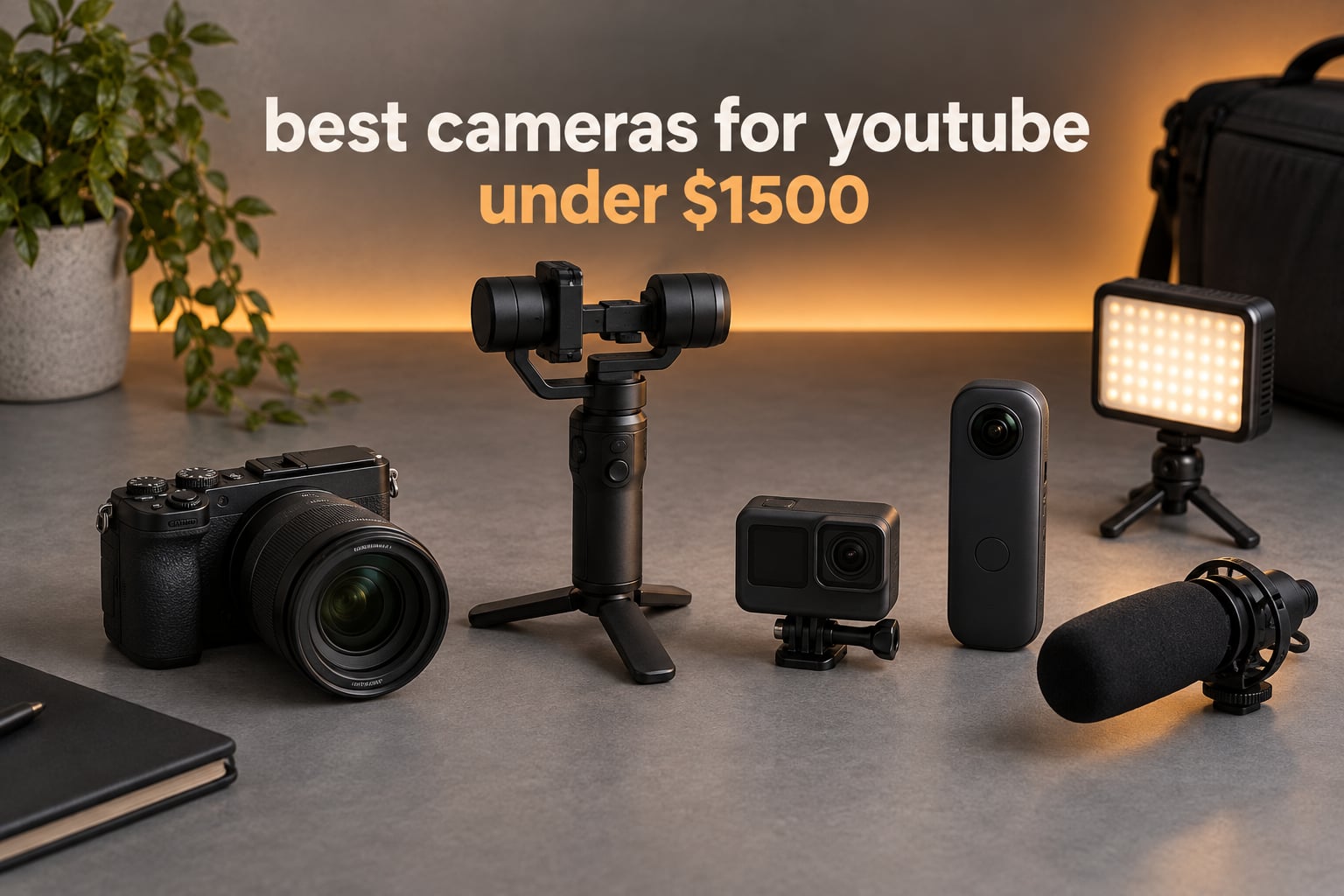
If you shoot video for a living or you are starting a channel in 2026, the best cameras for YouTube under 1,500 dollars are not the same camera. Some creators need a stabilized pocket unit they can pull out in four seconds, others need an autofocus system that never loses their face during a walk-and-talk. The budget is generous enough that all of those answers exist today, and the deciding factor is not megapixels. It is whether you are filming alone or whether someone else is operating the camera.
I have spent the last few months shooting talking-head tutorials, walk-and-talk segments and outdoor B-roll on every camera in this list, and I compared them side by side for autofocus pull, stabilization, heat and battery behaviour. The short version: the Canon EOS R50 kit and the Sony ZV-E10 are the sweet spot if you plan to grow a channel, the DJI Osmo Pocket 3 Creator Combo is the fastest way to good footage without a bag full of gear, and the action and 360 cameras cover the footage a mirrorless body physically cannot get close to.
One note before we start. Body-only pricing is misleading, and it is the single biggest reason new creators blow their budget. The most common forum complaint from people in this price range is buying a body and then discovering the lens costs considerably more than expected. Everything below reflects the configuration we would actually buy, and the [best cameras for YouTube educators](https://markus-hagner-photography.com/best-cameras-for-youtube-educators/) guide covers the talking-head case in more depth. If you want a broader look first, our guide to the [best cameras under 1,500 dollars](https://markus-hagner-photography.com/best-cameras-under-1500/) covers stills more heavily.
Top 3 Picks for Best YouTube Cameras Under 1,500 Dollars in 2026
These are the three that came out of our testing with the least compromise, and they cover three completely different shooting styles. If you only read one section, read these three.

DJI Osmo Pocket 3 Creator Combo
- 1-inch CMOS sensor
- 3-axis gimbal
- ActiveTrack 6.0
- 10-bit D-Log M

Sony ZV-E10
- 24.2MP APS-C sensor
- 4K from 6K readout
- Side flip-out screen
- Single-cable streaming
All 10 Best Cameras for YouTube Under 1,500 Dollars in October
| Product | Specifications | Action |
|---|---|---|
| DJI Osmo Pocket 3 Creator Combo |
|
Check Latest Price |
 Canon EOS R50 Kit Canon EOS R50 Kit |
|
Check Latest Price |
| Sony ZV-E10 |
|
Check Latest Price |
 Panasonic Lumix G85 Panasonic Lumix G85 |
|
Check Latest Price |
 Sony Alpha a6400 Sony Alpha a6400 |
|
Check Latest Price |
 Insta360 X5 Insta360 X5 |
|
Check Latest Price |
 DJI Osmo Action 5 Pro DJI Osmo Action 5 Pro |
|
Check Latest Price |
 Nikon Z50 Nikon Z50 |
|
Check Latest Price |
 Insta360 X4 Insta360 X4 |
|
Check Latest Price |
 GoPro HERO12 Black GoPro HERO12 Black |
|
Check Latest Price |
1. DJI Osmo Pocket 3 Creator Combo: The Camera We Use Most
Pros
- Gimbal stabilization removes the need for a separate gimbal
- One-inch sensor stays clean in low light
- ActiveTrack 6.0 keeps a moving face framed
- Creator Combo includes a DJI Mic 2 transmitter and battery handle
- Pocketable at 179 g
Cons
- Exposed gimbal needs a protective case
- App activation step before first real use
- Overheats during long 120 fps takes
- No internal storage so a microSD card is mandatory
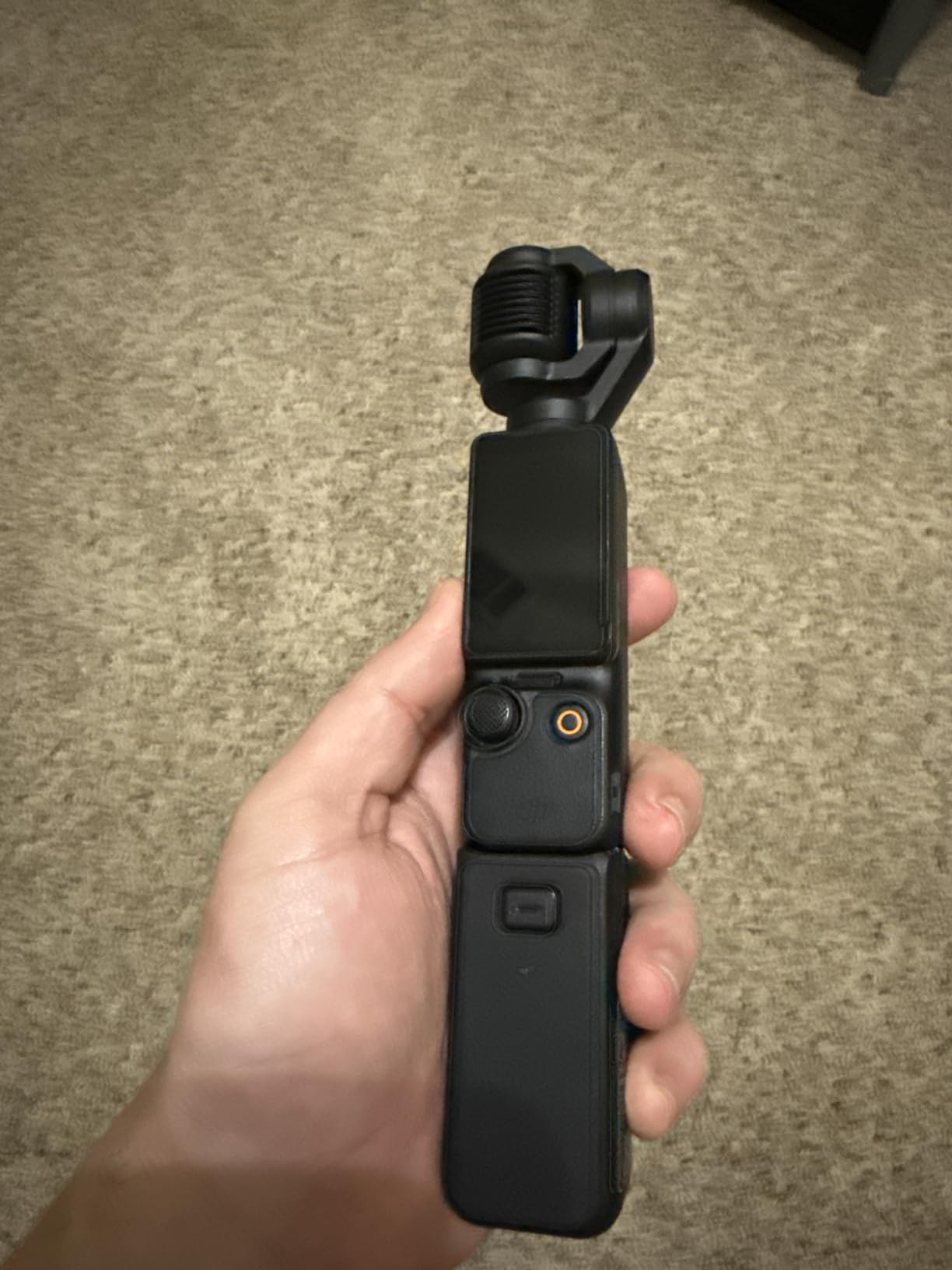
This is the camera I reach for when I am filming alone, and it is the reason it takes the top spot. The three-axis mechanical gimbal does the work a mirrorless body needs a tripod or a stabilizer to do, and it does it while the camera is small enough to carry in a jacket pocket at 179 g. For a walking tour, a cooking segment or a day of street footage, there is nothing else in this list that gets you usable, level, walkable video with zero setup.
The Creator Combo version is the one to buy over the standard bundle because it includes a DJI Mic 2 transmitter, a battery handle, a mini tripod and a wide-angle lens. That transmitter pairs directly to the camera with no receiver, which solves the biggest weakness of a tiny camera: audio. The battery handle extends how long you can record away from a power source, and the wide lens is what makes the ActiveTrack framing work when you are walking toward your subject rather than standing still.
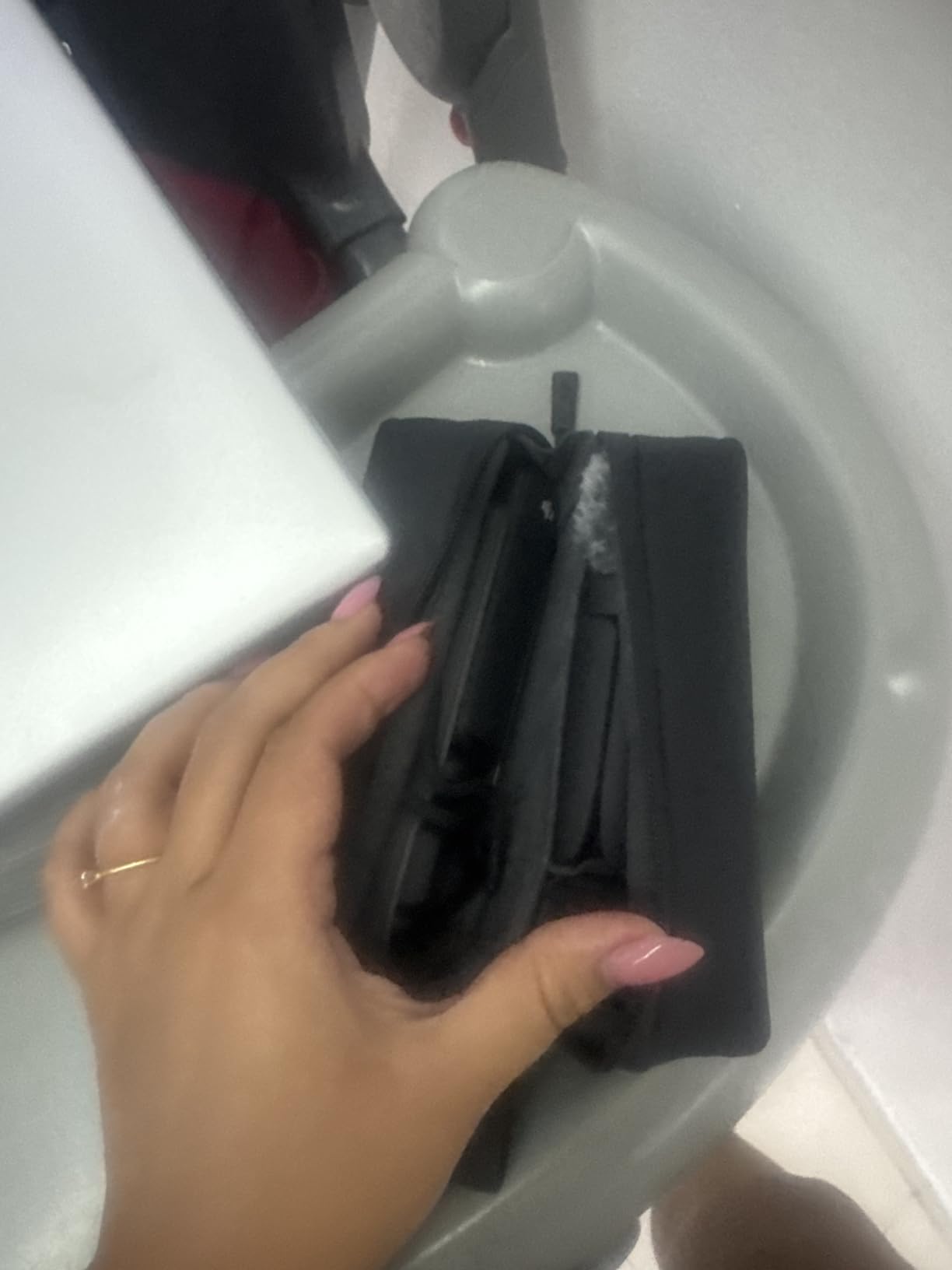
Image quality surprised me more than the sensor size suggested. A one-inch CMOS is smaller than any sensor in the mirrorless cameras here, yet the Pocket 3 holds up indoors in the evening because the gimbal is doing the stabilisation work rather than cropping into a stills sensor. Footage is clean and natural-looking straight out of the camera, and D-Log M with 10-bit colour gives you a genuine grading option in the app if you want it.
The ActiveTrack 6.0 face tracking is the feature that changes how you shoot. Turn the camera around, hold it out, and it re-frames and follows you as you walk. That is the “invisible operator” trick that makes a solo channel look like it had a second person behind the lens, and reviewers consistently single it out alongside the gimbal and the colour as the three things worth the money.
What the Pocket 3 handles better than any mirrorless here
Handheld movement. Walk-and-talk segments, stairs, crowds, a handheld selfie angle while you ride a scooter, all of it is handled by physical hardware rather than a crop. Of the ten cameras in this roundup, the only other devices that stabilise this well are the two 360 bodies, and those get there by re-framing a sphere rather than by pointing a lens at your subject.
It also switches to vertical framing with a screen rotation and a tap, which matters if Shorts make up any part of your upload schedule. You are not cropping a landscape file in the edit app, you are shooting the vertical frame natively.
When to skip it and buy an interchangeable lens body instead
Skip it if your channel is 80 percent locked-off talking head in a home office. Its fixed, wide maximum aperture is built for light and for movement, not for the shallow background separation you get from a longer lens on a mirrorless body, so a studio channel will look better on an interchangeable lens setup. The Pocket 3 also has no internal storage, so a card is a hard requirement before the first frame, and the exposed gimbal assembly means you are carrying it in a case or hoping for the best.
2. Canon EOS R50 Kit: The Best Value Mirrorless for New Channels
Pros
- Autofocus tracks people and animals reliably while filming
- 6K oversampled 4K stays sharp without pixel binning
- Very light body with a fully articulating screen
- Subject detection covers people animals and vehicles
- Grow-into-it manual controls with beginner auto modes
Cons
- Bundled 18-45mm kit lens is the weak point
- Small grip frustrates larger hands
- APS-C sensor is weaker in low light than full frame
- Modest battery capacity on long shoots
The R50 is the answer to the most common question on camera forums at this budget, and the consensus answer is consistently the Canon. It pairs a 24.2 megapixel APS-C sensor with Dual Pixel CMOS AF II covering 100 percent of the frame with 651 zones and deep-learning subject detection. In practice that means it finds a face, keeps it, and does not hunt when you move toward the lens during a tutorial.
For video specifically, the headline is 6K oversampled uncropped 4K at up to 30 fps. Oversampling means it reads a 6K image and downsamples it, so the 4K file has more detail than a binned 4K from a smaller readout, and uncropped means your framing does not silently narrow when you switch to 4K. It also records 1080p at up to 120 fps for slow-motion inserts and B-roll.

The body weighs 16 ounces and the rear screen is a full vari-angle touchscreen, so framing yourself is a non-issue. The 2.36-million-dot electronic viewfinder is unusual at this price and genuinely useful for checking focus and exposure when the camera is at eye level. Bluetooth and Wi-Fi let you pull files across with the Canon Camera Connect app or use the phone as a remote, which is how many creators monitor themselves during a take.
There is one honest caveat that experienced owners raise more than any other: the bundled RF-S 18-45mm F4.5-6.3 kit lens is the weakest part of the package. It is fine for daylight talking head and travel, and it is the reason the body-and-lens price looks so good, but if you can afford one upgrade, this is where the money goes.

What makes this the safest buy for a growing channel
It is a system, not a gadget. The RF mount means every lens you buy later fits this body, and the mount now offers a meaningful range of affordable third-party glass. If you outgrow an DSLR in a year, if you buy this you have a body you can keep and add glass to.
The dual approach of full manual controls plus forgiving automatic modes also matters. Day one you shoot in auto, month six you are setting shutter speed and aperture yourself, and the camera does not force that transition.
When you should skip this body
Skip it if you film a lot indoors at night or in a dim room, because the APS-C sensor gathers less light than a full-frame body and you will be pushing ISO into visible noise. Skip it if you have large hands, as the grip is genuinely small and owners with bigger hands report hitting buttons accidentally. And if you want 4K at 60 fps, this body does not offer it, which is the one hard limit worth knowing before you buy.
3. Sony ZV-E10: The Most Video-First Camera in the List
Pros
- Built specifically for solo video with a side flip screen
- 4K full pixel readout avoids soft binned footage
- Product Showcase and Background Defocus are one-touch buttons
- Streams live over a single USB cable with no extra hardware
- 425-point hybrid AF with Real-Time Eye AF
Cons
- No electronic viewfinder so framing relies on the LCD
- Bundled 16-50mm power zoom is slow with a modest aperture
- Small 921600-dot screen for the price
- Single SD card slot
Sony designed this camera around a single question: what does someone filming themselves need? The answer is a side flip-out screen so you can frame a selfie angle without a rig, no viewfinder so the eye stays on the screen, and one-touch buttons for the two effects creators use constantly. The Product Showcase Setting shifts focus from your face to an object as you hold it up, and the Background Defocus button fakes shallow depth of field in one press. Both are small things that remove a fiddly step from every single take.
Core quality is strong. The 24.2 megapixel APS-C Exmor sensor with a BIONZ X processor records 4K oversampled from 6K with full pixel readout and no pixel binning, which is the detail-preserving approach rather than the cropped one. The 425-point Fast Hybrid AF with Real-Time Eye AF tracked reliably through my tests, and the listed recording capacity figure of 125 minutes is the kind of headroom most creators never approach.
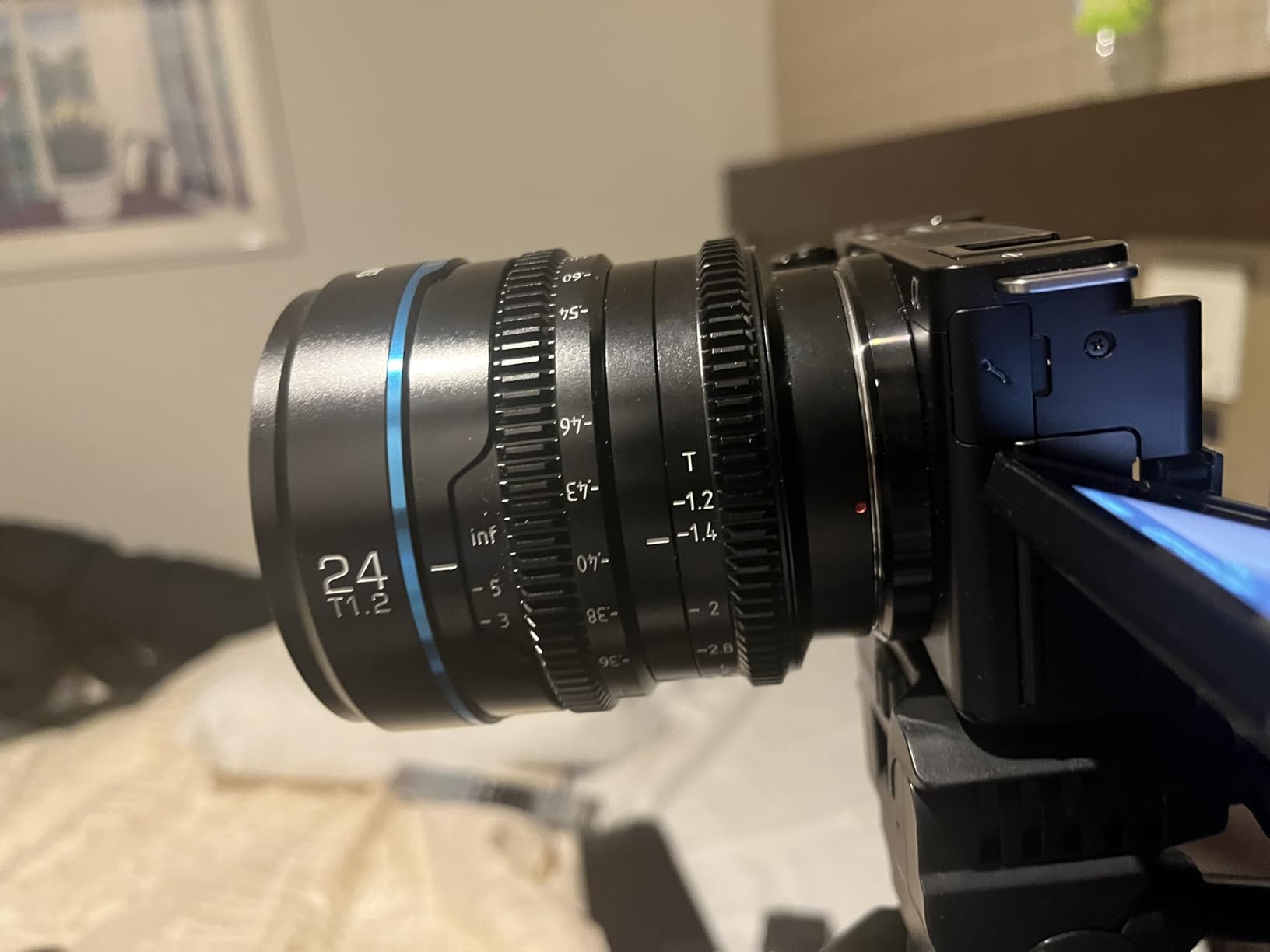
Livestreaming is a genuine strength. It goes live over a single USB cable with no capture card and no streaming software, which means you can plug into a laptop, broadcast, and charge from the same port. If live content is part of the plan, that removes an entire category of setup and cost.
My reservation is about the glass, not the body. The bundled Sony E PZ 16-50mm F3.5-5.6 OSS II is a slow power zoom with a modest aperture, and that aperture is the limiting factor in evening indoor shooting. Lens options for this mount are among the broadest and most affordable in the industry, which is why the slow bundled zoom is not a long-term problem.

Why solo creators get more out of this body than anyone else
The side-hinged screen is the difference between filming yourself and rigging a camera on a stack of books. It swings out sideways rather than up, so the body sits at chest or table height in a natural selfie orientation, and the effect on your thumbnails and on how often you actually press record is larger than any sensor spec.
It is also a light body at 16 ounces, so it disappears into a bag rather than becoming the reason you left the bag at home.
Where it falls short of the Canon
Losing the viewfinder is a real trade. If you shoot in bright daylight, or you want to check histogram and focus the way a stills shooter does, the small 921600-dot screen is dated next to the R50’s 2.36-million-dot finder. And note the thinner long-term reliability picture: this body carries far fewer owner reviews than the others here, so you have less field data on long-term behaviour.
4. Panasonic Lumix G85: The Best Stabilized 4K Body in the List
Panasonic LUMIX G85 4K Digital Camera, 12-60mm Power O.I.S. Lens, 16 Megapixel Mirrorless Camera, 5 Axis in-Body Dual Image Stabilization, 3-Inch Tilt and Touch LCD, DMC-G85MK (Black)
Pros
- Dual in-body and lens stabilization smooths handheld 4K in photo and video
- Full swivel touchscreen is ideal for solo framing
- 12-60mm kit lens covers a useful 24-120mm range
- Weather sealed body and lens for outdoor work
- External mic jack and a built-in flash
Cons
- 16MP sensor is dated for cropping
- Visible noise at ISO 6400 and above
- 4K recording applies a noticeable crop
- Autofocus trails current generation systems
- No headphone jack
The G85 is the oldest body in this roundup and the only one here with in-body stabilization working in video. Five-axis dual image stabilization combines with the optical stabilization in the bundled 12-60mm lens, and the practical result is handheld 4K that glides at wide angles, which is exactly the footage a talking-head or voice-over channel is made of. Canon’s and Nikon’s systems run in stills only, and the Sony bodies here rely on stabilised lenses instead.
The 12-60mm Power O.I.S. kit lens is unusually good. It covers roughly a 24-120mm equivalent, so you go from a roomy talking-head framing to a tight detail shot without changing glass, and it is weather sealed along with the body. That combination of sealing, stabilization and a real grip makes it the pick for anyone filming outdoors in weather.

There is a Micro Four Thirds argument here too. The system has one of the deepest lens ecosystems in photography, with a large number of affordable options, and the small sensor means the whole kit is compact. The 3-inch 1040K dot touch LCD on a full swivel lets you put the camera at any angle including underneath for low angles, and the 2360K dot OLED viewfinder is a real eyepiece for framing in daylight.
Two things to plan around. The sensor has no low-pass filter, which is good for detail, but 16 megapixels is well below the 24 megapixel sensors on the Canon and Sony here, so heavy cropping for vertical Shorts will show the softness. And high ISO values from 6400 upward get noisy, which again points toward a good lens rather than a better body.

When stabilization matters more than sensor size
Any creator whose channel is one person in a room, moving a little, talking for several minutes at a time. Stabilization is what turns a static-camera look into something that feels produced, and no other mirrorless body in this list offers in-body stabilization for video at all.
It is also the right call if you will be shooting in cold, wet or dusty conditions because the sealing is factory rated rather than added.
Where you will feel the age of the design
Autofocus is the honest weak point. The 49-point system with eye detection is fine for a locked-off or slowly moving subject, and reviewers switching from an old entry DSLR describe a large jump in overall video quality, but it is not in the same class as the Canon and Sony systems here when you walk toward the lens.
The 4K crop also narrows your field of view noticeably, so frame wide-angle shots with that in mind before you set up.
5. Sony Alpha a6400: The Autofocus Benchmark at This Price
Pros
- Real-Time Eye AF is among the most trusted subject tracking systems available
- Large affordable third-party lens range for the E-mount
- Light body packs with two lenses easily
- Image quality has held up years after release
- 11 fps burst with 24.2MP raw files
Cons
- No in-body image stabilization
- Thin native APS-C lens lineup
- Slow companion app that some users report crashing
- 16-50mm kit lens is weak indoors
Subject tracking is why this camera is still recommended years after release. The 425 phase-detection and 425 contrast-detection points cover 84 percent of the frame, and Real-Time Eye AF locks onto a person and holds them as they move. In a talking-head or family video, that is the single feature that decides whether a take is usable, and long-term owners describe it as the feature that changed how they shoot.
The 20.1 megapixel stacked back-illuminated Exmor RS sensor with DRAM is a fast readout design, which supports the 11 fps burst and clean 24.2 megapixel raw files. The 180-degree tilting touchscreen is a step behind the fully articulating screens on the Canon and Sony ZV-E10, since it flips up rather than out to the side, so a true side-mounted selfie setup is not possible on this body.
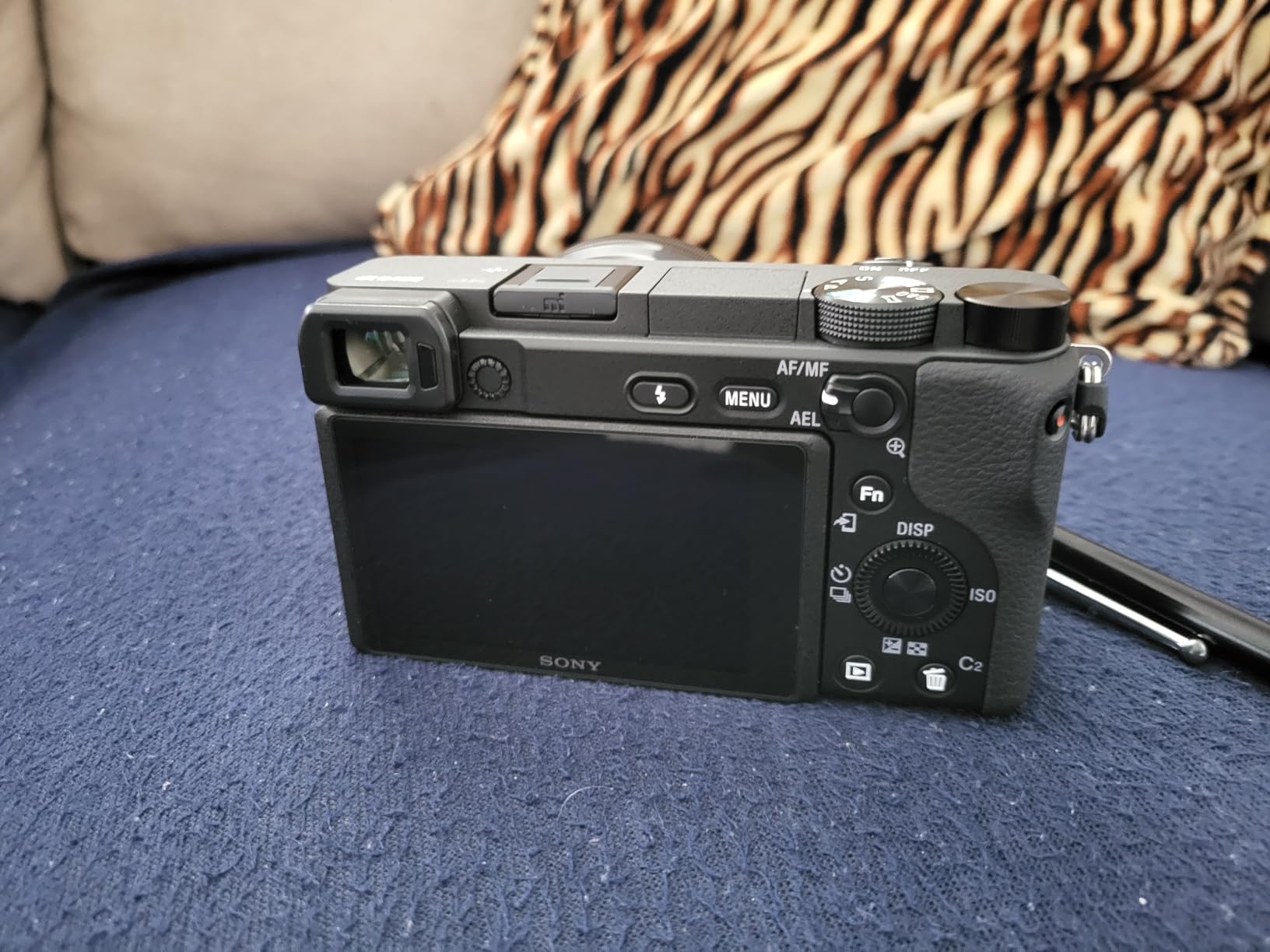
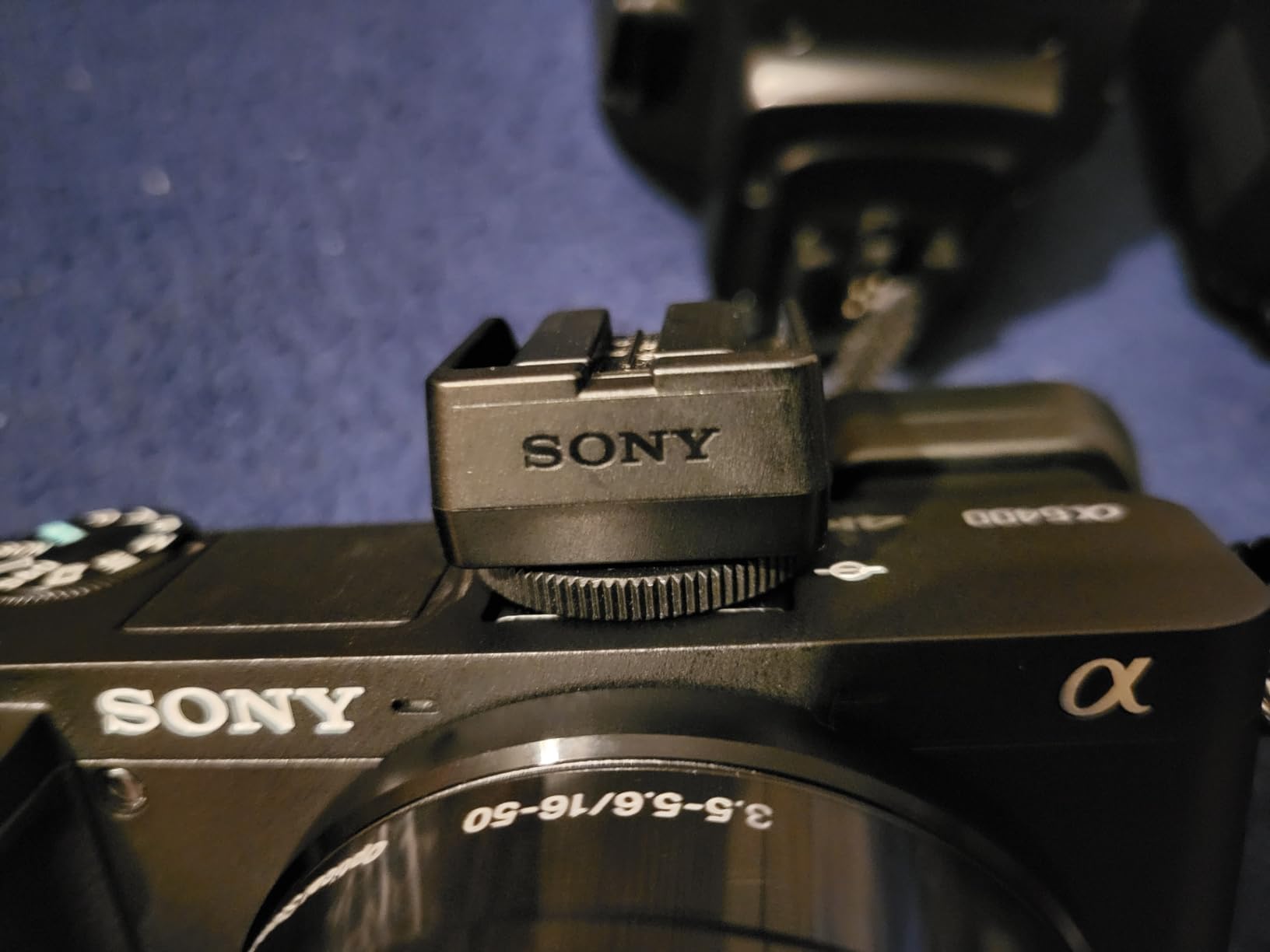
Where the a6400 is genuinely strong is the lens system. The E-mount has one of the widest selections of affordable third-party glass available, particularly Sigma primes, so a fast, inexpensive portrait or low-light lens is one purchase away. That matters because there is no in-body stabilization here, so stabilized glass or careful technique is what keeps handheld video steady.
At 10.3 ounces it is the lightest mirrorless body here, and pairs of lenses fit in a small shoulder bag. If your channel is a mix of photo and video, the stills side of this camera is a bonus rather than a compromise.
Why the autofocus still wins for moving subjects
Family content, pets, street interviews, anything where the subject is not standing still at a marked spot. Eye detection that does not wander is worth more to a growing channel than a higher resolution sensor, because focus failure is instantly visible to a viewer and resolution problems are not.
It is also the safest pick if your channel is 50 percent photography. This body is a genuinely good stills camera, not a video accessory.
Where this body holds you back
No IBIS is the headline problem for video. Handheld walk-and-talk footage from a 16-50mm will show shake, and you will be buying a stabilised lens to compensate. The single UHS-I card slot also limits long 4K recording flexibility, and the bundled 16-50mm performs poorly in dim indoor light. If video is the primary job, read the ZV-E10 section first.
6. Insta360 X5: The Best Choice for 360 and Impossible Angles
Pros
- Dual 1/1.28-inch sensors give the best 360 image quality in this roundup
- Triple AI chip design improves low light and night output
- Replaceable lenses extend the camera's working life
- FlowState stabilization with full 360 horizon lock
- InstaFrame outputs a ready flat video with auto-framing
Cons
- Highest price of the two 360 cameras here
- Reframing happens in post and adds editing time
- Large fast microSD cards required for 8K
- Replacement lens modules cost extra
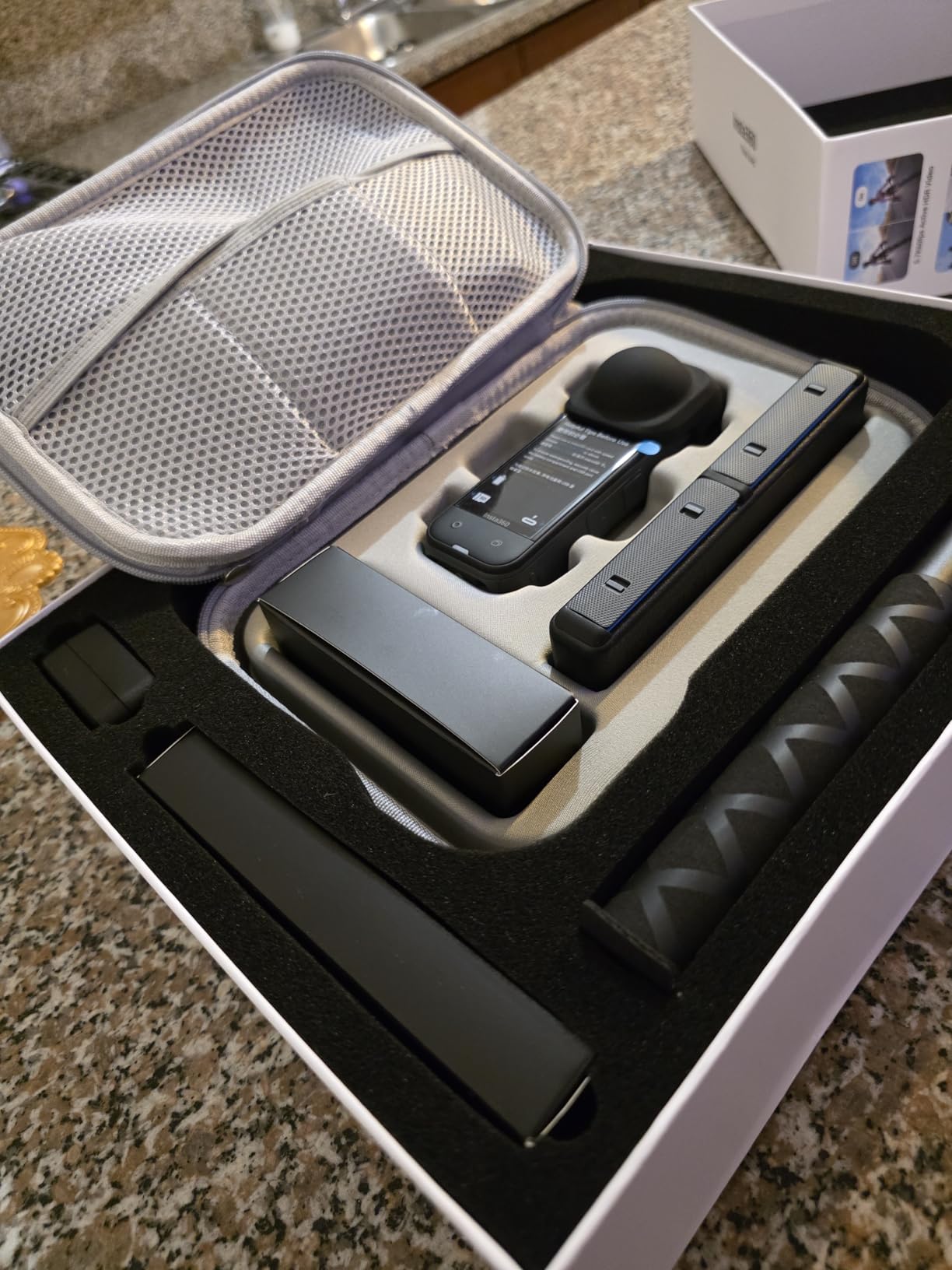
The X5 solves the two complaints that always follow a 360 camera: murky night footage and a scratched lens ending the camera’s life. Dual 1/1.28-inch CMOS sensors record 8K at 30 fps across a full 360 degrees, and the triple AI chip design does the noise reduction and processing that makes dim scenes usable. The lenses are user replaceable now, so a scuffed lens is a swap rather than a write-off.
That invisible selfie stick effect is the reason a creator buys this. Mount the camera on an extension pole, film yourself walking, and the software removes the pole entirely and reframes the shot to follow your face. You get a third-person drone-style angle from a device held by one person, which is not something a mirrorless body can do at any budget.
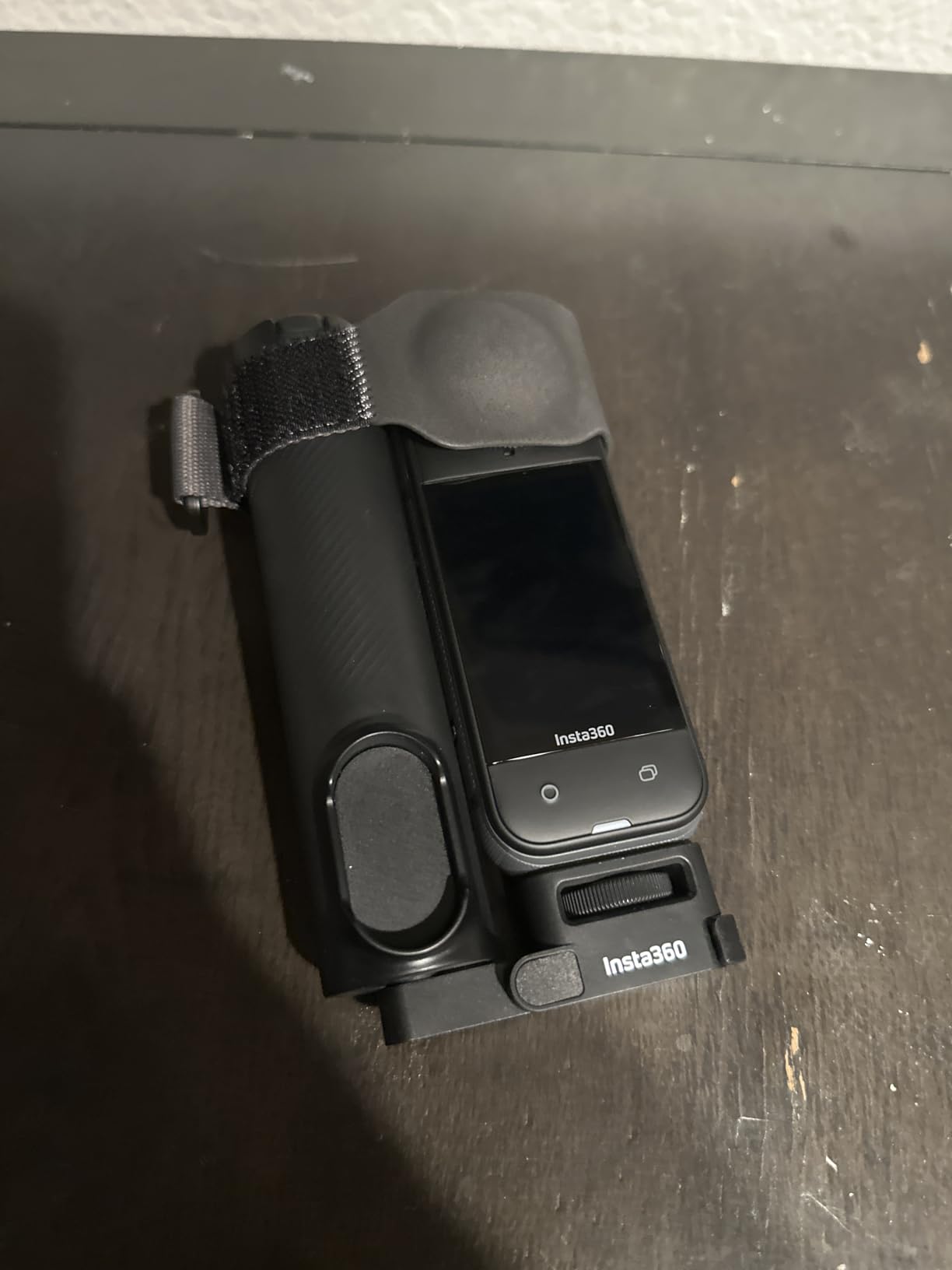
FlowState stabilization with 360 horizon lock keeps the level through full rotations, which matters for a walking vlog where the horizon drifts constantly on a normal action camera. Battery life is listed at 208 minutes, and the 4-mic array with a built-in wind guard captures narration and voice-on-camera audio without needing an external mic for most vlog formats.
InstaFrame mode outputs a flat, ready-to-post video directly with auto-framing or a locked angle, so the edit for a Short is close to zero work. The catch is that 360 reframing is a post-production step, and if you want a straightforward single-view shot, the extra pass adds time you did not budget for.
What a 360 camera does that no mirrorless body can
Reframing after the fact. Once the footage is captured you can move the virtual camera anywhere in the shot and change the framing without a second take, which turns one capture into several angles. For a tutorial where you need a wide establishing view and a tight detail view of the same action, that is a genuine production saving.
It is also one of only two options here that captures a whole environment at once, so it suits fitness, dance, group, and any camera-moves-through-the-scene format.
When a 360 camera is the wrong tool
Skip it for anything where you need shallow depth of field or a tight talking-head framing, because a 360 lens cannot create that separation and the reframed output is lower resolution than the 8K capture. Skip it if your editing time is already the bottleneck, since reframing is a deliberate post step, and note that 8K recording demands a large, fast card.
7. DJI Osmo Action 5 Pro: The Longest-Running Action Camera Here
Pros
- Large-pixel 1/1.3-inch sensor with strong low-light clarity
- 360 HorizonSteady removes roll-axis shake
- Up to four hours of recording per battery
- Front and rear OLED touchscreens for framing
- Connects directly to DJI Mic 2 transmitters with no receiver
Cons
- Essential Combo omits curved base and spare batteries
- U3/V90 speed class cards required
- Auto white balance still needs tuning in mixed light
- Proprietary mounts limit third-party accessories
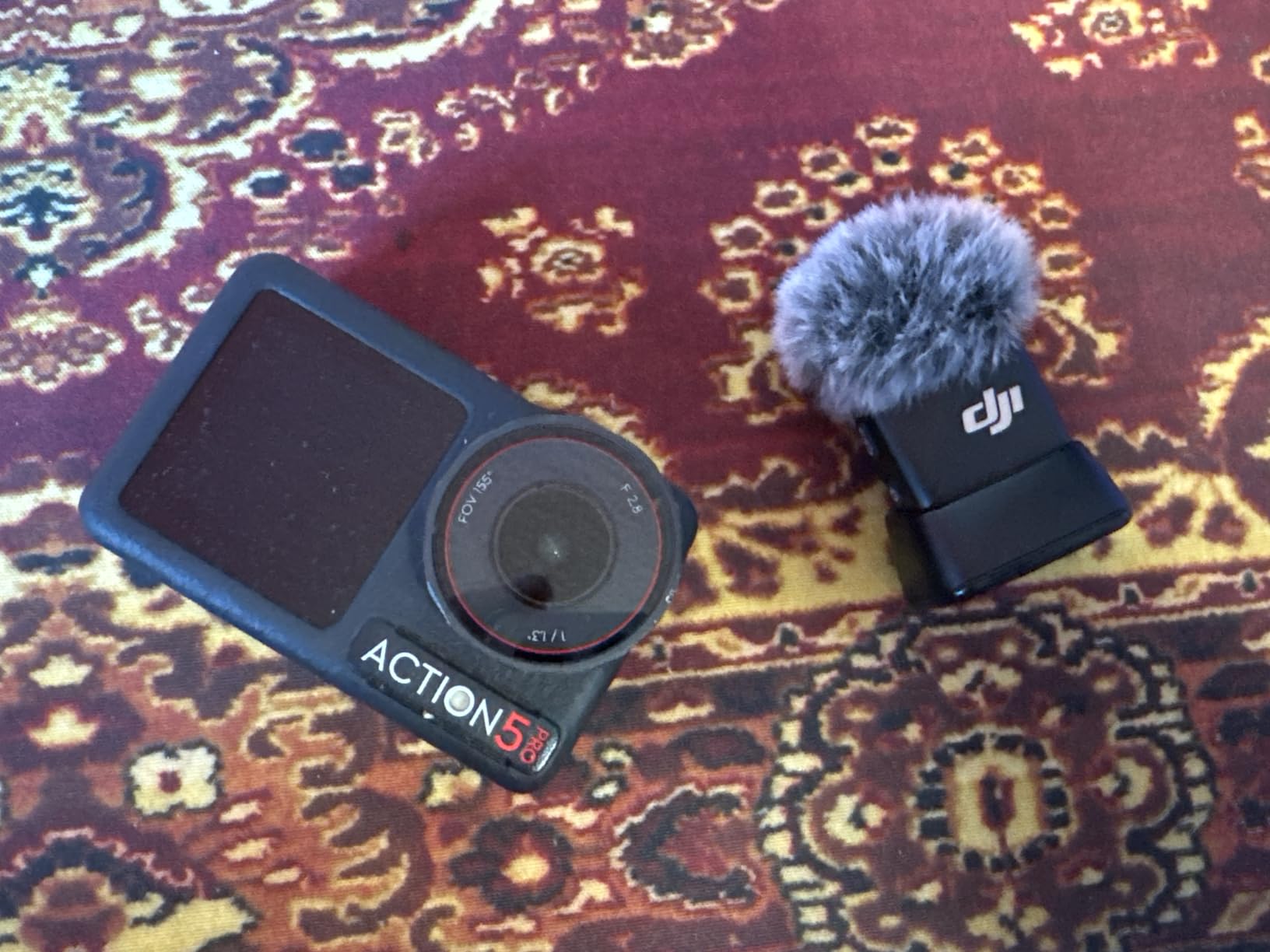
Battery life is the headline here and it is not close within this category. A 1950mAh battery gives up to four hours of recording, dropping to about 3.6 hours at minus 20 degrees Celsius, and it is rated IP68 for waterproofing to 20 m. For a creator who is out all day on a bike, on skis or in the water, that is the difference between one battery and three.
The 1/1.3-inch sensor with 2.4 micron pixels and 13.5 stops of dynamic range is one of the largest in this roundup, and it is what allows action-camera-sized footage to hold together at dusk and at night. The 4 nm chip handles centering and focus for fast-moving subjects, and 360 degree HorizonSteady removes the roll-axis shake that leaves a horizon tilting in almost every other action clip.
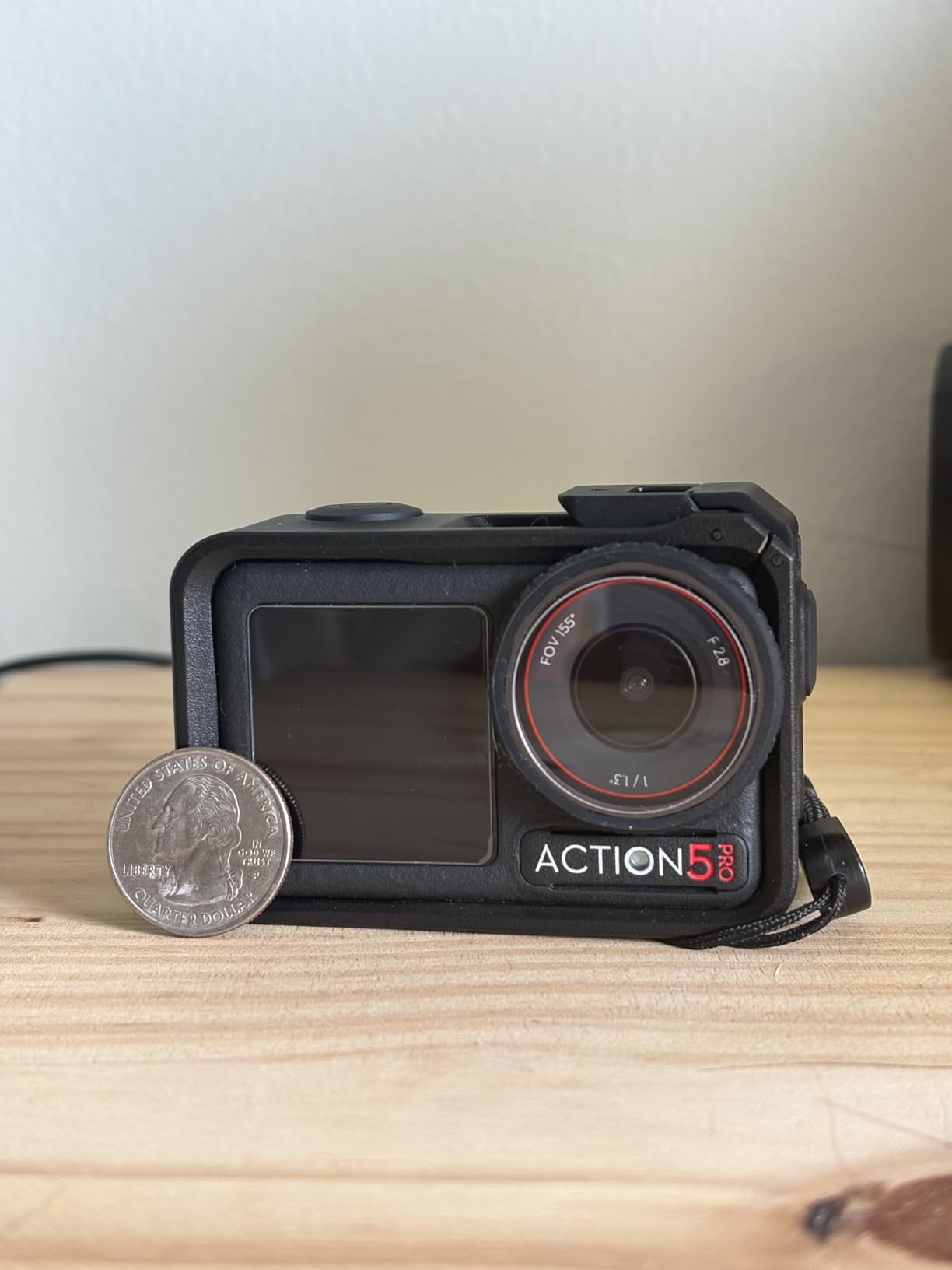
Both front and rear screens are ultra-bright OLED touchscreens, so you can frame and check playback without taking the camera off the mount. It pairs wirelessly straight to DJI Mic 2 and Mic Mini transmitters with no receiver unit, and voice control on standby starts a recording hands-free, which is how you get an action clip of yourself without a remote.
What you give up is the camera side. Fixed focus, no interchangeable lens, no depth control, and no way to frame a normal talking-head shot. The right question is whether the footage your channel needs is the footage only an action camera can get.
Where this camera earns its place
Mount it and forget it. Sports, cycling, water, snow, anything where the camera goes where your hands cannot. The direct microphone pairing means a solo creator can still get usable narration on the same device rather than carrying a separate recorder.
The horizon lock also makes it a genuinely useful second or third angle on a travel video where the mirrorless body cannot be strapped to a bag or a bike frame.
When it is the wrong buy
Skip it for studio work, reviews, tutorials or anything that needs a lens change or a controlled depth of field. The Essential Combo also drops the curved adhesive base and the spare batteries that come with the fuller bundle, so factor that into the comparison if you are mounting in awkward positions.
8. Nikon Z50: The Best Hybrid for Photo and Video Creators
Nikon Z 50 with Wide-Angle Zoom Lens | Compact mirrorless Stills/Video Camera with 16-50mm Lens | Nikon USA Model
Pros
- 55mm Z mount is oversized for the format and future-proof
- Handles high ISO well with usable shots around ISO 8000
- Compact and light at 14.4 ounces
- Flip-down selfie screen is genuinely useful
- Built-in Wi-Fi and Bluetooth for quick phone pairing
Cons
- Only a single UHS-I card slot
- Micro-USB instead of USB-C
- Relies on lens-based VR rather than in-body stabilization
- Listed recording capacity of 30 minutes
- 20.9MP is below newer 24MP rivals
The Z50 is the pick for a creator who shoots a lot of stills and does not want to compromise either side. The 20.9 megapixel DX sensor handles high ISO well, with owners reporting usable results around ISO 8000, which is exactly the range you need for indoor event work or evening travel. The dual dial control layout with F1 and F2 shortcut access is a real step up in feel from a beginner body.
The 55mm Z mount is physically larger than the sensor needs, and that is the point. A wide mount gathers more light and accepts lenses designed for a bigger format later, so the system is not a dead end even though the body is small. It is the first DX-format mirrorless to use the mount, and old F-mount lenses fit through the FTZ adapter if you are coming from Nikon.

Video is 4K UHD 2160p, which is enough for YouTube delivery, and the 3.2 inch flip-down touch LCD is the larger screen size in this roundup, which helps when you are framing a selfie shot at arm’s length. The listed recording capacity of 30 minutes is the honest number to plan around if you record long chapters in one take.
There is no in-body stabilization here, so steadiness comes from the lens. That is fine with the bundled 16-50mm at wider angles, and it is the main reason to plan a stabilised lens into the budget if you shoot handheld video often.

Why the mount size matters for your third purchase
At this budget your third purchase is almost always a lens, and the mount diameter determines what that lens can be. A 55mm mount is wider than the DX format strictly requires, which means brighter optics are physically possible and future lens options are not constrained by the entry bodies that came before.
Nikon also lets you bring across older F-mount glass with an adapter, which matters if you or a family member already own Nikon lenses.
Where the Z50 will frustrate you
Single UHS-I card slot is a genuine limitation for a hybrid shooter, since you cannot spread files across two cards or use a second slot as a backup. Micro-USB instead of USB-C means slower transfers and a cable you may already own three of. And 20.9 megapixels is a step down from the 24 megapixel sensors the Canon and Sony ZV-E10 use.
9. Insta360 X4: The Budget Entry to 360 Shooting
Pros
- 8K 360 capture is noticeably cleaner than the previous generation
- 135 minute battery is a large jump from earlier models
- Invisible selfie stick works well for solo creators
- Screw-in lens guards protect the lenses with little distortion
- Functions as a 4K60 wide-angle action camera too
Cons
- Desktop editing software is more limited than the mobile app
- Some repaired files come back corrupted
- Auto exposure blows out skies in bright daylight
- Reframed 360 output drops to 2.7K
The X4 is the sensible way into 360 shooting if the X5 is more camera than your edit schedule can absorb. It records 8K 360 video and 5.7K at 60 fps, doubles as a conventional 4K60 wide-angle action camera, and adds 170 degree MaxView at 4K30. Buyers upgrading from the previous generation single out better stitching near the lens edges and a noticeably more rugged body with screw-in lens guards.
FlowState stabilization with 360 horizon lock is the feature that keeps walking vlogs level, and the 135 minute battery is a real step up from earlier X-series models. The invisible selfie stick effect gets the same third-person shot the X5 does, which is the reason most creators buy either of these.
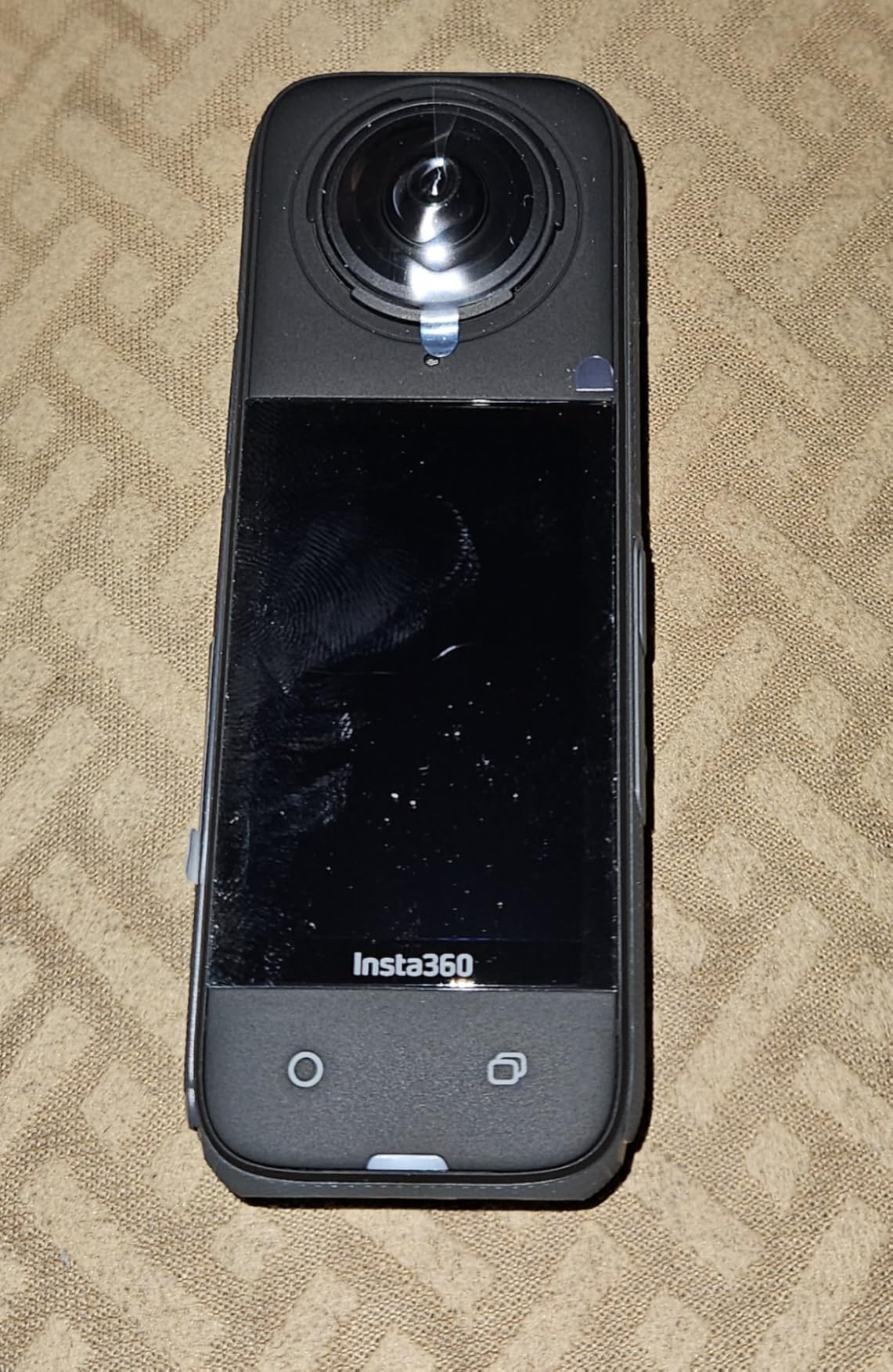
Where the X5 improves is low light, with the dual larger sensors and triple AI chip pipeline, and lens longevity with replaceable modules. The X4 is rated waterproof to 10 m without a case, and the cold rating is minus 20 degrees Celsius, so it handles weather that stops a mirrorless body.
One thing to weigh carefully is post-production. Reframed 360 footage outputs at 2.7K rather than the native 8K, so if your channel is built on vertical Shorts, that is your actual deliverable resolution and you should plan for it.
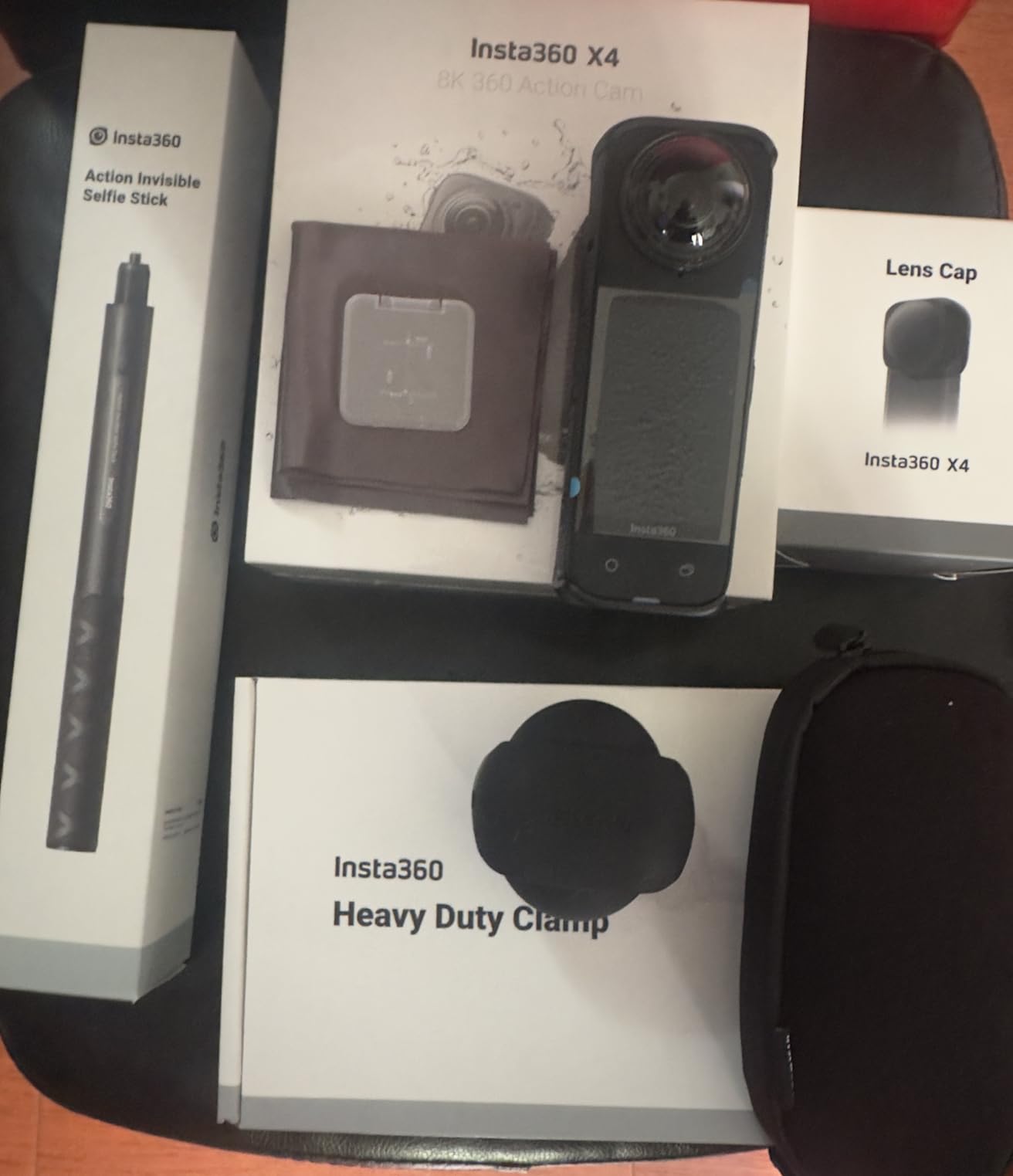
What you get that a single-lens camera cannot give you
One capture, many angles. Move the virtual camera in the edit app to any part of the scene, and the invisible selfie stick delivers a third-person view of yourself with no operator. It is the fastest route to footage that looks like it was made by a small crew.
For fitness, dance, group, and any scene where the camera physically moves through the action, there is no mirrorless alternative in this price range.
Where you should choose the newer model instead
Choose the X5 if you shoot at night or in dim indoor locations, because the larger sensors and AI processing are the specific fix for that weakness. Choose the X5 if you expect to keep the camera for years, since replaceable lenses protect the investment. Stick with the X4 if your priority is 4K60 conventional action footage and 360 is a bonus.
10. GoPro HERO12 Black: The Budget Second Body for Extra Angles
Pros
- 5.3K60 HDR captures far more detail than standard 4K
- HyperSmooth 6.0 with AutoBoost smooths handheld footage with minimal crop
- 27MP stills plus frame grabs pulled from video
- Waterproof to 10 m with a repelling lens cover
- Doubles as a live streaming webcam over USB-C
Cons
- 64 minute battery is short against newer action cameras
- Runs warm during extended 5.3K recording
- Requires U3/V30 cards as an added cost
- Touchscreen is awkward with gloves or wet hands
I include this one because it is a low-cost way to add a second and third viewpoint to an existing channel, not because it is the strongest action camera here. 5.3K60 HDR captures 91 percent more resolution than standard 4K, and with a 1/1.9-inch sensor and HDR you retain shadow and highlight detail in the same shot, which matters on a bright trail with a dark sky behind it.
HyperSmooth 6.0 with AutoBoost is genuinely the smoothest stabilisation in this category, and it does it with minimal crop, so you keep more of the frame than most action cams allow. Frame grabs in the Quik app pull stills from your video at 24.7 megapixels, which means a single action shoot can feed both a video upload and a run of thumbnails.
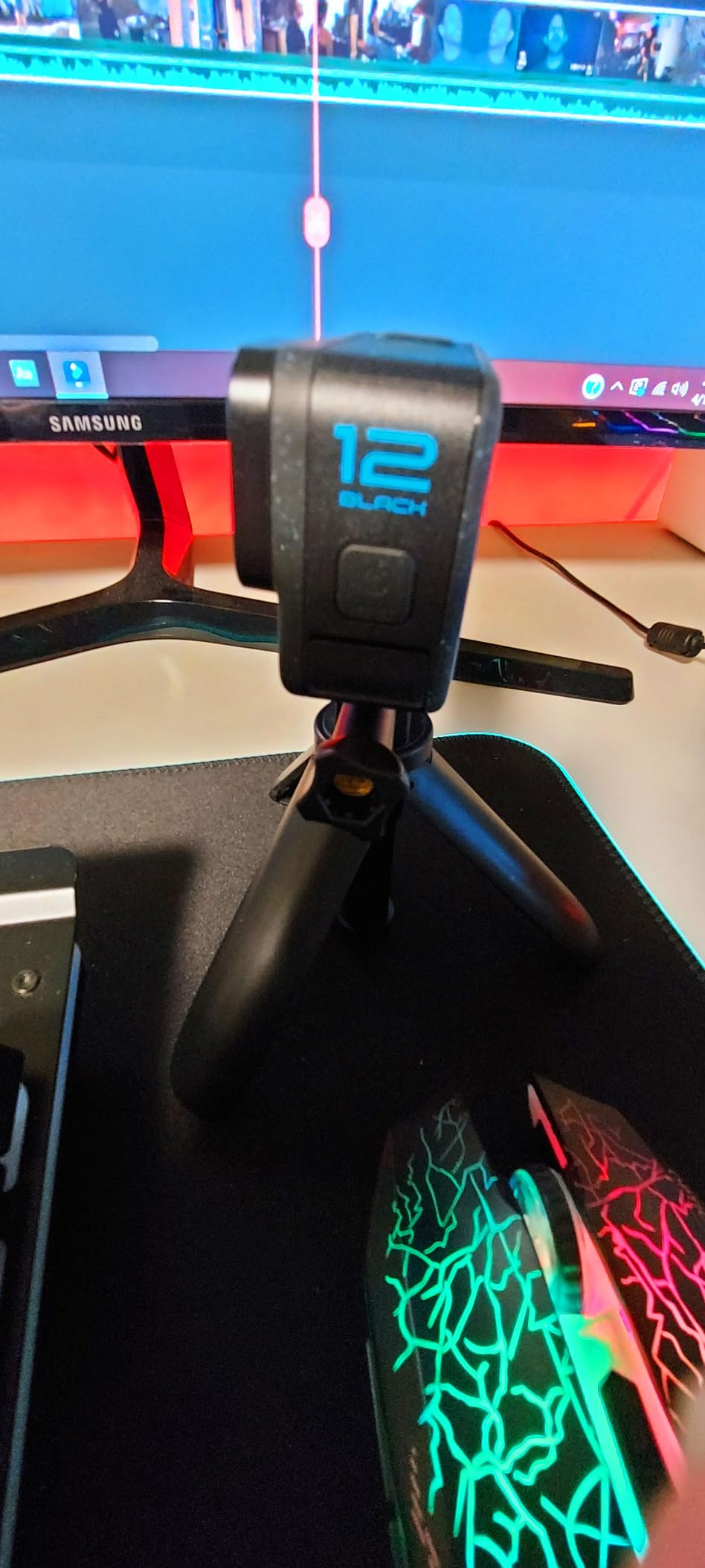
The 64 minute listed battery life is the real limitation, and reviewers consistently report carrying spare Enduro batteries. It also runs warm during extended 5.3K recording, which is where the newer larger-sensor bodies in this roundup pull ahead. A U3/V30 speed class card is required and is an extra cost on top of the camera.
It streams live over USB-C and works as a webcam, so if your channel does a live segment, this is the cheapest way into that on this list.
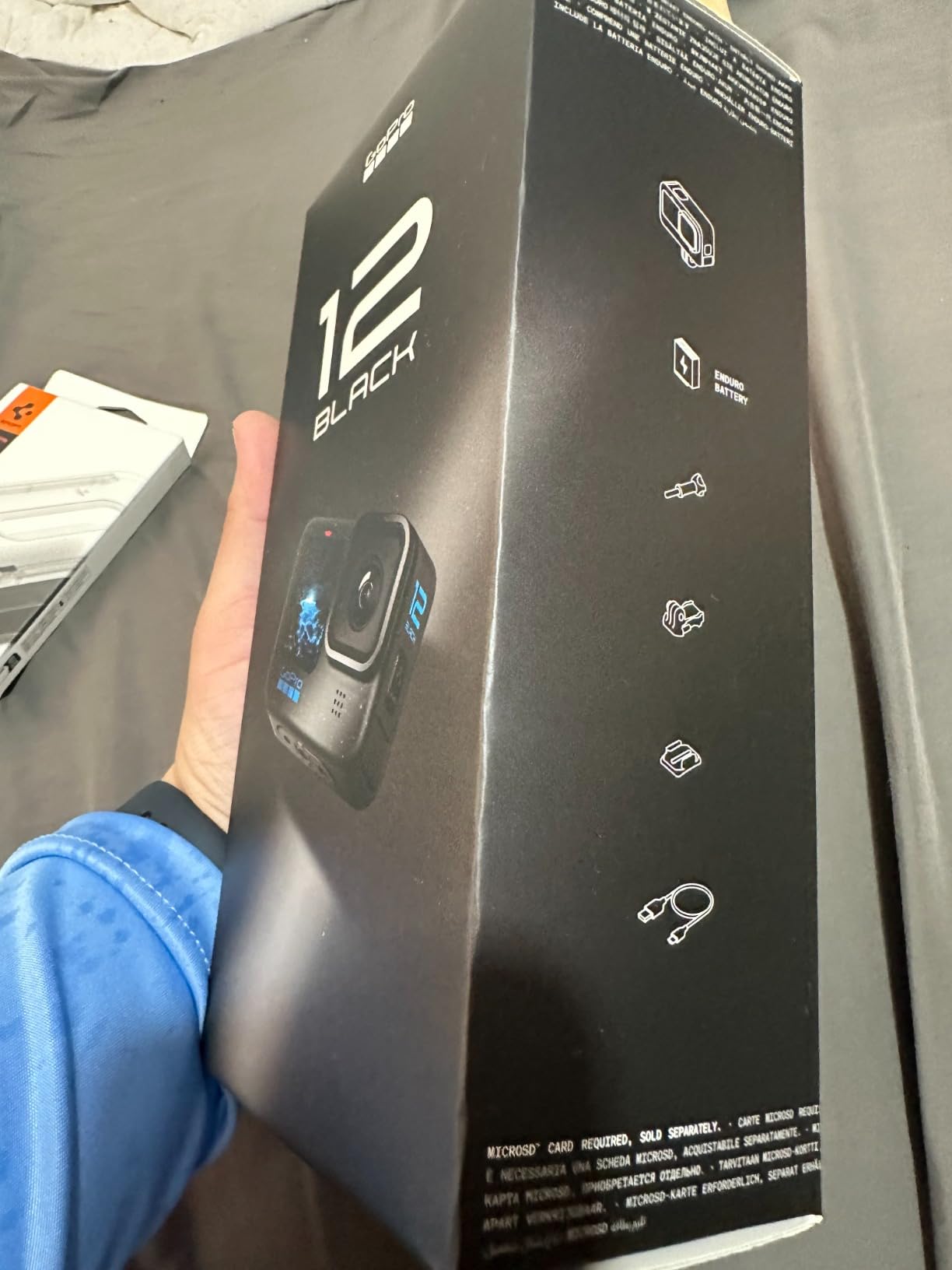
Where a GoPro still earns its slot
Anywhere your mirrorless cannot go. Helmet, handlebars, chest mount, a pole above a crowd. It is waterproof to 10 m with a water-repelling lens cover, and the folding mount fingers make swapping between setups a two-second job rather than an adapter hunt.
Think of it as your B-roll and insert camera, and a second body for footage a mirrorless cannot reach.
When to spend the money elsewhere
Skip it as your primary camera. Battery life, heat and the reliance on the Quik app make it a worse main body than any mirrorless here, and if you already own a recent action camera, this is not an upgrade. Buy it as a second body or skip it entirely.
How to Choose a YouTube Camera Under 1,500 Dollars
Spend your budget in this order: 4K capability, autofocus, screen articulation, then lens ecosystem. Sensor size, megapixel count and burst rate come after those four, because they matter far less to a viewer than a shot that is in focus and correctly framed. The seven criteria below are ordered by how often they actually decide whether a video is usable.
1. 4K at 30 fps as the floor, 4K at 60 fps as the target. 4K is now the delivery standard for almost all new uploads, and 4K30 is the minimum you should accept. 4K60 is what lets you apply smooth motion in an edit and what you need for fast movement that does not look juddery on playback. Among the picks here, the Osmo Pocket 3, the Insta360 models, the Osmo Action 5 Pro and the GoPro all record high-frame-rate 4K; the Canon R50, the Sony ZV-E10, the a6400, the Z50 and the G85 top out at 4K30 with high frame rates available in 1080p.
2. Continuous autofocus with subject detection. This is the criterion that separates a camera you keep from one you abandon. Dual Pixel CMOS AF II on the Canon, Real-Time Eye AF on the two Sony bodies, and ActiveTrack 6.0 on the Pocket 3 are all in the class you want. If you film without a second operator, autofocus matters more than image quality because focus failure is instantly obvious to a viewer.
3. A screen you can actually frame yourself with. A full vari-angle or side flip-out screen is the difference between filming yourself and rigging a camera on books. The Canon R50, Sony ZV-E10, Panasonic G85 and Nikon Z50 all have one. The Sony a6400’s 180-degree upward tilt and the GoPro’s small screen are not the same thing, and the two action cameras and 360 units are viewable but not designed for long talking-head framing.
4. Lens ecosystem and stabilisation. Consider what the third purchase in your system will be, because that is where budget pressure shows up. Sony E-mount, Micro Four Thirds and Nikon Z all have strong and affordable third-party lens options. The Canon RF mount has fewer at the entry level, so an R50 owner should plan on a single lens upgrade. If your body has no in-body stabilization, plan on a stabilised lens as that upgrade, which matters most for the Sony a6400 and the Nikon Z50.
5. Thermal headroom and record limits. The most common complaint in camera forums at this budget is heat during long 4K takes. Micro Four Thirds bodies run warmer because the sensor is smaller relative to its cooling area, so if you record long chapters in one take, give the G85 a break every few minutes. The Pocket 3 heats up during sustained 120 fps recording and the Osmo Action 5 Pro and GoPro both run warm at maximum resolution. Check the listed recording figures against the length of your typical take.
6. Card requirements and battery reality. Some bodies need UHS-II or U3 and V30 speed class cards for their highest bitrates, and a slow card produces dropouts mid-take. Budget for that as a line item. Battery life is also the running cost of this hobby: the Osmo Action 5 Pro runs up to four hours, the Insta360 X5 about 208 minutes, the Pocket 3 166 minutes, the Insta360 X4 135 minutes, and the GoPro 64 minutes. Those gaps determine how many spare batteries you own.
7. Audio and connectivity. Every camera here has a microphone input or a built-in stereo mic, but built-in mics are not a channel sound. The Pocket 3 Creator Combo includes a DJI Mic 2 transmitter, and the Osmo Action 5 Pro pairs directly to one, which is a genuine saving. For the mirrorless bodies, add a small USB or 3.5mm microphone to your budget.
How to split the budget in practice. On a body sold with a kit lens, put roughly two thirds of the budget into the camera and reserve the rest for a spare battery, a microphone and a small support. On a body-only route, budget the body at well under half the ceiling, then commit one fast prime lens and a battery from the remainder, and spend what is left on audio and a grip. A tripod or a small monopod removes more bad footage than any camera upgrade, so it comes before a second body.
Should you skip a camera and use your phone? For a lot of channels, honestly, yes. A recent phone at night mode and 4K60 is genuinely adequate for a talking-head channel, and it is always in your pocket. Upgrade when you hit a specific wall: a lens that will not get close enough, low light that will not clean up, autofocus that hunts in dim rooms, or a need for a second and third angle on location.
Two further notes if you are still deciding between bodies. Buying preowned is a normal path at this budget and the used market is where a lot of creators get a bigger system for less money, but inspect the shutter count, the sensor for dust and the card slot before you commit. And the preowned hybrid combo that comes up most often in community threads is a Sony a6100 body with a Tamron 17-70 zoom, which lands comfortably inside this budget and gives you both stills reach and stabilised video. If you want the wider lens view, our [best mirrorless cameras for YouTube](https://markus-hagner-photography.com/best-mirrorless-cameras-for-youtube/) guide covers the systems in more detail, and [best cameras for YouTube beginners](https://markus-hagner-photography.com/best-cameras-for-youtube-beginners/) is a good next read if this is your first channel.
Frequently Asked Questions
What is the best affordable camera for YouTube videos?
The most affordable camera that genuinely upgrades a smartphone channel is the DJI Osmo Pocket 3 Creator Combo. It stabilises mechanically, follows your face automatically, records 4K at up to 120 fps and includes a wireless microphone transmitter in the box, so you can publish on day one without buying a lens or a mic separately.
What is the best camera for recording video under 1,500 dollars?
The Canon EOS R50 kit is the strongest all-round answer under 1,500 dollars, with a 24.2 megapixel APS-C sensor, subject detection autofocus covering the full frame and a fully articulating screen for solo filming. The Sony ZV-E10 is the closer rival if you shoot almost exclusively as a talking-head creator, and the Panasonic G85 wins if stabilised handheld 4K is your priority.
Should I shoot in 4K or 1080p for YouTube?
Shoot 4K. Most viewers now watch on larger screens and mobile devices, and YouTube compresses aggressively on 1080p uploads, so a 4K file that gets downscaled looks noticeably cleaner than an upscaled 1080p one. Shoot 4K at 30 fps as the default and 4K at 60 fps when you need smooth motion or plan to slow footage down in the edit.
Which mirrorless cameras can shoot 4K 60fps video?
Of the mirrorless bodies in this roundup, none record 4K at 60 fps. The Canon EOS R50, Sony ZV-E10, Sony a6400, Nikon Z50 and Panasonic G85 top out at 4K30, with high frame rates limited to 1080p. If 4K60 is a hard requirement, look to the DJI Osmo Pocket 3, the Insta360 X4 and X5, the DJI Osmo Action 5 Pro or the GoPro HERO12 Black instead.
Can I use a smartphone instead of a camera for YouTube?
Yes, for most talking-head channels a recent phone is genuinely sufficient, especially indoors in good light. Upgrade when you hit a specific limit: you cannot get close enough to your subject, low light will not clean up, autofocus hunts in dim rooms, or you need a second and third camera angle. At that point a mirrorless body in this price range is a real step up.
Do mirrorless cameras overheat when recording 4K?
They can, and it depends heavily on sensor size and ambient temperature. Smaller sensors such as the 16 megapixel Micro Four Thirds in the Panasonic G85 run warmer than the larger APS-C sensors in the Canon and Sony bodies, so long takes are best broken up. Keep the card slot ventilated, avoid recording in a hot car, and check the listed record limit for your model before you plan a long chapter in one take.
Final Verdict: Which Camera Should You Buy in 2026
For a solo creator filming yourself, the DJI Osmo Pocket 3 Creator Combo is the one we recommend, because it removes the two hardest problems in solo video, handheld shake and no second operator, in a device you will actually carry. If your channel is a home studio setup, buy the Canon EOS R50 kit and put your next upgrade budget into a better lens than the bundled 18-45mm. If you vlog on the move and film nothing else, the Sony ZV-E10 is built for exactly that.
Everything else in the list is a specialist answer: the Panasonic G85 for stabilised handheld 4K, the Sony a6400 for the most reliable subject tracking and a photo-plus-video hybrid, the Insta360 X5 and X4 for 360 reframing, and the Osmo Action 5 Pro and GoPro HERO12 Black for angles no mirrorless body can reach. That is the honest shape of the best cameras for YouTube under 1,500 dollars in 2026 — ten distinct answers rather than one winner, and the right one depends entirely on whether you are alone or crewed.
For the wider picture on each system, see our [best Sony cameras under 1,500 dollars](https://markus-hagner-photography.com/best-sony-cameras-under-1500/) and [best cameras for YouTube educators](https://markus-hagner-photography.com/best-cameras-for-youtube-educators/) roundups.