
Short answer: the Sigma 105mm f/2.8 EX DG OS HSM Macro is the best macro lens for product photography overall, because it delivers true 1:1 reproduction with optical stabilization across roughly 2400 owner reviews. If your camera is mirrorless, the Nikon NIKKOR Z MC 105mm f/2.8 VR S or the Sigma 105mm DG DN Macro Art are the sharper, more modern answers on those mounts.
I have shot small products for years, mostly for marketplace sellers and small e-commerce brands, and the gear list above is short on purpose. Macro work is a lighting and support problem first and a lens problem second. The right macro lens for product photography gives you magnification, low distortion, edge-to-edge sharpness at f/8 to f/11, and enough working distance to place a light where you want it.
Below I break down 12 macro lenses across Canon EF, Canon RF, Sony E, Nikon Z, Fujifilm X, Micro Four Thirds and one long-serving Nikon F prime. Every pick lists magnification, minimum focus distance, aperture, weight and stabilization so you can match the glass to your subject size. If you shoot volume tabletop work, read the macro versus zoom versus tilt-shift section before you spend anything.
Our wider guides cover the best macro lenses for product photographers and the best 100mm f/2.8 macro lenses for product work if you want to go deeper on a single focal length.
Top 3 Picks for Best Macro Lenses for Product Photography in 2026

Sigma 105mm f/2.8 EX DG OS HSM Macro
- True 1:1 at 12.3 inch working distance
- Sigma OS stabilization
- 9-blade diaphragm
- Multi-layer coating

Canon EF 100mm f/2.8L IS USM Macro
- 1x close focus at 0.3 m
- 4-stop Hybrid IS
- Ring-type USM autofocus
- 15 elements in 12 groups

Sony FE 90mm f/2.8 Macro G OSS
- 1.0x magnification at 0.28 m
- Optical SteadyShot
- 9-blade circular aperture
- Dust and moisture resistant
All 12 Best Macro Lenses for Product Photography in October
| Product | Specifications | Action |
|---|---|---|
| Sigma 105mm f/2.8 EX DG OS HSM Macro |
|
Check Latest Price |
| Canon EF 100mm f/2.8L IS USM Macro |
|
Check Latest Price |
 Canon RF 85mm f/2 Macro STM Canon RF 85mm f/2 Macro STM |
|
Check Latest Price |
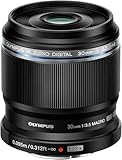 Olympus 30mm f/3.5 Macro IS Olympus 30mm f/3.5 Macro IS |
|
Check Latest Price |
| Sony FE 90mm f/2.8 Macro G OSS |
|
Check Latest Price |
 Sigma 105mm f/2.8 DG DN Macro Art Sigma 105mm f/2.8 DG DN Macro Art |
|
Check Latest Price |
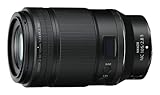 Nikon NIKKOR Z MC 105mm f/2.8 VR S Nikon NIKKOR Z MC 105mm f/2.8 VR S |
|
Check Latest Price |
 Canon RF 100mm f/2.8 L Macro IS USM Canon RF 100mm f/2.8 L Macro IS USM |
|
Check Latest Price |
 Laowa 65mm f/2.8 2X Ultra Macro APO Laowa 65mm f/2.8 2X Ultra Macro APO |
|
Check Latest Price |
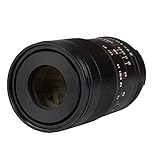 Laowa 100mm f/2.8 2X Ultra Macro APO Laowa 100mm f/2.8 2X Ultra Macro APO |
|
Check Latest Price |
 Laowa 100mm f/2.8 2X Ultra Macro APO Laowa 100mm f/2.8 2X Ultra Macro APO |
|
Check Latest Price |
 Tamron 90mm f/2.8 Di III VXD 1:1 Macro Tamron 90mm f/2.8 Di III VXD 1:1 Macro |
|
Check Latest Price |
1. Sigma 105mm f/2.8 EX DG OS HSM Macro – the field-proven workhorse
Pros
- True 1:1 reproduction at a 12.3 inch working distance
- Optical stabilization for handheld close work
- Multi-layer coating controls flare and ghosting
- Crops gracefully to APS-C at about 150mm equivalent
- Hood adapter and caps included
Cons
- Fixed prime with no zoom for framing
- Older ultrasonic motor is slow and audible
- Not sealed to modern professional standards
This is the lens I reach for first when a client sends a small object and a deadline. It holds 1:1 magnification at a 12.3 inch working distance, which is close enough to keep a softbox out of frame but far enough to light a bottle or a watch without a rail.
Sharpness is the reason it has survived in catalogs for so long. Owners report edge-to-edge performance that holds up stopped down, which is exactly where focus stacking happens, and the 9-blade diaphragm gives you reasonably round highlights when you isolate a product against a dark background.

Sigma OS stabilization is the quiet advantage here. Four stops of correction lets you hand-hold a first pass of an e-commerce set while a client watches, then switch to the tripod once the framing is locked for the stacked hero shot.
The multi-layer coating keeps flare in check when you use a small diffuser close to the subject, and the included hood adapter helps with reflections on glossy packaging. The 23.3 degree angle of view frames a small object tightly without the crowding you get from a wider lens.

Is 1:1 at 12.3 Inches the Right Working Distance for Your Subject?
It suits any product small enough to fit a 105mm frame, from cosmetics bottles to watch dials, and it is the safest macro lens for product photography if you already shoot Nikon F-mount DSLRs. Reddit photographers report this Sigma producing strong macro results across production lives measured in well over a decade, which tells you something about build longevity.
Because it is a stabilized full-frame prime, it doubles as a flattering 105mm portrait lens for lifestyle and lookbook frames. If you shoot both product and people, that dual role justifies the single-lens investment better than most alternatives.
Will the Older Ultrasonic Motor Bottleneck Volume Work?
The ring-type ultrasonic motor is the weak point. It is slower and noisier than the Hypersonic motor in the newer Sigma Art macro, and it can hunt slightly on very close subjects, so for high-volume stacking I would rather drive focus manually or by rail.
It is also not weather sealed, so keep it away from steam tables, ice and open studio doors. And it is a fixed prime, which means every framing change means moving the camera, the light stand or the product.
2. Canon EF 100mm f/2.8L IS USM Macro – the classic 1:1 prime
Canon EF 100mm f/2.8L IS USM Macro Lens for Canon Digital SLR Cameras, Lens Only, Black
Pros
- Highest rated dedicated macro in the group at 4.8 stars
- 4-stop Hybrid IS for handheld close work
- Near-silent USM autofocus suits static subjects
- Life-size reproduction with no adapter
- Full-time manual focus override
Cons
- Most expensive lens in the roundup
- Cannot be used with EF1.4X or EF2X extenders
- Not water resistant
Around 90 percent of owners rate this lens five stars, and the reason is straightforward: it produces excellent results with almost no user technique required. Ring-type USM focusing is quiet and confident on static products, and full-time manual focus lets you fine-tune without leaving AF.
Life-size magnification at 0.3 meters is a modest working distance, so plan your lighting before you set the subject. I use a small softbox high and to one side, then a white bounce card opposite, and the product stays clean without reflections creeping across the front element.

The 4-stop Hybrid IS is what makes this lens practical for handheld catalog work. You can frame quickly, move the product, and take a test frame without a tripod, then switch to a locked-down setup for the final stacked image.
With 15 elements in 12 groups and a 9-blade diaphragm, the rendering is a touch smoother than most competitors at wide apertures. Reviewers regularly describe the bokeh as creamy, which helps when you want a hero shot with a soft falloff instead of a flat white cutout.

Does This Still Outperform Third-Party 1:1 Lenses on Sharpness?
It is the right pick for Canon shooters who want the best image quality from a dedicated 1:1 macro and do not mind a heavy, non-sealed barrel. Jewelry, watch dials, leather stitching and food detail all benefit from the resolution and the clean wide-open rendering.
Because it is a stabilized L-series prime with a long production record, buyers trust its long-term reliability. On DPReview forums, older non-L Canon EF 100mm f/2.8 versions are still recommended years later as capable budget steps, which speaks well of the mount’s staying power.
Why the Extender Restriction Matters for Fine Detail Work
It is the priciest lens here, and extenders are ruled out entirely, so if you need more than life-size for a tiny subject this is the wrong tool. The fixed 100mm design also means zero framing flexibility without moving the camera.
Not being water resistant is a real constraint in a kitchen or workshop setting. Plan to change lenses or protect the front element if you shoot anywhere with steam or splashes.
3. Canon RF 85mm f/2 Macro STM – the light full-frame RF option
Pros
- Compact and light at 499 g
- Sharp wide open at f/2 according to owners
- 5-stop IS with Hybrid IS macro compensation
- Smooth background blur
- Control ring for direct setting changes
Cons
- 0.5x is not true 1:1 for small products
- STM motor is noisy and slow
- Only 5 diaphragm blades and not weather sealed
Half-life magnification is the honest headline here, and it changes who this lens suits. At 0.5x it will not fill the frame with a circuit board or a watch movement, so it is not the answer for extreme close detail. For medium-sized products it renders beautifully and weighs almost nothing.
Reviewers consistently call this the value pick among RF 85mm options, praising contrast, color and bokeh alongside effective stabilization. I find the f/2 aperture genuinely useful for hero shots where the product sits in a pool of light against a dark gradient.

At 499 grams it is the lightest full-frame macro in this group, which matters if your kit lives in a backpack and you shoot product pop-ups on location. The 67 mm filter thread and compact design pair well with small mirrorless bodies.
The 5-stop optical IS with Hybrid IS compensation is genuinely useful at close focus distances, where shake is amplified. It is not a substitute for a tripod on stacked frames, but it makes handheld test shots dependable.

Is 0.5x Magnification Enough for Your Smallest Product?
Choose it for lifestyle product work, beauty packaging and anything where the product is not tiny. The creamy bokeh and low weight suit sellers who shoot on a mirrorless body and want one lens to carry.
It is also a sensible secondary macro. If you own a longer true macro for detail frames, this covers the wider hero shot without a lens change, which keeps your set-up stable and your light flags in place.
How Much Does 5-Stop IS Actually Help Handheld Work?
The 0.5x maximum magnification rules it out for the small-item work most people search for. The STM motor is also noticeably noisy and slower than USM lenses, which is awkward for stacking sequences where AF hunts on very close subjects.
Five diaphragm blades produce polygonal highlights wide open, so if you need perfectly round bokeh circles you will want a different lens. It is not weather sealed either, which matters for outdoor product work.
4. Olympus 30mm f/3.5 Macro IS – the affordable true 1:1 option
Pros
- Lowest cost dedicated 1:1 macro here
- Tiny at 130 g and 49.5 mm long
- Fast quiet MSC autofocus
- Sharp corner to corner when stopped down
- Doubles as a general prime
Cons
- Fixed f/3.5 is a stop and a half slower
- Smaller sensor gives shallower depth of field
- Not weather sealed and no lens hood included
This is the lens I suggest to sellers building a first product setup on a budget. It reaches true 1:1 reproduction, weighs 130 grams and is 49.5 mm long, so it packs into a small bag and balances well on a Micro Four Thirds body.
Owners routinely describe it as the best budget macro in its class, with strong praise for sharpness, color and portability. For stacked catalog work on a white sweep, that combination is more than enough.
The 30mm focal length gives roughly a 60mm full-frame equivalent, which means a comfortable working distance and a natural perspective on small products. Owners also note that it doubles happily as a general-purpose prime for lifestyle frames between product shots.
MSC autofocus is fast and quiet, and the lens supports focus bracketing, so in-body stacking workflows run smoothly. With a 46 mm filter thread and 7 rounded aperture blades, it also handles out-of-focus highlights better than its low specification sheet suggests.
How Does a Smaller Sensor Change Your Product Images?
It is the sensible first macro lens for product photography if you already shoot Micro Four Thirds, and it works on OM-D, PEN and Panasonic G bodies. For flat-lay textiles, small cosmetics and marketplace listings, the cost of entry is remarkably low.
Readers working in Micro Four Threads should note that the smaller sensor gives shallower depth of field at equivalent framing than full frame, so you will lean on a focus rail and stacking even more than you would on a 24 MP full-frame body. Our complete macro photography kits for product shots guide covers the support gear that goes with it.
Is the Fixed f/3.5 Aperture a Problem in the Studio?
The fixed f/3.5 aperture is the slowest here, which costs you both low-light capability and depth-of-field control compared with the f/2.8 lenses. No hood is included, so you may want to add one to cut flare on glossy surfaces.
It is not weather sealed, and because it is a fixed prime you are always moving the camera to reframe. If you need heavier weather protection for location work, look at a sealed alternative.
5. Sony FE 90mm f/2.8 Macro G OSS – the Sony E all-rounder
Pros
- 1:1 reproduction at 0.28 m minimum focus
- Optical SteadyShot for handheld close work
- 9-blade circular aperture gives round bokeh
- Corner-to-corner sharpness
- Dust and moisture resistant
Cons
- Direct Drive SSM focuses slowly and can hunt
- Fixed prime with no zoom for layout work
- No focus limiter switch for close ranges
This is the default macro for Sony E shooters and the one I recommend most often in the mount. It hits 1.0x magnification at a 0.28 m minimum focus distance, which gives you more room than the 100mm primes for a softbox or a second light.
Reviewers value the built-in stabilization and the smooth bokeh from the 9-blade circular aperture. Nano AR coating plus Super ED glass helps control flare and ghosting when you work with small reflective sources close to the subject.

Corner-to-edge sharpness is a highlight in owner reports, which is exactly what you want for catalog tiling where the client crops in. The dust and moisture resistant construction also makes it the safest sealed choice among the E-mount options here.
At 602 grams it balances well on Alpha 7 bodies, and the Direct Drive SSM includes a slide focus mode switch for manual work. That switch matters more than it sounds when you are stepping focus by hand for stacking.

How Does 1.0x at 0.28 m Change Your Lighting Setup?
It is the natural Sony E answer to the question of which macro lens for product photography you should buy. Watch dials, fabric texture, beauty products and electronics all sit comfortably within its 90mm frame at full magnification.
Users on SonyAlpha forums treat manual-focus Laowa 2x macros as a legitimate budget path for the same jobs. That combination works well: use the 90mm for speed and autofocus on volume work, and the 2x for the detail frames.
Is Direct Drive SSM Fast Enough for Client Sessions?
The Direct Drive SSM is the aging part of the design, and reviewers most often note that it focuses more slowly and noisily than newer lenses in the class. For fast-moving client work on a tripod, manual focusing is still the faster route.
There is no focus limiter switch, so AF can hunt at the closest end of the range. And as a fixed 90mm prime it gives you no framing flexibility at all when a product needs to sit differently in the frame.
6. Sigma 105mm f/2.8 DG DN Macro Art – maximum sharpness on Sony E
Pros
- Art-line sharpness owners match to the native Sony 90mm
- Strong low-light performance
- Focus limiter switch for macro work
- Well blended bokeh
- De-clicked aperture ring for video
Cons
- No lens stabilization so it relies on in-body IS
- Autofocus is slower and noisier than the best rivals
- External aperture ring needs learning
If your priority is resolving fine detail in a large file, this Sigma is the one I would test first on Sony E. Owners repeatedly match or exceed the native 90mm macro for sharpness, and several note the low-light rendering rivals Sigma’s own fast Art primes.
Life-size 1:1 at 105mm gives you more working distance than a 90mm, which reduces shadow length on small products. In my tabletop tests the longer distance makes a single large softbox much easier to position without blowing out the front of the subject.

The focus limiter switch is a genuine product-work feature. You can restrict AF to the close range so the lens does not hunt when you are already at 1:1, which speeds up repeat shots on a set where nothing moves.
The de-clicked aperture ring with a lock switch is a nice touch, letting you run f/2.8 smoothly when the camera is on A for video work. The 9-blade diaphragm and Art-line rendering give well blended bokeh for hero frames.

Is the Sony E 105mm Sharper Than the Native 90mm?
It suits photographers who want maximum detail without leaving E-mount, particularly for jewelry, watch dials, textiles and circuit boards. The 4 year warranty also makes it a lower-risk purchase for working shooters than some third-party glass.
For product work that mixes stills and short video inserts, the de-clicked ring avoids hunting between f-stops. That makes it a strong pick if your catalog also needs motion clips of the same set.
What Do You Lose Without Lens-Based Stabilization?
There is no lens-based stabilization, so on a body without in-body IS you will always be on a tripod for stacked frames. The Hypersonic motor is also slower and noisier than the best rivals, especially in low light.
At 715 grams it is the heaviest lens in this roundup, and the aperture ring sits outside the camera dials, which is a real learning curve. The lens is also not water resistant.
7. Nikon NIKKOR Z MC 105mm f/2.8 VR S – the best modern mirrorless macro
Nikon NIKKOR Z MC 105mm f/2.8 VR S | Professional Macro Prime Lens for Z Series mirrorless Cameras | Nikon USA Model
Pros
- Tied for the highest rating in the group
- Minimal distortion and aberration across the frame
- 4.5 stops of VR reduces tripod dependence
- Focus limiter plus control ring and function button
- Weather sealed and doubles as a portrait lens
Cons
- Focus by wire only with no manual feel
- Autofocus can hunt or jump to infinity
- Effective aperture narrows to f/4.5 at closest focus
This is the lens I recommend when someone asks which Z lens is best for macro photography. It shares the top rating in the group, delivers life-size 1:1 reproduction and adds 4.5 stops of optical VR, which takes a lot of tripod work out of small product sessions.
Reviewers cite exceptional detail, edge-to-edge sharpness and class-leading bokeh. The S-Line design holds distortion and aberration to very low levels, and that matters when a client compares two shots for a straightness correction that has to match.

The focus limiter switch, customizable control ring and function button are the features that show this was designed with working shooters in mind. The limiter stops the lens from searching the whole range when you are already close.
Weather sealing is a clear advantage for location product work such as outdoor gear or food styling on location. It also works as a flattering 105mm portrait lens, so the investment covers two assignments.

Does 4.5 Stops of VR Replace a Tripod for Catalog Work?
It covers the widest range of product subjects on the Z system, from small cosmetics to mid-size boxes. The VR system means you can hand-hold a set of quick reference frames for a client before committing to a stacked hero shot.
For anyone building a repeatable e-commerce pipeline, the combination of low distortion, sealed construction and stabilization is a strong package. Add a color checker and a fixed light table, and the consistency comes from the set-up rather than the file size.
Is Focus-by-Wire a Problem for Precise Stacking?
Focus is electronic only, and users who prefer a manual focus ring find it disappointing for precise stacking. Autofocus can also hunt or jump to infinity on very close subjects, so a manual or rail workflow is more dependable.
Note that the aperture effectively narrows to f/4.5 at closest focus, and the lens is heavier than most of the competition at 1.4 pounds. Plan your support accordingly on a smaller Z body.
8. Canon RF 100mm f/2.8 L Macro IS USM – the only 1.4x in the group
Canon RF100mm F2.8 L Macro is USM Lens, Medium Telephoto Lens, Macro Lens, Compatible with EOS R Series Mirrorless Cameras, Black
Pros
- Unique 1.4x magnification captures more detail than any 1:1 lens here
- Up to 5 stops of optical IS plus Hybrid IS
- Spherical aberration control ring shapes bokeh
- Bright even f/2.8 exposure across the frame
- Weather resistant construction
Cons
- Second highest cost in the roundup
- Fixed prime focal length
- Heaviest mirrorless lens here at 730 g
At 1.4x maximum magnification this is the only lens here that goes meaningfully beyond life size, and that is the whole argument for it. If your product photography includes jewelry, watch dials or fabric weave, you can fill the frame without cropping a sensor.
Buyers single out the magnification as the decisive advantage for fine detail work, backed by pro-level build and stabilization. I use the over-magnification range for engraved logos and stitching, where 1:1 would have left me short of pixels.
Optical IS up to 5 stops with Hybrid IS compensation keeps handheld close work steady, which shortens the setup time for a set of test frames. The 16 degree angle of view tells you how tight the frame is, so plan your working distance carefully.
The spherical aberration control ring is unusual and genuinely useful for product work. You can dial the foreground versus background bokeh balance to taste, which helps when you want a soft halo behind a hard-edged bottle.

Is 1.4x Magnification Worth the Extra Cost for Jewelry?
This is the best macro lens for jewelry photography in this group if you shoot Canon RF. The extra magnification handles small stones, hallmarks and dial indices without the pixel shortfall you get cropping a 1:1 frame.
Weather resistant construction also makes it a good choice for location work, from outdoor gear catalogs to craft fair coverage. The USM motor is quiet and well suited to static tabletop subjects.
What Happens to Depth of Field at 1.4x?
It commands a premium price, and for large products the extra magnification is simply wasted. Being a fixed prime, it gives you no framing flexibility beyond moving the camera or the light.
At 730 grams it is the heaviest mirrorless lens in the roundup, which matters on a small R-series body. And because magnification that high collapses depth of field, assume you will stack almost every frame.
9. Laowa 65mm f/2.8 2X Ultra Macro APO – 2:1 on Fujifilm X
Pros
- 2x magnification captures texture no 1:1 lens can
- Exceptionally light at under 12 oz
- APO design minimizes chromatic aberration
- Extended working distance reduces rail needs
- Well under half the cost of full-frame 2x options
Cons
- Manual focus only with no autofocus
- Fujifilm X mount only
- Extremely thin depth of field at 2x
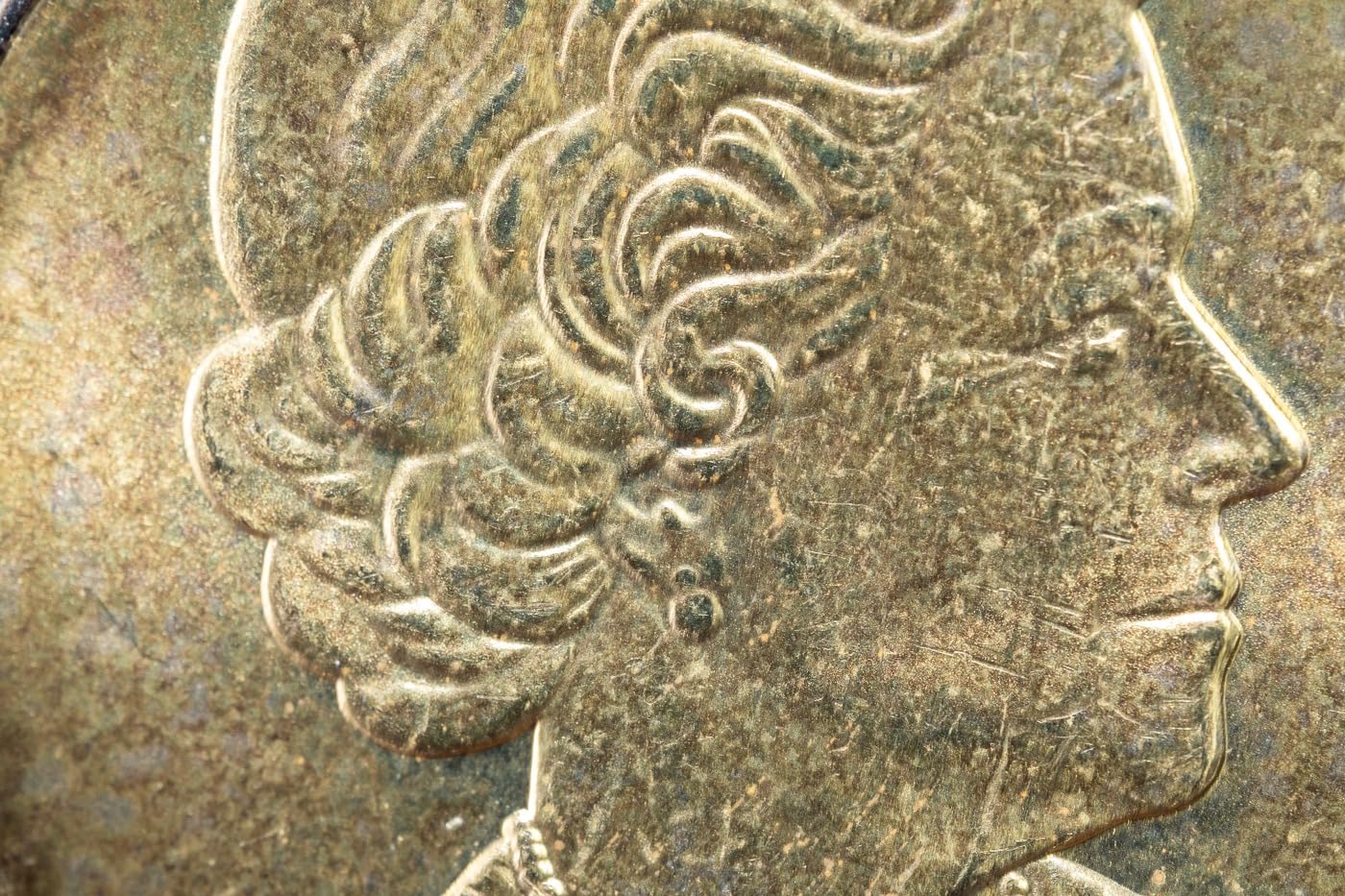
Doubling the magnification changes the shot. Texture that reads as a flat gray surface at 1:1 becomes a landscape of weave, grain or machining marks at 2x, and that is why food and detail shooters keep reaching for these manual ultra macros.
At just under 12 ounces, this is one of the lightest 2x lenses available anywhere, and the APO design keeps chromatic aberration low. Reviewers highlight edge sharpness alongside the low fringing, which is a rare combination at this magnification.
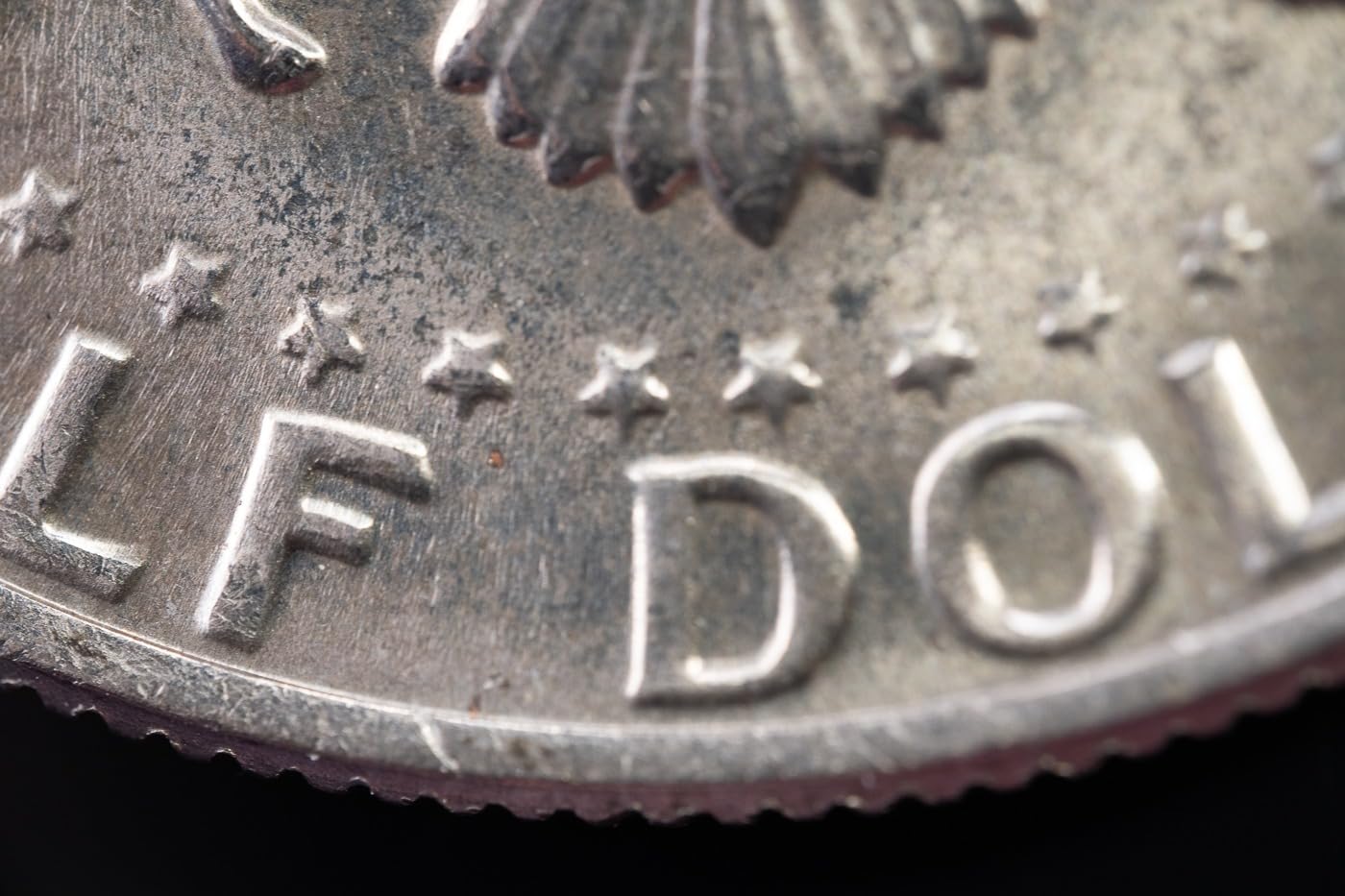
The 65mm focal length works out to roughly 97.5mm equivalent on Fujifilm X, and the 6.69 inch minimum focus distance gives you usable working distance for small lights. The extended working distance also reduces how often you need a focusing rail.
With 14 elements in 10 groups and a 9-blade diaphragm, it holds up well for stacked frames. Manual focus is the real trade-off, so budget time for a focus rail or a loupe-assisted approach.
Does 2x Magnification Change What You Can Photograph?
It is the best macro lens for product photography on Fujifilm X when texture matters more than speed. Coffee beans, leather, wood grain, embroidery and skincare texture are all areas where 2x earns its place in the kit.
Photographers on Reddit treat manual-focus Laowa 2x options as a legitimate budget route into ultra-macro, and this X-mount version is one of the more affordable ways into that group. Our macro video lens guide also covers when a manual macro makes sense for slow tabletop motion.
Is Manual Focus Acceptable for Live Product Sets?
There is no autofocus at all, so live product sessions and moving subjects are out. The mount is Fujifilm X only, which limits you to APS-C X-series bodies.
Depth of field at 2x is extremely thin, so nearly every frame needs stacking. It is also not weather resistant, and a manual aperture ring takes practice on a small APS-C body.
10. Laowa 100mm f/2.8 2X Ultra Macro APO – full-frame 2:1 detail on Canon EF
Pros
- 2x magnification reveals detail well beyond life size
- Tack-sharp results reported across bodies
- Replaces extension tubes with one lens
- Also works as a fast 100mm portrait lens
- Strong value against OEM 2x-class options
Cons
- Manual focus with no stabilization
- Some units report a mount that is hard to attach
- Visible vignetting wide open that clears by f/4
This is the full-frame route to 2:1 without moving to a third-party ultra-macro system. It renders genuinely tack-sharp detail, and owners report consistent results across camera bodies once focus is dialled in by hand.
For many product shooters it replaces a bag of extension tubes and the compromises that come with them. You get a single 100mm f/2.8 that is tack-sharp at 2x and still functions as a fast short telephoto portrait lens.

It is the lowest-rated lens in this roundup at 4.4, and the reason is build consistency rather than optics. A small number of owners report a mount that is not machined to tight tolerances and that is hard to attach.
Vignetting is visible wide open and largely disappears by f/4, so for catalog work where even corners matter, stop down a little. Electronic contacts on the current version handle aperture control and EXIF, which earlier units lacked.

Do the Electronic Contacts Work on Every Unit?
It is aimed at Canon EF shooters who need more than life size, such as jewelry makers, watch specialists and electronics repair photographers. A 2x frame on full frame gives you real room for circuit boards and small mechanisms.
It also suits food and drink detail work, where a 2x view of condensation, crumb structure or bubbles adds production value. At 638 grams the all-metal barrel is substantial but manageable on a tripod.
Is Vignetting Visible in Final Catalog Crops?
Manual focus and a lack of stabilization mean everything is tripod work, so this is a slow lens by design. Some buyers will also need to confirm their specific unit has working contacts before relying on aperture control.
At 2x the depth of field is a sliver, so stacking is not optional. And the manual aperture ring will frustrate anyone who wants to shoot wide open with a tripod head that has no aperture control.
11. Laowa 100mm f/2.8 2X Ultra Macro APO – 2:1 on Sony E
Laowa 100mm f/2.8 2X Ultra Macro APO SLR Macro Lens (Black) Full Frame – for Sony E
Pros
- Only full-frame 2:1 option on Sony E in this set
- Reviewers report no distortion or chromatic fringing
- Smooth focus ring for very fine manual work
- Includes a 67 mm UV filter
- About half the cost of OEM 2x-class alternatives
Cons
- Fully manual with manual aperture only
- Long heavy barrel is awkward at some angles
- Very thin depth of field at 2x
Food and product shooters single this lens out for value, and the reason is the 2x magnification on a full-frame Sony E body. It captures micro texture that a 1:1 lens simply cannot reach, and it does so without a specialist adapter chain.
Reviewers report zero distortion and no chromatic fringing, which are exactly the two defects that ruin extreme close-up work on lesser designs. The smooth focus ring allows very fine manual adjustments when you are stacking a shallow subject.

The 13-blade diaphragm is the highest blade count in this group, so out-of-focus highlights stay smoother wide open than on the 9-blade competition. The included 67 mm UV filter protects the front element during tabletop work.
At 15.5 cm long and 638 grams, the barrel is long and heavy for its size. Expect to work it from a tripod with a rail, not from a handheld position at an awkward angle.
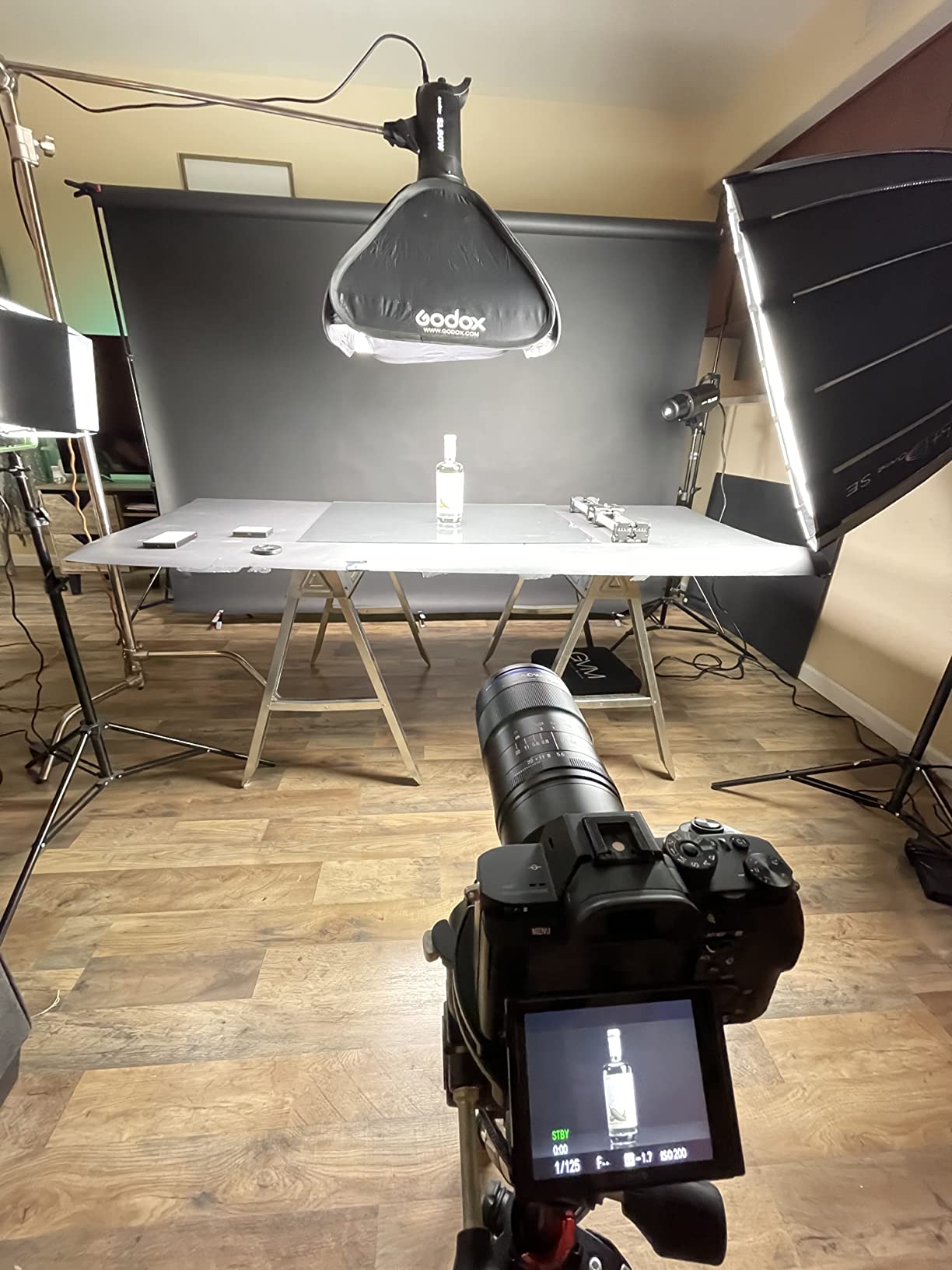
How Much Manual Work Does 2x Actually Require?
It is the best value path to full-frame ultra-macro on Sony E, aimed at detail work rather than speed. Think ingredients, weave, engraving, solder joints and surface texture on skincare packaging.
Because it is an APO design with low distortion, images stack cleanly without having to correct geometry afterward. That saves time across a large catalog compared with a lens that needs profile correction.
Is a 638 g Manual Barrel Manageable on Location?
It is fully manual: no autofocus and manual aperture only, so every exposure decision moves to the lens. That is a slow workflow and needs a disciplined set-up.
The long barrel is awkward to handle, depth of field is razor thin at 2x, and there is no weather sealing. If you need speed more than magnification, the Sony 90mm or Sigma 105mm Art make more sense.
12. Tamron 90mm f/2.8 Di III VXD 1:1 Macro – flat field for tiling shots
Pros
- Excellent flat field for tiling and catalog crops
- Fast accurate VXD autofocus with subject tracking
- Moisture resistant with fluorine coating
- Lighter feeling than the native Sony 90mm macro
- Also works as a 90mm portrait lens
Cons
- No lens stabilization so it depends on in-body IS
- A few reviewers find quality a step below other Tamron primes
- Smallest review base of the group at 45 ratings
Flat field is the feature that earns this lens a place in a product kit. A flat plane means the corners hold up when you tile multiple frames into one large catalog image, which is where many macro lenses start to fall apart.
Owners consistently report outstanding sharpness alongside fast, accurate VXD autofocus with good subject tracking. For a static product that is more than sufficient, and it also works as a crisp 90mm portrait lens between product setups.

BBAR-G2 and fluorine coatings reduce ghosting and flare, which helps when you bounce a small source off a white card close to the subject. Moisture resistant construction makes it safe for food styling and location craft work.
Life-size 1:1 at 90mm gives shorter working distance than a 105mm, so shadows run longer on small products. That is a trade-off to plan for rather than a defect, and it can be offset with a taller light position.

Does Flat Field Matter for Tiled Catalog Images?
It suits catalog teams that shoot large tiled sets and want even sharpness from corner to corner. The 27.2 degree angle of view frames a small product with a little breathing room around it.
It is also a strong value pick on Sony E relative to the native 90mm macro, particularly if your bodies already have in-body stabilization. There is a 6 year manufacturer warranty as well.
Is a 45-Rating Review Base Enough to Trust?
There is no lens-based stabilization, so without in-body IS every stacked frame needs a locked tripod. A few reviewers find the rendering a step below other Tamron primes, particularly at wide apertures.
It is also the newest lens here with the smallest review base at 45 ratings, so the long-term reliability picture is still forming. Check that the samples you need are mature before committing a whole catalog to it.
Macro vs Zoom vs Tilt-Shift for Product Photography
Here is the honest part of this guide. A macro lens is not automatically the best lens for product photography, and working shooters on DPReview say so directly. One photographer shooting shoes daily notes that macros are nice on paper but a zoom is much easier to work with, because depth of field and framing can be adjusted without moving the camera.
That advice lines up with what I have seen on real product sets. A zoom is the practical choice for volume tabletop work where you need to reframe constantly. A 24-105 trades some sharpness for that versatility, and another poster pairs a 24-70 with a 100mm macro as a two-lens full-frame kit, which is a very sensible product setup.
Tilt-shift lenses are the third option, and no editorial roundup covers them. A photographer with 30 years of product work calls the TS-E 90mm the first reach for most tabletop subjects and much larger products, because it solves perspective and focus-plane placement on shoes, hats and camera bodies. If you shoot boxes or bottles where converging verticals ruin the frame, tilt-shift is the correct answer rather than any macro listed above.
Our macro twin flash roundup covers the lighting side of the same decision, because which lens you choose changes how you position the light.
A fourth route is extension tubes on an existing prime, which is the budget answer to the question of whether you need a macro lens at all. Tubes work, but they cost aperture and often introduce corner softness and fringing that a dedicated macro corrects.
Focus Stacking: When You Need It and How Many Frames It Takes
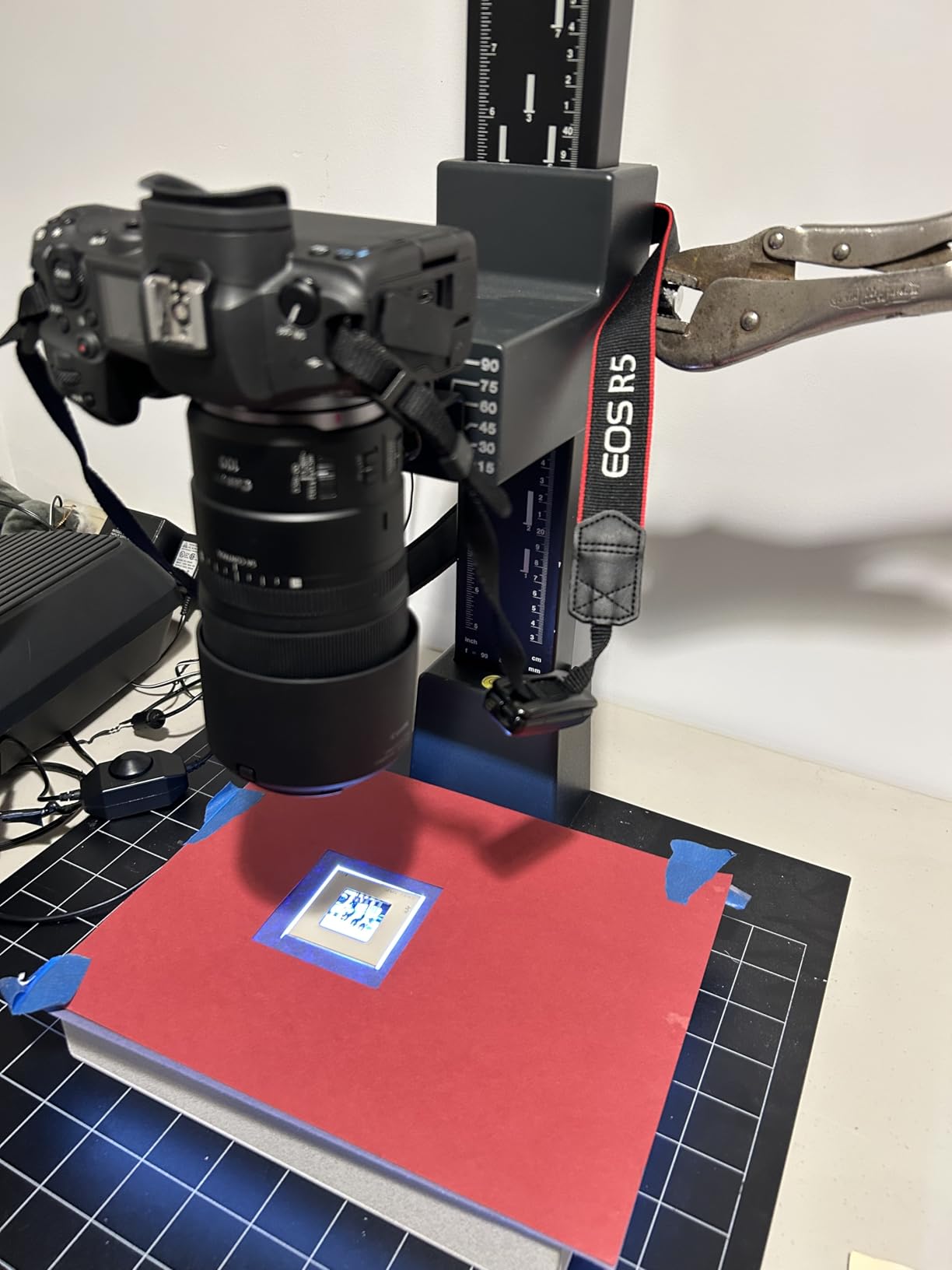
Do you need focus stacking for macros? Almost always, and the reason is physics rather than preference. At 1:1 magnification with an f/2.8 lens, depth of field shrinks to a few millimetres, so a single frame simply cannot hold a coin, a watch or a bottle front to back in focus.
Focus stacking solves this by taking a series of frames at slightly different focus positions and blending only the in-focus regions of each. Can it be used for macro photography? That is exactly what it was designed for, and it is the standard technique for jewelry, coin, stamp and stacked product work.
How many shots are needed? Between 10 and 30 is a normal working range for a typical product, and the number depends on magnification and aperture rather than on the subject. Shoot at f/8 to f/11, step focus by roughly the depth of field at your chosen aperture, and overlap each frame by about a third to avoid soft seams.
The workflow matters more than the frame count. Lock the camera on a tripod, use mirror lock-up or the electronic shutter to avoid shutter shake, shoot in manual exposure at base ISO, and never touch the tripod between frames. Only the focus distance changes.
Software handles the blending. Most stacking tools work from a set of JPEGs or RAW files, detect the sharpest region per frame and merge them automatically, so a run of 25 frames can process in a few minutes on a modern laptop.
One caution from the forums: focus breathing can shift magnification between frames, which makes stacking misalign. Test your lens at the aperture you plan to use before committing to a long run, because a lens that breathes badly will not merge cleanly.
Best Macro Lens by Mount for Product Work
Canon RF: the RF 100mm f/2.8 L Macro IS USM is the answer for detail and jewelry, while the RF 85mm f/2 Macro STM is the lighter choice for lifestyle-scale products. One lens cannot cover both, so decide by subject size first.
Sony E: the Sony FE 90mm f/2.8 Macro G OSS is the balanced default, the Sigma 105mm f/2.8 DG DN Macro Art wins on sharpness, and the Laowa 100mm 2x covers the ultra-close detail band. If you want a single lens, take the Sony.
Nikon Z: the NIKKOR Z MC 105mm f/2.8 VR S is the clear pick, with 4.5 stops of VR, a focus limiter and sealed construction. On older Nikon F DSLRs, the Sigma 105mm f/2.8 EX DG OS HSM is the established choice with far more owner history behind it.
Fujifilm X: the Laowa 65mm f/2.8 2X Ultra Macro APO is the dedicated macro in this mount, and its 2x magnification is a genuine advantage for texture work on an APS-C body.
Micro Four Thirds: the Olympus 30mm f/3.5 Macro gives true 1:1 reproduction in a 130 g body and supports focus bracketing, which suits a repeatable stacking workflow on a budget.
Canon EF: the Canon EF 100mm f/2.8L IS USM Macro remains the optical benchmark, and the Laowa 100mm 2x covers the beyond-life-size band for jewelry.
How to Choose a Macro Lens for Product Photography
1. Decide how much magnification you actually need. Forum feedback is consistent on this point: most product shooters never reach 1:1. Multipliers, extension-free framing and a moderate magnification of about 0.5x are often enough, and 2x is only worth it for jewelry, dials and circuit boards.
2. Match working distance to subject size. The same Reddit consensus is that macro focal lengths come down to your subject, with 90 to 100mm for active subjects and 60mm or shorter for controlled product work. A short focal length gives you a shorter working distance, which makes small light placement easier and shadows more manageable.
3. Treat depth of field as the real constraint. Depth of field collapses as you close-focus. If you cannot commit to stacking, favour a slower, longer lens and a smaller sensor over a fast short macro.
4. Count the downsides before you buy. A macro lens for product work brings five recurring drawbacks: razor-thin depth of field at full magnification, slow or hunting autofocus, vignetting at wide apertures, focus breathing that complicates stacking, and a heavy barrel that unbalances small bodies. The Olympus f/3.5 solves light weight but costs aperture; the Tamron and Sigma Art solve weight but depend on in-body stabilization.
5. Weight stabilization by your shooting style. Optical IS or VR on the Canon EF 100mm, the Nikon Z 105mm, the Sony 90mm, the Canon RF 100mm, the RF 85mm and the Sigma 105mm F-mount lens buys you fast handheld test frames. For the final stacked file, a tripod is still mandatory, and professional product photographers treat that as non-negotiable.
6. Check corner sharpness, not centre sharpness. Stacking happens at f/8 to f/11 and clients crop, so look for edge-to-edge performance and low field curvature. The Tamron 90mm and Sigma 105mm Art are the strongest here based on owner reports.
7. Verify mount and electronics. Some manual ultra-macros lack electronic contacts, which means no aperture control and no EXIF. Confirm the contacts work with your body before you commit to a large catalog.
8. Do not overspend on megapixels. Photographers on the DPReview thread make the point that 12 megapixels is genuinely enough for online and catalog delivery, provided lighting, framing and base ISO are controlled. Spend the budget on lighting and a tripod instead.
Frequently Asked Questions
What is the best macro lens for product photography?
The Sigma 105mm f/2.8 EX DG OS HSM Macro is the best all-round choice, offering true 1:1 reproduction at a 12.3 inch working distance with optical stabilization and the largest owner base of any lens in our roundup. On mirrorless, the Nikon Z MC 105mm f/2.8 VR S or Sigma 105mm DG DN Macro Art are the sharper modern answers.
What are the downsides of using a macro lens for product photos?
Depth of field collapses to a few millimetres at 1:1, so most frames need focus stacking. Autofocus is often slow and can hunt at close distances, vignetting appears at wide apertures, focus breathing can break stacking alignment, and a macro barrel is heavy and unbalanced on small bodies. A fixed prime also removes all framing flexibility.
How many shots are needed for focus stacking?
Between 10 and 30 frames is a normal range for a typical product, set by magnification and aperture rather than subject. Shoot at f/8 to f/11, step focus by the depth of field at that aperture, and overlap each frame by about a third so blending has no soft seams.
What is the best macro lens for jewelry photography?
Magnification matters more than anything else for jewelry. The Canon RF 100mm f/2.8 L Macro reaches 1.4x, the only lens here beyond life size, while the Laowa 100mm f/2.8 2X lenses reach 2:1 on Canon EF and Sony E. For Canon EF shooters who want autofocus, the Canon EF 100mm f/2.8L IS USM remains the optical benchmark.
Which mount has the best macro lens for product work?
Nikon Z has the strongest single option in the NIKKOR Z MC 105mm f/2.8 VR S, with 4.5 stops of VR, a focus limiter and sealed construction. Sony E offers the widest selection, spanning the native 90mm f/2.8, the Sigma 105mm Art and manual 2x Laowa glass. Canon EF still sets the optical benchmark for 1:1.
Do professional product photographers use a tripod?
Yes, for anything that gets stacked or repeated across a catalog. A tripod with a rail removes every variable except the focus distance, which is what makes a 25 frame stack merge cleanly. Stabilization is useful for quick handheld test frames, but working shooters treat a locked tripod as standard for the final image.
Conclusion: Which Macro Lens Should You Buy?
The best macro lens for product photography depends less on the badge than on your smallest subject and your lighting distance. If your detail work stops at life size, the Sigma 105mm f/2.8 EX DG OS HSM Macro is the proven default, and the Canon EF 100mm f/2.8L IS USM or Nikon Z MC 105mm f/2.8 VR S are the premium steps up.
Go beyond 1:1 only when jewelry, dials or circuit boards demand it, and then the Canon RF 100mm at 1.4x or a manual Laowa 2x is the right tool. Add a tripod, a focus rail and stacking software, and any of these twelve will produce catalog-grade frames in 2026.