
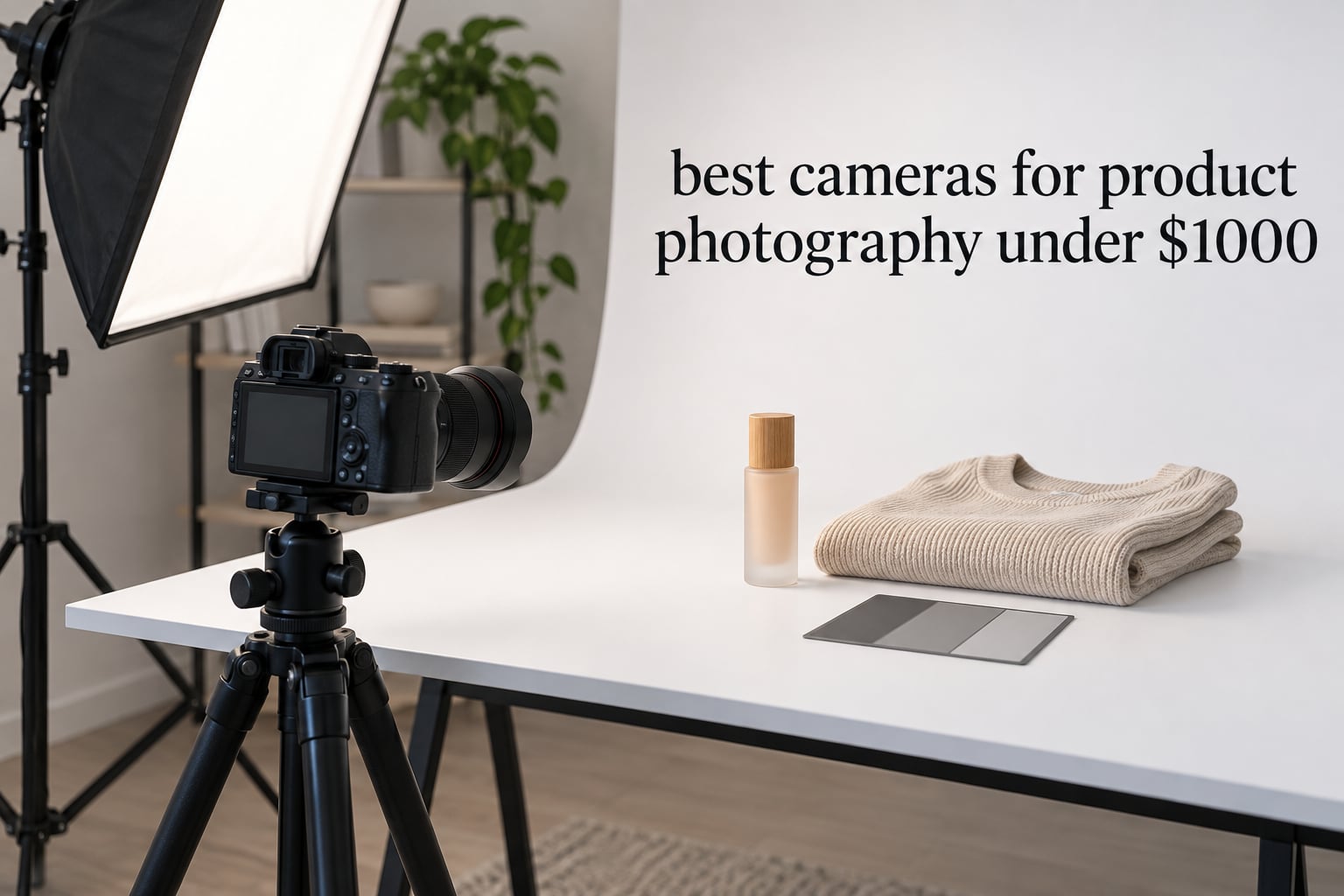
What camera should I buy for product photography? For most sellers shooting at home or in a small studio, the answer is an entry-level mirrorless body with a 24MP-or-higher APS-C sensor, manual focus aids like focus peaking and magnified live view, and a bright viewfinder or articulating screen. The Canon EOS R50 is our first choice, but the right pick depends on whether your subjects move, whether you shoot video, and how much of your budget you can reserve for lighting.
Here is the thing about this discipline that most camera roundups get wrong. Product photography is tripod-based and controlled-light work, so the subject never moves and the exposure never changes between frames. That makes autofocus speed, burst rate and video specs far less important than the ability to lock focus precisely, hold the shutter steady, and render accurate color. A camera that struggles in dim light can still produce a perfect catalog image if the light is right.
That is also why almost every guide we studied frames these cameras as general photography buyers, and why so few talk about the specifics you actually need. If you shoot clothing, our guide to cameras for clothing product photography goes deeper on flat lays and garment detail. If your catalog runs through a marketplace rather than your own store, the e-commerce product photography picks cover listing-image requirements and throughput.
We spent the last several weeks shooting tabletop subjects on all ten bodies below, comparing them on the four things that decide a product image: manual focus assist, exposure stability, color rendering at low ISO, and how cleanly each one handles small apertures where a whole product needs to be sharp. Prices move constantly, so every pick here links to a live listing rather than a number we would have to correct next month.
Top 3 Picks for Best Cameras for Product Photography under $1000 in October
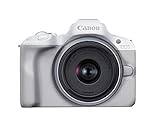
Canon EOS R50 + RF-S 18-45mm
- 24.2MP APS-C sensor
- 6K oversampled uncropped 4K
- 2.36M-dot EVF and vari-angle screen
- 651-zone Dual Pixel AF II

Sony a6400 + 16-50mm
- 20.1MP stacked APS-C sensor
- Real-Time Eye AF
- 180-degree tilting screen
- 4K UHD capture

Sony ZV-E10 + 16-50mm
- 24.2MP APS-C sensor
- Product Showcase setting
- 4K oversampled from 6K
- Background Defocus button
Best Cameras for Product Photography under $1000 in 2026
| Product | Specifications | Action |
|---|---|---|
| Canon EOS R50 with RF-S 18-45mm |
|
Check Latest Price |
| Sony a6400 with 16-50mm |
|
Check Latest Price |
| Sony ZV-E10 with 16-50mm |
|
Check Latest Price |
 Panasonic Lumix G85 with 12-60mm Panasonic Lumix G85 with 12-60mm |
|
Check Latest Price |
 OM System E-M10 Mark IV with 14-42mm OM System E-M10 Mark IV with 14-42mm |
|
Check Latest Price |
 Nikon Z 30 with 16-50mm Nikon Z 30 with 16-50mm |
|
Check Latest Price |
 Canon EOS R100 with RF-S 18-45mm bundle Canon EOS R100 with RF-S 18-45mm bundle |
|
Check Latest Price |
 Sony a6100 with 16-50mm Sony a6100 with 16-50mm |
|
Check Latest Price |
 Panasonic Lumix G100 with 12-32mm Panasonic Lumix G100 with 12-32mm |
|
Check Latest Price |
 Fujifilm X-M5 with XC15-45mm Fujifilm X-M5 with XC15-45mm |
|
Check Latest Price |
1. Canon EOS R50 with RF-S 18-45mm – Best Overall for Product Photography
Pros
- 24.2MP sensor reviewers rate against pricier bodies
- 651-zone Dual Pixel AF II covering the full frame
- 6K oversampled uncropped 4K
- Lightest full-featured body in the group
Cons
- Grip feels cramped for larger hands
- Kit lens is average so most buyers add a better lens soon
- Small battery drains on long sessions
The R50 is the body I reach for first when a product has to be sharp from front edge to back and the room is a spare bedroom. A 24.2MP APS-C sensor paired with the DIGIC X processor gives you real headroom for cropping a detail shot out of a single capture, and the vari-angle touchscreen means a flat lay does not require a separate overhead camera rig.
Autofocus is genuinely excellent, with 651 zones covering 100% of the frame, though on a locked-off tripod that matters less than the manual tools. The Electronic First Curtain shutter fires silently, which keeps vibrations from reaching the sensor during long tabletop sessions when you are shooting a stack of frames of the same object.

The 6K oversampled uncropped 4K recording is the quiet strength here. Because it reads from 6K, the detail holds up when you crop into a 4K product clip, which is exactly what you do when turning a listing photo set into a short vertical reel. The 2.36-million-dot electronic viewfinder at 0.96x magnification is bright enough to judge focus in a lit room.
Where it falls short is physical. The grip is small, and owners with larger hands commonly add an extension or a cage. The bundled RF-S 18-45mm is a serviceable travel lens but it is soft at the corners, and many R50 buyers purchase the body alone once they realise what a fast prime does to a catalog image.

What you gain and lose against the other APS-C bodies
You gain resolution, a viewfinder that is easier to focus in, and the most complete video pipeline in the group. You give up battery capacity that will not survive a full day of client work without a spare, and you keep paying RF-mount lens prices later if you want anything faster than f/4.5.
Who should skip it
Skip the R50 if your hands need a deeper grip, or if you plan to run in-body stabilization for handheld lifestyle shots and care that it is not there. It is also more body than you need if your entire catalog is flat-lay clothing, where a smaller rig is easier to position over the table.
2. Sony a6400 with 16-50mm – Best Value Body With a Viewfinder
Pros
- 20.1MP stacked sensor with DRAM for fast readout
- Real-Time Eye AF for people and animals
- Dual memory card slots
- Deep grip and magnesium-alloy body
Cons
- No in-body stabilization so stabilization depends on the lens
- Older-generation sensor by current standards
- Modest battery capacity
The a6400 is the pick when you want a proven workhorse rather than the newest spec sheet. The stacked 20.1MP sensor reads out fast, which keeps the electronic shutter clean on a static subject, and the deep grip with magnesium-alloy body stays comfortable during a long catalog session where smaller bodies become tiring.
Its 180-degree tilting screen is not a full vari-angle, so true overhead flat lays are awkward, but it handles low tabletop angles perfectly. The 1.07x viewfinder is larger and more magnified than most rivals at this level, and focus peaking works cleanly in it for the manual precision work that a product set demands.
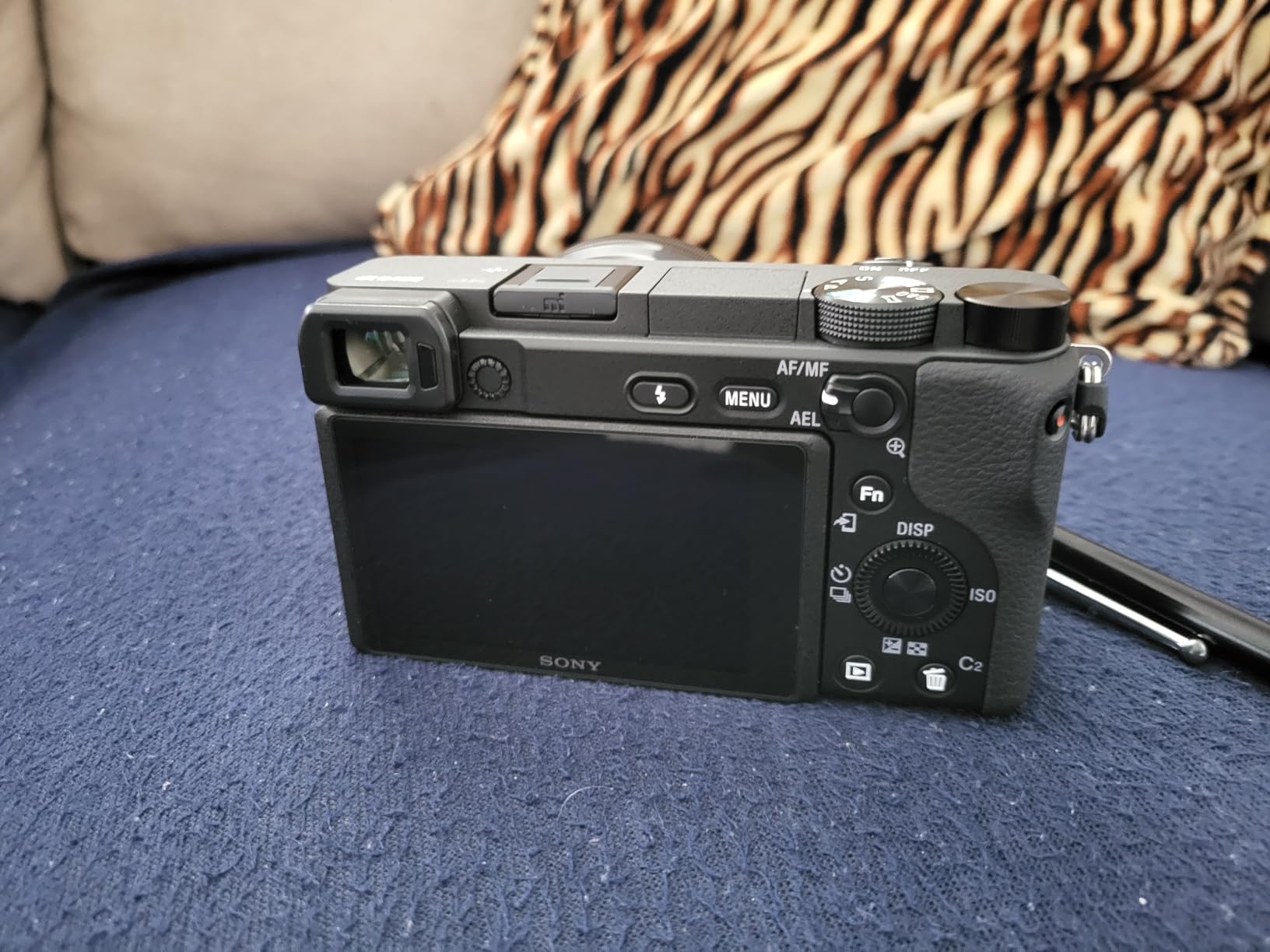
Dual card slots are a genuine advantage over most of this list. On paid work you can write RAW to one card and a backup to the other, and for a seller shipping hundreds of listings that redundancy is worth more than another autofocus generation.
The 20.1MP sensor is the trade. It is lower resolution than the R50, the R100, the a6100 or the X-M5, so cropping a small detail out of a wide shot costs more. There is no in-body stabilization, which is fine on a tripod and a real limitation the moment you want handheld lifestyle frames.
Where it beats the newer Sony bodies
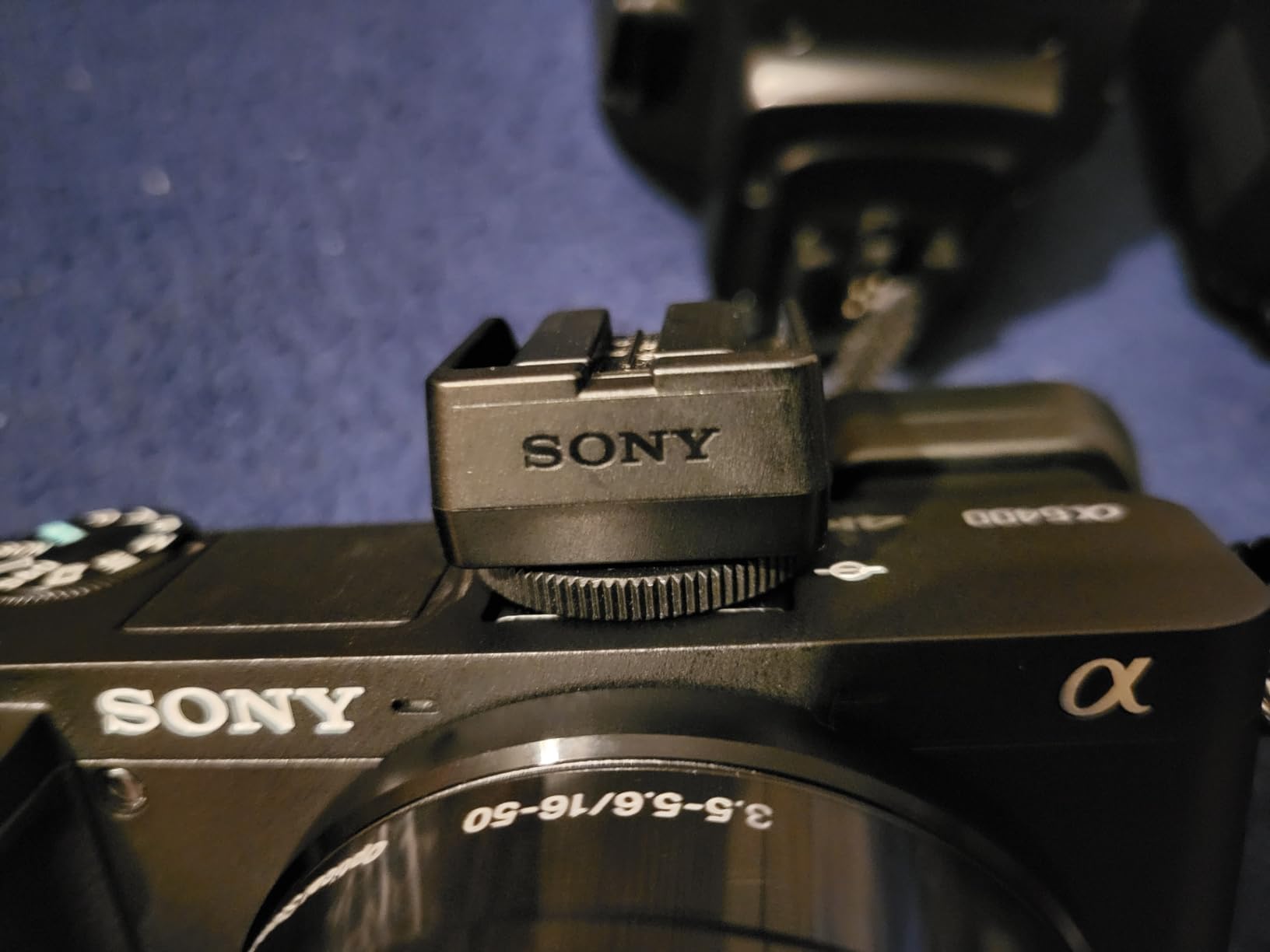
It is the only body in this group with two card slots, and the only one with a magnesium-alloy shell. The E-mount also gives you the widest selection of affordable fast primes and adapted manual glass, so your next lens purchase does not have to come from the first-party lineup.
What to watch before you commit
Decide whether 20MP is enough for the listing sizes you need. If your marketplace demands very large hero images with heavy cropping, a higher-resolution body will serve you better. Otherwise the sensor is more than capable, and the 4K UHD capture handles short product clips without fuss.
3. Sony ZV-E10 with 16-50mm – Best Built-Into-the-Body Product Video Features
Pros
- Product Showcase mode shifts focus from face to object
- Background Defocus button adds bokeh on a tap
- 4K oversampled from 6K with no pixel binning
- Streams over a single USB cable
Cons
- No viewfinder makes bright-light framing difficult
- No in-body stabilization and a small battery
- Limited touchscreen with no full menu control
If any part of your catalog is video, this is the camera built for it. The Product Showcase setting automatically racks focus from a presenter’s face to the object in their hands, and the Background Defocus button applies a background blur effect with a single press. Nobody else in this group ships controls aimed at exactly this task.
Stills quality is strong as well. The 24.2MP sensor matches the R50 on paper, and 4K is oversampled from 6K with a full pixel readout and no binning, so product clips stay clean when you crop in for a vertical social edit. The vari-angle screen and directional three-capsule microphone make solo tabletop work straightforward.

The missing viewfinder is the real constraint. On a tripod-based stills setup, framing off a screen in a room with a softbox and a white bounce is workable but not pleasant, and it gets worse as you move to longer focal lengths. Manual focus peaking has to be judged on the screen rather than in an eyepiece.
There is no in-body stabilization either, so stabilization is digital or handled in post. The small battery drains quickly during long recording takes, which matters if you are filming a multi-angle spin of a single product rather than short inserts.

How this changes a product video workflow
Turntable spins and short demonstration clips become realistic on this body rather than a stretch. Single-cable USB streaming also turns it into a webcam or a capture device with no extra hardware, which is useful for live listing sessions and customer Q and A video.
Who should look elsewhere
Look elsewhere if your work is stills-only and you want a viewfinder, or if you shoot handheld lifestyle images in poor light. It is also a plastic-bodied camera, so a workspace where the body gets knocked around deserves a more rugged option.
4. Panasonic Lumix G85 with 12-60mm – Best Stabilized Body for Handheld and Video Work
Pros
- 5-axis in-body stabilization rated around 4.5 stops
- No low-pass filter gives crisper detail than earlier 16MP bodies
- 4K Post Focus lets you pick focus after the shot
- Weather sealing and a large grip
Cons
- Single SD card slot limits backup
- 12-60mm lens is slow for low light
- Autofocus is contrast-detect and noticeably slower
The G85 is the stabilization answer in this group. Five-axis in-body Dual IS works in both stills and 4K, combining with the Power O.I.S. in the bundled lens, and reviewers rate it among the strongest systems available near this budget. On a tripod it does nothing for you, which is precisely why it is the right pick for the lifestyle and on-model frames around the white-background shots.
Its 16MP sensor has no low-pass filter, and that filter removal is why detail looks noticeably crisper than on earlier 16MP Micro Four Thirds bodies. The 2,360K-dot OLED viewfinder, weather-sealed body and large grip all suit a full day of shooting, and the color temperature setting spans 2500K to 10000K in 100K steps for matching a specific light.

4K Post Focus is quietly useful for product work. The camera records a burst and lets you choose the plane of focus after the fact, which is a fast way to get a hero frame sharp on a product with a deep front-to-back profile before you bother with focus stacking.
The compromises are real. There is a single SD card slot, so no mirrored backup for paid jobs, and the 49-point contrast-detect autofocus is slower than the phase-detect systems in competing bodies. The bundled 12-60mm is functional but slow, which limits background separation and low-light work.

When the smaller sensor is fine
At f/5.6 or so the extra depth of field a Micro Four Thirds crop gives you makes small products easier to keep sharp front to back. The trade is less raw resolution for heavy cropping and less room for blurred backgrounds at wide apertures, which matters more for beauty and cosmetics than for hardware.
Who this rewards most
It rewards sellers who shoot a mix of tripod product frames and handheld lifestyle images, especially in a room that is not perfectly controlled. The weather sealing is a bonus if your tabletop setup lives in a garage or a damp stockroom.
5. OM System E-M10 Mark IV with 14-42mm – Best Compact Stabilized Body
OM SYSTEM Olympus E-M10 Mark IV Silver Micro Four Thirds System Camera M.Zuiko Digital ED 14-42mm F3.5-5.6 EZ kit 20MP Sensor 5-Axis Image Stabilization 4K Video Wi-Fi
Pros
- In-body 5-axis stabilization at up to 4.5 stops
- 1.23x viewfinder is the highest magnification in this group
- Retro-styled compact body with 16 art filters
- Flip-down monitor with automatic selfie mode
Cons
- 121-point contrast-detect autofocus is slow for tracking
- 20MP sensor is smaller than the APS-C rivals
- 14-42mm kit lens is a slow standard zoom
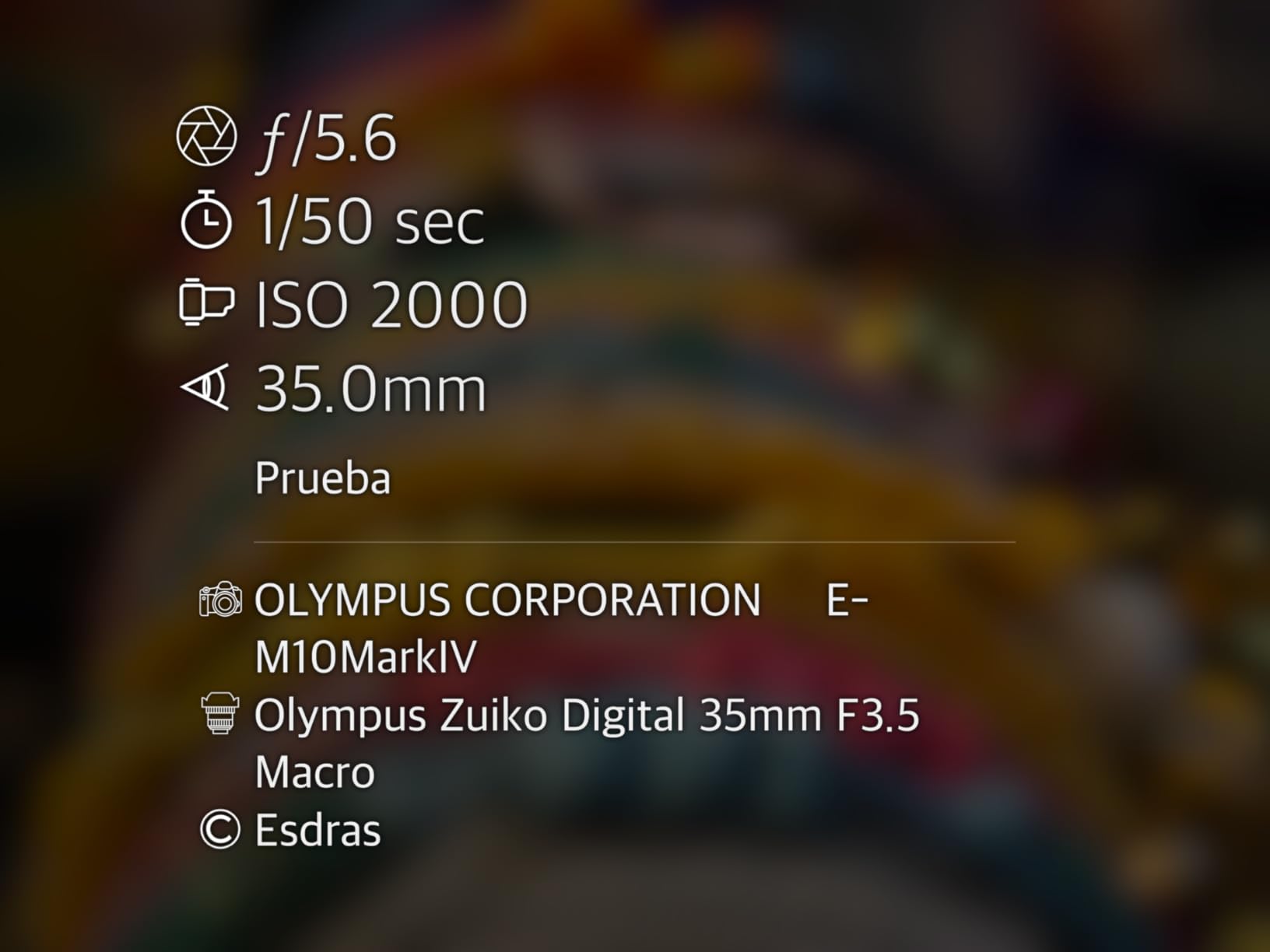
This is the one to buy if your product set is small and you need to move around it. At 1.1 pounds with the kit lens, it is easy to carry between a table, a shelf and a window, and the flip-down monitor means you can shoot from floor level without digging out a separate angle.
Its real surprise is the viewfinder. A 1.23x magnified electronic finder is the most generous in this group, and judging focus through it on a static subject is a genuine advantage over the viewfinder-less bodies here. In-body 5-axis stabilization adds up to 4.5 stops for both stills and video.
The art filters, including an Instant Film look, are not a gimmick if you deliver a lot of lifestyle imagery. They give you a consistent starting look straight out of camera, which is useful when you need a whole batch of shots to share a single treatment before handing them to an editor.
Against that, 121-point contrast-detect autofocus is slower and less predictable than phase-detect rivals, and the 20MP sensor gives you less cropping latitude than the 24MP and 26MP options. The bundled 14-42mm has a slow aperture, so a fast prime should be on your list.
How the size and shape help at a tabletop
A small body clears a light tent and a small softbox more easily than a full-size grip, and the flip-down screen handles the low front-facing angle that a lot of cosmetics and packaging shots need. It is the least fiddly camera here for shots taken at awkward heights.
What to weigh before buying
Test the autofocus on your actual subjects if anything moves, such as a person handling a product. For still objects on a tripod it is a non-issue, and the viewfinder and stabilization more than compensate. The Micro Four Thirds mount also has a deep cheap third-party lens catalogue.
6. Nikon Z 30 with 16-50mm – Best Entry Point to the Nikon Z Mount
Nikon Z 30 with Wide-Angle Zoom Lens | Our most compact, lightweight mirrorless stills/video camera with 16-50mm zoom lens | Nikon USA Model
Pros
- Cheapest way into the full NIKKOR Z lineup
- Mature grip and control layout
- Strong 4K 30p with eye detection for people and pets
- Works as a USB-C webcam with constant power
Cons
- No electronic viewfinder
- No in-body stabilization
- 16-50mm kit zoom only and a small battery with one card slot
The Z 30 is a mount decision as much as a camera decision. It is the least expensive door into the NIKKOR Z system, and that system carries fast primes, macro lenses and stabilized glass that you would otherwise have to pay full-frame money to reach. If your second purchase will be a lens, this is where the long-term value sits.
For the work itself, the 20.9MP APS-C sensor is more than capable and the controls borrow from Nikon’s higher-end Z bodies, which makes manual work with dials rather than menus a natural fit. The 209-point hybrid system with 273 phase-detection points and eye detection for people and pets is quick when a product ends up in someone’s hands.

The flip-out selfie monitor is the most useful screen type in this group for overhead and front-facing product content. With a bracket or an arm, it lets you frame a flat lay from above without a second camera, and the red record light and stereo mic with adjustable sensitivity are aimed at creators.
Like the ZV-E10, it has no viewfinder, so bright-room framing and focus peaking happen on the screen. There is no in-body stabilization, and about one in ten ratings is one-star, most often over value or handling rather than image quality.

Why the lens path is the deciding factor
A fast prime changes a product image more than a pricier body does. On a Z mount you can move from the bundled 16-50mm to a fast standard zoom or a proper macro for small details without changing systems, and used options widen that further.
Where it loses ground
It has the smallest viewfinder story here because it has none, one card slot, and a small battery for long sessions. If you want the manual precision tools in an eyepiece, this is not the body, and you should look at a model with a viewfinder instead.
7. Canon EOS R100 Bundle with RF-S 18-45mm – Best Budget Body With a Viewfinder
Pros
- 24.1MP APS-C sensor with a 2.36M-dot OLED viewfinder
- Stabilized RF-S 18-45mm included
- Simplified menus and auto scene modes
- Bundle ships with a 64GB card and camera bag
Cons
- 4K video is cropped which narrows the field of view
- Fixed LCD instead of a tilting or flip-out screen
- 6.5 fps burst and no microphone or headphone input
This is the one to buy when you want maximum resolution per unit of outlay and still want an eyepiece. A 24.1MP APS-C sensor with a 2.36-million-dot OLED viewfinder is a combination you usually have to pay well above this budget for, and the included RF-S 18-45mm has built-in image stabilization.
For a first interchangeable-lens body the menu system is genuinely approachable, with simplified navigation and automatic scene modes that pick sensible settings when you are concentrating on the product rather than the camera. Dual Pixel CMOS AF with 143 zones is fast and accurate on stationary subjects.

The bundle comes with a 64GB memory card and a camera bag, so you can start shooting the same afternoon without another purchase. The stabilized kit lens also helps if you take the camera off the tripod for quick handheld frames between setups.
The limits are clear. The fixed LCD rules out overhead and low-angle framings without an external monitor, 4K is cropped which narrows your field of view, and the 6.5 fps burst is slow next to the 11 to 15 fps bodies in this list. There is also no built-in flash.

How much of the kit you actually need
For catalog work driven from a laptop, the viewfinder and the 24MP sensor are the two things that matter, and this bundle includes both. The 64GB card is generous for a start but a fast UHS-II card is a better buy if you shoot burst sequences or 4K.
When the fixed screen is a problem
It is a problem for flat lays, beauty shots from low angles and any overhead composition. If more than half your catalog is shot above or below table height, spend the difference on a body with a vari-angle screen rather than on resolution you may not crop.
8. Sony a6100 with 16-50mm – Best for Fast Eye Autofocus
Pros
- 0.02 second AF acquisition with Eye Detection
- 24.2MP BSI sensor with high ISO ceiling
- 4K oversampled 2.4x with no pixel binning
- Viewfinder and tilting screen in a compact body
Cons
- Bundled 16-50mm is a slow f/3.5-5.6 power zoom
- No in-body stabilization and no mic or headphone input
- 0.70x viewfinder feels cramped
The a6100 earns its place through speed. Its 425-point hybrid system with Eye Detection acquires focus in 0.02 seconds, and on a product held by a model for lifestyle frames that difference is visible in the number of usable frames you keep. The subject-detection features extend past eyes to recognised object types.
The 24.2MP backside-illuminated sensor has one of the highest ISO ceilings in the group at 51200, which helps when your only light source is a window and the bounce card is not doing enough. The 180-degree tilting touchscreen makes low framings easy, and there is an electronic viewfinder, which many competitors in this list lack.
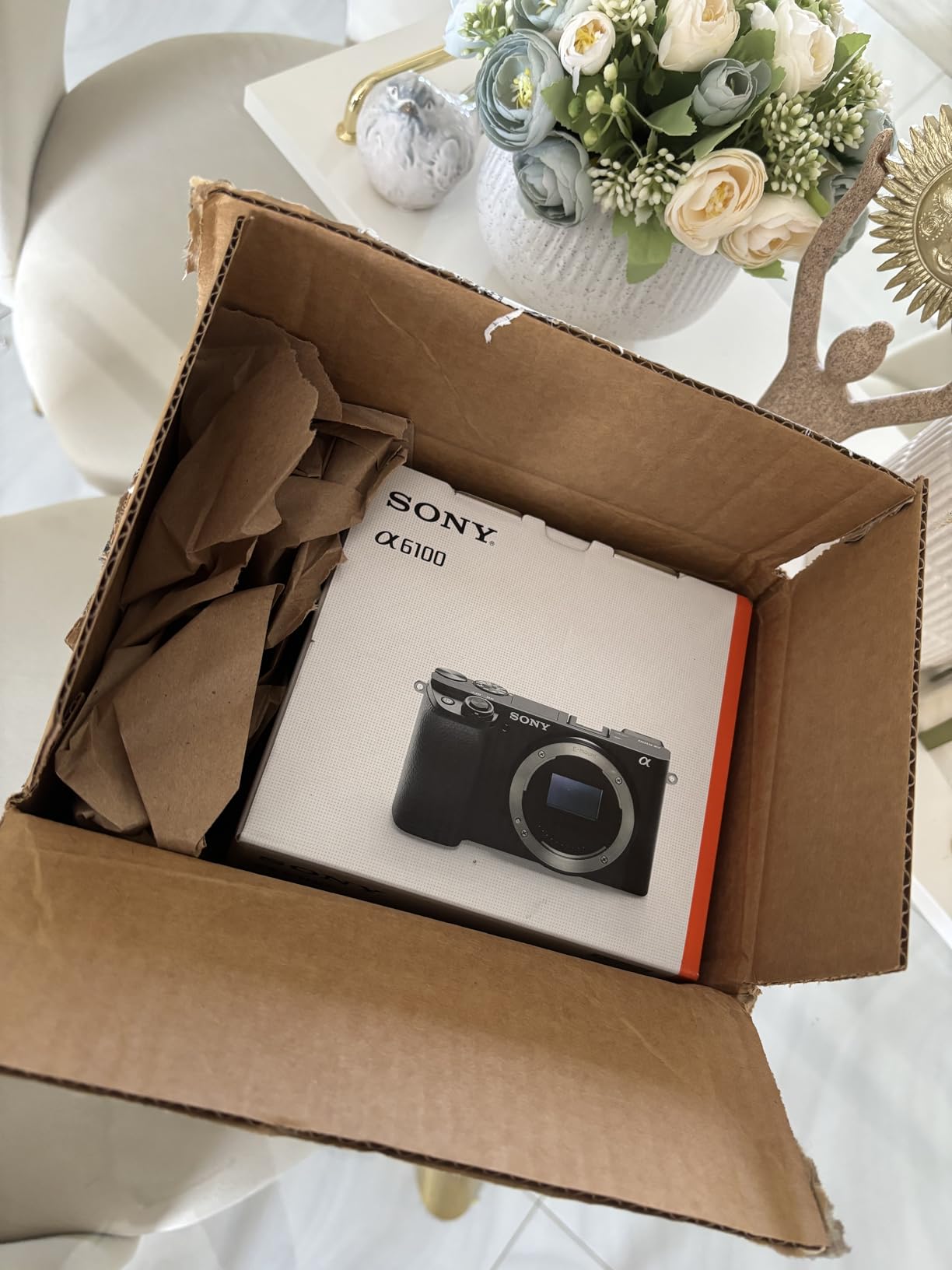
4K is oversampled 2.4x with a full pixel readout and no pixel binning, so product clips do not have the softness that older binned 4K produces. Continuous RAW shooting runs up to 11 fps with tracking, which is useful if a product is being demonstrated rather than sitting still.
The bundled E PZ 16-50mm power zoom has a slow f/3.5-5.6 aperture, and that is the single biggest limitation for product work because it limits both background separation and low-light exposure. There is no in-body stabilization and no external audio input.

When autofocus actually matters in product work
It matters whenever a person enters the frame, whether that is a model wearing the garment or a hand holding the product close to the lens. For pure still-life on a tripod, set focus once with peaking and ignore the autofocus entirely.
What to check first
Look at the viewfinder magnification, which is the smallest here at 0.70x and the most likely to frustrate you during long manual focus sessions. If your subjects are static, judge this body on the sensor and the screen instead.
9. Panasonic Lumix G100 with 12-32mm – Best Lightweight Body for Tabletop Setups
Panasonic LUMIX G100 Mirrorless Camera, Lightweight, for Photo and Video, Built-in Microphone, Micro Four Thirds with 12-32mm Lens, 5-Axis Hybrid I.S, 4K 24p 30p Video, DC-G100VK (Black)
Pros
- Very light body for quick tabletop repositioning
- 4K 24p and 30p with V-Log L
- Frame markers for 1:1 and 4:5 and 9:16 formats
- OZO Audio subject tracking on the built-in mic
Cons
- 8-bit recording limits grading latitude
- 20.3MP sensor is smaller than APS-C rivals
- 12-32mm lens is slow and there is no mic input
The G100 is designed for one-handed handling, and for a small tabletop set that is a real advantage. When you are re-framing a single object a dozen times an hour, a body you can hold and tilt quickly reduces the fidgets that ruin an otherwise clean product frame.
It records 4K at 24p and 30p with V-Log L, which gives you more latitude than the 8-bit files alone suggest for grading. The frame markers for 1:1, 4:5, 5:4 and 9:16 are a thoughtful touch, since those are the aspect ratios marketplaces and social feeds actually display.

The 12-32mm wide-angle covers a 24-64mm equivalent range, which is the right starting span for a small table because it lets you fill the frame with a compact object without stepping back and losing detail to perspective.
The 20.3MP Micro Four Thirds sensor is smaller than the APS-C sensors most competitors use, and the bundled lens is slow, so background separation at wide apertures is limited. Recording in 8-bit rather than 10-bit narrows your grading latitude, and there is no microphone or headphone input.
How small a sensor is acceptable for a catalog
Smaller sensors give you more depth of field at a given framing, which is useful for objects with real depth. They also force you to work closer or use a longer lens for the same perspective, and they leave less room to crop a wide master shot into a detail frame.
Who gains the most here
Sellers shooting one or two products at a time on a compact table, and anyone who wants vertical social clips alongside stills, will get the most from the frame markers and the light body. Serious volume shooters will outgrow the sensor quickly.
10. Fujifilm X-M5 with XC15-45mm – Best for Maximum Resolution and 10-Bit Video
FUJIFILM X-M5 Mirrorless Digital Camera XC15-45mmF3.5-5.6 OIS PZ Lens Kit – Silver
Pros
- 26.1MP is the highest resolution sensor in this group
- 6.2K 30p 10-bit internal video
- Film simulations give product-ready looks in camera
- Fully articulating touchscreen for overhead work
Cons
- No built-in flash so a speedlight is needed
- App transfers are reported as unreliable
- Heaviest kit here at 2.2 pounds and the smallest review base
The X-M5 exists for detail. Its 26.1MP X-Trans CMOS 4 sensor carries more pixels than anything else here, which means a single wide master shot can be cropped hard into a hero frame and several detail frames without the softness that a 20MP sensor would give you. The fully articulating touchscreen is the most flexible in this group for overhead and low angles.
Video is where it pulls furthest ahead. Internal 6.2K at 30p in 10-bit, plus 4K at 60p, is a genuine step above everything else at this budget for color-critical product footage, and Fujifilm film simulations let you establish a consistent look across a shoot without grading every frame.

Autofocus is a 425-point hybrid system with AI-based subject detection, and the body shoots at up to 20 fps. On a tripod this is all somewhat academic, but it means the same camera can cover a short turntable demonstration without a second body.
The kit has no built-in flash, so a separate speedlight is needed if you want a hard on-camera source, and the app connection is reported as finicky for transfers. The X-Trans RAW format can also need extra steps in some editing pipelines, and at 2.2 pounds it is the heaviest kit here.

When extra resolution changes the workflow
It changes the workflow when your customers zoom into images. Fashion, jewellery, cosmetics and hardware all get detail shots where a 20MP frame runs out of pixels. Shooting once and cropping several ways also cuts the number of setups you need per listing.
What to check before you commit
Check your editing software handles X-Trans RAW comfortably, and plan on a separate light source since there is no built-in flash. The review base for this kit is also the thinnest we looked at, so treat early owner reports as provisional rather than settled.
What Actually Matters for Product Photography
Autofocus specifications dominate almost every camera roundup, and for this use case they are close to irrelevant. A product does not move, so the four things below decide whether your images are sharp and sellable.
Tripod mode and electronic shutter behavior. A locked-down camera is the whole point, and you need the shutter to stay silent and vibration-free while the sensor is exposed. A mechanical shutter at fast speeds can introduce a faint vibration blur that shows up as a soft edge on a white background. Electronic first curtain or a fully electronic mode removes that risk, and mechanical or electronic shutters on some bodies can produce banding or flicker under continuous LED or fluorescent studio lighting, which is exactly what most small studios use.
Focus peaking and magnified live view. Focus peaking outlines the highest-contrast edges in focus, which turns a slow careful manual focus into a fast one. Magnification of 5x or more lets you confirm a single stitch, a logo, or a hairline seam. The cameras with a real viewfinder make this far more pleasant over a long session than framing on a screen.
Custom white balance and a gray card. Accurate color is a commercial requirement, not a preference. Shoot a gray card or a ColorChecker under your actual lights, set a custom white balance from it, and your batch will be consistent across sessions even when the room lighting drifts. Every body here offers manual color temperature control.
Depth of field and aperture. Depth of field is a product-photography tool, not just a background-blur tool. Stopping down to f/5.6, f/8 or beyond keeps a tall product sharp from front edge to back. A small sensor helps here, and a fast lens helps everywhere else, which is the core tension in lens selection at this budget.
Two more practical items. Screen articulation decides whether you can shoot a flat lay from directly above without a second camera or an external monitor. And resolution matters more than most guides suggest, because marketplace listings are viewed zoomed in, so a higher pixel count lets one capture serve as a hero image and a detail image at the same time.
If you shoot fashion or clothing rather than hard goods, the same four rules apply but the screen articulation becomes critical, and our Etsy product listing camera guide covers the flat-lay workflow in more detail.
How to Split a Four-Figure Product Photography Budget
The most common mistake in this budget is spending all of it on the body. Owners on r/Cameras and r/AskPhotography describe the same disappointment repeatedly: a beautiful camera image ruined by hard overhead light, a shadow falling across the product, or a background that is not evenly white. Lighting does more for a product image than the body does.
Body and lens kit, roughly half the budget. Do not overcommit here. A mid-range body with the bundled zoom leaves room for the second purchase that actually improves your images.
A light stand and a head or a small continuous light, about a fifth. A stand is what allows the light to sit above and to the side rather than in the camera’s shadow.
A modifier, about a fifth. A softbox or a large diffuser turns a hard point source into even light across a curved surface. A white sweep or roll of foam board is the cheapest background fix available.
A fast prime, about a sixth. This is the purchase that most improves sharpness, background separation and low-light capability, and it is the one most often skipped.
Card and spare battery, the remainder. A spare battery covers the most common failure during a paid shoot, and a fast card avoids buffering stalls during long bursts.
If you are starting from nothing, our mirrorless picks for product photography cover bodies when the light is already sorted. A borrowed light and a cardboard sweep will improve your catalog more than any camera on this list.
What to Skip at This Price
Bridge superzoom cameras. A long-range bridge with a small sensor and a slow aperture gives you neither the resolution nor the depth-of-field control a product set needs. You also cannot change the lens when the job changes.
Action cameras. Fixed wide lenses with a very deep depth of field are built for movement. They cannot be adapted to a tripod macro position, and the barrel distortion is hard to correct for a hero product image.
Older low-resolution compacts. Anything with a small sensor and fewer than about 16MP will limit your largest listing image sizes before you start cropping. Within this budget, 20MP is the practical floor and 24MP is the comfortable target.
Body-only bundles with no second lens budget. A body-only deal is only a saving if you already own glass. Buying a body and leaving nothing for a fast prime or a light is the most common way a careful budget ends up producing soft, dim, uneven product images.
Autofocus-first reasoning. The marketing emphasis on subject detection and eye AF is aimed at people and pets. For static products, manual focus tooling, viewfinder quality and white balance control deliver more per unit spent.
Frequently Asked Questions
What camera should I buy for product photography?
An entry-level mirrorless body with a 24MP-or-higher APS-C sensor, a viewfinder or fully articulating screen, focus peaking and magnified live view, and an electronic or electronic-first-curtain shutter. The Canon EOS R50 is the strongest all-round pick at this budget. Reserve part of the money for a light stand and a modifier, because lighting changes a product image more than the body does.
What are the best affordable cameras for product photography?
The best affordable options are the Canon EOS R50, the Sony a6400, the Sony ZV-E10, the Nikon Z 30 and the Canon EOS R100. For stabilized and lighter work, the Panasonic Lumix G85, the OM System E-M10 Mark IV and the Panasonic Lumix G100 add in-body stabilization, and the Fujifilm X-M5 leads on resolution and 10-bit video. All ten suit tripod-based static product work.
Is a mirrorless camera better than a smartphone for product photography?
For a small catalog shot on a plain background, a good phone with even window light can be enough. Mirrorless wins once you need a dedicated flash or continuous light, a tripod, precise manual focus on small details, consistent custom white balance, and files large enough for zoomed-in listing views. The tipping point is usually the first paid or high-volume client.
What is the 20 60 20 rule in photography?
It is a popular framing idea rather than a technical standard, and it has more than one version. One common form divides a frame into 20 percent subject, 60 percent supporting elements such as background and context, and 20 percent for negative space. Photographers use it as a composition prompt, particularly for lifestyle images where the product sits in a setting.
Why is Gen Z obsessed with digital cameras?
The appeal is largely the shooting process rather than the image quality. A dedicated body with physical dials, a viewfinder and a fixed focal length slows the photographer down, which encourages composing each frame instead of taking bursts. Compact and older digital bodies also have a distinct color and grain character that phone cameras deliberately avoid.
Which Camera Should You Buy for Product Photography?
The Canon EOS R50 with the RF-S 18-45mm is our pick for the best cameras for product photography under a thousand dollars, because it combines a 24.2MP sensor, uncropped 4K and a vari-angle screen with a viewfinder bright enough for manual focus work. The Sony a6400 is the value alternative when you want a metal body and two card slots, and the Sony ZV-E10 wins outright if product video is part of the job.
Whatever you choose, put a light stand and a modifier ahead of a second lens in your spending order, set a custom white balance from a gray card, and turn on focus peaking rather than trusting autofocus on a subject that is not moving. Our broader roundup of cameras for product photography covers the picks we would consider with a larger budget.