
Most cycling cameras are not chosen on the spec sheet. They are chosen by the vibration profile of the mount, how long the battery lasts on a six-hour ride, and whether the audio survives 40 km/h of crosswind. That is the filter we used to build this list of the best cameras for road cycling documentation in 2026, and it is why you will not find a single drone or handheld compact on it. Everything here is a body you can strap to a helmet, bars or chest and forget about for the length of a long road ride.
There are really three jobs on the bike. The first is hands-free POV footage: the road, the climb, the descent, the group ahead of you. The second is the self-filmed vlog, where you want to talk to the camera at a cafe stop and cut that together with riding shots. The third is stills, because the best image of most rides is a photograph, and action cameras are genuinely poor at that. A camera can do all three, but only if you accept some compromise, so we have named which compromise each one carries.
We built this guide in 2026 by weighing owner feedback and hands-on handling against the demands of the bike itself: vibration handling, mount security, real battery endurance, waterproofing and how long the editing takes afterwards. The useful comparison point is our other documentation guides: the same weighting we use for cameras for construction documentation and cameras for sculpture documentation applies here, because in all three cases the environment is hostile and the operator has no time to fiddle.
If your primary concern is a recorded incident rather than content, start with cameras for evidence documentation instead, then come back here for the ride footage. The short version of the list: the Insta360 GO 3S as our overall pick, because a 39g body is the one you will still have on your helmet in 2026, the DJI Osmo Action 5 Pro as the highest-rated full-size body if you prefer something substantial on the bars, and the DJI Osmo Action 4 as the value route into a large sensor.
Top 3 Picks for Best Cameras for Road Cycling Documentation in October

Insta360 GO 3S
- 1.4oz thumb-sized body
- 4K POV with FlowState stabilization
- Action Pod with 2.2 inch flip screen
- IPX8 waterproof to 10m

DJI Osmo Action 5 Pro
- 1/1.3 inch sensor
- 360 HorizonSteady
- Up to 4 hours per battery
- IP68 to 20m
DJI Osmo Action 4
- 1/1.3 inch sensor
- 4K120 and 155 degree FOV
- 150 minute battery
- Waterproof to 18m
The three above cover most riders. Everything below them trades one of those strengths for something else, and we explain what.
All 10 Best Cameras for Road Cycling Documentation in 2026
| Product | Specifications | Action |
|---|---|---|
| Insta360 GO 3S |
|
Check Latest Price |
 GoPro HERO12 Black GoPro HERO12 Black |
|
Check Latest Price |
 GoPro HERO13 Black GoPro HERO13 Black |
|
Check Latest Price |
 DJI Osmo Action 6 DJI Osmo Action 6 |
|
Check Latest Price |
| DJI Osmo Action 5 Pro |
|
Check Latest Price |
 Insta360 Ace Pro 2 Insta360 Ace Pro 2 |
|
Check Latest Price |
 Insta360 GO Ultra Insta360 GO Ultra |
|
Check Latest Price |
 AKASO Brave 4 AKASO Brave 4 |
|
Check Latest Price |
| DJI Osmo Action 4 |
|
Check Latest Price |
 AKASO Brave 7 LE AKASO Brave 7 LE |
|
Check Latest Price |
Read that table as three tiers. The DJI and GoPro bodies at positions two to five are the ones that survive a full day and shoot usable low light. The Insta360 modules at one and seven are about as small as a camera can get. The two AKASO bodies are where the tradeoffs become obvious rather than hidden.
1. Insta360 GO 3S: The Camera You Actually Forget You Are Carrying
Pros
- Mounts where bigger cameras physically cannot
- Horizon Lock keeps rolling frame level on leans
- Action Pod charges the camera while recording
- IPX8 body survives rain without a case
Cons
- Internal battery and memory cannot be replaced
- Runs hot during long recordings
- No external microphone input
- Weak low light for dusk rides
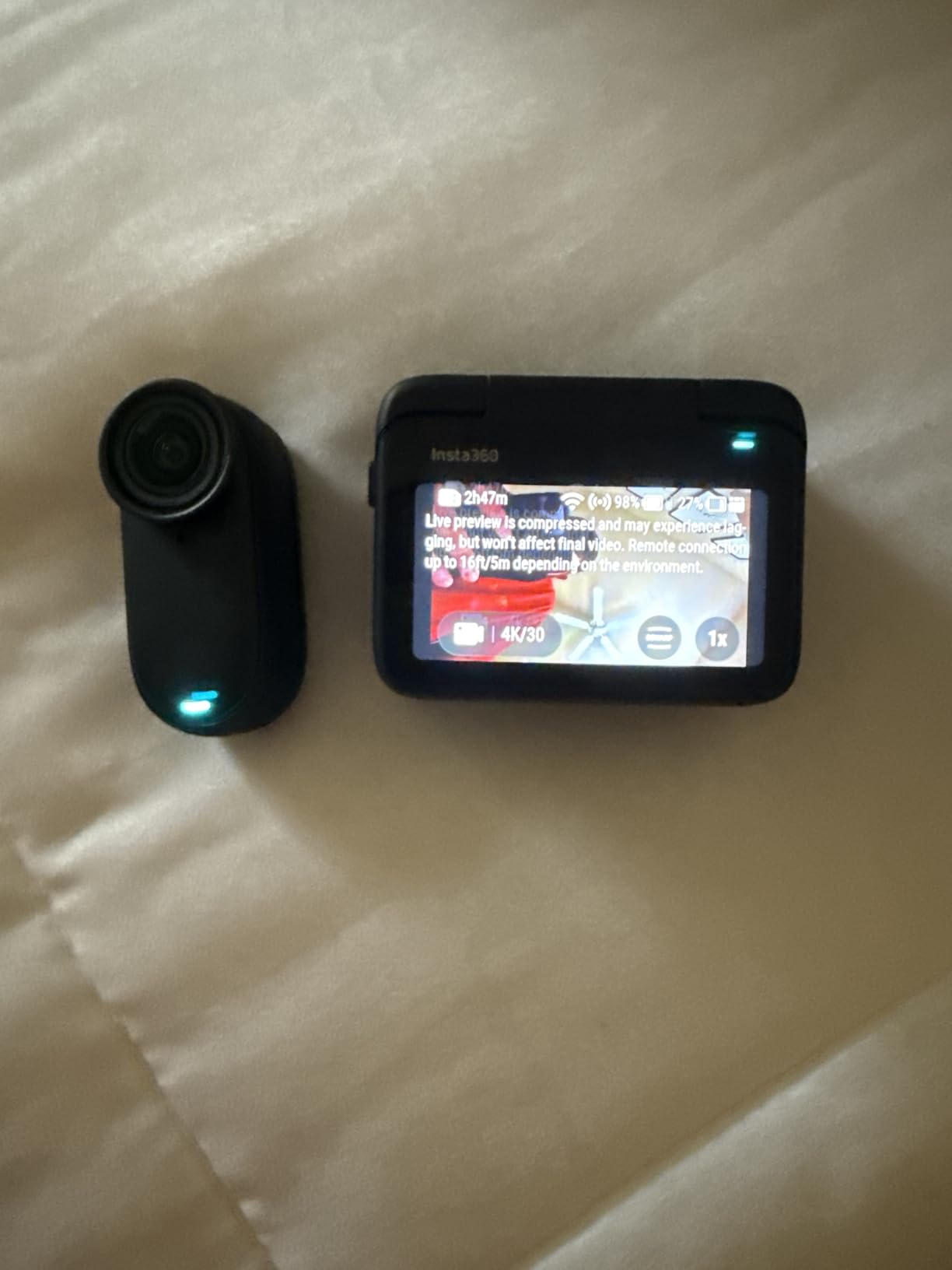
At 1.4oz, this is the smallest thing on the list and the one that changes what you can film. It is small enough to sit inside a helmet shell, under a jersey collar or on the end of a seatpost, positions where a GoPro or DJI body would tug at your helmet or hit your knee on every pedal stroke. Riders who use it on commutes say the cube form factor is the reason they will actually mount a camera, and that set-and-forget habit is what decides whether a ride gets documented at all.
The FlowState Stabilization and Horizon Lock do the heavy lifting on the road. Horizon Lock matters more on a bike than it does on almost any other activity, because a normal action camera will roll the frame a full ten degrees every time you lean into a bend, and no amount of post stabilisation pulls that back cleanly.
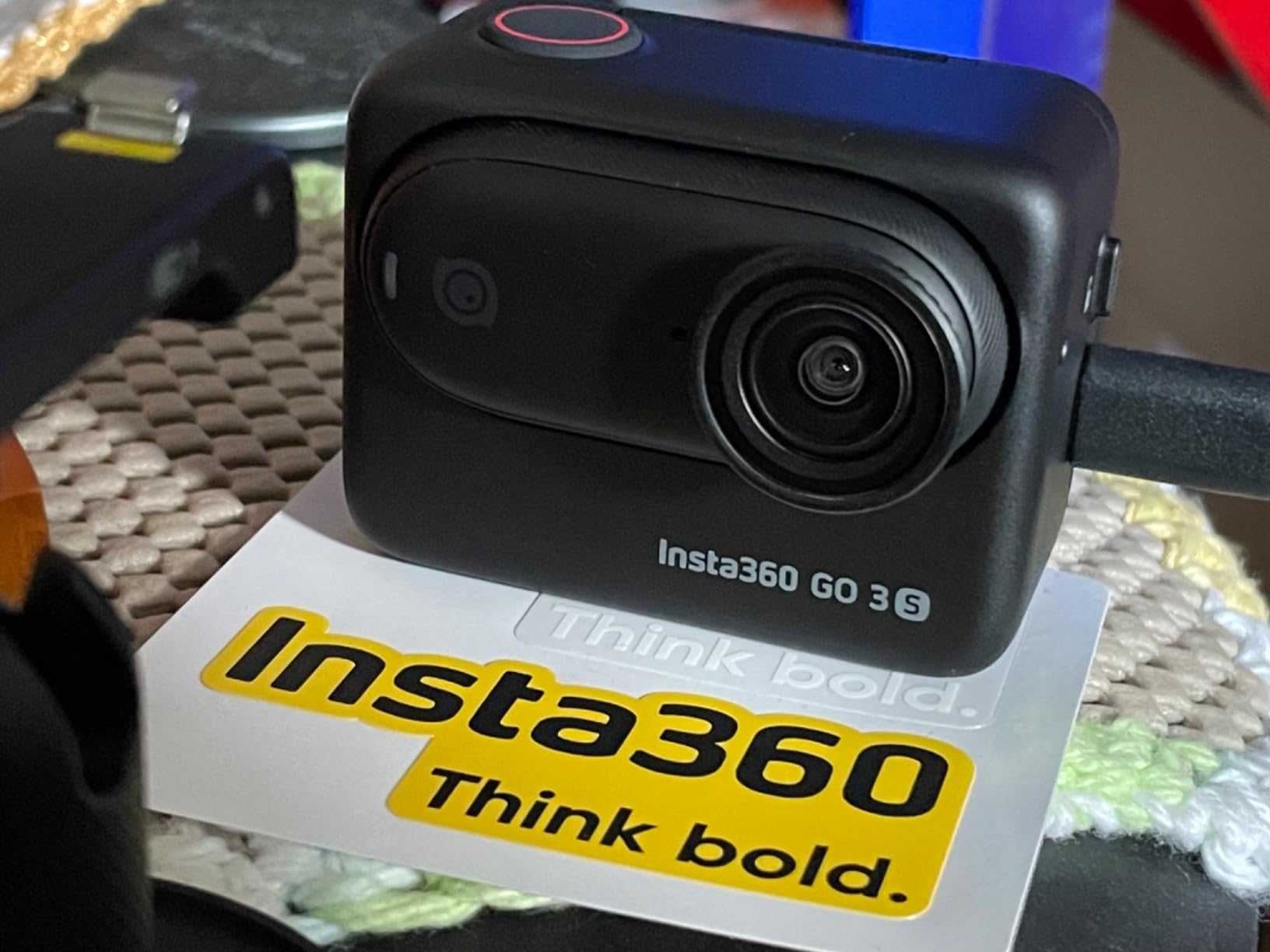
Owner reports put battery life at roughly 135 to 140 minutes in the Action Pod, which is the realistic figure to plan around. The camera itself records far less than that on its internal battery, so on a long ride you would keep the pod on the bars and the module up on the helmet, which is also the best arrangement for keeping the horizon locked.
What you give up is real. There is no user-replaceable battery and no user-replaceable storage, so the 128GB is fixed from the day you buy it, and there is no microphone input at all, which on a bike matters because wind noise is already the hardest part of the audio. Low light is also a step behind the 1/1.3-inch flagships, so dawn and dusk rides will look grainy.
When the tiny module is the right call
Choose this one if you ride in a helmet that you would rather not drill, if you want footage from a chest or collar position rather than a bar position, or if you already own a larger action camera and want a second angle. Several owners describe it exactly that way, as a companion unit rather than a replacement, and for group rides that second angle is what turns a POV clip into a story.
When the tiny module is the wrong call
Skip it for solo long-distance documentation on a single unit. Fixed internal storage means a 128GB ceiling, and the absence of a mic input means you are relying entirely on the internal mic in an environment where the internal mic struggles. If your ride is longer than about two hours or audio quality matters to you, look at the DJI bodies further down.
2. GoPro HERO12 Black: The Set-and-Forget Workhorse
GoPro HERO12 Black – Waterproof Action Camera with 5.3K60 Ultra HD Video, 27MP Photos, HDR, 1/1.9″ Image Sensor, Live Streaming, Webcam, Stabilization
Pros
- Folding mount fingers make bar and helmet fitting instant
- HyperSmooth 6.0 with AutoBoost copes with road buzz
- HDR video holds sky and tarmac detail
- Removable batteries so long rides are possible
Cons
- Runs hot during long 5.3K clips
- 1/1.9 inch sensor is noisy at dusk
- Needs a microSD card with no internal storage
- App-based workflow adds friction
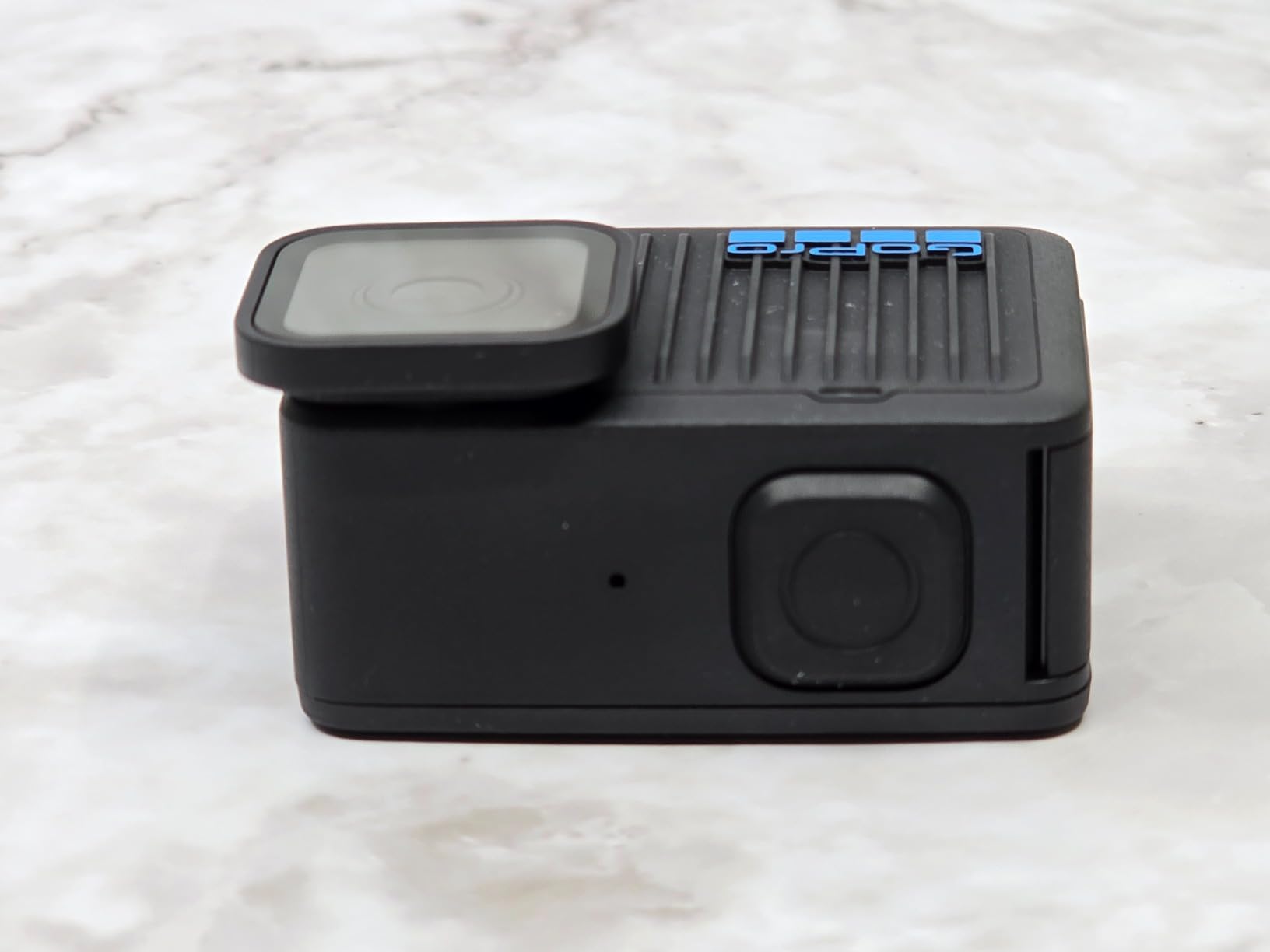
Around 80% of owners rate this five stars, and the reason is consistency rather than any single headline number. It is waterproof to 10m without a case, it has removable batteries, and the folding fingers on the body mean a bar mount or helmet mount goes on and off in seconds with no adapter plate to lose. On a road bike that practicality is worth more than a generation of sensor improvement.
HyperSmooth 6.0 with AutoBoost is the feature that makes handlebar footage watchable. Handlebars transmit the highest-frequency buzz on a road bike, from tarmac texture and wheel spokes, and AutoBoost crops in to absorb it. You lose field of view compared with the raw wide mode, but the resulting footage does not shimmer when you slow it down for a descent sequence.
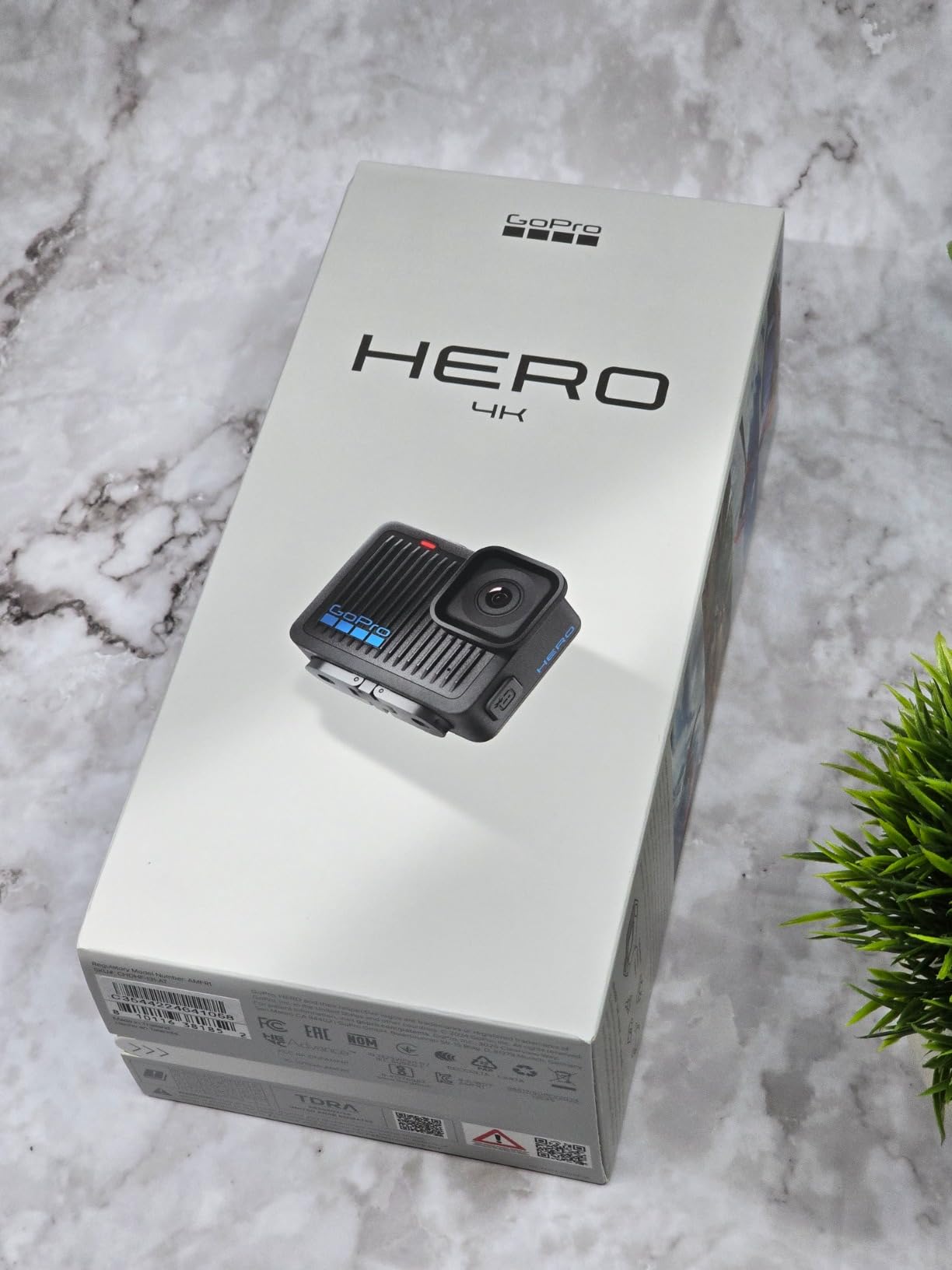
Frame grabs at 24.7MP let you pull a still from a 5.3K clip, which is the practical route to cycling photographs if you do not want to carry a second body. The GoPro Quik app handles the transfer. For a rider who wants one camera for the whole ride, that combination covers video and stills without a second device in the jersey pocket.
The weaknesses are honest ones. The 1/1.9-inch sensor is small, and at a winter dusk ride you will see visible noise where a 1-inch or 1/1.3-inch body stays clean. It also runs hot on extended 5.3K recording, and there is no built-in storage, so a card is a mandatory part of the kit.
Who this is built for
This suits the rider who mounts the camera once at the start of the season and leaves it on the bars for months, and the commuter who wants continuous front-facing coverage on a fixed route. With removable Enduro batteries and a spare card in the jersey, a full day of recording is realistic in a way it is not with an internal-battery body.
Where it falls short
The gap is low light and high-resolution endurance. If a large share of your riding happens at dawn, dusk or in winter, or if you plan to shoot long 5.3K sequences on climbs where the body is already in sun, the DJI models below handle both better. And while the lens is fixed, the 2x optical zoom listed in the specs is a digital crop rather than a real reach.
3. GoPro HERO13 Black: For Slo-Mo Descent Work
GoPro HERO13 Black – Waterproof Action Camera with 5.3K60 Video, 27MP Photo + Compatability with HB-Series Lenses
Pros
- Burst slo-mo captures fast cornering detail
- 5.3K60 gives clean footage for slow reframing
- HB-Series lenses auto-detect and adjust settings
- Waterproof to 10m with water-repelling lens
Cons
- Battery life is the shortest in this group
- Uses an external card with no internal storage
- Battery and USB-C share one side so charging while mounted is awkward
- Runs hot on long high-resolution clips
The reason to choose this over the HERO12 is the slo-mo. Burst capture at up to 13x, plus 4x slo-mo at full 5.3K resolution, is the only tool in this list that will hold a detail shot of a corner entry, a wheel swap or a descent at 40 km/h. For a channel built around slow-motion ride footage, that is not a nice-to-have; it is the whole reason to own one body over another.
The HB-Series lens system is the other quiet advantage. The camera detects an attached Ultra Wide, Macro, ND or Anamorphic modifier and adjusts its settings automatically, which means you can swap a lens mid-ride without diving into menus on a descent. Hybrid stabilization handles the mix of bar, helmet and handheld vibration that a day of road riding produces.

79% of reviews are five stars and the sentiment is strongly positive on image quality and build. The 5.3K60 mode also gives you more latitude to crop in post than any other single-lens body here, which matters when you framed a shot on a curve and only realise the composition was wrong after the fact.
Battery life is the sticking point, with a listed average of around 79 minutes. That is the shortest in this group and it directly limits a long ride to one or two batteries depending on resolution. The port layout is the other annoyance: battery and USB-C sit on the same side, so on some bar rigs you cannot top up while recording.

What it is genuinely good at
Short, high-quality sequences. A climb, a fast descent, a technical corner, a mechanical stop, and the rest of the day covered by a cheaper body or a phone. Riders who shoot this way get far more usable footage out of a long day because they are not gambling on a single unit surviving eight hours.
What it is genuinely bad at
All-day unattended recording on one battery, and any workflow where you need to charge while the camera stays mounted. At 157g it is also the second-heaviest body on the list, which is a small penalty on a helmet and a noticeable one on bars at 40 km/h.
4. DJI Osmo Action 6: The 8K and Four-Hour Battery Combination
Pros
- Up to four hours per battery covers most long rides
- 50GB built-in storage means you can record immediately
- Variable aperture helps in dusk tunnels and underpasses
- Connects two wireless mic transmitters with no receiver
Cons
- On-camera microphone is usable but not strong
- High bitrate files are very large and fill storage fast
- Touchscreen is hard to use inside a housing
- Still images can ghost in dark scenes
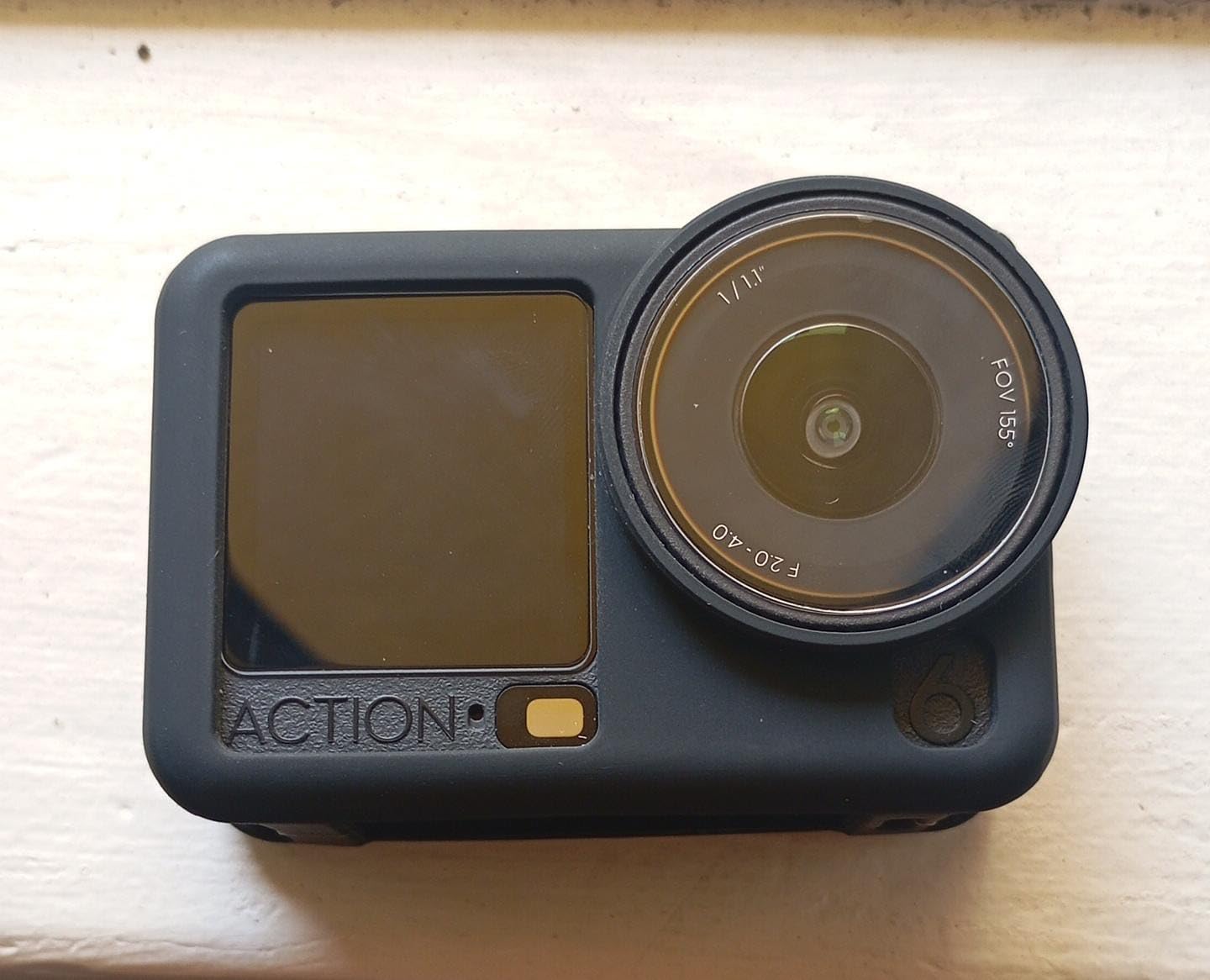
This is the most interesting body on the list for a road rider, because it addresses the two things that most often end a ride early: battery and storage. A listed runtime of up to four hours per battery, with a cold-resistant design, plus 50GB of built-in storage, means you can set off on a six-hour ride with one spare battery and a partly empty card and not think about either again.
The 1/1.1-inch square sensor with a variable aperture from f/2.0 to f/4.0 is the technical story. On a road ride that matters more than raw resolution: opening up to f/2.0 gives you usable frames in a wooded descent or a lit underpass, and stopping down to f/4.0 keeps a bright open road sharp. A fixed-aperture body forces you to choose one end of that range and live with it.
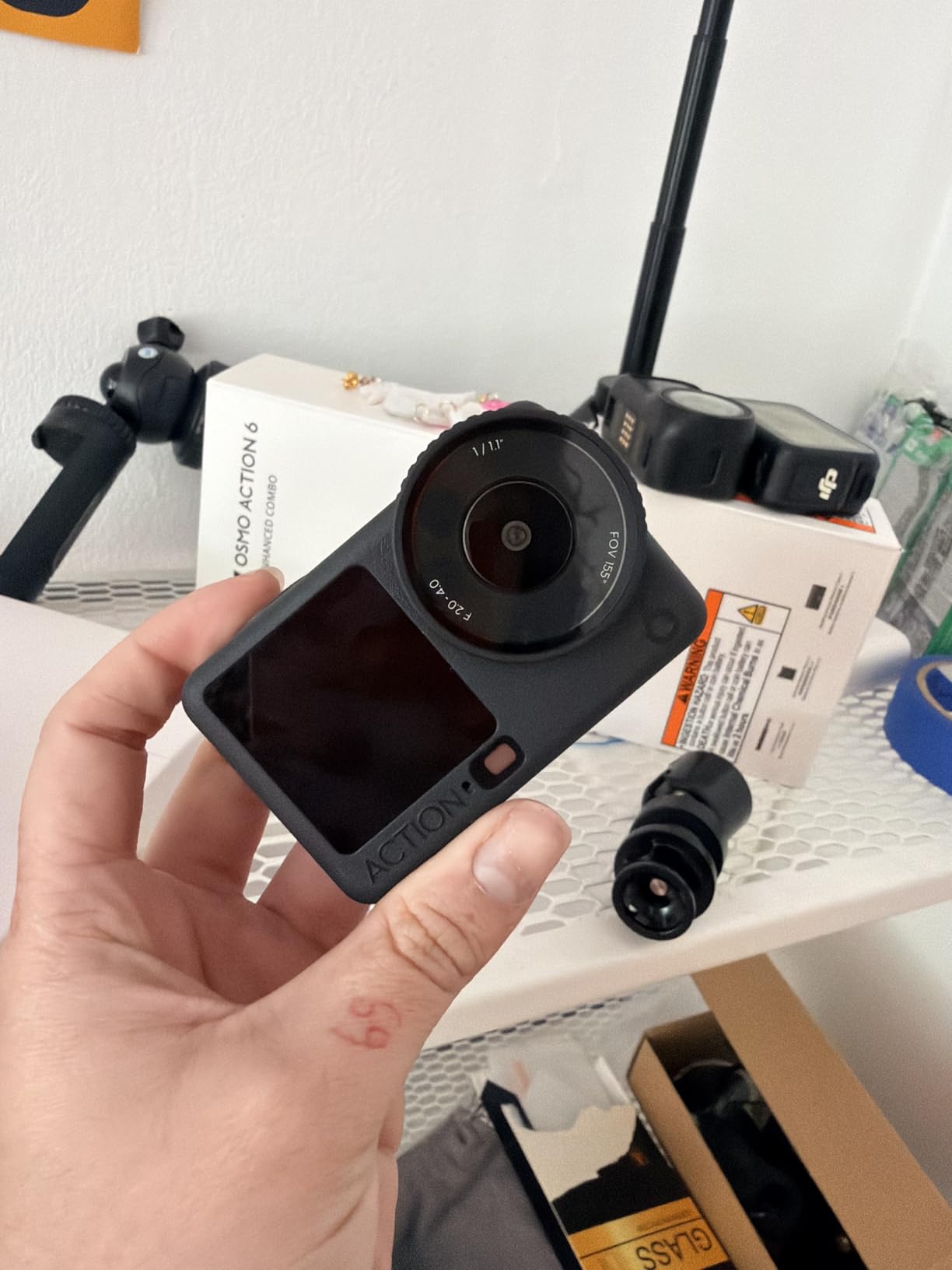
HorizonSteady at 360 degrees and RockSteady 3.0 are what make bar-mounted 8K usable. Owners repeatedly single out this model for cycling and motorsport work, and the 4K Custom Mode that reframes into different aspect ratios from one take is a genuine advantage for anyone cutting vertical clips for social alongside a horizontal edit.
The microphone is the catch. It connects directly to two DJI wireless transmitters with no receiver, which is a real audio path on a bike, but reviewers consistently describe the built-in mic as acceptable rather than good, and wind noise is still the dominant problem at speed. High bitrate 8K files are also large, and the touchscreen is awkward to operate once the camera is inside a housing in the rain.
Where it earns its price
Long rides where you want maximum image quality and refuse to babysit batteries. The four-hour figure is the single biggest practical advantage in this whole roundup, because it removes the most common failure mode riders describe, a camera dying halfway through and the rest of the ride going undocumented. The 50GB of internal storage also removes the card-forgot-it failure.
Where it does not
If you need a single body to handle audio as well as video, the internal mic will disappoint. If your storage is limited to one card, 8K at high bitrate will fill it fast. And if your riding includes a lot of very low light, the still-image ghosting noted by owners is worth checking against samples before you commit.
5. DJI Osmo Action 5 Pro: The Highest-Rated Full-Size Body in the Group
Pros
- Highest rated body in this group with 88 percent five-star reviews
- 1/1.3 inch sensor with 13.5 stops handles dawn and dusk well
- Colour temperature sensor gives accurate automatic white balance
- Connects directly to two wireless mic transmitters
Cons
- Fixed focus means close subjects and fast riding can fall outside the sharp zone
- Needs a fast V90 card
- Some owners report overheating on long high-resolution clips
- Waterproofing needs care around the battery door
This is the body we would buy if we were only ever going to own one full-size action camera. It holds the highest average rating in the group at 4.7, it has a 1/1.3-inch sensor with 2.4 micron pixels and 13.5 stops of dynamic range, and that combination is what solves the hardest problem on a road bike, which is a scene that goes from bright open sky to dark tree cover in the space of a single frame.
360-degree HorizonSteady is the other headline. On rough tarmac and broken surfaces it removes roll-axis shake entirely, so a lean through a roundabout stays level in the file rather than needing a stabilisation pass that crops your field of view. Owners who switched from an earlier GoPro specifically for this report that it is the first camera that made their handlebar footage look deliberate.
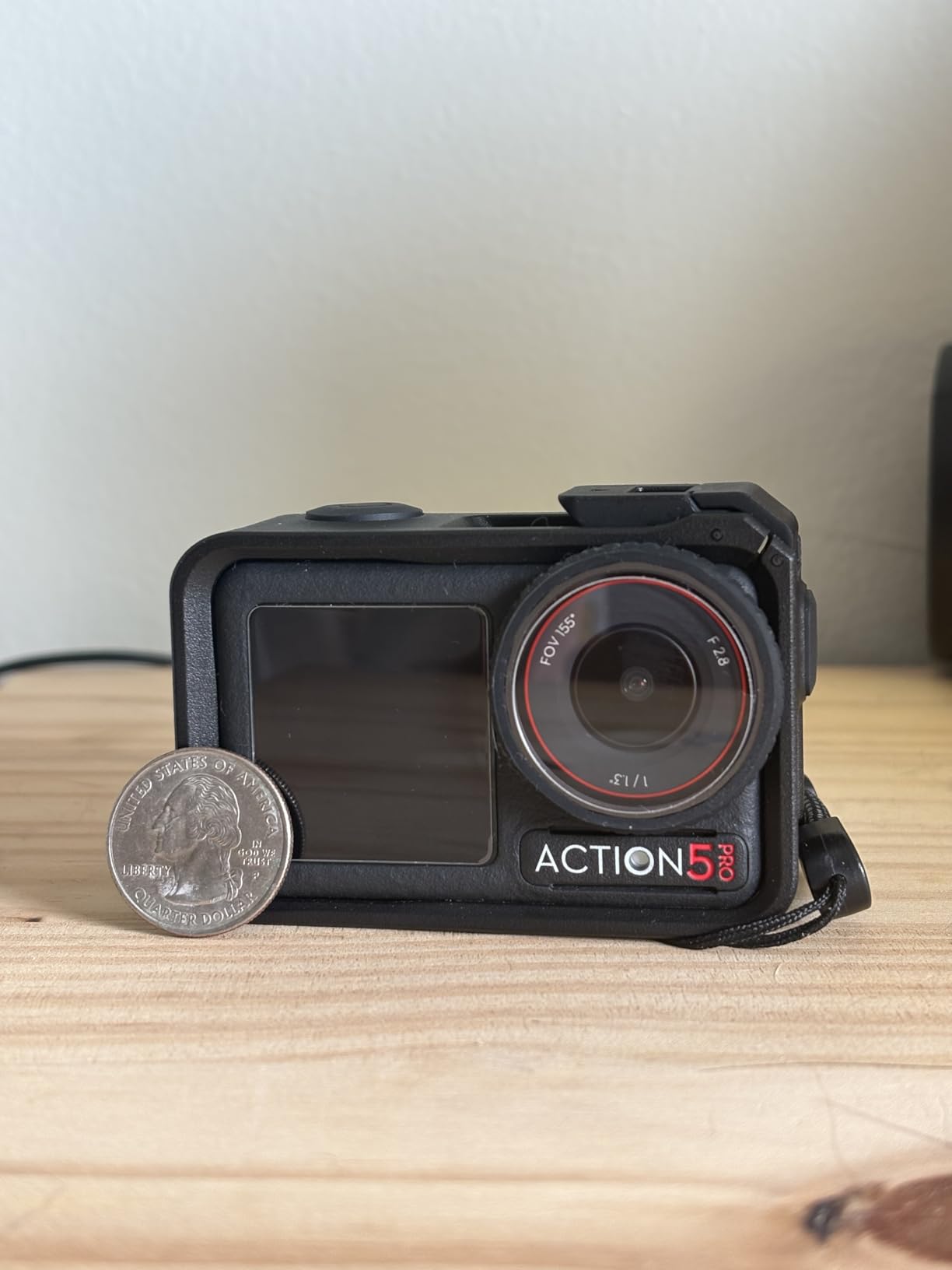
Battery life of up to four hours, and still 3.6 hours at minus 20 degrees, is what makes it viable for a winter day ride. The dual ultra-bright OLED touchscreens mean you can frame a shot from the front of the bike without guessing, which is not a luxury when the camera is on your bars and you are trying to keep your eyes on the road.
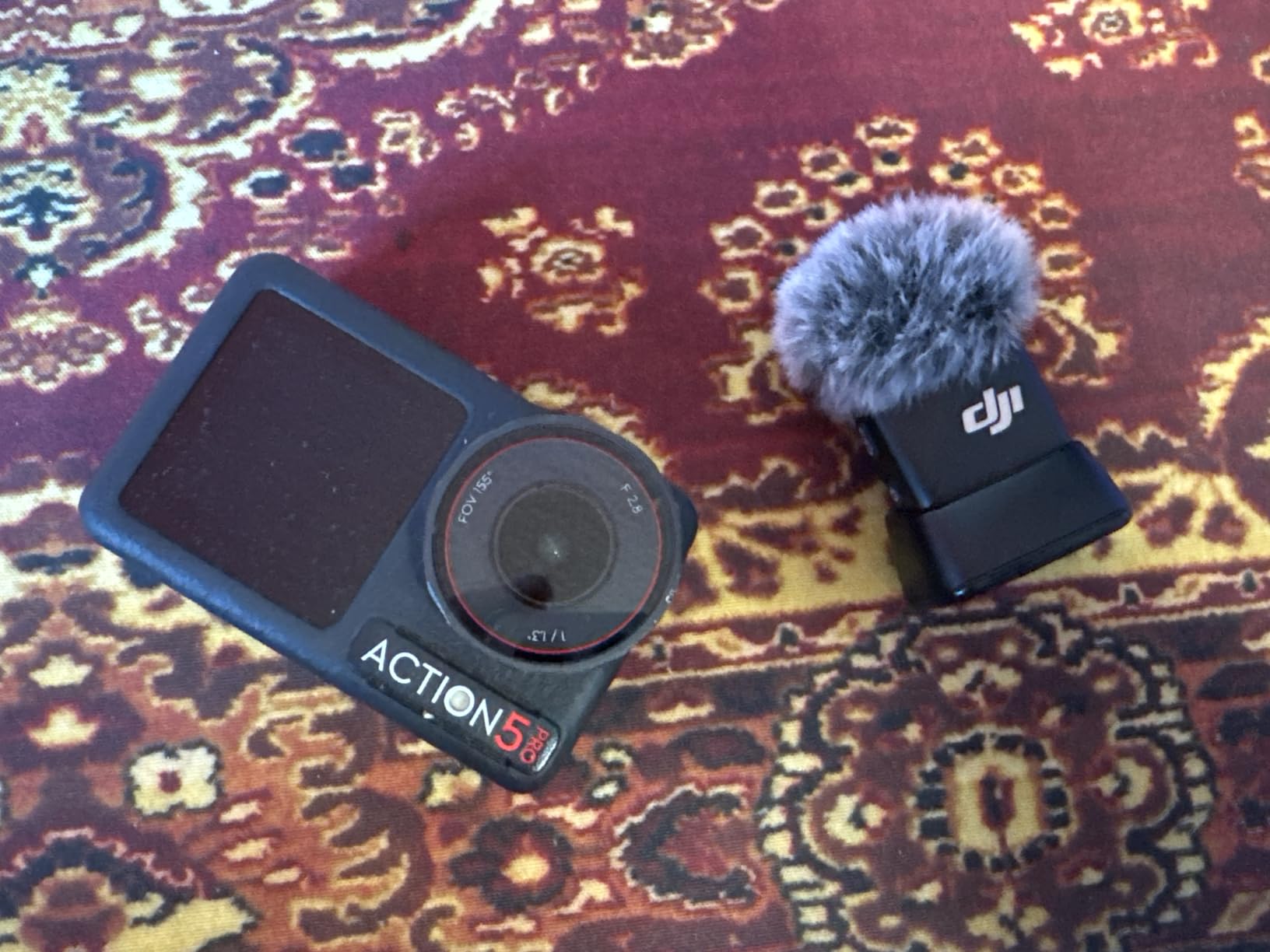
It also solves the audio problem better than anything else here. The direct wireless connection to two transmitters means you can record your own voice and a riding companion without a receiver unit, and add a furry windscreen over the mic port. The fixed focus is the main limitation: a close-up of a gear lever or a wheel at speed can drift outside the sharp zone.
Why owners rate it highest
It is the body that is good at video, stills and audio without a serious compromise. The 40MP stills mode is usable enough to capture ride photographs rather than acting as a fallback, and the dual-screen plus voice control setup makes self-filmed vlog segments at a cafe stop straightforward. It is not our Editor’s Choice, and the reason is simple: at 146g it is a different proposition from the tiny module at the top of this list. Riders who want one substantial camera on the bars will be happy here. Riders who want something they can genuinely forget about for a six-hour day should read section one again.
Its real limitations
Fixed focus, a fast V90 card, and occasional heat on long high-resolution clips. There is also no internal storage, so a card is required from the first ride, unlike the Osmo Action 6. None of these are deal breakers on a road bike, but they are real and worth planning around.
6. Insta360 Ace Pro 2: The Best Stills From a Wearable Body
Insta360 Ace Pro 2 Single Battery Bundle – 8K Waterproof Action Camera Co-Engineered with Leica, 1/1.3″ Sensor, Dual AI Chip, Leading Low Light, Superior Audio, Flip Screen & AI Editing for Vlogs
Pros
- 50MP stills are the highest resolution in this group
- Leica Summarit lens with 13.5 stops of dynamic range
- PureVideo mode reaches 4K60 in low light
- Removable Wind Guard improves in-ride audio
Cons
- Will not function until activated through the Insta360 app
- No internal storage so a fast card is required
- Limited zoom range compared with larger cameras
- No 1/4 inch thread on the body and the card slot is awkward
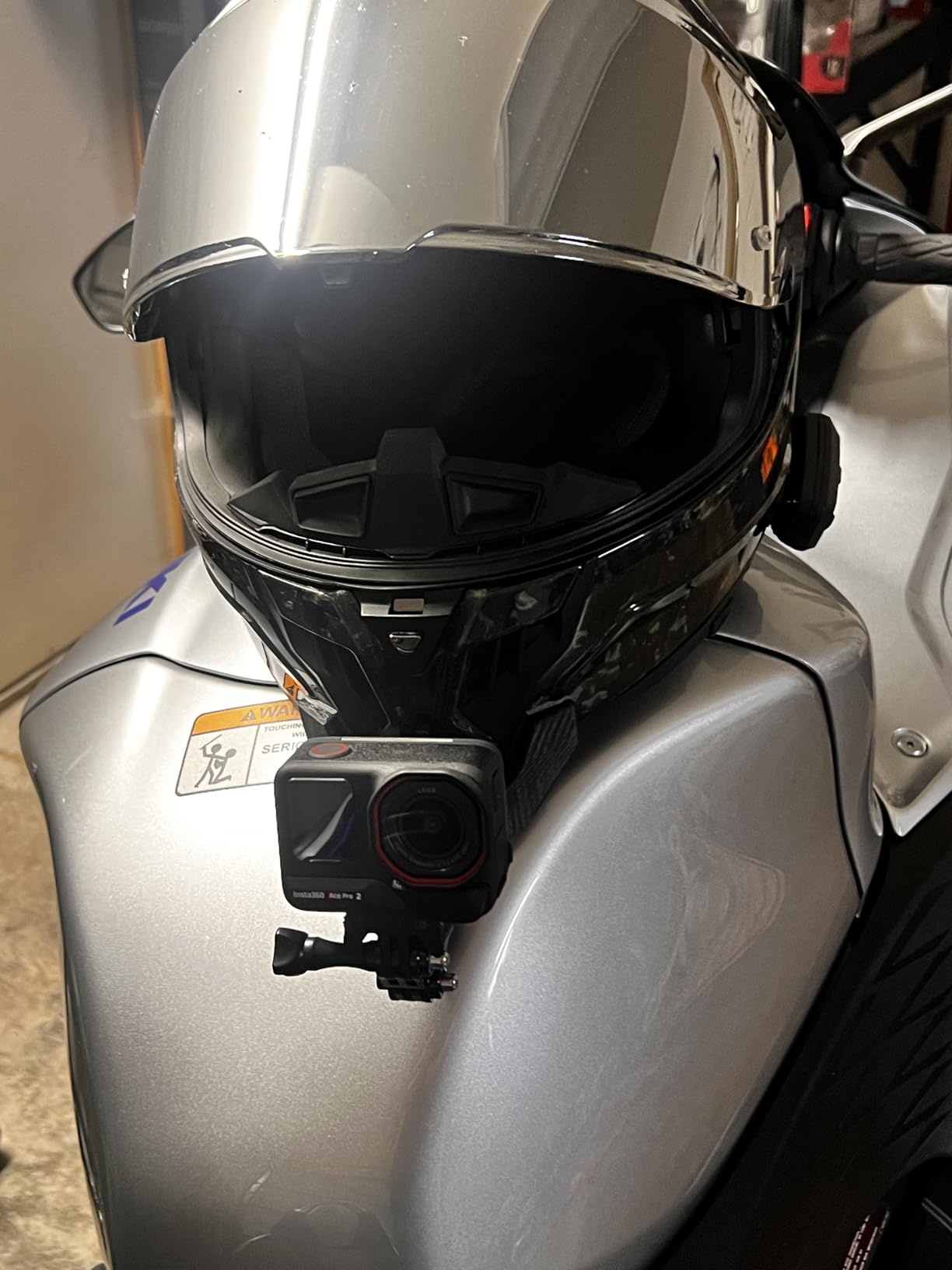
The Ace Pro 2 is the answer to the recurring forum question of what camera to use for stills on a bike. At 50MP it produces the largest stills of any body in this list, and the 1/1.3-inch sensor with a Leica Summarit lens and 13.5 stops of dynamic range gives you the highlight and shadow latitude that a road scene demands. Owners frequently rate its stills and video above competing action cameras for the same money.
PureVideo mode reaching 4K60 with AI noise reduction is a genuine step for low-light riding, and the 157-degree lens with MegaView field of view covers the wide scene at the top of a climb without the edge stretching you get from a fisheye. FlowState Stabilization handles the bar and helmet vibration, and the magnetic mount makes swapping between a helmet position and a bars position mid-ride quick.
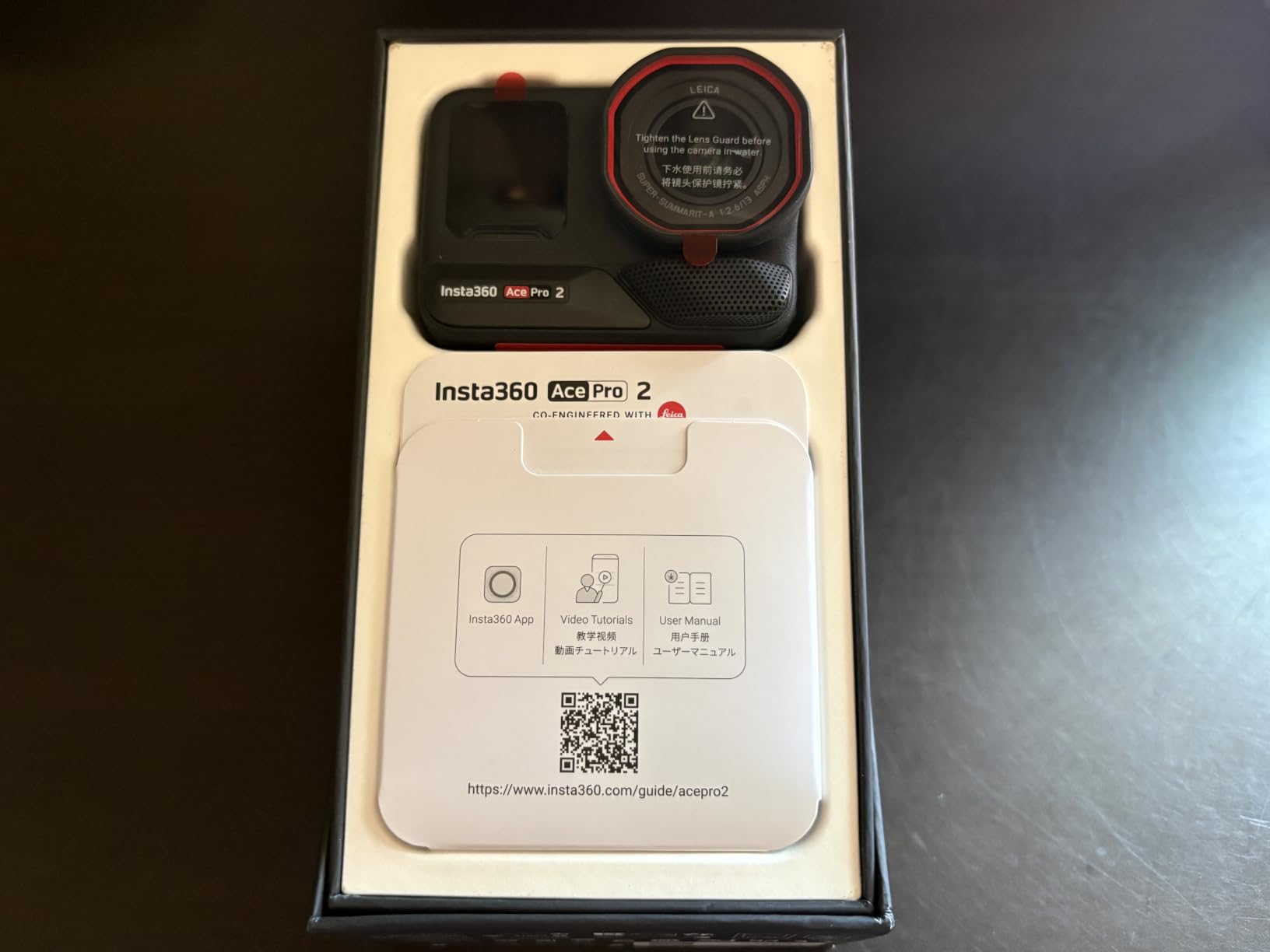
The 2.5-inch flip touchscreen is the practical feature for a cycling vlog. You can frame yourself at a roadside stop without a second person, and the 100% improved flip durability is the part that matters, because a cracked flip screen is a common and unphotographable failure on a body that gets carried around.
The activation requirement is the thing to know before you buy. The camera will not function until it has been registered through the Insta360 app, and reviewers describe that first-run flow as frustrating. Do it at home on wifi, not at a car park at the start of a ride. The removable Wind Guard is a small part that makes a real difference to in-ride audio.
Best for photographs on the bike
Among wearable bodies, this is the one to choose if you want ride photographs alongside video. At 50MP you have room to crop a roadside shot, and the dynamic range holds a bright sky and a dark verge in one frame. It is still not a mirrorless camera, and it is not a substitute for one, but for a quick stop at a summit it removes the need to carry a second body.
Best avoided by
Riders who want a device that works standalone with no app dependency, and anyone shooting on a tight storage budget, since there is no internal memory and a fast card is required. Zoom is also limited, so it is the wrong tool for compressing a road or picking out a rider at the front of a group.
7. Insta360 GO Ultra: The Helmet Module With the Widest View
Pros
- 53g module disappears under a helmet or on a cap
- Switches to microSD so you can carry multiple cards
- Three levels of FlowState plus 360 Horizon Lock
- 0 to 80 percent charge in 12 minutes
Cons
- Standalone battery life is around an hour
- Phantom standby drain reported after weeks in storage
- Action Pod is not waterproof
- Module runs warm when worn on the chest
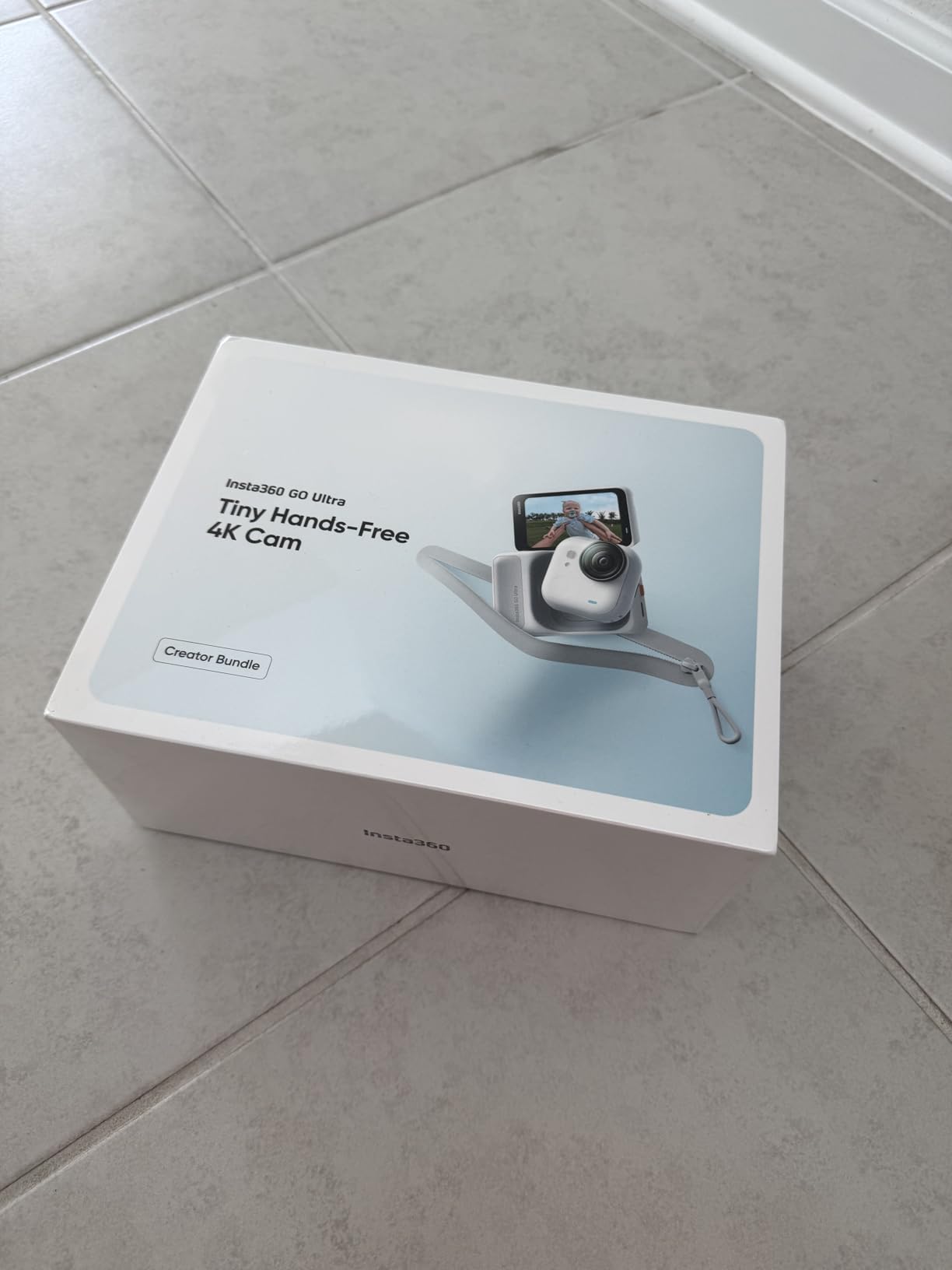
The GO Ultra is the successor to the tiny cube form that cycling riders keep praising. At 53g with a 156-degree field of view, it is the least intrusive camera in this roundup, and reviewers frequently describe it as the best all-around action camera despite the size. The 1/1.28-inch sensor with a 5nm AI chip and PureVideo mode delivers low-light results that are genuinely surprising for something the size of a watch face.
Unlike its predecessor, it takes a microSD card rather than fixed internal memory, so you can carry two cards instead of managing a fixed ceiling. That matters on a multi-day tour, and it is the single most important practical difference from the GO 3S above.
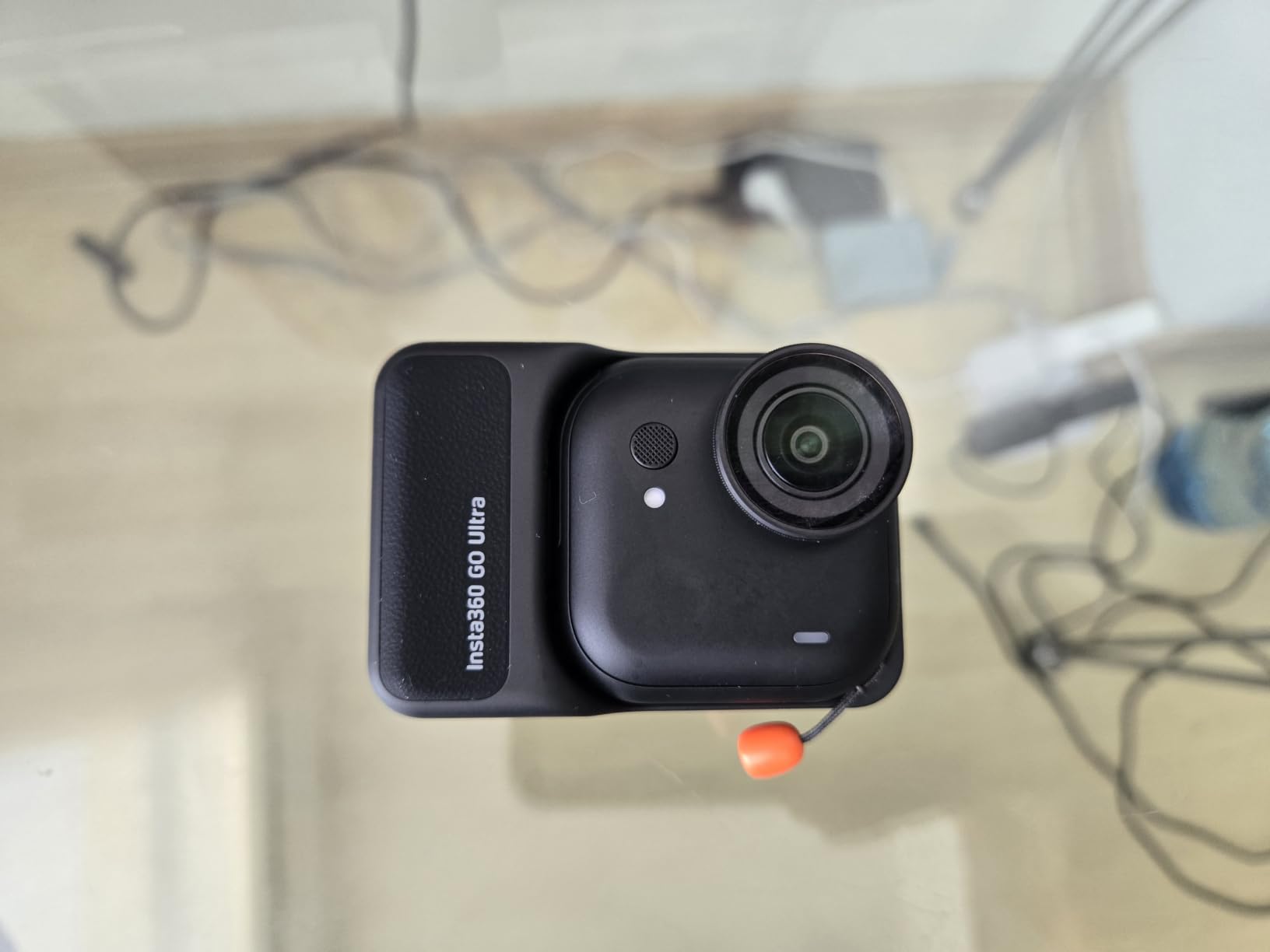
Stabilisation is handled by three levels of FlowState with 360 Horizon Lock, which keeps a helmet-mounted frame level through leans. Charging from 0 to 80% in 12 minutes is what makes the pod viable as an all-day solution, since you can top it up over breakfast.
Two things to plan around. The module on its own runs about 70 minutes, and in the pod you get up to three hours, so the pod has to travel with you. Owners have also reported severe phantom standby drain, where camera and pod were both depleted after weeks in storage, which means top up both before a long ride rather than trusting them to be full.
Why riders pick it
Weight and view. A 53g module on a helmet vent or a cap brim produces footage no larger camera can produce from that position, and the 156-degree field of view is wide enough to include your own hands on the bars at the bottom of the frame, which is the detail that makes POV footage read as riding rather than as a floating view.
When to pick something else
If your ride is longer than three hours and you do not want to carry the pod, or if you plan to submerge the camera, note that only the module is rated to 10m and the pod is not waterproof at all. Chest mounting is also less comfortable over long sessions because the module warms up.
8. AKASO Brave 4: The Budget Pick With Two Batteries
Pros
- Adjustable view angle lets you tune framing for road or trail
- Dual 1050mAh batteries and a dual charger in the box
- 131ft housing plus front and rear screens
- Accessory bundle includes bicycle and motorcycle mounts
Cons
- Menu system and manual are dated and confusing
- Loose non-hinged battery door is easy to lose
- Stills are grainy at higher ISO and zoom is digital
- Shallow depth of field hurts close-up shots
With more than 17,000 reviews, the Brave 4 is the most heavily reviewed camera in this roundup, and the reason is simple: it does the basic job for very little money, and the box contains two batteries. On a road bike the twin 1050mAh batteries at up to 90 minutes each with a dual charger is a genuinely useful package, because spare batteries are the single most reliable way to extend a ride.
The adjustable view angle is the feature most relevant to cycling. Options at 170, 140, 110 and 70 degrees mean you can widen out for open road and open the field of view for a technical descent, or narrow to 70 degrees to avoid the stretched fisheye look that makes handlebar footage look amateurish. Gyro-based electronic stabilisation handles the buzz, and a wrist remote lets you start and stop without touching the camera.

Owners also report that it does not overheat even in desert heat, which is a real advantage on a summer ride in a hot climate and directly addresses the heat complaint that runs through reviews of the higher-end bodies. The included accessory kit is optimised for bicycles, and the 131ft housing plus a rear and front screen covers the wet-weather case.
What you accept is the older experience. The menu system and documentation are described as clumsy and unclear, the Wi-Fi app connection is fiddly, and the battery door is loose and not hinged, so it can be lost in a jersey pocket. Stills are grainy at higher ISO and the 5x zoom is digital rather than optical.

Best for first-time buyers
If you have never mounted a camera on a bike, this is a low-risk way to find out which position and which view angle you actually want. You get 4K30 and 20MP stills, two batteries, a charger, a housing and bike-specific mounts for a fraction of the cost of the bodies above. Many riders who start here end up buying a better body later, but they have learned the mounting positions first.
Best avoided by
Anyone who cares about a polished workflow. The menus, the app and the manual are all a generation behind, and the loose battery door will annoy you on every long ride. If your priority is low light or audio, this is not the body, because neither is a strength here.
9. DJI Osmo Action 4: The Value Route Into a Large Sensor
Pros
- Large sensor delivers far cleaner low light than budget bodies
- 4K at 120fps with a 155 degree field of view
- 10-bit colour and D-Log M give real grading latitude
- 1770mAh battery rated down to minus 20 degrees
Cons
- Still photos are listed at only 10MP
- Requires a fast V90 card
- Pre-Rec buffer can be missed if the camera is not powered in time
- Fixed 155 degree field of view cannot be narrowed
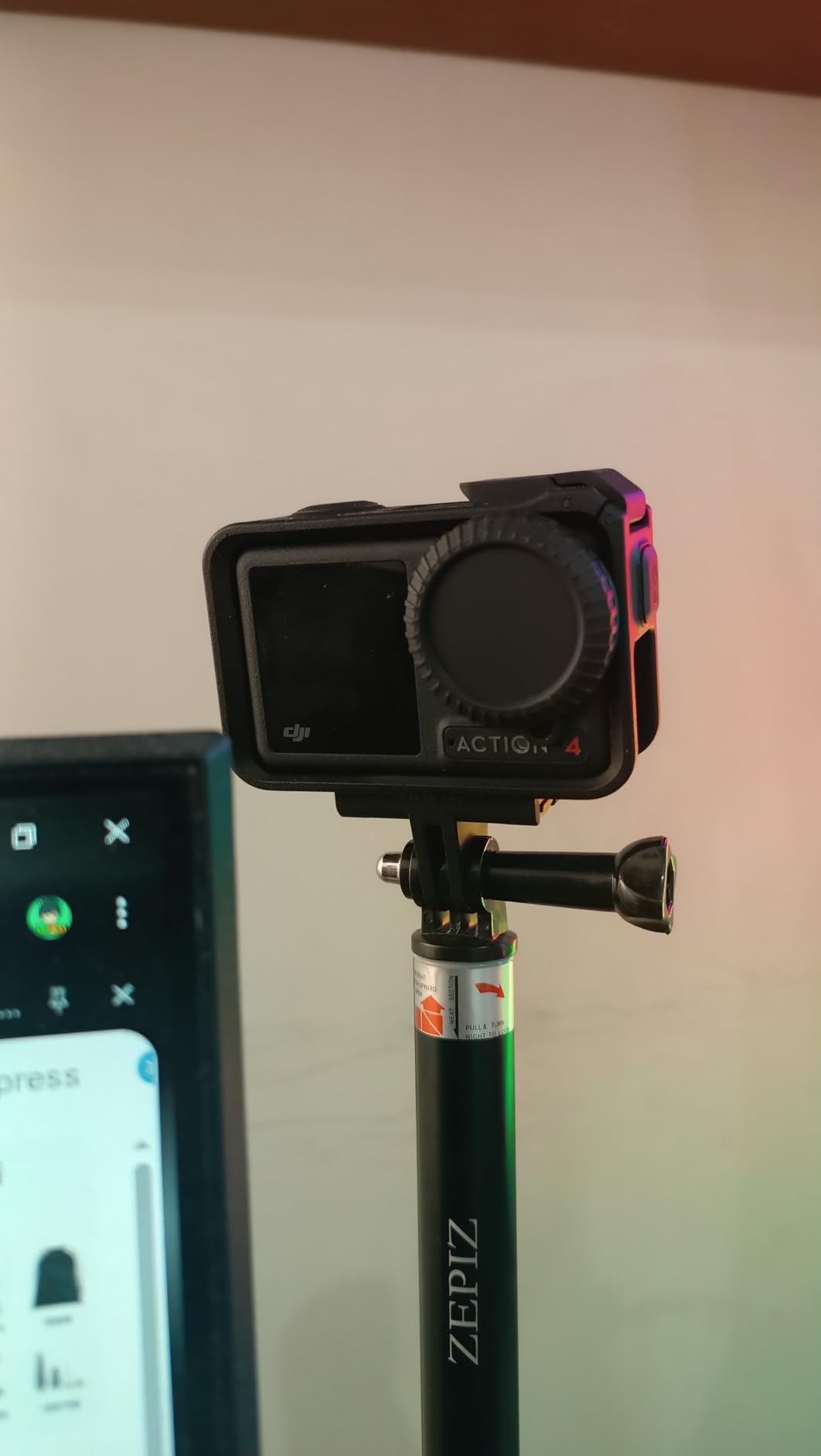
The Osmo Action 4 is the strongest rating in the group at 4.7 with 87% five-star reviews, and it is the one to buy if you want a large sensor and 10-bit colour without moving to the top of the range. The 1/1.3-inch sensor with 2.4 micron pixels produces markedly cleaner dusk and dawn footage than the smaller sensors, and 10-bit colour with D-Log M means you can grade the footage rather than just adjusting exposure.
4K at 120fps with a 155-degree ultra-wide field of view is the spec that changes what you can film. At 120fps you get a genuine slow-motion option on road descents, and the wide angle means there is minimal cropping when you want a first-person view with the bars and both hands in frame. It also connects directly to two wireless mic transmitters.
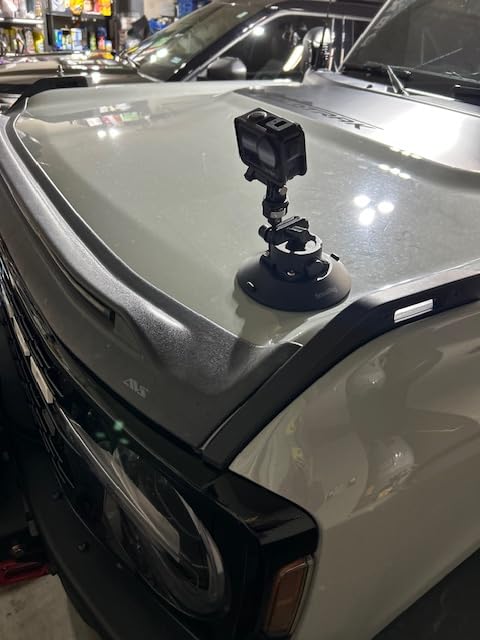
The magnetic quick-release system with a self-locking mount is the practical win on a road bike. Changing between a bar position, a helmet position and a vertical mount for social clips takes seconds, and the self-locking design means it is far less likely to release on rough tarmac than a friction-only mount. Owners specifically cite cycling and motorcycle use as ideal applications for it.
Stills are the weak point, with a listed 10MP that makes photographs noticeably weaker than the video, so this is a video-first body. It needs a fast V90 card, the field of view is fixed at 155 degrees with no way to narrow it optically, and the Pre-Rec buffer can be missed if you do not power the camera in time.
Where it beats the models above it
Cold-weather battery performance. A listed 150 minutes that holds up down to minus 20 degrees makes it the pick for winter commuting and year-round recording, where the newer bodies trade runtime for a higher-resolution sensor. Combined with 4K120 and 10-bit colour, it is a strong all-round video package for anyone filming in poor light.
Where it does not
Do not buy it for photographs. A 10MP still on a modern sensor is fine for a quick frame grab but not for a printed ride photograph, so pair it with a stills body if that matters to you. It also has no internal storage and demands a fast card before the first ride.
10. AKASO Brave 7 LE: The Only One Here With a Microphone Socket
AKASO Brave 7 LE 4K30FPS 20MP WiFi Action Camera with Touch Screen EIS 2.0 Zoom Remote Control 131 Feet Underwater Camera with 2X 1350mAh Batteries Support External Microphone Vlog Camera
Pros
- External microphone input is the only audio path in this group
- Dual 1350mAh batteries give around two hours total
- 6-axis EIS 2.0 gives gimbal-like stability
- IPX7 body plus a 131ft waterproof housing
Cons
- Digital only zoom so 4x crops rather than magnifies
- 30fps ceiling at 4K with no high-frame-rate slow motion
- Low light is dated against 1-inch sensor flagships
- Wi-Fi app transfer and menus are slow
Wind noise is the single most reported audio problem for cyclists, and this is the only camera in the roundup with a microphone input. That one feature lets you attach a proper mic with a furry windscreen, and combined with 6-axis EIS 2.0 for stability and two 1350mAh batteries for about two hours of total shooting, it solves the two problems riders complain about most at a budget price point.
At 107g it is also the second-lightest full-size body here, and the dual colour displays let you frame yourself at a stop without a second person. The mounting kit is generous and the IPX7 body takes rain, with the housing there for anything worse.

More than 6,600 reviews averaging 4.4 makes this a well-proven body, and the pattern in the reviews is that buyers accept its limits knowingly. The 4K30 ceiling and the modest low-light performance are understood compromises rather than surprises, and the external mic input is repeatedly named as the reason they bought it.
Those limits are real though. The 4x zoom is digital and crops rather than magnifies, there is no high-frame-rate slow motion at 4K, and low light is clearly a generation behind the 1/1.3-inch bodies. The Wi-Fi transfer and menu navigation are also described as slow, which is annoying when you are pulling files at a cafe stop.

Best for narrated ride content
If your plan is a vlog with your own voice over the riding, this is the body to build that with. An external microphone changes the audio from unusable to usable in a way no software filter will, and two batteries get you through a long ride without charging. For a creator who already understands editing, the dated sensor is a fair trade for solving audio properly.
Best avoided by
Riders chasing image quality rather than audio. The 30fps ceiling, digital zoom and dated low-light performance mean you will be choosing this for its interface rather than its pictures. If you can live with the internal mic and want better video, spend the difference on a large-sensor DJI body.
How to Choose a Camera for Road Cycling: 7 Criteria That Matter
1. Stabilisation behaviour, not headline resolution. A road bike produces constant high-frequency vibration from tarmac and spokes. Horizon levelling is the feature that matters most, because a rolled frame cannot be fixed in post. Every body here has some form of it; check that it works at your chosen resolution.
2. Battery strategy. Riders consistently report cameras dying partway through a long ride. The honest approach is two or three spare batteries rather than one, which favours removable-battery bodies over internal ones. The Osmo Action 6 and Action 5 Pro have the longest listed runtimes, while internal-battery modules like the GO 3S are limited by design.
3. Wind noise and microphone input. At 30 to 40 km/h the airflow over a camera is severe and internal microphones are not built for it. If narration matters, prioritise a mic input over resolution, because no amount of post-processing rescues a badly wind-mangled recording.
4. Sensor size for your riding hours. Winter rides and dawn starts are common on the road, and a small sensor will be visibly noisy there. A 1/1.3-inch or larger sensor is the threshold worth paying for if you film outside daylight.
5. Mount compatibility with your bike. Bar and stem mounts need a standard finger mount or a quick release. Seatpost and frame mounts need a screw or clamp. Check the mount ecosystem before the camera, because a body you cannot secure to your specific bike is useless.
6. Waterproof depth and door design. Road cycling is wet-weather activity. All the bodies here are rated to at least 10m without a case, but read the rating on the body rather than the housing, and treat the battery door and port seals with care.
7. Storage and card speed. High-resolution capture fills cards fast, and several bodies here require a fast V90 card. Budget for two or three cards and check whether the body has internal storage, which the Osmo Action 6 does and most others do not. Our cameras for construction progress documentation guide covers card planning in more depth for anyone filming long sessions.
How to Mount a Camera for Vibration-Free Road Footage
Helmet mounting gives the highest vantage point and the smoothest ride, because a helmet isolates the camera from road buzz through the shell. The tradeoff is wind noise and aerodynamics at the front of the helmet, and the fact that a large body is noticeable. Small modules like the GO 3S or GO Ultra are far better suited here than a full-size body.
Handlebar and stem mounting gives a lower, more grounded viewpoint with the rider’s hands in frame, and it is the most common choice. The bars are also the noisiest mount on the bike, transmitting tarmac texture directly into the frame, so this is where horizon levelling and a stabilisation mode that crops slightly are worth the most. Re-check the mount every few rides, because bar-mounted hardware is the thing that loosens and eventually falls off.
Chest mounting is underused and underrated for road riding. The torso is a natural stabiliser, it hides the camera completely, and the perspective looking down at the bars is unusual enough to be interesting in a group. The drawback is that you lose the wide road view and capture mostly your own bike.
Seatpost and frame mounting sit behind the rider and are the natural place for a second camera when you want the road behind you without a 360 body. The vibration profile is different again, mostly transmitted through the seatpost, so it is a reasonable second angle but a poor primary.
How to Get Clean Audio on a Bike
First, move the microphone away from the airflow. A camera on the bars puts the mic directly in the slipstream, while the same camera on a helmet or a chest mount sits in more disturbed air but a different flow pattern. Test both on a short ride before committing.
Second, use a windscreen. A furry wind guard costs almost nothing and makes an audible difference on any body with an exposed mic port. The Ace Pro 2 ships with a removable Wind Guard, and the AKASO Brave 7 LE accepts an external microphone with a proper windscreen fitted.
Third, record audio separately if narration matters. The two DJI bodies here connect directly to two wireless transmitters with no receiver needed, which is the cleanest route to usable speech over riding footage. Editing wind noise out of a single onboard recording is a losing battle at road speeds.
Fourth, be realistic about what is salvageable. Tyre roar and airflow are usually removable, but a hard gust that clips the microphone is not. Record narration at stops rather than on the move, where it will always be cleaner.
Battery, Heat and Storage Planning for a Full Day on the Bike
Treat battery life as a kit decision, not a spec. Carry enough spare batteries for the ride plus a margin, because a camera that dies at hour four loses the part of the ride you planned around. Bodies with removable batteries make this trivial; internal-battery modules need the pod or a power bank, and the GO 3S and GO Ultra both rely on their Action Pods for all-day work.
Heat is the second failure mode and it is mostly about resolution. Every body here is reported to run warm, and the ones with the highest-resolution modes run hottest, particularly the GoPros. Recording 5.3K or 8K continuously on a sunny climb is the worst case; dropping to 4K for long stretches, or for a descent where the camera is in full sun against the sky, extends recording time noticeably.
Storage is where people get caught out. The two ways to be safe are to carry more cards than you think you need and to know roughly how much your chosen mode produces per hour before you leave. Bodies with 8K modes and variable bitrate produce the largest files, and the Osmo Action 6 in particular is noted for very large files, so it benefits most from 50GB of internal storage as a buffer.
One practical tip: format the card in the camera at the end of each ride rather than on your laptop. It is faster, it avoids corrupted-file surprises, and it confirms the card is healthy before you are 40km from anywhere with a spare.
GoPro vs Insta360 vs DJI for Cycling
GoPro wins on mount ecosystem, removable batteries and slo-mo, and it has the longest-running name recognition among riders. The ecosystem complaint that comes up most for GoPro is not a defect but a design choice: the mount system has moved on from the small cube form that riders used to love, and there is friction with some official mounts.
Insta360 wins on size, reframing flexibility and the app-based editing that many riders find genuinely faster than manual editing. The trade-off is editing time, which riders describe as longer than GoPro footage, and the activation requirement on some models. The magnetic mount system is the strongest wearable system in this roundup.
DJI wins on sensor size, battery runtime, stabilisation and audio flexibility, and it is the only brand here with a body rated to 20m without a case. It also has the most bodies in this roundup, so the range covers a genuine entry point as well as a high end.
The honest summary from forum discussion is that there is no consensus winner, and every comparison thread splits. The variable that actually decides it is not the brand but your editing habits: if you will spend time reframing and cutting, a 360-capable or flexible Insta360 body rewards you; if you want to press record, ride, and cut quickly, a stabilised single-lens body from GoPro or DJI is the calmer choice.
Frequently Asked Questions
What is the best camera for road cycling?
For road cycling documentation our pick is the Insta360 GO 3S, because at 39g it is the camera you will still have mounted on your helmet or bars after five hours, and its Horizon Lock keeps the frame level through every lean. If you want a full-size body instead, the DJI Osmo Action 5 Pro rates highest with owners at 4.7, pairing a 1/1.3-inch sensor, 360-degree HorizonSteady and up to four hours per battery.
What is the best camera for recording bike rides?
For hands-free ride footage, mount a stabilised action camera on your helmet or handlebar and use a mode with horizon levelling so the frame stays level through leans. The DJI Osmo Action 5 Pro and Osmo Action 4 both pair a large sensor with long battery life, while the GoPro HERO13 Black is the choice if slow-motion descent shots matter more than runtime.
What is the best action camera to use with a helmet?
A small module is the right answer on a helmet, because weight and drag become noticeable above about 100g. The Insta360 GO 3S at 39g and the Insta360 GO Ultra at 53g are both designed for helmet and cap mounting, and both include horizon lock so the frame stays level when you lean. Larger bodies work but are noticeably heavier on the head.
What is the best 360 camera for cycling?
Among the cameras here, the Insta360 GO Ultra and GO 3S are the closest to wearable 360 options, and the Insta360 Ace Pro 2 adds a 1/1.3-inch sensor with 157-degree coverage. If you want true 360 capture with reframing in post, these are the models to start with, but budget extra editing time because choosing a viewpoint from 360 footage takes longer than cutting single-lens clips.
How do you stop wind noise on a bike camera?
You cannot fully remove it at road speeds, but you can reduce it. Move the camera to a position with less direct airflow, fit a furry windscreen over the mic port, and record narration separately with a wireless transmitter rather than relying on the onboard microphone. The AKASO Brave 7 LE is the only camera in this roundup with an external microphone input, and the two DJI bodies connect directly to two wireless transmitters.
If you also document other work, our guides to cameras for scientific lab documentation cover the same durability and data-backup questions in a very different environment.
Final Verdict: Which Camera Documents Your Ride Best in 2026
For most riders the answer is the Insta360 GO 3S, our Editor’s Choice, because road cycling is the one activity where the camera you end up using is decided by grams rather than by sensor size. At 39g it is the body you will leave on your helmet or bars from the first ride of spring to the last of autumn, it is IPX8 to 10m so rain needs no case, and the Action Pod both extends the runtime to roughly 140 minutes and holds Horizon Lock steady through every lean. If you would rather carry one substantial camera on the bars, the DJI Osmo Action 5 Pro is the highest-rated body in this group and the strongest at video, stills and audio, and if budget is the constraint the DJI Osmo Action 4 gives you a large sensor and 10-bit colour at a price that undercuts the newest bodies.
Whatever you choose, the camera that gets the most rides documented is the one that is light, secure and simple enough to leave on the bike. Fit two mounts before your first long ride, carry a spare card, and check the audio before you rely on it. That preparation matters more on a road bike than any feature on the spec sheet.