
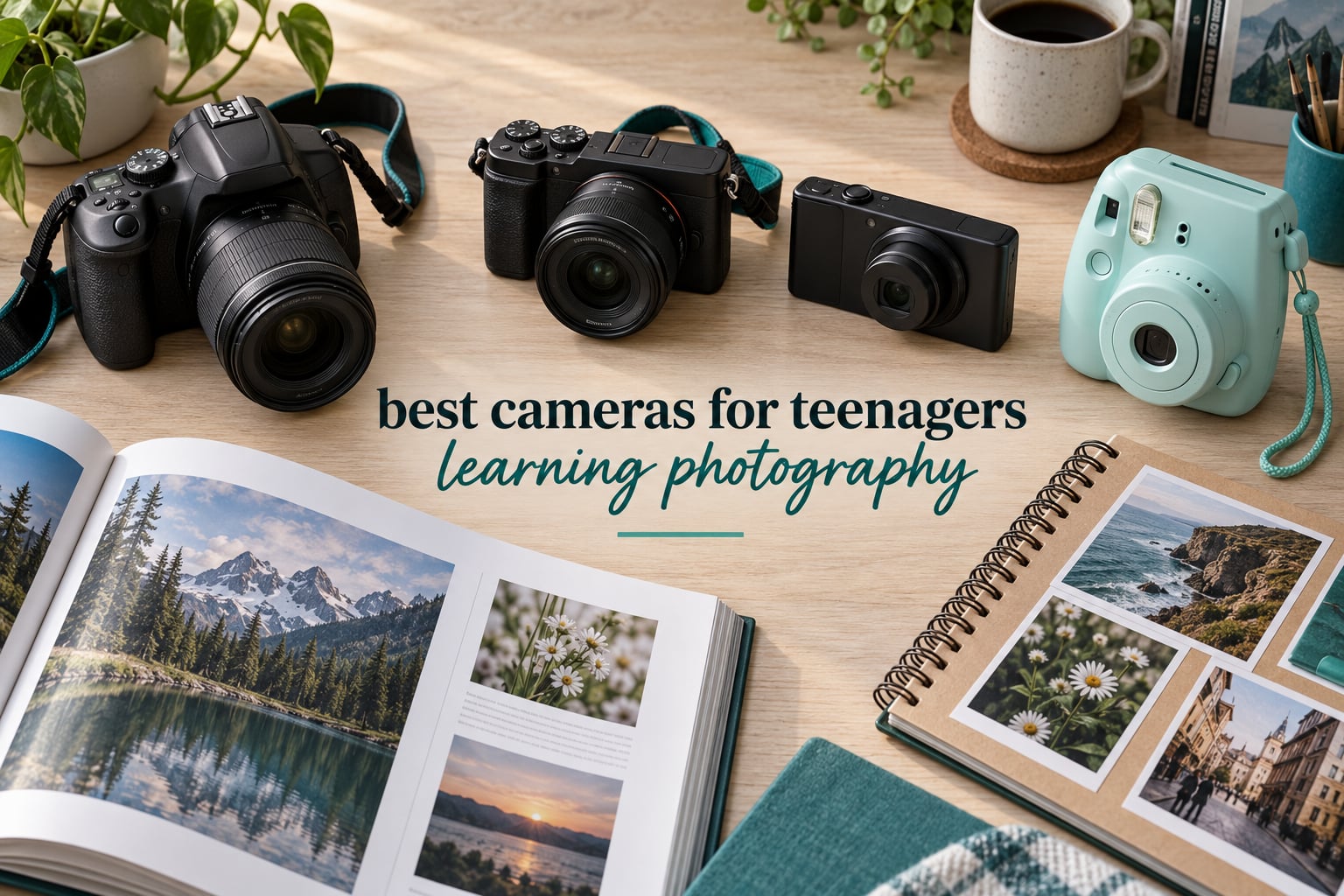
The Canon EOS Rebel T7 with the 18-55mm kit lens is the best camera for a teenager learning photography in 2026, because it has a real 24.1MP APS-C sensor, an optical viewfinder and a full manual mode, so a beginner can actually learn exposure. The Fujifilm Instax Mini 9 is the gentlest place to start, and the Kodak PIXPRO FZ55 is the best budget route into optical zoom.
Nearly every teenager who wants a camera already owns a good one. The phone in their pocket is fast, sharp in daylight, and it never needs charging in the middle of a lesson. That is exactly the problem. A phone decides aperture, shutter speed and ISO on every frame, so the young photographer learns to frame a shot and nothing else. They never find out why the sky came out white or why the background went black.
A dedicated body changes that. A manual mode forces a decision about light, and that decision is the transferable skill. It carries into a phone, into a second camera three years later, and into a paid job. Our team has spent years testing entry-level bodies for this site, and the pattern is consistent: the cameras that teach the most are the ones that let a beginner get a frame wrong on purpose and then look at what the setting did.
This roundup covers twelve cameras, from instant film bodies that teach composition through a fixed frame to APS-C mirrorless and DSLR kits where manual shooting becomes a real practice. We sorted them by what a beginner can learn on them, not by resolution on a spec sheet. Every rating and review count below is copied from the live product listing, and nothing here is priced because prices move daily. Updated for October 2026.
Two of our own guides are worth pairing with whatever you choose: the photography books for composition and lighting for the theory side, and our editing and learning software roundup once the shots start coming out of the camera.
Top 3 Picks for Best Cameras for Teenagers Learning Photography in 2026
Three cameras stand out once you strip away the marketing. The Rebel T7 is the one a serious beginner should start on, the Instax Mini 9 is the one that keeps a ten-year-old shooting for months, and the FZ55 is the one that fits a tight birthday budget without giving up real optical zoom.

Canon EOS Rebel T7 Kit
- 24.1MP APS-C sensor
- Optical viewfinder
- Full manual mode
- Wi-Fi transfer


All 12 Best Cameras for Teenagers Learning Photography in 2026
Everything is in one place below, from the simplest instant body to the most capable mirrorless kit. Read the viewfinder and zoom columns first, because those two features decide how much a beginner can learn.
| Product | Specifications | Action |
|---|---|---|
| Canon EOS Rebel T7 Kit |
|
Check Latest Price |
| Fujifilm Instax Mini 9 |
|
Check Latest Price |
| Kodak PIXPRO FZ55-RD |
|
Check Latest Price |
 Canon EOS M50 Kit Canon EOS M50 Kit |
|
Check Latest Price |
 Canon EOS R50 Kit Canon EOS R50 Kit |
|
Check Latest Price |
 Kodak PIXPRO FZ45 Kodak PIXPRO FZ45 |
|
Check Latest Price |
 Camkory 44MP Compact Camkory 44MP Compact |
|
Check Latest Price |
 Zostuic 4K Flip-Screen Compact Zostuic 4K Flip-Screen Compact |
|
Check Latest Price |
 Duluvulu 4K Travel Compact Duluvulu 4K Travel Compact |
|
Check Latest Price |
 Fujifilm Instax Mini 12 Fujifilm Instax Mini 12 |
|
Check Latest Price |
 Fujifilm Instax Mini 41 Bundle Fujifilm Instax Mini 41 Bundle |
|
Check Latest Price |
 Lecnippy 48MP Ultracompact Lecnippy 48MP Ultracompact |
|
Check Latest Price |
Five of the twelve are instant film bodies or super-cheap compacts, and six of those seven have no viewfinder of any kind. That is not a flaw list, it is a teaching trade: a camera with a screen only forces the young photographer to compose at arm’s length and guess at brightness, which slows learning down.
1. Canon EOS Rebel T7 kit – the best overall first camera
Pros
- 24.1MP APS-C sensor far exceeds phone quality in good light
- On-camera feature guide teaches as you shoot
- Built-in Wi-Fi moves photos to a phone
- Lightweight body with a comfortable grip
- EF and EF-S lenses give years of headroom
Cons
- 9-point autofocus can hesitate on moving subjects
- Full HD video only with no 4K
- Kit lens has limited reach for distant subjects
I keep coming back to this kit because it is the camera I recommend to parents who ask a single question: will this be worth it in two years. The 24.1MP APS-C sensor produces files with real detail in daylight, and once the teenager starts pushing ISO in the evening, the gap to a phone widens rather than closes.
The optical viewfinder is the part people underrate. Holding a camera to the eye gives a steadier frame, cuts glare in bright sun, and shows the exposure information you need while composing, which is exactly the skill a beginner is trying to build.
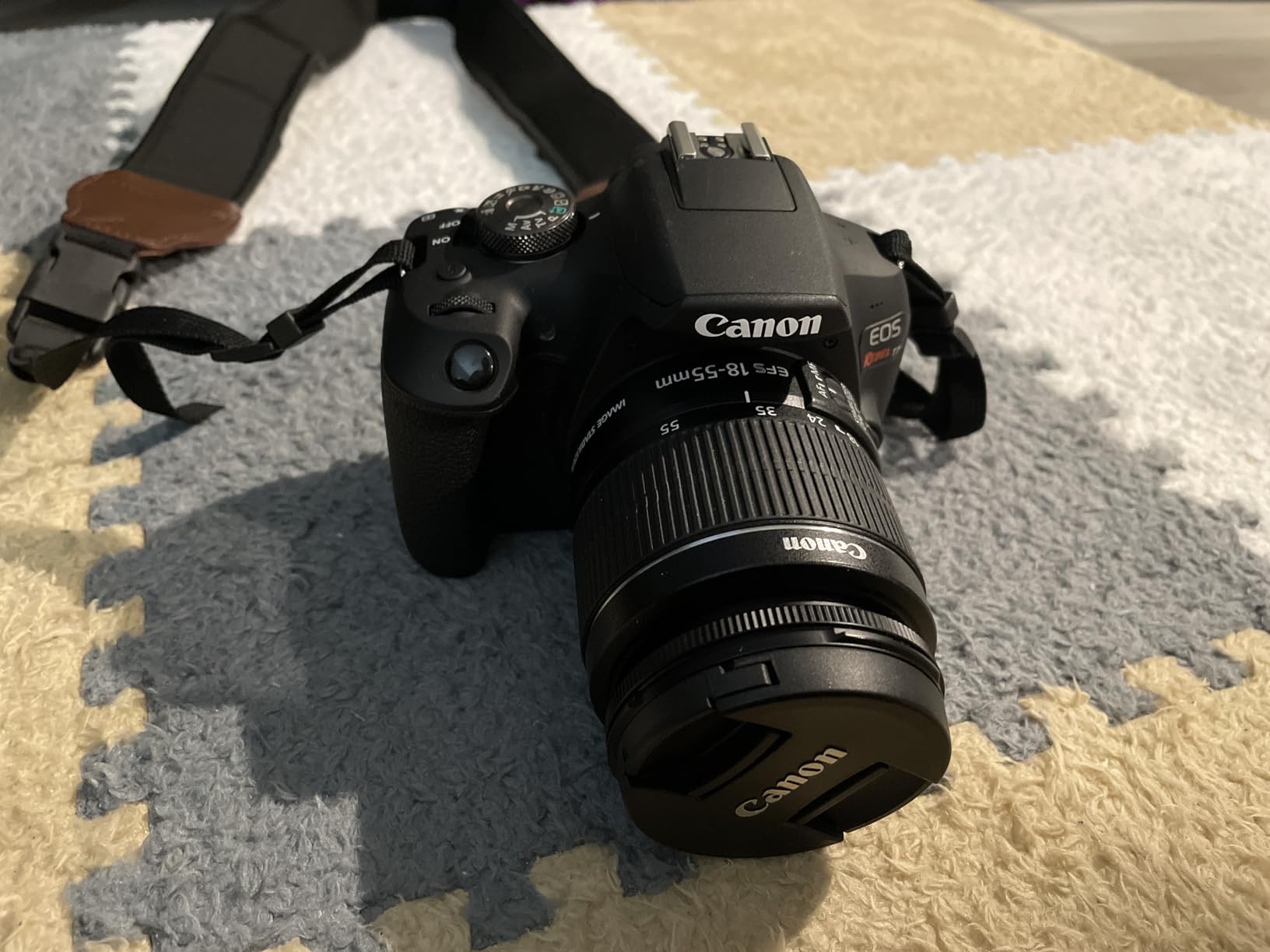
Canon put a feature guide in the menu system and paired it with Scene Intelligent Auto and creative filters. My own test notes after a month with the body read the same way reviewers describe it: a teenager who has never held a proper camera can get a sharp frame in a few minutes, then open the guide and find out why it worked.
RAW capture is available, which means a student heading into a GCSE or A-level photography course can bring files into a real editing workflow rather than working only with phone JPEGs. The single UHS-I slot accepts ordinary SD cards, so the card budget stays small.

What a teenager can actually learn on it
Aperture priority, shutter speed priority and full manual mode are all present, and that is the whole curriculum. Set the shutter to 1/500th in bright sun and watch the sky clip to white; stop down to f/8 and watch the shadows lift.
The 9-point autofocus system with a cross-type centre point is dated next to the Canon bodies that came after it, and in low light it can hunt before it locks. For a learner practising still life, street and landscape work, that is not a problem. For fast sport, it is.
Where it falls short for a beginner
The 3 fps burst rate and the missing 4K video are the two limits owners mention most. If the teenager’s real interest is short-form video for a channel, the Canon EOS M50 or Canon EOS R50 covers that far better without changing the lens system.
Wi-Fi transfer works but the routine is clunky, and the camera screen sits blank during the transfer, so downloading thirty frames at once is slow. Budget ten minutes for setup, then it works fine for the weekly photo dump.
2. Fujifilm Instax Mini 9 – instant feedback teaches patience
Pros
- Press one button and it works
- Instant print gives immediate feedback
- Selfie mirror and macro adapter are genuinely useful
- Durable plastic body survives being passed around
- Widely available Instax Mini film
Cons
- Cost per print is high and adds up fast
- Some units produce dark frames or jam the film
- Drains batteries quickly
This is the camera I would hand to a child around the age of ten, and it is also a genuinely good teaching tool for a teenager who has given up on learning settings. You press the button, a print comes out, and that is the entire workflow. There is nothing to configure and nothing to break.
What it teaches is real. Because a frame cannot be retaken, the photographer has to decide before the shutter whether the composition is right. Parents choosing an instant camera as a deliberate teaching tool keep reporting the same thing: the print gets pinned to a wall within an hour, which is a stronger motivation loop than a screen full of photos.
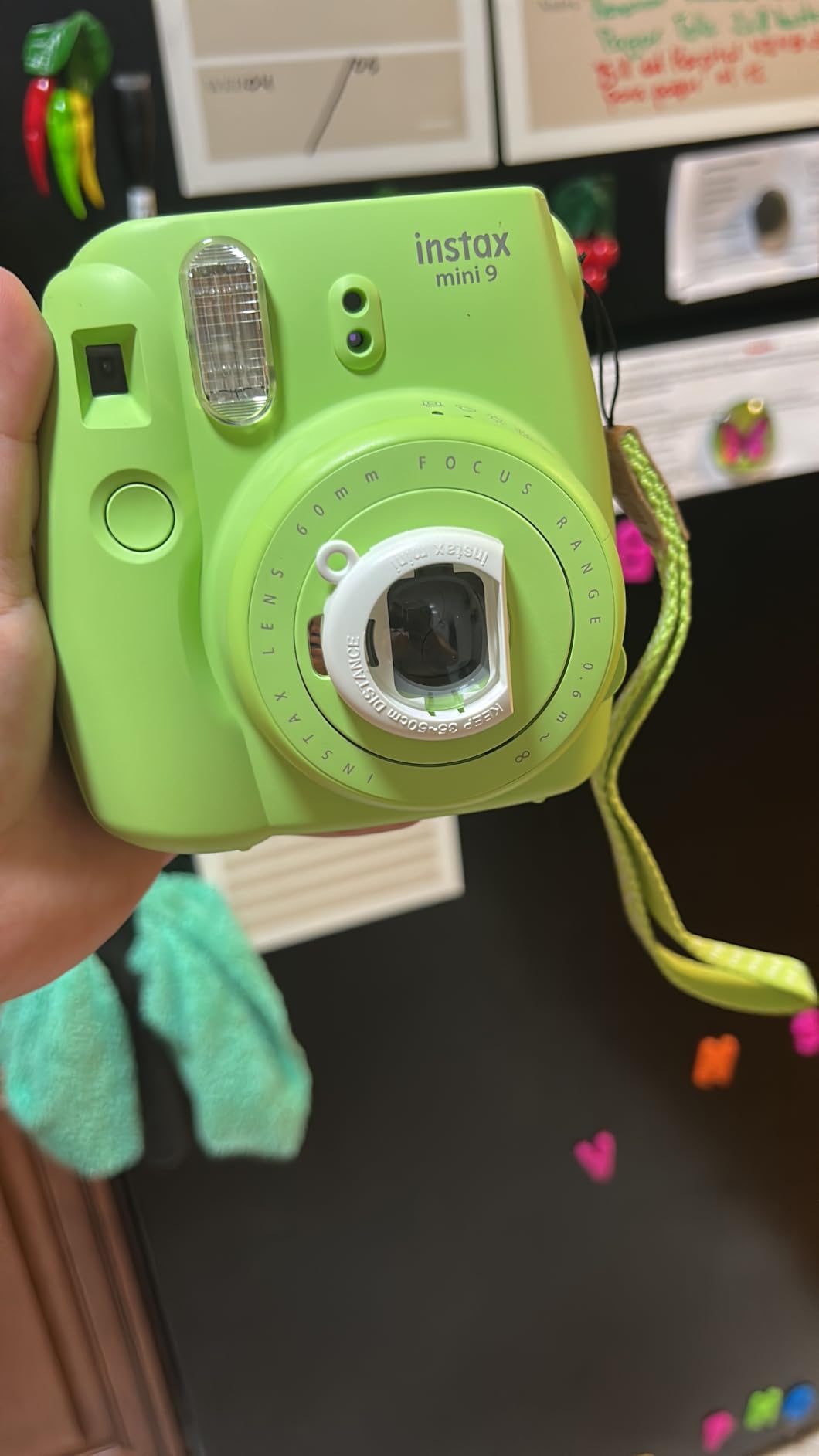
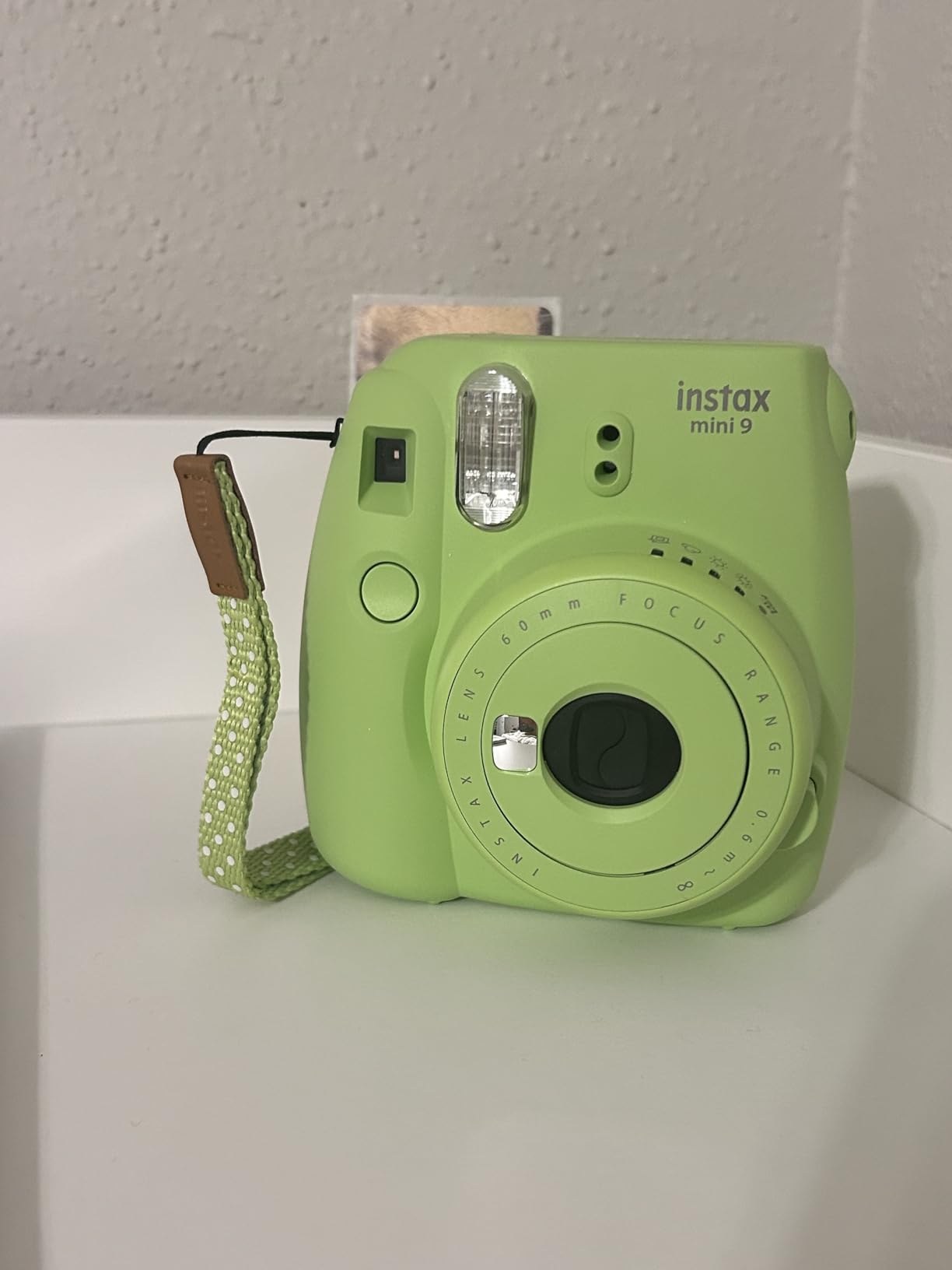
The automatic exposure system uses a flashing LED to suggest an aperture ring setting when the light is wrong, which is the closest thing the camera has to a lesson. The high-key mode softens and brightens portraits, and the included macro lens adapter covers close-ups from 35cm to 50cm.
Framing gets easier than expected because of the selfie mirror and the optical viewfinder. My only practical warning is battery handling: fully charged rechargeables are sometimes rejected, so stick to the AA cells the camera is tested with.
Why it works for a younger learner
There is no menu to get lost in, and nothing on the body to break. A ten or eleven year old can operate it unassisted within a couple of minutes, which matters enormously when the camera has to survive being used without supervision.
Optical viewfinder framing on a fixed 1/60s shutter is a clean way to introduce the idea of a fast shutter freezing motion, because the camera forces the exposure decision for you while the composition stays yours.
Where it falls short for a beginner
You cannot change a single setting, and the frame is fixed at roughly 2.4 by 1.8 inches. A student working towards a graded photography course needs files, not prints, so this is a first camera with a shelf life measured in months rather than years.
Film is the real ongoing cost, and a minority of owners report recurring jams or dark frames that require prying the cartridge out. Treat the first two shots on every new pack as a warm-up, and you will avoid most disappointment.
3. Kodak PIXPRO FZ55-RD – the best value optical zoom
Pros
- Real 5X optical zoom beats a phone at framing
- Very clear menus for a first camera
- Pocketable and light enough to carry daily
- Rechargeable battery charges inside the camera
- Produces the vivid retro digital look buyers enjoy
Cons
- All-plastic body may not survive a hard drop
- Low-light photos come out grainy
- SD card not included so budget for one
The FZ55 pairs a genuine optical zoom with a body light enough to carry every day, and that combination is why it keeps selling by the thousand. A 28mm wide angle at one end covers a group shot or a building; the far end of the range reaches across a school playground. A phone cannot do either without stepping backwards.
It is also one of the few budget bodies that lists a manual exposure mode alongside Auto and Program, alongside face beautifier, movie, panorama and scene modes. A teenager who is ready to start learning can set shutter speed and aperture, even if the sensor is small.

The 28-140mm equivalent range, f/2.9-f/5.8 aperture range and contrast-detect autofocus with nine points are unremarkable on paper. What matters is that the camera is honest about what it is: a pocket camera that takes sharp, colourful daylight photos and does not pretend to be something else.
Battery charging happens over the included USB cable with the cell in the camera, so there is no separate cradle to lose. That single design decision saves a teenager from the most common reason a budget camera sits unused in a drawer.

Where it makes the most sense
Best for a thirteen to fifteen year old who is shooting friends, school trips and pets every week and has no interest in a menu system. It is light, it starts fast, and it fits in a jacket pocket rather than a camera bag.
The 2.7-inch screen is small by modern standards, but the automatic flash control handles the awkward indoor lighting that trips up most beginners, which means fewer missed shots in a school hall or a family kitchen.
Where it falls short
The plastic shell feels light in the hand and reviewers repeatedly warn it may not survive a hard drop onto concrete. If the camera lives in a school bag, add a sleeve, because that risk is the main complaint in the reviews.
Low light produces grainy results, and the video has no image stabilisation, so it is not a tool for a teenager who wants to film content. Buy the SD card separately, as none is included.
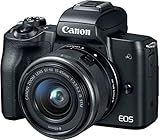
4. Canon EOS M50 kit – the highest rated body in the group
Pros
- Dual Pixel autofocus tracks moving subjects fast
- Flip-out touchscreen is ideal for vlogging and selfies
- Excellent electronic viewfinder with histogram
- Small and light enough for a jacket pocket
- Menus are easy to navigate
Cons
- 4K mode is heavily cropped and loses Dual Pixel AF
- Small battery means carrying spares
- Few native EF-M lenses without an adapter
At a 4.8 average across more than 2,500 owner reviews, this is the highest-rated body in the roundup, and reviewers keep calling it the most underrated camera in its class. For a teenager, the reason is the combination of a genuinely good viewfinder and a screen that swings out to face forwards.
Dual Pixel CMOS AF across 49 points covers most of the frame, so portraits of friends and family stay sharp without the photographer thinking about it. That matters for a learner, because an autofocus system that misses constantly teaches frustration rather than technique.

The 2.36-million dot electronic viewfinder shows live preview and a histogram, which is how you learn to read exposure before you can judge it on the back screen. The included 15-45mm f/3.5-6.3 IS STM kit lens gives a 24-72mm equivalent range from one short lens.
Video is where this body still surprises. Full HD at up to 60p is widely praised as better than a phone, and 1080p is what a beginner actually shoots, so the heavily cropped 4K mode matters far less than the spec sheet suggests.

Why it suits a sixteen to eighteen year old
This is the camera to buy when the teenager is drifting toward video. The fully articulating vari-angle touchscreen makes framing a solo shot or a piece to camera straightforward, and the microphone input lets them record proper audio straight away.
At 13.76 ounces it is one of the lightest interchangeable-lens bodies here, and the menus are shallow enough that a beginner can find everything without a tutorial. Full manual control sits a couple of taps away when they are ready.
Where it falls short
The EF-M lens range is small, and reaching the full EF catalogue requires an adapter, which is an extra cost to plan for. The single card slot and lack of a headphone jack will annoy anyone who gets serious about sound.
Battery capacity is the most common complaint, and several owners carry spares. The grip is also smaller than a DSLR, so a teenager with large hands may find it less comfortable than the Rebel T7.
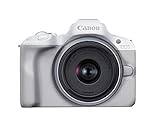
5. Canon EOS R50 kit – best for teens who also make video
Pros
- Uncropped 4K video is rare in this class
- Fast autofocus with people and animal detection
- Easy in auto mode but full manual control underneath
- Light and compact enough to carry every day
- Wi-Fi and Bluetooth transfer plus phone remote control
Cons
- Body is very small with a tight grip for larger hands
- Weak in low light for its class
- Bundled 18-45mm lens is average for the price
If the teenager in your house films as well as they photograph, this is the modern entry point into a system that lasts. The RF-S 18-45mm f/4.5-6.3 IS STM kit lens covers 18-45mm, the body weighs 16 ounces, and the whole thing fits a school bag without a dedicated pouch.
The Dual Pixel CMOS AF II system covers 100 percent of the frame with 651 zones and uses deep-learning subject detection for people, animals and vehicles. In practice that means group shots and pet photos land in focus without the photographer lining anyone up.

The video side is the real differentiator. 6K oversampled, uncropped 4K at 30p and Full HD up to 120p come from a camera that also shoots stills, and the vari-angle touchscreen handles the flip-to-front framing a vlogger expects.
A+ Assist auto scene modes handle low light and backlit situations on request, so a beginner can get a usable frame and then switch to manual to understand why. That on-ramp is rare at this level and it is what makes the body a good learner.

What a student can learn on it
RAW capture, full manual exposure and a histogram in the electronic viewfinder give a photography-course student everything the assignment needs. The 2.36-million dot viewfinder at 0.96x magnification is bright enough to compose outdoors.
Burst rates of up to 12 fps with the electronic first curtain shutter, or 15 fps with the electronic shutter, capture movement in a way the Rebel T7 cannot, and that alone justifies the step up for anyone shooting sport.
Where it falls short
The grip is very small, and several users with larger hands report knocking buttons by accident. That is worth checking in a shop before you buy, because a camera a teenager finds uncomfortable will not get used.
Low light performance is modest for the class, the sensor is APS-C rather than full frame, and owners frequently recommend the body-only bundle with a better lens instead of the bundled 18-45mm. Batteries are small, so pack a spare.
6. Kodak PIXPRO FZ45 – the lowest-cost way to learn zoom
Pros
- 4X optical zoom gives real framing flexibility
- Crisp and vibrant photos for the money
- AA batteries give long sessions without charging
- Light enough to toss in a bag
- Scene modes and exposure compensation aid experimentation
Cons
- 5 to 10 second restart between shots is awkward
- Alkaline batteries only and many rechargeables will not work
- Occasional reports of shutdowns and lens sticking
The FZ45 sits at the bottom of the rating scale in this roundup, and the reason is a single design choice: it takes five to ten seconds to restart or recharge. For candid shots of friends and family that delay is a real problem, and it is the most repeated complaint in the reviews.
Everything else about it is quietly sensible. A 27mm wide angle, 4X optical zoom, built-in flash and a set of scene modes for night, beach, portrait and panorama give a beginner more to work with than a bare phone offers.

Two AA alkaline batteries power the camera, which means roughly a thousand shots without a charger and no battery to lose on a trip. The catch is that many rechargeable cells will not work, so keep a fresh pack of alkaline cells as spares.
Exposure compensation is available alongside the scene modes, which is a nice first taste of giving the camera a nudge. Buyers also frequently compare it favourably to a Canon G7X or GX7 as a budget substitute, which tells you where the expectations sit.

Why it is still worth considering
For a child around eleven or twelve, or a teenager who only shoots in daylight, the restart delay rarely comes up. In exchange you get a real optical zoom, a physical flash and a body light enough to carry without thinking about it.
The 2.7-inch LCD at 230,000 dots is small, but the camera is simple enough that the screen is mostly used to review rather than compose.
Where it falls short
Do not buy it for video of any kind. Owners are blunt about the footage being unsuitable, and a teenager who wants to film will be frustrated within a week.
There are also recurring reports of random shutdowns, flash failures and a lens that sticks, plus a body light enough to feel shaky in the hand. The SD card is not included either, so add one to the first-year budget.
7. Camkory 44MP compact – the easiest start for ages 8 to 12
Pros
- Menus and buttons are figured out in minutes
- Light and pocketable for small hands
- 32GB card and two batteries included
- 20 filter effects give room to experiment
- Charming low-fi date-stamped look
Cons
- No real flash so indoor photos come out dark
- Colours are often over-saturated
- Plastic build feels cheap
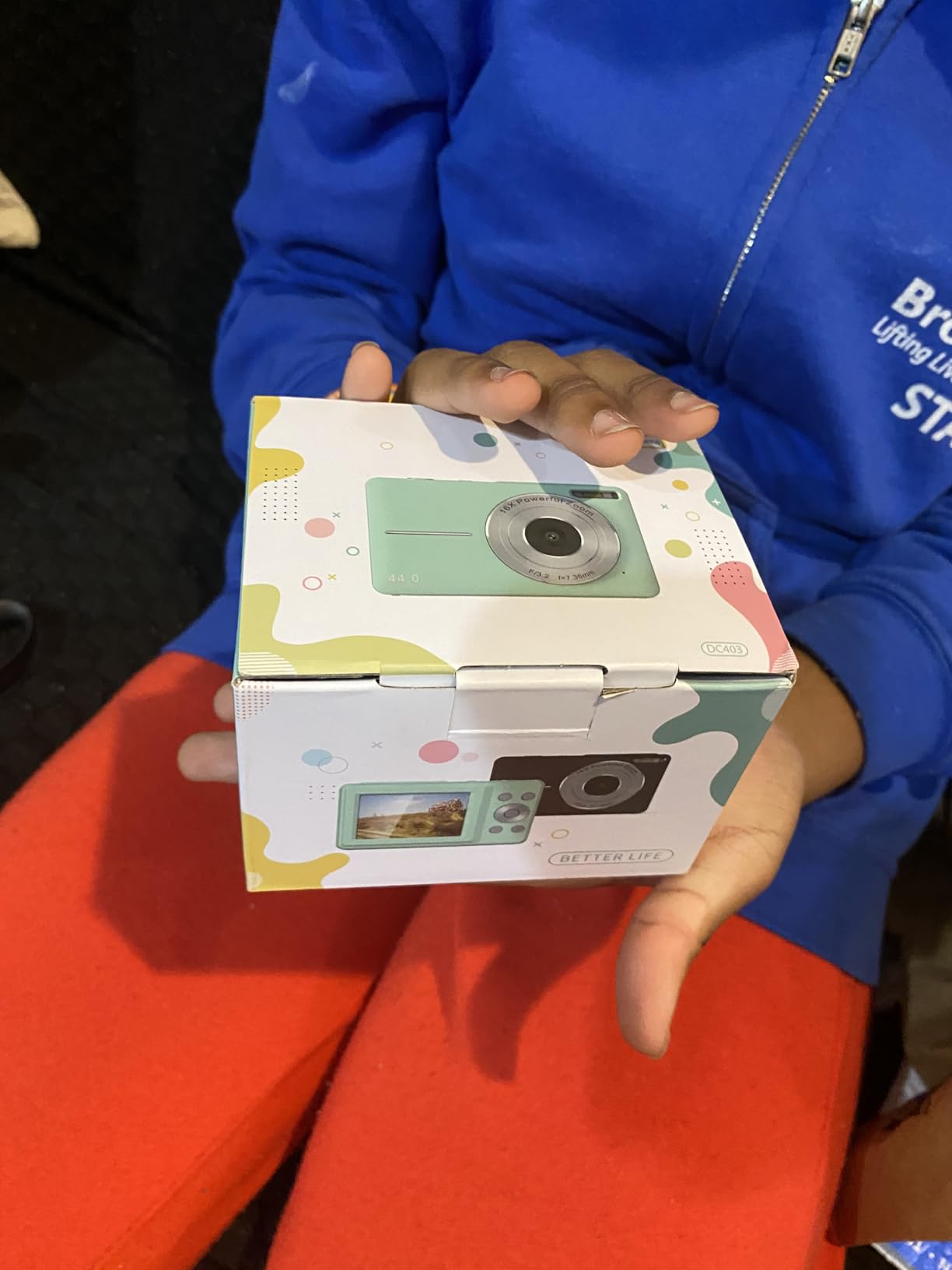
This is the camera I would pick for a child in the 8 to 12 band, and the reason is packaging rather than optics. The 32GB memory card and two large capacity batteries are in the box, along with a lanyard, a storage bag, an adapter and a cable, so it works the moment it is unwrapped.
At 158.76 g with a 3-inch screen, it fits small hands and a school bag without ceremony. Reviewers consistently report that a child or complete beginner can work out the menus and buttons in a few minutes, which removes the usual reason a first camera gets abandoned.
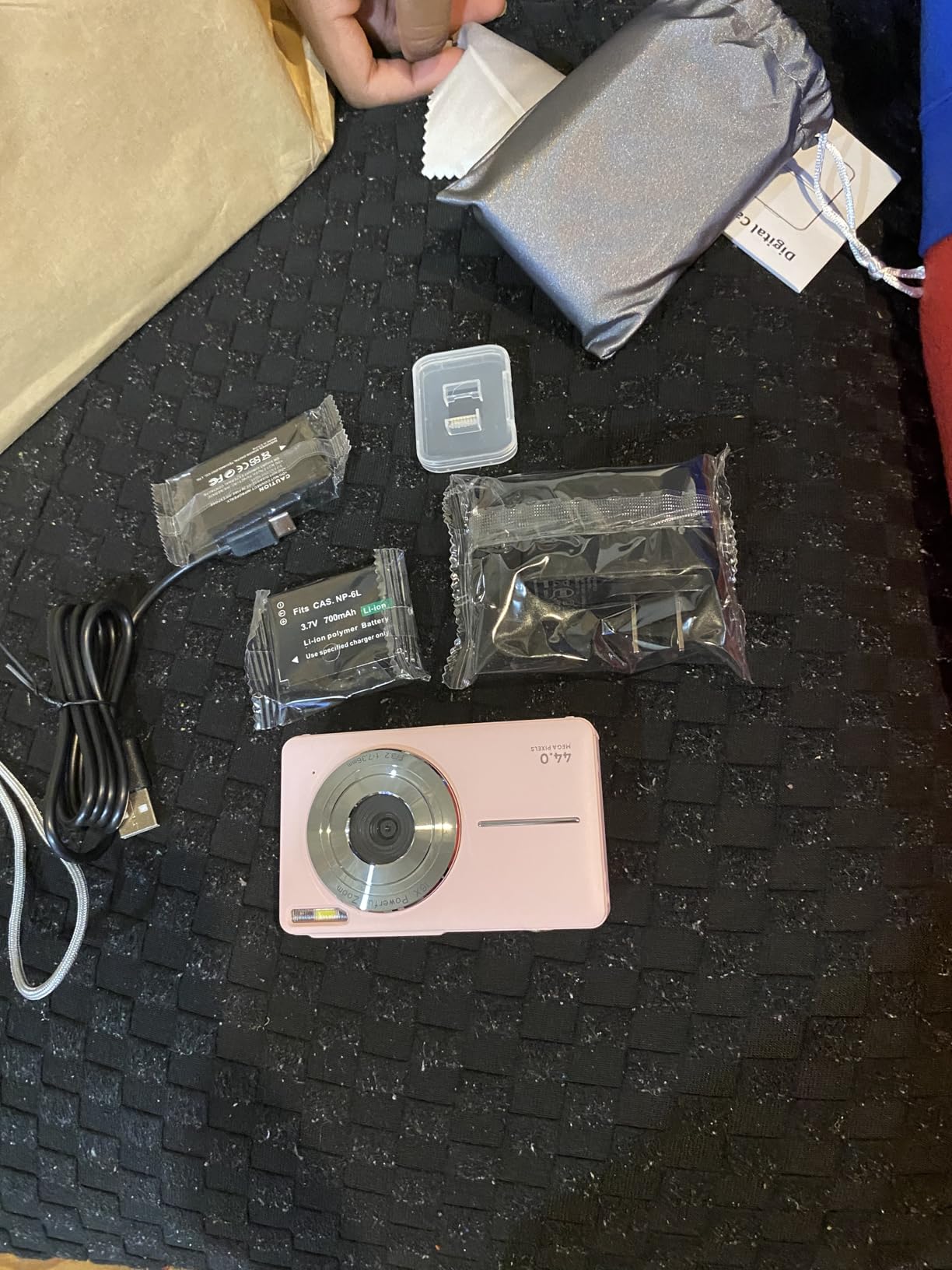
The 20 creative filter effects, face and smile detection, continuous shooting and a ten-second self timer are built for exactly the audience this camera serves. Ten seconds is long enough for a group photo of siblings, and the date stamp gives the retro digital look that a lot of young photographers actively want.
The 44MP still resolution and 16X digital zoom are on the box for a reason. Set expectations honestly: the 1/1.8-inch CMOS sensor and contrast-detect autofocus with 19 points produce adequate results rather than sharp ones, and the zoom is digital, so framing quality falls away as you extend it.
Why it works for younger children
Nothing here can be broken by a curious eight year old, and there is no lens to twist or cap to lose. The digital zoom means a distant subject is always reachable, even if the result is soft.
A one-year warranty and the included accessory bundle reduce the argument risk for a parent, and the forgiving nature of the image quality means an eight year old can take forty photographs without getting discouraged.
Where it falls short
There is no real flash. The LED light leaves indoor photographs dark and one-dimensional, which is a problem in a house or a classroom rather than outside.
Colours come out bright and often over-saturated, video audio is muffled, and the plastic shell feels cheap in the hand. A few owners also report the camera freezing or images transferring awkwardly. This is a first fun camera, not a learning tool that grows with the child.
8. Zostuic 4K flip-screen compact – best for budget vlogs
Pros
- Feature packed for the money with 4K and a flip screen
- Flip screen makes selfies and vlogging straightforward
- Two batteries plus a cradle that charges both
- Menus are simple enough for a beginner
- Palm-sized with tripod and microphone ports
Cons
- 1/3-inch sensor means the 48MP label is interpolated
- Single autofocus point struggles in tricky scenes
- Fixed lens with digital zoom only
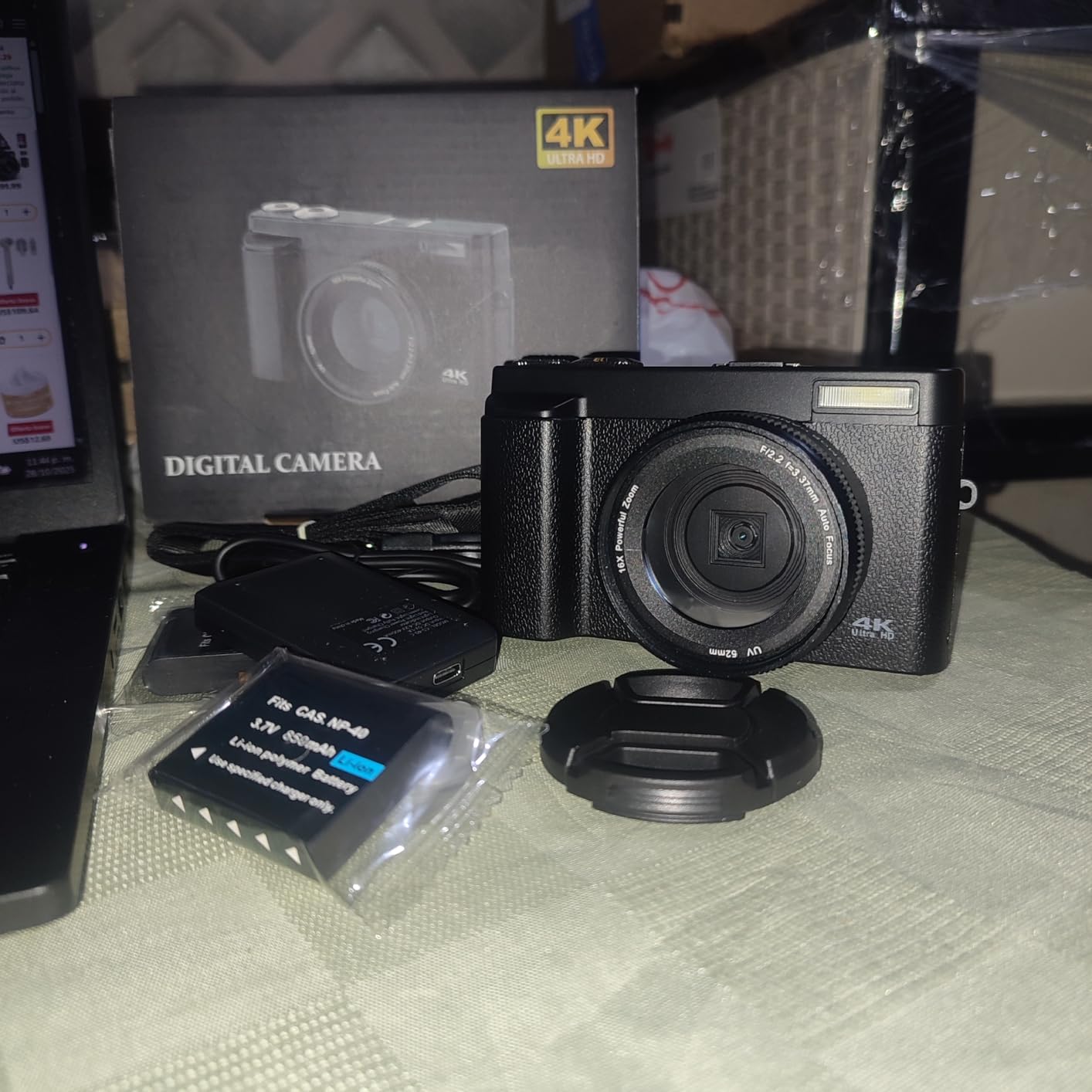
The parent-versus-teenager argument almost always comes down to this: the parent wants stills, the teenager wants a vlogging camera. This body resolves it on a budget, with a 3-inch screen that flips out 180 degrees and shoots 4K video.
It also doubles as a webcam over USB for calls and live streaming, which is a genuinely useful feature for school or a first channel. Two 800mAh rechargeable batteries and a charging stand that handles camera and spare together remove the most common field failure.
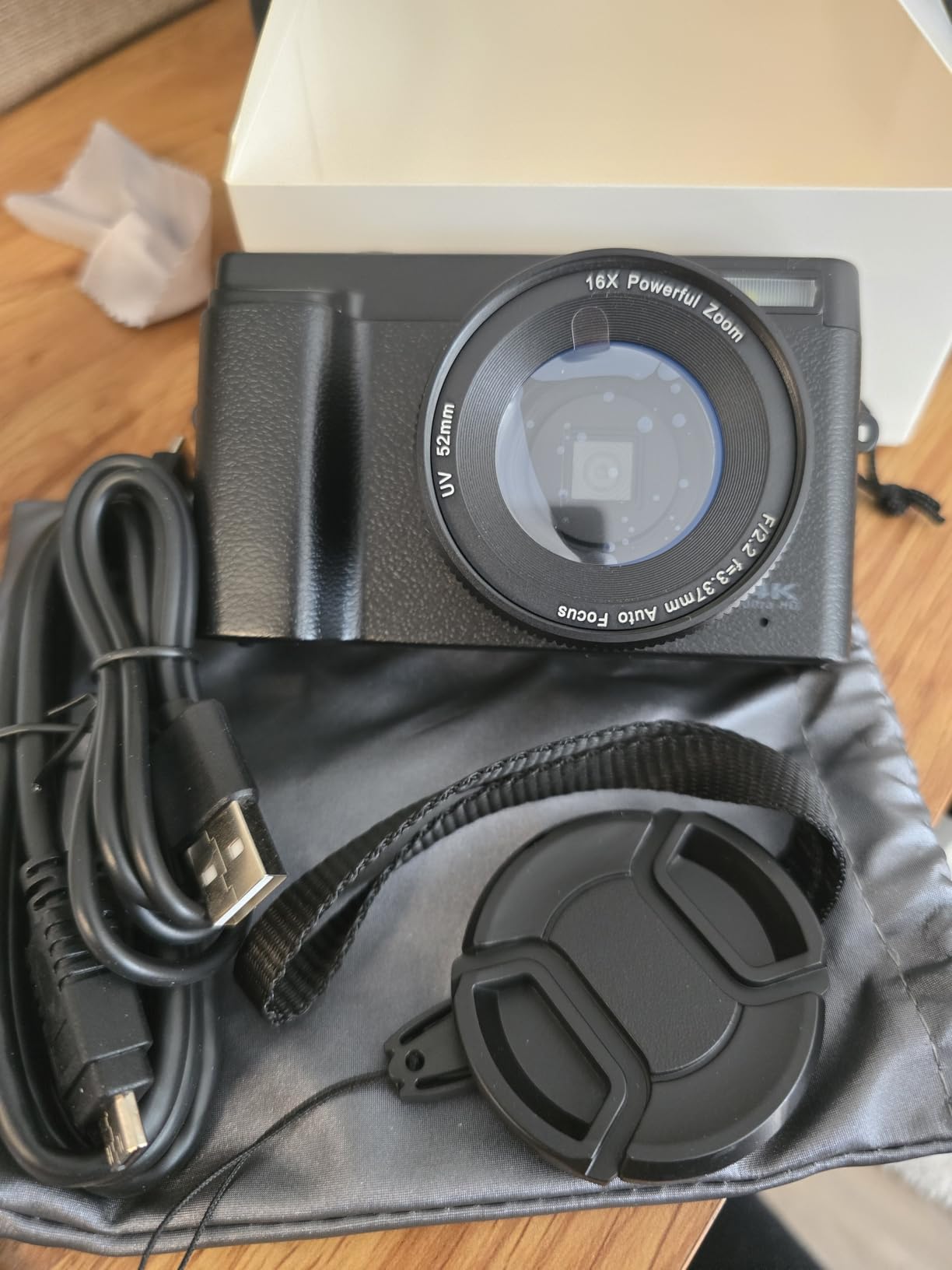
Built-in flash and an LED fill light help in dim rooms, and face and smile detection handles the group-photo case. A 32GB card, bag, strap and a two-year warranty are included, so the first purchase is complete.
What you are paying for is features, not sensor quality. The 48MP still resolution comes from an 8MP sensor on a 1/3-inch CMOS chip, so the file is interpolated rather than carrying real detail, and the single autofocus point is not dependable in low contrast.
Why a teenager might choose it
The flip-to-front screen is the reason. It makes a piece to camera, a selfie and a group clip possible without propping the camera against a stack of books, which is usually where first vlogging attempts die.
Video modes include anti-shake, pause, time-lapse and slow motion, and the tripod and microphone ports mean a beginner can improve the output later with a small tripod and a basic mic.
Where it falls short
There is no optical reach at all, only 16X digital zoom, so a distant subject produces a soft, cropped frame. Burst rate is 3 fps, which rules out sport and moving children.
It is a documentation camera, not a learning one. With no real manual control and a single autofocus point, there is very little to experiment with once the novelty fades.
9. Duluvulu 4K travel compact – built for school trips
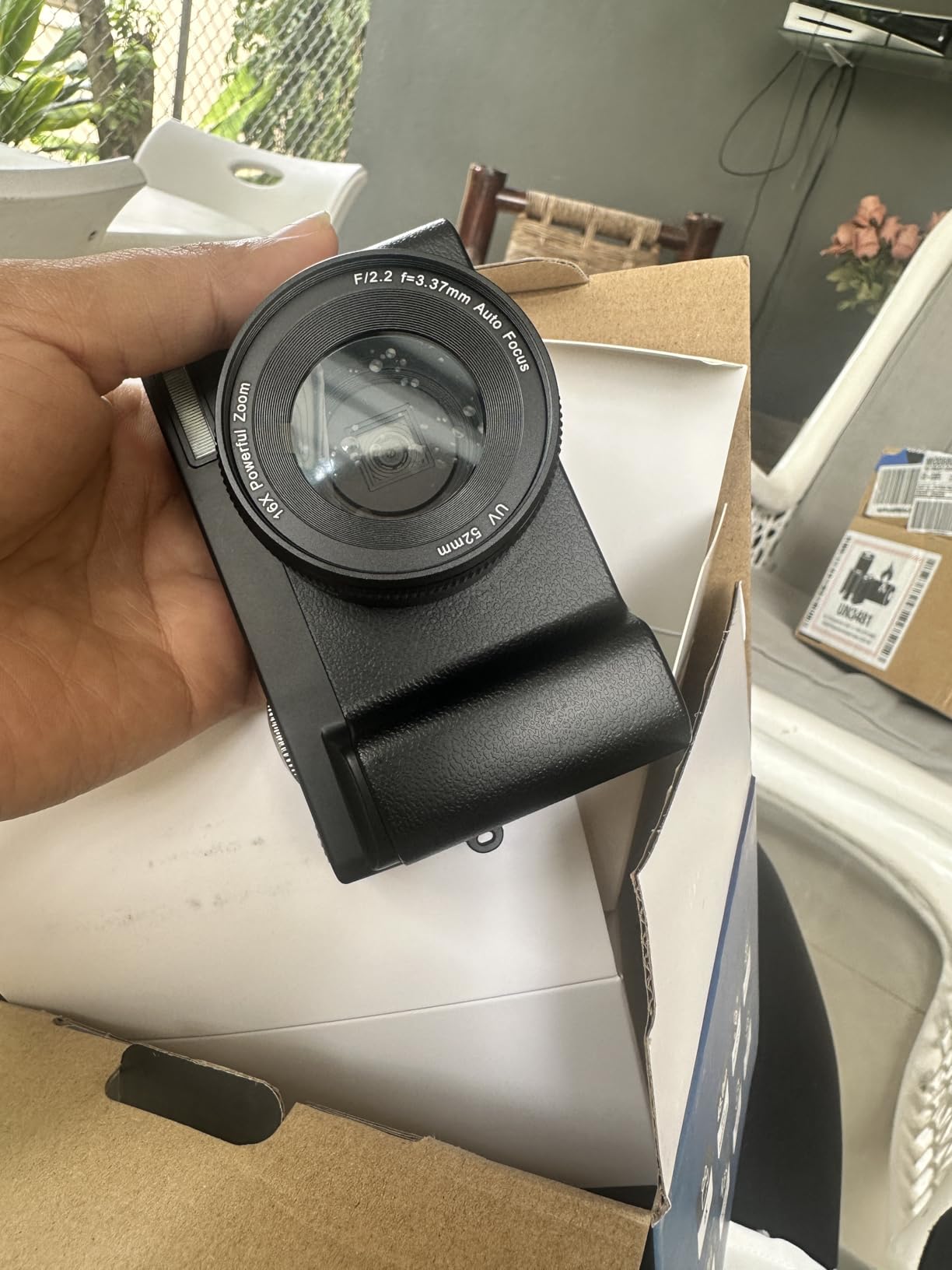
Duluvulu 4K Digital Camera for Photography Autofocus, 2026 Latest 48MP Vlogging Camera for YouTube with SD Card, 2 Batteries, 3″ 180°Flip Screen Compact Travel Camera for Teens with 16X Zoom,Black
Pros
- Records while charging which matters on long days
- Two rechargeable batteries included
- Flip screen for selfies and vlogging
- Scene modes and filters for experimentation
- 32GB card and bag included in the box
Cons
- 1/3-inch sensor limits real detail
- Single autofocus point and 3 fps write speed
- Fixed lens with digital zoom only
A week away with no charger socket is the scenario this camera is built for. It records while charging over USB-C, carries two rechargeable batteries, and holds a 32GB card, so a school trip or a backpacking weekend does not end because a battery died on day two.
The 3.0-inch IPS screen flips 180 degrees and the body stays compact enough for a side pocket. Exposure compensation from minus 3 to plus 3 is available, alongside date stamp, video pause, time-lapse, slow motion and a set of creative filters.
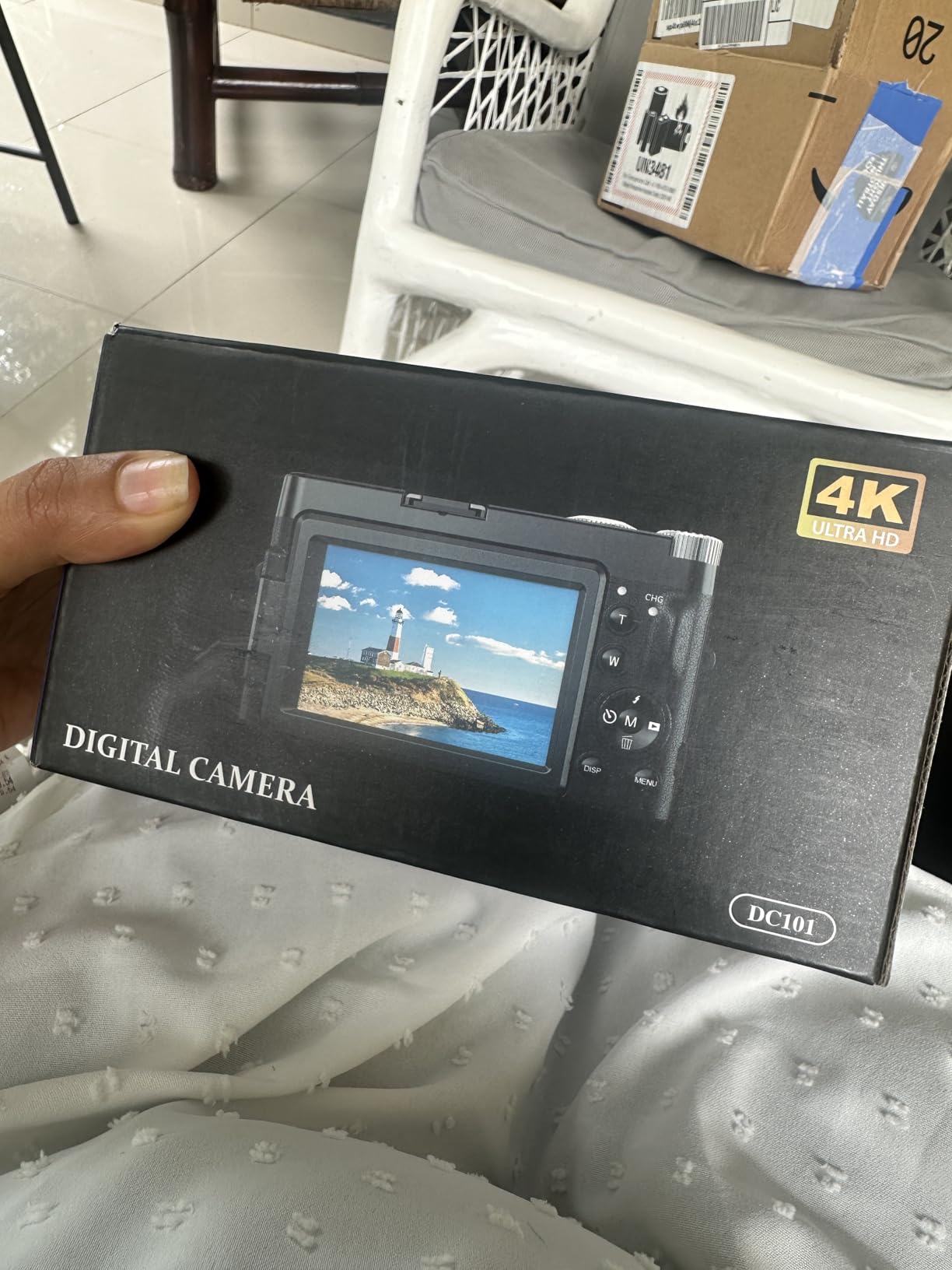
There is an LED fill light and a built-in flash for indoor scenes, plus face and smile detection, beauty mode and a self timer. Webcam mode over USB-C means it can stand in for a laptop camera during a school project or a family call.
The eighteen-month replacement and refund warranty is longer than most cameras at this level offer, which matters for a device that will be knocked about in a rucksack. The lens cap, bag and strap are in the box as well.
Why it fits trips and travel
Battery endurance is the whole point, and record-while-charging is the feature that separates it from cheaper compacts. A long day out no longer has a hard stop.
The small body takes up almost no room, and the filter set gives a teenager something to play with while waiting for the light on a coach journey.
Where it falls short
Stills quality is capped by the 1/3-inch sensor, so the 48MP figure overstates what the camera captures. The single autofocus point and slow burst mean moving subjects are often missed.
The fixed lens offers no optical zoom, and the simplified controls leave no manual route to learn. It documents a trip well; it does not teach much.
10. Fujifilm Instax Mini 12 – best for selfies and parties
Pros
- Twist-the-lens power control makes it foolproof to use
- Automatic exposure and flash keep prints bright
- Parallax-corrected close-up mode is genuinely useful
- Compact and easy to carry anywhere
- Prints in about five seconds which suits parties
Cons
- Film is sold separately and adds up over time
- Focus takes practice to get right
- Soft body offers little grip for larger hands
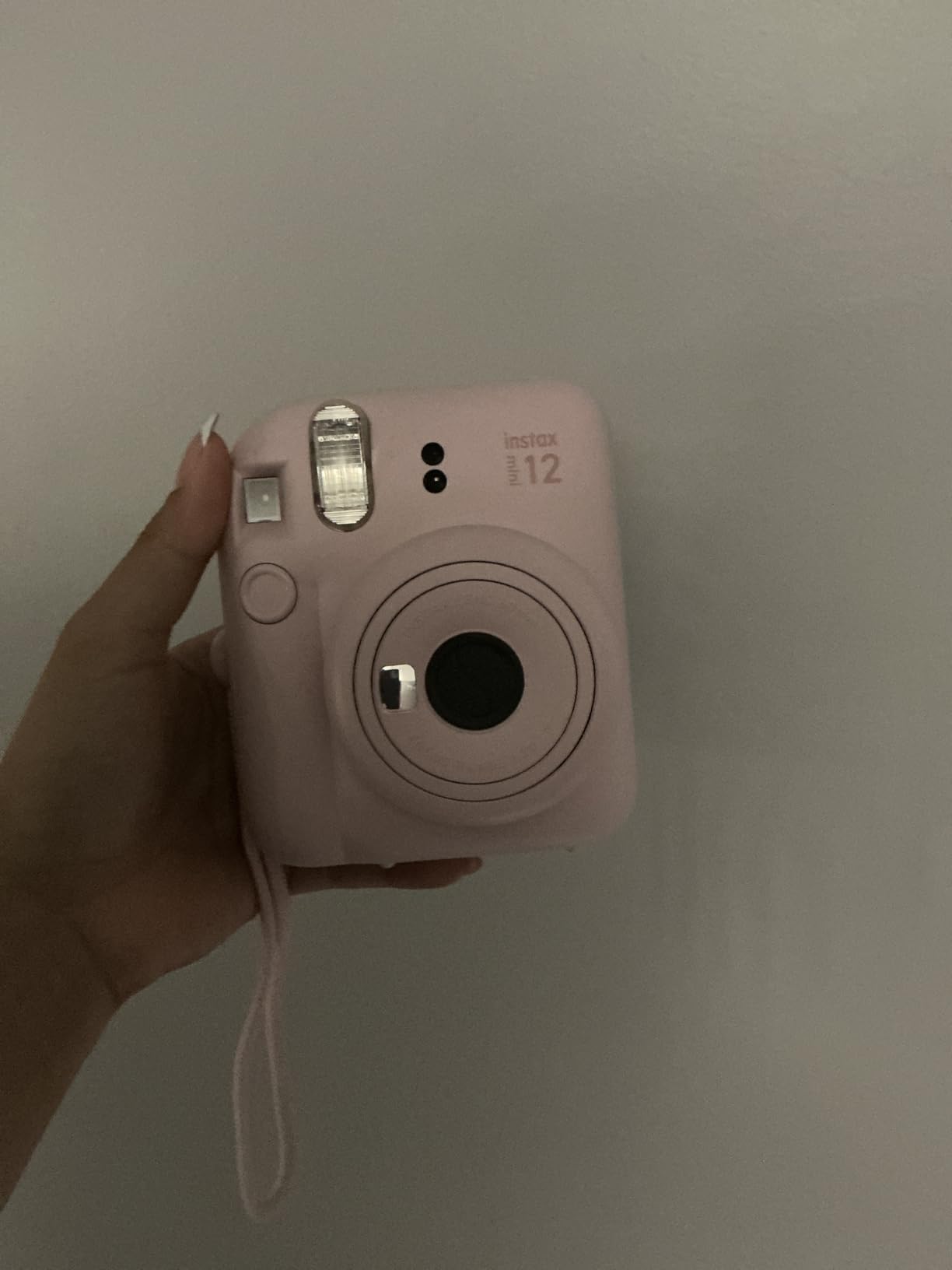
The Mini 12 improves on the older Mini cameras in one specific way: it powers on when you twist the lens. That single change removes the most common beginner mistake, which is shooting into a lens that is not actually awake.
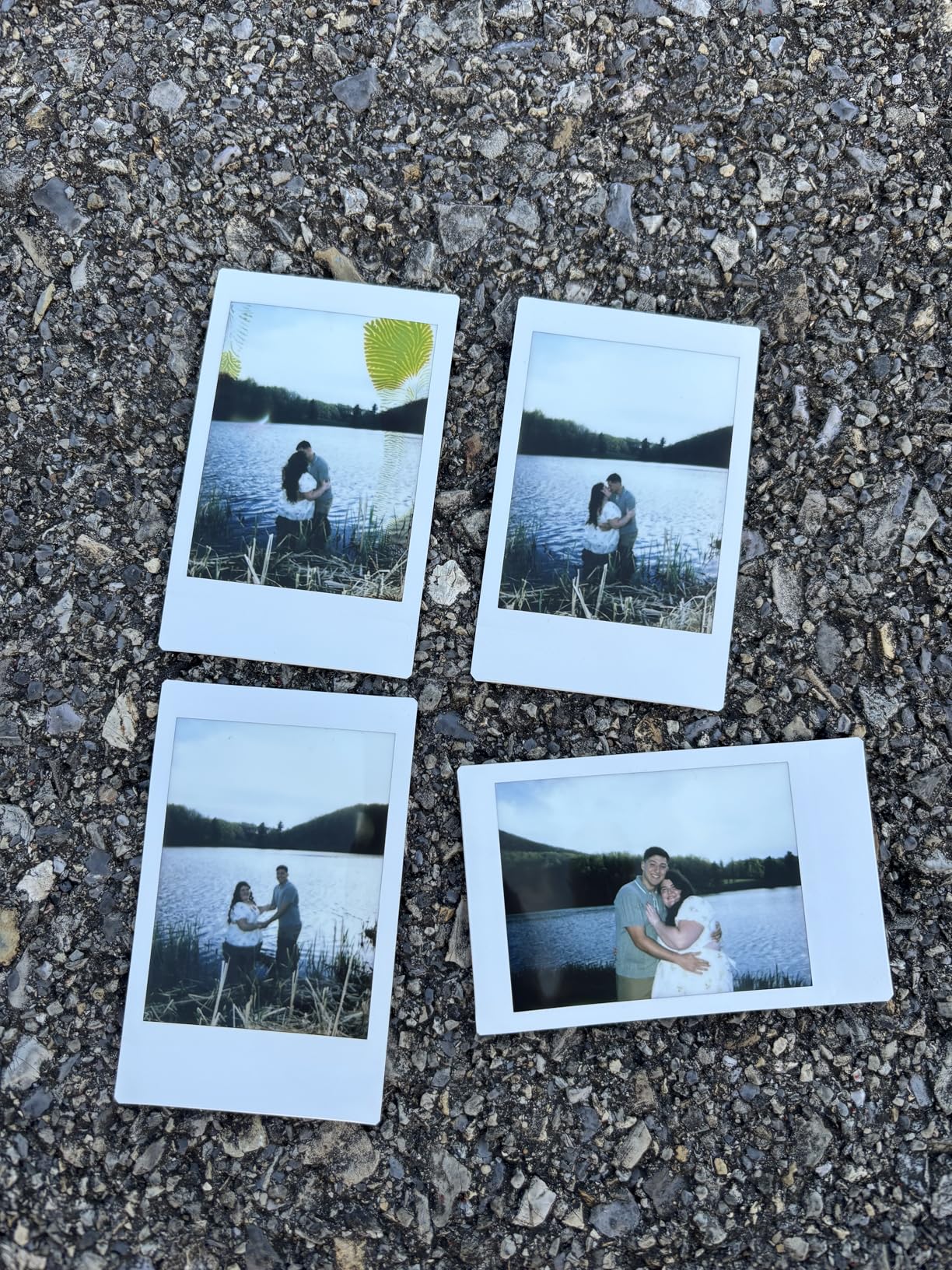
Automatic exposure and automatic flash control keep prints from washing out, which is where cheaper instant bodies regularly disappoint. Prints are roughly 2 by 3 inches and eject in about five seconds, with full development taking around ninety seconds.
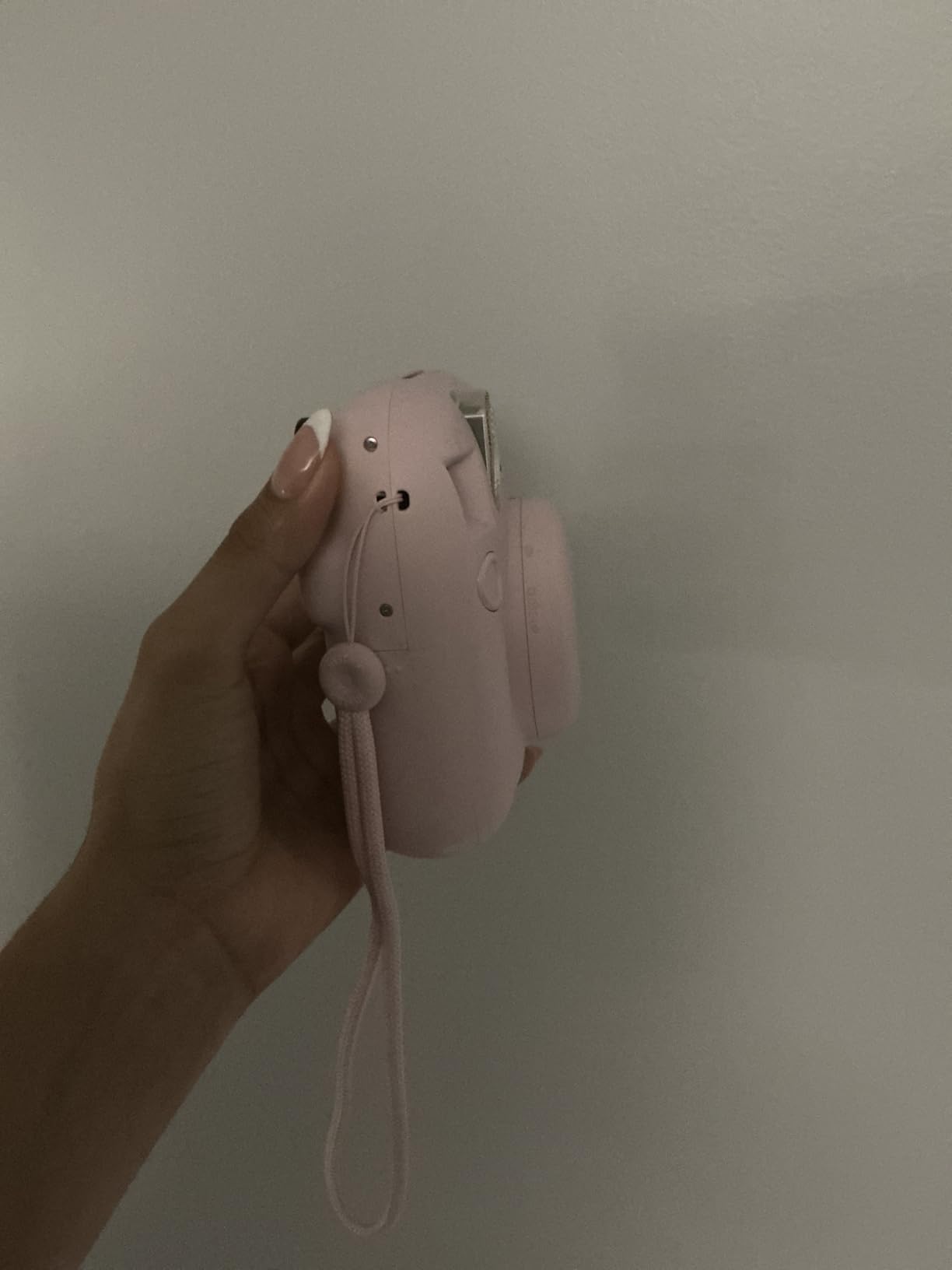
The built-in selfie mirror is paired with a close-up mode that corrects parallax, so a hand holding the camera at arm’s length still frames the face properly. That combination is why this is the version to buy for a teenager who mostly wants pictures of themselves and their friends.
Minimum shutter speed is 1/250 second and light sensitivity runs ISO 100-800, both of which are sensible for a camera aimed at indoor parties and daytime outings. Two AA batteries and a hand strap are included, with a one-year warranty.
Why it suits a social photographer
It is a design object as much as a camera, and reviewers consistently mention that it gets carried and used because it looks good. For a fourteen year old, that matters more than any specification.
Film loading is straightforward once you have done it twice, and the print size fits a phone case pocket or a scrapbook, so photos travel with the owner instead of living in a camera roll.
Where it falls short
Film is not included and adds up quickly, and there is no way to retake a frame that came out light. Focus also takes a little practice, particularly when the flash is firing.
The soft rounded body has little grip for larger hands, and the strap position makes selfies awkward at some angles. Like every instant body, it teaches composition and nothing else.
11. Fujifilm Instax Mini 41 bundle – prints ready on day one
Fujifilm Instax Mini 41 Instant Camera Vintage Black. + Fujifilm Value Pack (40 Sheets) + Shutter Accessories Bundle, Includes Vintage Style Compatible Carrying Case, Black Photo Album 64 Pockets
Pros
- Bundle includes film and album so shooting starts immediately
- Retro design works as a fashion accessory
- Automatic exposure handles most lighting consistently
- Selfie mirror and close-up mode help with framing
- Printed photos are easy to share and scrapbook
Cons
- Ongoing film cost adds up quickly
- Fixed prime lens with no zoom
- Results vary frame to frame and cannot be retaken
The reason to buy this bundle rather than a bare body is the box contents. Forty sheets of Instax Mini film, a fitted protective case with a removable strap, and a 64-pocket photo album come with it, which is roughly the first year of shooting sorted before the camera is even opened.
That matters for a teenager who has saved up for a camera. A bare body that then needs film, a case and somewhere to put the prints gets assembled over several weeks, and enthusiasm fades in that gap.

The camera itself is straightforward: automatic exposure that adapts shutter speed and flash, a built-in selfie mirror, a close-up mode and an optical viewfinder at 1.0x magnification. The retro styling is the draw, and buyers respond to it as much as to the picture quality.
The prime lens is fixed at 1X optical zoom. There is no framing flexibility at all, so every photograph from the same distance, which is a genuine limitation when a subject will not come to the camera.
Why the bundle helps a beginner
A teen who has never used instant film will burn the first two shots of every pack while working out the flash distance. The 40 included sheets give enough room to learn that without an argument.
The 64-pocket album turns the photographs into a physical record straight away, and owners mention scrapbooking and sharing prints as the most satisfying part of the whole process.
Where it falls short
Refill film is an ongoing expense that quickly outgrows a birthday budget, and results vary frame to frame with no option to retake. The fixed prime lens removes any ability to change framing.
There is no manual control of any kind, so a student on a photography course will need a different body within a term. Treat this as a camera that builds confidence, not one that builds technique.
12. Lecnippy 48MP ultracompact – the one that fits every pocket
Pros
- Only 113 g so it is carried not stored
- 4K video and 48MP stills at a low outlay
- Autofocus is quick for family and party shots
- Two batteries plus record-while-charging
- 32GB card and all cables included
Cons
- 1/3.2-inch sensor means 48MP is interpolated
- 16X is digital zoom with no optical reach
- Manual exposure only limits creative control
The single most important number on this camera is 113 grams. The heaviest body in this roundup is nearly four times that, and a camera that lives in a pocket gets used in situations where a bag camera stays at home. For a teenager documenting everyday life, that is the feature that matters.
It still records 4K UHD video, takes 48MP stills, runs autofocus with face detection and continuous-servo modes, and doubles as a webcam over USB for calls and streaming. Record-while-charging is there too.
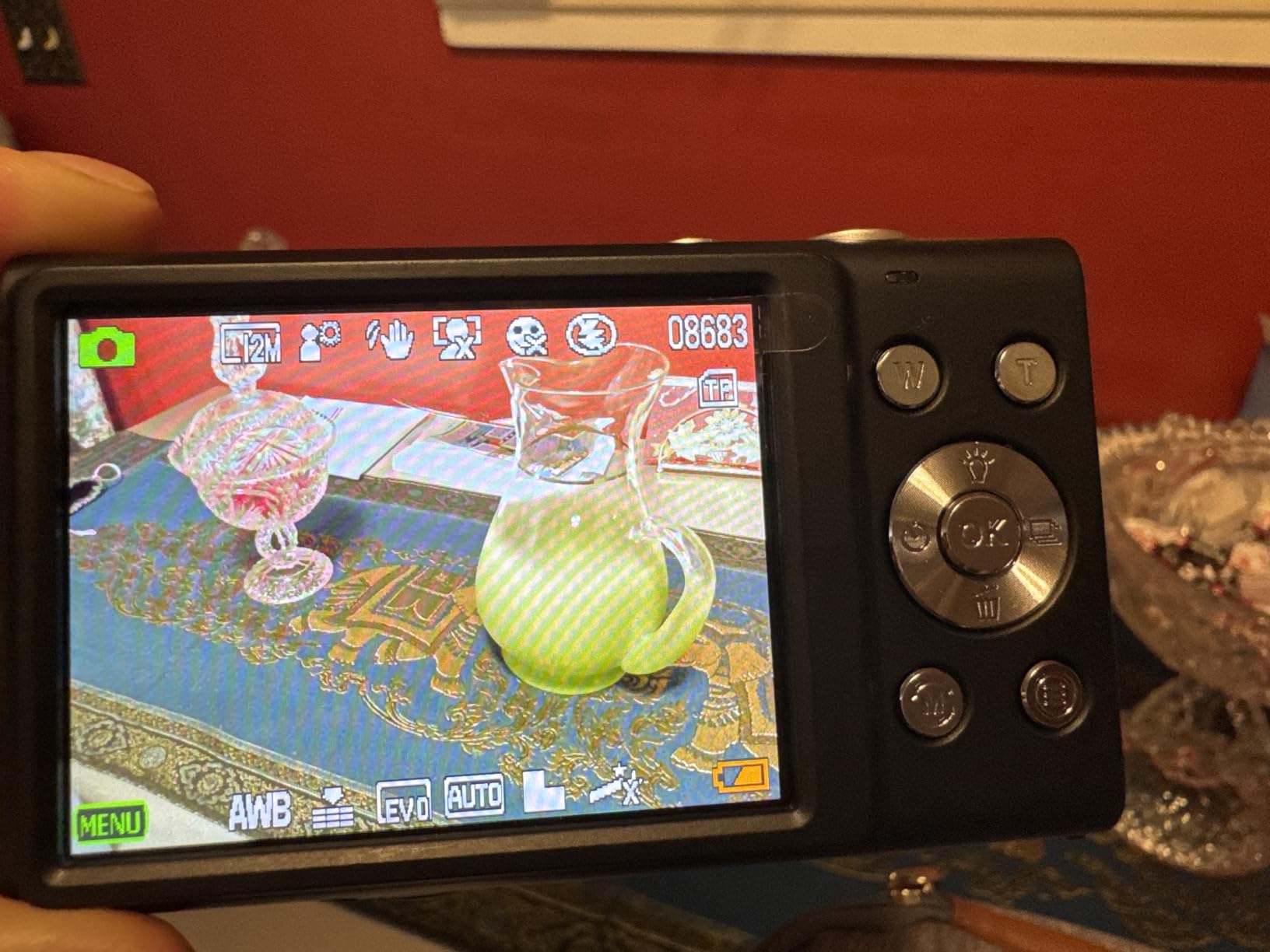
Everything needed is in the box: a 32GB SD card, two rechargeable batteries, a Type-C cable, a USB adapter, a charging stand, a strap and a bag. Nothing needs buying before the first photograph.
The 2.8-inch IPS screen is on the small side, and digital image stabilisation is doing work that optical stabilisation would normally handle. The 1/3.2-inch sensor is the same limiting hardware the other budget compacts use.
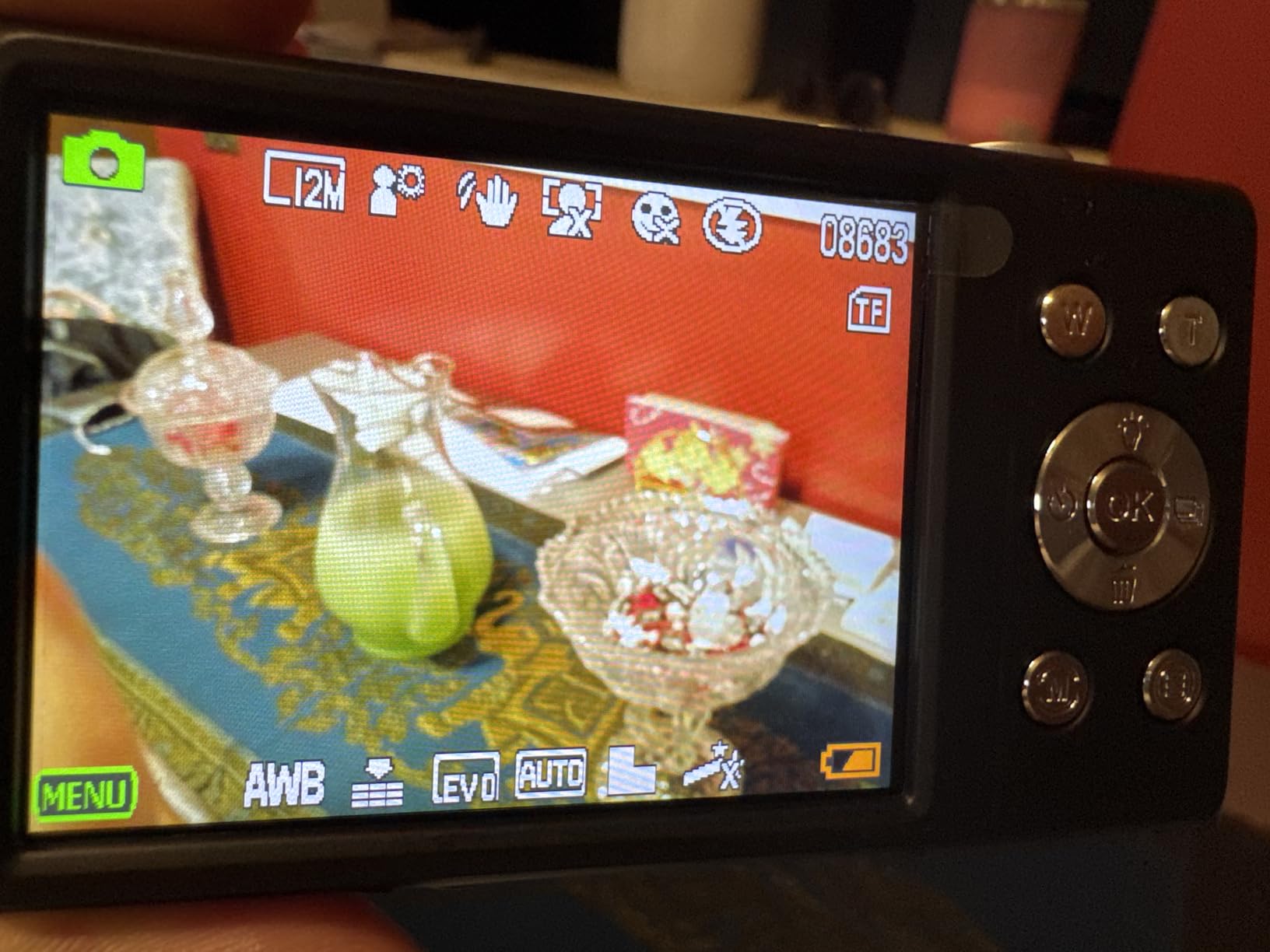
Why weight is the deciding factor
Ask any parent whose teenager left a camera at home how weight kills a hobby. A body that fits a hoodie pocket changes the habit from planning a shoot to just taking the picture.
For travel, festivals and family events, that makes this a strong companion to a phone rather than a replacement for one.
Where it falls short
There is no optical zoom, so anything past arm’s length is a digital crop. The 48MP figure is interpolated from a much smaller sensor, and the 2.8-inch screen is the smallest here.
Manual exposure is limited, which means there is little for a beginner to learn beyond when to point and shoot. If photography lessons are the goal, choose an APS-C body instead.
What to look for when buying a camera for a teenage beginner
A manual mode is the whole point
Before anything else, check that the camera has aperture priority, shutter priority and manual exposure. A phone hides all three, and so do most sub-budget compacts. Without them, a teenager never learns why a photograph worked, and the habit does not transfer back to the phone.
The Kodak PIXPRO FZ55 and the FZ45 both list Auto, Program and Manual modes, which is unusual at that level. The Canon Rebel T7, Canon EOS M50 and Canon EOS R50 expose the full set with RAW capture on top.
A viewfinder, or a reason to do without one
Six of the twelve cameras here have no viewfinder at all. That is acceptable for an instant body and workable for a flip-screen vlogging compact, because the screen faces the subject.
For a young photographer learning composition, an optical or electronic viewfinder makes framing steadier, keeps the sun out of the screen, and shows exposure data at the moment of shooting. The Rebel T7, EOS M50, EOS R50, FZ55, FZ45 and Instax bodies all include one.
What a kit lens can and cannot do
A kit lens is the one bundled with the camera, and it is the source of most parental surprise. The Rebel T7 ships with an 18-55mm, which covers roughly 29-88mm in full-frame terms: fine for family and street work, hopeless for birds, stadium sport or anything across a field.
The Canon RF-S 18-45mm is shorter still, and the EF-M 15-45mm on the M50 reaches about 24-72mm equivalent. Plan for a second lens in year two or three rather than expecting the bundled one to grow. A 50mm prime or a short telephoto is the usual next purchase, and each system here has an inexpensive option.
Choosing by age band
For roughly 8 to 12, prioritise survival over capability. The Camkory 44MP compact arrives with a card, two batteries and a bundle, weighs 158.76 g, and has twenty filters to explore, while the Fujifilm Instax Mini 9 or Mini 12 teach framing with a print instead of a screen.
For roughly 13 to 15, the Kodak PIXPRO FZ55 is the sweet spot: a genuine 5X optical zoom, a rechargeable battery that charges in the camera, and manual exposure modes without a complicated body. Teenagers moving up from a phone notice the zoom first and the viewfinder second.
For roughly 16 to 18, and for any student on a GCSE or photography course, an APS-C body is the right destination. The Canon EOS Rebel T7 is the value route into the Canon EF and EF-S ecosystem; the Canon EOS M50 or Canon EOS R50 add modern autofocus, an articulating screen and video the Rebel cannot match.
DSLR, mirrorless, compact or instant: what each one teaches
A DSLR teaches the fundamentals through physical dials and an optical viewfinder, and the Rebel T7 is still the cheapest credible way in. A mirrorless body teaches the same fundamentals faster, because live exposure preview means a beginner sees the result of a setting immediately, which shortens the loop between mistake and understanding.
A compact with a real optical zoom, like the FZ55 or FZ45, teaches framing and reach on a budget but hides sensor quality behind a fixed lens. An instant camera teaches composition, commitment and sequencing, because every frame is spent the moment the shutter fires.
Our view is that a point-and-shoot is a false economy only when it has no manual mode. With manual mode and a viewfinder, it is a genuine first camera. Without either, it is a snapshot machine, and the teen will outgrow it within a term.
Hidden costs in year one
Most parents budget for the body and then get surprised. Plan for a memory card if the listing says one is not included, which is the case for the FZ55, the FZ45 and several of the budget compacts. Add a spare battery for the Canon bodies, whose small cells are the most common accessory complaint in the reviews.
A padded case, a simple neck strap and a USB cable for charging in the camera all matter more than a second lens. Software is the item most families forget, and the free options on our photography software roundup cover everything a first-year student needs.
Moving photos off the camera and onto a phone
Every camera with Wi-Fi here uses a phone app, and the routine is the same: install the maker’s app, pair once over Bluetooth, select images on the camera, and send. Transfers take longer than you expect, so batch them once a week rather than after every outing.
For a course, the file has to reach a computer, so keep the USB cable in the camera bag. Our walkthrough of the wider workflow sits in the guide to learning photography techniques, and a lens reference is in our mirrorless camera guide.
How to buy a used first camera
Used bodies deliver the most learning per pound, and the models that come up most often in parent forums are a generation-old Canon EOS 1000-series body, a Nikon 3000-series DSLR, or a Sony a6000 mirrorless. Forum consensus is consistent on one point: a DSLR is perfectly fine for a student photographer, and no mirrorless body is required to learn.
When buying used, work through this list. Ask the seller to show the shutter count on the body information screen. Check the sensor in good light for fungus spots, which are permanent. Test autofocus by pointing at a nearby object and confirming it snaps quickly. Look at the battery contacts for corrosion and check whether the cell still holds a charge.
Then test the shutter at every speed around the wall for sticking or a delay, check the viewfinder for a clean image and a responsive mirror return, and confirm the lens barrel rotates smoothly with no grinding. Finally, count the card slots and check that the body still pairs over Wi-Fi. Do all of this with the battery in the camera, not on the charger.
Buy a body with a recently released model number rather than one that has been out for a decade, because parts and firmware support follow the newest generation. And keep the purchase protected in writing, since a teenager who treats a camera hard will not get a second chance on a private sale.
Frequently Asked Questions
What is the best camera for a beginner to learn photography?
The Canon EOS Rebel T7 kit is the best starting point for most beginners because it pairs a 24.1MP APS-C sensor with an optical viewfinder, a full manual mode and an on-camera feature guide. The Canon EOS M50 or Canon EOS R50 are the step up once the beginner wants faster autofocus, an articulating screen and modern video.
What is the best camera for a child to learn photography?
For a child roughly 8 to 12, the Fujifilm Instax Mini 9 or Fujifilm Instax Mini 12 is the lowest-friction choice, because the print appears in seconds and cannot be retaken, which teaches composition quickly. The Camkory 44MP compact is the digital alternative and arrives with a 32GB card and two batteries so it works immediately.
What is a good cheap camera for a beginner who wants to learn photography?
The Kodak PIXPRO FZ55 is an affordable camera with a real 5X optical zoom, a 28mm wide angle, exposure modes including manual, and a rechargeable battery that charges inside the camera. Below that tier, cameras have no optical zoom and no manual mode, so they teach very little. A used Canon EOS 1000-series or Nikon 3000-series body delivers far more manual control for less money again.
Can a teenager learn photography with a point and shoot?
Yes, as long as the point and shoot has a manual exposure mode and a viewfinder. The Kodak PIXPRO FZ55 qualifies on both counts, and it is a legitimate first camera rather than a false economy. Without manual control, a point-and-shoot only teaches when to point and shoot, and a beginner will outgrow it within a term.
Should I buy my teenager a DSLR or mirrorless?
A DSLR teaches the fundamentals through physical dials and an optical viewfinder, and the Canon EOS Rebel T7 remains the cheapest credible route into the Canon EF and EF-S lens ecosystem. A mirrorless body teaches the same lessons faster because live exposure preview shows the effect of each setting immediately, which makes the Canon EOS M50 or Canon EOS R50 the better choice once the teenager is ready to change settings deliberately.
The Verdict: Which Camera Should a Teen Buy in 2026
The Canon EOS Rebel T7 kit is our pick as the best camera for teenagers learning photography in 2026, because at 4.7 stars across more than 5,300 owner reviews it pairs a real APS-C sensor with an optical viewfinder, a full manual mode and a lens system that will still be growing in three years.
Buy the Fujifilm Instax Mini 9 for a younger learner who needs the motivation loop more than the settings. Buy the Kodak PIXPRO FZ55 when the budget is tight but the teenager still deserves a real optical zoom, and step up to the Canon EOS M50 or Canon EOS R50 the moment video becomes part of the plan.
Whatever you choose, budget for a memory card, a case and one spare battery, and spend the first month deliberately making the same mistake on purpose. That is the part of learning photography no camera can shortcut.