
The best lenses for travel photography under a 1,000-dollar ceiling are the all-in-one zooms, and the one exception is a fast prime. A single stabilized barrel that reaches from wide to telephoto and survives a rain shower will produce more usable frames on a two-week trip than two primes you are afraid to change in a hostel doorway. The exception is a shooter who works mostly after dark, and for that case the Canon RF 50mm f/1.8 STM is our overall pick: tiny, bright and small enough that the rest of your budget stays free. Below I break down 12 options across every major mount, with weights, apertures and mount options in plain numbers so you can match one to the body you already own.
Every lens here is a current design rather than legacy DSLR glass, so nothing on this list depends on discontinued stock that older roundups still push. The lineup covers Sony E, Canon RF and RF-S, Nikon Z, Nikon F, Fujifilm X and Micro Four Thirds, so whether your camera is a current mirrorless body or an entry DSLR, there is something below that fits it.
One honest note on the category: at this budget you will not find a constant f/2.8 zoom, because those start well above this ceiling. The real trade is a slower zoom with a huge focal range, or a fast prime that forces you to decide the focal length before you leave the hotel. Our job is to help you pick which side of that trade fits your trip. If you want a broader look at carry-friendly glass first, our general travel lens picks and the landscape lens roundup under the same budget are good companions to this list.
Top 3 Picks for Best Lenses for Travel Photography Under $1000 in 2026


The 12 Best Lenses for Travel Photography Under $1000 in October


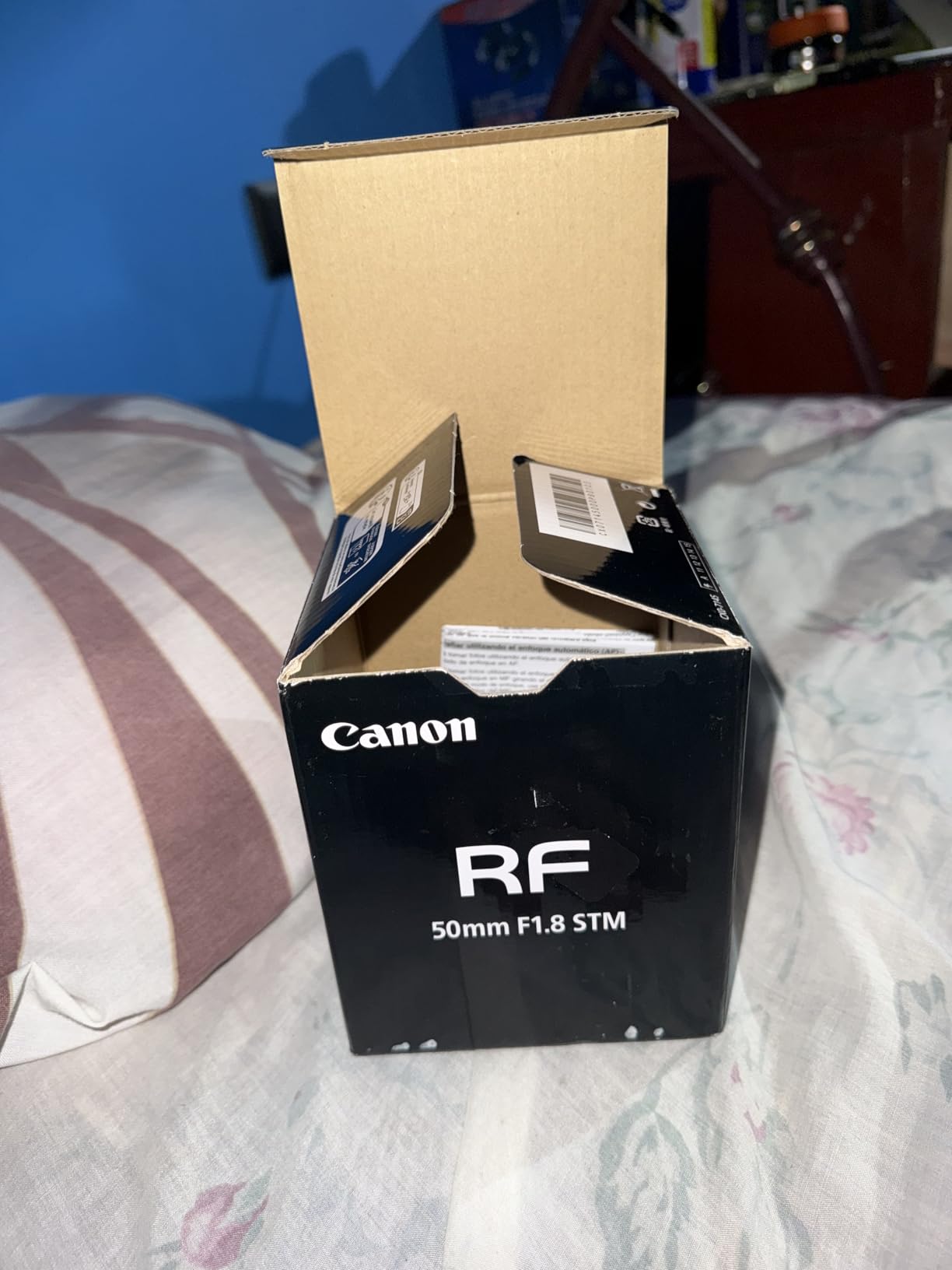
1. Canon RF 50mm f/1.8 STM – The Light-Gatherer That Disappears
Pros
- Genuinely pocketable at 5.6 oz
- Bright f/1.8 for night markets and dim interiors
- Silent STM focusing
- 43 mm filter thread keeps filters inexpensive
Cons
- No optical stabilization
- Soft corners with coma wide open at f/1.8
- Tight framing on APS-C bodies at about 75mm equivalent
I have carried this lens on three trips and it has never been the thing I noticed in my bag, which is exactly the point. It is one of the two smallest pieces of glass in this roundup, and it still gives you at least a full stop more light than any variable-aperture zoom on the list. Night markets, cathedral interiors, a hotel room at dusk with the curtains open: that is where this lens earns its slot.
The stepping motor focuses silently and smoothly, which matters more than raw speed for stills and hugely for video. Reviewers consistently note that the f/1.8 aperture renders clean low-light results on a full-frame body, with enough separation to soften a messy street background without any post work.

Two details that sound minor until you travel with them. The 43 mm filter thread is the smallest here, so polarizing filters and ND filters cost a fraction of what the 67 mm threaded options cost. And optimized coatings plus lens placement keep ghosting and flare in check, which matters when you are shooting into low sun through a bus window.
Focusing is closer than the spec suggests, and owners mention using it for detail and small-product frames on the table, not just street scenes. The control ring gives direct aperture clicks, so you can step down to f/4 or f/5.6 in a dim room without digging through a menu.
Who this lens suits
This is the pick for a traveler who works mainly after dark or indoors: food markets, restaurants, evening streets, low-lit architecture. It works with the full EOS R mirrorless range listed in the specs, from the R50 up through the R5 C, so it pairs with almost any budget RF body you might already own.
It is also the smartest second lens in the list. If you already carry an all-in-one zoom such as the Tamron 28-200mm below, this prime adds the light and the look the zoom cannot give you for a fraction of the weight.
Where it falls short
There is no image stabilization in the lens itself, which is the single most-cited limitation. At f/1.8 the depth of field is shallow enough that a shaky camera or a shifting subject will show it, and stabilization would have covered the gap between this lens and a slightly slower stabilized design.
On an APS-C RF body the 50mm frames like roughly a 75mm, which is a portrait lens rather than a walk-around lens. If your camera is APS-C and your trip is street-focused, look at the Canon RF-S 10-18mm further down, or the wider primes in the same mount system.
Corners also soften with visible coma and astigmatism when you shoot wide open at f/1.8, and there is some chromatic aberration near the frame edges. Stopping down one or two stops fixes nearly all of it, and reviewers report the plastic construction feels a step below Canon’s older EF glass.
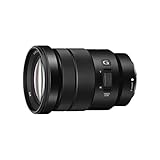
2. Sony E PZ 18-105mm f/4 G OSS – The Constant-Aperture APS-C Workhorse
Pros
- Constant f/4 across the entire zoom range
- Power zoom gives smooth video pulls
- Internal zoom keeps lens length constant
- Sharp at both 18mm and 105mm
- Fast autofocus
Cons
- Bulky and heavy for a travel kit
- Focus breathing on slow zoom pulls
- Correctable distortion in RAW files
The reason this lens has the largest review base among the zoom options in the list is simple: it does not ask you to compromise on light. Every focal length from 18mm to 105mm shoots at f/4, so your exposure settings stay identical as you zoom from a cathedral doorway to a distant hillside across a valley. On a 1.5x crop body that range becomes 27-158mm equivalent, which is exactly the spread most trips need.
It is also the video lens on this list. The power zoom gives you a smooth, motorised focal change, and internal focusing means the barrel does not extend while you zoom, which matters when you are filming in a cramped street or a moving vehicle. Several owners call it a large upgrade over the kit lens specifically for that reason.

Seven circular aperture blades give reasonably rounded out-of-focus highlights for backgrounds, and the nano AR coating keeps flare manageable in backlit street scenes. The minimum focus distance of 1.48 inches at the wide end with 0.11x magnification means you can fill the frame with small details like signs and food without leaving the crowd.
Sharpness is good across the range with a slight fall-off toward 105mm, which is normal for a constant f/4 zoom at this level. Reviewers who upgraded from a kit lens describe the jump in detail and contrast as the moment their travel photos stopped looking soft.

What you should know before buying
At 427 grams and a barrel that is noticeably larger than a prime, this is among the heavier general-purpose options in the roundup. If your trip involves long days on foot with a single bag, the Sony 18-135mm or the Tamron 28-200mm will be kinder to your shoulders, and both are lighter for similar coverage.
Two technical trade-offs appear repeatedly in owner reviews. Barrel distortion and pincushion show up in RAW files at certain focal lengths, and a light amount of chromatic aberration is visible until you stop down to around f/5.0. Neither is a dealbreaker because both are corrected in a raw converter, but you are handing part of your workflow to software.
Focus breathing shows up on slow, deliberate zoom pulls for video, which is the main complaint from hybrid shooters. If your trip is mostly stills, this is a non-issue.
3. Tamron 28-200mm f/2.8-5.6 for Sony E – Range Without the Bulk
Pros
- f/2.8 at the wide end for low light
- 7.14x range in a 4.6 inch barrel
- Close focus to 7.5 inches
- Quiet RXD stepping motor
- Moisture-resistant construction
Cons
- Slows to f/5.6 at the long end
- Zoom lock must be released before zooming
- Variable aperture complicates exposure consistency
This is the lens I recommend most often to full-frame Sony shooters who refuse to carry two bodies. A 7.14x range in a barrel that is 4.6 inches long, starting at f/2.8, is an unusual combination at this budget and it solves the two complaints that kill most all-in-one zooms: it is genuinely compact, and the wide end is bright enough for evening street work.
The 28mm starting point covers landscapes, street scenes and interiors on a full-frame sensor, and the 200mm end reaches for detail on a distant ridgeline, market stalls across a square, or a festival performer from the back of the crowd. A commenter on a Fstoppers all-in-one roundup who switched to this lens after years with a bulkier superzoom calls it super sharp everywhere, with the only complaint being a wish for a slightly wider 24mm end.

Close-focusing is unusually good for a superzoom: 7.5 inches at the wide end with 1:3.1 magnification, and 31.5 inches at the telephoto end. That lets you fill the frame with a bowl of noodles, a carved mask or a hand-painted sign, which is half of what people actually photograph on a trip.
Build details are the ones that matter outdoors. Fluorine coating on the front element and moisture-resistant construction handle humidity and drizzle, and there is a zoom lock so the barrel stays put while the lens sits in a bag on a bus.

Where the variable aperture bites
The f/2.8-5.6 range is the whole story here. At 28mm you have two stops of headroom over a standard kit zoom, and at 200mm you are at f/5.6, which means higher ISO and less subject separation than a prime would give you. Photographers who shoot mostly wildlife or distant detail should accept that trade or add a fast prime later.
Two smaller quirks are worth knowing. The zoom lock must be released before you can turn the ring, which is a habit adjustment in the first week. And because the aperture changes as you zoom, exposure consistency is harder to hold across a sequence than with a constant-aperture zoom, though most modern bodies compensate well.
Compatibility is listed for the Sony A6100, A6600, A7 III and A7R IV, and it works across the wider E-mount range with full autofocus and aperture control.
4. Nikon NIKKOR Z 24-200mm VR – The Longest Full-Frame Reach Here

Nikon NIKKOR Z 24-200mm VR | Compact All-in-one telephoto Zoom Lens with Image stabilization for Z Series mirrorless Cameras | Nikon USA Model
Pros
- 8.3x optical zoom range in one lens
- Built-in VR steadies low light and long ends
- Clickless control ring for quiet adjustment
- ED glass and ARNEO coating for contrast
Cons
- f/6.3 at the long end
- Slightly bulkier than buyers expect
- RAW corrections needed at some focal lengths
If your Nikon Z trips involve animals, distant mountains or details you cannot walk up to, this is the one. An 8.3x optical zoom from 24mm to 200mm means the same barrel handles a sweeping valley overlook in the morning and a bird at the far end of a lake in the afternoon, and you never unpack anything.
Built-in Vibration Reduction is doing real work here. At 200mm on a handheld body, VR is the difference between a usable frame and a blurred one, and reviewers consistently credit it with making the long end of the range practical without a tripod. The clickless control ring lets you adjust settings quietly while walking, with no clicks on your recording.

Optical design is a mix of aspherical and ED elements with ARNEO and fluorine coats, which keeps flare down in the backlit situations that dominate coastal and mountain light. Seven diaphragm blades give a decent bokeh circle for the class, and the 67 mm filter thread is a size you can find filters for everywhere.
It ships with the practical bits: a CL-C1 lens case, an HB-93 bayonet hood, and front and rear caps. That hood matters more than it sounds on a lens that will spend its life outdoors.

Best and worst fits
This is the strongest full-frame option in the roundup for safari and birding, and the reach is what buys you that. It also handles landscapes and general street work without trouble, and the video-oriented shooting modes listed in the specs make it reasonable for hybrid shooters.
Where it struggles is low light at the long end. The aperture falls to f/6.3, so night or interior shots at 200mm demand high ISO. Several owners also report that the lens is larger and heavier than they expected from the compact marketing, which is worth factoring into a one-bag kit.
Finally, expect to apply in-RAW corrections. Distortion and vignetting show up at certain focal lengths, and because it is a Nikon Z lens, the profile corrections do not get applied automatically in every workflow the way they do on some Canon and Sony bodies.
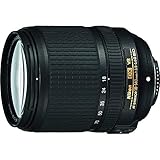
5. Nikon AF-S DX 18-140mm f/3.5-5.6 VR Renewed – The Budget Two-Lens Replacement
Nikon AF-S DX NIKKOR 18-140mm f/3.5-5.6G ED Vibration Reduction Zoom Lens with Auto Focus for Nikon DSLR Cameras (Renewed)
Pros
- Covers wide to telephoto in one barrel
- VR steadies handheld shots and long exposures
- Silent Wave Motor focusing is very quiet
- Rigid build with a metal mount collar
- Close focus to 1.48 ft for detail shots
Cons
- Slow f/5.6 at the long end
- Bulkier than a kit lens on a neck strap
- Renewed condition carries a 90-day warranty
This is the pick if you already own a Nikon DSLR and you want to retire a kit lens and a separate telephoto at the same time. An 18-140mm DX zoom covers everything from wide-angle landscape to a telephoto reach, and the combination of VR and ED glass produces the kind of contrast that makes travel photos look finished.
It has the largest review base of any Nikon-mount lens in this roundup, and the sentiment is consistently positive: buyers describe it as replacing two lenses in one body, with the Silent Wave Motor delivering fast and very quiet autofocus. Close focus at 1.48 feet gives you macro-style frames of textures, food and market produce.

Mechanically it is a tank. The rigid body with a metal mount collar is the sort of construction that survives being knocked around in a rucksack for a decade, and the ED optic shows no obvious edge distortion at 18mm in reviews, which is usually where cheaper zooms give up.
Being a renewed unit, it comes with the original accessories and a 90-day warranty rather than a full manufacturer term. That is the trade for buying this class of travel glass at a much lower number than new.

What the budget forces on you
The f/3.5-5.6 aperture is the cost of covering this much range cheaply. It is weak for night interiors and gives you less background separation than a fast prime, and reviewers note vignetting appears when fully zoomed in under dim light. VR rescues handheld stills but cannot invent light.
Weight is the other issue. At 1.5 pounds it is noticeably heavier than a kit lens, and owners mention feeling it on a neck strap over a long walking day. If you are backpack rather than shoulder-strap carry, it is far less of a problem.
Check the accessory list when a renewed unit arrives. This listing includes the original accessories, but incomplete boxes do happen, and you want the hood and caps before you leave for the airport.
6. Sony 18-135mm f/3.5-5.6 OSS – Light, Sharp and 7.5x Wide
Pros
- 7.5x range at just 11.5 oz
- Sharp thanks to aspherical and ED elements
- Optical SteadyShot for stills and video
- Fast and quiet autofocus
Cons
- Slow f/5.6 at the telephoto end
- Hunting for focus in low light
- Vignetting at the wide end until corrected
This is the lens I would put in a hiking kit for a Sony APS-C body. Eleven and a half ounces with a 7.5x range, from 18mm to 135mm or 27-202.5mm equivalent, is a rare balance. It covers landscapes, street, portraits and casual wildlife from a body and lens combination that you genuinely forget you are carrying.
The optical recipe is 12 groups in 16 elements with one aspherical and two ED elements, and owners consistently report a clear step up from kit-lens sharpness across the whole range. That is the difference you notice most in a printed travel photo: edges of buildings and text on shop signs.

Optical SteadyShot handles both stills and video, and the autofocus is fast, precise and quiet enough for hybrid shooting. A seven-blade circular aperture gives reasonably rounded bokeh for a lens in this class, and the petal-type bayonet hood blocks stray light in bright daylight.
Minimum focus is 0.45 metres, so you can get close to a foreground subject without losing the sense of place, and the 55 mm filter thread is another of the smaller sizes here, which keeps filter costs down.

Where you will notice limits
The variable f/3.5-5.6 aperture is the deal. At 135mm you are shooting f/5.6, so evening interiors and night work need a higher ISO than you would like, and background blur stays modest at the long end. Photographers who mostly shoot in daylight will not notice this at all.
Focus hunting shows up in dim conditions, and while it is not a constant problem, it is the most common low-light complaint in reviews. There is also some vignetting at the wide end, which lens profiles in a raw converter handle automatically.
One small operational note: focusing mode is set with the switch on the barrel rather than following the in-camera setting, so get into the habit of checking it when you pull the camera out at night.
7. Canon EF-S 18-135mm f/3.5-5.6 IS – The Proven DSLR Walk-Around

Canon EF-S 18-135mm f/3.5-5.6 is Standard Zoom Lens for Canon Digital SLR Cameras (New, White Box)
Pros
- 29-216mm equivalent range in one barrel
- Up to 4 stops of image stabilization
- Quick focus motor without much noise
- Solid build and comfortable one-lens carry
Cons
- No USM motor so autofocus is audible
- Slow f/5.6 at the long end
- Vignetting at 18mm and long zoom
It has been manufactured across several generations of Canon cameras, and that longevity is part of its case. For a Canon APS-C DSLR owner, an 18-135mm covers 29-216mm equivalent in a single barrel, and it will still be supported long after you have moved through several bodies.
The four stops of image stabilization are the underrated part. On a slow f/5.6 zoom, IS is what lets you hold a frame at dusk inside a cathedral or photograph a lit fountain at a stop slower than you would otherwise dare, and reviewers regularly credit it with rescuing handheld low-light shots.

Colour rendering is another quiet strength. Owners compare its profile favorably with the kit lens on truer, more vibrant results straight out of camera, which saves editing time on a trip when you would rather be walking around.
The focus motor is quick without being especially loud, the build feels solid, and the 16 elements in 12 groups take 67 mm filters, a very common size.

Honest trade-offs
There is no ultrasonic motor, so autofocus is audible and slightly slower than a USM-equipped lens. On a stills-focused trip that is a fair trade for the range; on a video trip it is not.
Expect vignetting at 18mm and at the long zoom positions, which Canon bodies can correct in-camera, and only six diaphragm blades, which give you more polygonal bokeh than modern lenses. The lens hood is not included with this listing, so factor that in.
The biggest question is whether you are buying into a system with a future. This is a DSLR-mount EF-S lens, and if you have no DSLR body already, a mirrorless option such as the Canon RF-S 10-18mm makes more sense for new purchases. Our lens picks for wedding shooters on the same budget cover a very different set of priorities if that is your interest.
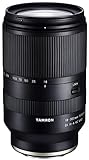
8. Tamron 18-300mm f/3.5-6.3 for Sony E APS-C – Maximum Reach in One Barrel
Tamron 18-300mm F/3.5-6.3 Di III-A VC VXD Lens for Sony E APS-C Mirrorless Cameras (Black)
Pros
- 16.6x range from 18mm to 300mm
- Fast and precise VXD linear motor autofocus
- Sharp from center to corners
- Moisture-resistant with fluorine coating
- Optical VC stabilization
Cons
- Slow f/6.3 at the telephoto end
- Heavy at 21.9 oz for APS-C glass
- Thinner critical review coverage than the premium zooms
Nothing else in this roundup covers as much ground. An 18-300mm range is 16.6x, which on a 1.5x crop body gives you roughly 27-450mm equivalent from a single barrel. If your trip involves a safari drive, a mountain range seen from a valley floor, and street photography in between, this removes the argument about lens changes entirely.
The VXD linear motor focuses quickly and precisely, and users single it out specifically. Resolving power holds up from the center to the corners across the range, which is the honest test that separates a good superzoom from a soft one at the extreme ends.

Optical VC stabilization helps at the long focal lengths where shake is most visible, and the fluorine coating plus moisture-resistant construction suit humid, wet climates. The barrel is 4.9 by 2.9 inches, so it is compact in footprint even though the weight is real.
It is also the lens that most directly answers the old roundups still ranking for this query, several of which still recommend budget superzooms that are discontinued and no longer available new. This one is a current-mount design you can actually buy.

Who should accept the compromise
The f/3.5-6.3 aperture is the compromise. At 300mm you are at f/6.3, and that is a hard limit for night work or for creamy background blur. If your itinerary is daylight-heavy and you value never unpacking, this is a rational trade.
The other compromise is weight. At 21.9 ounces this is the heaviest APS-C lens here, and reviewers note it is heavy for its class, so a multi-day walking trip will feel it by day three. The critical review coverage is also thinner than the premium zooms in this list, so you are buying on specification and reputation rather than a deep body of long-term owner reports.
9. Canon RF-S 10-18mm f/4.5-6.3 IS STM – The Ultra-Wide Travel Companion
Pros
- 16-29mm equivalent range in 5.28 oz
- Sharp from center to periphery
- Optical IS steadies low light
- Quiet STM focusing
- 0.5x magnification in manual focus
Cons
- Slow f/4.5-6.3 aperture for low light
- Corner vignetting at the 10mm end
- Slower STM autofocus response
- Barrel must be unlocked before use
Architecture is the reason this lens exists. Ten millimeters on an RF APS-C body gives roughly a 16mm equivalent, which is wide enough to fit a cathedral nave, a narrow alley or a cramped night market stall in a single frame without stepping back into traffic. At 5.28 ounces it adds almost nothing to a bag.
Owners consistently report it as a large step up from the bundled 18-45mm kit lens in both framing and edge-to-edge sharpness, and the new optical design optimized for mirrorless is sharp from the center of the frame out to the edges, which is exactly what wide-angle work demands.

Optical image stabilization helps in dim interiors where the slow aperture would otherwise force a high ISO, and the quiet STM focusing is well suited to walking-and-shooting video. The angle of view also works for vlogging and selfies without needing a long selfie stick.
Close-up capability is genuinely useful: 0.23x magnification in autofocus mode and 0.5x in manual focus, with a 49 mm filter thread, which is the second-smallest thread size in the roundup after the 43 mm on the Canon RF 50mm, and the cheapest to fit filters to.

The pair it wants to be used with
Think of this as the second lens, not the only lens. Paired with a standard zoom on an RF APS-C body it covers everything from a wide interior to a normal portrait focal length, and the pairing stays under a pound of glass. A travel kit built around an ultra-wide and a fast prime is a classic setup for city trips, and this is the piece of it that fits the budget.
Be aware of the slow f/4.5-6.3 aperture for night work, and of heavy corner vignetting at the 10mm end that has to be corrected in editing. STM autofocus response is slower than higher-tier lenses, and the barrel has to be unlocked before use, which is one extra step on every street-corner shot.
10. Tamron 28-75mm f/2.8 for Nikon Z – The Constant f/2.8 Lightweight

Tamron 28-75mm F/2.8 Di III VXD G2 for Nikon Z Mount Mirrorless Cameras (6 Year Limited USA Warranty)
Pros
- Constant f/2.8 across the whole zoom range
- Compact at 4.7 inches and 19.4 oz
- Very quiet VXD linear motor autofocus
- Close focus to 7.1 inches at 1:2.7
- 9 rounded diaphragm blades for pleasing bokeh
Cons
- Shorter range than an all-in-one zoom
- Newer model with a smaller pool of owner reviews
- 67 mm filter thread means costlier filters
A constant f/2.8 across a zoom range has traditionally meant a heavy professional barrel. This one is 19.4 ounces and 4.7 inches long, which puts genuinely bright glass into a travel kit for the first time at this budget. If your Nikon Z trips involve evening interiors, restaurants or stage-lit streets, aperture is the feature that changes your results most.
Exposure stays identical as you zoom from 28mm to 75mm, so a sequence of frames in changing light looks consistent. Nine rounded diaphragm blades give the smooth bokeh highlight shapes that cheaper zooms cannot produce, and the VXD linear motor is fast and quiet enough that the lens works for video as well as stills.
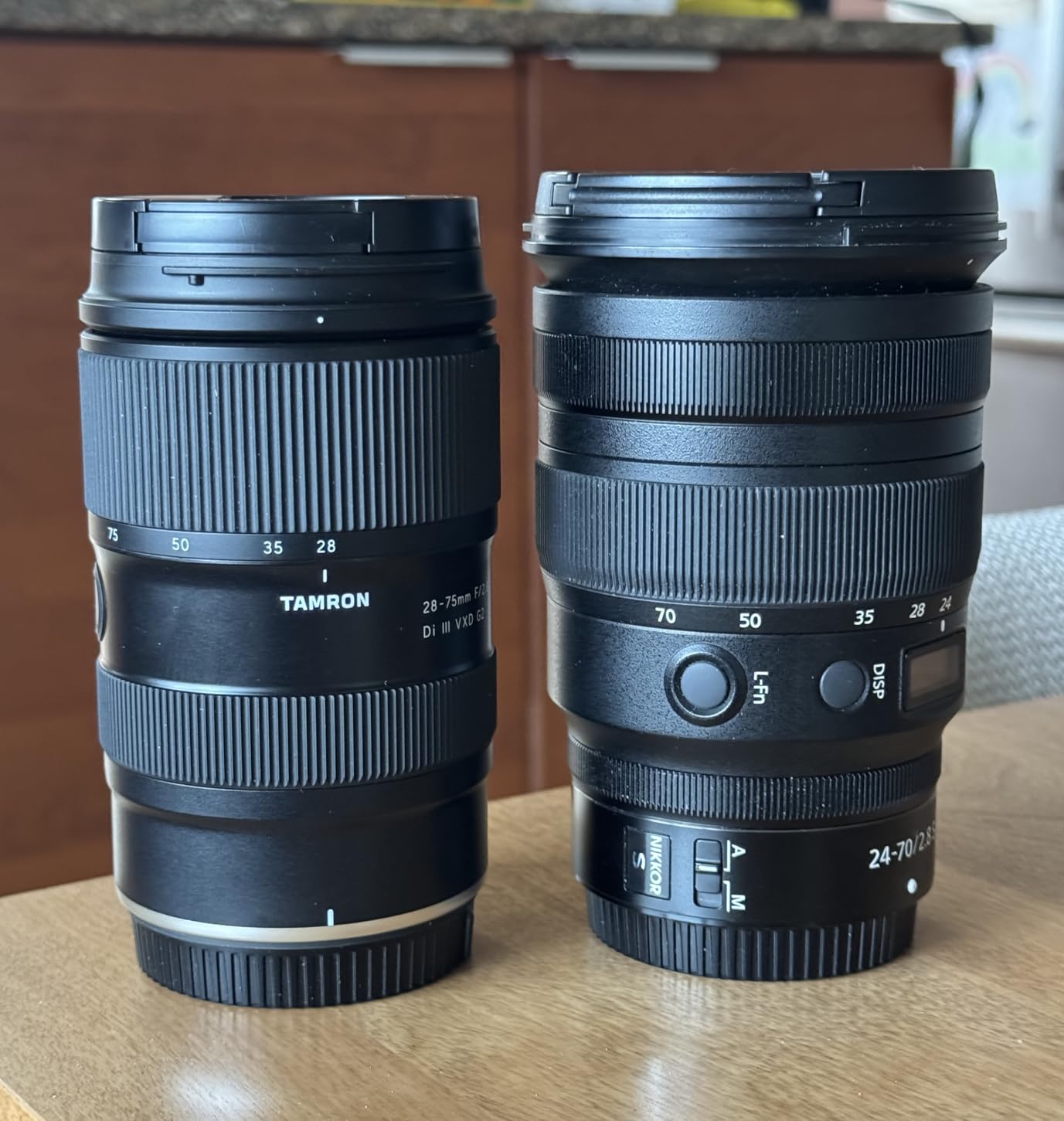
It focuses to 7.1 inches at the wide end with 1:2.7 maximum magnification, so close-up detail work is a real possibility rather than a spec-sheet line. Fluorine coating and moisture-resistant construction handle outdoor conditions, and the lens comes with a six-year manufacturer warranty.
TAMRON Lens Utility software adds extra still and video shooting options and expands the range of functions available from the body.
Why it is a companion rather than a solo lens
Twenty-eight to seventy-five millimeters is a short range for travel. Wide landscapes, sweeping vistas and long details all fall outside it, which is why the owners of this lens generally pair it with a compact ultra-wide rather than treating it as the only lens in the bag. If you want one lens only, the Nikon Z 24-200mm earlier in this list is the more complete answer.
It is also a newer model, so the pool of long-term user reviews is smaller than for the established zooms here. The 67 mm filter thread is a large size, and filters for it cost more than the 49 mm or 55 mm threads on the smaller lenses in this list.
Stabilization is not optical here, so low-light steadying comes from the body, which on current Z bodies is adequate but worth factoring in if your tripod is never coming out.
11. Fujifilm XF 18-135mm f/3.5-5.6 R LM OIS WR – The Sealed Fujifilm All-Rounder
Pros
- 27-206mm equivalent range for travel
- Weather resistant sealed build for rain and dust
- 5 stops of optical stabilization
- Quiet linear motor autofocus
- Works with every Fujifilm X body
Cons
- Slow f/5.6 limits bokeh and low light
- 490 g is heavy for a single travel zoom
On Fujifilm X this is the default answer to the one-lens travel question, and the reason is the sealing. The body is weather resistant, which matters if your route includes a coast, a mountain pass in shoulder season, or a week of monsoon, and five stops of optical stabilization make the 206mm equivalent end genuinely usable handheld.
The 18-135mm range is a sensible match for the system. On a 1.5x crop sensor it gives 27-206mm equivalent, which takes you from group shots and interiors through normal portraits and out to distant detail without a second lens.

The linear motor focuses quietly and smoothly, which suits both stills and hybrid video shooting. The filter thread is 67 mm, and compatibility covers every Fujifilm X-series body, so there is no restriction on which camera you pair it with.
Owners accept the variable f/3.5-5.6 aperture as a reasonable price for the range and the sealing, which is the correct way to think about it: you are trading background blur for the ability to handle weather and reach.

Where weight and aperture argue against it
At 490 grams this is one of the heaviest lenses in the roundup, and reviewers name its bulk explicitly as the drawback for a single travel zoom. Over a multi-day walk it is the one on this list most likely to make you wish you had split the budget across two smaller lenses.
The f/5.6 at the long end also limits low-light capability and subject isolation, and a slow aperture plus a heavy barrel is a hard pairing for night-heavy itineraries. If your Fujifilm travel is mostly daylight landscapes and street, this is an easy choice; if it is mostly after dark, pair it with a fast prime or look at the prime route instead.
12. Panasonic Lumix G Vario 14-140mm f/3.5-5.6 II – The Micro Four Thirds Answer

Panasonic Lumix G Vario 14-140mm Telephoto Zoom Lens with F3.5-5.6 II ASPH, Mirrorless Micro Four Thirds Mount and Power O.I.S. – H-FSA14140 (Upgraded USA Black)
Pros
- 10x zoom range in one lens
- Splash and dust resistant for field work
- Power O.I.S. steadies low light
- Durable metal MFT mount
- 3 aspherical and 2 ED elements
Cons
- Variable f/3.5-5.6 aperture
- Bulky next to other MFT travel zooms
- Fewer third-party lens options than larger formats
If your camera is a Micro Four Thirds body, this is the lens that keeps the system viable as a travel kit. A 10x range from 14mm to 140mm covers 28-280mm equivalent, so you get true wide-angle for interiors and landscapes at one end and enough reach for distant subjects at the other, with a splash- and dust-resistant body for field work.
Power O.I.S. is the feature that keeps the slow aperture tolerable. It compensates for small hand movements in low light, which is where a variable f/3.5-5.6 zoom would otherwise force a shutter speed you cannot hold.
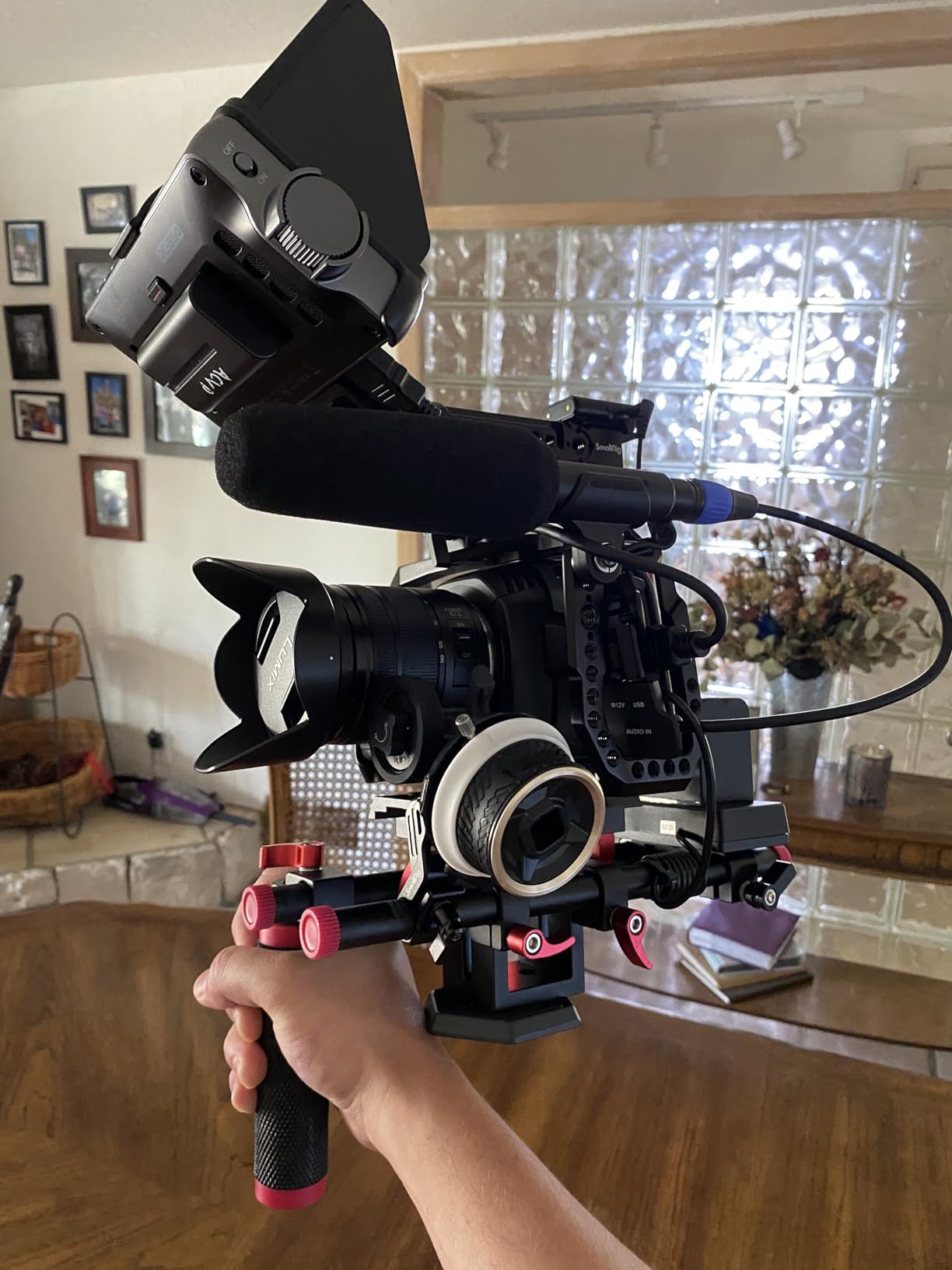
The optical formula uses 14 elements in 12 groups with three aspherical and two ED elements, specifically to hold down distortion and chromatic aberration, and owners notice the difference on architectural shots where straight lines matter. The metal MFT mount feels more durable than plastic, and 4K video capability is noted for hybrid shooters.
It is the upgraded successor to the earlier 14-140mm, so you are buying the version with the improved housing rather than a discontinued original.
Understanding the format trade
Micro Four Thirds gives you roughly a 2x crop compared to full frame, so a 14mm lens is 28mm equivalent. That is a genuine downside for low light and for background blur, and it is why MFT bodies pair so well with image stabilization: the system compensates with IS rather than aperture.
Within the format, the wider trade is lens selection. There are fewer third-party options here than on full frame, so the lens you buy today is more likely to be the lens you keep. The other recurring complaint is bulk: this lens is larger than the small MFT primes many owners buy to go lighter, so check the total size of your body and lens together before committing to one-bag travel.
How to Choose a Travel Lens on a 1,000-Dollar Budget
Focal length: pick the range before the brand
Decide what you photograph before you decide what you buy. A single lens from about 18mm to 135mm on an APS-C body covers street, landscape, portraits and casual wildlife, which is what most trips actually need. Reach beyond 200mm only earns its weight if you are photographing animals, distant architecture or compressed landscape layers.
The reason a 10x or 16x superzoom feels like a compromise is that the aperture has to shrink to fit the range inside a reasonable price and weight. A shorter 2.5x range can stay brighter, and brighter means cleaner night photos and softer backgrounds. That is the whole engineering trade in one sentence.
Full-frame versus APS-C: what the crop factor changes
A full-frame sensor uses the lens focal length as written. An APS-C sensor crops the frame, and a 1.5x crop body such as most Sony, Canon RF-S, Fujifilm X and Nikon DX bodies needs roughly 1.5x the focal length to frame the same scene. A 16mm lens is therefore about a 24mm equivalent view, and a 50mm frames like a 75mm.
The practical consequence: an APS-C body lets you get wider and longer from the same lens, so a compact 18-135mm covers a full-frame photographer’s 27-202mm. It also means the frame is smaller, so low light and background blur are harder. If you shoot APS-C, an ultra-wide prime is unusually valuable because the system struggles more at that end.
Maximum aperture and low light
Aperture is a ratio, and every full stop wider roughly doubles the light. f/1.8 gathers about four times the light of f/3.5 and close to ten times that of f/5.6, which is the difference between a clean night-market frame and a noisy one. Constant apertures across a zoom range are worth a premium because you can expose the same way at every focal length.
Stabilization helps with camera shake but cannot create light. A stabilized f/4 lens at a shutter speed that keeps you sharp will beat an unstabilized f/2.8 lens held at the same speed, which is why the stabilized slow zooms on this list remain so popular.
Weight: the number that actually matters
Experienced travelers check grams before they check anything else, and the forum consensus in photographer communities is consistent on this. The lenses here run from 5.28 ounces to roughly 1.5 pounds, which sounds like a modest range and is not. Over ten days of walking it is the difference between a camera you keep on your shoulder and one that stays in the bag.
Set a total budget for the whole kit, not just the lens. Body plus lens plus a spare battery is what you are actually lifting every morning, and if that number pushes past roughly two pounds you should be looking at one of the lighter zooms or a prime-and-compact combination instead.
Stabilization and weather sealing
Brand naming is inconsistent, so decode the label: IS is Canon, OSS is Sony, VR is Nikon, VC is Tamron, OIS is Fujifilm, and Power O.I.S. is Panasonic. All mean the same category of shake compensation, and the claimed stop counts range from about four on the Canon EF-S up to five on the Fujifilm.
Weather sealing is claimed by several lenses here, including the moisture-resistant Tamrons, the weather resistant Fujifilm, and the splash- and dust-resistant Panasonic. Sealing only matters if your body is sealed too, so check your camera before you plan a rainy-landscape trip around a specific lens.
One lens versus two lenses
One zoom means you never change glass, never risk dust on the sensor in bad weather, and never worry about a second body in a security queue. Two lenses mean you choose your wide and your fast, and you leave a lens bag at the accommodation.
At this budget the sensible two-lens build is a fast prime plus a compact superzoom, with the money saved compared with one high-end zoom going into a second body or a good travel tripod. The sensible one-lens build is one of the stabilized all-in-one zooms in this list. What you should not do is force a two-lens kit when you will be moving fast and shooting in changing light.
New versus used
The renewed listing in this roundup shows how large the used discount can be on a proven travel zoom, and it also shows the trade: a shorter warranty period and a condition you cannot inspect in person before paying.
If you buy used, check the front and rear elements under a light for fungus or haze, confirm the focus and zoom rings move smoothly without stiffness, check that all aperture blades fire, and confirm the mount shows no scoring. Inspect a copy of the lens and the box contents against the accessory list, and read the return terms before you commit, not after. Our Sony travel lens roundup and Nikon Z travel lens roundup go deeper on current glass for the two most common mirrorless systems.
Frequently Asked Questions
Which camera lens is best for travel photography?
For most trips, a single all-in-one zoom between 18mm and 200mm with optical stabilization is the best travel lens, because it removes lens changes in unpredictable light. Add a fast prime only if your trip is night-heavy, and add an ultra-wide only if you shoot architecture or interiors.
Is 35mm or 50mm better for travel?
A 35mm gives you more of the scene and works better indoors, in streets and for environmental portraits, which is why it suits travel more often. A 50mm gives tighter framing and stronger background separation for portraits and detail. On an APS-C body, a 50mm frames like a 75mm, so 35mm is the safer travel choice.
What is the best Canon RF lens for travel?
The Canon RF 50mm f/1.8 STM is the best value travel lens in the RF mount: bright, silent, tiny at 5.6 ounces and compatible with the whole EOS R range. If you need focal range rather than light, look for a stabilized standard zoom, and the RF-S 10-18mm covers ultra-wide needs on APS-C bodies.
What is the best Nikon lens for travel?
For Nikon Z, the NIKKOR Z 24-200mm VR is the most complete one-lens travel choice, with 24-200mm of reach, optical VR and a clickless control ring. For Nikon DSLR bodies, the AF-S DX 18-140mm f/3.5-5.6 VR covers 29-216mm equivalent in a single barrel.
Is one lens enough for a two-week trip?
Yes, for almost all two-week itineraries. A 10x range covers street, landscape, portrait and casual wildlife subjects, and it removes the dust, drop and security-line risks of changing glass in the field. Add a second lens only if you know you will shoot a lot after dark or indoors.
The Verdict for 2026
The best lenses for travel photography under a 1,000-dollar ceiling are the all-in-one zooms, and the specific winner depends on your mount and your itinerary. Sony E shooters get the best balance from the Tamron 28-200mm f/2.8-5.6, Nikon Z shooters get reach from the 24-200mm VR, and Fujifilm and Micro Four Thirds users have a sealed one-lens answer in the 18-135mm and 14-140mm.
Our single overall pick, the Editor’s Choice, is the Canon RF 50mm f/1.8 STM. It is the smallest and brightest lens in the roundup, it works with the whole EOS R range, and at that weight it costs almost nothing to carry. If you shoot on APS-C and want range instead of light, take the Tamron 28-200mm or the Nikon Z 24-200mm and add the RF 50mm later as your night lens.
Buy the fast prime only if you are shooting after dark or mostly indoors, and buy the ultra-wide only if architecture is the point of the trip. Check the mount, confirm your body is sealed if the lens is, and run the total kit weight against a full day on your feet before you commit.