
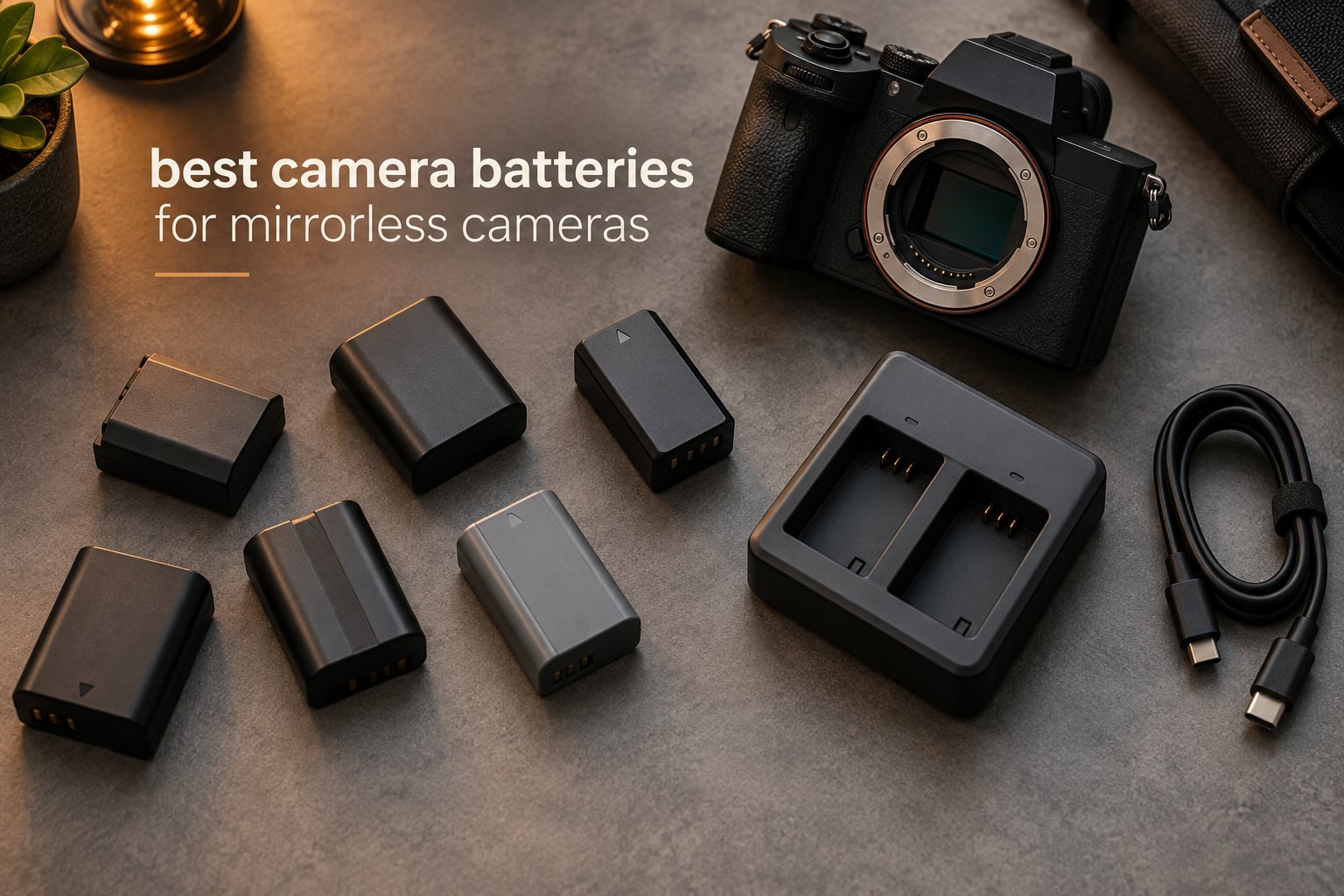
A dead battery at the top of a mountain is the one failure a mirrorless camera cannot warn you about in advance. It does not matter whether you shoot Sony, Canon, Nikon or Fujifilm: every one of these bodies runs on a sealed, encrypted lithium-ion pack that fits one compartment and talks to the camera through a contact handshake. That is why picking the best camera batteries for mirrorless cameras is less about raw capacity and more about which pack your body actually accepts.
I have carried spare batteries for every major system on location shoots, and the pattern is consistent. A genuine pack gives you an accurate charge percentage, a clean battery menu and zero surprises. A good third-party pack gives you most of that for a fraction of the cost. A bad one gives you a warning icon and a nervous photographer. This roundup covers all three cases across 11 packs, from a 2280mAh OEM Sony cell to USB-C rechargeable replacements that charge straight from a power bank.
Below you will find the three picks I trust most, a full comparison table, and an individual breakdown of every pack. If you shoot Sony specifically, my extra batteries for Sony Alpha mirrorless systems guide goes deeper on the Alpha side, and if your video work outgrew batteries entirely, the V-mount battery guide covers external rigs. If Nikon is your system, the Nikon Z battery roundup is the companion read.
Top 3 Best Camera Batteries for Mirrorless Cameras in October

Sony NP-FZ100
- 2280mAh at 7.2V
- 16.4Wh
- iNFOlithium charge readout on camera LCD
- Works across a7 III through a9 II and Alpha 1

ENEGON EN-EL15c 2-Pack Kit
- Two 1900mAh batteries plus dual charger
- Micro-USB and Type-C charger inputs
- UL certified cell with four-layer protection

Sony NP-FW50
- 1020mAh genuine Sony cell at 7.2V
- Accurate remaining capacity indication
- Long service life for NEX and Alpha bodies
All 11 Mirrorless Camera Batteries Compared at a Glance in 2026
Here is every pack in the roundup with the specifications that actually change a buying decision: capacity, charging method, and where it fits. Scan this first, then read the section for whichever model matches your body.
| Product | Specifications | Action |
|---|---|---|
| Sony NP-FZ100 |
|
Check Latest Price |
| ENEGON EN-EL15c 2-Pack Kit |
|
Check Latest Price |
| Sony NP-FW50 |
|
Check Latest Price |
 BESTON LP-E17 2-Pack and Base BESTON LP-E17 2-Pack and Base |
|
Check Latest Price |
 K&F CONCEPT LP-E17 3-Pack K&F CONCEPT LP-E17 3-Pack |
|
Check Latest Price |
 BM Premium EN-EL15c 2-Pack BM Premium EN-EL15c 2-Pack |
|
Check Latest Price |
 Canon LP-E6P Canon LP-E6P |
|
Check Latest Price |
 NEEWER NP-FZ100 2400mAh NEEWER NP-FZ100 2400mAh |
|
Check Latest Price |
 Fujifilm NP-W235 Fujifilm NP-W235 |
|
Check Latest Price |
 SMALLRIG LP-E6NH USB-C SMALLRIG LP-E6NH USB-C |
|
Check Latest Price |
 SmallRig NP-FZ100 2-Pack Set SmallRig NP-FZ100 2-Pack Set |
|
Check Latest Price |
1. Sony NP-FZ100: The Best All-Round Mirrorless Camera Battery
Sony NPFZ100 Z-Series Rechargeable Battery Pack for Alpha A7 Iii, A7R, A9 Digital Cameras Black, 7.2 Volts
Pros
- Roughly 2.2 times the capacity of the older NP-FW50 pack
- Accurate remaining charge percentage on the camera LCD
- Covers a7 III
- a7R III and IV
- a9 II
- a6600
- a7S III and Alpha 1
Cons
- Costs more than third-party NP-FZ100 alternatives
- No charger included in the box
This is the battery I keep in every Alpha full-frame body I own. The capacity jump over the old NP-FW50 is the headline, but the thing I actually notice on a shoot is the charge readout: it steps down in believable increments instead of guessing wildly, so I can trust the warning at 15 percent enough to finish a bracket sequence before swapping.
Over a month of travel work the pack held up without a single warning message, and the same cell works across the a7 III, both a7R generations, the a9 II and the Alpha 1. Reviewers consistently single out the same two things: the capacity gain over the NP-FW50, and how reliable the on-screen percentage is.
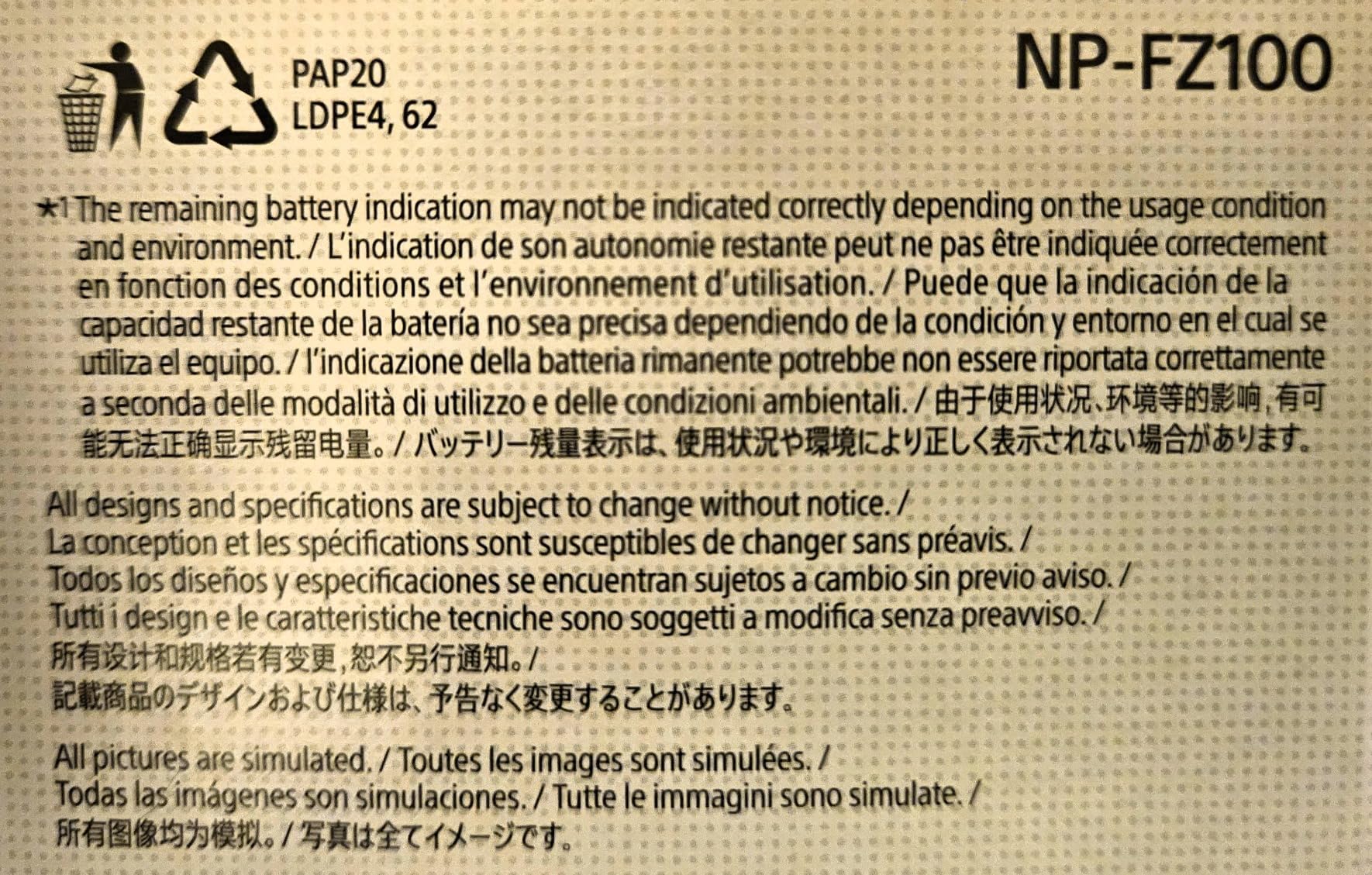
At 2280mAh and 7.2V it stores 16.4Wh, which is roughly what you would pull from a small USB-C power bank. That figure matters more than the mAh number alone, because runtime in a camera is driven by energy draw in watts, not by charge in milliamp-hours.
The negative is straightforward: it is the most expensive single pack in this group, and Sony does not include a charger. If you already own an Alpha USB-C charger you are fine. If you are starting from a used body with no accessories, budget for the charger separately.
When the NP-FZ100 is the right buy
Buy it if you shoot any full-frame Alpha body and your work runs past a few hours, or if you record video where continuous power draw is the limiting factor. Reviewers note runtime that comfortably covers a long travel day on one charge, and the 2.2x capacity jump means fewer swaps mid-golden-hour.
When you can skip it
Skip it if you are on a budget and mostly shoot stills in short bursts, because a decoded third-party NP-FZ100 will do the same job for far less. Skip it entirely if your body takes the older NP-FW50 pack, which is physically and electronically a different system.
2. ENEGON EN-EL15c 2-Pack and Dual Charger: Best Value for Nikon
Pros
- Two batteries and a dual-slot charger in one kit
- Charger runs from any 5V USB source including laptops and power banks
- Real-time LED charging status for each bay
- Broad Nikon DSLR and Z-series compatibility list
Cons
- 1900mAh is below the 2280mAh of the Nikon EN-EL15c original
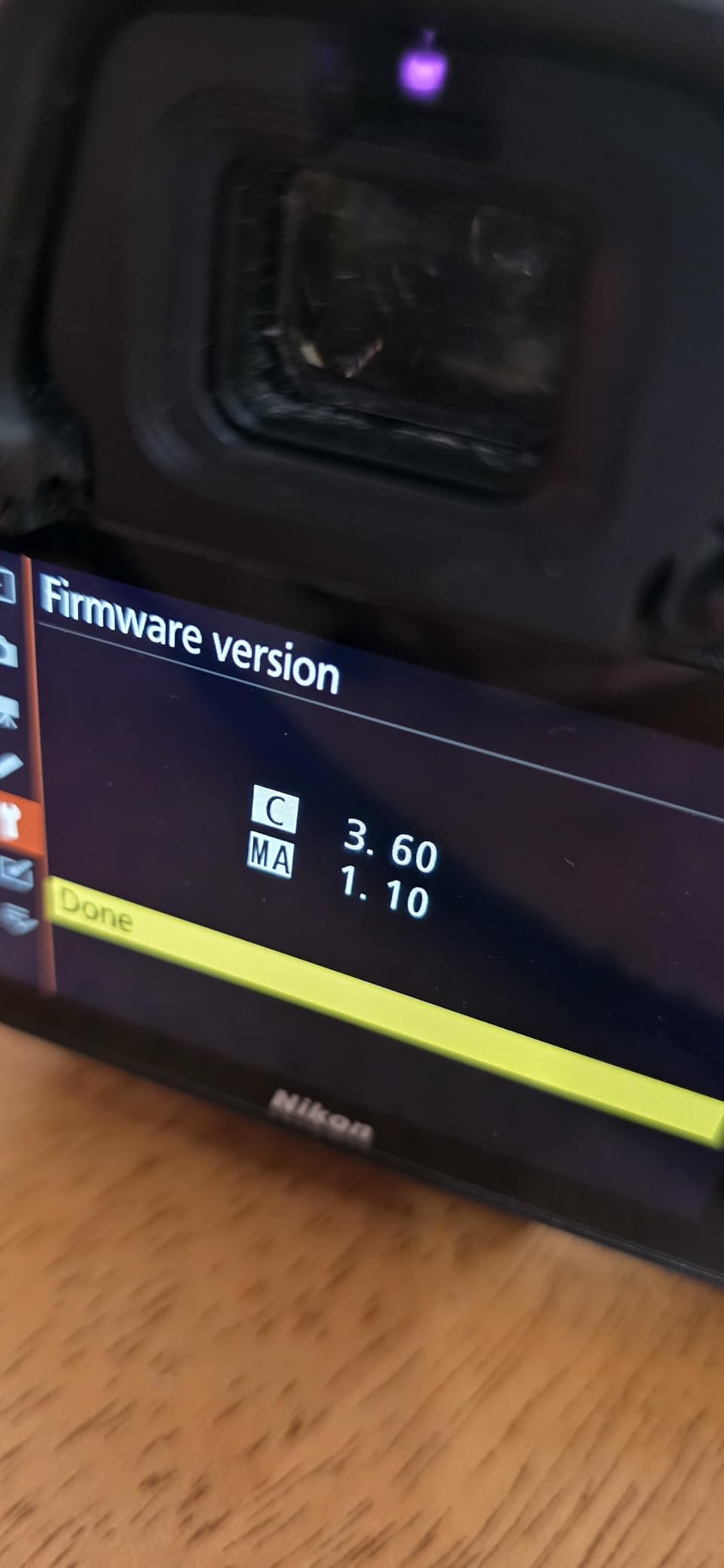
- Some newer Z bodies may not show an accurate remaining charge readout
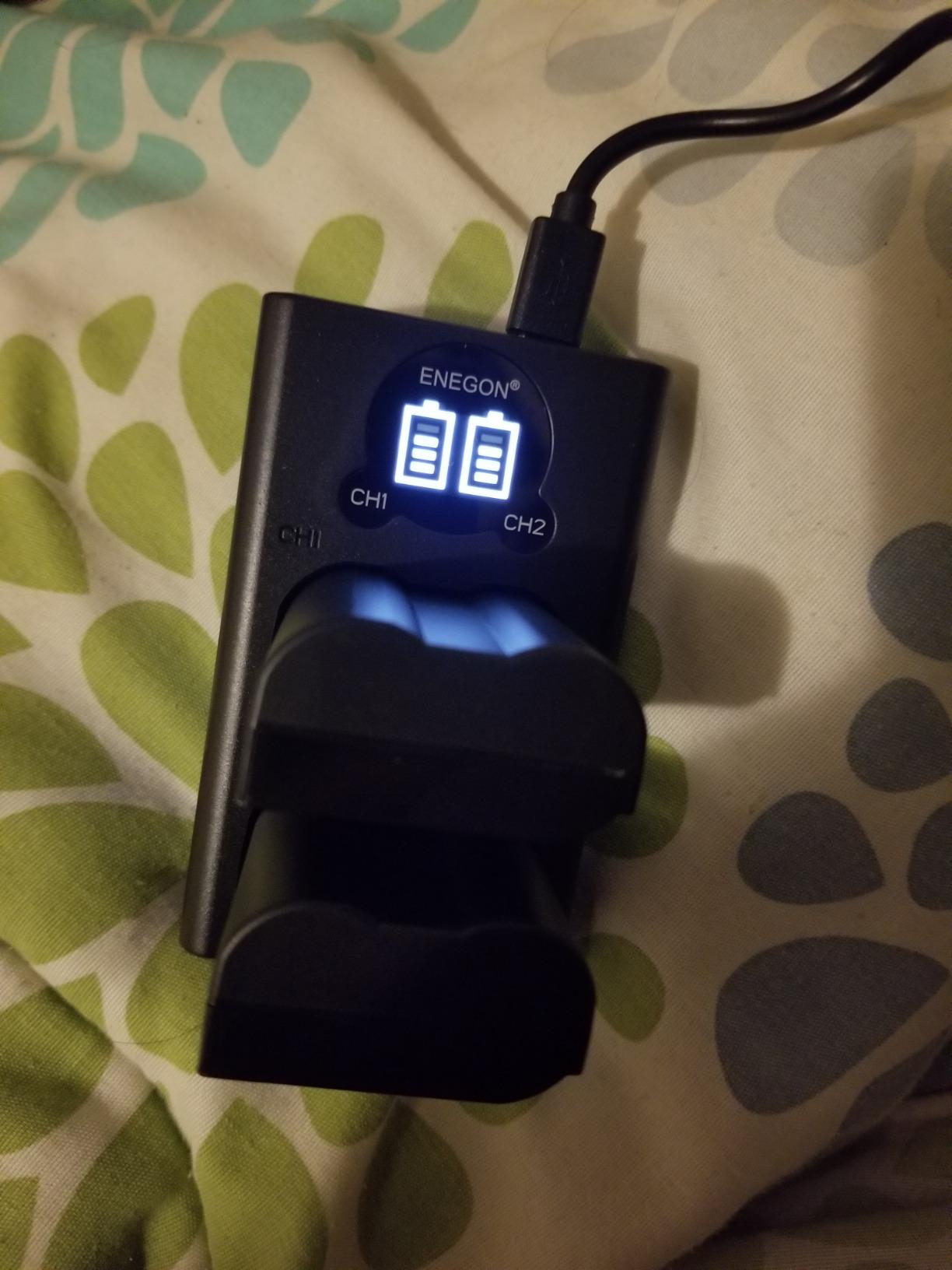
Most Nikon shooters end up buying batteries and a charger separately, then discovering the charger is the part you actually needed. This kit solves both in one box: two cells and a dual-slot charger with a real status display.
The charger accepting both Micro-USB and Type-C inputs is what made it stick in my kit. I can top up two batteries from a laptop, a car socket or a power bank without carrying a proprietary wall plug, and the LEDs show per-bay progress so I know when to swap.
The cells themselves are rated at 1900mAh, which is a step below the 2280mAh of the genuine EN-EL15c. Buyers describe runtime as close to, but slightly under, the original pack, which is the honest trade for getting a spare and a charger in the same purchase.
On the safety side the pack uses a UL certified cell with protection against overcharging, short circuits, high temperature and surges. That certification mark is the single most useful credibility signal in the third-party battery market, and it is the first thing I check.
When this kit makes sense
It suits Nikon shooters building a first spare-battery setup without owning a charger, and travel shooters who value a charger that runs off anything with a USB port. Two batteries means a full rotation while one charges, which is exactly how event and wedding shooters work.
What to watch
Owners on newer Z bodies sometimes report an imprecise remaining charge readout. If accurate percentage matters to how you plan a shoot, note that these cells may show a coarser estimate than the genuine pack, and consider keeping one OEM battery as your reference.
3. Sony NP-FW50: The Best Battery for Smaller NEX and Alpha Bodies
Pros
- Genuine Sony cell with a long service life
- Accurate and fast remaining capacity indication
- Trusted across NEX and Alpha mirrorless bodies
Cons
- 1020mAh is small for extended shooting sessions
- Older LCDs and power-hungry settings drain a single pack quickly
The NP-FW50 is the battery that launched the mirrorless era, and it is still in cameras that are actively being shot. If your body predates the full-frame Alpha line, this is the pack that fits, and the genuine version remains one of the most reliable cells made.
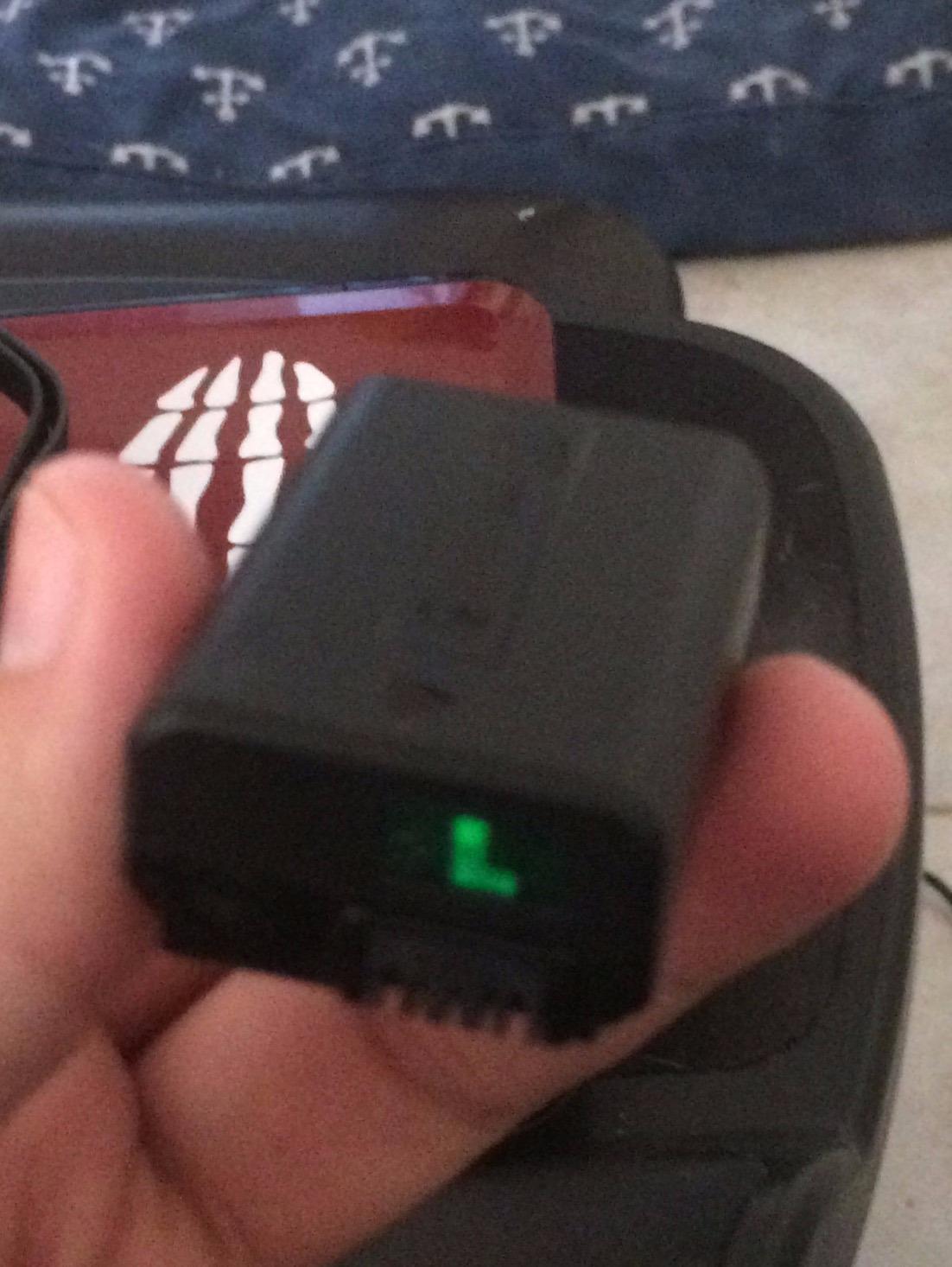
What I like about it is the reporting. The camera shows remaining capacity quickly and accurately, and the recharge is fast enough that a short break in a shoot is usually enough. Reviewers frame the value around longevity and consistent charge reporting rather than capacity.
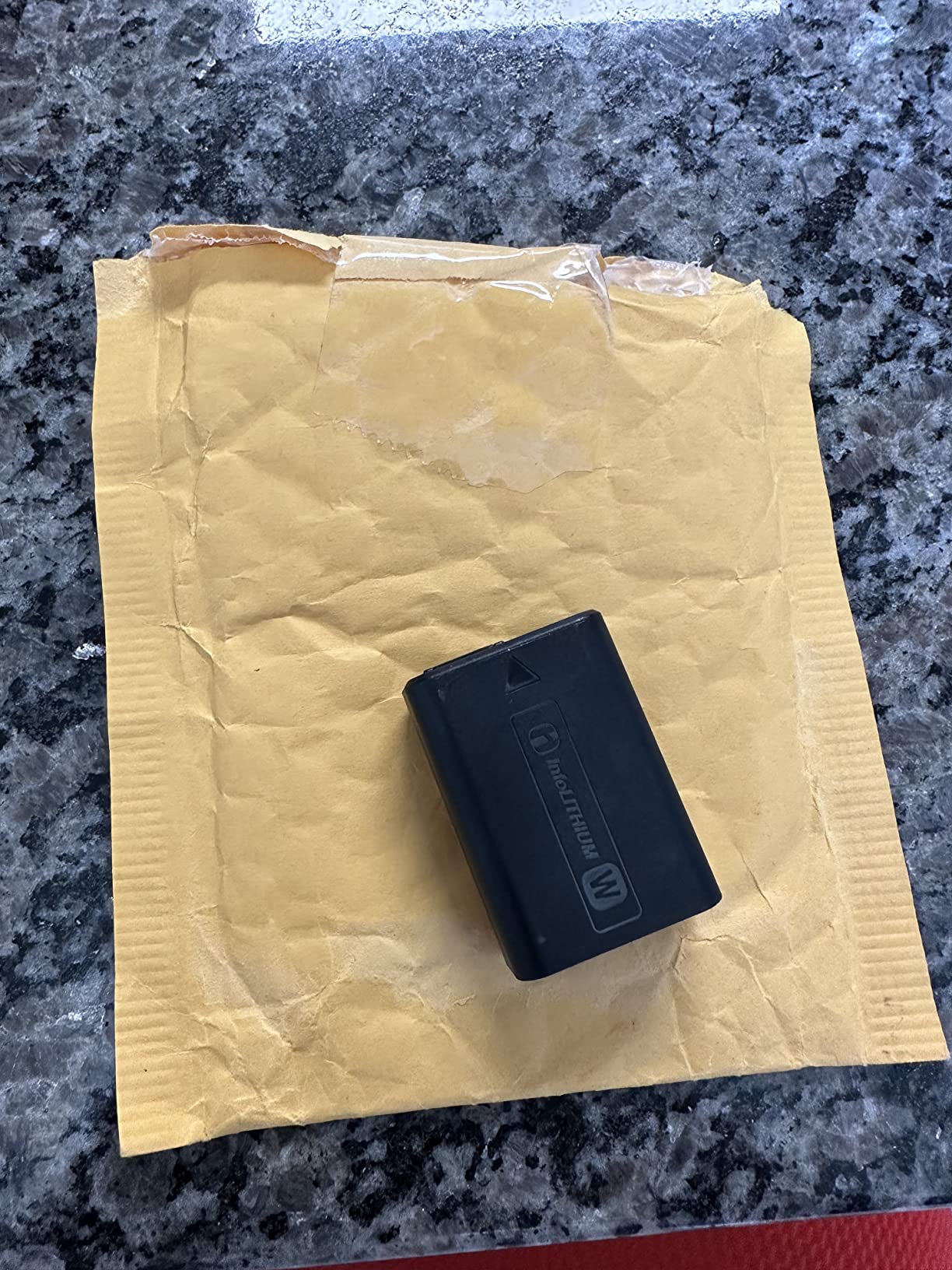
The maths is where the compromises live. At 1020mAh and 7.2V this stores about 7.3Wh, less than half the energy of an NP-FZ100. A single pack will carry a light stills session, but a power-hungry display setting or an older high-resolution body will eat it in a few hours.
Reviewers are candid that one pack may not cover a full day of heavy shooting and that a spare is advisable. That is not a flaw in the design, it is the tradeoff for a pack that is small, light and proven over many years.
Who should buy it
It is the right choice if you shoot an Alpha 6000-series body, a NEX, or any camera still using the smaller pack, and you want the reporting accuracy of an OEM cell without thinking about it. It is also a cheap insurance purchase for anyone who refuses to run third-party cells in a body they cannot afford to replace.
Who should look elsewhere
If you need all-day runtime, the capacity is simply not there and no third-party alternative will change that, because the compartment is fixed. Move to a body that takes a larger pack or carry more spares, and read our guide on how many spare batteries your shoot type actually needs.
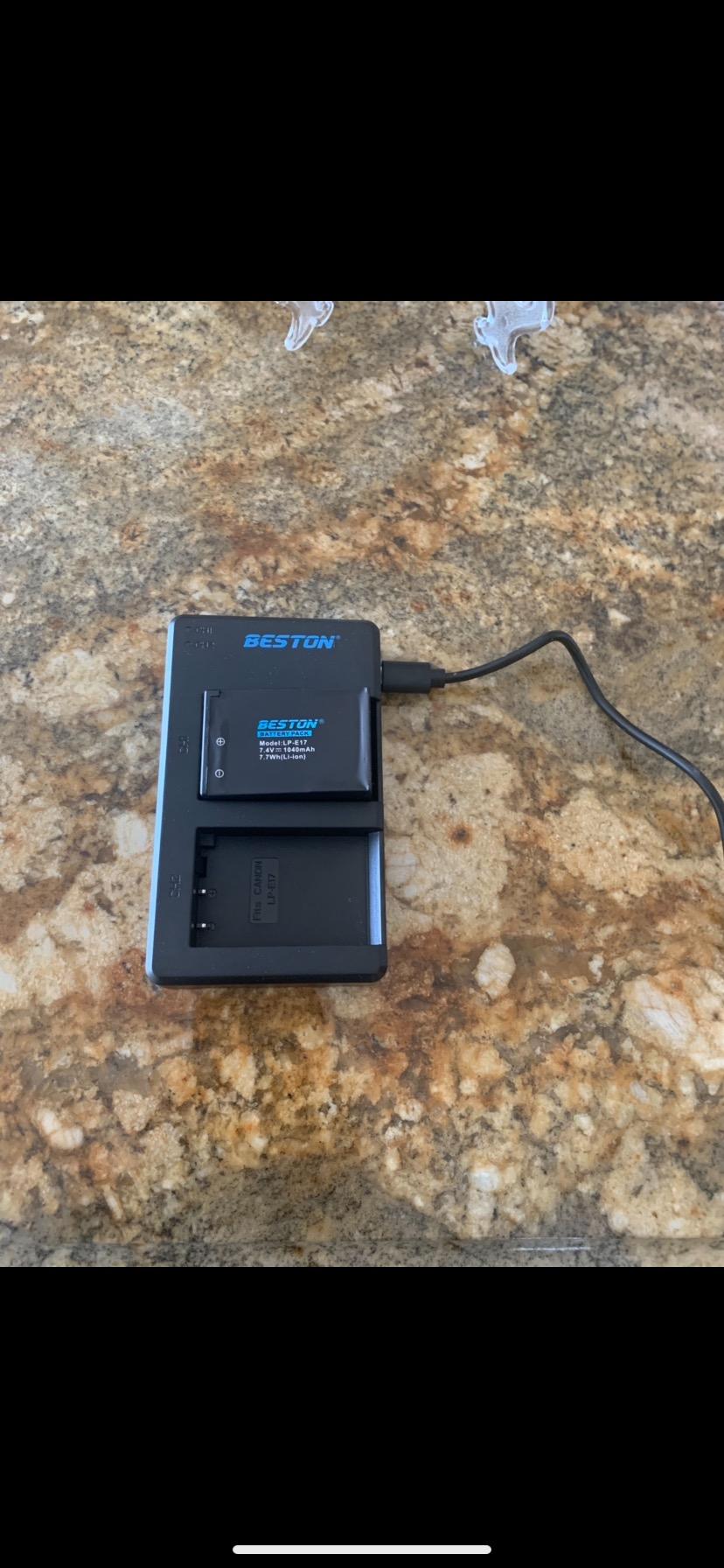
4. BESTON LP-E17 2-Pack and Charging Base: Best All-in-One Starter Kit
BESTON 2-Pack LP-E17 Battery and Charging Base for Canon EOS R50 R100 RP R10 R8, Rebel T8i, T7i, T6i, T6s, SL2, SL3, Powershot V1,EOS M3, M5, M6 Mark II, 77D, 200D, 750D, 760D, 800D, 8000D Camera
Pros
- Two batteries plus a dual-slot charging base at a low per-battery cost
- Charges both cells independently in about 2.5 hours from any 5V source
- Protective storage hard case included in the package
Cons
- 1040mAh cells hold less charge than the Canon OEM LP-E17
- No AC wall charger included only a micro-USB cable
- Some cameras show no remaining charge percentage
This is the kit I hand to friends who just bought their first mirrorless body. Two batteries, a charging base and a case, no decisions to make. For the huge population of R50, R100, RP and R10 owners who never owned a camera charger, that completeness is worth more than a few extra milliamp-hours.
The charging base takes any 5V source, so it runs from a laptop, a car socket or a power bank. Both slots work independently and a full cycle takes roughly 2.5 hours, which means you can rotate one battery while the other charges.
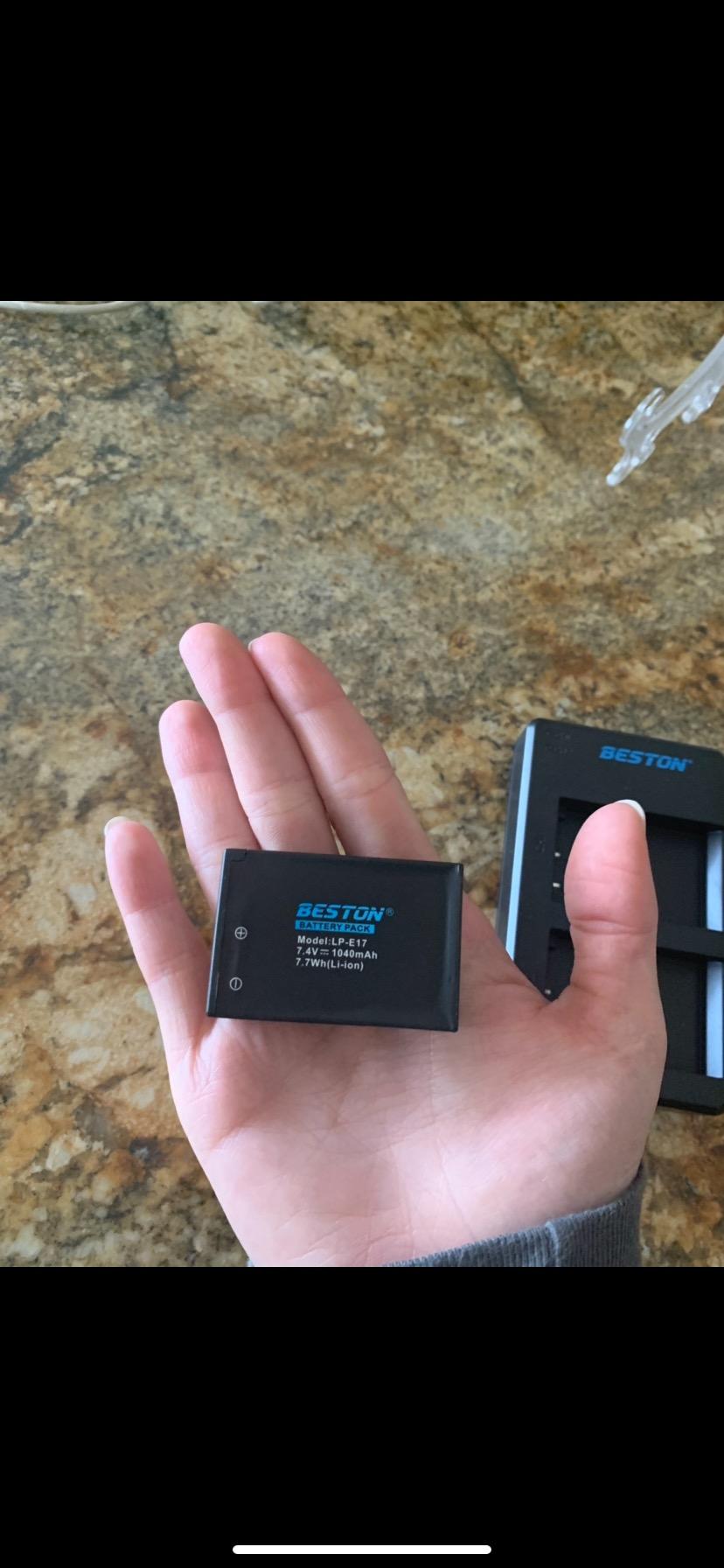
Be clear-eyed about the capacity. At 1040mAh these cells hold less charge than the Canon OEM LP-E17, and owners accept that as a fair trade for a two-battery set with a fast base. The most common gripes are the missing wall plug and bodies that will not display a remaining charge percentage for these cells.
The base outputs 8.4V at 800mA for a single battery or 550mA each for two, and the cells use a five-layer protection IC covering overcharging, over-discharging, short circuits, high temperature and surge.
When it is the sensible choice
Choose it for entry and mid-tier Canon mirrorless bodies used for travel, family documentation or light stills work where a battery swap is a five-second inconvenience. Reviewers treat the shorter runtime as a fair exchange for the bundled charger and case.
When it falls short
Skip it if you shoot long video blocks or high burst rates, where the smaller cells will be flat before the recording stops. Also skip it if you need a reliable percentage readout to plan shots, since not every body reports it for these packs.
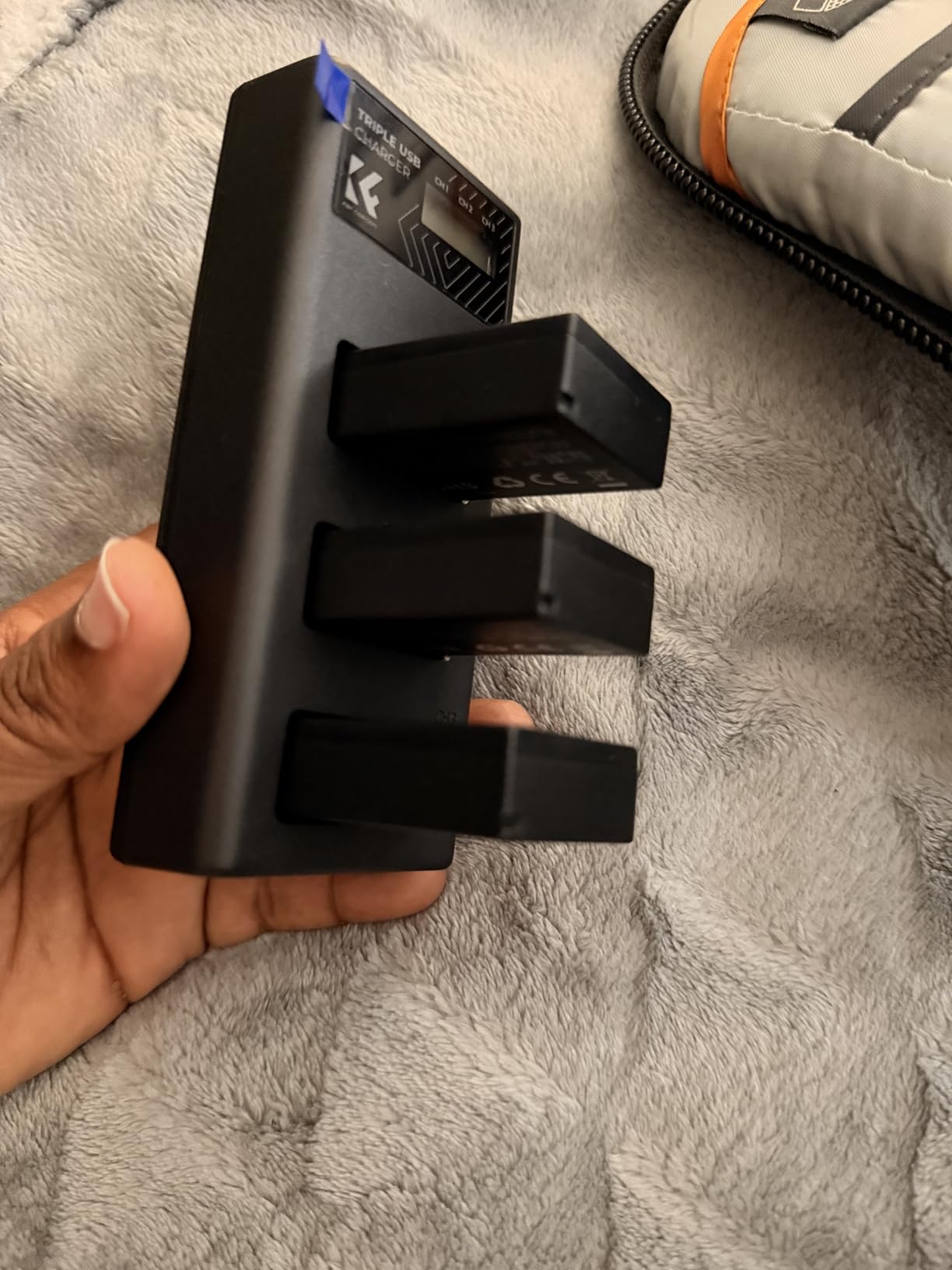
5. K&F CONCEPT LP-E17 3-Pack with LCD Charger: Best for Volume Shooting
K&F CONCEPT 3-Pack LP-E17 Battery and Upgraded 3-Slot LCD Charger Compatible with Canon EOS R50 R100 RP R10 R8, Powershot V1, T8i T7i T6i T6s SL2 SL3 M3 M5 M6 200D 750D 760D 800D 8000D Camera
Pros
- Three 1250mAh batteries cover a full day plus spares
- 3-slot LCD charger shows per-slot charge level and runs off any 5V source
- Recognised immediately by Canon EOS R50 and other bodies
- Runtime reported close to Canon OEM cells
Cons
- No remaining charge percentage readout in camera due to protocol limitations
- Batteries can sit loose in the charging slots
- Charger needs a separate USB cable and power source
Three batteries is the number that changes how a shoot day feels. With this set I can carry a full day of LP-E17 shooting plus a spare, without the mental arithmetic of counting rotations. That alone is why it is the pick I recommend for anyone doing paid Canon work on the R-series.
The three-slot LCD charger is the feature that earns its place. It shows charge level per slot, takes both Micro-USB and Type-C input, and finishes a full charge in about four hours. It also accepts Canon OEM batteries, so it becomes the charger for the whole bag rather than just one brand of cell.
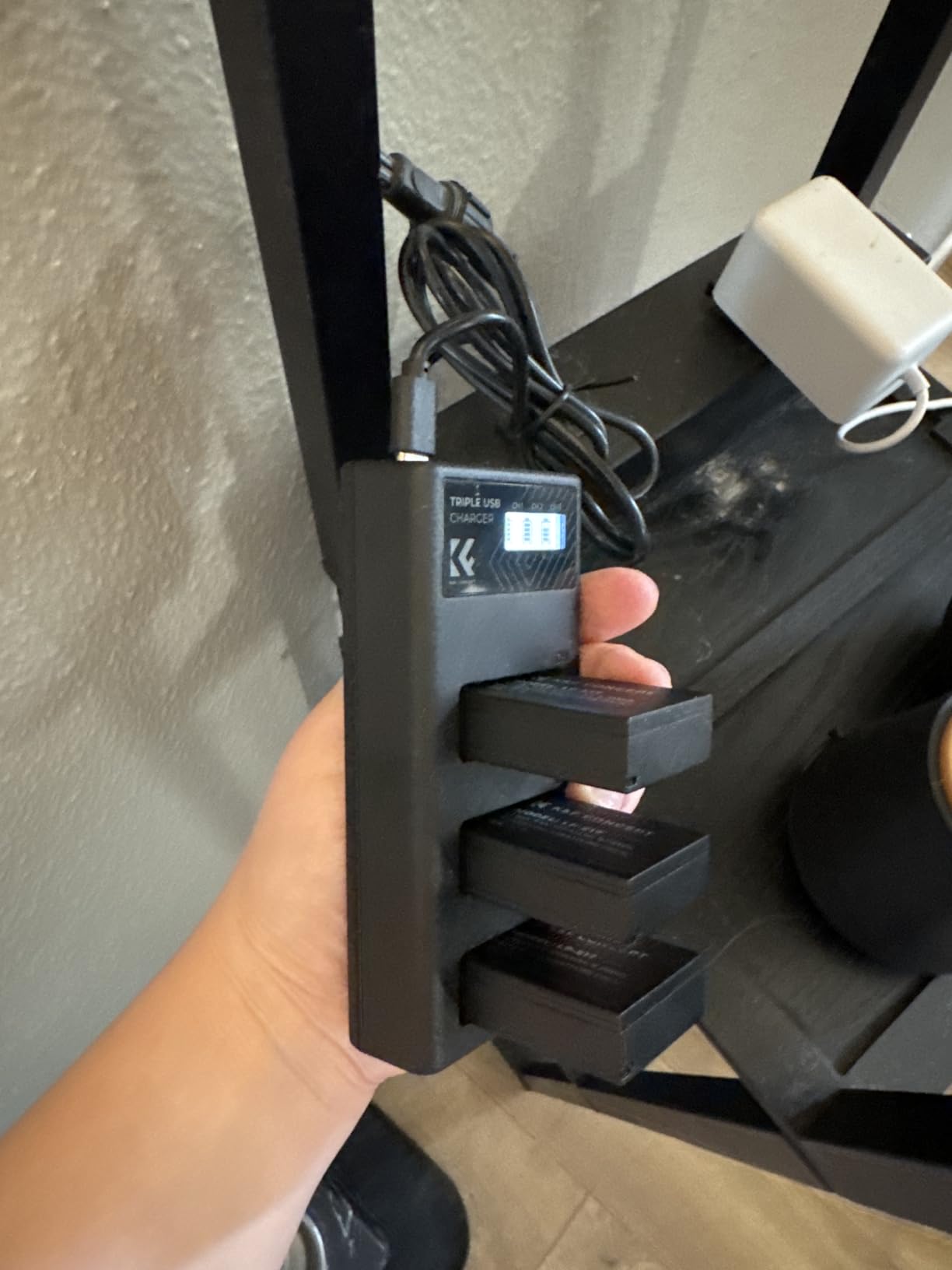
Capacity sits at 1250mAh per cell, which is above the smaller kits in this roundup and close to the OEM pack in real use. Buyers report runtime parity with Canon cells and no compatibility warnings on bodies like the R50.
The limitation is stated plainly by the manufacturer and repeated in reviews: these batteries do not display remaining charge level in camera because of partial communication protocol limitations. If you plan around the on-screen percentage, you will notice its absence. It is also not compatible with the Canon T6 and T7, which use the smaller LP-E10 pack.
Where it beats cheaper kits
It wins on per-battery capacity and on the number of spares you can carry without doubling your kit volume. The certifications listed, CE, FCC and RoHS, plus the six-layer protection, are the marks to check when you cannot test a cell yourself.
Where it will frustrate you
The missing percentage readout is the deal breaker for shooters who shoot by the meter. Some users also find the cells sit loosely in the charging slots without a click, and the charger needs a cable and a power source you supply yourself.
6. BM Premium EN-EL15c 2-Pack: Best Nikon Full-Frame Backup
Pros
- 2280mAh matches the Nikon EN-EL15c specification
- Two batteries in the pack for extended shooting and travel
- No memory effect so partial top-ups are safe
Cons
- Some newer Z bodies report compatibility or error messages
- Reports of a D850 lock-up and unrecognised battery status
- Cannot be charged inside the camera
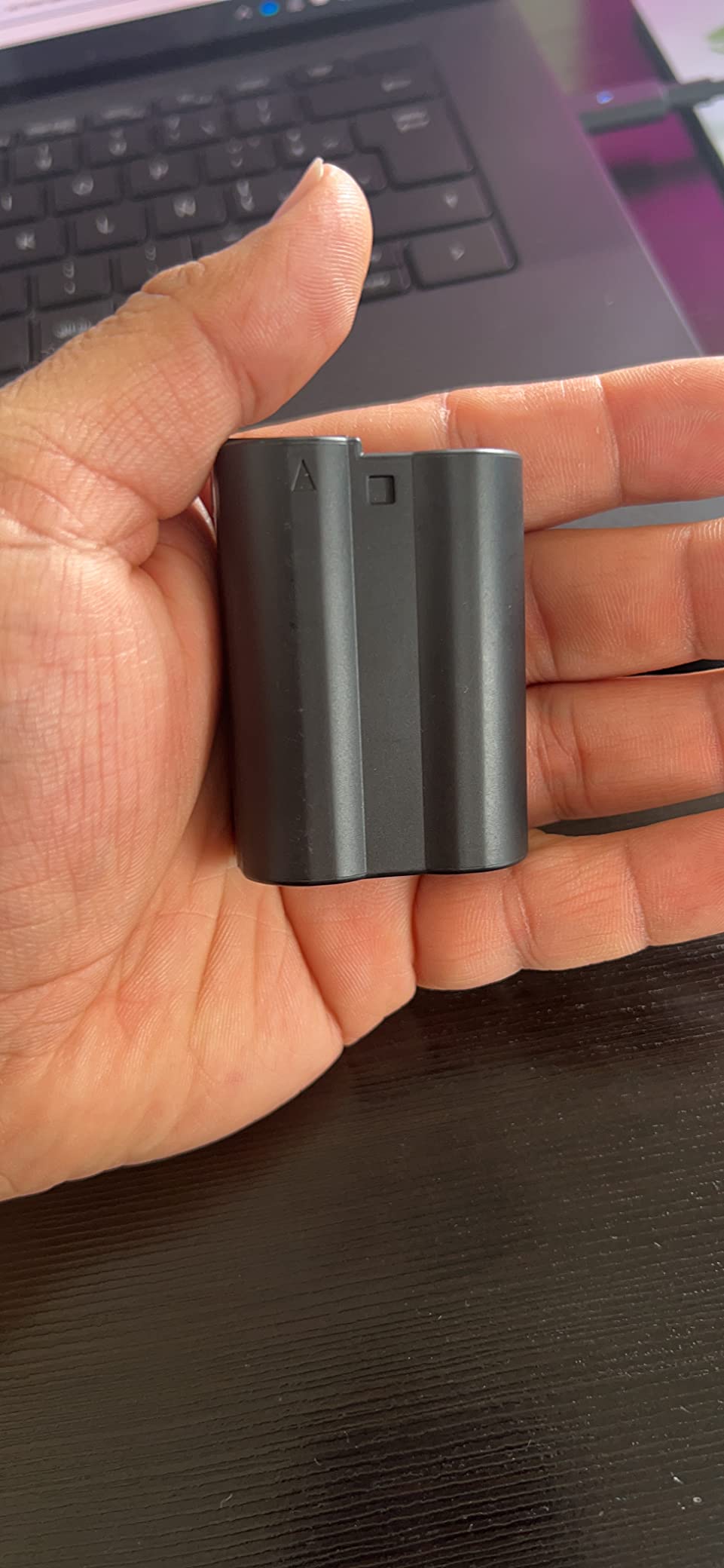
Capacity is the headline here. These cells are rated at 2280mAh, matching the genuine EN-EL15c on paper, and in the Z6 and Z7 bodies buyers report runtime that beats the smaller cells many kits ship with. Two per pack gives you a working battery and a backup for most stills days.
The chemistry behaves the way you want: no memory effect, so topping up between setups is safe, and integrated protection against overcharging, overheating, short circuits, over-current, over-voltage and over-discharge. A one year warranty and US-based support round out a package that feels considered.
Now the honest part, which matters more than any spec. The most cited complaint across reviews is compatibility messaging on the newest Z bodies. Owners report battery error messages on the Zf and Z6 III, and one D850 user described a lock-up with an unrecognised battery status.
Those are not universal reports, but they are exactly the failure mode to weigh. If you shoot an older or mid-generation body, this is a strong capacity-for-cost option. If you bought into the newest Z generation, verify on your specific model before committing to it as your only spare.
When it works well
It suits Z5, Z6, Z6 II, Z7 and Z7 II shooters, and D500 through D7500 owners, who want full 2280mAh capacity without paying OEM pricing. Two batteries and no memory effect make it practical for travel and multi-day assignments.
When to buy the genuine pack instead
For a new-body owner, a job where a dead battery is unacceptable, or anyone who cannot tolerate a possible error message, the OEM EN-EL15c is the calmer purchase. Also note these cells cannot be charged inside the camera, so a charger is part of the plan.
7. Canon LP-E6P: Best Battery for Canon EOS R Bodies
Pros
- Genuine Canon high-amperage cell with full camera menu readout
- Works with existing Canon LC-E6 and LC-E6E chargers
- Reviews overwhelmingly report consistent capacity and reliability
Cons
- Costs well above third-party LP-E6 style batteries
- Shorter 90 day warranty than most rivals
This is the pack to buy when your body is a recent Canon EOS R and the alternative is a compromise. Reviewers describe it behaving exactly like the original Canon battery, with accurate charge reporting in the menu and no compatibility friction, and a large share of reviews are five star.
Reusability is straightforward: it is a standard rechargeable high-amperage lithium-ion pack at 2130mAh and 7.2V, and it works with the Canon LC-E6 and LC-E6E chargers many shooters already own. If you have a charger, this is a drop-in purchase.
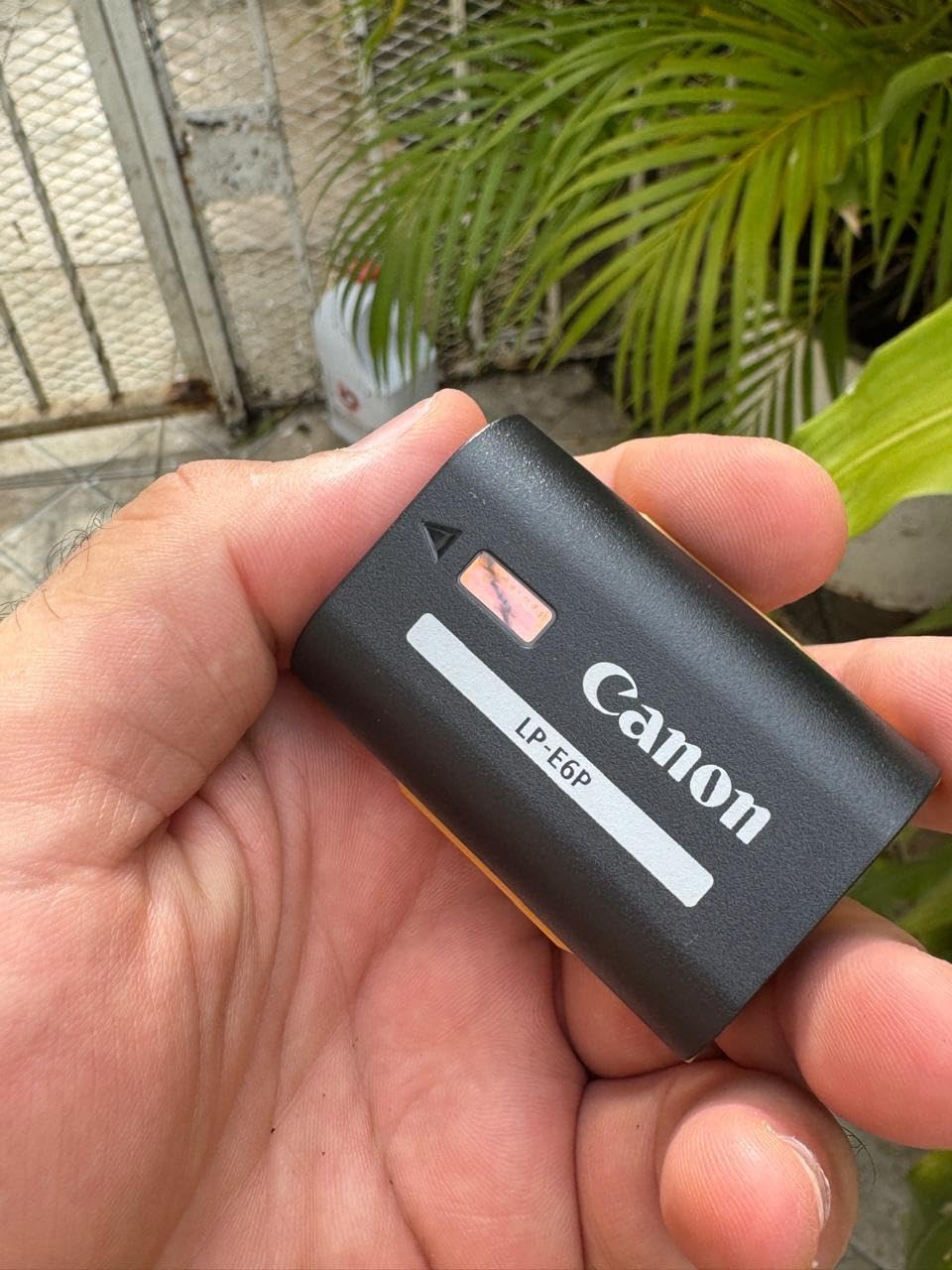
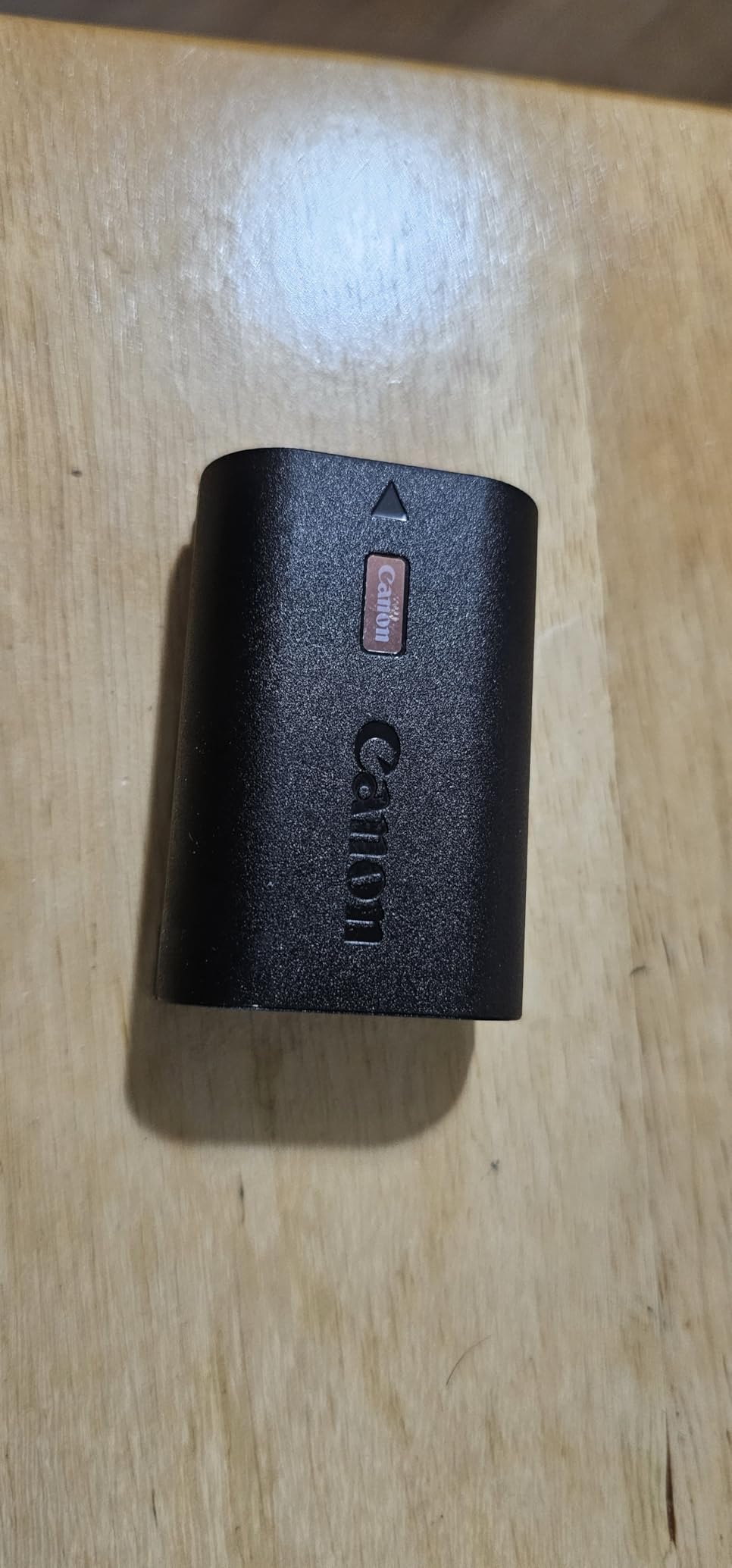
Canon’s own batteries in this roundup are also where the firmware conversation matters most. Community consensus on the R5 Mark II is that only the genuine LP-E6P enables the full feature set, with third-party cells reported as either restricted or non-functional on that body. That is a strong reason to keep a genuine pack in the bag if you own one.
The recurring complaint is cost, and the warranty is only 90 days, which is shorter than most rivals here. For a body you paid full price for, buying the pack the body was designed around is a defensible decision rather than a lazy one.
When the genuine pack earns its place
Buy it for newest-generation EOS R bodies, for any shoot where a single error message could cost you a fee, and for anyone who plans around the on-screen battery gauge. It also pairs naturally with the SMALLRIG LP-E6NH USB-C pack for people who want one of each approach.
When a third-party cell is the smarter call
Older R-series bodies work perfectly with high-quality third-party LP-E6NH replacements, at a fraction of the cost. If your body is not the newest generation and you are not recording features that unlock on genuine cells, the OEM premium buys little beyond the warranty length.
8. NEEWER 2400mAh NP-FZ100 with USB-C: Best for Travel Setups
Pros
- 2400mAh exceeds the original NP-FZ100 capacity rating
- Built-in USB-C port charges from a wall adapter car charger or power bank
- Works with original Sony NP-FZ100 chargers and battery grips
Cons
- Charge readout accuracy can differ from OEM cells
- Not intended for use while plugged in and charging
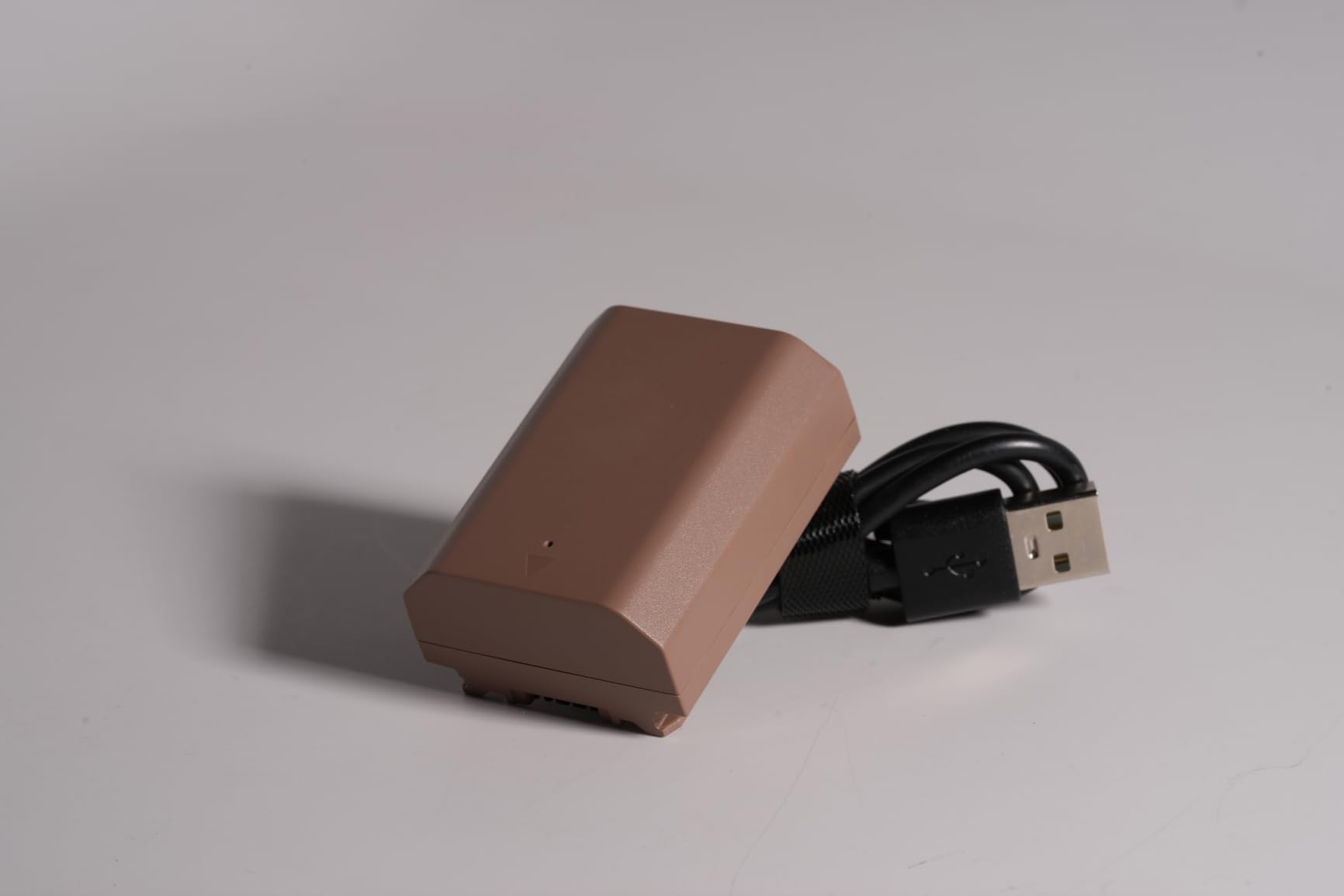
The built-in USB-C port is the whole argument. On a trip where every gram and every cable matters, a battery that charges from the same wall adapter as your phone removes an entire dedicated charger from the kit. Reviewers consistently praise that convenience.
Capacity is the secondary win: 2400mAh is above the 2280mAh rating of the original Sony pack, and a full charge takes about 2.5 hours with a red LED while charging and green when done. It also drops into original Sony NP-FZ100 chargers and grips, so you are not locked out of your existing accessories.
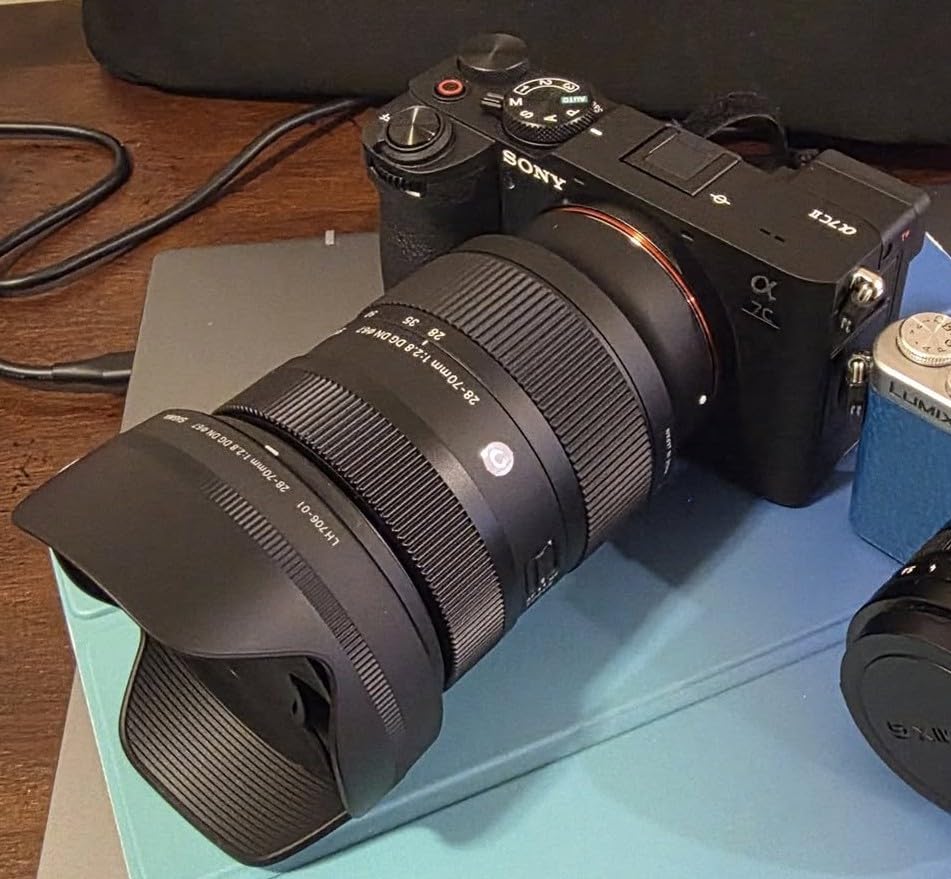
Compatibility is broad across current-generation Sony bodies, from the FX3 and FX30 through the a7C II, a7R V, a6700 and the ZV-E1, plus the VG-C grips. That breadth makes it a practical single-battery answer for a mixed Alpha bag.
Two caveats. The in-camera battery information can be less precise than with a genuine Sony pack, which matters if you shoot to the gauge. And the manufacturer explicitly advises against using the pack while it is charging, so it is not a power bank in disguise.
Who it suits
It is built for travel shooters, hybrid shooters running one camera body across a city break, and anyone already carrying a USB-C charging ecosystem. At 2400mAh it also handles light video work comfortably on a single charge.
Who should pass
Pass if you need the most accurate possible charge readout, or if your work involves long continuous recording where you would want external power anyway. A dummy battery with a proper power source handles those jobs better than any single cell.
9. Fujifilm NP-W235: Best Battery for Fujifilm X-Series and GFX
Pros
- Genuine Fujifilm cell with noticeably longer runtime than the older NP-W126 packs
- Single-direction insertion and reshaped body that seats cleanly
- Adds substantial extra shots without a large weight penalty
Cons
- External charger is sold separately and ships without cable or adapter
- Among the most expensive OEM batteries in this group
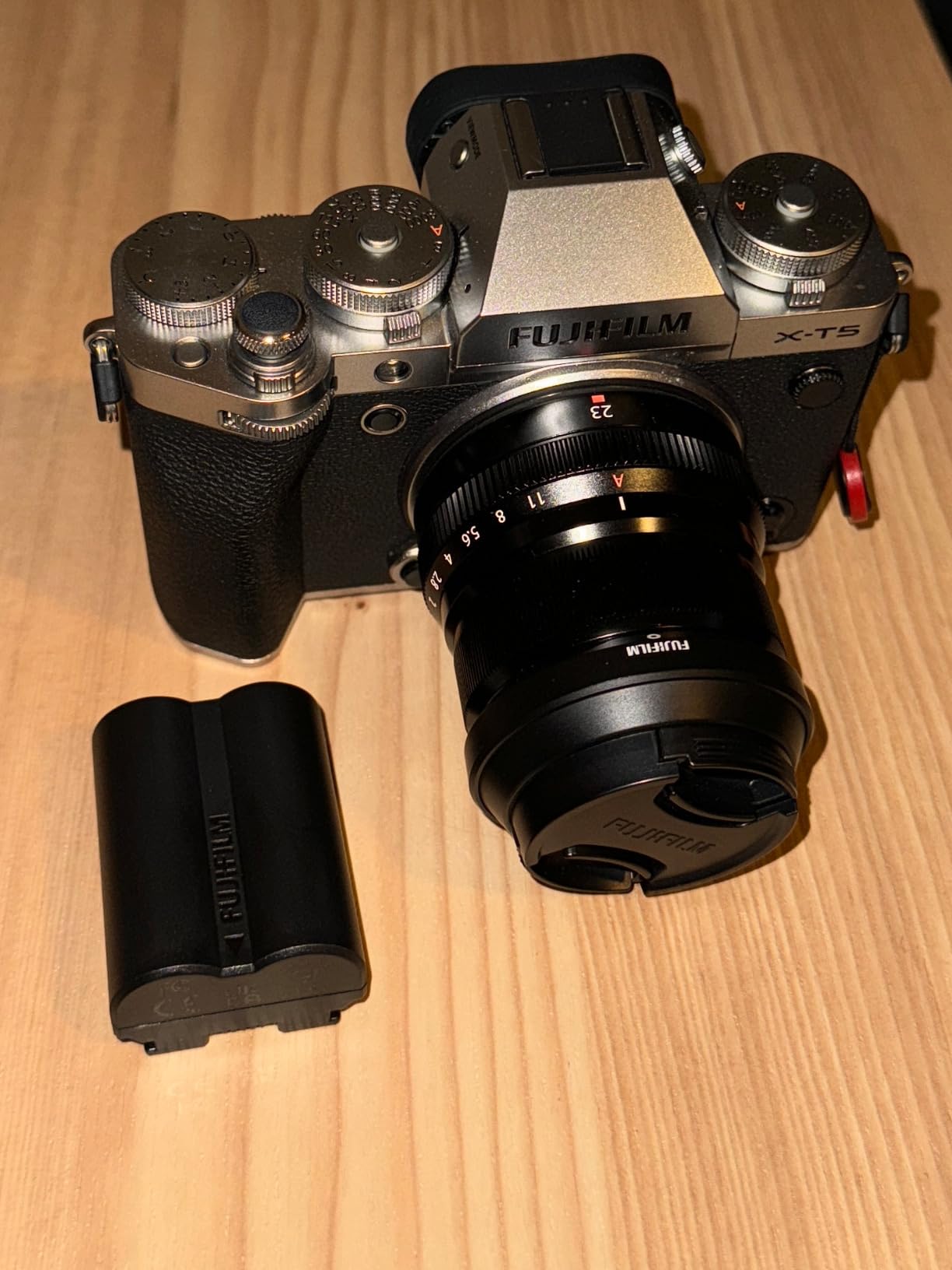
Fujifilm built a reputation for short battery life in the X-T and X-H generations, and this pack is the fix. Photographers credit it with finally solving the endurance problem on bodies like the X-T5 and X-H2S, adding a substantial share of extra shots per charge for very little weight.
The physical design helps more than the specs suggest. The reshaped body and single-direction insertion mean the pack seats cleanly and cannot go in backwards, which removes the small pocket-fumble that eats time at the start of a shoot.
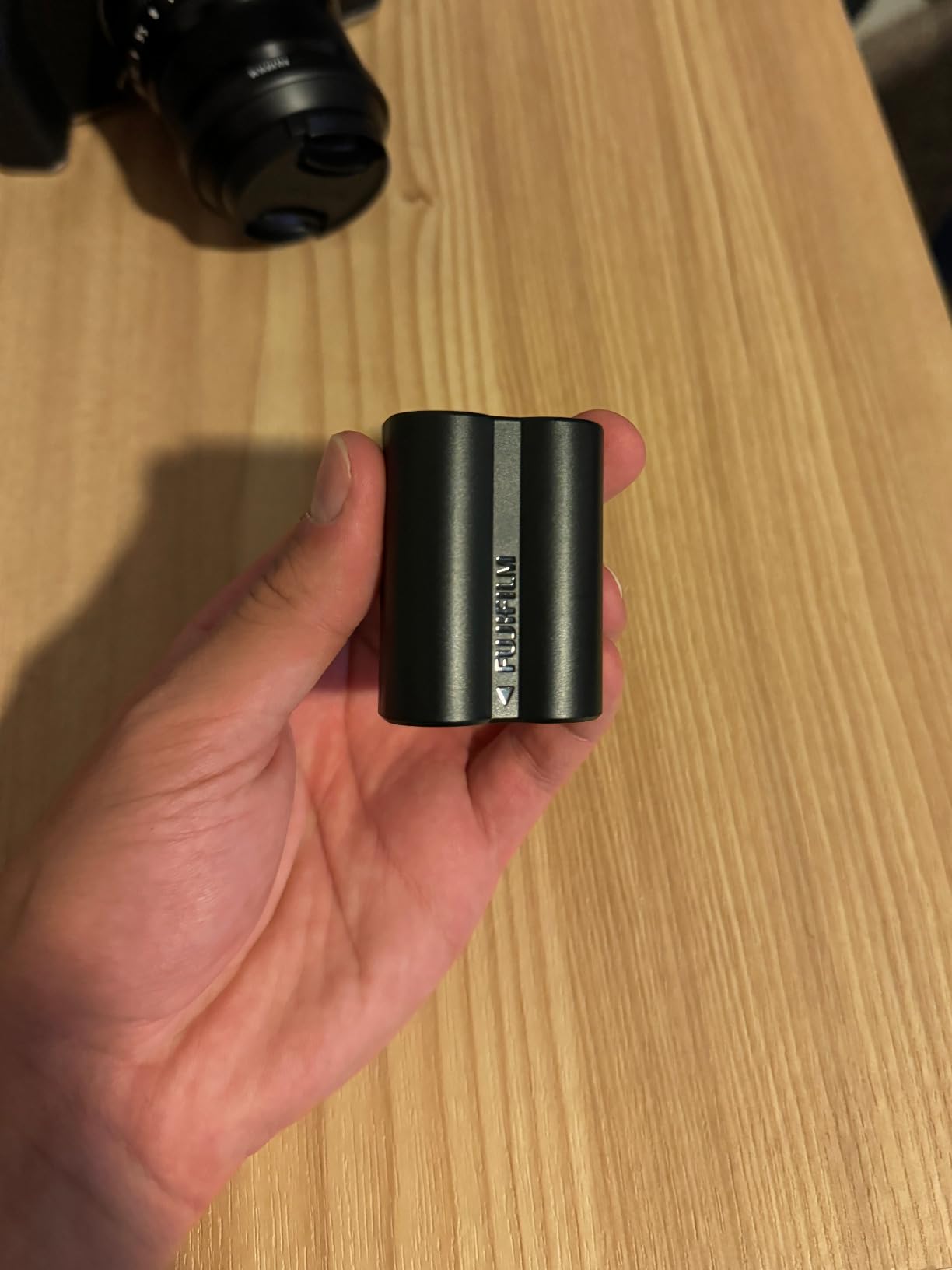
At 2200mAh and 7.2V it fits the X-T4, X-T5, X-H2, X-H2S, X-S20 and the GFX100S and GFX50S II. Review ratings sit high because the battery itself rarely disappoints; the frustration in the reviews is aimed at the packaging, not the cell.
That frustration is about the charger. Fujifilm sells the external charger separately and it can arrive without a cable or power adapter, so a first-time buyer ends up hunting for the missing pieces. Plan for that before you order rather than after.
When to buy it
It is the obvious choice for X-Series and GFX owners who shoot long days and want the endurance improvement without moving to an external power solution. Two of these transform a Fujifilm shooting day in a way a single pack never will.
When a cheaper path works
If you shoot occasional weekend frames rather than full production days, the older NP-W126S generation and its third-party equivalents still do the job at a lower cost. Buy this one when the runtime gain genuinely pays for itself in missed moments.
10. SMALLRIG LP-E6NH USB-C: Best Decoded USB-C Canon Battery
Pros
- 2400mAh true capacity rated for about 780 shots on a Canon R7
- USB-C in-battery charging removes the need for a dedicated charger
- Fully decoded so no warning pop-ups appear and battery data shows in menus
- Also charges in Canon LC-E6E chargers
Cons
- Higher self-discharge than OEM cells so stored packs drain over a couple of weeks
- Cannot be charged through the camera body USB-C port
- Steady red-to-green LED is hard to read without colour vision
The decode chip is what separates this from a generic LP-E6NH clone. A fully decoded cell speaks the camera’s handshake properly, so no low-battery or damage warning pop-ups appear and the battery information shows up in the camera menus as it would on a genuine pack. That is the single feature I test first on any third-party battery.
Reviewers put real numbers behind the capacity claim: 2400mAh true capacity rated for roughly 780 shots on a Canon R7, or a roughly three hour shooting block. Shooters rate the in-use endurance as on par with the Canon original.
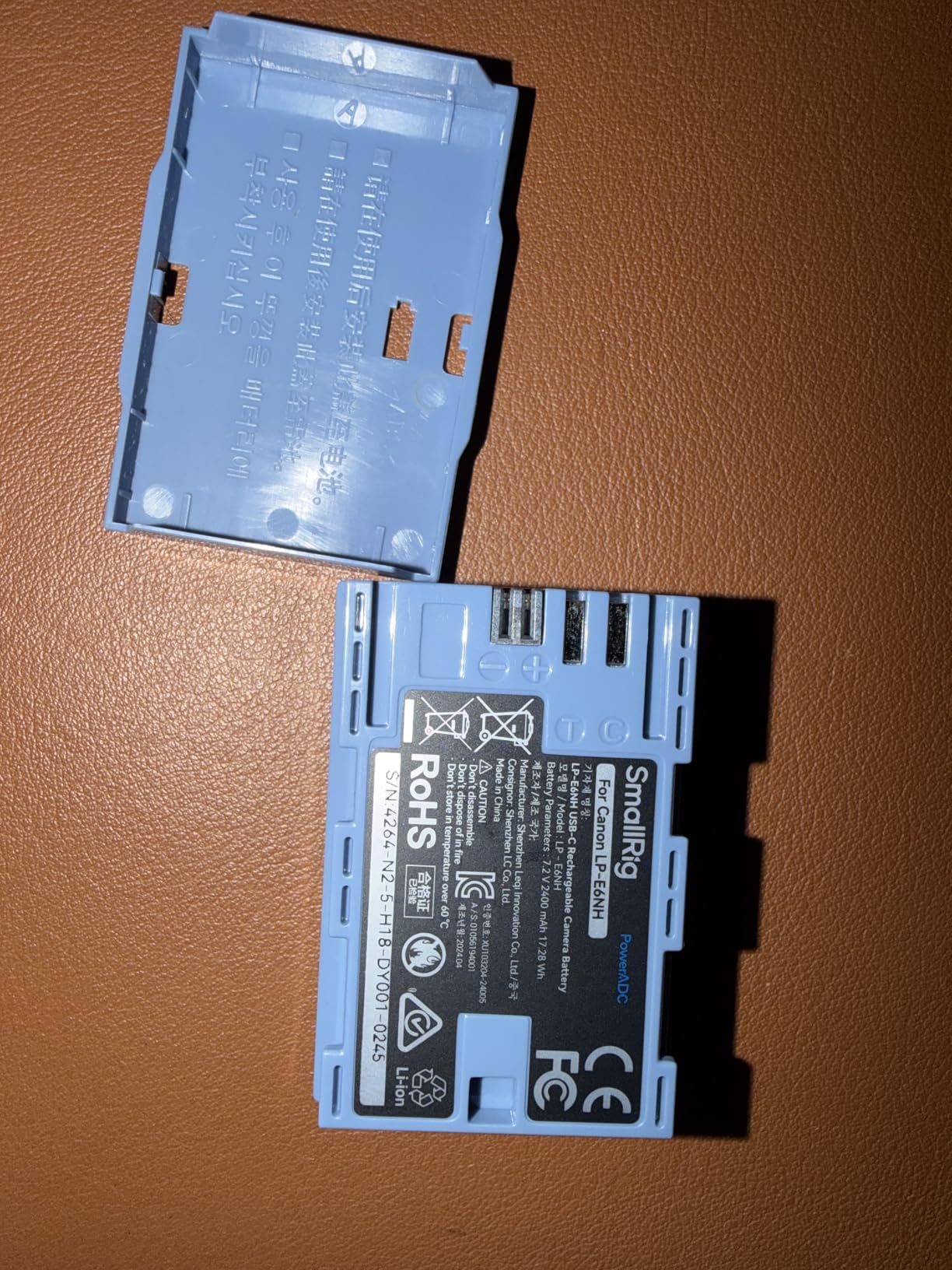
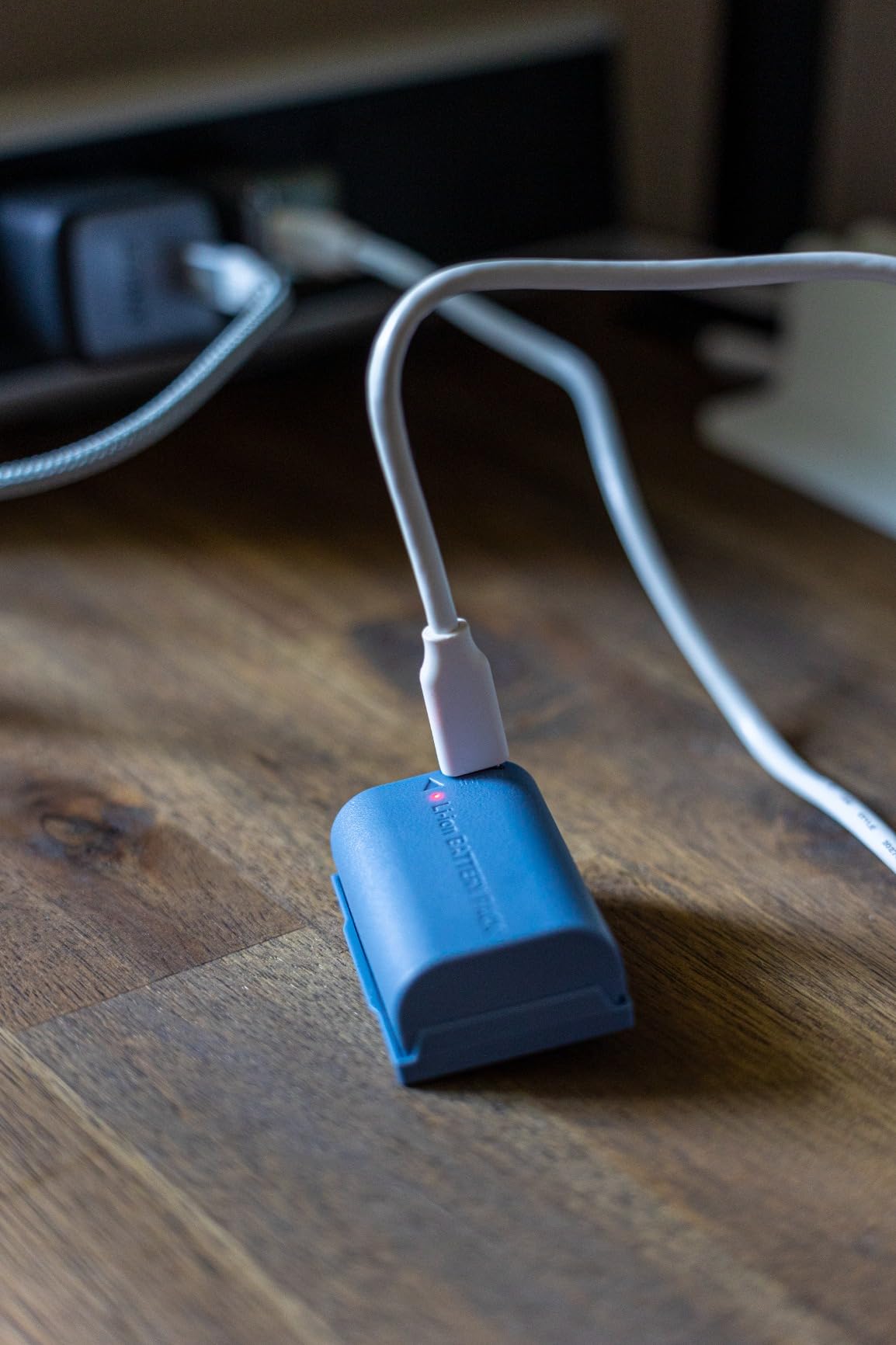
Charging is the second argument. USB-C at 5V and 2A gives a full charge in about 2.5 hours from almost anything, while still working in the Canon LC-E6E chargers you may already own. Six-layer protection, a stated 0 to 45 degrees C operating range and blue or orange colour coding round out a package built for real kit bags.
The drawbacks are honest ones. Self-discharge is higher than OEM, so a stored pack loses charge over a couple of weeks, and the LED is a steady red-to-green rather than a blinking indicator, which is genuinely hard to read for some colour-blind users.
When it is the right call
It fits R, R5, R6, R5C, R7, R6 Mark II, 5D Mark II to IV, 6D, 7D Mark II, 90D, XC10, XC15 and 5DS bodies, and it is the pick for Canon shooters who want USB-C convenience without giving up full decoding. The colour coding also solves the bag-confusion problem instantly.
When the OEM pack is smarter
Buy the genuine Canon pack if you shoot multi-day jobs where shelf life matters more than charging convenience, since higher self-discharge punishes packs that sit for a week between uses. It also will not charge through the camera body USB-C port, so plan around the battery itself.
11. SmallRig NP-FZ100 2-Pack and LCD Charger: Best All-in-One Sony Charging
SmallRig NP-FZ100 Battery Charger Set for Sony A7V, 2-Pack Real 2040mAh
Pros
- Two true 2040mAh batteries plus an informative dual-slot LCD charger
- Charges from a USB adapter car charger or power bank via USB-A and USB-C
- Fully decoded and works in Sony original cameras and chargers without warnings
Cons
- Two-battery kit costs more than a single third-party NP-FZ100
- Charger and batteries together add noticeable weight to a small kit bag
- Full charge takes around 3 hours per battery
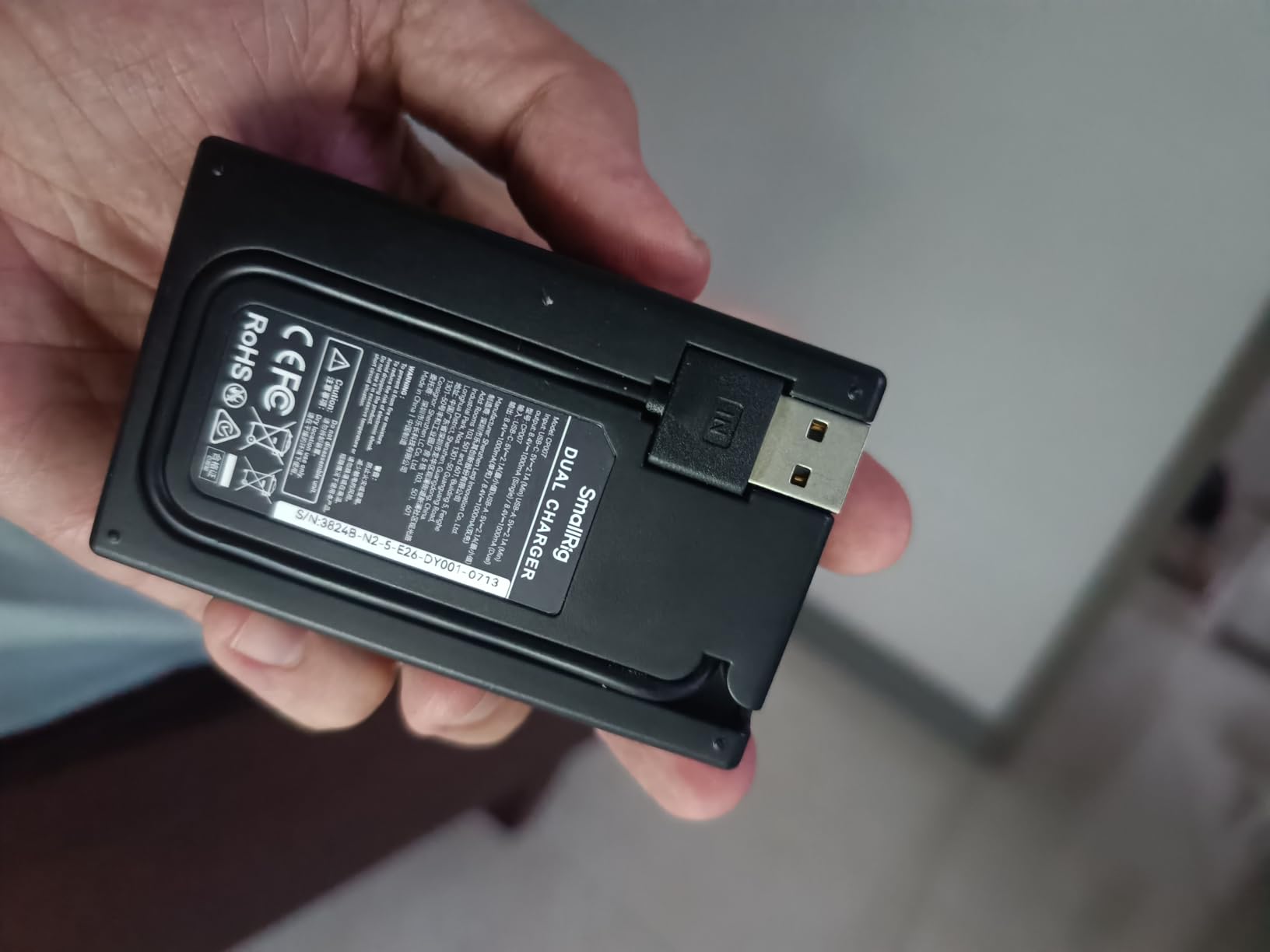
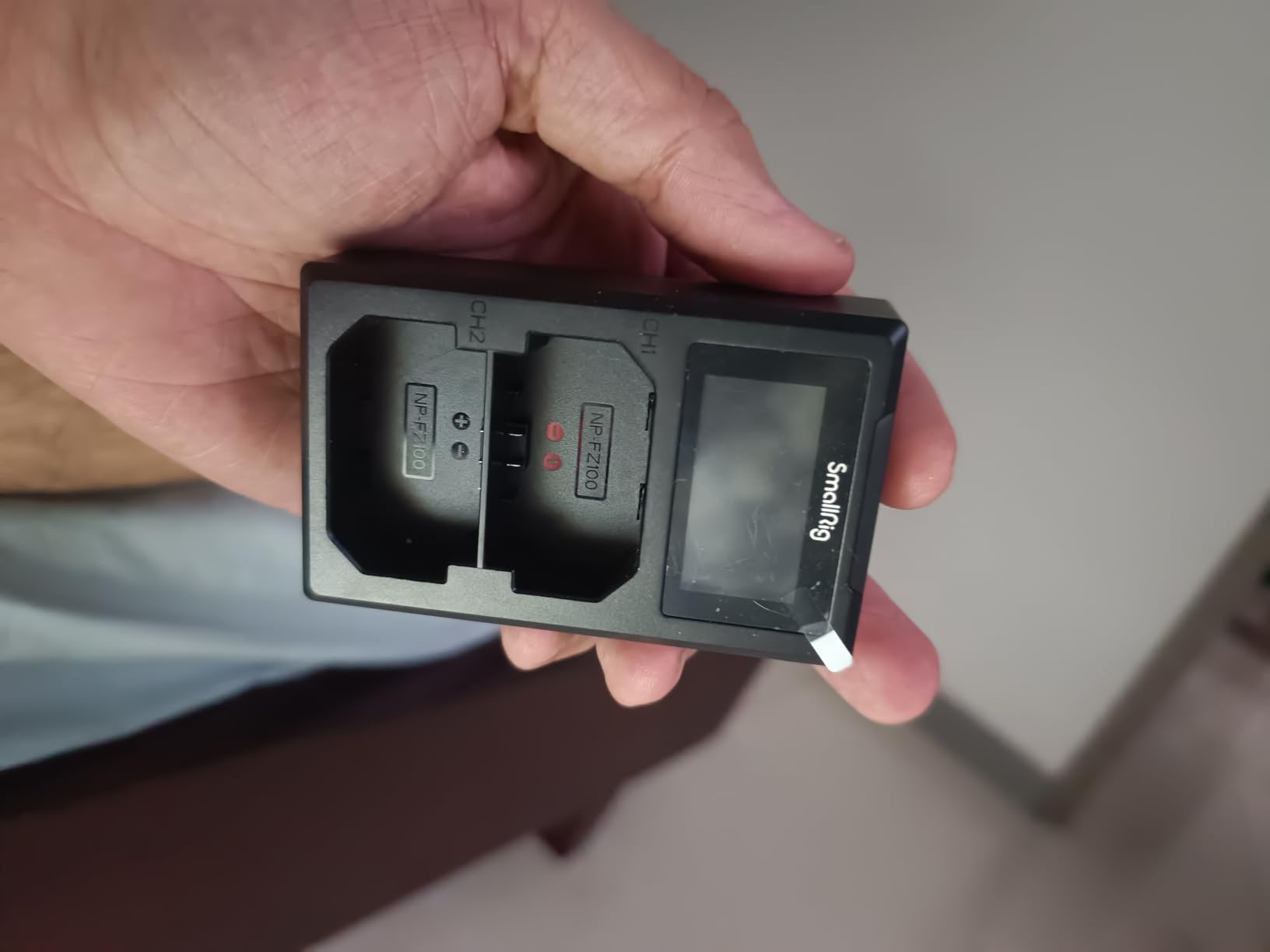
Where most bundles give you a charger with a light, this one gives you a charger worth owning. The LCD reports charging current, voltage, progress and capacity for each bay, which turns battery management from guesswork into information, and it accepts both a built-in USB-A cable and a USB-C input.
Two true 2040mAh cells are included, fully decoded with no memory effect. They fit Sony original cameras and original chargers without warnings, which makes this the safest way to leave the entire OEM ecosystem behind while keeping the accessories you already own.
Coverage is broad across current and recent Alpha bodies, from the a7 V and a7 III through the a7S III, a7R V, a7C II, a7CR, a1, a9 II, a6600, a6700, FX3, FX30 and ZV-E10 II. Owners tend to be satisfied with the parts, with the bundle itself being where the criticism lands.
Expect a full charge to take about three hours per battery, and factor the 221 g total weight into a small kit bag. If you are comparing strictly on cost, two single third-party NP-FZ100 cells cost less and skip the charger entirely.
When it earns its place
It suits Sony shooters who want batteries and a charging solution as a single decision, and anyone who likes knowing current, voltage and capacity while charging. The dual USB-A and USB-C inputs mean it works at a hotel, in a car or from a power bank.
When a simpler option wins
Buy single USB-C batteries instead if your priority is low weight and fast turnaround with one cable, or if you already own a multi-bay charger. This bundle is about completeness and diagnostics, not about the lightest possible kit.
Which Mirrorless Camera Battery Fits Which Body
Compatibility is where most buying errors happen, because battery model numbers look like a mess of suffixes that all seem interchangeable. They are not. The pack must match the compartment physically and pass the firmware handshake, and the four most common families cover almost every current mirrorless body.
Sony NP-FZ100 covers the a7 III, a7 IV, a7 V, a7R III, a7R IV, a7R V, a7S III, a7C, a7C II, a7CR, a6600, a6700, a9, a9 II, Alpha 1, FX3, FX30, ZV-E1 and ZV-E10 II. The older NP-FW50 is a completely different, smaller pack used by the a6000-series bodies and earlier NEX and Alpha cameras. They never fit each other.
Canon LP-E17 is the APS-C and entry mirrorless pack, used by the R50, R100, R10, R8, RP, the Rebel T8i, T7i, T6i, T6s, SL2 and SL3, plus the EOS M3, M5 and M6 Mark II. Full-frame Canon bodies use the LP-E6NH family instead, and the newest generation LP-E6P is the only pack that unlocks the full feature set on the latest EOS R bodies.
Nikon EN-EL15c fits the Zf, Zfc, Z5, Z5 II, Z6, Z6 II, Z6 III, Z7, Z7 II and Z8, and a long list of D500 to D7500 DSLRs, with the older EN-EL15b working in earlier bodies. Fujifilm NP-W235 is the current pack for the X-T4, X-T5, X-H2, X-H2S, X-S20, GFX100S and GFX50S II, replacing the NP-W126 and NP-W126S generation.
The practical rule I give every photographer: read the battery model stamped on the pack already in your camera, then buy that exact model, or a decoded replacement for it. Never buy by camera brand alone, because Sony and Fujifilm both have multiple incompatible generations in circulation at the same time.
OEM vs Third-Party Camera Batteries: The Honest Answer
Third-party batteries are safe to use in a camera. The fear is the single most repeated objection across photography forums, and it is not supported by evidence. What differs between a genuine and a good third-party pack is not whether it damages your body, it is how completely the two communicate and how well the cell is built.
A genuine pack carries an authentication and decode chip that completes a firmware handshake with the camera. That handshake is what unlocks the accurate remaining charge percentage, the battery entries in the camera menu, and in some cases recording limits. A decoded third-party pack replicates that handshake. An undecoded clone does not, and that is where warning messages and dead percentage indicators come from.
Newer bodies tighten this. Community consensus on the R5 Mark II is that only the genuine LP-E6P supports all features, with third-party batteries reported as heavily restricted or non-functional. On the Nikon side, some owners report compatibility errors on the Zf and Z6 III with certain third-party EN-EL15c packs. These are specific, documented limits rather than general evidence of danger.
Certification is how you filter the market. Look for UL, CE or RoHS marks and published protection circuitry, as seen on the ENEGON, BESTON, K&F CONCEPT and SmallRig packs in this roundup. Counterfeit cells are the real hazard, and the tells are a missing or sloppy certification print, unusually light weight, and a charger that charges noticeably faster than the stated time.
My working rule: buy a genuine pack for the body you shoot most, since it is the one where an error message or a shutdown is expensive. Buy a decoded third-party pack for travel spares and secondary bodies, where the savings multiplied across a kit matter more than menu completeness. Never let a dead battery end a paid shoot, whatever brand is in the compartment.
Charging, External Power and Battery Care
USB-C charging inside the battery, as offered by the NEEWER NP-FZ100 and the SMALLRIG LP-E6NH, removes a charger from the kit. Both reach a full charge in around 2.5 hours from a standard 5V source. What it does not do is let you shoot while charging, and the manufacturers both say so, which means the cell still has to sit still while it fills.
Charging through the camera body is a different proposition, and the wattage threshold confuses people. On the DPReview forums, the measured consensus is that a 9V 3A source, roughly 27W, is the real minimum for charging a battery while the camera is powered on. A 9V 2A source will run the camera but will not charge the internal cell, and a 20W power bank was still able to charge an OM-1 battery with the body switched on. Check your camera manual for its stated minimum before you rely on a bank.
The watt-hour maths is simple and worth doing. An NP-FZ100 stores about 16.4Wh, an LP-E6NH around 14Wh and an EN-EL15c roughly 14.3Wh. A 20,000mAh power bank at 3.7V is about 74Wh, which divides into four or five full camera battery charges once conversion losses are counted. That is the number that tells you whether a bank is worth carrying.
Heat is what kills these cells faster than anything else. Storing a charger and batteries together in a padded bag pocket pushes temperatures high enough to accelerate degradation, and a common finding is that a charger reached the high forties inside a closed padded pocket versus low thirties in a mesh pocket. Store batteries separately, at room temperature, and top them up the night before a shoot rather than days ahead.
For long video blocks, no cell holds up. A dummy battery that draws from a power bank, a wall adapter or a V-mount removes the runtime limit entirely, and Lumix users running dummy batteries with NP-F970 style packs report roughly an hour and twenty minutes of continuous recording, comparable to a normal pack. If your work is video-first, that is a better answer than upgrading batteries.
Frequently Asked Questions
What is the best brand of camera batteries?
Genuine Sony, Canon, Nikon and Fujifilm packs win on communication: they report charge level accurately, populate the camera battery menu, and unlock features on newer bodies. Among third-party makers, SmallRig, Ku0026amp;F CONCEPT, ENEGON, NITECORE, Wasabi Power and Neewer earn repeat mentions in photography forums, and decoded models from those brands are the ones to choose.
Is it okay to use a third-party battery for a camera?
Yes, provided the cell is certified and decoded. Decoded third-party packs complete the same firmware handshake as the original, so charge level and menu data appear normally. Certification marks such as UL, CE or RoHS, plus published overcharge and short-circuit protection, are the safety signals worth checking. Risk concentrates in uncertified counterfeit cells, not in reputable brands.
How long do mirrorless camera batteries last?
A full-frame mirrorless body typically delivers 300 to 500 shots per charge in normal conditions, and less in cold weather or with 4K video running. Canon LP-E17 class packs are rated at 1040mAh to 1250mAh, NP-FZ100 at 2280mAh and 16.4Wh, and EN-EL15c class packs at 1900mAh to 2280mAh. Real runtime depends far more on body settings and temperature than on the mAh label.
Are dummy batteries safe for cameras?
A dummy battery is a hollow adapter that fits the camera compartment and draws power from an external source such as a power bank, wall adapter or V-mount. They are safe when the source supplies a stable, regulated voltage matched to the camera. They are not safe when fed by an unregulated supply, which is why models with a decode chip and voltage regulation are worth paying more for.
What are the differences between the Canon LP-E6N and LP-E6NH batteries?
The LP-E6NH is the newer, higher capacity pack that uses USB-C charging in camera and works across the R, R5, R6, R7, R6 Mark II and 5D Mark families. The older LP-E6N has lower capacity and no USB-C. The newest LP-E6P is a further generation that the latest EOS R bodies use, and it is the only pack reported to unlock all features on those bodies.
How many spare camera batteries do I need?
At least two for any day of stills work, so one charges while the other is in the camera. Travel and landscape shooters usually want three. Event and wedding shooters who cannot tolerate a dead battery should carry four, or move to a dummy battery for video blocks. Video-first shooters often need no spares at all once external power is part of the kit.
The Best Mirrorless Camera Batteries in 2026: Final Verdict
After working through all 11 packs, the Sony NP-FZ100 remains the single best camera battery for mirrorless cameras overall, with 2280mAh, 16.4Wh, a 4.8 rating across more than 3000 reviews and reporting the camera trusts. The ENEGON EN-EL15c kit wins on completeness of package, and the Sony NP-FW50 is still the correct genuine choice for bodies that take the smaller pack.
For the rest, match the decision to your work: the K&F CONCEPT three-pack for volume Canon shooting, the BM Premium pair for full-frame Nikon owners, the SmallRig LP-E6NH if you want decoded USB-C convenience, and the genuine Canon LP-E6P if you shoot the newest EOS R bodies. Check the battery model stamped inside your camera before you order, and buy the pack on 2026 with two spares, not one.