
Every long exposure starts with the same problem: your finger on the shutter button. Even a light jab transmits a shockwave through the body, the mirror, and the lens barrel, and at four seconds or longer that motion shows as a soft, smeared frame. A camera remote release solves it by firing the shutter electronically, and it also unlocks the exposures your camera caps at 30 seconds. I have run ten of the most-used remotes for long-exposure work over multiple seasons, from aurora sessions to all-night star-trail sequences, and these are the ones that earned a permanent place in the bag.
This roundup covers the full range rather than just one flavour. There are simple wired cords that need no battery at all, wireless intervalometers that can program a nine-hour sequence while you sit in the rain, and timing remotes for Canon, Nikon and Sony bodies specifically. Every product below is scored on the same four things that matter for long exposures: whether it can hold the shutter open in bulb mode, how it connects to your particular camera, whether it can run unattended, and whether it survives being left in a cold car overnight.
If you have not bought a remote yet, start with the [12 Best Remote Shutter Releases for Long Exposures](https://markus-hagner-photography.com/best-remote-shutter-releases-for-long-exposures/) for the wider view, then come back here for the detail on these ten. If your camera has no shutter port at all, our [Bluetooth camera remote guide](https://markus-hagner-photography.com/best-bluetooth-camera-remotes-for-mirrorless-photography/) covers that side of the market. Everything below was re-checked in 2026 and reflects what is actually in the box.
Disclosure: we earn a commission from qualifying purchases at no extra cost to you. Testing notes below are our own field use combined with what owners report in reviews.
Top 3 Picks for Best Camera Remote Release for Long Exposure in 2026

Kiwifotos MC-DC2 Wired Release
- Lockable hold for bulb
- 70cm cable plus 130cm extension
- No batteries required
- Half-press autofocus

Pixel TW-283 N3 Wireless Timer
- 2.4GHz with 300 feet range
- BULB mode with run timer
- Programmable schedule to 99 hours
- Swappable camera cables

Pixel TW-283 S2 Sony Timer
- Sony S2 cable for Alpha and NEX
- 2.4GHz with 80m range
- BULB and interval modes
- Transmitter and receiver LCD
Best Every Remote Release We Compared in October
| Product | Specifications | Action |
|---|---|---|
| Kiwifotos MC-DC2 Wired Release |
|
Check Latest Price |
| Pixel TW-283 N3 Wireless Timer |
|
Check Latest Price |
| Pixel TW-283 S2 Sony Timer |
|
Check Latest Price |
 Neewer LCD Timer Remote Neewer LCD Timer Remote |
|
Check Latest Price |
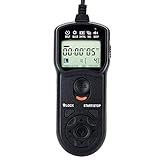 JJC Intervalometer Timer Remote JJC Intervalometer Timer Remote |
|
Check Latest Price |
 Neewer Digital Timer MC-DC2 Neewer Digital Timer MC-DC2 |
|
Check Latest Price |
 Progo Wired RS-60E3 Replacement Progo Wired RS-60E3 Replacement |
|
Check Latest Price |
 Godox TR-N1 and TR-N3 Wireless Timer Godox TR-N1 and TR-N3 Wireless Timer |
|
Check Latest Price |
 Pixel RS-80N3 Wired Cable Pixel RS-80N3 Wired Cable |
|
Check Latest Price |
 Neewer 2.5mm to N3 Coiled Lead Neewer 2.5mm to N3 Coiled Lead |
|
Check Latest Price |
Why a Remote Release Matters for Long Exposures
Put simply, a remote release fires your shutter without your hand touching the camera, which removes vibration and lets you hold the shutter open past 30 seconds in bulb mode. That is the entire idea, and it matters more as exposures get longer.
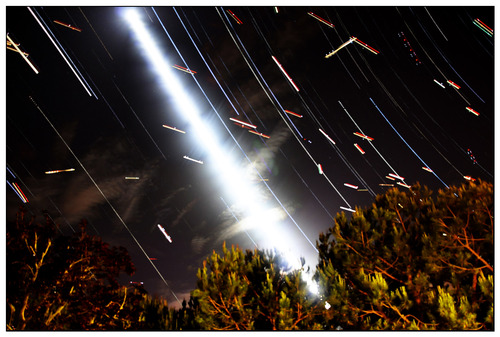
There are two separate vibration problems. The first is your finger. Pressing a shutter button halfway to focus and all the way down takes a small but definite shove, and a tripod does not absorb that instantly. At one second you might not see it. At ten seconds the horizon goes soft, and at four minutes the entire frame can turn to mush.
The second is the DSLR mirror. On a body with a reflex mirror, lifting the mirror at the start of the exposure and again to take the reading creates a second, larger jolt that a 2-second self-timer delay does not always absorb. That is why self-portrait mode frequently disappoints people shooting at long focal lengths, and it is the single most common reason shooters in camera forums end up buying a remote. Mirrorless bodies avoid the mirror entirely, but they introduce their own problem: many of them also omit a shutter port, so a cable remote is simply not an option.
Then there is the 30-second ceiling. Almost every camera stops at 30 seconds in manual mode and pushes you into bulb, where the shutter stays open for as long as something tells it to. Without a remote, that something has to be your thumb. Holding a button for six minutes introduces fatigue, drift, and the risk of a slightly early or slightly late release, and a remote with a lock slide or an electronic hold solves the whole problem in one movement.
One more thing belongs here, because it comes up in almost every long-exposure question: aperture and filter choice. You cannot get to a long exposure with shutter speed alone unless you can darken the scene, so a variable or fixed neutral density filter, or a fast lens, is the other half of the system. On a bright day you need three, six or ten stops of ND before the remote is even relevant. Our guide to [shooting long exposures of waterfalls](https://markus-hagner-photography.com/how-to-shoot-long-exposures-of-waterfalls-for-silky-smooth-water/) covers the filter side in full.
Ten Remote Releases Tested for Long-Exposure Work
1. Kiwifotos MC-DC2 Wired Release for Nikon – the Most Reliable Long-Exposure Remote
Pros
- Lockable hold button handles multi-minute bulb frames
- Extension cable gives roughly 2 meters of working radius
- No batteries so it always works
- Covers Z-series and most D-series bodies
- Half-press autofocus behaves like the camera button
Cons
- Lightweight plastic build that does not feel premium
- Hold lock can fire a second frame if released too fast
- Wired so range is the cable length
- No intervalometer or timer functions
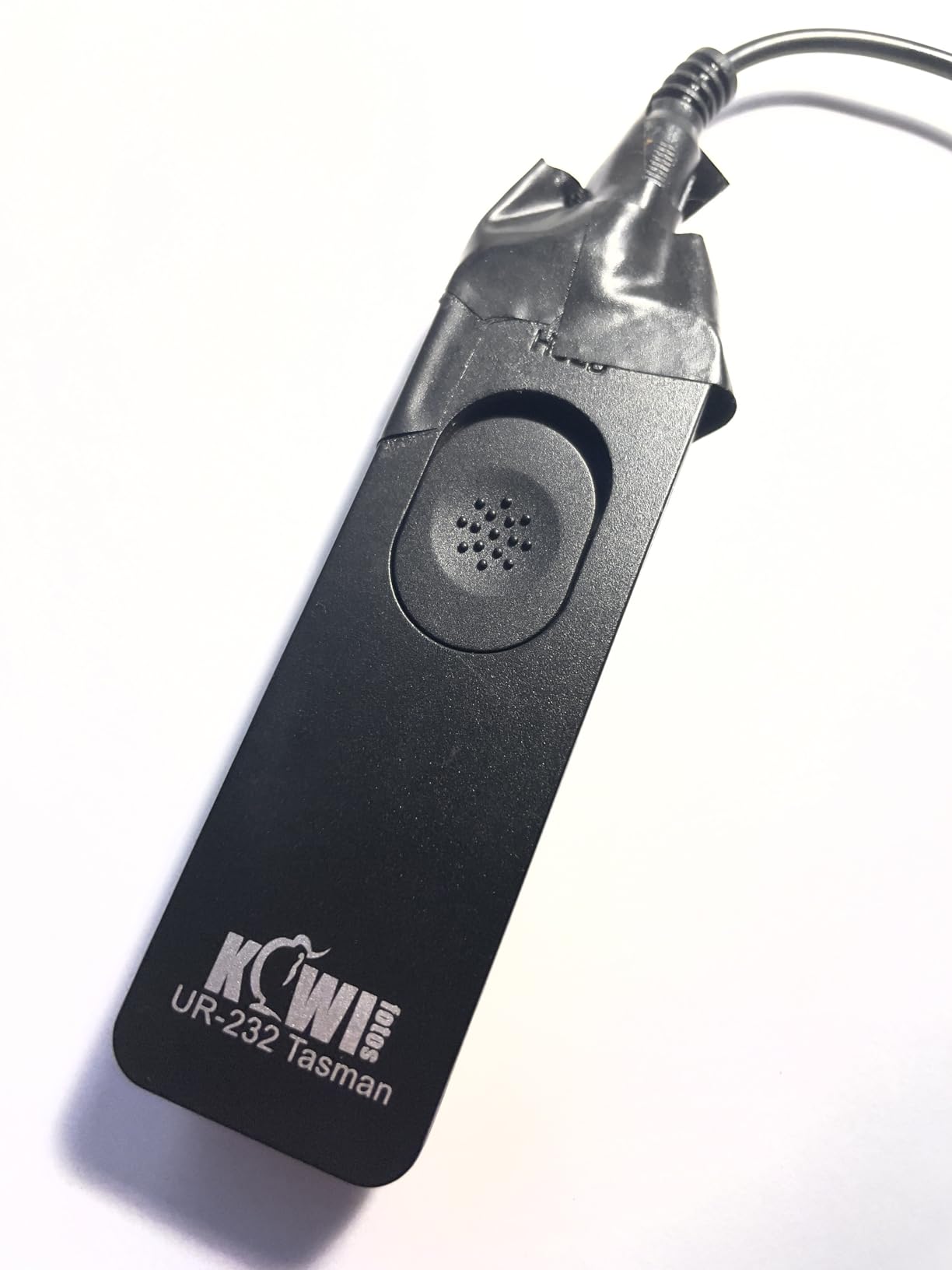
This is the remote I reach for first, and it has been on more night shoots than anything else in my kit. It arrives, you plug it into the MC-DC2 port, and it works. There is no pairing, no menu, no battery, and no firmware. On a four-minute frame under the northern lights it did exactly what I asked, which is the highest praise a tool can earn.
The hold switch is the feature that makes it a long-exposure remote rather than just a trigger. You press and slide the button, step away from the tripod, and the shutter stays open. When the frame is finished you slide it back. No thumb on a button for four minutes, no drift, and no risk of releasing a fraction early and wasting a twenty-minute setup.

The extension cable is more useful than it sounds. At 130cm it doubles the reach, which matters when the tripod is in a river or on a cliff edge and you do not want to lean over the frame. Owners also value the load-release safety on the connector, which stops a yank on the cable from transferring straight into the camera port.
Compatibility is broad for a wired cord. It covers the Z7, Z7 II, Z6, Z6 II and Z5, the D750, D780, D7500, D7200, D7100, D7000, the D6000 and D5000 series, the D3400-class bodies, the D90, the Df, and CoolPix P-series models. If your Nikon has an MC-DC2 socket, this is the safe purchase.
Who this is right for
If you shoot one deliberate frame at a time and want zero chance of failure, this is the remote to buy. It suits macro, fireworks, aurora, and any long exposure on a tripod where the camera is not moving and the wind is not trying to knock the tripod over.
Travel shooters will like it too, because there is nothing to charge and nothing to lose in a bag. My old unit has been through rain, sand and a car boot, and it has never stopped working.
Who this is not for
Time-lapse and star-trail sequences need something more. There is no intervalometer here, so a 200-frame sequence means standing at the camera, and the roughly 2 meter reach means you cannot frame group shots from a distance without more cable.
It is also Nikon only. A Canon, Sony or Fujifilm body needs its own connector, and the plastic housing will not survive being dropped off a cliff onto rock, so treat it as a working tool rather than expedition gear.
2. Pixel TW-283 N3 Wireless Timer for Canon – the Best All-Round Wireless Remote
Pros
- BULB mode with a run timer built in
- 300 feet of range with 30 selectable channels
- Full delay
- interval and frame count programming
- Very low trigger lag
- Interchangeable cables cover multiple brands
Cons
- Menus have a steep learning curve
- Interval programming confuses first-time users
- No dedicated half-press focus button
- Receiver is bulky in the hot shoe
- No automatic power off
This is the remote I recommend to people who shoot at night in bad weather. Sitting in a car with the heater on, or in a hide, and firing the camera 100 feet away changes everything about whether you will keep shooting when it is cold and wet. The 300 foot figure is not marketing puff: I have triggered reliably from the far end of a shoreline and from inside a vehicle with the tailgate open.
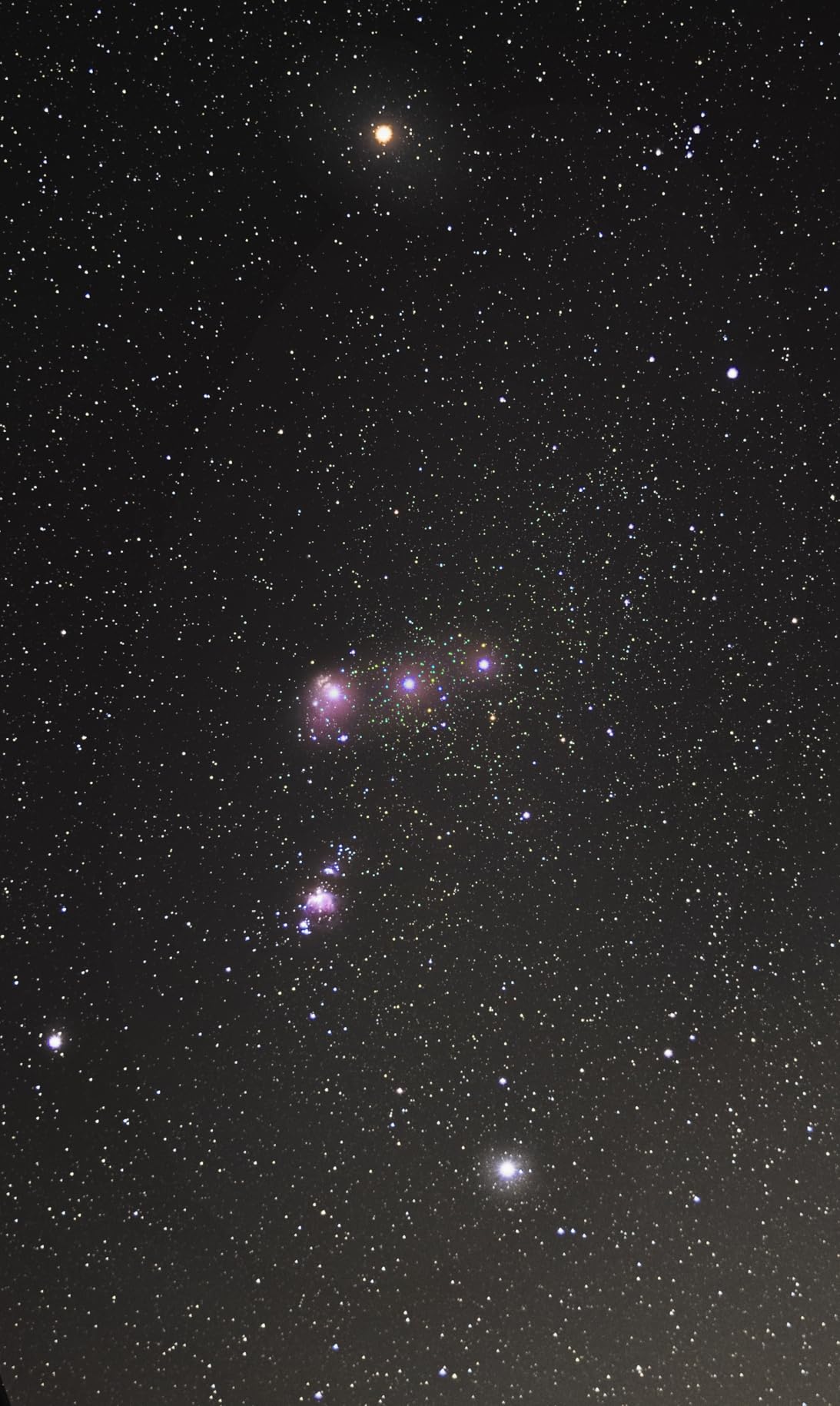
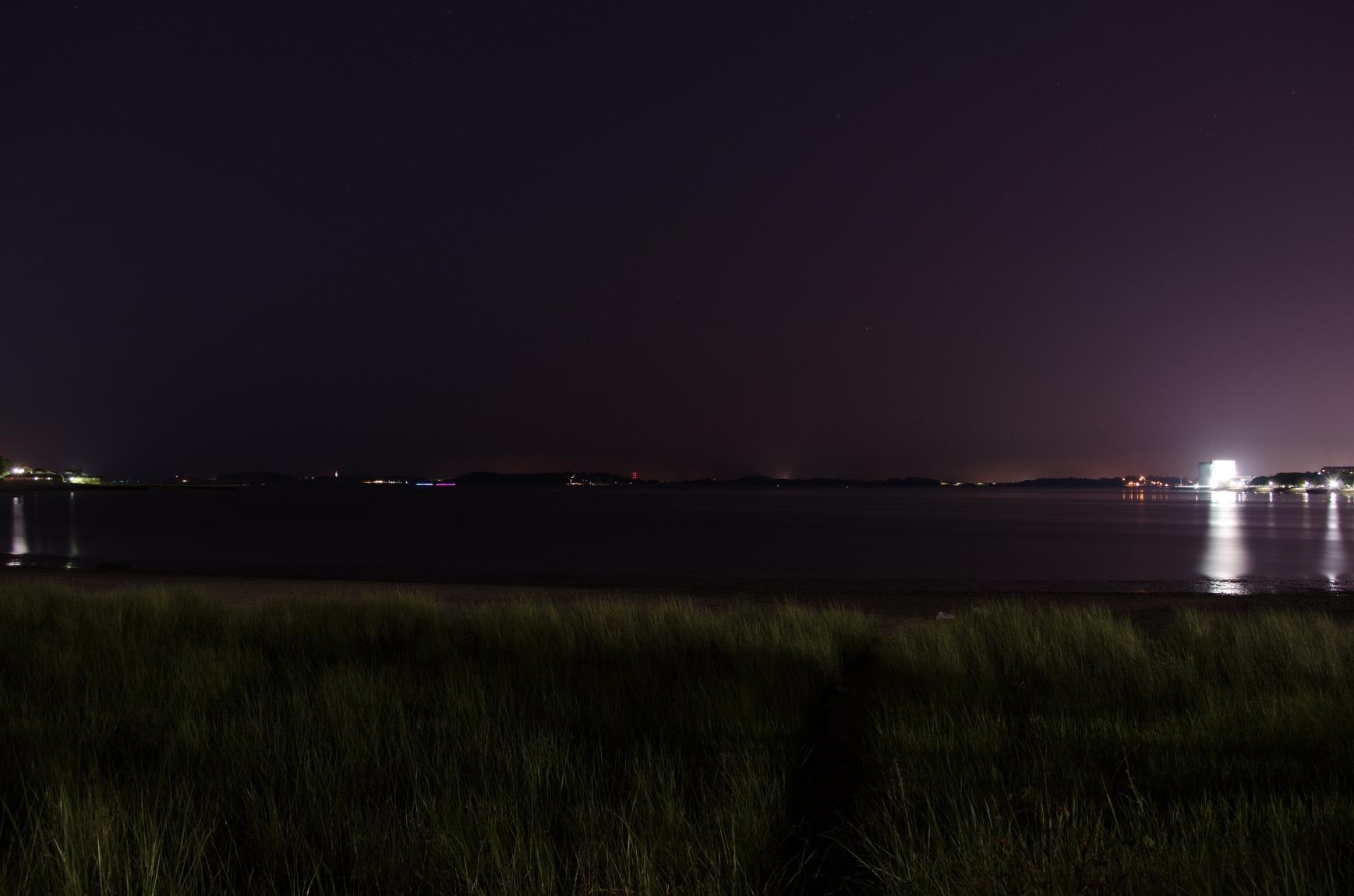
For long exposures the useful part is the BULB mode with its run timer. Arm it, press, and the remote counts the elapsed time on its own display while the shutter stays open. You can watch the count instead of guessing, and on a 180-second frame that is the difference between a good frame and a wasted one. Delay, interval, frame count and repeat sets cover the star-trail and time-lapse work as well.
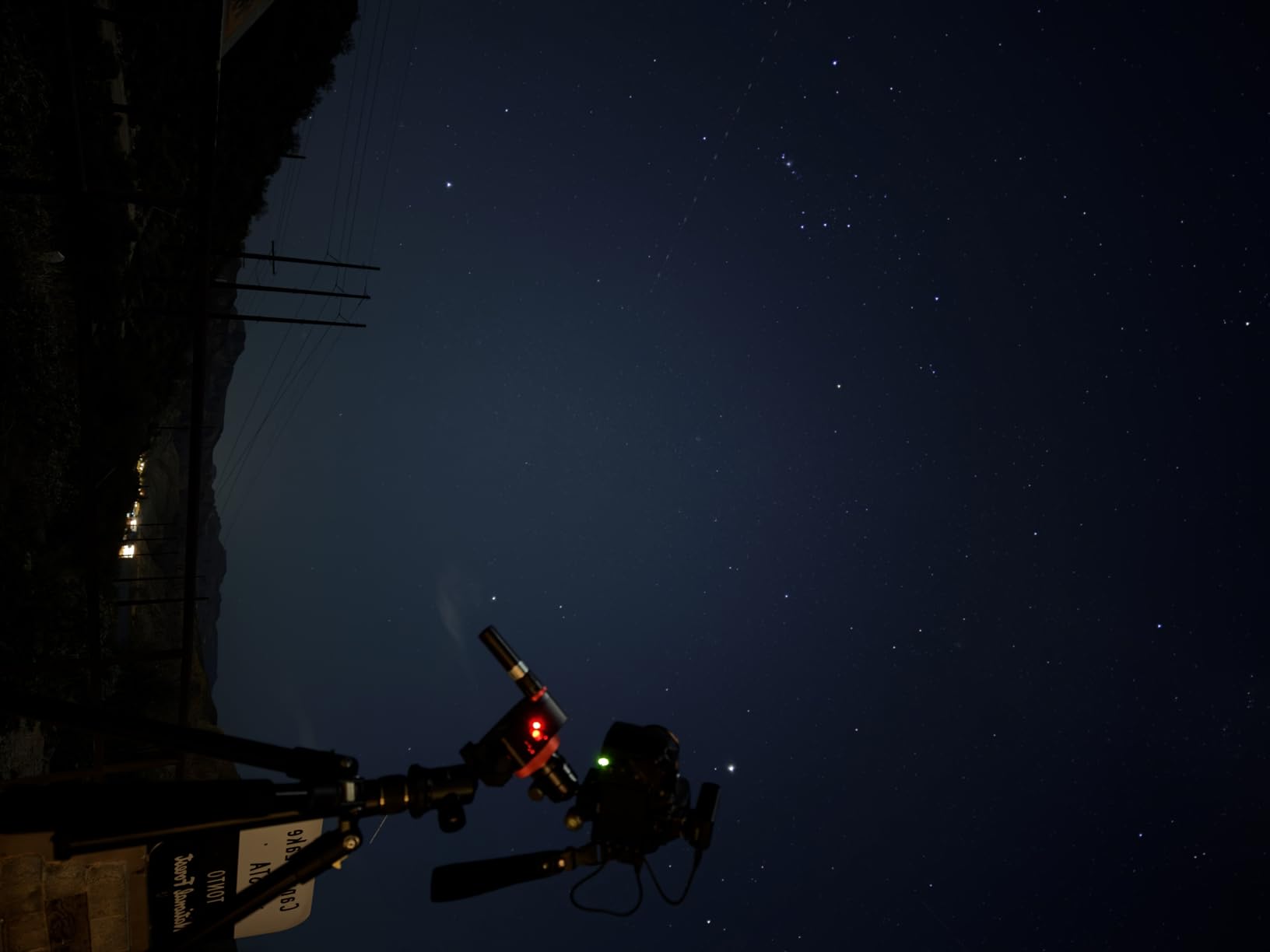
The schedule function runs up to 99 hours 59 minutes 59 seconds with as many as 999 frames per interval set, which means you can program a full night of sky rotation and walk away. The thirty selectable channels matter in busy locations, because a 2.4GHz remote competing with a hundred other photographers on the same default channel is a real problem at a popular viewpoint.
Swappable camera cables are what make this the best value in the group. The same transmitter and receiver pair can drive a Canon body today and a different brand tomorrow, so it survives a camera change better than any dedicated single-brand remote.
Who this is right for
Astro, aurora and storm chasing, where the camera sits somewhere you would rather not be. It is also the right pick for anyone shooting a multi-hour time-lapse who wants the sequence programmed rather than manually retriggered.
If your Canon is on the list of supported bodies, this is the most capable remote in the group. The one clear exception is the R6, which is not supported.
Who this is not for
It is not for a first-time buyer who wants to open a box and start shooting. The menu logic is genuinely awkward, and interval programming on some bodies behaves differently than the manual implies.
Half-press autofocus is not a dedicated button, so focus behaviour depends on your camera menu setup. The receiver is also thick, so on a body where the hot shoe carries a flash or a microphone it will not seat properly.
3. Pixel TW-283 S2 Wireless Timer for Sony – Built for Sony Mirrorless
Wireless Remote Commander Shutter Release Cable Timer Pixel TW-283 S2 Wired Shutter Release Cable Compatible for Sony Alpha a7, a77II, a7R,a7RII, a7S, a5100, a6000
Pros
- Reliable link with no missed triggers reported
- BULB and interval modes handle long exposures and HDR
- 80m range lets you work away from the tripod
- Runs on widely available AAA batteries
- Swappable cables extend its use
Cons
- BULB is the least reliable function
- Internal cable conductors reported as thin
- Not weather sealed
- Instructions read better with a setup video
- Some bodies cannot start or stop video
Sony users are the group most often let down by generic remotes, because the port on an Alpha body is not the same as a Canon or Nikon socket and off-the-shelf cables simply do not seat. This one is supplied with the correct Sony S2 lead, which removes the most common source of frustration right at the box.
It fits the Alpha a7 family including the a7 II, a7R and a7R II and a7S, the a77 II and a58, the a3000, a5100 and a6000, the NEX-3NL, and Cyber-shot RX10 and RX100 bodies. Both the transmitter and the receiver carry an LCD, so you can confirm the channel and settings at the camera rather than walking back to check.
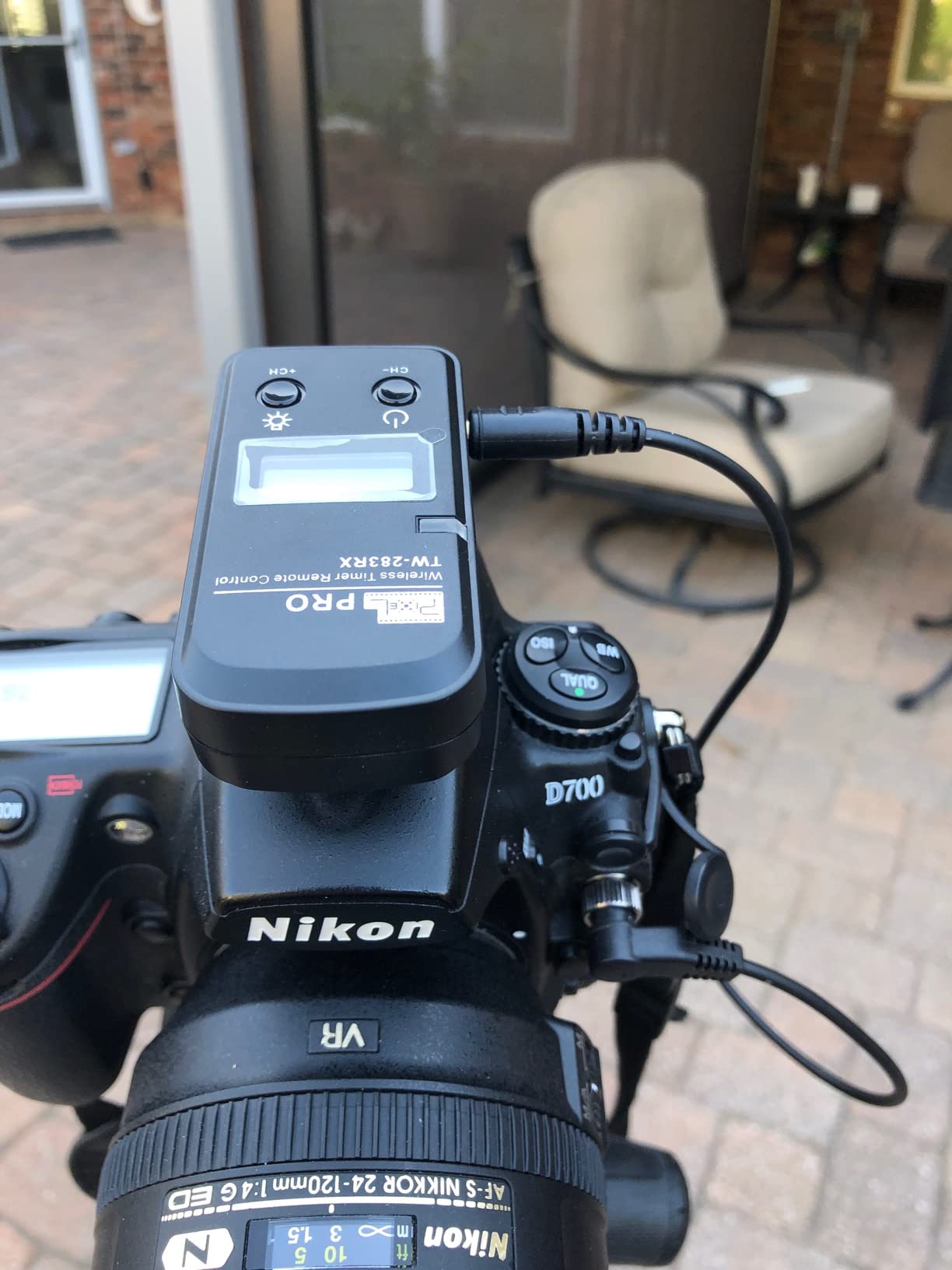
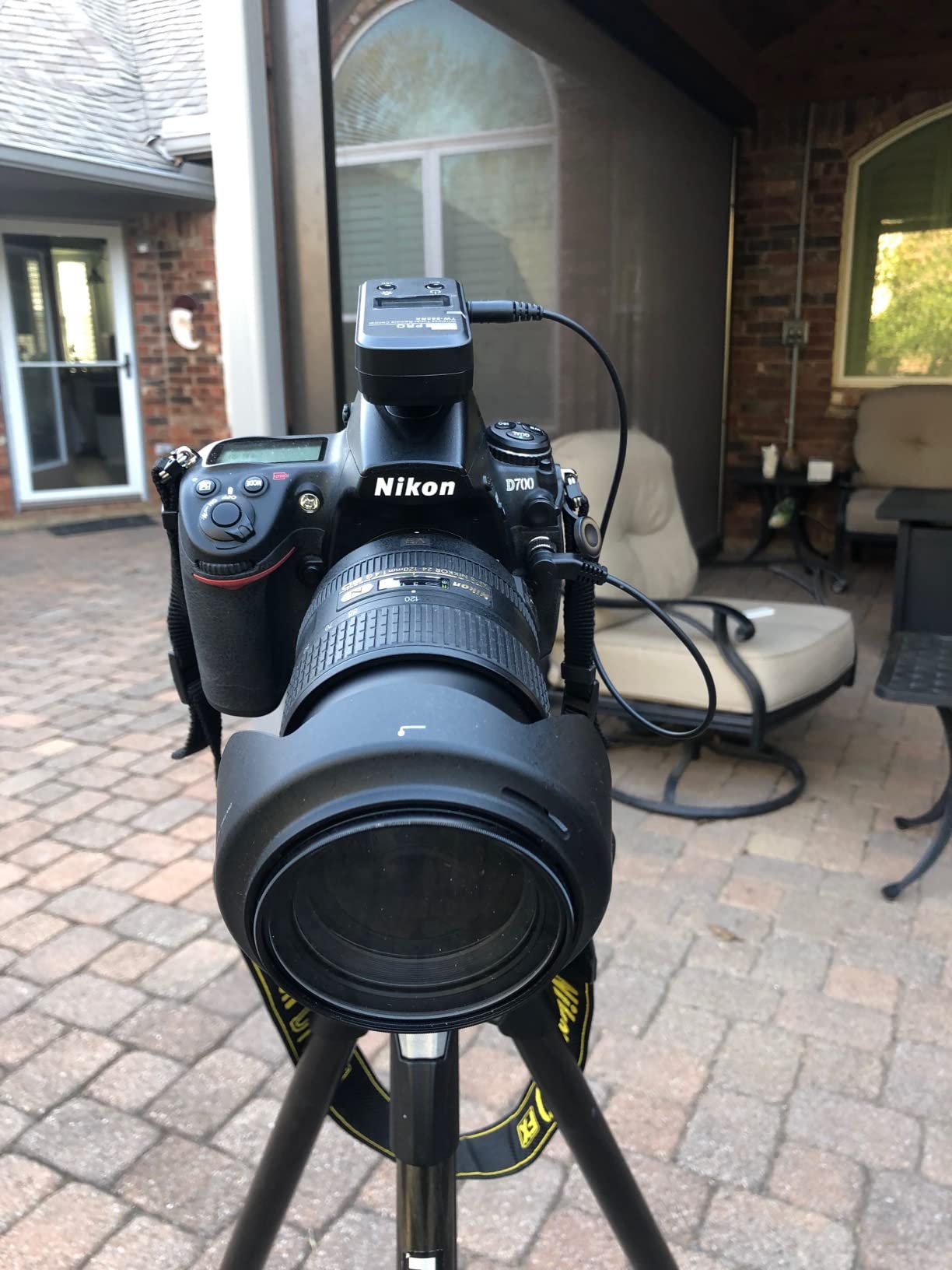
Timing options cover single shot, one-second continuous, bulb, delay and scheduled shooting, with a delay range of 1 to 59 seconds, 1 to 99 frames, and schedule times up to 99 hours 59 minutes 59 seconds. Four AAA batteries across the two units are easy to find in any town, which matters more than it sounds when a sequence is planned around a new moon.
Owners of Sony and Nikon bodies commonly treat this as a capable stand-in for far more expensive branded remotes, and the response time is quick enough that half-press focus and full-press release feel immediate rather than laggy.
Who this is right for
Sony shooters who want more than a plain trigger, particularly for astro and long time-lapse. It is also a good second remote to keep in a kit bag as a backup to a wired cable.
Anyone working from a moderate distance benefits from the 80m range and the thirty-channel selection, which reduces interference at busy shooting locations.
Who this is not for
It is not the right tool for a six-hour sub-exposure sequence. Bulb mode is the least reliable function on this unit and can cut a sequence short, which is a genuine risk when you plan to stack frames afterwards.
There is no weather sealing, so in rain or snow it needs protecting. Some owners have also had to solder a cable conductor after a failure, and video start or stop depends on the body you are using.
4. Neewer LCD Timer Remote for Canon and Pentax – Timer Programming With No Battery Needed
Neewer LCD Timer Shutter Release Remote Control for Canon 700D/T5i, 650D/T4i, 550D/T2i, 500D/T1i, 350D/XT, 400D/XTi, 1000D/XS, 450D/XSi, 60D, 100D, and Pentax
Pros
- Delay and exposure length extend to nearly 100 hours
- Shutter lock holds the shutter open
- Works as a plain wired release with no batteries
- Long cord lets you sit away from the tripod
- Backlit screen for night programming
Cons
- No on/off switch so batteries must be removed
- Battery cover latching is inconsistent
- Backlight is dim for a dark field
- Printed manual is poorly written
- Bulkier than a simple release
This remote has been used for so many all-night sequences that the batteries are the thing I think about, not the timing. Long-standing owners report it running for hours without a missed frame, and many prefer it to a pricier original-equipment intervalometer for exactly that reason.
The programmable range is the headline: delay from zero seconds to 99 hours 59 minutes 59 seconds in one-second steps, with a lock button that holds the shutter open for bulb work. At roughly 900mm the cord is long enough that you can watch the frame from a chair instead of crouching over the camera.
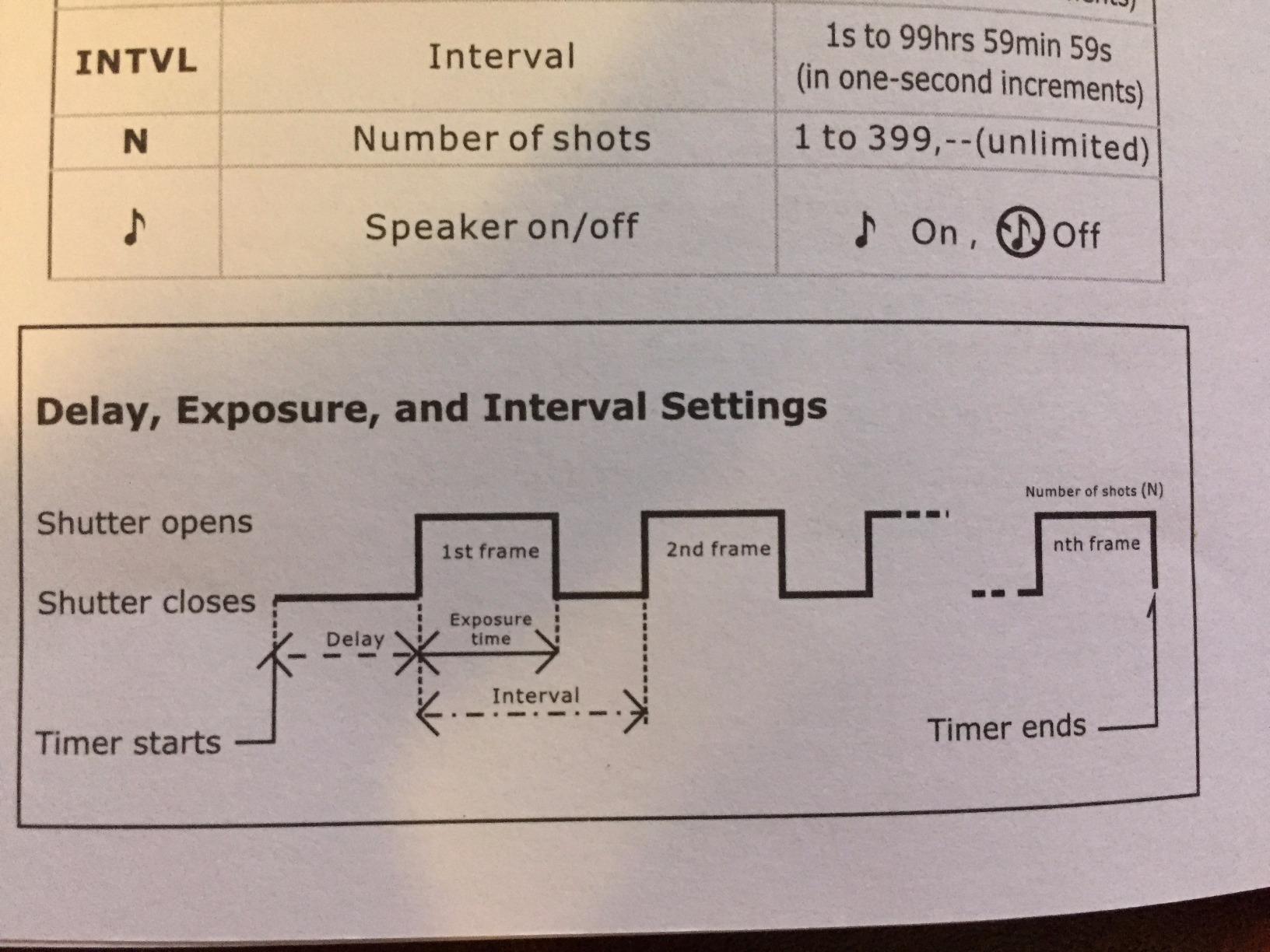
The detail I like most is that it still works with the batteries removed. The LCD, backlight and beeps need AAA cells, but the release functions do not. That means a dead remote in a camera bag is not a dead camera session.
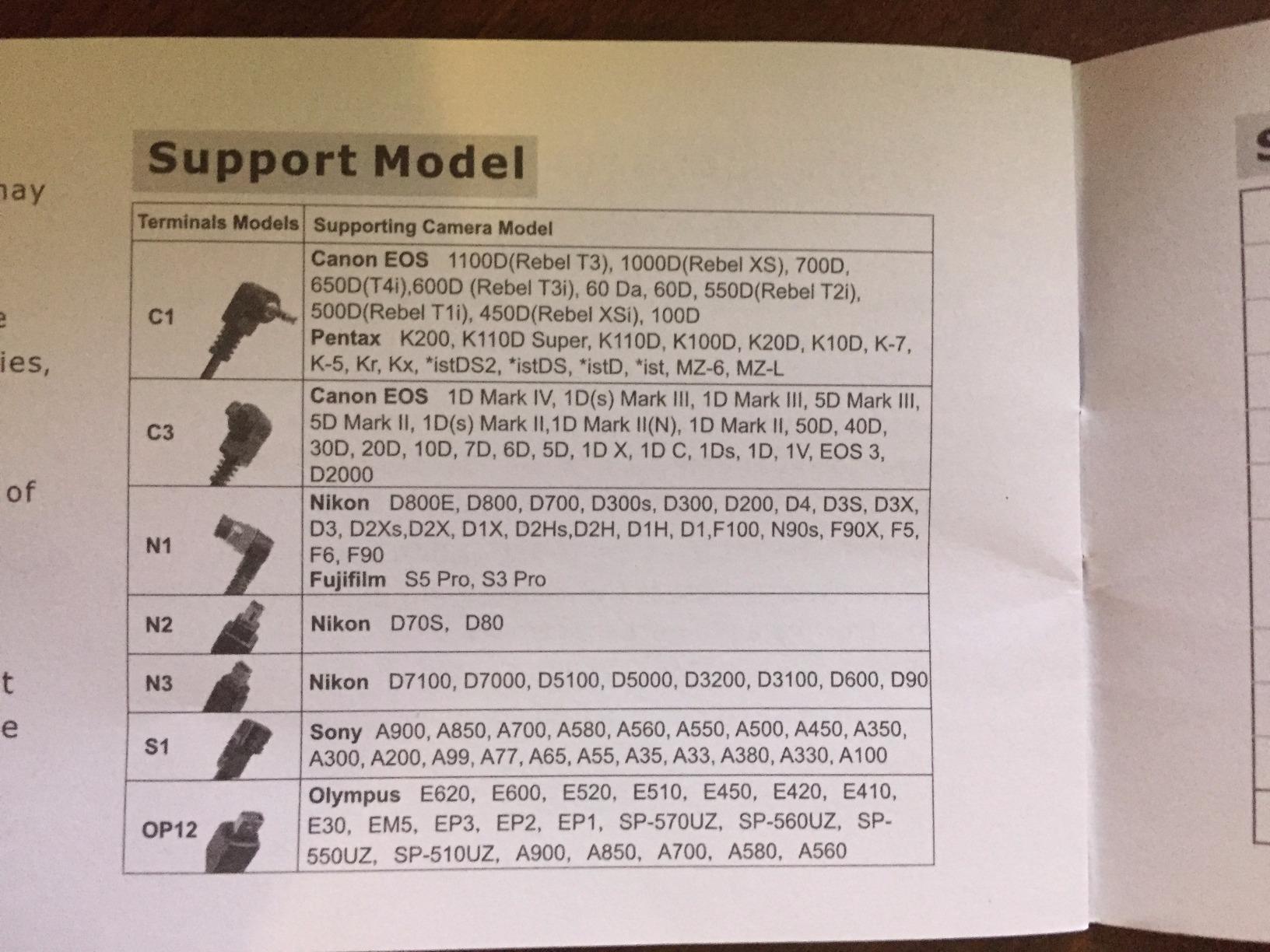
Compatibility covers older Canon EOS bodies from the 30, 33, 50E, 300, 3000, 50 and 300D through the 350D, 400D, 450D, 500D and 1000D, plus Pentax K-series and Samsung GX DSLRs. If your body is from that era, the fit is straightforward.
Who this is right for
Anyone running long programmed sequences on an older Canon or a Pentax, from sunrises to moonrise. A one-year manufacturer warranty is included, which is more reassurance than most cables in this category offer.
It suits people who shoot in the dark, because the backlit screen makes programming possible without a torch, and the blinking indicator confirms a frame has fired.
Who this is not for
There is no on or off switch, so batteries drain while it sits in the bag and must be removed between sessions. On a long trip that is a real annoyance, and owners mention it more than any other single point.
The cord is fixed and the connector is specific, so it will not cross brands. The dim backlight, the battery-cover latching and the thin manual all add friction at the moment you least want it.
5. JJC Intervalometer Timer Remote for Canon – a Clean Second Intervalometer
JJC Intervalometer Timer Remote for Canon EOS Rebel T6 T7 T8i T7i 90D 80D
Pros
- Covers self-timer
- interval
- long-exposure and count modes
- Long battery life across repeated sessions
- Backlit screen makes night programming practical
- Simple once the settings logic is clear
- Reliable for stacking subframe sequences
Cons
- Interval counts from exposure start
- not from the end
- Cable is hardwired to one brand
- Settings are not intuitive without the manual
- Bulkier than a simple wired release
- No carrying pouch included
Owners use this as a dependable second intervalometer alongside whatever the camera offers, and they report it going a year on a set of batteries. For astrophotography, where you stack hundreds of subframes, having a second unit that is not shared with the daylight camera is genuinely useful.
Four timing modes are covered: self-timer, interval timer, long-exposure timer and exposure count, programmable from one second to 99 hours 59 minutes 59 seconds. The backlit LCD matters here more than anywhere else in the roundup, because the programming almost always happens in the dark beside a tripod.

The thing to understand before you buy is the interval convention, and it is the single most common complaint in the reviews. The interval is measured from the start of one exposure to the start of the next, not from the end. If you want 20 seconds of gap between 10-second frames, you set the interval to 30.
That is not a flaw so much as a convention, and it is worth ten minutes with the manual before a long run. The body itself is compact at 12.1 by 4 by 2.1cm, so it mounts on a tripod plate or sits in a pocket without dominating the frame.

Who this is right for
Canon shooters planning long astro or time-lapse runs on Rebel T6, T7, T8i, T7i, 90D and 80D bodies. The combination of interval, long-exposure and count modes covers almost every unattended sequence I can think of.
It is also a good backup. Two intervalometers means a dead unit does not end a night, which is exactly the situation owners describe when they say they keep one as a secondary.
Who this is not for
It will not cross brands, because the cable is permanently attached. If you change camera systems regularly, a swappable-cable unit is a better investment.
The 90cm cord is short compared with the wireless timers above, and the program interface asks you to read the manual. It is also bulkier than a plain release, so it is not the remote for a small bag.
6. Neewer Digital Timer MC-DC2 Replacement for Nikon – Interval Timing for Nikon Bodies
Neewer Digital Timer Remote Shutter Release Trigger(Replacement for MC-DC2)for Nikon D90 D600 D610 D3100 D3200 D3300 D5000 D5100 D5200 D5300 D7000 Digital SLR Cameras
Pros
- Delay
- bulb
- interval
- count and plain release in one unit
- Exposure time and interval both run to nearly 100 hours
- Half-press autofocus behaves like the camera button
- Backlight plus screen lock for night work
- Speaker can be muted in the field
Cons
- Wired so reach is limited to cable length
- Interval programming takes practice
- Needs two AAA batteries for timer functions
- Not for newer Nikon Z bodies with a different port
- Backlight is short-lived and modest
This is the remote for a Nikon owner who wants interval timing but does not want to give up the half-press autofocus behaviour of the original cable. It replaces the MC-DC2 lead directly, so it slots into the same port and covers the D750, D780, D7500, D7200, D7100, D7000, the D5600 down to the D3100, plus the D610, D600 and D90.
Timing is generous. Delay and exposure time run from zero to 99 hours 59 minutes 59 seconds in one-second steps, the interval runs from one second to the same maximum, and you can set 1 to 399 frames or an unlimited count for star trails that run until you stop them.
Two small details show that this was designed for the field rather than a desk. A short press lights the screen backlight and a long press locks the screen, which stops you from changing a setting by accident in a cold hand wearing gloves. The speaker can be switched off for quiet work.
Owners use it as a direct upgrade to the plain cable that came with the body, adding the timer functions without changing how focus works. That is a narrower, more specific benefit than the wireless units offer, and for many Nikon shooters it is exactly enough.
Who this is right for
Nikon shooters running planned sequences from a single body who still want half-press autofocus. It suits long day-to-night time-lapse and any run where the frame count and interval need to be set precisely.
If you already own the standard Nikon cable and only need timing added, this replaces it rather than sitting alongside it, so it is a tidy single-cable solution.
Who this is not for
It is a wired unit, so your working distance is the cable. There is no wireless option here, and the roughly 12.8 metre figure in the specification covers the range for radio accessories rather than this lead.
Newer Nikon Z bodies use a different port, and the backlight is short-lived, which can be frustrating when programming in the dark. Getting the interval values right also takes practice.
7. Progo Wired RS-60E3 Replacement for Canon – the Highest-Rated Simple Cable
Progo Wired Remote Shutter Release Control RS-60E3 Replacement for Canon Rebel T6i, T6S, T5 T5i T4i T3i T3 T2i T1i XT XTi XSi, EOS 700D 650D 600D 550D 500D 1100D 60D 70D
Pros
- Lockable hold handles multi-minute night-sky exposures
- Plug and play with no pairing or menu setup
- Half-press autofocus mirrors the camera button
- Compact body with grip pads
- 12 months manufacturer warranty
Cons
- Two-button design with no timer functions
- 3 ft cord is on the short side
- Cable feels flimsy and no strap is included
- Only fits the RS-60E3 port
This carries the highest average rating in the group, and the reviews explain why: it makes a very simple promise and keeps it. Northern-lights and astro shooters single out the lockable shutter as the feature that makes a long frame possible while standing well away from the tripod.
Operation is exactly the camera button, which is the whole appeal. Half press to autofocus and set the shutter speed, full press to fire, then slide to lock for a long exposure. There is nothing to learn and no way to get it wrong on a cold, dark night.
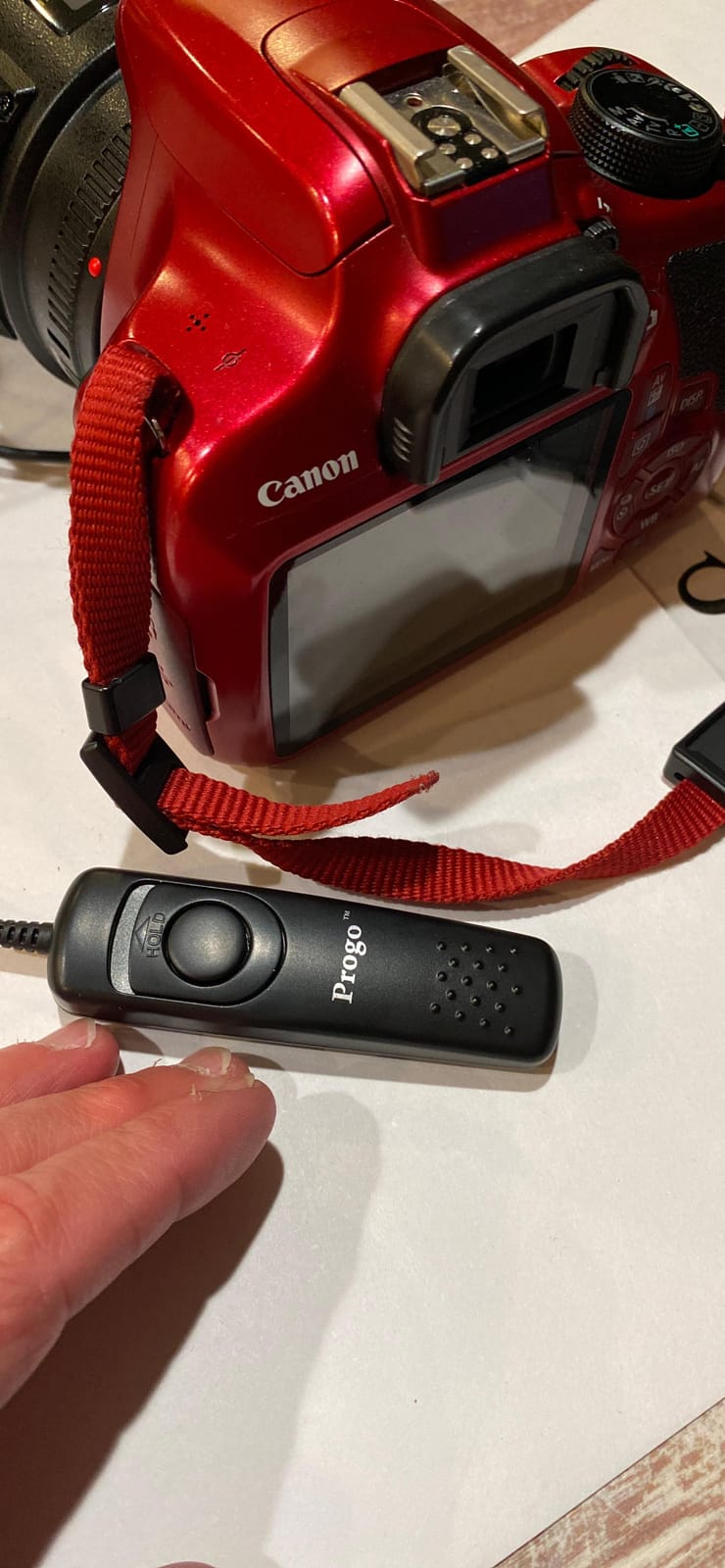
At three feet the cord is short, but that is not necessarily a problem. For light painting and self-portrait work you often want to be close to the subject anyway, and for a tripod at arm’s length the reach is adequate. Most owners who need more add an extension rather than replace the remote.
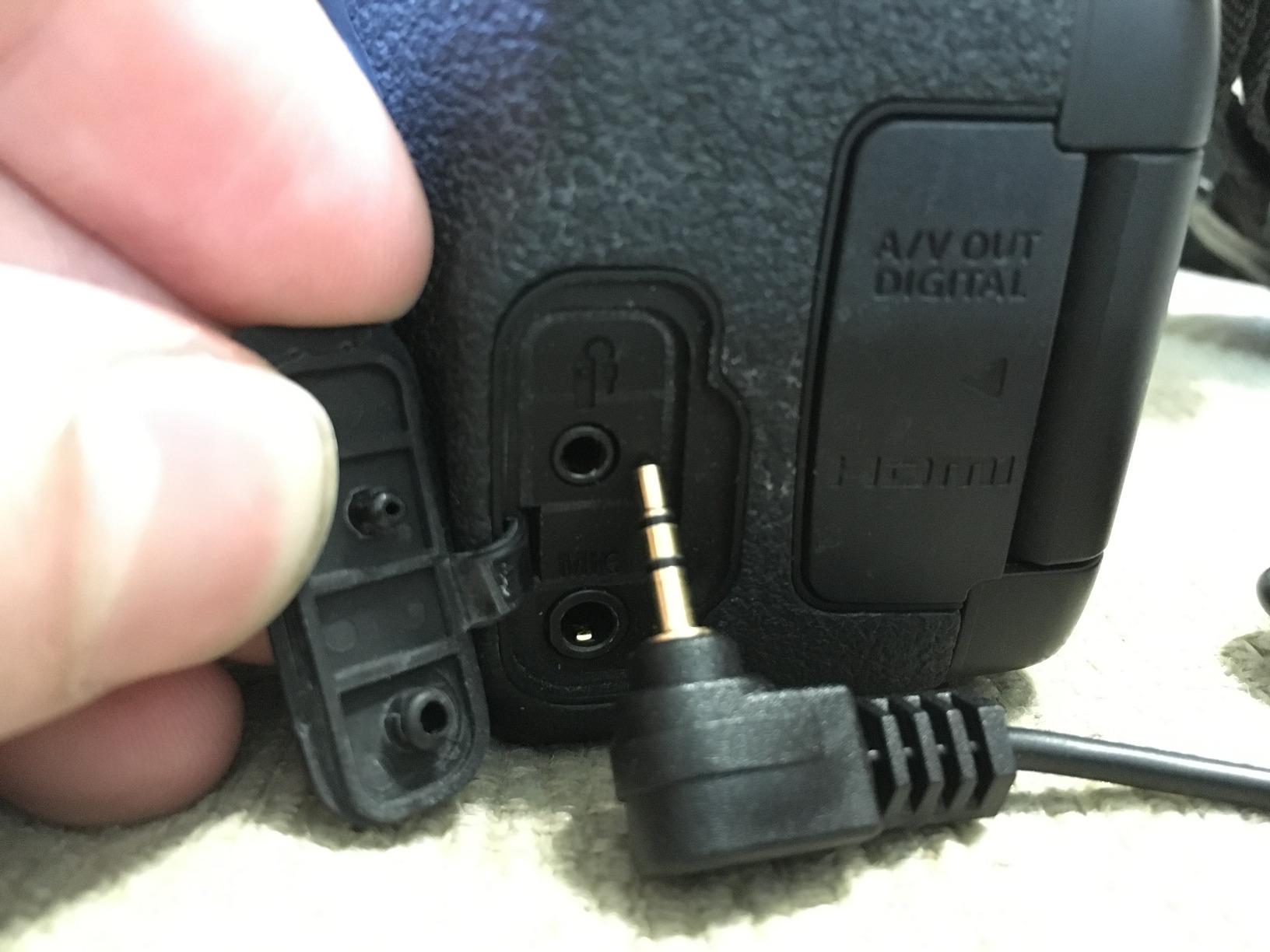
Compatibility is the RS-60E3 port, which covers the Rebel T6i, T6S, T5, T5i, T4i, T3i, T3, T2i, T1i, XT, XTi and XSi, plus the 700D, 650D, 600D, 550D, 500D, 1100D, 60D and 70D.
Who this is right for
Light painting, aurora, and any deliberate single long frame where you want nothing between you and the shutter. It is also a sensible backup cable to keep in a bag, because it needs no battery and no charging.
If you have a Canon body with the RS-60E3 port and no interest in programmed sequences, this does the job with nothing between you and the shutter.
Who this is not for
It is not a timing remote. There is no interval, no delay beyond a simple press, and no frame count, so a time-lapse sequence is out of reach.
Newer Canon bodies may need a different cable, the cable itself feels thin, and no wrist strap is included. The short cord also makes it awkward for framing group shots or larger scenes.
8. Godox TR-N1 and TR-N3 Wireless Timer for Nikon – Pairs with Godox Flashes
Godox TR-N1 TR-N3 Remote Shutter Release for Nikon, Wireless Shutter Release Intervalometer Compatible for Nikon Z9 Z7 Z6 Z5 D850 D800 D750 D610 F90 D7200 D7100 D5600 D3300 D90
Pros
- Range confirmed out to 100 metres
- Bulb mode shows a run timer after a three-second hold
- Interval timer handles multi-hour star-trail runs
- Triggers camera and flashes together on the Godox X system
- AA batteries are easy to source
Cons
- Transmitter is bulky and not refined
- No lanyard point
- Loose battery door tab
- Instructions are hard to follow
- Missing cables reported in a small number of deliveries
Where this earns its place is the Godox X integration. If you already run Godox flashes and trigger them from a transmitter, having the camera fire from the same unit means you can light a subject and expose the frame without touching anything. Astro and lightning shooters value being able to work from a car or from shelter rather than standing in the open.
The timing side is properly featured. There is a delay timer, an exposure timer, an interval timer and a shooting-count program, and in bulb mode a three-second hold followed by a press brings up a run timer on the remote so you can watch the frame count down without walking to the camera.
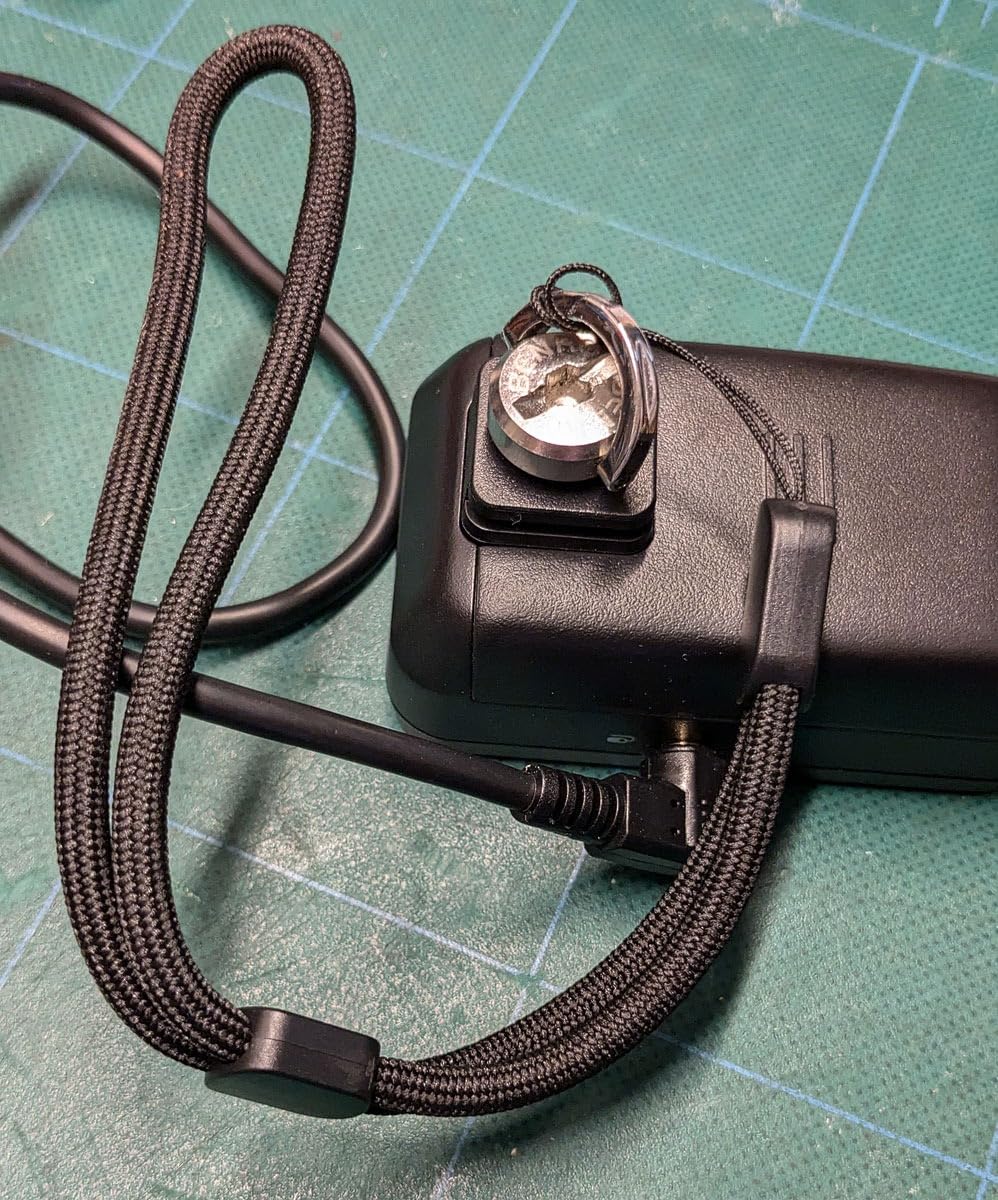
Body compatibility is broad across modern Nikon, covering the Z9, Z7, Z6 and Z5 plus the D850, D800, D750, D610, D600 and most older F and D bodies. It runs on two AA cells, and the specification is worth honouring: 1.5V cells specifically, since other types can throw a battery error mid-sequence.
Review volume here is much lower than the other wireless units, so treat the long-run reliability reports as encouraging rather than proven over years. Owners who have run multi-hour sequences describe it as dependable, and the stated range of 100 metres is measured from a body with the transmitter held clear rather than tucked in a coat.
Who this is right for
Nikon shooters who also run Godox flashes, and anyone who wants to fire the camera from a distance while staying dry. The 100 metre range is genuinely useful for wide night scenes and for reaching a camera tucked into a hide.
Programmed star-trail and time-lapse runs are well within its capability, and the interval timer holds up over multi-hour sequences according to owners.
Who this is not for
It is not a small tool. At 184g with a chunky transmitter, and no lanyard point, you have to support it rather than let it hang from a lanyard around your neck.
The battery door tab is loose and the instructions are poorly written, so you should test it thoroughly before a night you cannot repeat. The TR-N3 cable may also be at the bottom of the box rather than packed with the main unit, which has caught out buyers.
9. Pixel RS-80N3 Wired Cable for Canon – a Cheap Spare to Keep in the Bag
Pros
- No batteries so it always works
- Shutter lock enables long bulb exposures
- Half-press focus and full press release behave like the camera button
- 120cm gives workable distance from the tripod
- Low cost suits keeping a spare
Cons
- Plug has been reported pulling out of the camera
- Lowest rating and highest one-star share in the group
- Cord is short for group framing
- No timer or interval functions
- Needs an adapter for newer three-pin ports
This sits lowest in the ratings here, and the reason is durability rather than function. Buyers want one thing from it, a battery-free wired switch for bulb mode, and that is what it delivers with accurate, lag-free response on 5D, 6D and 7D-series bodies.
Film and studio users keep several on hand across multi-camera rigs, where keeping a spare matters more than any feature. With one cable per body you are not unplugging and reconnecting between setups, and a dead cable does not end the session.
It supports single shooting, continuous shooting and bulb long exposure, with half-press to focus, full-press to shoot, and a shutter lock. It fits the EOS R1, R3, R5, R5 C, 6D Mark II, the 1D X family, the 5D and 7D families and a range of legacy EOS bodies, with a one-year manufacturer warranty.
The 120cm cord is longer than the Progo cable above, which makes it slightly better for light painting reach, though still short for group work. A rear notch is moulded into the body so it sits comfortably in most hands rather than sliding out during a long press.
Who this is right for
Multi-camera setups, film shooters, and anyone who wants a spare that cannot fail because of a flat battery. A one-year warranty backs it, which is more than the category usually offers.
For a single deliberate bulb frame on a compatible Canon body, it does the job correctly.
Who this is not for
It is not the most reliable purchase in this group. Reports of the camera-end plug pulling or ripping out of the socket are the standout weakness, and around eleven percent of reviews are one-star, which is why most owners keep a backup.
There are no timing functions, the cord is short, and newer three-pin style Canon ports need an adapter, so check your body before buying.
10. Neewer 2.5mm to N3 Coiled Lead for Nikon – an Extension for Triggers and Grips
Neewer Photography Accessories 2.5mm-N3 Camera Remote Control Shutter Release Cable Cord for Nikon D90/D600/D610/D5000/D5100/D5200/D5300/D7000/D7100/D3100/D3200/DF DSLR Cameras Black
Pros
- Fits the camera socket without being too tight or loose
- Coiled length relieves stress on delicate ports
- Also replaces the lead on a battery grip or wireless remote
- Works as a trigger lead for a flash module
- Light and easy to pack
Cons
- Not a handheld release on its own
- One buyer disputes the D90 fit claim
- Strain relief is minimal when stretched
- Straight connector rather than right-angle
- Long-term insulation durability is unproven
This is the odd one out in the roundup, and it earns its place as a component rather than a remote. It is a coiled 2.5mm lead that plugs into a Nikon body and links it to a flash trigger or a battery grip, so the trigger can activate focus as well as release the shutter.
Storm chasers and lightning photographers are the buyers who value it most, because a trigger lead is what lets you fire the camera from a safe distance. It also serves as a replacement cable when the original lead on a grip or a wireless remote has become stiff or intermittent.
The coiled design is the point. The extra length takes the weight and pull off the delicate port on the body rather than transmitting it into the socket, which is where cheap leads usually fail first. At 17.01g it disappears into a pocket.
Compatibility covers Nikon DSLR bodies including the D90, D600, D610, the D5000, D5100, D5200, D5300, D7000, D7100, the D3100, D3200 and the Df.
Who this is right for
Anyone running a flash trigger, a battery grip or a third-party wireless remote on a Nikon body who needs a longer or sturdier lead. It is cheap insurance for a port that gets handled every time you change lenses in the field.
If your existing cable is stiff, kinked or intermittent, this is a five-minute fix rather than a remote purchase.
Who this is not for
It is not a handheld release and it will not fire a shutter on its own. Pairing it with a trigger or grip is mandatory, so if you have neither, buy one of the wired releases above instead.
One buyer reports that the D90 fit does not match the description, the strain relief is minimal if you stretch it hard, and the straight connector may not suit bodies where a right-angle plug is needed. Long-term insulation durability is untested.
How to Choose a Remote Release for Long Exposures
Start with the port on your camera, because that single decision eliminates most options before any feature matters. A wired release plugs into a specific socket, a wireless intervalometer arrives with cables for the brands it supports, and a Bluetooth or app remote needs no port at all. Check the connector first, then choose the features, and never the other way round.
Connector cheat sheet. Nikon DSLRs and most Z bodies use the MC-DC2 socket, and so do the third-party replacements listed here. Canon bodies split between the older two-pin RS-60E3 port on Rebel and mid-range models and the three-pin RS-80N3 type on newer bodies and the 5D, 6D and 7D families, so an RS-60E3 cable will not seat in an RS-80N3 body. Sony uses its own multi-terminal arrangement, and the Alpha a7 family, the a5100 and a6000 and the NEX bodies each need the correct Sony lead. Pentax K-series, Samsung GX and older Canon EOS bodies use a third connector family entirely.
Choose by remote type. Six categories cover almost everything. A plain wired trigger is the cheapest, most reliable option and needs no battery, but range is cable length. An infrared remote needs line of sight, which rules it out behind cover or at an angle. A Bluetooth remote pairs with a phone and needs the manufacturer app, so it depends on the phone staying awake and connected. A 2.4GHz radio remote gives true working distance with no directionality and is the best choice for bad weather. A wired intervalometer adds delay, interval and frame count without a battery in the cable path. A wireless intervalometer adds all of that plus reach, and is the most versatile tool here.
Decide between bulb and intervalometer. If you only ever make single deliberate frames, you need a lockable hold and nothing else, which is what the wired cords at positions one, seven and nine provide. If you want sequences running while you sleep, you need delay, interval and frame count, and you need to read the interval convention in the manual before the first run.
Think about power and cold. A wired release draws no battery of its own, which removes one failure point. Timing remotes need AAA or AA cells, and a remote with no on or off switch will drain them in the bag, so remove them between sessions. In winter, cold cells lose capacity quickly, so carry a spare set rather than discovering a flat battery at 2am. Wireless models that never switch themselves off are the worst offenders here.
Consider app-based alternatives. Manufacturer apps can trigger a shutter and set long exposures on many mirrorless bodies, and our guides to [WiFi camera triggers and remotes](https://markus-hagner-photography.com/best-wifi-camera-triggers-and-remotes/) and [WiFi-enabled camera triggers](https://markus-hagner-photography.com/best-wifi-enabled-camera-triggers-and-remotes/) cover that route in detail. For a single frame while you stand at the tripod, an app is often enough. For a multi-hour sequence, a hardware intervalometer that does not need the phone screen to stay awake is the safer choice, particularly in cold weather where a phone will shut down early.
Bulb Mode and Shutter Lock Explained
Bulb mode is the setting that keeps the shutter open for as long as the release is held, and it exists because most cameras stop counting at 30 seconds in normal exposure modes. Anything longer than that has to be timed by something outside the camera.
A shutter lock is that something. Two styles exist. A sliding lock physically holds the button down, so the circuit stays closed no matter where your hands are. An electronic hold sends the press once and the remote keeps the contact closed internally, which often adds a run timer showing elapsed time. Electronic holds are more convenient, sliding locks are simpler, and both beat holding a button with your thumb for six minutes.
The distinction matters when you buy. A remote without a lock at all is still a big improvement over touching the shutter button, but it forces you to maintain pressure for the entire frame, and by minute four your hand is the least stable part of the system. For exposures under a minute, a plain trigger is fine. For a two-minute aurora frame or a 30-minute star-trail interval, a lock is not optional.
How to Test a Remote Before a Critical Night Shoot
Test the lock first. Set the camera to manual, choose a two-second exposure, switch to bulb, arm the lock and walk ten steps away. Time it with a stopwatch. If the frame length differs from what you set, you have found a problem while you still have daylight.
Test the mirror-slap delay on a DSLR. At a fast shutter speed and high ISO, take a frame with a two-second self-timer at a long focal length, zoom in on the edges, and check whether the detail is as crisp as a frame fired by a remote. If it is not, that is your answer on whether the self-timer is sufficient for your body.
Test the range where you will actually work. Fire a short burst from the far end of the site, in the dark, with the receiver in your pocket rather than on the table, because obstacles and bodies between the units change the result. Wireless units with thirty channels should be set to a channel away from other photographers.
Finally, cold-soak the batteries. Leave a fresh set in the remote in a car overnight, then check the indicator before you leave. A remote that works in a warm house and fails at a cold viewpoint is the most common field failure, and it costs nothing to rule out.
Frequently Asked Questions
How do I get longer exposures than 30 seconds on my camera?
Switch the camera to manual mode and set the shutter speed to bulb. In bulb mode the shutter stays open for as long as the release is held rather than counting down from a set time. Because you cannot hold the shutter button for minutes without fatigue or movement, you need a remote release with a lockable hold or an electronic hold to keep the shutter open. Some cameras also let you use an electronic shutter in bulb mode, though a mechanical or electronic first curtain gives better results.
What is the best camera remote release for long exposure?
The best general choice is a wired release with a lockable hold button, because it needs no battery, cannot fail through radio interference and connects directly to your camera port. The Kiwifotos MC-DC2 wired release is our top pick for Nikon bodies, and the Progo RS-60E3 cable covers older Canon bodies. If you also want wireless reach and interval programming, a 2.4GHz timer such as the Pixel TW-283 is the more versatile tool.
What is the best intervalometer for astrophotography?
For astrophotography look for bulb timing up to around 99 hours, a programmable delay, an adjustable interval and an exposure count. The Pixel TW-283 N3 and S2 offer all of these with 30-channel 2.4GHz wireless, which also lets you trigger the camera from shelter. The JJC and Neewer wired intervalometers are cheaper and can be just as reliable for stacked subframes, as long as you remember that the interval is measured from exposure start to exposure start.
Can I use my phone as a shutter release for long exposures?
Yes, on many mirrorless bodies. Manufacturer apps connect over Bluetooth or WiFi and can fire the shutter and set bulb mode from the phone. It works well for a single frame while you stand at the tripod, and it needs no extra hardware. For a multi-hour sequence, a hardware intervalometer is safer because the phone screen may sleep, the battery may fail in cold weather, or the connection may drop during the run.
Why is my self timer not enough for long exposures?
On a DSLR the mirror lifts at the start of the exposure and again for the reading, and that movement is often still settling when a two-second self-timer fires the shutter. At long focal lengths and multi-second exposures it shows as softness. A remote release removes your hand from the camera entirely, and mirror lock-up or electronic first curtain can further reduce the movement.
What is the difference between a wired and a wireless shutter release?
A wired release connects by cable, draws power from the camera, needs no battery and cannot suffer interference, but your working distance is the length of the cable. A wireless release uses infrared, Bluetooth or a 2.4GHz radio, giving real freedom of movement, but it needs its own batteries, infrared units require line of sight, and a radio can pick up interference. For long exposures, wired wins on reliability and wireless wins on reach.
Final Verdict for Long-Exposure Remote Releases in 2026
If you take one thing from this roundup, make it a wired remote release with a lockable hold. The Kiwifotos MC-DC2 is the most proven option for Nikon bodies, and the Progo RS-60E3 and Pixel RS-80N3 cables cover Canon bodies on the older two-pin and three-pin ports respectively. Add a wireless intervalometer only when you need reach or programmed sequences, and the Pixel TW-283 N3 or S2 is where I would start.
Match the remote to your body first, test the lock and the range in daylight, and pack spare cells. Do that and the best camera remotes for long exposures stop being a detail of the shoot and start being the reason the frames come out sharp. Last checked in October 2026.