
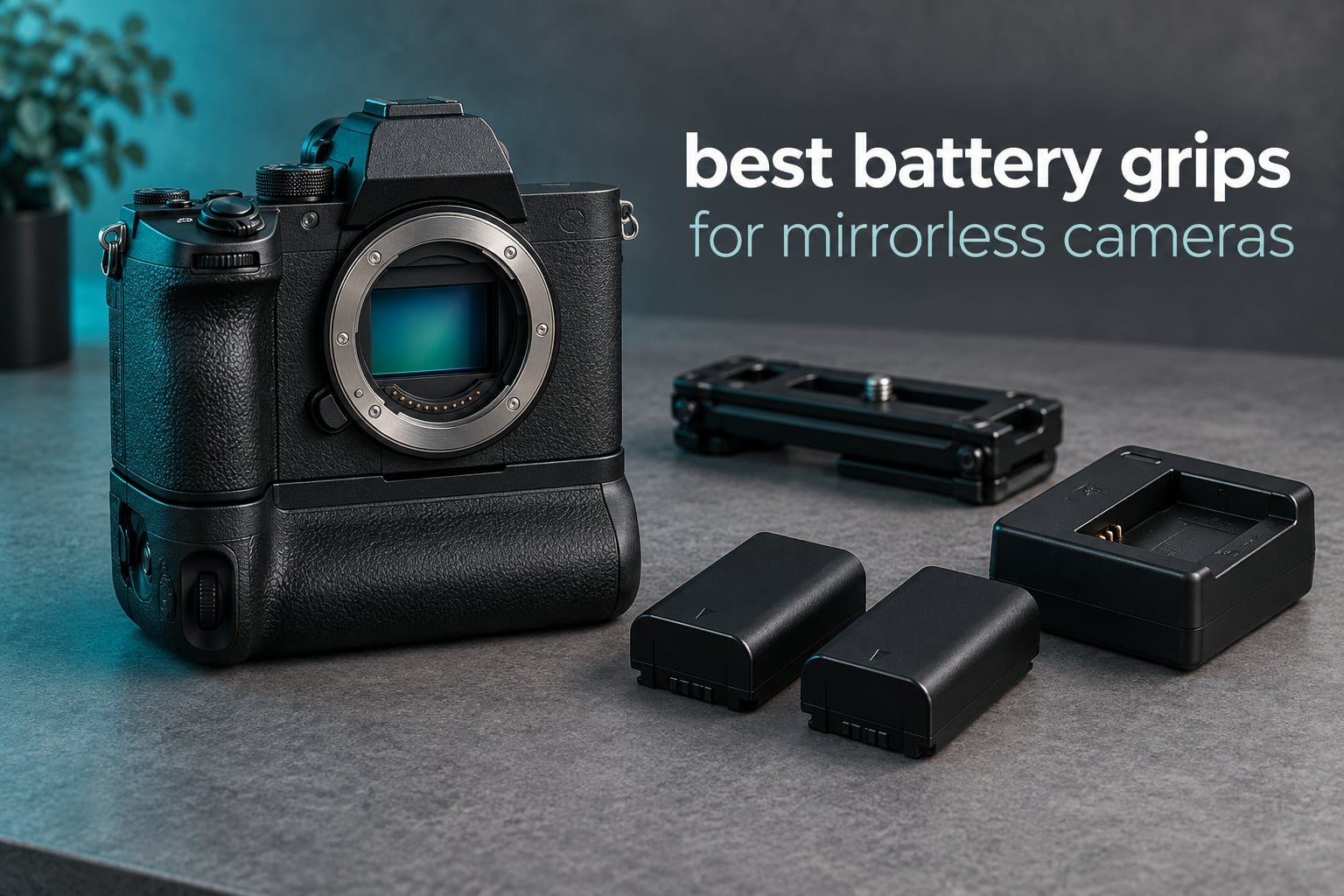
A battery grip bolts to the bottom of a mirrorless body and does two jobs at once: it holds a second battery, and it puts a duplicate shutter button and set of dials under your right hand when the camera is turned on its side. That combination is why the best battery grips for mirrorless cameras remain one of the few accessories that change how a camera feels rather than just what it comes with.
I shoot weddings, wildlife and a fair amount of long-form video, and I have carried OEM grips, third-party grips and half-cases in the same bag. The gap between them is not cosmetic. An OEM grip shares the body’s magnesium shell, weather seals and battery contacts, and it disappears under the camera the way a native part should. A budget grip gets you a second battery and a usable trigger for a fraction of the money, and it will not survive rain.
Here is where each mount stands in 2026. Sony full-frame has the deepest grip ecosystem, with native and third-party options for almost every generation. Canon RF is strong at the pro end with the BG-R20, while entry Canon bodies rely on third-party designs. Nikon Z has a well-regarded OEM pack for Z6 and Z7 owners. Fujifilm X has one of the deepest OEM grips in the business. OM System has a single purpose-built grip for the OM-1.
Top 3 Best Battery Grips for Mirrorless Cameras in October


All 10 Best Battery Grips for Mirrorless Cameras in 2026
| Product | Specifications | Action |
|---|---|---|
| Sony VG-C4EM Vertical Grip |
|
Check Latest Price |
 Nikon MB-N10 Multi-Battery Power Pack Nikon MB-N10 Multi-Battery Power Pack |
|
Check Latest Price |
 Fujifilm VG-XT4 Vertical Battery Grip Fujifilm VG-XT4 Vertical Battery Grip |
|
Check Latest Price |
 OM System HLD-10 Battery Holder OM System HLD-10 Battery Holder |
|
Check Latest Price |
| NEEWER Vertical Grip for Sony A9 A7 III A7R III |
|
Check Latest Price |
 Meike MK-A6300 PRO Battery Grip Meike MK-A6300 PRO Battery Grip |
|
Check Latest Price |
 QUMOX Vertical Power Grip for Canon RP and R8 QUMOX Vertical Power Grip for Canon RP and R8 |
|
Check Latest Price |
 Meike MK-A6500 Pro Battery Grip Meike MK-A6500 Pro Battery Grip |
|
Check Latest Price |
 mcoplus MCO-A7II Vertical Grip mcoplus MCO-A7II Vertical Grip |
|
Check Latest Price |
 Sony VGC3EM Vertical Grip Sony VGC3EM Vertical Grip |
|
Check Latest Price |
1. Sony VG-C4EM Vertical Grip – the Native Sony Experience
Pros
- Doubles runtime with two NP-FZ100 batteries
- Matches a7R IV grip and control feel
- Enhanced dust and moisture resistance
- Magnesium chassis rigidity
Cons
- Fits Sony full-frame Z bodies only
- Batteries sold separately
- No APS-C grip support
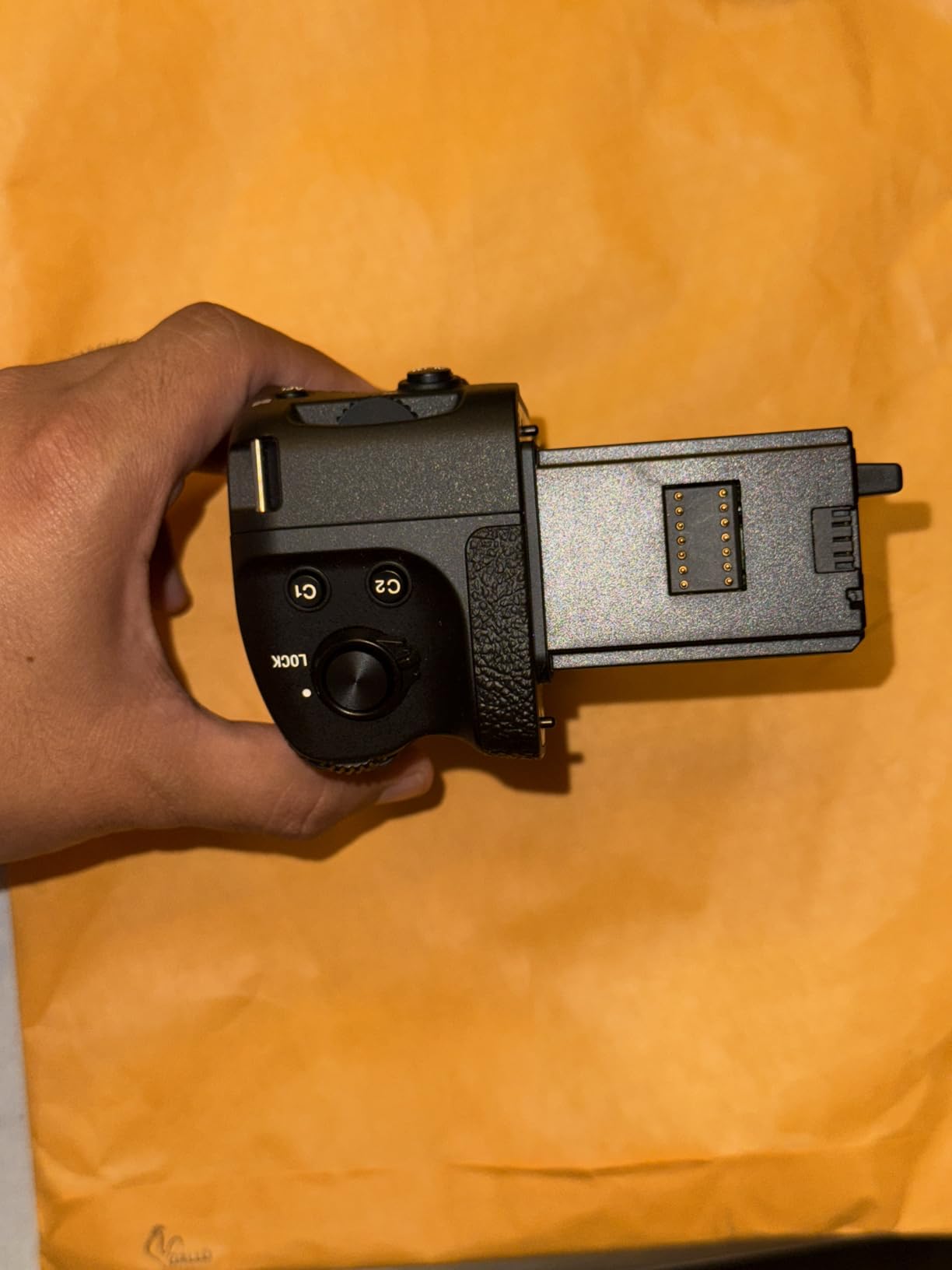
The VG-C4EM is the grip I reach for when the job is a full day outdoors and rain is a possibility. It weighs 10.24 ounces, measures 5 by 4 by 6.3 inches, and carries the same magnesium chassis rigidity as the Alpha 7R IV it was designed around. When it is fitted, the camera reads as one object rather than a body with something bolted underneath.
It loads two NP-FZ100 batteries, which doubles the operating time the body gets from the in-camera cell. That is the difference between covering a ceremony and watching the battery warning during the processional. Because it is Sony’s own part, the contacts behave the way the camera expects and the battery meter is honest.
The controls match the a7R IV layout rather than approximating it, so muscle memory carries straight over when the camera is rotated. That matters more than spec sheets suggest. A grip that puts the front dial somewhere new costs you a beat on every frame in portrait orientation.
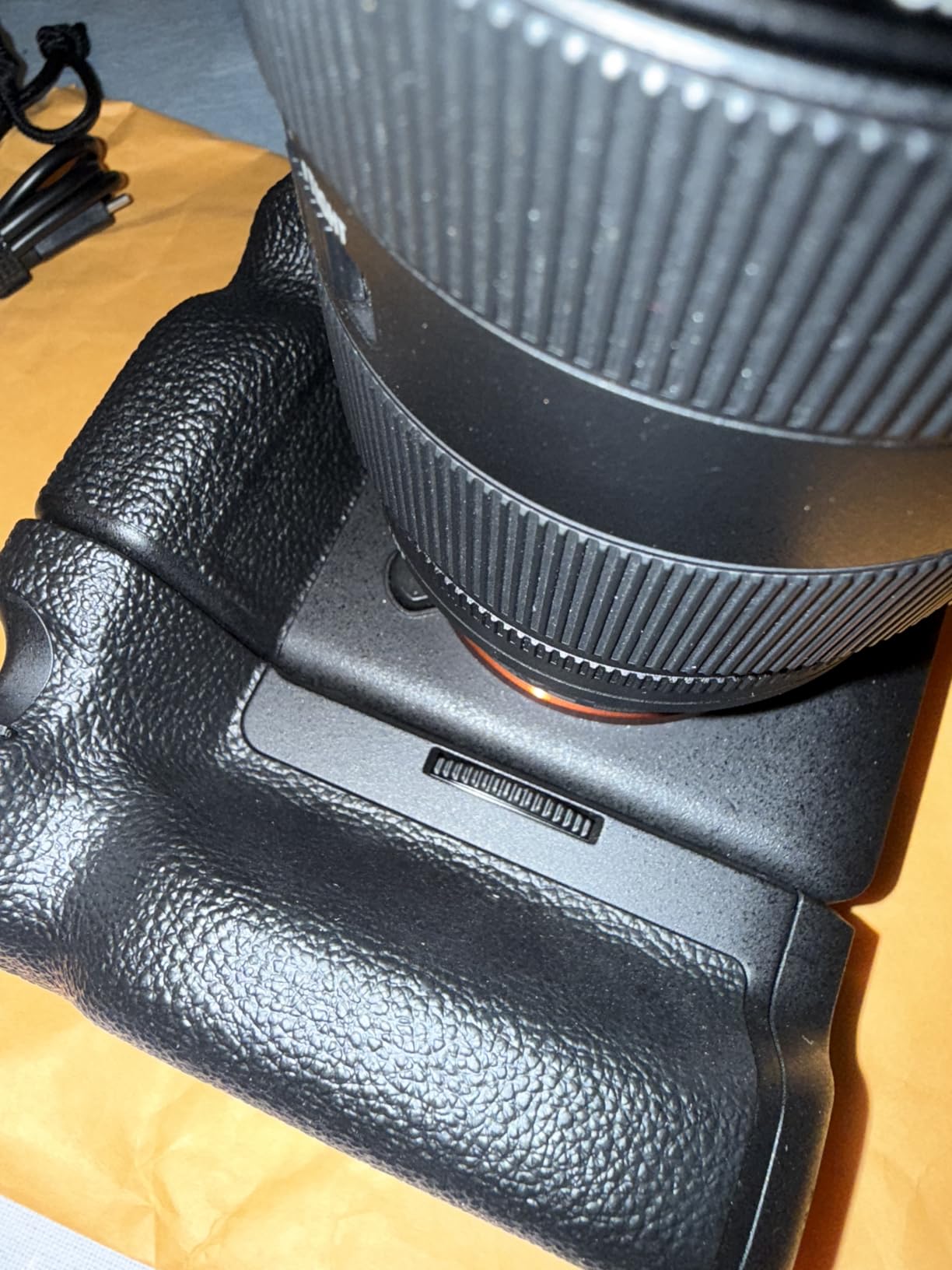
One real-world wrinkle: a Sony owner shooting the a7R V told us the joystick click point sits slightly differently than on the a1, and it took an afternoon to adjust before he stopped thinking about it. Shared-fit grips always carry some version of this. It is minor, and it is the kind of detail you only notice in a long day of vertical portraits.
Dust and moisture resistance matching the body is the reason this is my first recommendation. Forums fill with accounts of third-party grips dropping power mid-shoot, and a festival or a coastline is exactly when you cannot afford that. See my full-frame battery grip comparison for how the third-party options hold up.
Who the VG-C4EM suits best
Event, wedding and wildlife photographers working long days on a single body, and anyone shooting in weather where sealed contacts matter. If your work is vertical portraits, event coverage or handheld wildlife with a long lens, the native grip pays for itself in missed frames avoided.
It is also the right answer for a shooter who already owns NP-FZ100 batteries and a Sony charger. The grip uses the same cells, so your charging kit stays simple. You can read more in my dual battery charger guide for how to keep both cells topped up between jobs.
Where the VG-C4EM falls short
It is a body-specific part. It fits the a7R IV, a7 IV, a9 II and a7S III, and it does not extend to APS-C bodies or to newer models with different base plates. If you upgrade your camera, the grip becomes shelf weight.
Batteries are sold separately, so budget for two NP-FZ100 cells on top of the grip. And at the premium end of the market it is a real amount of money for an accessory you may only need on half your shoots.
2. Nikon MB-N10 Multi-Battery Power Pack – Best for Nikon Z6 and Z7 Owners
Pros
- Adds two EN-EL15 batteries of endurance
- Individual level readout for each compartment
- Optional EH-7p in-unit charging
- Built-in tripod socket
Cons
- Batteries sold separately
- Limited to Nikon Z full-frame bodies
- No USB-C charging in the grip
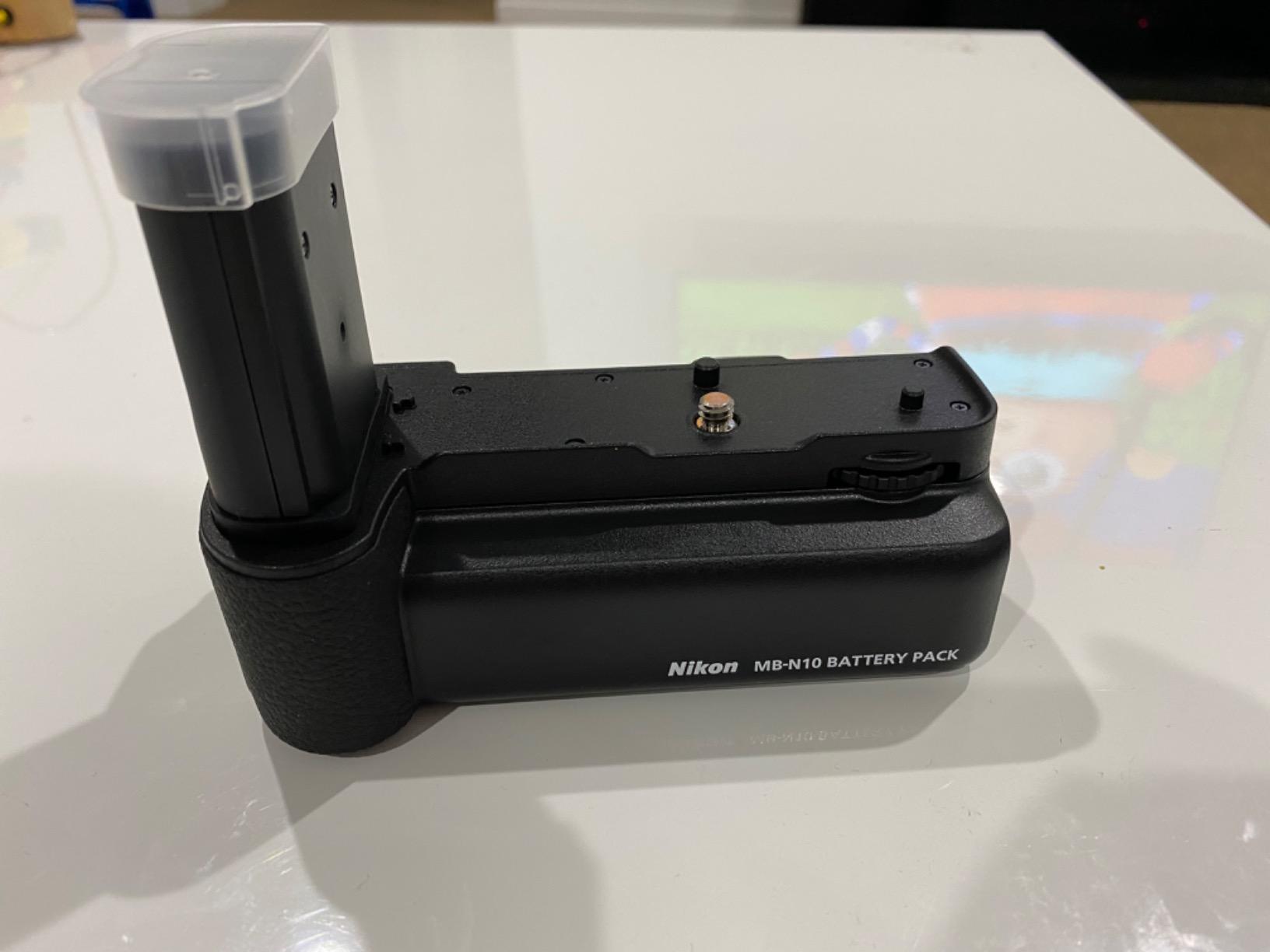
The MB-N10 is Nikon’s answer for Z5, Z6, Z6 II, Z7 and Z7 II shooters, and its per-battery level displays are the feature I like most. Two separate readouts mean you know which cell is low before you start a long sequence, instead of finding out halfway through.
It accepts two EN-EL15b batteries, or EN-EL15a and EN-EL15 cells, in their own compartments, which gives you three batteries of shooting time in total. With the optional EH-7p AC adapter you can also charge EN-EL15b cells inside the pack, which is convenient on a long assignment where you are charging from a car or a hotel room.
There is a tripod socket built into the base, so the pack works with a monopod for heavier glass without a separate plate. It weighs 10.56 ounces, close to the Sony grip, and the 1 year manufacturer warranty matches the rest of the Z system.
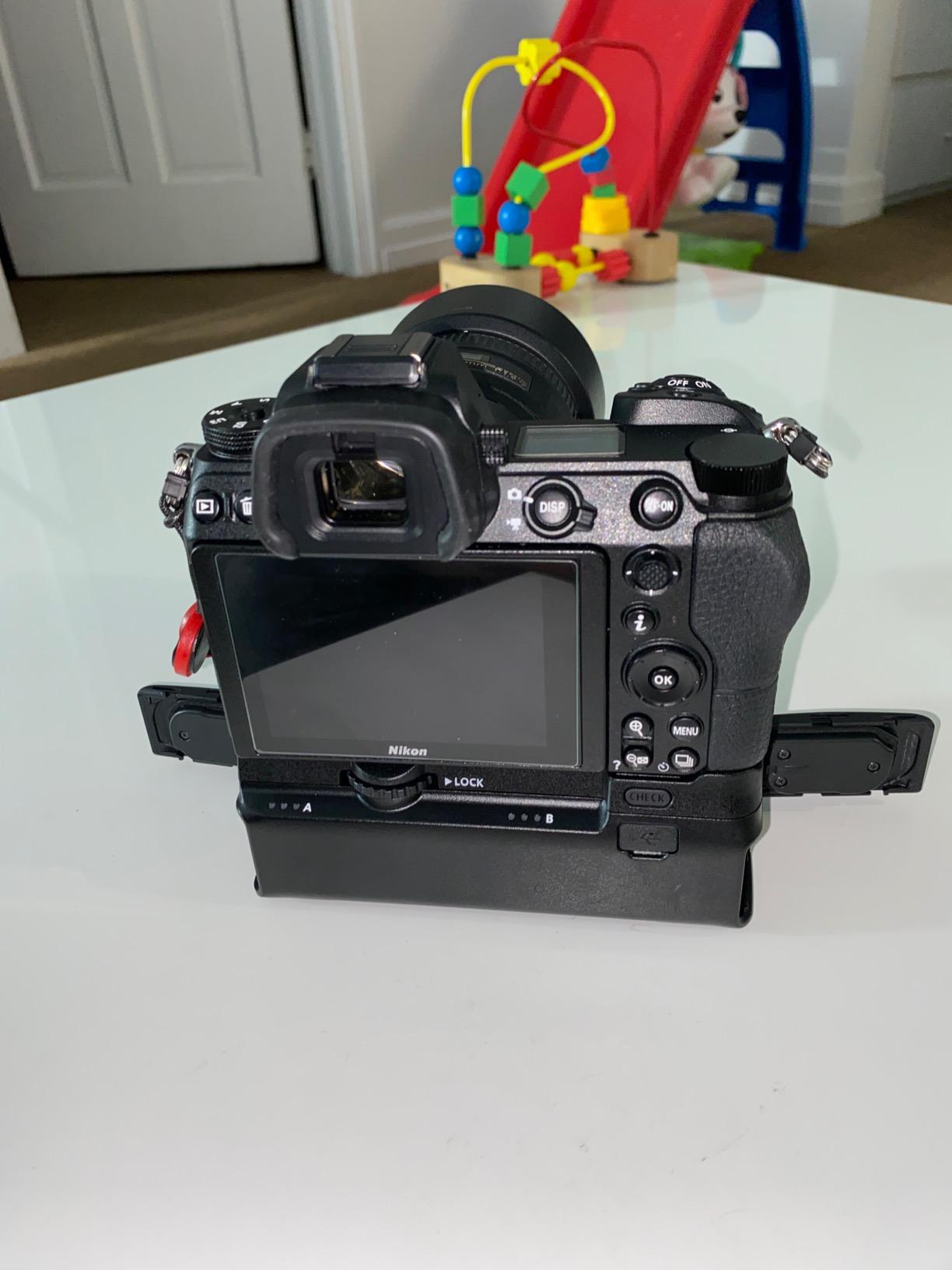
The honest limitation is that it is a power pack first and a handling accessory second. The vertical layout is less complete than the Sony or Fujifilm grips, so portrait-orientation control access is not as good. Nikon shooters who mostly need runtime rather than portrait ergonomics get exactly what they need.
Nikon shooters should also know there is no official grip for several Z bodies, and the Z8 and Z6 III work differently from the Z6 and Z7 generation this pack was designed for. If your body is newer, check that a grip exists for it before planning around one.
Who the MB-N10 suits best
Z6 and Z7 shooters who need endurance over vertical handling, including landscape and wildlife work where a monopod socket is useful. Event shooters who rotate through three EN-EL15b cells a day will appreciate being able to see both levels at a glance.
Chargers matter as much as grips at this level, and I keep my Nikon cells in rotation with a dual battery charger for Nikon mirrorless setup so nothing sits flat overnight.
Where the MB-N10 falls short
Portrait shooters will find the vertical control set less generous than Sony or Fujifilm grips offer. Fewer duplicated buttons means more reaching around the body when the camera is on its side.
It also does not solve the grip problem for newer Z bodies, so if you are buying into the system today, confirm fitment first. And the cost of two extra EN-EL15b cells plus the optional charger adapter adds up quickly.
3. Fujifilm VG-XT4 Vertical Battery Grip – Best Ergonomics in the Set
Pros
- Full control access in vertical orientation
- Two extra batteries for a three-battery total
- Charge all three through one port
- Dust and water resistant rated to -10 C
- Deep grip improves comfort
Cons
- A few millimeters of play in the grip body
- Weaker sealing than the bodies it covers
- Batteries not included
Of the ten grips here, the Fujifilm VG-XT4 duplicates the most of the top plate. You keep the shutter release, front and rear command dials, Q button, focus lever, AE-L, AF-L and FM buttons in vertical orientation, and it adds a headphone jack and function buttons for portrait video work.
It holds two additional batteries on top of the in-camera one, and Fujifilm designed it so all three charge through a single port. For a photographer running a three-cell day, that removes the juggling act of separate battery positions and is a genuinely underrated convenience.
It is also the only grip in this group rated for cold operation, working down to -10 C. Cold is where battery endurance collapses, and a second bay only helps if the contacts and the housing still function when your hands do not. Reviewers consistently single out the depth of the grip as the biggest handling upgrade.
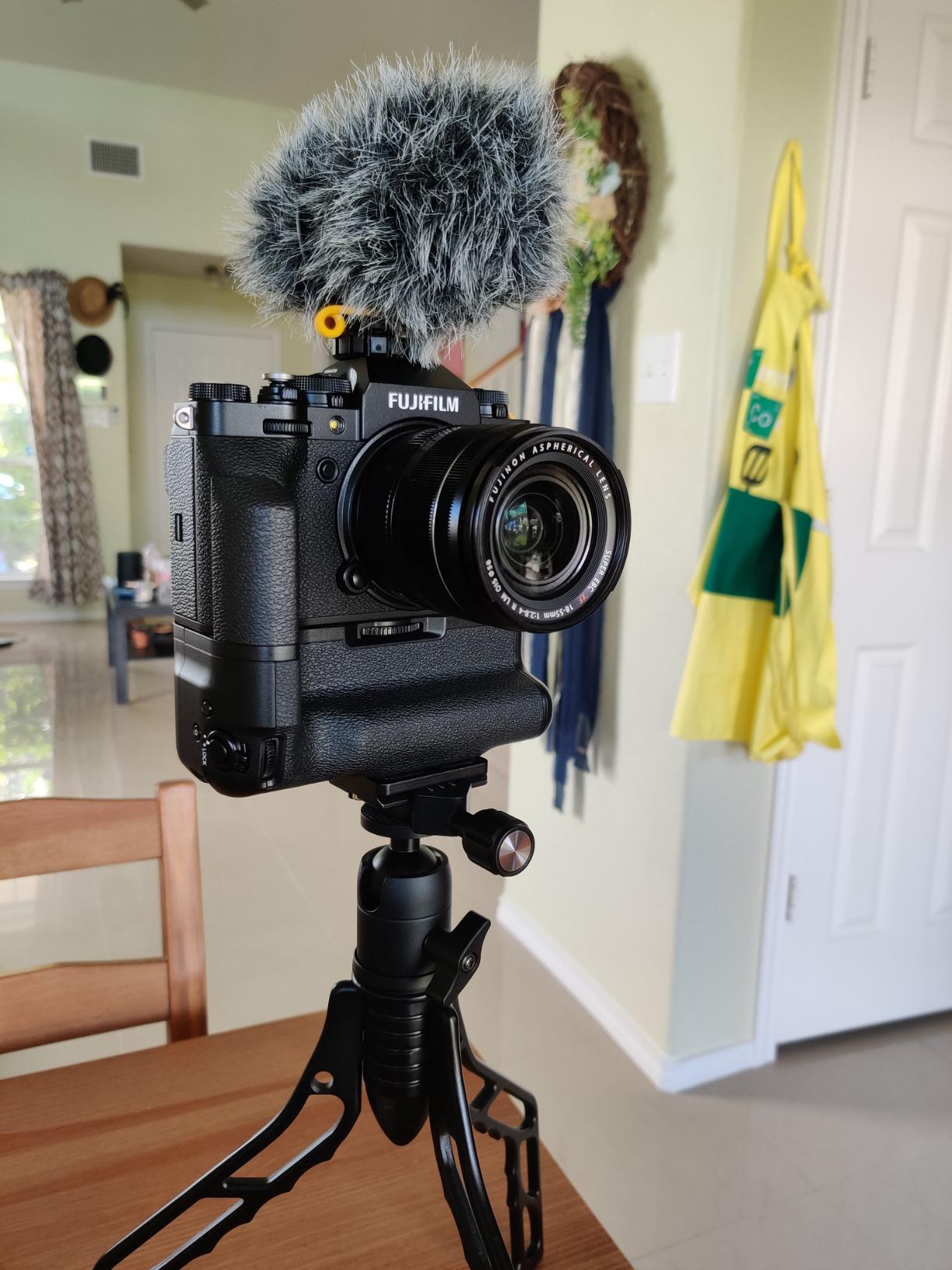
The grip itself is 454 g, which is substantial next to an X-T4 or X-S10 body. That is the price of the deep grip, and for portrait and street work most X shooters consider it the point. It is a lot of hardware for a small APS-C kit, and it is not a travel accessory.
Two criticisms come up repeatedly. There is a few millimeters of play in the grip body, and reviewers note it does not feel like a single piece of alloy. The sealing is also weaker than the cameras it covers, so I would not treat it as a rain accessory on a dedicated weather body.
Who the VG-XT4 suits best
Portrait and video shooters who work vertically and want every control available without moving their hand. Fujifilm shooters heading somewhere cold will like the -10 C rating more than almost anything else on the market.
Anyone who wants three batteries and a single charging point will appreciate the design more than a plain two-battery grip. For owners still on the X-T3 or X-T30 II, it is the same mature design fitted to those bodies.
Where the VG-XT4 falls short
Weight and bulk are the objections, at 454 g. X-S20 owners weighing a half-case for travel have plenty of forum discussion on the trade-off, and the honest answer depends on how much time you spend in portrait orientation.
The play in the grip body and the weaker-than-body sealing are worth knowing before you commit. And the batteries are not included, so this is a two-part purchase.
4. OM System HLD-10 Battery Holder – Built for the OM-1
Pros
- Tight no-flex fit with no light leakage
- Buttons feel consistent with the OM-1
- Improves balance with long telephoto lenses
- Sturdy well-matched materials
Cons
- Not rubberized and dials feel plasticky
- Multi-function and ISO buttons not duplicated
- Not rated water resistant
The HLD-10 is not a general accessory. It is a purpose-built grip for the OM-1, and that specificity shows up immediately in the fit. Owners report a tight, no-flex connection with no light leaking between grip and body, which is the exact failure mode that makes third-party grips rattle in a bag.
It carries a shutter release and a control dial, so you can shoot vertically without shifting your grip off the lens. The most common praise is about balance. Paired with a long telephoto zoom, the grip stops the camera feeling like a lens balanced on a small block of plastic.
At 380 g it is the second-heaviest grip here, and the 1 year manufacturer warranty matches the OM-1. If you are an OM-1 owner who has been wondering whether the grip is worth it, the answer from owners is a clear yes for any telephoto work.
Who the HLD-10 suits best
OM-1 shooters pairing the body with a long telephoto, which is where the balance improvement matters most. It is the only proper vertical grip listed for the body, so for that camera the question is not whether to buy one but whether to buy it now or later.
Bird photographers and anyone working handheld at long focal lengths will feel the difference immediately. The duplicate shutter release is enough on its own for vertical bursts.
Where the HLD-10 falls short
The dials are not rubberized and reviewers describe them as feeling plasticky, which is a fair criticism on a premium part. More importantly, the multi-function and ISO buttons are not duplicated, so some vertical adjustments mean reaching back to the body.
It is also not rated water resistant, which is a real limitation on a flagship body built for outdoor work. And it fits the OM-1 only.
5. NEEWER Vertical Grip for Sony A9, A7 III and A7R III – Best Value
Pros
- Full vertical set with trigger dials AF-ON and AE-L
- Rubber-coated grip improves stability
- Takes one or two NP-FZ100 batteries
- Tripod-ready 1/4 inch screw
Cons
- Not weather resistant
- Limited to A9 A7 III and A7R III
- Batteries not included
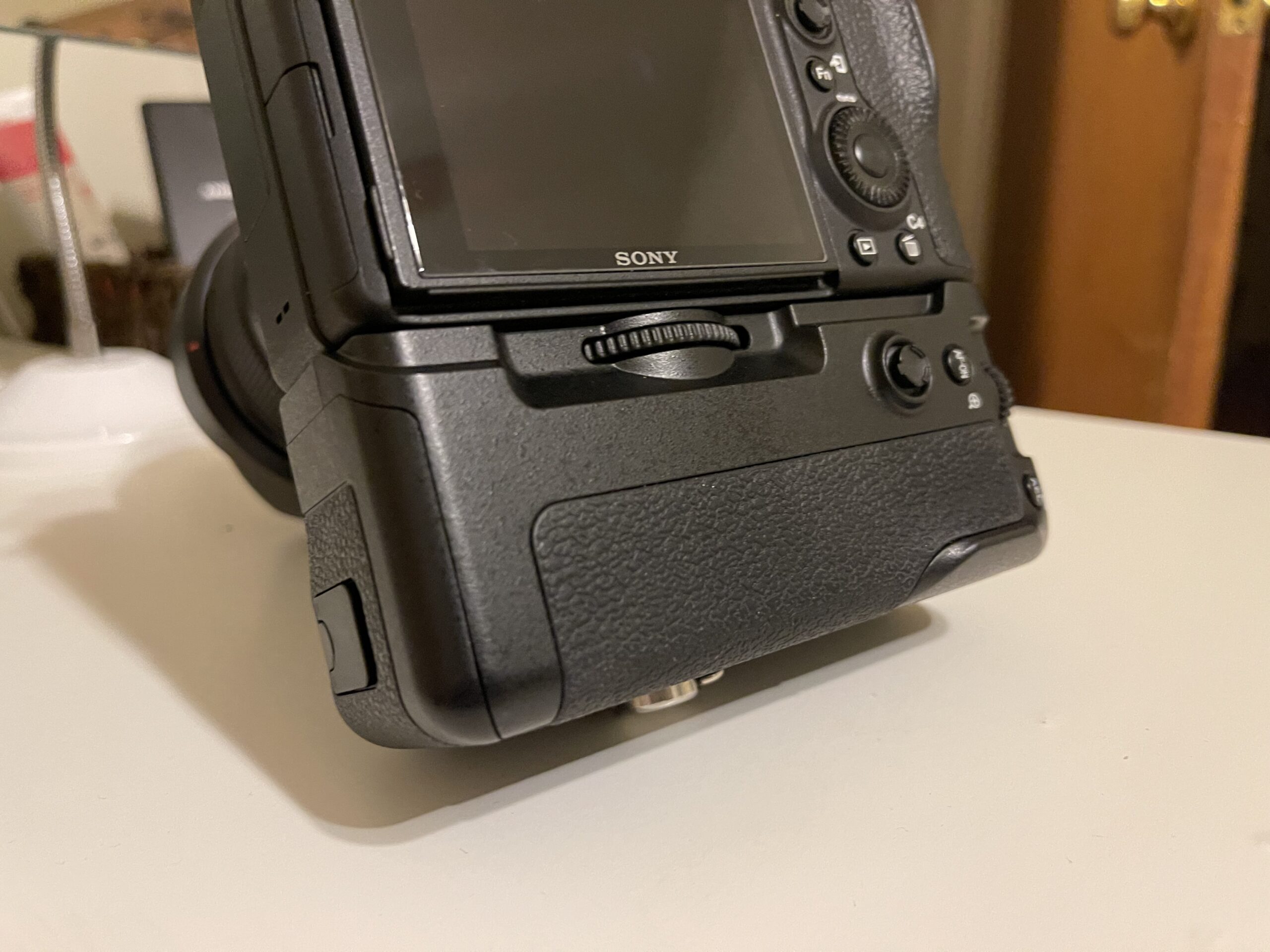
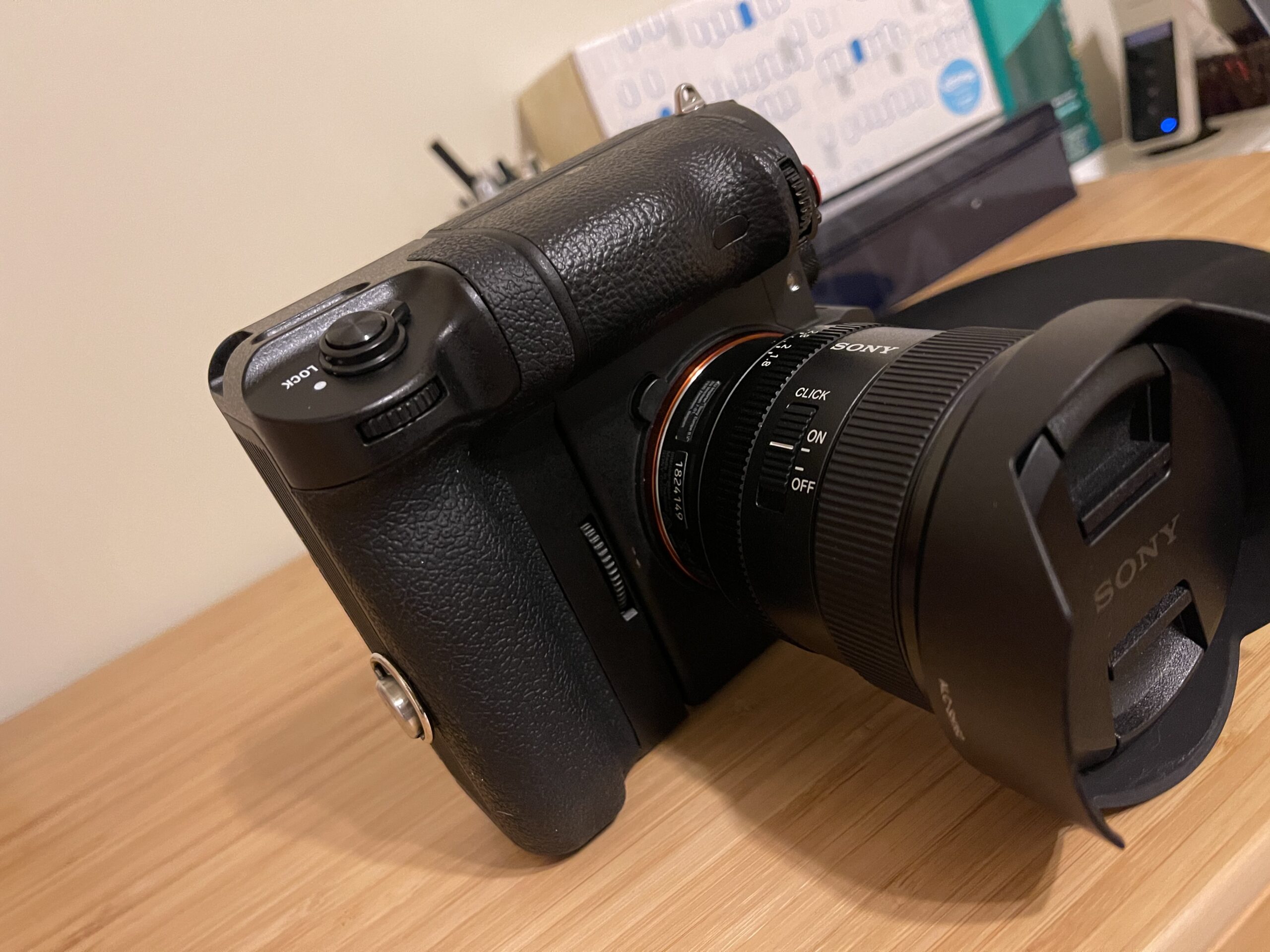
With more than a thousand reviews behind it, this is the most proven budget grip in the category, and it is a direct replacement for the Sony VG-C3EM. It fits the a9, a7 III and a7R III, and it accepts one or two NP-FZ100 batteries.
The control set is the surprise. You get a vertical trigger, front and rear wheels, an AF-ON button, an AE-L button and selector controls, wrapped in a rubber-coated ergonomic grip. That is not a token trigger bolted to a plastic block, and it is why the rating holds so well at this price level.
A 1/4 inch screw allows tripod attachment directly through the grip, so you do not need a separate plate. It weighs 11.3 ounces, the heaviest third-party grip here, which reflects how much metal and rubber is in the shell.
Forum threads about Sony grips often point people toward this as the rational answer when an OEM grip feels like too much money, and used VG-C4EM units from refurbishers are the other route owners suggest. Both are sensible. This grip is simply the cheaper way to the same functional outcome.
What you give up is sealing. It is not weather resistant, and if you shoot rain, dust or a cold coastline regularly, that is a real gap. The magnesium shell and matched controls of an OEM grip are simply not reproducible at this level.
Who the NEEWER grip suits best
Full-frame Sony shooters on a7 III or a7R III who want vertical controls and two batteries without the OEM price. It is the most common recommendation in Sony owner forums when a grip is wanted for everyday event and portrait work rather than punishing weather.
Tethered and tripod shooters also benefit from the integrated 1/4 inch screw. And anyone who already owns NP-FZ100 batteries can start using this grip without changing chargers or cells.
Where the NEEWER grip falls short
No weather sealing at all, and the fit is limited to three bodies from one era. If you plan to upgrade the camera, this grip is a short-term purchase rather than a long-term one.
Batteries are not included, so the true cost is grip plus cells. The plastic feel also gives you a hint of why the OEM version exists.
6. Meike MK-A6300 PRO Battery Grip – Most Versatile for Sony APS-C
Pros
- Doubles battery life with two NP-FW50 cells
- Fits small APS-C bodies well with large hands
- Working vertical shutter release
- Helps reduce overheating on long recordings
- Bundled programmable remote
Cons
- Slight wobble at the attachment point
- Second battery charge often not reported
- Removal needed to reach the SD card slot
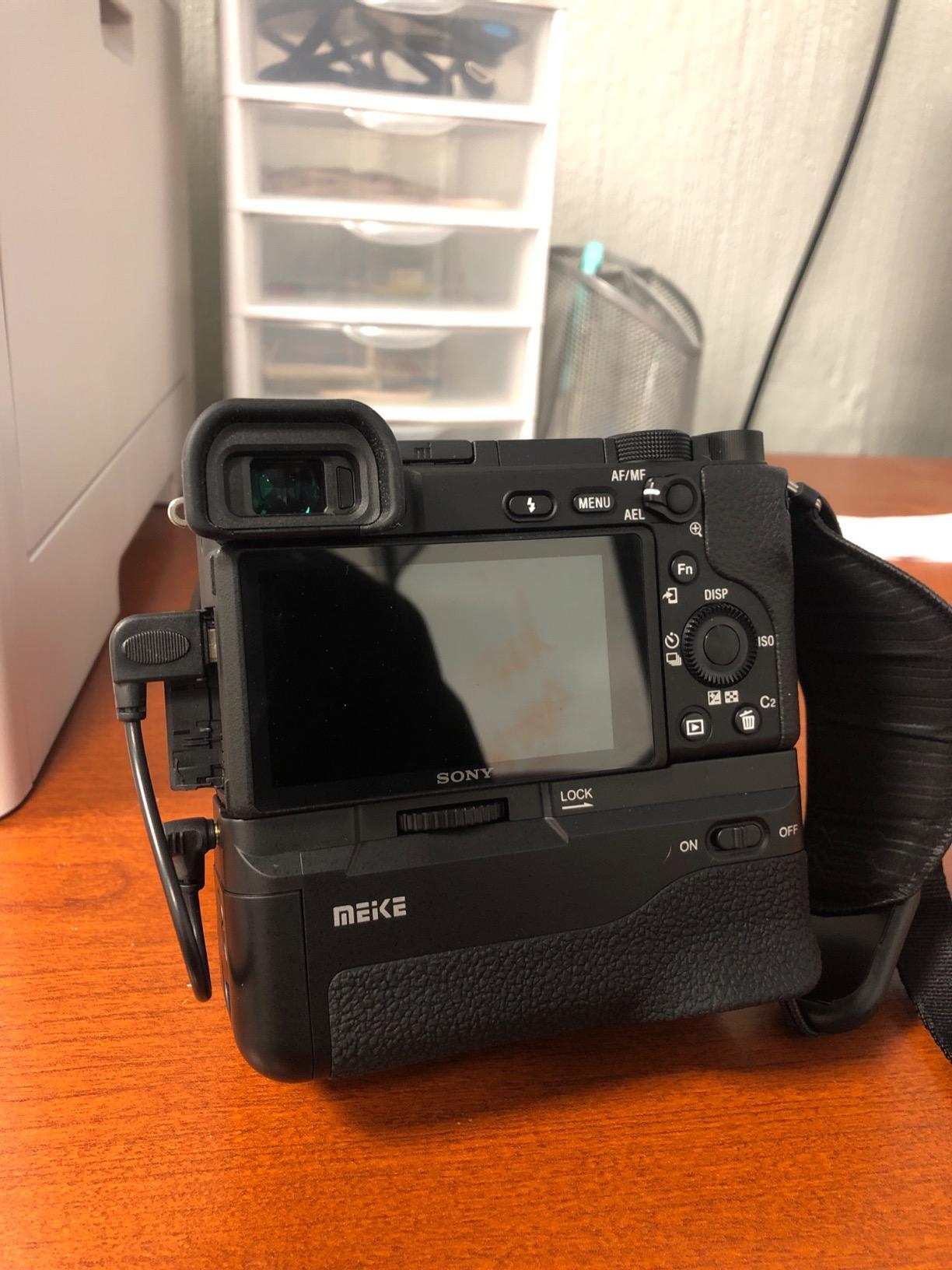
The A6000 series has no official grip, which makes third-party options the only route to a second battery. The MK-A6300 PRO is the one most A6000 owners land on, and it works with the A6100, A6400, A6300 and A6000.
It accepts two NP-FW50 lithium batteries, doubling shooting time, and the rubber coating is genuinely good on such a small body. Reviewers highlight how much easier the camera becomes to hold with larger hands and heavier lenses. At 7.04 ounces it adds far less bulk than a full-frame grip.
The remote is a real feature rather than a gimmick. It offers an FSK wireless channel with roughly 100 m of range, plus screen lock, lock display mode, delay time, exposure time, interval and shot count settings. That makes it useful for self-portrait, group and long-exposure work where you cannot reach the shutter.
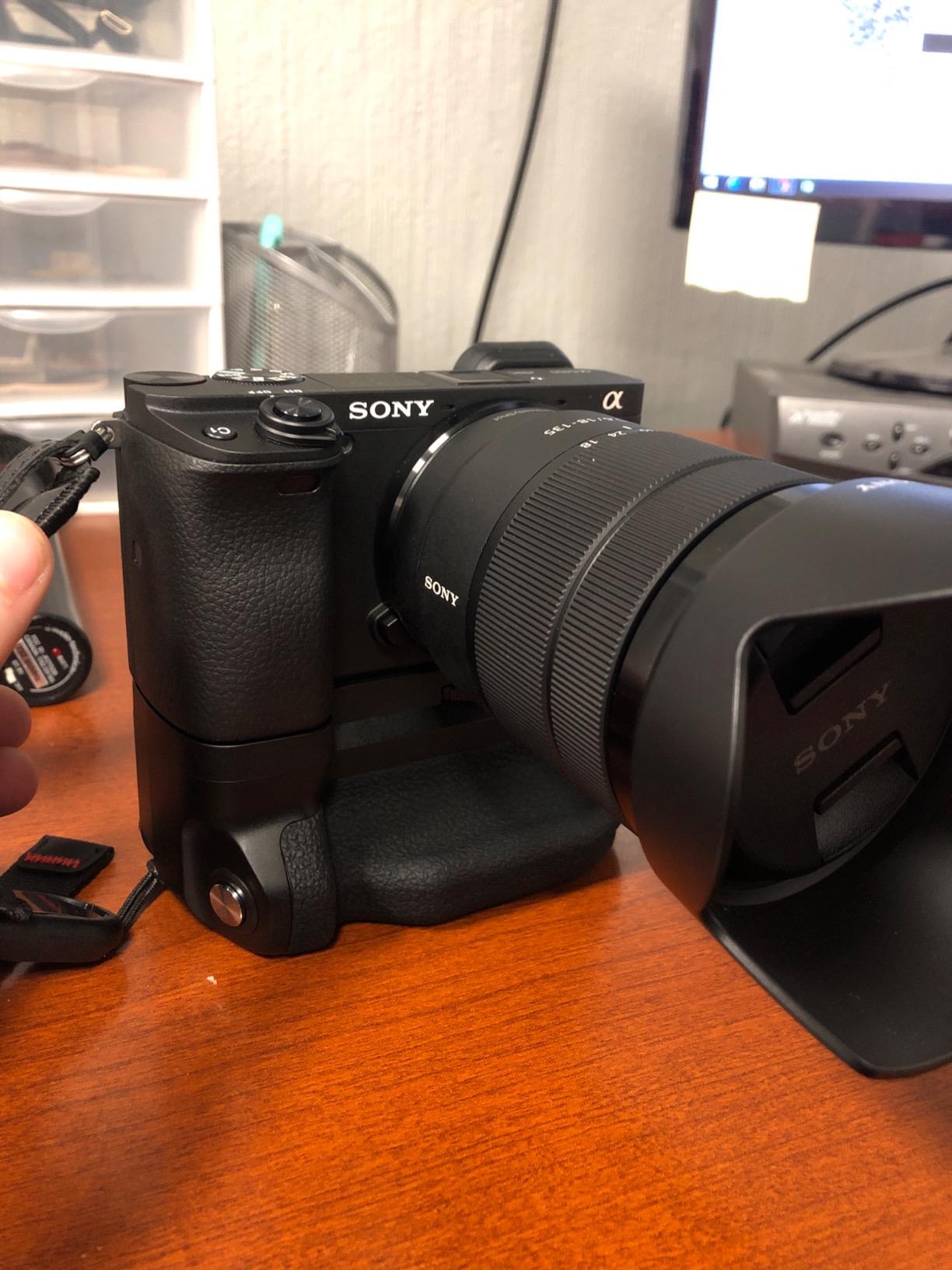
Video shooters get a second benefit, since buyers report it helps reduce overheating during long recordings by spreading power across two cells instead of one.
The complaints are consistent. There is slight wobble at the attachment point, especially on the A6000, though it firms up once fully screwed in. The camera often does not report the second battery charge level, which is annoying if you plan around battery warnings. And on some bodies the grip has to come off to reach the SD card slot.
Who the MK-A6300 PRO suits best
A6000-series shooters who need a second battery and better handling more than they need sealed contacts. The bundled remote makes it a strong pick for solo shooters working alone with an intervalometer or a long exposure.
Videographers recording longer clips on a small body benefit from spreading power across two NP-FW50 cells. It comes with a 2 year manufacturer guarantee, which is longer than most grips in this list.
Where the MK-A6300 PRO falls short
The wobble at the mount is the most common friction point, and the missing second-battery readout means you are guessing at remaining time in the field. Having to remove the grip for card access is a genuine inconvenience on a working shoot.
The included remote is also the weak link, with poor plastic and confusing pairing instructions. If the remote is the main reason you want the grip, buy a separate remote instead.
7. QUMOX Vertical Power Grip for Canon EOS RP and R8
QUMOX Vertical Power Battery Grip for Canon EOS RP EOS-RP EOS R8 DSLR Camera, Battery Holder for 2X LP-E17 Battery (Battery is not Included)
Pros
- Doubles capacity with two LP-E17 batteries
- Secure more comfortable hold with heavy lenses
- Vertical shutter release via the supplied lead
- Stores the camera battery door inside
Cons
- Grip must come off to reach the SD card
- Occasional battery detection errors
- Batteries can stick tightly in the slots
The EOS RP and R8 use LP-E17 cells, and for a long time neither body had a well-known grip. The QUMOX fills that gap, holding one or two LP-E17 Li-Ion batteries and effectively doubling recording capacity. It also works as an external power source for the camera rather than only as a holder.
It supports both vertical and horizontal hand positions, which is unusual for a grip this simple, and there is a power on and off switch plus a 1/4 inch tripod screw on the base. A neat touch: the camera battery door stores inside the grip, so it does not go missing in a bag.
At 9.5 ounces it adds manageable weight, and R8 and RP owners report a comfortable hold with heavier RF lenses. The vertical shutter release runs through a supplied lead, which is the mechanism behind one of the listed drawbacks.
Who the QUMOX grip suits best
EOS RP and R8 owners who shoot portraits, still life or video and need more than one LP-E17 cell. It is the practical answer for entry full-frame Canon bodies that lack a strong third-party grip ecosystem.
Anyone who wants the extra battery without a large vertical handle benefits from the compact form. It also suits tripod-based work thanks to the base screw.
Where the QUMOX grip falls short
You have to remove the grip to reach the SD card, and some owners report the camera occasionally throwing battery detection errors with the grip fitted. Batteries can also sit tightly in the slots and need a firm pull.
The on and off switch controls only the remote shutter button, which the product details do not spell out clearly. If you are counting on that switch to cut power draw, read the listing carefully first.
8. Meike MK-A6500 Pro Battery Grip – Best for Sony APS-C Video
Pros
- Rubber grip matches the A6500 body finish
- Two external batteries fix 4K endurance
- Steadier handling with the grip attached
- Remote supports interval delay and shot count
Cons
- Must be removed to reach battery and SD card compartment
- Shutter and remote need the cable
- Reported faulty remotes or switches on some
The A6500 is a video body with a famously short battery life, and the MK-A6500 Pro is the direct answer. It accepts two NP-FW50 lithium batteries, which is how owners get through a full recording day on a camera that struggles with a single cell.
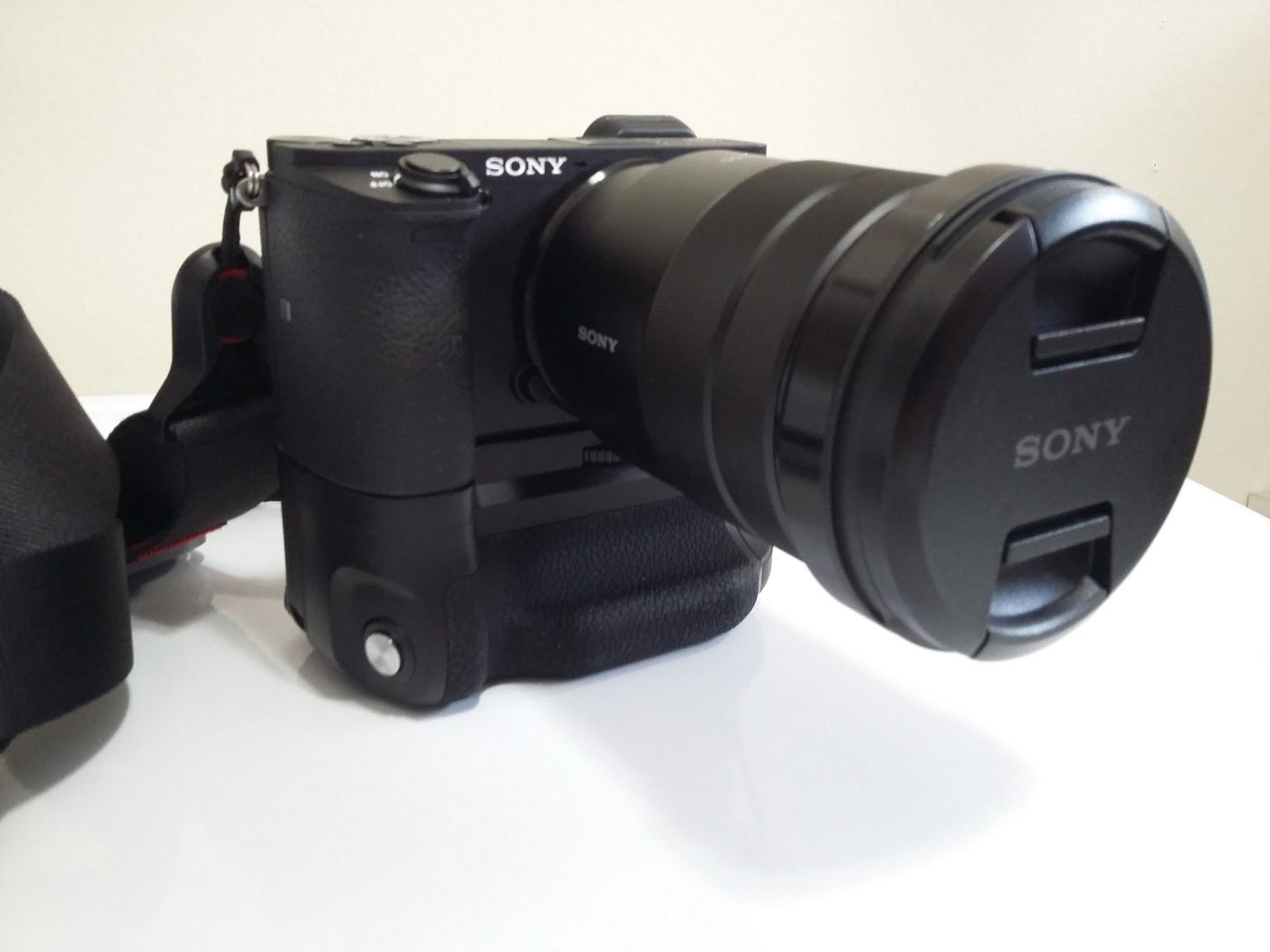
The rubber grip is the detail reviewers praise most. It matches the feel and finish of the A6500 body closely enough that the camera does not feel like two parts, and it helps the camera sit more steadily on a table or a monopod. At 7.1 ounces it is one of the lightest grips here.
Like the Meike A6300 version, the remote offers an FSK channel with roughly 100 m of range, screen lock, lock display mode, delay, interval and shot-count settings. There is also an on and off power switch for the grip and camera, which must be in the on position while shooting.
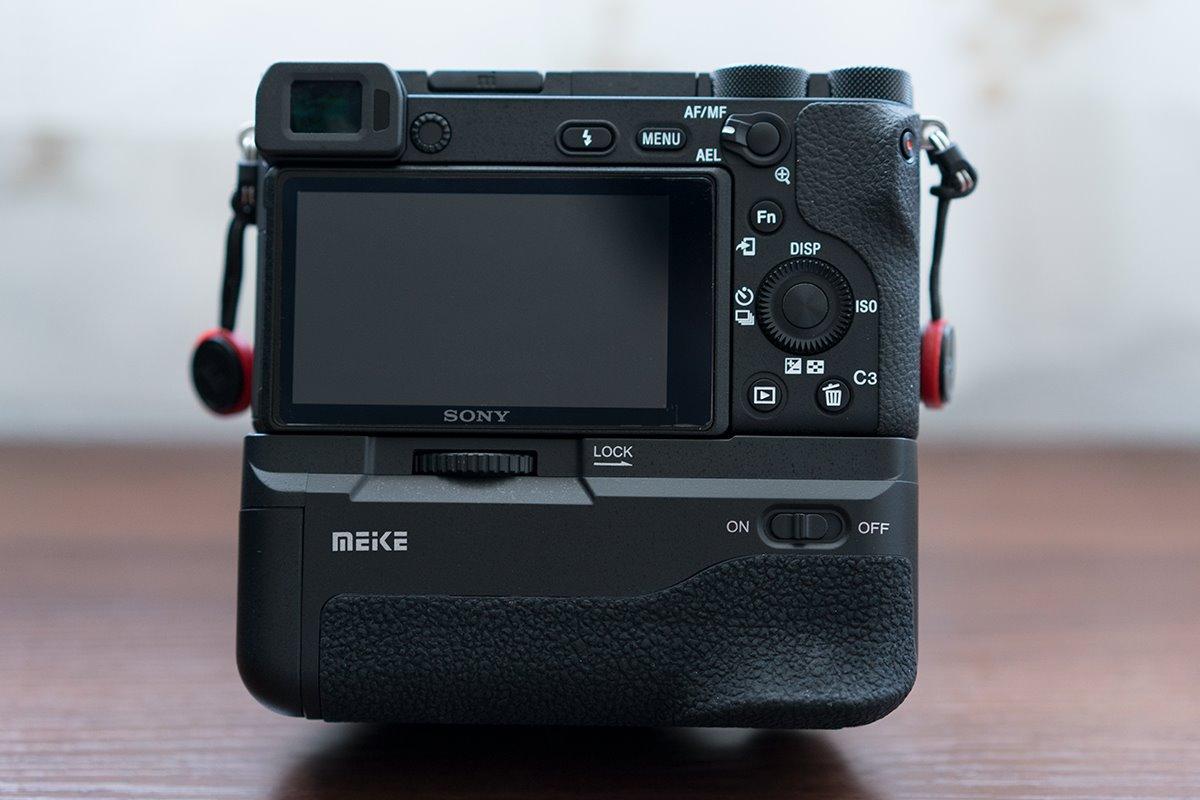
The trade-off is cable management. The vertical shutter and remote functions require the proprietary control cable, which runs to the side of the body and leaves the microphone and HDMI ports exposed. On a working video rig, that is an ongoing annoyance.
You also have to remove the grip to reach the battery and SD card compartment. Quality control is also uneven, with reports of faulty remotes or on and off switches, plus batteries that drain slowly even with the switch off.
Who the MK-A6500 Pro suits best
A6500 owners recording long 4K clips, interviews or livestreams who need more runtime than a single NP-FW50 provides. Handheld and tabletop shooters get a steadier hold and a grip that visually matches the body.
Interval, delay and shot-count remote functions make it a decent partner for self-shooting setups. It is also the lightest grip in this roundup by a wide margin.
Where the MK-A6500 Pro falls short
The proprietary cable is the main practical problem, since it exposes ports you may need. Card and battery access requires removing the grip entirely.
Quality control is uneven, with reports of faulty remotes and switches, and slow drain in the grip when switched off. Check the switch before a shoot you cannot repeat.
9. mcoplus MCO-A7II Vertical Grip – Best for First-Generation Sony A7 Bodies
mcoplus MCO-A7II Vertical Battery Grip as VG-C2EM Replacement for Sony A7II A7S II A7R II, Hold NP-FW50 Battery(Battery not Included)
Pros
- Full vertical controls mirroring the body layout
- Per-slot battery percentages on camera
- Balanced weight with long telephoto lenses
- Battery door stores in the grip slot
Cons
- Noticeable size and weight on a compact body
- Joystick and control wheel hard to reach vertically
- Some units report battery incompatibility errors
The original A7, A7R II and A7S II generation used NP-FW50 cells, and the mcoplus MCO-A7II is designed as a VG-C2EM alternative for those bodies. It holds one or two NP-FW50 batteries and includes a vertical shutter release, front and rear dials, AF-ON, AE-L and a multi-selector.
What reviewers respond to most is the fit. It sits tight with no play and the skin matches Sony’s body, and the camera displays both battery levels with clear per-slot percentages, which is more than some OEM-adjacent alternatives manage. The battery door stores conveniently in the grip slot.
The rubber coat is doing real work here. It improves hand feel and adds the balanced weight that helps with telephoto lenses, which is exactly the use case for a grip on an a7R II. A 1/4 inch standard screw hole covers tripod mounting.
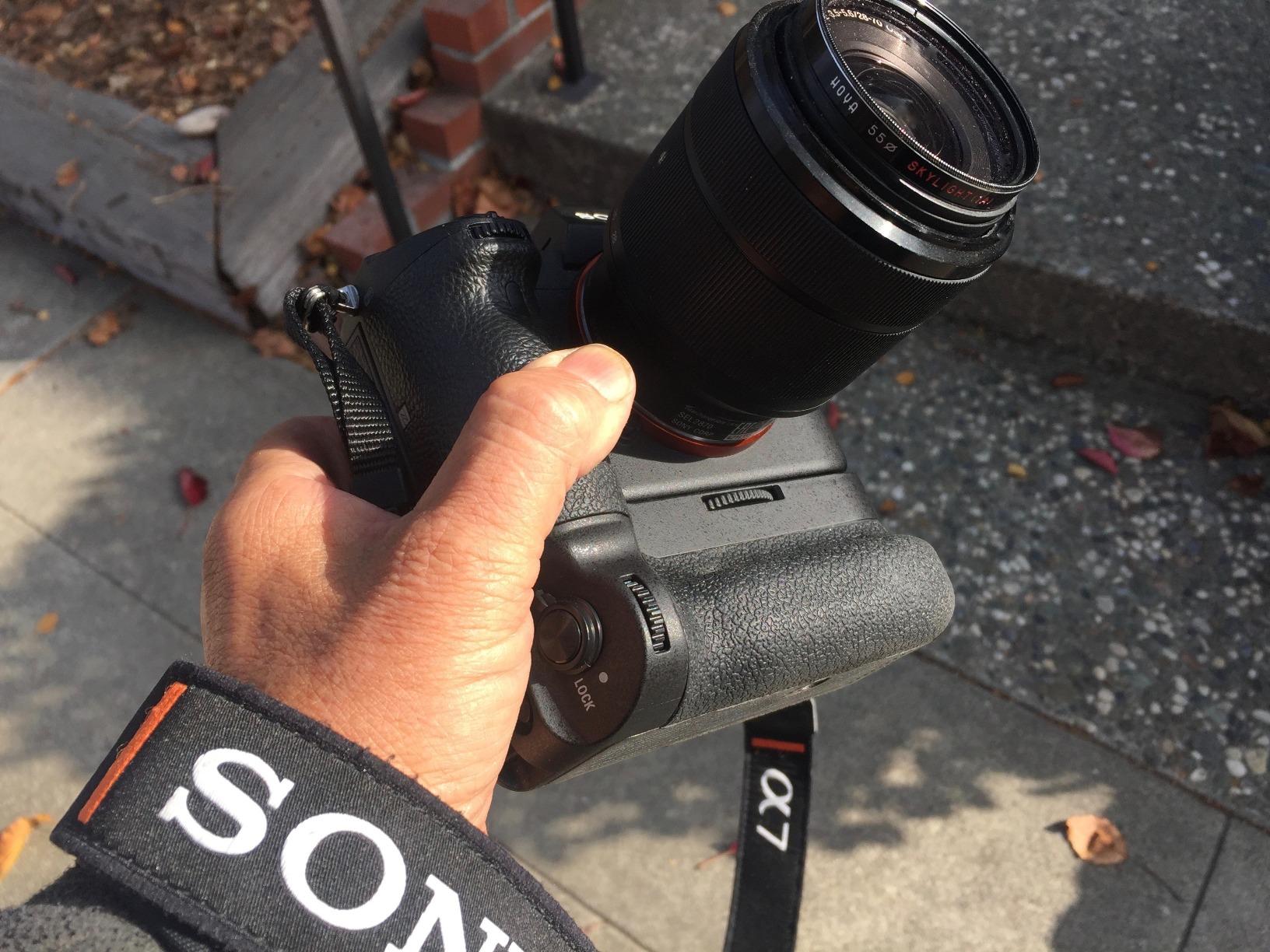
Where it loses ground is reach. Owners report that the joystick and control wheel are hard to reach in vertical orientation, and the grip adds noticeable size and weight to what is otherwise a compact body.
There is also a small share of compatibility complaints, with some units reporting an incompatible battery error, and a few long-term owners whose grips eventually stopped working. The design itself is still widely regarded as a high-value OEM alternative.
Who the MCO-A7II suits best
Owners of the a7 II, a7R II and a7S II who want vertical controls and dual NP-FW50 power without buying a discontinued OEM grip. It suits telephoto work where the added weight balances a long lens on the body.
If you shoot primarily in horizontal orientation and travel light, the added bulk is a genuine cost. For portrait and wildlife work, it earns its place.
Where the MCO-A7II falls short
Joystick and control wheel reach in vertical orientation is the most repeated complaint, and it matters in fast portrait sequences. The bulk on an otherwise small body is the second objection.
There is no weight figure listed, and a small number of owners report battery errors or eventual failure. Check contacts and battery detection as soon as you fit it.
10. Sony VGC3EM Vertical Grip – Top Rated for a9, a7R III and a7 III
Pros
- Dual NP-FZ100 bays extend shooting time
- Dust and moisture resistant sealing
- Rigid magnesium construction
- Native fit for a9 a7R III and a7 III
Cons
- Batteries sold separately
- Only fits a9 a7R III and a7 III
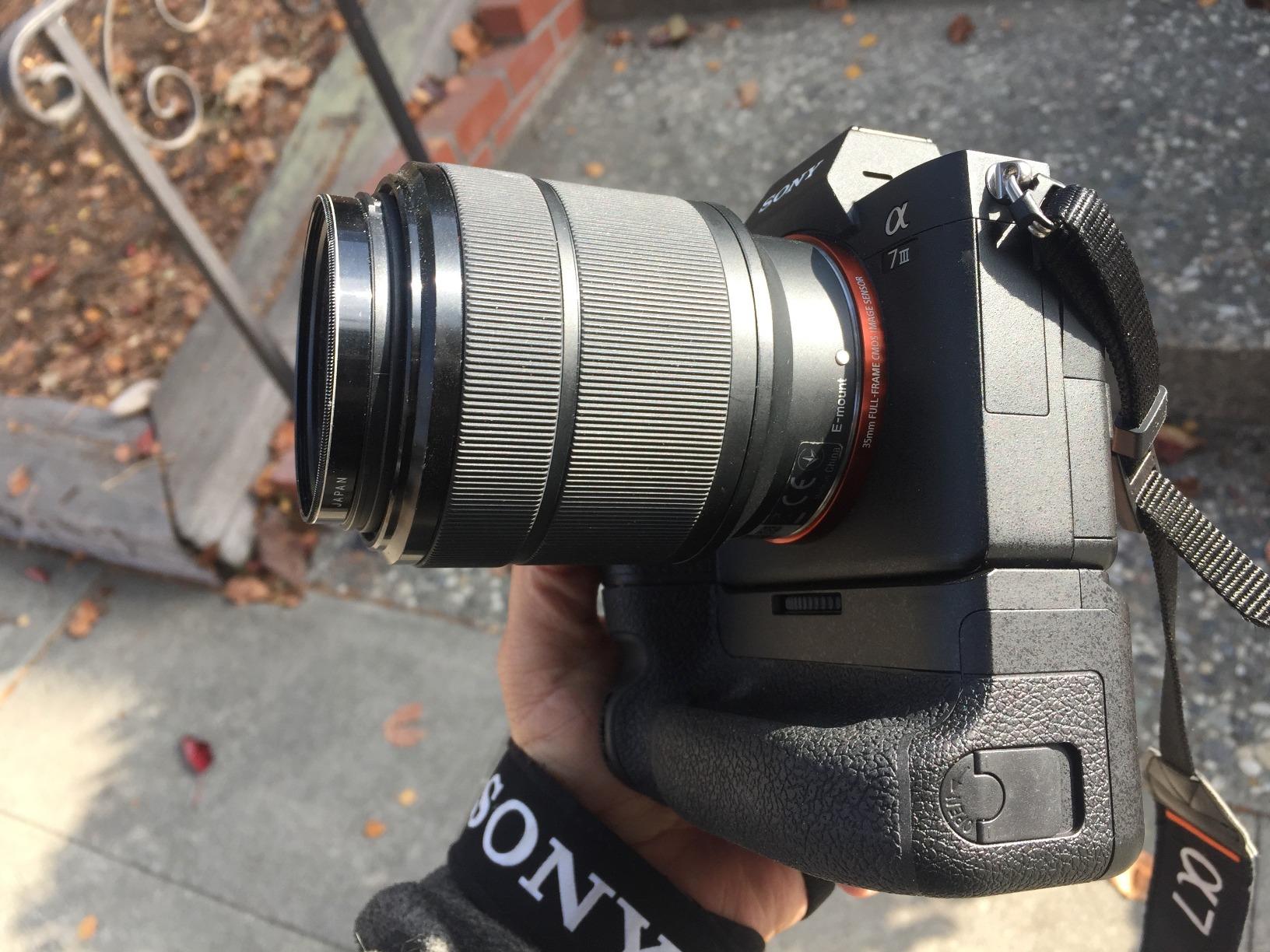
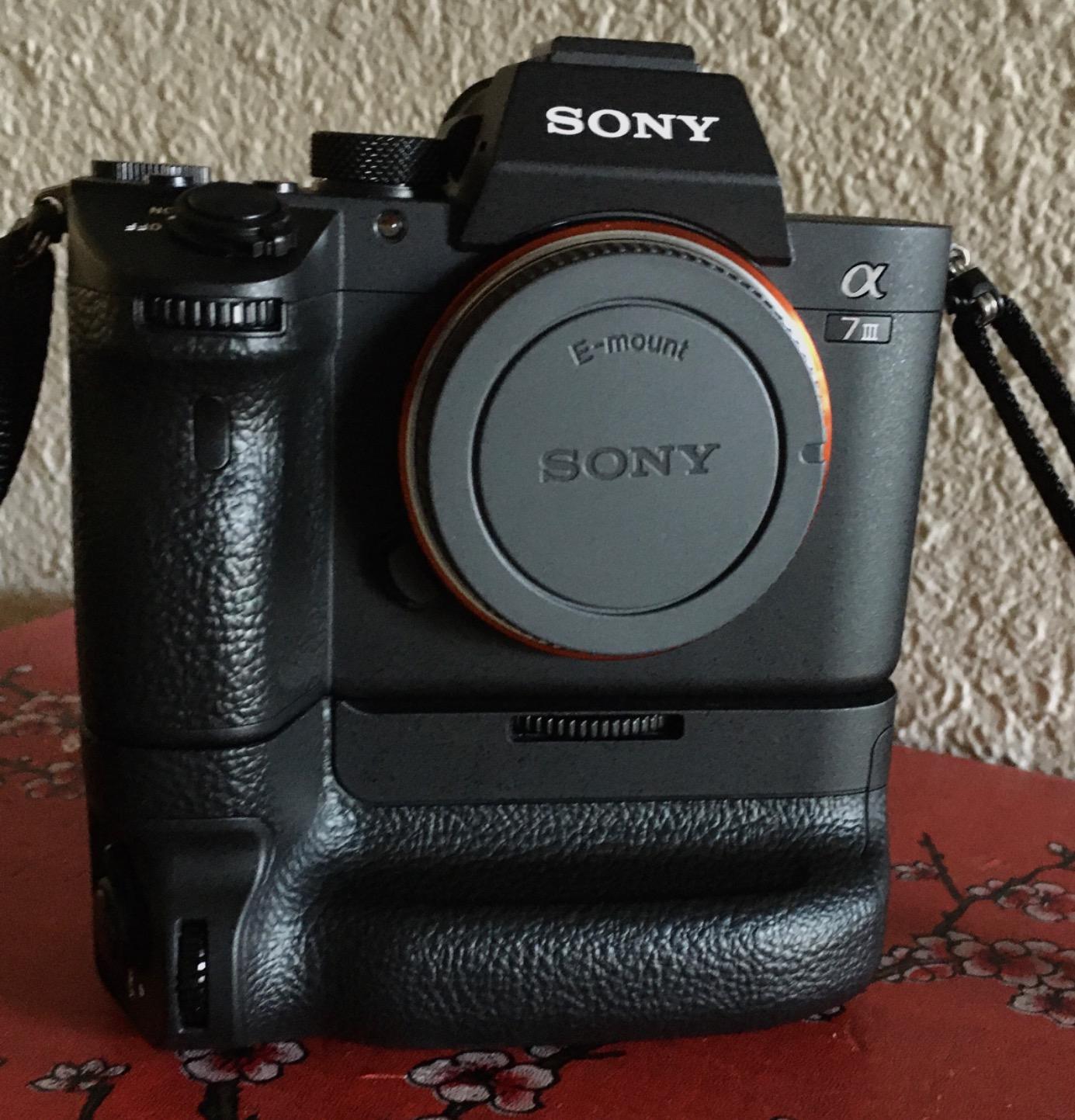
The VGC3EM has the highest average rating of any grip in this roundup, and the reason is simple: it is magnesium, it is sealed, and it fits the a9, a7R III and a7 III natively. It loads two NP-FZ100 batteries sold separately, and owners describe the fit and controls as exactly what the body would have shipped with.
At 486 g it is the heaviest grip here, and that mass is a feature on a body like the a9 that is often paired with heavy glass. The rigid magnesium construction is what gives it a feel no plastic third-party grip can imitate.
Dust and moisture resistant sealing is the decisive spec for outdoor and event work. It comes with a 1 year limited warranty, and the design language is still the benchmark the newer VG-C4EM follows.
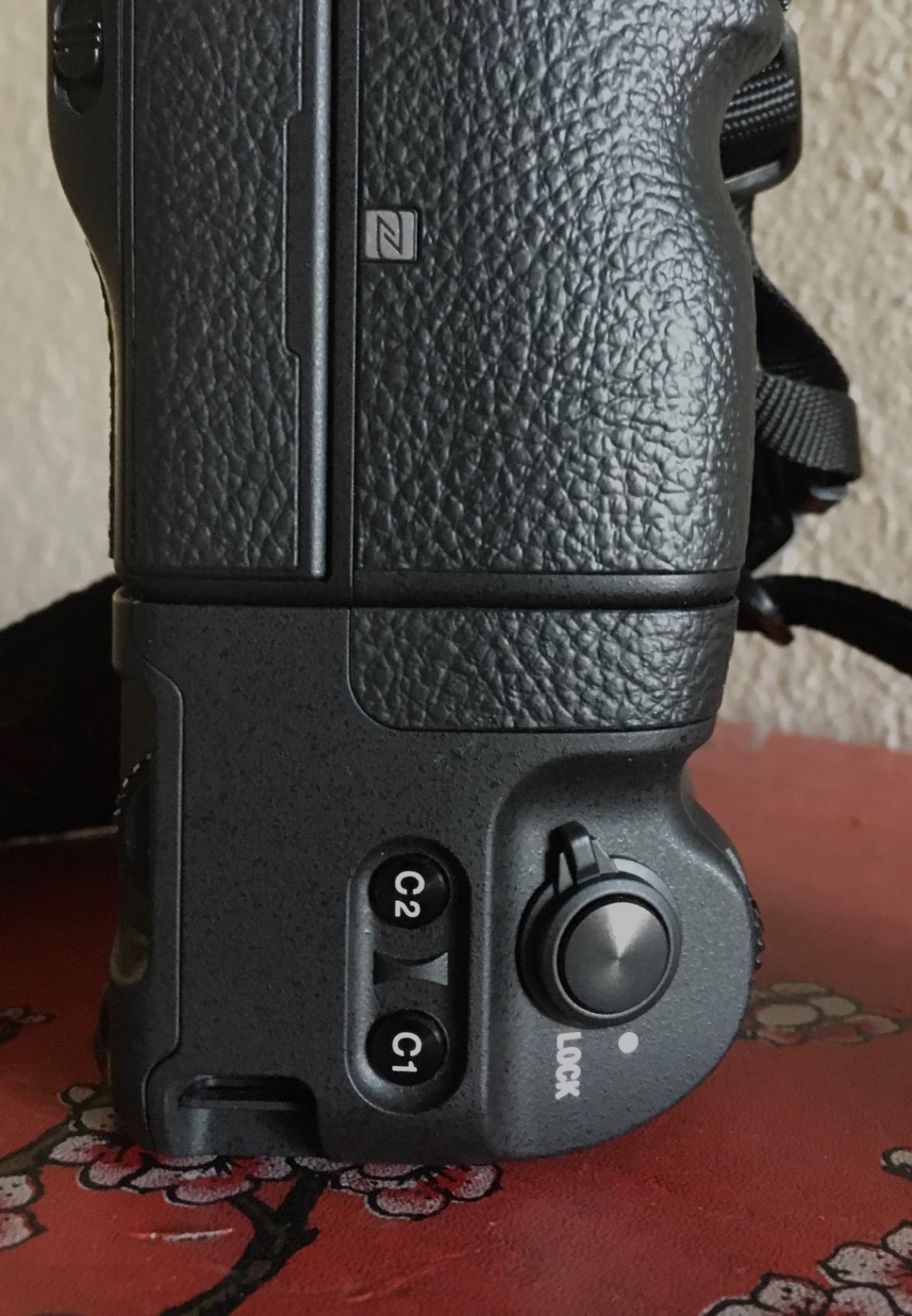
This is the grip I would choose for a full-frame Sony body that sits in the rain or on a dusty job site, and the reason it tops the rating list rather than the recommendation list is fit. The VG-C4EM is the better answer for current-generation bodies, and the VGC3EM is the better answer for these three.
If you are still on the a7R III or a7 III, the used market is worth checking. Sony owner forums regularly recommend buying a refurbished OEM unit rather than a third-party copy, and that advice applies directly here.
Who the VGC3EM suits best
Shooters on the a9, a7R III or a7 III who need sealed, rigid construction for outdoor and event work. Anyone pairing those bodies with heavy telephoto glass will appreciate the mass as much as the battery capacity.
It is also a sensible target for the used and refurbished market, where an OEM grip costs less than new and keeps every advantage over third-party copies.
Where the VGC3EM falls short
Fit is narrow, covering three bodies only. If you move to a newer Sony body later, the grip is finished as a daily accessory.
Batteries are sold separately, and at 486 g it is heavy enough that you will feel it in a small bag on a long walk.
How to Choose a Battery Grip for Your Mirrorless Camera
Fit first, everything else second. There is no universal battery grip, and every design in this roundup fits a short, specific list of bodies. Start with your exact model number, not your mount.
Step 1: Match the mount and the model, not the brand. Sony E alone does not determine compatibility. Within that mount, the a7 III, a7R III, a7 IV and a7R IV each use a different base plate, which is why this list contains five separate Sony grip options. The same applies on Canon RF, where the RP and R8 use LP-E17 cells and are treated together while the pro bodies use a different battery entirely.
Step 2: Match the battery type. NP-FZ100, NP-FW50, EN-EL15b, LP-E17 and the OM-1 cell are not interchangeable. A grip that takes the right cells means your existing charger setup keeps working. Every grip here except the HLD-10 is sold without batteries, so the cells are a separate cost.
Step 3: Count the controls you actually need. The Fujifilm VG-XT4 and the Sony VG-C4EM duplicate nearly everything, including the focus lever or the full dial set. The OM System HLD-10 gives you a shutter release and a control dial but no multi-function or ISO duplication. Portrait shooters should pay for control access; everyone else can accept a simpler grip.
Step 4: Decide how much weather matters. This is the cleanest divide between the tiers. Sony lists dust and moisture resistance for the VGC3EM and the VG-C4EM, and Fujifilm rates the VG-XT4 as dust and water resistant down to -10 C. Nikon lists the MB-N10 as water resistant. The HLD-10 is explicitly not rated water resistant, and no third-party grip in this roundup makes a sealing claim. Forum users consistently name matching weather sealing as the deciding factor for outdoor event work.
Step 5: Add up the total cost. Grip plus two or three cells is the real number, and for third-party options the cells can approach the cost of the grip itself. A used OEM unit from a refurbisher is the route several forum regulars recommend when an OEM grip feels out of reach, and it keeps the sealed contacts and body-matched fit.
Two further details get mentioned often in owner forums. The first is cold weather: a battery sitting in the grip is no warmer than one in a pocket, so a second bay buys capacity, not warmth. Fujifilm’s -10 C rating is the only cold-specific figure in this group. The second is battery reporting, where third-party grips are less consistent than OEM ones at showing the second cell’s level.
Battery Grip vs L-Bracket and Half-Case
A full battery grip is not always the right tool, and the most useful buying decision happens before the accessory list. A half-case or L-bracket adds pinky height and Arca-Swiss compatibility without a second battery, which is the opposite trade to a grip.
Choose a half-case or L-plate when portability is the priority. Travel and street shooters working with a compact kit gain real comfort from extra pinky room and a clean tripod interface, and they keep the small body small. DPReview regulars split cleanly on this, with some relying on grips for balance with 200-600mm glass and others never using one and preferring plates for tripods and gimbals.
Choose a full battery grip when you need runtime, vertical controls and balance. A gimbal or monopod workflow can favor a plate instead, because an L-bracket keeps the camera close to its centre of gravity and removes the pendulum effect of a hanging grip.
There is one ergonomic flaw worth knowing before you commit either way. In horizontal orientation the heel of your hand can half-press a grip shutter button, which is the complaint that keeps a few shooters permanently on a plate. Try the grip in a shop with your own hand before you decide.
Frequently Asked Questions
Are camera battery grips worth it?
Yes, for shooters who shoot long, shoot vertically or work outdoors. A battery grip doubles or triples runtime, adds a real grip with a duplicate shutter button for portrait orientation, and improves balance with long telephoto lenses. It is less worthwhile for short sessions on one charge, where the extra weight and bulk are pure cost.
What battery grip does the Canon EOS R use?
Canon pro EOS R bodies use the BG-R20 grip, which takes LP-E6P batteries and duplicates the controls for vertical shooting. A weather-sealed Ethernet and FTP variant, the BG-R20EP, exists for tethered sports and broadcast work. Entry bodies such as the EOS RP and R8 use LP-E17 cells and are served by third-party grips rather than an official Canon one.
What is the best hand grip for a camera?
For vertical shooting, a battery grip is the best answer because it adds both a real handhold and a second shutter button with duplicated dials. For travel and tripod work, a half-case or Arca-Swiss L-bracket is often the better choice, adding pinky room without the weight and bulk. The right pick depends on whether you need a second battery or just a better handhold.
Are third-party battery grips reliable?
They vary a great deal. Value grips such as the NEEWER, Meike, QUMOX and mcoplus models include real vertical controls and are widely used, but they carry no weather sealing and some models report battery detection errors or contact issues over time. For sealed, dependable contacts in bad weather, an OEM grip or a refurbished OEM unit is the safer route.
Are battery grips universal?
No. There is no universal battery grip. Every model is built for a specific body or a short list of bodies sharing the same battery compartment and base plate, and even within one brand different generations need different grips. Always confirm the exact camera model against the grip compatibility list before buying.
Final Verdict on Battery Grips for Mirrorless Cameras in 2026
The Sony VG-C4EM is my pick of the best battery grips for mirrorless cameras, because it matches the body in magnesium, sealing and control layout while doubling your runtime. If you want the same idea for less money, the NEEWER VG-C3EM replacement is the most proven value option in the category, and the Sony VGC3EM tops the ratings for a9, a7R III and a7 III owners.
Match the grip to your exact body first, because fitment is where these purchases succeed or fail. Check the battery type, decide whether weather sealing matters for the work you do, and only then compare control sets. If you are still undecided, our full-frame battery grip guide breaks the same logic down by body class.
Whichever grip you choose, buy a second battery at the same time. A grip with one cell in it solves half the problem it was bought for.