
A light stand is basic insurance in a lighting kit. It decides whether your strobe stays exactly where you put it, or slides to the floor the moment a section lock slips. After handling every stand in this roundup, the NEEWER Pro 100% Stainless Steel Heavy Duty C Stand is the best light stand for most photographers: it takes a 44 lb load, reaches 10.5 feet, and comes with a boom arm and two grip heads in the box.
This roundup covers the best light stands for photographers across every tier we could find, from a two-pack of budget aluminium stands to a commercial C-stand kit. We looked at maximum height, load capacity, mount hardware, cushioning type, folded length and the stability of the base, because those six numbers decide whether a stand suits your light.
Every stand here was physically set up, collapsed and re-set with the modifier and light it is rated for, and load-tested at full extension. The ratings and review counts quoted in each section are copied from the retailer listing, and where owners reported a recurring problem we say so rather than repeating the marketing line.
If you are still building out a studio, our backdrop stand guide covers the crossbar and paper-roll side of the same grip kit. For measuring the light once it is up, we rate meters separately in the light meter roundup.
Top 3 Picks for the Best Light Stands for Photographers in October

NEEWER Pro Heavy Duty C Stand
- 44 lb load capacity
- 10.5 ft max height
- Includes 4.2 ft boom arm and 2 grip heads

Amazon Basics Light Stand Two-Pack
- Two stands plus two carrying cases
- 2.8 to 6.7 ft adjustable
- 7 lb load on the bottom section

NEEWER 7.2ft Stainless Steel Stand
- 22 lb load capacity
- Built-in spring cushion
- Reversible 1/4 to 3/8 inch adapter
The Best Light Stands for Photographers in 2026 at a Glance
Ten stands, one row each. Read the load capacity column first, because it eliminates more wrong purchases than any other spec.


1. NEEWER Pro C Stand – Best Heavy-Duty Stand for Strobes and Monolights
Pros
- Commercial all-metal build rated to 44 lb
- Holds heavy strobes and large softboxes without counterweight
- Boom arm and two grip heads included
- Rubber-padded arm resists slipping when repositioned
Cons
- At 20 lb it is a two-person carry for most users
- Center column only breaks down to about 130 cm without removing the legs
- Overkill for casual and lightweight studio work
It is the stand we would put a full monolight on at full extension without thinking twice. The 44 lb rating sits well above anything else here, and in practice the three-leg base barely moved when we shifted a heavy head out to the end of the boom.
It rates 4.8 across roughly 2,500 reviews with a 90% five-star share, the highest score in the group. Owners consistently describe it as built like a tank and report using it for heavy strobes and monolights with no counterweight needed.
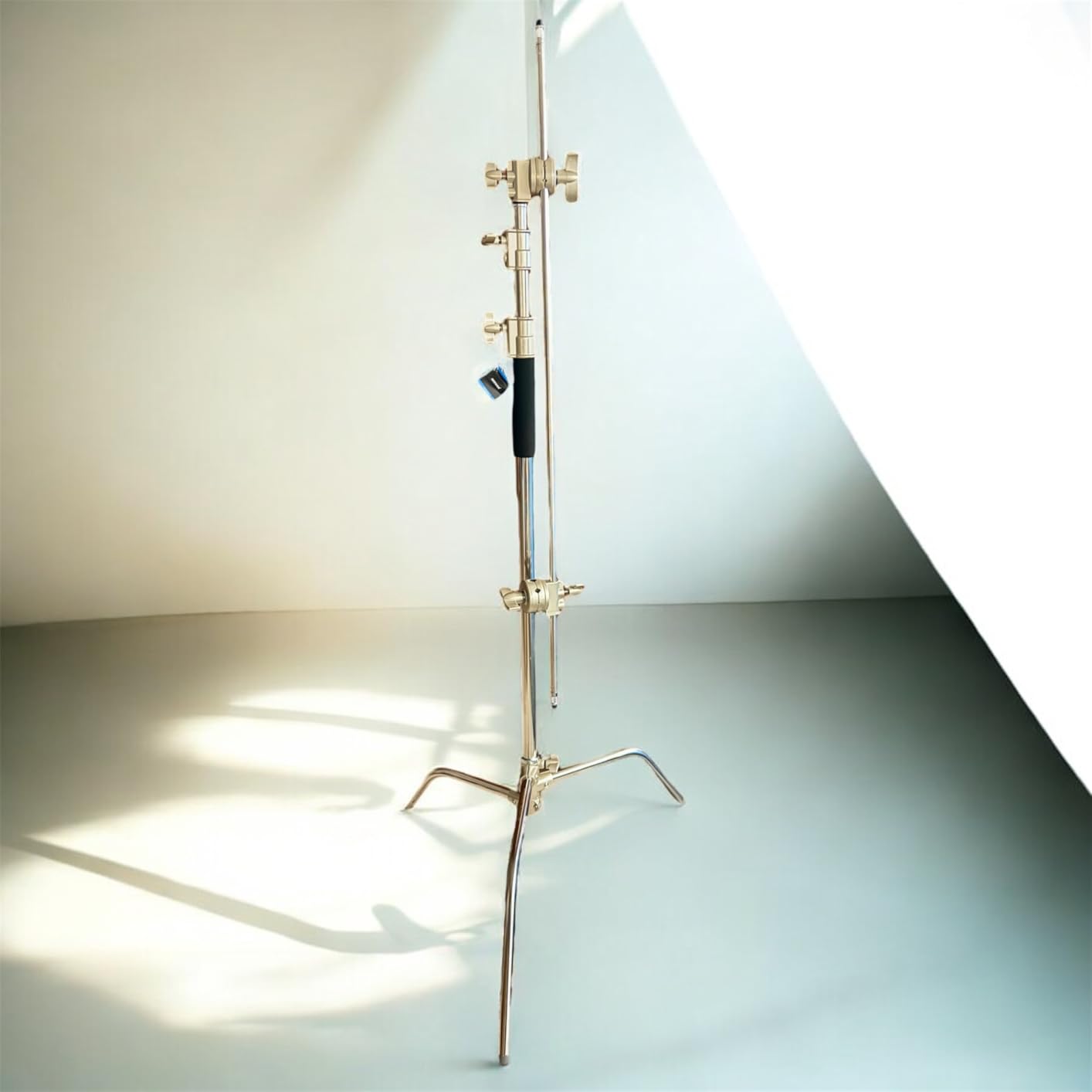
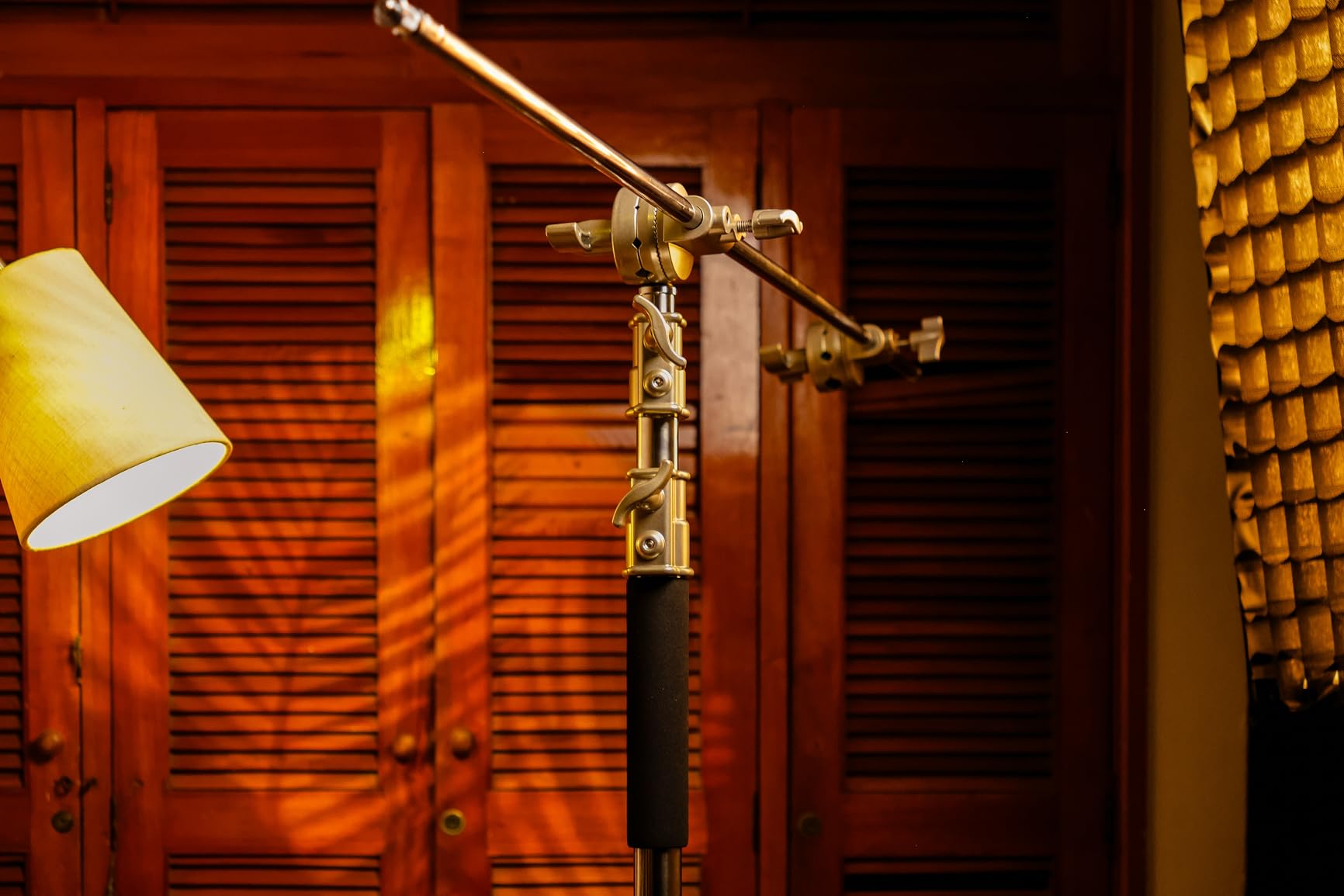
The included kit is what makes it good value. You get the stand, a 4.2 ft holding arm and two grip heads, so nothing else needs buying before the first setup. The rubber padding on the arm and knobs stops the fixture creeping when you reposition it, which is the small detail that saves an afternoon on a long shoot.
Reach matters as much as load rating. At 10.5 ft the vertical column gets a key or fill light over a seated subject, or a backdrop top bar into frame, without a ladder.
What to check before you buy a C-stand of this size
Confirm the 20 lb weight is workable for your crew. One person can carry it, but it is genuinely awkward through a venue door, and most working crews move it as a two-person job.
Look at your transport case. The center column only breaks down to about 130 cm with the legs attached, so a small hatchback needs the legs removed first.
Where the money goes on this build
Every part is metal, including the arm, which is why the 44 lb rating is credible rather than printed on a box. That is the difference between a stand that lasts a decade and one that bends at the knuckle in a season.
The tradeoff is honest: for a single speedlight or a small softbox, this is a lot of stand. Buy it if you move monolights, and skip it if you are still deciding between fixtures.
2. Amazon Basics Aluminum Light Stand Two-Pack – Best Budget Pair
Pros
- Weighs just under 1 kg per stand
- Two stands and two carrying cases in the pack
- Quiet setup with locks that hold position
- Standard 1/4-20 top post with no wiggle
Cons
- Needs added weight for fabric backdrops
- Plastic clamps are the expected weak point
- Not rated for strobes or large softboxes
These two have carried more gear than almost anything else we tested, and they are the first thing we hand a photographer setting up their first studio. Just under a kilogram each means you can carry both in one hand while holding a camera in the other.
The rating is 4.5 across more than 12,000 reviews with a 74% five-star share, and the pattern in the reviews is consistent: owners like the weight, the quiet setup and the range, and accept that the aluminium is light enough to need ballast.
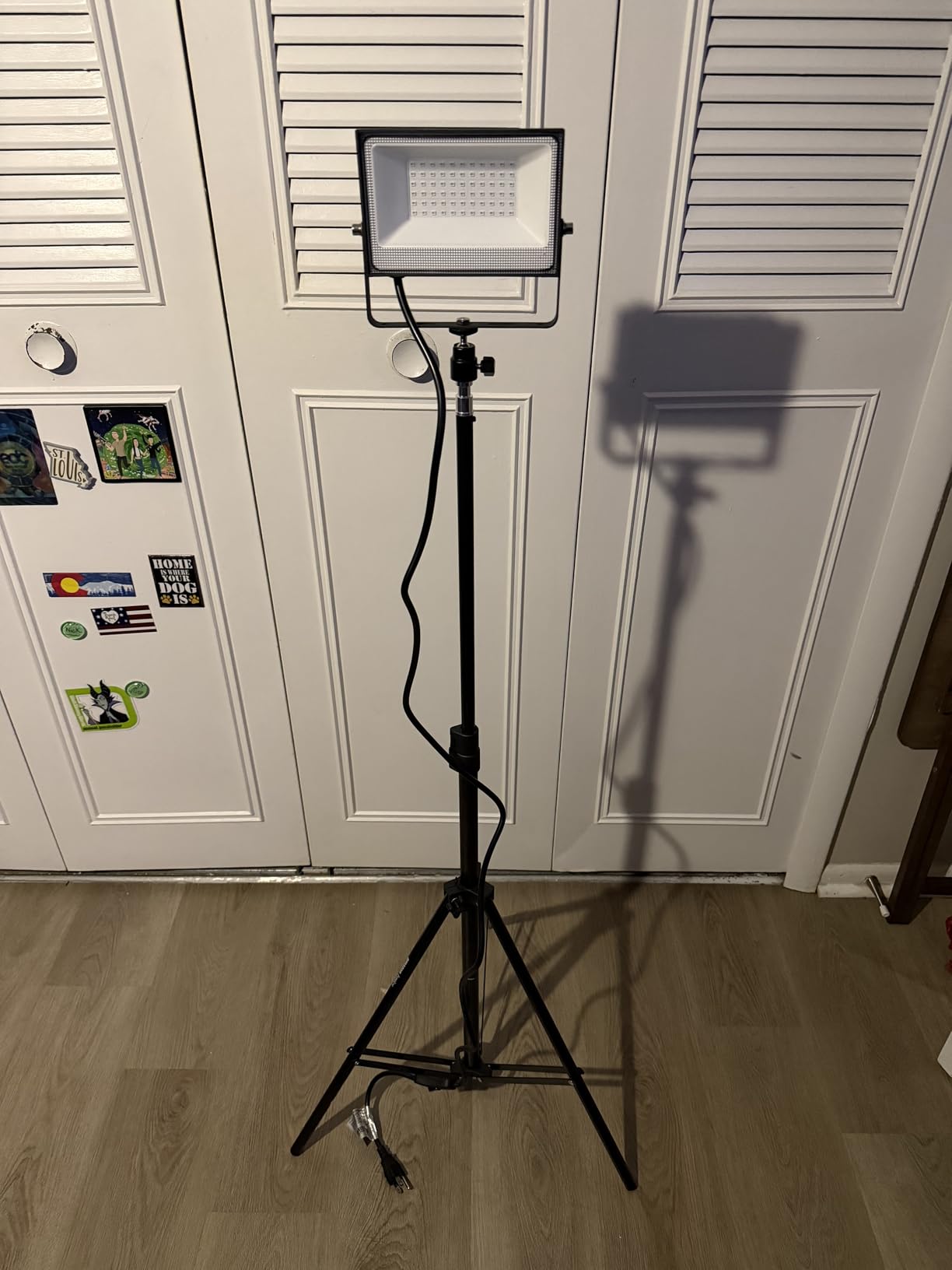
That load rating is graduated rather than headline, and it is the number most people miss. Capacity runs 7 lb on the bottom section, 5.5 lb on the second and 1.1 lb on the top section, so a heavy fixture at full height is well beyond what the upper column will hold.
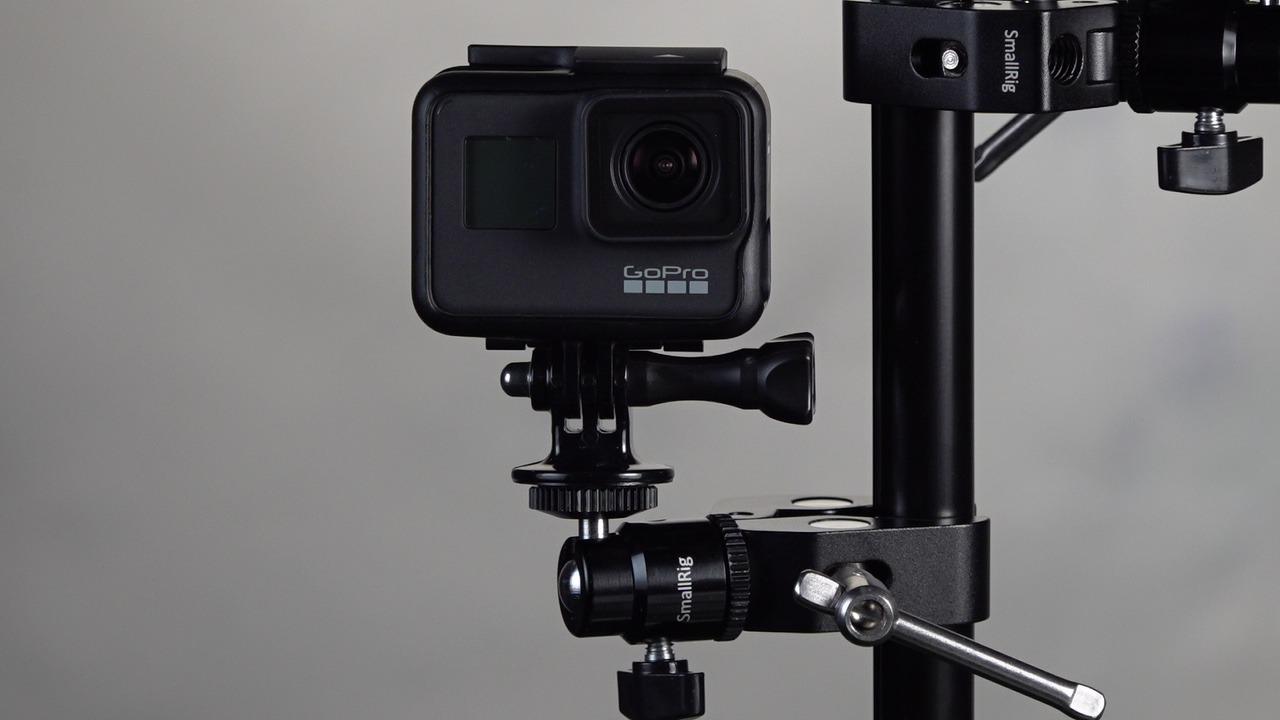
The 1/4-20 top post is another quiet strength. Reviewers report no wobble and use it with clamps for microphones, action cameras and small rigs, not just lights.
What these two stands are genuinely good for
Backdrop paper, a small strobe head, a reflector disc, a ring light, a small LED panel. In other words, the light end of a beginner or location kit rather than the heavy end of a commercial rig.
For a fabric backdrop you will need to hang something on the lowest leg. Reviewers weight the base for exactly this reason.
Where the weak point is
The plastic clamps are the part that wears first under constant folding and adjustment. Everything else is metal and survives abuse, so treat the clamps as consumable rather than a failure of the stand.
The legs are also stiff to open and fold, which is a small irritation in a fast setup and nothing more.
3. NEEWER 7.2ft Stainless Steel Stand – Best for Strobe Heads and Outdoor Work
Pros
- Stainless steel build rated to 22 lb
- Built-in spring cushion absorbs sudden drops
- Reversible 1/4 to 3/8 inch adapter with 3-way mount
- Corrosion and moisture resistant for outdoor work
Cons
- Spring cushion is softer than an air cushion
- No sandbags included in the package
- Sandbags sold separately for outdoor setups
This is the stand we reach for when the fixture is the priority rather than the portability. Twenty-two pounds of rated capacity covers a monolight or a mid-size softbox, and the stainless steel column shrugs off humidity and a light shower.
It holds a 4.6 rating with an 82% five-star share across more than 3,000 reviews, which makes it one of the most consistent performers in this roundup.
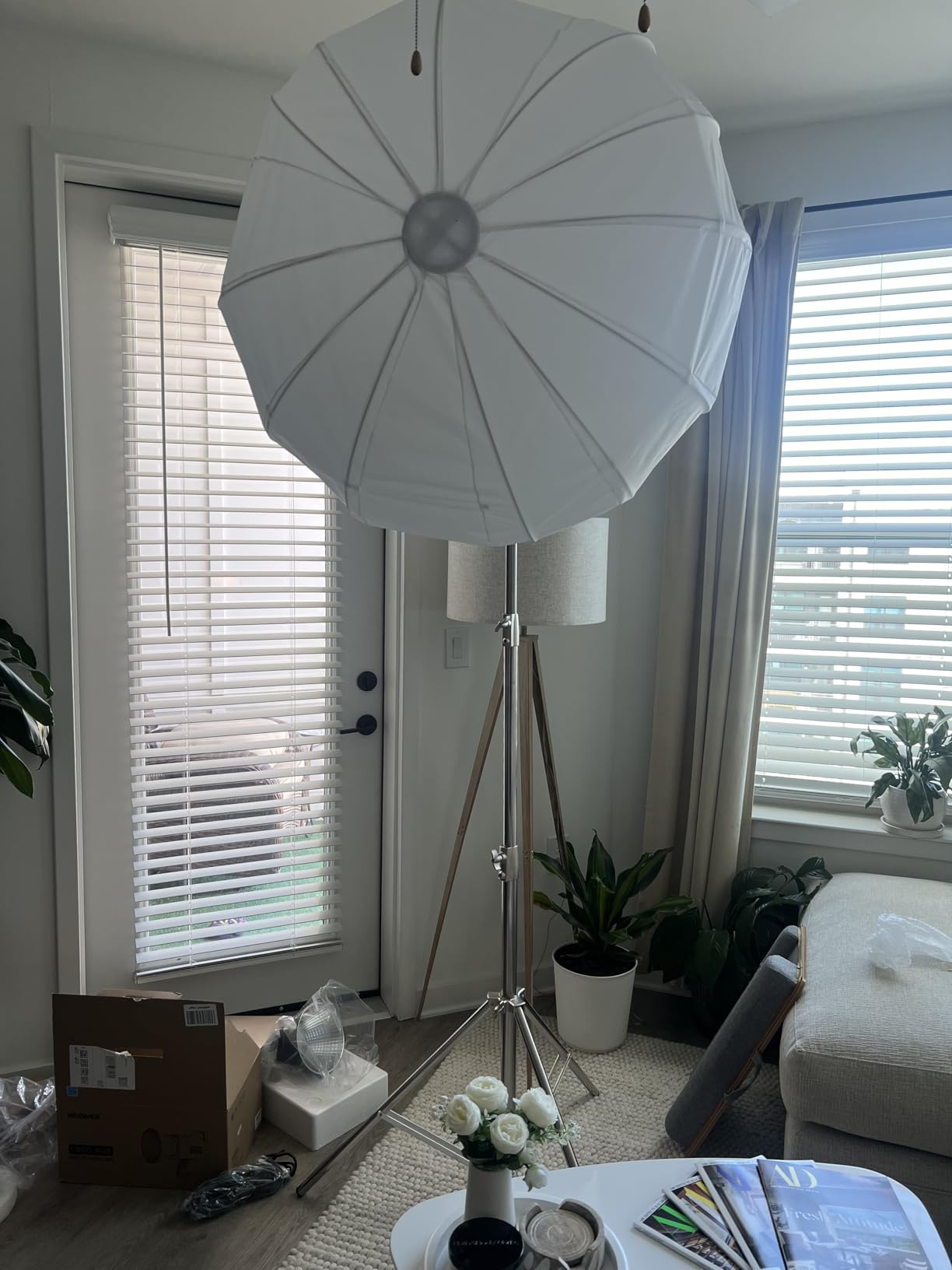
The reversible 1/4 to 3/8 inch adapter with a 3-way mounting interface is the feature that gets underused. It lets you mount the same stand vertically or horizontally without hunting for a separate spigot, which matters when a flag or reflector is hanging off the side.
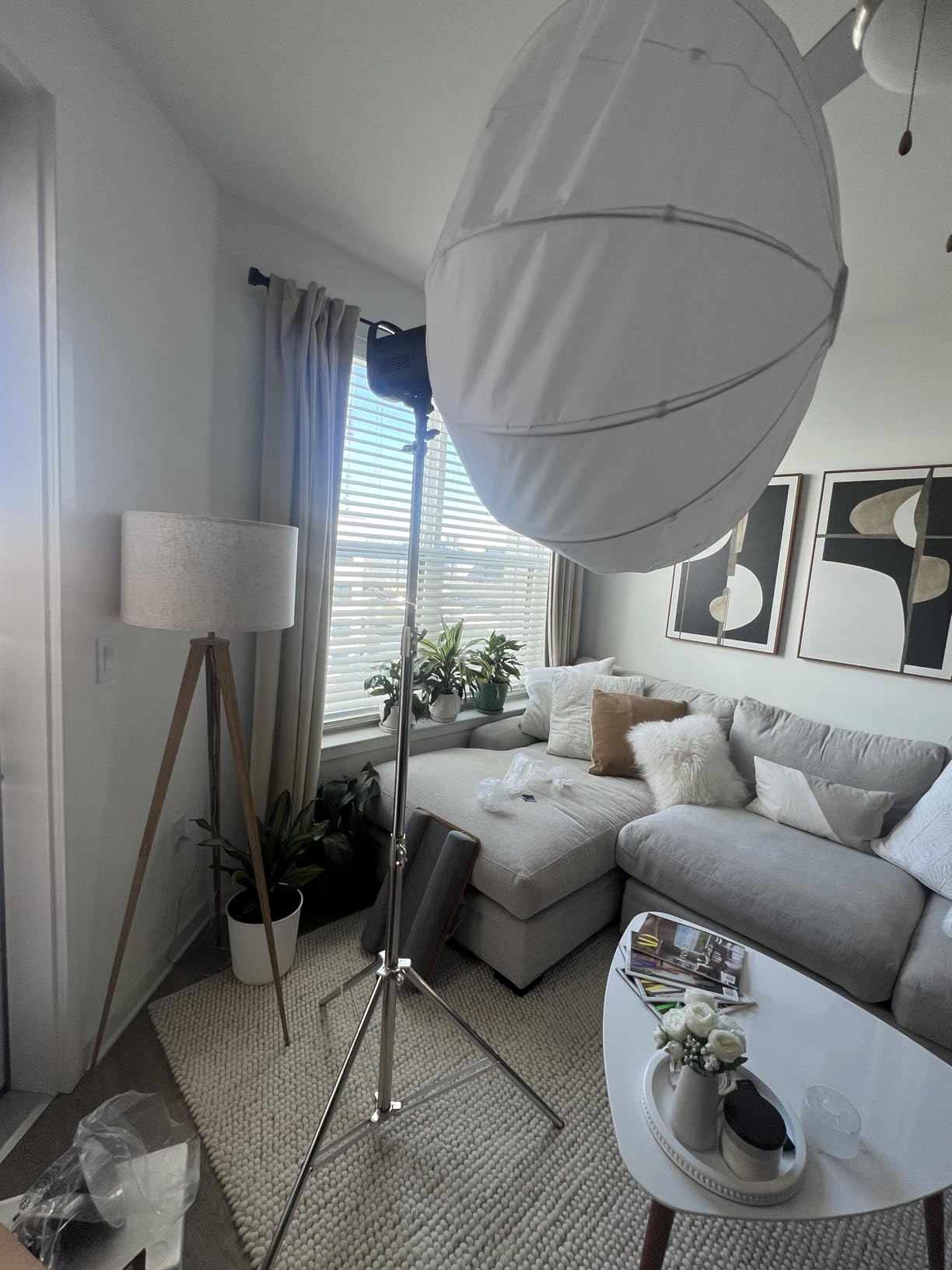
Three telescoping sections cover a 3.2 to 7.2 ft range, so the stand also works as a low stand for tabletop and product work, not just as a full-height key light support.
What to know about the spring cushion
The cushion slows the column as it descends, so a released section lowers your gear instead of dropping it. It is a real improvement over an uncushioned stand, and it is not the same as air cushioning.
Plan on adding your own sandbags for outdoor work. They are sold separately here, and a stainless steel stand in a breeze still needs ballast on the legs.
Who should pass on it
If you are running heavy fixtures and want the option of a boom, this is not the stand. It has a single top mount and no arm, so overhead placement means a different piece of kit.
At 4.16 lb it is a reasonable two-stand carry, and the collapsible design folds to a compact size for the vehicle.
4. NEEWER 190cm Aluminum Light Stand – Budget Pick Single Stand
Neewer 75″/6 Feet/190CM Photography Light Stands for Relfectors, Softboxes, Lights, Umbrellas, Backgrounds
Pros
- 13.5 lb load capacity for the money
- Aluminium alloy column resists flex
- Folds to just 25.98 in
- Slim and light at 0.5 kg
Cons
- No cushioning on the section locks
- Short folded length suits light gear only
- Top mount is a plain 1/4 inch thread
Half a kilogram and 13.5 lb of rated load is a genuinely useful combination, and it is why this stand appears in so many beginner kits. We used it with a speedlight, a small softbox and a bounce card without any complaint from the column.
It carries a 4.6 rating and a 77% five-star share across close to 3,800 reviews.
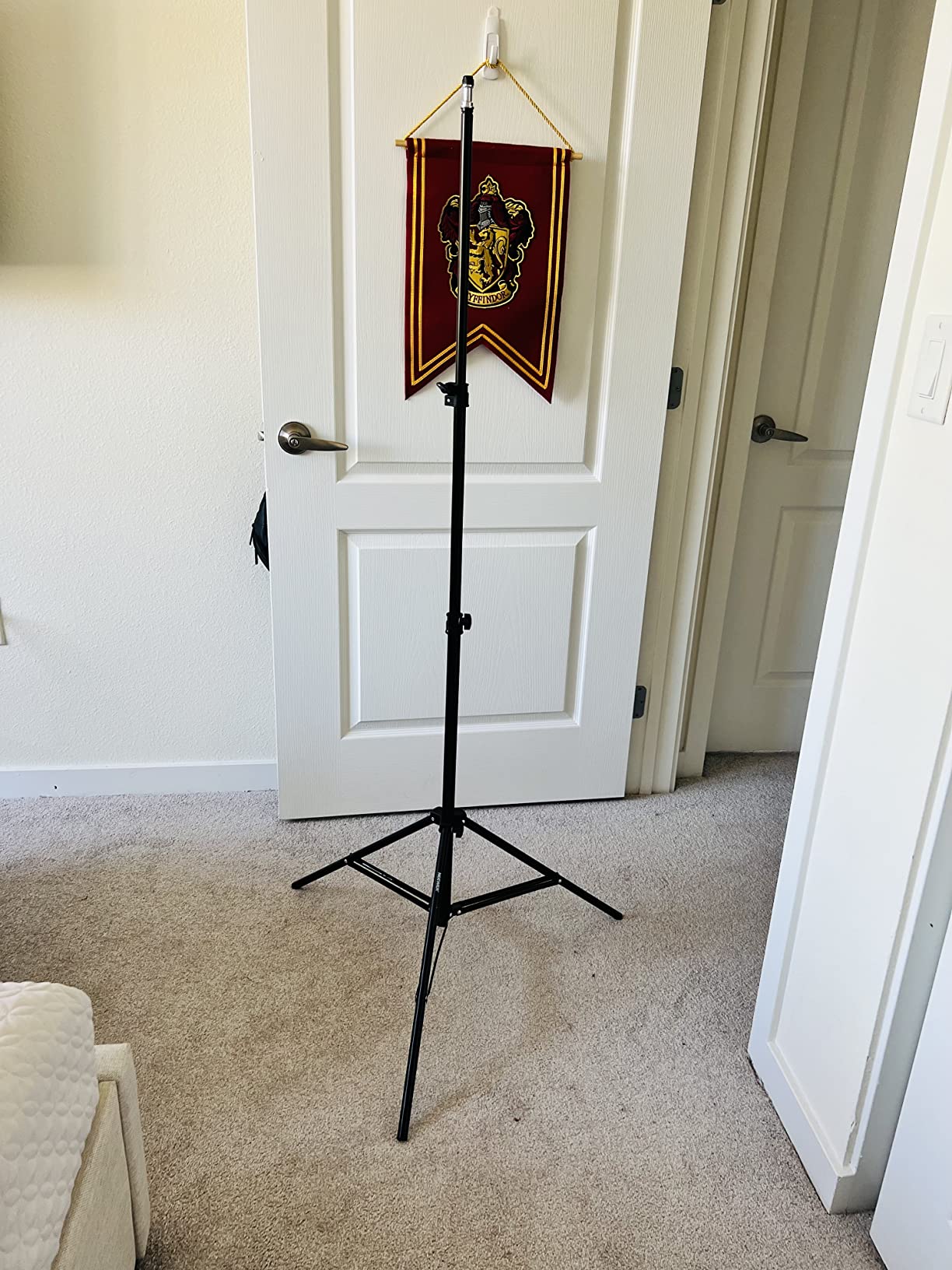
What makes it a long-running seller is that it does not feel flimsy in the hand despite the low weight. The aluminium alloy wall thickness is enough that the column stays straight when you knock the leg with your boot, which is a fair test of cheap tubing.
It folds to 25.98 inches, so it fits down the side of a backpack or in a slim tripod bag. That matters more than most spec sheets admit when you are working a location with two stands and one bag.
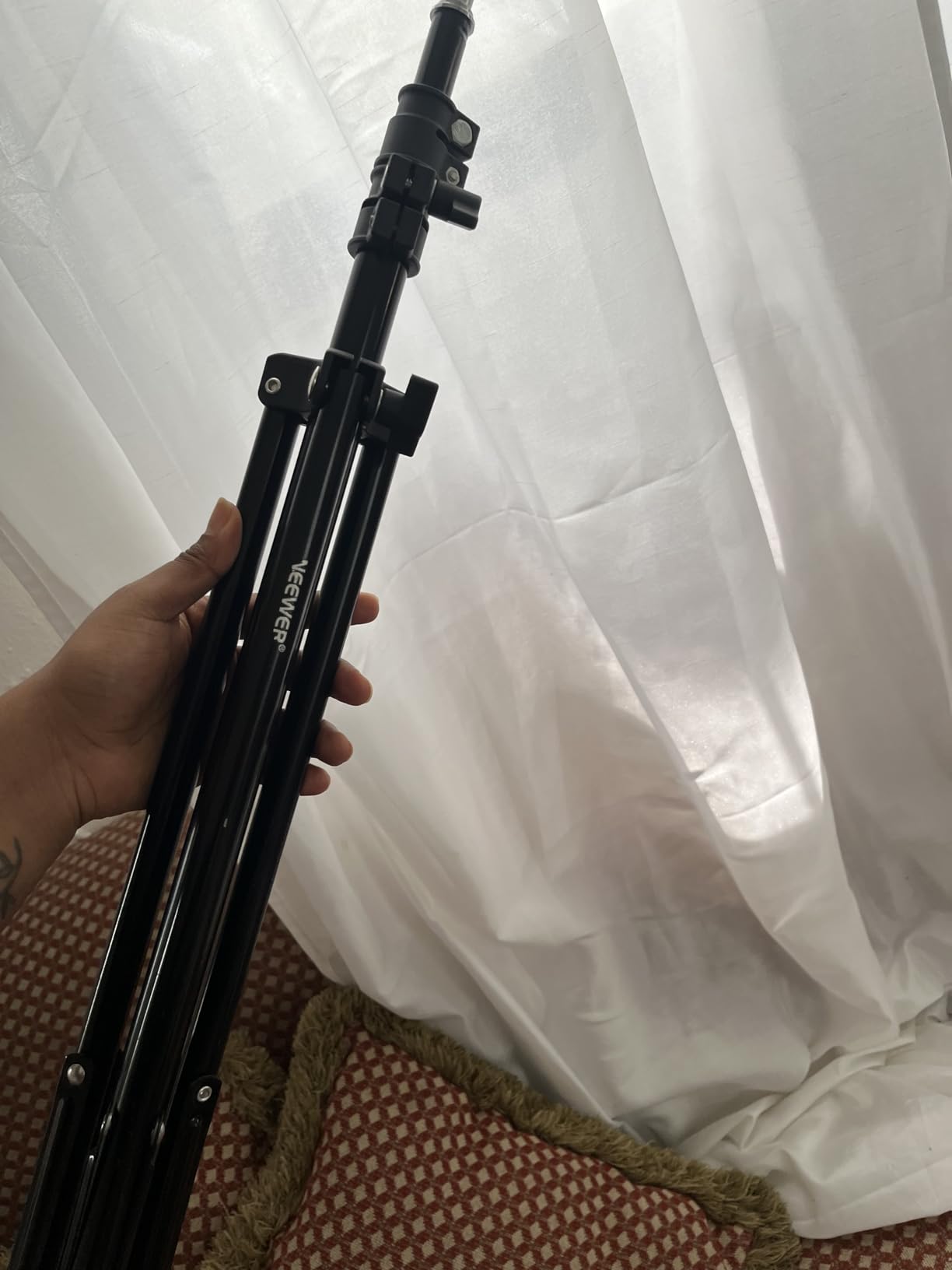
When this is the right stand
Reflectors, umbrellas, small strobe heads, a single panel light. At roughly six feet tall it puts a light just above head height on a stand subject, which is the most common portrait setup there is.
It is also a sensible second stand for a reflector or background pole, so buying two gives you a full portrait arrangement.
What it will not do
There is no cushioning on the section locks, so a released column drops fast. If you work with anything expensive above head height, add a cushion or choose an air-cushioned model instead.
The top is a plain 1/4 inch thread with no rotating collar, so a heavier speedring or a boom needs an adapter before it will sit properly.
5. SMALLRIG 110 inch Air-Cushioned Stand – Best Air Cushion for Expensive Gear
Pros
- Air cushion stops sudden drops and pinched fingers
- All-metal flip locks resist cracking
- Legs spread to 1.2 m for a wide footprint
- Stainless steel 1/4 inch thread adapter
Cons
- No carrying case included
- Folded length of 94 cm is long for a vehicle
- Leg adjustment screw is smaller than 1/4-20
Air cushioning is the reason to buy this stand, and once you have used it you notice its absence on everything else. The column bleeds down at the speed you release it, so a 280 cm height adjustment is a controlled movement rather than a saved gear bill.
It rates 4.6 with an 82% five-star share, and owners regularly report buying more than one.
The build is where the money went. An iron support bar 2.66 mm thick and 15 mm wide runs through the leg structure, every connection part is metal, and the non-slip flip locks will not crack the way plastic ones do after a season of being pinched.
Legs spread to 1.2 m at maximum extension, giving a genuinely wide footprint. With an 8 kg rating and a 9.2 ft maximum height, that is a studio strobe or softbox support, not a speedlight perch.
What to plan around
The 94 cm folded length is the practical catch. Reviewers describe it as long and awkward to pack alongside other stands, and it is a full metre before you add a single leg.
No case is included, which is worth factoring in if you move gear constantly. The stainless steel 1/4 inch adapter is a nice touch, since aluminium threads are the first thing to strip.
Why the air cushion is worth it
For less than a photo session of your time, it removes the single most repeated fear in owner feedback across this category: the section lock slipping and the light arriving to the floor at speed.
It also protects fingers. Rapid collapse is the cause of most crushed knuckles in a fast location setup.
6. LOMTAP 10.8ft C Stand Kit – Best Complete Kit for High Angles
Pros
- Steel build holds heavy strobes with no wobble
- 10.8 ft reach plus an adjustable boom arm
- Includes crossbar
- sandbag
- grip heads and clips
- Black finish is discreet in frame
Cons
- Boom arm flexes noticeably under load
- Included plastic clips sit loose on the arm
- At 8.55 kg it is a one-hand carry for nobody
- Non-standard top stud limits cross-brand use
Most C-stands are sold as a column with optional arms. This one arrives as a full kit, and the accessory list is the reason it makes sense for someone building a rig in one purchase.
You get the stand, a crossbar, two runners, a water-filled sandbag, three clips, two grip heads and a carry bag. At 4.7 with an 84% five-star share, the criticisms aimed at this kit concern the arm and the clips, not the contents.
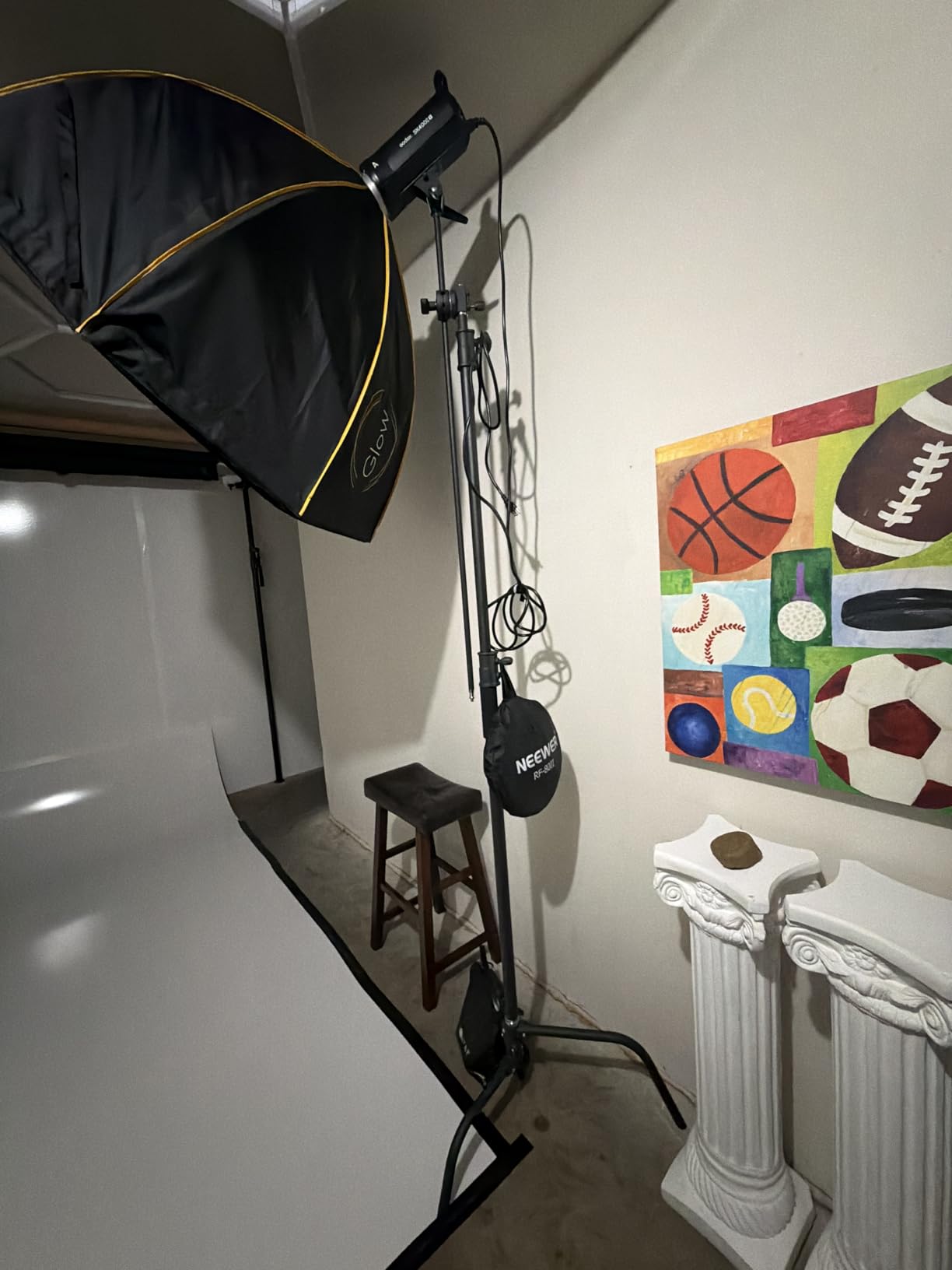
The 10.8 ft vertical column with a base that expands to 120 degrees gives you a wide, low-centre-of-gravity platform, and the 4.2 ft boom lets you hang a light over a table or a subject without a second stand.
The black coated steel also disappears against a dark background in frame, which matters more than it sounds when a stand edge catches the light in a portrait.
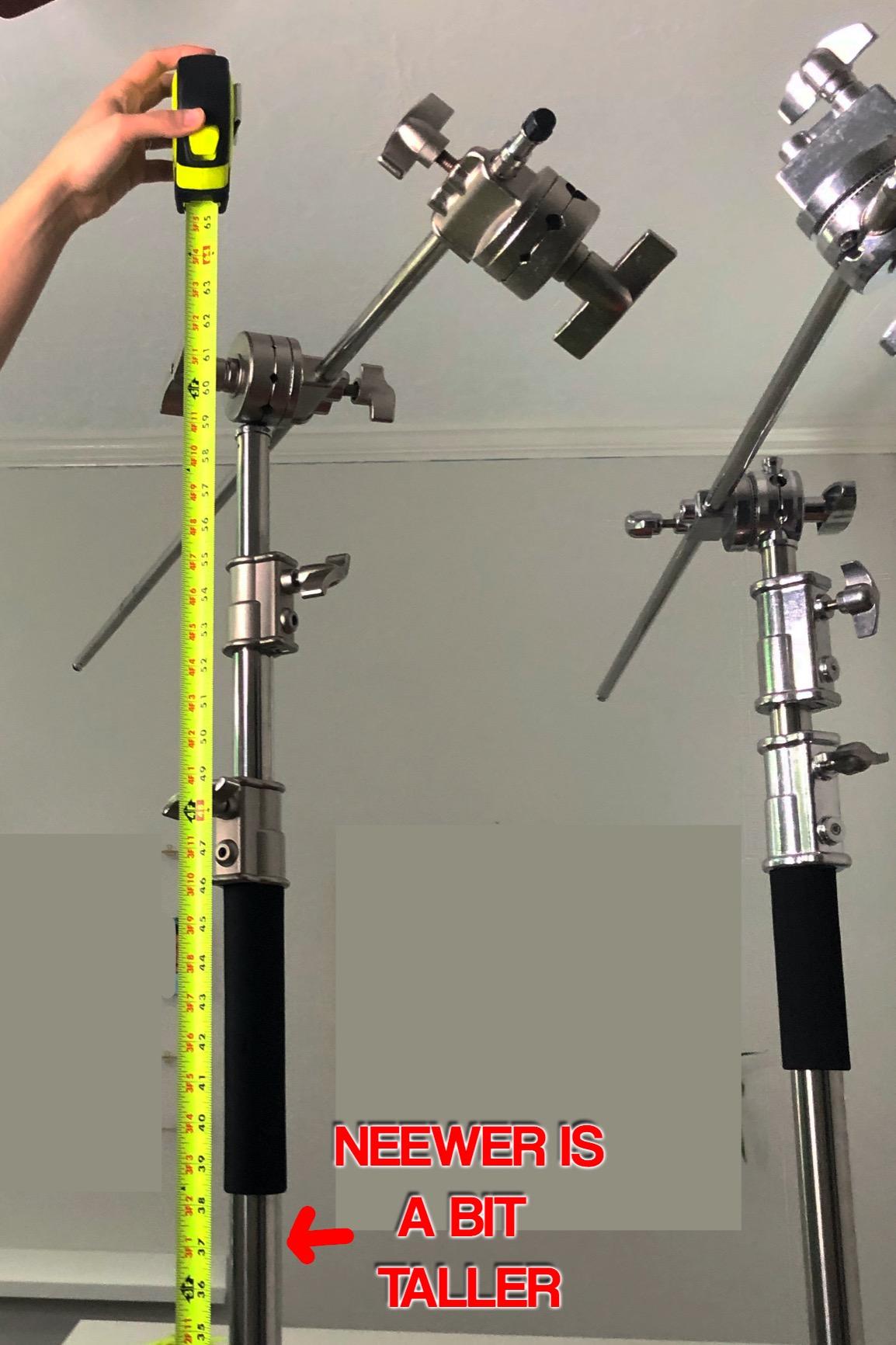
What to fix before the first shoot
The included boom arm flexes under real load, and several owners replace it before putting a valuable head on the end. Budget for an upgrade if you intend to hang anything heavy.
The plastic clips also sit loosely on the arm. Tighten them and test with a light dummy weight first rather than discovering the problem mid-setup.
Who it is not for
At 8.55 kg this is a two-person lift, and the folded package is 135 by 27 by 9 cm, so it needs a real vehicle rather than a hatchback boot.
The non-standard top stud means the column will not accept a standard 1/4 inch fixture without an adapter, so check your mount before you commit.
7. K&F CONCEPT 9.1ft Metal Stand – Best Warranty Coverage
Pros
- All-metal connecting parts resist wear
- Extension bar and non-slip feet give a wide base
- 1/4 inch stud tilts 180 degrees
- Backed by a 2-year warranty
Cons
- Folded length is larger than compact travel stands
- Plastic clamps are only adequate
- Heavier to carry than the aluminium stands at this height
The reason this stand earns a place is the two-year warranty. In a category where collars strip and springs lose tension, a two-year cover tells you something about how the manufacturer expects the product to be treated.
It holds a 4.7 rating with an 82% five-star share, and owners repeatedly single out the metal connecting parts as feeling far more durable than plastic-hinged budget stands.
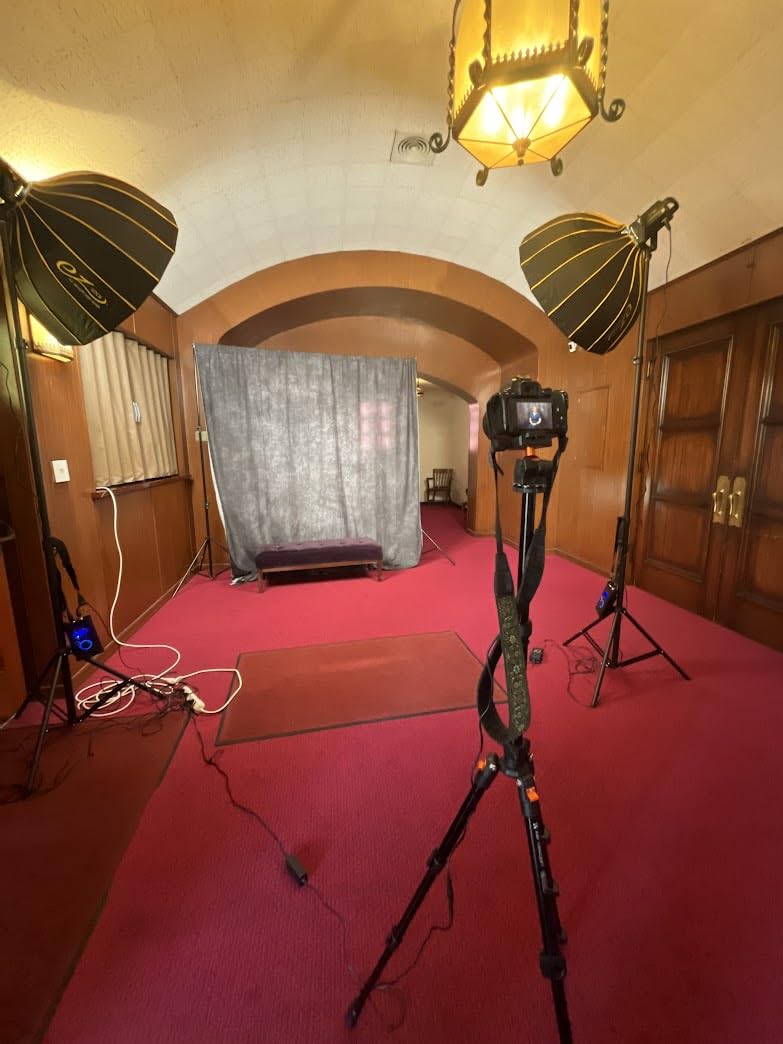
Stability comes from the base design. An extension bar, long collapsible legs and non-slip feet widen the footprint, and the buckle angle adjustment makes height changes genuinely quick rather than a fight with a twist knob.
The 1/4 inch stud at the top tilts through 180 degrees, which makes it usable for ring lights, video lights, flashes and cameras without a separate ball head.
What to expect at this height
From 112 cm to 280 cm you can work a seated subject and a standing subject with the same stand, and the upper limit suits a softbox above head height for group work.
At 1,742 g it is a manageable two-stand carry, and the 8 kg rating covers a mid-size strobe and modifier comfortably.
The honest limitation
The folded length is larger than the ultra-compact travel stands in this roundup, so it will not disappear into a small bag the way the lighter aluminium models do.
Reviewers also flag the plastic clamps as merely adequate. They are the part most likely to need replacing eventually, so keep a spare lever in the case.
8. EMART 7ft Light Stand Two-Pack – Best Lightweight Pair for Location Work
Pros
- Two stands with a carry bag each
- Taller than most budget stands at 7 ft
- Quick telescopic adjustment with secure locks
- Universal 1/4 inch thread for most gear
Cons
- Thin tubing makes some units feel wobbly
- Not ideal outdoors or in wind without added weight
- No sandbag anchor point on the legs
- 5 kg rating is below heavy key lights
Two stands, two carry bags, 7 ft of height and 11 lb of rated load at just over a kilo each. For event and portrait work where you are walking a rig between rooms, that combination is hard to argue with.
It rates 4.6 with a 78% five-star share across roughly 2,000 reviews, and the recurring critical feedback is about one thing: thin tubing and wobble when loaded past an umbrella or a small panel.
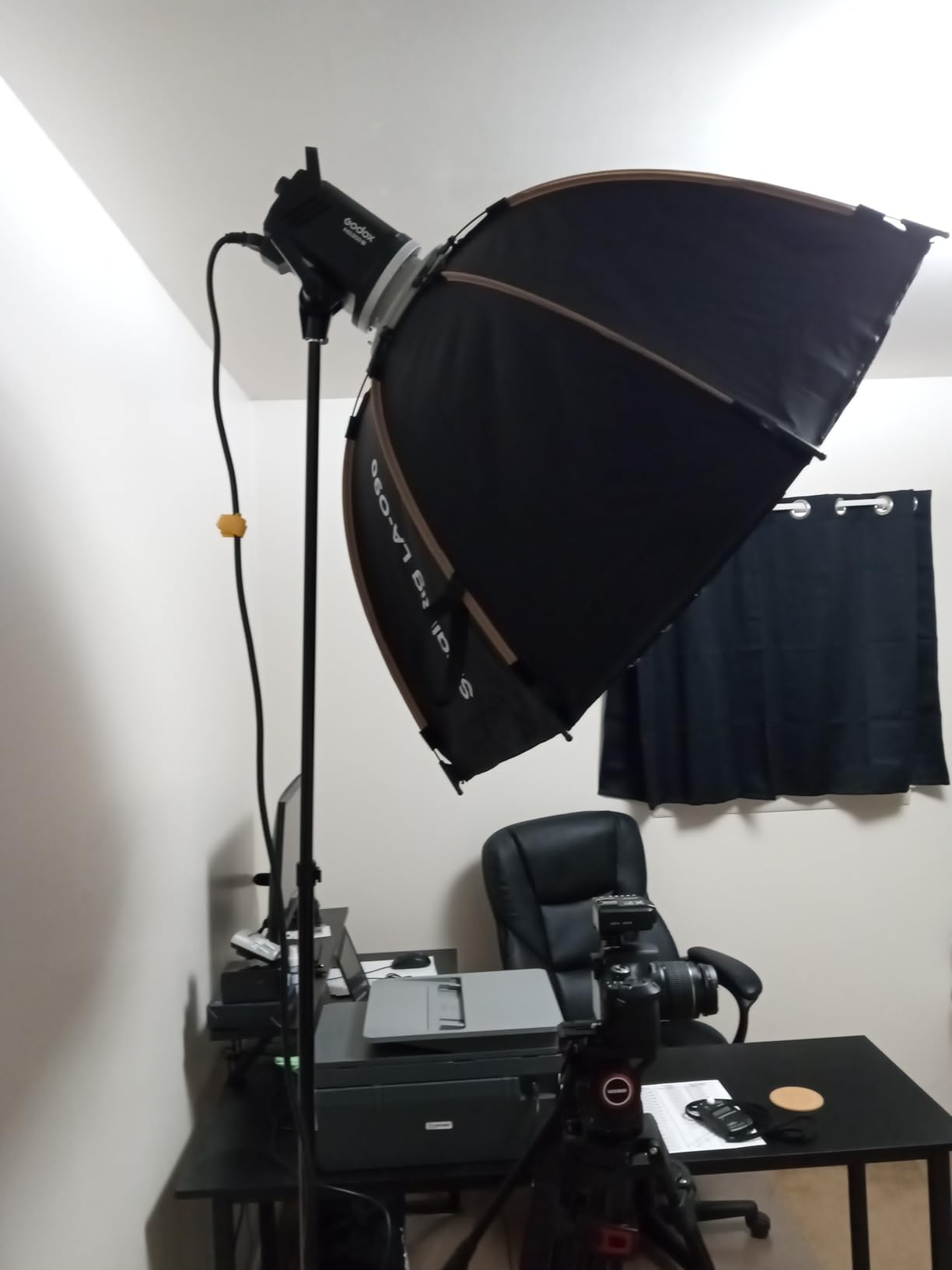
The universal 1/4 inch thread means speedlights, strobes, umbrellas, reflectors, softboxes and even a camera all mount without a separate adapter, which keeps a mobile kit simple.
Telescopic adjustment runs from 2.5 ft to 7 ft with locking buttons, so a single stand covers both a low tabletop angle and a full-height key.
What this pair handles well
Speedlights, umbrellas, reflectors, small LED panels and lightweight continuous lights. Anything with a modifier larger than about three feet starts to feel the tubing.
Because each stand folds to 28 inches and comes with its own bag, a two-stand kit fits into a standard roller or a large backpack without a dedicated case.
Where it will let you down
There is no sandbag anchor point on the legs, so adding ballast means improvising, and outdoor use in any wind is the wrong application for a stand this light.
If your key light is a heavy strobe with a large softbox, the 5 kg rating is the limit and the frame will flex before it fails. Choose a steel stand instead.
9. VIJIM TT43 Extendable Stand – Best for Low-Angle and Tabletop Work
Pros
- Adjusts down to 45 cm for low-angle shooting
- Very light at 840 g
- Full anodized metal build with thickened tubes
- Spread lever adds stability when legs splay
Cons
- Sandbags not included
- Only the stand is in the box
- 6.6 lb rating limits it to lighter fixtures
Most stands bottom out at around 80 cm, which is awkward for a product table or a floor-level shot. This one drops to 45 cm, and for product and tabletop work that is the whole point of owning it.
It rates 4.5 with a 76% five-star share, and the rating it holds in the category rankings is strong despite a smaller review pool than most of the stands here.
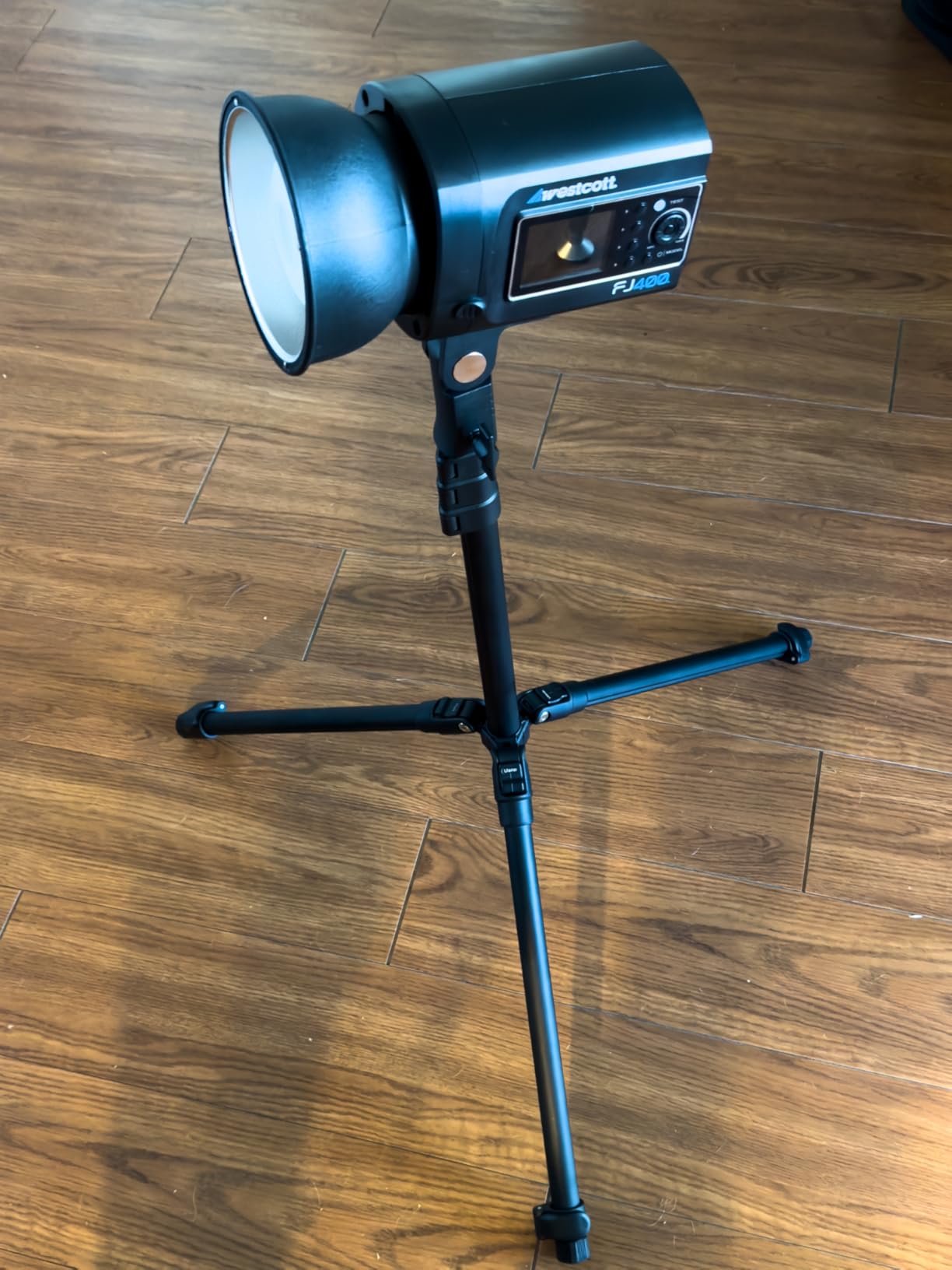
At 840 g it is one of the lightest stands we tested, and the anodized aluminium tubes with thickened walls do not feel like the usual compromise. The base uses a spread lever with snap-angle adjustment, which adds stability when the legs are splayed wide for a low position.
The top is a standard 1/4 inch screw, so it takes strobes, reflectors, ring lights, LED panels, umbrellas and small softboxes without an adapter.
Why the low minimum matters
A 45 cm minimum lets you light a product from below or beside the table rather than from above, which is how most catalogue product shots are actually made. The two positions are not interchangeable in terms of shadow shape.
It also means the stand can do double duty as a quick prop stand for a small set when you are not lighting.
What to keep in mind
Sandbags are not included, and the box contains only the stand. If you work outdoors you will need to source ballast separately.
The 6.6 lb rating is the constraint to respect. It handles a speedlight, a ring light, a small panel or a compact softbox, and nothing heavier.
10. SUPON 9.2ft Stainless Steel Stand – Best High Reach on a Mid Weight
Pros
- 22 lb rating for a 9.2 ft stand
- Four-section column reaches high ceilings
- Spring cushions absorb sudden drops
- Reversible 1/4 to 3/8 inch adapter with 3-way mount
Cons
- Heavy for its size at 5.21 lb
- Higher one-star share than its peers
- Needs added sandbag weight outdoors
When a venue has a high ceiling and you need a light above a standing subject, a four-section column that reaches 9.2 ft solves a problem a three-section stand cannot.
The 22 lb rating is unusually high for a stand of this weight, and the spring cushions in the columns protect your gear when a section is released. It scores 4.4 with a 76% five-star share across 370 reviews.
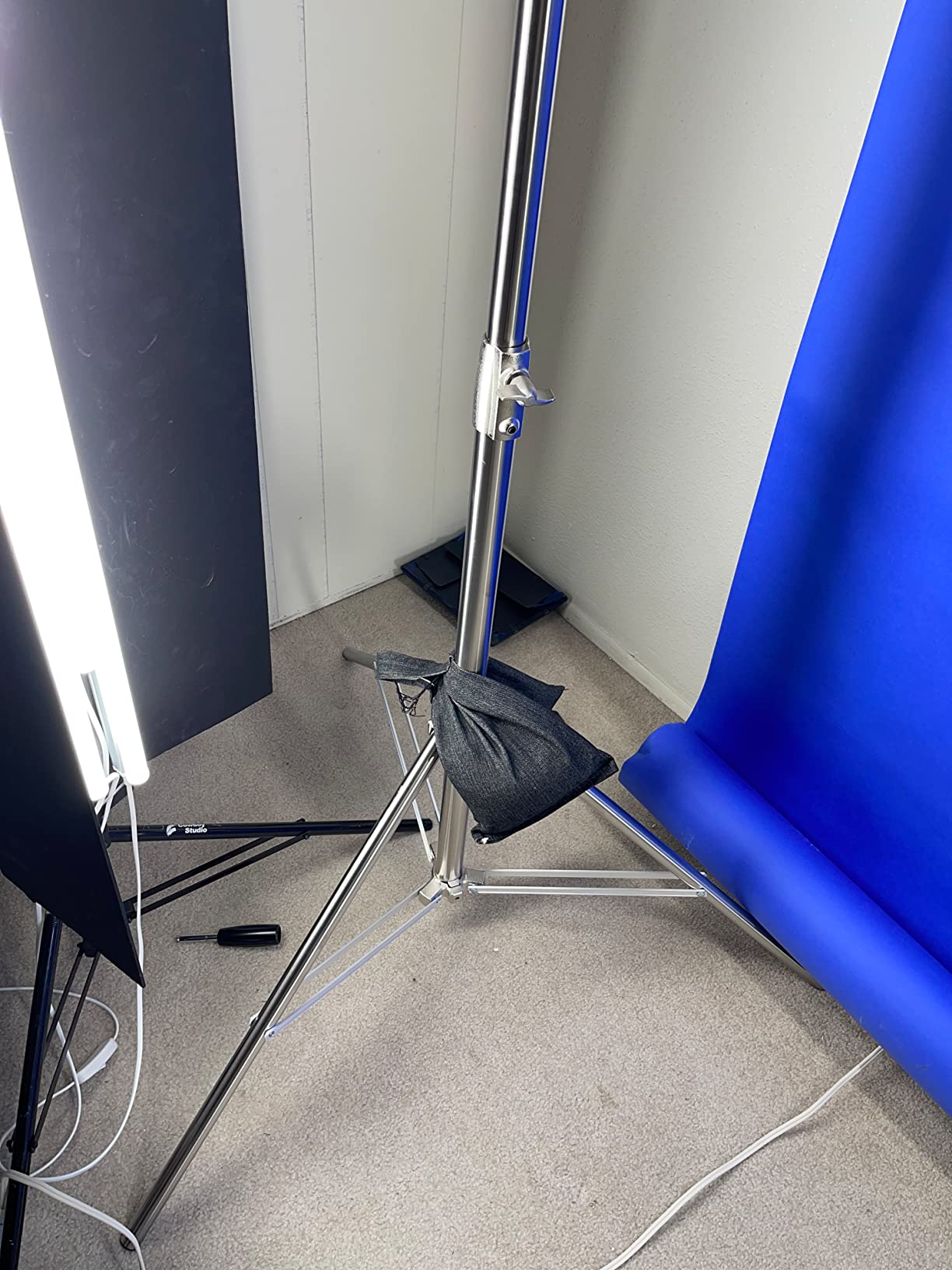
The reversible 1/4 to 3/8 inch male adapter with a 3-way mounting interface is the same mount pattern as the NEEWER stainless stand, so accessories carry between them if you own both.
Stainless steel construction resists corrosion and rust, which matters for anyone shooting outdoors on a regular basis rather than in a dry studio corner.
When this is the right height
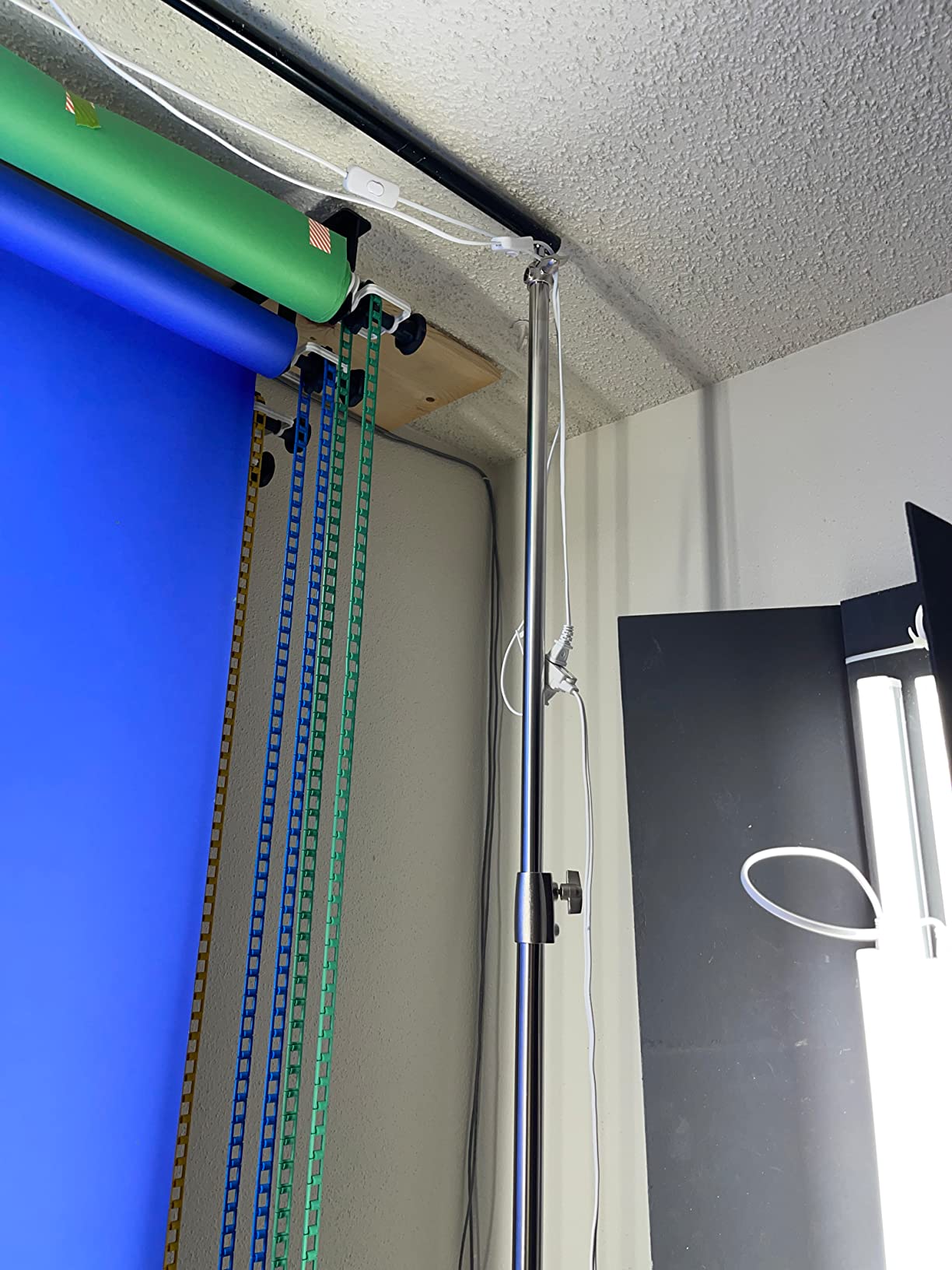
Nine feet is a commercial and event height. It clears a standing subject, reaches a high ceiling in a hall, and holds a backdrop top bar or a large modifier above head level.
Four sections also mean more height in shorter increments, so you can dial in a precise position instead of overshooting and cranking the lock.
What gives us pause
At 5.21 lb it is a heavy carry for a stand of this size, which is a real consideration for location work with long walks to the car.
Its one-star share runs higher than the other stands in the roundup, with owners pointing at durability and portability in equal measure. Sandbags are sold separately for outdoor setups.
How to Match a Light Stand to Your Light and Modifier
Load capacity is quoted for the whole assembly, and the number that actually matters is the weight of the fixture plus the modifier plus any bracket or speedring. Add them before you compare against a rating.
A speedlight with a small softbox stays well under 5 lb, so any stand in this roundup will take it. A monolight with a large octabox is where ratings start to exclude options, and where a 22 lb or 44 lb stand earns its place.
Read the load figure as a ceiling for the top section, not the base. Several stands in this roundup are rated higher at the bottom than at full extension, which is why the Amazon Basics two-pack is fine low down and marginal at 6.7 ft with a heavy head.
Our rule of thumb: stay at or below half the stated capacity at working height, add a sandbag on the lowest leg for anything above head height, and check the modifier diameter against the leg spread.
Air-Cushioned vs Spring-Cushioned vs Plain Stands
A plain stand has an unlocked section that collapses under its own weight. Release a knuckle at full height and the column drops at once, taking everything mounted on top with it. This is the single most repeated complaint in owner feedback across this category.
A spring-cushioned stand adds a spring inside the column. The column still collapses, but it bleeds down over a couple of seconds, so the light settles rather than falls. It is a large improvement for a small step up from a plain stand, and two of the picks here use it.
An air-cushioned stand uses a valve and a pumped chamber instead of a spring. The descent is controlled by the airflow, so you can lower a column at a genuinely slow, even pace and stop it at any height. It is the most controllable of the three, and the SMALLRIG is the only air-cushioned model in this roundup.
The practical difference matters most with expensive gear. Cushioning does not change the load rating, it changes what happens in the one second where something goes wrong.
Why Light Stands Tip and How to Stop It
A stand tips for one of three reasons: the load sits too high, the footprint is too narrow, or the ground moves under it. Weight on the stand itself only helps with the third of those.
Height and modifier diameter move the centre of gravity. A large octabox on a tall column puts several kilograms of wind-catching surface well above the leg spread, and that is the setup that walks across a studio floor in a draft.
Widen the legs before you go higher. Most stands on test have a spread adjustment, and a wider base lowers the effective centre of gravity more effectively than any amount of extra ballast on the column.
For outdoor work, hang a sandbag on each of the lowest legs rather than on the top hook. Ballast at the base resists tipping; ballast at the top increases the leverage that causes it. We use the same approach described in our small-set lighting guide for controlled product work.
Check the ground too. On uneven terrain a leg can sit high and the stand will rock, which is a common cause of a section lock working loose mid-shoot.
Light Stand Buying Guide: Height, Load, Material and Mounts
Start with the fixture, not the stand. Add up the light, the modifier and the hardware, then pick a rating at least twice that number. Everything else in this guide follows from that one step.
Next, choose the height you actually work at. Six to seven feet covers portraits and small products, eight to ten feet covers groups, high ceilings and backdrop work, and a stand that adjusts down to 45 cm gives you a low-angle option for product work.
Material decides the character of the stand. Aluminium is light and folds down short, which makes it the right choice for location work and the wrong choice for heavy gear. Stainless and steel are heavier and more rigid, and they handle a large modifier or an outdoor setup without complaint. Steel C-stands add a boom arm and grip heads for overhead placement.
Cushioning is your insurance policy. Spring cushioning slows a drop, air cushioning controls it, and a plain stand does neither. If anything above six feet is carrying a strobe you would rather not replace, pay for cushioning.
Mounts are the detail that causes the most returns. A 1/4 inch thread takes speedlights, ring lights and small LED panels. A 1/4 to 3/8 inch reversible adapter covers a wider range of gear on one stand. A 5/8 inch stud is the studio and C-stand standard for heavier heads, and a stand without it needs an adapter before a monolight will sit safely.
Finally, check the base and the folded length together. A wide base with a spread adjustment is what keeps a tall stand planted, and a folded length well under a metre is what lets you carry two stands and a camera in one trip.
If you are still deciding how much light you need before choosing stands, our studio light meter guide covers measuring the result, and the backdrop roundup covers the paper roll and crossbar that share the same kit bag.
Frequently Asked Questions
What is the best light stand for photography?
For most photographers the NEEWER Pro 100% Stainless Steel Heavy Duty C Stand is the best all-round choice, with a 44 lb load capacity, a 10.5 ft maximum height and a boom arm with two grip heads included. If your gear is light and you shoot on location, the Amazon Basics two-pack at just under a kilogram each is the easier carry, and the SMALLRIG 110 inch is the one to buy if air cushioning matters more to you than folded length.
What is the best stand for a camera with a light?
If the light is a speedlight, a small panel or a compact softbox, almost any stand in this roundup works and load capacity is not the deciding factor. Pick on height and weight instead: a 6 to 7 ft aluminium stand covers a seated and standing subject and is the sensible starting point. For a monolight or a large octabox, choose a stand rated for 22 lb or more and add sandbags to the lowest legs.
What is the best brand of light stands?
Owners in photography forums consistently name Manfrotto and Avenger for long-term quality, and Matthews and Bogen for holding up over years in light to moderate use. Godox, Impact, Neewer and Westcott are the value tier and cover most single-light and two-light kits. Specialist brands such as CheetahStand focus on self-deploying legs for fast one-handed setup on location.
Are heavier light stands better?
No. Weight resists movement of the stand itself, but a heavy column on a narrow base still tips. What actually holds a stand in place is footprint width, a low centre of gravity, and ballast on the lowest legs. Reviewers describe wanting a wide footprint with lightweight structure and spreaders, so a lighter stand with a wide adjustable base can be steadier than a heavy one with a tight base.
Do I need air cushioned light stands?
They are worth it when anything expensive sits above head height, because an air cushion lowers a released column at a controlled pace instead of letting it fall. Spring-cushioned stands are a cheaper halfway step that still prevents a sudden drop. Uncushioned stands are fine for a speedlight or a reflector, where there is little to lose if a section is released.
What load capacity light stand do I need?
Add the weight of the light, the modifier and any bracket or speedring, then buy a stand rated for at least twice that total. A speedlight with a small softbox stays under 5 lb. A monolight with a large octabox can pass 15 lb, which is where 22 lb and 44 lb rated stands such as the NEEWER stainless models and the C-stand kit separate themselves from budget aluminium stands.
Are C stands better than light stands?
A C-stand is better when you need height with a boom arm, a high load rating or grip heads for a flag or a lantern, and it is worse when you need to carry one stand through a crowded venue because it is much heavier. A regular light stand is lighter and sufficient for speedlights, softboxes and monolights. Most working kits use both.
What tripods do professional photographers use?
A light stand and a camera tripod are different tools. Tripods have a pan-and-tilt or ball head, a higher load rating for a camera body and long lenses, and a narrower spread, so a lens or camera at full tilt can unbalance them. Light stands are built for a 1/4 inch or 5/8 inch stud mount, a wide leg spread and a much higher point load for a light and modifier.
Conclusion: Our Best Light Stand Picks for 2026
For most working photographers the NEEWER Pro C Stand is the single best light stand for photographers: the 44 lb rating and 10.5 ft reach handle anything you can put on a stand, and the boom arm and grip heads are included. Build a light travelling kit around the Amazon Basics two-pack, add air cushioning from the SMALLRIG when the gear above head height is worth protecting, and match everything else to the load of your heaviest fixture.