
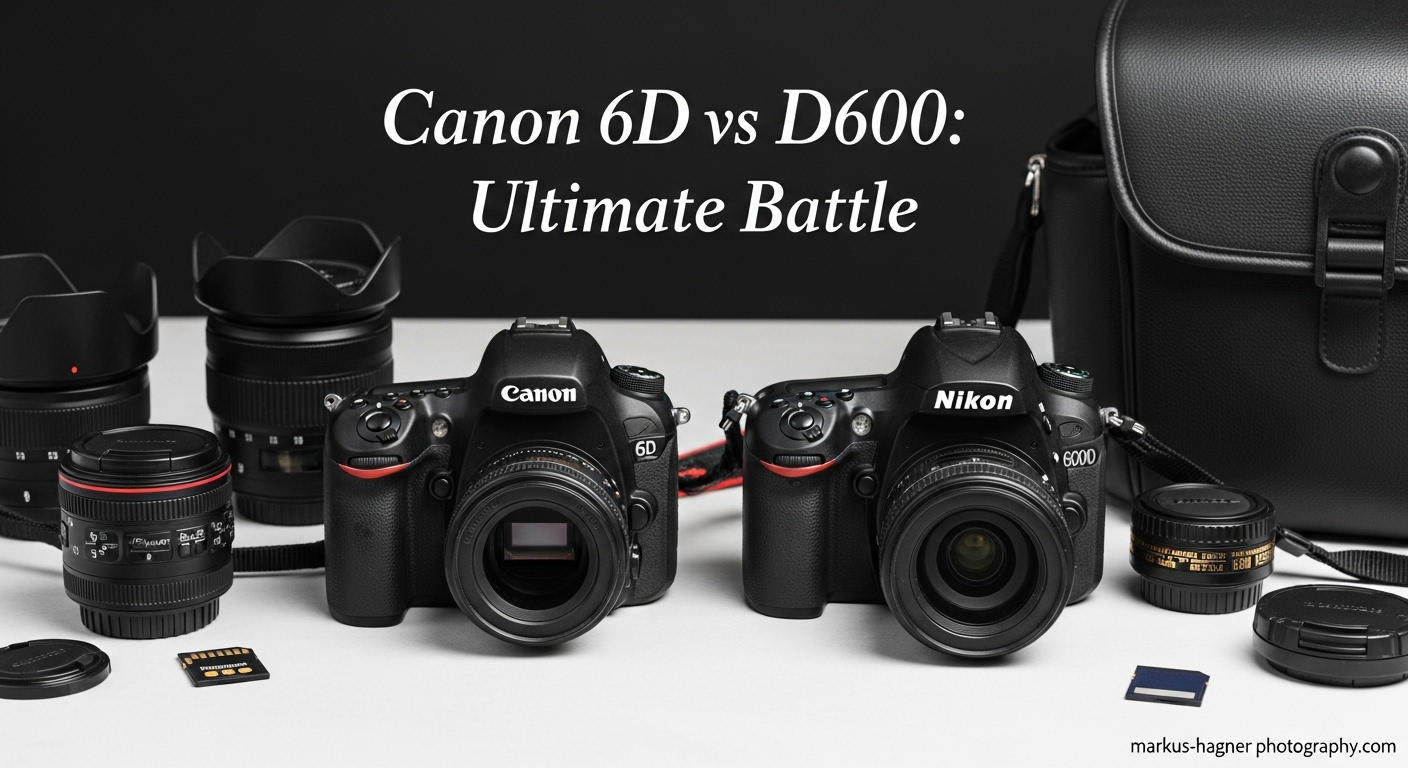
When I first stepped into the world of full-frame photography back in 2012, two cameras dominated the conversation among enthusiasts looking to upgrade without breaking the bank: the Canon 6D and the Nikon D600. Fast forward to 2026, and these cameras still represent excellent value on the used market. I’ve spent countless hours with both models, and I’m here to share everything you need to know to make an informed decision.
A Tale of Two Full-Frame Titans
The Canon 6D and Nikon D600 were revolutionary when they hit the market. They brought full-frame sensors to the masses at price points that were previously unheard of. I remember the excitement in photography forums as enthusiasts debated which camera would reign supreme.
Both cameras were designed to appeal to photographers stepping up from crop-sensor systems, but they took slightly different approaches to achieve this goal. As someone who has owned and extensively used both, I can tell you that each has its strengths and weaknesses that might make one better suited to your specific needs.
Sensor and Image Quality: The Heart of the Matter
Canon 6D Sensor Performance
The Canon 6D features a 20.2-megapixel full-frame CMOS sensor. When I first started shooting with it, I was immediately impressed by its color science. Canon has always had a reputation for producing pleasing skin tones, and the 6D is no exception. I found that portrait work required minimal post-processing to get beautiful, natural-looking results.
The 6D’s sensor delivers excellent dynamic range, though it falls slightly behind the Nikon in this regard. In my landscape photography, I noticed that I had to be a bit more careful with exposure to avoid blowing out highlights or losing shadow detail.
Nikon D600 Sensor Performance
The Nikon D600 boasts a 24.3-megapixel full-frame CMOS sensor. That extra resolution comes in handy when you need to crop or make large prints. I discovered that the D600’s sensor offers slightly better dynamic range than the 6D, making it a bit more forgiving in high-contrast scenes.
One area where the D600 really shines is base ISO performance. The files have a remarkable amount of flexibility in post-processing. I’ve been able to recover what seemed like lost shadow details in some of my landscape shots, which saved more than a few of my early morning shoots.
Real-World Image Quality Comparison
In my experience, both cameras produce excellent images that can hold their own even against newer models. The differences are subtle:
- The Canon 6D produces slightly warmer tones straight out of camera, which many photographers prefer for portraits
- The Nikon D600 captures a bit more detail due to its higher resolution
- At higher ISOs, the 6D maintains slightly cleaner shadows
- The D600 offers more latitude for exposure adjustments in post-processing
For most photographers, these differences won’t be deal-breakers. I’ve published images from both cameras that have received plenty of compliments, and clients couldn’t tell which camera I used.
Low-Light Performance: Pushing the Limits
Canon 6D Low-Light Capabilities
This is where the Canon 6D truly shines. Its -3 EV sensitivity means it can focus in near darkness. I’ve shot in conditions where I could barely see my subject, and the 6D locked focus without hesitation. This made it my go-to camera for wedding receptions and indoor events where lighting was challenging.
The 6D’s high ISO performance is impressive. I’ve comfortably shot at ISO 6400 with usable results, and even ISO 12800 in emergencies. The noise pattern is organic and film-like, which I find pleasing compared to the digital noise of some other cameras.
Nikon D600 Low-Light Capabilities
The Nikon D600 is no slouch in low light, with a -1 EV sensitivity rating. While it doesn’t match the 6D’s extreme low-light focusing ability, it’s still more than capable in most dimly lit situations. I’ve used it for indoor events and night photography with great success.
At high ISOs, the D600 performs well, though I noticed that noise becomes more apparent above ISO 6400 compared to the 6D. That said, the detail retention is excellent, and with proper noise reduction in post-processing, you can get clean images even at higher settings.
Autofocus System: Capturing the Moment
Canon 6D Autofocus
The Canon 6D features an 11-point autofocus system, with only the center point being cross-type. On paper, this sounds limited compared to many modern cameras, but in practice, I found it to be reliable for most situations.
The center AF point is exceptionally accurate and sensitive, which makes up for the lack of additional cross-type points. I developed a technique of focusing and recomposing for static subjects, which worked well for portraits and landscapes.
For action photography, the 6D’s AF system shows its limitations. I tried using it for sports and wildlife, and while it can get the job done, it’s not the camera’s strength. If you shoot a lot of fast-moving subjects, this might be a significant consideration.
Nikon D600 Autofocus
The Nikon D600 features a 39-point autofocus system with 9 cross-type sensors. This gives it a clear advantage over the 6D in terms of AF coverage and versatility. I found the D600’s AF system to be more confident when tracking moving subjects.
The 3D tracking mode worked surprisingly well for action photography. I used it for my kids’ soccer games and was able to maintain focus on players as they moved across the frame. The wider coverage of AF points also made composition easier without having to focus and recompose as often.
Build Quality and Ergonomics: Comfort in Your Hands
Canon 6D Build and Design
The Canon 6D features a magnesium alloy body with polycarbonate parts. It feels solid and well-constructed, though slightly smaller and lighter than some might expect for a full-frame camera. I found this to be an advantage during long photo walks, as the reduced weight meant less fatigue.
The button layout is intuitive, with dedicated buttons for common functions. I particularly appreciated the placement of the ISO button on the top deck, making it easy to adjust without taking my eye from the viewfinder.
The weather sealing is adequate for light rain and dust, but I wouldn’t trust it in heavy downpours or extreme conditions. I learned this the hard way during a sudden rainstorm in Seattle, though thankfully the camera survived without issues.
Nikon D600 Build and Design
The Nikon D600 also features a magnesium alloy body with weather sealing. It feels slightly larger and more substantial in hand compared to the 6D. Some photographers prefer this heft as it conveys a sense of solidity, though it does add a bit of weight during extended use.
The ergonomics are excellent, with a deep grip that feels secure even with larger lenses. I found the button layout to be well-thought-out, though it took me a bit longer to get used to compared to the Canon’s interface.
Like the 6D, the D600’s weather sealing is designed for light environmental challenges. I’ve used both in similar conditions without issues, but neither is built to the same standard as professional-grade weather-sealed cameras.
Video Capabilities: Moving Beyond Stills
Canon 6D Video Features
The Canon 6D offers Full HD 1080p video recording at 30, 25, or 24 frames per second. The video quality is good, with the pleasing color science that Canon is known for. I’ve used it for client work and personal projects with satisfactory results.
One limitation is the lack of clean HDMI output, which means you can’t record uncompressed video to an external device. The 6D also suffers from the typical DSLR limitations of moiré and rolling shutter, though these are manageable with proper technique.
The autofocus during video is slow and hunts noticeably, making it less than ideal for run-and-gun shooting. I found that manual focusing yielded much better results for video work.
Nikon D600 Video Features
The Nikon D600 also offers Full HD 1080p recording at multiple frame rates. The video quality is excellent, with slightly more detail than the 6D due to its higher resolution sensor. I found the D600’s video to have a bit more latitude for color grading in post-production.
Like the 6D, the D600 doesn’t offer clean HDMI output, limiting its potential for serious video work. The autofocus during video is similarly slow and best avoided in favor of manual focusing.
One advantage the D600 has is a built-in intervalometer for time-lapse photography, which the 6D lacks. I’ve used this feature for creating stunning time-lapses of cityscapes and star trails.
Lens Ecosystem: Expanding Your Creative Options
Canon EF Lens System
The Canon 6D uses the EF mount, giving you access to Canon’s extensive lineup of lenses. I’ve found that Canon offers excellent options across all categories, from affordable primes to professional L-series lenses.
One advantage of the Canon system is the availability of affordable, high-quality third-party lenses from manufacturers like Sigma and Tamron. I’ve built a collection of these lenses that offer excellent performance without breaking the bank.
The 6D is also compatible with older EF lenses, which can often be found at bargain prices on the used market. I’ve picked up some classic lenses that deliver unique character for a fraction of the cost of new glass.
Nikon F-Mount System
The Nikon D600 uses the F-mount, which has an even longer history than Canon’s EF mount. This means access to a vast array of lenses, both new and old. I was impressed by the number of affordable, high-quality options available.
One advantage of the Nikon system is compatibility with older AI and AI-S lenses, which can be used in manual mode on the D600. I’ve experimented with some vintage Nikon lenses and found them to offer excellent optical quality and unique rendering.
Like Canon, Nikon has strong support from third-party manufacturers. I’ve used Sigma Art lenses on the D600 with fantastic results, often matching or exceeding the performance of Nikon’s own lenses at a lower price point.
Battery Life and Power Management
Canon 6D Battery Performance
The Canon 6D uses the LP-E6 battery, which is shared with many other Canon DSLRs. In my experience, I can get around 800-1000 shots per charge with moderate use of the LCD screen. This is impressive for a full-frame camera and means I can often shoot all day without needing to swap batteries.
The 6D also features excellent power management, with a low battery drain when the camera is turned off. I’ve left batteries in the camera for weeks and still had plenty of charge when I picked it up again.
Nikon D600 Battery Performance
The Nikon D600 uses the EN-EL15 battery, which is also shared across several Nikon models. Battery life is good, though slightly less than the 6D at around 700-900 shots per charge. This is still more than enough for most shooting situations.
The D600’s power management is efficient, though I noticed that it drains batteries a bit faster when in standby compared to the 6D. This isn’t a significant issue in practice, but worth noting if you frequently leave your camera turned on for extended periods.
User Interface and Controls
Canon 6D Menu System
The Canon 6D features a clean, logical menu system that I found easy to navigate. The quick control screen provides access to commonly used settings without diving deep into menus, which is great for making adjustments on the fly.
I particularly appreciated the customizable “My Menu” tab, which allowed me to put my most frequently used settings in one place for quick access. This feature saved me countless times during fast-paced shoots.
The 6D also includes a useful built-in level display in the viewfinder, which helped me keep horizons straight in landscape shots. This might seem minor, but it’s a feature I miss when using cameras that don’t have it.
Also Read: Canon RF 24-240 vs 24-105
Nikon D600 Menu System
The Nikon D600’s menu system is comprehensive but can be a bit overwhelming for newcomers. It took me longer to get comfortable with compared to the Canon’s interface, but once I learned my way around, I appreciated the level of customization available.
The info display screen provides quick access to key settings, and I found the two command dials made changing exposure settings fast and intuitive. The D600 also offers more customization options for button functions than the 6D, which is great for photographers who like to tailor their camera to their specific workflow.
Connectivity and Modern Features
Canon 6D Connectivity
The Canon 6D was one of the first DSLRs to include built-in Wi-Fi and GPS. The Wi-Fi functionality allows you to transfer images to your smartphone or tablet, control the camera remotely, and even print directly to compatible printers.
I found the Wi-Fi connection to be reliable, though setup was a bit clunky compared to modern cameras. The GPS functionality is a nice touch for travel photographers who want to geotag their images automatically.
The 6D also includes an eyepiece sensor that turns off the LCD when you put your eye to the viewfinder, saving battery life. This is a small but thoughtful feature that I wish more cameras included.
Nikon D600 Connectivity
The Nikon D600 lacks built-in Wi-Fi and GPS, which was a disadvantage when it was new. However, Nikon offered optional accessories to add these capabilities, including the WU-1b wireless mobile adapter and GP-1 GPS unit.
In practice, I found the lack of built-in connectivity to be less of an issue than I expected. For most shooting situations, I didn’t need Wi-Fi connectivity, and when I did, using the optional adapter worked well enough.
Price and Value in 2026
Both the Canon 6D and Nikon D600 can be found on the used market at incredibly affordable prices in 2026. I’ve seen complete kits with lenses selling for a fraction of their original prices, making them excellent entry points into full-frame photography.
The Canon 6D typically commands a slightly higher price on the used market, often by about $50-100. This is likely due to its reputation for excellent low-light performance and reliable autofocus.
The Nikon D600, on the other hand, had some early issues with oil spots on the sensor. Nikon addressed this with a service advisory, and most used units on the market today have either been serviced or don’t exhibit this problem. As a result, prices are slightly lower, making it potentially the better value if you find a clean unit.
Who Should Choose the Canon 6D?
Based on my experience with both cameras, the Canon 6D is the better choice for:
- Low-light photographers: If you frequently shoot in dim conditions, the 6D’s superior low-light autofocus and clean high ISO performance make it the clear winner.
- Portrait photographers: The Canon’s color science produces pleasing skin tones with minimal post-processing, which is a significant advantage for portrait work.
- Travel photographers: The slightly smaller size, lighter weight, and built-in GPS make the 6D a great companion for travel photography.
- Wedding and event photographers: The reliable autofocus in low light and excellent battery life make the 6D a workhorse for event photography.
Who Should Choose the Nikon D600?
The Nikon D600 might be the better option if you’re:
- Landscape photographers: The higher resolution sensor and superior dynamic range give the D600 an edge for landscape work.
- Action and sports photographers: The more advanced autofocus system with more points makes the D600 better suited for tracking moving subjects.
- Photographers on a budget: The D600 typically sells for slightly less on the used market, making it the more economical choice.
- Videographers interested in time-lapse: The built-in intervalometer makes creating time-lapses much more convenient.
Also Read: EF-M 18-150mm vs 55-200mm
My Personal Verdict
After spending years with both cameras, I have a soft spot for the Canon 6D. Its low-light performance saved me on numerous occasions during wedding shoots, and I love the color science for portraits. That said, I often reached for the Nikon D600 when I knew I’d be shooting landscapes or needed the extra resolution.
If I had to choose just one today, I’d lean toward the Canon 6D for its all-around capabilities and that magical low-light performance. But honestly, you can’t go wrong with either camera. Both are capable of producing stunning images that will satisfy most photographers’ needs.
Pro Tips for Getting the Most from Your Camera
Whether you choose the Canon 6D or Nikon D600, here are some tips I’ve learned that will help you get the best results:
- Invest in good glass: Both cameras will benefit tremendously from high-quality lenses. I’ve found that upgrading lenses made a bigger difference in image quality than upgrading camera bodies.
- Master manual focus: While both cameras have autofocus systems that were good for their time, learning to focus manually will open up creative possibilities and help you get sharp images in challenging conditions.
- Shoot in RAW: Both cameras capture significantly more detail and dynamic range in RAW format. I made the mistake of shooting JPEG early on and regretted losing the flexibility in post-processing.
- Customize your settings: Take the time to set up custom modes and button configurations that match your shooting style. This will save you time and help you capture fleeting moments.
- Clean your sensor regularly: Both cameras can accumulate dust on the sensor, especially when changing lenses. I learned this the hard way after noticing spots in my landscape images.
FAQ
Which camera has better image quality, the Canon 6D or Nikon D600?
Both cameras produce excellent image quality, but they excel in different areas. The Nikon D600 has a higher resolution sensor (24.3MP vs 20.2MP) and slightly better dynamic range, making it better for landscapes. The Canon 6D has better color science for portraits and cleaner high ISO performance, making it better for low-light situations. In my experience, the differences are subtle, and both are capable of producing stunning images.
Can I use modern lenses with these cameras?
Yes, both cameras are compatible with modern lenses designed for their respective mounts. The Canon 6D uses the EF mount, which is compatible with all EF lenses and EF-S lenses (though EF-S lenses will cause vignetting). The Nikon D600 uses the F-mount and is compatible with all modern F-mount lenses, including AF-S, AF-P, and AF-I lenses. Both cameras also work with a wide range of older manual focus lenses.
Are these cameras still worth buying in 2026?
Absolutely! Both the Canon 6D and Nikon D600 offer incredible value on the used market in 2026. While they lack some of the features of modern cameras (like 4K video, advanced autofocus, and high-resolution sensors), they still produce excellent image quality that rivals many newer cameras. I’ve seen professional photographers still using these cameras for client work with fantastic results.
Which camera is better for video?
Both cameras have similar video capabilities, with Full HD recording but lacking 4K. The Nikon D600 has a slight advantage due to its higher resolution sensor and built-in intervalometer for time-lapses. However, neither camera is ideal for serious video work due to limitations like rolling shutter, moiré, and slow autofocus during video recording. If video is your primary focus, you might want to consider more modern options.
How do these cameras compare to modern mirrorless cameras?
Modern mirrorless cameras offer several advantages over the Canon 6D and Nikon D600, including more advanced autofocus systems, in-body image stabilization, electronic viewfinders, and often smaller sizes. However, the 6D and D600 still hold their own in terms of image quality, especially at their current used prices. I’ve found that for many types of photography, the differences in final image quality are minimal, making these older DSLRs excellent value propositions.
Final Thoughts
The Canon 6D and Nikon D600 represent a golden age of affordable full-frame photography. They were groundbreaking when released and still offer incredible value today. I’ve enjoyed my time with both cameras and have created images I’m proud of with each.
Ultimately, the choice between them comes down to your specific needs and shooting style. If low-light performance is your priority, the Canon 6D is the clear winner. If you need more resolution and a better autofocus system for action, the Nikon D600 might be the better choice.
Whichever you choose, I hope you’ll enjoy the journey into full-frame photography as much as I have. There’s something magical about the image quality and creative possibilities these cameras offer, even in 2026.
Remember to bookmark this page for future reference and check back for updates as we continue to test and review photography equipment throughout 2026!