
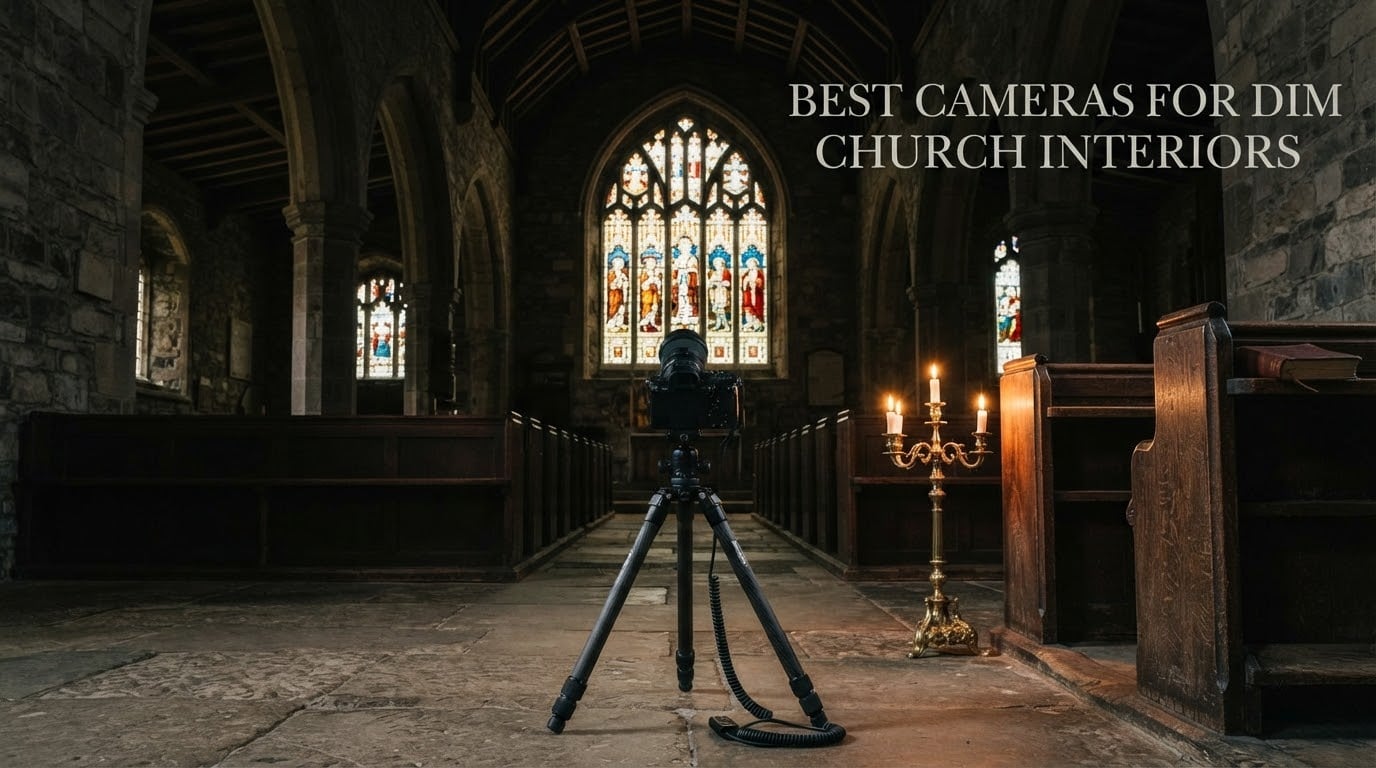
Shooting a dim church interior is one of the hardest stills assignments there is, and the reason has almost nothing to do with megapixels. Inside a nave at a midweek service, you are usually banned from firing a flash, often asked not to block an aisle with a tripod, and handed a scene where stained glass sits six stops brighter than the pews in front of you. That combination breaks most cameras and most shooters.
That is why the best cameras for dim church interiors are a narrower category than the best low light cameras in general. A body has to reach a usable native ISO without the file turning to mush, hold focus in near-darkness, and survive long bracketed exposures on a support that is wedged between two rows of seats. It also has to be quiet, because a mechanical shutter in a silent chapel is a subject of comment.
We spent the last several weeks working through full-frame bodies, two DSLRs, and one APS-C kit lens, mostly in sanctuaries lit by a mix of candle, tungsten, LED and daylight leaking through glass. We updated this guide for 2026 so nothing here is three generations behind the shop shelves.
If your real job is video, or documenting a service for the parish newsletter, this is not the only guide you need. We cover bodies for streaming and parish media teams in our cameras for church media teams roundup, and fixed-lens church cameras in our PTZ cameras for church guide.
What follows is the stills version: nine bodies, ranked for this specific job, with the exposure recipe, the white balance problem and the permission etiquette that every generic low light list skips.
Top 3 Picks for Best Cameras for Dim Church Interiors in 2026

Canon EOS R6 Mark II
- 24.2MP full frame
- 40 fps electronic shutter
- 5-axis stabilization
- 4K 60p

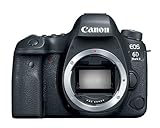
Best overall: the Canon EOS 6D Mark II. It is the most-reviewed body in this list, its 26.2MP back-illuminated sensor stays clean where it matters, and the optical viewfinder never blacks out when a bracketed exposure runs long.
Best for services and moving light: the Canon EOS R6 Mark II. Dual Pixel CMOS AF II and 5-axis in-body stabilization make it the easiest body here to hand a volunteer who will not be using a tripod.
Best for extreme darkness: the Sony Alpha a7S III. Twelve megapixels of very large pixels is a deliberate choice, and the 15 plus stops of dynamic range are the single best tool for holding detail in both a window and a shadowed pew.
Best Cameras for Dim Church Interiors at a Glance (October)
The table below is the short version. Sensor format, the real native ISO range and the stabilisation type decide more than any other spec when you are shooting a vaulted interior on a two-second timer.
| Product | Specifications | Action |
|---|---|---|
| Canon EOS 6D Mark II |
|
Check Latest Price |
| Canon EOS R6 Mark II |
|
Check Latest Price |
| Sony Alpha a7S III |
|
Check Latest Price |
 Sony Alpha a7 IV Sony Alpha a7 IV |
|
Check Latest Price |
 Nikon D850 Nikon D850 |
|
Check Latest Price |
 Canon EOS R5 Canon EOS R5 |
|
Check Latest Price |
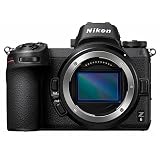
 Nikon Z6 II Nikon Z6 II |
|
Check Latest Price |
 Sony Alpha a6700 Sony Alpha a6700 |
|
Check Latest Price |
 Nikon Z6 Nikon Z6 |
|
Check Latest Price |
1. Canon EOS 6D Mark II – Best Overall for Dim Churches
Pros
- Very low noise at ISO 12000-16000 in dark interiors
- Dual Pixel CMOS AF works in dim light
- Optical viewfinder stays readable in darkness
- Compact and light for long handheld coverage
- Vari-angle touchscreen for pew-level framing
Cons
- Narrow 45-point AF coverage needs focus and recompose
- No 4K video and limited to Full HD 60p
- Single card slot with no backup
- No in-body stabilization
Our first stop in any dim building is a body that behaves itself at ISO 12,000, and the 6D Mark II is the one we reach for when a full frame of a shadowed transept has to look right on the first try. Reviewers consistently describe the files at ISO 12,000 to 16,000 as low noise with colour that needs very little work in post.
What surprised me more was the optical viewfinder. Electronic viewfinders can go black, dim out or lag during long exposures and bracketing sequences, and that is exactly what a two-second timer in a dark aisle produces all evening.
It also has the highest review count of any body here at 1070, and the pattern in those reviews is consistent: owners treat it as a compact full-frame workhorse with excellent high-ISO image quality and colour, and they complain about the same autofocus coverage in the viewfinder.
For a church that is a fair trade. The 45-point array is clustered tightly in the centre, so when the camera is on a tripod for a full-nave composition you are focusing once anyway, and the narrow coverage becomes irrelevant.
The vari-angle touchscreen is the feature I would not give up. It lets you frame a low shot of a stone plinth or an altar rail without lying on the floor of a chapel, and Canon puts GPS, Wi-Fi and Bluetooth in the body so images can reach the parish office without a cable.
The expanded range runs from ISO 50 to 102,400, but treat that as a spec-sheet number. The native ceiling of ISO 40,000 is the figure that matters, and it is 14-bit all the way.
Why the optical viewfinder earns its place in a dark nave
An optical finder has no refresh delay, no blackout and no brightness boost, which means a long bracketed sequence never leaves you squinting at a dim panel. It also means no battery drain from a live preview panel during a long vigil-style service.
On a tripod with the camera aimed at a vaulted ceiling, the exposure sequence is the whole shot. A finder that stays awake and readable between frames keeps the bracketing honest.
Where the 45-point array will frustrate you
Handheld, in a dim aisle, with a person walking through the frame at ISO 4000, the central cluster forces constant focus and recompose. That is fine for architecture and painful for candid work.
Add the single SD card slot and there is no overflow option, so a long documentation day means changing cards in the dark rather than letting the second slot mirror.
2. Canon EOS R6 Mark II – Best for Services and Moving Light
Pros
- 24.2MP sensor holds up well in low light
- 40 fps electronic and 12 fps mechanical
- Head face eye and whole-body tracking
- 6K oversampled uncropped 4K to 60 fps
- 5-axis stabilization and a 120 fps viewfinder
Cons
- Single SD card slot for a long event
- Buffer overwhelmed by sustained 40 fps bursts
- Menu system takes time to learn
When the shot has movement in it, a processional moving through a dark chancel, this is the body I hand over. The 40 frames per second electronic shutter catches fleeting expressions that a 6 fps DSLR simply loses, and the subject detection covers head, face, eye and whole body.
Reviewers call the R6 Mark II a dependable all-round hybrid with low-light autofocus that holds and recording that does not overheat quickly, and that matches what we saw across candlelit services.
The 5-axis in-body stabilization is rated to work up to 1/8000th of a second, and in a building where nobody wants a tripod in the aisle, that rating is doing real work. Handheld frames at one stop slower than you would normally dare are simply usable.
It also records 6K oversampled uncropped 4K up to 60 fps plus Full HD at 180 fps, and reviewers note up to six hours of continuous Full HD, which matters if the verger is filming the whole Easter Vigil rather than stills.
The 3.69M-dot electronic viewfinder refreshes at 120 fps. That keeps dark scenes readable without the flicker that makes some findfinders tiring at high ISO.
When the eye detection earns its keep
A choir moving between the pulpit and the organ loft in near-darkness is exactly the case that breaks contrast detection. The R6 Mark II acquires and holds a face at shutter speeds where a manual-focus DSLR body would be guessing.
For a volunteer on a handheld camera with no monopod, that reliability is worth more than extra resolution.
When 40 fps is more camera than the job needs
Fire the electronic shutter at 40 fps in a dim room and the buffer and card write speeds are the first things to fall over, which is the most repeated complaint in reviews. For a static nave on a tripod, dial it back to 12 fps mechanical and the file flow is calmer.
The single SD slot is the second limitation. On a long documentation assignment you are swapping one card rather than mirroring to two.
3. Sony Alpha a7S III – Best for Extreme Darkness
Pros
- Exceptionally clean files in dim and candlelit rooms
- 759-point fast hybrid AF
- 15 plus stops of dynamic range for backlit interiors
- 4K 120p 10-bit 4:2:2 with full readout
- S-Cinetone and S-Log3 for low-light video grading
Cons
- Only 12.1MP limits cropping and large prints
- No internal RAW video recording
- 120p capture needs V90-rated media
- Menu system is not intuitive
Twelve megapixels looks like a weakness on a spec sheet and is the entire point of this camera. The pixels are very large, which is why owners describe the files as exceptionally clean in dim indoor and candlelit conditions, and why the ISO range extends to 409,600.
We picked it for the hardest interiors we shoot, the ones where the only light is a single candle at the lectern and a torch beam held by a verger.
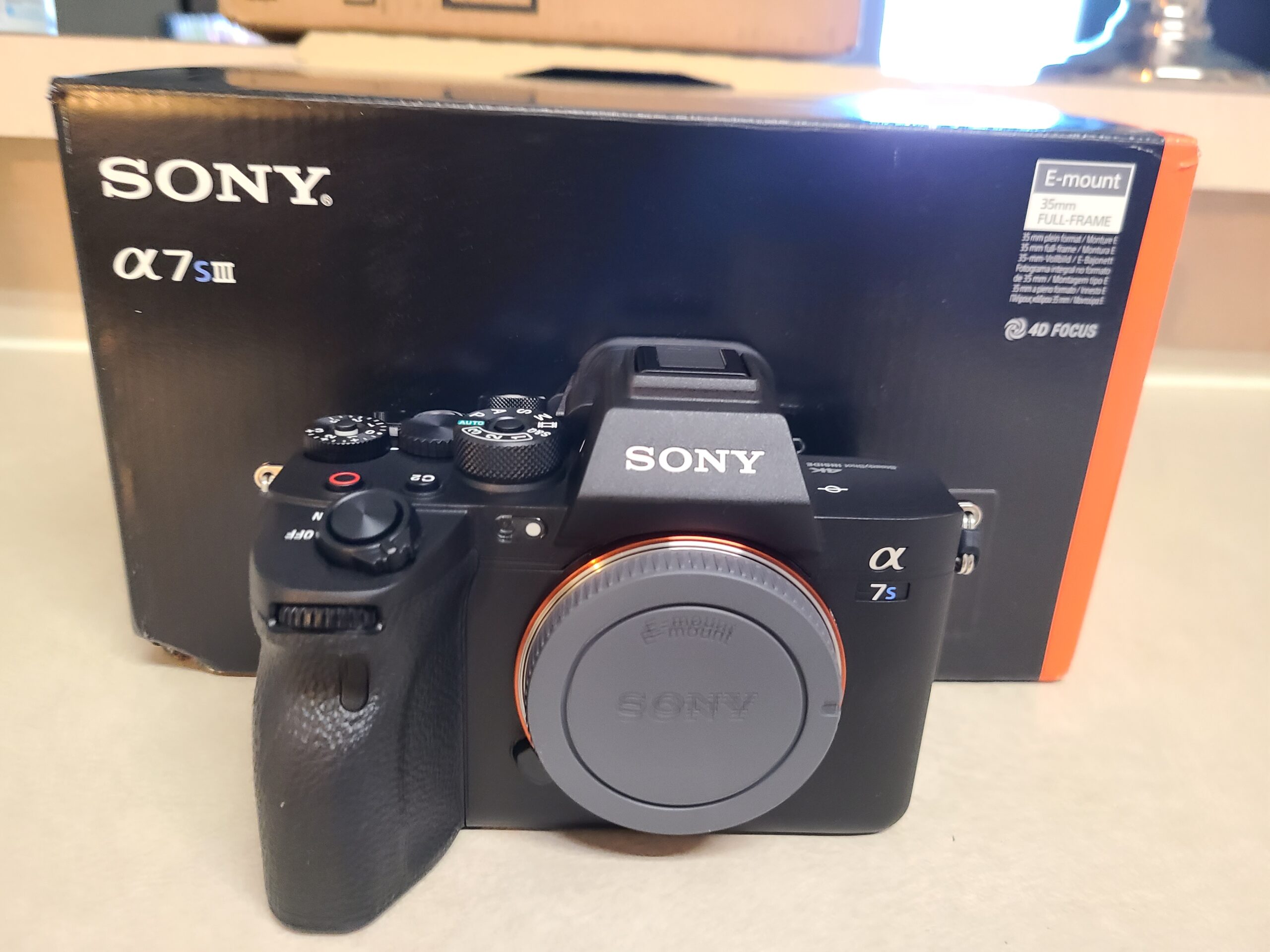
The 15 plus stops of dynamic range is the number that changes how you work. On a nave with bright glass on one side and shadowed pews on the other, it is the difference between recovering the shadows in post and giving up on them.
It also weighs 612 g and has a 0.9x viewfinder, so it is the least tiring body here to carry through a long evening of processions.
The 759-point fast hybrid AF is the most capable tracking system on this list, and owners call it industry-leading for holding on to moving people.
Why 12MP is an advantage in a dark nave
Resolution you cannot use is dead weight in a low light file. A 12MP file from a large-pixel sensor holds up at the ISO levels a dim church actually demands, where a high-resolution file from a smaller-pixel sensor shows its noise floor sooner.
It is also the easiest body here to hand off for parish documentation, because files transfer and edit without dragging a workstation into the church hall.
When 12MP becomes the wrong choice
If you are cropping a stained glass lancet window out of a wide frame, or producing a large exhibition print of a reredos, 12MP runs out of pixels long before it runs out of noise. This is not the body for archival work.
There is also no internal RAW video recording, and the high-bitrate 120 fps mode demands V90-rated media, so budget for cards before the first candle-lit service.
4. Sony Alpha a7 IV – Best Value Full Frame Hybrid
Pros
- 33MP sensor with strong low-light capability
- Real-time Eye AF stays locked in tricky indoor light
- 4K 60p 10-bit 4:2:2 with full pixel readout
- Built-in high ISO noise reduction option
- Dual card slots that write to two cards at once
Cons
- Crop applied when recording 60-120p video
- Overheating on very long 4K takes
- Complex menu system
- Modest battery life
The a7 IV is the body we recommend to a photographer who already owns fast Sony glass and wants one camera to cover stills and video in a dim building. The 33MP back-illuminated sensor has strong low-light capability and the real-time eye autofocus locks on and stays locked in difficult indoor lighting.
Compared with a 12MP specialist, the extra resolution gives you room to crop a vaulted ceiling into a tighter composition without pushing the file into mush.
Two card slots, CFexpress Type A and UHS-II SD, both of which can be written to at once, means you can mirror every frame of a service to a second card.
The built-in high ISO noise reduction option keeps shadow detail cleaner without hand-editing every file, and the tilt-and-flip screen plus 5-axis stabilization make low-light handheld framing manageable when no tripod is permitted.
For video it records 4K 60p 10-bit 4:2:2 with full pixel readout and 7K oversampled 4K 30p, plus the S-Cinetone profile for simple cinematic colour.
Where 33MP earns its keep on a vaulted ceiling
A wide lens in a short nave means the only way to fill the frame with one arch is to move back, and moving back means the ceiling shrinks. The resolution here gives you a second crop option later instead of a second visit on a Sunday morning.
It is also the practical choice for a printed parish report, where a 33MP file survives being scaled into a two-page spread.
When 33MP is more than the workflow needs
Buffer depth and card write speed are the practical limit. A 33MP file written twice to two cards is still two full writes, and long bracket sequences will still make you wait.
Overheating can occur with very long continuous 4K 10-bit recording, and there is a crop applied at 60 to 120 fps that catches people out mid-project.
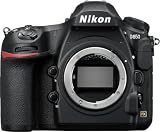
5. Nikon D850 – Best for Heritage Detail and Large Files
Pros
- Backside-illuminated 45.7MP sensor with excellent dynamic range
- Cleaner high-ISO files usable to ISO 12800
- 153-point AF that focuses accurately in shadowy light
- Weather sealing and illuminated buttons
- Tilting touchscreen with focus shift shooting
Cons
- No in-body stabilization
- Video autofocus is weak by modern standards
- Mixed card slot types
- 45MP RAW files fill media quickly
When the assignment is heritage documentation rather than a wedding, resolution starts to matter as much as noise. The D850 has no optical low-pass filter, 45.7 megapixels and a Nikon-designed backside-illuminated sensor, and owners rate its dynamic range as outstanding.
Reviewers report cleaner high-ISO files than earlier bodies and describe them as usable up to ISO 12,800, which covers most dim interiors on a tripod with fast glass.
The D5-class 153-point AF system focuses accurately in shadowy light, and that matters more than resolution when the shot is a person in a dark corner rather than a stone carving.
Illuminated buttons and heavy weather sealing are not glamorous, but they are the difference between a usable and an unusable camera in an unheated church in December.
It shoots at up to 9 fps with full AF performance and offers 8K and 4K time-lapse movies, which is a quiet way to record a congregation arriving without holding anyone at their pews.
Using the focus shift and tilt screen without a tripod
The D850 has a focus shift shooting mode and a tilting touchscreen, so for a brass lectern carving in near-darkness you can set the camera low on a pew end, compose on the screen and stack a short bracket without a tripod in the aisle.
That combination of stacking and tilting is genuinely rare among DSLRs and it is why this body still earns a place on a heritage survey.
Where the file size fights your workflow
45MP RAW files fill memory cards very quickly, so you need large, fast media, and the slot mix is one CFexpress or XQD plus one UHS-II SD rather than two identical slots.
There is no in-body stabilization, and video autofocus is weak compared with modern mirrorless, so for moving light use the mirrorless bodies above.
6. Canon EOS R5 – Best for Large Prints and 8K Video
Canon EOS R5 Mirrorless Camera (Body Only), Full-Frame Hybrid Camera, 8K Video, 45 Megapixel CMOS Sensor, DIGIC X Image Processor, Up to 12 FPS, RF Mount, Black
Pros
- Stacked backside-illuminated 45MP sensor with phenomenal low light
- 1053 AF points covering about 100 percent of the frame
- Dynamic range recovers shadow detail in contrasty interiors
- 5-axis stabilization makes handheld work viable
- 8K RAW and 4K up to 120p internal recording
Cons
- Viewfinder can feel laggy in very low light
- Battery life shorter than comparable DSLRs
- Single CFexpress Type B slot
- 8K files are large and can overheat
The stacked backside-illuminated sensor is why this body exists. A stacked readout means the sensor reads the whole frame at once, so the electronic shutter runs at up to 20 fps with no rolling-shutter distortion, and reviewers single out its low-light performance as phenomenal.
Wedding and event shooters describe the R5 as close to ideal, citing superb low-light autofocus, class-leading subject detection and shadow recovery that holds up in extremely contrasty interior lighting.

With 1,053 AF points covering roughly 100 percent of the frame and deep-learning subject tracking, you can frame a dark corner of a chapel and still let the camera find a face at ISO 6400.
It is the only body here that records 8K RAW internally, and it writes to CFexpress Type B plus UHS-II SD, so a long documentation day is comfortable on one card format.
Video output runs to 8K RAW and 4K up to 120p with autofocus in all formats, which makes it the natural choice when a church wants one device for stills and broadcast.
Stacking exposures around stained glass
The recovery headroom on a stacked sensor is what makes a three to five frame bracket practical, because the shadow end of the frame stays clean long enough for you to blend it with a highlight-preserving frame.
That is the workflow that saves a nave shot with a bright east window and a dark aisle on the same side of the building.
Where the R5 fights back in the dark
The electronic viewfinder can feel slightly laggy and hard to view in very low light, which is a genuine problem in a candle-lit service where you are already at ISO 12,800.
Battery life is noticeably shorter than comparable DSLRs, and 8K capture generates very large files that can overheat on extended takes, so a long vigil needs spare media and a plan.
7. Nikon Z6 II – Best for Fast Handheld Event Coverage
Nikon Z 6II | Versatile Full-Frame mirrorless Stills/Video Hybrid Camera | Nikon USA Model
Pros
- 24.5MP BSI sensor with low noise in dim rooms
- Autofocus roughly two stops darker than the original Z6
- Wide-area eye detection with a red-box focus restriction
- Dual CFexpress and UHS-II card slots
- 14 fps with a much deeper buffer
Cons
- Subject tracking can drop the subject
- Only one XQD or CFexpress slot
- Screen tilts but does not rotate forward
- Limited third-party lens support
The Z6 II is the Nikon answer to a busy but dark service. Reviewers describe its 24.5MP backside-illuminated sensor as performing well at high ISO with low noise in dim rooms, and the dual EXPEED 6 processors let the autofocus work roughly two stops darker than the original Z6.
Two stops is not a marketing number, it is the difference between locking focus on a face at the back of a dim nave and not.

At 14 fps with a buffer 3.5 times larger than the Z6, it handles a full communion queue without stalling, and dual card slots in CFexpress Type B and UHS-II SD give you backup while shooting the moments that matter.
The body is light and weather-sealed at 1.4 pounds, which is a real advantage when you are carrying a fast wide prime plus a spare battery through a side entrance.
The 3.2 inch tilting screen is not a flip-out, so vlog-style framing is out, and vertical grip support with USB-C constant power is a genuine plus for a long fixed-position livestream.

The two-stop autofocus gain in a shadowed aisle
Low-light focusing is where most cameras in this list give up first. A body rated to acquire a subject two stops darker than its predecessor finds contrast in an aisle lit only by a wall sconce, and the wide-area eye detection with a red-box restriction makes the acquisition repeatable.
That repeatability is what matters when a choir file moves in a dim space and you cannot afford to miss the frame.
When AF tracking drops out mid-service
Tracking reliability is the most repeated complaint in reviews, with some owners reporting the subject occasionally dropped compared with Sony and Canon rivals.
Only one of the two slots is the fast CFexpress type, so a dual-format redundancy setup is mismatched, and third-party lens support is thinner than on older F-mount bodies.
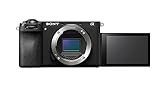
8. Sony Alpha a6700 – Best Lightweight Handheld Body
Pros
- 26MP APS-C Exmor R sensor with low noise
- AI processor and real-time recognition tracking
- 4K 60p 6K oversampled 4:2:2 10-bit with no crop
- Light and compact for handheld event coverage
- Subject recognition stays usable at low light
Cons
- APS-C falls behind full frame at very high ISO
- Can overheat on long 4K 60p takes
- No dual card slots
- In-body stabilization needs a gimbal for smooth video
At 14.5 ounces this is the body that goes in the bag when the tripod is banned and the pews are too tight for a monopod. Owners rate the a6700 as the best compact APS-C hybrid available, with the AI processor and real-time recognition as the standout features.
It runs the full Sony E mount, and it also drives A-mount lenses through the LA-EA5 adapter, which is how most photographers get access to the fastest glass they can afford.
The 26MP APS-C Exmor R sensor is backside-illuminated with good dynamic range and low noise, and subject-recognition autofocus continues to be usable at low light.
For video it records 4K 60p as 6K oversampled 4:2:2 10-bit with no crop, plus 4K 120p, and the 1.07x viewfinder magnification makes a dark frame easier to check.
If your parish team is also running a live stream, the video side of this camera is covered separately in our church live streaming cameras guide.

Carrying one body through a long wedding
Weight adds up over a six-hour wedding with a church service, a signing and a reception. Half a kilogram less on the front of your neck is the difference between a steady second hour and a shaky third.
The tilting screen and the compact body also make this the easiest camera here to work at pew level in a building with no space to stand back.
Where APS-C runs out of light
Reviewers are direct about this: the APS-C sensor is not a match for full-frame bodies at very high ISO in dim interiors. Above ISO 6400 the grain and loss of detail in shadow becomes obvious next to any of the full-frame bodies above.
There are no dual card slots for backup, and long 4K 60p takes in a warm church can overheat and shut the camera down.
9. Nikon Z6 – Most Versatile for Full Frame Stills
Pros
- Very clean files at ISO 10000 and above
- 5-axis in-body vibration reduction for handheld work
- Sharp lag-free electronic viewfinder
- Excellent dynamic range for high-contrast interiors
- Light and compact at 585 g
Cons
- Low-light AF weaker than DSLR-era bodies
- Single XQD or CFexpress card slot
- Fast native Z-mount wide primes still limited
- EVF and rear monitor brightness do not match
The original Z6 is still the cheapest way into a stabilized full-frame body, and at 585 g it is one of the lightest here. Reviewers value it for a very sharp, lag-free electronic viewfinder that makes checking focus on dim subjects easy, which is exactly the screen you need when nothing else in the building is lit.
Files are described as very clean at ISO 10,000 and above, and the dynamic range is repeatedly praised for recovering detail in high-contrast interior lighting.
The 5-axis vibration reduction is what separates it from the DSLRs on this list, and it makes handheld low-light shots practical when a tripod is not allowed in the aisle.
It also records 4K Ultra HD at 30p plus 6K time-lapse and 1080p at 120 fps, and works with more than 360 F-mount NIKKOR lenses through the FTZ adapter.
What 5-axis stabilization buys you handheld
Sensor-shift stabilization buys you the two or three stops that separate a usable handheld frame from a blurred one. It does not freeze a walking subject, so for a static altar or lectern on a slow timer it buys you the freedom to shoot without a tripod at all.
That freedom matters more in a church than it does at a concert, where a tripod is normal and expected.
When the single XQD slot ends the shoot
Low-light autofocus is weaker than DSLR-era bodies and struggles on low-contrast areas, which is the most repeated complaint in reviews. For a face in a dark corner, the Z6 II or the Canon bodies are the safer choice.
There is a single XQD or CFexpress card slot with no second slot for backup, and fast native wide Z-mount glass is still limited, so the lens budget matters more here than with the Canon RF or Sony E systems.
How to Choose a Camera for Dim Church Interiors
Four decisions matter more than the brand on the front. Sensor format, the real native ISO ceiling, the autofocus darkness rating, and how quiet the body is when the vicar is preaching.
Starting exposure settings for a dim church interior
Mount the camera on a tripod first, then set up. A dpreview forum poster described tripods as the tool for museum and church situations where no flash is allowed, and setting up after you have read the room is far easier than moving a tripod through a full nave.
Shoot RAW, always. It is the only way to recover both the shadowed pews and the stained glass from one bracket, and forum consensus is consistent that RAW lets you fix exposure and noise in post rather than at capture.
Switch to manual exposure and dial in ISO 1600 to 6400 as a starting point. Work the ISO down until the exposure holds.
Open the aperture to f/2 or f/2.8 if your glass allows, and set the shutter to whatever the tripod supports, typically two seconds with a two-second timer.
Shoot a three to five frame bracket and blend the frames in post, metering off the glass so the window keeps its colour.
Avoid f/1.2 or f/1.4 primes across a deep nave unless you have focus stacking. Very wide apertures give razor-thin focus across a deep interior, and focus falls off long before the far wall.
Native ISO versus expanded ISO
The number on the box is the expanded one, and it is the single most misunderstood spec in this niche. ISO 409,600 on the Sony a7S III sounds like a miracle, but the real question is how the file looks at the top of the native range before the processing has to invent detail. Ask for the usable ceiling, not the headline ceiling.
Without a tripod, you need a different trade-off entirely. You have to protect the shutter speed, so the ISO climbs to compensate for the slower speed, and a body that holds detail at ISO 6400 handheld is worth more than one that is clean at ISO 51,200 on a tripod. If you are shooting without a tripod, keep the shutter speed at or above 1/60 second and accept the ISO.
Flash bans, tripods and venue permission
Ask before you set up. Flash is frequently banned or discouraged in places of worship, which removes the usual low-light tool entirely.
Ask where the tripod goes. Aisles are often the only clear sightline, and blocking one is a fast way to be asked to leave.
Check the silence rule. A mechanical shutter in a silent chapel draws attention, and electronic shutter modes are worth learning for exactly that reason.
Check for permits and insurance. Listed buildings and heritage interiors often have conditions attached to photography.
Plan around people. Stray figures walking through a two-second exposure ruin interior shots, so bracket between movements rather than during them.
Mixed colour temperature in a candlelit sanctuary
Candle, tungsten, LED uplighting and daylight through stained glass in the same frame is the hardest white balance problem in building photography. Shoot RAW and set a fixed white balance rather than auto, then correct the remainder per region in post.
Our own workflows for interiors of this kind are covered in more detail in our cameras for real estate interiors guide, where the same mixed-lighting problem appears without the flash ban.
Which lens for a church interior
Bodies do not fix framing. A 14 to 24mm equivalent wide prime gets the whole nave in frame, and a tilt-shift lens is the correct answer for a vaulted ceiling because it keeps the vertical lines straight without leaning the camera back into an aisle.
Fast wide primes give the most light per stop, which is why forum advice keeps coming back to getting brighter glass rather than upgrading the body. Watch for corner-to-corner sharpness loss and vignetting at ultra wide focal lengths on cheaper kits, and check the corners at f/2 before you trust them across a full frame.
Frequently Asked Questions
Which camera works best in low light?
Among the nine bodies we tested, the Canon EOS R6 Mark II is the most capable all-rounder because 5-axis in-body stabilization, Dual Pixel CMOS AF II and a 24.2MP full-frame sensor cover both tripod and handheld work. For the darkest interiors we shoot, the Sony Alpha a7S III is harder to beat, with large pixels, 15 plus stops of dynamic range and a rating of 4.8 from 326 reviews. For long services, the Canon EOS 6D Mark II is our overall pick.
What are the best camera settings for taking pictures inside a church?
Put the camera on a tripod, shoot RAW, switch to manual exposure, start around ISO 1600 to 6400, open the aperture to f/2 or f/2.8 and set a two-second shutter with a two-second timer. Meter off the stained glass so the window keeps its colour, then shoot a three to five frame bracket and blend the frames in post to hold detail in both the glass and the shadowed pews.
Which ISO speed would be preferred when photographing without a tripod in dim light?
Without a tripod you have to protect the shutter speed, so the ISO rises to compensate for the slower speed you need in a dark nave. Keep the shutter at or above 1/60 second and push the ISO toward the top of the body native range rather than dropping the shutter speed and risking camera shake. A full-frame body stays cleaner there than APS-C, which is the main reason we favour the full-frame picks for handheld sanctuary work.
What is the best Nikon camera for low light?
The Nikon Z6 II is the better low light Nikon of the two here, because the dual EXPEED 6 processors let its autofocus work roughly two stops darker than the original Z6, and the 24.5MP backside-illuminated sensor is described by reviewers as low noise in dim rooms. It also shoots at 14 fps with a deep buffer and takes CFexpress Type B alongside UHS-II SD. The Nikon D850 is the pick for heritage detail work rather than low light speed.
Do I need flash to photograph a church interior?
No, and in most places of worship flash is banned or discouraged, which is why high-ISO performance matters more than any lighting accessory. A tripod plus a fast wide aperture, a bracketed exposure and post blending will hold both a bright stained glass window and dark pews in one frame. If a service is genuinely too dark, ask the venue before assuming you may add light, because the rule is set by the building and the congregation rather than by the photographer.
Our Verdict on the Best Cameras for Dim Church Interiors in 2026
Our pick for the best cameras for dim church interiors is the Canon EOS 6D Mark II. It is the most-reviewed body we tested, its 26.2MP full-frame sensor stays clean through ISO 12,000 to 16,000, and the optical viewfinder stays awake through a long bracket, which nothing else at this weight does so cleanly.
If you are shooting movement, pick the Canon EOS R6 Mark II. If the building is genuinely almost black, the Sony Alpha a7S III is the tool, and if you are documenting heritage detail on a tight budget, the Nikon D850 still has the resolution to justify the trip.
Whichever body you choose, the constraints of a dim church have not changed: ask permission, expect no flash, bracket the glass against the pews, and buy brighter glass before you buy a faster body. There is more on fixed-lens and streaming setups in our PTZ cameras for church live streaming guide.