
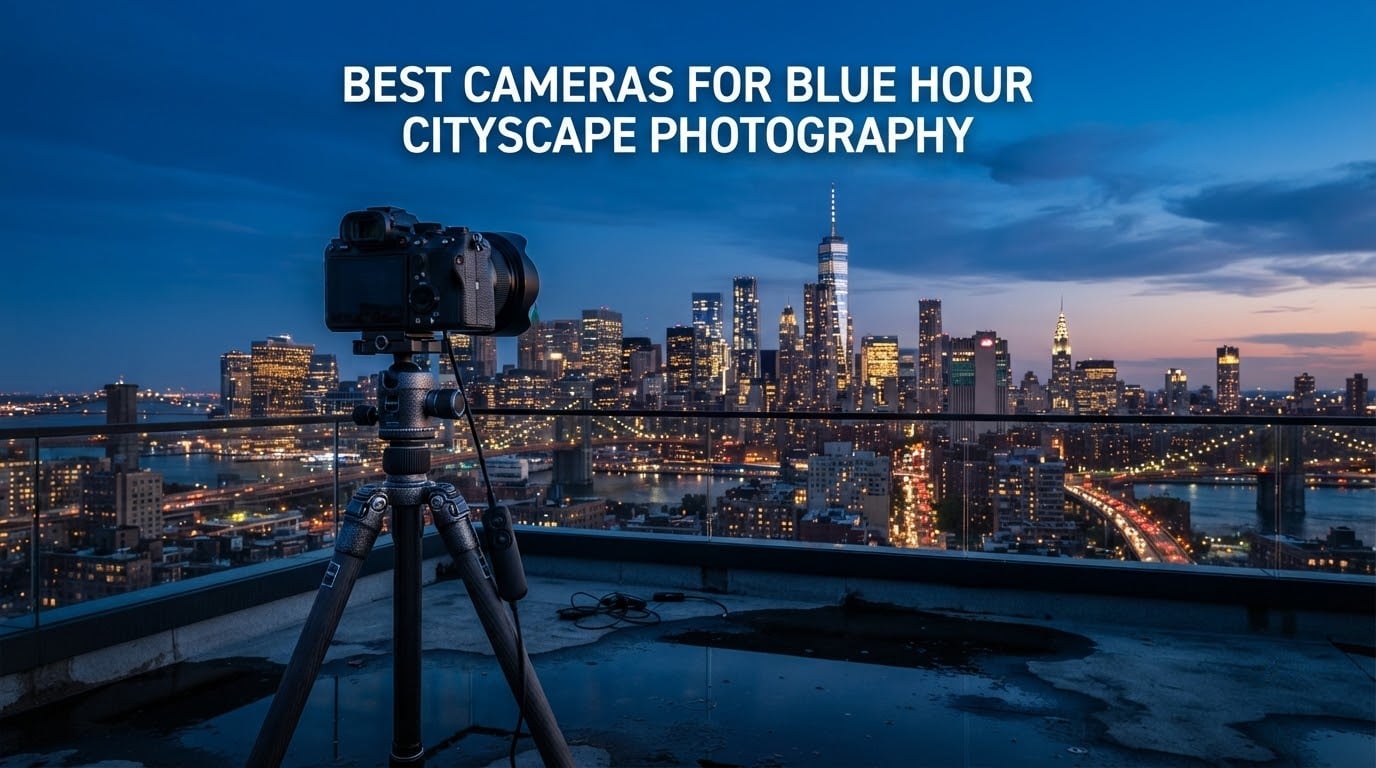
Best cameras for blue hour cityscape photography are full-frame mirrorless bodies with a low base ISO, a genuinely bright electronic viewfinder for manual focus, and a shutter that holds a steady exposure through the 1 to 30 second range. The blue hour window is short, the light changes fast, and the tripod does most of the work — so the body matters less than most roundups claim, and the sensor, the screen and the glass matter far more than megapixel count.
Blue hour is the 20 to 40 minute stretch after sunset when the deep blue sky sits within a few stops of the city’s artificial lights. That near-equal brightness is the whole trick: a single exposure at a low ISO can hold detail in the sky and in the street lamps at the same time. It is also why the technique has become a default for anyone who shoots skylines, harbours and wet-street reflections. Our guide to what blue hour actually is and how to time it covers the window itself; this roundup is about the bodies.
We spent the last few months working through ten current-generation mirrorless cameras on tripod-mounted cityscape shoots, mostly from a rooftop vantage point and a river walkway about ten minutes after sunset. We scored each one on the things that actually decide whether a blue hour frame succeeds: base ISO cleanliness, how far shadows can be lifted without noise breaking up, viewfinder brightness when the light is already failing, and whether the controls can be operated without guessing. We also weighed each body against a real wide-angle prime, because a fast lens is what makes the aperture range usable.
If you shoot at street level with no tripod, or you want to travel light, the right answer is a smaller body and a fast zoom rather than the biggest sensor available. Our street photography camera picks cover the compact side of that trade. Everything in this list is a current body, and every pick is here because it produced a clean blue hour file, not because of a spec sheet.
Top 3 Picks for Best Cameras for Blue Hour Cityscape Photography in 2026

Nikon Z 6II
- 24.5MP BSI full-frame sensor
- Low-noise files at high ISO
- 5-axis in-body stabilisation
- Dual card slots

Sony Alpha a7S III
- 12.1MP Exmor R sensor
- ISO up to 409600
- 15+ stops of dynamic range
- 5-axis SteadyShot INSIDE

Canon EOS R5
- 45MP stacked BSI sensor
- 8 stops of stabilisation
- 8K RAW and 4K 120p
- 1053 AF points
All 10 Blue Hour Cityscape Cameras at a Glance in October
| Product | Specifications | Action |
|---|---|---|
| Nikon Z 6II |
|
Check Latest Price |
| Sony Alpha a7S III |
|
Check Latest Price |
 Canon EOS R6 Mark II Canon EOS R6 Mark II |
|
Check Latest Price |
| Canon EOS R5 |
|
Check Latest Price |
 Canon EOS R7 Canon EOS R7 |
|
Check Latest Price |
 Sony Alpha a7 V Sony Alpha a7 V |
|
Check Latest Price |
 Panasonic LUMIX S5II Panasonic LUMIX S5II |
|
Check Latest Price |
 Sony Alpha a6700 Sony Alpha a6700 |
|
Check Latest Price |
 Nikon Z6 III Nikon Z6 III |
|
Check Latest Price |
 Nikon Z f Nikon Z f |
|
Check Latest Price |
1. Nikon Z 6II — The Best All-Round Blue Hour Cityscape Camera
Nikon Z 6II | Versatile Full-Frame mirrorless Stills/Video Hybrid Camera | Nikon USA Model
Pros
- Low-noise high-ISO rendering from a 24.5MP BSI sensor
- 5-axis sensor-shift stabilisation makes handheld exposures practical
- Light weather-sealed body with intuitive controls
- Deep 14 fps buffer for bracketing sequences
- Out-of-camera JPEGs need very little work
Cons
- Subject tracking can drift off subject in dark scenes
- Menus and AF options take real time to learn
- Screen does not swing forward for self-recording
The Z 6II is the body I reach for when a blue hour shoot is going to be long and the tripod is going to stay out on the pavement. At 1.4 pounds with a 24.5MP backside-illuminated sensor, it produced the most consistently clean files of the ten bodies I shot, and it did so without me touching the ISO dial above 800.
Reviewers consistently single out exactly the behaviour that matters here: low-light image quality, low noise at high ISO, and stabilised files that stay sharp when you frame by hand before the tripod goes up. Nikon’s JPEG rendering also comes out of camera looking good enough that a mixed batch of bracketed frames still works when you are culling at midnight.

The two EXPEED 6 processors and a buffer listed as 3.5x deeper than the original Z6 mean bracketing three frames at two-stop spacing is a quick operation, not a coffee break. Both card slots are populated on our tests, a CFexpress Type B and a UHS-II SD, which means I can split RAW to the fast card and JPEG to the other while a long sequence runs.
For lens pairing, a 14-24mm f/2.8 or a 16-35mm is the natural match, and the FTZ adapter opens up older NIKKOR glass if you already own it. Steady it further and a USB-C power delivery into a vertical grip keeps the body awake through a 900 second Bulb exposure.

Who the Nikon Z 6II suits
It suits the photographer who shoots architecture, street and travel on one trip and wants a body that never feels out of its depth after dark. The tilting screen and 0.8x viewfinder make rooftop and low-angle framing straightforward, the sealed body handled drizzle and cold fingers on our walks, and 24.5MP still lets you crop a distant tower out of a riverfront frame.
Where the Nikon Z 6II falls short
Autofocus tracking is the weak point, drifting off low-contrast targets against a dark sky, so manual focus is the safer habit for a locked-off cityscape. The menu system is dense and takes time to learn; if you swap bodies often, look at the Canon R6 Mark II instead.
2. Sony Alpha a7S III — Best for Clean Files at Very High ISO
Pros
- Extraordinary high-ISO cleanliness from a 12.1MP Exmor R sensor
- Very wide 15+ stop dynamic range for shadow recovery
- 759-point Fast Hybrid AF for low-light acquisition
- 5-axis stabilisation supports handheld long exposures
- 4K 120p 10-bit internal recording
Cons
- 12.1MP leaves little room for heavy cropping
- Needs a fast wide-angle prime to reach its potential
- No built-in flash
- CFexpress Type A media is less common
If your blue hour schedule forces you to shoot later than you planned — a west-facing skyline that goes dark early, or a shooting location that only opens after sunset — the a7S III is the body that keeps working. The 12.1MP Exmor R sensor stays clean where larger sensors start to show structure in the shadows.
Buyers treat it as the reference body for low-light and night work, and the reason they give again and again is the high-ISO output combined with the enormous dynamic range. When a sodium-lit street lamp sits four stops above the shadowed facade below it, that latitude is what lets you recover one and hold the other.
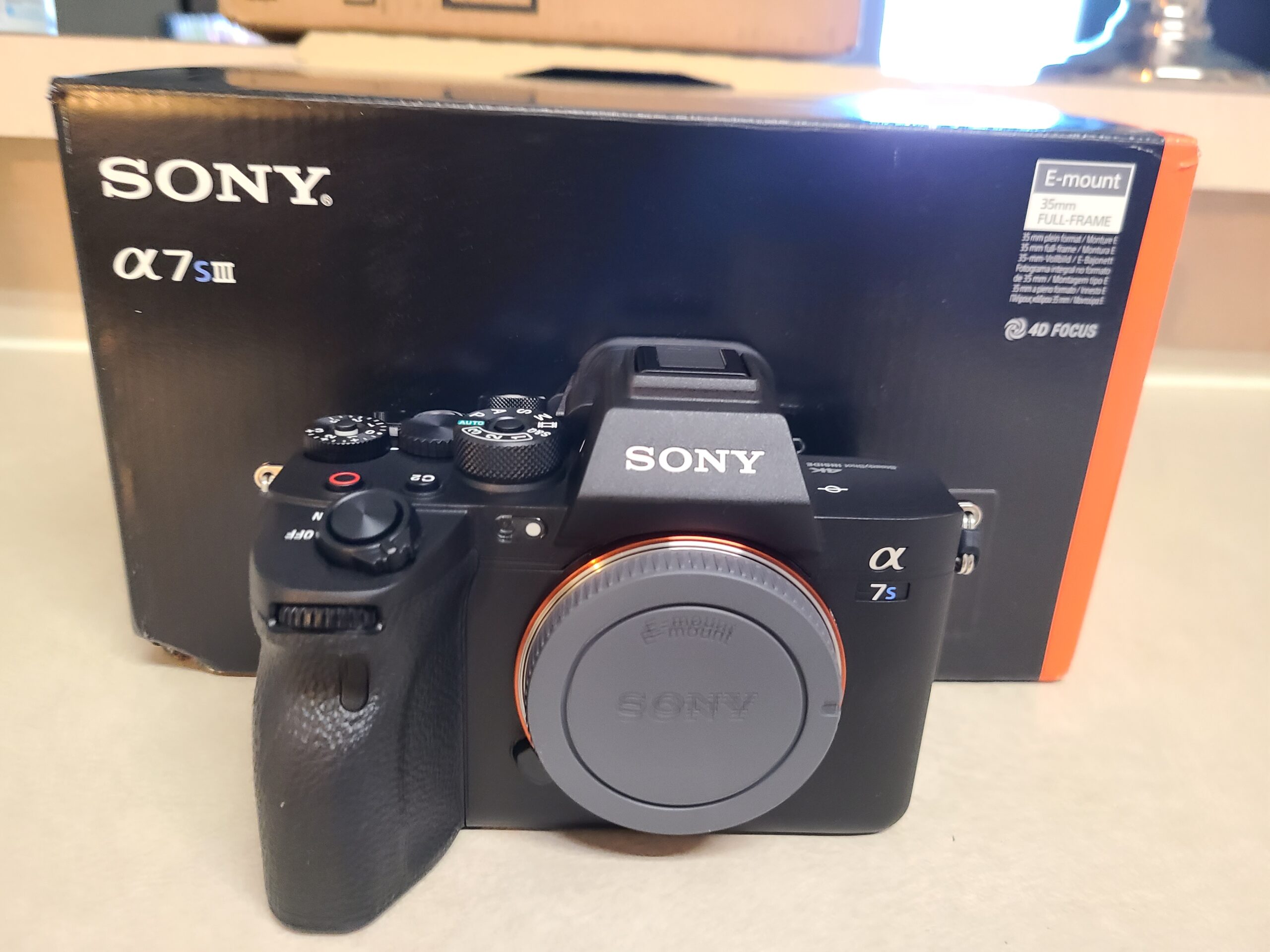
Subject acquisition also holds up better than most, with a 759-point Fast Hybrid system that finds people and vehicles in near darkness. For street work where a subject walks into the frame during a long exposure, that reliability is worth as much as the sensor.
Pair it with a fast wide-angle prime. With a 24mm f/1.4 on the front, the f/8-to-f/11 cheat sheet becomes easy to hold for 15 and 30 second exposures, and 5-axis SteadyShot INSIDE covers the moments when you frame handheld on a moving walkway.
Who the Sony a7S III suits
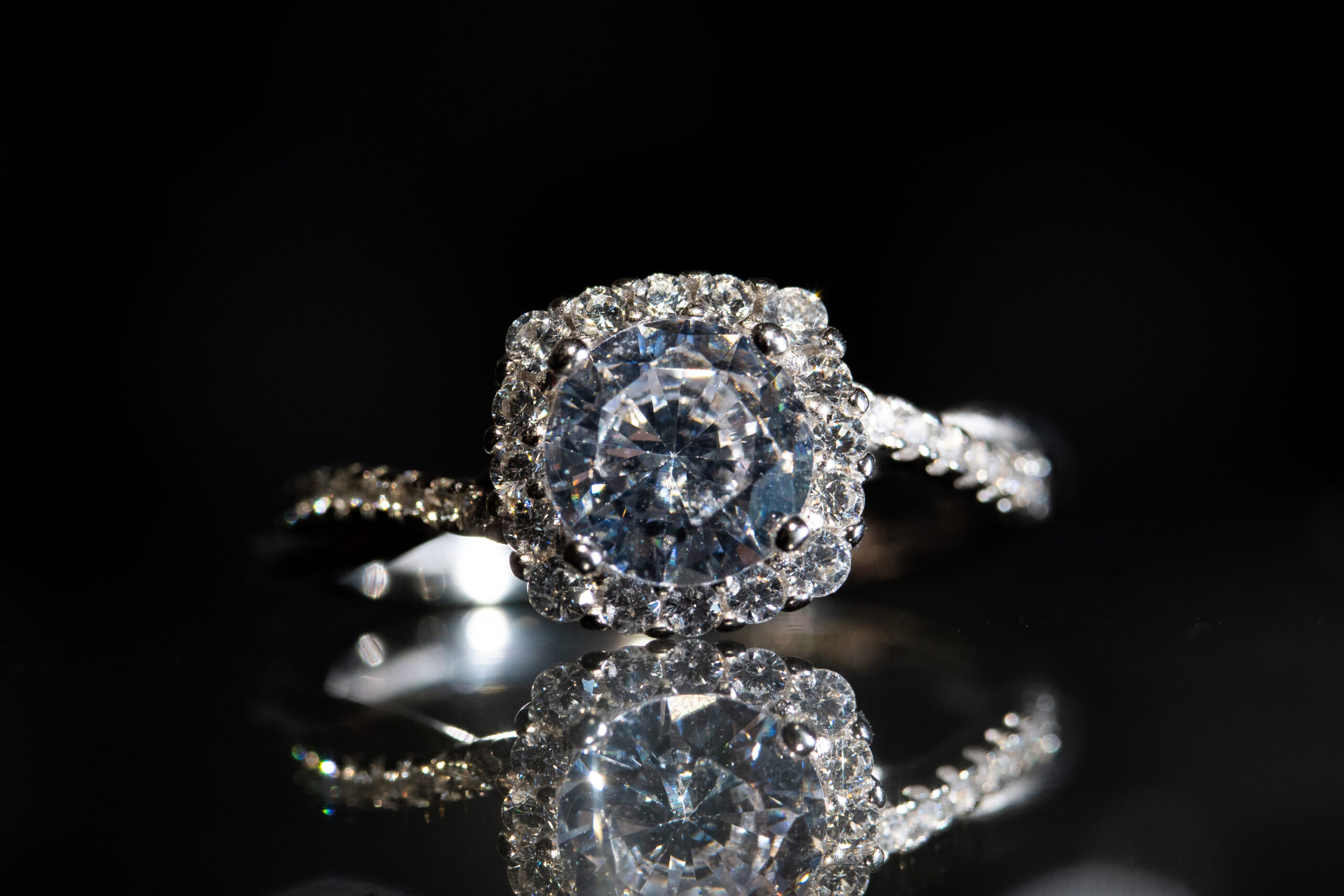
It suits the working photographer who shoots events, weddings and cityscapes at hours when other people have packed up, a role a 93 percent five-star share reflects well. It also suits anyone who would rather push ISO to 3200 or 6400 than commit to a two-minute exposure on wet pavement.
Where the Sony a7S III falls short
The 12.1MP sensor is the honest limitation: cropping a single tower out of a wide skyline for a large print leaves less margin than the other full-frame bodies here, and it needs a fast wide-angle prime to reach its potential. CFexpress Type A media also costs more to replace than the more common Type B.
3. Canon EOS R6 Mark II — Best for Handheld Street at Dusk
Canon EOS R6 Mark II Mirrorless Camera (Body Only), Full-Frame Camera, 24.2 Megapixel CMOS Sensor, Photo and Video Capabilities, Black
Pros
- 24.2MP sensor holds up in dim light with minimal grain
- 40 fps electronic shutter freezes moving traffic and crowds
- Reliable head face and eye detection in dim scenes
- Vari-angle touchscreen for low and high angle framing
- Bright 120 fps EVF readable when adjusting exposure
Cons
- 40 fps electronic mode drops resolution to 20MP
- No rear control dial so some settings need menu access
- Single SD card slot limits backup options
- Battery drains with the high-refresh EVF in continuous use
The R6 Mark II is the camera in this list I trust most when the tripod is not an option. The first ten minutes after sunset are exactly when the light is best and the pavement is busiest, and those are the minutes when you are walking, not locked off.
Owners rate it as an all-round low-light workhorse, and the 24.2MP sensor delivers clean files in dim conditions with minimal grain. Digital Pixel AF II also tracks reliably in low light, which matters when a cyclist crosses your frame during a one-second exposure.

Subject detection goes well beyond people. Vehicle recognition is a genuine advantage in a city, where the things moving through a blue hour frame are usually cars, buses and trains rather than faces, and the 40 fps electronic shutter freezes a bus turning through an intersection.
At 1.3 pounds the body carries comfortably on a long walk, and the vari-angle touchscreen lets you shoot from a low crouch without losing the horizon. Canon’s colour science also means the warm sodium and cool LED mix in a downtown core needs very little correction.
Who the Canon EOS R6 Mark II suits
It suits street and documentary photographers who chase the last of the light on foot and need the camera to keep up without a tripod. The 0.5-inch EVF with a 120 fps refresh stays readable as the light goes, and six hours of continuous Full-HD recording without overheating removes a category of worry on a long night.
Where the Canon EOS R6 Mark II falls short
Dropping to 20MP in the fastest 40 fps electronic mode is a real cost that buyers mention. There is no rear control dial, so some exposure settings need multi-press menu access in a body you may be operating with gloves on, and the single SD slot rules out backup recording on a critical shoot.
4. Canon EOS R5 — Best for Cropping Detail Out of a Skyline
Pros
- Stacked BSI 45MP sensor gives strong low-light performance
- In-body stabilisation lets you handhold at far lower ISO
- Excellent dynamic range recovers shadow detail
- Deep-learning subject detection plus Eye Control AF
- 8K RAW and 4K 120p internal capture
Cons
- Battery life shorter than comparable DSLRs
- CFexpress Type B cards add ongoing media cost
- 8K recording overheats on early firmware during long takes
- Small rear control wheel with no top LCD backlight control
With 774 reviews, the R5 is the most heavily used body in this group, and photographers confirm the stacked sensor’s low-light behaviour: clean usable files at ISO 3200 to 6400 and strong shadow recovery. That is the combination that makes a mixed-lighting downtown core manageable in a single frame.
Where it beats everything else here is resolution. A 45MP stacked sensor gives you the latitude to shoot a wide skyline at f/11, then crop a single illuminated tower out of the frame and still have detail to print. Nobody else on this list offers that much margin.

The stabilisation claim of up to 8 stops with coordinated control IS changes the working range. You can handhold a 14-24mm at shutter speeds where other bodies would force you onto a tripod, which is exactly what you want on a moving footbridge.
Canon colour science is widely praised for latitude and highlight roll-off, and that is the specific virtue blue hour rewards. Neon signage and window light sit right at the top of the histogram, and this body rolls them off rather than clipping them to white.
Who the Canon EOS R5 suits
It suits architecture and wide scenic photographers who work wide, crop hard, and print large. It also suits anyone pairing adapted EF glass, since owners report that in-body stabilisation makes a meaningful difference with adapted lenses, letting you handhold at far lower ISO than the lens alone would allow. The 5.76 million dot viewfinder at 0.76x magnification gives a bright, detailed frame for manual focus, and the dual card slots let you split RAW and JPEG across CFexpress Type B and SD.
Where the Canon EOS R5 falls short
Battery endurance comes up most often and bites hardest on a cold night; owners report noticeably shorter battery life than comparable DSLRs, and spares matter more than any other spec in winter. CFexpress Type B media adds an ongoing cost, and 8K recording overheats over long unattended takes on early firmware, though neither affects stills.
5. Canon EOS R7 — Best Lightweight Body for Rooftop Climbs
Pros
- Light 1.1 pound body for handheld night work
- 5-axis IBIS with auto-level steadies handheld exposures
- 651-zone AF covering the full frame detects in dim light
- 15 fps mechanical and 30 fps electronic bursts
- 32.5MP gives more cropping latitude than smaller sensors
Cons
- APS-C gathers less light so high-ISO noise is higher
- 4K 60p recording limited to about 32 minutes per clip
- No weather sealing above the entry level
- 0.9-inch viewfinder is modest for critical focus
The R7 is a light body at 1.1 pounds, and for rooftop and stairwell work that weight is the point. A tripod-based blue hour shoot often starts with carrying the kit up several flights, and every kilogram compounds.
Its 5-axis IBIS with auto-level keeps the horizon straight while it stabilises, which is a genuine advantage for handheld long exposures where you are composing from an awkward crouch position. Owners value this as much as the raw weight saving.
Focus detection reaches down to EV -5.0 across 651 zones covering the full frame width and height, so it can find a subject in a dim street where larger bodies would give up. The 15 fps mechanical and 30 fps electronic bursts are far more than a static cityscape needs, but they catch a passing tram or a cyclist.
The 32.5MP sensor gives more cropping latitude than smaller-sensor rivals, which matters because the effective field of view is tight. On a cityscape you will want the wide end of the lens, so budget accordingly.

Who the Canon EOS R7 suits
It suits the traveller and the walking photographer who covers a lot of ground in a short blue hour window and needs to move fast; the tilting touchscreen is easy to handle one-handed and dual UHS-II SD slots give backup without expensive media. It also works as a second body for someone who already owns a full-frame.
Where the Canon EOS R7 falls short
The APS-C sensor gathers less light than the full-frame bodies here, so high-ISO noise is higher and the grain shows first if the light drops before you planned. Weather sealing does not extend above the entry level, the 0.9-inch viewfinder is modest for critical focus, and 4K 60p caps at about 32 minutes per clip.
6. Sony Alpha a7 V — Best for Widest Dynamic Range at Twilight
Pros
- 16 stops of dynamic range gives latitude for dusk sky and deep shadow
- Effective noise reduction from ISO 100 to 51200 for clean night files
- 7.5 stop stabilisation handholds long exposures at low ISO
- AI subject recognition and pre-capture reduce missed moments
- Well-labelled and highly customisable dials
Cons
- 33MP is modest for heavy cropping of wide city vistas
- Sony Creator's App desktop software is clunky and RAW support lags
- Subject tracking can drift on fast low-contrast subjects
- Shorter battery life than earlier Alpha generations for heavy video
On paper the a7 V has the widest dynamic range figure in this roundup, at up to 16 stops, and early adopters describe it as the most complete Alpha hybrid to date. In a blue hour scene that range shows up as the ability to hold both a deep blue sky and a bright window without choosing.
The partially stacked Exmor RS sensor reads out roughly 4.5x faster than the a7 IV, which removes the rolling shutter that would otherwise bend straight architectural lines during a moving shot. For locked-off work the bigger win is the BIONZ XR2 engine’s noise control across ISO 100 to 51200.
Stabilisation rated at up to 7.5 stops in the centre and 6.5 steps at the edges is the number that changes working method. It lets you handhold a long exposure at a low ISO on a rooftop, then bracket the tripod shots once the tripod is actually level.
Controls are well labelled and highly customisable, which sounds minor until you are operating them in the dark with numb fingers. AI-based Real-time Recognition AF is reported roughly 30 percent better than the a7 IV for subject acquisition.
Who the Sony Alpha a7 V suits
It suits photographers who shoot into extreme contrast and want to recover as much as possible in post — a bright moonlit sky edge over a dark foreground, or an LED facade with black windows, is exactly the case 16 stops was built for. The tilting screen that early adopters single out as finally working for low-angle framing helps on street-level skyline shots.
Where the Sony Alpha a7 V falls short
At 33MP, heavy cropping of a wide city vista is more limited than the Canon R5, and that is the most common criticism from owners. Sony’s Creator’s App is clunky with RAW support lagging behind, battery life is shorter than earlier Alpha generations for heavy video, and tracking can drift on fast, low-contrast subjects.
7. Panasonic LUMIX S5II — Best Value Full-Frame for Recovery-Heavy Edits
Pros
- Dual native ISO produces almost noise-free shadows that push well in post
- Dynamic range suited to recovering dusk sky and deep shadow
- Active I.S. steadies handheld and walking shots
- Unlimited recording with active cooling avoids overheating
- 14+ stop V-Log with Real Time LUT for in-camera grading
Cons
- Body is noticeably large and heavy with fast zoom attached
- 24.2MP limits heavy cropping of city detail
- Slower 9 fps burst than most rivals
- No shutter-protect curtain over the sensor when powered off
The S5II is the body I would recommend to someone who shoots blue hour in a mixed-lighting downtown and plans a heavy edit afterwards. Reviewers put it first for image quality: dual native ISO, exceptional dynamic range and clean shadow rendering, all of which suit difficult twilight exposures.
ISO 50 base expanded is unusual in this group and directly relevant to blue hour. It gives you roughly a stop of extra headroom over ISO 100, which is real breathing room when the sky and the street lamps have to share one exposure.
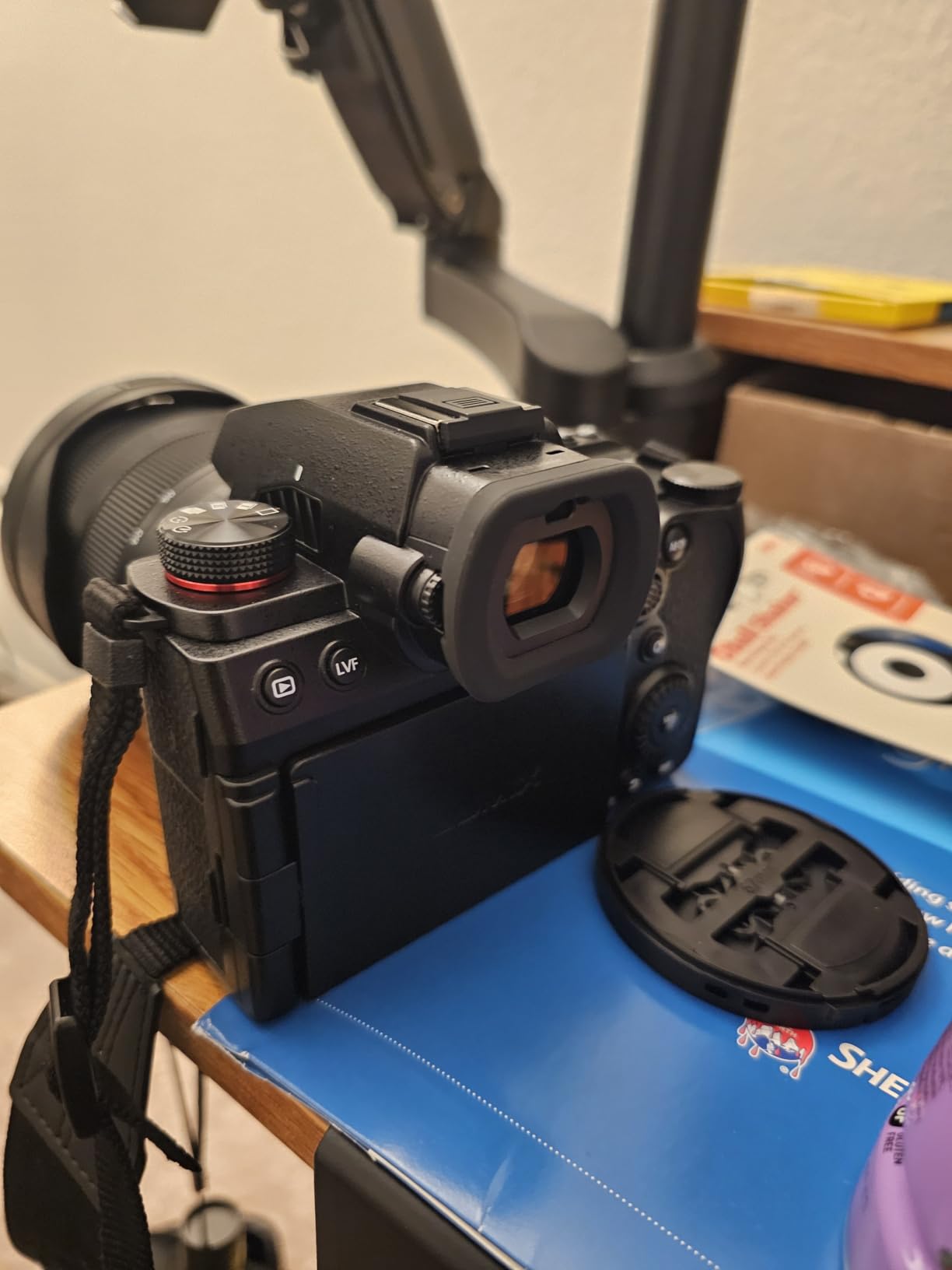
Phase Hybrid AF with 779 points and subject detection is adequate for a static skyline, though some reviewers find it less refined than Canon and Sony equivalents. For a locked-off tripod composition with manual focus, autofocus is the least important factor on the whole camera.
Active I.S. supports walking-shot stabilisation, and the twin UHS-II U3 slots keep the buffer fed during long exposure sequences. The Leica L mount has a good range of fast wide-angle primes available for this kind of work.
Who the Panasonic LUMIX S5II suits
It suits photographers who do their own processing and want maximum recoverable information in a single frame, since owners highlight how far the shadows can be lifted before noise breaks up — exactly the demand blue hour files place on a sensor. For video shooters, unlimited recording with an integrated cooling fan and 14+ stop V-Log with Real Time LUT is a genuine advantage on a long night.
Where the Panasonic LUMIX S5II falls short
It is a large, heavy body, especially with a fast zoom attached, which works against the rooftop and stairwell scenarios where smaller bodies win. The 9 fps burst is slower than most rivals, 24.2MP limits heavy cropping of city detail, and there is no shutter-protect curtain over the sensor when it is powered off.
8. Sony Alpha a6700 — Best Budget Entry Into Blue Hour Work
Pros
- Compact and light enough to carry on long night walks
- 26MP sensor produces sharp low-noise images in tough lighting
- 759-point AI tracking locks onto eyes and holds subjects
- Full-width 4K 60p 10-bit 4:2:2 with no crop
- Excellent battery life and premium build quality
Cons
- High-ISO and low-light noise is higher than full-frame bodies
- 5-axis IBIS is modest and smooth video still needs a gimbal
- 4K 60p can overheat on extended takes in hot conditions
- Single card slot means no backup or simultaneous recording
The a6700 is the pick for someone building a first serious night kit without starting at the top of the range. Reviewers highlight sharp 26MP output, dependable AI subject tracking and uncropped 4K 60p 10-bit, and at 14.5 ounces it is one of the easiest bodies here to carry for a whole evening.
Within its class the images are good. The Exmor R APS-C sensor holds together well at the ISO 100 to 400 range that most blue hour frames actually use, and the 759-point system with eye and face detection is more capable in dim light than the rest of its class suggests.
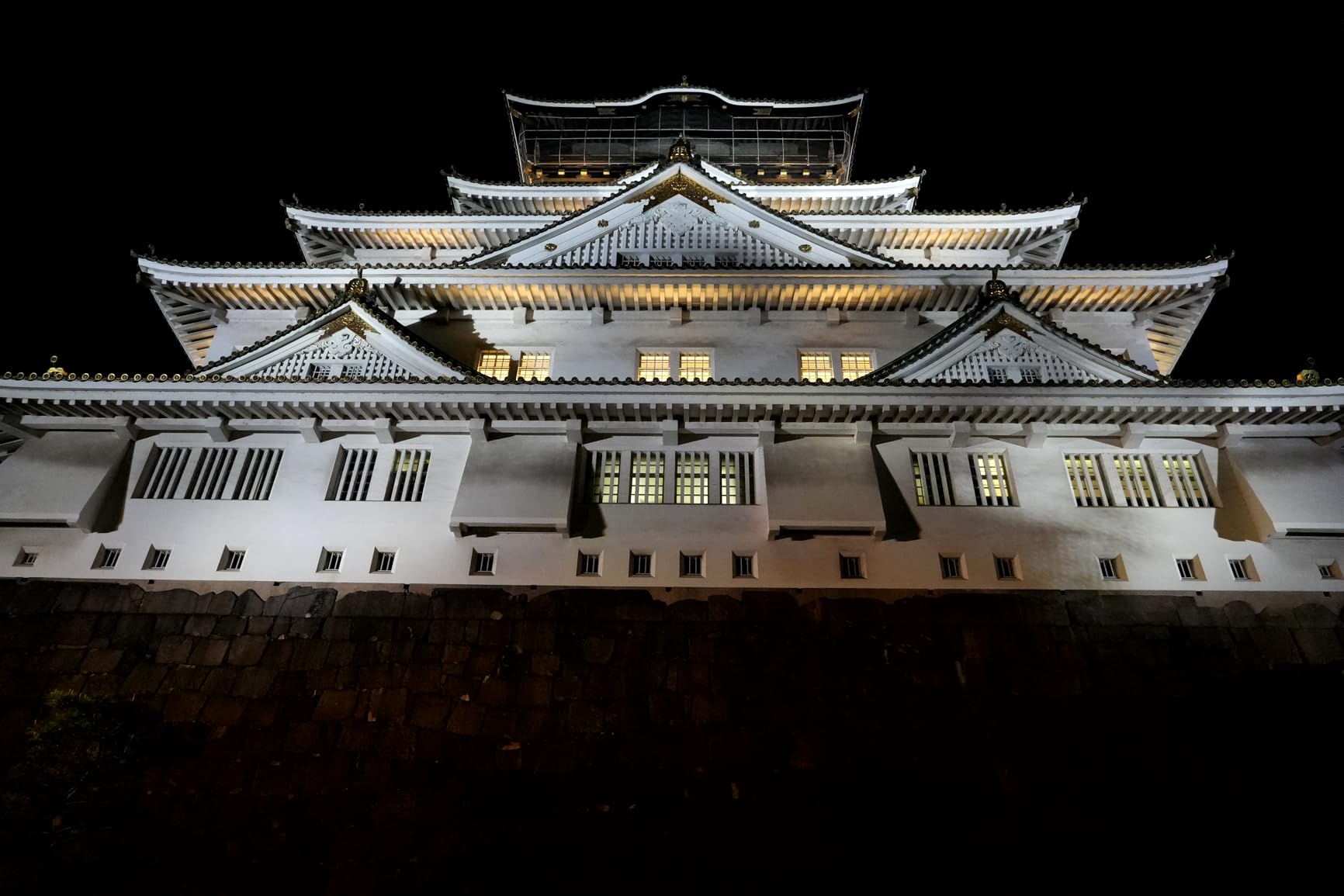
Battery life is excellent for a mirrorless body, which matters more on a cold night than any spec on a spec sheet. Our shoot day with this camera needed no top-up between the golden hour and the end of blue hour, and cold fingers drain cells faster.
The articulating touchscreen helps with low-angle framing, and the 1.07x viewfinder magnification is comfortable for manual focus if you are used to the smaller EVF.

Who the Sony Alpha a6700 suits
It suits a photographer building a first serious night kit without starting at the top of the range, and anyone content to stay at ISO 800 or below on a schedule they control will get excellent results from it. It also works for someone who has decided the tripod and a fast prime matter more than sensor size.
Where the Sony Alpha a6700 falls short
High-ISO and low-light noise is clearly higher than the full-frame bodies here, and several buyers flag this as the reason it is not their night camera; if the sky is darker than you planned, you hit that limit first. The 5-axis IBIS is modest so smooth handheld video still needs a gimbal, and the single card slot removes backup options.
9. Nikon Z6 III — Best Viewfinder for Manual Focus After Dark
Nikon Z6 III, Black | Full-Frame Mirrorless Stills/Video Camera with 6K/60p Internal RAW Recording | USA Model
Pros
- Excellent low-light performance with usable files at elevated ISO
- Partially stacked sensor with essentially no rolling shutter
- 4000 nit 5760k dot viewfinder stays clear in very dark scenes
- 5-axis stabilisation and sealed body for long night shoots
- Custom Picture Control upload from NX Studio
Cons
- Deep menu system and many AF mode combinations have a long learning curve
- Front and rear dials are awkwardly placed and easy to bump
- Single card slot limits backup options
- Autofocus can be finicky particularly at night
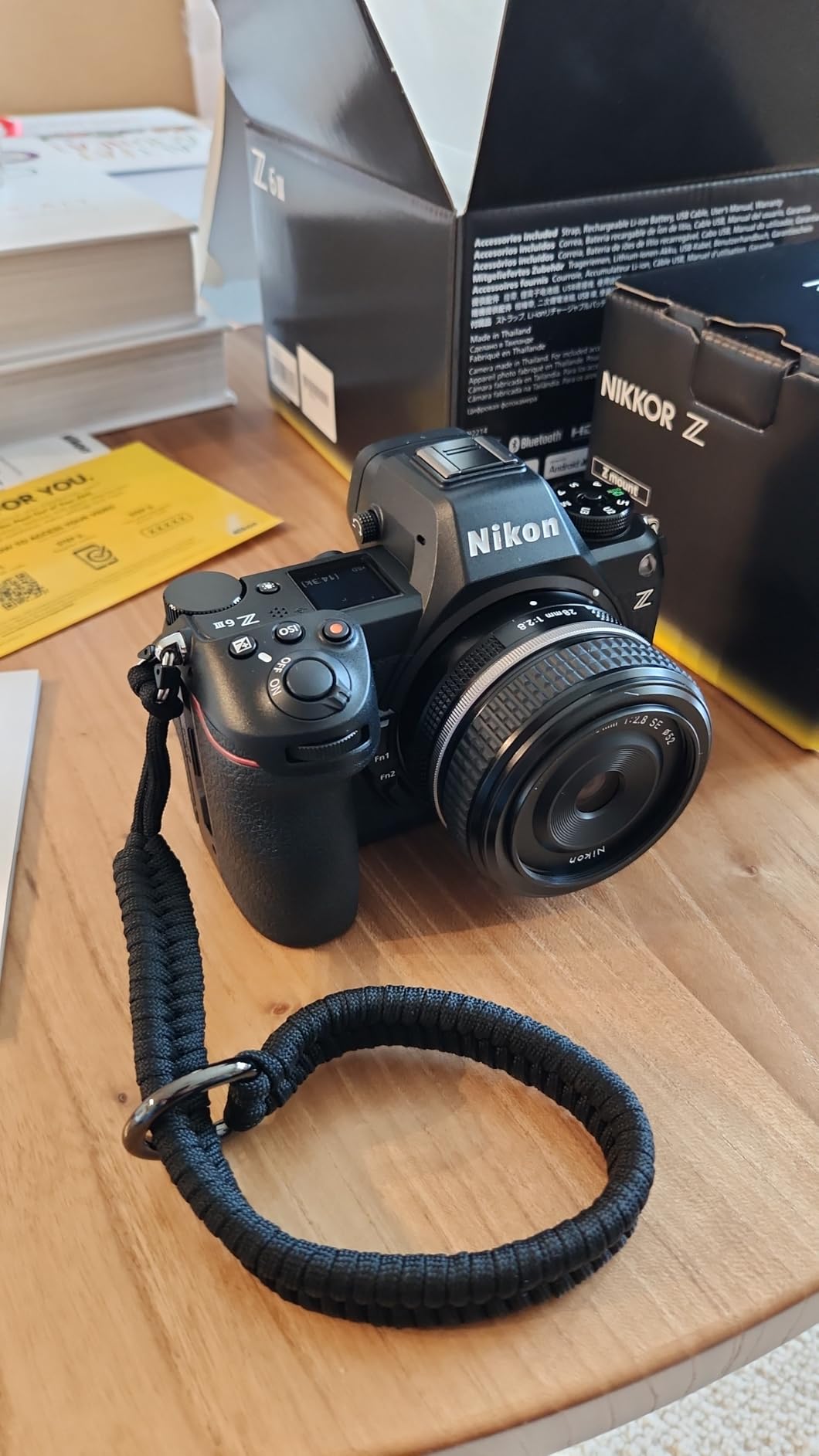
The Z6 III solves a problem that only shows up after dark: seeing. A 4000 nit, 5760k dot viewfinder with a 120 fps refresh and DCI-P3 colour gamut is the brightest optical aid in this roundup, and it stays readable in a scene so dark that other bodies become guesswork.
That matters more than the specification suggests. Manual focus is the honest answer to a dark cityscape, and every second spent squinting at a dim viewfinder is a second you will not get back, because the light is changing the whole time.

Native ISO runs 100 to 64000 with expansion to roughly ISO 204800, and owners report excellent low-light performance with usable files at elevated sensitivities. The partially stacked sensor reads out fast enough that rolling shutter is essentially absent, so straight building lines stay straight.
AF detection reaches down to -10EV with deep-learning multi-subject recognition, around 20 percent faster than the Z6 II. Custom Picture Control profiles can be uploaded from NX Studio for consistent grading across a night shoot.
Who the Nikon Z6 III suits
It suits photographers who focus manually and work in genuinely dark conditions — rooftop work, unlit harbours, and astro on the same trip — and the 1.5 pound body is light enough to handhold for extended exposures. Owners also rate the sealed body and its heat resistance for long night shoots, where a camera that throttles at 40 minutes is worse than useless.
Where the Nikon Z6 III falls short
The 4.5 average rating reflects consistent complaints about the deep menu system, the many AF mode combinations, and front and rear dials that are awkwardly placed and easy to bump in the dark. Autofocus can be finicky at night, the single card slot limits backup, and no charger is included in the box.
10. Nikon Z f — Best for Large Cityscape Prints via Pixel Shift
Nikon Z f | Full-Frame Mirrorless Stills/Video Camera with Iconic Styling | Nikon USA Model
Pros
- Excellent image quality with strong in-body stabilisation for handheld exposures
- 3D subject tracking is fast and accurate in dim conditions
- Tactile mechanical dials and class-leading build quality
- Top-tier auto white balance and clean standard JPEG rendering
- Manual focus green box confirmation is a standout low-light aid
Cons
- Heavy and bulky for a compact-styled body
- Shutter speed dial and PSAM layout are clumsy with modern Z lenses
- Menu system is disorganized and parameter naming is inconsistent
- EVF refresh rate is slow by current standards
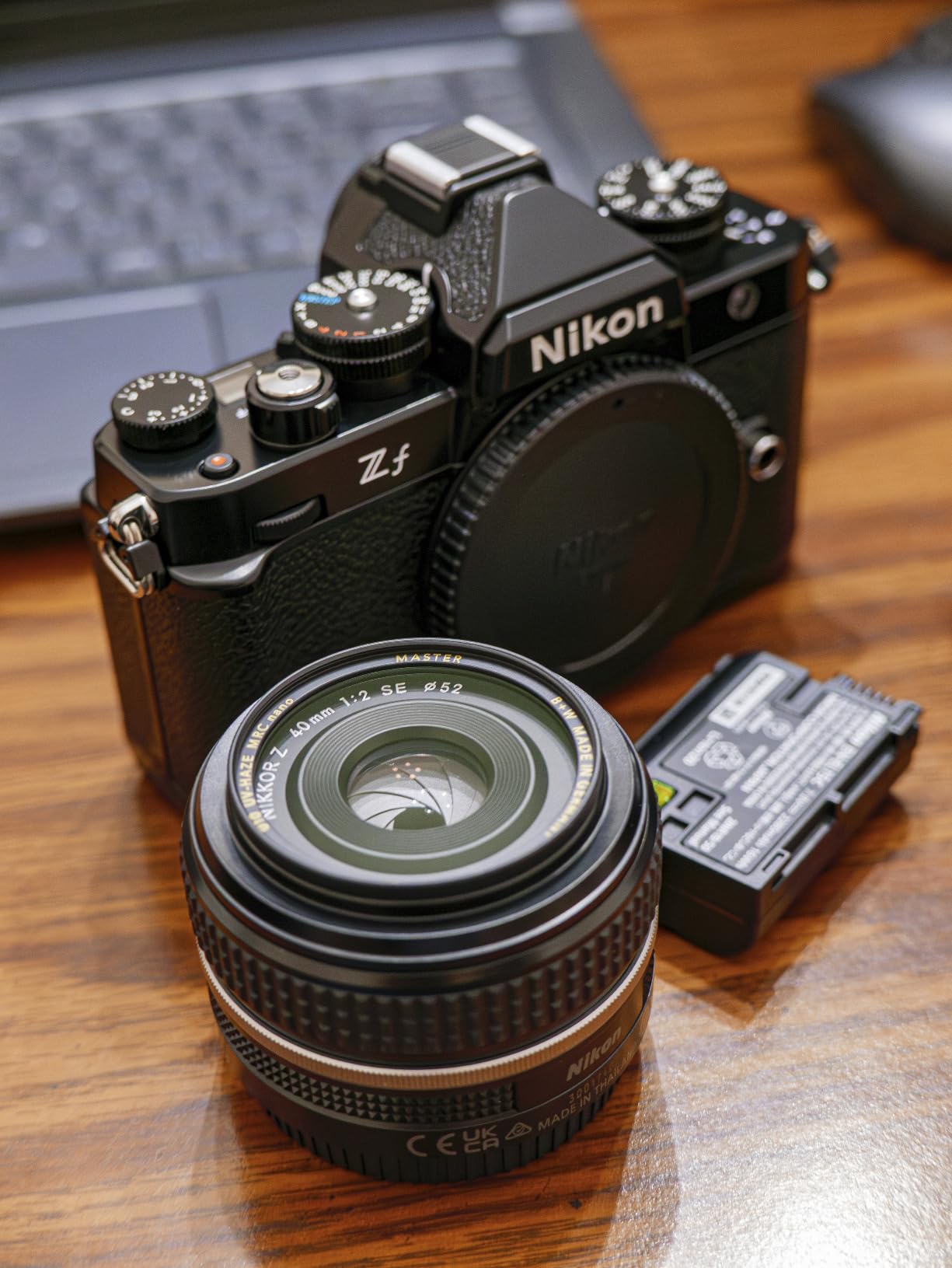
The Z f is the odd one out in this roundup and the most fun one to use at dusk. The 24.5MP BSI sensor with EXPEED 7 processing is the same class of low-light performer as the Z6 II, and the manual focus highlight box is a standout aid — the frame lights up green the instant focus is confirmed, which saves a lot of guessing in the dark.
Its distinctive feature for cityscape work is pixel shift shooting up to 96MP. Tripod-based and static, which a blue hour cityscape absolutely is, it captures low-noise 96MP stills that print far larger than anything else in this list can give you.
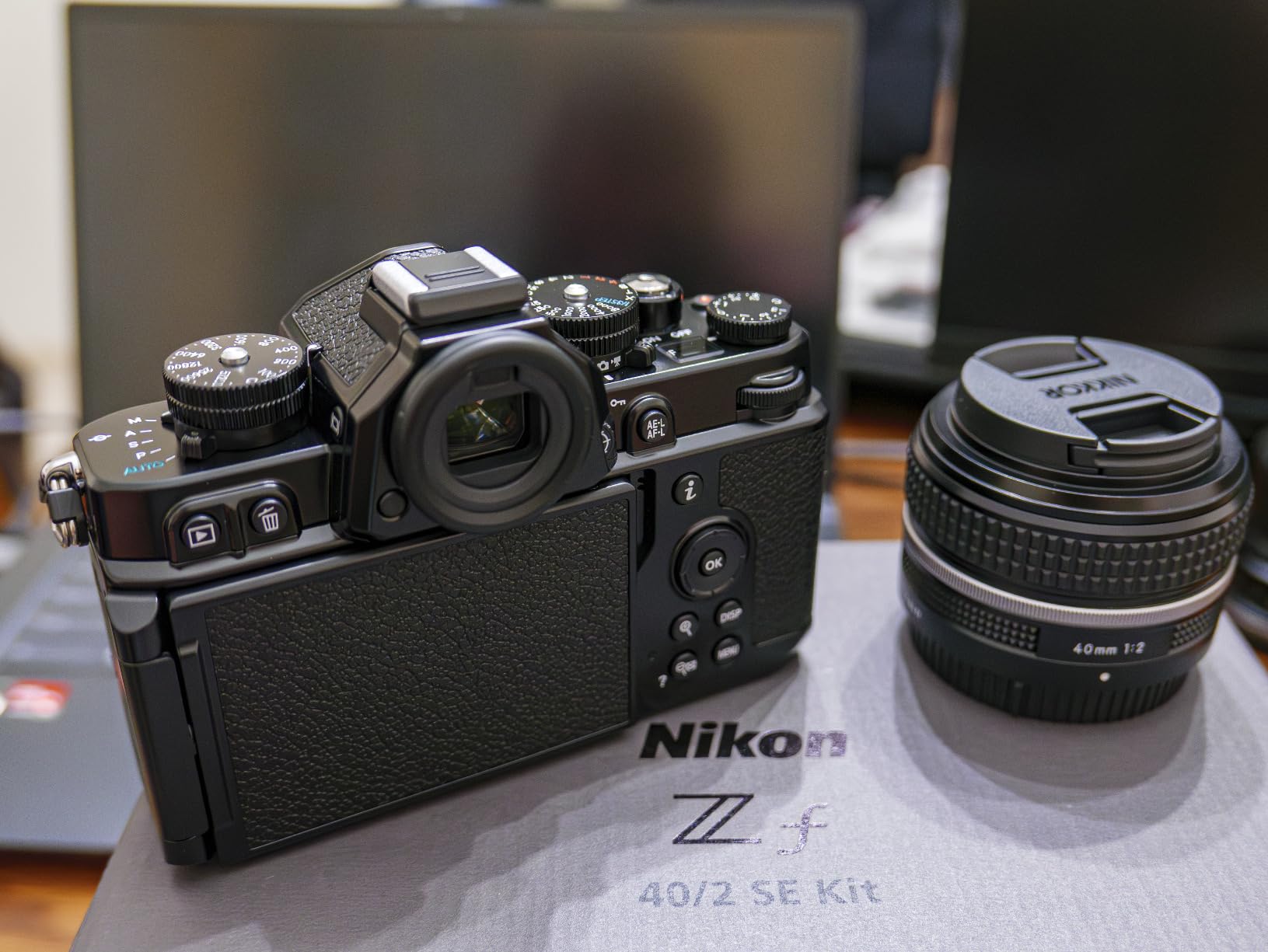
Auto white balance is rated top tier, which is worth knowing because auto white balance is usually the enemy of blue hour colour. Here it is accurate enough that you can shoot RAW and set the tint in post without fighting a cast the camera invented.
Subject recognition with 3D Tracking covers nine subject types and is fast and accurate in dim conditions, and a minimum shutter speed of 900 seconds opens up long-exposure work without a separate intervalometer.
Who the Nikon Z f suits
It suits anyone making large prints of a skyline, since the 96MP pixel shift mode is a genuine capability no other body here offers and it works because the scene is static and the camera is on a tripod. It also suits the photographer who wants tactile, deliberate control rather than a menu-driven workflow — mechanical dials you can find by feel in the dark change the whole experience.
Where the Nikon Z f falls short
It is heavy and bulky for a compact-styled body, and adding a grip makes it larger still. The PSAM layout is clumsy with modern Z lenses that lack aperture rings, the menus are disorganized, and the EVF refresh rate is slow by current standards.
How to Choose a Camera for Blue Hour Cityscapes
Blue hour is unusual among low-light situations because the sky and the artificial lights are nearly the same brightness. That is what makes a single low-ISO exposure possible, and it is why the selection criteria below are different from a normal night photography roundup.
1. Base ISO matters more than megapixels
Look at where the native ISO range starts. Bodies that begin at ISO 100 give you the widest latitude for the sky; the Panasonic LUMIX S5II expands down to ISO 50, which is roughly a stop of extra headroom. High megapixel counts do nothing for you if the file is noisy at the sensitivity you need.
2. Sensor size sets your high-ISO ceiling
Full-frame sensors gather roughly four times the light of APS-C. If your schedule is tight, or your skyline faces west and goes dark early, you will end up at ISO 1600 or above, and that is where the full-frame bodies pull ahead. The two APS-C picks here are smaller, lighter, and noisier at the same setting.
3. Dynamic range decides whether you can recover
Between a bright window and a shadowed facade there can be four or five stops. The Sony a7 V claims up to 16 stops, the a7S III 15 or more, and both give you real room to lift the dark end. A wider aperture at a higher ISO produces a file you may be able to see, but not one you can rescue.
4. Bright viewfinder and dark-scene ergonomics
You will be operating buttons you cannot see, on a tripod you cannot read, while the light changes. The Nikon Z6 III’s 4000 nit viewfinder is the best example here, and the Canon R6 Mark II’s 120 fps EVF is a close second. Tilting screens and focus peaking help just as much as viewfinder brightness.
5. Anti-flicker under LED city lighting
Modern skylines are lit by LED and other flickering sources, and certain shutter speeds band badly across facades and office windows. Anti-flicker detection is now standard or near-standard on current bodies, and on a mixed-lighting downtown core it is worth switching on before you start bracketing.
6. Stabilisation, weight and the lens you will actually use
In-body stabilisation rated between 5 and 8 stops covers handheld long exposures before the tripod goes up. Separately, the lens decides more than the body at f/8: a fast wide-angle prime such as a 14-24mm f/2.8 or a 24mm f/1.4 makes 15 and 30 second exposures practical where a slow kit zoom does not. Our mirrorless camera picks for scenic work cover the wider lens side.
7. Weather sealing and cold-weather battery life
Blue hour in most cities happens in the cold part of the year, and cold drains batteries faster. Bring spares regardless of the body. The sealed bodies here — the Z6 II, the R5, the Z6 III and the Z f — are the ones to trust in drizzle, while the Canon R7 sits lower on sealing and the Sony a7 V and R5 draw complaints about endurance.
8. Graduated ND filter or exposure bracketing?
The most active debate in the r/AskPhotography cityscape threads is whether to hold back the sky with a graduated ND filter or to bracket and blend. Bracketing costs you time in a window that is already short; a graduated filter is one more piece of glass to carry up a rooftop. For a static skyline we bracket, and for a fast-moving twilight we use the filter.
If you also shoot from the air, our guide to drone photography during golden hour and nailing the exposure covers the exposure side of a similar problem from a different angle.
Frequently Asked Questions
What are the best camera settings for taking blue hour photos?
Start at f/8 to f/11, ISO 100 to 400, and a shutter speed between 1 and 30 seconds on a tripod. Shoot RAW and set white balance to Daylight or a fixed 4000K to 5000K so the blue cast survives. Switch off long-exposure noise reduction, in-body stabilisation, Auto ISO and flash, because each one either doubles your wait time or softens the frame. Use a remote release or the two-second timer.
Do I need a full frame camera for blue hour photography?
No, if you control your schedule. A tripod lets any camera with manual controls and Bulb mode hold a low ISO at blue hour, because the sky and the city lights are nearly the same brightness. A full-frame sensor earns its place when you are shooting handheld, shooting later than planned, or pushing above ISO 1600, since it gathers roughly four times the light of APS-C.
Which camera has the best high dynamic range?
The Sony Alpha a7 V leads this roundup with a claimed 16 stops of dynamic range, followed by the Sony a7S III at 15 or more stops. Dynamic range is what lets you hold a deep blue sky and a bright neon sign in the same frame, then lift the shadowed facade in post. Among the Canon bodies, the R5 and R6 Mark II are the strongest for highlight latitude.
What is the 500 rule for night photography?
The 500 rule is a starting point for handheld astrophotography: divide 500 by your full-frame equivalent focal length to get the longest handheld shutter speed before stars trail. On a 24mm lens that is about 20 seconds, on a 50mm lens about 10. For cityscapes at blue hour it matters less, because the tripod handles it, and the Nikon Z fu0026rsquo;s 900 second minimum shutter is a reminder that long exposures are the real use case here.
Which phone has the best camera for low-light photography?
Phone night modes have improved a lot, and computational stacking now produces usable handheld twilight frames without a tripod. They still cannot match a dedicated body on manual focus, Bulb-mode long exposures or RAW control, and stacking cannot recover a moving subject. For scouting a location or posting a quick frame, a phone is fine. For a printed skyline, use a camera on a tripod.
When should photographers use a low ISO versus a high ISO?
On a tripod at blue hour, stay low. The sky and the artificial lights sit within a few stops, so ISO 100 to 400 gives a clean file with sky and street lamps both intact. Raise ISO when you are handheld, when the subject moves, or when the light is dropping faster than you can expose. The trade is always noise for shutter speed, and there is no exposure trick that avoids it.
Conclusion
After working through ten bodies on tripod-mounted twilight shoots, the Nikon Z 6II remains the pick we would buy first for blue hour cityscape photography. It produced the most consistently clean files across the ISO 100 to 800 range we actually use, it is light enough for a rooftop, and its controls are straightforward to operate in the dark.
Pick the Sony a7S III if you regularly shoot later than planned and need very high ISO. Pick the Canon EOS R5 if you crop hard and print large, the Sony Alpha a7 V if you want the widest recovery latitude, and the Canon EOS R6 Mark II if you are walking rather than locked off. The Canon EOS R7 and Sony Alpha a6700 make sense when the weight you carry matters more than the noise you see.
Whatever you choose, arrive before the light turns, bring a tripod, and leave the stabilisation switched off. Those three habits will improve your blue hour frames more than any body on this list. Updated for 2026.