
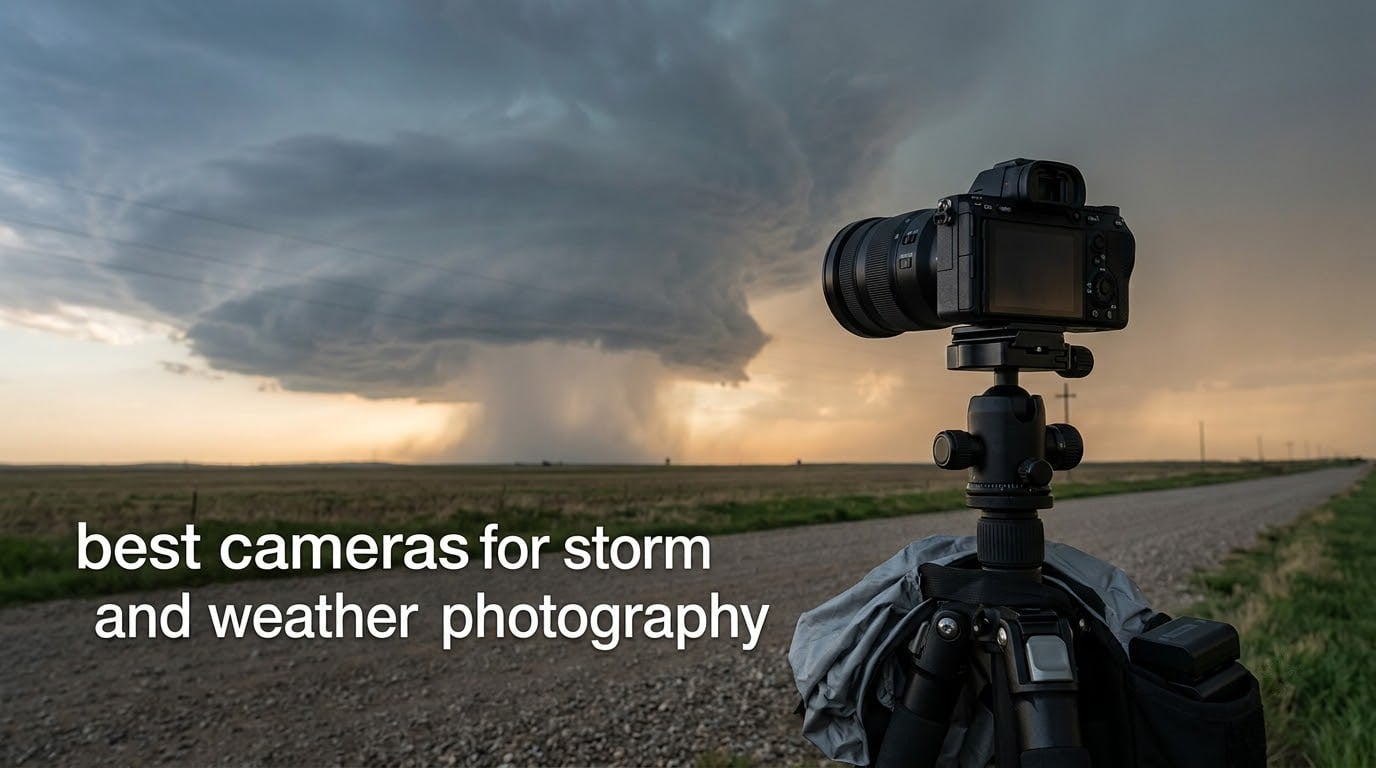
Chasing a supercell means standing in wind-driven rain at the edge of a highway with a camera that cannot afford to quit. The best cameras for storm and weather photography are not the biggest bodies on the shelf; they are the ones that keep firing when moisture, grit and a rapidly darkening sky turn a normal shoot into a technical problem.
So what cameras do storm chasers actually use? Mostly a weather-sealed mirrorless body with a fast wide prime or zoom, a sealed 70-200mm for isolation work, and dual card slots so a dead card does not end a once-a-decade shot. A surprising share of the best frames in circulation come from a phone, a tough compact, or a 360 action camera used for coverage rather than hero stills. If you want a wider look at outdoor bodies, our guides to the best cameras for cold weather photography and the best cameras for weather photography cover the same terrain from a different angle.
We put ten bodies through a storm-specific filter rather than a spec-sheet filter. The criteria we care about are ingress protection, usable high-ISO performance when a shelf cloud blocks the sun, burst rate for structure that reorganises in seconds, and the boring logistics that decide whether you get the frame at all: card redundancy, battery headroom, and weight when you are repositioning at speed.
Top 3 Cameras for Storm and Weather Photography in 2026

Sony Alpha a7 III
- 24.2MP full-frame sensor
- ISO 50 to 204800
- 10fps with AF tracking
- 28-70mm kit lens included

Sony Alpha a7 IV
- 33MP full-frame sensor
- 4K 60p 10-bit 4:2:2
- 5-axis SteadyShot
- 759-point hybrid AF

Panasonic LUMIX G85
- Weather-sealed body
- 16MP Micro Four Thirds
- 5-axis Dual IS
- 12-60mm lens bundled
Every Camera in This Roundup Compared in October
| Product | Specifications | Action |
|---|---|---|
| Sony Alpha a7 III |
|
Check Latest Price |
| Sony Alpha a7 IV |
|
Check Latest Price |
 Canon EOS R7 Canon EOS R7 |
|
Check Latest Price |
| Panasonic LUMIX G85 |
|
Check Latest Price |
 KODAK PIXPRO WPZ2 KODAK PIXPRO WPZ2 |
|
Check Latest Price |
 OM System TG-7 OM System TG-7 |
|
Check Latest Price |
 Sony Alpha a7S III Sony Alpha a7S III |
|
Check Latest Price |
 PENTAX WG-90 PENTAX WG-90 |
|
Check Latest Price |
 Nikon Z 5 Nikon Z 5 |
|
Check Latest Price |
 Insta360 X5 Insta360 X5 |
|
Check Latest Price |
1. Sony Alpha a7 III: The All-Rounder That Keeps Working
Pros
- 24.2MP back-illuminated full-frame sensor with a very wide ISO range
- 693-point hybrid AF covering 93% of the frame
- 10fps burst with AE and AF tracking
- 28-70mm kit lens included so it shoots out of the box
- Dual SD card slots
Cons
- Older body design with dated menus and handling
- Bundled 28-70mm f/3.5-5.6 is slow for night and fast-moving subjects
- No built-in flash
We spent weeks with this body as the working camera on plains chases, and the reason it keeps coming back is unglamorous: it does everything at a level above the failure point. The 24.2MP back-illuminated full-frame sensor holds detail at ISO 3200 without the mush you get from a small sensor, and the expanded ceiling of ISO 204,800 gives you room when a supercell drops the light level by four stops in ninety seconds.
The 693-point hybrid AF system covers 93% of the frame, which in practice means a rotating wall cloud stays locked without constant re-framing. At 10fps with AE and AF tracking, a rope-out stage lasts long enough to get a sequence rather than one hopeful frame.

Two card slots matter more here than in almost any other genre. If the first card corrupts in a downpour, the second still holds the sequence, and the dual SDXC arrangement means you can split stills and video across them. The 3-inch tilting LCD also helps when you need to angle the screen away from falling rain or compose low without lying in the wet.
Our honest weakness is the bundled 28-70mm f/3.5-5.6. It is fine in daylight and poor at night, so budget for a fast wide zoom. The handling and menu system also feel a generation behind newer Sony bodies, and there is no built-in flash for fill under a dark base.

What you gain in a real chase
Wide-angle structure work at dusk, where a shelf cloud fills the frame and the exposure gap between sky and ground is brutal. The sensor’s dynamic range lets you hold detail in both.
Night lightning work at ISO 3200 with a fast wide prime, where the 10fps rate means a single bolt is one frame in a sequence rather than a coin flip.
Where it falls short
Fast-moving foreground action, because AF tracking is competent rather than class-leading, and older bodies are slower to reacquire after the subject crosses the frame.
Anyone starting from zero. The menus take an afternoon to learn, and the kit lens will not teach you much about aperture choice.
2. Sony Alpha a7 IV: The Hybrid Stills and Video Body
Pros
- 33MP back-illuminated full-frame sensor with strong dynamic range
- 759-point fast hybrid AF with real-time eye AF
- 5-axis SteadyShot stabilization in stills and video
- 4K 60p 10-bit 4:2:2 with full pixel readout
- S-Cinetone profile for a filmic look without grading
Cons
- Body-only configuration so a lens must be bought separately
- No built-in flash on this configuration
- 33MP files are large and need fast UHS-II or CFexpress cards
The a7 IV is the body you pick when a chase means as much video as stills. The 33MP back-illuminated full-frame sensor gives you a 4K crop with room left over, and the 4K 60p 10-bit 4:2:2 full pixel readout is the spec that matters for grading a storm sky later. Seven-stop oversampling on 4K 30p keeps detail clean.
759-point fast hybrid AF with real-time eye detection tracks reliably in changing light, and 10fps burst matches the class. 5-axis SteadyShot sensor-shift stabilization is a genuine asset when you are shooting a funnel in failing light and cannot afford a fast shutter.
The dual card slot configuration takes CFexpress Type A or SD on top and SD UHS-II underneath, which is the most future-proof redundancy setup in this roundup. Listed operating range is 0 to 40 degrees Celsius, so in a July supercell you should plan video segments rather than one long take.
Two real caveats. The body-only listing means a lens is a separate purchase, and at 33MP the RAW files are large enough that card speed becomes part of your kit planning. There is also no built-in flash in this configuration.
What you gain in a real chase
Situations where you need both a hero still and a graded clip of the same structure, with a colour profile that gives you a filmic base before you touch a timeline.
Crop flexibility. A 32.5MP-frame worth of usable 4K detail means a missed wide shot can often be reframed later.
Where it falls short
Weight and card cost. This is a heavier, more expensive commitment than a Micro Four Thirds kit, and the files demand the fast cards.
Long unbroken 4K takes in peak heat. The stated operating range tops out at 40 degrees Celsius, which is exactly the wrong end of the scale for a mid-afternoon chase.
3. Canon EOS R7: The Burst Machine for Structure That Will Not Sit Still
Pros
- 32.5MP APS-C sensor gives extra reach and high-ISO headroom
- 651 AF zones with person
- animal and vehicle detection
- 30fps electronic plus RAW Burst with 0.5 second pre-shooting
- 5-axis IBIS with auto-level for handheld low light
- Compact 1.1 pound body
Cons
- Body-only so an RF lens is a separate purchase
- 4K is cropped and clips cap at 30 minutes
- 10-bit RAW is lighter than 14-bit on higher-end bodies
The R7 exists for the moment a cell reorganises faster than you can reframe, and its RAW Burst with 0.5 seconds of pre-shooting is the feature no other body here offers. You press the shutter after the strike and still get the frames before it. For wall cloud rotation, rapid development, or a bolt sequence, that buffer changes what you can photograph.
Thirty frames per second on the electronic shutter means a rotating supercell is a sequence, not a single exposure. The 651-zone Dual Pixel CMOS AF II system covers nearly the full frame width and height, and detection for people, animals and vehicles keeps it locked when debris or a chase vehicle crosses the frame.
Two details matter in the field. The 1.15x magnification electronic viewfinder with 2,080,000 dots is bright enough to compose a dark base, and 5-axis in-body image stabilization with auto-level keeps verticals true when you are braced against a vehicle door. The APS-C sensor is a real advantage here: 32.5MP of detail on a smaller format gives you more telephoto reach from the same lens, which means a funnel fills the frame from further away.
The trade-offs are honest. It is a body-only listing, the 4K recording is cropped rather than full width with a 30-minute clip cap, and the 10-bit RAW pipeline is lighter than the 14-bit output of bodies like the a7 III or a7 IV.
What you gain in a real chase
Situations where the shot exists for two seconds, and a 30fps buffer with pre-capture is the difference between documenting the transition and missing it.
Telephoto framing discipline. The 1.6x crop turns a 200mm into roughly 320mm of field of view, which shortens the minimum safe distance you need for structure work.
Where it falls short
Long-form 4K video. The crop and the 30-minute clip cap limit you, and 10-bit files give less latitude for heavy shadow recovery in a storm sky than 14-bit bodies.
Low-light stills where you need every bit of tonal depth, because the smaller sensor gives less room than full frame at very high ISO.
4. Panasonic LUMIX G85: The Best Value Weather-Sealed Kit
Pros
- Genuinely weather-sealed body for a compact
- complete kit
- 12-60mm Power O.I.S. lens covers wide to short telephoto
- 5-axis Dual I.S. works in stills and 4K video
- 4K Photo and 4K Post Focus let you pick focus after capture
- Light 1.1 pound body that fits a small field bag
Cons
- 16MP Micro Four Thirds sensor limits extreme low light and heavy cropping
- Single SD card slot with no backup
- 49-point AF system is dated next to newer phase-detect bodies
If you want a sealed body, a real lens, and stabilization without assembling a system, the G85 is the most complete package in this roundup. The 16-megapixel Micro Four Thirds sensor has no low-pass filter, so the files are sharper than the resolution suggests, and the weather-sealed magnesium-style chassis is specified for exactly the conditions you will be in.
The dual stabilization system is the quiet hero. 5-axis in-body IS working together with the lens optical stabilisation in the bundled 12-60mm Power O.I.S. gives you steady frames in fading light, which is precisely when a supercell scene gets its colour. The 12-60mm covers the equivalent of a 24-120mm, so you can go from full structure to a tightening wall cloud without changing glass.
The 4K Photo mode at up to 30fps, plus 4K Post Focus, gives you a burst of focus points and lets you choose the sharp one after the moment has passed. In a chaotic scene that is more useful than it sounds. The 2,360K-dot OLED viewfinder is bright, and the 3-inch touch LCD tilts for low angles.
The honest limits: a 16MP small sensor is the constraint on this camera. Noise rises earlier than on full frame, and there is no crop room to recover later. It also has a single card slot, so you need a disciplined backup routine, and the 49-point autofocus system is clearly behind modern phase-detect mirrorless.
What you gain in a real chase
Situations where weight and bulk decide the shot. At 1.1 pounds with a lens, you can carry two bodies or hike a ridge line to get ahead of the cell.
Anyone who wants a sealed, stabilised, ready-to-shoot kit in one bag without a shopping list of components.
Where it falls short
Extreme low light and aggressive cropping, because the small sensor runs out of tonal depth before full frame bodies do. Night lightning is workable but not where this camera shines.
Data redundancy. One card slot means a single point of failure on a long chase day, and the AF system will struggle with a fast, low-contrast target in rain.
5. KODAK PIXPRO WPZ2: The Camera You Do Not Have to Think About
Pros
- Survives 15m of water
- 2m drops and full dust exposure with no housing
- Backside-illuminated 16MP sensor performs better than typical compacts in dim light
- 4x optical zoom starting at 27mm wide
- 6.21 ounce body is easy to carry all day
- Built-in Wi-Fi for transfer and phone remote control
Cons
- 1/2.3-inch sensor is noisy in low light
- No interchangeable lens and a modest 4x zoom reach
- 1080p video only with no 4K
There is a place in a storm kit for a camera you can hand to a passenger with no instructions. The WPZ2 is waterproof to 15 metres, shockproof to 2 metre drops, and fully dustproof, which means hail, spray and grit are simply not part of the conversation. Reviews consistently credit it for being ready for rain, surf and snow without a housing.
The backside-illuminated 16MP sensor is a step above what a compact usually manages, and it holds up better than expected in dim and overcast conditions. The 4x optical zoom starts at 27mm, so you get genuine wide framing for a full storm structure plus reach for a distant cell, and there is an optical viewfinder plus a built-in flash.
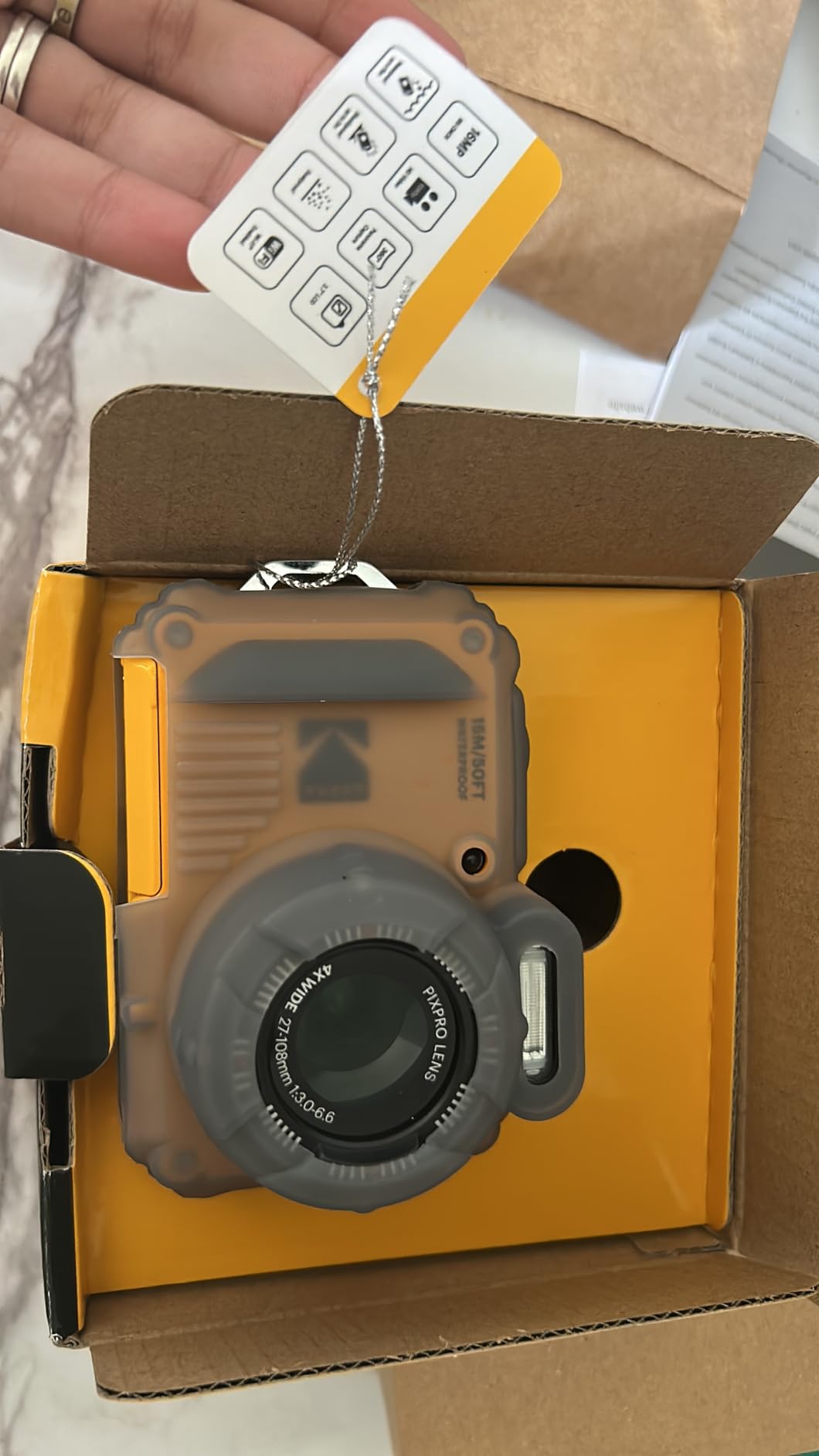
At 6.21 ounces it disappears in a jacket pocket, which means it is always with you on a chase day when the big body stays in the car. Built-in Wi-Fi transfers shots and enables phone remote control, so you can set it on a fence post and still get the frame. Reviewers of this class of camera note the 4x zoom limit is where they stop, not before.
Be clear about what this is. The 1/2.3-inch sensor produces noisy files in low light, there is no lens interchange, and video tops out at 1080p. It is a document-everything camera, not a print camera, and 67% of its reviews are five-star with 13% at one star, so the quality ceiling is visible in the ratings.

What you gain in a real chase
Situations where the priority is that a frame exists at all, taken by someone else, in hail, in the rain, without risk to your main kit.
A secondary body on a passenger seat or a fence post, running a time-lapse or a fixed wide while your main camera works the tele end.
Where it falls short
Any situation demanding clean high-ISO files, since the small sensor gives visible noise in a dark base and a storm at dusk is exactly that.
Isolation work. A 4x zoom starting at 27mm cannot fill the frame with a distant funnel, so this camera stays wide.
6. OM System TG-7: Built for Freezing Rain and Cold Chases
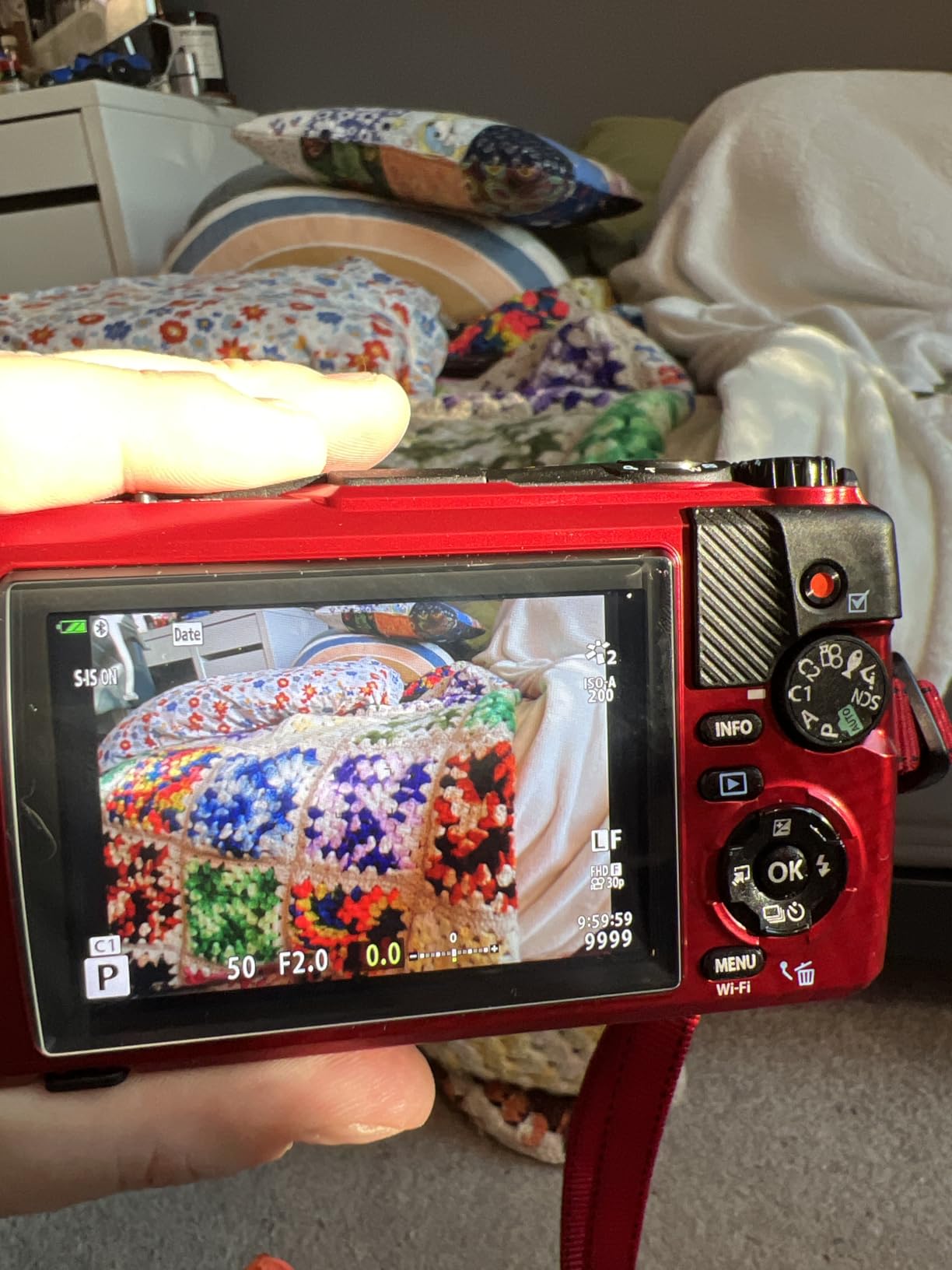
OM System OLYMPUS Tough TG-7 Red Underwater Camera, Waterproof, Freeze Proof, High Resolution Bright, 4K Video 44x Macro Shooting (Successor Olympus TG-6)
Pros
- Genuinely tough at waterproof 15m
- shockproof 2.1m
- crushproof 100kgf and freezeproof to minus 10 C
- Bright F2.0 lens with a back-illuminated sensor for dim and overcast light
- 4K video plus 120 fps high-speed movie
- Five underwater modes including underwater HDR
- Light 9 ounce body with an anti-fog sealed body
Cons
- 12MP sensor is the smallest here and limits large prints and cropping
- 9-point autofocus is basic next to modern mirrorless
- US warranty requires purchase from an authorized dealer
Late-season and winter storm work is where the TG-7 earns its place. The spec sheet is the most extreme in this roundup on physical survival alone: waterproof to 15 metres, dustproof, shockproof to 2.1 metre drops, crushproof to 100 kilograms of force, and freezeproof to minus 10 degrees Celsius. The anti-fog sealed body matters more than that sounds in a cold front with a warm car interior.
The F2.0 lens is the other reason it performs. A bright maximum aperture on a small sensor is the only way a 12-megapixel 1/2.3-inch sensor produces anything usable in an overcast base, and the 4.5-18mm gives roughly a 25-100mm equivalent field of view. It shoots 4K movie and 120 fps high-speed video, and the continuous shooting rate is 20 frames per second.
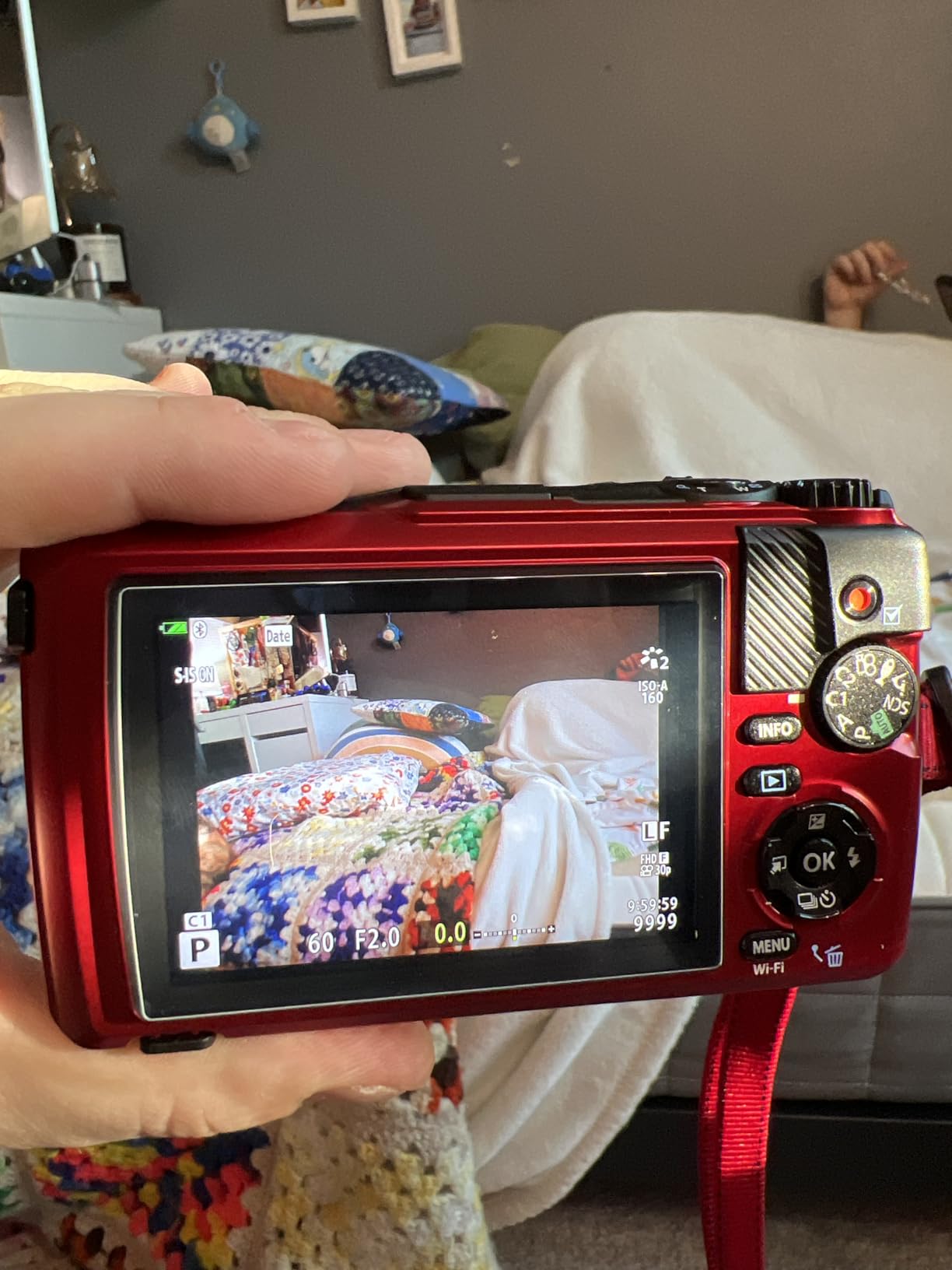
The variable macro system reaches from 1cm off the lens front with four macro modes, and five dedicated underwater modes including an underwater HDR setting. For a storm photographer this is genuinely a two-environment tool, which is why the class exists.
Where it disappoints is image quality ceiling and autofocus. Twelve megapixels is the smallest resolution here, the 9-point AF system is very dated, and a recurring thread in owner feedback is that both hold the camera back in dim conditions. 67% of reviews are five-star, so this is a specialist tool, not a general answer. Buy it from an authorized US dealer so the warranty is honoured.
What you gain in a real chase
Situations involving sleet, freezing rain and winter precipitation, where a body rated to minus 10 degrees is the difference between a camera that works and one that does not.
A body that can be rinsed under a tap, dried, and deployed again within minutes of a downpour.
Where it falls short
Enlarged prints and heavy crops, because 12MP is below what this roundup offers elsewhere and there is little margin.
Fast action. A 9-point AF system and a fixed small sensor mean you will not be tracking a rotating structure with it.
7. Sony Alpha a7S III: The Night Lightning Specialist
Pros
- Extraordinary low-light sensitivity with ISO up to 409600
- 15 plus stops of dynamic range for a dark base
- 4K 120p 10-bit 4:2:2 with full pixel readout
- 759-point fast hybrid AF and 5-axis SteadyShot INSIDE
- First Alpha body with the S-Cinetone profile
Cons
- 12.1MP is low resolution for prints and heavy cropping
- Body-only so a lens is required
- Highest rated body in the group but the lowest review count
When the shoot is night lightning and nothing else, the a7S III is the correct answer and the rating reflects it, with 93% of its reviews at five stars. The 12.1MP Exmor R full-frame sensor is optimised for sensitivity rather than resolution: ISO up to 409,600 and 15-plus stops of dynamic range. A bolt that would be a smear on most bodies is a clean, detailed frame here.
Dynamic range is the underrated part. A lightning strike in a night storm means a near-black foreground and a white-hot channel, and 15-plus stops lets you hold both, then crop the still or pull graded 4K 120p 10-bit 4:2:2 from the same session. The 759-point fast hybrid AF and 5-axis SteadyShot INSIDE stabilisation help when you are working a fixed position in the dark.
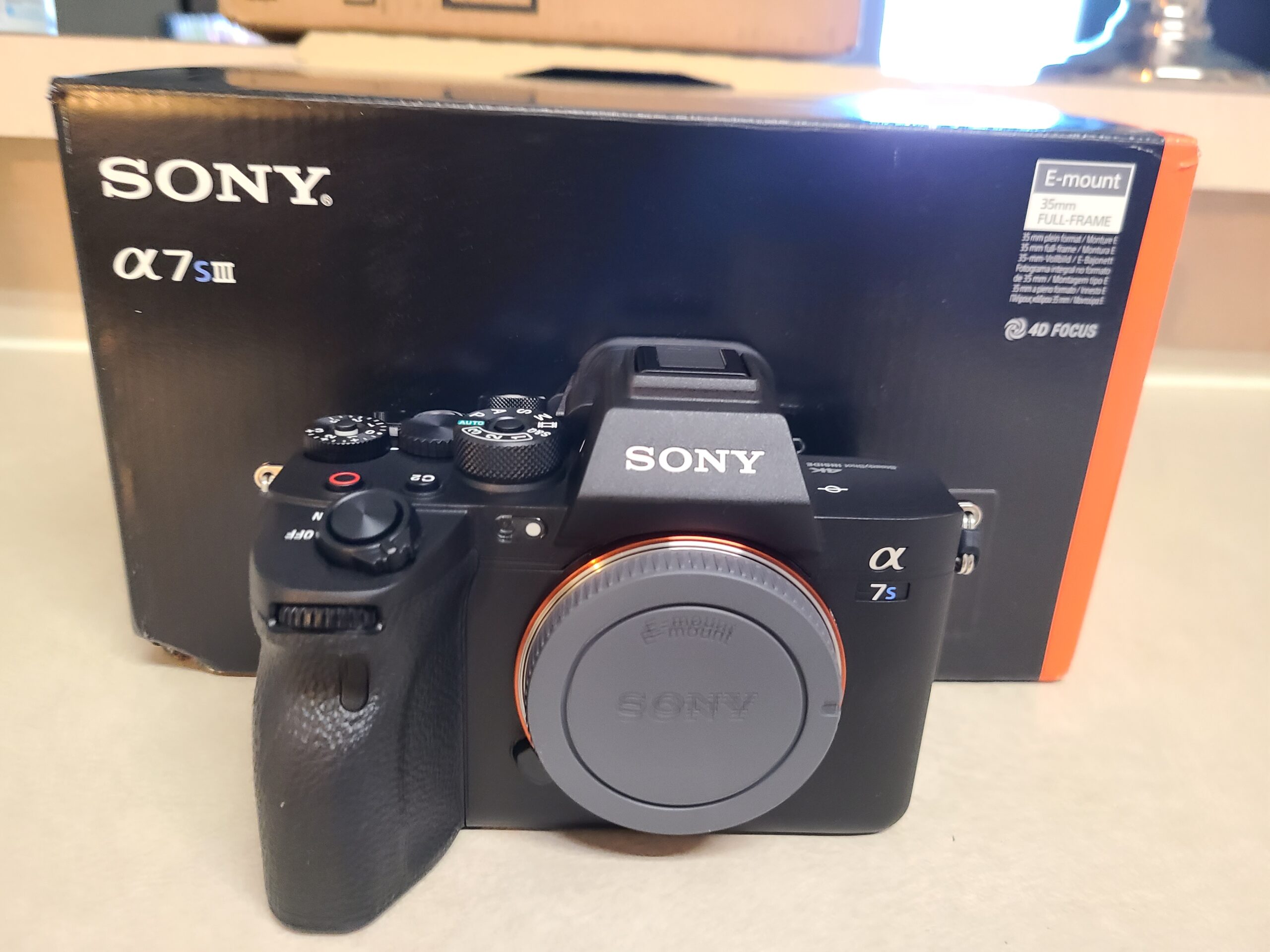
It was the first Alpha camera with the S-Cinetone picture profile, and it records XAVC S, XAVC HS and XAVC S-I codecs, so a single body covers delivery formats. Dual slots take CFexpress Type A or SD UHS-II on top with a second UHS-II below. The listed clip length is short at around 24 minutes, so plan segments.
Twelve megapixels is the deal. It is the lowest resolution here, which means a large print or a heavy crop of a distant funnel is not available to you, and the body-only listing means a lens is a separate purchase. This is a specialised tool for a specific light, not a general-purpose storm body.
What you gain in a real chase
Situations where available light is close to nothing. Night cells, distant strikes on a horizon, and time-lapse of a storm at 2am all sit in this body’s wheelhouse.
Long-range isolation work, because 15-plus stops of range means you can expose for the sky and still recover a foreground silhouette at the other end.
Where it falls short
Daylight structure work where you want to crop hard into a rotating updraft. Twelve megapixels is not enough for that.
Value. It is the priciest body in this group for a fraction of the resolution of its peers, and that is a deliberate trade rather than a flaw.
8. PENTAX WG-90: Rain Detail, Macro and Genuine Field Toughness
PENTAX WG-90 Black Waterproof Camera, Shockproof, Dustproof, Freezeproof, Built-in 6-LED Ring Light for Macro Photography, Underwater Shooting Mode
Pros
- Waterproof to 14m for up to two hours of continuous shooting
- Freezeproof to minus 10 C and shockproof to 1.6m drops
- Six built-in LED macro lights evenly illuminate close subjects
- Digital Microscope mode captures detail invisible to the eye
- 6.72 ounce body with 28mm wide start and 5x optical zoom
- 2.7-inch AR-coated LCD with an Outdoor View Setting mode
Cons
- Some owners report water intrusion at the battery and card door cover
- Battery life averages about 2 hours
- Basic Full HD video and a 1.5 fps burst rate
- Some units ship without a battery in the box
The WG-90 is built for a specific kind of storm work: rain, spray, and the small stuff. Rated waterproof to 14 metres for up to two hours of continuous shooting, shockproof to 1.6 metre drops and freeze-proof to minus 10 degrees Celsius, it is a body you can hose off after a downpour. Enthusiasts who put it in real field conditions consistently credit the toughness.
The six LED macro lights arranged around the lens barrel are the feature nobody else in this roundup has. With the included macro stand you can focus from 1cm and light rain droplets, wet bark or insect detail evenly without a flash or a diffuser, and Digital Microscope mode goes closer than the naked eye can. The 2.7-inch AR-coated LCD has an Outdoor View Setting mode that boosts brightness as ambient light changes.

The back-illuminated 16MP CMOS sensor tops out at ISO 6400, and the 5x optical zoom covers a 28mm wide through 5mm-25mm, which is useful framing flexibility. Underwater and Underwater Movie modes are tuned for colour and contrast, and triple anti-shake protection takes some of the tremor out of handheld work.
Two things to weigh. A meaningful minority of reviews report water intrusion through the battery and card door cover, sometimes within months, which is worth factoring into any decision that depends on the seal. Battery life averages roughly 2 hours, video is basic Full HD, and the 1.5 fps burst rate will not hold a rotating structure.

What you gain in a real chase
Situations where you want detail, not drama. Rain curtains, spray off a road sign, water beading on a windscreen at f/2.8 are the frames this body is built to make.
Anyone who needs a sealed second camera that can be rinsed and used again immediately, including after cold-weather work.
Where it falls short
Reliability of the seal, given the volume of owner reports at the door cover. Test it before you rely on it.
Long outings and any fast action. A 2-hour average battery life and 1.5 fps burst constrain both.
9. Nikon Z 5: The Smallest Full-Frame Body Here
Nikon Z 5 | Our Most Compact Full-Frame mirrorless Stills/Video Camera | Nikon USA Model
Pros
- 24.3MP full-frame sensor with image quality users compare to higher-tier bodies
- 5-axis in-body stabilization for handheld slow-shutter frames
- Dual SD card slots give real backup on a critical shoot
- Weather sealing owners trust in rain
- Compact 1.3 pound body with a bright EVF and customizable controls
Cons
- 4.5 fps burst is slow for fast weather action
- 4K recording is cropped rather than full width
- Tilting screen moves on one axis only
- Body-only configuration so a lens is purchased separately
The Z 5 is the full-frame option that disappears in a bag, and owners consistently describe the image quality as matching Nikon’s higher-tier bodies, including at high ISO. That is the whole point: full-frame low-light performance at 1.3 pounds, with 5-axis in-body stabilization letting you handhold frames at shutter speeds as slow as about 1/9 second. When a shelf cloud blocks the last light, that is three stops of forgiveness.
For a chase, the dual SD/SDHC/SDXC UHS-I slots are a genuine feature rather than a spec line. You can write backup to both cards simultaneously, which matters when the shot happens once. The 273-point hybrid phase-detect system with eye detection for people, dogs and cats handles the human-scale frames that appear in chase documentation, and SnapBridge over Wi-Fi and Bluetooth gives remote control and transfer.

The 3.2-inch tilting capacitive touchscreen is larger than most at this size, and the roughly 2,100,000-dot electronic viewfinder at 0.8x magnification is bright enough to compose in a dark base. 14-bit capture and base ISO 50 give clean files with room for shadow recovery in a high-contrast storm sky.
The 4.5 fps burst rate is the clear limitation. It is fine for a slow-rotating structure but not for a rope-out stage or fast foreground action, and the 4K recording is cropped rather than full width. The screen tilts on the horizontal axis only, so vertical low-angle framing is not available.

What you gain in a real chase
Situations where you hike or climb to get ahead of a cell, and every 100 grams of body weight changes how far you get before the storm arrives.
Anyone upgrading from an APS-C kit who wants full-frame low light and dual-card backup without moving to a pro-sized body.
Where it falls short
Fast-developing weather action. 4.5 fps is the slowest burst on any interchangeable-lens body in this roundup except the sealed compacts.
Video work. Cropped 4K and a 30-minute clip ceiling limit it to a supporting role rather than a primary video body.
10. Insta360 X5: When You Cannot Get Close Enough
Pros
- 8K30 360 capture from dual 1/1.28-inch sensors
- Triple AI chip design produces cleaner footage in dim and night conditions
- FlowState stabilization and 360 Horizon Lock keep footage level with no gimbal
- Replaceable scratch-resistant lenses so a crack does not end the session
- 208 minute average battery supports long outings
- 4-mic array with Wind Guard improves audio in wind
Cons
- 360 footage needs stitching and reframing in post before it is shareable
- 2.5-inch touchscreen is fiddly for setting changes on the move
- Stills resolution figures come from video frames rather than a dedicated sensor
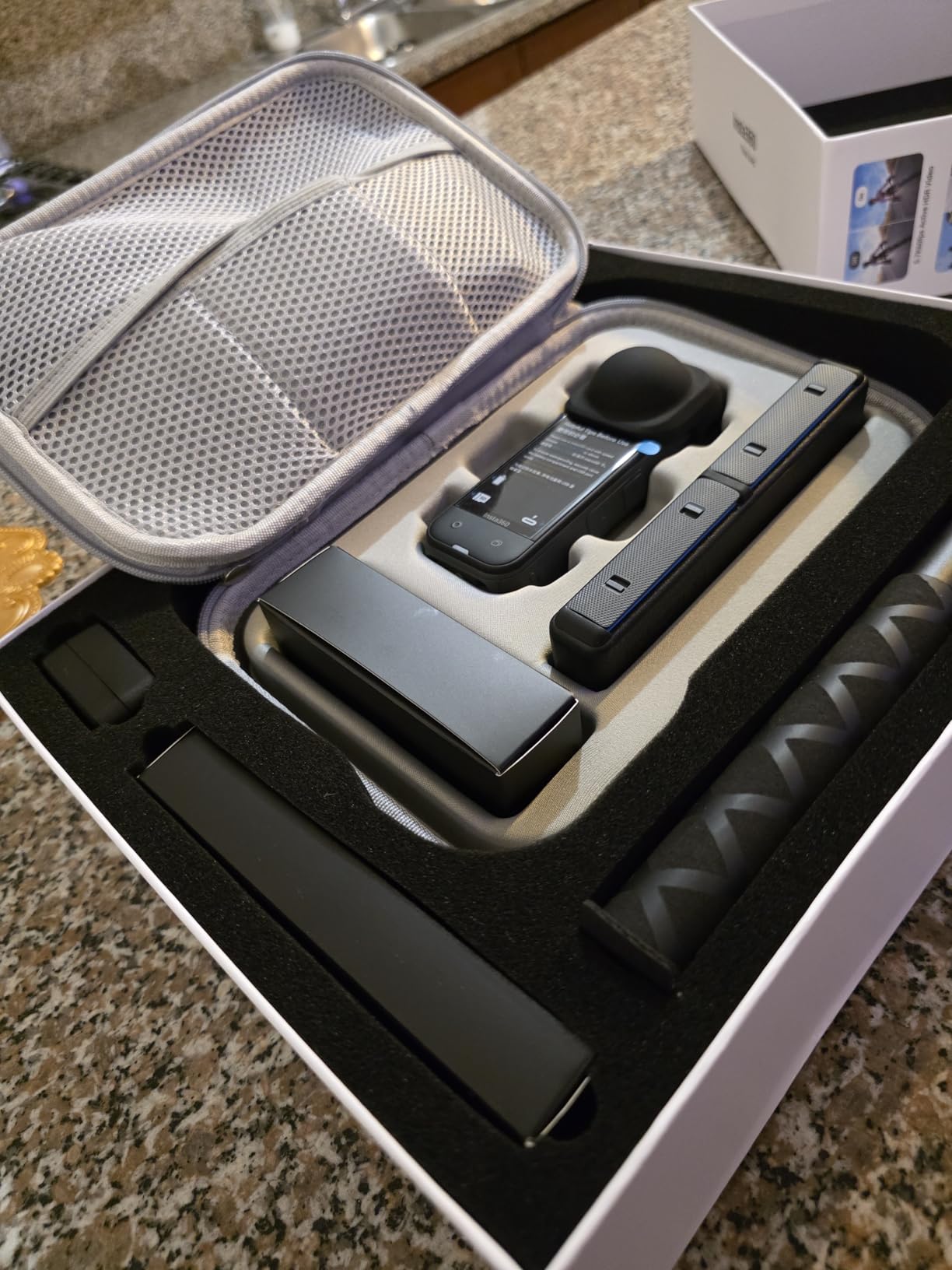
There are frames you can only get from a distance you should not be at, and the X5 is built for that specific problem. The dual 1/1.28-inch sensors capture 8K at 30fps across 360 degrees, so you can place it on a road, a fence post or a roofline and reframe the entire scene in post. Nothing enters or leaves the frame, because there is no frame until you choose one.
The triple AI chip design exists for the reason this camera appears in storm kits: noise reduction and image processing for dim and night conditions. FlowState stabilization and 360-degree Horizon Lock keep a level horizon without a gimbal, which is what makes vertical wind-driven footage usable. Audio matters outdoors too, and the 4-mic array with Wind Guard is built to fight the exact noise problem every chase has.
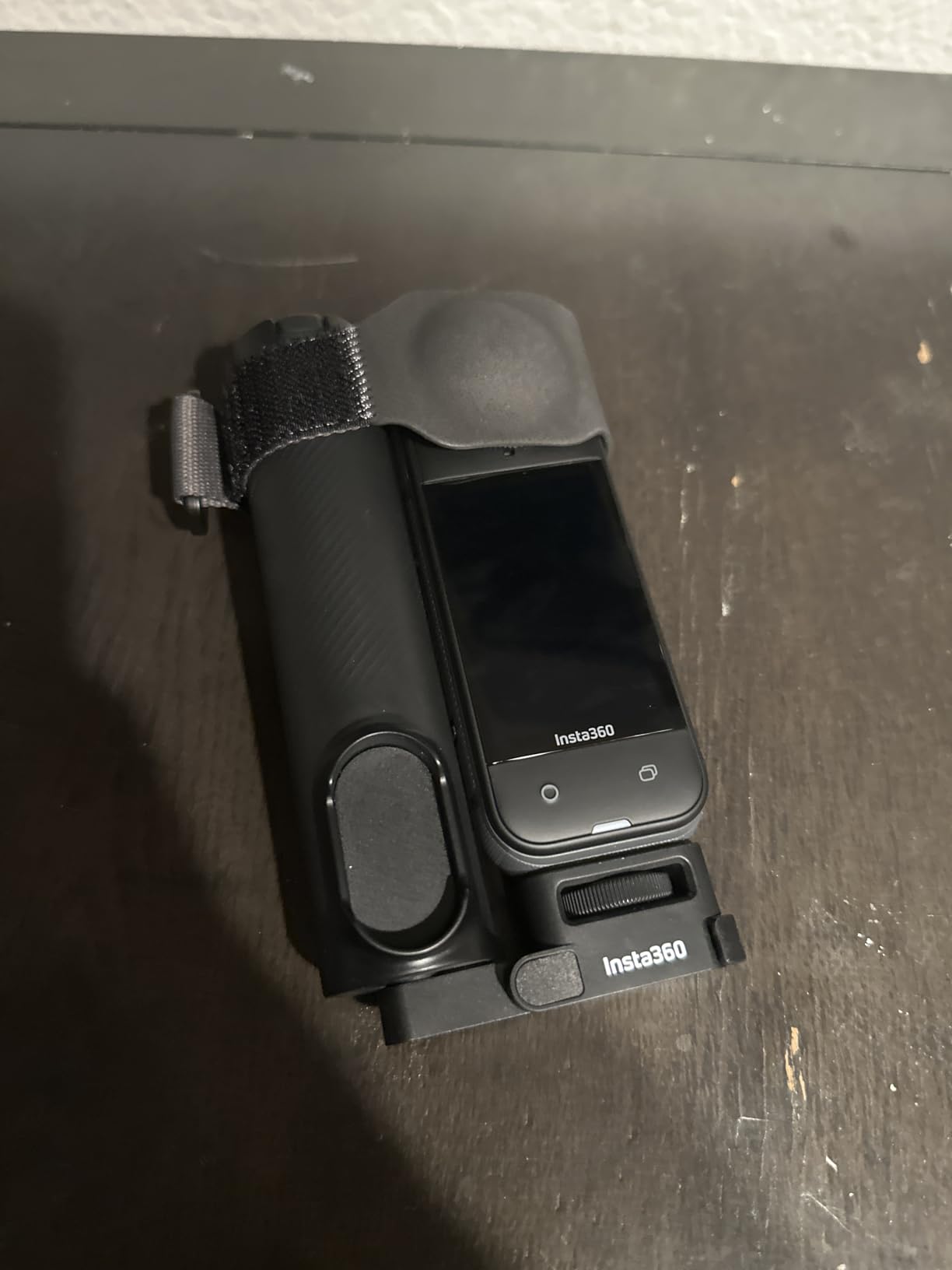
Two details make it a field tool rather than a toy. The lenses are fully replaceable and scratch-resistant, so hail or grit that cracks one element is a swap rather than the end of the session. And the average battery life of 208 minutes covers a full chase, which is longer than many camera batteries deliver.
The trade is the post workflow. 360 footage must be stitched and reframed before it is shareable, and the 2.5-inch touchscreen is fiddly for changing settings in the rain. Stills resolution figures are derived from video frames rather than a dedicated still sensor, so treat it as a video tool. With 2555 reviews and 83% five-star, the low-light and stabilisation results are consistent.
What you gain in a real chase
Situations where safety keeps you far back from a tornado, a flooding intersection or a lightning strike, and a wide narrow field of view would show you nothing.
Documentation workflows. A 360 frame is complete evidence of a scene, which is useful for storm damage documentation and for insurance records.
Where it falls short
Print work and stills. There is no dedicated still sensor behind those resolution numbers, and a reframed 360 crop is a small part of a large image.
Live, on-the-spot decisions. Stitching and reframing happen in post, so you cannot check a composition in the field the way you would with a mirrorless body.
Storm Photography Settings Cheat Sheet
Settings shift fast as a cell develops, so work from these starting points and adjust. Every entry assumes RAW capture unless noted.
Supercell structure, daylight, wide. ISO 100 to 400, f/8, 1/500s. Shoot a bracket of three frames at plus and minus two EV so you can balance a bright sky against a dark base.
Supercell structure, at sunset or dusk. ISO 400 to 1600, f/5.6, 1/250s. Protect the highlights on the cloud edge and let the base go dark.
Wall cloud and rotating updraft, telephoto. ISO 800 to 3200, f/4, 1/1000s. Continuous AF with tracking, burst at the highest rate your body offers.
Tornado or funnel at safe distance. ISO 1600 to 6400, f/2.8 to f/4, 1/1000s. Stabilisation on, manual focus pre-set if contrast collapses in rain.
Lightning bolt, night. ISO 3200 to 12800, f/1.8 to f/2.8, 1/40s to 1/125s. Aperture priority, single frame or short burst, RAW, and expect motion trails on fast bolts.
Lightning, bolt-frozen frame. ISO 100 to 400, f/8, 1/250s. Mount the camera, switch the lens to manual, and use a lens cloth on the front element in rain.
Rain and hail curtain, daylight. ISO 400 to 1600, f/4, 1/500s. Slightly underexpose to hold the spray texture rather than the brightest sheet of water.
Sunset storm silhouette. ISO 100, f/11, 1/125s. Meter for the sky, let the foreground fall to silhouette, and bracket for options.
Aurora or night sky through a storm edge. ISO 1600 to 6400, f/1.8, 8s to 20s. Manual focus at infinity, stabilisation off, and a dead battery in the cold is the real limit.
Full-Frame vs APS-C vs Micro Four Thirds vs Bridge for Storms
Sensor size is a working decision, not a status symbol, so here is how each format behaves when the light goes.
Full frame gives you the most usable high ISO and the most dynamic range, which is what protects a high-contrast storm sky. This is why the a7 III and a7S III earn their places here.
APS-C is the sharpest compromise. The Canon R7’s 32.5MP sensor gives more reach from the same lens, which shortens the distance you need for structure work, and the extra pixels make cropping a missed frame viable. Our weather-sealed mirrorless guide for adventure photography covers more bodies in this format.
Micro Four Thirds is the answer when weight decides the shot. The G85 gives you a sealed body, stabilisation and a 24-120mm equivalent in one compact package, and you accept a smaller sensor for it. For on-foot chases and cold-weather work, that trade is usually right.
Bridge and superzoom bodies fill a niche no interchangeable-lens camera can: one sealed lens covering wide to long telephoto, with nothing to change in the wind. The bodies here that fill that role are fixed-lens compacts, and the 360 action camera extends the idea further by removing framing decisions entirely.
Long chasers on stormtrack.org repeatedly stress that a stabilised 70-200mm covers most documented tornado scenarios from a safe distance. That framing advice overrides any sensor debate.
Lenses That Survive Severe Weather
What lens for storm photography? Two focal lengths and a filter, in this order.
A wide 10-20mm equivalent first. Community consensus across storm photography forums is that a wide is the essential starting lens, because a full supercell structure does not fit in a standard zoom. This is the lens you mount and leave mounted.
A 70-200mm f/2.8 for isolation. This is the wall cloud and funnel lens. A stabilised f/2.8 handles a distant tightening rotation in failing light, and chasers consistently name it the lens that covers most documented tornado scenarios.
A neutral density filter. For long exposures of a storm at dusk, a 3-stop or 6-stop ND lets you hold the shutter at 1/4s to 2s for motion blur in the rain and the wind without overexposing a bright sky.
Matched sealing. A weather-sealed body with a non-sealed lens is not a weather-sealed kit. Every gasket has to match, and the lens mount is the most common failure point in a lens change in high wind.
Photographers working the Great Plains have documented using a Tamron 17-50mm f/4 for storm chasing, which is a compact, fast enough zoom that covers both roles in one piece of glass.
Protecting Your Camera From Rain, Hail, Grit and Condensation
Water resistance is a rating, not a promise, and the damage usually happens at the seams. A practical routine matters more than the IP number.
Work in a rain cover or a dry bag. A padded insert with your body and one lens is the standard configuration in a moving vehicle. Grit finds gaps in a loose shoulder strap.
Change lenses in cover, not in the open. Hail and wind-driven grit reach the sensor during a lens swap faster than rain reaches the body. Do changes inside a bag, jacket or vehicle.
Wipe the front element constantly. Water on glass ruins contrast and autofocus. Keep two or three cloths in a pocket and use them before every frame, not after.
Acclimate before you unbag. Condensation forms on the front element and inside the body when a cold camera enters a warm vehicle. Keep the camera sealed in its bag and let it warm for 20 to 30 minutes before opening.
Dry with airflow, not heat. Air and a gentle wipe remove moisture. Hairdryers and direct sun bake water into seals and fog sensors faster.
Carry spare batteries and a charging cable. Cold and continuous burst drain a pack far faster than the spec sheet suggests, and a dead battery mid-cell is the most common non-weather failure.
For shooting from a vehicle, our guides to cold weather photography and extreme cold weather photography cover the temperature-specific failure modes in more detail.
Frequently Asked Questions
What cameras do storm chasers use?
Most chasers carry three things: a weather-sealed mirrorless body with dual card slots, a wide 10-20mm equivalent for full storm structure, and a 70-200mm for wall cloud and funnel isolation. A phone or tough compact handles documentation, and a 360 action camera covers wide scenes from a safe distance.
What is the best camera for storm photography?
The Sony Alpha a7 III is the best all-round choice, with a 24.2MP full-frame sensor, ISO 50 to 204800, 10fps burst with AF tracking and dual card slots. For night lightning the Sony a7S III is stronger, and for fast structure the Canon EOS R7 wins on burst and pre-capture.
What is the best camera for taking lightning pictures?
A body with a wide dynamic range and usable high ISO is what matters, and the Sony a7S III leads here with 15 plus stops of range and ISO up to 409600. Shoot around ISO 3200 to 12800, f/1.8 to f/2.8 and 1/40s to 1/125s in aperture priority, and record RAW.
What camera settings should I use for taking lightning photos?
At night, set aperture priority at f/1.8 to f/2.8, ISO 3200 to 12800 and a shutter between 1/40s and 1/125s, and shoot RAW. For a frozen bolt frame, mount the camera, switch to manual, and use ISO 100 to 400, f/8 and 1/250s with focus set in advance.
What shutter speed to use for lightning?
Between 1/40s and 1/125s for ambient night lightning with a bright sky, which keeps some motion trail in the channel. A 1/250s to 1/500s freezes a fast leader but needs a low ISO and a wide aperture, so it only works with a bright storm or a distant flash.
Which camera is the best weather sealed camera?
For body sealing, the Sony Alpha a7 III, Sony a7 IV and Nikon Z 5 are the all-round options, and the Panasonic LUMIX G85 is the most complete sealed kit. For fully sealed bodies with no housing, the OM System TG-7 and KODAK PIXPRO WPZ2 are rated to 15 metres of waterproofing.
What is the most affordable weather sealed camera?
The KODAK PIXPRO WPZ2 is waterproof to 15 metres, dustproof and shockproof, with a 16-megapixel backside-illuminated sensor and a 4x zoom starting at 27mm. The OM System TG-7 is a step up in durability at ISO performance, and the Panasonic G85 is the best sealed interchangeable-lens kit.
How do I prevent condensation when moving a camera from cold to warm?
Keep the camera inside its sealed bag or case when you bring it into a warm vehicle and let it acclimate for 20 to 30 minutes before opening. Opening a cold body in warm air condenses moisture on the front element and inside the chamber, and that is where most storm-related failures begin.
Conclusion: Which Camera Should You Chase With?
If you shoot storms and little else, start with the Sony Alpha a7 III. It is the body that stays competent at ISO 6400 with a dark base behind the subject, shoots 10fps with tracking, and writes to two cards at once. Add a fast wide zoom and a stabilised 70-200mm and you have covered every documented tornado scenario at a safe distance.
If video is half the job, move to the a7 IV for 4K 60p 10-bit and a 33MP still sensor. If the cell is developing faster than you can react, the Canon R7 gives you 30fps with pre-capture. If night lightning is the subject, the a7S III is the only body here with the sensitivity to make it routine.
When the deciding factor is what you can carry, the Panasonic LUMIX G85 gives you a sealed, stabilised, lens-included kit at 1.1 pounds. For winter work, the OM System TG-7 handles freezing rain. For guaranteed coverage on a fence post, the KODAK PIXPRO WPZ2 or the Insta360 X5 will outlast anything you drop them into.
Whichever you pick, protect it: match the lens sealing to the body, change lenses in cover, and acclimate before you open a cold camera in a warm vehicle. Check the current price and configuration for any of these, and get to the field before the season does.