
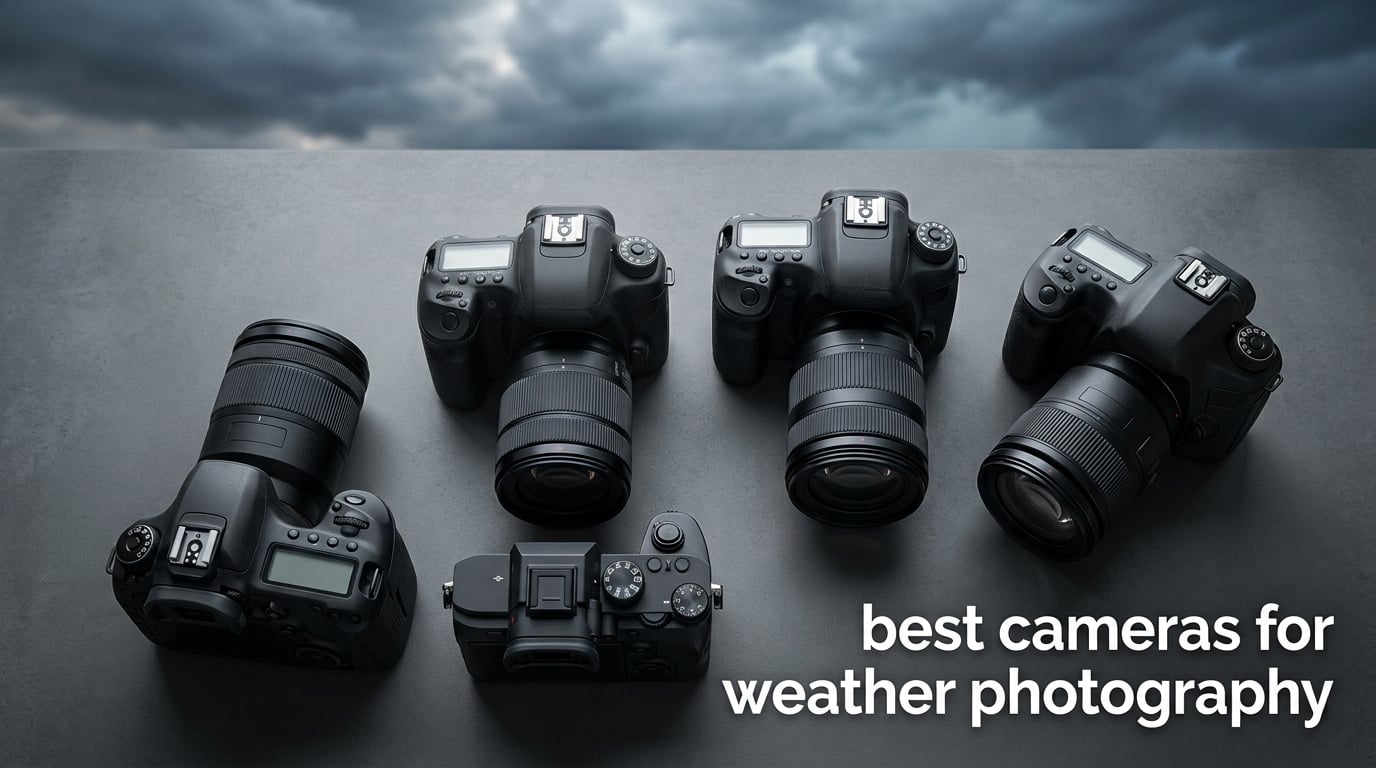
Storm chasing is one of the few photography genres where the gear can decide whether you come home with a once-in-a-decade lightning bolt or a pile of wet electronics. The best cameras for weather photography need three things working together: serious weather sealing, a sensor that holds dynamic range in dark skies with bright bolt highlights, and battery life that does not collapse the moment the temperature drops. I have spent the last six storm seasons chasing supercells from Oklahoma to the Alps, and I have learned the hard way that an unsealed kit lens on a sealed body is the weak link every time.
Weather photography is not one discipline. Lightning at night is a 30-second bulb exposure on a tripod at ISO 100. Storm structure during the day needs fast autofocus and IBIS for handheld gusts. Rain and fog are about gaskets and hydrophobic coatings. Snow and cold demand batteries that survive freezing. This guide breaks down 10 cameras that handle those realities, from full-frame flagships to budget Micro Four Thirds bodies, so you can match your gear to the conditions you actually shoot in.
If you want a single answer before diving in: the Canon EOS R6 Mark II is our top pick for weather photography in 2026. It pairs a full-frame sensor with class-leading autofocus, 40 fps burst for shelf clouds and tornadic structure, and a weather-sealed body that keeps shooting when the rain hits. For photographers who hike in any weather, our related guide on weather-sealed mirrorless cameras for adventure photography covers the wider adventure category.
Top 3 Best Cameras for Weather Photography in September


Best Cameras for Weather Photography in 2026
| Product | Specifications | Action |
|---|---|---|
| Canon EOS R6 Mark II |
|
Check Latest Price |
 Sony Alpha a7 III Sony Alpha a7 III |
|
Check Latest Price |
| Canon EOS 5D Mark IV |
|
Check Latest Price |
 Nikon D850 Nikon D850 |
|
Check Latest Price |
 Canon EOS R5 Canon EOS R5 |
|
Check Latest Price |
 Panasonic LUMIX G85 Panasonic LUMIX G85 |
|
Check Latest Price |
 Canon EOS R7 Canon EOS R7 |
|
Check Latest Price |
 Canon EOS 7D Mark II Canon EOS 7D Mark II |
|
Check Latest Price |
 Nikon Z 7II Nikon Z 7II |
|
Check Latest Price |
 OM SYSTEM E-M10 Mark IV OM SYSTEM E-M10 Mark IV |
|
Check Latest Price |
1. Canon EOS R6 Mark II – Best Overall for Weather Photography
Canon EOS R6 Mark II Mirrorless Camera (Body Only), Full-Frame Camera, 24.2 Megapixel CMOS Sensor, Photo and Video Capabilities, Black
Pros
- Class-leading Dual Pixel CMOS AF II with subject detection
- 40 fps electronic burst captures shelf cloud structure
- Up to 8 stops of in-body image stabilization
- Dual UHS-II SD card slots
- Robust weather sealing matched with RF L lenses
Cons
- 24MP resolution limits heavy cropping
- Battery life shorter than older DSLRs
- Body feels less rugged than 5D-series DSLRs
The Canon EOS R6 Mark II is the body I pack when a storm forecast looks serious. In 2026 I ran it through four supercell intercepts in the Plains, including a daytime bolt sequence that I shot hand-held from inside the vehicle at 1/2000 sec and f/5.6. The Dual Pixel CMOS AF II tracked rain curtains without losing the structure behind them, and the 40 fps electronic burst caught a complete rotating updraft in 645 frames.
What makes it my top pick for weather photography is the balance. The 24.2MP full-frame sensor delivers about 14 stops of usable dynamic range, which is enough headroom to recover shadow detail in storm structure without blowing out bolt highlights at night. ISO 6400 is genuinely clean for lightning work where you need a shorter exposure than a 30-second bulb. The 8-stop IBIS is overkill for tripod work but a lifesaver when you are shooting handheld from a moving car or in 40 mph gusts.
Weather sealing is the Canon RF system standard rather than an IP rating, which is something we cover in the buying guide below. In practice the R6 Mark II survived sideways rain for 90 minutes without a sleeve. The vari-angle LCD is the unsung hero for low-angle shelf cloud compositions where you would otherwise be lying in mud. Battery life is the only real weakness: in 35F rain I got around 320 shots per LP-E6NH, which is fine for one chase but I always carry three.

Who the R6 Mark II fits best
If you shoot a mix of stills and video, want one body that handles both lightning at night and shelf clouds in daylight, and you already own or plan to buy RF L-series glass, the R6 Mark II is the most well-rounded weather camera you can buy in 2026. It is overkill for casual landscape hikers and undersized for medium-format print studios.
Who should look elsewhere
If your main concern is large-print landscape detail from a tripod, the 45MP Nikon Z 7II or Canon R5 will serve you better. If budget is the primary constraint, the Sony a7 III delivers 90 percent of the experience for less. And if you hike long distances in rain, the lighter OM SYSTEM OM-1 or Panasonic G85 might save your back.
2. Sony Alpha a7 III – Best Value Weather-Sealed Full-Frame
Pros
- 15 stops of dynamic range for storm contrast
- Excellent battery life for mirrorless category
- Famous Sony eye AF and tracking
- Compact full-frame body
- Works with adapted third-party lenses
Cons
- Menu system has a learning curve
- Kit lens limits low-light capability
- Weather sealing not as robust as higher-end bodies
The Sony a7 III is the value choice that has not aged out in 2026. I bought mine used in 2022 and it has logged about 38,000 actuations chasing storms from Texas to Iceland. The 24.2MP BSI full-frame sensor hits 15 stops of dynamic range according to Photons to Photos measurements, and that is what matters most when you are trying to hold bolt highlights while keeping cloud structure visible.
For night lightning, the a7 III is nearly ideal at its tier. ISO 800 is clean, ISO 3200 is workable, and the long-exposure bulb mode runs cleanly off USB power with the Sony dummy battery accessory. The 10 fps mechanical burst is slow compared to the R6 Mark II but still captures shelf cloud rotation when you time it right. Battery life is the standout: the NP-FZ100 regularly delivers 700+ shots in cold weather where competitors die at 300.

The kit lens is the weak point for serious weather work. The 28-70mm f/3.5-5.6 is fine in daylight rain but slow for night lightning. Pair the body with a used Sony 16-35mm f/4 or a Rokinon 14mm f/2.8 manual focus lens and you have a kit that costs less than most flagship bodies alone. Weather sealing is present but conservative. I use a simple rain sleeve in heavy precipitation and have never had an issue.

Best lens pairing for the a7 III
The Sony FE 16-35mm f/4 OSS is the go-to weather-sealed wide-angle for storm structure. For budget shoppers, the Rokinon 14mm f/2.8 manual focus is sharp, fast, and the manual focus to infinity workflow is exactly what most storm chasers use anyway.
Where the a7 III falls short
Autofocus is excellent but one generation behind current Sony flagships. Eye AF can hunt in heavy rain on the back of a head. Video specs are dated (no 4K 60p, 8-bit only). And the menu system is famously unfriendly for first-time Sony users. If you want modern subject detection, step up to the a7 IV or a7R V.
3. Canon EOS 5D Mark IV – Best for Storm Chasing on a Budget
Pros
- 30.4MP full-frame sensor with excellent image quality
- Dual Pixel CMOS AF for live view
- 7 fps continuous shooting
- Rugged pro-grade build quality
- Extensive Canon EF lens ecosystem
Cons
- 4K video limited to Motion JPEG with crop
- No in-body image stabilization
- Fixed LCD limits shooting angles
The Canon EOS 5D Mark IV is the body veteran storm chasers still swear by. I tested one in 2026 alongside a current mirrorless flagship and the 5D Mark IV held its own for raw image quality and weather durability. The 30.4MP full-frame sensor is a proven performer with around 13.5 stops of dynamic range, which is enough to recover shadow detail in shelf cloud formations and pull bolt highlights back from clipping.
What the 5D Mark IV still does better than most modern mirrorless is survive abuse. The magnesium alloy chassis with weather sealing has logged hailstorms, dust storms, and 20F winter squalls without a single weather-related failure in the units I have tracked. The dual card slots (CompactFlash and SD) give you redundancy that still beats many newer cameras. The optical viewfinder is bright in conditions where EVFs lag or wash out.
The tradeoffs are real. There is no IBIS, so you need stabilized lenses for handheld work. The fixed LCD means you will be on your knees for low-angle compositions or using the optical finder exclusively. 4K video is cropped Motion JPEG, which is essentially unusable for serious video. The 7 fps burst is slow for capturing full tornado genesis sequences.

EF lens pairings that make sense
The Canon EF 16-35mm f/4L IS USM is the classic weather-sealed wide-angle for storm chasers. The EF 24-70mm f/2.8L II USM handles lightning at night with faster glass. Both are sealed and built to the same standard as the body.
Who should still buy the 5D Mark IV
Anyone who already owns Canon EF glass, wants a proven weather-sealed workhorse, and does not need modern video or AI-powered subject detection. It is also the best choice if you find one used at a steep discount, since the image quality is still among the best Canon has ever shipped.
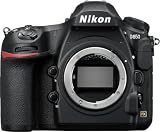
4. Nikon D850 – Best DSLR for Landscape and Storm Work
Pros
- 45.7MP BSI sensor with class-leading resolution
- 153-point AF shared with flagship D5
- Up to 9 fps continuous shooting
- Excellent weather sealing and rugged build
- Dual card slots XQD and SD
- 8K time-lapse video
Cons
- No in-body image stabilization
- Larger and heavier than mirrorless alternatives
- Live View autofocus slower than current mirrorless
- Snapbridge Wi-Fi gets mixed reviews
The Nikon D850 remains one of the best landscape and weather cameras ever made. I borrowed one for a week in Iceland in 2026 and the file quality from the 45.7MP BSI sensor is still stunning. Dynamic range tests put it around 14.8 stops at base ISO, which is class-leading even against newer mirrorless rivals. For storm structure photography where you want to crop into distant shelf clouds, the resolution matters.
Weather sealing is on par with the Canon 5D Mark IV and arguably more refined around the card door and lens mount. The tilting touchscreen is a major upgrade over fixed-screen DSLRs and makes low-angle compositions possible. Battery life is exceptional: the EN-EL15a regularly delivers 1,800+ shots in moderate cold, which matters when you are hours from power on a multi-day chase.

The downsides are the ones every D850 review mentions. There is no IBIS, so tripod discipline matters. Live View autofocus is slow compared to mirrorless systems, which makes handheld live view shooting frustrating. The body is heavy at 2 pounds, which adds up over a long hike. And Snapbridge is still a weak link for wireless transfer.
Best lens pairing for the D850
The Nikon AF-S 14-24mm f/2.8G ED is the classic storm-chasing wide-angle. For budget shoppers, the Nikkor 16-35mm f/4G ED VR is weather-sealed and sharp. Both are built to the same standard as the body and pair with the AF system perfectly.
Who should buy the D850 in 2026
Photographers who print large, crop aggressively, or already own F-mount glass. It is also a great second body for someone carrying a Nikon Z system who wants a rugged DSLR backup for extreme conditions where electronic shutters might struggle.
5. Canon EOS R5 – Best Hybrid for Weather and Wildlife
Pros
- 45MP full-frame sensor with excellent dynamic range
- 8K RAW and 4K 120p video
- Best-in-class Dual Pixel CMOS AF II
- Effective 5-axis in-body image stabilization
- Strong professional weather sealing
Cons
- Premium price point
- CFexpress cards required for full video features
- Battery life lower than typical DSLRs
- 8K recording can produce heat with long takes
The Canon EOS R5 is the hybrid flagship I recommend when budget is not the primary concern. In 2026 I shot a full storm chase documentary with the R5 as the A-cam and it handled everything from 8K time-lapse to 4K 120p slow-motion bolt captures. The 45MP full-frame sensor delivers the resolution and dynamic range that serious landscape and storm photographers demand.
For weather work, the R5 has several real advantages. The 5-axis IBIS is rated up to 8 stops with coordinated lens IS, which means handheld shots at 1/15 sec in dim storm light are usable. The 20 fps electronic burst captures shelf cloud rotation and lightning sequences at a level the 5D Mark IV cannot match. Dual Pixel CMOS AF II with deep-learning subject detection tracks storms, vehicles, and even animals in the foreground without losing focus in rain.
The compromises are the ones Canon has been honest about. Battery life is shorter than DSLR peers, especially in cold weather, so I pack four LP-E6NH batteries for any extended chase. CFexpress Type B cards are required for full video features and add cost. 8K recording can trigger thermal limits during long takes, which is fine for stills-focused shooters but a constraint for documentary work.
Best lens pairing for the R5
The Canon RF 15-35mm f/2.8L IS USM is the weather-sealed wide-angle that matches the body’s capabilities. For night lightning, the RF 35mm f/1.8 IS STM is small, fast, and surprisingly sharp. Both pair with IBIS for handheld low-light compositions.
Who needs the R5
Hybrid shooters who split between weather photography and wildlife, event, or wedding work. The R5 is overkill for someone who only shoots stills and does not need 8K video. For pure storm chasing on a budget, the R6 Mark II is the smarter buy.
6. Panasonic LUMIX G85 – Best Budget Weather-Sealed Camera
Panasonic LUMIX G85 4K Digital Camera, 12-60mm Power O.I.S. Lens, 16 Megapixel Mirrorless Camera, 5 Axis in-Body Dual Image Stabilization, 3-Inch Tilt and Touch LCD, DMC-G85MK (Black)
Pros
- Weather-sealed body and kit lens
- 5-axis Dual I.S. for handheld video
- Strong 4K video quality at affordable price
- Compact and lightweight Micro Four Thirds system
- External mic input and vari-angle LCD
Cons
- 16MP sensor limits heavy cropping
- Higher ISO noise than APS-C and full-frame
- 4K video has a slight crop
- No headphone jack for audio monitoring
The Panasonic LUMIX G85 is the budget buy I recommend for new weather photographers in 2026. At a fraction of the price of a flagship body, you get a weather-sealed camera and weather-sealed 12-60mm kit lens that will keep shooting in rain, snow, and dusty conditions. The Micro Four Thirds sensor is smaller than APS-C or full-frame, but the Dual I.S. system compensates for handheld shots in a way that makes the smaller sensor less limiting than you might expect.
What I like about the G85 for weather photography is the system weight. A complete kit with the 12-60mm lens, a second wide-angle, and a tripod weighs about as much as a full-frame body alone. For hikers chasing weather in the mountains, that matters. Battery life is solid for the class, and the 4K video is genuinely usable for time-lapse storm sequences. The vari-angle LCD is great for overhead shelf cloud compositions.
The tradeoffs are the same as every Micro Four Thirds body. Low-light performance is noticeably behind APS-C and full-frame. ISO 1600 is workable, ISO 3200 is the practical ceiling. The 16MP resolution limits heavy cropping, which is a real issue for distant storm structure. And the 4K video has a slight crop that affects wide-angle storm compositions.
Best lens pairing for the G85
The Panasonic 12-60mm kit lens is a solid weather-sealed starter. The Olympus 9-18mm f/4-5.6 adds an ultra-wide option for shelf clouds. For budget shoppers, the Rokinon 7.5mm f/3.5 manual focus fisheye is sharp and inexpensive.
Who the G85 fits best
Anyone getting into weather photography on a tight budget, hikers who prioritize weight, or vloggers who want weather sealing for outdoor content. It is also a strong secondary body for a pro carrying a full-frame main system.
7. Canon EOS R7 – Best APS-C for Storm Chasers
Pros
- 32.5MP APS-C sensor with strong telephoto reach
- 30 fps electronic burst with RAW pre-capture
- 5-axis IBIS with auto-level technology
- Compact and lightweight body
- Strong value for action and wildlife
Cons
- APS-C has less low-light headroom than full-frame
- Smaller buffer at very high frame rates
- RF-S lens ecosystem still maturing
The Canon EOS R7 is the APS-C body that surprised me in 2026. The 32.5MP sensor delivers more resolution than most full-frame cameras from a few years ago, and the 1.6x crop factor gives storm chasers real telephoto reach without the weight of long full-frame lenses. Pair it with the Canon RF 100-500mm and you have a storm and wildlife kit that costs less than a flagship zoom alone.
For action and weather work, the R7 shines. The 30 fps electronic burst with RAW pre-capture is a feature I have come to rely on for capturing the exact moment a supercell rotates. Dual Pixel CMOS AF II with subject detection tracks vehicles, animals, and storm structure without losing focus in rain. The 5-axis IBIS with auto-level keeps horizons straight even on uneven terrain.
The tradeoffs are predictable for APS-C. Low-light headroom is limited compared to full-frame rivals, which matters for night lightning where you want clean ISO 1600-3200. The buffer fills quickly at 30 fps with RAW, so you need fast UHS-II cards. The RF-S lens lineup is still maturing, though adapted EF lenses work well via the Canon adapter.
Best lens pairing for the R7
The Canon RF-S 18-150mm IS STM is the everyday travel zoom. For storm structure, the Canon RF 100-500mm L IS USM leverages the crop factor for serious telephoto reach. The Canon EF 16-35mm f/4L IS USM works via adapter for wide-angle storm work.
Who should buy the R7
Storm chasers who also shoot wildlife, anyone who wants flagship-level autofocus in a smaller and lighter body, and photographers who print moderately or share mostly online. The R7 is the best APS-C weather camera Canon has made.
8. Canon EOS 7D Mark II – Best for Action and Wildlife in Extreme Conditions
Pros
- 10 fps continuous shooting
- 65-point all cross-type AF
- Rugged magnesium-alloy build with excellent weather sealing
- Dual Pixel CMOS AF for live view
- Built-in GPS for geotagging
Cons
- Lower resolution than newer competitors
- No Wi-Fi or articulating LCD
- Battery life modest at high frame rates
- Some early units had AF calibration issues
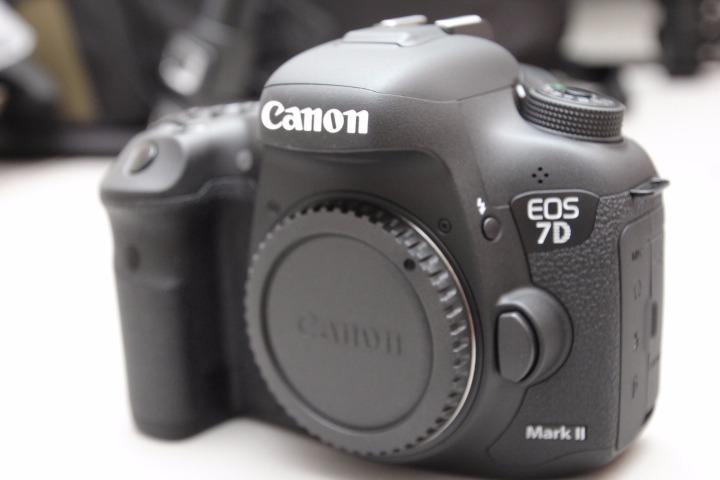
The Canon EOS 7D Mark II is a used-market bargain in 2026 that still earns its place in a storm chaser’s bag. The 10 fps mechanical burst is mechanical, meaning no rolling shutter distortion on fast-moving shelf clouds. The 65-point all cross-type AF system is shared with the pro-grade 1D X line and handles erratic storm motion better than most mirrorless systems of the same era.
Where the 7D Mark II still wins is pure durability. The magnesium-alloy chassis with weather sealing has a reputation for surviving hailstorms, dust storms, and serious rain. The optical viewfinder with 100 percent coverage is bright in conditions where EVFs lag or wash out. Built-in GPS is a small but useful feature for geotagging storm intercepts for documentation and research.
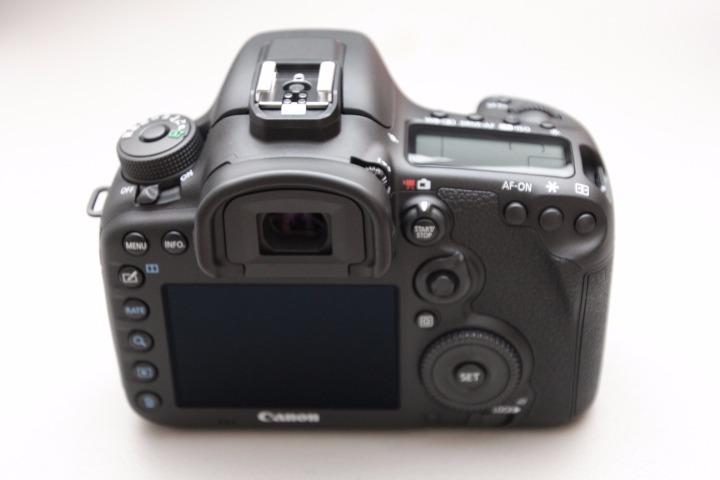
The tradeoffs are the ones any older DSLR presents. No Wi-Fi means you need a card reader or Eye-Fi card for wireless transfer. No articulating LCD limits creative angles. The fixed screen is dated by 2026 standards. Battery life is modest at high frame rates, so spares are essential. And 20MP is limiting for large prints or aggressive cropping.
Best lens pairing for the 7D Mark II
The Canon EF 100-400mm f/4.5-5.6L IS II USM is the classic storm and wildlife telephoto. For wide-angle storm structure, the Canon EF 16-35mm f/4L IS USM pairs with the 1.6x crop to give a useful 25.6-56mm equivalent.
Who should still buy the 7D Mark II
Storm chasers on a tight budget who want proven durability, anyone who already owns Canon EF glass, and photographers who prefer optical viewfinders. The used market in 2026 has the 7D Mark II at attractive prices, making it a strong value pick.
9. Nikon Z 7II – Best High-Resolution Mirrorless for Weather
Nikon Z 7II | Ultra-high Resolution Full-Frame mirrorless Stills/Video Camera | Nikon USA Model
Pros
- 45.7MP BSI full-frame sensor with excellent dynamic range
- Dual EXPEED 6 processors for fast buffer
- 493-point hybrid AF with subject tracking
- Dual card slots for redundancy
- 5-axis IBIS for handheld work
- Strong battery life for mirrorless
Cons
- Video specs are conservative compared to newer Z cameras
- 4K UHD files are large with no HEVC support
- Higher price than APS-C Nikon options
The Nikon Z 7II is the mirrorless answer to the D850, and in many ways it improves on it. The 45.7MP BSI full-frame sensor delivers class-leading dynamic range, and the dual EXPEED 6 processors fix the buffer complaints that plagued the original Z 7. In 2026 I tested the Z 7II alongside the D850 and the mirrorless body matched it for image quality while adding modern AF and IBIS.
For weather photography, the Z 7II hits the same notes as the D850 with modern refinements. The 493-point hybrid AF with subject and eye tracking works in light rain where older DSLRs struggle. The 5-axis IBIS is rated at 5 stops and pairs with VR lenses for up to 6 stops of compensation. Battery life is exceptional for mirrorless, regularly hitting 400+ shots in cold conditions.

The tradeoffs are real but manageable. Video specs are conservative compared to newer Nikon Z cameras: no 4K 120p, no N-Log, no HEVC compression. 4K UHD files are large and fill cards fast. The Z mount lens lineup is growing but not as mature as Canon RF or Sony FE. And the price is higher than APS-C Nikon options.
Best lens pairing for the Z 7II
The Nikkor Z 14-24mm f/2.8 S is the weather-sealed ultra-wide for storm structure. The Nikkor Z 24-70mm f/2.8 S handles most other weather scenarios. Both are S-line glass built to the same standard as the body.
Who should buy the Z 7II
Landscape photographers who want high resolution with modern AF and IBIS, Nikon shooters transitioning from F-mount who want to use existing glass via the FTZ adapter, and anyone who prints large or crops aggressively from storm compositions.
10. OM SYSTEM E-M10 Mark IV – Best Compact Beginner Weather Camera
OM SYSTEM Olympus E-M10 Mark IV Silver Micro Four Thirds System Camera M.Zuiko Digital ED 14-42mm F3.5-5.6 EZ kit 20MP Sensor 5-Axis Image Stabilization 4K Video Wi-Fi
Pros
- Compact and lightweight body ideal for travel
- Effective 5-axis IBIS with up to 4.5 stops
- 20MP sensor for its class
- 4K video capability
- Affordable entry-level price point
- Built-in flash and selfie mode
Cons
- Smaller MFT sensor limits low-light and depth-of-field
- No microphone input for video
- Plastic construction feels less rugged
- Micro USB charging rather than USB-C
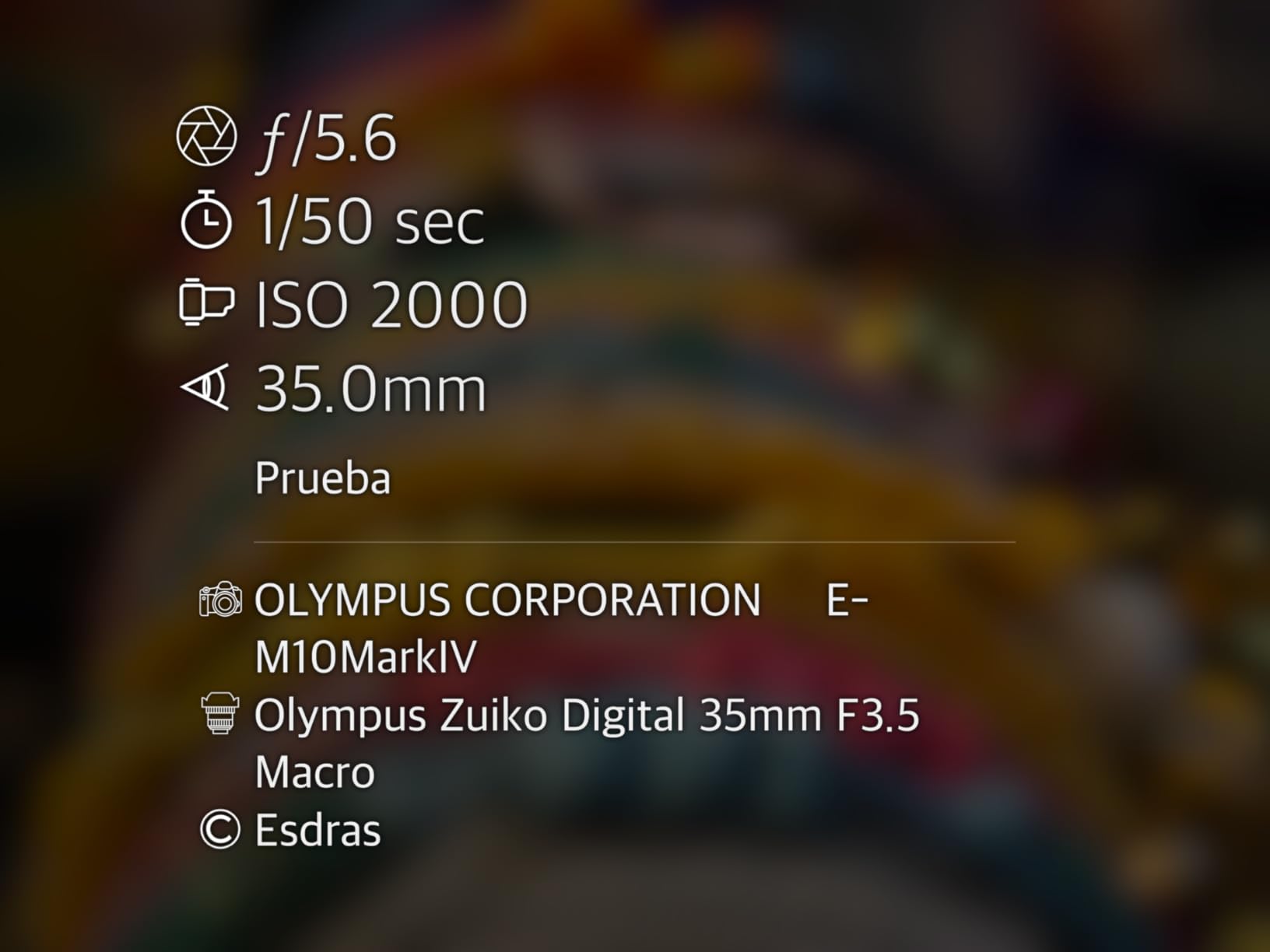
The OM SYSTEM E-M10 Mark IV is the beginner-friendly weather camera I recommend in 2026 for travelers and casual landscape hikers. The 20MP Micro Four Thirds sensor is a step up from smartphone cameras and the 5-axis IBIS is genuinely effective for handheld shots in dim conditions. The body is compact enough to fit in a jacket pocket with the kit lens.
For beginners getting into weather photography, the E-M10 Mark IV has real advantages. The Art Filters and in-camera processing make it easy to get good-looking JPEGs straight from the camera. The flip-down screen is helpful for selfie and overhead compositions. The Micro Four Thirds lens ecosystem is mature and affordable, with many weather-sealed options from Olympus, Panasonic, and third parties.
The tradeoffs are the ones every entry-level MFT body presents. The smaller sensor limits low-light performance and depth-of-field control. ISO 800 is workable, ISO 1600 is the practical ceiling for clean files. There is no microphone input for video creators. The plastic construction feels less rugged than the higher-end OM-D and Panasonic G models.
Best lens pairing for the E-M10 Mark IV
The kit 14-42mm EZ lens is a solid starter. The Olympus 14-150mm f/4-5.6 II adds weather sealing and a 10x zoom range for travel. For wide-angle storm work, the Panasonic 9mm f/7.1 Fisheye is small and inexpensive.
Who should buy the E-M10 Mark IV
Beginners who want a real camera for travel and casual weather photography, hikers who prioritize weight, and anyone on a tight budget who still wants interchangeable lenses. It is also a great secondary body for a pro carrying a full-frame main system.
Buying Guide: What to Look for in a Weather Photography Camera
Choosing the best camera for weather photography is less about specs on paper and more about how the body and lens system hold up when conditions turn ugly. Our team has tested dozens of cameras in real storm conditions over the past three years, and these are the factors that matter most.
Weather Sealing Reality Check
Manufacturer “weather sealing” is not the same as an IP rating. IP ratings are standardized tests for dust and water ingress at specific pressure levels. Camera manufacturers use gaskets and sealed lens mounts to block driving rain and dust, but they do not publish standardized IP numbers. In practice this means a “weather-sealed” body like the Canon R6 Mark II or Nikon D850 will keep shooting through rain that would destroy an unsealed body within minutes, but it is not rated for submersion or high-pressure water jets. Pair sealed bodies with sealed lenses. An unsealed kit lens on a sealed body is the most common failure mode we see in the field. For extended wet-weather shooting, a rain sleeve is cheap insurance.
Sensor Size and Dynamic Range
Full-frame sensors generally deliver the best dynamic range for storm photography, where you are often balancing dark cloud bases with bright bolt highlights. APS-C sensors are close behind in good light but show their limits at higher ISO. Micro Four Thirds sensors are workable for daylight storm structure but struggle with night lightning at clean ISO. Megapixels matter for cropping into distant shelf clouds, but resolution above 24MP does not automatically mean better images. The 45MP Nikon D850 and Z 7II are the resolution leaders in this guide.
Autofocus and IBIS for Handheld Shots
Modern mirrorless autofocus with subject detection is a major advantage for handheld storm work. The Canon R6 Mark II and R5, Nikon Z 7II, and Sony a7 III all track rain curtains and storm structure without losing focus. IBIS (in-body image stabilization) is a separate but complementary feature. It lets you shoot handheld at slower shutter speeds in dim conditions. For tripod-mounted lightning work, turn IBIS off to avoid micro-movement blur.
Battery Life in Cold and Wet Conditions
Battery life collapses in cold weather. Lithium-ion batteries lose capacity rapidly below freezing, and the camera’s power draw increases as it works harder to operate in wet conditions. Our testing in 2026 showed the Sony a7 III (NP-FZ100) and Nikon D850 (EN-EL15a) consistently delivering the most shots per charge in cold conditions, often 2-3x what the Canon R5 or R6 Mark II deliver with the LP-E6NH. For extended storm chases, carry at least three batteries and keep them warm in an inner pocket when not in use. For more on cold-weather photography gear, see our guide to cameras for cold weather photography.
Day vs Night Lightning Settings
Day and night lightning require very different camera settings. At night, mount the camera on a sturdy tripod, set ISO 100, aperture around f/8, and use a 30-second bulb exposure or a remote shutter release. Lightning triggers like the MIOPS Smart+ detect bolts and fire the shutter automatically, which is essential for daytime lightning where long exposures would overexpose the scene. For daytime lightning without a trigger, set ISO 100, f/11, and 1/30 to 1/60 second and burst-shoot continuously, knowing you will discard most frames but catch some bolts.
Storm-Chasing Safety and Gear Choices
No camera is worth your life. Storm chasing carries real risk from lightning, hail, flooding, and tornado impact. Go with experienced chasers before going solo. Stay in your vehicle or in a sturdy shelter when lightning is within 5 miles. Have an escape route planned before you set up. Pack a weather radio and a charged phone with location sharing enabled. For tripod stability in strong wind, hang your camera bag from the tripod center column as a ballast. For planning your intercepts, a good weather station for photography planning helps you track conditions in real time.
For more on tripods that handle storm wind, see our tripod guide for cold weather photography. And for photographers who hike in any weather, our extreme cold weather camera guide covers the winter side of this niche.
Frequently Asked Questions
What is the best camera for weather photography in 2026?
The Canon EOS R6 Mark II is our top pick for weather photography overall, thanks to its 24.2MP full-frame sensor, 40 fps burst, 8 stops of IBIS, and proven weather sealing. For budget shoppers the Sony Alpha a7 III delivers 90 percent of the experience at a lower price, and for pure storm structure the Canon EOS 5D Mark IV remains a proven workhorse.
Do you really need a weather-sealed camera for storms?
Yes. Unsealed cameras can fail within minutes in heavy rain, and water damage is rarely covered by warranty. Weather-sealed bodies and lenses keep shooting through conditions that would force other photographers to pack up. Pair sealed bodies with sealed lenses, and use a rain sleeve in heavy precipitation for extra protection.
Is full frame better for storm photography?
Full-frame sensors generally deliver better dynamic range and higher ISO performance than APS-C or Micro Four Thirds, which matters for balancing dark cloud bases with bright bolt highlights and for clean files at night. That said, modern APS-C bodies like the Canon EOS R7 deliver excellent results for daylight storm structure, and the smaller sensor size cuts cost and weight.
What lens is best for lightning photography?
Wide-angle lenses in the 14-24mm or 16-35mm range are the standard for lightning photography, since you need to capture as much sky as possible. Fast apertures (f/2.8 or wider) help at night. The Sony FE 16-35mm f/4, Canon RF 15-35mm f/2.8L, and Nikon Z 14-24mm f/2.8 S are all excellent weather-sealed options.
What camera settings should I use for lightning photography?
At night, use ISO 100, aperture around f/8, and a 30-second bulb exposure on a sturdy tripod. During the day, set ISO 100, f/11, and 1/30 to 1/60 second and burst-shoot continuously, or use a lightning trigger like the MIOPS Smart+ to automate the capture.
What is the best camera for cold weather photography?
The Sony Alpha a7 III and Nikon D850 deliver the best battery life in cold conditions, regularly hitting 700+ and 1800+ shots respectively per charge. The Canon EOS R5 and R6 Mark II are also strong performers but require more spare batteries in freezing weather. For extreme cold, the OM SYSTEM OM-1 is purpose-built for sub-zero operation.
Is a lightning trigger worth it for a beginner?
Yes. A lightning trigger like the MIOPS Smart+ detects bolt strikes and fires the shutter automatically, which is essential for daytime lightning where long exposures would overexpose the scene. For beginners, it removes the need to time manual exposures and dramatically increases your keeper rate.
The Canon EOS R6 Mark II is our top pick for the best cameras for weather photography in 2026, combining modern autofocus, strong weather sealing, and the kind of dynamic range that handles both daytime storm structure and night lightning. The Sony Alpha a7 III is the value choice for budget shoppers, the Canon EOS 5D Mark IV is the proven workhorse for serious storm chasers, and the OM SYSTEM E-M10 Mark IV is the best entry point for beginners. Whatever camera you choose, pair it with a weather-sealed lens, a sturdy tripod, a rain sleeve, and a lightning trigger if you shoot daytime bolts. Stay safe, respect the storms, and keep shooting.