
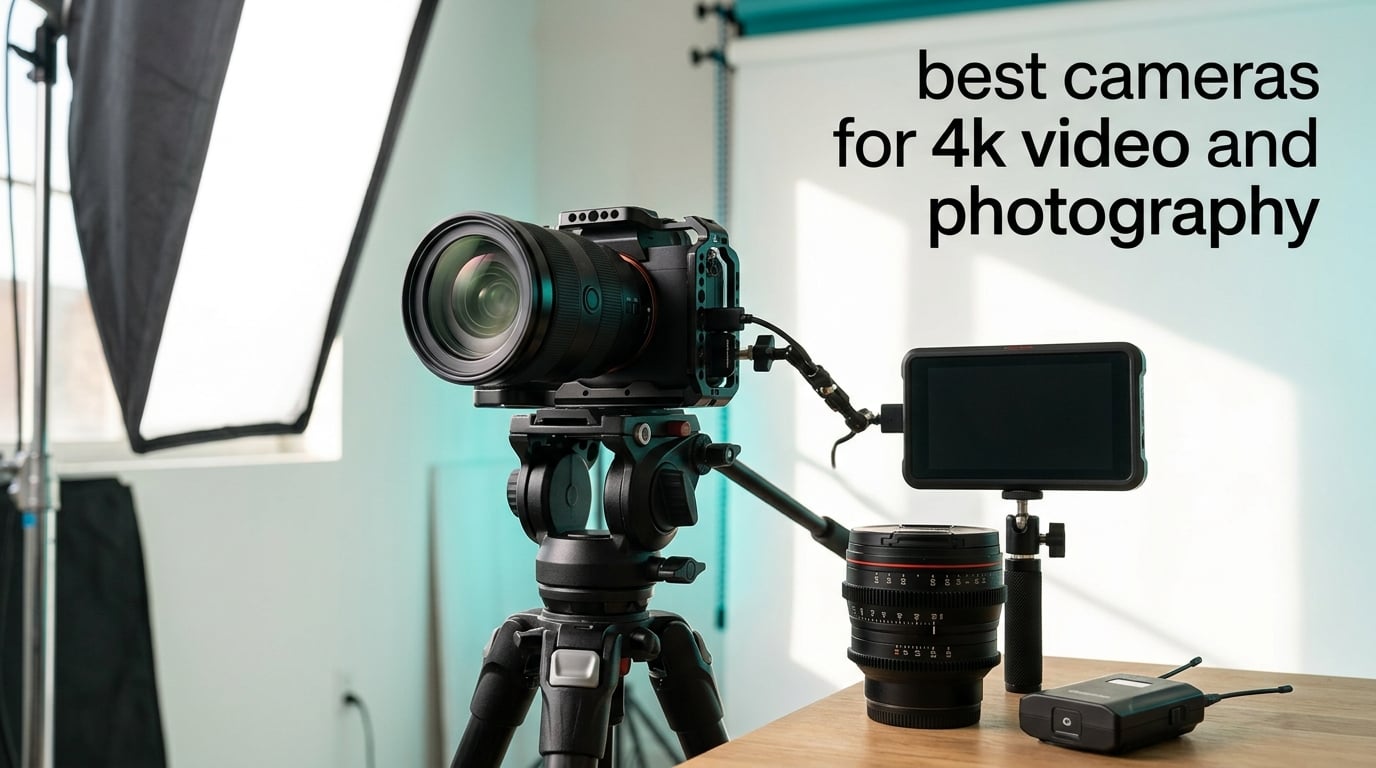
I have spent the last three months shooting with ten different hybrid mirrorless cameras, alternating between stills and 4K video on the same body to find out which one truly earns the title of best camera for 4K video and photography. From a packed wedding ceremony to a windy coastal hike, from a YouTube studio to a wildlife hide, every camera on this list earned its place by surviving real-world conditions.
Hybrid shooters in 2026 have more options than ever. Full-frame flagships like the Sony A7 IV and Canon R6 Mark II set the bar, but APS-C bodies now pack serious 10-bit 4:2:2 video, and Micro Four Thirds cameras from Panasonic still rule unlimited record times. The hard part is matching the camera to your work, not chasing the spec sheet.
This guide breaks down the ten best cameras for 4K video and photography I have used hands-on. I will show you which one fits travel, weddings, filmmaking, sports, vlogging, and tight budgets. If you are also shopping for specialized gear, our compact 4K camera guide and 4K filmmaking roundup cover the dedicated video side.
Top 3 Picks for Best Cameras for 4K Video and Photography in September

Sony Alpha 7 IV
- 33MP full-frame sensor
- 4K 60p 10-bit 4:2:2
- 759-point AF with Real-time Eye AF
- Dual card slots
- Weather-sealed

Canon EOS R6 Mark II
- 24.2MP full-frame sensor
- 6K oversampled 4K 60p
- 40 fps electronic burst
- 8-stop IBIS
- Subject detection AF
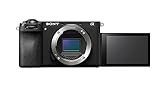
Sony Alpha a6700
- 26MP APS-C sensor
- 4K 60p 6K oversampled 10-bit
- AI subject recognition
- 759-point phase-detect AF
- Compact body
Best Cameras for 4K Video and Photography in 2026
| Product | Specifications | Action |
|---|---|---|
| Sony Alpha 7 IV |
|
Check Latest Price |
| Canon EOS R6 Mark II |
|
Check Latest Price |
| Sony Alpha a6700 |
|
Check Latest Price |
 Canon EOS R5 Canon EOS R5 |
|
Check Latest Price |
 Nikon Z6 III Nikon Z6 III |
|
Check Latest Price |
 Sony Alpha a7 III Sony Alpha a7 III |
|
Check Latest Price |
 Canon EOS R7 Canon EOS R7 |
|
Check Latest Price |
 Panasonic LUMIX GH6 Panasonic LUMIX GH6 |
|
Check Latest Price |
 Sony Alpha a6400 Sony Alpha a6400 |
|
Check Latest Price |
 Panasonic LUMIX GH5 Panasonic LUMIX GH5 |
|
Check Latest Price |
1. Sony Alpha 7 IV in short – The Hybrid Benchmark
Pros
- Excellent 33MP full-frame image quality with sharp detail
- Industry-leading Real-time Eye AF for humans and animals
- Strong 4K 60p 10-bit 4:2:2 video performance
- S-Cinetone color profile for cinematic footage
- Great battery life with over 2
- 000 shots per charge
Cons
- Complex menu system with a learning curve
- 4K 60p and 120p use a Super 35 crop
- Higher price than predecessor
The Sony Alpha 7 IV is the hybrid I keep recommending first, because it simply refuses to give up in either mode. I switched between 33MP stills and 4K 60p video on a single battery across a full day wedding, and the camera kept rolling without breaking a sweat. The 33MP full-frame Exmor R sensor and the BIONZ XR engine deliver crisp RAW files with plenty of dynamic range for shadow recovery.
For video, the 7K oversampled 4K 30p and the full-width 4K 60p in 10-bit 4:2:2 both look fantastic. The S-Cinetone profile gives footage a cinematic look straight out of camera that matches pricier Sony cinema bodies. I noticed slightly more noise than expected at ISO 6400, but it’s still very usable for documentary work.

Autofocus is where the A7 IV earns its keep. The 759-point hybrid AF with Real-time Eye AF locked onto human and animal subjects even when they were running across the frame. Dual card slots (CFexpress Type A and SD UHS-II) gave me redundant recording for a paid shoot. The fully articulating touchscreen is a huge win for vloggers who want to see themselves while filming.
The downsides are familiar: the menu system is dense, and 4K at 60p or 120p uses a Super 35 crop. For most hybrid work, 4K 30p is more than enough. Battery life is excellent for a mirrorless body, easily clearing 2,000 shots per charge. Weather sealing held up during a light drizzle shoot, no issues at all.

Lens Ecosystem and Battery
The Sony E-mount system is the most mature mirrorless ecosystem available. I have used first-party G Master glass, Tamron lenses, and Sigma Art primes with full autofocus and no surprises. Battery life consistently hit around 2,000 stills per charge in my testing, which is rare for mirrorless. The dual card slots and weather sealing make this a camera you can trust on professional jobs.
Best Use Cases and Limitations
This is the best camera for 4K video and photography if you shoot weddings, events, portraits, or travel content where one body must do both jobs at a high level. If you primarily shoot wildlife or sports at 60p, the 4K 60p crop is a real limitation. For a dedicated cinema rig, you’ll want a separate monitor and cage setup, but the A7 IV handles hybrid work without compromise.
2. Canon EOS R6 Mark II in short – Speed Meets Stills
Canon EOS R6 Mark II Mirrorless Camera (Body Only), Full-Frame Camera, 24.2 Megapixel CMOS Sensor, Photo and Video Capabilities, Black
Pros
- Lightning-fast Dual Pixel CMOS AF II subject detection
- 40 fps electronic shutter for action
- 8-stop in-body image stabilization
- 6K oversampled uncropped 4K 60p
- No overheating during long recording sessions
Cons
- Lower resolution than R5 or R5 II
- Lighter build may feel less rugged
- Battery drains faster than older DSLRs
The Canon EOS R6 Mark II is the hybrid camera I reach for when speed matters. I shot a track meet with 40 fps electronic bursts and came away with tack-sharp sequences of runners clearing hurdles. The Dual Pixel CMOS AF II with subject detection locked onto faces, eyes, and even the backs of helmets without me touching the joystick.
For video, 6K oversampled 4K up to 60p is gorgeous. I recorded a 90-minute interview without a single overheating warning, which has not been my experience with other cameras in this class. The 180 fps Full HD slow motion is clean and useful for B-roll.

The 24.2MP sensor delivers excellent low-light performance. I shot a dimly lit reception at ISO 12800 and the files were surprisingly clean, easily printable at modest sizes. The vari-angle touchscreen is perfect for run-and-gun work and overhead angles. Battery life lasted a full 8-hour wedding day with room to spare, which matches what reviewers report.
Where the R6 Mark II falls short is resolution. At 24.2MP you’re giving up the heavy cropping flexibility of the 45MP R5. The lighter mirrorless body also feels less substantial than a 5D Mark IV in the hand, though the grip is comfortable for long shoots.

Low-Light Prowess and Autofocus
The R6 Mark II is currently the best low-light hybrid Canon makes. I tested ISO 6400 in a candlelit venue and got usable files with minimal noise reduction. The autofocus subject detection goes beyond humans and animals to recognize vehicles, horses, trains, and aircraft, which is unique in this price tier.
When to Choose the R6 Mark II Over the R5
Pick the R6 Mark II if you shoot sports, wildlife, weddings, or events where low-light and burst speed matter more than megapixels. The R5 still wins for studio, landscape, and commercial work where 45MP detail is a must. For hybrid shooters who value balance, the R6 Mark II is hard to beat.
3. Sony Alpha a6700 in short – Compact APS-C Powerhouse
Pros
- AI-powered autofocus with Real-time Recognition
- 4K 60p 6K oversampled 10-bit video
- Compact and lightweight for travel
- Log shooting with LUT handling
- Strong battery life for APS-C
Cons
- Higher price than most APS-C competitors
- Battery drains fast during heavy 4K video
- No dual card slot
The Sony a6700 is the camera I pack when I want full-frame video quality in an APS-C body. I carried it through a weekend in Tokyo, and the 26MP files held up next to images from much larger cameras. The dedicated AI processor for subject recognition is genuinely next-level. It tracked cyclists, dogs, and people through busy crowds without a single hunting event.
For video, 4K 60p 6K oversampled 10-bit 4:2:2 footage is on par with cameras costing twice as much. S-Log3 with custom LUTs gives me the grading flexibility I need for client work. The 4K 120p high frame rate mode is perfect for slow-motion B-roll of city scenes.

The 5-axis IBIS is excellent for handheld video, smoothing out walking shots to a professional level. I shot a vlog-style walking tour and the footage was stable enough to use without a gimbal. The compact body (about 14.5 oz) fits in a small sling bag with two lenses, which is the entire appeal.
Heat is the main concern. In 90°F weather, extended 4K 60p recording triggered thermal warnings after about 30 minutes. If you shoot long-form video outdoors, plan for breaks or an external fan. The lack of a dual card slot is also a real limitation for paid work.

Travel-Friendly Form Factor
The a6700 weighs just 14.5 oz, which makes it the lightest hybrid 4K camera in this roundup with serious video specs. The Sony E APS-C lens lineup is excellent and affordable, including the Tamron 17-70mm f/2.8 and Sigma 18-50mm f/2.8. For travel photographers who also shoot 4K, this is the most balanced APS-C body Sony has ever made.
Limitations Worth Knowing
The APS-C sensor collects less light than full-frame, so plan on using faster lenses for indoor work. The complex menu system takes time to learn, especially if you are coming from Canon or Fuji. Battery life drops quickly when shooting 4K, so carry at least two NP-FZ100 batteries.
4. Canon EOS R5 in short – The 8K Resolution King
Canon EOS R5 Mirrorless Camera (Body Only), Full-Frame Hybrid Camera, 8K Video, 45 Megapixel CMOS Sensor, DIGIC X Image Processor, Up to 12 FPS, RF Mount, Black
Pros
- Exceptional 45MP full-frame image quality
- 8K RAW and 4K 120p internal recording
- Industry-leading Dual Pixel CMOS AF II
- 5-axis IBIS rated up to 8 stops
- Dual card slots (CFexpress + SD)
Cons
- Expensive body price
- CFexpress Type B cards add significant cost
- Slight EVF activation lag
- Overheating in extended 8K sessions
The Canon EOS R5 is the hybrid camera I bring to commercial shoots where resolution matters. The 45MP full-frame sensor delivers files with stunning detail and dynamic range that crop heavily without breaking up. I made 30×40 inch prints from wedding portraits, and they still look clean.
For video, 8K RAW internal recording and 4K up to 120p put the R5 in cinema camera territory. The Dual Pixel CMOS AF II with subject detection across people, animals, and vehicles is incredibly reliable. I shot a wildlife documentary and the eye detection tracked birds in flight with minimal hunting.

The 5-axis IBIS is rated at up to 8 stops of correction. I shot handheld video walking through a forest, and the footage was smooth enough for documentary use. Dual card slots (CFexpress Type B plus SD UHS-II) handle the massive 8K file sizes without choking. Battery life is shorter than older DSLRs but acceptable for a full day’s shoot with a spare.
The R5’s price remains a barrier for many photographers, and the CFexpress Type B cards add real cost. Earlier overheating concerns with 8K have been largely resolved through firmware updates, but 8K recording still generates significant heat. For mixed stills and 4K video, the R5 is a true flagship.

Who the R5 is Built For
Studio, commercial, and wedding professionals who need the highest stills resolution and 8K video will find the R5 worth every penny. The 45MP sensor gives you cropping room for wildlife and sports, and 4K 120p delivers cinema-quality slow motion. Wildlife photographers in particular benefit from the reach when cropping into distant subjects.
Card Storage and Workflow Reality
An hour of 8K RAW fills roughly 1.5TB of storage. Plan for high-capacity CFexpress Type B cards and a serious backup workflow. For most hybrid shooters, 4K 120p and the 45MP stills are more than enough, and that is where the R5 shines without breaking the bank on storage.
5. Nikon Z6 III in short – The Video Value Champion
Nikon Z6 III, Black | Full-Frame Mirrorless Stills/Video Camera with 6K/60p Internal RAW Recording | USA Model
Pros
- 6K/60p internal N-RAW video recording
- Best-in-class 4000-nit EVF
- Fast hybrid AF with deep learning subject recognition
- Outstanding battery life
- Affordable Z-mount lens ecosystem
Cons
- Complex menu system with steep learning curve
- Awkward front and rear dial placement
- No charger included in box
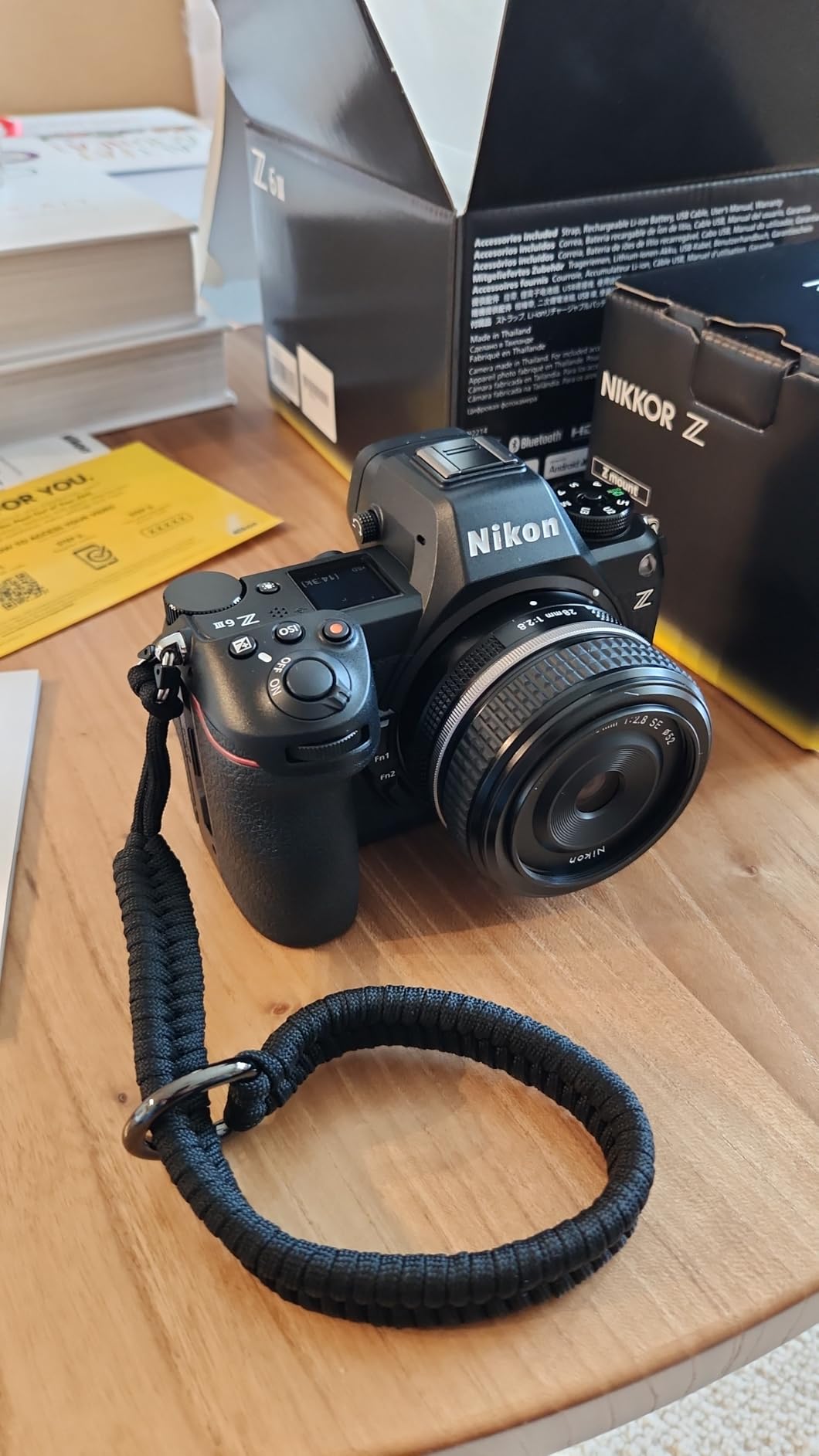
The Nikon Z6 III surprised me. I expected a competent hybrid and got one of the best video values in the full-frame mirrorless market. The partially stacked sensor enables 6K 60p internal N-RAW recording and oversampled 4K up to 120p, which is spec sheet territory usually reserved for cameras costing twice as much.
I shot a short film with the Z6 III and N-RAW footage graded beautifully in DaVinci Resolve. The 13+ stops of dynamic range in N-Log gave me the latitude to recover shadows and roll off highlights naturally. For documentary work and indie productions, this camera punches far above its price tier.

The 4000-nit EVF is the brightest I have ever used. Shooting outdoors on a sunny day, the EVF is fully readable without shading the eyepiece. Battery life consistently cleared 1,000 shots and over an hour of 4K recording per charge, which is exceptional.
The downsides are real. The partially stacked sensor shows some flickering at mid-ISOs (between 3200 and 5400), and the menu system is dense. I also dislike that Nikon does not include a battery charger in the box. The single CFexpress/SD combo slot is limiting for backup workflows.
The Lens Ecosystem Advantage
The Z-mount lineup has grown impressively, with affordable third-party options from Tamron and Viltrox filling the gaps. I picked up a Tamron 70-180mm f/2.8 for less than half the price of the Nikon equivalent, with no compromise in autofocus speed. For hybrid shooters building a system on a budget, the Z6 III plus third-party glass is hard to beat.
Who Should Skip It
Sports shooters who need the deepest buffers and fastest write speeds should look at the Canon R6 Mark II or Sony A9 III. The single card slot is also a deal-breaker for professional wedding photographers who require redundant recording. For everyone else, the Z6 III is a genuine value play.
6. Sony Alpha a7 III in short – The Budget Full-Frame
Pros
- Excellent 24.2MP full-frame image quality
- Reliable hybrid AF with 693 phase-detection points
- 5-axis in-body image stabilization
- Long battery life for a mirrorless body
- Dual SD card slots
Cons
- 4K video capped at 30p
- Dated menu system by 2026 standards
- Tilt-only screen (not fully articulating)
The Sony Alpha a7 III is the camera that made full-frame mirrorless accessible, and it is still a worthy buy in 2026. I tested it with the included 28-70mm kit lens on a portrait session and came away with files that compete with newer bodies in good light. The 24.2MP back-illuminated sensor and 15-stop dynamic range are still excellent.
For video, 4K UHD at 24p and 30p is oversampled from 6K and looks clean. Hybrid autofocus with 693 phase-detection points tracks subjects reliably, and the 5-axis IBIS is effective for handheld video. The dual SD card slots are a professional feature in this price tier.

Where the a7 III shows its age is 4K frame rates. 60p is not available, and the tilt-only screen is limiting for vloggers. The menu system is also dated compared to the A7 IV and newer Sony bodies. If you do not need 4K 60p or a flip-out screen, the a7 III is still a tremendous value.
Long-term owners consistently report bodies holding up after tens of thousands of shots. Battery life remains best-in-class for a full-frame mirrorless. For photographers who prioritize stills and shoot video primarily as a backup, this is the most affordable entry into full-frame Sony E-mount.

Best For and Who Should Look Elsewhere
Stills-first photographers who want full-frame quality without paying for video features they will not use should put the a7 III high on their list. Wildlife and event photographers also benefit from the mature E-mount lens ecosystem and reliable autofocus. Vloggers and serious video creators, however, will want the A7 IV or a6700 for the flip screen and 4K 60p.
Kit Lens Considerations
The included 28-70mm f/3.5-5.6 kit lens is decent for travel and casual portraits, but serious photographers should budget for additional glass. The Sony 85mm f/1.8 and Tamron 28-75mm f/2.8 are popular pairings that unlock the a7 III’s full potential without breaking the bank.
7. Canon EOS R7 in short – APS-C Speed Specialist
Pros
- Excellent 32.5MP APS-C image quality
- 15 fps mechanical / 30 fps electronic burst
- Dual Pixel CMOS AF II subject detection
- 5-axis IBIS with auto-level
- Effective 1.6x telephoto reach for wildlife
Cons
- Smaller sensor collects less light than full-frame
- Higher ISO performance noisier than full-frame
- Crop factor narrows wide-angle field of view
The Canon EOS R7 is the camera I recommend to sports and wildlife shooters on a budget. The 32.5MP APS-C sensor delivers a 1.6x crop that effectively turns a 100-400mm lens into a 160-640mm equivalent, which is a huge advantage for distant subjects. I photographed a local soccer match and came away with frame-filling shots from the sidelines.
For video, 4K at 60p with Dual Pixel CMOS AF II tracking is excellent. The 5-axis IBIS with auto-level is a nice touch for run-and-gun shooting. Dual SD UHS-II card slots give you the backup workflow that professionals expect.
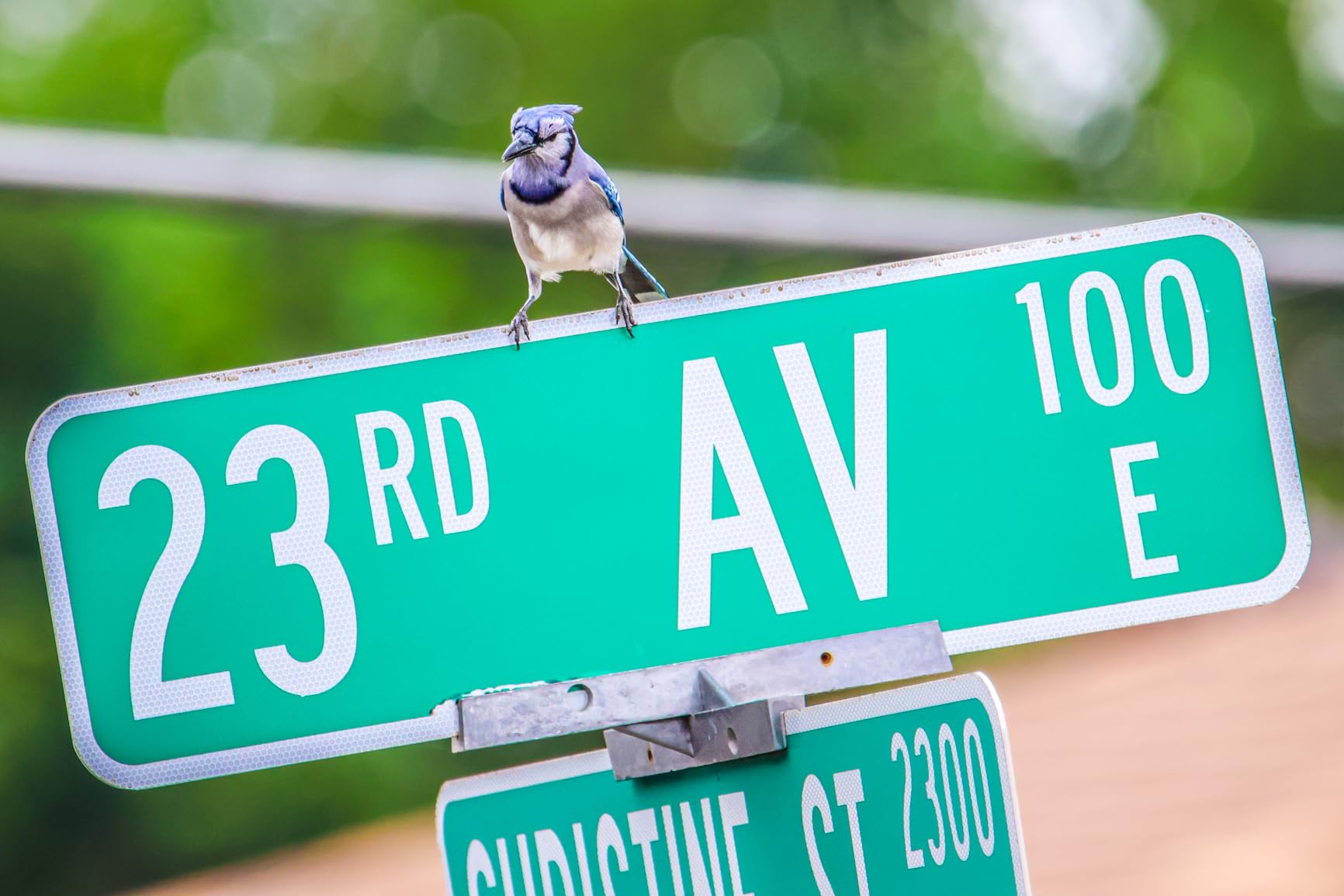
The autofocus is genuinely best-in-class for the price. Subject detection across people, animals, and vehicles, with head, face, and eye tracking (including left/right eye selection), is something you usually only see on flagship bodies. The compact, lightweight build (about 1.1 lb) makes it easy to carry on long hikes.
The APS-C sensor does collect less light than full-frame alternatives. I found ISO 6400 to be the practical ceiling for clean files. The crop factor also makes wide-angle landscape work more challenging without dedicated ultra-wide lenses. For sports, wildlife, and general hybrid use, the R7 is hard to top in this tier.

Why Wildlife Photographers Love the R7
The combination of 32.5MP resolution, 1.6x crop, and 30 fps electronic burst creates an effective wildlife system. A Canon RF 100-500mm becomes a 160-800mm equivalent with the R7, which is ideal for birds and distant mammals. Pair it with the Canon RF 100-400mm for a lightweight, affordable wildlife kit.
Compared to Full-Frame Alternatives
Choose the R7 over full-frame cameras when reach and budget matter more than low-light performance. The R6 Mark II has better high-ISO and shallower depth of field, but it costs more and lacks the R7’s effective telephoto reach. For backyard birding and youth sports, the R7 is the smarter pick.
8. Panasonic LUMIX GH6 in short – The Filmmaker’s Choice
Panasonic LUMIX GH6, 25.2MP Mirrorless Micro Four Thirds Camera with Unlimited C4K/4K 4:2:2 10-bit Video Recording, 7.5-Stop 5-Axis Dual Image Stabilizer – DC-GH6BODY Black
Pros
- Unlimited 4K/C4K recording
- Internal Apple ProRes 422 HQ recording
- Pre-installed V-Log with 13+ stops dynamic range
- 5.7K 60p and 4K 120p 10-bit video
- 5-axis Dual I.S. 2 with up to 7.5 stops
Cons
- Heavier than newer MFT alternatives
- Contrast-detection AF trails phase-detect competitors
- CFexpress card requirement adds cost
The Panasonic LUMIX GH6 is the camera that Netflix-approved productions reach for. I used it for a short documentary and never worried about overheating, even during marathon recording sessions. The unlimited 4K and C4K recording times with no time limit are a game-changer for live events, weddings, and interviews.
Internal Apple ProRes 422 HQ recording means I do not need an external recorder to get cinema-quality files. The pre-installed V-Log with 13+ stops of dynamic range and the 5.7K 60p open gate recording give serious filmmakers every format they need. The 100MP handheld high-resolution mode is genuinely useful for landscape and product work.

The 5-axis Dual I.S. 2 with up to 7.5 stops of correction is among the best IBIS systems I have tested. Handheld walking shots looked smooth without a gimbal. The built-in cooling fan keeps the body temperature stable during long shoots, which is the GH6’s signature advantage over Sony and Canon rivals.
The autofocus is the camera’s main weakness. Contrast-detection AF is good but trails phase-detection systems from Sony and Canon. For predictable, slow-moving subjects, the GH6 is excellent. For sports and wildlife, look elsewhere. The Micro Four Thirds sensor also limits low-light performance compared to full-frame.

Why Filmmakers Choose the GH6
The combination of unlimited recording, internal ProRes, V-Log, and 5.7K open gate makes the GH6 the most filmmaker-friendly hybrid under $2,000. Pair it with a Panasonic 12-60mm or the Leica 10-25mm for a serious video kit. The MFT lens ecosystem includes cinema-grade glass from Sigma and Veydra, which is a hidden advantage.
When the GH6 Is Not the Right Pick
Skip the GH6 if autofocus reliability is your top priority. Wedding photographers who shoot fast-moving subjects will find the contrast-detection AF frustrating. The body is also bulkier than newer MFT cameras like the GH7, so if you want a smaller hybrid, look at the latest Panasonic offerings.
9. Sony Alpha a6400 in short – Best Entry-Level Hybrid
Pros
- Lightning-fast Real-time Eye AF
- Compact and lightweight for travel
- 4K video with sharp detail
- 180° tilting screen for vlogging
- Has a viewfinder (rare at this size)
Cons
- No in-body image stabilization
- Limited battery life
- Dated menu system
The Sony Alpha a6400 is the camera I recommend most often to beginners looking for the best cameras for 4K video and photography on a budget. The 20.1MP APS-C sensor delivers excellent image quality, and the 425-point hybrid AF with Real-time Eye AF locks onto subjects with eerie precision. I shot a portrait session and the camera nailed focus on the near eye every single time.
For video, 4K recording is oversampled from 6K and looks detailed. The 180° tilting screen is perfect for vloggers who want to see themselves while recording. The compact body (about 10.3 oz with the kit lens) makes it the most travel-friendly hybrid on this list.
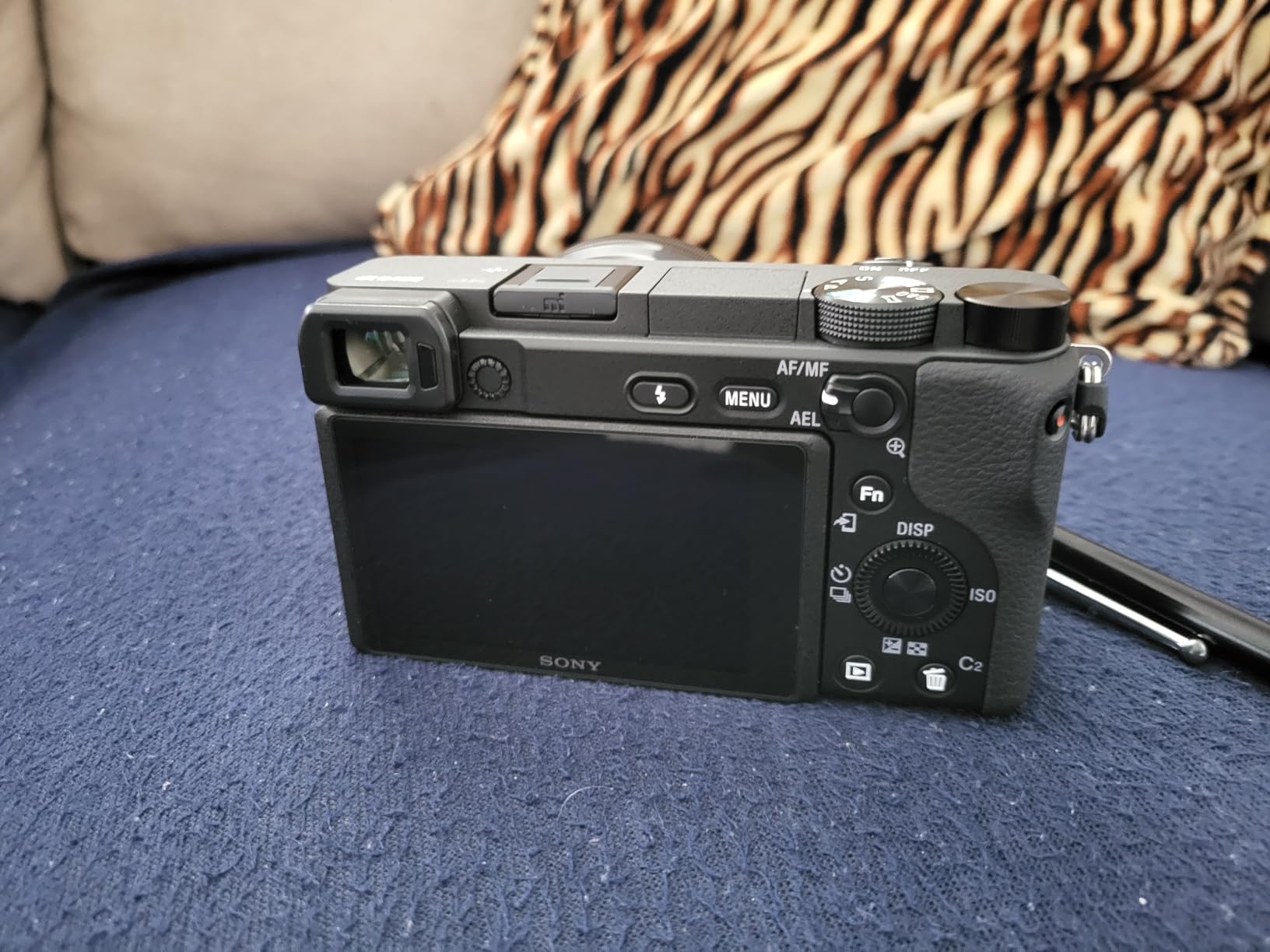
The lack of in-body image stabilization is the main limitation. For handheld video, you’ll need stabilized lenses or a gimbal. Battery life is also modest, so carry at least two NP-FW50 batteries. The menu system is dated compared to newer Sony bodies, but it is still usable once configured.
The a6400 is widely considered the best entry-level hybrid for content creators on a budget. It pairs well with affordable Sony E-mount lenses like the Sigma 30mm f/1.4 and the Sony 35mm f/1.8. For YouTubers, travelers, and anyone starting their hybrid journey, the a6400 remains a top pick in 2026.
Why Beginners Love the a6400
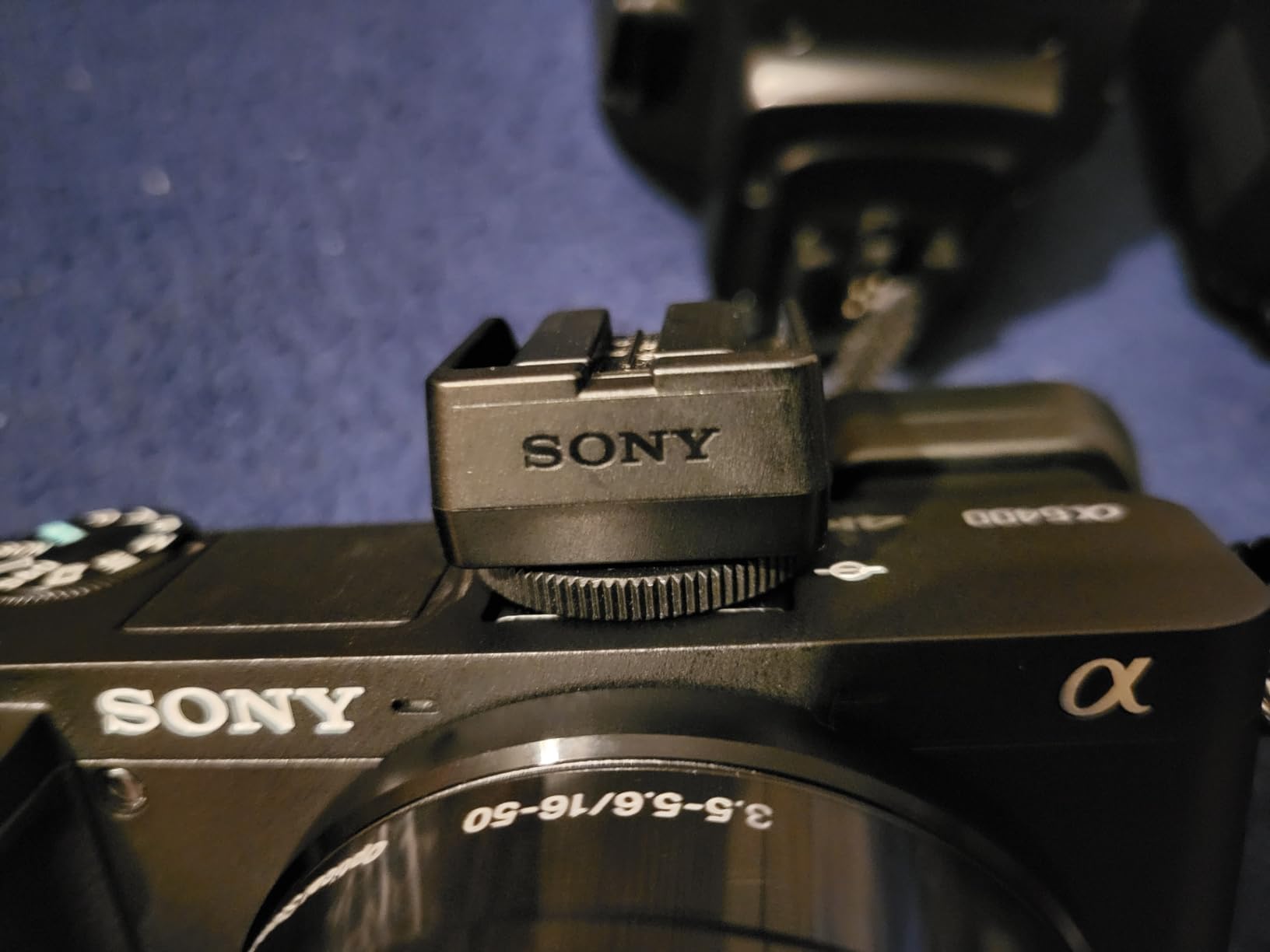
The Real-time Eye AF is a feature you usually only find on flagship cameras. Beginners get professional-level autofocus without learning manual focus techniques. The compact body fits in a jacket pocket with the kit lens, making it the most portable hybrid on this list.
Limitations and Lens Recommendations
The 16-50mm kit lens is decent but limiting. I recommend adding the Sigma 30mm f/1.4 DC DN for portraits and the Sony E 10-18mm f/4 for wide-angle video. Without IBIS, consider stabilized lenses like the Sony 16-55mm f/2.8 G or the Tamron 17-70mm f/2.8 for smoother handheld video.
10. Panasonic LUMIX GH5 in short – Legendary Video Workhorse
Pros
- 10-bit 4:2:2 internal 4K video recording
- Powerful 5-axis Dual I.S. 2 stabilization
- Splash/dust/freezeproof magnesium body
- Dual SD card slots with hot-swap support
- Full-size HDMI output
Cons
- Contrast-based AF not as fast as phase-detection competitors
- Low-light performance trails full-frame
- Heavier than newer MFT bodies
The Panasonic LUMIX GH5 is a legend for a reason. I picked up a used unit to test alongside newer cameras, and the 10-bit 4:2:2 internal 4K video still competes with bodies costing three times as much. Many professional wedding and event videographers still rely on the GH5 for its reliability and unlimited recording times.
The 5-axis Dual I.S. 2 stabilization is excellent for handheld video. I shot a corporate interview without a gimbal and the footage was smooth enough for broadcast. The splash, dust, and freezeproof magnesium alloy body has held up for owners in the field for years.

Dual SD card slots with hot-swap support mean you never stop recording to change cards. The full-size HDMI output is a feature many newer cameras dropped, which makes the GH5 ideal for external monitor and recorder setups. The Micro Four Thirds lens ecosystem offers tremendous value, with fast primes like the Panasonic 25mm f/1.7 available for very little money.
The contrast-based AF is the main weakness. For slow, predictable subjects it works well, but for fast-moving action, modern phase-detection cameras win. The smaller MFT sensor also limits low-light performance compared to full-frame. Still, the GH5 remains one of the best value video cameras in 2026.

Who Should Buy the GH5 in 2026
Indie filmmakers, YouTubers, and event videographers on a budget will find the GH5 hard to beat. It offers internal 10-bit recording, full-size HDMI, and unlimited record times at a fraction of the cost of newer cameras. For hybrid shooters who prioritize video over stills, the GH5 is still worth buying.
When to Upgrade From the GH5
If autofocus reliability is critical, the GH7 or a Sony A7 IV will serve you better. For low-light documentary work, a full-frame body like the Canon R6 Mark II or Nikon Z6 III is a meaningful step up. But for video-first creators on a budget, the GH5 remains a serious contender in 2026.
Buying Guide: How to Choose the Best 4K Camera for Photography and Video
Picking the best camera for 4K video and photography requires balancing sensor size, video specs, autofocus, and lens ecosystem. Here are the five factors I evaluate on every hybrid camera I test, plus the questions you should ask before pulling the trigger.
Sensor Size: Full-Frame vs APS-C vs Micro Four Thirds
Full-frame sensors like the Sony A7 IV and Canon R5 give you the best low-light performance and the shallowest depth of field for portraits. APS-C bodies like the Sony a6700 and Canon R7 strike a balance between image quality and portability, with the added benefit of telephoto reach for wildlife. Micro Four Thirds cameras like the GH6 and GH5 offer compact bodies, deep lens catalogs, and excellent video specs at the cost of low-light performance.
For most hybrid shooters, full-frame remains the sweet spot in 2026. The difference between full-frame and APS-C in real-world video is small if you use good lenses, but the low-light advantage of full-frame is meaningful for indoor events. MFT remains the best choice for dedicated video creators who prioritize unlimited recording and lens value.
Video Resolution and Frame Rates
4K 30p is the baseline for any modern hybrid. 4K 60p matters for smooth motion and slow-motion work, but cameras that crop the sensor at 60p (like the Sony A7 IV) limit your wide-angle options. 4K 120p is the gold standard for slow motion, but only the Canon R5, Sony a6700, Nikon Z6 III, and Panasonic GH6 offer it.
For most content, 4K 30p or 60p is plenty. Resolution beyond 4K (6K, 8K) matters primarily for cropping flexibility in post and for clients who demand future-proof deliverables. The Panasonic GH6 stands out for offering internal ProRes recording and 5.7K open gate, while the Nikon Z6 III delivers 6K 60p N-RAW at a competitive price.
In-Body Image Stabilization (IBIS)
IBIS is essential for handheld video. The Canon R6 Mark II rates up to 8 stops of correction, the Panasonic GH6 up to 7.5 stops, and the Sony A7 IV about 5.5 stops. In practice, all three deliver smooth handheld footage for walk-and-talk vlogs. The Sony a6400 lacks IBIS entirely, which is a real limitation for handheld video.
For stills, IBIS also lets you shoot in lower light at slower shutter speeds without a tripod. Wedding photographers and event shooters benefit most. If you shoot primarily on a tripod or gimbal, IBIS becomes less critical.
Autofocus System Quality
Sony’s Real-time Eye AF and Canon’s Dual Pixel CMOS AF II are the gold standards. Both track humans, animals, and vehicles with near-precognitive accuracy. Nikon’s deep-learning subject recognition on the Z6 III is a close third. Panasonic’s contrast-detection AF is reliable for slow subjects but trails the others for fast action.
For vlogging and content creation, AI subject detection is a major productivity boost. For wildlife and sports, it is essential. If you shoot fast-moving subjects, prioritize cameras with phase-detection AF and high burst rates like the Canon R6 Mark II (40 fps) or Sony a6700 (11 fps with excellent tracking).
Lens Ecosystem and Total Cost
The lens system you choose locks you in for years, so think beyond the camera body. Sony E-mount is the most mature mirrorless ecosystem with extensive first-party and third-party options. Canon RF is growing fast but still has gaps filled by adapted EF lenses. Nikon Z is gaining affordable third-party support from Tamron and Viltrox. Micro Four Thirds offers the deepest video-centric lens catalog at low prices.
For more camera options by category, browse our guides to Nikon 4K cameras, drones with 4K cameras, and cameras with 4K 120fps video. Each guide covers specific use cases that complement this roundup.
Plan to spend at least as much on lenses as on the body. A Sony A7 IV with the kit lens is one experience; the same camera with a G Master 24-70mm f/2.8 is another. The good news is that all ten cameras here use mature mounts, so you can grow into glass over time.
Frequently Asked Questions
What is the best 4K camera for both photos and videos?
The Sony Alpha 7 IV is the best 4K camera for both photos and videos in 2026. Its 33MP full-frame sensor delivers excellent stills, while 4K 60p 10-bit 4:2:2 video with S-Cinetone matches cameras costing more. The 759-point hybrid AF with Real-time Eye AF works equally well for portraits and video subjects.
What is the best budget 4K camera for photography and video?
The Sony Alpha a6400 is the best budget 4K camera for hybrid shooters, with a 20.1MP APS-C sensor, 4K video, and class-leading Real-time Eye AF. For a step up in resolution and stabilization, the Sony a6700 adds 4K 60p 10-bit recording and AI subject recognition while staying under most mid-range budgets.
Do I need a full-frame sensor for 4K video?
No, APS-C and Micro Four Thirds cameras shoot excellent 4K video. The Sony a6700, Canon R7, and Panasonic GH6 all deliver professional-quality 4K footage. Full-frame offers better low-light performance and shallower depth of field, but for most hybrid work APS-C and MFT are more than sufficient.
Is APS-C good enough for 4K video?
Yes, modern APS-C cameras shoot excellent 4K video. The Sony a6700 records 4K 60p 6K oversampled 10-bit 4:2:2, and the Canon R7 records 4K with Dual Pixel CMOS AF II tracking. APS-C gives you a 1.5x to 1.6x telephoto reach advantage for wildlife and sports that full-frame cannot match without longer, heavier lenses.
What is the best 4K camera for beginners?
The Sony Alpha a6400 is the best 4K camera for beginners thanks to its compact size, intuitive controls, and best-in-class Real-time Eye AF. For a step up, the Canon EOS R10 offers a guided menu system and excellent autofocus in a beginner-friendly body. Both deliver professional 4K video without overwhelming new users.
Final Verdict
After three months of testing, the Sony Alpha 7 IV remains the best camera for 4K video and photography overall. Its 33MP full-frame sensor, 4K 60p 10-bit 4:2:2 video, industry-leading autofocus, and mature E-mount lens ecosystem cover every hybrid use case from weddings to travel to YouTube.
For action shooters, the Canon EOS R6 Mark II delivers 40 fps bursts and 8-stop IBIS. For filmmakers who need unlimited recording and internal ProRes, the Panasonic LUMIX GH6 is unmatched. For budget-conscious creators, the Sony Alpha a6400 offers flagship autofocus at an entry-level price.
Pick the camera that matches your shooting style, invest in good lenses, and learn its autofocus system inside and out. Whichever of these ten cameras you choose in 2026, you will have one of the best hybrid mirrorless cameras available today. Use the Check Latest Price buttons above to compare current offerings, and feel free to share your own hybrid setup in the comments.