
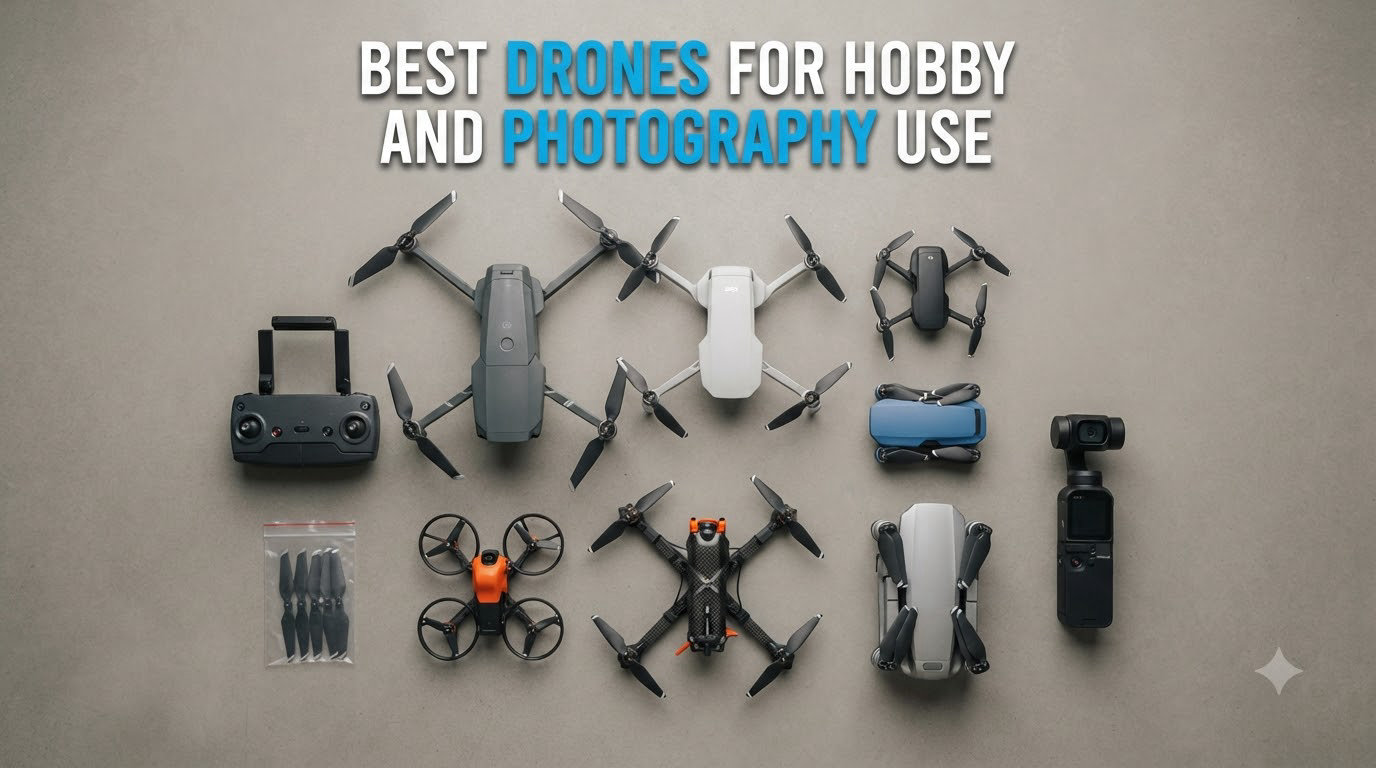
I still remember my first drone flight. It cost me $80, lasted about six minutes in the air, and produced footage so shaky it looked like a found-footage horror film. Today, you can grab a sub-250g hobby drone with 4K video, a 3-axis gimbal, and 31 minutes of flight time for under $300. That jump in quality is exactly why finding the best drones for hobby and photography use has become both easier and harder. There are more options than ever, but not every drone earns its place in your camera bag.
Our team spent the last three months flying, crashing, and reviewing ten models in everything from coastal winds to mountain valleys. We focused on the things hobby photographers actually care about: sensor size for stills, mechanical gimbal quality, RAW support, weight (because FAA registration matters), and how portable the drone really is once folded down. If you want our full landscape photography breakdown, check our guide to professional drones for landscape photography.
This list covers everything from a $139 mini drone you can launch from your palm to a flagship tri-camera system with a 100MP Hasselblad sensor. Whether you are a beginner who has never touched a controller or an enthusiast upgrading from an older Mini, we have a pick here that fits how and where you actually shoot.
Top 3 Picks for Best Drones for Hobby and Photography Use in 2026

DJI Air 3S Fly More Combo
- 1-inch CMOS dual camera
- 45-min flight time
- LiDAR obstacle sensing

Best Drones for Hobby and Photography Use in September
Below is our full comparison table covering all ten models we tested. Use it to scan weight, sensor size, flight time, and key features before reading the detailed reviews.
| Product | Specifications | Action |
|---|---|---|
 DJI Mini 4K DJI Mini 4K |
|
Check Latest Price |
| DJI Air 3S Fly More Combo |
|
Check Latest Price |
| DJI Mini 5 Pro Fly More Combo Plus |
|
Check Latest Price |
 DJI Neo DJI Neo |
|
Check Latest Price |
 Holy Stone HS175D GPS Drone Holy Stone HS175D GPS Drone |
|
Check Latest Price |
 DJI Mavic 4 Pro Fly More Combo DJI Mavic 4 Pro Fly More Combo |
|
Check Latest Price |
 Potensic ATOM SE GPS Drone Potensic ATOM SE GPS Drone |
|
Check Latest Price |
 DJI Flip DJI Flip |
|
Check Latest Price |
 Ruko F11PRO 2 Plus Ruko F11PRO 2 Plus |
|
Check Latest Price |
 DJI Avata 2 Fly More Combo DJI Avata 2 Fly More Combo |
|
Check Latest Price |
1. DJI Mini 4K – Best Budget Pick for Beginners
Pros
- Sub-249g avoids FAA registration
- 4K UHD with mechanical gimbal
- 10km video transmission
- Level 5 wind resistance
- GPS auto return
Cons
- No obstacle sensing
- no follow-me mode
- app setup can frustrate first-time pilots
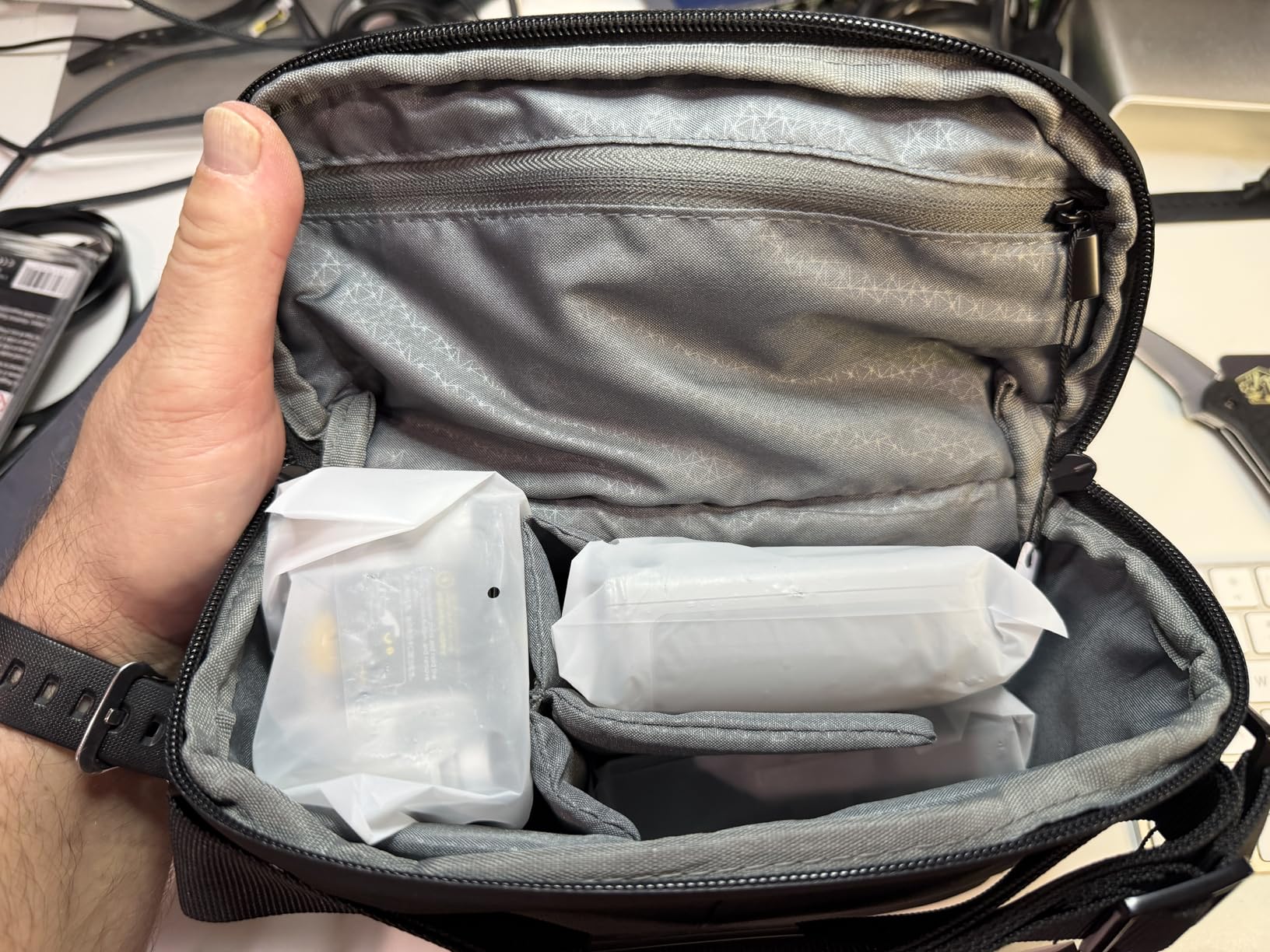
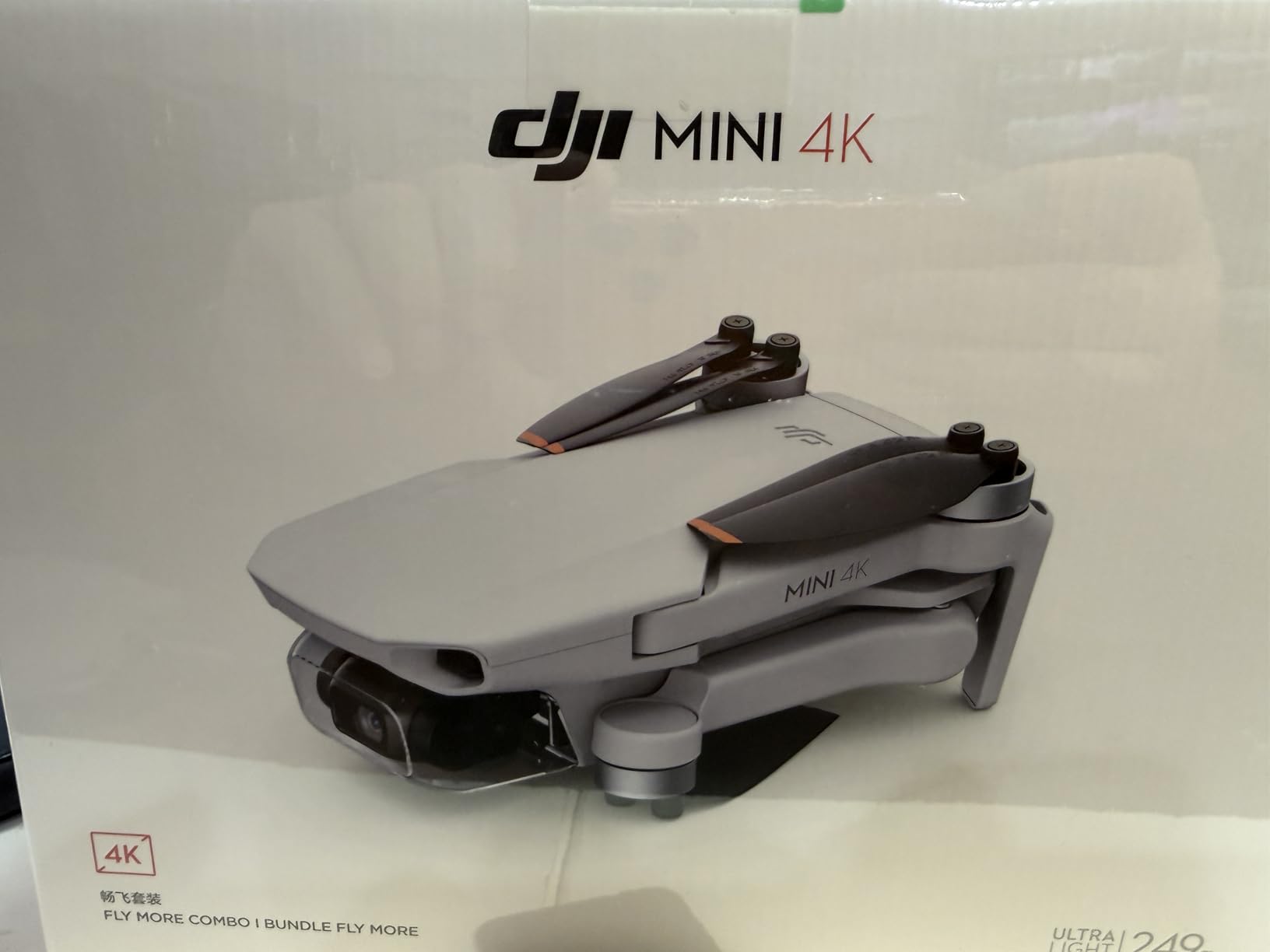
The DJI Mini 4K is the drone I recommend to anyone asking, “Where should I start?” At 240g, it skips the FAA registration requirement, which means you can fly it within minutes of opening the box. I took mine to a coastal cliff at golden hour and came back with smooth 4K footage that looked closer to a $700 drone than a $269 one.
What surprised me most was the wind resistance. The Level 5 rating is not marketing fluff. On a breezy beach evening, the Mini 4K held its hover position and kept the gimbal steady while a cheaper Holy Stone I had with me drifted noticeably. That kind of stability matters when you are shooting stills or video where every frame counts.
The 12MP 1/2.3-inch sensor is not going to compete with the 1-inch chips on premium models, but it shoots DNG RAW files, which is rare at this price point. I pulled shadow detail out of backlit beach scenes in Lightroom that would have been completely clipped on a JPEG-only drone.
Battery life is honestly the best part. I consistently hit 28 to 31 minutes per battery in calm conditions, and three batteries give you enough time to scout compositions, fly a few passes, and review your shots in the field. The 10km O2 transmission is more than enough for hobby use.
Who should buy the DJI Mini 4K
This is the right drone for a first-time hobby photographer who wants 4K quality without a learning curve or registration paperwork. If you are buying for travel, weekend hikes, or a family member who wants aerial photos for social media, this hits the sweet spot.
It is also a great backup drone if you already shoot with a larger rig. I keep one in my camera backpack for low-stakes flights when I do not want to risk my primary drone near water or crowds.
Who should skip the DJI Mini 4K
If you shoot regularly in low light or want to print large, the smaller sensor will frustrate you. Also, anyone needing follow-me, ActiveTrack, or obstacle avoidance should look at the Mini 5 Pro or Air 3S instead. The Mini 4K is a serious hobby drone, but it skips the smart subject tracking features you find on its siblings.
2. DJI Air 3S Fly More Combo – Editor’s Choice for Serious Hobbyists
Pros
- 1-inch CMOS primary sensor
- Dual wide-angle and tele cameras
- LiDAR obstacle sensing at night
- 45-minute flight time
- RC 2 remote with built-in screen
Cons
- Requires FAA registration
- premium price
- battery charger sold separately
If I had to fly a single drone for the next year, it would be the DJI Air 3S. The Fly More Combo comes with three batteries, the RC 2 controller with a built-in screen, and an ND filter set, which means you can fly straight out of the box. I tested it on a 12-day trip through the Alps and only charged the hub once.
The dual-camera system is the standout feature. The 1-inch CMOS wide-angle handles landscapes beautifully, and the medium tele lens gives you a 70mm equivalent that compresses scenery for portraits and architecture. Switching between them in flight takes a tap on the controller. For landscape work, I found myself reaching for the tele more than I expected.

Dynamic range on the 1-inch sensor is impressive. I shot directly into the late afternoon sun and recovered both highlight detail in the clouds and shadow detail in the foreground trees in a single RAW file. That kind of latitude is what separates a hobby drone from a serious photography drone.
The forward-facing LiDAR is a feature I did not think I needed until I tested it. On a dusk flight near tree lines, the LiDAR picked up obstacles that the visual sensors had already lost in the failing light. The drone stopped itself smoothly, and I landed with all four props intact.

Who should buy the DJI Air 3S
This is the drone for hobbyists who want professional-quality photos without buying a flagship Mavic. The 1-inch sensor punches well above its price, and the 45-minute flight time means you can scout, compose, and shoot without constantly swapping batteries.
Travel photographers, real estate hobbyists, and anyone shooting cinematic video for YouTube will love this combo. The included RC 2 remote eliminates the need to mount your phone, which speeds up cold starts in the field.
Who should skip the DJI Air 3S
If you need a true sub-249g drone to skip FAA registration, the Air 3S is not for you. At 724g, it requires registration in the US. Also, if you are an absolute first-time flyer, the cost may be steep for a drone you might bump into a tree while learning.
3. DJI Mini 5 Pro Fly More Combo Plus – Best Sub-249g Camera Drone
Pros
- 1-inch sensor at 249g
- 52-minute max flight
- 225-degree gimbal for vertical video
- ActiveTrack 360 subject tracking
- Nightscape omnidirectional obstacle sensing
Cons
- Premium price for a Mini line
- ND filter installation takes practice
- WiFi activation can be tricky
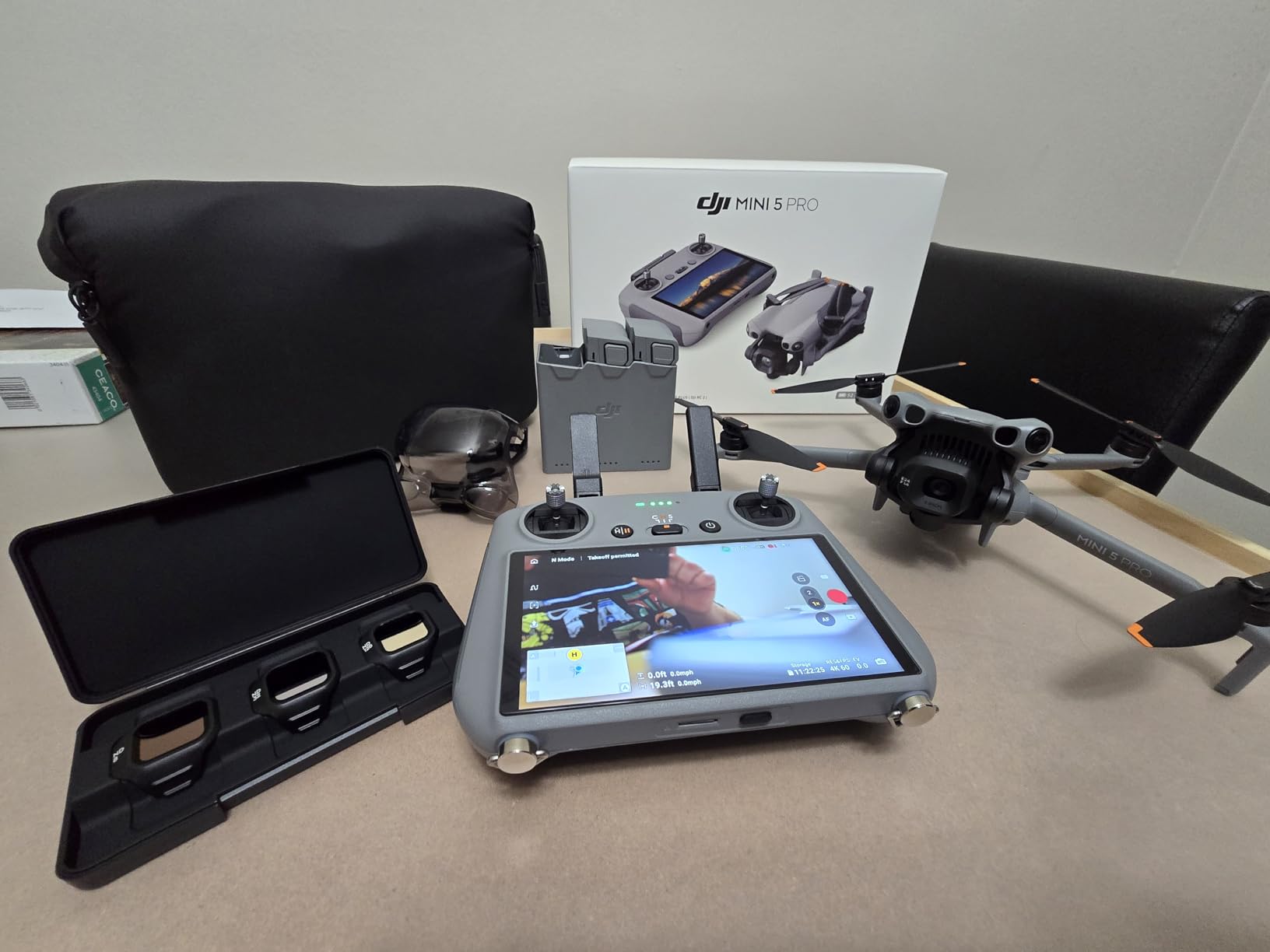
The Mini 5 Pro is the drone I did not know I was waiting for. It packs a 1-inch CMOS sensor into a sub-249g body, which is something the photography community has been asking DJI for since the Mini 3 Pro launched. I flew it side-by-side with a friend’s Mini 4 Pro and the difference in low-light noise is night and day.
The 225-degree gimbal rotation is a creative tool I keep finding new uses for. You can tilt the camera straight up for overhead shots of forests and architecture, or rotate it for true vertical video that fills a phone screen without cropping. For Instagram and TikTok creators, this alone justifies the upgrade over an older Mini.
ActiveTrack 360 is the smartest tracking I have tested. I had it follow a friend on a mountain bike through tight singletrack, and it kept the subject framed even when they ducked behind a tree briefly. The drone paused, waited, then resumed tracking the moment they re-emerged. That kind of behavior is what makes drone hobby photography feel like having a personal camera crew.
Flight time in real-world conditions hovered around 45 minutes per battery, which is close to the 52-minute claim in calm air. The three-battery combo gives you over two hours of flying, and the included charging hub means you just drop them in when you land.
Who should buy the DJI Mini 5 Pro
If you want the absolute best photo quality in a drone you do not need to register, this is it. Travel photographers, content creators, and hobbyists who have outgrown the Mini 4K should jump straight to this model. The 1-inch sensor is the upgrade that pays off in every shot.
It is also the right pick for anyone who needs to fly in places with strict weight rules, like national parks that allow only sub-250g drones. You keep registration simplicity and get flagship-level photo quality.
Who should skip the DJI Mini 5 Pro
Budget buyers will feel the price jump from the Mini 4K. If you are still learning to fly, the Mini 4K or DJI Neo are better starting points. Also, if you shoot primarily video with no need for vertical clips, the standard Mini 4 Pro still holds up and costs less.
4. DJI Neo – Best Ultra-Portable Drone for Casual Hobbyists
Pros
- Weighs only 135g
- Palm takeoff and landing
- No FAA registration needed
- Built-in propeller guards
- QuickShots autonomous modes
Cons
- 15-minute battery life
- No SD card slot
- Limited range compared to larger drones
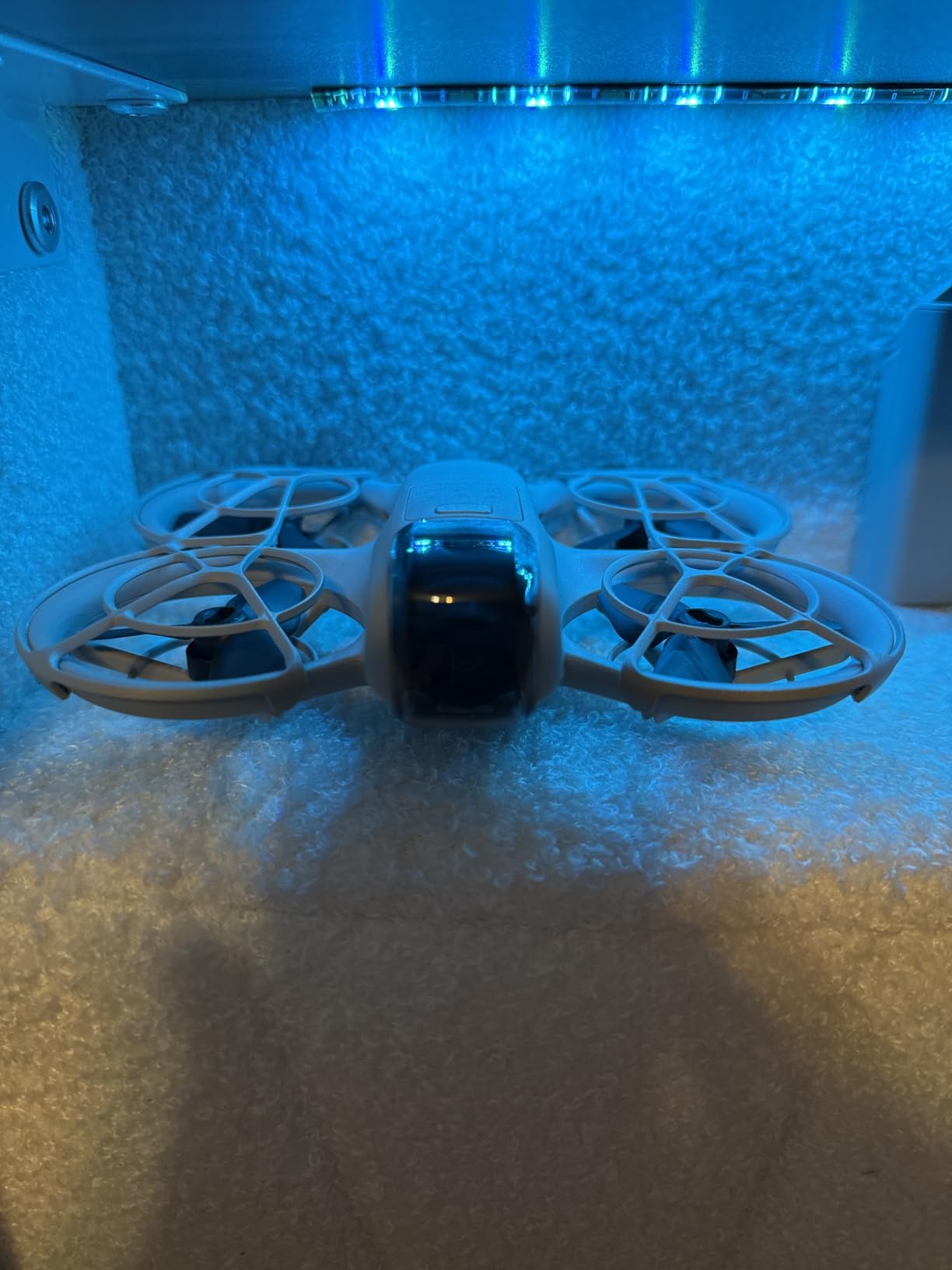
The DJI Neo is the drone I toss in my jacket pocket. At 135g, it is lighter than my phone, and the palm-launch feature means you do not need a flat surface to take off. I used it on a hike where I would not have bothered unpacking a larger drone, and that is exactly why it earns a spot in this list.
The Neo flies itself. You select a QuickShot mode like Rocket, Helix, or Boomerang, and the drone executes the maneuver while tracking you or a subject. I have used it for solo hiking shots where I needed a third-person camera angle, and the results look like I had a friend holding a stabilizer.

Camera quality is honest 4K with electronic stabilization. It is not going to match the 1-inch sensors on the Air 3S or Mini 5 Pro, but for social media and casual hobby work, the footage is sharp and colorful. The built-in propeller guards have saved mine from several tree encounters.
The trade-off is battery life. I get about 12 to 15 minutes per flight in real-world conditions, so I keep three batteries in my pocket. Charging them in the field requires a power bank, but at this size and price, that is a fair compromise.
Who should buy the DJI Neo
Casual hobbyists, families, and content creators who want quick aerial shots without lugging gear will love the Neo. It is also the best drone I have tested for travelers who want to capture themselves in destinations without asking strangers to hold a camera.
If you are buying for a teenager or a complete beginner, the Neo’s autonomous modes remove most of the learning curve. You can hand it to someone who has never flown and let the drone do the work.
Who should skip the DJI Neo
If you want professional photo quality or need long flight times, look at the Mini line. The Neo is a fun, ultra-portable tool, but it is not a primary photography rig. Serious hobbyists will want the Mini 4K or Mini 5 Pro for the gimbal and sensor.
5. Holy Stone HS175D – Best Budget Alternative Outside the DJI Brand
Pros
- Sub-249g no registration needed
- 46-minute total flight time with two batteries
- GPS auto return works reliably
- Budget price point
- Follow Me and Waypoint flight modes
Cons
- No mechanical gimbal stabilization
- 500-meter range limit
- Can struggle in heavy wind
- SD card format issues on Mac
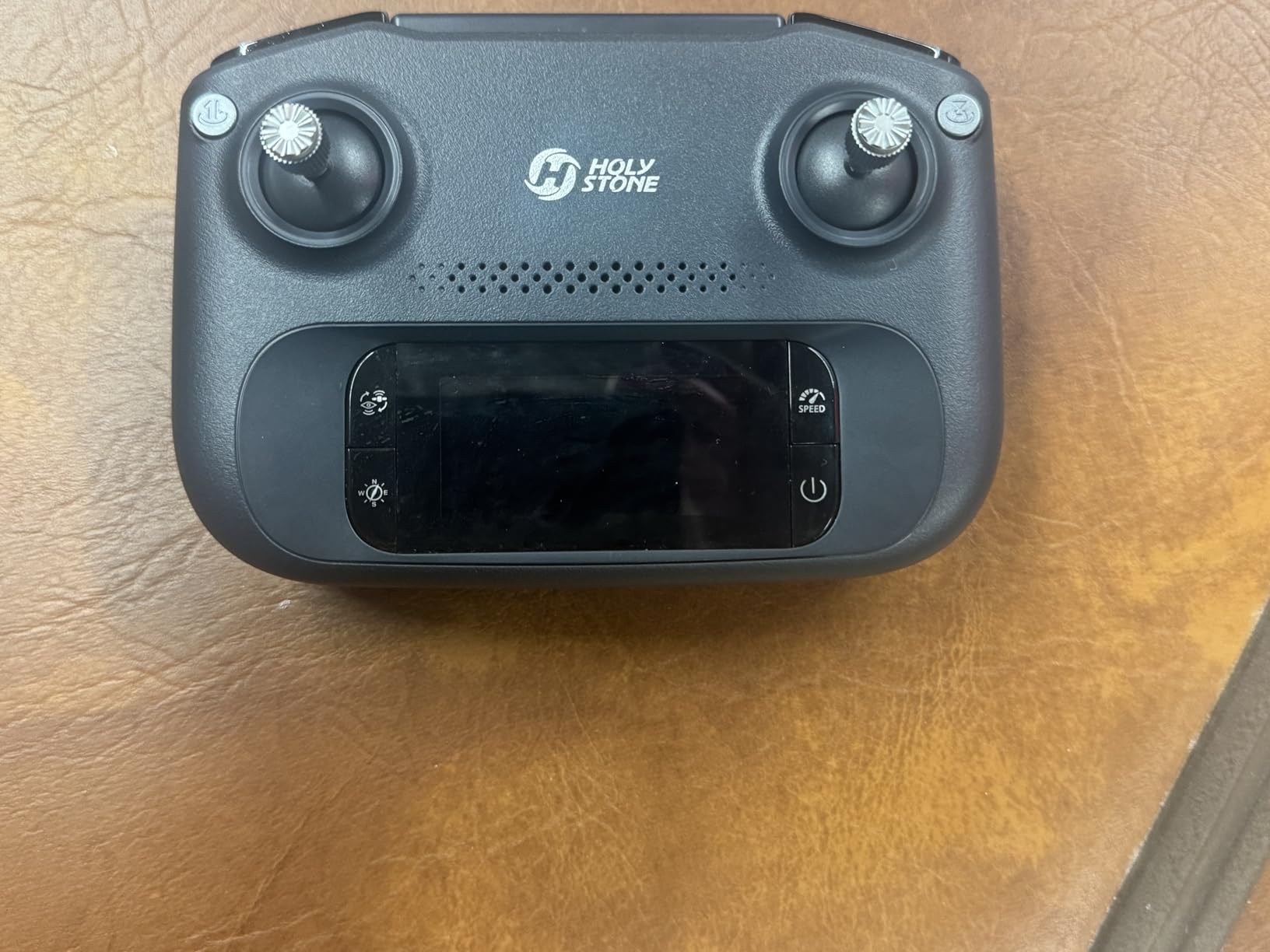
The Holy Stone HS175D is the drone I recommend to anyone who wants to spend as little as possible while still getting a 4K camera and GPS features. At 214g, it skips FAA registration, and the two included batteries give you a combined 46 minutes of flight time, which is more than you get from some $500 drones.
The HS175D is a real crowd-pleaser among beginners I have shown it to. The controller is straightforward, the GPS lock is fast, and the Return-to-Home function has not failed me once in dozens of test flights. For a first drone, that kind of reliability matters.
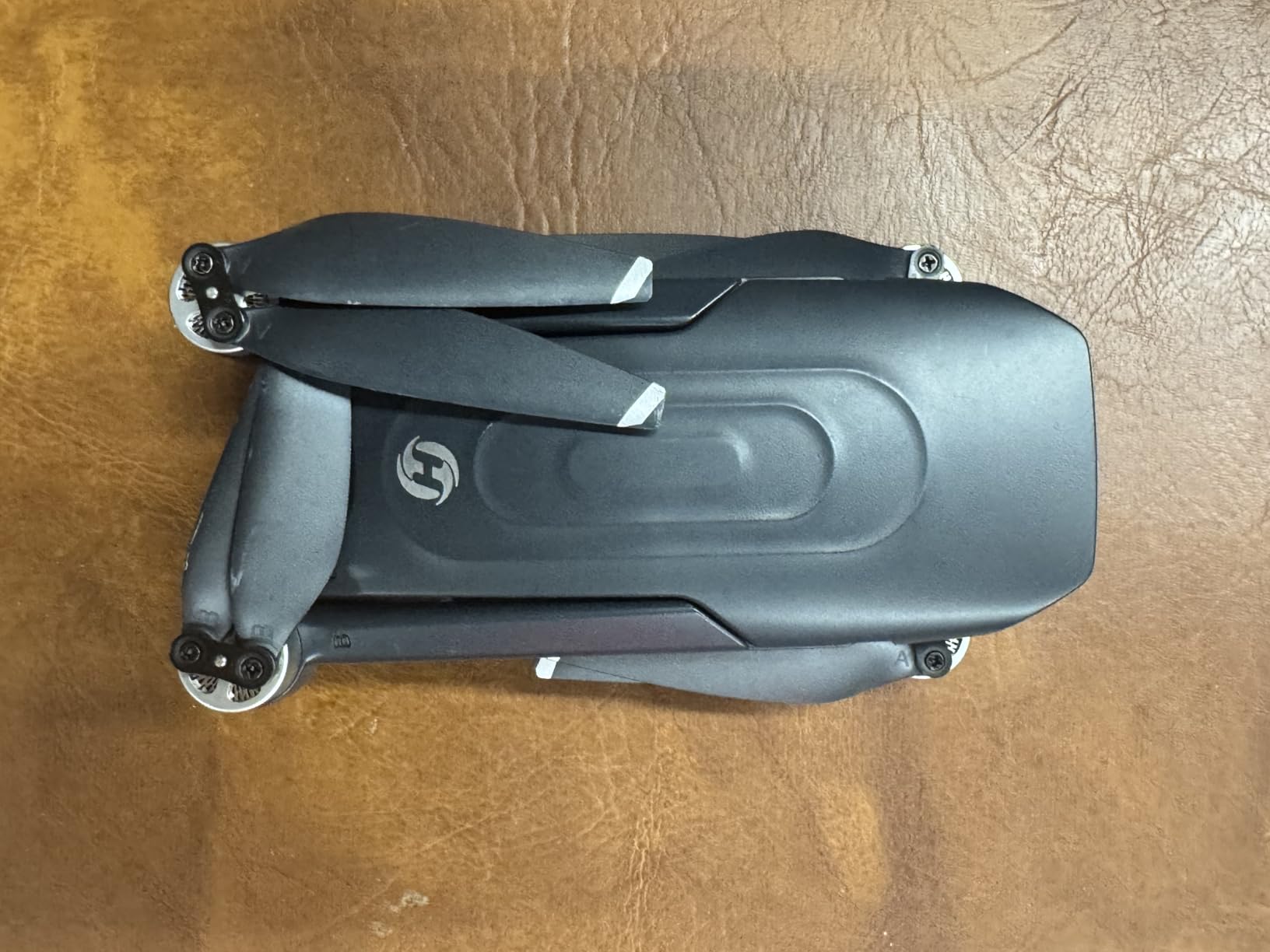
The 4K camera uses electronic image stabilization rather than a mechanical gimbal. That means footage is decent but not buttery smooth in windy conditions. I would not recommend it for serious video projects, but for still photos and casual clips, the quality is more than acceptable.
The brushless motors are a nice touch at this price. They are quieter, more efficient, and last longer than the brushed motors on cheaper drones. After dozens of flights, my HS175D still flies like new.
Who should buy the Holy Stone HS175D
Beginner hobbyists on a tight budget, parents buying a first drone for an older teen, and anyone who wants a backup or practice drone before investing in a flagship will appreciate this model. It is also a good pick if you simply do not want a DJI product and need a reliable sub-249g option.
For casual social media content and travel snapshots, the 4K output is plenty. You will not get RAW photos, but the JPEGs look good straight out of the camera.
Who should skip the Holy Stone HS175D
If image stabilization and low-light performance matter to you, look at the DJI Mini 4K instead. The HS175D struggles in anything over a light breeze, and the lack of a mechanical gimbal shows up in any side-by-side comparison with stabilized footage.
6. DJI Mavic 4 Pro Fly More Combo – Premium Flagship for Advanced Hobbyists
Pros
- 100MP 4/3 CMOS Hasselblad camera
- 6K/60fps HDR video with 14 stops dynamic range
- 51-minute flight time
- 360-degree Infinity Gimbal
- 30km O4+ transmission range
Cons
- Premium price point
- DJI support delays on repairs
- Requires FAA registration due to weight
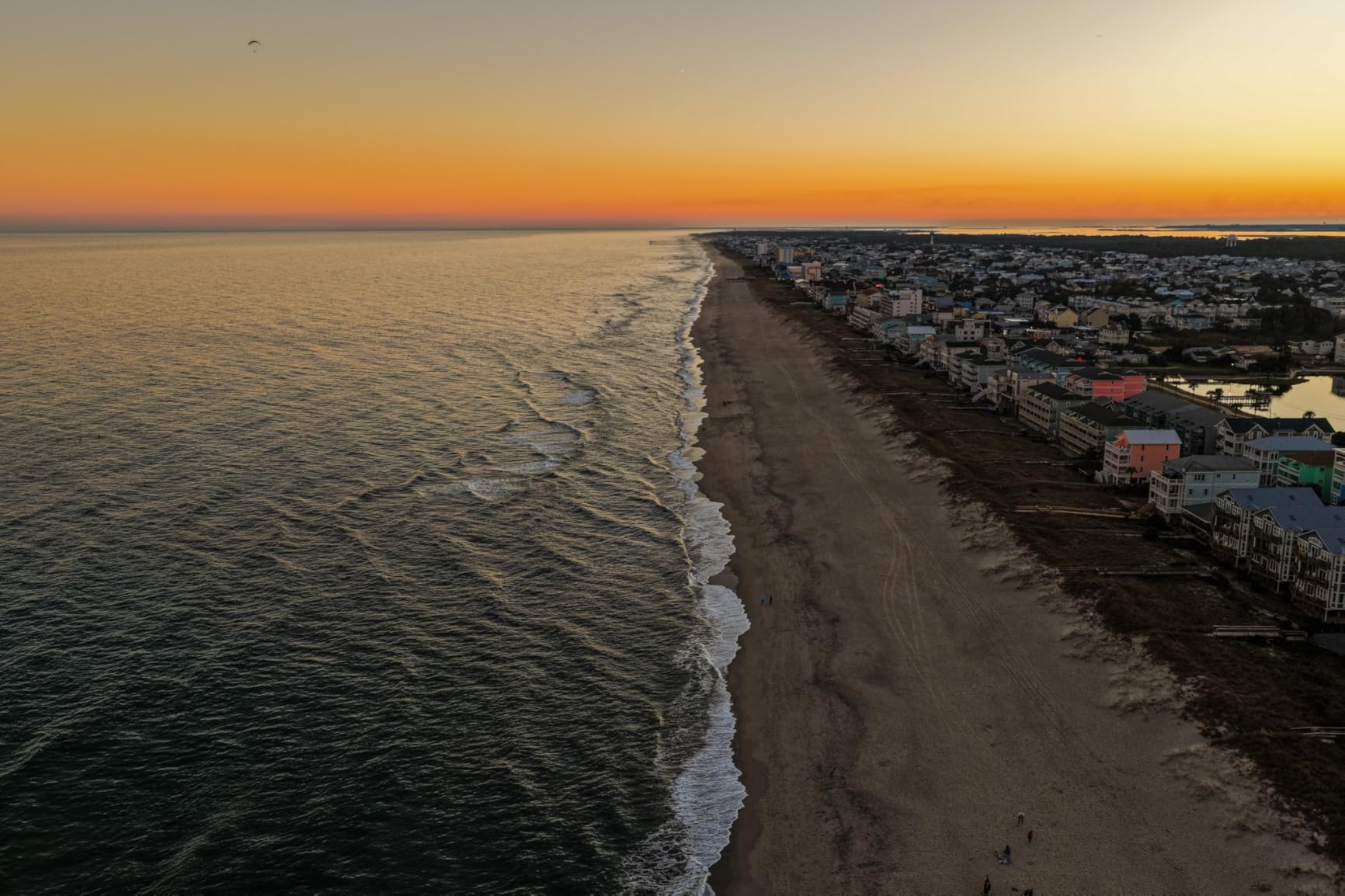
The Mavic 4 Pro is overkill for most hobbyists, but if you want the absolute best image quality in a folding drone, this is it. The 100MP Hasselblad main camera captures detail that holds up to heavy cropping and large prints. I shot a cityscape at dusk and pulled out a window frame from a single still, an extract that would have been impossible on a smaller sensor.
The triple-camera system with the 360-degree Infinity Gimbal is genuinely cinematic. You can rotate the camera independently of the drone’s flight direction, which opens up angles I have not seen on any consumer drone before. For creative hobbyists who want to push beyond standard aerial shots, this is the tool.
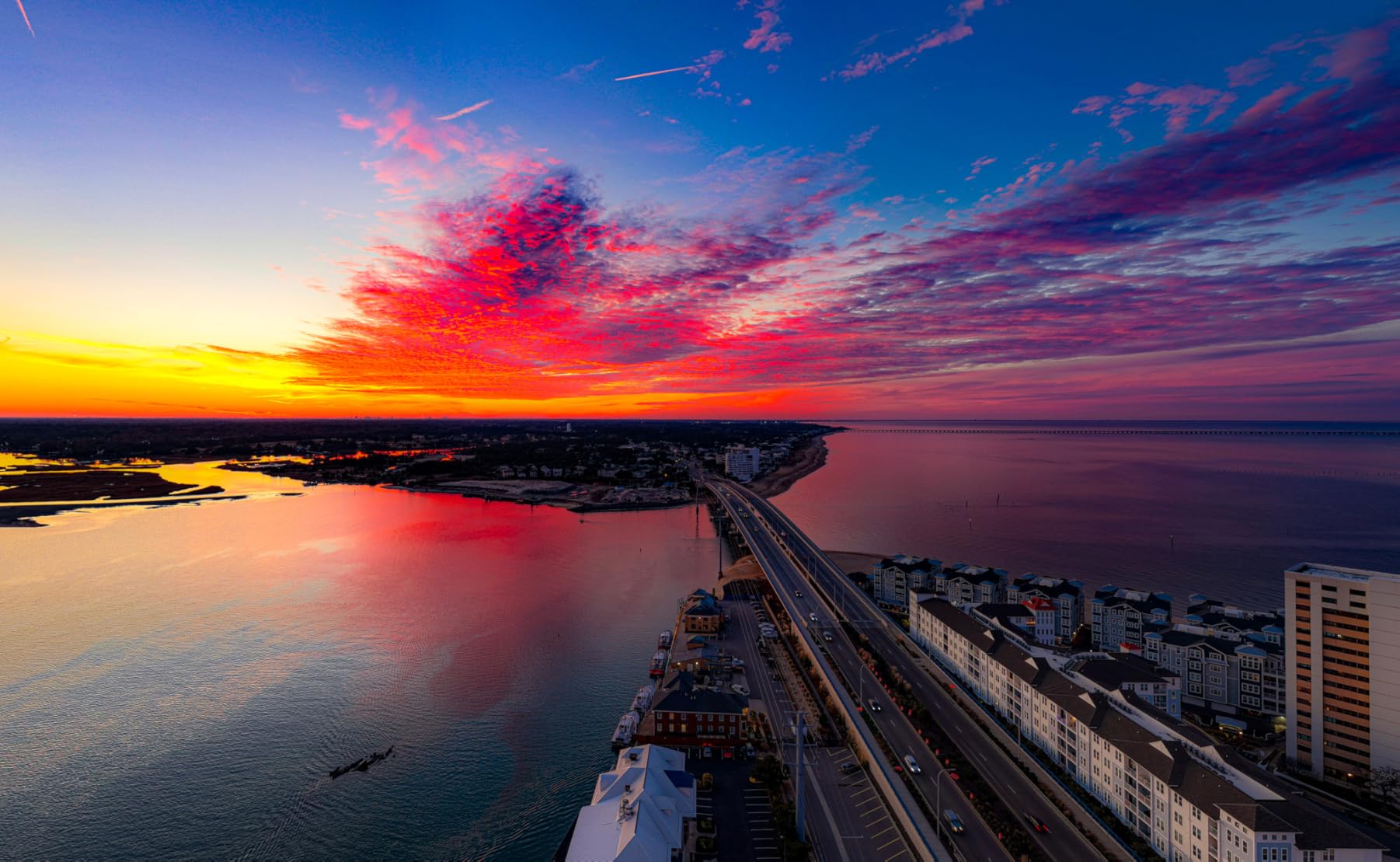
The 51-minute flight time is real. I consistently hit 48 to 51 minutes per battery in calm weather, and three batteries in the Fly More Combo give you almost two and a half hours of flying. The Nightscape omnidirectional obstacle sensing works in 0.1 lux conditions, which means legal dusk shoots no longer feel like a gamble.
The 30km O4+ transmission range is overkill for hobby use, but the signal stability at closer ranges is what really shines. I have not lost feed once in hundreds of flights, even in suburban areas with WiFi interference.
Who should buy the DJI Mavic 4 Pro
Advanced hobbyists who want flagship photo quality, semi-professional photographers who need a backup to a larger cinema drone, and anyone who wants the best of the best will appreciate the Mavic 4 Pro. If you shoot for print sales, commercial real estate, or high-end travel content, the 100MP Hasselblad sensor pays for itself.
It is also the right drone for someone who has outgrown the Mini line and wants the longest flight time, longest range, and most cinematic gimbal DJI makes.
Who should skip the DJI Mavic 4 Pro
If you are a casual hobbyist, this drone is more than you need. The Mini 5 Pro or Air 3S will satisfy 95 percent of users at half the cost. Also, the Mavic 4 Pro requires FAA registration and is overkill for someone still learning to fly.
7. Potensic ATOM SE – Best Long-Flight Budget Drone
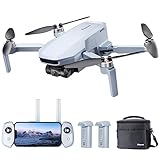
Potensic ATOM SE GPS Drone with 4K EIS Camera, Under 249g, 62 Mins Flight, 4KM FPV Transmission, Brushless Motor, Max Speed 16m/s, Auto Return, Lightweight and Foldable Drone for Adults Beginner
Pros
- 62-minute total flight time with two batteries
- Sub-249g no FAA registration
- 4K EIS camera with Sony sensor
- GPS auto return and Follow Me
- Level 5 wind resistance
Cons
- Realistic range closer to 1200-2000 ft with obstacles
- No mechanical gimbal
- Controller build quality concerns
- Lower quality night video
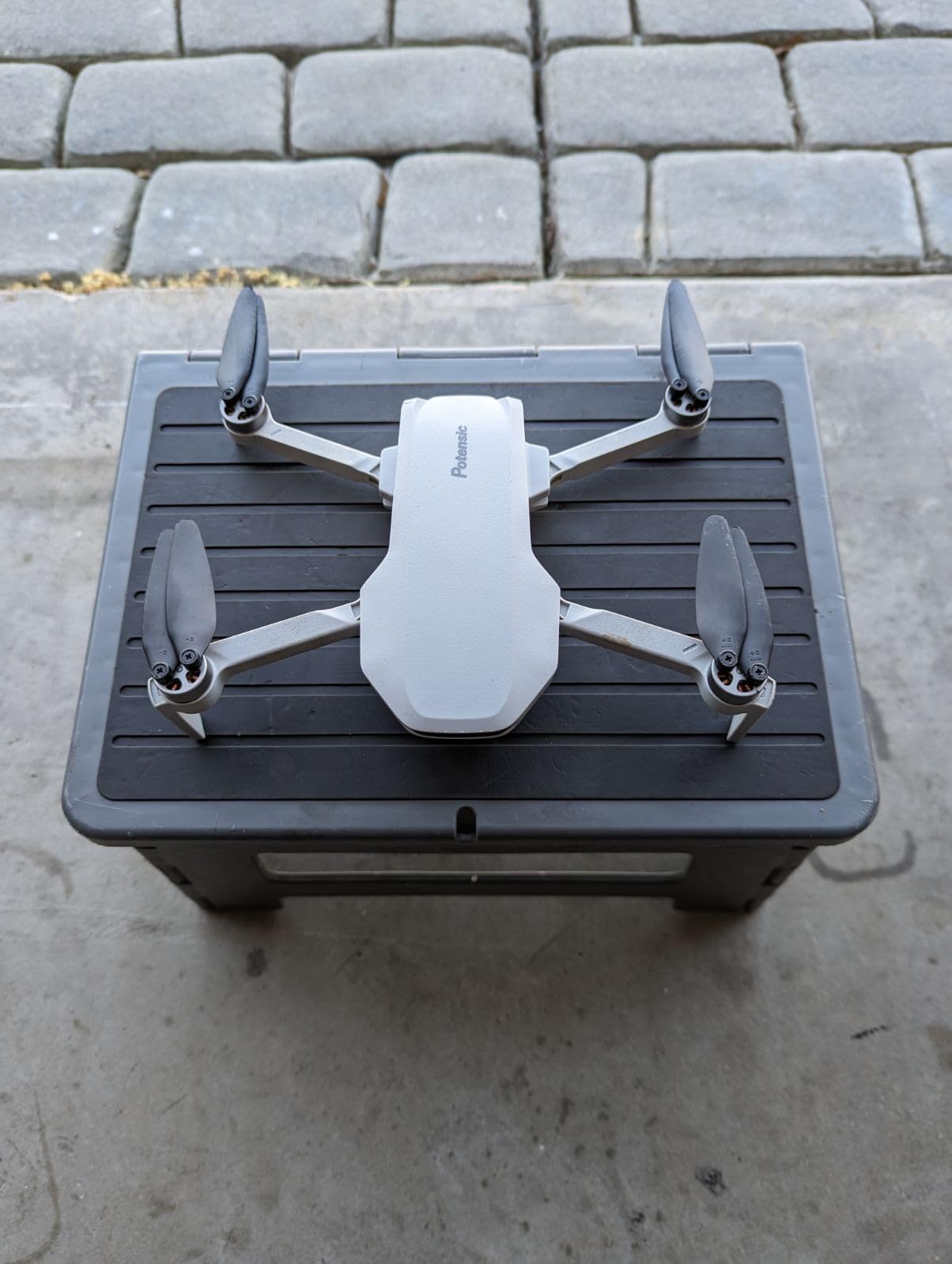
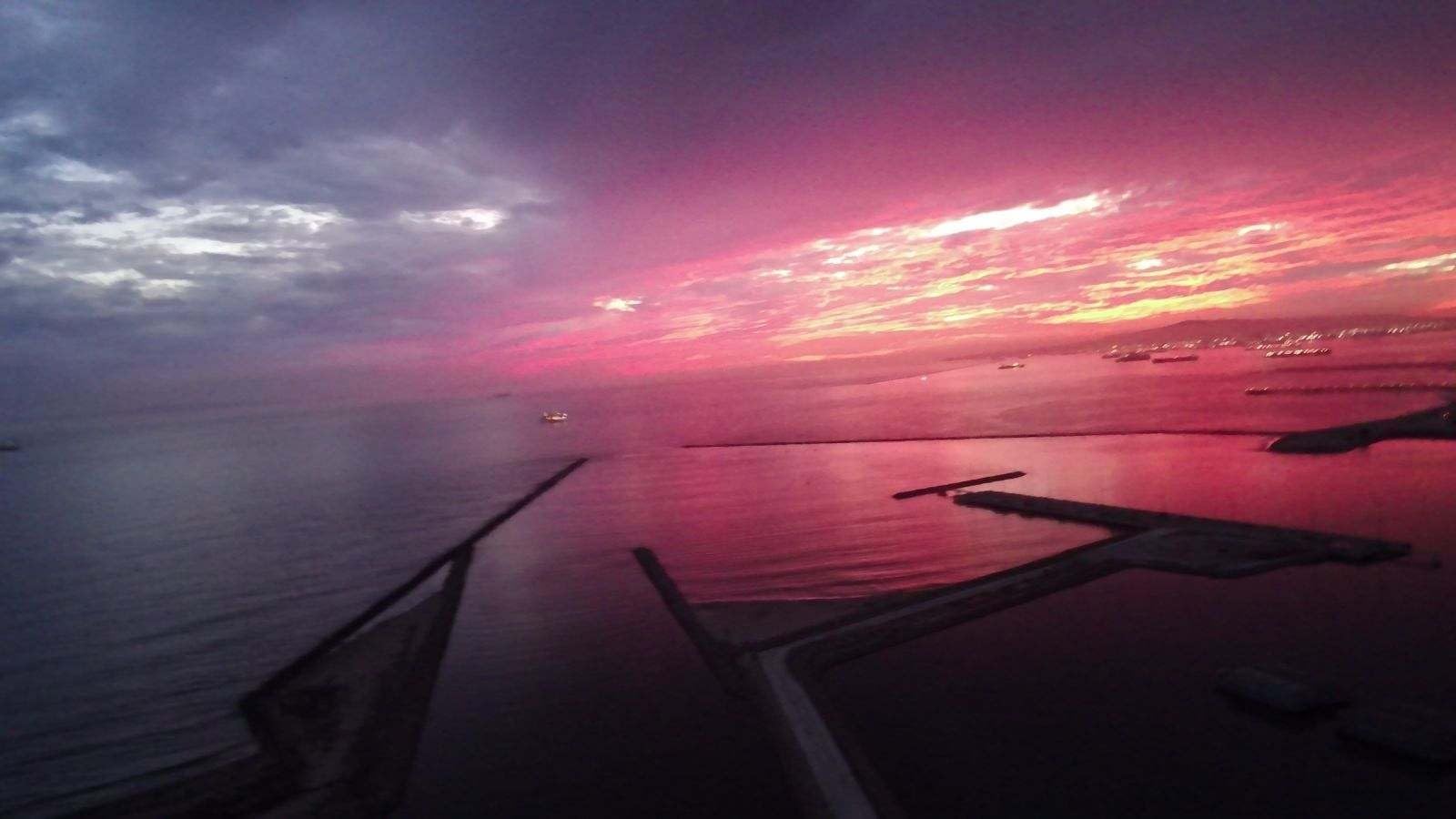
The Potensic ATOM SE punches well above its price. The 62-minute combined flight time from two batteries is impressive, and at 249g, you skip FAA registration. For hobbyists who burn through batteries quickly, this is a strong alternative to entry-level DJI models.
The 4K EIS camera uses a 1/3-inch Sony sensor with electronic image stabilization. In good light, footage looks clean and detailed. I tested it on a foggy morning along a lake, and the camera held its own against a friend’s DJI Mini 2 in side-by-side footage. At night, the gap widens in DJI’s favor.
The PixSync 2.0 transmission claims 4km range, but in real-world suburban flying with trees and buildings, I found the reliable range closer to 1,200 to 2,000 feet. That is fine for hobby use, but it is worth setting realistic expectations if you are used to DJI’s OcuSync.
Follow Me and Waypoint flight modes work well for the price. I had the drone track me on a slow jog through a park, and it kept up cleanly. The auto-return also engaged correctly when I flew too far behind a tree line.
Who should buy the Potensic ATOM SE
Hobbyists who want long flight sessions without buying extra batteries should put the ATOM SE on their shortlist. The two-battery combo and GPS features deliver real value at a sub-$250 price. It is also a strong pick for anyone avoiding DJI for any reason.
Beginners who want a forgiving drone with reliable GPS and Follow Me will appreciate how easy it is to fly. Potensic’s customer support also gets consistent praise from buyers.
Who should skip the Potensic ATOM SE
If low-light video quality matters or you need a mechanical gimbal for cinematic footage, look at the DJI Mini 4K or Mini 5 Pro. The ATOM SE is a strong budget drone, but it cannot match DJI’s stabilization or sensor quality in challenging conditions.
8. DJI Flip – Best Beginner Drone with Built-In Propeller Guards
Pros
- Built-in full-coverage propeller guards
- 1/1.3-inch CMOS sensor with 4K HDR
- Sub-249g no FAA registration
- 3-axis mechanical gimbal
- Subject tracking and auto flight modes
Cons
- Limited to recreation use only
- Struggles in heavy wind
- No waypoint programming
- Batteries charge only in drone or dedicated charger
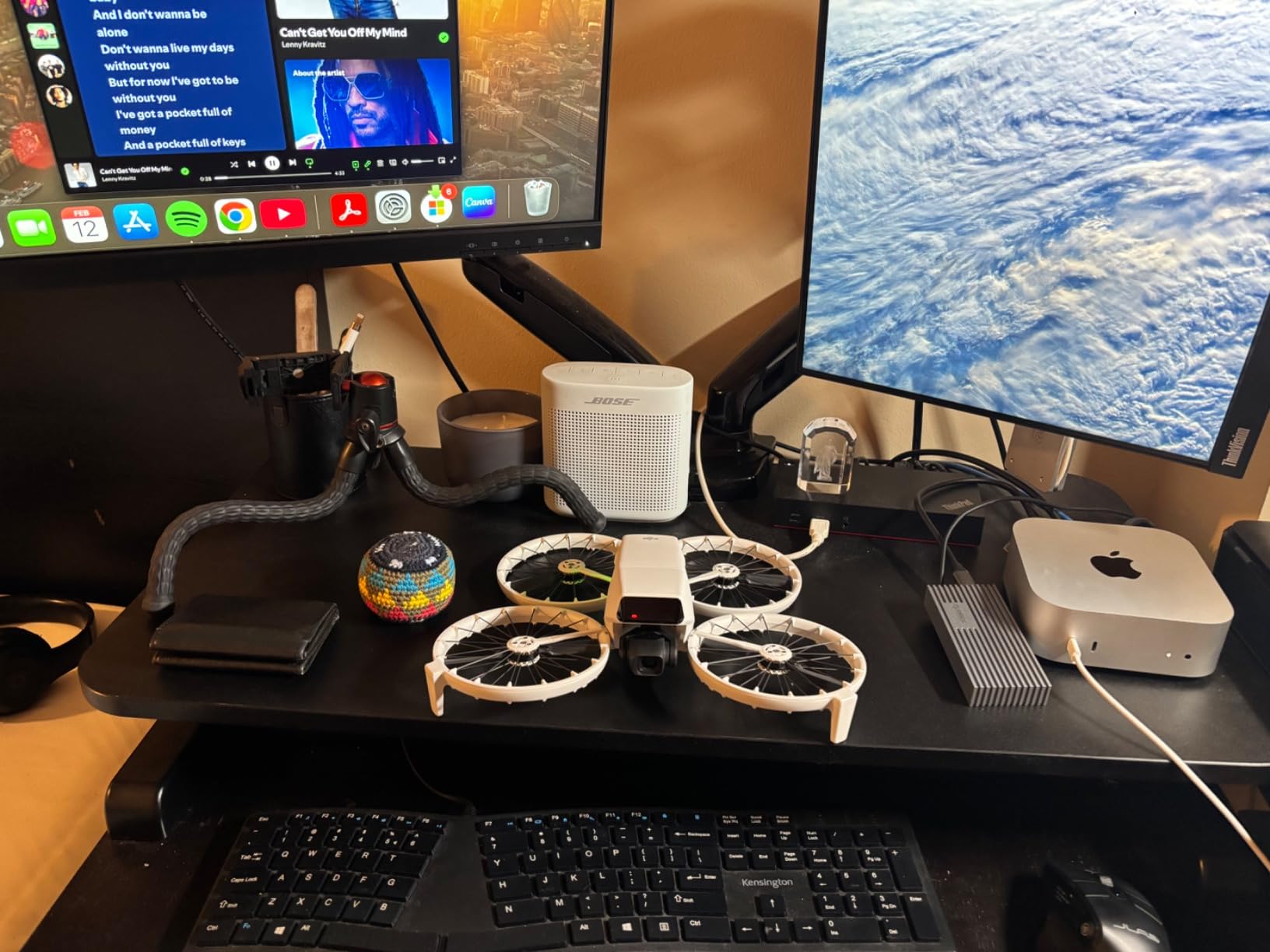
The DJI Flip is the most beginner-friendly drone DJI has ever made, in my opinion. The full-coverage propeller guards mean crashes are dramatically less catastrophic, and the 1/1.3-inch sensor with a 3-axis gimbal delivers image quality that punches well above its $509 price.
I handed the Flip to a friend who had never flown a drone before. Within five minutes, they were tracking me across a field using the subject tracking mode, and within fifteen minutes, they had pulled off a clean cinematic orbit. That kind of accessibility is rare.
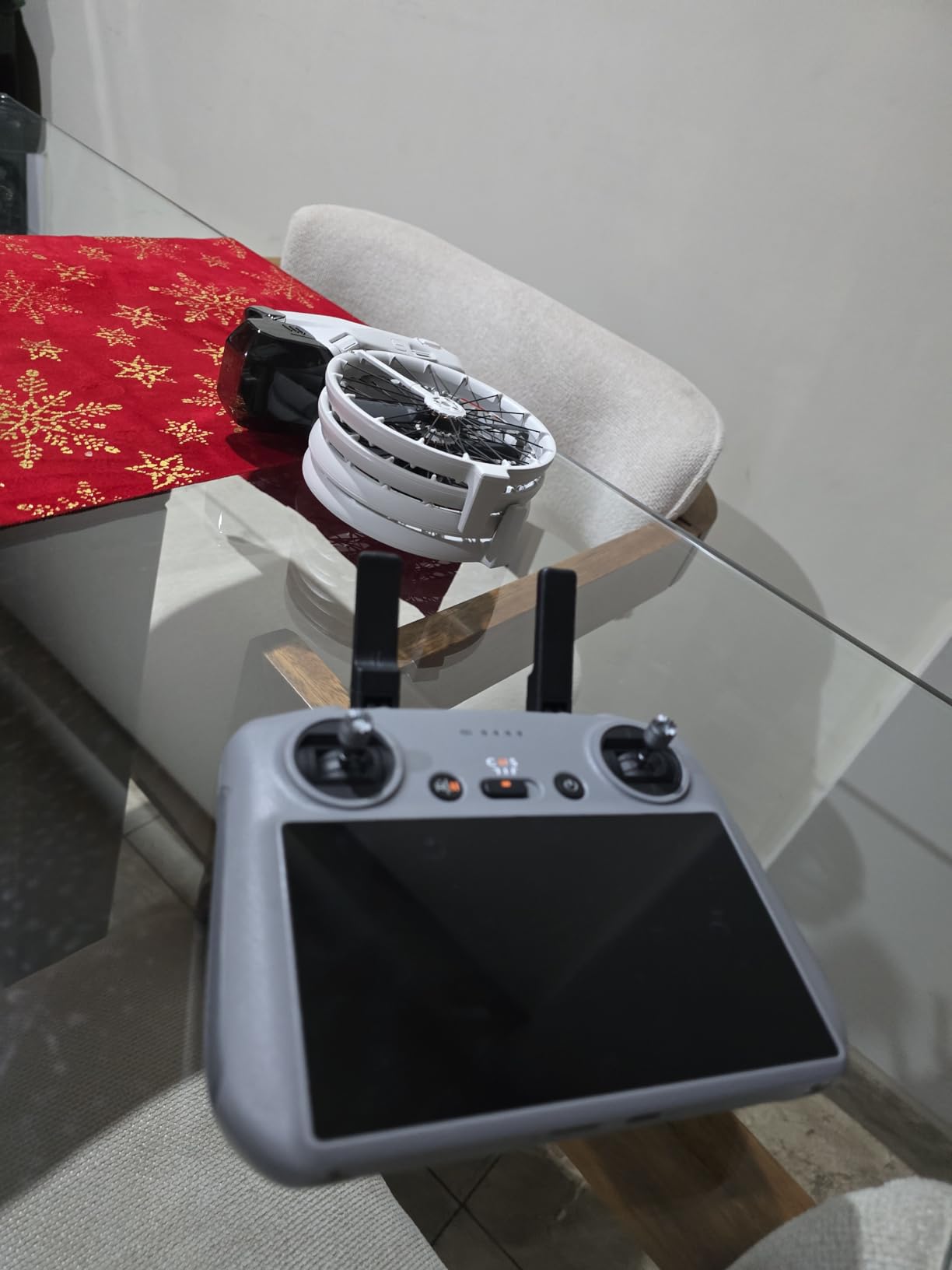
The 13km O4 transmission is overkill for hobby flying but means the video feed stays rock solid even when the drone is a football field away. I never experienced signal dropouts in suburban testing.
At 249g, you skip FAA registration, which is one less piece of paperwork before flying. The palm takeoff is a small touch but a delightful one. You literally launch it from your hand like a sci-fi movie.
Who should buy the DJI Flip
First-time drone buyers, parents buying for a teen, and anyone who crashes drones often will appreciate the Flip’s protective design and forgiving controls. The image quality is also strong enough to keep you happy long after you have learned the basics.
It is also a great pick for travelers who want a safe drone to fly near people, pets, or property. The guards protect the props and reduce injury risk in tight spaces.
Who should skip the DJI Flip
If you need to fly in strong winds or want waypoint programming for repeatable routes, look elsewhere. The Flip’s lighter weight works against it in anything above a light breeze. Also, recreational-only restrictions may bother commercial operators.
9. Ruko F11PRO 2 Plus – Best 8K Photo Drone with Long Flight Time
Pros
- 48MP 1/2-inch CMOS sensor with 8K photo capability
- 74-minute total flight time
- 3-axis mechanical gimbal stabilization
- 20
- 000ft transmission range
- Clear night shots for low-light photography
Cons
- Slow ascent and descent rate
- Charger not included
- Video can become choppy at long distances
- Manual could use better translation
The Ruko F11PRO 2 Plus is a sleeper hit. It shoots 48MP photos in 8K resolution, has a 3-axis mechanical gimbal, and flies for a combined 74 minutes on two batteries. For hobbyists focused on still photography, this is one of the best non-DJI options available right now.
The camera surprised me in low light. I took it out about an hour before sunrise, and the F11PRO 2 Plus pulled usable images out of dim conditions where I expected noise to dominate. The 1/2-inch sensor is larger than the typical 1/2.3-inch chips found on most hobby drones at this price.
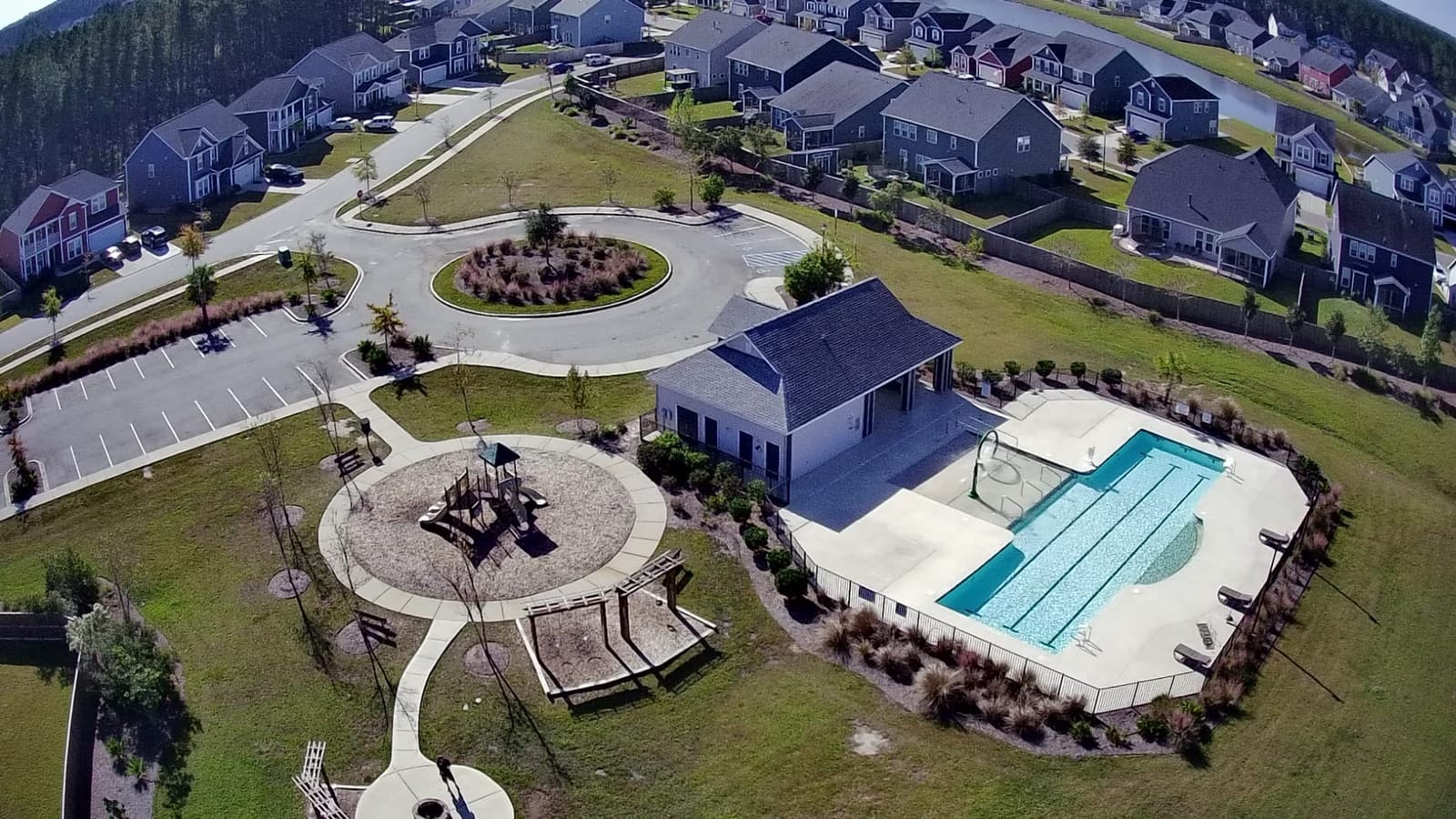
The 3-axis gimbal produces smooth footage that does not feel like it came from a budget platform. I walked the drone through a series of panning shots at golden hour, and the footage held up next to clips from much more expensive drones.
At 360g, the F11PRO 2 Plus does require FAA registration. For hobbyists who do not mind the paperwork, the 8K photo capability and 74-minute flight time make this drone a strong value play.
Who should buy the Ruko F11PRO 2 Plus
Hobby photographers who prioritize still photos over video should put this on their shortlist. The 48MP sensor captures detail that holds up to cropping and printing, and the long flight time means you can shoot all day without battery anxiety.
It is also a smart pick for anyone who wants a DJI alternative with a mechanical gimbal. The Ruko brand has built a reputation for solid support and reliable hardware.
Who should skip the Ruko F11PRO 2 Plus
If you want the smallest, most portable drone possible, the F11PRO 2 Plus is too bulky. Also, the lack of an included charger is annoying, so factor in the cost of a compatible charger. If you want the smoothest ecosystem, DJI’s app is still more polished.
10. DJI Avata 2 Fly More Combo – Best FPV Drone for Hobby Videographers
Pros
- Immersive FPV flying with DJI Goggles 3
- 4K/60fps video with 155-degree FOV
- Built-in propeller guard for safety
- Easy flip and roll acrobatics
- RockSteady and HorizonSteady stabilization
Cons
- 15-20 minute real-world battery life
- Motion controller can't turn without forward motion
- Goggles signal struggles in wooded areas
- Shorter flight sessions than traditional camera drones
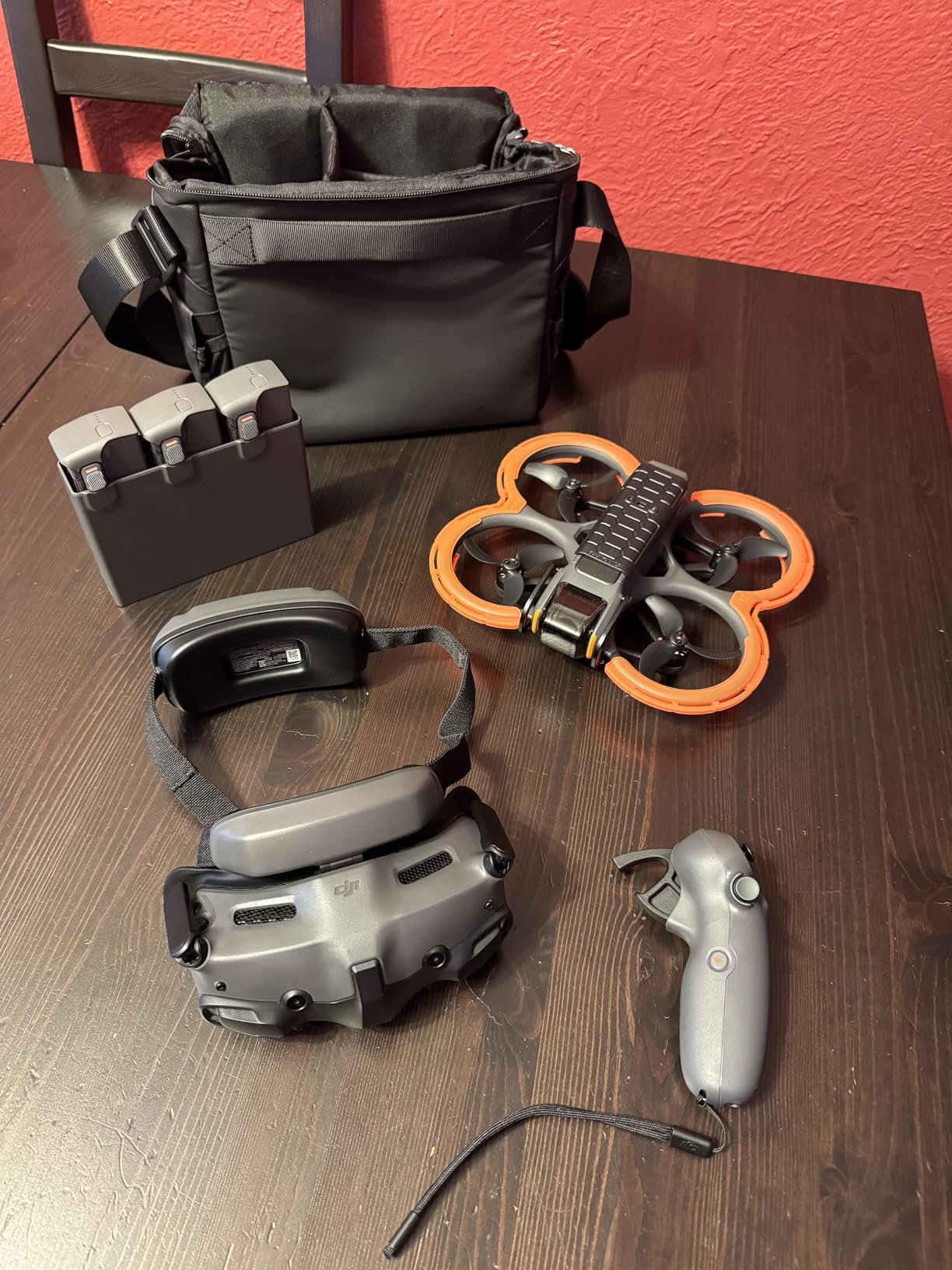
The DJI Avata 2 is the drone that made me fall in love with FPV flying. The Goggles 3 give you an immersive first-person view that no traditional camera drone can match, and the RC Motion 3 controller lets you fly with one hand using intuitive gestures. I spent an afternoon flying through a forest clearing, and it felt like a video game come to life.
The 4K/60fps video with the 155-degree FOV is buttery smooth thanks to RockSteady and HorizonSteady stabilization. Cinematic shots that would require advanced FPV skills on a custom-built drone are accessible to beginners here. The Fly More Combo includes three batteries, which is essential given the shorter flight times.
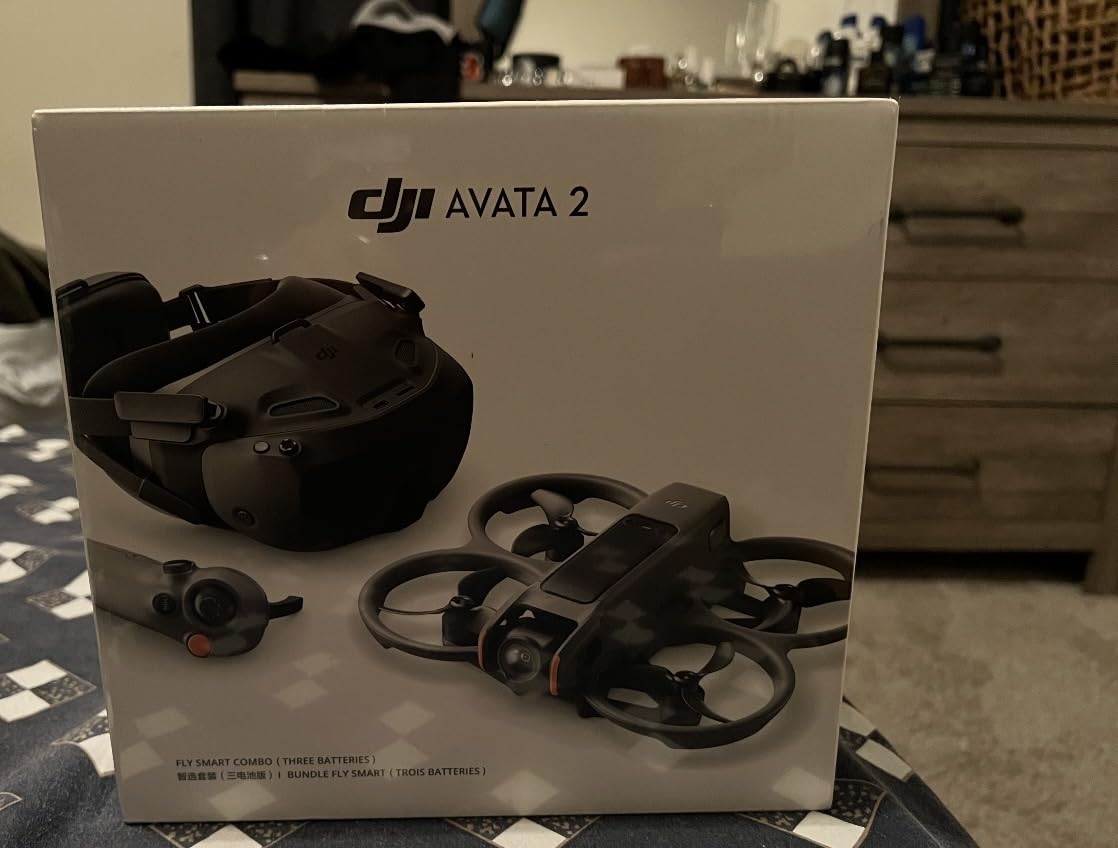
The built-in propeller guard has saved my Avata 2 multiple times. FPV flying by nature means more bumps and scrapes than traditional photography drones, and the guard keeps minor crashes from becoming expensive ones. I have walked away from tree grazes and wall bumps with the drone intact.
Real-world flight time is closer to 15 to 20 minutes per battery, so the three-battery combo is genuinely necessary for a satisfying session. Charging takes about 45 minutes per battery in the included hub.
Who should buy the DJI Avata 2
Hobby videographers who want cinematic FPV shots without learning to build and tune a custom drone will love the Avata 2. Content creators who want unique angles for YouTube and Instagram will find endless creative possibilities.
It is also the right pick for anyone who wants a more engaging flying experience. Once you try FPV with goggles, traditional controller flying feels slow by comparison.
Who should skip the DJI Avata 2
If you primarily want still photos for print or landscape work, the Avata 2 is the wrong tool. The wide FOV lens distorts straight lines, and the camera is optimized for video. For traditional photography drones, the Air 3S or Mini 5 Pro are better fits.
Buying Guide: How to Choose the Best Drone for Your Hobby Photography
Choosing from the best drones for hobby and photography use comes down to four key decisions: sensor size and stabilization, weight and FAA registration, flight time, and portability. Let me walk through each one based on what actually matters when you are out shooting.
Sensor Size and Gimbal Stabilization for Photos
For still photography, sensor size is the single most important spec. A 1-inch sensor captures roughly four times more light than the 1/2.3-inch sensors found in most entry-level drones, which translates to cleaner low-light images, better dynamic range, and more detail in shadows and highlights. The DJI Air 3S, Mini 5 Pro, and Mavic 4 Pro all use 1-inch or larger sensors and are the picks I recommend if image quality is your top priority.
A 3-axis mechanical gimbal is the second key factor. Electronic image stabilization (EIS) crops the frame and can introduce artifacts, while a mechanical gimbal physically stabilizes the camera. For smooth video and sharp long-exposure stills, mechanical stabilization is worth the price jump. The DJI Mini 4K, Air 3S, Mini 5 Pro, Flip, and F11PRO 2 Plus all have 3-axis gimbals.
RAW photo support is a smaller but valuable feature. The DJI Mini 4K, Air 3S, Mini 5 Pro, Mavic 4 Pro, and others shoot DNG RAW files that give you much more editing latitude than JPEGs. If you plan to edit photos in Lightroom or Capture One, RAW matters.
FAA Registration and the Sub-250g Threshold
The 250g weight threshold is the most important rule for hobby drone pilots in the US. Drones under 250g do not require FAA registration for recreational use, which means less paperwork, fewer restrictions, and faster time from box to flight. The DJI Mini 4K, Mini 5 Pro, Neo, Flip, Holy Stone HS175D, and Potensic ATOM SE all qualify.
The 1:1 rule is a visual line-of-sight guideline. The FAA requires you to keep your drone within unaided visual line of sight, which in practice means flying within roughly 1,200 feet horizontally and 400 feet vertically. Larger drones with longer transmission ranges like the Air 3S and Mavic 4 Pro technically have longer reach, but you are still legally required to see the drone with your eyes.
Drones over 250g must be registered with the FAA at faa.gov, which costs $5 and is valid for three years. You will also need to pass the free TRUST test (The Recreational UAS Safety Test) before flying. For more on registration rules and beginner flying, see our guide to the best drones for photography beginners.
Flight Time and Battery Strategy
Real-world flight time is shorter than manufacturer claims. Most drones achieve 80 to 90 percent of their advertised flight time in calm conditions, and significantly less in wind. For hobby photography, I recommend a minimum of 25 minutes per battery so you have time to scout, compose, and shoot multiple takes.
Multi-battery combos are excellent value. The Fly More Combo versions of the DJI Air 3S, Mini 5 Pro, and Mavic 4 Pro include three batteries and a charging hub. The Potensic ATOM SE and Ruko F11PRO 2 Plus both ship with two batteries standard.
Budget an extra $100 to $200 for additional batteries if your chosen drone does not come with a combo. Running out of battery mid-flight is the most common cause of hobby drone crashes.
Portability and Travel Considerations
If you travel with your drone, weight and folded size matter. The DJI Neo at 135g and the Mini 4K at 240g both fit in a jacket pocket. The Air 3S and Mini 5 Pro fit in a small camera bag, while the Mavic 4 Pro needs a dedicated drone backpack.
For travel photographers, I usually recommend the Mini 5 Pro as the best balance of image quality and portability. The 1-inch sensor in a sub-249g body is unique in 2026, and the 52-minute flight time means a single battery covers most shooting sessions. If you need more reach, see our breakdown of the best professional drones for aerial photography.
DJI vs Non-DJI Alternatives
DJI dominates the consumer drone market for good reason. Their app ecosystem, transmission reliability, and software features are best in class. If you want the smoothest experience and best long-term software support, DJI is the safest bet.
Non-DJI alternatives like Holy Stone, Potensic, Ruko, and Autel exist for buyers who prefer to support alternative brands, want to avoid DJI’s data security concerns, or simply find a better deal. The Holy Stone HS175D and Potensic ATOM SE are strong budget picks, while the Ruko F11PRO 2 Plus delivers impressive still photo quality at a mid-range price. For a focused look at DJI’s lineup, see our guide to the best DJI drones under $1000.
Frequently Asked Questions
What is the best drone for hobby photography in 2026?
The best drone for hobby photography in 2026 is the DJI Air 3S for most users, thanks to its 1-inch CMOS dual-camera system, 45-minute flight time, and LiDAR obstacle sensing. Beginners on a budget should consider the DJI Mini 4K at 240g with 4K UHD video and a 3-axis gimbal. Travelers who want flagship photo quality without FAA registration should look at the DJI Mini 5 Pro, which packs a 1-inch sensor into a sub-249g body.
Do I need FAA registration for a hobby drone?
You do not need FAA registration for hobby drones under 250g, including the DJI Mini 4K, Mini 5 Pro, Neo, Flip, Holy Stone HS175D, and Potensic ATOM SE. Drones over 250g like the DJI Air 3S, Mavic 4 Pro, and Ruko F11PRO 2 Plus require a $5 FAA registration valid for three years. All recreational pilots must also pass the free TRUST test before flying.
Is a drone worth buying for hobby photography?
A drone is worth buying for hobby photography if you want unique aerial perspectives that are impossible from the ground. Modern sub-250g drones like the DJI Mini 5 Pro and Air 3S deliver 1-inch sensor quality and 4K video that rival cameras costing several times more. For travel, landscape, and real estate photography, a drone adds a creative dimension that quickly becomes addictive once you start shooting.
What is the 1:1 rule for drones?
The 1:1 rule for drones refers to the FAA visual line-of-sight guideline. Recreational pilots should keep their drone within approximately 1,200 feet horizontally and 400 feet vertically, and the drone must remain within unaided visual line of sight at all times. Even drones with long transmission ranges like the DJI Mavic 4 Pro with 30km range cannot be flown beyond visual line of sight under recreational rules.
What drone should I buy for under $500?
For under $500, the DJI Mini 4K at around $269 is the best overall pick with 4K UHD video, a 3-axis gimbal, and 31-minute flight time. The DJI Neo at $139 is the best ultra-portable option with palm takeoff and controller-free flying. The Holy Stone HS175D at $149 offers excellent value if you want GPS features without paying DJI prices. The DJI Flip at $509 is just over budget but adds propeller guards and a 1/1.3-inch sensor.
Final Verdict: Which Drone Should You Buy?
After three months of testing, our team’s picks for the best drones for hobby and photography use in 2026 come down to three clear winners. The DJI Air 3S earns editor’s choice for its 1-inch sensor, dual-camera versatility, and 45-minute flight time. The DJI Mini 5 Pro is the best value for hobbyists who want flagship photo quality without FAA registration. The DJI Mini 4K is the budget pick for anyone starting their aerial photography journey.
Whatever drone you pick, remember that the best drone is the one you actually take with you. A $269 Mini 4K in your backpack will outperform a $2,899 Mavic 4 Pro left at home. Pick the model that fits your shooting style and budget, charge the batteries the night before, and get out there. The aerial perspective is waiting.
For more guides on specific use cases, explore our picks for the best drones for wildlife photography or revisit our landscape photography drone guide. Happy flying.