
Choosing a camera drone is easier when you begin with the images you want to bring home. A big sensor can matter for the file, a three-axis gimbal can matter for the frame, and a second or third battery can matter more than either once you reach a great location.
This photography-first guide compares eight DJI drones by their verified camera specifications, flight equipment, controls, weight, and safety features. I have separated conventional gimbal drones from the FPV models because they create different kinds of work, even when both record 4K video.
The short answer is the DJI Mini 3 for most photographers. Its 48MP stills, 4K HDR video, true vertical shooting, 248g weight, and three-axis mechanical gimbal make it a balanced compact aerial camera; the Mini 4K is a simple DNG-capable starter, and the Mini 5 Pro is the advanced stills choice.
The top 3 DJI picks cover balanced photography, 4K basics, and advanced imaging
Choose the Mini 3 for the most broadly useful mix of still resolution, vertical framing, and compact flight. Choose the Mini 4K when a straightforward three-axis-gimbal 4K workflow is your priority, and choose the Mini 5 Pro if its 1-inch sensor, 4K/60fps HDR, tracking, and sensing fit your work.
These DJI camera drones are the eight verified choices in 2026
The overview emphasizes features that change a photography workflow. Mini drones are made for compact, deliberate camera flying; Avata models are for goggles-led FPV movement, wide views, and more specialized editing.
| Product | Specifications | Action |
|---|---|---|
 DJI Mini 3 DJI Mini 3 |
|
Check Latest Price |
 DJI Neo 2 DJI Neo 2 |
|
Check Latest Price |
 DJI Avata 2 DJI Avata 2 |
|
Check Latest Price |
 DJI Mini 2 SE Fly More DJI Mini 2 SE Fly More |
|
Check Latest Price |
 DJI Mini 4K DJI Mini 4K |
|
Check Latest Price |
 DJI Mini 5 Pro DJI Mini 5 Pro |
|
Check Latest Price |
 DJI Flip DJI Flip |
|
Check Latest Price |
 DJI Avata 360 DJI Avata 360 |
|
Check Latest Price |
1. DJI Mini 3 is the best all-round aerial camera for most photographers
Pros
- 48MP still photos
- True vertical shooting
- 38-minute flight time
- Level 5 wind resistance
Cons
- No prop guards included
- Extended battery is separate
The Mini 3 takes the first spot because its 48MP still-photo specification and three-axis mechanical gimbal answer two core photography needs: a detailed source file and stable framing. It also records 4K HDR video and supports true vertical shooting, so a wide landscape frame and a portrait-format social clip do not require the same compromise.
Its 248g weight makes it easy to keep in a travel bag, while its stated 38-minute flight time, GPS Auto Return, QuickShots, Panorama modes, and Level 5 wind resistance provide useful shooting flexibility. The stated 10km transmission is a connection benefit in suitable locations, not a reason to fly beyond the legal visual range.
The main planning point is the included equipment. One Intelligent Flight Battery is listed, and propeller guards are not included, so I would plan power and protection before a day with several locations.
The Mini 3 is right when high-resolution stills and vertical composition lead the decision
Choose it for travel photography, first aerial work, and creator shoots that mix stills, 4K clips, panoramas, and vertical posts. Its 48MP specification gives it more still-image headroom than the 12MP Mini 4K, Mini 2 SE, and Neo 2 entries here.
The conventional included remote and a mechanical three-axis gimbal are also a natural match for a careful framing routine. I would choose this setup over gesture-first control for a planned landscape composition.
The Mini 3 needs extra kit planning when longer sessions are the goal
It is not the pick for full-coverage protection in the box or goggles-led FPV flight. The extended battery is listed separately, so do not assume the longest flight claim applies to the supplied configuration.
Move to the Mini 5 Pro if a 1-inch sensor, omnidirectional sensing, 4K/60fps HDR, and tracking are requirements. For a conventional compact aerial camera, the Mini 3 is the clearest starting recommendation.
2. DJI Neo 2 is the easiest route to spontaneous hands-free clips
Pros
- Palm takeoff and landing
- Gesture control
- ActiveTrack
- Full-coverage prop guards
Cons
- No remote included
- 12MP still photos
The Neo 2 is built around removing the friction between seeing a moment and starting a flight. Palm takeoff and landing, gesture control, ActiveTrack, omnidirectional obstacle sensing, and full-coverage propeller guards make it suited to quick personal footage rather than a long, controller-led landscape session.
At 151g, it is the lightest model in this guide and it records 4K video. This drone-only listing does not include a remote controller, which is the first package detail I would weigh if the intended work needs slow, precise framing.
Its 12MP stills and listed 7km maximum range place it in a different role from the Mini 3. For a walking clip, a self-portrait, or a tracking shot in clear open space, its fast launch routine can be more useful than maximum still resolution.
The Neo 2 is right when palm takeoff and ActiveTrack are more useful than manual camera control
Choose it if you want a lightweight 4K camera drone that starts and lands from your palm and follows a subject. The protected design is reassuring for learning the basics, but it never removes the need for an open area and a careful preflight check.
The listing also notes Apple Watch compatibility for live view. That may suit a creator whose priority is a quick monitored capture rather than a conventional remote-controller experience.
The Neo 2 is less suitable when large prints and detailed landscape edits matter
Its 12MP resolution does not offer the same crop latitude as the Mini 3’s 48MP files or the Mini 5 Pro’s 50MP specification. Photographers who print, crop hard, or edit a still file extensively should prioritize those models instead.
Because the supplied package is drone only, decide how you want to control and frame before buying. That decision has a greater effect on daily use than the small size alone.
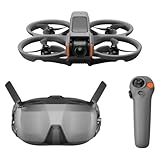
3. DJI Avata 2 is the best guarded FPV option for dynamic video
Pros
- Goggles and motion controller included
- 155 degree view
- Built-in propeller guard
- RockSteady stabilization
Cons
- 377g weight
- FPV workflow is specialized
The Avata 2 is for the photographer or filmmaker whose idea of an aerial shot involves moving through a scene, not hovering above it. It combines a 1/1.3-inch sensor, 4K/60fps capture, a 155-degree field of view, RockSteady and HorizonSteady stabilization, and O4 video transmission.
The Fly Smart Combo includes Goggles N3 and RC Motion 3, so the immersive control system is part of the package. Its integrated propeller guard and One-Push Acrobatics for flips, rolls, and 180-degree drifts support a closer, more active FPV style.
At 377g, this is not a Mini-class drone. Check registration, Remote ID, goggles-based operating rules, and location-specific restrictions before a flight, particularly when travelling.
The Avata 2 is right when motion, immersion, and a very wide view define the shot
Choose it for action sequences and FPV video where the included goggles and motion controller are advantages, not distractions. The 155-degree view and stabilized 4K/60fps capture are what give the Avata 2 its distinctive footage.
The built-in guard is valuable for the intended flying style, though it is not permission to fly close to people, wires, or structures. Start with a spacious location and simple flight lines.
The Avata 2 is not the direct choice for a traditional stills workflow
Its 12MP still-photo specification and ultra-wide perspective are designed for a different visual language than a Mini 3 landscape image. Choose a gimbal Mini when vertical framing, high-resolution stills, and slow composition are central.
FPV equipment rewards practice. I would learn the control response in open space before attempting any acrobatic mode or a close movement through a scene.
4. DJI Mini 2 SE Fly More Combo is the best battery-rich kit for beginners
Pros
- Three-battery package
- 93 minutes total flight time
- 10km transmission
- Shoulder bag included
Cons
- 2.7K rather than 4K
- 12MP still photos
The Mini 2 SE Fly More Combo makes its case through flight readiness. It includes three batteries for a stated 93 minutes of total flight time, plus a two-way charging hub, shoulder bag, and 360-degree propeller guard.
That addresses a common beginner frustration: ending a day after one short flight just as the location and confidence improve. A three-axis gimbal, 10km transmission, Auto Return to Home, QuickShots, and a weight under 249g round out a practical learning kit.
The trade-off is simple. It records QHD 2.7K video and 12MP stills, rather than 4K or the Mini 3’s 48MP still-photo specification.
The Mini 2 SE Fly More Combo is right when more flying practice matters than advanced capture
Choose it when a three-battery setup, protection, and a carry bag will help you fly often. The 93-minute figure is a total across batteries, not one continuous flight, and that is exactly why the package works well for a beginner day out.
Its three-axis gimbal and QuickShots make stable, repeatable footage possible while you learn takeoff, landing, return-to-home behavior, and basic composition.
The Mini 2 SE Fly More Combo is not the answer when 4K or detailed stills are mandatory
For 4K delivery, DNG support, or larger still files, choose a Mini 4K, Mini 3, or Mini 5 Pro. The Mini 2 SE is the sensible practice-focused kit, not the specification leader.
Even with a light drone, local rules still matter. Confirm the applicable authority requirements before flying rather than assuming a lighter aircraft is exempt from every responsibility.
5. DJI Mini 4K is the direct 4K choice for photographers who edit DNG files
Pros
- 4K Ultra HD
- 3-axis gimbal
- DNG image support
- Level 5 wind resistance
Cons
- 12MP stills
- One battery included
The Mini 4K is a straightforward conventional camera drone: 4K/30fps video, a three-axis gimbal, a 246g body, and GPS Return to Home. Its listed support for DNG and JPEG is especially important for photographers who want an editable aerial file rather than only a finished JPEG.
DNG gives an editor more room for exposure and white-balance choices, even with the camera’s stated 12MP resolution. Its 10km DJI O2 transmission, 4x digital zoom, Level 5 wind resistance, and stated 31-minute maximum flight time make it a useful basic platform for learning.
The package lists one battery and in-app tutorials with one-tap takeoff and landing. Plan a sensible charging routine if you want to visit several sites rather than treating the stated maximum as a whole-day allowance.
The Mini 4K is right when a basic 4K workflow and DNG support are the baseline
Choose it if you want a practical way to add 4K video and editable stills to an existing photo workflow. The mechanical gimbal matters here: it supports deliberate framing more naturally than an action-camera approach.
The compact 246g body is easy to pack, and its wind-resistance specification is helpful context when assessing a location. Assess actual conditions carefully; a specification is not a substitute for a safe launch decision.
The Mini 4K falls behind when extra photo resolution and HDR video are the aim
The 12MP stills and 4K/30fps ceiling are clear limits against the Mini 3 and Mini 5 Pro. Pick the Mini 4K for a clean entry workflow, not because it offers every advanced camera feature.
If extended practice time is more useful than 4K, the Mini 2 SE bundle has three included batteries. If image resolution is more useful, the Mini 3 is the more natural next model.
6. DJI Mini 5 Pro is the strongest compact choice for sensor size and tracking
Pros
- 1-inch CMOS sensor
- 50MP resolution
- Omnidirectional sensing
- 225 degree gimbal rotation
Cons
- Check app compatibility
- Check local night-flight rules
The Mini 5 Pro has the most photography-focused conventional-drone specification set in this guide. A 1-inch CMOS sensor, 50MP stills, 4K/60fps HDR, true vertical filming, and a 225-degree flexible gimbal bring more image-making range to a listed 249g foldable body.
It also lists Nightscape omnidirectional obstacle sensing, ActiveTrack 360 degrees, a stated 36-minute flight time, and 20km transmission. Those features make it the model I would look at first for moving subjects, changing light, and editing work that benefits from the larger sensor.
The supplied review data does flag user reports of app compatibility issues and notes that local night-flying requirements must be checked. Set up, update, and test the system at home before relying on it at an important location.
The Mini 5 Pro is right when a larger sensor and advanced subject work matter most
Choose it for the 1-inch sensor, 50MP specification, 4K/60fps HDR, flexible gimbal, and ActiveTrack 360 degrees. It is the strongest fit here for a photographer who expects to ask more of a compact drone than basic wide shots.
Its omnidirectional sensing can improve awareness in changing situations, but it never replaces a visual observer, a clear flight plan, or a safe distance from obstacles.
The Mini 5 Pro needs a compatibility check before it becomes your main tool
The reported app issues make an early system test important. Confirm the phone, application, controller link, and a short controlled flight before travel or an assignment.
Photographers who do not need the 1-inch sensor, tracking, or 4K/60fps HDR may prefer the simpler Mini 3. This model is the advanced choice when its documented gains will appear in the final work.
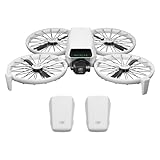
7. DJI Flip is the guarded 4K/60fps choice for family and creator flights
Pros
- Full-coverage prop guards
- 4K/60fps HDR
- Subject tracking
- Two batteries included
Cons
- App compatibility reports
- Conflicting listed weights
The DJI Flip combines full-coverage propeller guards, palm takeoff, subject tracking, automated modes, two batteries, a 1/1.3-inch CMOS sensor, and 4K/60fps HDR video. That combination suits a creator who wants more physical prop protection while filming everyday activities in a clear, controlled space.
One important detail needs care: the supplied technical details call it under 249g, while the product-details field lists 335g. Verify the exact configuration and the relevant flight requirements before treating it as a sub-249g aircraft.
Its O4 transmission is listed at up to eight miles, but the real benefit for its likely use is a stable connection for close-range tracking, not distance. Fly within the rules and within a safe visual range.
The DJI Flip is right when protective guards and a second battery are practical benefits
Choose the Flip for guarded creator clips and learning sessions where its full-coverage propeller design provides reassurance. The 1/1.3-inch sensor and 4K/60fps HDR recording give it a stronger video specification than a basic 2.7K beginner kit.
Subject tracking can also help on an open, predictable activity. It should be used as a capture aid, never as a reason to stop monitoring the aircraft and the space around it.
The DJI Flip needs configuration checks before travel and registration decisions
The conflicting listed weights mean you should not make regulatory assumptions from one product field. Confirm the exact aircraft, battery, and rules for your location before a flight.
Some users report app compatibility issues, so run the app and controller through a pre-trip test. That small step is more useful than discovering a connection problem at the shoot.
8. DJI Avata 360 is the creative pick for reframable 8K immersive footage
Pros
- 8K/60 HDR 360 video
- 120MP stills
- Three batteries included
- Omnidirectional sensing
Cons
- 455g body
- App compatibility reports
The Avata 360 is a creative FPV tool, not a substitute for a Mini travel camera. It lists 8K/60fps HDR 360-degree video, 120MP stills, 1-inch-equivalent 360-degree imaging, and the option to select the view after the flight rather than committing to one direction at takeoff.
Its Motion Fly More Combo includes Goggles N3, RC Motion 3, three batteries, a two-way charging hub, a bag, and an integrated propeller guard. The technical details also name omnidirectional obstacle sensing, 360-degree and single-lens modes, and O4+ full-HD transmission up to 20km.
Reframing is its central creative advantage. One immersive pass can supply multiple viewpoints in editing, but that benefit comes with a 360-degree post-production workflow that should be tested before a major project.
The Avata 360 is right when one FPV take must provide several editable viewpoints
Choose it for immersive projects where 8K 360-degree footage and a reframe-capable edit are the point of the shot. The dual 360-degree and single-lens modes give it more creative directions than a fixed-view drone.
Three batteries are useful because both FPV practice and 360 capture benefit from repeat attempts. The goggles and motion controller are included, making the listed kit a complete immersive system.
The Avata 360 is not the simplest choice for ordinary aerial still photography
At 455g, with goggles, motion control, and specialized 360 files, this drone asks more of the pilot and editor than a Mini model. A Mini 3 or Mini 4K is the more direct route for a standard view of a landscape or building.
Check registration, Remote ID, local rules, and app compatibility before use. Its 4.4 rating is solid, but the specialized workflow needs to match the project.
The right DJI drone follows the camera workflow you actually need
Start with the image file. The Mini 3 lists 48MP stills and 4K HDR; the Mini 4K lists DNG and JPEG support at 12MP; and the Mini 5 Pro lists a 1-inch sensor, 50MP stills, and 4K/60fps HDR. Those differences should guide a photography purchase more than automated-flight labels.
Do not assume RAW support from a camera’s class or sensor size. Among these listings, the Mini 4K expressly states DNG support, while the Mini 3 listing specifies JPEG and PNG; confirm current manufacturer specifications for any format you require.
A light drone is easier to pack but does not erase operating responsibilities
The Mini 3, Mini 2 SE, Mini 4K, and Mini 5 Pro list weights at or below 249g, while the Neo 2 is 151g. The Avata 2 lists 377g and the Avata 360 lists 455g; the Flip listing contains a weight conflict that needs verification.
Weight can affect travel convenience and local registration treatment, but rules vary by country, flight purpose, and configuration. Check the FAA or the aviation authority where you will fly, including Remote ID requirements, before takeoff.
Extra batteries are useful when a shoot needs repeat attempts and several locations
Battery anxiety is a common owner concern, and the bundle contents explain why. The Mini 2 SE Fly More Combo includes three batteries for a stated 93 minutes total, the Flip includes two, and the Avata 360 kit includes three.
The Mini 3, Neo 2, Avata 2, Mini 4K, and Mini 5 Pro listings identify one battery. Match the included power setup to the number of locations and practice flights you expect, then add a charging plan.
A gimbal drone and an FPV drone make distinctly different images
Choose a Mini drone for stable framing, travel stills, vertical composition, and a controller-led camera process. Choose an Avata for goggles, motion control, prop protection, and footage where movement through a scene is part of the visual idea.
FPV is not automatically better for photography. The Avata 2 lists 12MP stills, while the Mini 3 and Mini 5 Pro list 48MP and 50MP, which are more directly suited to still-image capture.
Obstacle sensing is helpful awareness, not permission to take risks
The Neo 2, Mini 5 Pro, and Avata 360 list omnidirectional obstacle sensing, while the Avata 2 has an integrated guard. These systems can assist a pilot, especially while learning in a changing scene.
They do not replace scouting, visual observation, or safe separation from trees, wires, structures, and people. Use a clear location for first flights and keep enough room to recover from an unexpected movement.
Your DJI drone questions are answered below
Which drone is best for photography?
The DJI Mini 3 is the best all-round choice in this guide for most photographers because it combines 48MP stills, 4K HDR video, true vertical shooting, a three-axis mechanical gimbal, and a 248g body. Choose the Mini 5 Pro instead if its 1-inch sensor, 50MP specification, 4K/60fps HDR, and omnidirectional sensing match your work.
What are the best DJI drones in order?
For conventional aerial photography, the order is DJI Mini 3, DJI Mini 5 Pro, DJI Mini 4K, DJI Mini 2 SE Fly More Combo, DJI Flip, and DJI Neo 2. For FPV work, choose DJI Avata 2 for stabilized 4K/60 immersive video or DJI Avata 360 for reframable 8K 360-degree capture.
What is the best drone for the money right now?
The DJI Mini 4K is the practical value choice for a new pilot who wants 4K/30 video, a three-axis gimbal, DNG support, GPS Return to Home, and a 246g body. The Mini 2 SE Fly More Combo may be a better fit if three included batteries and a stated 93 minutes of total flight time matter more than 4K video.
What drones should I buy if DJI availability changes?
First confirm current DJI availability in your location and the rules that apply to your intended flight. If an available model fits your needs, choose by workflow: Mini 3 for 48MP stills, Mini 4K for DNG and 4K, Mini 5 Pro for a 1-inch sensor and tracking, and Avata models for FPV footage. Check local registration and Remote ID requirements before flying.
The DJI Mini 3 is the best starting point for balanced aerial photography
The Mini 3 leads because its 48MP stills, 4K HDR video, vertical shooting, three-axis gimbal, and 248g body suit the most common photography needs. Pick the Mini 4K for a simple 4K and DNG workflow, or choose the Mini 5 Pro when a larger sensor and advanced tracking will improve the work.
Choose an Avata only when FPV motion or 360-degree reframing is central to the project. In 2026, the best choice is the model that fits your final image, editing process, practice time, and the rules where you fly.