
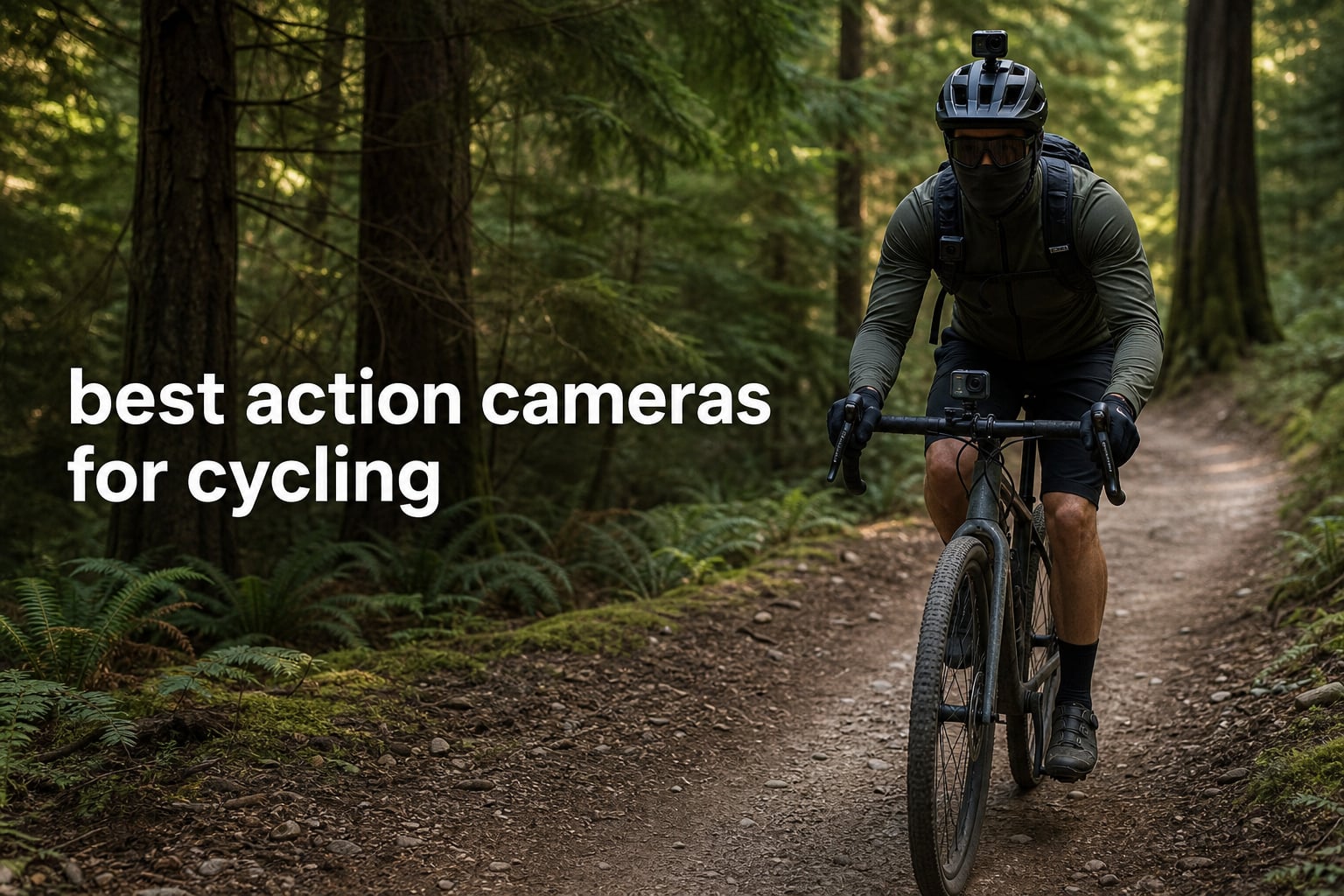
The best action cameras for cycling combine steady video, a secure mounting option, weather resistance, and enough recorded runtime for the kind of ride you actually do. For most riders, the DJI Osmo Action 5 Pro is the strongest all-round pick because its listed four-hour battery life, 1/1.3-inch sensor, dual OLED touchscreens, subject tracking, and HorizonSteady address the questions that matter before a long day in the saddle.
This guide to the best action cameras for cycling compares eight real models for road riding, mountain biking, gravel, commuting, and hands-free POV clips. I have focused on the details a spec sheet can make hard to weigh: stabilization on uneven ground, low-light tools for an evening return, screen placement, storage, 360-degree reframing, and the mounting system that fits how you ride.
There is no single bike camera that suits every ride. A conventional wide-angle camera makes the fastest route to a finished clip, while a 360 camera lets you choose the forward, rearward, or side view after the ride; a tiny magnetic camera puts comfort and discretion ahead of the largest sensor.
Forum discussions repeatedly point to the same real-world issues: battery claims can vary with shooting mode, rough trails expose loose mounts, wind can overwhelm onboard audio, and high-resolution clips consume storage quickly. I treat the listed runtimes as manufacturer figures and explain which features help you make a sensible choice rather than treating any camera as a cure-all.
The top 3 action cameras for cycling are built for different rides In 2026
Choose the Osmo Action 5 Pro for the broadest mix of long-runtime recording and stabilization, the Osmo Action 4 for 4K slow motion and a magnetic quick-release, or the GO 3S when a small hands-free camera matters more than a conventional action-camera body. The cards below put those choices first, then the full comparison includes every camera in this roundup.
These are the best action cameras for cycling (September 2026)
Use this overview as a short route to the right recording style. Standard action cameras are best when you want to point, record, and edit; 360 cameras record the entire scene for later reframing, and the GO 3S is for riders who want a notably smaller POV camera.
| Product | Specifications | Action |
|---|---|---|
 DJI Osmo Action 5 Pro DJI Osmo Action 5 Pro |
|
View on Amazon |
 DJI Osmo Action 4 DJI Osmo Action 4 |
|
View on Amazon |
 GoPro Hero13 Black GoPro Hero13 Black |
|
View on Amazon |
 Insta360 Ace Pro 2 Insta360 Ace Pro 2 |
|
View on Amazon |
 Insta360 X5 Insta360 X5 |
|
View on Amazon |
 DJI Osmo 360 DJI Osmo 360 |
|
View on Amazon |
 Insta360 GO 3S Insta360 GO 3S |
|
View on Amazon |
 DJI Osmo Action 6 DJI Osmo Action 6 |
|
View on Amazon |
1. DJI Osmo Action 5 Pro is the best overall cycling camera
Pros
- 1/1.3 inch low-light sensor
- 4-hour listed battery
- 360 degree HorizonSteady
- Dual OLED touchscreens
Cons
- 2x digital zoom
- No optical zoom
The DJI Osmo Action 5 Pro is my first recommendation for a cyclist who wants one conventional action camera for regular use. It records 4K video, has a 1/1.3-inch sensor, and lists up to four hours of battery life, a useful combination for a long road route or a day when stopping to swap batteries is unwelcome.
Its 146-gram weight keeps the body compact, while the front and rear OLED touchscreens make it easier to confirm framing at a stop. The Essential Combo includes a quick-release adapter mount, horizontal-vertical protective frame, anti-slip pad, lens protector, and a 1950 mAh battery, so the supplied kit already covers basic camera handling.
RockSteady, RockSteady+, HorizonBalancing, and 360-degree HorizonSteady are the stated stabilization options. For a handlebar view on broken pavement or a helmet view on a trail, that range gives you a reason to select the stabilization mode that fits the camera angle rather than accepting a generic default.
DJI also lists subject tracking, SuperNight, slow motion, hyperlapse, D-Log M, Bluetooth and Wi-Fi connectivity, and direct wireless connection to DJI Mic 2 or Mic Mini transmitters. Those are meaningful options if your riding footage includes a rider in frame or you plan to add spoken segments away from the wind.
It suits long rides and changing light
I would put this model at the top of a road, gravel, or mixed-surface shortlist when long listed runtime matters as much as headline resolution. Its four-hour figure is a manufacturer claim, so record mode, stabilization, temperature, and screen use still belong in your ride plan.
The 1/1.3-inch sensor, SuperNight mode, and automatic color-temperature sensor make this a particularly logical candidate for a dawn start or a late finish. They do not replace a clean lens or a stable mount, but they are product-supported reasons to favor it over a camera without these listed tools.
Its screens and controls favor practical setup
The two OLED touchscreens are useful when you switch between a forward-facing handlebar position and a selfie-style pause on the roadside. Voice control provides another hands-free control method, though I would always set the recording mode before rolling away.
Its stated zoom is digital and limited to 2x, with no optical zoom listed. Cyclists who need a tight view of distant road detail should frame closer at the mount instead of expecting zoom to solve that problem.
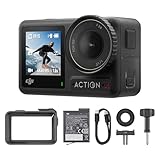
2. DJI Osmo Action 4 is the best value for 4K slow motion
Pros
- 4K at 120 fps
- 10-bit D-Log M
- 155 degree field of view
- Magnetic quick-release
Cons
- 4x digital zoom
- No optical zoom
The DJI Osmo Action 4 is a strong fit for riders who care about slow-motion trail moments and a broad forward view. Its listed 4K/120 fps mode and 155-degree ultra-wide field of view give mountain bikers and gravel riders room to slow down a technical section without moving the camera closer to the action.
The 145-gram body has a 1/1.3-inch sensor, dual full-color touchscreens, and a listed 160-minute battery life. DJI states a cold-resistant battery can last up to 150 minutes at minus 20 degrees Celsius, which speaks directly to riders who record outside in cold conditions.
RockSteady, RockSteady+, and HorizonBalancing cover the stabilization lineup. The camera also has pre-recording, which is valuable for a moment you may see before you have time to press record, such as a sudden descent entrance or a passing scene on a ride.
It records 10-bit color and D-Log M, and supports a direct connection to DJI Mic 2 or Mic Mini transmitters. I see those as better suited to a rider who plans to color grade or build a more deliberate edit than to someone who wants only quick phone clips.
It fits riders who want slow motion and a wide POV
The 4K/120 fps specification makes the Action 4 a sensible best action camera for mountain biking choice when you want slow motion from an ultra-wide perspective. A wide field of view can make a route feel more immediate, but it also makes a poorly positioned handlebar mount more obvious.
The magnetic quick-release system is its standout practical feature for cycling. You can move a prepared camera between compatible positions more quickly than with a screw-only setup, but the mount still needs a firm check before rough terrain.
Its color tools reward a more deliberate edit
10-bit color and D-Log M provide more room for color work than a basic record-and-post workflow. If you do not plan to grade footage, standard color settings may be the simpler choice, and the camera still has its touchscreen and stabilization strengths.
The listed zoom is 4x digital rather than optical. For a bike camera, mount placement and the 155-degree view will usually have a larger effect on what you capture than digital zoom.
3. GoPro Hero13 Black is the best GoPro for cycling footage
Pros
- 5.3K60 video
- HyperSmooth 6.0
- Two Enduro batteries
- Head strap included
Cons
- Bundle-specific contents
- Some riders may want different accessories
The GoPro Hero13 Black bundle is a straightforward option for riders who specifically want GoPro for cycling. It records 5.3K at 60 fps and 4K at 120 fps, captures 27 MP photos, and uses HyperSmooth 6.0 with AutoBoost stabilization, a combination that matches the needs of fast, bumpy POV footage.
This listing is a special accessory bundle rather than a camera-only package. It includes two 1900 mAh Enduro batteries, a 64 GB microSDXC card, Head Strap 2.0, a carrying case, curved adhesive mounts, and The Handler floating hand grip, so check the bundle contents against the places you plan to mount it.
The stated battery figures are 1.5 hours at 5.3K and 2.5 hours at 1080p. That difference is a useful reminder that resolution drives planning: if you want the highest setting on an extended ride, the included second Enduro battery is more relevant than a single headline duration.
GoPro lists Bluetooth audio, HDR and HLG support, timecode synchronization for multi-camera editing, and HB-Series Lens support. These are worthwhile extras for a rider building more than one angle or pairing riding clips with other camera footage.
It works when 5.3K and HyperSmooth are the priority
Is a GoPro good for cycling? Yes, this Hero13 Black has the resolution and HyperSmooth 6.0 stabilization that suit action-focused road, gravel, and trail footage, provided your chosen mount is secure and the battery plan fits your selected recording mode.
The 5.3K setting leaves more detail for cropping or reframing a conventional wide view. That can help when a road scene is farther away than expected, though it also creates larger files that need a suitably rated microSD card and more editing storage.
Its included accessories deserve a mount-by-mount check
The Head Strap 2.0 and curved adhesive mounts give this bundle an immediate helmet-camera path. A helmet view can show where you look, while a bar-mounted view more closely tracks the bike, so I would choose based on the story you want rather than treating one placement as universally better.
The waterproof rating is listed as 33 feet or 10 meters. That covers wet-weather riding at the published rating, but it does not remove the need to dry the camera and inspect the door area after a very wet ride.
4. Insta360 Ace Pro 2 is the best choice for a flip screen and low light
Pros
- 8K resolution
- PureVideo low-light mode
- 157 degree lens
- FlowState stabilization
Cons
- Higher-end positioning
- May need additional accessories
The Insta360 Ace Pro 2 Dual Battery Bundle is the camera I would look at for an easy framing check without removing the camera from a mount. Its 2.5-inch flip touchscreen is a useful physical advantage over a fixed rear screen when you alternate between bike-mounted footage and face-to-camera ride updates.
It lists 8K resolution, a Leica co-engineered Summarit lens, a 1/1.3-inch sensor, and dual AI chips. For evening riding, PureVideo is listed for low light up to 4K at 60 fps, while 4K at 60 fps Active HDR is another stated recording option.
FlowState Stabilization and a 157-degree wide-angle lens are core cycling features here. The wide view can take in more of the road or trail, and the stabilization is designed to make a moving perspective more watchable without claiming that it can hide a loose mount.
The bundle includes batteries, and the camera has a magnetic mounting system. It is waterproof to 39 feet or 12 meters and is listed for operation as low as minus 4 degrees Fahrenheit, details that broaden its use beyond fair-weather daytime rides.
It helps riders check framing without dismantling a setup
The flip touchscreen is the feature that makes this model distinct for a solo cyclist. I would use it to establish a level horizon and confirm the front wheel is not taking over the frame before heading out, especially from a low handlebar or chest position.
Its magnetic mounting system also makes perspective changes more practical. Make every connection part of a pre-ride check, since a fast mount swap is useful only when the mount and camera remain firmly locked.
It favors image-minded riders after sunset
The 1/1.3-inch sensor, PureVideo low-light mode, active HDR, and 8K capture create a strong feature set for riders who prioritize image options. Low-light footage still benefits from realistic expectations: fast motion, changing light, and vibration all remain difficult conditions.
Its 4.4 rating is based on 121 reviews in the supplied product data, far fewer than several cameras in this list. That does not settle image quality, but it is a useful context point when you compare the rating with models that have much larger review counts.
5. Insta360 X5 is the best 360 camera for cycling reframing
Pros
- 8K 360 video
- Dual large sensors
- FlowState and Horizon Lock
- Replaceable lenses
Cons
- More involved editing
- 0.5 kg listed weight
The Insta360 X5 is the right kind of camera for a rider who wants to choose the final angle after the ride rather than committing to one forward lens angle before leaving home. It records 8K 360-degree video using dual 1/1.28-inch sensors, making it a flexible match for a bike route where interesting action can happen beside or behind you.
Its FlowState Stabilization and 360-degree Horizon Lock address the same rough-surface concern that comes up in cyclist discussions, but the main attraction is the 360 workflow. You capture the full view first, then select a conventional perspective in editing instead of finding out later that the camera pointed slightly wrong.
The X5 lists 208 minutes of battery life, a 2.5-inch screen, replaceable lenses, a four-microphone array with a new wind guard, and MP4 or INSV video formats. Its listed weight is 0.5 kilograms, which is a meaningful mounting consideration compared with the much smaller GO 3S camera.
InstaFrame Mode and the invisible selfie stick effect can create third-person-looking footage from a ride. For cycling, that is most relevant when the mount is set up to keep the stick outside the apparent frame and the route gives you a safe place to use it.
It captures the whole scene before you choose the story
A 360 camera is useful for a group ride, scenic route, or unpredictable trail line because it records every direction around the camera. I would choose the X5 when I value a second chance at framing more than the simplest possible edit.
The 8K specification is especially helpful for a reframed output because the finished conventional view comes from a larger 360 source. Plan for high-capacity microSD media rated U3 and V30 as listed, and leave space for the larger files that this recording style implies.
Its physical setup needs more attention than a small POV camera
Replaceable lenses are practical on a camera that sees in every direction, since exposed 360 lenses need careful handling. The included protective pouch and lens cloth are useful, but I would still inspect each lens before every ride.
Its listing calls the form factor compact and handheld, yet the stated 0.5-kilogram weight deserves a solid, purpose-suited mount. For a lightweight helmet setup, a smaller standard action camera or the GO 3S may be more comfortable.
6. DJI Osmo 360 is the best DJI option for 8K 360 capture
Pros
- Native 8K 360 video
- 1-inch imaging
- 105 GB built-in storage
- Magnetic quick-release
Cons
- Digital stabilization
- Lower rating than top picks
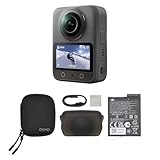
The DJI Osmo 360 offers another full-view option for cyclists who want 360-degree capture with native 8K at 30 fps. Its 1-inch 360-degree imaging is listed as a low-light strength, so it is a camera worth considering when a route spans bright daylight and a dim return.
It has 105 GB of built-in storage and lists up to 190 minutes of recording. Built-in space can be helpful when you discover a microSD card is not in the camera, though a rider planning a long 8K session should still manage files and recording duration carefully.
The 183-gram body uses a magnetic quick-release system, has four microphones for stereo recording, and supports direct connection to DJI microphone transmitters through OsmoAudio. It can also produce 120 MP 360-degree photos and uses an invisible selfie stick effect with a 1.2-meter stick.
Its product data describes digital image stabilization, while the camera is waterproof and has a 2-inch screen. I would see it as a 360-first camera for riders who will edit after the route, not as the most stripped-down choice for a quick forward-facing clip.
It gives 360 riders a storage buffer in the camera
The 105 GB of installed storage is one of this camera’s clearest practical differences. It offers a backup place for a ride when you have not fitted a card, and the camera also accepts microSD media with U3 and V60 ratings listed in the technical details.
Native 8K at 30 fps and 120 MP photos create a lot of visual information. That is a benefit for post-ride reframing and stills, but it makes file management part of the ownership experience rather than an afterthought.
It suits riders committed to a 360 editing workflow
For an all-around record of an unfamiliar road or a scenic gravel loop, this camera lets you decide later whether the finished cut should face front, rear, or toward the rider. That is the core reason to pick it over a standard action camera with a fixed view.
The supplied data gives it a 4.5 rating from 1,963 reviews and notes a lower rating than some competitors. Pair that context with the 360 features and magnetic mount rather than selecting it simply because it records at 8K.
7. Insta360 GO 3S is the lightest hands-free POV cycling camera here
Pros
- 39 g camera
- 4K MegaView
- Magnetic mounting
- 10 m waterproof
Cons
- Smaller sensor
- Internal storage is not expandable
The Insta360 GO 3S is the answer when the usual action-camera box feels too obvious or heavy for your preferred angle. The camera itself is listed at 1.4 ounces or 39 grams, and its magnetic design supports hands-free POVs from the supplied Magnet Pendant, Easy Clip, and Pivot Stand.
It records 4K video with a MegaView field of view, uses FlowState Stabilization and Horizon Lock, and includes 128 GB of internal storage. The Action Pod adds a 2.2-inch flip screen, while the total listed battery life with the pod is 140 minutes.
The small camera is IPX8 waterproof to 10 meters, while the Action Pod is IPX4. That distinction matters on a ride: the camera and the pod do not have the same water protection, so keeping the pod protected from heavy rain is the careful choice.
QuickCapture, gesture and voice control, and AI Auto Editing suit a simple capture-and-share routine. The tradeoff is clear in the product data as well: the sensor is smaller than flagship models and the internal storage cannot be expanded.
It is the unobtrusive choice for jersey and helmet perspectives
I would pick the GO 3S for a quiet, lightweight road cycling camera angle or a chest-level perspective where a full-size camera would be distracting. Its 39-gram camera body and magnetic mounting system make novel perspectives more feasible without adding a large device to your kit.
The supplied accessories give a starting point for hands-free use, but no magnetic mount should be treated casually on a rough mountain bike descent. Check the attachment and use a position that cannot interfere with steering, braking, or visibility.
Its storage and weather ratings shape the ride plan
The built-in 128 GB storage is convenient because there is no card to forget, yet it is not expandable. Clear files before a big ride and match clip length to your available space, especially when recording at 4K.
The camera has the stronger IPX8 10-meter rating, while the Action Pod is rated IPX4. For rain, use the bare camera only in the way the published rating permits and avoid assuming the screen-equipped pod has identical protection.
8. DJI Osmo Action 6 is the best premium option for variable aperture
Pros
- 8K video
- Variable aperture
- 360 degree HorizonSteady
- 50 GB built-in storage
Cons
- 2x digital zoom
- No optical zoom
The DJI Osmo Action 6 combines a 1/1.1-inch square sensor, 8K video, and a variable f/2.0 to f/4.0 aperture. That aperture range is the feature that makes it stand apart for cycling through different conditions, because the camera can adapt its aperture rather than relying on one fixed setting.
It weighs 149 grams, lists up to four hours of battery life, and carries 50 GB of built-in storage. The Enhanced Combo includes two 1950 mAh batteries, two dual-direction quick-release adapters, a battery case, extension rod, and USB-C cable, which gives a committed cyclist several useful pieces in one set.
DJI lists RockSteady, RockSteady+, HorizonBalancing, and 360-degree HorizonSteady, alongside gesture and voice control. It also records SuperNight, slow motion, hyperlapse, portrait, and subject-tracking modes, so this is built for riders who want one camera to cover a broad mix of recording jobs.
The Action 6 is waterproof to 20 meters without a case, according to its listed features. It can connect directly to two DJI microphone transmitters and has 50 GB of internal storage, which suits a creator who wants more audio and recording flexibility than a simple helmet camera provides.
It is built for riders who need broad exposure options
The variable f/2.0 to f/4.0 aperture gives the Action 6 a distinct place among the standard cameras here. I would consider it when a single ride moves between open sun, wooded paths, and evening light and you want the camera’s published exposure hardware to adapt.
The 1/1.1-inch sensor and 8K recording are also strong specifications for detailed cycling footage. Higher-resolution clips require a storage plan, even with 50 GB built in, and the listing specifies U3 and V90-compatible microSD media.
Its included power and mounting parts favor serious use
Two batteries, two quick-release adapters, and a battery case make the Enhanced Combo more ready for a multi-location filming day. The listed four-hour runtime remains a maximum figure, so bring the supplied batteries when your route matters more than a perfect battery estimate.
At 149 grams, it is close in weight to the Action 4 and Action 5 Pro rather than to the tiny GO 3S. That makes it well suited to a solid handlebar, chest, or helmet mount, but not necessarily the least noticeable option on your body.
The right cycling camera depends on seven practical buying factors
The short answer is to start with the ride and the finished video you want, not the largest resolution number. A road cyclist recording long routes has different needs from a mountain biker capturing short descents, a commuter documenting traffic, or a rider who wants a 360-degree edit after the fact.
Stabilization matters most when the bike moves unpredictably
Look for a named stabilization system and select the mode that suits the mount position. DJI lists RockSteady and Horizon modes across several cameras, GoPro uses HyperSmooth 6.0 on the Hero13 Black, and Insta360 lists FlowState Stabilization and Horizon Lock on its relevant models.
Stabilization can smooth a moving image, but it cannot repair a mount that is loose or flexing. Forum riders repeatedly call out mounting stability on rough terrain, so tighten the hardware, test the angle on a short section, and review the first clip before a long trail or event.
Battery figures are planning tools rather than promises
Battery life changes with resolution, frame rate, screens, stabilization, temperature, and recording duration. The data here lists up to four hours for the DJI Osmo Action 5 Pro and Action 6, 208 minutes for the X5, 190 minutes for the Osmo 360, 160 minutes for the Action 4, 140 minutes for the GO 3S with Action Pod, and mode-specific figures for the Hero13 Black.
For an all-day ride, stop-start recording is usually more realistic than recording every second. Carrying a spare battery, charging at a rest stop, or selecting a lower-resolution mode may make more difference than a small gap between maximum runtime claims.
Mount placement should match the point of view you want
A handlebar mount gives a bike-centered road or trail view, a helmet camera follows your head movement, and a chest mount shows more of the cockpit and body position. A rearward seatpost setup can document what happens behind the bike, but it needs a position that avoids interfering with wheel clearance, lights, or bags.
For a commuter camera setup, front and rear coverage is a separate planning choice. No single camera in this list is presented as a complete front-and-rear system, so decide whether you want one movable camera for ride footage or a two-camera arrangement for broader documentation.
Resolution and frame rate change editing workload
4K is enough for many finished cycling videos, while 4K at 120 fps on the Action 4 and Hero13 Black gives a slow-motion option. The Hero13 Black records 5.3K at 60 fps, and the Action 6, Ace Pro 2, X5, and Osmo 360 list 8K capture.
More resolution can preserve detail and offer cropping latitude, but it also makes larger files. Forum users often mention storage pressure, so use the supported card class listed for your camera, transfer footage regularly, and choose the mode that serves the final output instead of always selecting the maximum.
Low-light features matter for early and late rides
A larger listed sensor, dedicated low-light mode, and a stable mount are useful signs for dim conditions. The Action 5 Pro and Action 4 list 1/1.3-inch sensors, the Ace Pro 2 lists PureVideo up to 4K at 60 fps, the X5 lists dual 1/1.28-inch sensors, the Osmo 360 lists 1-inch imaging, and the Action 6 lists a 1/1.1-inch sensor with variable aperture.
Even strong hardware has limits when a bicycle moves quickly through mixed light. Slow down expectations for night footage, clean the lens, and make a short test clip if an evening ride is important rather than discovering exposure problems after a full route.
360 capture trades quick editing for flexible framing
Choose the Insta360 X5 or DJI Osmo 360 if missing the angle is the concern you care about most. Their 360-degree capture lets you pull a forward-facing, rearward, or side perspective later, while a standard camera requires you to decide the lens direction before riding.
That flexibility adds an editing step and puts more demand on storage. For a quick social clip from a known route, a conventional action camera is usually the simpler workflow; for a scenic group ride or changing route, the ability to reframe can be worth the extra work.
Audio and controls are secondary until they become important
Wind noise is a frequent rider complaint, and an exposed camera microphone will hear plenty of it at speed. The X5 lists a new wind guard with a four-microphone array, the Osmo 360 lists four microphones, and several DJI cameras support direct connection to DJI microphone transmitters.
For most POV cycling clips, ambient sound may be enough. If spoken explanation is part of your plan, stop in a safe place to record it or use a compatible external microphone system rather than expecting clean narration in strong wind.
These cycling camera questions have simple answers
What is the best action camera for cycling?
The DJI Osmo Action 5 Pro is the best all-round choice in this guide because it pairs 4K recording, a 1/1.3-inch sensor, HorizonSteady, dual OLED touchscreens, and a listed four-hour battery life. Choose a 360 camera instead if you want to select the final angle after the ride.
What action camera do cyclists use?
Cyclists use standard wide-angle action cameras for fast POV recording, tiny magnetic cameras for discreet hands-free views, and 360 cameras when reframing after the ride matters. GoPro, DJI, and Insta360 all have models in this guide with different strengths.
Is a GoPro good for cycling?
Yes. The GoPro Hero13 Black records 5.3K at 60 fps and has HyperSmooth 6.0 stabilization, 4K at 120 fps, and a 10-meter waterproof rating. Its supplied bundle includes two Enduro batteries and a head strap, but pick the mount position based on the view you want.
What camera do pro cyclists use?
There is no one camera every pro cyclist uses. A standard camera such as the DJI Osmo Action 5 Pro or GoPro Hero13 Black fits conventional stabilized POV footage, while Insta360 X5 and DJI Osmo 360 fit riders who need 360-degree reframing.
How do I mount an action camera on my bike?
Use a compatible handlebar, helmet, chest, or rearward mount and tighten every connection before riding. Test a short clip for angle and vibration, keep the camera clear of steering and braking controls, and recheck the mount after rough terrain. A handlebar view follows the bike, while a helmet view follows where you look.
The DJI Osmo Action 5 Pro is the safest all-round starting point
For the best action cameras for cycling in 2026, start with the DJI Osmo Action 5 Pro if you want a conventional camera with a strong balance of 4K video, stabilization, screens, low-light features, and a listed four-hour battery. Pick the Action 4 for 4K slow motion and magnetic mounting, the GO 3S for a tiny hands-free POV, or the X5 and Osmo 360 when post-ride reframing is the whole point.
Before choosing, decide on the view, mount, recording mode, and storage plan for your own routes. That short checklist will do more for usable cycling footage than chasing a single specification in isolation.