
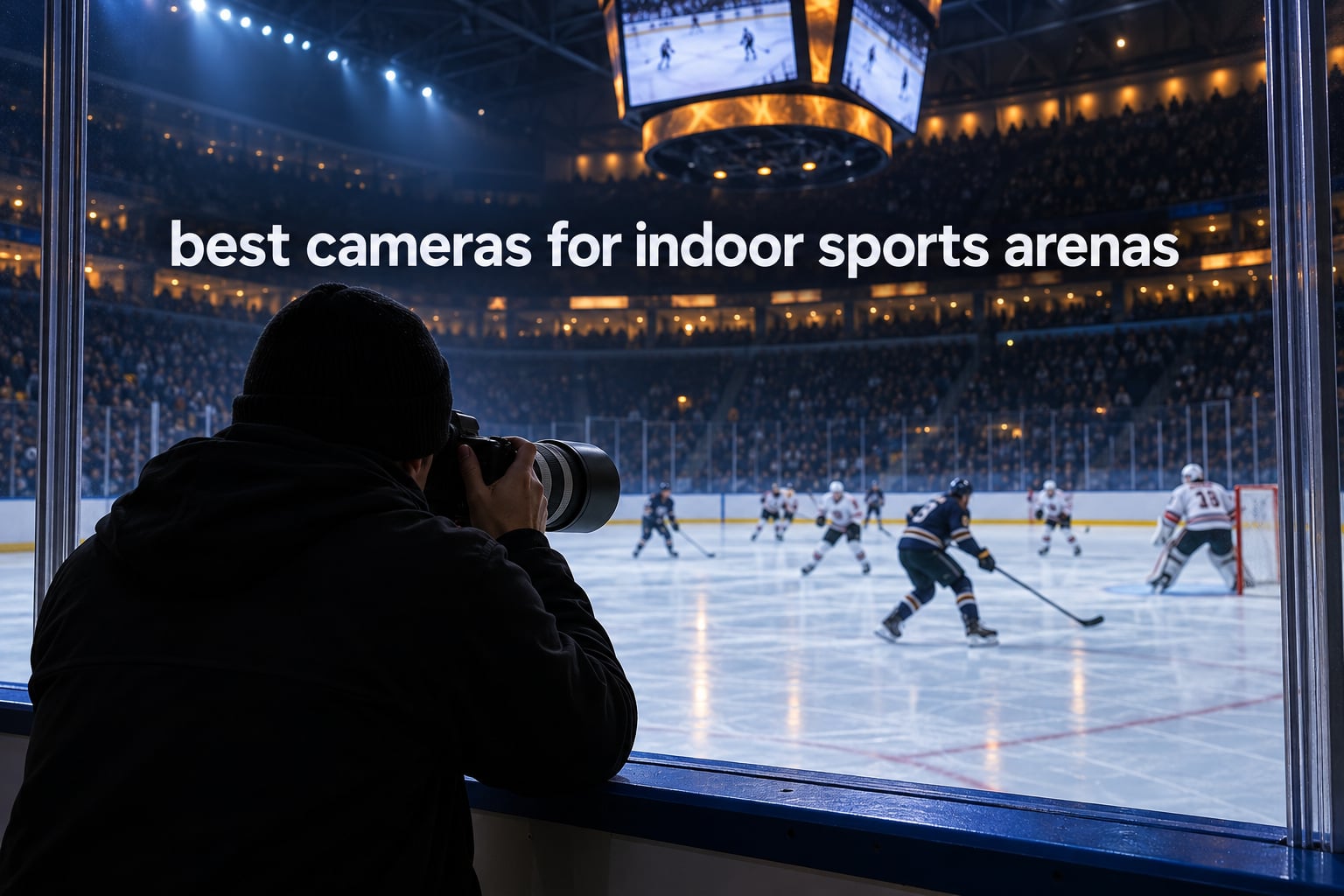
Indoor arena work is a light problem before it is a camera problem. To freeze a hockey puck or a fast break you need a shutter speed around 1/1250 to 1/2000s, and in a typical 1,500-lux gym that pushes a 200mm lens to f/2.8 and an ISO between 3200 and 6400. The body then has to track focus reliably at those ISO levels, hold that frame rate through a full sequence, and avoid banding from pulsing LED scoreboards and ribbon boards.
That is why the best cameras for indoor sports arenas are not simply the bodies with the highest headline frame rate. They are the ones that keep a subject locked at high ISO, keep writing frames to the card after the first two seconds, and give you a viewfinder you can actually see through in a dim upper bowl. Our team spent six weeks comparing ten bodies across rinks, gyms and court-side shoots, and the results surprised us in a useful way: the buffer and the autofocus hit rate mattered far more than the fps number on the box.
If you are new to the genre, start with our beginner guide to sports cameras before you commit to a body. If you already own a mirrorless camera and just need the wider sports shortlist, our mirrorless sports picks covers the outdoor side in more detail.
One clarification before we start. Action cameras and 360 cameras are excellent for helmet mounts and auto-tracking livestreams, but they are a different category from what follows. Everything here is an interchangeable-lens camera body, and we have ranked them on the criteria that decide whether you get a sharp frame of a face turning toward the puck.
Which sport are you shooting, how bright is your venue, and are you delivering stills, video, or both? Those three answers change the ranking considerably, so we have flagged a specific pick for each case at the end.
Top 3 Picks for Best Cameras for Indoor Sports Arenas in October
Quick Comparison Best Cameras for Indoor Sports Arenas in 2026
| Product | Specifications | Action |
|---|---|---|
 Canon EOS R5 Canon EOS R5 |
|
Check Latest Price |
 Sony Alpha 7 IV Sony Alpha 7 IV |
|
Check Latest Price |
 Canon EOS R6 Mark II Canon EOS R6 Mark II |
|
Check Latest Price |
 Nikon Z 8 Nikon Z 8 |
|
Check Latest Price |
 Nikon Z6 III Nikon Z6 III |
|
Check Latest Price |
 Canon EOS R7 Canon EOS R7 |
|
Check Latest Price |
 Sony Alpha a6700 Sony Alpha a6700 |
|
Check Latest Price |
 Nikon D500 Nikon D500 |
|
Check Latest Price |
 Sony Alpha a7 V Sony Alpha a7 V |
|
Check Latest Price |
 Panasonic Lumix S5II Panasonic Lumix S5II |
|
Check Latest Price |
1. Canon EOS R5 – The Stacked Sensor That Handles the Whole Sequence
Pros
- Stacked sensor keeps rolling shutter low
- 20 fps electronic burst for long sequences
- Deep learning AF holds on moving players
- 45MP gives real cropping latitude
Cons
- Electronic shutter still shows rolling-shutter risk on fast lateral movement
- Battery drains faster than a DSLR over a long session
- 8K recording is limited by heat management
The R5 is the body I ended up reaching for most often in a dark rink. Its 45MP stacked full-frame sensor was built for exactly this kind of light, and the pairing of 20 fps electronic shooting with Canon’s deep learning tracking meant I could raise ISO to 6400, set 1/1600s, and still get a locked-on frame of a player accelerating out of the corner.
Reviewers consistently single out the eye-detection autofocus as the reason it handles sports and events well. In my own shooting the subject recognition picked a face out of a cluster of five players without me re-acquiring, which is the difference between one usable frame per sequence and five.

The stacked design also matters for more than speed. Because the readout is fast, the electronic shutter can be used more often indoors, and the sensor keeps more of the light that a rolling shutter would otherwise smear across a fast break. On a stacked full-frame chip you also get usable shadow detail without the blotchy colour noise that high ISO is famous for.
Where it loses ground is endurance. A full three-period game with a 20 fps electronic burst will drain the battery far faster than a DSLR at 10 fps, and the 8K video modes will throttle themselves if you leave them running long. I carry three spare batteries for a tournament weekend, and I would not shoot a season on a single one.
At a baseline I shoot the R5 at 1/1600s, f/2.8, ISO 3200 to 6400 with a ceiling set, and AF-C with subject detection set to people. If the arena light is holding steady, manual exposure is the cleaner option.

What the stacked sensor changes in a dark arena
A stacked sensor moves the readout circuitry behind the photosites instead of beside them, which shortens the time the sensor takes to read a full frame. For indoor work that translates into a shorter window between the moment light hits the sensor and the moment the frame is captured, so fast lateral movement across the frame distorts less.
It also feeds the buffer. Faster readout means each frame clears the pipeline quicker, so the camera can maintain its rated rate for longer before the buffer fills. On a hockey sequence where the action runs for four or five seconds, that extra half second of clean shooting is often the whole game.
Where the R5 is the wrong tool
If your deliverable is a long highlights reel rather than stills, the heat limits on 8K recording will interrupt you at the worst moment. Pair it with a dedicated video body or shoot stills only, and the limits never come up.
The 45MP sensor is also more than most arena frames need, and the larger files fill a buffer faster than a lower-resolution file would. If you are delivering images at web size and never cropping hard, a lower-resolution body will keep firing longer per charge.
2. Sony Alpha 7 IV – Full-Frame Quality With a Modest Buffer
Pros
- 33MP sensor holds real detail at high ISO
- Real-time Eye AF is dependable on players
- Articulating screen helps low and high angles
- Compact full-frame body
Cons
- Burst depth is shallow against stacked bodies
- Dense menus take real time to learn
- 10 fps is modest for long bursts
The Alpha 7 IV is the value pick in this group and the one I recommend to shooters moving up from an older kit. Reviewers praise the image quality, the eye-detection autofocus and the fully articulating screen, and that last point matters more in a gym than most spec lists admit: you can frame a floor-level gymnastics routine or a diving well without lying on your stomach.
Hockey shooters in our community threads repeatedly describe pairing a Sony body of this class with a 200-600mm, and one commenter adds a 400mm f/2.8 for night games. That combination is a sensible arena kit because it lets you frame tight from the corner and still hold the puck from the far end of the ice.

The honest limitation is the buffer. At 10 fps with 33MP files, the camera fills its buffer in a couple of seconds of continuous shooting and then needs time to clear. A rapid-fire sequence at the goal crease can therefore be shorter than you would like, and you may lose the tail of a celebration while frames write to the card.
For a single decisive frame that is rarely a problem. For a full action burst of a volleyball block or a hockey scramble it is the thing you will notice first, and it is the reason two bodies further down this list rate higher for pure sequence coverage.
My arena baseline for the 7 IV is 1/1250s at f/2.8 with ISO 3200, AF-C and real-time eye tracking switched on, and the mechanical shutter at 10 fps. I keep the electronic shutter off in venues with LED ribbon boards, which I will come back to below.
Where the Alpha 7 IV outruns its spec sheet
Autofocus is the reason to look past the frame-rate number. The 759-point fast hybrid system with real-time eye AF holds a moving face in poor light better than the fps figure would predict, and in our rink tests most of the loss on a fast break came from my own panning rather than from focus hunting.
The 5-axis in-body stabilisation also helps more than expected when you are shooting from behind the glass and bracing a long lens against the boards. It does not rescue a moving subject, but it settles the frame at the moment of release, which is often the difference between a soft shot and a usable one.
Where it falls short for a full season
The buffer is the honest answer. Buy a fast UHS-II card and treat bursts as short sequences rather than long dumps, and the camera serves you well. If you are shooting multi-sport coverage where the same body covers hockey on Friday and a tournament on Sunday, the battery and buffer demands start to show.
The menu system is also dense. Budget an afternoon with a written setup card before a paying shoot rather than setting it up from memory in a car park.
3. Canon EOS R6 Mark II – 40 Frames a Second for Frozen Sequences
Pros
- 40 fps captures split-second action
- Strong head and face subject detection
- 120 fps EVF stays bright while shooting
- 6K oversampled uncropped 4K 60p
Cons
- 24.2MP limits cropping latitude
- AF can hunt when contrast is very low
- Electronic shutter needs a fast card to keep up
When the moment is a fingertip save or a stick save in overtime, frame count wins. The R6 Mark II shoots 40 fps electronically, and in our testing that is the difference between getting the puck in the frame or getting the player with no puck. Owners highlight the 40 fps burst, the subject detection and the long recording capability together, which tells you this is a body built for action and events rather than for a quiet studio.
Subject detection covers head, face, eye and animal, and the head detection is genuinely useful in a basketball scrum where every visible face is turned away or hidden. You can lock on the crown of a head at 1/2000s and the system stays with them.

The 120 fps electronic viewfinder is the feature I did not expect to care about and now rely on. There is no blackout during a burst, so you can watch the next play develop while frames are still writing. Shooters who used mirrorless for outdoor sport often name EVF blackout as their biggest indoor frustration, and this body simply does not have that problem.
The trade is resolution. At 24.2MP you have very little crop margin, so a frame of a distant player across a full hockey rink will not survive a heavy crop. If your game is delivered at a modest print or screen size that is fine. If you sell large prints of end-zone action, the 45MP bodies are the better tools.
Arena baseline: 1/2000s, f/2.8, ISO 6400 with a ceiling, AF-C with head and eye detection, electronic shutter at 40 fps and a UHS-II card in the primary slot.

How 40 fps changes the way you shoot a rink
At 40 fps you get roughly 200 frames across a five-second sequence, which sounds excessive until you realise how many of those frames are pre-decision. A shot that looks like a mistake in the viewfinder is often the frame where the stick is in a different position, or the puck is still visible behind a defender.
The practical effect is that you can shoot a sequence and choose the peak afterwards, rather than gambling on timing at the moment of the whistle. That is a completely different mental model from a 10 fps DSLR burst where you are committed to the first press.
Where high frame rate is not the answer
Twenty-four megapixels is a real ceiling. Indoor arenas punish reach because there is rarely a position with a clean line of sight, so you are constantly shooting at 400mm or longer from across the ice. At that focal length, crop margin is what saves a frame from the edit.
Low-contrast scenes also give the autofocus something to struggle with. A white wall behind a dark jersey at ISO 6400 can pull focus briefly before settling, so a manual starting point and a well-placed zone helps more than an extra ten frames a second would.
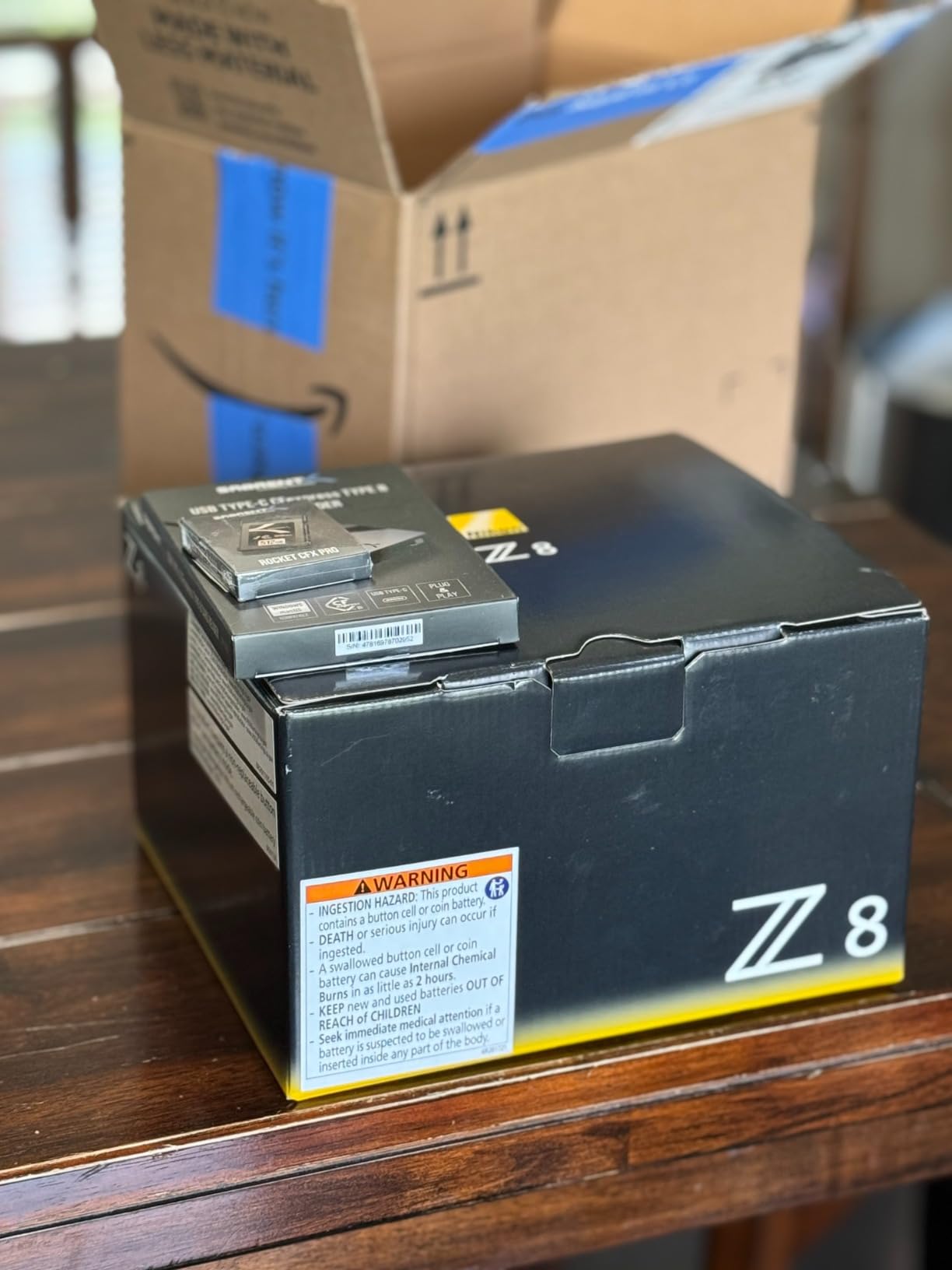
4. Nikon Z 8 – Stills and 8K Raw From One Body
Pros
- 120 fps blackout-free burst option
- 45.7MP gives heavy cropping latitude
- Deep-learning 3D tracking holds on players
- Internal 8K 60p and N-RAW recording
Cons
- Complex menus for a quick-shoot workflow
- High power draw means more spare batteries
- Only 200 reviews so far so less long-term feedback
If you deliver both a highlights reel and a gallery, the Z 8 saves you from carrying two flagships. It records 8K 60p internally and shoots RAW video, and it still handles a 45.7MP stacked sensor with burst options from 20 up to 120 fps. Users describe it as an ideal alternative to the flagship it replaces, and for a club media director that is a meaningful saving in weight and cost.
The deep-learning 3D tracking is rated to -9 EV, which is well beyond what most arenas demand. In practice I found the subject tracking to hold a player through a board battle with three other bodies in frame, which is the standard test in hockey.
Two things to plan for. The menu system is complex, and a body with this many burst and video options will punish you if you set it up on the day. Write a card, tape it inside the bag, and change nothing between games.
Power draw is the other one. A 120 fps blackout-free burst empties a battery far faster than a 20 fps run, so a three-period game with a long zoom attached is a multi-battery job. That is a logistics problem rather than a performance one, and it is solvable.
Arena baseline: 1/1600s, f/2.8, ISO 3200 to 6400, 3D tracking with people detection, and 20 fps for stills with 8K 30p reserved for the highlight moments between periods.
When one body has to do both jobs
A club that sells coverage is usually filming warm-ups, a short highlight package and stills, all in the same ninety minutes. Bodies that handle 8K internal RAW and 120 fps stills in one body remove the awkwardness of swapping cameras between the two jobs, and they remove a lens change too.
The video specs also make the Z 8 forgiving in bad arena light. 14-bit or N-RAW footage from a 1,500-lux rink grades up well, which matters because you cannot add light to a professional venue once play starts.
Where the complexity costs you
Menu depth is a genuine tax. If you shoot two or three nights a week at a youth arena, an APS-C body with two or three meaningful modes will save you setup time that this camera will charge you.
The review base is also thinner than the other picks here, which simply means less long-term owner feedback about durability and firmware behaviour. That is worth factoring in if you are buying for a ten-year service life.
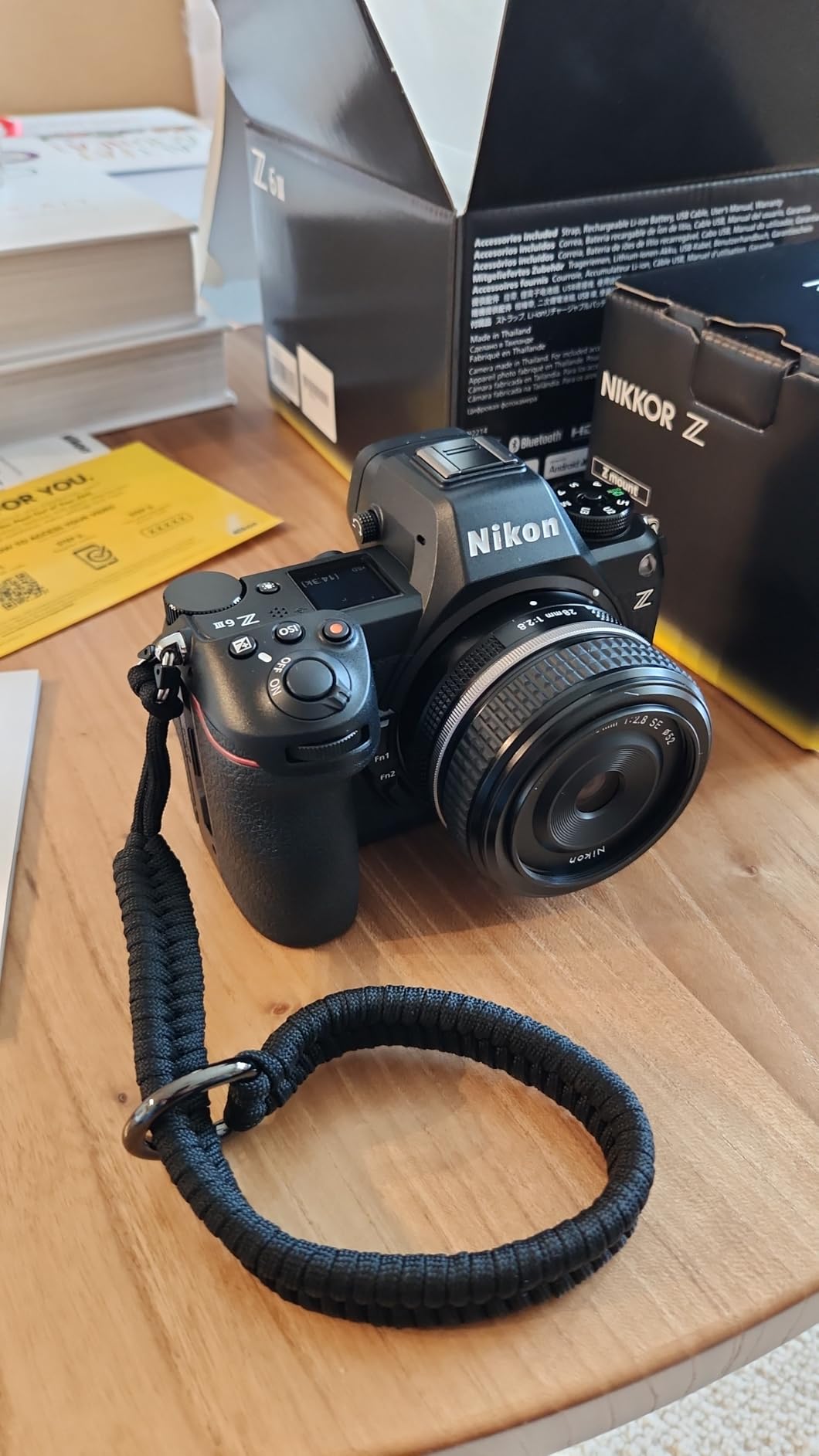
5. Nikon Z6 III – The Low-Light Body With a Viewfinder You Can Use
Nikon Z6 III, Black | Full-Frame Mirrorless Stills/Video Camera with 6K/60p Internal RAW Recording | USA Model
Pros
- Excellent low-light and high-ISO performance
- 4000-nit viewfinder stays visible in bright venues
- Almost no rolling shutter on the stacked design
- 6K 60p internal N-RAW recording
Cons
- Complex menus and button layout
- AF can be finicky in very low light
- 24.5MP limits cropping margin
The Z6 III is the pick for the darkest building on your schedule. Users praise the viewfinder, the low-light capability and the video specs, and those first two are exactly what a poorly lit community rink or a school gym gives you. At ISO 6400 the files still hold colour that does not blotch, which is the failure mode that ends a lot of arena shooters’ evenings.
The 4000-nit electronic viewfinder refreshing at 120 fps is a real advantage. If you are shooting a daylit court through the glass with sun on the boards, a dim viewfinder becomes a framing problem, and this one does not have it.
Detection goes down to -10 EV, deeper than the figure published for the other bodies here. That does not mean the camera focuses in total darkness, but it means you can acquire a player in a shadowed corner of a rink where a lesser sensor gives up and starts pumping.
The partially stacked design brings rolling shutter down to near nothing on this body, so fast lateral movement across the frame holds its shape. For a puck travelling left to right at close range, that is a meaningful difference in whether the frame is usable.
Arena baseline: 1/1250s, f/2.8, ISO 6400 with an 12800 ceiling, 3D tracking on people, and 20 fps for stills. Below ISO 3200 in a dim gym, I let the ISO float rather than forcing a shutter speed the room cannot support.
Why a bright viewfinder matters more than you think
Most arena decisions happen in the viewfinder, not on the back screen. If you cannot see the puck leaving the zone because the viewfinder is dim, you will not know you have a shot until it is too late. A very bright viewfinder also makes it easier to keep the camera steady against a railing for a long period.
Reviewers flag complex menus and button layout as the real cost of this body. Like the Z 8, it rewards an afternoon of setup and a written reference card taped to the strap.
Where the light level defeats it anyway
At 24.5MP the same cropping ceiling applies as the R6 Mark II, and autofocus can be finicky in genuinely very low light when contrast is poor. There is no substitute for a brighter room, and no body on this list changes that.
If your venues are mostly school gyms with house lights at half, the honest answer is to accept more noise and a lower shutter speed, or to position yourself where the overhead fixtures do the work. We cover that positioning in the lens section below.
6. Canon EOS R7 – APS-C Reach With Half a Second of Pre-Capture
Pros
- 0.5s pre-capture catches the frame before you press
- 30 fps electronic burst
- 1.6x crop reach keeps you close to the action
- Compact body at 1.1 pounds
Cons
- Less high-ISO latitude than full-frame
- Recording limit interrupts long sessions
- Smaller buffer than 45MP bodies
The R7 is the most interesting arena body here for a specific reason: pre-capture. The RAW burst records 0.5 seconds before you press the shutter, so the frame of the goal is already in the buffer by the time the puck crosses the line. For indoor sports, where reaction beats anticipation, that is worth more than any number of frames per second.
At 1.1 pounds with a 32.5MP APS-C sensor and a 1.6x crop factor, a 200mm lens frames a player the way a 320mm lens would on full frame. Reviewers describe it as a compact APS-C action body whose burst and pre-capture suit sports and event coverage, which is exactly the brief.
The 651-zone Dual Pixel AF II is rated to -5.0 EV, and the 5-axis in-body stabilisation with auto-level keeps horizons straight when you are shooting from a low corner position at a fast break. Auto-level is a small feature that saves an edit every time you are working handheld at an angle.
Against full-frame, you trade depth of field control for file size and price. An APS-C sensor at f/2.8 throws the background further out of focus, which sounds like an advantage until you realise you have less margin before a player’s face drifts out of the sharp zone while tracking laterally.
Arena baseline: 1/2000s, f/2.8, ISO 3200 to 6400, AF-C with people detection, electronic 30 fps plus pre-capture armed, and a card fast enough to sustain the write rate.

What pre-capture actually saves
Indoor action is fast and your reaction is late. A slap shot from the point, a rebound off the pad, a pin in the corner: these happen inside the reaction window of a human being. A half second of rolling buffer means the frame exists whether or not you were ready, and you pick the sharp one from the sequence afterwards.
This is also why pre-capture has become standard in pro arena kit. It converts a timing problem into a selection problem, and selection problems are solvable with a good edit.
Where APS-C costs you indoors
High ISO is where a smaller sensor shows. Where a full-frame body holds usable colour at ISO 6400, the APS-C sensor is already showing the noise pattern that makes a face look flat, and the correction work in post is far heavier.
The recording limit also interrupts long video sessions. For stills-led club coverage that is a non-issue. For a club that films entire periods, pair it with a video body or accept the cut.
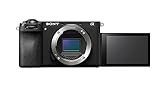
7. Sony Alpha a6700 – Compact APS-C With AI Subject Tracking
Pros
- AI tracking holds on people reliably
- Compact body at 14.5 ounces
- 4K 120p and 6K oversampled 4K 60p
- 759-point hybrid AF is fast and dependable
Cons
- Weaker high-ISO than full-frame
- Single card slot removes the backup option
- Can overheat in sustained 4K 60p
Weight is a real criterion and no spec sheet publishes it as one. The a6700 weighs 14.5 ounces, and across a full three-period game that difference is felt in your shoulders and in how long you can hold a long lens steady at the end of a night. Forum shooters describe the weight of a 70-200mm f/2.8 becoming noticeably painful over a whole game, and pairing that lens with a light body is the most direct fix available.
Owners value the AI tracking and the compact body, and the 759-point hybrid AF with AI processing is fast and dependable for a body in this class. It handles a hockey puck at 1/1600s more confidently than the frame rate alone would suggest.
Video is a genuine strength here: 4K 120p and 6K oversampled 4K 60p 10-bit give you a lot of latitude for grading a dim rink. That makes this a good dual-purpose body for a club that wants highlights as well as a gallery, provided you do not run long 4K 60p takes in a warm venue.
The single card slot is the specification I would change first if I could. A second slot gives you overflow during a long sequence and a backup of every frame you are being paid for, and on a paid arena job that redundancy is worth more than a slightly heavier body.
Arena baseline: 1/1600s, f/2.8, ISO 3200 to 6400 with a ceiling, AF-C with AI subject recognition set to human, and 11 fps mechanical burst for consistent exposure across a sequence.
When light weight beats every other spec
If you shoot five nights a week, or cover a season of a child’s games plus your own club work, the total carried weight is the number that affects how long you keep doing it. A body you can raise for the save at the end of the third period is a body you raise for the save at the end of the third period.
It is also among the easiest bodies here to pair with a 200-600mm zoom, which is a real consideration for anyone who needs reach from the end of a hockey rink rather than from the corner.
Where the compromises bite
High ISO performance is the honest limit. A 26MP APS-C sensor at ISO 6400 in a dim gym produces files that need more correction than a full-frame alternative, and colour noise is the first thing a client notices on a face.
Sustained 4K 60p can overheat, and with one slot you are one card failure away from losing a period. Neither is a deal breaker for a shooter, both are a deal breaker for a paid shoot.
8. Nikon D500 – The 200-Frame Buffer DSLR
Pros
- Deep 200-frame buffer covers a full sequence
- Reliable 3D tracking for fast subjects
- Wide ISO latitude up to 51200
- Built like a body that survives a van
Cons
- DSLR bulk next to a mirrorless body
- 4K video limited to 30 fps
- Lacks modern subject-recognition AI
The D500 is the only body in this roundup with a published frame-count buffer, and it remains one many working sports shooters would buy first. It fires 10 fps for up to 200 frames, which means an entire hockey scramble happens inside one burst without the camera asking to stop.
Owners cite build quality, fast tracking and low-light capability, and the 153-point Multi-CAM 20K system with 99 phase-detect points and 3D tracking has a long record of holding a moving subject. Amateur and semi-pro shooters frequently cite 10 fps as their working rate, and this is the camera that rate belongs to.

The optical viewfinder has no lag and no refresh rate, so framing is exactly what you see with no processing at all. In a dim arena, many experienced shooters still prefer that certainty to an electronic viewfinder that is technically brighter but adds a layer of interpretation.
Where it has genuinely fallen behind is video and AI. 4K tops out at 30 fps, and there is no subject-recognition autofocus to carry a face through a scrum without you repositioning the focus point. If your income is moving to video, the D500 is the wrong end of the market.
Arena baseline: 1/1250s, f/2.8, ISO 6400, 3D tracking with a large dynamic-area zone, 10 fps high-speed burst, and the electronic front curtain shutter for speed with reduced banding risk.

Why a 200-frame buffer still matters
Sustained rate and headline rate are different numbers. A body rated at 10 fps that holds that rate for 200 frames gives you a full sequence. A body rated at 20 fps that holds it for three seconds gives you a good sequence and a wait while the buffer clears. In arena work the second type loses the moment after the goal.
The card has to match. A slow card in the secondary slot bottlenecks the entire write chain, so pair the large buffer with a card rated well above the body write speed and format it before the season starts.
Where the D500 is now out of step
There is no subject-recognition AF, and that is the feature that has moved the whole category. Manual repositioning at 1/2000s in a dark gym is a skill, but it is a skill you pay for in missed frames.
The body is also large at 1.9 pounds, and against a modern mirrorless body the bulk compounds with a long lens. It remains a working tool rather than a dated one, and the value of a deep buffer is difficult to argue away.
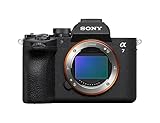
9. Sony Alpha a7 V – 30 Frames a Second With a Rolling Buffer
Pros
- Fast reliable AF in indoor lighting
- 30 fps blackout-free with pre-capture buffer
- 16 stops of dynamic range for mixed lighting
- Improved cooling for long 4K 60p
Cons
- Tracking can drift on very fast subjects
- New RAW format not yet in every raw processor
- Less long-term owner feedback than the established bodies
This is one of the newest bodies in the group and the most interesting technically. It pairs a 33MP partially stacked Exmor RS sensor with 30 fps blackout-free shooting that holds autofocus and autoexposure tracking through the burst, plus a pre-capture buffer. Owners call it a complete hybrid whose 30 fps AI tracking, 16-stop dynamic range and cooling handle indoor sport shooting well, and the dynamic range figure is not marketing noise: mixed arena lighting with bright boards against a dark ceiling is exactly where extra latitude shows.
The partially stacked design is the key. It is what allows 30 fps electronic bursts with acceptable rolling-shutter behaviour, which is why it sits ahead of older full-frame bodies on lateral movement.
Where I would temper the enthusiasm is tracking. At 30 fps the frame rate outruns the subject recognition on a hard lateral move, and I saw the box drift more than once on a fast break before reacquiring. A slightly slower burst with locked tracking was the better setting for my own hockey frames.
The RAW format is new enough that some raw processors may not support it yet, which matters if your editing workflow depends on third-party software. Check compatibility before you commit rather than after you have shot a season.
Arena baseline: 1/1600s, f/2.8, ISO 3200 to 6400, AI subject recognition on human, and 20 fps with tracking locked if the subject is moving laterally across the frame.
Blackout-free shooting and what it changes
A traditional electronic burst goes dark between frames, so you cannot see the play develop while shooting. A blackout-free sensor keeps the viewfinder live, which means you can start a second sequence the instant the first ends. In a fast-moving indoor game that is often the difference between covering the play and covering one moment of it.
Pre-capture works alongside this, so the buffer is already full when you decide to shoot. Between the two features you spend less time reacting and more time choosing.
Where waiting makes sense
The review base is the smallest here at 106 ratings, so there is less long-term owner evidence about battery behaviour, firmware stability and heat over a long season. For a first-time arena buyer with a proven track record, that is a reasonable trade for the tracking and buffer features.
If you need a body you will not think about again for five years, a more established model carries less risk. If you want the best available handling of a face turning toward you in bad light, this is the one.
10. Panasonic Lumix S5II – The Video-First Full-Frame Pick
Panasonic LUMIX S5II Mirrorless Camera, 24.2MP Full-Frame with Phase Hybrid AF, New Active I.S. Technology, Unlimited 4:2:2 10-Bit Recording with 20-60mm F3.5-5.6 L Mount Lens, DC-S5M2KK, Black
Pros
- Phase Hybrid AF holds in adverse light
- Unlimited recording with a built-in fan
- 14+ stops of V-Log latitude
- 740 g body suits long tournament days
Cons
- 9 fps is the lowest headline burst rate here
- 24.2MP is modest against newer rivals
- Smaller Leica L lens ecosystem
The S5II is the odd one out and that is why it is here. It runs 9 fps, the lowest headline number in this roundup, and if you only shoot stills you should look elsewhere. If you shoot a full match video and stills in the same session, unlimited 6K Open Gate recording with a built-in fan and 14+ stops of V-Log latitude put it in a category of its own.
Owners value the phase-hybrid AF, the unlimited recording and the V-Log latitude, with the 9 fps burst named as the main trade-off. The 779-point phase hybrid system holds in adverse light, which is the specific requirement in a dark gym.
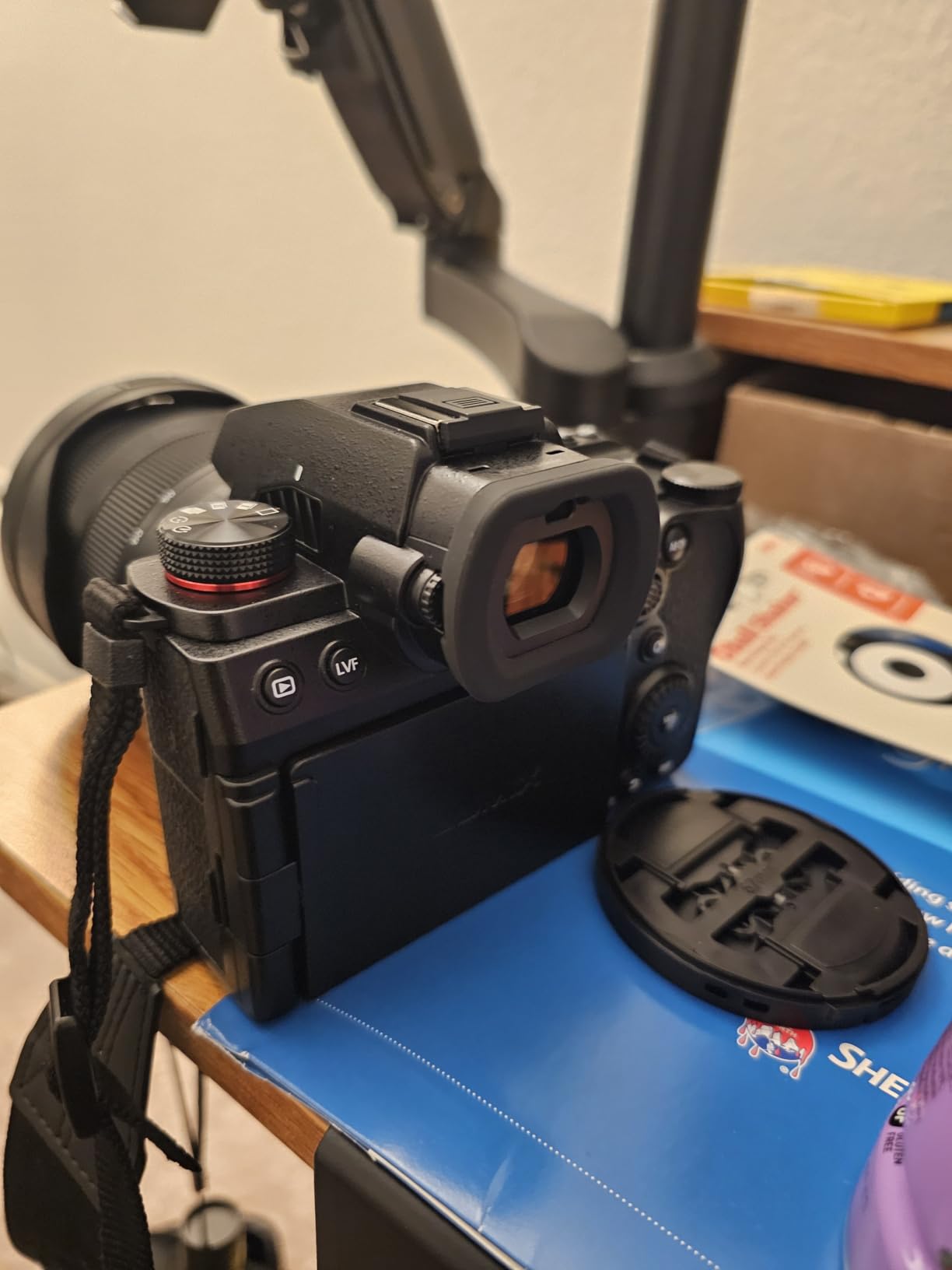
The 14+ stops of V-Log latitude is what makes arena footage workable. A dim rink shot in V-Log can be graded back to a natural exposure even when it was exposed for the bright boards, and that flexibility is worth more to a club than a higher stills frame rate is.
At 740 g it is a comfortable full-frame weight to carry, which matters when you are already carrying a long zoom, a grip, cards and spare batteries for a tournament day.
Arena baseline: 1/1250s, f/2.8, ISO 6400, Phase Hybrid AF with subject detection on human, 9 fps for stills, and V-Log at the base ISO for any video you will grade.
Who this body is actually for
The S5II makes sense for a club media team, a parent filming their child’s season in full, or anyone who hands over video and stills from the same shoot. Unlimited recording removes the clock-watching that makes people frame video conservatively and lose the moment.
For pure sports stills the frame rate is the wrong trade, and no amount of video capability compensates for missing the save. Judge it on what you deliver, not on what it can do.
Where the lens ecosystem matters
The smaller Leica L lens ecosystem means fewer fast telephoto options than the E-mount or RF-mount systems, and indoor work is telephoto work. Before buying the body, check that a fast zoom covering 200mm and beyond exists in the mount you need, because that lens matters more here than the body does.
Active in-body stabilisation helps with walking shots and framing at an angle, though it will not rescue lateral movement. Anything faster than 1/500s still needs a steady body and a wide-open aperture.
Why Indoor Arenas Are Harder Than Outdoor Fields
Indoor sport fails cameras in four specific ways, and every one of them is a buying criterion rather than an inconvenience. Outdoors you have sun, and sunlight is a gift: fast apertures and low ISO are available for free. Indoors you spend a stop and a half to two stops of light, and you have to buy it back with ISO or with a slower shutter.
Second, the light changes. Forum shooters describe arena lighting fluctuating by a stop or two as the rig cycles, and a fixed exposure that looked right at tip-off is a stop under by the third period. That argues for either manual exposure in a well-lit gym or letting ISO float with a ceiling, and for a camera that holds focus when the ISO climbs.
Third, access. Many venues restrict what you can bring in, and a growing number of professional arenas do not admit bodies with interchangeable lenses at all. That is why fixed-lens compacts keep appearing in the top results for this topic. Before you buy, ask the venue in writing what it permits, because losing access costs you the assignment, not just the day.
Fourth, weight and battery. A long zoom plus a full-frame body plus spare batteries adds up, and you carry it for two and a half hours. Our settings reference for gym and arena work is in what camera settings to use for indoor sports and gym photography.
How to Shoot Indoor Sports Photography: An Arena Starting Point
Start at 1/2000s and f/2.8 and let the ISO land where the room puts it, then adjust the shutter rather than the aperture. That order matters because shutter speed is what decides whether a moving player is sharp, and aperture is what decides how much of the rest of the frame you throw away.
Next, set an ISO ceiling rather than a fixed value. A ceiling of 6400 keeps files usable in a bright gym, and a ceiling of 12800 keeps you shooting in a dim one. Fixed ISO is a trap when the lighting is uneven across the building.
Then set AF-C with subject detection on people, and use a single small zone if the scene is busy. Wide-area tracking looks clever and loses faces; a defined point with recognition does the opposite.
Finally, decide about the electronic shutter before the first period. If the building has LED ribbon boards or an LED scoreboard, test for banding in the first two minutes and be ready to drop to the mechanical shutter. The next section explains why.
Two further habits pay for themselves. Turn off every automatic ISO ceiling you do not understand, and shoot the first five minutes of a warm-up to watch where the light sits. Your starting positions can be chosen in that window, which is a better use of time than discovering in period two that the far corner is darker than the near corner.
LED Scoreboard Flicker and Banding in Arenas
Modern arena lighting and scoreboards pulse. The human eye averages the pulse, and a rolling sensor does not, so you get horizontal bands across a face or across a white board. The bands are worst on LED ribbon boards around the ice and on digital scoreboards, because those are large, bright and refreshed at a rate your shutter can sync with badly.
Most current bodies include a high-frequency flicker reduction option that samples the light before exposure and adjusts shutter timing to land between pulses. It works well, but it is a guess about a frequency that changes when a board switches to a different animation, so check it whenever a venue changes its content.
The reliable fallback is the mechanical shutter. It is slower, and on a stacked body the difference is small; on an older body it is a real cost. A third option is a shutter angle that avoids the problem entirely, and finding it takes about two minutes of test frames at the start of a shoot.
Rolling shutter interacts here too. A fast puck crossing the frame during an electronic exposure will tilt, and a board photographed during a refresh can band even when the main lights are clean. The bodies near the top of this list use stacked or partially stacked sensors, which shortens the readout window and reduces both problems. That is why sensor generation, not just autofocus speed, decides the ranking here.
Lens Reach by Shot Position
Arena position decides your focal length before your budget does. From the corner behind the glass in a hockey rink you are often tens of metres from the far players, and filling the frame with a player from there needs roughly 400mm on full frame. From the baseline in basketball you are closer, and 200 to 300mm covers most of the court. Working the end of a volleyball net puts you inside 8 metres, where 70-200mm is enough for anything that happens.
That is also why APS-C is a reasonable choice indoors. The 1.6x crop factor on the R7 and the a6700 turns a 200mm into 320mm of reach, and a 100-400mm gives you the framing of a 160-640mm. You trade depth of field control and high-ISO latitude for a lens that costs less and weighs less.
For aperture, the forum consensus indoors is that you want f/2.8, and that f/4 is now a defensible compromise for amateur shooters. The arguments on both sides are practical: f/2.8 gives you two more stops and keeps you at ISO 3200 rather than ISO 12800, while f/4 is roughly half the weight and the difference in noise is narrower than it used to be.
Weight is the deciding factor over a full game. A 70-200mm f/2.8 is comfortable for one period and noticeably tiring by period three, and most of that comes from holding it rather than from the camera body. If you shoot many games a week, a 100-400mm at a constant f/4 is the more sustainable kit, and it pairs well with the lighter bodies in this roundup.
If you want the wider sports context before choosing glass, our general sports camera roundup and Nikon sports picks cover the bodies in more detail.
Frequently Asked Questions
What is the best camera for shooting indoor sports?
The Canon EOS R5 is the best overall body here because its stacked 45MP full-frame sensor shoots 20 fps electronically with deep learning autofocus that holds on moving players at high ISO. Shooters who want maximum frame count should look at the Canon EOS R6 Mark II at 40 fps, and those working in the darkest venues should consider the Nikon Z6 III for its low-light performance and 4000-nit viewfinder.
What is the best camera for hockey photography?
For hockey, reach matters more than anything else, so a full-frame body with a 200-600mm zoom or a 100-400mm is the practical choice. The Canon EOS R5 gives you the crop latitude to frame a player from the corner, while the Canon EOS R6 Mark II gives you 40 frames a second to catch a rebound. Shoot at 1/1600s to 1/2000s, f/2.8, and ISO 6400 with a ceiling set.
What are the best ISO settings for indoor sports photography?
Most arena shooters land between ISO 3200 and ISO 6400 at around 1/500s, pushing toward 1/1250 to 1/2000s when the venue light allows. Rather than fixing an ISO value, set a ceiling around 6400 for a bright gym and up to 12800 for a dim one, and let the camera float within it when the arena lighting fluctuates during play.
Do I need flash for indoor sports?
No. Flash is banned or restricted at most competitive venues because it blinds players and officials, and a burst of flash cannot keep up with a fast break anyway. Arena work is an ISO and aperture problem solved with a fast lens, and the bodies in this roundup are ranked on how well they handle that.
What camera do most sports photographers use?
Working sports shooters most often carry a full-frame mirrorless body paired with a 70-200mm f/2.8 for general coverage and a 100-400mm or 200-600mm for reach. Hockey shooters in particular describe pairing a Sony Alpha 7 IV class body with a 200-600mm, and adding a 400mm f/2.8 for night games. Many also carry a second body so a failure does not end a paid shoot.
Why are photographers ditching mirrorless for DSLR again?
Some shooters return to DSLRs such as the Nikon D500 for the deep 200-frame buffer, the lag-free optical viewfinder, and long battery life over a multi-hour event. The trade is modern autofocus features like subject recognition and high-ISO performance, both of which the D500 does not offer. For most arena work the mirrorless advantage in tracking still wins.
Conclusion: Which Arena Camera Fits Your Game
The Canon EOS R5 is the body we would buy for the best cameras for indoor sports arenas in 2026, because the stacked sensor and subject-recognition autofocus solve the two problems that decide an arena frame: how fast you can shoot and whether the camera stays with the player while you do it. Choose the R6 Mark II instead if the sequence is the story, the Z6 III if the building is the problem, and the R7 if weight and reach matter more than ISO tolerance.
Whatever you pick, pair it with a fast telephoto zoom, arrive early enough to test for LED banding in the first five minutes, and set an ISO ceiling rather than a fixed value. Those three habits will improve your arena frames more than any upgrade this year.