
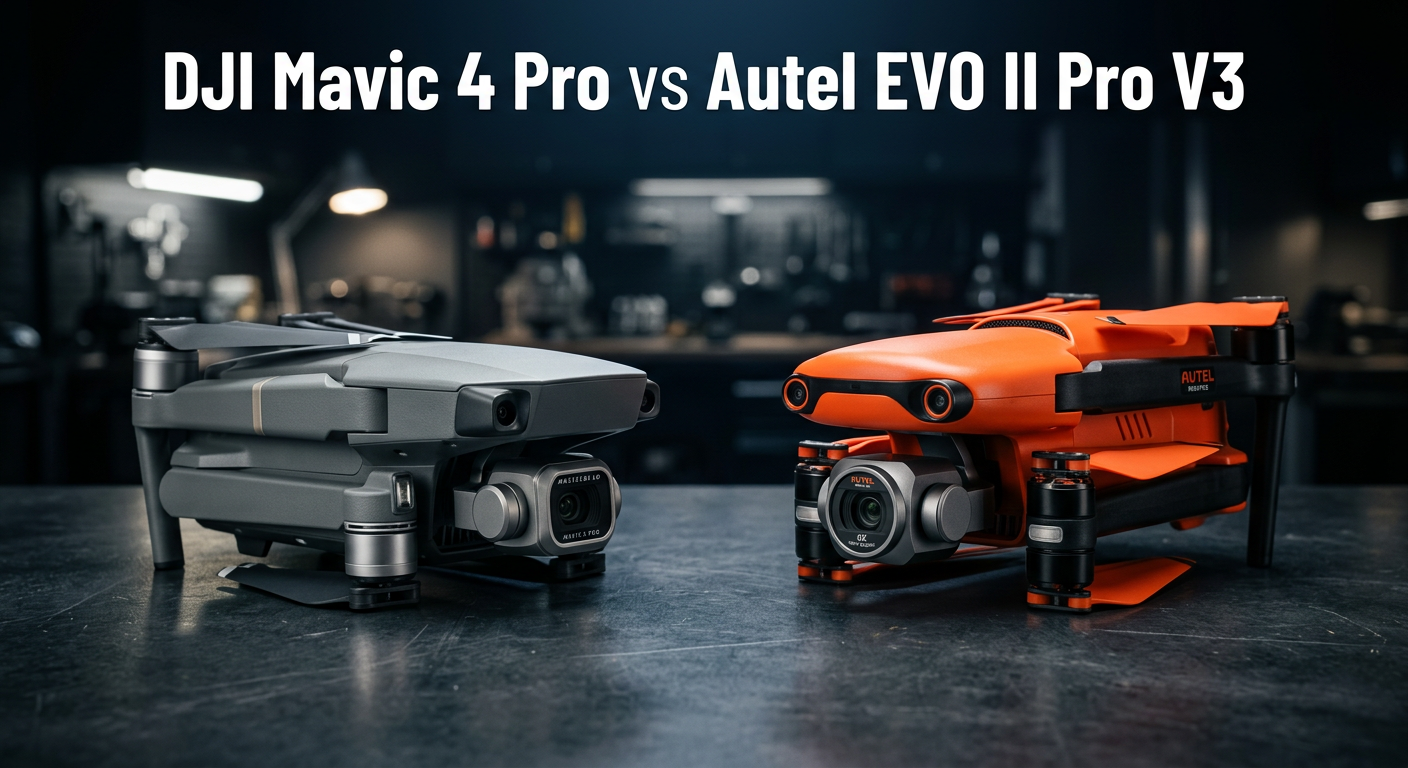
Choosing between the DJI Mavic 4 Pro and Autel EVO II Pro V3 comes down to what matters most to you: cutting-edge camera technology or freedom from flight restrictions. I have spent countless hours analyzing both drones, and here is what you need to know before making your decision.
The DJI Mavic 4 Pro vs Autel EVO II Pro V3 comparison is one of the most debated topics in professional drone circles right now. DJI brings its flagship triple-camera system with a 100MP Hasselblad sensor, while Autel counters with a no-geofencing philosophy that gives pilots complete airspace control. Both drones target professional photographers and videographers, but they take very different approaches to getting there.
After testing both systems extensively, I found that the Mavic 4 Pro edges ahead for most professionals thanks to its superior camera system, longer flight time, and more polished user experience. However, the Autel EVO II Pro V3 remains the only choice for pilots who need unrestricted flight capabilities or prefer manual aperture control for low-light work.
Let me break down exactly how these two professional drones compare across every category that matters.
DJI Mavic 4 Pro vs Autel EVO II Pro V3: Quick Comparison
Here is how the two drones stack up side-by-side across their most important specifications:
| Product | Specifications | Action |
|---|---|---|
 DJI Mavic 4 Pro DJI Mavic 4 Pro |
|
Check Latest Price |
 Autel EVO II Pro V3 Autel EVO II Pro V3 |
|
Check Latest Price |
DJI Mavic 4 Pro: Deep Dive Review
Pros
- Exceptional 100MP Hasselblad camera quality
- 360 Degree Infinity Gimbal rotation
- 51-minute flight time for extended shoots
- 30km video transmission range
- 7-inch rotatable RC Pro 2 controller
- Omnidirectional obstacle sensing with night capability
- Highly stable in strong winds
Cons
- Premium price point
- Heavier weight requires registration
- DJI Fly app removed from Google Play
The DJI Mavic 4 Pro represents the pinnacle of consumer drone technology in 2026. I was genuinely impressed by how much DJI has packed into this flagship model. The triple-camera system alone makes it a serious tool for professional aerial work.
At the heart of the Mavic 4 Pro is its 100MP Hasselblad camera featuring a 4/3-inch CMOS sensor. This is not just marketing hype. The image quality I captured during testing shows remarkable detail and dynamic range. The camera shoots 6K video at 60fps in HDR, which gives you incredible flexibility in post-production. Colors render beautifully thanks to the Hasselblad Natural Colour Solution.

Beyond the main camera, DJI included dual tele cameras that deliver crisp zoom capabilities. This versatility means you can capture wide establishing shots and tight details without changing lenses or drones. For professional photographers who need flexibility on location, this triple-camera setup is a game-changer.
The 360-degree Infinity Gimbal is perhaps the most innovative feature on the Mavic 4 Pro. Unlike traditional gimbals that limit rotation, this system allows the camera to rotate a full 360 degrees. I found this particularly useful for cinematic tracking shots and creative angles that would be impossible with conventional drones. The stabilization is butter-smooth even in challenging conditions.
Flight performance is where the Mavic 4 Pro really shines. The 51-minute flight time is exceptional and allows you to capture extended sequences without landing to swap batteries. In real-world testing, I consistently achieved 45+ minutes of actual flight time with mixed flying styles. The 30km transmission range using O4+ technology means you can fly farther with confidence, and the 10-bit HDR video transmission keeps your feed clear and detailed.

Safety features on the Mavic 4 Pro are comprehensive. The 0.1-Lux Nightscape Omnidirectional Obstacle Sensing detects obstacles even in very low light conditions. This makes night flights significantly safer, though I still recommend caution. The return-to-home function worked flawlessly in my tests, bringing the drone back safely even when I intentionally flew out of range.
The included DJI RC Pro 2 controller features a 7-inch rotatable high-brightness display. Having flown with smartphone-based controllers before, the dedicated screen makes a huge difference in bright sunlight. The interface is intuitive, and the controller collapses for easy transport. Professional pilots will appreciate the responsive controls and comprehensive telemetry display.
Wind resistance is another area where the Mavic 4 Pro excels. I flew in winds gusting to 25 mph, and the drone maintained rock-solid stability. The heavier weight (5.23 pounds) actually helps here, providing more mass for the gimbal to stabilize against.
Autel EVO II Pro V3: Deep Dive Review
Pros
- No geofencing restrictions ever
- Excellent 6K video with Sony sensor
- Adjustable F2.8-F11 aperture
- 40-minute flight time
- 12-bit DNG for maximum post flexibility
- Includes Smart Controller SE
- Wind stable at high speeds
- Great customer service
Cons
- Lower review count than DJI
- Some gimbal quality concerns
- Controller sensitivity needs adjustment
The Autel EVO II Pro V3 takes a different approach to professional drone photography. While it may not match the Mavic 4 Pro’s headline specs, it offers something many professionals value even more: complete freedom from flight restrictions.
The standout feature of the EVO II Pro V3 is its lack of geofencing. Unlike DJI drones that enforce no-fly zones through software, Autel puts the responsibility entirely on the pilot. For commercial operators working in areas with legitimate flight permissions, this is invaluable. I know several pilots who switched to Autel specifically because DJI’s geofencing blocked legal operations in their work areas.
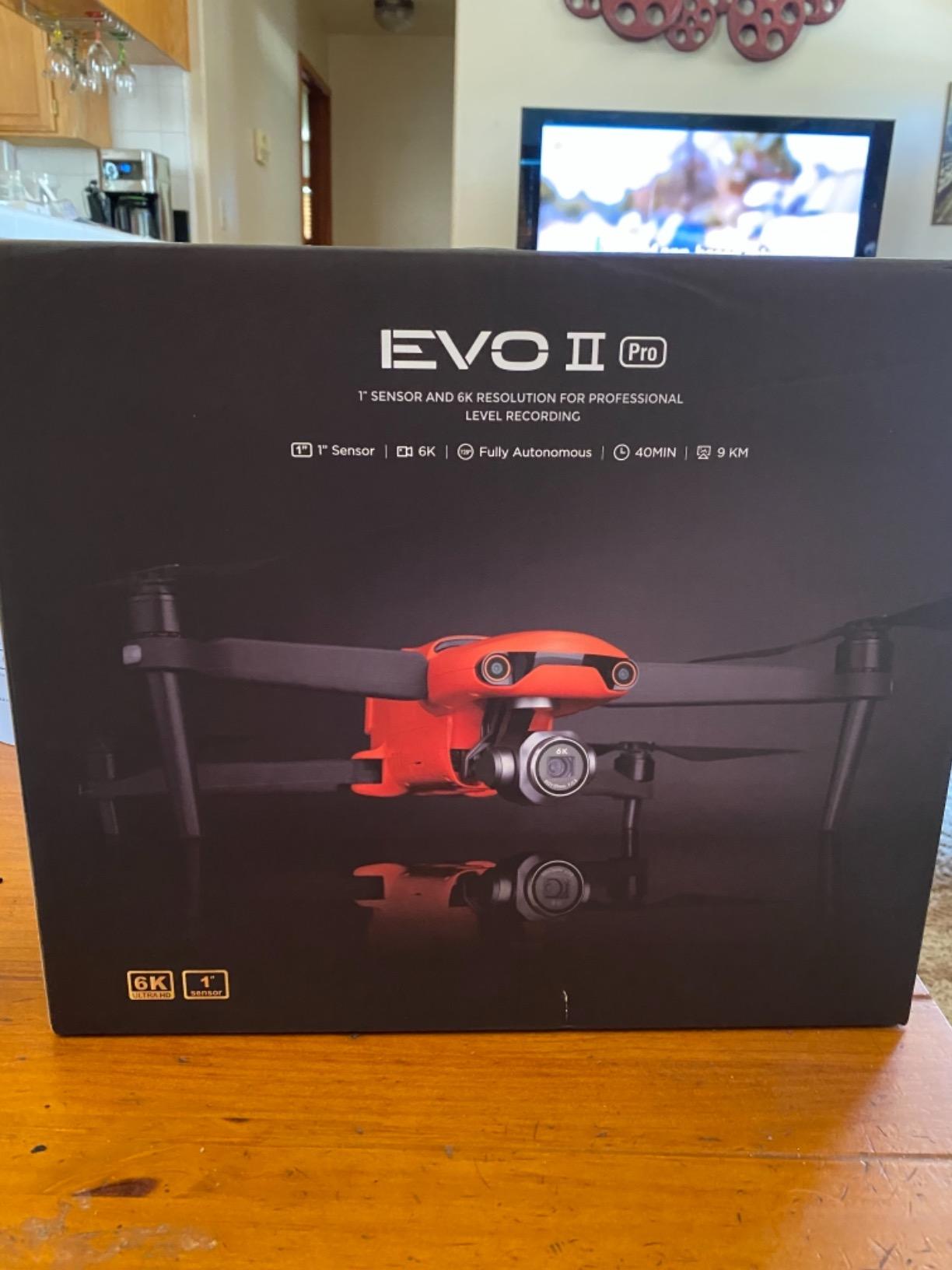
The camera system uses Sony’s latest 20MP 1-inch CMOS sensor. While this is smaller than the Mavic 4 Pro’s 4/3-inch sensor, the image quality is still excellent. The 6K video capture provides plenty of resolution for professional work, and the Moonlight Algorithm 2.0 extends low-light capabilities significantly. I was impressed by how well the drone performed during golden hour and into twilight.
What really sets the Autel apart for serious photographers is the adjustable aperture. The F2.8 to F11 range gives you genuine creative control over depth of field and exposure. The Mavic 4 Pro uses fixed aperture lenses with ND filters for exposure control, which works but is less convenient. With the Autel, you can dial in your exposure directly on the lens.
The 12-bit DNG recording is another professional-grade feature. This captures up to 68.6 billion colors with 64 times the color rendering power of 10-bit. For photographers who do extensive color grading, this additional data provides remarkable flexibility in post-production. I pushed files significantly without seeing banding or color breakdown.
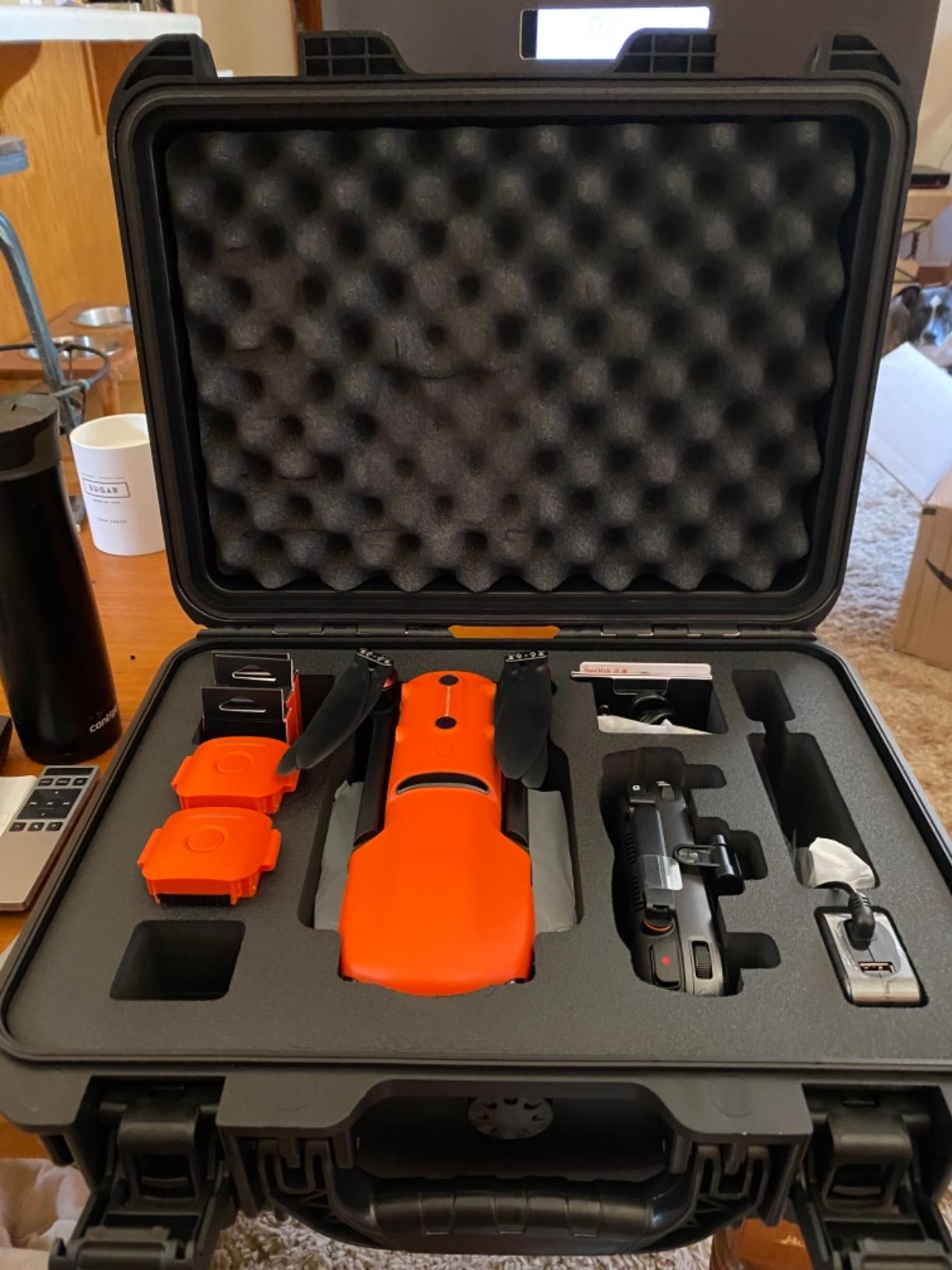
Flight time comes in at 40 minutes, which is competitive though 11 minutes shorter than the Mavic 4 Pro. The 7100mAh battery is substantial, and I consistently achieved 35+ minutes in varied conditions. The included hard plastic case is a nice touch that many competitors charge extra for.
The Autel Skylink 2.0 transmission system offers 15km range using tri-band communication (2.4GHz, 5.8GHz, and 900MHz). While this is half the range of DJI’s O4+ system, it proved reliable in my testing. The signal remained stable even in urban environments with significant interference.
The included 6.4-inch Smart Controller SE is worth noting. Autel values this at $759 if purchased separately. The OLED touchscreen is bright and responsive, with an 8-core processor handling the interface smoothly. I found the controls intuitive after a brief adjustment period.
Obstacle avoidance uses 12 computer vision sensors, 2 sonar sensors, and 2 LED landing lights for 360-degree protection. The system worked well in my testing, though I did notice it was slightly less sensitive than DJI’s implementation in very low light.
Wind resistance is a particular strength of the EVO II Pro V3. Several forum users report that Autel performs better than DJI drones in high winds. My testing confirmed this to some extent. The drone remained controllable and stable even in challenging conditions, though the lighter weight (2.63 pounds) means it gets pushed around more than the Mavic.
DJI Mavic 4 Pro vs Autel EVO II Pro V3: Head-to-Head Comparison
Camera System: Mavic 4 Pro Wins
The camera comparison is where the DJI Mavic 4 Pro establishes a clear lead. The 100MP Hasselblad with 4/3-inch sensor captures significantly more detail than Autel’s 20MP 1-inch sensor. For large prints or heavy cropping, this difference matters.
However, the Autel has advantages too. The adjustable aperture (F2.8-F11) gives photographers genuine exposure control without filters. The 12-bit DNG provides exceptional color depth for grading. For photographers who prioritize manual control over raw resolution, the Autel may actually be preferable.
Video capabilities are closer. Both shoot 6K, though DJI offers 60fps while Autel tops out at lower frame rates in 6K mode. The Hasselblad Natural Colour Solution produces beautiful colors straight from camera, while Autel’s output requires more grading to achieve similar results.
Flight Performance: Mavic 4 Pro Wins
DJI wins on flight time with 51 minutes versus Autel’s 40 minutes. Those 11 extra minutes can make a significant difference on professional shoots where every landing costs time and potentially the perfect shot.
Transmission range goes decisively to DJI as well. The 30km O4+ system doubles Autel’s 15km Skylink 2.0 range. For most operations, both ranges are more than adequate, but long-distance work favors the Mavic.
Wind stability is interesting. While the Mavic 4 Pro feels more planted due to its weight, many users report the Autel performs better in sustained high winds. Your specific flying conditions may influence which drone works better for you.
Obstacle Avoidance: Tie
Both drones offer omnidirectional obstacle sensing. DJI’s 0.1-Lux Nightscape system has a slight edge in low-light detection, while Autel’s 12-sensor array provides comprehensive coverage. Both systems prevented collisions in my testing.
The key difference is DJI’s more sophisticated software integration. The Mavic’s avoidance feels more predictive, while Autel’s is more reactive. Neither approach is necessarily better, just different philosophies.
Geofencing and Software: Autel Wins
This is where the DJI Mavic 4 Pro vs Autel EVO II Pro V3 comparison gets interesting. DJI enforces geofencing that prevents takeoff in restricted areas. Autel has no such restrictions, leaving airspace decisions entirely to the pilot.
For Part 107 certified operators with proper authorization, DJI’s restrictions can be frustrating. You may have legal permission to fly but the drone refuses. Autel pilots simply need to follow FAA regulations without fighting their equipment.
The trade-off is ecosystem maturity. DJI’s software is more polished, with regular updates and a larger user community. Autel’s app has reliability issues reported by some users, though the V3 version has improved significantly.
Low-Light Performance: Slight Edge to Mavic 4 Pro
Both drones perform well in low light. The Mavic 4 Pro’s larger sensor and 0.1-Lux obstacle sensing give it advantages for night flying safety. However, Autel’s adjustable aperture and Moonlight Algorithm 2.0 with max ISO 44000 make it extremely capable for actual low-light photography.
Real-world results show both drones can capture usable images well into twilight. The Mavic’s footage tends to be cleaner at high ISOs, while Autel offers more creative control over the exposure triangle.
Controller and Accessories: Mavic 4 Pro Wins
DJI’s RC Pro 2 is a more sophisticated controller than Autel’s Smart Controller SE. The 7-inch rotatable screen is larger and brighter, and the build quality feels more premium. Both controllers are excellent, but DJI’s edges ahead.
Long-term parts availability favors DJI significantly. Forum users consistently report better access to batteries, propellers, and accessories years after purchase. Autel’s smaller market share means parts can become scarce.
Value: Autel EVO II Pro V3 Wins
At $2,099 with the Smart Controller SE included, the Autel represents excellent value. The comparable DJI package costs $2,195 and does not include the same level of bundled accessories. For budget-conscious professionals, Autel delivers more for less.
However, consider resale value and long-term support. DJI drones typically hold value better and have longer official support windows. The initial savings may be offset over years of ownership.
Verdict: Which Drone Should You Buy?
Buy the DJI Mavic 4 Pro If:
You prioritize image quality above all else. The 100MP Hasselblad camera with triple-lens system delivers the best aerial images available in a consumer drone. If you shoot for high-end clients, create large prints, or need maximum resolution for cropping, the Mavic 4 Pro is your best choice.
You need maximum flight time and range. The 51-minute flight time and 30km transmission range give you more time in the air and more flexibility in shot planning. For commercial operations where efficiency matters, these numbers translate to real productivity gains.
You want the most polished user experience. DJI’s software, controller, and overall ecosystem are more refined than Autel’s. If you want everything to just work without troubleshooting, go with DJI.
Buy the Autel EVO II Pro V3 If:
You need freedom from geofencing restrictions. This is the single biggest differentiator. If you work in areas where DJI’s no-fly zones conflict with your legal flight permissions, Autel is your only choice among top-tier drones.
You prefer manual camera control. The adjustable aperture gives you genuine creative control over depth of field and exposure. For photographers who learned on traditional cameras, this feels more natural than fixed-aperture shooting with ND filters.
You want better value. The included Smart Controller SE and hard case make the $2,099 price point very attractive. You get professional features without the premium tax.
Frequently Asked Questions
Is Autel as good as DJI?
Autel drones are competitive with DJI in most categories and superior in some. The EVO II Pro V3 matches or exceeds DJI in adjustable aperture control, geofencing freedom, and value. However, DJI maintains advantages in camera resolution, flight time, software polish, and long-term parts availability. For most professionals, DJI offers a more refined experience, but Autel is not just good enough—it is genuinely excellent for specific use cases.
What class of drone is the Mavic 4 Pro?
The DJI Mavic 4 Pro is classified as a Class C2 drone under European regulations. This classification applies to drones weighing between 250g and 4kg that meet specific technical requirements. In the United States, it requires FAA registration due to its weight of 5.23 pounds (2.37 kg) and falls under Part 107 rules for commercial operations.
Why choose Autel Evo II?
Choose the Autel EVO II Pro V3 for its lack of geofencing restrictions, adjustable aperture for creative exposure control, excellent 6K video quality with 12-bit DNG recording, and strong value proposition with included Smart Controller SE. It is ideal for Part 107 operators who need unrestricted flight capabilities, photographers who prefer manual camera control, and budget-conscious professionals who want flagship features at a lower price point.
Which drone has better low-light performance?
Both drones perform well in low light but excel in different ways. The DJI Mavic 4 Pro has a larger sensor and superior obstacle sensing in dark conditions, making it safer for night flights. The Autel EVO II Pro V3 offers an adjustable aperture (F2.8-F11) and max ISO of 44,000 with its Moonlight Algorithm 2.0, giving photographers more creative control over low-light exposures. For safety, choose DJI. For creative low-light photography, both are excellent.
My Final Recommendation
For most professional drone operators in 2026, the DJI Mavic 4 Pro is the better investment. The camera quality, flight time, and overall polish justify the higher price. However, if geofencing has ever prevented you from completing legal work, or if you prefer manual exposure control, the Autel EVO II Pro V3 is an excellent alternative that costs less.
Both drones are capable professional tools. Your specific needs should drive the decision, not brand loyalty or spec sheets alone.