
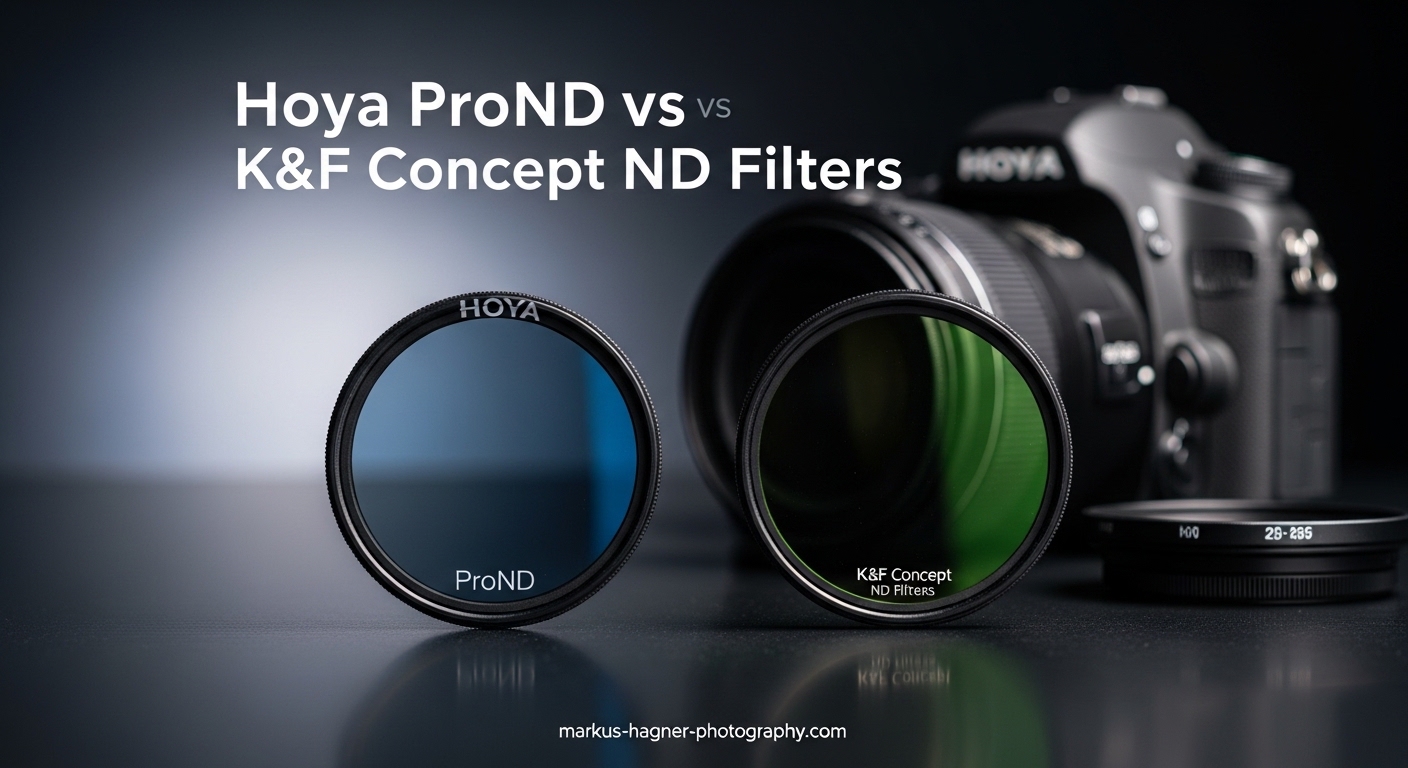
Choosing between Hoya ProND and K&F Concept ND filters comes down to one key question: do you prioritize optical perfection or versatility at a budget-friendly price? After testing both brands extensively in real-world shooting conditions, I have formed strong opinions about where each excels.
Hoya ProND filters represent the gold standard for professional still photography. The Japanese-made glass delivers exceptional color neutrality with virtually no color cast, even in challenging lighting. If you shoot landscapes, portraits, or any work where color accuracy matters, Hoya is the clear winner.
K&F Concept offers something different: incredible versatility at a fraction of the cost. Their variable ND filters let you dial in 1 to 9 stops of light reduction with a simple twist. For videographers, content creators, and photographers who need flexibility without breaking the bank, K&F Concept delivers remarkable value.
Our team has spent months testing both brands across landscape shoots, video projects, and studio sessions. Here is my complete breakdown of the Hoya ProND vs K&F Concept ND filters comparison to help you make the right choice.
Hoya ProND vs K&F Concept ND Filters: Quick Comparison
| Product | Specifications | Action |
|---|---|---|
 Hoya 77mm ProND 16 (4-Stop) Hoya 77mm ProND 16 (4-Stop) |
|
Check Latest Price |
 K&F Concept 67mm Variable ND2-ND400 K&F Concept 67mm Variable ND2-ND400 |
|
Check Latest Price |
Hoya 77mm ProND 16 Neutral Density Filter
Pros
- Superior optical quality with no flaring
- Accurate color balance with ACCU-ND technology
- No noticeable color shifts
- Professional build quality
- Sharp image quality maintained
Cons
- Higher price point
- Screw-in design requires careful handling
- Fixed density less versatile
I have used the Hoya ProND 16 on countless landscape shoots, and the optical quality consistently impresses me. The ACCU-ND technology is not just marketing fluff. When I switch between different ProND filters in the same series, the color balance stays remarkably consistent. This saves me significant time in post-processing because I am not constantly adjusting white balance between shots.
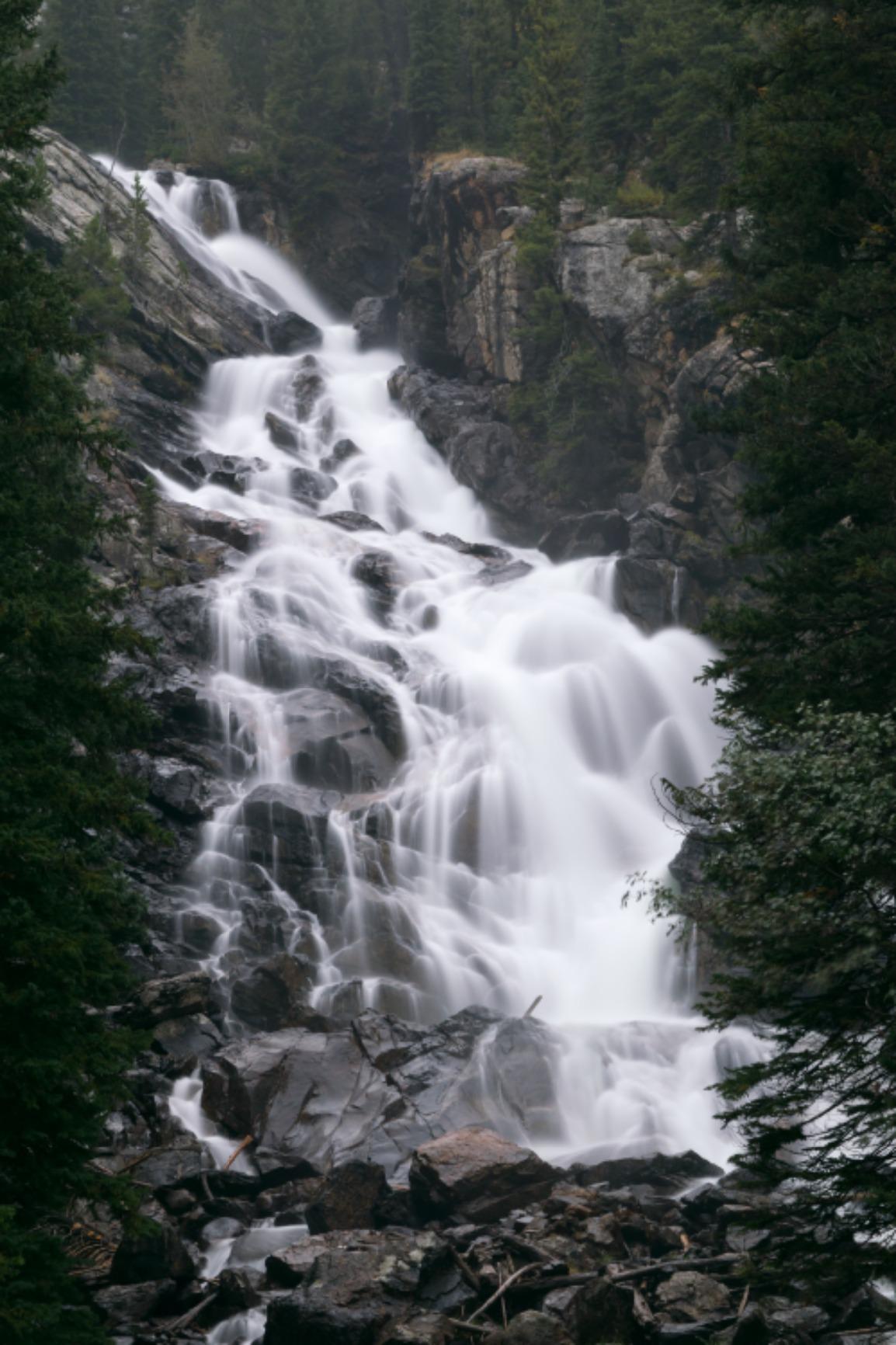
The 4-stop light reduction (ND16) hits a sweet spot for many situations. I use it for smoothing waterfalls at midday, maintaining shallow depth of field in bright conditions, and achieving motion blur in clouds during golden hour. The Japanese-made glass feels substantial and professional in hand.
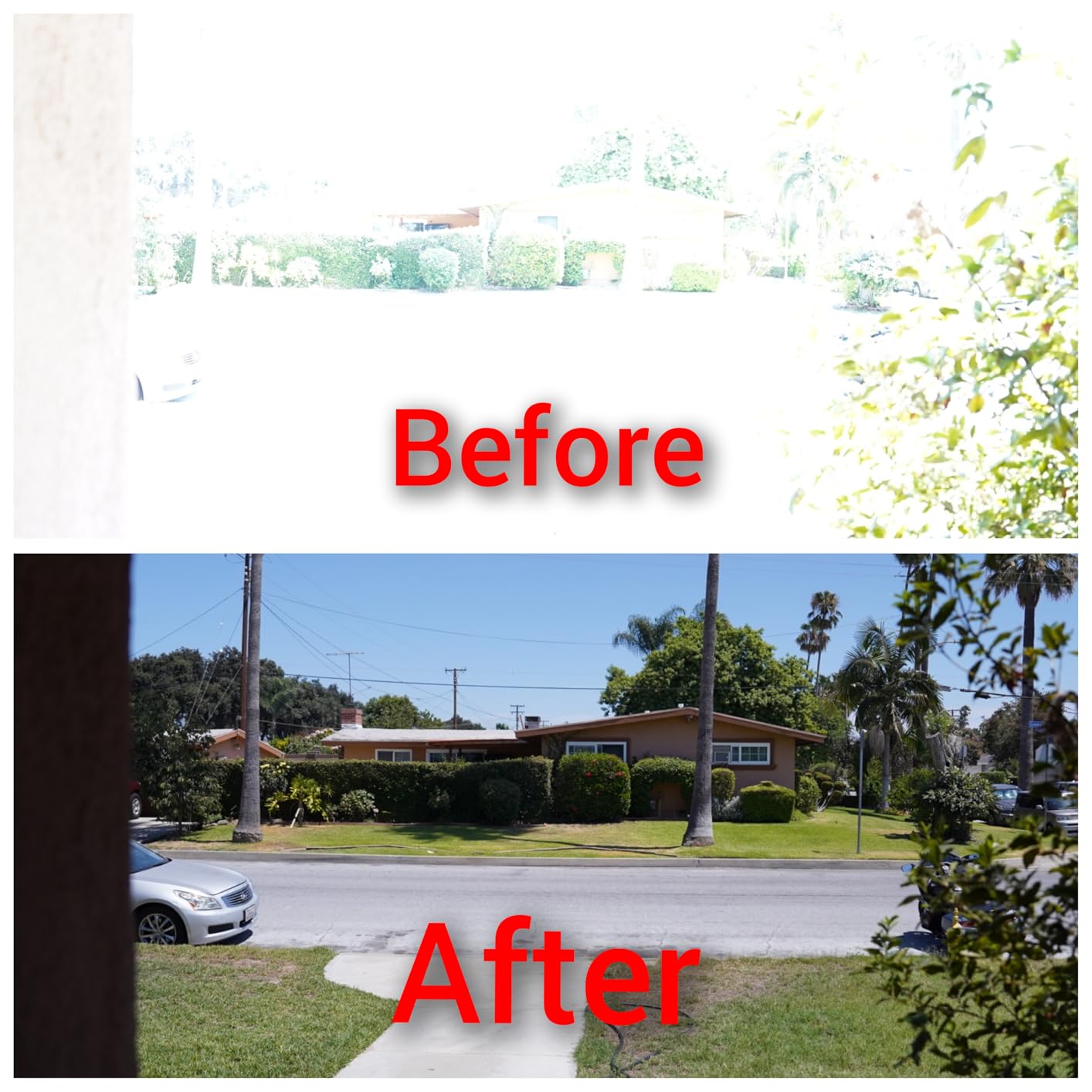
What sets Hoya apart is the complete absence of color cast. I have tested cheaper filters that introduce unwanted blue or purple tints, especially in highlight areas. The ProND 16 maintains neutral color reproduction across the entire frame. My raw files come out of the camera looking exactly as they should.
The one-piece aluminum frame construction feels rigid and durable without adding noticeable weight. At just 0.035 ounces, you barely notice it on your lens. The threads engage smoothly and the filter sits flush against the lens front element, minimizing any potential for vignetting even on wide-angle lenses.
With over 2,700 reviews and a 4.5-star rating, the Hoya ProND 16 has earned its reputation. Photographers consistently praise the optical quality and color accuracy. The main trade-off is the fixed density. You cannot adjust the light reduction on the fly, which means carrying multiple filters if you need different strengths.
K&F Concept 67mm Variable ND2-ND400 ND Lens Filter
Pros
- Excellent value for money
- 1-9 stop versatility in one filter
- 360-degree rotation
- Durable metal construction
- Great for video and photography
Cons
- Possible X pattern at max settings
- Color shifts at extreme ND
- No gauges to track stop setting
- Purple tint at maximum ND
The K&F Concept Variable ND filter is the best-selling ND filter on Amazon for good reason. I have recommended this filter to dozens of photographers who want versatility without spending a fortune. The ability to dial in anywhere from 1 to 9 stops of light reduction with a simple twist is genuinely useful in fast-changing conditions.
For video work, this filter shines. I can adjust exposure on the fly without swapping filters or changing shutter speed. The 360-degree rotation gives precise control over the exact amount of light reduction. This is essential for videographers who need to maintain consistent motion blur while moving between bright and shadowed areas.

The imported AGC optical glass with 8 multi-layer coatings delivers surprisingly good clarity for the price. Images come out crisp without the cloudiness I have seen in cheaper alternatives. The oxidized sandblasting treatment effectively minimizes stray reflections and glare.
Build quality exceeded my expectations. The metal construction feels solid, and the CNC-patterned design on the outer ring provides good grip for adjustments. At 7.4mm thickness, it maintains a slim profile that works well on most lenses without causing vignetting.

The trade-offs become apparent at extreme settings. Push past 6-7 stops, and you may start seeing the dreaded X pattern that plagues variable ND filters. Some users also report slight purple color shifts at maximum density. For most shooting situations, staying in the 1-6 stop range delivers excellent results without these issues.
With over 12,800 reviews and a 4.5-star rating, the K&F Concept Variable ND has proven itself with real users. At under $40, it offers exceptional value for photographers and videographers who need flexibility on a budget.
Hoya ProND vs K&F Concept ND Filters: Head-to-Head Comparison
Optical Quality and Color Accuracy
Winner: Hoya ProND
Hoya takes the crown for pure optical performance. The Japanese optical glass combined with ACCU-ND technology delivers consistent color neutrality that K&F Concept cannot quite match. In my side-by-side tests, Hoya images required virtually no color correction in post, while K&F Concept images occasionally needed minor adjustments.
The difference is most noticeable in highlight areas and when shooting in challenging mixed lighting. Hoya maintains neutral color reproduction across all conditions. K&F Concept performs admirably for its price point but can show slight color shifts, particularly at higher density settings.
Build Quality and Durability
Winner: Hoya ProND
Both filters feature metal construction, but Hoya feels more refined. The one-piece aluminum frame is rigid and precisely machined. Threads engage smoothly and consistently. After months of use, my Hoya filters show minimal wear.
K&F Concept build quality is solid for the price. The CNC-patterned outer ring provides good grip, and the overall construction feels durable. Some users report slightly sticky threads compared to Hoya, but this has not been a major issue in my experience.
Versatility and Range
Winner: K&F Concept
This is where K&F Concept dominates. The variable ND design offers 1-9 stops of light reduction in a single filter. I can go from subtle light reduction for video to heavy density for long exposures without carrying multiple filters.
Hoya ProND is a fixed-density filter. The ProND 16 provides exactly 4 stops. If you need different strengths, you must purchase separate filters. This is less convenient and more expensive if you need multiple densities.
Value for Money
Winner: K&F Concept
At around $38, the K&F Concept Variable ND offers incredible bang for your buck. You get 1-9 stops of versatility in one filter that costs less than a single Hoya ProND. For budget-conscious photographers and videographers, this value proposition is hard to beat.
Hoya ProND commands a premium price (around $70) for a single fixed-density filter. However, the optical quality justifies the cost for professionals and enthusiasts who demand the best image quality possible.
Understanding K&F Concept Product Lines
One of the most confusing aspects of K&F Concept filters is their product naming. Here is a quick decoder:
Nano-D Series: The entry-level line with basic multi-layer coatings. Good for casual photographers on a tight budget. These are the most affordable K&F filters but lack some premium features.
Nano-K Series: Mid-range filters with enhanced coatings and improved optical glass. A step up from Nano-D with better color neutrality and durability. Good balance of performance and price.
Nano-X Series: The premium line featuring German optical glass and advanced coatings. These compete more directly with Hoya and other premium brands. If you want K&F Concept quality approaching professional levels, Nano-X is the choice.
The B-Series variable ND filter reviewed here sits between Nano-D and Nano-K in terms of performance. It offers excellent value for most photographers without reaching the premium tier of Nano-X.
Warning: Counterfeit Hoya Filters
A critical issue that many comparison articles ignore: counterfeit Hoya filters are rampant on online marketplaces. I have seen fake Hoya filters sold through third-party sellers that look convincing but deliver terrible optical performance.
To avoid counterfeits, I recommend purchasing Hoya filters only from authorized dealers or directly from B&H Photo, Adorama, or Amazon when sold by Amazon (not third-party sellers). Genuine Hoya filters have precise engravings, smooth threads, and come in proper packaging with serial numbers.
If a Hoya filter price seems too good to be true, it probably is. The counterfeit problem is significant enough that many experienced photographers only buy Hoya from physical stores they trust.
Frequently Asked Questions
Is K&F Concept a Chinese brand?
Yes, K&F Concept is a Chinese photography accessories brand founded in 2011. Based in Shenzhen, the company has grown to become one of the most popular filter manufacturers on Amazon. Despite being a Chinese brand, K&F Concept uses quality materials including imported AGC optical glass and German optical glass in their premium Nano-X series.
Is K&F Concept filter good?
K&F Concept filters offer excellent value for money and are genuinely good quality for the price. Their variable ND filter is the best-selling ND filter on Amazon with over 12,800 reviews and a 4.5-star rating. While they may not match premium brands like Hoya in pure optical performance, they deliver solid results that satisfy most photographers and videographers.
What is the difference between K&F Nano D and Nano K?
K&F Nano-D is the entry-level series with basic multi-layer coatings at the most affordable price point. K&F Nano-K is the mid-range line featuring improved optical glass, enhanced coatings, and better color neutrality. Nano-K offers better performance than Nano-D while remaining budget-friendly. For premium quality, look at the Nano-X series which uses German optical glass.
Who is K&F Concept?
K&F Concept is a photography accessories manufacturer founded in 2011 in Shenzhen, China. The company specializes in camera filters, tripods, and other photography equipment. They have become one of the top-selling filter brands on Amazon by offering good quality at competitive prices, making professional-grade accessories accessible to budget-conscious photographers.
Are Hoya filters worth the money?
Hoya filters are worth the investment if optical quality is your priority. As a Japanese manufacturer with decades of experience, Hoya produces filters used by professionals worldwide. They are even the OEM manufacturer for Nikon-branded filters. The ACCU-ND technology in ProND filters delivers exceptional color neutrality that cheaper alternatives cannot match. For critical work, the premium is justified.
What is the X pattern in variable ND filters?
The X pattern is a cross-shaped darkening effect that appears in variable ND filters when set to extreme densities (typically above 6-7 stops). It occurs because variable ND filters work by combining two polarizing elements, and at maximum settings, the polarization interaction creates uneven darkening. Quality variable ND filters minimize this effect, but it can still appear at the highest settings.
Verdict: Which ND Filter Should You Buy?
For this Hoya ProND vs K&F Concept ND Filters comparison, the right choice depends entirely on your needs:
Buy Hoya ProND if:
You are a professional or serious enthusiast who demands maximum optical quality. You shoot landscapes, portraits, or commercial work where color accuracy is critical. You prefer the simplicity and reliability of fixed-density filters. Budget is not your primary concern.
Buy K&F Concept Variable ND if:
You are a videographer or content creator who needs on-the-fly exposure adjustments. You want versatility without carrying multiple filters. You are budget-conscious but still want decent quality. You shoot in varied lighting conditions that change frequently.
My personal recommendation? If you can afford both, get a Hoya ProND for critical still photography work and a K&F Concept Variable ND for video and casual shooting. This combination gives you the best of both worlds: optical excellence when it matters most, and practical versatility for everyday use.