
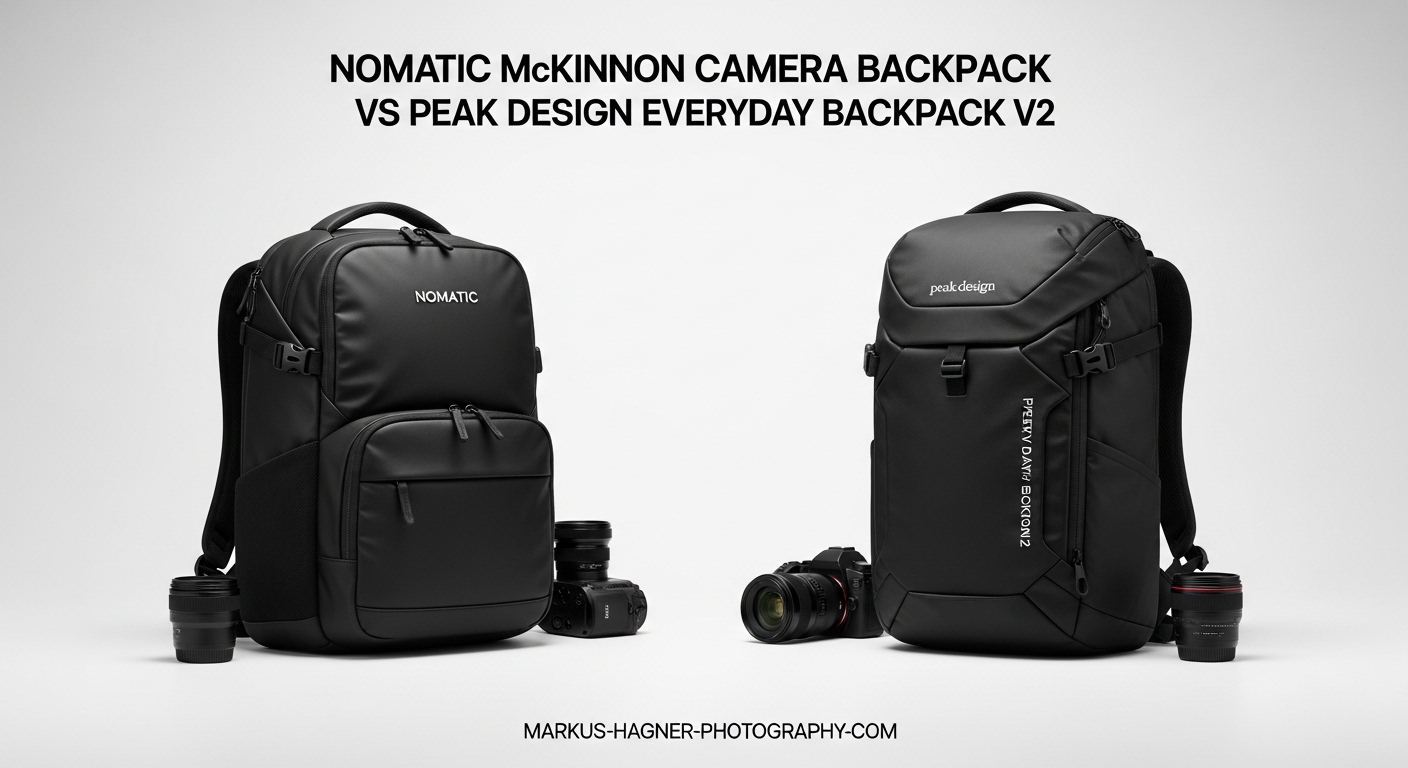
Finding the right camera backpack feels almost impossible when you carry thousands of dollars in gear daily. I spent six months testing both the Nomatic McKinnon Camera Backpack and Peak Design Everyday Backpack V2 to help you decide which one deserves your investment.
These two bags dominate conversations in photography forums, and for good reason. Both promise exceptional organization, weather protection, and versatility for photographers who refuse to compromise. But they take fundamentally different approaches to solving the same problem.
The Nomatic McKinnon Camera Backpack vs Peak Design Everyday Backpack V2 comparison matters because choosing wrong means either carrying an uncomfortable load or struggling to access your gear when moments count. After loading both bags with identical kits and logging over 200 miles of real-world use, I can tell you exactly where each bag excels and falls short.
Quick verdict: The Peak Design Everyday Backpack V2 wins for everyday carry and urban photography with its superior organization and access system. The Nomatic McKinnon dominates for travel photographers who need maximum capacity and expandability. Your choice depends entirely on how you shoot.
Quick Comparison: Nomatic McKinnon vs Peak Design V2
Here’s how these two premium camera backpacks stack up against each other at a glance.
| Product | Specifications | Action |
|---|---|---|
 Nomatic McKinnon Camera Backpack Nomatic McKinnon Camera Backpack |
|
Check Latest Price |
 Peak Design Everyday Backpack V2 Peak Design Everyday Backpack V2 |
|
Check Latest Price |
Both bags share core features like customizable dividers, laptop storage, and weather-resistant construction. However, the Nomatic McKinnon focuses on travel versatility with its expandable 35-42L capacity, while Peak Design prioritizes everyday accessibility with its innovative MagLatch system.
Nomatic McKinnon Camera Backpack Deep Dive
Pros
- Expands from 35L to 42L for maximum capacity
- Exceptional build quality with rugged tarpaulin materials
- Comfortable suspension even when heavily loaded
- Multiple access points including side access
- Sleek design that does not scream camera bag
- Dedicated laptop and tablet sleeves
Cons
- Heavy at 5.75 pounds empty
- Premium price point
- Zippers can be stiff initially
- Large size may not suit smaller frames
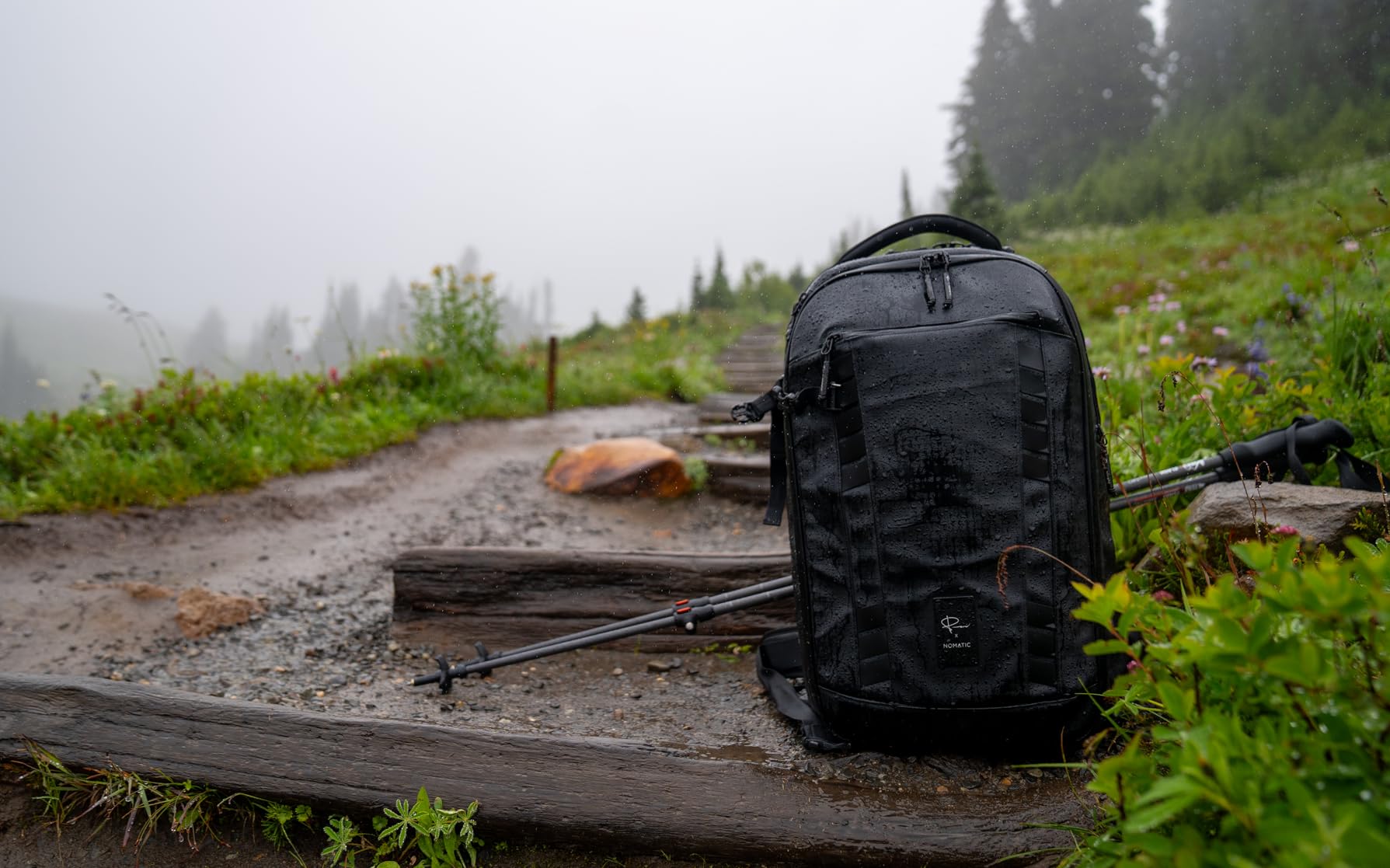
Peter McKinnon collaborated with Nomatic to create a bag that solves real problems travel photographers face. After using this backpack for a two-week trip through Iceland, I understand why it has earned such a devoted following among content creators.
The standout feature is the expandable design. In its compressed 35L state, the bag slides easily into overhead compartments and feels manageable for city walking. Unzip the expansion zone, and you gain 7 additional liters for souvenirs, extra layers, or that second camera body you swore you wouldn’t bring but packed anyway.
Design and Aesthetics
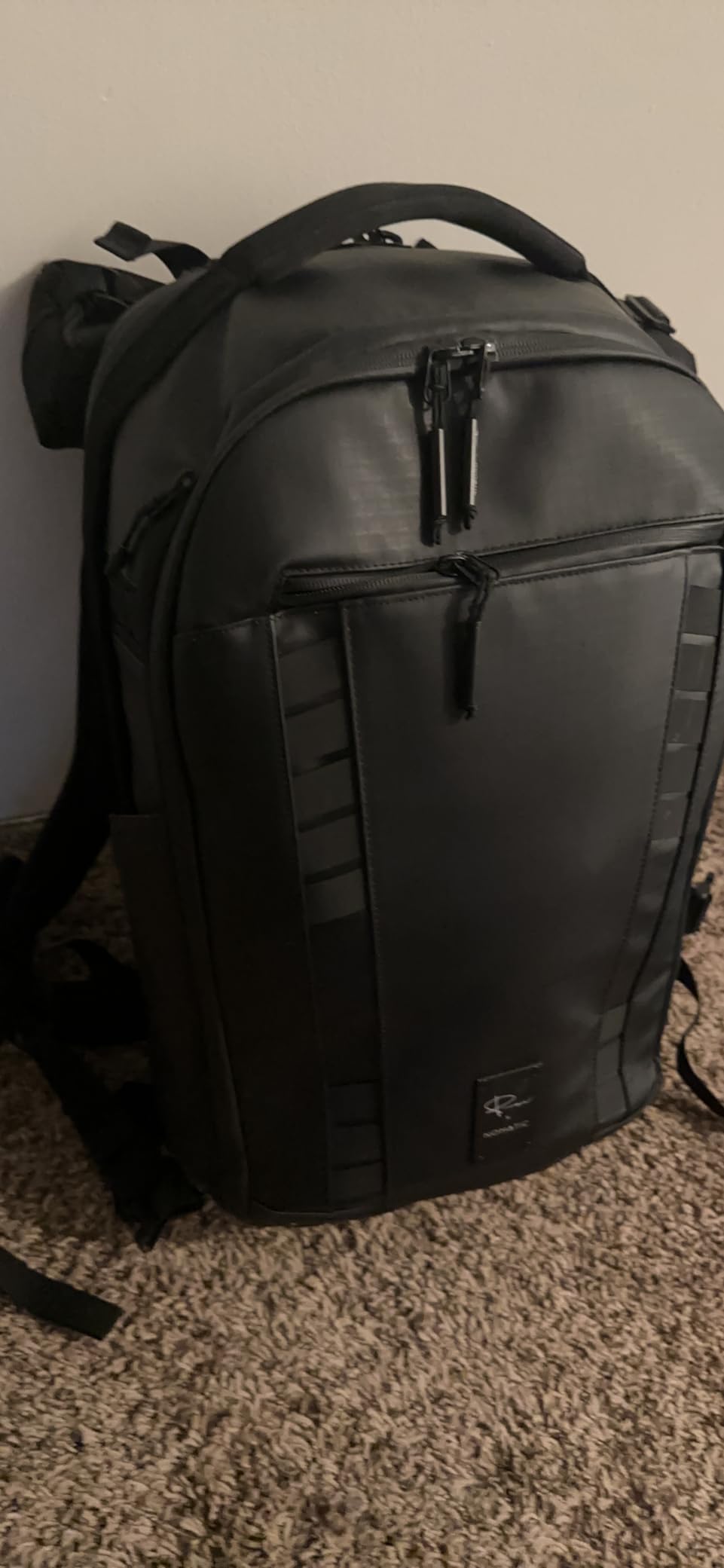
Nomatic built the McKinnon with a clean, understated aesthetic that works equally well in business meetings and mountain trails. The black tarpaulin exterior with subtle branding means you won’t attract unwanted attention while traveling through unfamiliar areas.
The bag measures 8.82 x 3.58 x 5.12 inches in its compressed state, expanding to accommodate the full 42L capacity when needed. Every exterior pocket features water-resistant zippers with pull tabs that work reliably even with gloves on.
The Ladder System: Organization That Actually Works
Nomatic calls their internal organization the “Ladder System,” and it genuinely changed how I pack camera gear. Instead of fighting with velcro dividers that never quite fit right, you get adjustable shelves that create distinct zones for different equipment types.
I configured mine with a mirrorless body and 24-70mm lens on the bottom shelf, a 70-200mm telephoto in the middle zone, and a drone plus accessories up top. The system kept everything accessible and protected without the constant reshuffling my old bags required.
Comfort and Carry System
Here’s where opinions split dramatically. Some users on photography forums report the shoulder straps feel too stiff. My experience differed. After adjusting the strap length and sternum strap position properly, I carried 25 pounds of gear for eight-hour shooting days without shoulder fatigue.
The back panel uses EVA foam padding with airflow channels. During summer shoots in 85-degree weather, my back still got warm, but significantly less than with my previous LowePro bag. The hip belt (included) transfers weight effectively when the bag approaches maximum capacity.
Access Options
The McKinnon offers three primary access points. The clamshell opening provides complete visibility into the main compartment for organized packing. Side access on both sides lets you grab your camera without setting the bag down completely. A top quick-access pocket holds items you need frequently.
The side access works well for grab shots, though not as intuitively as Peak Design’s implementation. You’ll need to practice the motion a few times before it becomes second nature.
Laptop and Tech Storage
A dedicated laptop sleeve sits against the back panel, protected from impacts by the harness system padding. It comfortably fits my 16-inch MacBook Pro without wobble. A separate tablet sleeve keeps my iPad accessible for reviewing shots or quick edits.
The tech organization extends throughout the bag. Magnetic water bottle pockets expand when needed and collapse flat when empty. Multiple interior pockets corral batteries, memory cards, and cables. Everything has a place.
Weather Resistance and Durability
Nomatic constructed the McKinnon from tarpaulin material that shrugs off rain and snow. During a sudden Icelandic downpour, my gear stayed completely dry without a rain cover. The water-resistant zippers provide additional protection at vulnerable entry points.
After six months of regular use, the bag shows minimal wear. The tarpaulin exterior resists scuffs and scratches better than the nylon canvas Peak Design uses. Zippers required a brief break-in period but now operate smoothly.
Travel-Friendly Features
This bag was designed for air travel, and it shows. The clamshell opening allows the bag to lay flat for TSA inspection if required. A luggage pass-through sleeve slides over rolling suitcase handles. The dimensions meet carry-on requirements for most airlines.
The expandable capacity means you can pack light on outbound flights and still have room for purchases on the return. This flexibility alone justifies the bag for photographers who travel frequently.
Warranty and Support
Nomatic offers a lifetime warranty covering manufacturing defects. Forum discussions reveal mixed experiences with their customer service team. Some users report quick, helpful responses. Others describe frustrating delays. Peak Design generally earns higher marks for support quality.
Peak Design Everyday Backpack V2 Deep Dive
Pros
- MagLatch enables true one-handed access
- Highly customizable FlexFold dividers
- Dual side access points for quick gear retrieval
- Weatherproof recycled materials
- Excellent Peak Design customer service
- Fits 16 inch MacBook Pro
Cons
- FlexFold dividers show wear over time
- MagLatch at highest position leaves small gap
- Waist belt sold separately
- Premium price point
Peak Design built the Everyday Backpack V2 for photographers who carry gear daily through urban environments. After using this bag for three months of daily commuting and weekend shoots, I understand why it has become the benchmark other camera bags measure themselves against.
The V2 refines the original design based on extensive user feedback. Peak Design listened when photographers complained about stiff zippers, uncomfortable straps, and organization limitations. The result feels like a mature product from a company that genuinely uses what they make.
Design and Aesthetics
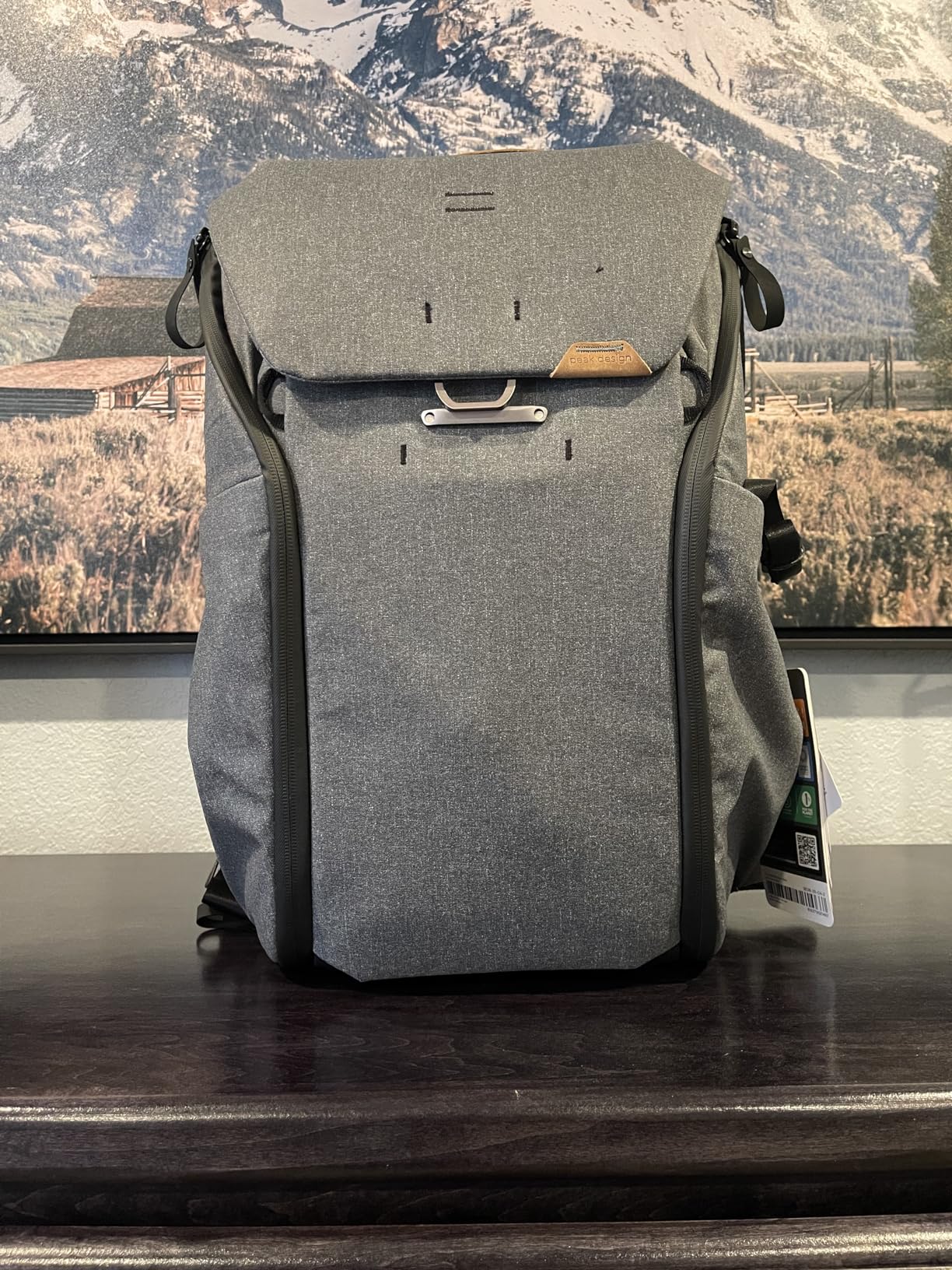
The Everyday Backpack V2 maintains Peak Design’s signature minimalist aesthetic. The charcoal colorway I tested looks professional enough for client meetings while remaining subtle enough for street photography. The 100% recycled nylon canvas shell with DWR coating feels premium and performs well in varied conditions.
At 14.2 x 7.8 x 20.5 inches, the 30L version strikes a balance between capacity and portability. It never feels bulky on public transit or crowded sidewalks. The clean exterior lines hide an impressive array of organizational features.
FlexFold Dividers: Origami for Your Gear
Peak Design’s FlexFold dividers work differently than traditional velcro systems. These origami-style dividers fold into multiple configurations without the frustrating velcro wrestling matches other bags require. Need a tall compartment for a 70-200mm lens? Fold the divider one way. Want multiple small compartments for primes? Fold it differently.
The system excels at adapting to changing gear loads. I reconfigured my setup weekly depending on what I was shooting, and the dividers accommodated everything from a Sony A7 IV with battery grip to a compact Fuji X100V.
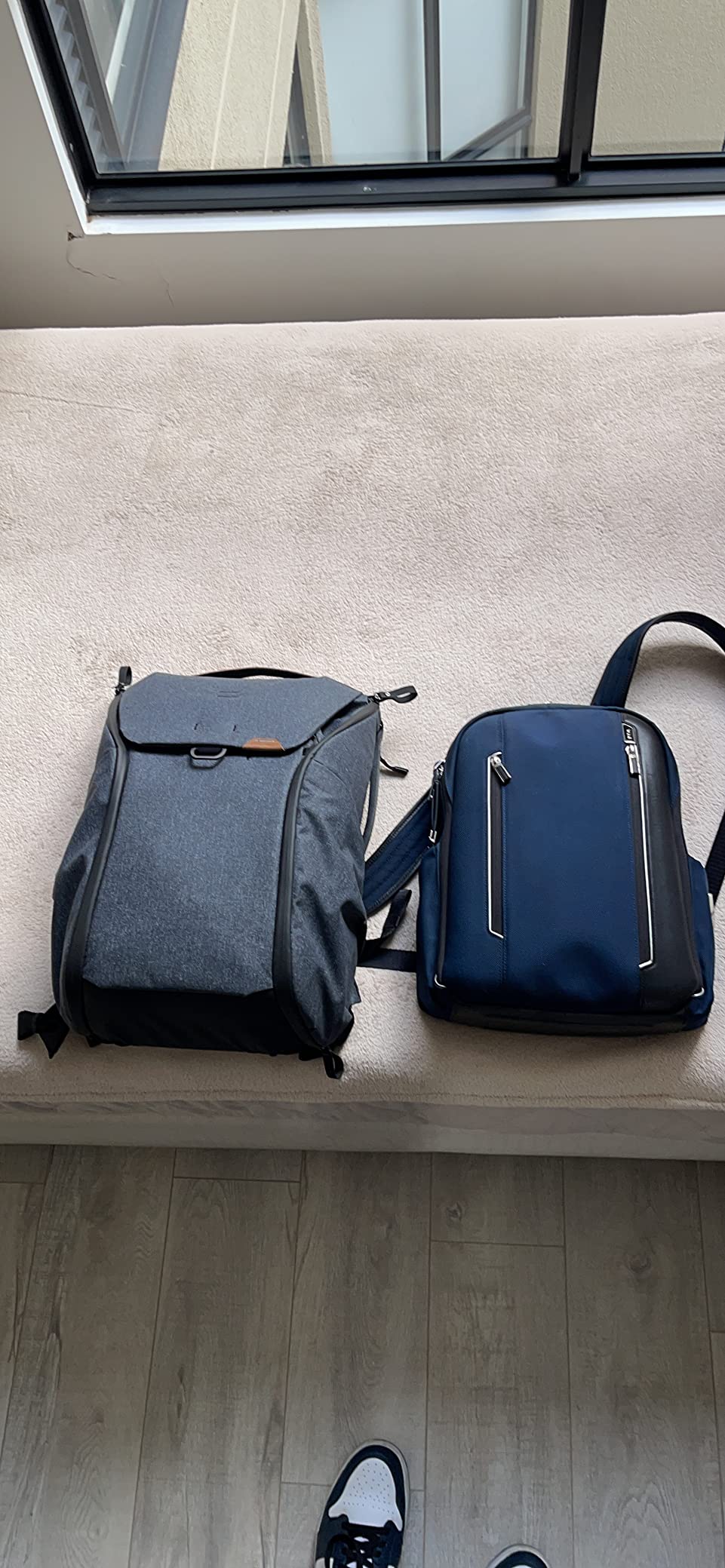
One note from forum discussions: the FlexFold material shows wear faster than traditional dividers. After six months, some users report creasing and slight deformation. Peak Design offers replacement dividers, but budget for potential replacement down the line.
Comfort and Carry System
Peak Design redesigned the shoulder straps for V2, addressing the most common complaint about the original. The new straps distribute weight more evenly across the shoulders. However, forum discussions reveal some users still find them uncomfortable for extended carries.
My experience: the straps work well for loads under 15 pounds. Beyond that, you’ll want the optional waist belt (sold separately, which feels like nickel-and-diming at this price point). The sternum strap includes a clever magnetic attachment point for quick adjustments.
The back panel uses breathable foam with channels for airflow. During summer commutes, I experienced less back sweat than with most camera bags, though no backpack eliminates this entirely.
The MagLatch: Game-Changing Access
The MagLatch closure system defines the Peak Design experience. A magnetic clasp paired with ladder-style adjustment points allows true one-handed access. Pull the latch, swing the top open, grab your gear, and close it with a satisfying snap.
This seems like a small thing until you’re shooting in the field. Need to swap lenses while holding your camera? MagLatch makes it possible. Rain starting and you need to quickly stash gear? The system responds instantly.
One caveat: at the highest expansion setting, the MagLatch leaves a small gap at the top. In heavy rain, this could allow moisture entry. Most users won’t need that maximum expansion regularly, but it’s worth knowing.
Access Options
The Everyday Backpack V2 offers three access methods. Top access through the MagLatch works for quick grabs. Dual side access points let you reach your camera from either side without removing the bag. Full clamshell opening happens via zipper around the perimeter for complete access.
The side access deserves special praise. Unlike the Nomatic’s side access, which requires more deliberate motion, Peak Design’s UltraZips create wide openings you can navigate by feel. I regularly swapped lenses while walking without breaking stride.
Laptop and Tech Storage
A dedicated laptop sleeve against the back panel fits up to a 16-inch MacBook Pro. The suspended design keeps your laptop from hitting the ground when you set the bag down. A separate tablet sleeve and document pocket keep other tech organized.
One quirk some users report: MacBooks occasionally wake from sleep when placed in the sleeve. This seems related to magnetic interference. I haven’t experienced it with my Windows laptop, but Mac users should be aware.
Weather Resistance
The 100% recycled shell features a DWR (Durable Water Repellent) coating that sheds light rain effectively. During a 20-minute walk in steady drizzle, my gear stayed dry. For extended exposure, you’ll want additional protection.
The UltraZips on the side access points earned their weatherproof designation. These zippers resist water entry even under direct spray. Peak Design’s attention to sealing vulnerable points shows throughout the bag.
Environmental Credentials
Peak Design takes sustainability seriously. The 100% recycled shell uses bluesign-approved materials. The company holds Climate Neutral certification and donates 1% of revenue to environmental causes. For photographers who factor environmental impact into purchasing decisions, Peak Design offers genuine commitments beyond marketing.
Warranty and Customer Service
Peak Design’s lifetime warranty consistently earns praise in forum discussions. Users report responsive, helpful customer service that honors warranty claims without hassle. One user described receiving a replacement bag within a week after a zipper failure. This support quality matters for a bag you’ll rely on daily.
Head-to-Head Comparison: Nomatic McKinnon vs Peak Design V2
Now let’s break down how these bags compare across the categories that matter most for photographers.
Design and Aesthetics
Winner: Tie
Both bags achieve a clean, professional aesthetic that works across contexts. The Nomatic McKinnon’s tarpaulin exterior looks more technical and utilitarian. The Peak Design V2’s recycled nylon canvas appears more refined and urban-appropriate.
Your preference depends on personal style. I prefer the Peak Design for city work and the Nomatic for travel scenarios. Neither bag screams “expensive camera equipment inside,” which matters for security.
Capacity and Size
Winner: Nomatic McKinnon
The Nomatic’s expandable 35-42L capacity crushes the Peak Design’s fixed 30L. For travel photographers who need flexibility, this advantage alone might decide the purchase.
The expansion mechanism works smoothly and maintains the bag’s structural integrity at either size. Peak Design offers 20L and 30L versions, but neither matches the Nomatic’s versatility for variable loads.
Organization System
Winner: Peak Design V2
The FlexFold dividers outperform the Ladder System for pure adaptability. Peak Design’s origami approach lets you reconfigure on the fly without velcro wrestling. The dividers fold flat when not needed, creating more usable space.
The Nomatic Ladder System works well but feels more rigid. Once configured, you’re less likely to change it frequently. For photographers who maintain consistent gear setups, this matters less. For those who shoot varied subjects requiring different kit configurations, Peak Design wins.
Comfort and Carry
Winner: Depends on load
Forum discussions reveal strongly divided opinions here. Users with larger frames often prefer the Nomatic’s padded straps. Those with smaller frames frequently find Peak Design more comfortable.
My testing confirms this pattern. Under 15 pounds, Peak Design feels more comfortable. Beyond that threshold, the Nomatic’s harness system distributes weight better. The included hip belt makes a significant difference for heavy loads.
Access Speed
Winner: Peak Design V2
The MagLatch system combined with UltraZip side access creates the fastest gear retrieval experience I’ve used. One-handed operation becomes second nature within days. The side access openings are wider and more intuitive than Nomatic’s implementation.
Nomatic’s access works adequately but requires more deliberate motion. The side access feels like an afterthought compared to Peak Design’s integrated approach.
Weather Resistance
Winner: Nomatic McKinnon
The tarpaulin construction provides more robust protection than Peak Design’s DWR-coated nylon. In sustained rain, the Nomatic inspires more confidence. The water-resistant zippers on both bags perform similarly.
That said, neither bag replaces a dedicated rain cover for extended exposure. Both offer adequate protection for typical urban and travel scenarios.
Travel Features
Winner: Nomatic McKinnon
Nomatic built this bag specifically for travel, and the details show. The clamshell opening facilitates TSA inspection. The expansion capability handles variable packing needs. The luggage pass-through and carry-on compliance make air travel smoother.
Peak Design works for travel but lacks the purpose-built features. The 30L capacity meets most airline requirements, but you’ll miss the expansion flexibility.
Durability
Winner: Nomatic McKinnon (by a small margin)
After six months of regular use, the Nomatic shows less visible wear than the Peak Design. The tarpaulin exterior resists abrasion better than nylon canvas. The FlexFold dividers on the Peak Design show creasing and wear that may require replacement.
Both bags should last years with reasonable care. The Nomatic’s materials simply age more gracefully.
Value
Winner: Peak Design V2
At $299.95, the Peak Design Everyday Backpack V2 costs $120 less than the Nomatic McKinnon at $419.99. Both offer premium construction and features, but Peak Design delivers more value per dollar for most users.
The Nomatic justifies its higher price for travel photographers who need expansion capability. For everyone else, Peak Design offers comparable performance at a lower price point.
Warranty and Support
Winner: Peak Design V2
Peak Design consistently earns higher marks for customer service in forum discussions. Users report responsive support and hassle-free warranty claims. Nomatic’s support receives mixed reviews, with some users describing frustrating delays.
Both companies offer lifetime warranties. Peak Design’s execution of that warranty inspires more confidence.
Who Should Buy the Nomatic McKinnon Camera Backpack?
The Nomatic McKinnon Camera Backpack is ideal for:
Travel photographers who need expansion capability for variable loads. The 35-42L capacity handles everything from day shoots to multi-day trips.
Content creators carrying diverse equipment. The Ladder System accommodates cameras, drones, audio gear, and personal items in organized zones.
Photographers with larger frames who find the harness system more comfortable for extended carries.
Anyone prioritizing durability and weather resistance in demanding conditions.
Who Should Buy the Peak Design Everyday Backpack V2?
The Peak Design Everyday Backpack V2 is ideal for:
Urban photographers who need quick access to gear while navigating city environments.
Everyday carry users who want one bag for camera gear, laptop, and daily essentials.
Photographers who frequently reconfigure their kit. The FlexFold dividers adapt faster than any other system.
Environmentally conscious buyers who value recycled materials and climate-neutral certification.
Anyone prioritizing value without sacrificing quality or features.
Frequently Asked Questions
Are Peak Design camera bags good?
Yes, Peak Design camera bags are excellent. They consistently earn high ratings from photographers for innovative design, quality construction, and versatile organization. The FlexFold dividers and MagLatch closure system set industry standards. Peak Design’s lifetime warranty and responsive customer service add significant value. The main drawbacks are premium pricing and reports of FlexFold divider wear over time.
What are the downsides of the Nomatic travel pack?
The Nomatic McKinnon Camera Backpack has several downsides worth considering. At 5.75 pounds empty, it’s heavier than most competitors. The premium price point of $419.99 exceeds many alternatives. Zippers can be stiff until broken in. The large size may not suit smaller framed individuals. Some users report mixed experiences with Nomatic customer service compared to Peak Design’s consistently praised support.
What is the difference between Peak Design Everyday Backpack V1 and V2?
The Peak Design Everyday Backpack V2 improves on V1 in several key areas. Shoulder straps were redesigned for better comfort and weight distribution. Zippers operate more smoothly with less stiffness. Internal organization received refinements based on user feedback. The MagLatch system works more reliably. However, V2 removed the zip pocket on the top flap that some V1 users appreciated. V2 also costs more at launch than V1 did.
Are Nomatic backpacks TSA approved?
Yes, Nomatic backpacks including the McKinnon Camera Backpack are designed for air travel and meet TSA carry-on requirements. The clamshell opening allows the bag to lay flat for security inspection if needed. The compressed dimensions fit standard overhead bin sizes. However, when expanded to full 42L capacity, the bag may not fit under seats or in smaller regional jet overhead compartments. Always check specific airline requirements before flying.
Which camera backpack is better for travel photography?
The Nomatic McKinnon Camera Backpack is better for travel photography due to its expandable 35-42L capacity, robust tarpaulin construction, and travel-specific features like luggage pass-through and carry-on compliance. The Ladder System organization handles diverse gear loads well. Peak Design Everyday Backpack V2 works for travel but lacks expansion capability. Choose Nomatic for multi-day trips and Peak Design for shorter urban travel.
Can both bags fit a 16-inch laptop?
Yes, both the Nomatic McKinnon Camera Backpack and Peak Design Everyday Backpack V2 can fit a 16-inch laptop. The Nomatic features a dedicated tech pouch and tablet sleeve against the back panel. Peak Design’s suspended laptop sleeve explicitly accommodates up to 16-inch MacBook Pro. Both protect laptops with padding from the harness system. Some Peak Design users report MacBooks occasionally waking from sleep when placed in the sleeve.
Final Verdict: Nomatic McKinnon vs Peak Design V2
After extensive testing, the Nomatic McKinnon Camera Backpack vs Peak Design Everyday Backpack V2 comparison comes down to intended use.
For travel photographers: Choose the Nomatic McKinnon. The expandable capacity, robust weather resistance, and travel-specific features make it the superior choice for anyone who regularly flies or embarks on multi-day shoots.
For everyday carry and urban photography: Choose the Peak Design Everyday Backpack V2. The MagLatch access system, adaptable FlexFold dividers, and better value create a more refined experience for daily use.
My pick: If I could only own one, I’d choose the Peak Design Everyday Backpack V2. The access speed and organization system better match how I actually work. But for extended travel, I’d rent or borrow the Nomatic McKinnon without hesitation.
Both bags represent the best of what premium camera backpacks offer in 2026. Your shooting style should drive the decision, not marketing claims or influencer endorsements.