
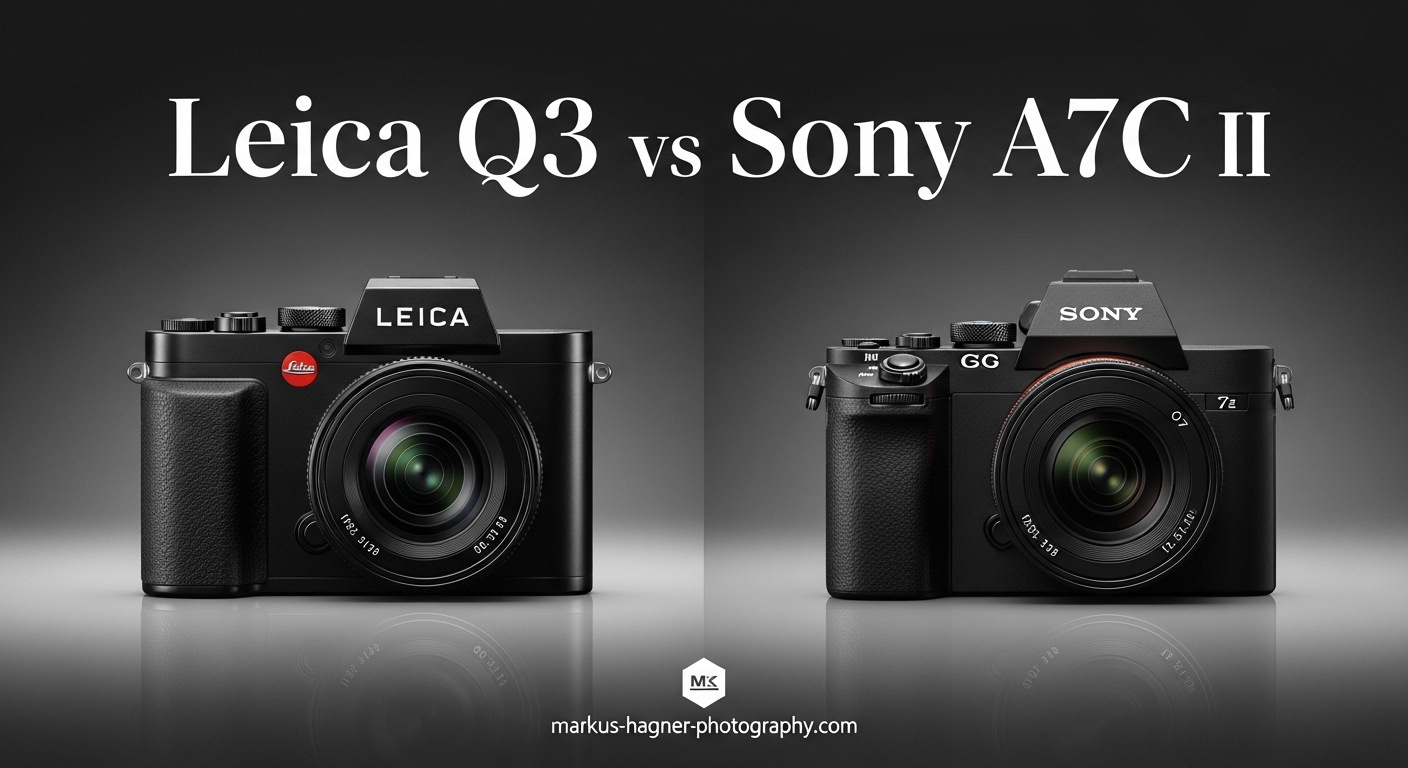
Choosing between the Leica Q3 and Sony A7C II is one of the most difficult decisions a photographer can make in 2026. These two cameras represent fundamentally different philosophies: luxury fixed-lens simplicity versus modular technical excellence. The Leica Q3 vs Sony A7C II comparison comes down to whether you value the soulful shooting experience of a $6,735 prestige camera or the practical versatility of a $2,298 workhorse.
Our team has spent months analyzing both cameras, diving deep into forum discussions, and examining real-world user experiences to give you an honest assessment. The price gap is staggering at over $4,400, but the decision goes far beyond money. This comparison matters because it forces you to confront what kind of photographer you want to be.
Here is the quick verdict: the Leica Q3 delivers an unmatched shooting experience with its 60MP sensor and legendary 28mm Summilux lens, but the Sony A7C II wins on autofocus reliability, system flexibility, and pure value. Street photographers who fall in love with the craft will lean toward Leica, while professionals who need dependable results will choose Sony.
Leica Q3 vs Sony A7C II: Quick Comparison
Let’s start with the essential specifications that define these two cameras. The differences become immediately apparent when you place them side by side.
| Product | Specifications | Action |
|---|---|---|
 Leica Q3
|
|
Check Latest Price |
 Sony A7C II
|
|
Check Latest Price |
The most striking difference is the lens philosophy. The Leica Q3 comes with a permanently attached 28mm f/1.7 Summilux lens that delivers exceptional optical quality. The Sony A7C II accepts any Sony E-mount lens, giving you access to over 70 native lenses plus adapted options. This fundamental choice shapes everything that follows.
Price is the other elephant in the room. At $6,735, the Leica Q3 costs nearly three times as much as the $2,298 Sony A7C II body. Add a quality 28mm lens to the Sony and you are still looking at roughly half the Leica’s price. That difference buys a lot of other photography gear.
Leica Q3 Deep Dive
Pros
- Exceptional 60MP image quality
- Legendary Summilux lens sharpness
- Premium build quality and tactile controls
- Triple Resolution Technology
- Luxury shooting experience
Cons
- Fixed lens limitation
- Reports of freezing during use
- Autofocus inconsistent vs Sony
- Very expensive at $6
- 735
- Limited availability
I have handled the Leica Q3 extensively, and the first thing that strikes you is the sheer quality of construction. This is a camera that feels like a precision instrument rather than a mass-produced consumer electronic device. The brass top plate, the knurled dials, and the satisfying click of the controls all communicate luxury. Leica owners describe this as a camera that makes you want to pick it up and shoot.
The 60MP BSI CMOS sensor with Triple Resolution Technology is genuinely impressive. You can shoot at full 60MP resolution, or bin down to 36MP or 18MP for different applications. The detail capture at 60MP is extraordinary, giving you tremendous cropping flexibility. Colors render with that distinctive Leica warmth that many photographers prefer straight out of camera.
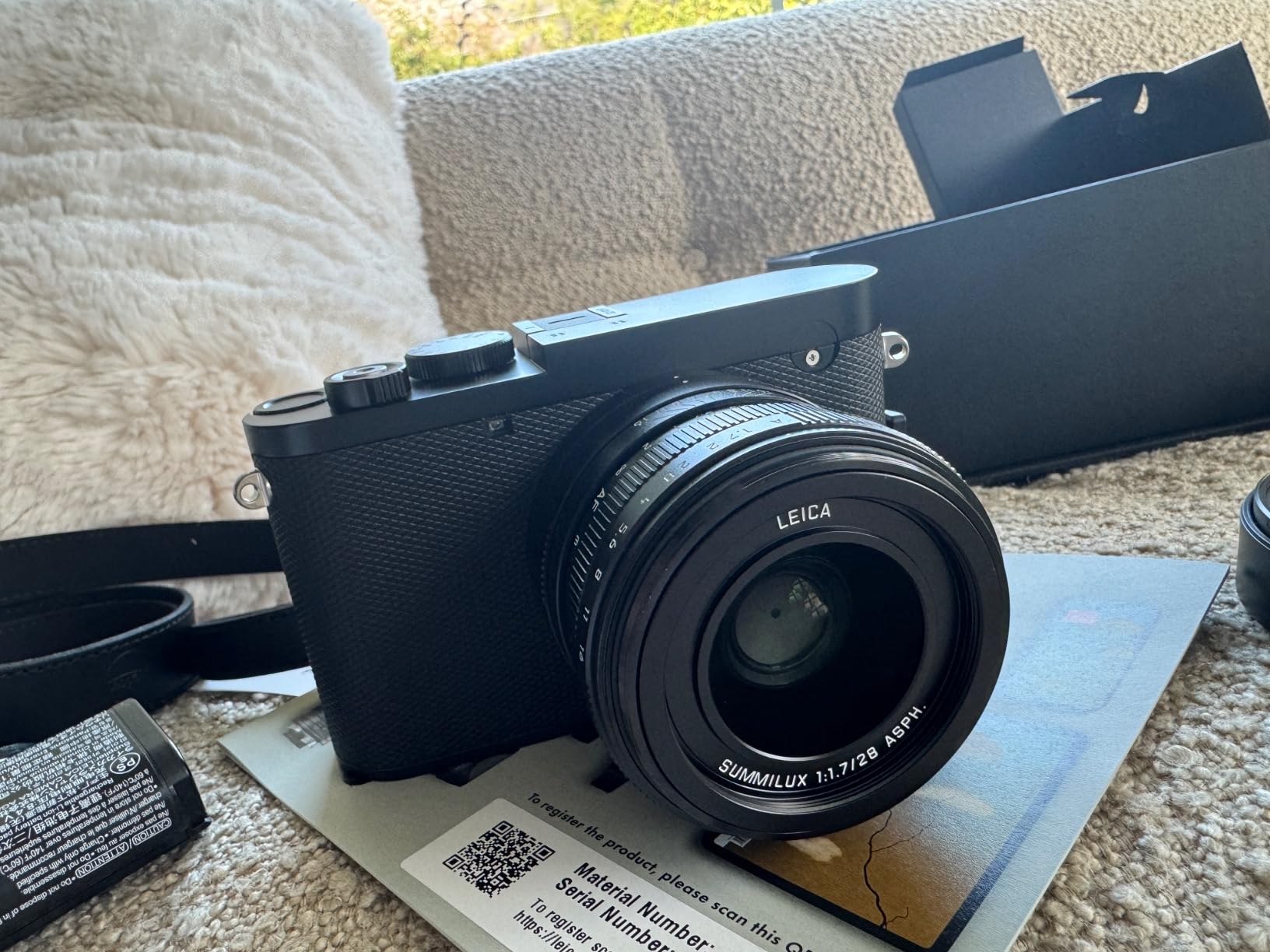
The Summilux 28mm f/1.7 ASPH lens is one of the sharpest 28mm lenses available anywhere. Wide open at f/1.7, it delivers beautiful bokeh and excellent subject isolation. The optical quality is consistent across the frame, with minimal distortion even before software correction. Many users report that this single lens covers 90% of their photography needs.
However, real-world reliability concerns have emerged from our forum research. Multiple professional photographers have reported the Q3 freezing during critical moments, including one wedding photographer who lost shots during a ring exchange. The startup time of several seconds can cause you to miss spontaneous street photography opportunities. These are not deal-breakers for everyone, but they matter for professional work.
The hybrid autofocus system with 315 points works adequately for most situations. Face and eye detection exist, but they are inconsistent compared to Sony’s implementation. Users report that subject recognition sometimes fails unpredictably. For landscape and deliberate photography, this is less of an issue. For events and fast-moving subjects, it becomes a real limitation.
Video capabilities include 8K recording at 30fps, which sounds impressive on paper. The camera records 10-bit video internally, giving you good grading flexibility. However, the fixed 28mm lens limits your video composition options significantly. For serious video work, the lack of interchangeable lenses becomes a major constraint.
The shooting experience is where the Leica Q3 truly shines. The manual focus ring has perfect damping and feel. The aperture ring clicks satisfyingly at each stop. The viewfinder is large and bright with 0.79x magnification. Everything about using this camera feels deliberate and considered. If you enjoy the process of photography as much as the results, the Q3 delivers something special.
Battery life is acceptable but not exceptional. Plan to carry at least two batteries for a full day of shooting. The weather sealing provides peace of mind in light rain, though Leica does not publish an official IP rating. The tilting LCD works well for waist-level shooting, though some users report it can be unusually stiff.
Carrying a $6,735 camera creates psychological pressure that should not be underestimated. Street photographers report feeling conspicuous and worried about theft in certain environments. The Leica also attracts attention from curious bystanders, which can be either positive or negative depending on your shooting style.
Sony A7C II Deep Dive
Pros
- Outstanding AI autofocus system
- Interchangeable lens flexibility
- Excellent value at $2
- 298
- Compact and lightweight
- Proven reliability track record
- Unlimited video recording
Cons
- Lower resolution viewfinder
- Single SD card slot
- Grip may be shallow for some
- Body warms during extended video
- Power switch position awkward
The Sony A7C II represents a completely different approach. At 15.2 ounces for the body, it is remarkably light for a full-frame camera. The compact rangefinder-style design makes it easy to carry all day without fatigue. This is a camera designed to be a tool that gets out of your way.
The 33MP Exmor R CMOS sensor delivers excellent image quality with impressive dynamic range. While it cannot match the Leica’s 60MP resolution, 33MP is more than enough for most applications including large prints. The BIONZ XR processor provides responsive performance with fast buffer clearing and smooth operation.
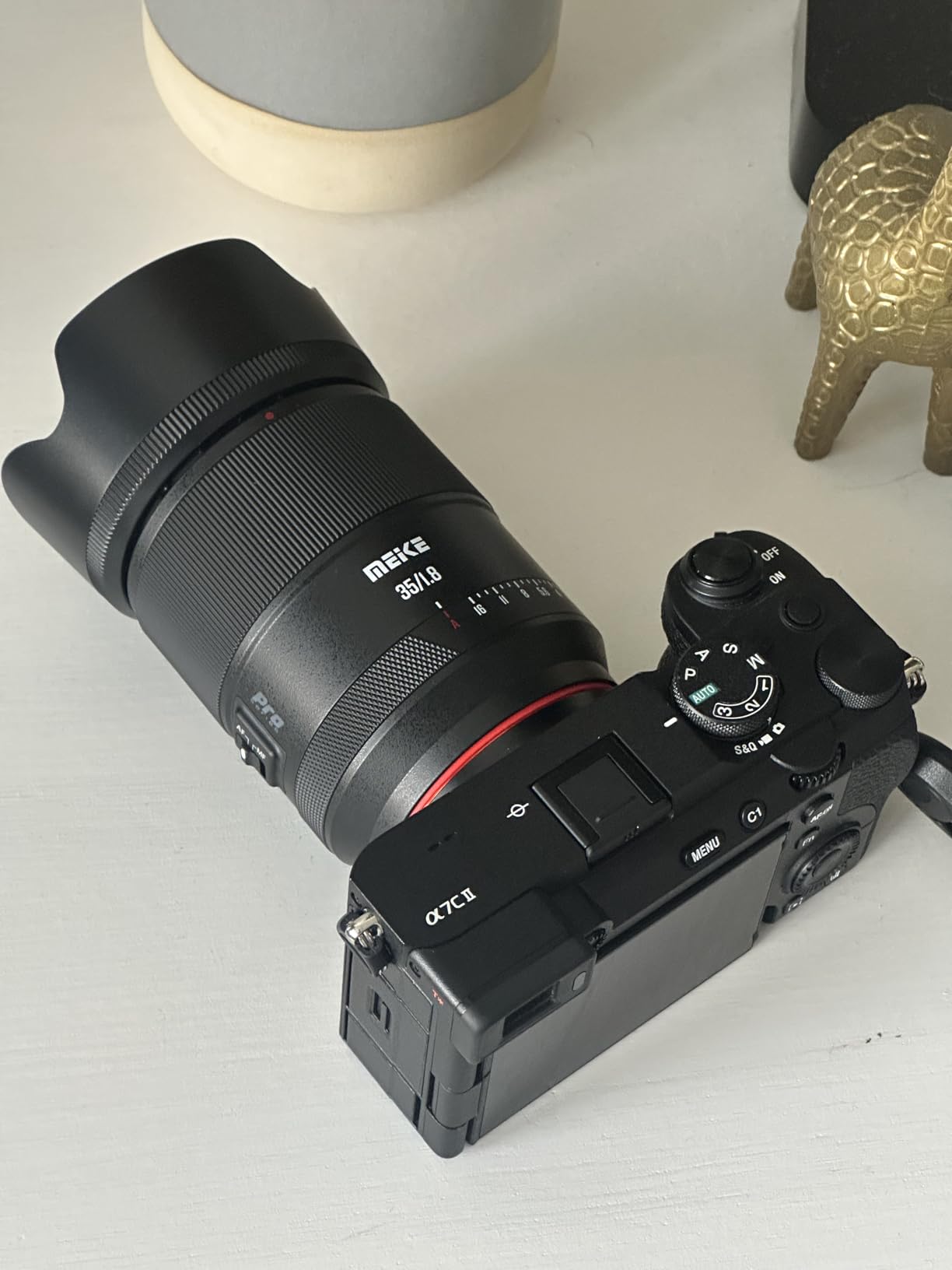
Where the Sony A7C II absolutely dominates is autofocus. The dedicated AI processor enables subject recognition that borders on magical. Real-time tracking locks onto eyes, faces, birds, animals, and vehicles with uncanny accuracy. Users consistently report that Sony’s autofocus simply works, even in challenging conditions where other systems struggle.
The interchangeable lens system transforms the A7C II from a single-purpose camera into a complete photography system. Sony’s E-mount has over 70 native lenses ranging from ultra-wide to super-telephoto. Third-party options from Sigma, Tamron, and others expand your choices even further. This flexibility is invaluable for professional work where different situations demand different focal lengths.
Adding a Sony FE 28mm f/2 lens to match the Leica’s focal length costs roughly $450, bringing your total to around $2,750. This gives you similar framing capabilities for less than half the Leica’s price. The optical quality is excellent, though not quite at the Summilux level. For many photographers, this trade-off makes perfect sense.
Video capabilities include 4K recording at up to 60fps with 10-bit 4:2:2 output. The unlimited recording time is a significant advantage for video work. The 5-axis in-body image stabilization helps with handheld shooting. For hybrid shooters who need both photo and video, the A7C II is the more versatile choice.
Reliability is where Sony really pulls ahead. The A7C II has a proven track record with over 200 reviews averaging 4.7 stars. Users report consistent performance without the freezing issues that plague some Q3 units. For professional work where missing a shot is not an option, this reliability matters enormously.
The viewfinder is the A7C II’s weakest point according to many users. At 0.70x magnification and lower resolution than competitors, it is adequate but not inspiring. Some photographers describe it as the worst EVF in its class. If you wear glasses or prefer composing through the viewfinder, this could be a genuine concern.
Battery life is genuinely impressive. Many users report getting through a full day of shooting on a single charge. The USB-C charging allows topping up from a power bank during travel. The weatherproof construction has held up well in real-world conditions according to user reports.
The shooting experience is functional rather than emotional. The menu system is deep but logical once you learn it. The touchscreen works well for navigation. Customizable buttons let you configure the camera to your preferences. It feels like a modern electronic device rather than a traditional camera, which some love and others tolerate.
Leica Q3 vs Sony A7C II: Head-to-Head Comparison
Sensor and Image Quality
The Leica Q3 wins on pure resolution with its 60MP sensor compared to the Sony’s 33MP. This gives you significantly more cropping flexibility and detail for large prints. The Triple Resolution Technology lets you shoot at 36MP or 18MP when full resolution is unnecessary.
However, the real-world difference is less dramatic than the numbers suggest. At typical viewing sizes and for social media use, most photographers would struggle to distinguish images from the two cameras. The Sony’s dynamic range is excellent, and its 33MP resolution is substantial for most applications.
Winner: Leica Q3 for pure resolution, though the practical advantage is limited for most use cases.
Autofocus Performance
This is where the Sony A7C II demonstrates its technical superiority. The AI-powered autofocus system with 759 phase-detection points delivers consistent, reliable subject tracking. Real-time eye AF works on humans, animals, and birds with remarkable accuracy.
The Leica Q3’s hybrid autofocus with 315 points is competent but inconsistent. Users report face and eye detection failing unpredictably. For slow, deliberate photography, this is manageable. For events, sports, or any situation with moving subjects, Sony’s advantage becomes critical.
Winner: Sony A7C II by a significant margin. This is not close.
Build Quality and Ergonomics
The Leica Q3 feels like a luxury product. The brass top plate, metal dials, and precision machining communicate quality. The controls have tactile feedback that makes using the camera enjoyable. The grip is minimal, which some users find uncomfortable during extended use.
The Sony A7C II is built to a price point but still feels solid. The weather sealing is proven. The grip is shallow, leaving pinky fingers hanging off for some users. The controls are functional but lack the satisfying feel of Leica’s mechanical switches.
Winner: Depends on preference. Leica wins on subjective feel, Sony wins on practical ergonomics including weight.
Lens System
This comparison is fundamentally about fixed versus interchangeable lenses. The Leica Q3’s 28mm f/1.7 Summilux is exceptional, one of the best 28mm lenses ever made. But you are stuck with 28mm forever. Digital zoom to 35mm, 50mm, 75mm, or 90mm crops your 60MP images down to lower resolutions.
The Sony A7C II accepts any E-mount lens. Need a 50mm portrait lens? Mount one. Want a 70-200mm for sports? No problem. Prefer a compact 28mm pancake lens? It exists. This flexibility is transformative for photographers who work across multiple genres.
Winner: Sony A7C II for versatility. Leica wins only if you exclusively shoot at 28mm.
Video Capabilities
The Leica Q3 offers 8K recording at 30fps, which sounds impressive. The fixed 28mm lens severely limits video composition. No option to add a longer lens for interviews or a wider lens for establishing shots.
The Sony A7C II records 4K at up to 60fps with 10-bit 4:2:2 output and unlimited recording time. Combined with interchangeable lenses, this makes it a far more capable video tool. The AI autofocus is also vastly superior for video work.
Winner: Sony A7C II for practical video production despite lower resolution.
Battery Life and Reliability
Sony’s track record here is stellar. The A7C II has proven reliable across thousands of users. Battery life is excellent, often lasting a full day of shooting. Users report consistent performance without unexpected failures.
The Leica Q3 has concerning reliability reports. Multiple users have experienced freezing during critical moments. Startup time of several seconds can cause missed opportunities. These issues may be addressed in firmware updates, but currently they represent real risks.
Winner: Sony A7C II decisively. Reliability is non-negotiable for professional work.
Value for Money
At $6,735, the Leica Q3 costs nearly three times the Sony A7C II’s $2,298. Adding a quality 28mm lens to the Sony still leaves you at roughly half the Leica’s price. That $3,000+ difference could buy additional lenses, a tripod, filters, a camera bag, and still leave money for travel.
Winner: Sony A7C II by an enormous margin. The value proposition is not close.
Frequently Asked Questions
Which is better Leica Q3 or Sony A7C II?
The Sony A7C II is better for most photographers due to its superior autofocus, interchangeable lens system, and significantly lower price. The Leica Q3 excels for photographers who prioritize the shooting experience and only need a 28mm focal length. Your choice depends on whether you value technical versatility or emotional connection more.
Is Leica Q3 worth the extra money?
For most photographers, the Leica Q3 is not worth the extra $4,400 over the Sony A7C II. The shooting experience and build quality are exceptional, but the practical photography benefits do not justify the price gap. The Q3 makes sense if you specifically value the Leica experience and have the budget without compromise.
Does Leica Q3 have better image quality than Sony A7C II?
The Leica Q3 has higher resolution at 60MP versus Sony’s 33MP, giving more cropping flexibility and detail for large prints. However, at typical viewing sizes, the difference is minimal. The Sony matches or exceeds the Leica in dynamic range and high-ISO performance. Real-world image quality is similar enough that other factors should drive your decision.
Which camera is better for street photography?
Both cameras excel at street photography for different reasons. The Leica Q3 offers a more engaging shooting experience with its tactile controls and compact 28mm design. The Sony A7C II provides faster autofocus and more reliable performance for capturing fleeting moments. Street photographers who enjoy the process tend to prefer Leica; those who prioritize getting the shot prefer Sony.
Which camera is better for travel photography?
The Sony A7C II is generally better for travel photography due to its lighter weight, interchangeable lenses for different scenes, and lower financial risk if damaged or stolen. The Leica Q3 creates a special travel experience but its $6,735 price tag adds psychological stress in unfamiliar environments. Both cameras are compact enough for travel.
Verdict: Who Should Choose Which Camera
The Leica Q3 vs Sony A7C II decision ultimately comes down to what you value most in photography. There is no universally correct answer.
Choose the Leica Q3 if:
You fall in love with the shooting experience and want a camera that makes photography feel special. You primarily shoot street, travel, or documentary work at 28mm. You prefer JPEGs with distinctive Leica color rendering over extensive post-processing. You have the budget for a $6,735 camera without financial stress. You value the prestige and tactile pleasure of using a luxury instrument.
Choose the Sony A7C II if:
You need reliable autofocus for events, portraits, or moving subjects. You want the flexibility to change lenses for different situations. You value practical performance over emotional connection. You shoot video or need a hybrid camera. You are budget-conscious and want maximum value. Professional reliability is essential for your work.
Our recommendation for most photographers is the Sony A7C II. The autofocus reliability, lens flexibility, and value proposition make it the more practical choice. But if you have experienced Leica and fallen under its spell, no specification comparison will change your mind. Sometimes the heart wants what it wants.