
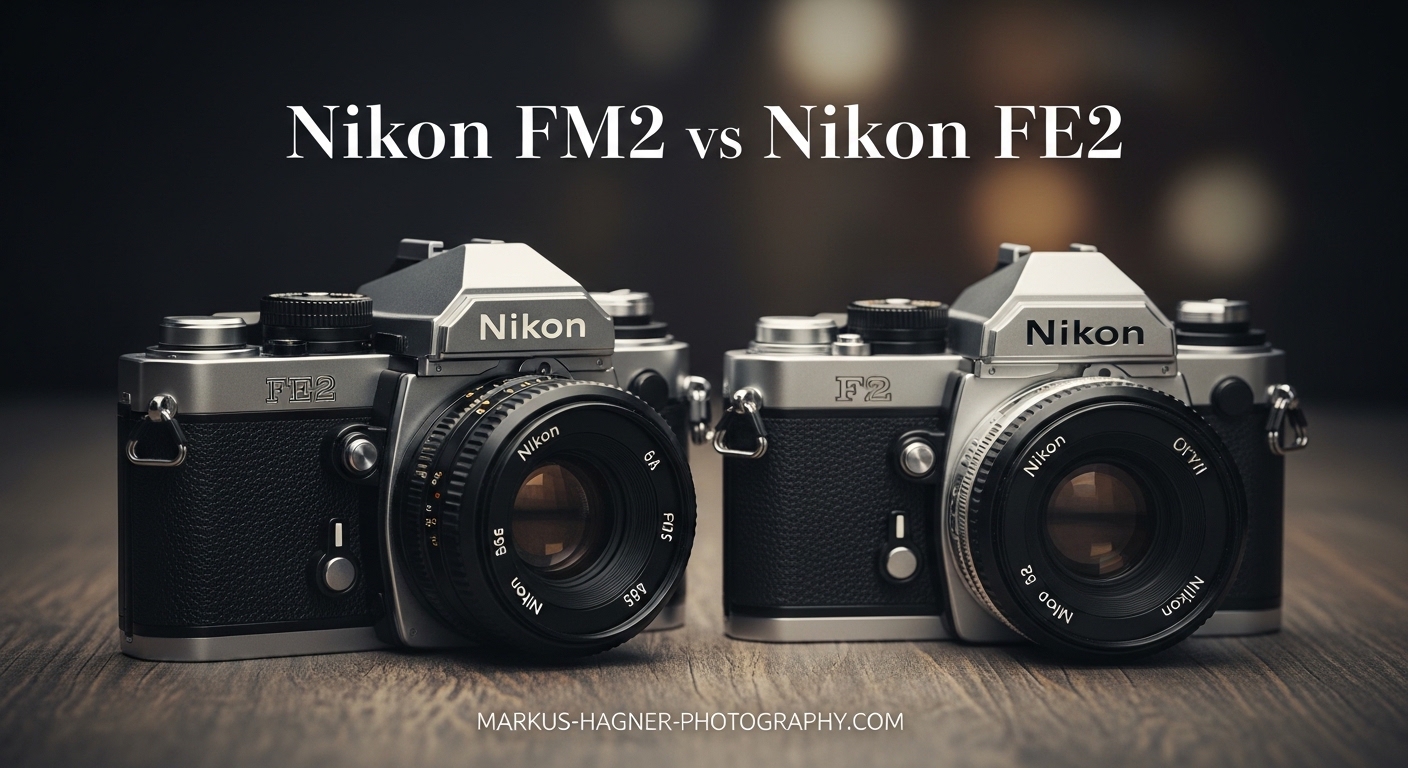
When photographers ask me about the Nikon FM2 vs Nikon FE2 debate, I always tell them the same thing: both cameras are legendary, but they serve different shooting philosophies. I have spent years shooting with manual focus Nikons, and these two models consistently stand out as the best options for film enthusiasts who want professional build quality without the bulk of an F-series body.
The Nikon FM2 and FE2 share the same chassis and many specifications, but their internal philosophies could not be more different. The FM2 is a fully mechanical workhorse that will fire at every shutter speed even when the batteries die. The FE2 trades some of that mechanical purity for aperture-priority automation that makes casual shooting significantly faster.
In this Nikon FM2 vs Nikon FE2 comparison, I will break down every difference between these cameras to help you decide which one belongs in your camera bag. Whether you prioritize battery-free reliability or automated convenience, one of these cameras will fit your shooting style perfectly.
Nikon FM2 vs Nikon FE2: Quick Comparison
| Product | Specifications | Action |
|---|---|---|
 Nikon FM2 Nikon FM2 |
|
Check Latest Price |
 Nikon FE2 Nikon FE2 |
|
Check Latest Price |
The table above shows the headline differences. The FM2 wins on reliability and battery independence, while the FE2 offers faster operation through its aperture-priority mode. Let me explore each camera in detail so you can make an informed decision.
Nikon FM2: The Mechanical Workhorse
Pros
- Works without batteries at all speeds
- Titanium shutter for extreme durability
- LED meter display easy to read
- Proven reliability over 40+ years
- Excellent cold weather performance
- Simple mechanical repairs
Cons
- Manual exposure only
- No aperture priority mode
- Battery only powers light meter
I have recommended the Nikon FM2 to countless photographers who want a camera that simply works. The fully mechanical shutter design means every shutter speed from 1/4000 second down to bulb mode operates without any battery power. The batteries only run the light meter, which is a game-changer for outdoor adventures and travel photography.
During my time with the FM2, what impressed me most was the build quality. The titanium shutter blades can withstand extreme conditions that would destroy electronic shutters. I have heard stories from photographers who shot in temperatures ranging from -40 degrees Celsius to plus 50 degrees Celsius with no issues. That mechanical simplicity translates to long-term reliability that electronic cameras simply cannot match.
The LED light meter display inside the viewfinder shows your exposure as a series of glowing plus and minus signs. Some photographers prefer this to the match-needle design on the FE2 because it is easier to read in bright sunlight. The center-weighted metering pattern provides consistent results with the 60-40 bias toward the center of the frame.
What the FM2 lacks in automation, it makes up for in simplicity. There is no aperture-priority mode, so you must set both shutter speed and aperture manually. For experienced photographers who understand exposure, this creates a more deliberate shooting experience. For beginners, it forces you to learn the fundamentals of exposure in a way that automatic modes never will.
The Nikon F mount on the FM2 accepts virtually all manual focus Nikkor lenses, including AI and AIS designs. You can even use pre-AI lenses if you have them converted, though I recommend sticking to AI-compatible glass for the safest experience. The camera syncs with flash at 1/200 second, which handles most outdoor fill-flash situations adequately.
Where the FM2 truly shines is long-term ownership. Camera technicians can service the mechanical shutter relatively easily compared to electronic assemblies. When electronic cameras from the same era fail, repairs often cost more than the camera is worth. The FM2 keeps shooting decade after decade with basic maintenance.
Nikon FE2: The Automated Alternative
Pros
- Aperture priority for fast shooting
- Match needle meter intuitive display
- 1/250 flash sync faster than FM2
- TTL flash metering available
- Lighter weight than FM2
- Interchangeable focusing screens
Cons
- Electronic shutter requires batteries
- Only 1/250 works without power
- Electronics can fail over time
- More complex repairs needed
The Nikon FE2 takes a different approach to the same chassis. Instead of mechanical simplicity, it offers electronic sophistication that makes shooting faster and more convenient. The aperture-priority mode lets you set the aperture and let the camera choose the shutter speed automatically. For street photography and candid shooting, this speed advantage is substantial.
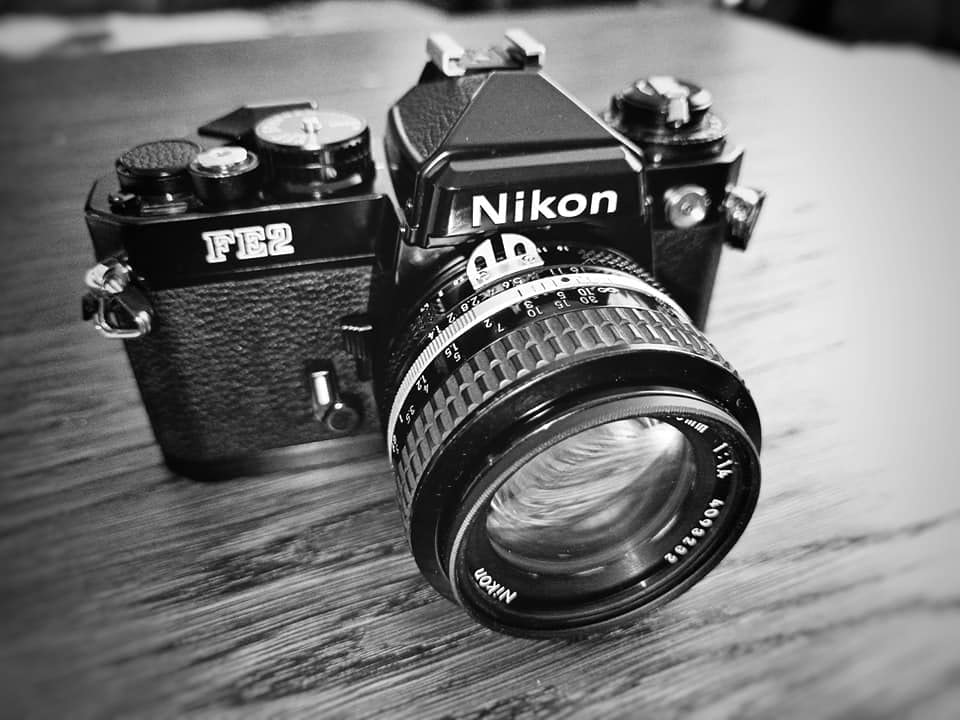
I found the match-needle light meter display on the FE2 more intuitive than the LED array on the FM2. A small needle moves up and down as you adjust settings, and you simply align it with a center marker for correct exposure. Many photographers prefer this analog feedback over the digital LED display, especially for learning exposure concepts.
The electronic shutter on the FE2 offers one significant advantage over the FM2: a faster flash sync speed of 1/250 second compared to 1/200 on the FM2. For portrait photographers who use fill flash outdoors, that extra third of a stop can make a real difference in controlling ambient light.
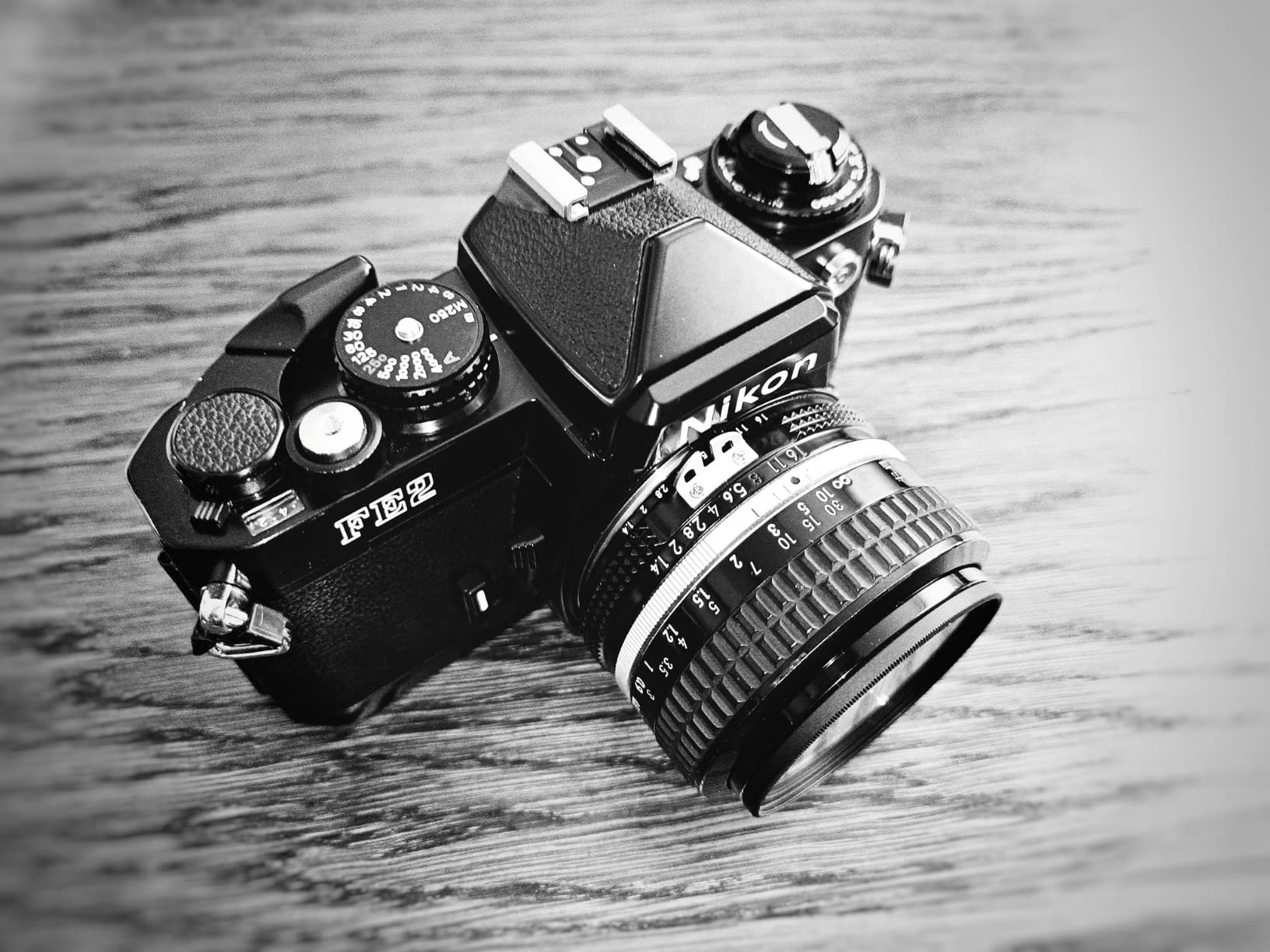
TTL flash metering is another FE2 advantage. When using compatible flash units, the camera measures light through the lens for more accurate flash exposures. The FM2 lacks this feature, requiring manual flash calculations or trial and error with non-dedicated flash units.
The trade-off with the FE2 is battery dependence. Without batteries, the electronic shutter only fires at 1/250 second. If you are shooting in cold weather or remote locations where battery replacement is difficult, this limitation becomes a real concern. I always carry spare batteries when traveling with electronic film cameras for exactly this reason.
Long-term reliability is the other consideration. The electronics in FE2 cameras are now over 40 years old, and failure rates are increasing. When the electronic shutter fails, repairs require specialized knowledge and parts that are becoming scarce. Some photographers report multiple FE2 failures over the years, while others have units that work perfectly.
Nikon FM2 vs Nikon FE2: Head-to-Head Comparison
Exposure Modes: Manual vs Aperture Priority
The most significant difference in this Nikon FM2 vs Nikon FE2 comparison is exposure control. The FM2 offers manual exposure only, requiring you to set both shutter speed and aperture for every shot. The FE2 adds aperture-priority automation, where you select the aperture and the camera chooses the correct shutter speed.
For street photography and fast-paced situations, aperture priority on the FE2 provides a clear advantage. You can respond to changing light conditions without stopping to adjust settings. For landscape and studio work where you have time to compose carefully, manual exposure on the FM2 offers more precise control.
Shutter Type: Mechanical vs Electronic
The FM2 uses a fully mechanical shutter with titanium blades. Every shutter speed from 1/4000 second to bulb works without batteries. The FE2 uses an electronic shutter that requires battery power for all speeds except 1/250 second, which has a mechanical backup.
This difference defines the reliability debate. Mechanical shutters can be repaired by any competent camera technician. Electronic shutters require specialized knowledge and replacement parts that are increasingly difficult to find. If you prioritize long-term serviceability, the FM2 wins decisively.
Battery Dependence
The FM2 needs batteries only for the light meter. If your batteries die in the field, you can keep shooting using the Sunny 16 rule or an external meter. The FE2 requires batteries for the shutter itself, making spare batteries essential for any serious shooting session.
Cold weather performance follows the same pattern. Batteries drain faster in cold temperatures, making the FM2 the better choice for winter photography. I have shot with the FM2 in sub-freezing conditions without any battery-related concerns, while the FE2 requires careful battery management in similar conditions.
Light Meter Display
The FM2 uses an LED display with plus and minus signs to indicate over and underexposure. The FE2 uses a match-needle display where a physical needle aligns with a center marker. Both systems work well, and preference comes down to personal taste.
I find the LED display easier to read in bright conditions, while the match needle feels more intuitive for learning exposure. Neither system is objectively better, but photographers tend to develop strong preferences for one style over the other.
Flash Synchronization
The FE2 offers a slightly faster flash sync at 1/250 second versus 1/200 second on the FM2. For most photography, this difference is minor. For outdoor portraits with fill flash, that extra sync speed helps darken the sky and create more dramatic lighting ratios.
The FE2 also offers TTL flash metering with compatible flash units, which the FM2 lacks. If you do significant flash photography, this feature alone might swing your decision toward the FE2.
Weight and Handling
The FE2 weighs approximately 590 grams, making it slightly lighter than the FM2 at 907 grams. Both cameras share the same body dimensions and feel substantial in hand without being heavy. The weight difference comes from the electronic components in the FE2 versus the mechanical assembly in the FM2.
In practice, both cameras handle beautifully. The controls fall naturally under your fingers, and the viewfinders offer bright, clear images with 0.75x magnification. Either camera provides a satisfying shooting experience that modern digital cameras often lack.
Reliability and Long-Term Ownership
Forum discussions consistently favor the FM2 for long-term reliability. Photographers report FM2 cameras working perfectly after decades of use with minimal maintenance. The FE2 has a growing reputation for electronic failures that render the camera unusable.
Repair costs also favor the FM2. Mechanical shutters can be serviced by most camera technicians. Electronic shutters require specialized knowledge and increasingly rare replacement parts. If you plan to own the camera for decades, the FM2 represents a safer investment.
Frequently Asked Questions
Is the Nikon FM2 a professional camera?
The Nikon FM2 is an advanced semi-professional 35mm SLR camera. It was marketed as a professional’s second camera due to its reliability and ability to work without batteries in any situation. Many professionals used it as a backup camera or for travel where weight and reliability mattered.
Does the Nikon FM2 work without a battery?
Yes, the Nikon FM2 works without batteries at all shutter speeds from 1/4000 second down to bulb mode. The batteries only power the light meter. This makes the FM2 ideal for cold weather photography and remote locations where battery replacement is difficult.
Which is better FM2 or FE2?
The FM2 is better for reliability and battery independence, while the FE2 is better for convenience with aperture-priority mode. Choose the FM2 for adventure and travel photography, or the FE2 for street photography and situations where shooting speed matters most.
Is the FM2 lighter than other cameras?
The Nikon FM2 weighs approximately 907 grams, making it comparable to other semi-professional mechanical cameras of its era. It is lighter than professional F-series bodies but heavier than some compact electronic SLRs due to its robust mechanical construction.
What was the successor of the Nikon FM2?
The Nikon FM3A, released in 2001, was the spiritual successor to the FM2 line. It uniquely offered both mechanical and electronic shutter operation, combining the reliability of the FM2 with the automation of the FE2 in a single body.
Verdict: Which Nikon Film Camera Should You Buy?
After thoroughly examining the Nikon FM2 vs Nikon FE2, my recommendation depends entirely on your shooting style and priorities. Both cameras deliver exceptional image quality and build construction that modern cameras rarely match.
Choose the Nikon FM2 if:
You prioritize reliability above all else. The fully mechanical shutter will work indefinitely with basic maintenance, and battery independence means you can shoot anywhere without worrying about power. Cold weather photographers, adventure travelers, and photographers who want a camera for life should choose the FM2.
Choose the Nikon FE2 if:
You value shooting speed and convenience. The aperture-priority mode makes street photography and candid shooting significantly faster. If you do portrait work with flash, the faster sync speed and TTL flash capability provide real advantages. Just keep spare batteries handy and accept that electronic components may eventually fail.
For most photographers entering film photography, I recommend starting with the FM2. The manual exposure requirement forces you to learn the fundamentals, and the mechanical reliability means your investment will last decades. If you later decide you want automation, the FE2 remains available as an alternative.
Both cameras represent the peak of Nikon manual focus SLR design. Whichever you choose, you will own a piece of photographic history that still produces stunning images in 2026. The Nikon FM2 vs Nikon FE2 debate ultimately comes down to mechanical purity versus electronic convenience, and both philosophies have passionate supporters in the film photography community.