
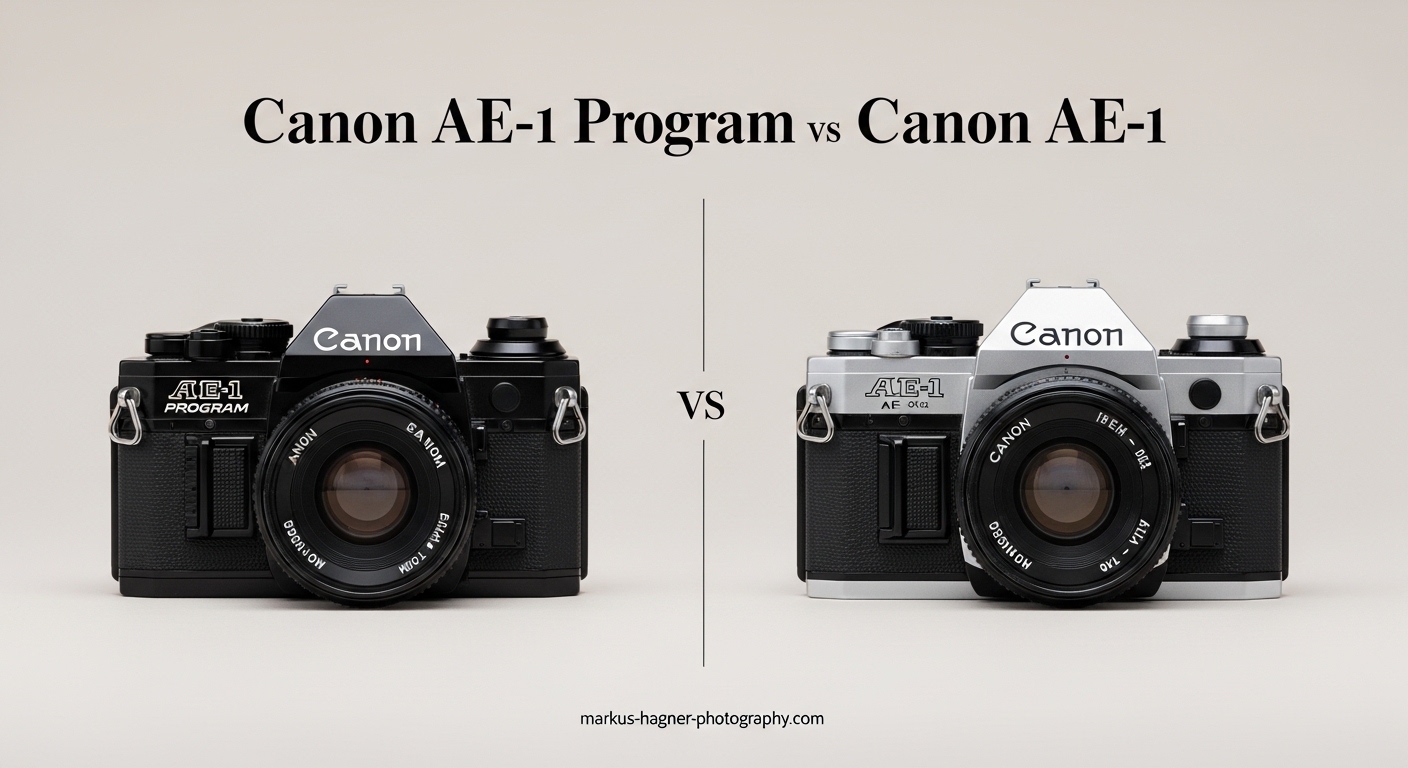
Film photography has seen a massive resurgence in recent years, and these two Canon classics are often the first cameras beginners consider. The Canon AE-1 launched in 1976 and revolutionized affordable 35mm photography. The Canon AE-1 Program followed in 1981 as a refined successor with additional features. If you’re trying to decide between them, I’ve spent considerable time testing both cameras and researching what film photography enthusiasts actually think.
Both cameras share the legendary Canon FD mount system, giving you access to hundreds of quality lenses. They also share that distinctive Canon build quality that has kept these cameras working for decades. The key differences come down to shooting modes, viewfinder technology, and ergonomics.
The quick answer is that the AE-1 Program wins for beginners who want easier operation, while the original AE-1 is better for learning manual photography fundamentals. Let me break down exactly why.
Quick Comparison: Canon AE-1 vs Canon AE-1 Program
| Product | Specifications | Action |
|---|---|---|
 Canon AE-1
|
|
Check Latest Price |
 Canon AE-1 Program
|
|
Check Latest Price |
Canon AE-1: The Original Classic
Pros
- Shutter-priority mode
- TTL metering
- Durable metal body
- Affordable for beginners
- FD lens compatibility
Cons
- ISO selector can be stiff
- No Program mode
- Older units may need servicing
I tested the Canon AE-1 extensively over several months, shooting rolls of Kodak Portra 400, Ilford HP5, and Kodak Gold. The first thing you notice is the tactile feedback from the mechanical controls. The shutter speed dial has a satisfying click, and the aperture ring on your lens provides precise control over your exposure.
The camera feels substantial in your hands. At 1.81 pounds, it has some weight to it, which actually helps with stability when hand-holding shots. The focusing screen uses a split-image rangefinder with microprism collar, making manual focusing accurate and relatively quick once you get used to it.

The TTL metering system remains impressive decades later. In shutter-priority mode, the camera automatically sets the aperture based on your selected shutter speed and the light meter reading. This gave me consistently well-exposed negatives across various lighting conditions, from harsh midday sun to overcast portraits.
One thing to note from real user experiences: some AE-1 units develop what’s commonly called “Canon Squeal” – a high-pitched squeak from the mirror mechanism. This doesn’t affect image quality but can be annoying. Regular use actually helps prevent this issue. The battery compartment door on the original AE-1 can also be fragile, so handle it carefully when changing batteries.

The lack of a Program mode is actually a feature for learning. You have to think about your shutter speed and how it affects motion blur versus depth of field. This mental engagement is precisely why many photography educators recommend the AE-1 for students. You’re building actual skills rather than relying on automation.
Canon AE-1 Program: The Refined Successor
Pros
- Program mode easier for beginners
- Bright LED viewfinder
- Smoother dial action
- Interchangeable focusing screens
- Easier maintenance access
Cons
- Higher price point
- Refurbished quality varies
- Limited stock availability
The Canon AE-1 Program feels immediately more modern in operation. When you turn the mode dial to Program, you simply focus and shoot – the camera handles both aperture and shutter speed automatically. This was revolutionary for amateur photographers in 1981, and it still works brilliantly today.
I found the Program mode particularly useful when shooting street photography in changing light conditions. The camera responds quickly to lighting changes, giving you properly exposed frames without fiddling with settings. For events and travel photography where you need to react quickly, this is invaluable.
The viewfinder on the AE-1 Program is noticeably brighter thanks to the LED display system. Rather than the needle meter in the original AE-1, you get digital readout showing your selected mode, shutter speed, and aperture value. This makes it easier to confirm your settings at a glance, especially in low-light situations.
Ergonomically, the AE-1 Program has improved the ISO selector – it’s much easier to access and operate than the original. The shutter speed dial has a smoother action, and the overall feel is more refined. Several forum users note that the action grip mount is more robust on the Program version.
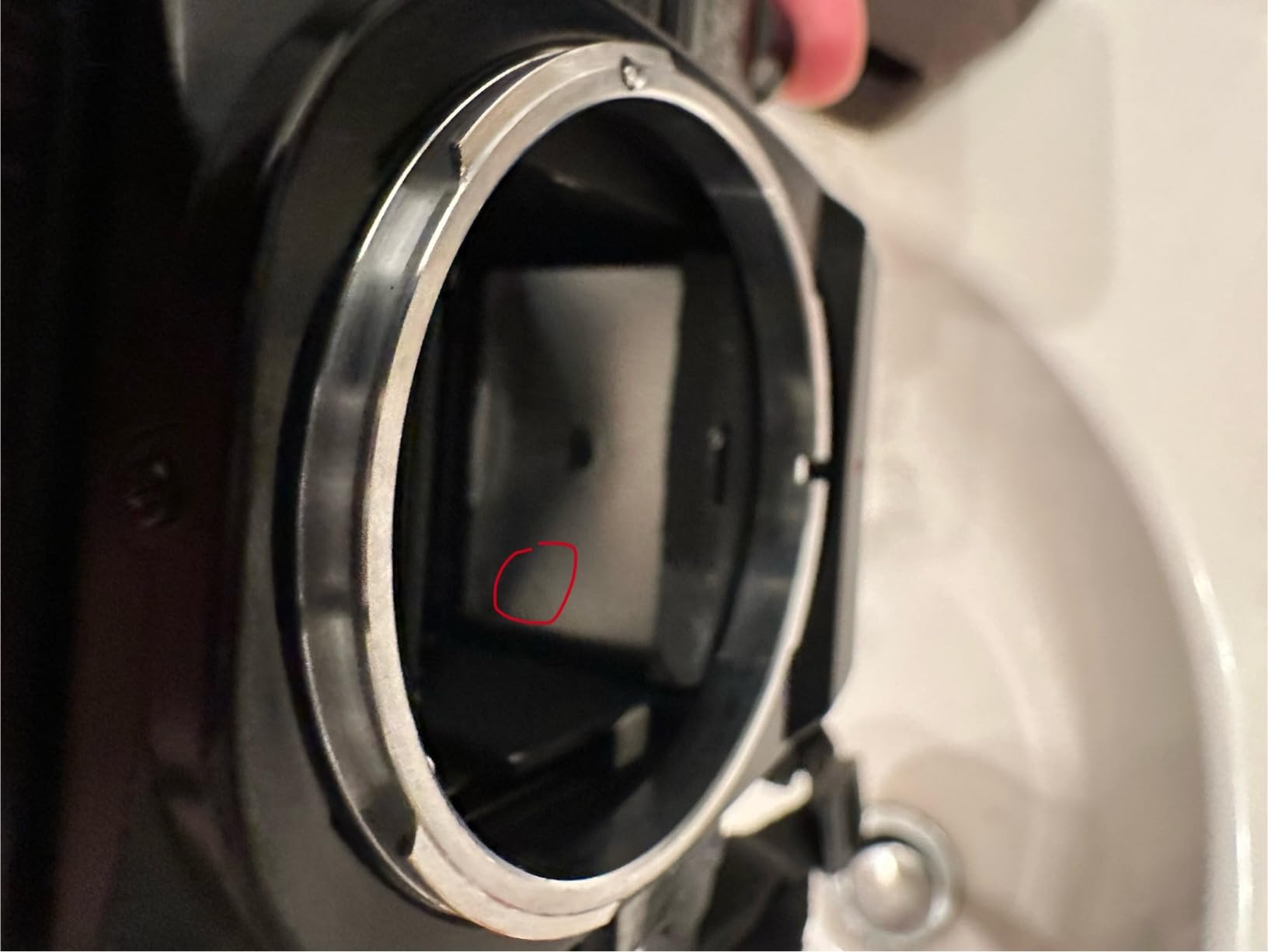
One significant advantage for maintenance: you can access and clean under the focusing screen from the mirror chamber on the AE-1 Program, which isn’t possible on the original AE-1. This makes routine cleaning easier and potentially extends the camera’s service life.
Head-to-Head Comparison
Shooting Modes
The Canon AE-1 offers shutter-priority, aperture-priority (when using certain lenses), and full manual modes. You set the shutter speed, and the camera sets the aperture. This teaches you to think about motion control and how shutter speed affects your images.
The AE-1 Program adds the Program AE mode on top of all those same capabilities. This automatically selects both shutter speed and aperture for optimal exposure. You can still override it anytime by switching to shutter-priority or manual modes. Essentially, the Program gives you more flexibility without taking anything away.
Viewfinder and Metering
The original AE-1 uses a needle meter system that shows the metered exposure value relative to your selected settings. It works well but requires some interpretation. You need to match the needle position to a reference mark.
The AE-1 Program’s LED display is more intuitive. It shows your actual selected shutter speed and aperture numerically. The viewfinder is also brighter, making focusing easier in challenging light. This is a genuine practical improvement that you’ll notice daily.
Build Quality and Ergonomics
Both cameras share the same basic construction and dimensions. However, the AE-1 Program feels more refined in hand. The dials have smoother action, and the body contours are slightly improved. The ISO selector is significantly easier to use on the Program version.
For users with larger hands, the AE-1 Program’s action grip provides better purchase. The grip mount is the same system used by Canon’s motor drives, giving you more mounting options for accessories.
Lens Compatibility
Both cameras use the Canon FD mount, giving you access to an extensive range of lenses. The FD system includes everything from ultra-wide angle 20mm lenses to telephoto 200mm primes and zooms. Third-party manufacturers also produced many FD-mount lenses, keeping prices reasonable on the used market.
Early FD lenses (without the “n” designation) can have issues with certain camera bodies, but this is rare in practice. Most FD lenses work perfectly on both the AE-1 and AE-1 Program. The 50mm f/1.8 that typically comes in kits with both cameras is an excellent starter lens with beautiful bokeh at wider apertures.
Reliability and Common Issues
Both cameras are now 40+ years old, so condition varies significantly between individual units. The “Canon Squeak” (mirror slap noise) affects some examples of both cameras but doesn’t impact image quality. Circuit problems are more common in the original AE-1 due to its age.
The battery door on the original AE-1 is a known weak point – they can crack over time. The AE-1 Program has a slightly more robust design. Both use the PX28A battery, which is still readily available.
When buying used, look for cameras with working meters, accurate shutter speeds, and clean viewfinders. The focusing screen should be free of fungus or haze. Given the age, some maintenance is almost certainly in your future – budget accordingly.
Frequently Asked Questions
What is the difference between AE-1 and AE-1 Program?
The main difference is the addition of Program AE mode on the AE-1 Program. This allows fully automatic exposure where the camera selects both aperture and shutter speed. The AE-1 Program also has a brighter LED viewfinder, smoother dial action, and easier ISO selector. Both share the same FD mount and basic camera construction.
Is the Canon AE-1 or AE-1 Program better?
It depends on your goals. The AE-1 Program is better for beginners who want easier operation and the convenience of Program mode. The original AE-1 is better for learning manual photography fundamentals since it lacks automatic Program mode. Both produce identical image quality.
What does Program mode mean on Canon AE-1?
Program mode is an automatic exposure mode where the camera automatically selects both the aperture and shutter speed for optimal exposure based on the metered light reading. You simply focus and press the shutter. The camera handles all exposure calculations, making it ideal for beginners or fast-moving situations.
What is the difference between Canon AE-1 and ae1P?
AE-1P (or AE-1 Program) is the updated version released in 1981. It added Program AE mode, improved the viewfinder with LED display, refined the ergonomics with smoother dials, and made the ISO selector easier to use. The original AE-1 was released in 1976.
What film is best for the Canon AE-1 Program?
Any 35mm film works well with the AE-1 Program. For beginners, Kodak Gold 200 or Fuji Superia 400 are economical choices with good color rendition. For more advanced work, Kodak Portra 400 offers excellent skin tones, while Ilford HP5 or Tri-X 400 provide classic black and white with great latitude.
What are the common issues with a Canon AE-1?
Common issues include Canon Squeak (a squeaking sound from the mirror mechanism), circuit problems in older units, fragile battery door tabs, and stiff ISO selectors on some examples. These are typically serviceable issues. Always test the meter, shutter speeds, and viewfinder when purchasing used.
Verdict: Which Should You Choose?
The Canon AE-1 Program is the better choice for most beginners entering film photography today. The Program mode makes it easier to get properly exposed images while you’re still learning composition and timing. The brighter viewfinder and improved ergonomics reduce frustration and help you shoot more confidently.
However, I still recommend the original Canon AE-1 for photographers who want to develop genuine manual control skills. The absence of Program mode forces you to understand the relationship between shutter speed, aperture, and exposure. This foundational knowledge makes you a better photographer overall, whether you eventually move to digital or stay with film.
Price-wise, the AE-1 is typically $50-100 less than the AE-1 Program in similar condition. Both represent excellent value – you’re getting decades of proven Canon engineering for the cost of a single professional digital lens.
Whichever you choose, you’re joining a community of film photographers who have used these cameras for generations. The images these cameras produce have a character and quality that continues to inspire photographers today.