
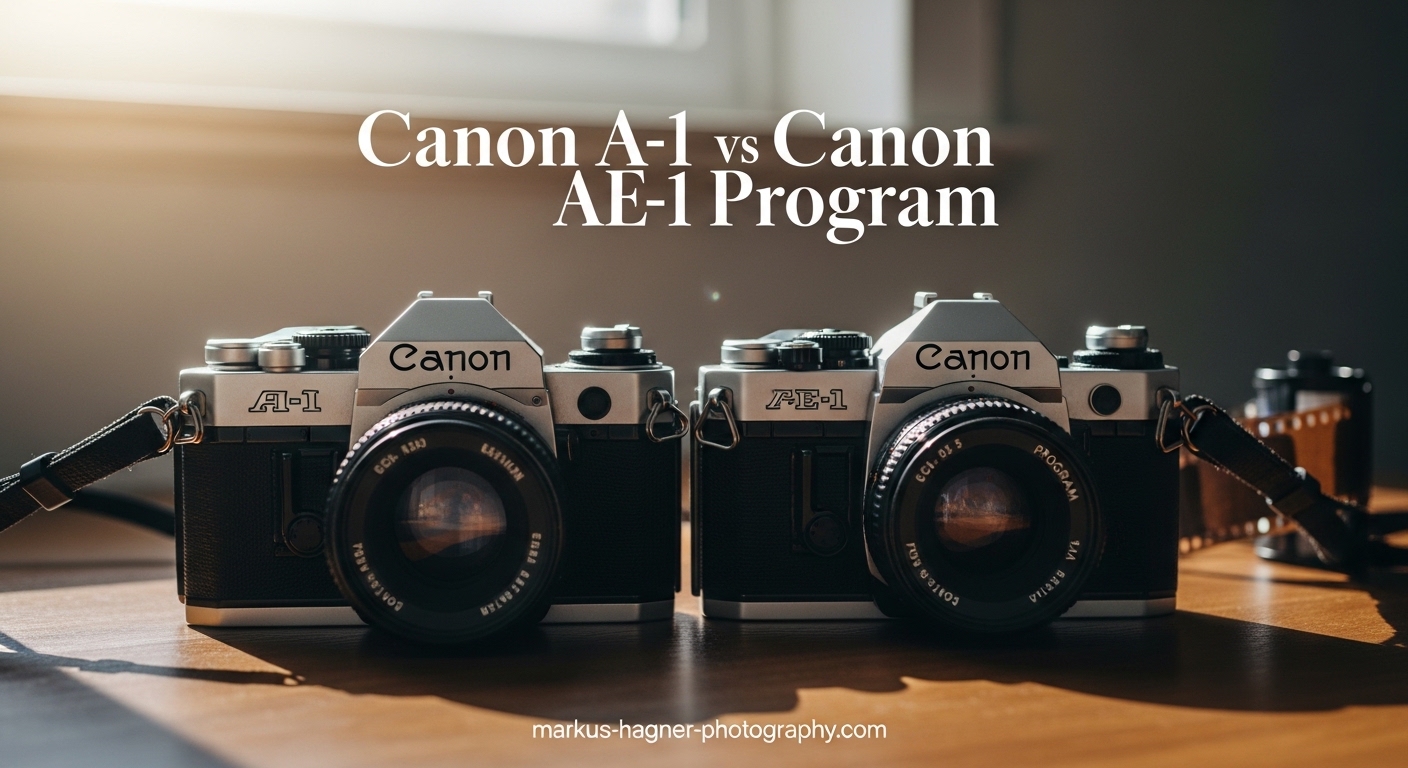
If you are shopping for a vintage 35mm SLR, the Canon A-1 vs Canon AE-1 Program debate is one you will encounter repeatedly. Both cameras represent the golden age of Canon A-series film cameras, yet they serve different types of photographers. I have spent countless hours shooting with both models, and the differences go far deeper than their similar exteriors suggest.
The Canon A-1, introduced in 1978, was Canon’s most advanced consumer SLR, offering full PASM modes including the highly sought-after aperture priority. The Canon AE-1 Program, released in 1981, refined the AE-1 formula with program auto-exposure and improved ergonomics but dropped native aperture priority. For film photographers in 2026, understanding these differences is essential for choosing the right tool for your shooting style.
After shooting both cameras extensively over the past few years, I can tell you that neither is objectively better. The A-1 offers more control for technically-minded photographers, while the AE-1 Program delivers a more intuitive, pleasant shooting experience. This comprehensive comparison will help you decide which classic Canon belongs in your camera bag.
Both cameras have developed devoted followings in the film photography community. The A-1 appeals to photographers who want professional-level control in a compact body. The AE-1 Program attracts those who prioritize the shooting experience over technical specifications. Your choice between them should reflect how you actually photograph, not just which camera has more features on paper.
Canon A-1 vs Canon AE-1 Program: Quick Comparison
Before diving into the details, here is a side-by-side look at how these two legendary cameras stack up against each other. This quick reference highlights the key specifications and features that differentiate these classic Canon film cameras.
| Product | Specifications | Action |
|---|---|---|
 Canon A-1 35mm SLR Film Camera
|
|
Check Latest Price |
 Canon AE-1 Program 35mm SLR Camera
|
|
Check Latest Price |
The most significant difference comes down to shooting modes. The Canon A-1 offers all four PASM modes (Program, Aperture priority, Shutter priority, Manual), while the AE-1 Program lacks native aperture priority mode. This single difference shapes the entire shooting experience and determines which camera suits your photography style.
Beyond shooting modes, you will notice differences in viewfinder brightness, weight, and control layout. The AE-1 Program is lighter at 1.62 pounds versus the A-1’s 2.31 pounds. The AE-1 Program also features a brighter viewfinder with interchangeable focusing screens. The A-1 counters with its more comprehensive exposure control system and professional-grade build quality.
Canon A-1: The Professional’s Choice
Pros
- Full PASM mode control
- Aperture priority available
- Microprocessor-controlled exposure
- Excellent for depth of field control
- FD lens compatibility
Cons
- More complex controls
- Battery dependent only
- Can feel overwhelming for beginners
- Older design ergonomics
When I first picked up a Canon A-1, I immediately understood why it was considered Canon’s most advanced traditional SLR. This camera was revolutionary when it launched in 1978 as the first SLR with fully automatic program mode controlled by a microprocessor. The A-1 gives you complete control over your exposure with genuine aperture priority, shutter priority, program, and manual modes.
The shooting experience feels precise and technical. Setting aperture priority mode involves a specific sequence using the mode selector and aperture ring, but once you understand it, the A-1 becomes an extension of your creative vision. I particularly love using aperture priority for portrait work where depth of field control matters most.
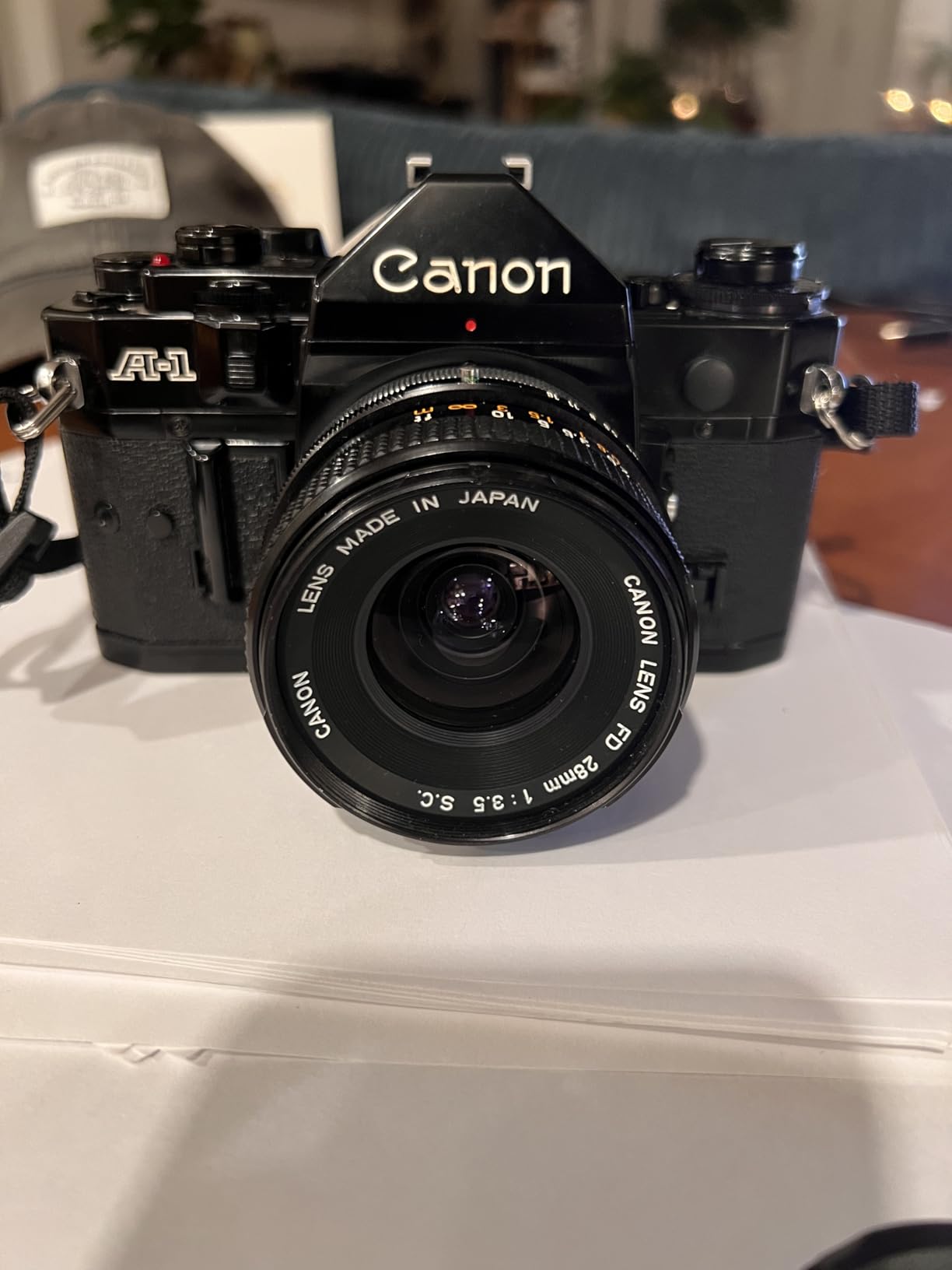
Beyond the shooting modes, the A-1 features a cloth focal plane shutter with speeds from 1/1000 to 2 seconds plus bulb mode. The viewfinder displays exposure information via LED readouts, which was cutting-edge technology for its era. The camera accepts all Canon FD lenses, giving you access to decades of excellent glass that remains affordable today.
Build quality feels substantial at 2.31 pounds. The black body has a professional heft that inspires confidence. However, the control layout can feel cramped compared to the AE-1 Program, and the multi-function dials require practice to master. Some photographers find the A-1’s complexity off-putting, but for those who want maximum control, nothing in the A-series beats it.
The A-1 does have reliability considerations. Like many electronic cameras from this era, it is completely battery dependent. Without power, you get no shutter operation. The electronic circuits contain ribbon cables that can fail, and finding qualified repair technicians has become increasingly difficult in 2026. Still, when you find a well-maintained unit, the A-1 delivers exceptional performance.
One often overlooked feature is the A-1’s multiple exposure capability. By engaging a dedicated switch, you can make multiple exposures on a single frame without advancing the film. This creative tool opens up artistic possibilities that require intentional planning and execution. Street photographers and experimental artists will find this feature particularly useful.
The A-1 also includes an eyepiece shutter, a blind that closes behind the viewfinder eyepiece to prevent light leakage during long exposures or when using the self-timer. This seemingly small feature demonstrates Canon’s attention to practical shooting needs. For tripod-based landscape or night photography, the eyepiece shutter prevents stray light from affecting your meter readings.
Canon AE-1 Program: The Shooter’s Favorite
Pros
- Simpler
- more intuitive controls
- Brighter viewfinder
- Interchangeable focusing screens
- Pleasant shooting experience
- Lighter weight design
Cons
- No native aperture priority
- Quality control varies on renewed units
- Battery dependent
- Flash sync limited to 1/60
The Canon AE-1 Program takes a different approach entirely. Released in 1981 as an evolution of the wildly successful AE-1, this camera prioritizes shooting enjoyment over technical complexity. I find myself reaching for the AE-1 Program more often because it simply feels more natural to use for everyday photography.
The program mode is the star here. Set the lens to A, and the camera automatically selects both aperture and shutter speed for correct exposure. For beginners or photographers who prefer to focus on composition rather than technical settings, this simplicity is liberating. Shutter priority and full manual modes remain available for when you want more control.
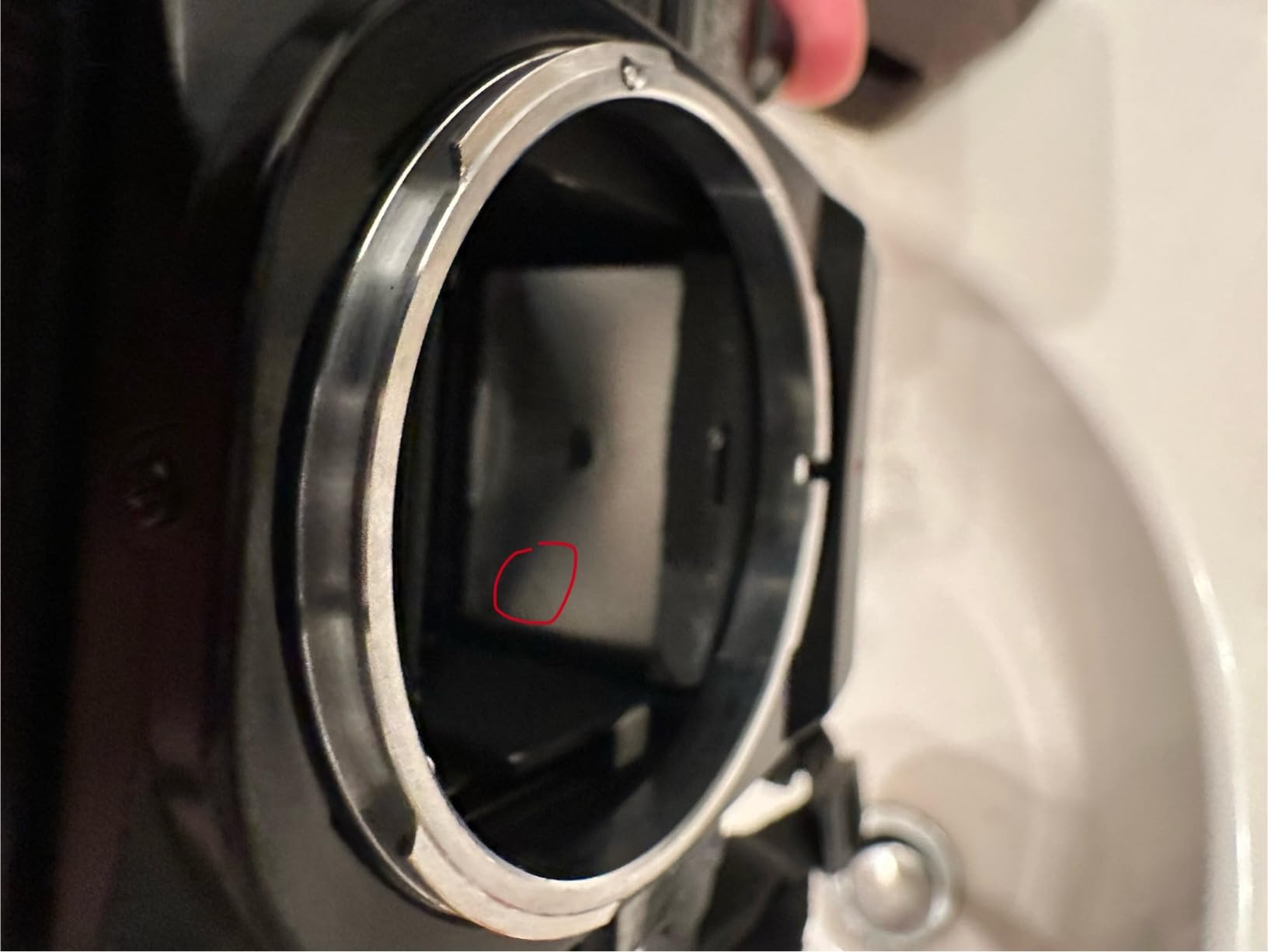
What really sets the AE-1 Program apart is the viewfinder. It is noticeably brighter than the A-1’s viewfinder, making manual focusing easier and more accurate. The camera also features interchangeable focusing screens, which the A-1 lacks. You can swap screens to match your shooting style, whether you prefer split-image rangefinders or microprism focusing aids.
Ergonomics received significant improvements over earlier AE-1 models. At 1.62 pounds, the AE-1 Program feels lighter and better balanced. The controls are more intuitive, with dedicated dials for common functions rather than the multi-purpose controls on the A-1. Many photographers report that the AE-1 Program feels like a camera you can just pick up and shoot.
The main trade-off is the lack of native aperture priority mode. While you can achieve similar results using stopped-down metering or manual mode, it is not as seamless as the A-1’s dedicated Av mode. For photographers who regularly shoot portraits or landscapes where depth of field is critical, this limitation matters.
The AE-1 Program also benefits from improved battery door design. The original AE-1 had a notorious weakness in its battery compartment door, which was prone to breaking. Canon addressed this issue in the AE-1 Program, making the battery door more robust. This might seem like a minor detail, but anyone who has dealt with a broken battery door knows how frustrating it can be.
Flash photography works well with the AE-1 Program thanks to its dedicated flash mount and automatic flash sync at 1/60 second. Canon’s Speedlite system integrates seamlessly, setting the correct sync speed automatically when you attach a compatible flash. For event photographers or anyone who uses fill flash outdoors, this integration simplifies the workflow considerably.
Canon A-1 vs Canon AE-1 Program: Head-to-Head Comparison
Shooting Modes: The Critical Difference
The shooting mode comparison represents the most important difference between these cameras. The Canon A-1 offers true aperture priority mode, letting you set the aperture while the camera selects the appropriate shutter speed. The AE-1 Program lacks this mode entirely, offering only program auto, shutter priority, and manual modes.
For photographers who prioritize depth of field control, the A-1’s aperture priority is invaluable. Portrait photographers shooting at f/2.8 or landscape photographers stopping down to f/11 can work quickly without manually calculating shutter speeds. The AE-1 Program requires more button presses and dial turns to achieve the same result.
Let me explain why aperture priority matters so much. When you set your aperture, you control two critical aspects of your image: depth of field and the amount of light reaching the film. For portraits, you typically want shallow depth of field to blur backgrounds and isolate your subject. For landscapes, you often want maximum depth of field to keep everything sharp from foreground to background.
The A-1 lets you set your aperture and forget about shutter speed, trusting the camera’s center-weighted TTL meter to choose the correct exposure. This workflow matches how many experienced photographers think about exposure. The AE-1 Program forces you to either work in shutter priority or manually calculate exposures when depth of field is your primary concern.
That said, the AE-1 Program’s program mode works beautifully for casual shooting. When you just want to capture moments without thinking about technical settings, program mode delivers consistently good results. The camera’s algorithms balance aperture and shutter speed intelligently, avoiding extremely slow shutter speeds that would cause camera shake.
Winner: Canon A-1 for complete PASM control, though the AE-1 Program wins for simplicity if you do not need aperture priority.
Viewfinder and Display
The AE-1 Program features a noticeably brighter viewfinder than the A-1. This makes a real difference when shooting in low light or when precise manual focusing matters. Additionally, the AE-1 Program offers interchangeable focusing screens, allowing you to customize the viewing experience to your preferences.
The A-1 uses an LED display in the viewfinder to show exposure information, which was revolutionary in 1978. Some photographers prefer this digital readout, while others find it less intuitive than the AE-1 Program’s more traditional display. The brightness difference, however, gives the AE-1 Program a clear advantage for manual focus work.
Brighter viewfinders make manual focusing faster and more accurate. When you are shooting with manual focus lenses, every bit of brightness helps you see the split-image rangefinder or microprism collar clearly. The AE-1 Program’s advantage here is particularly noticeable when shooting in dim interiors or during golden hour when light levels drop.
The interchangeable focusing screens on the AE-1 Program deserve more attention. Canon offered several screen types for different applications. The standard split-image screen works well for general photography. A microprism screen suits photographers who prefer that focusing aid. There are even screens optimized for telephoto lenses or macro work. This flexibility lets you tailor the camera to your specific needs.
The A-1’s fixed screen is adequate but offers no customization. Its LED readout, while technically sophisticated, can be harder to read in bright sunlight. Some photographers also find the red LED numbers distracting when composing images. The AE-1 Program’s analog display feels more natural to many users.
Winner: Canon AE-1 Program for brighter viewfinder and interchangeable screens.
Build Quality and Ergonomics
Both cameras feature solid metal construction that has survived decades of use. The A-1 weighs 2.31 pounds compared to the AE-1 Program’s 1.62 pounds, giving the A-1 a more substantial feel. Some photographers prefer this heft, while others appreciate the lighter AE-1 Program for all-day shooting.
Ergonomically, the AE-1 Program benefits from Canon’s refinements over the A-series production run. The controls are more logically laid out, with dedicated dials for ISO, exposure compensation, and shutter speed. The A-1’s multi-function controls require more practice to master.
The A-1’s control layout reflects its 1978 design philosophy. Canon tried to pack maximum functionality into limited real estate, resulting in some compromises. The mode selector and aperture dial share space on the same control, requiring specific sequences to change modes. This design is functional but not intuitive.
Canon learned from the A-1 and improved the AE-1 Program’s ergonomics significantly. The ISO dial sits prominently on top of the camera, easy to see and adjust. The exposure compensation dial has its own dedicated position with a lock to prevent accidental changes. The shutter speed dial clicks positively into each setting, giving tactile feedback that the A-1’s softer controls lack.
The grip feel differs between the two cameras as well. The AE-1 Program’s Action Grip (an optional accessory) attaches to the front of the camera, providing a comfortable holding position. The A-1 works with similar grips, but the lighter AE-1 Program feels more balanced with these accessories attached.
Winner: Canon AE-1 Program for improved ergonomics and lighter weight.
Reliability and Common Issues
Both cameras share similar reliability concerns as 40+ year old electronic equipment. The infamous Canon squeal affects both models. This squeaking sound during mirror operation indicates a lubrication issue in the mirror assembly. While not immediately fatal, it can eventually lead to problems if left unaddressed.
Electronic shutter failure represents a more serious concern. Both cameras are completely battery dependent, and the electronic circuits contain ribbon cables that can degrade over time. Parts for repairs have become scarce, making finding qualified service technicians challenging in 2026.
The Canon squeal deserves more explanation. The sound comes from the mirror mechanism’s lack of lubrication on the brake pads. Over decades, the original lubricant dries out, causing the squeak. The fix involves disassembling the mirror box and applying fresh lubricant. Many camera repair technicians can perform this service, though finding one has become harder as vintage camera specialists retire.
The AE-1 series has developed a reputation for sudden electronic death, where the camera simply stops working due to circuit failure. The A-1 has similar vulnerabilities. The electronic components in these cameras were not designed to last 40+ years, and capacitor failures, corroded contacts, and broken ribbon cables are common issues.
Battery dependency is another shared concern. Both cameras use the 4LR44 or PX28A battery, which remains readily available. However, without a battery, neither camera will fire. This differs from mechanical cameras like the Canon F-1, which can operate without batteries in some modes. If you shoot in remote locations, carrying spare batteries is essential.
When purchasing either camera today, buying from a reputable seller who has tested the camera is essential. Ask about shutter speeds, meter accuracy, and the presence of any Canon squeal. A recently serviced camera will cost more but offers peace of mind that an untested bargain cannot provide.
Winner: Tie as both have similar reliability profiles and repair challenges.
Lens Compatibility: The FD Mount Advantage
Both the Canon A-1 and AE-1 Program use Canon’s FD lens mount, giving you access to one of the most extensive and affordable vintage lens systems available. Canon produced FD lenses for nearly two decades, and excellent examples remain plentiful on the used market.
Popular FD lenses like the 50mm f/1.4, 35mm f/2, and 85mm f/1.8 offer outstanding optical quality at reasonable prices. Third-party manufacturers like Vivitar, Tamron, and Sigma also produced FD-mount lenses, expanding your options further. The 50mm f/1.8 kit lens that often comes with these cameras is surprisingly capable and makes an excellent starting point.
The FD mount uses Canon’s breech-lock design, where the lens attaches via a rotating collar rather than turning the entire lens. This design reduces wear on the mount surfaces compared to bayonet mounts. Some photographers find the breech-lock slower to mount, but the mechanical precision is undeniable.
For modern photographers, FD lenses adapt well to mirrorless cameras using inexpensive adapters. This means your investment in FD glass serves double duty, working on both your vintage Canon body and your modern digital camera. The manual focus experience also translates well to focus-peaking equipped mirrorless bodies.
Wide-angle FD lenses perform particularly well on mirrorless cameras. The 24mm f/2.8, 28mm f/2, and 35mm f/2 all deliver sharp results with pleasing character. Portrait lenses like the 85mm f/1.8 and 100mm f/2.8 create beautiful bokeh that many photographers prefer over modern clinical renders.
Which Should You Buy?
The Canon A-1 vs Canon AE-1 Program decision ultimately comes down to your shooting style and priorities. After extensive experience with both, here are my recommendations based on different photographer profiles.
Choose the Canon A-1 If:
You need aperture priority mode for depth of field control. Portrait photographers, landscape photographers, and anyone who regularly works with selective focus will appreciate the A-1’s complete PASM capabilities. The ability to set your aperture and let the camera handle shutter speed matches how many experienced photographers approach exposure.
You prefer maximum technical control over your exposures. The A-1 rewards photographers who understand the exposure triangle and want precise control over every parameter. If you enjoy the technical side of photography, the A-1’s complexity becomes a feature rather than a drawback.
You appreciate the more substantial, professional feel of a heavier camera body. The A-1’s weight gives it a solid, planted feel that some photographers prefer. The robust construction has survived decades of professional use.
Choose the Canon AE-1 Program If:
You are new to film photography or prefer a simpler shooting experience. The AE-1 Program’s intuitive controls and program mode make it easier to focus on composition rather than technical settings. Many photographers learn faster when they can concentrate on making images rather than fiddling with controls.
You value a brighter viewfinder for manual focusing. The improved brightness and interchangeable focusing screens make the AE-1 Program better suited for critical focus work. This advantage becomes apparent in low light or when using fast lenses with shallow depth of field.
You prefer lighter weight and improved ergonomics for all-day shooting. The AE-1 Program weighs nearly a pound less than the A-1. For street photography, travel, or any situation where you carry your camera for hours, this difference matters.
My Personal Take
If I could only keep one, I would choose the AE-1 Program for its shooting experience. The brighter viewfinder and simpler controls make it a camera I actually want to use. However, for portrait sessions where depth of field control matters, the A-1’s aperture priority mode is genuinely useful. Many film photographers eventually end up owning both.
The good news is that both cameras remain affordable in 2026. You can find working examples of either model for reasonable prices, especially compared to modern digital equipment. The FD lens ecosystem offers tremendous value, with excellent primes available at a fraction of what modern equivalents cost.
Frequently Asked Questions
What is the difference between Canon A-1 and AE-1 Program?
The Canon A-1 offers full PASM modes including native aperture priority, while the AE-1 Program lacks aperture priority mode and offers only program auto, shutter priority, and manual modes. The A-1 has a slightly dimmer viewfinder with LED display, while the AE-1 Program features a brighter viewfinder with interchangeable focusing screens.
Does Canon AE-1 Program have aperture priority?
No, the Canon AE-1 Program does not have native aperture priority mode. It offers program mode (camera selects both aperture and shutter speed), shutter priority (you select shutter speed, camera selects aperture), and full manual mode. Photographers needing aperture priority should consider the Canon A-1 instead.
Which camera is better for beginners?
The Canon AE-1 Program is generally better for beginners due to its simpler controls, intuitive program mode, and brighter viewfinder. The A-1’s multi-function controls and complex mode selection can feel overwhelming for photographers new to film. Both cameras are excellent learning tools, but the AE-1 Program offers a gentler learning curve.
Is Canon A-1 or AE-1 Program more reliable?
Both cameras have similar reliability profiles as 40+ year old electronic equipment. Both suffer from the Canon squeal (mirror lubrication issue) and electronic shutter failure risk. Parts availability is limited for both models. The key factor is finding a well-maintained unit from a reputable seller, regardless of which model you choose.