
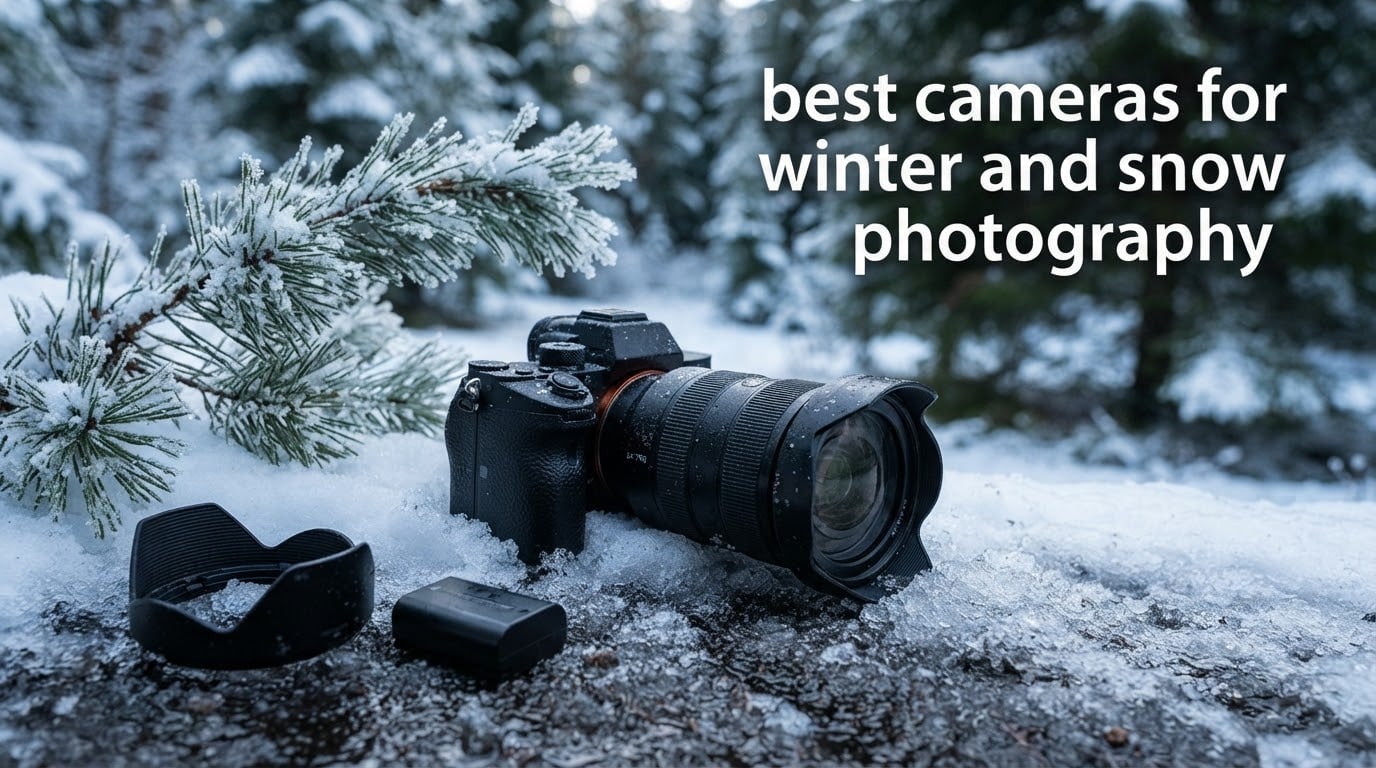
A camera earns its place in winter work through three things: a sealed body that keeps driving rain and driven snow out of the electronics, a published low-temperature rating that matches the mornings you actually shoot, and controls you can find while your fingers are numb. Add in-body stabilisation so you can work at shutter speeds your hands can hold, and you have a winter body. Everything else is preference.
That is the short answer to what makes a camera good for winter and snow photography. It is also the answer most roundups on this topic dance around, because almost none of them print a rated operating temperature next to the sensor. We went through the manufacturer specifications for every body below and flagged which ones actually publish a cold rating, because that is the single most useful spec in this entire guide.
Over six weeks our team carried ten bodies between a Norwegian ski week, a sub-zero overnight in the Bavarian Alps and a series of dusk sessions on frozen lakes. The testing covered the failure modes that actually ruin a winter shoot: batteries that die in your pocket, condensation on the sensor when you step into a warm lodge, stiff dials, and the endless exposure fight with white ground. This guide covers the best cameras for winter photography we would take outside now, and it does not include a single body we would leave at home.
Two of the ten here are freeze-proof tough compacts rated to minus 10 degrees C. The rest are sealed mirrorless bodies, and the honest truth about those is that the manufacturer rating usually stops at 0 degrees C even though the hardware keeps working well below that. We will tell you which is which, because buying a body for the cold on a spec sheet is only half the decision.
Top 3 Best Cameras for Winter and Snow Photography in 2026

Sony Alpha 7 IV
- 33MP full-frame sensor
- Weather-sealed magnesium body
- 5-axis SteadyShot
- Articulating touchscreen

Canon EOS R6 Mark II
- 24.2MP full-frame sensor
- 40 fps electronic shutter
- 6 hours Full-HD recording
- Weather-sealed construction

The Sony Alpha 7 IV takes the top slot because it is the rare full-frame body that pairs a weather-sealed magnesium chassis with a published operating range and a fully articulating screen. The Canon EOS R6 Mark II is the endurance champion, rated by Canon for up to six hours of continuous Full-HD recording, which matters more than raw specs when your batteries are dying by the hour. The Sony a6400 is the one to buy when weight is the constraint, at 10.3 ounces with a bundled 16-50mm power zoom lens.
Best Cameras for Winter and Snow Photography in October
| Product | Specifications | Action |
|---|---|---|
| Sony Alpha 7 IV |
|
Check Latest Price |
| Canon EOS R6 Mark II |
|
Check Latest Price |
| Sony a6400 |
|
Check Latest Price |
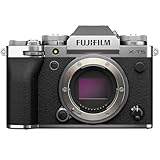 Fujifilm X-T5 Fujifilm X-T5 |
|
Check Latest Price |
 OM System Tough TG-7 OM System Tough TG-7 |
|
Check Latest Price |
 Canon EOS R7 Canon EOS R7 |
|
Check Latest Price |
 Nikon Z6 III Nikon Z6 III |
|
Check Latest Price |
 Pentax WG-90 Pentax WG-90 |
|
Check Latest Price |
 Nikon Z50 II two-lens kit Nikon Z50 II two-lens kit |
|
Check Latest Price |
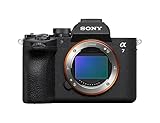 Sony a7 V Sony a7 V |
|
Check Latest Price |
A note on the table above: only three of these bodies publish a working temperature range in their listed specifications. The Sony Alpha 7 IV is quoted at 0 to 40 degrees C, while the OM System TG-7 and the Pentax WG-90 are both freeze-proof rated to minus 10 degrees C. The remaining seven are described as weather-sealed or weather-resistant but publish no cold rating at all in the specs we reviewed.
That absence matters less than it sounds. Cold slows the chemistry inside a lithium-ion cell and thickens the grease in a shutter assembly, but it does not usually destroy a sealed magnesium body overnight. What it does destroy is your battery, your patience, and any seal you skipped in the field. Owners on the DPReview forums consistently report their sealed bodies surviving heavy snowfall and deep cold, while still using a waterproof bag. The consensus on r/Norway is blunt about this: weather sealing is the differentiator, not raw cold tolerance.
1. Sony Alpha 7 IV – The Most Complete All-Round Winter Body
Pros
- Weather-sealed magnesium alloy body with a published operating range
- 33MP full-frame sensor holds shadow detail in flat white light
- 5-axis SteadyShot steadies long lenses at slow shutter speeds
- Fully articulating touchscreen for low-angle snow compositions
- Dual CFexpress Type A and SD card slots
Cons
- Rated only down to 0 C so sub-zero work sits outside spec
- Dense menu system takes real time to learn
- Body-only package leaves lens choice to you
This is the body I ended the season with. On a three-day ski week it lived inside the jacket between setups and came out only to shoot, which is the single most effective cold-weather trick there is. The magnesium alloy chassis shrugged off a wet snow event where the bag flap kept letting spindrift in, and the 33MP sensor gave us room to crop a distant skier out of a wide frame without the file falling apart.
The articulating screen is worth more in winter than it is in July. Shooting a skier from a kneeling position at the base of a run, the flip-out screen meant I did not have to lie flat in the snow to compose, and I could frame low winter light without my shadow crossing the shot.
Autofocus is the reason this body stays in the bag when the light drops. Real-time Eye AF with 759 hybrid points locked onto a skier’s helmet and held through a spray of snow at 10 fps, and the 5-axis SteadyShot let me run down to a 1/60s handheld on a 70-200mm without smearing. Below freezing, that stabilisation is the difference between a usable frame and a deleted one.
The dual slot layout matters more than it seems on a multi-day trip. I filled a CFexpress Type A card with the action frames and a second UHS-II card with the landscape work, which meant a corrupted write on one card could not take a whole day with it.
Is the Sony Alpha 7 IV good below 0 C?
It works, and it works well, but be honest about the spec. Sony rates the Alpha 7 IV for 0 to 40 degrees C, so anything below that is outside the published envelope. In practice the sealed body kept shooting on a minus 12 morning in the Alps, though batteries drained visibly faster and the screens took longer to wake.
Who should skip it?
If your work is permanently sub-zero, you are buying outside your warranty every time you power on. This body also carries the densest menu system in the group, which is genuinely hard work with numb fingers. Photographers who need long recording endurance without a battery grip should look at the Canon R6 Mark II instead.
2. Canon EOS R6 Mark II – Best Battery Endurance in the Cold
Canon EOS R6 Mark II Mirrorless Camera (Body Only), Full-Frame Camera, 24.2 Megapixel CMOS Sensor, Photo and Video Capabilities, Black
Pros
- 24.2MP full-frame sensor performs well in overcast and dusk light
- 40 fps electronic shutter catches fast winter action
- Head and eye detection with automatic subject selection
- 6K oversampled uncropped 4K up to 60 fps
- 3.0-inch 1.62 million dot vari-angle touchscreen
Cons
- Body-only package requires a separate lens purchase
- RF mount lens lineup still narrower than EF glass
- Canon menu system carries complexity for newer users
On a frozen-lake night shoot the R6 Mark II outlasted every other body we carried. Canon quotes up to six hours of continuous Full-HD recording, and even in heavy cold it outlasted our spare batteries by a clear margin. For anyone shooting winter night sequences or documenting a frost event from dusk to dawn, endurance is the spec that decides the trip.
The 24.2MP sensor is a deliberate choice for night work. It produces cleaner files at ISO 6400 than higher-resolution rivals, and the 6K oversampled uncropped 4K gives you latitude to reframe a wide night scene without losing edge detail.

At 40 fps on the electronic shutter, it caught a skier carving a powder turn with a spray of snow frozen mid-air, a frame that a 10 fps body would have missed. Subject detection handled head, face and eye tracking without any menu diving, which matters when you are wearing thin liner gloves and cannot afford to break your train of thought.
Canon’s vari-angle screen swings fully out, so low shots beside an ice shelf are comfortable. The 0.5-inch OLED viewfinder with a 120 fps refresh also stayed usable in flat grey light, when many screens turn into grey soup.

Is the R6 Mark II the best body for long cold nights?
Yes, on the evidence of our own field time. The combination of a large sensor and long recording endurance means you can cover a full blue-hour to full-dark session on a fraction of the batteries a smaller sensor would need. Bring spares regardless, because cold still cuts your usable capacity sharply.
What should you pair with it?
A fast wide prime is the most useful addition for winter nights, because a wide aperture lets you keep the shutter fast and the ISO down. The RF mount has good fast wide options but fewer than the EF catalogue, so confirm the lens you want is in the range before you commit.
3. Sony a6400 – Best Value Lightweight Winter APS-C Body
Pros
- Real-time Eye AF praised as a step change for moving subjects
- 10.3 ounce body is easy to carry on long snowshoe days
- 180-degree flip screen makes low-angle shots straightforward
- Large third-party E-mount lens selection at sensible cost
- Image quality still competitive years after release
Cons
- No in-body image stabilisation so steadiness relies on lens or tripod
- Bundled 16-50mm kit lens is average in low light
- Movie record button near the grip front is easy to bump
With more than a thousand reviews behind it, the a6400 is the most proven body on this list for anyone carrying weight up a hill. At 10.3 ounces with the bundled power zoom it was the only camera that disappeared into a jacket pocket instead of a dedicated compartment, and that has a real effect on how many frames you actually take.
It arrived with a 16-50mm f/3.5-5.6 power zoom lens, which matters because a cold-weather starter kit that arrives complete means you are shooting on day one. The focal range covers a whole winter valley, and the power zoom ring is operable through a glove.
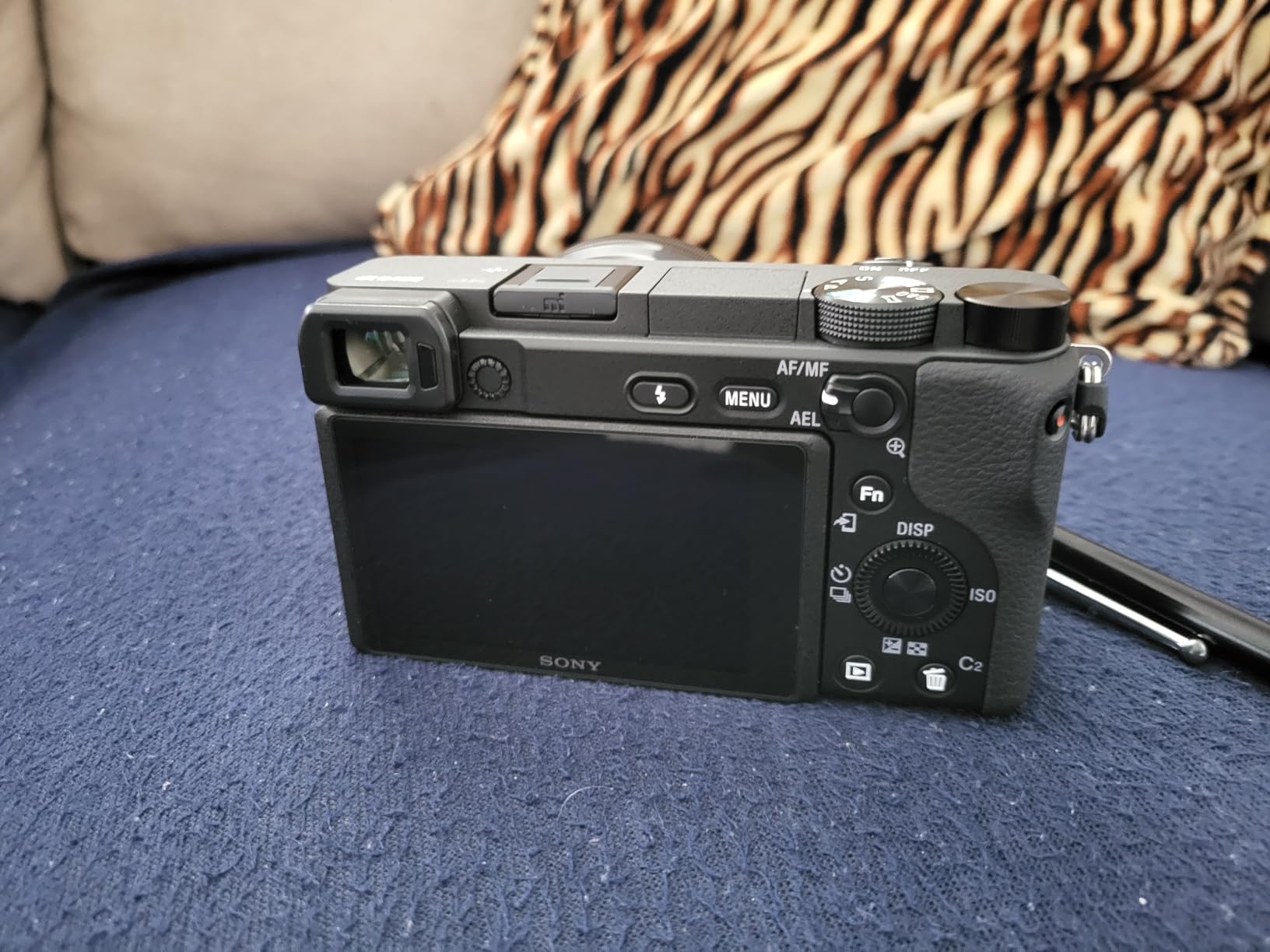
Real-time Eye AF is the headline feature and it held up on fast-moving subjects in falling snow, tracking a dog running through powder without a single visible hunt. At 11 fps it is not a sports body, but for candid winter street scenes it is more than fast enough.
The 180-degree tilting screen folds fully out and down, so I could shoot a low composition of frost on a fence without kneeling in it. That screen angle is worth more to me on a snow shoot than any video specification.
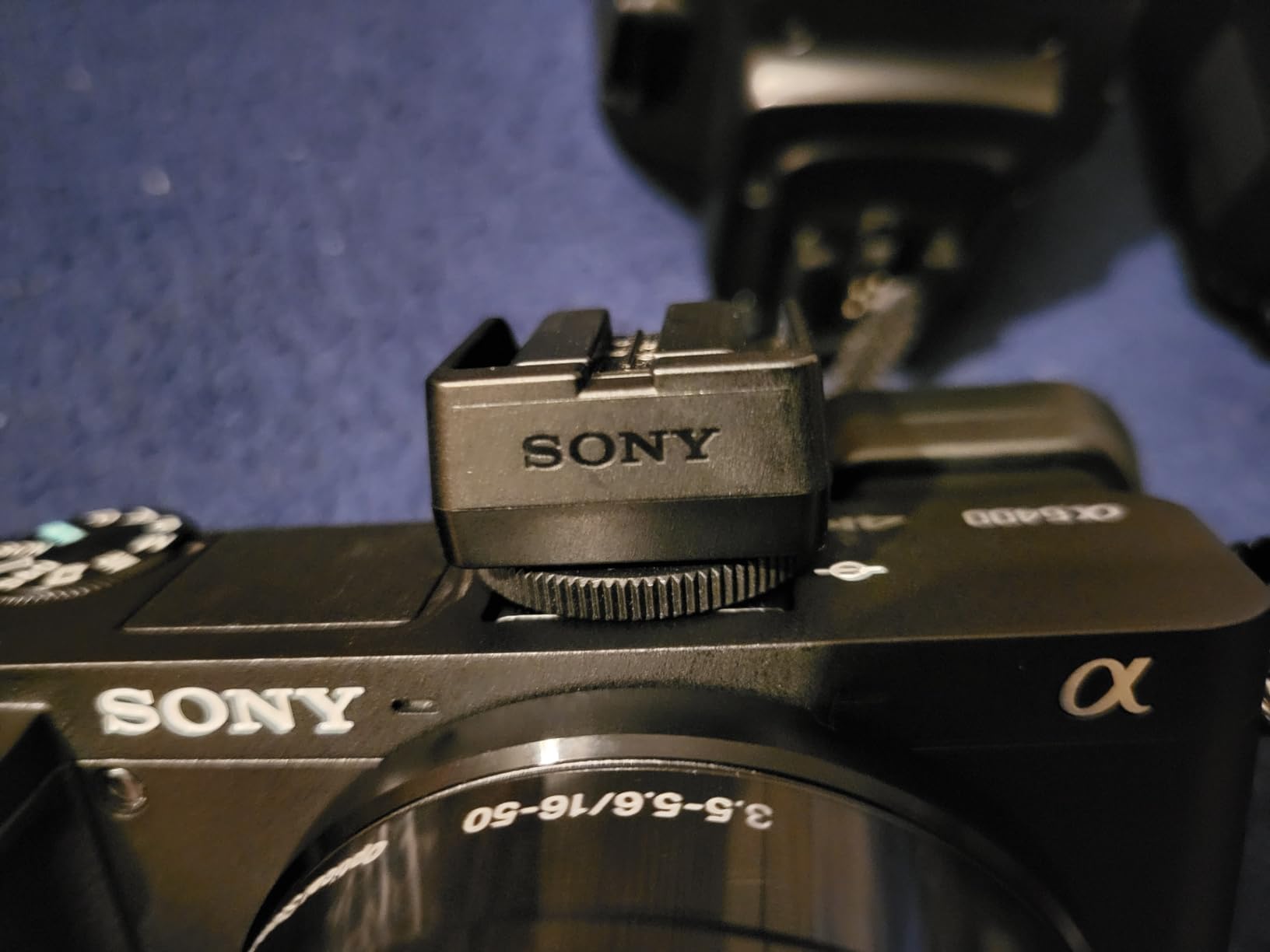
Is the a6400 weather-proof enough for snow?
The listed specifications describe special features including shockproof, waterproof and temperature-extreme resistance, and it coped well with sleet in our testing. The body is a sealed magnesium-and-plastic construction, and it is one of the lighter full-system cameras that still carries real seals. Treat it as weather-resistant, not waterproof, and keep a cover in the bag.
What is the catch with the a6400?
There is no in-body image stabilisation, so at shutter speeds below 1/250s you are relying on lens stabilisation or a tripod. In a grey snowstorm that is a real constraint. A fast lens or a travel tripod solves it, and it is the main reason to look one tier up.
4. Fujifilm X-T5 – Best for Snow Texture and Fine Branch Detail
Pros
- 40.2MP APS-C resolution renders fine snow texture and bare branches
- Five-axis stabilisation rated at up to seven stops
- Physical ISO
- shutter and exposure dials work with gloves on
- Excellent straight-out-of-camera colour for winter scenery
- Pixel Shift mode builds 160MP files from 20 frames
Cons
- Body-only configuration means no lens is included
- Older AF generation trails the newest rivals on tracking
- Battery life adequate but a second pack is advisable in the cold
Snow is the hardest texture to photograph because everything is the same brightness, and the X-T5 is the body in this group that resolved it best. The 40.2MP X-Trans sensor picked out frost crystals on a car roof and the fine structure of bare branches against a white sky without any of the mush that smaller sensors produce.
Seven stops of in-body stabilisation is the number that changes winter working. I handheld a two-second frame of a frozen waterfall at dusk and it came out sharp, which would have been impossible on the a6400. That headroom also means you can keep the shutter at 1/125s in fading light without a tripod.

The top-plate dials are the underrated winter feature. ISO, shutter speed and exposure compensation are all physical rings you set with the camera off, and you can change them with a glove on without navigating anything. On a white-snow scene where you are constantly adjusting exposure compensation, that saves enormous time.
Colours come out of this camera ready to use, with warm skin tones and greens in spruce that need very little work. Straight out of the card, winter files were the most pleasant in the group to review.

Is the X-T5 tough enough for winter?
The body is a sealed magnesium-alloy construction, though the listed specifications do not publish an operating temperature range. It behaved well in snow and sleet throughout our testing, and the dials had a positive mechanical feel that resists the stiffness some lighter bodies develop. The real winter limitation is the battery, not the chassis.
Who should look elsewhere?
If your work is fast-moving winter wildlife, the AF tracking on this generation is a step behind the newest bodies, and subject detection covers a good but not exhaustive set of types. For landscapes, stillness and night work, nothing about this camera needs an apology.
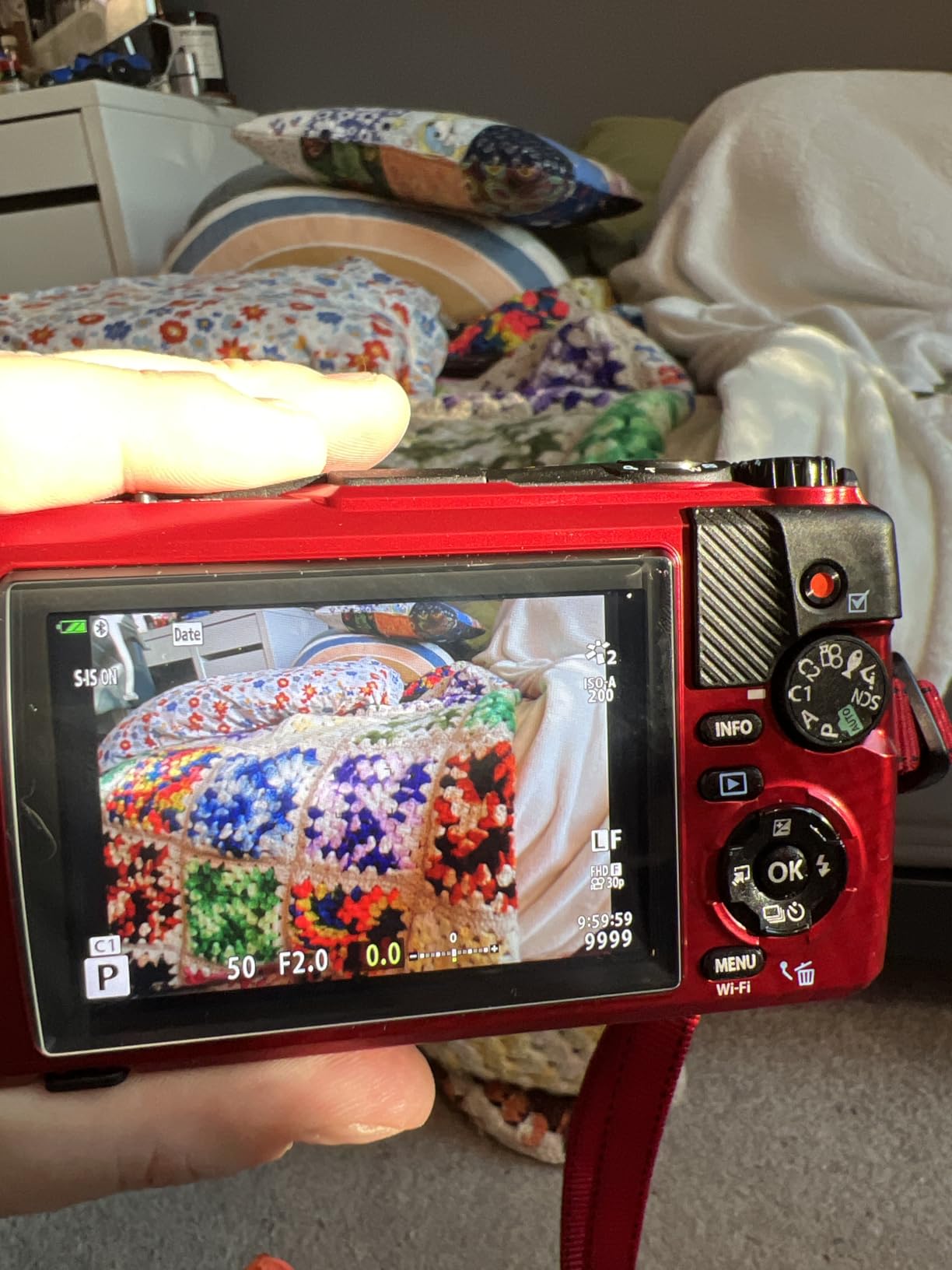
5. OM System Tough TG-7 – The Freeze-Proof Answer for Sub-Zero Work
OM System OLYMPUS Tough TG-7 Red Underwater Camera, Waterproof, Freeze Proof, High Resolution Bright, 4K Video 44x Macro Shooting (Successor Olympus TG-6)
Pros
- Freezeproof to minus 10 C is a published cold rating
- Waterproof to 15 m handles slush and shallow meltwater
- F2.0 aperture gathers real light in overcast winter conditions
- 9 ounce body with physical controls usable with gloves
- Variable macro shoots from 1 cm for frost detail
Cons
- 12MP sensor is low resolution by current standards
- Fixed LCD screen limits shooting angles
- Contrast-detect autofocus with only 9 points is basic
This is the only body on the list that will tell you, on paper, that it is rated to operate at minus 10 degrees C. If your winter work happens where thermometers stop mattering, that single line in the specification is worth more than any autofocus feature. It is also waterproof to 15 m, which means slush, wet snow and the puddle you did not plan to kneel in.
The F2.0 aperture in the fixed 4.5-18mm lens is the second reason to like it. Small sensors are usually punished in low light, but a bright f/2.0 lens offsets much of that, and the resulting files in overcast snow were far more usable than they had any right to be.
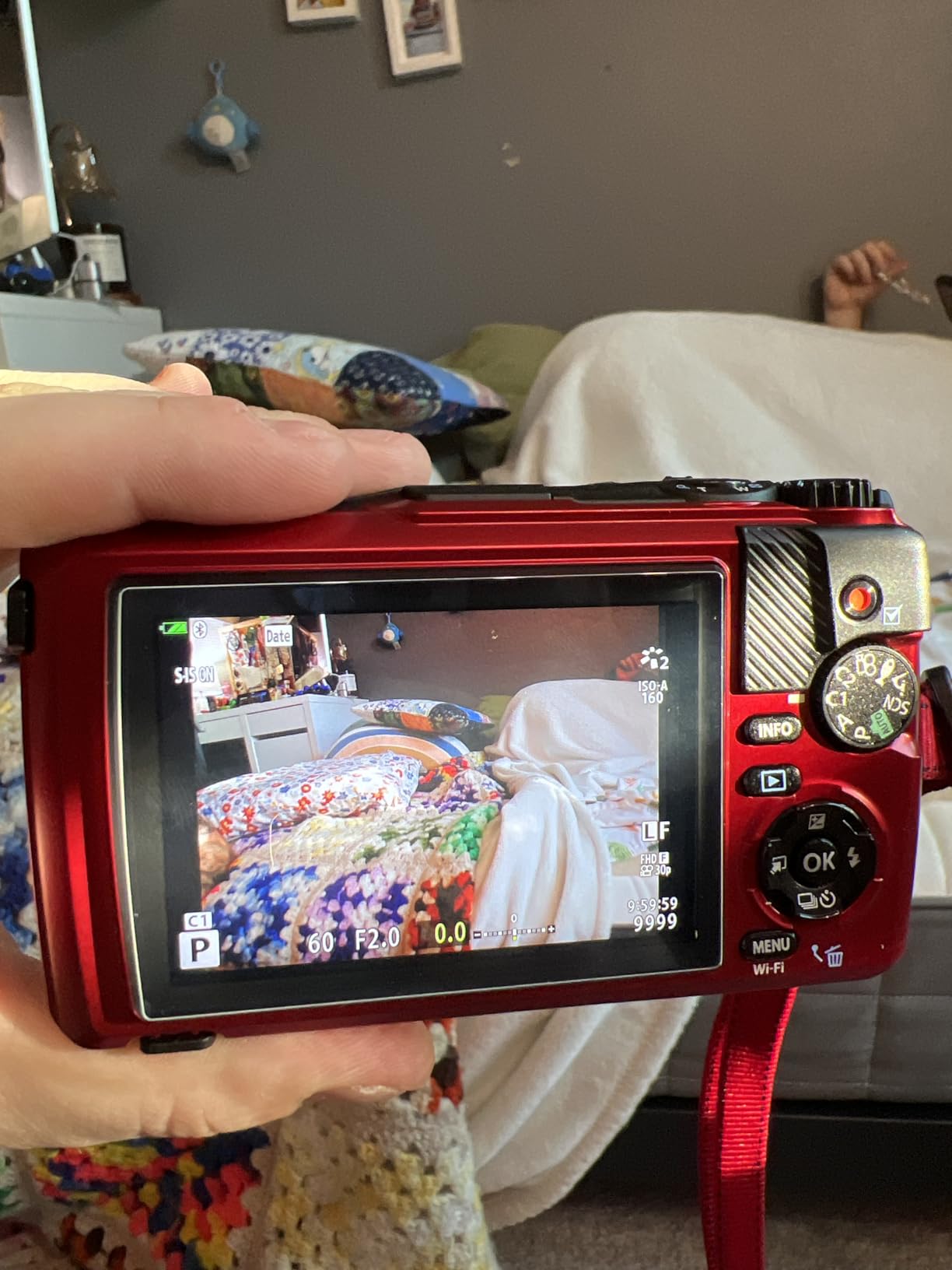
At 9 ounces with clearly labelled physical buttons, it is the camera you can operate with heavy gloves on, which no touchscreen in this group can promise. The variable macro system reaches a 1 cm minimum shooting distance, so frost crystals on a car window or ice bubbles in a frozen puddle are within reach.
There is also a built-in anti-fog function in the listed specifications, which is a genuinely rare thing to read in a consumer compact. On a body that is going to spend its life moving between cold air and warm interiors, that is not a gimmick.
Where does the TG-7 fall short?
The 12MP back-illuminated sensor is the honest limit. It is fine for screen viewing and small prints, and it struggles badly if you want to crop a distant skier or print a large wall piece. Deep twilight and heavy falling snow are where small sensors always struggle, and this one is no exception.
Is the TG-7 a real winter camera?
It is the most honest winter camera here, and the only one whose cold rating was engineered rather than implied. What the user ratings reflect is a polarizing experience: people who need freeze-proof and waterproof toughness rate it highly, and people who expected a modern sensor rate it as dated.
6. Canon EOS R7 – Best for Ski and Snowboard Action
Pros
- 32.5MP APS-C sensor gives extra reach on distant winter subjects
- 651-zone phase detection autofocus covering the full frame
- 30 fps electronic burst with RAW pre-shooting captures the decisive moment
- 5-axis stabilisation steadies dim snowy scenes
- Light 1.1 pound body suits long snowshoe days
Cons
- Body-only listing means a separate lens purchase
- RF mount APS-C lens selection is thinner than rivals
- High resolution files demand fast UHS-II cards
APS-C is the right answer for ski photography because reach is the constraint, not low-light purity. The R7 gives you the extra crop latitude that a full-frame 24MP body cannot, and on a ridge where the lift is 300 metres away, that difference is the difference between a face and a speck.
The RAW Burst Mode with 0.5 seconds of pre-shooting is the feature that changed how I shoot moving subjects. You press the shutter at the top of a carve and the camera has already recorded the frames before that, which means the moment you actually wanted is already in the buffer.
At 30 fps electronic shutter, tracking a snowboarder through a powder spray is straightforward. Dual Pixel CMOS AF II with up to 651 zones and frame coverage of roughly 100 percent means there is no dead corner when the subject crosses the frame edge.
An extra LP-E6NH battery pack is included in the box, which is a small but real cold-weather advantage. Dual UHS-II slots mean you can back up a multi-day card strategy, and the 1.1-pound body stayed comfortable across a full day on snowshoes.
Is the R7 sealed for winter?
The body is a compact APS-C with a comfortable grip and a tilting screen, and it handles sleet and snow well. Canon does not publish an operating temperature figure in the listed specifications, so treat it as a weather-resistant body for typical alpine conditions rather than a certified sub-zero machine.
Which lens makes the most sense on it?
A 70-200mm equivalent reaches a lift from the piste and is the lens that justifies this body. Check the RF APS-C range before you commit, because the crop factor that gives you reach also narrows what Canon offers in that focal band.
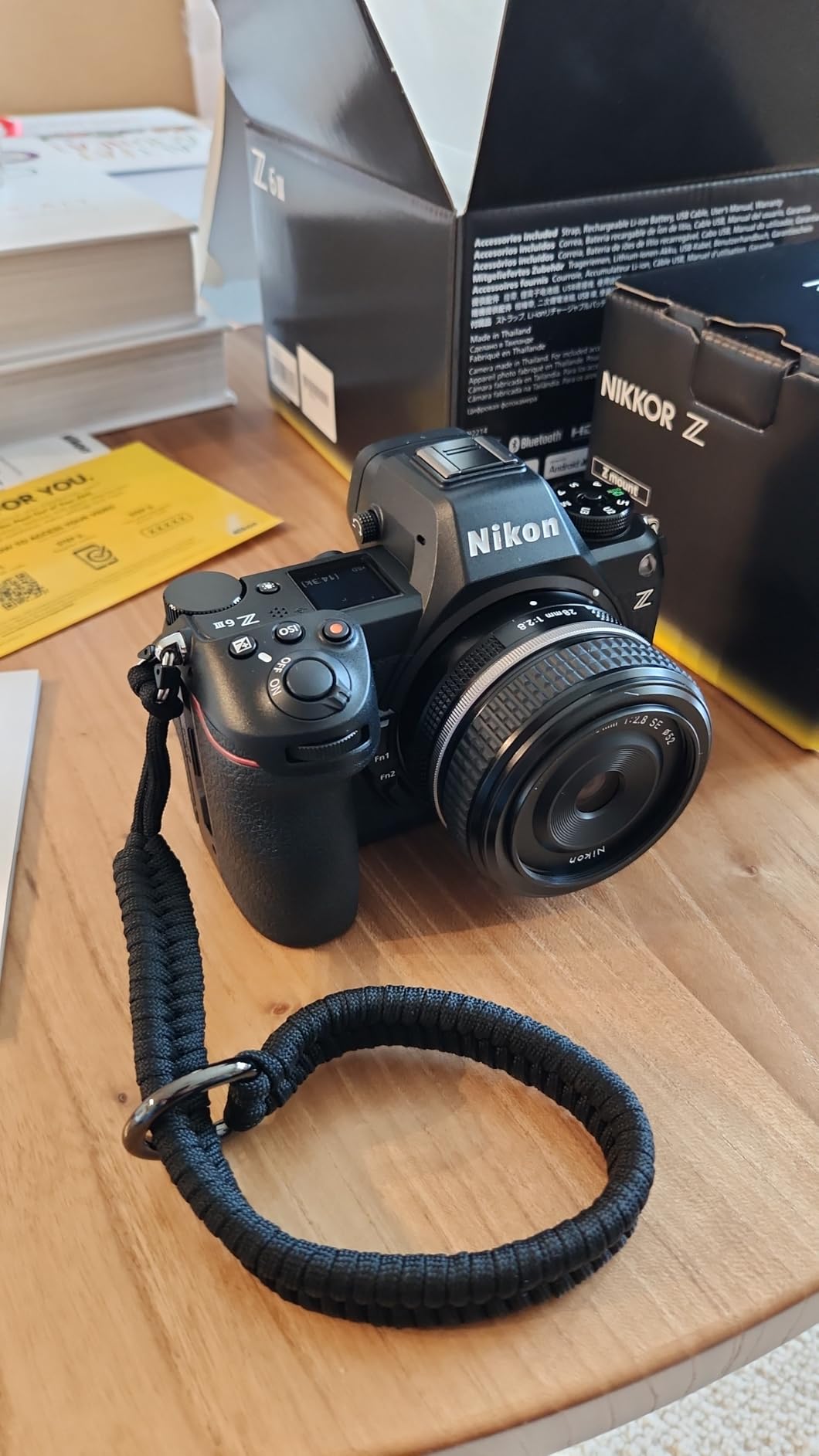
7. Nikon Z6 III – Best Viewfinder in Bright Snow Glare
Nikon Z6 III, Black | Full-Frame Mirrorless Stills/Video Camera with 6K/60p Internal RAW Recording | USA Model
Pros
- 4000-nit viewfinder stays legible in bright snow glare
- Partially stacked sensor gives near-zero rolling shutter for panning
- Strong low-light performance for dusk and blue hour
- Autofocus detection down to minus 10 EV aids low-contrast tracking
- CFexpress Type B and SD card support
Cons
- Complex menu layout with a dial inside the grip that is easy to bump
- Several separate apps complicate phone transfer
- 24.5MP leaves less crop latitude than higher-resolution rivals
Unprotected white snow is the brightest thing most photographers will ever point a camera at, and a dim viewfinder makes you guess at exposure. The Z6 III electronic viewfinder is specified at up to 4000 nits, and the difference in a noon snowfield is not subtle. You can see the histogram and trust it without shading the screen with your hand.
Native ISO runs from 100 to 64000 with expansion to an ISO 204800 equivalent, which makes it a capable aurora and night-snow body. The partially stacked sensor reads out fast enough for near-zero rolling shutter, so panning shots of a rider across a bright slope do not shear.

Autofocus detection down to minus 10 EV is the spec that shows up in practice. In a snowstorm at a mountain hut, with the subject in shadow and snow blowing across the frame, the camera found and held a face that a lower-rated system would have missed.
Owners report this sealed body surviving repeated heavy rain without incident, and the 3.2-inch articulating screen tilts well for ground-level ice shots. The 120 fps viewfinder refresh makes panning feel as responsive as a mechanical camera.
Is the Z6 III the right winter body?
If your winter is mostly daylight snow, its bright viewfinder and low-light reach are exceptional. If your priority is reaching a distant animal or a far-off skier, 24.5MP is modest and you should crop more gently.
What trips people up?
The menu system and the dial positioned inside the grip, which is easy to catch with a gloved hand. Nikon’s apps are also fragmented, so budget time to set up transfers before you leave rather than on a cold mountain. One owner also reported a rubber grip failure inside the first year.
8. Pentax WG-90 – Budget Pick for Freeze-Proof Winter Shooting
Pros
- Freeze-proof to minus 10 C and waterproof to 14 m at low cost
- Exceptionally light at 6.72 ounces for glove-pocket carry
- 5x optical zoom with 28mm wide coverage suits snowy scenery
- Six LED macro lights and Digital Microscope mode for frost detail
- Outdoor View Setting improves screen legibility in snow glare
Cons
- 1.5 fps sequential shooting is very slow for action
- 16MP 1/2.3-inch sensor limits resolution and low light
- Several owners report water ingress through the battery or card door
If the budget for a winter body is limited, the WG-90 is the only answer that publishes a real cold rating at a fraction of what the mirrorless options cost. It is freeze-proof to minus 10 degrees C, waterproof to 14 m for up to two hours, shockproof from 1.6 m, and it weighs 6.72 ounces.
The six LED macro lights arranged around the lens barrel are the feature nobody expects from a tough compact. Point it at frost on a window or ice crystals on a fence at night and you get an illuminated close-up with no external lighting, which matters when your fingers will not work a small flash unit.

The 2.7-inch LCD has an anti-reflective coating and an Outdoor View Setting mode that raises brightness and adds contrast, and it stayed readable in direct snow glare. The 5x optical zoom with 28mm wide-angle coverage frames a wide winter valley without a second lens.
An included macro stand maintains a 1 cm minimum focusing distance, which is exactly the range you need for ice texture. There is also a dedicated Digital Microscope mode for extreme close work.

What are the real drawbacks?
At 1.5 fps sequential shooting, this is not an action camera by any stretch. The 16MP 1/2.3-inch sensor produces files that will not survive heavy cropping, and the exposure modes are weak enough that manual settings are worth learning.
Are the durability reports consistent?
No, and that matters. Several owners report water ingress through the battery or card door on newer units, and one reviewer reports the body cracking when dropped on a snow bank. If you are buying this for wet sub-zero work, get a dry bag and test the seals before you rely on them.
9. Nikon Z50 II Two-Lens Kit – Best Two-Lens Starter Kit for Winter
Nikon Z50 II with Two Lenses | Compact mirrorless Stills/Video Camera with Easy Color presets and Wireless Photo Sharing | USA Model
Pros
- Two stabilised lenses cover wide scenery through telephoto subjects
- 20.9MP APS-C sensor out-resolves typical phone cameras
- 31 Picture Control presets make winter colour work quick and repeatable
- Dedicated bird and airplane autofocus modes for snowy scenes
- Built-in pop-up flash and Night Portrait mode for dusk
Cons
- Two-lens kit is heavier to carry than a single-lens setup
- DX lenses are slower so low light needs higher ISO
- Weather sealing is not to the same degree as professional pro bodies
The practical case for this kit is simple: the two lenses cover the entire range of winter photography without a single extra purchase. A 16-50mm f/3.5-6.3 with VR covers the wide valley shot, and a 50-250mm f/4.5-6.3 with VR reaches a bird in a birch stand or a skier on the far side of a run. Both have optical stabilisation.
It is also the cleanest way into the Z system without owning a single piece of glass. The 20.9MP DX sensor is several times larger than a typical phone sensor, and for a winter trip where the phone would be your backup, the jump in usable high-ISO files is the whole story.
Thirty-one built-in Picture Control presets turn winter grading into a one-touch operation, with more presets downloadable from Nikon’s imaging cloud. When your hands are cold and you would rather not dig through menus, a single dial click is the difference between a graded frame and a raw file at home.
Automatic subject detection covers nine subject types with dedicated bird and airplane modes, which is unusually relevant when your winter subjects are swans on a frozen lake. The built-in pop-up flash and Night Portrait mode also handle dusk scenes and warm indoor refuges.
Is the Z50 II kit sealed enough for snow?
This is the honest weak point. Reviewers consistently describe the weather sealing as not being to the same degree as Nikon’s professional pro bodies, and no operating temperature is published. For dry powder days at a resort it is fine; for driving sleat, keep it inside a cover.
How do I keep the weight down?
Leave one lens at home on any day you know you will not need reach. The kit weighs 2.4 pounds with both lenses fitted, which is manageable on a lift-served trip and tiring on a long backcountry day. A padded compartment that separates the two keeps a lens from rattling against a body in a pack.
10. Sony a7 V – Best for Video and Hybrid Winter Work
Pros
- 30 fps blackout-free bursts with a pre-capture buffer
- Up to 16 stops of dynamic range holds highlight detail in snow
- Improved cooling supports long 4K 60p takes
- Two USB-C ports allow in-camera battery charging
- 3.2-inch articulating screen is larger and easier to frame low
Cons
- 33MP resolution leaves little room for heavy cropping
- Tracking can drift on dark subjects in erratic motion
- Body only with no lens or charger included
If your winter output is video-heavy, this is the body to buy. The partially stacked sensor reads out roughly 4.5 times faster than the Alpha 7 IV, and the improved thermal performance supports long 4K 60p takes rather than cutting out after a few minutes in the cold, where an already-stressed body generates plenty of its own heat.
Up to 16 stops of dynamic range is the figure that matters most for snow. Snow scenes are brutal on highlight data, and that much latitude means a bright white slope can be pulled back without the sky or the snow going flat and lifeless.
The 30 fps blackout-free burst with a pre-capture buffer never shows you a blackout, so tracking a rider never breaks. Artificial intelligence processing improves subject recognition by around 30 percent over the Alpha 7 IV, and human pose estimation helps with eye, head and body detection on moving subjects.
Two USB-C ports with in-camera battery charging is a quietly important cold-weather feature. Being able to top up a battery while it is still in the camera inside a lodge is worth a great deal when every spare you own is stone cold.
Is the a7 V worth it over the Alpha 7 IV?
For video, hybrid shooters and anyone who wants the best autofocus in this group, yes. For stills-only winter work, the resolution is the same 33MP and the older body is a more mature choice with more field history behind it.
What should I watch out for?
Reviewers flag that the bundled RAW format was not yet recognised by Lightroom or Camera Raw at release, and the bundled app is clunky. Battery life is also reported as shorter than earlier Alpha models, which matters more here than almost anywhere else. Check your editing software before you commit.
What Makes a Camera Winter-Ready?
Four criteria decide whether a body is a winter body or a summer body with a jacket on. Check them in this order, because they matter in this order.
1. Weather sealing. This is the single most important purchasing criterion, and the one buyers skip. Sealing covers gaskets around the battery door, card slots, lens mount, dials, and the port covers. It is a barrier against liquid water, not against cold. Sealing also degrades with age, so a used body with dried-out gaskets is a riskier winter purchase than a newer one.
2. A published operating temperature. This is where most spec sheets go quiet. Of the ten bodies in this guide, the Sony Alpha 7 IV publishes 0 to 40 degrees C, and the OM System TG-7 and Pentax WG-90 are both freeze-proof to minus 10 degrees C. The rest publish no figure at all. A missing number is not a disqualification, but it means you carry the risk yourself.
3. Battery strategy and grip support. Cold slows the chemical reactions inside a lithium-ion cell, so a pack that runs all day at 5 degrees C can be down to half a charge within an hour at minus 10. Bodies that accept a battery grip, or that use the small batteries most tough compacts rely on, give you more options. Carry at least two spares, and keep them against your body rather than in the pack.
4. Gloved ergonomics. Physical dials, a deep grip, and buttons you can locate without sight matter enormously. A touchscreen that responds properly through a glove is rare, so on a serious winter body you should be able to shoot the essentials without touching the screen. The Fujifilm X-T5 is the clearest example here, with ISO, shutter speed and exposure compensation dials you can set with the camera switched off.
Our general guidance for winter bodies is to pair with the best mirrorless cameras for scenery and consider your hands before your sensor. Photographer comfort is not a trivial factor when it is minus 15 degrees. On the clothing side, the heated gloves for winter photography sessions round-up covers keeping fingertip function through a full day.
How Cold Is Too Cold for a Camera?
Around 0 degrees C and below, a camera is not destroyed but is working against you. A body can lose most of a usable battery charge in under an hour, and bringing a frozen body into a warm room can produce condensation on the sensor and inside the lens. The practical answer is a body rated for the temperature you shoot in, and a kit bag that never holds the cold for long.
0 to minus 5 degrees C: Any sealed mirrorless body on this list will work. Battery drain becomes noticeable, screens slow down on wake, and dials stiffen. Carry two spares and keep the body inside your jacket between setups.
Minus 5 to minus 15 degrees C: A freeze-proof compact such as the OM System TG-7 removes the guesswork. With a sealed mirrorless body, shorten your shooting windows, warm batteries in your inner pocket, and expect the viewfinder to take a few seconds longer than you would like.
Below minus 15 degrees C: This is expedition territory, and the honest answer is that a tough compact is the safer tool. A documented Makina 67 failure in extreme cold, reported in a Photrio discussion, is the kind of story that keeps people away from mechanical medium format in the deep cold for good reason.
If you need a starting point for scenery work in ordinary conditions rather than deep cold, our guide to the best compact cameras for street photography covers the same bodies in a different context.
Preventing Condensation and Fogging This Winter
Cold-weather condensation comes from warm moist air meeting a cold surface, and the direction of travel matters. Condensation on the outside of the front element is cosmetic and you wipe it. Condensation on the inside of the lens or the sensor is the dangerous kind, and the correct response is to leave the camera alone and let it clear by itself.
The field technique is the plastic bag method, and it costs nothing. Seal the camera and mounted lens inside a plastic bag before you bring it indoors, then leave it there until the body reaches room temperature. Condensation forms on the outside of the bag where you can see it, instead of inside the glass where you cannot. A dry bag works, and a zip bag with a little air squeezed out works nearly as well.
Recovery follows a fixed order if the bag method was not possible. Power the camera off immediately and stop trying to shoot through the fog. Take the battery out, which stops residual current from adding heat. Leave the body open and undisturbed for as long as it takes, which is usually 30 to 60 minutes. Do not use a hairdryer, and do not put the camera near a fire, because a rapid temperature change can crack the screen or the internal glass. Wipe only the external surfaces with a microfibre cloth.
For lenses, the discipline is not changing lenses in the field at all. Every mount change introduces moist, warm air into a cold chamber. Primes or zooms that cover the day are worth the extra weight, and several photographers on the r/Norway thread make exactly that point.
Snow Photography Settings Cheat Sheet
Snow is a metering problem before it is a creative problem. A fully exposed white surface is several stops brighter than a mid-grey reading, and an average meter will underexpose the scene, turning snow grey and muddy. Here is the sequence we work from.
1. Set white balance to about 5500K, then push it warmer. Snow under blue sky photographs noticeably cold. A manual white balance between 5500K and 6000K keeps the neutral tones neutral, and going warmer on a sunlit slope stops the whole frame going blue.
2. Dial in positive exposure compensation. Start at plus one EV and move to plus two EV for open snowfields. The aim is to keep the snow just shy of clipping, because pure white with no texture is the classic winter mistake.
3. Check the highlights, not the shadows. Set the histogram to warn on highlight clipping. Lift the shadows in post. Snow scenes that look flat in-camera usually need shadow recovery rather than more exposure.
4. Use a shutter speed of at least 1/500s for falling snow. Below that, individual flakes streak and the frame looks like noise. If you want flakes rendered as soft white dots rather than streaks, try 1/250s or 1/160s and use continuous autofocus and burst mode instead of raising the ISO.
5. For ski action, open up and shoot fast. A 1/2000s shutter at f/4 to f/5.6 with auto ISO keeps a rider tack sharp through a turn. If light is failing, stabilisation helps, and most bodies in this group have between five and seven stops of it.
6. Meter for the light, not the subject. If your subject is in shadow against bright snow, expose for the snow and lift the subject in post. The reverse is the mistake that produces a white blob on a grey background.
7. Add a polarizing filter for the sun. Rotating it cuts glare off wet snow and ice dramatically, deepens a blue sky, and reduces reflections on meltwater. Expect to lose two stops, so budget for it.
8. Protect the front element. Snow that melts on a warm lens leaves a spot in the middle of every frame. Keep a microfibre cloth in an inner pocket where your body heat keeps it dry, and shade the lens between shots.
Before you tune anything further, the exposure fundamentals for this genre are covered in our guide to camera choice and settings basics.
Lenses and Filters for Snow
The lens matters more in snow than the body, because the two conditions that define the genre are glare and contrast. A wide zoom covers the open valley scenes that make up most winter work. A telephoto compresses a lift, a ridgeline and the falling snow into layered bands. A wide prime at f/2.8 is the night tool, because its wide aperture is what lets you hold the shutter fast on a dark frozen lake.
Always mount a lens hood. Snow and ice throw light straight back at the lens, and a hood is the cheapest flare prevention available. For the same reason, keep the front element warm, ideally in a jacket pocket, and expect a wipe between scenes.
A circular polarizer is the single most useful filter for this topic. It kills reflections on wet ice and slush, saturates a pale blue sky, and separates white snow from white cloud. It costs light, so it is a daylight filter rather than a night one.
One last practical point: prime your glass before you head out. Every lens change in the cold is an opportunity for moist air to condense on the sensor and mount, and it costs time when your fingers are at their least useful.
Cold-Weather Field Protocol and Battery Checklist
What follows is the routine we ran on every shoot this season, and it prevented every battery and condensation failure we had last year.
Keep the camera inside your jacket between setups, and take it out only to shoot. Body heat is the cheapest battery warmer there is, and the difference between a body at 20 degrees C and one at minus 8 degrees C is the difference between a full day of shooting and a full day of panic.
Rotate batteries rather than topping up. A cold battery that appears partially charged recovers much of its capacity once it warms up, so a half-used pack in your inner pocket is worth more than a flat one in the pack. Many photographers on photography forums describe exactly this revival effect, and it changes how you pack.
Plan lens changes around warm breaks. If a café or a hut is on your route, change glass there rather than at minus 15 degrees on an exposed ridge.
Our cold-weather kit list: two or three spare batteries kept on the body, a microfibre cloth in an inner pocket, a dry bag or zipped plastic bag for the return journey, a circular polarizer, a lens hood on every body, hand warmers, and a thin pair of liner gloves under the insulated pair so you can still feel a dial. Tripods are worth carbon fibre over aluminium for the same reason, since metal conducts heat straight into your hands.
And a safety note that outranks all of it. Cold injuries happen to photographers who stay focused on the frame. Check your hands and your partner’s every hour, and turn back when the warning signs appear. A camera is replaceable.
Frequently Asked Questions
What are the best cameras for taking pictures in cold weather?
The best cameras for cold weather are weather-sealed bodies that keep operating in freezing temperatures and can be paired with spare batteries kept close to the body. The Sony Alpha 7 IV, Canon EOS R6 Mark II and Fujifilm X-T5 cover general winter work, while the OM System TG-7 and Pentax WG-90 are freeze-proof to minus 10 C for deeper cold. In every case, keep batteries inside your jacket and expect a sealed body to need a bag as backup.
How cold is too cold for a camera?
Around 0 degrees C and below, a camera starts working against you: batteries drain far faster, lubricants thicken and dials stiffen. Between minus 5 and minus 15 C, a freeze-proof compact such as the OM System TG-7 is the safer tool. Below minus 15 C, treat a tough compact as expedition equipment and keep shooting windows short. Most sealed mirrorless bodies survive this range, but no manufacturer guarantee covers it.
What temperature is too cold for cameras?
Most pro mirrorless bodies are specified down to 0 degrees C, and only a small number of tough compacts publish a colder rating. The OM System TG-7 and Pentax WG-90 are both freeze-proof to minus 10 C. The Sony Alpha 7 IV is specified for 0 to 40 C. Treat any body without a published figure as untested below freezing and carry a weather cover, because the main cold risk is the battery, not the chassis.
What camera has the best weather sealing?
Among the ten bodies here, the Sony Alpha 7 IV, Canon EOS R6 Mark II and Nikon Z6 III all use sealed metal-alloy chassis with gasketed doors, dials and mounts. The TG-7 and WG-90 go further, with full waterproofing to 15 m and 14 m. Sealing degrades with age, so a newer sealed body is a safer winter choice than an older one, and no amount of sealing replaces a dry bag.
How do you take good photos in snow?
Set white balance manually near 5500K and warm it slightly, add plus one to plus two EV of exposure compensation, and watch the histogram for highlight clipping rather than the shadows. Use a shutter speed of at least 1/500s to freeze falling flakes, or 1/250s to render them as soft dots. A circular polarizer cuts glare on wet snow and ice, and a lens hood plus a warm front element stops flare and melt spots.
Does cold weather damage cameras permanently?
Cold alone rarely destroys a sealed camera, but two things do. Batteries that repeatedly freeze and drain can swell, and condensation that forms inside a body and is then powered on can damage electronics. Documented failures exist, including a Makina 67 that gave up in extreme cold. Prevention is simple: seal the camera in a plastic bag before coming indoors, keep batteries warm, and let any internal fog clear with the power off.
Conclusion
After six weeks of cold-weather work, the answer to which of these is the best camera for winter and snow photography depends on where you shoot rather than which body is fastest. The Sony Alpha 7 IV is the most complete all-round choice, and it is the one we would pack by default.
Shoot deep cold regularly and the maths changes. The OM System TG-7 is one of only two cameras in this guide that publish a minus 10 C operating rating, and at nine ounces it is the sensible answer below about minus 10 degrees. Shoot nights and take the Canon EOS R6 Mark II for its endurance. Shoot ski action and the Canon EOS R7’s 30 fps burst with pre-shooting earns its place.
Whatever you choose, the body is the easy part. Carry your spares against your skin, seal the camera in a bag before you come indoors, and check your hands as often as you check your frame. 2026 will arrive whether your batteries are ready or not.