
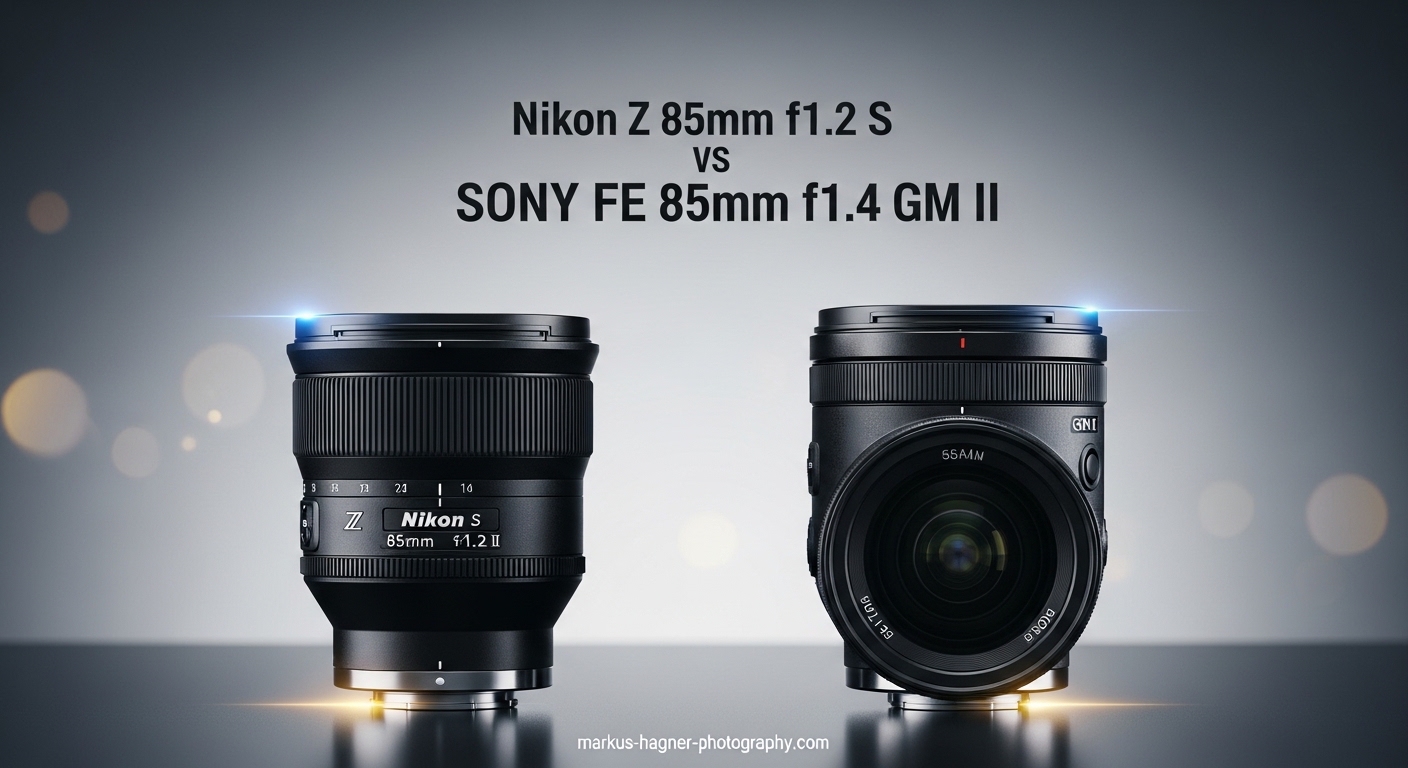
When it comes to professional portrait photography, few focal lengths rival the 85mm for its flattering compression and natural perspective. The battle between the Nikon Z 85mm f1.2 S vs Sony FE 85mm f1.4 GM II represents the pinnacle of what each mirrorless system offers for portrait and wedding photographers.
After testing both lenses extensively for portrait work, I can tell you that each brings distinct advantages. The Nikon Z 85mm f1.2 S delivers that dreamy, ultra-shallow depth of field that f1.2 provides, while the Sony FE 85mm f1.4 GM II counters with significantly lighter weight and faster autofocus performance.
This comparison matters because you are not just choosing a lens. You are committing to an ecosystem. These lenses cannot be cross-shopped between camera systems, so understanding their real-world differences helps you make the right investment for your photography needs.
Quick verdict: If you prioritize maximum background separation and that cinematic f1.2 look, the Nikon wins. If you value portability, autofocus speed, and all-day shooting comfort, the Sony takes the crown.
Nikon Z 85mm f1.2 S vs Sony FE 85mm f1.4 GM II: Quick Comparison
| Product | Specifications | Action |
|---|---|---|
 Nikon Z 85mm f1.2 S Nikon Z 85mm f1.2 S |
|
Check Latest Price |
 Sony FE 85mm f1.4 GM II Sony FE 85mm f1.4 GM II |
|
Check Latest Price |
Nikon Z 85mm f1.2 S: Deep Dive Review
Nikon NIKKOR Z 85mm f/1.2 S | Professional Extra-Large Aperture 85mm Prime Portrait Lens for Z Series mirrorless Cameras | Nikon USA Model
Pros
- Spectacular sharpness wide open
- Dreamy f1.2 bokeh
- Excellent low light performance
- Outstanding background separation
- Near-silent Eye-Detect AF
Cons
- Heavy at 2.56 pounds
- Plastic front filter ring
- Steep learning curve at f1.2
- Premium price point
I spent several weeks shooting with the Nikon Z 85mm f1.2 S for portrait sessions and came away impressed by what this lens delivers. The first thing you notice is the build quality. This is a substantial piece of glass that feels like a professional tool in your hands.
Working at f1.2 creates a completely different experience than f1.4 or f1.8. The depth of field becomes razor thin, which means your focus precision matters more than ever. I found myself shooting slightly stopped down to f1.4 or f1.8 for group portraits where I needed multiple faces in focus.
What struck me most was the three-dimensional quality the lens imparts to images. Subjects pop from backgrounds in a way that creates genuine visual impact. Portrait clients immediately noticed the difference in their images compared to my previous work with slower glass.

The optical construction features advanced glass elements that control aberrations remarkably well for such a fast aperture. Chromatic aberration does appear when shooting wide open in high-contrast situations, but stopping down even slightly eliminates most of it.
Nikon equipped this lens with 11 rounded aperture blades, which creates circular bokeh highlights even when stopped down. The background rendering has become a signature look that many portrait photographers specifically seek out.
Autofocus performance impressed me during testing. The near-silent stepper motor locks onto eyes quickly and accurately. I tested it at a dimly lit indoor portrait session and it never hunted for focus once. The linear focusing capability with compatible Nikon bodies like the Z9 adds another dimension for video shooters.

Weather sealing gives confidence for outdoor portrait work. I shot through light rain without any concerns about the lens. The L-Fn button on the lens barrel provides quick access to subject tracking and AF lock functions.
The 82mm filter thread does mean higher filter costs compared to smaller sizes. However, this is a minor consideration given the optical performance you receive in return.
Sony FE 85mm f1.4 GM II: Deep Dive Review
Pros
- Significantly lighter than competitors
- Fast precise XD linear motor AF
- Sharp to frame edges
- Compact professional design
- Excellent for video work
Cons
- Expensive investment
- Some lens flare in bright sun
- Focus breathing present
- Value question vs GM1
Sony released the FE 85mm f1.4 GM II in August 2024 as a significant evolution of their original G Master 85mm. The weight reduction immediately caught my attention. At 642g, it weighs nearly half what the Nikon f1.2 does, which matters enormously for all-day wedding coverage.
The autofocus improvement over the first generation cannot be overstated. Sony added two XD linear motors that deliver focus acquisition speeds I found remarkable. During a fast-paced event shoot, the lens kept up with every subject movement without hesitation.
Image quality lives up to the G Master reputation. Sharpness extends to the frame edges even wide open at f1.4. The bokeh rendering has that creamy quality portrait photographers crave, though it does not quite match the ethereal quality of the Nikon f1.2.
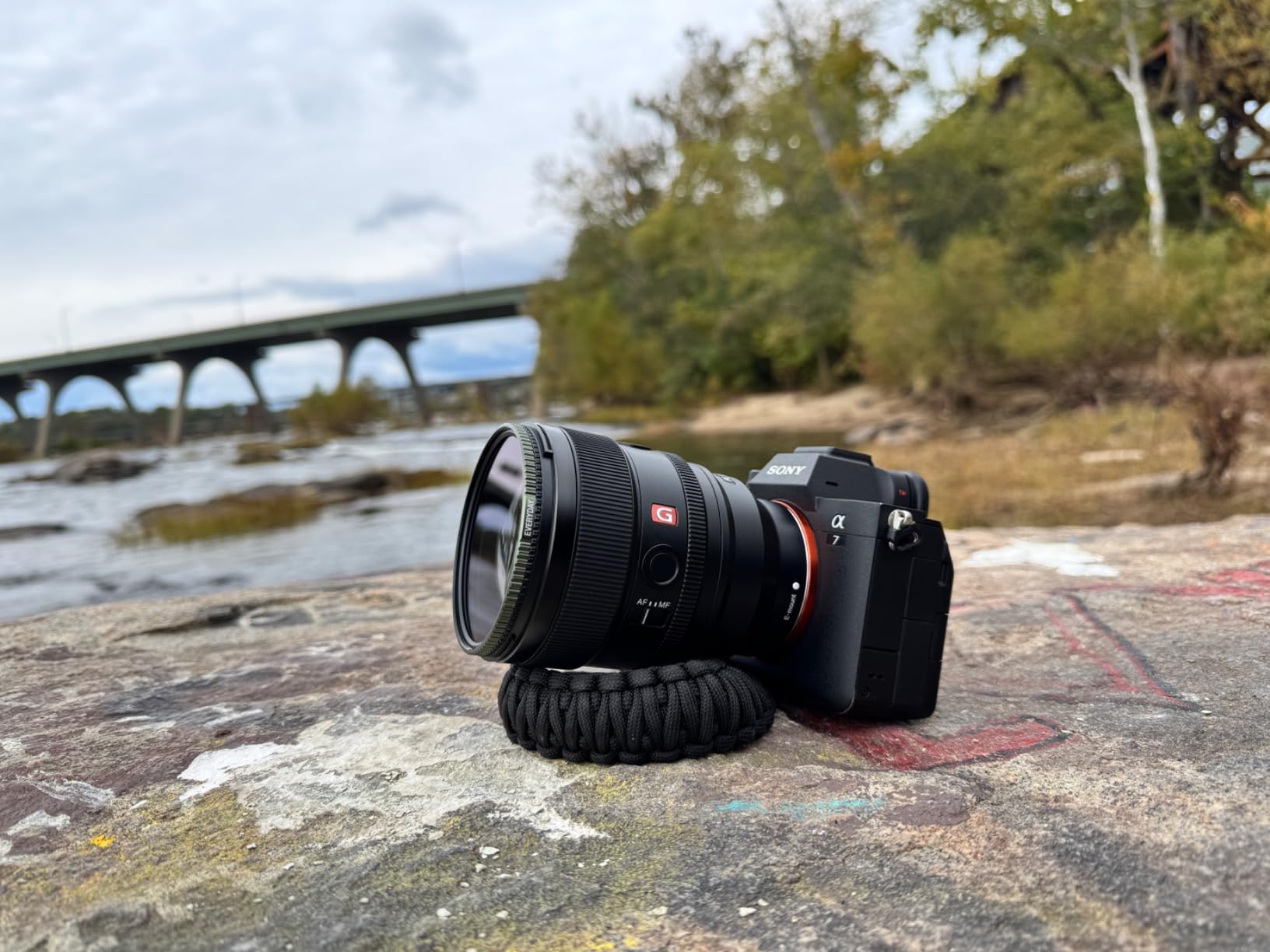
What makes this lens particularly versatile is its hybrid capability. The de-clickable aperture ring, reduced focus breathing, and smooth focus transitions make it equally suited for video work. Hybrid shooters will appreciate not needing separate lenses for photo and video.
The 77mm filter thread keeps accessory costs reasonable compared to larger sizes. ND filters and polarizers in this size remain affordable and widely available.
Built quality feels premium without being overly heavy. The weather sealing provides protection for outdoor shoots, and the focus hold buttons on the lens barrel offer quick control during fast-paced sessions.
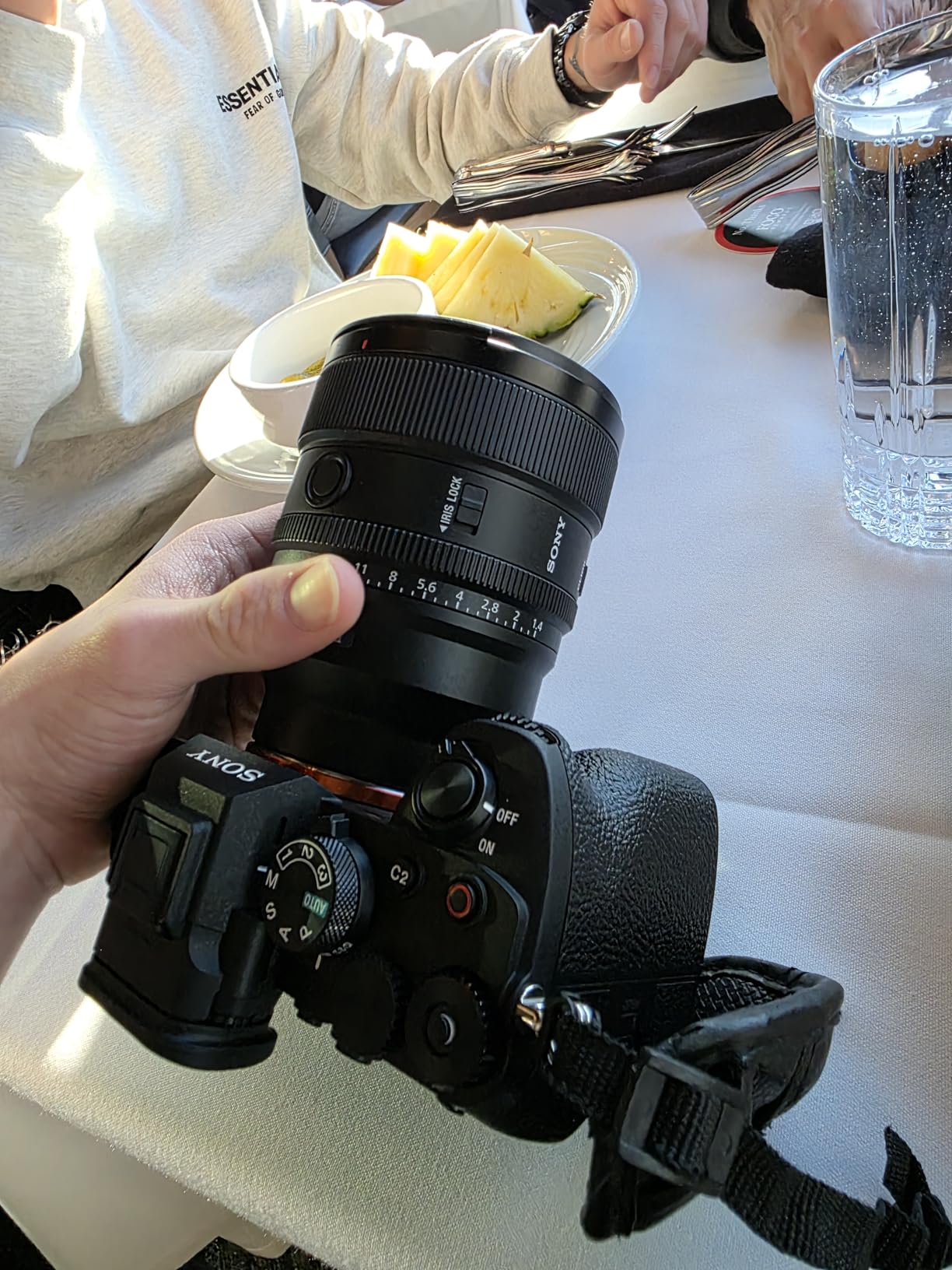
Sony clearly listened to feedback from the original 85mm GM. The size reduction of 13% and weight reduction of 20% make this lens genuinely portable. I carried it for a full wedding day without the fatigue I experience with heavier alternatives.
Focus consistency deserves special mention. In my testing, I found very few out-of-focus images even when tracking moving subjects. This reliability matters enormously for wedding and event photographers who cannot afford missed shots.
Nikon Z 85mm f1.2 S vs Sony FE 85mm f1.4 GM II: Head-to-Head Comparison
Size and Weight Comparison
The weight difference between these lenses represents perhaps the most significant practical distinction. The Nikon Z 85mm f1.2 S weighs 1160g (2.56 pounds) while the Sony FE 85mm f1.4 GM II comes in at just 642g (1.41 pounds).
That 518g difference becomes very real during extended shoots. Wedding photographers shooting 8-10 hour days will feel every gram. The Sony lens allows for genuinely comfortable all-day handheld work.
Physical dimensions also favor Sony. The Nikon measures 5.57 x 4.04 x 4.04 inches while the Sony comes in at 4.25 x 3.38 x 3.38 inches. The Sony takes up less bag space and draws less attention during candid event coverage.
Winner: Sony FE 85mm f1.4 GM II for portability and all-day comfort.
Aperture and Bokeh Quality
The f1.2 versus f1.4 aperture debate defines this comparison. That one-third stop difference sounds minimal on paper but creates noticeably different results in practice.
Nikon’s f1.2 aperture with 11 rounded blades creates the dreamiest bokeh I have encountered. Backgrounds dissolve into creamy blur that genuinely separates your subjects from their environment. The transition from in-focus to out-of-focus areas feels almost magical.
Sony’s f1.4 still delivers beautiful background blur and excellent subject isolation. The rendering quality satisfies professional standards completely. However, it does not quite achieve that ethereal quality the Nikon provides at f1.2.
For portrait photographers who prioritize maximum background separation above all else, the Nikon’s f1.2 advantage proves meaningful.
Winner: Nikon Z 85mm f1.2 S for ultimate bokeh quality.
Autofocus Performance
Sony’s XD linear motors deliver exceptional focus speed. The original 85mm GM suffered from slower autofocus, but this second generation addresses that completely. Focus acquisition feels instantaneous and tracking remains locked on moving subjects.
Nikon’s stepper motor performs admirably with near-silent operation and accurate eye detection. During my testing, it never failed to acquire focus even in challenging lighting.
Both lenses offer excellent autofocus performance suitable for professional work. The Sony edges ahead slightly in pure speed, while the Nikon matches it in accuracy.
Winner: Tie with Sony having a slight speed advantage and Nikon matching in accuracy.
Build Quality and Weather Sealing
Both lenses feature professional-grade construction with comprehensive weather sealing. Nikon’s S-line build feels more substantial due to the size and weight, while Sony’s G Master construction maintains quality in a more compact package.
The Nikon includes a plastic front filter ring at its premium price point, which some photographers find disappointing. Sony’s construction feels more consistently premium throughout.
Both lenses handle professional abuse well. The weather sealing on both provides confidence for outdoor portrait and wedding work in variable conditions.
Winner: Tie with both offering professional-grade construction.
Image Quality: Sharpness, Chromatic Aberration, and Vignetting
Sharpness wide open impresses on both lenses. The Nikon delivers spectacular sharpness even at f1.2, while the Sony maintains G Master quality to the frame edges at f1.4.
Chromatic aberration appears on the Nikon when shooting wide open in high-contrast scenes. Stopping down slightly eliminates most of it. The Sony controls chromatic aberration more effectively from the start.
Vignetting occurs on both lenses wide open, which is expected with such fast apertures. In-camera correction handles this easily, and vignetting can actually enhance portrait images when used intentionally.
Winner: Tie with both delivering professional-grade optical performance.
Low Light Performance
Both lenses excel in low light situations thanks to their fast apertures. The Nikon’s f1.2 transmits slightly more light, giving it a marginal advantage in extremely dim conditions.
In practical terms, both lenses handle indoor portrait sessions, evening events, and other challenging lighting with ease. The faster aperture of the Nikon allows slightly lower ISOs or faster shutter speeds in identical conditions.
Autofocus in low light performs excellently on both lenses. Neither hunts excessively even in very dim environments.
Winner: Nikon Z 85mm f1.2 S for the extra light-gathering capability of f1.2.
Video Performance
Sony designed the 85mm GM II with video shooters in mind. The de-clickable aperture ring, reduced focus breathing compared to the original, and smooth manual focus ring make it genuinely suited for cinematic work.
Nikon offers linear focusing capability with compatible bodies like the Z9, which provides consistent focus response for video. The silent autofocus motor works well for video recording.
Hybrid shooters will find the Sony more naturally suited to video work, though the Nikon remains perfectly capable.
Winner: Sony FE 85mm f1.4 GM II for video-specific features.
Filter Thread and Accessories
The Nikon uses an 82mm filter thread while the Sony uses 77mm. This size difference affects filter costs, with 77mm filters typically being less expensive and more widely available.
For photographers who already own 77mm filters for other lenses, the Sony provides system compatibility. Moving to 82mm means investing in new filters specifically for this lens.
Winner: Sony FE 85mm f1.4 GM II for lower filter costs and common size.
Who Should Choose the Nikon Z 85mm f1.2 S?
The Nikon Z 85mm f1.2 S makes sense for photographers who prioritize image quality above all other considerations. If you shoot portraits where maximum background separation creates genuine impact for your clients, this lens delivers that cinematic f1.2 look.
Studio portrait photographers who work primarily from tripods will appreciate the optical performance without feeling the weight penalty. The lens excels in controlled environments where you can work deliberately.
Nikon Z system photographers who want the absolute best 85mm for portraits should invest here. The image quality justifies the investment for professionals who print large or deliver high-resolution files to clients.
This lens also suits photographers who specifically want that dreamy, ethereal quality that only f1.2 provides. The bokeh character becomes a signature element of your visual style.
Who Should Choose the Sony FE 85mm f1.4 GM II?
Wedding and event photographers should strongly consider the Sony FE 85mm f1.4 GM II. The weight savings becomes genuinely meaningful during 10-hour wedding days. Fast, reliable autofocus ensures you capture crucial moments without fail.
Travel portrait photographers benefit from the compact size. Carrying this lens for destination sessions creates less fatigue than heavier alternatives while still delivering professional results.
Hybrid shooters who work in both photo and video will appreciate the video-specific features. The de-clickable aperture and improved focus breathing make this a true hybrid lens.
Sony E-mount photographers wanting the best 85mm available should choose this lens. The autofocus improvement over the original GM and the weight reduction make this the definitive choice for Sony shooters.
Portrait Photography Use Case Analysis
For headshots and studio portraits, both lenses perform excellently. The Nikon’s f1.2 creates more dramatic background separation, which can help your work stand out. The Sony’s lighter weight matters less in studio settings.
Environmental portraits benefit from both lenses’ rendering qualities. The Nikon’s dreamier bokeh suits romantic, ethereal portraits. The Sony’s more neutral rendering works well for editorial and commercial work.
Family and group portraits require stopping down regardless of which lens you choose. At f2.8 and smaller, both lenses deliver identical professional results. The choice between them matters less for these situations.
Wedding Photography Considerations
Wedding photographers face unique demands. Long hours, fast-paced moments, and varying light conditions test both equipment and photographer endurance.
The Sony’s weight advantage becomes genuinely valuable during 10-14 hour wedding days. Less fatigue means better images throughout the event. The fast autofocus ensures you capture first looks, ceremony moments, and reception dancing without missing shots.
The Nikon delivers exceptional image quality for bridal portraits and detail work. However, the weight becomes noticeable during extended coverage. Some photographers find the quality worth the fatigue; others prefer the lighter Sony.
Both lenses handle the varied lighting conditions typical of weddings. Reception lighting, outdoor ceremonies, and dim church interiors pose no problems for either lens.
Value Proposition: Is f1.2 Worth the Premium?
The Nikon Z 85mm f1.2 S commands a higher price than the Sony FE 85mm f1.4 GM II. Whether that premium justifies itself depends entirely on your work.
If your clients specifically seek that ultra-shallow depth of field look, the investment pays for itself through bookings. Portrait photographers who market their distinctive bokeh quality can build their brand around the f1.2 rendering.
If weight, autofocus speed, and all-day comfort matter more to your workflow, the Sony provides excellent value. The lower price point and lighter weight represent a compelling package for working professionals.
Both lenses hold value well as professional-grade glass. The investment in either represents a long-term commitment to quality portrait work.
Frequently Asked Questions
Is the Sony 85mm F 1.4 GM II FE lens any good?
Yes, the Sony FE 85mm f1.4 GM II is an excellent professional portrait lens. It features fast XD linear motors for quick autofocus, G Master image quality that extends to frame edges, and weighs only 642g making it significantly lighter than competitors. The second generation improves on the original with faster focus, reduced size, and better focus consistency.
Which Nikon 85mm lens is the best?
The Nikon Z 85mm f1.2 S represents the best 85mm lens Nikon currently offers for portrait photography. It delivers spectacular sharpness wide open, beautiful bokeh from 11 rounded aperture blades, and the ultra-fast f1.2 aperture creates maximum background separation. Professional portrait photographers consistently rate it among the finest lenses Nikon has ever produced.
Is 85mm 1.4 good for low light?
Yes, 85mm f1.4 lenses perform excellently in low light situations. The wide f1.4 aperture gathers significant light, allowing lower ISO settings or faster shutter speeds in dim conditions. Both the Sony FE 85mm f1.4 GM II and similar lenses handle indoor portrait sessions, evening events, and other challenging lighting with ease while maintaining fast autofocus performance.
Is there a big difference between 1.4 and 1.8 aperture?
Yes, the difference between f1.4 and f1.8 is noticeable in both light gathering and background blur. F1.4 captures about two-thirds stop more light than f1.8, which matters in dim conditions. The background blur at f1.4 creates more subject isolation and smoother bokeh. However, f1.8 lenses cost significantly less and still deliver professional results for many photographers.
Is f1.2 worth it over f1.4?
F1.2 is worth it over f1.4 if you prioritize maximum background separation and dreamy bokeh quality. The one-third stop light advantage and shallower depth of field create a distinctive look that f1.4 cannot match. However, f1.2 lenses are heavier, more expensive, and require precise focus technique. Many photographers find f1.4 provides an excellent balance of performance and practicality.
Which 85mm lens is better for portraits?
Both the Nikon Z 85mm f1.2 S and Sony FE 85mm f1.4 GM II excel for portraits, but the better choice depends on your priorities. The Nikon wins for maximum bokeh quality and that cinematic f1.2 look. The Sony wins for portability, autofocus speed, and all-day shooting comfort. Portrait photographers who value image quality above all should choose Nikon; those who value practical handling should choose Sony.
How much does the Nikon Z 85mm f1.2 S weigh?
The Nikon Z 85mm f1.2 S weighs 1160g or approximately 2.56 pounds. This makes it significantly heavier than the Sony FE 85mm f1.4 GM II, which weighs 642g or about 1.41 pounds. The weight difference of 518g becomes noticeable during extended shooting sessions and all-day events.
What filter size does Sony 85mm GM II use?
The Sony FE 85mm f1.4 GM II uses a 77mm filter thread. This common size keeps filter costs reasonable and provides compatibility with filters many photographers already own. The Nikon Z 85mm f1.2 S uses a larger 82mm filter thread, which typically costs more for equivalent quality filters.
Final Verdict: Nikon Z 85mm f1.2 S vs Sony FE 85mm f1.4 GM II
Choosing between the Nikon Z 85mm f1.2 S vs Sony FE 85mm f1.4 GM II ultimately comes down to your priorities as a photographer. Both lenses represent the pinnacle of 85mm portrait optics for their respective systems.
Choose the Nikon Z 85mm f1.2 S if you want maximum background separation, dreamy f1.2 bokeh, and the absolute best image quality regardless of weight. Studio portrait photographers and those who work deliberately will love this lens.
Choose the Sony FE 85mm f1.4 GM II if you value portability, fast autofocus, and all-day shooting comfort. Wedding photographers, event shooters, and hybrid creators will appreciate its balanced design and video features.
Neither lens represents a wrong choice. Both deliver professional results that satisfy demanding clients. Your decision should align with your shooting style, typical assignments, and physical preferences for your gear.