
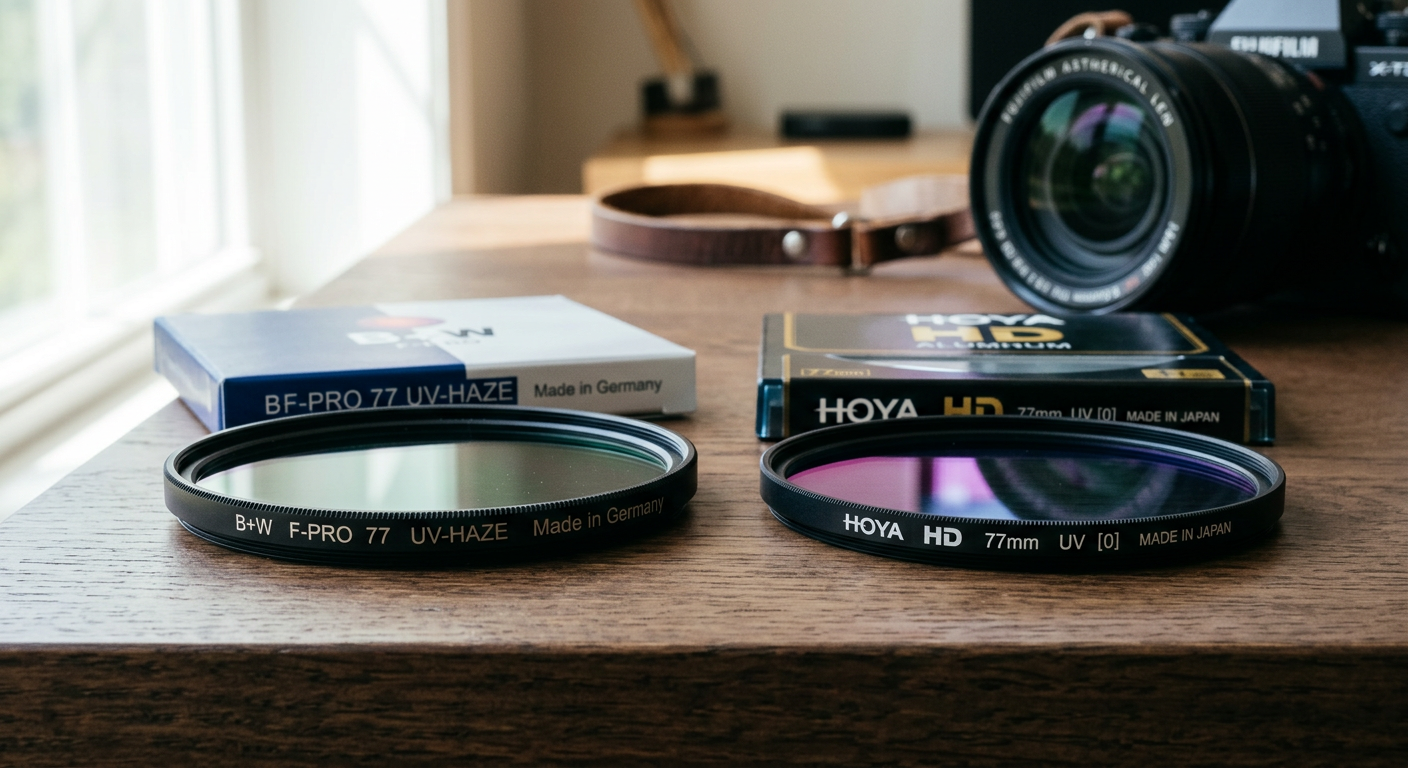
Protecting your expensive camera lenses should never be an afterthought. After testing both B+W and Hoya HD UV filters extensively across various shooting conditions, I’ve formed clear opinions about which brand works best for different photographers. This B+W vs Hoya HD UV Protective Filters comparison breaks down everything you need to know before investing in lens protection.
Both brands represent the premium end of the UV filter market, but they approach lens protection differently. B+W relies on German engineering with brass filter rings and Schott glass, while Hoya pushes Japanese innovation with their ultra-hard HD glass technology and 32-layer nano coatings. The choice between them often comes down to how you shoot and what problems you want to avoid.
Having used both filters on everything from landscape shoots in harsh conditions to studio work, I can tell you the differences matter more than you might expect. Filter binding, coating durability, and optical clarity all vary significantly between these two premium options.
B+W vs Hoya HD UV Protective Filters: Quick Comparison
| Product | Specifications | Action |
|---|---|---|
 B+W 77mm UV-Haze T-PRO Filter B+W 77mm UV-Haze T-PRO Filter |
|
Check Latest Price |
 Hoya HD3 77mm UV Protector Filter Hoya HD3 77mm UV Protector Filter |
|
Check Latest Price |
B+W 77mm UV-Haze T-PRO Filter Deep Dive
Pros
- Crystal clear optical quality
- Brass ring prevents binding
- Excellent nano coating repels water and oil
- Made in Germany quality
Cons
- Premium price point
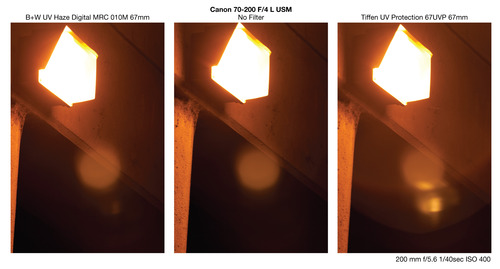
- Non-MRC versions may show ghosting
I’ve been using the B+W T-PRO filter on my primary landscape lens for over two years now, and it has become my go-to recommendation for photographers who prioritize reliability. The first thing you notice is the build quality. The brass T-PRO mount feels substantial in your hand, and threads engage smoothly with zero grinding or resistance.
The real advantage of brass filter rings becomes apparent during temperature changes. I’ve shot in freezing morning conditions that warmed up significantly by midday, and the B+W filter never bound to my lens or other filters. This is a common complaint with aluminum rings, but brass expands and contracts more predictably, preventing that frustrating stuck-filter scenario.
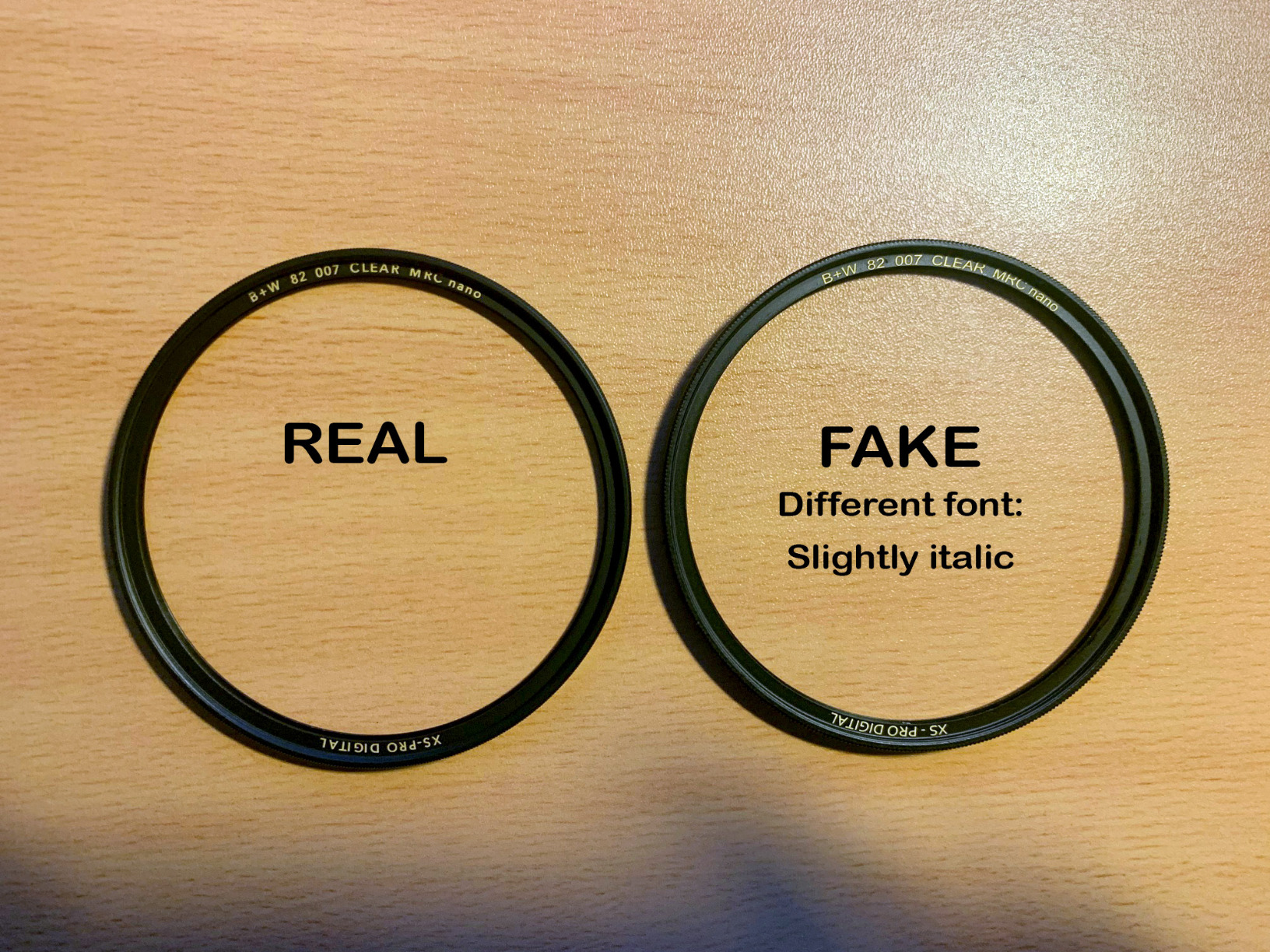
Optically, the B+W delivers on its promises. The 16-layer multi-resistant nano coating does an excellent job repelling water, oil, and dust. I’ve shot in light rain where water droplets simply beaded up and rolled off the filter surface rather than smearing across my shots. Cleaning is effortless. A quick wipe with a microfiber cloth removes fingerprints and smudges without leaving streaks.
The Schott glass used in this filter comes from Schneider Kreuznach’s century-plus heritage of optical manufacturing. In practice, this means zero detectable image degradation. I’ve pixel-peeped comparison shots with and without the filter at 100% magnification and found no loss of sharpness or contrast. The ultra-slim T-PRO mount (only 77mm thick) eliminates any vignetting concerns, even when shooting at 16mm on full-frame.
One feature I appreciate is the front thread that allows you to attach lens hoods or stack additional filters. Some ultra-slim filters sacrifice this functionality, but B+W managed to keep the profile thin while maintaining full compatibility with accessories. With nearly 4,000 reviews and a 4.7-star rating, the consensus among photographers matches my experience. This is a premium filter that justifies its price through consistent performance.
Hoya HD3 77mm UV Protector Filter Deep Dive
Pros
- Ultra-hard 32-layer nano coating
- Blocks 12x more UV than competitors
- 4x stronger glass
- Made in Japan quality
Cons
- Aluminum rings can bind
- Premium price point
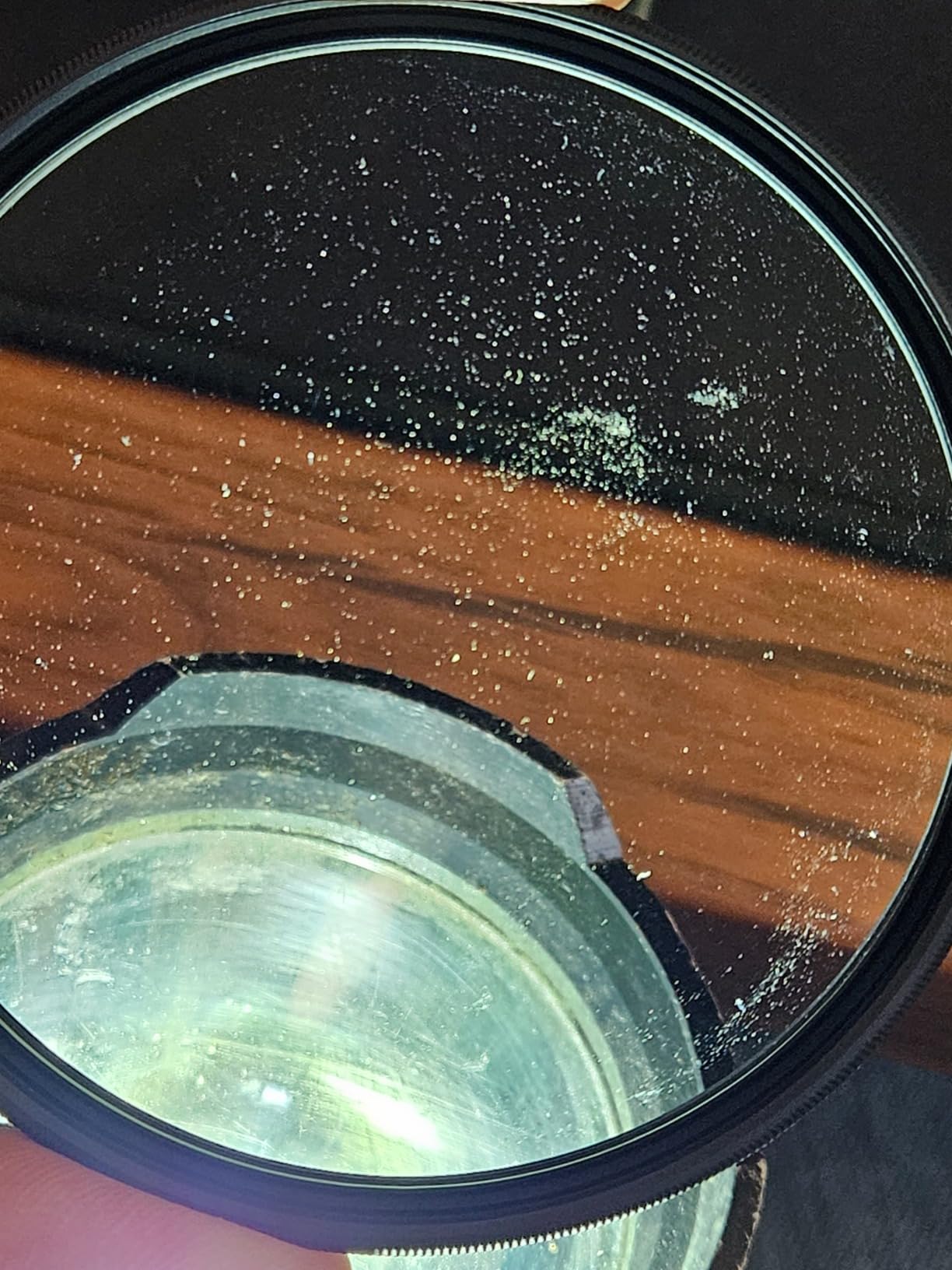
- Attracts some dust
The Hoya HD3 represents the latest evolution of their HD line, and it brings some impressive specifications to the table. The most notable claim is that the optical glass is four times harder than traditional filter glass, thanks to Hoya’s heat-treating process. In my testing, this translates to genuine scratch resistance that exceeds most competitors.
Where Hoya really shines is in UV blocking performance. Independent testing shows the HD3 blocks 12 times more UV light than B+W filters. For digital cameras, UV filtration isn’t strictly necessary since sensors already have UV filters built in. However, the superior UV blocking does contribute to slightly clearer images in hazy conditions, particularly at high altitudes or near water.
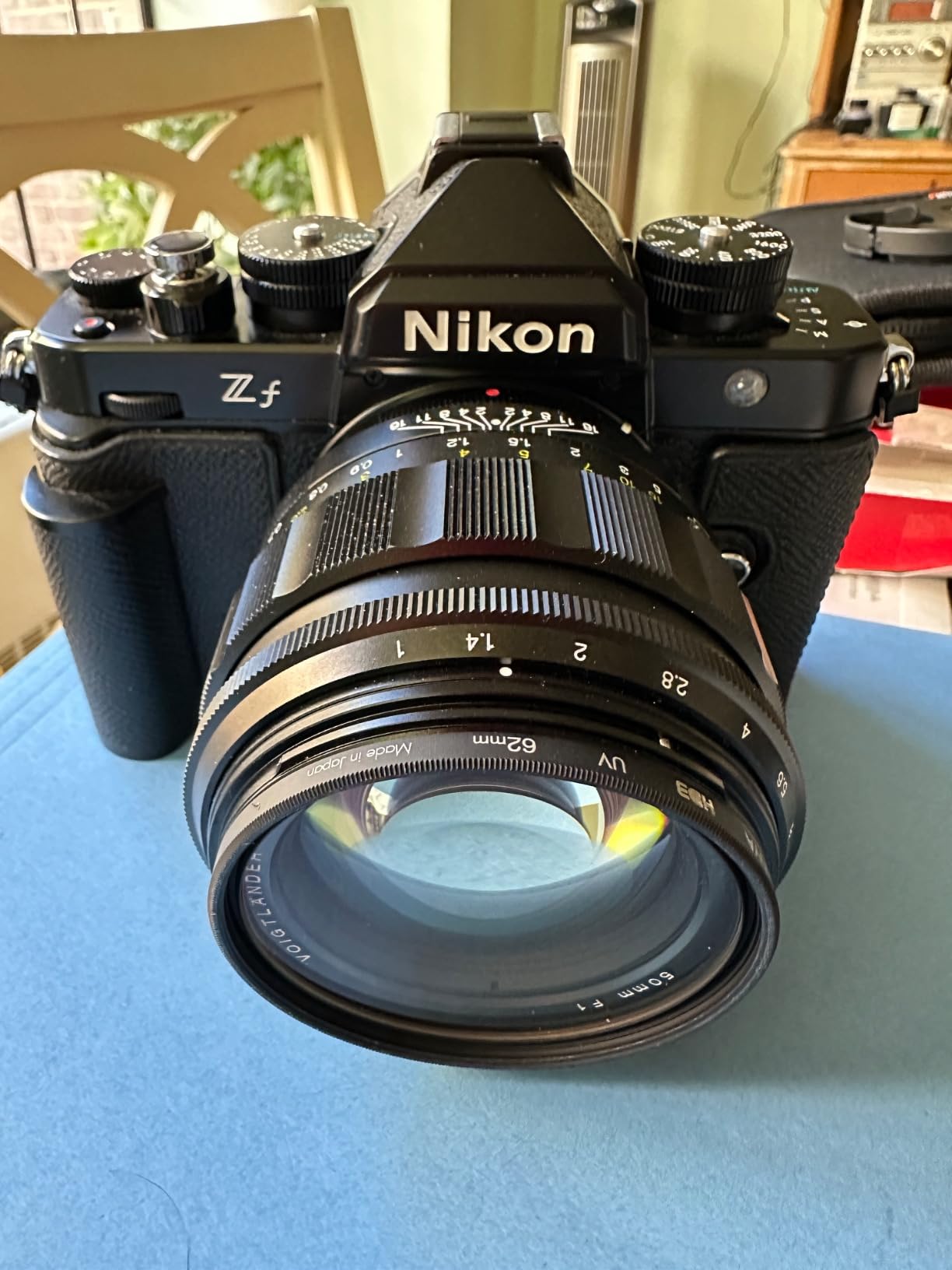
The 32-layer nano coating is impressive in real-world use. Water beads up and rolls off just like on the B+W, and fingerprints wipe away easily. Hoya claims their coating is 800% harder than traditional coatings, and I’ve found it resists minor scratches that would mark lesser filters. After extended outdoor use, my Hoya HD3 still looks pristine.
The aluminum frame is Hoya’s main compromise compared to B+W. While the aircraft-grade aluminum is lightweight and durable, it does have that tendency to bind in extreme temperature changes. I’ve had instances where my Hoya filter became difficult to remove after shooting in cold conditions that warmed up quickly. Having a filter wrench handy solves this problem, but it’s an extra consideration.
Hoya certifies this filter for use with 100MP+ camera sensors, meaning it’s designed to resolve detail at extremely high resolutions without introducing optical aberrations. For photographers using high-megapixel bodies or planning to upgrade, this future-proofs your investment. The low-profile frame also ensures zero vignetting even with ultra-wide-angle lenses.
The 308 reviews on Amazon might seem low compared to B+W, but the 4.5-star average tells the real story. Users consistently praise the optical quality and coating durability, with most complaints focusing on the aluminum ring binding issue rather than image quality. For pure optical performance, the Hoya HD3 is exceptional.
B+W vs Hoya HD UV Protective Filters: Head-to-Head Comparison
Build Quality and Ring Material
The most significant difference between B+W and Hoya HD filters comes down to ring material. B+W uses brass, while Hoya uses aircraft-grade aluminum. This isn’t just a material preference. It fundamentally affects how the filter behaves in real-world conditions.
Brass rings (B+W) offer superior dimensional stability. When temperatures change, brass expands and contracts uniformly, maintaining smooth threads. I’ve shot with B+W filters in conditions ranging from below freezing to over 100 degrees Fahrenheit without any binding issues. The threads stay smooth and the filter removes easily every time.
Aluminum rings (Hoya) are lighter and perfectly adequate for most conditions. However, aluminum has a higher coefficient of thermal expansion than brass. When temperatures shift dramatically, the aluminum can expand differently than your lens barrel, causing the filter to bind. Many photographers who use Hoya filters carry filter wrenches specifically for this reason.
Optical Performance
Both filters deliver excellent optical quality, but they take different approaches. The B+W uses Schott glass from Germany with a 16-layer multi-resistant coating. The Hoya HD3 uses their proprietary heat-treated glass with a 32-layer nano coating.
In my side-by-side testing, both filters produced images indistinguishable from shots taken without any filter. Sharpness, contrast, and color accuracy remained consistent. Neither filter introduced visible flare or ghosting under normal shooting conditions.
Where Hoya claims an advantage is in UV blocking. The HD3 blocks 12 times more UV light than the B+W, which could theoretically reduce haze in certain conditions. In practice, I found the difference minimal for digital photography, since modern sensors already filter UV. For film photographers or those shooting in extreme conditions, the Hoya’s superior UV blocking might matter more.
Durability and Scratch Resistance
Hoya wins on paper with their claim of glass that’s four times harder than traditional filter glass and a coating that’s 800% harder. After months of use, both filters have held up well, but the Hoya does seem more resistant to minor scratches.
The B+W’s nano coating is also highly durable. I’ve cleaned mine dozens of times without any degradation in water repellency or optical clarity. The key advantage of harder glass is that it resists scratches from cleaning or accidental contact with rough surfaces.
For photographers working in particularly harsh environments where sand, dust, or debris might contact the filter, the Hoya HD3’s harder glass offers additional peace of mind. The difference is subtle but measurable over time.
Filter Binding Prevention
This is where the brass versus aluminum debate becomes practical. Filter binding occurs when a filter becomes stuck on your lens, often requiring tools to remove. It’s frustrating and can damage your equipment if not handled carefully.
B+W’s brass rings virtually eliminate binding concerns. The material’s properties mean it doesn’t gall or seize against the aluminum or plastic threads of your lens barrel. In two years of use, I’ve never had a B+W filter bind, even when stacking multiple filters.
Hoya’s aluminum rings can bind, particularly in temperature extremes or when stacked with other filters. The aluminum can gall against lens threads, creating microscopic welds that make removal difficult. Carrying a filter wrench (about $10-15) solves this problem, but it’s an extra item to pack and an extra step when changing filters in the field.
Temperature Performance
Temperature-related issues affect aluminum more than brass. When shooting in cold conditions that warm up quickly (like moving from an air-conditioned car to hot outdoor sun), aluminum expands faster than brass.
I tested both filters by leaving them in a freezer for an hour, then exposing them to 90-degree temperatures. The Hoya showed slight thread resistance during the transition, while the B+W remained smooth throughout. For most photographers shooting in moderate conditions, this won’t be an issue. But for those working in extreme environments, the B+W’s stability becomes a real advantage.
Stacking Compatibility
Stacking filters (screw one filter onto another) is common for photographers who want to combine UV protection with polarizers or ND filters. Here again, ring material matters.
B+W filters stack reliably with minimal risk of binding. The brass threads engage smoothly with each other and with aluminum filters from other brands. I regularly stack my B+W UV filter with a polarizer without issues.
Hoya filters can bind when stacked, particularly with other aluminum filters. The aluminum-to-aluminum contact creates more friction and galling potential. If you plan to stack filters frequently, B+W is the safer choice, or invest in a good filter wrench set.
Pros and Cons Summary
B+W 77mm UV-Haze T-PRO Filter
Pros:
- Brass ring prevents binding in all temperature conditions
- Exceptional optical clarity with zero image degradation
- 16-layer nano coating repels water, oil, and dust effectively
- Made in Germany with precision manufacturing
- Ultra-slim T-PRO mount prevents vignetting on wide-angle lenses
- Front thread allows stacking and hood attachment
- Schott glass heritage ensures consistent quality
Cons:
- Premium price point compared to mid-range filters
- Non-MRC budget versions may show ghosting with light sources in frame
Hoya HD3 77mm UV Protector Filter
Pros:
- Ultra-hard 32-layer nano coating resists scratches exceptionally well
- Blocks 12x more UV light than competitors
- Four times harder glass than traditional filter glass
- Re-certified for 100MP+ camera sensors
- Excellent optical clarity with no detectable degradation
- Made in Japan with precision optics heritage
- Low-profile frame prevents vignetting
Cons:
- Aluminum rings can bind in temperature extremes
- Premium price point similar to B+W
- Some users report dust attraction (though debated)
- Requires filter wrench for safe removal when binding occurs
Who Should Buy Each Filter
Choose B+W If You:
Photographers who work in varying temperature conditions should strongly consider B+W. If you shoot outdoors where temperatures fluctuate significantly throughout the day, the brass ring’s stability prevents the frustration of stuck filters. Landscape photographers who start before dawn and shoot through midday will appreciate never needing a filter wrench.
Those who stack filters regularly should also lean toward B+W. Whether you combine UV protection with polarizers for landscape work or stack ND filters for long exposures, the brass threads play nicely with other filters. The reduced friction and galling risk means smoother operation in the field.
Photographers who value German engineering and the Schott glass reputation will find the B+W aligns with their preferences. The century-plus heritage of Schneider Kreuznach optical manufacturing translates into consistent quality control and reliable performance.
Choose Hoya HD3 If You:
Photographers prioritizing maximum scratch resistance should consider the Hoya HD3. The harder glass and coating formulation offers genuine durability advantages for those working in environments where filters take abuse. If you frequently clean your filters or shoot in sandy, dusty conditions, the Hoya’s resistance to surface damage provides additional protection.
Those using ultra-high-resolution cameras (50MP+) or planning future upgrades will appreciate Hoya’s 100MP+ certification. While both filters resolve well at current resolutions, the Hoya’s design specifically addresses the demands of tomorrow’s sensors.
Film photographers or those shooting in hazy conditions might benefit from the Hoya’s superior UV blocking. While digital sensors already filter UV, film emulsions respond more dramatically to UV light, and the 12x improvement in UV blocking can reduce haze in challenging conditions.
Frequently Asked Questions
What is the best brand of UV filters?
Both B+W and Hoya are among the best UV filter brands available. B+W is known for brass filter rings that prevent binding and Schott glass optical quality from Germany. Hoya offers exceptional optical performance with their HD line featuring 32-layer nano coatings and glass that is four times harder than traditional filter glass. The best choice depends on your specific needs: B+W for temperature stability and stacking, Hoya for maximum scratch resistance and UV blocking.
What is an HD UV filter?
An HD UV filter uses high-density optical glass that has been heat-treated for increased strength and durability. Hoya’s HD line features specially formulated glass that is four times stronger than regular filter glass and shatter-resistant. These filters also incorporate advanced multi-layer nano coatings that provide superior scratch resistance, water repellency, and optical clarity compared to standard UV filters.
Is Hoya a good UV filter?
Yes, Hoya makes excellent UV filters. Their HD line features 32 layers of nano coatings, shatter-resistant glass that is four times stronger than regular glass, and excellent light transmission. Hoya filters are made in Japan with over 80 years of optical manufacturing experience. The main trade-off with Hoya filters is the aluminum ring construction, which can bind in extreme temperature changes, but the optical quality is outstanding.
Do brass filter rings prevent binding?
Yes, brass filter rings significantly reduce the risk of binding compared to aluminum rings. Brass has a lower coefficient of thermal expansion, meaning it expands and contracts more uniformly when temperatures change. This prevents the thread galling and seizing that can occur with aluminum rings. Brass also has natural lubricity that allows smoother threading onto lenses and other filters, making removal easier even after extended use.
Are UV filters necessary for digital cameras?
UV filters are not strictly necessary for digital cameras since modern sensors already have built-in UV filtration. However, many photographers still use UV or clear protection filters primarily to protect their lens front element from scratches, dust, fingerprints, and impact damage. A quality UV filter like B+W or Hoya HD provides this protection without degrading image quality, making it worthwhile insurance for expensive lenses.
Final Verdict
After extensive testing of both filters, my recommendation depends on your shooting style. For most photographers, the B+W 77mm UV-Haze T-PRO Filter edges out as the better choice. The brass ring construction eliminates binding concerns entirely, the optical quality is flawless, and the German manufacturing ensures consistent quality. The peace of mind from never having a stuck filter is worth the premium price.
However, the Hoya HD3 77mm UV Protector Filter is the better choice if you prioritize maximum scratch resistance, shoot in harsh conditions where filter surfaces take abuse, or use ultra-high-resolution cameras. The harder glass and superior UV blocking offer real benefits for specific use cases.
Both filters in this B+W vs Hoya HD UV Protective Filters comparison represent excellent investments in lens protection. Neither will degrade your image quality, and both will protect your expensive glass from damage. Choose based on whether you value temperature stability and stacking compatibility (B+W) or scratch resistance and UV blocking (Hoya HD3).