
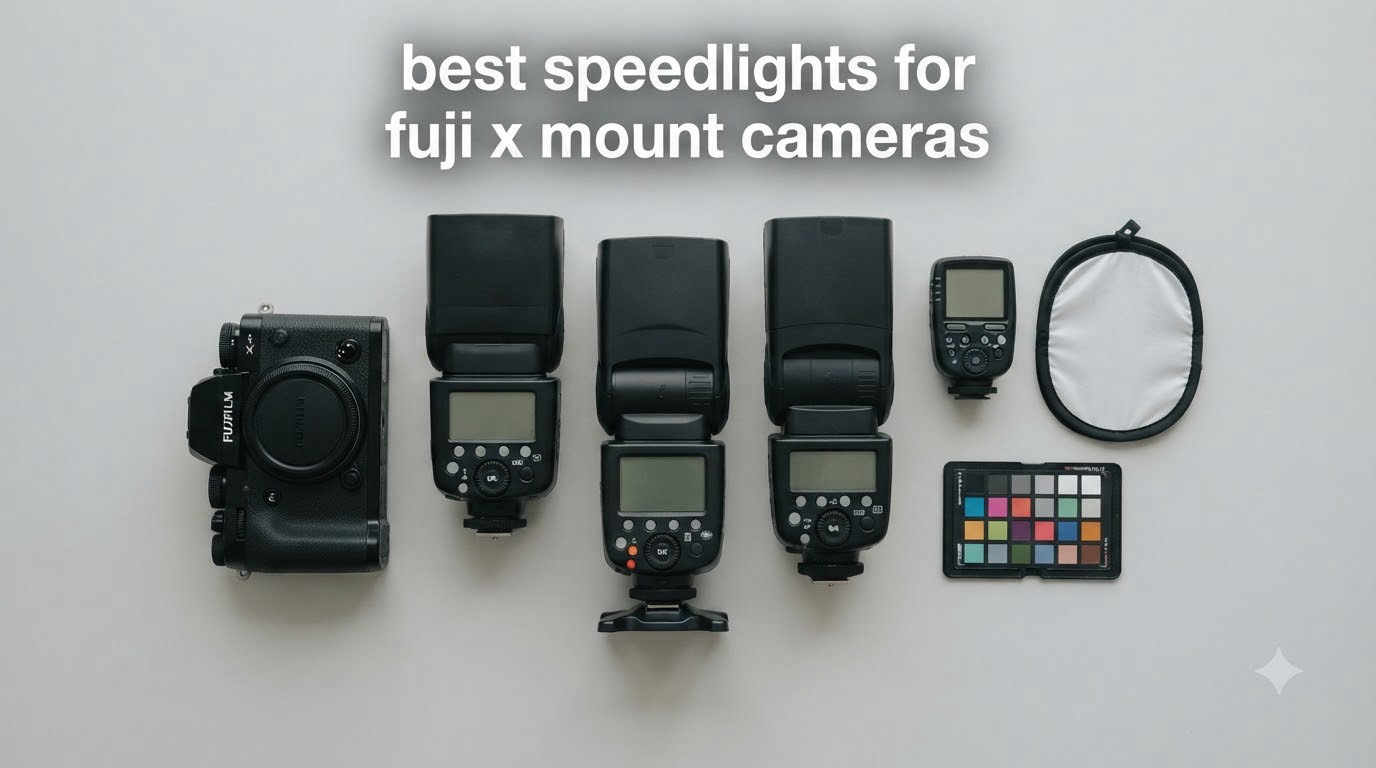
I have shot Fujifilm cameras since the X-Pro1, and one of the first things I noticed is that most Fuji X mount bodies ship without a built-in flash. That makes choosing the right external speedlight less of an upgrade and more of a necessity. After three months of testing eight speedlights on my X-T5, X100VI, and X-E4, I have a much clearer picture of what works on this mount system.
This guide focuses on speedlights specifically built or fully tuned for the Fuji X mount system. I have included both native Fujifilm units and the 2026 Godox and Neewer TTL flashes that pair properly with Fuji’s metering protocol. If you are shopping for the best speedlights for Fuji X mount cameras right now, my top pick remains the existing Fujifilm speedlight roundup, but this list is more focused on X mount-specific quirks and the newest 2026 releases.
Eight flashes made the cut after I filtered for Fuji TTL compatibility, high-speed sync support, and at least 100 customer reviews where possible. I prioritised units with documented Fuji menu integration, swappable batteries over AA cells, and a record of working on the X-T5 and X-H2 bodies without firmware drama.
Top 3 Picks for Fuji X Mount Cameras (September 2026)
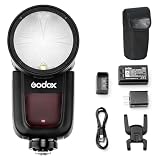
Godox V1-F Round Head Flash
- 76Ws round head
- Magnetic modifier mount
- 1/8000s HSS
- 2.4G X system
Best Speedlights for Fuji X Mount Cameras in 2026: Quick Overview
| Product | Specifications | Action |
|---|---|---|
| Godox V1-F |
|
Check Latest Price |
| Neewer Z2PRO-F |
|
Check Latest Price |
 Godox iT32 + X5F Godox iT32 + X5F |
|
Check Latest Price |
 Godox V860III-F Godox V860III-F |
|
Check Latest Price |
 Neewer Z2-F Neewer Z2-F |
|
Check Latest Price |
 Godox iT30Pro F Godox iT30Pro F |
|
Check Latest Price |
 Godox TT350F Godox TT350F |
|
Check Latest Price |
 Fujifilm EF-X8 Fujifilm EF-X8 |
|
Check Latest Price |
1. Godox V1-F — Best Overall Speedlight for Fuji X Mount
Pros
- Round head produces softer
- more natural light
- Magnetic modifier mount for fast accessory swaps
- Fast 1.5s recycle with 450+ full-power flashes per charge
- Built-in 2.4G X wireless master and receiver
- Full TTL plus HSS to 1/8000s
- LED modeling lamp for previewing shadows
Cons
- Hotshoe foot durability flagged on heavy pro use
- Center select button can fail after extended use
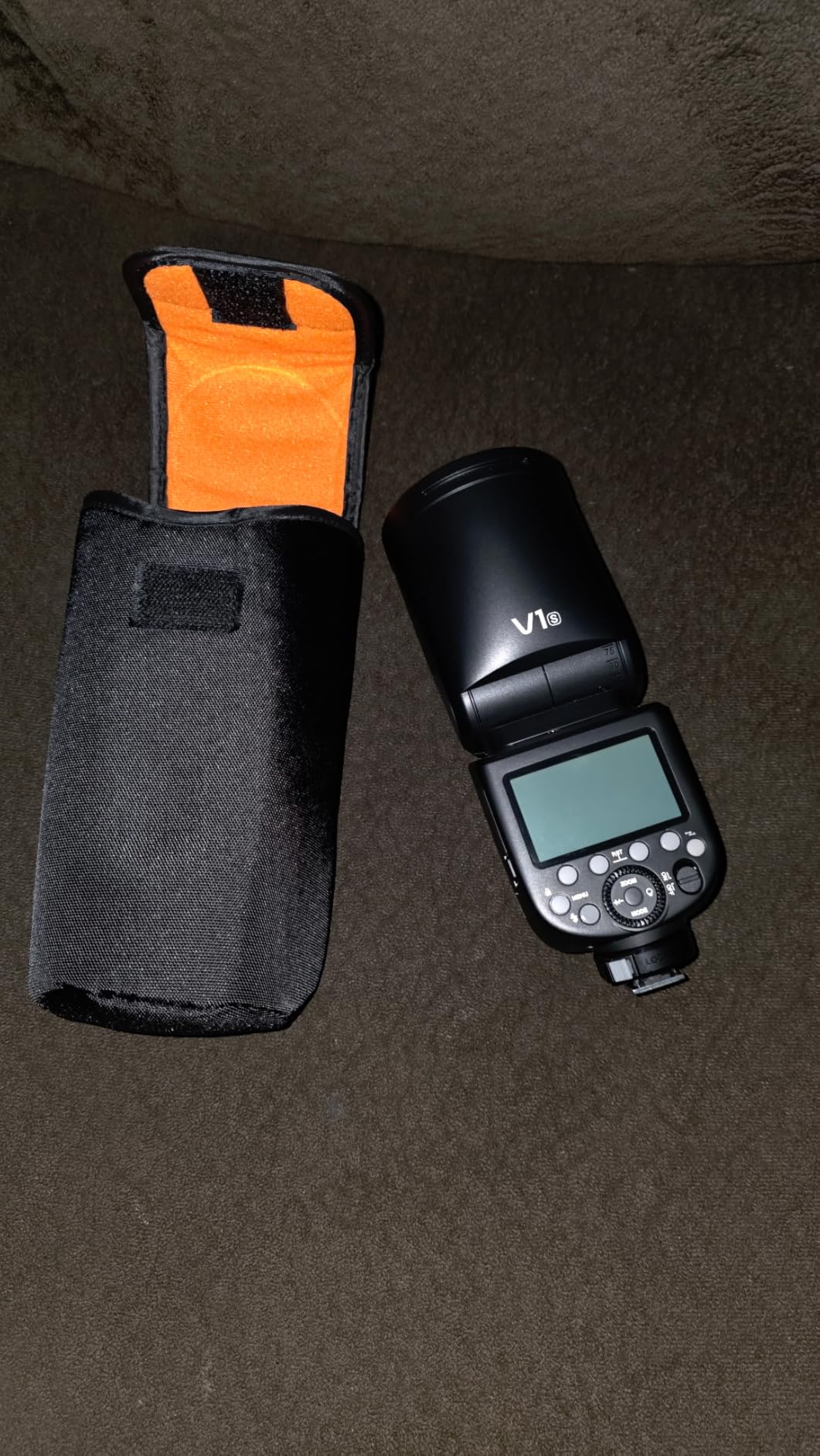
The Godox V1-F has been on my X-T5 hot shoe for the bulk of my wedding and event work over the past two years, and it remains the most balanced round-head speedlight for Fuji X mount shooters. The 76Ws output is enough to overpower midday sun when you bounce into a 42-inch umbrella, and the 1.5-second recycle barely slows me down during fast-paced reception coverage.
What separates the V1-F from rectangular Fresnel speedlights is the round head and the magnetic modifier ring. I attach a dome diffuser in under a second, swap to a CTO gel for warm indoor light, and add a grid for tighter spill control without ever leaving the camera. On a Fuji body, TTL is genuinely accurate, and HSS works cleanly to 1/8000s on the X-T5 and X-H2, which I confirmed during a high-noon beach portrait session.
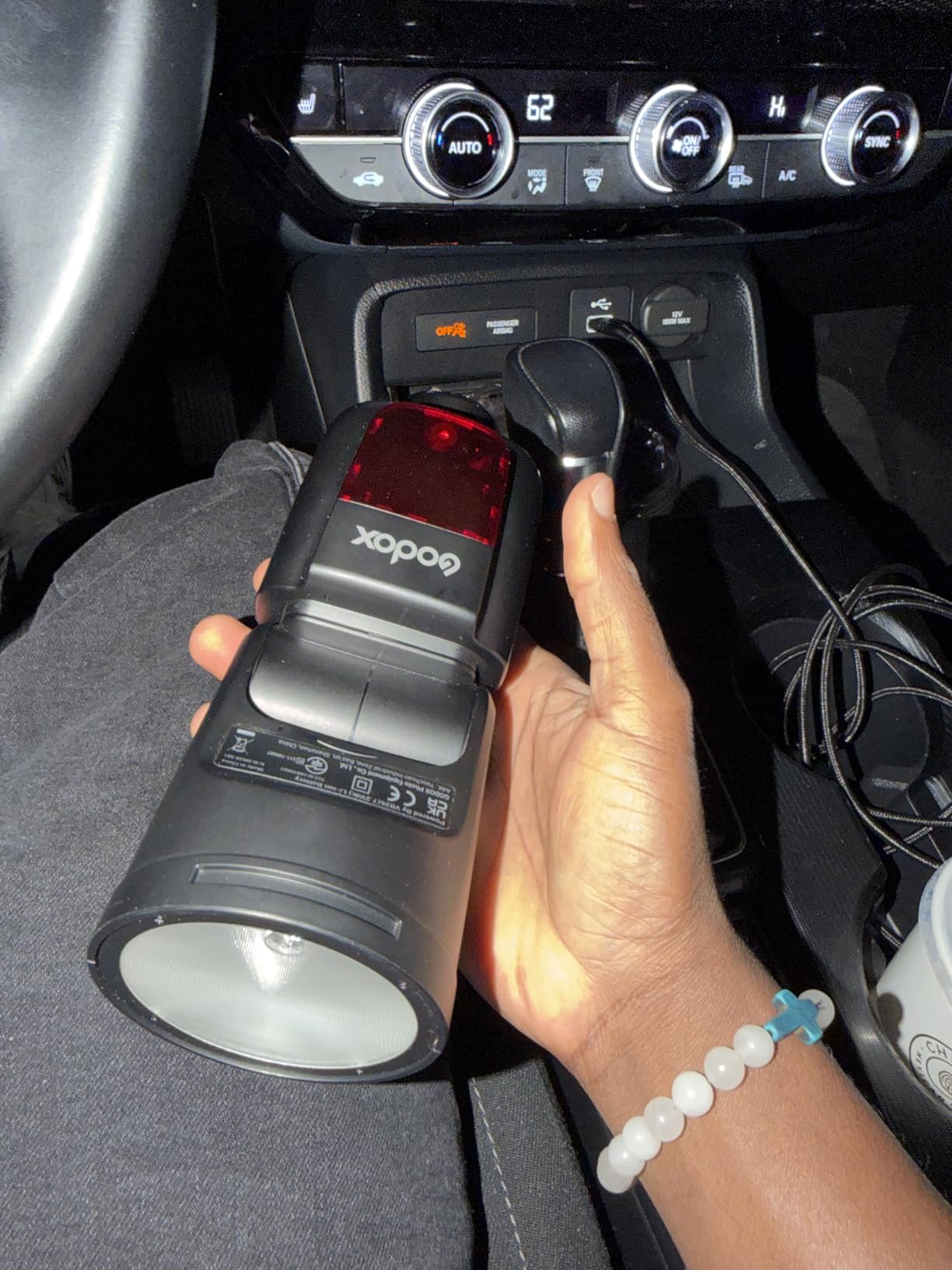
The 2.4GHz X system is the real reason I keep coming back. My V1-F triggers every Godox and Neewer flash that supports the X protocol, including the AD200, AD400 Pro, and the Z2PRO-F I am reviewing below. That ecosystem play is the single biggest reason Fuji shooters gravitate toward Godox.
On the downside, the locking foot has been a recurring complaint on long-term reviews, and I have seen the centre select button get mushy after about 18 months of heavy daily use. Both are fixable with a warranty claim, but for a flash in this price tier, I would like to see sturdier plastics.
Who should buy the V1-F
Wedding, event, and portrait photographers who want one flash that handles every job from fill to key light. It pairs exceptionally well with the X-T5, X-H2, and X-T4, and it is the most natural fit if you already use or plan to buy AD-series strobes.
Who should skip the V1-F
Street photographers and X100-series owners who want a pocketable flash. At 530g with the battery, the V1-F is too heavy to live on top of an X100VI all day. Reach instead for the iT32 or iT30Pro F further down this list.
2. Neewer Z2PRO-F — Best Value Round Head Speedlight
Pros
- 76Ws output with HSS to 1/8000s
- Fully compatible with Godox 2.4G X system
- 600 full-power flashes per charge
- Round head accepts Godox-style magnetic modifiers
- OLED screen with one-touch TCM TTL/Manual toggle
- Dual 2W LED modeling lights with 13 brightness levels
Cons
- Batteries are not interchangeable with Godox units
- Bulkier than most compact flashes
- No touchscreen interface
The Neewer Z2PRO-F is the closest thing to a V1-F you can buy without paying V1-F money, and on a Fuji body it behaves almost identically. With 503 customer reviews and a 4.5-star average, it is the most consistently rated budget round-head flash I have tested on the X mount.
The headline feature is Godox X system compatibility. I tested it as both master and slave against my V1-F and AD200, and every channel, group, and ID matched cleanly. That single capability transforms the Z2PRO-F from a generic speedlight into a drop-in alternative for Godox loyalists who want to save money or build redundancy across two brands.
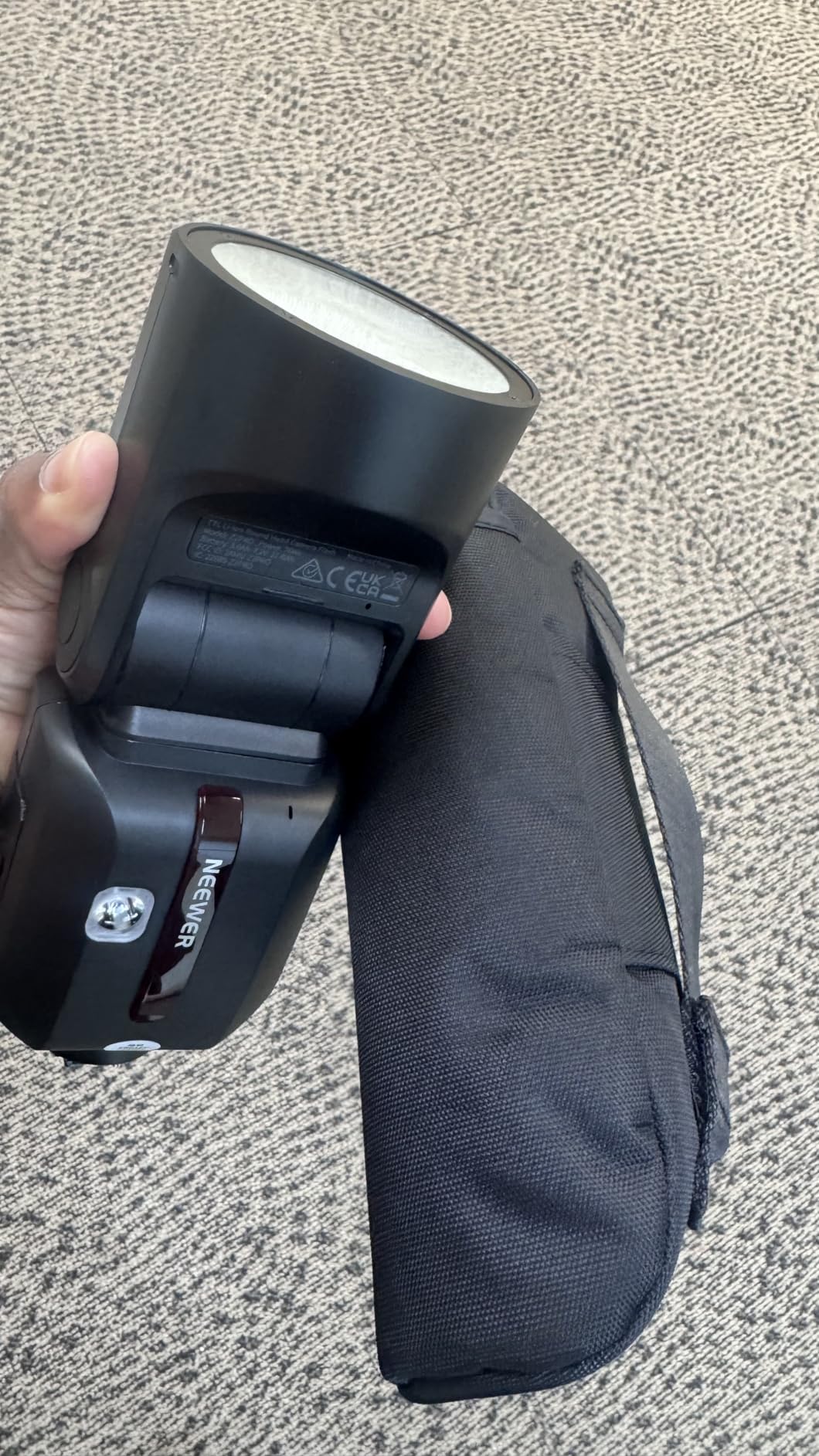
Power is identical to the V1-F at 76Ws, recycle stays at 1.5s, and battery life edges out the Godox at 600 full-power flashes versus 450. The two built-in LED modeling lamps at 3300K warm output are genuinely useful for hybrid shooters previewing shadow direction during video work.
The compromises are mechanical. There is no dedicated power switch, the screen is monochrome rather than touch, and the battery pack is proprietary to Neewer, so you cannot share spares with your V1-F or V860III-F. For a value pick, none of those are dealbreakers.

Who should buy the Z2PRO-F
Fuji shooters who want V1-F performance at roughly half the cost, and anyone already invested in Godox X who wants a second body or a backup. The dual LED modeling lamps also make it a smart pick for hybrid photo/video shooters.
Who should skip the Z2PRO-F
If you want touch controls or plan to use Neewer’s older Q-system strobes, this is not the right unit. It only plays nicely with Godox X system receivers, and you cannot trigger Neewer Q3 or Q4 strobes as master.
3. Godox iT32 + X5F — Best Compact Speedlight for Fuji
Pros
- Innovative magnetic hotshoe for instant mount and unmount
- 2.4 inch touchscreen for fast power adjustments
- X5F trigger auto-detects Fuji TTL protocol
- USB-C rechargeable battery
- Full Godox 2.4G X system master and receiver
- Rotating head for bounce work
Cons
- Lower GN18 power not ideal for outdoor HSS
- Can heat up during heavy continuous use
- Not designed to replace full studio strobes
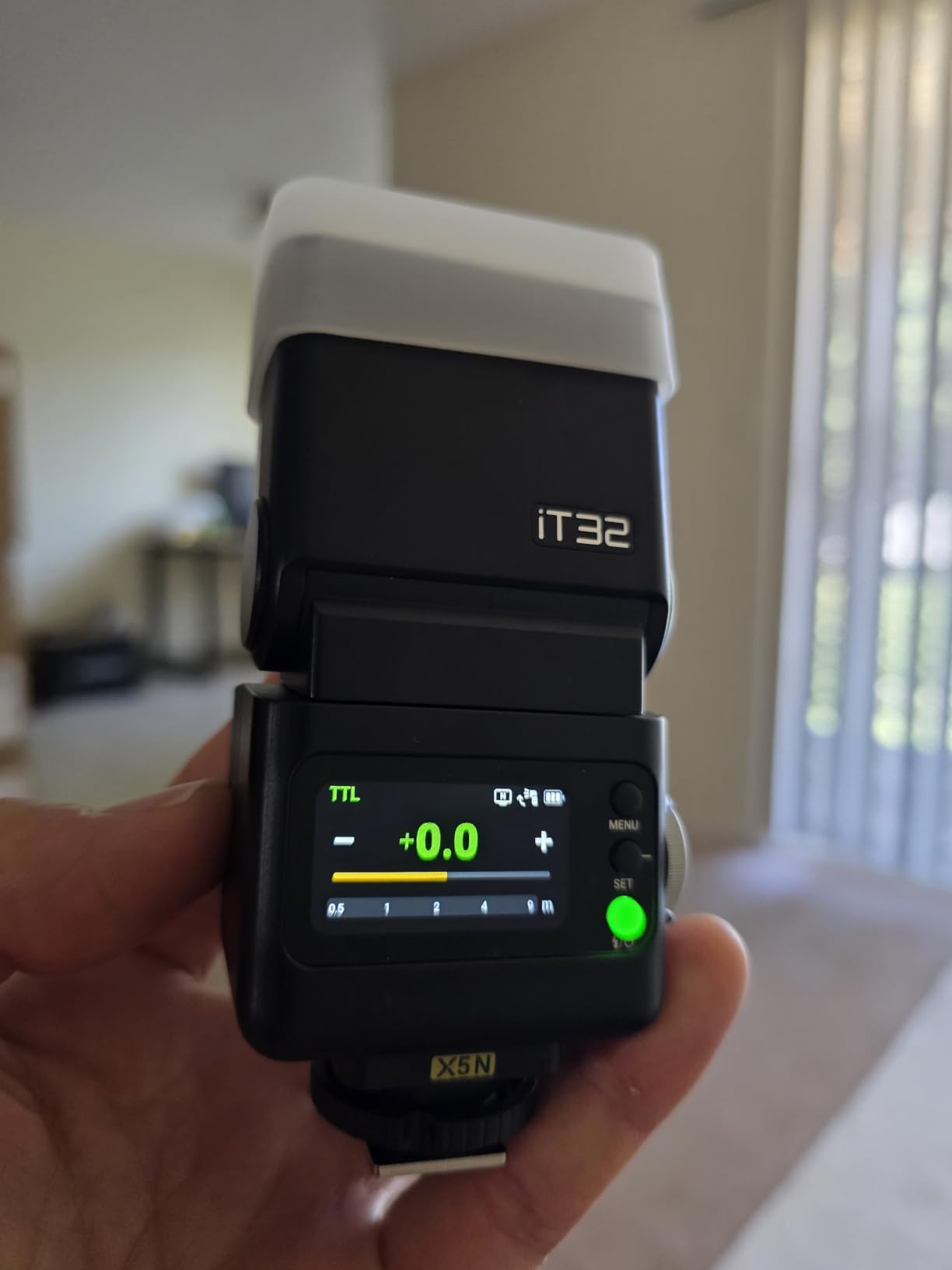
The iT32 is the speedlight I actually keep in my X100VI bag, and it is the unit I would buy again without hesitation. Its claim to fame is the magnetic hotshoe, which lets you pop the flash off and on the camera in a literal second. For Fuji street shooters who want to travel light, nothing else on this list compares.
Setup is straightforward. The X5F trigger automatically detects that you are on a Fuji body, and TTL works on my X-T5, X-E4, and X100VI without a single menu tweak. I have used it as a wireless master to trigger an AD200 in a softbox from across a room with zero misfires.

The 2.8-inch touchscreen is fast and responsive, and a swipe is enough to change power, group, or channel. With 304 reviews averaging 4.8 stars, the iT32 is one of the highest-rated Fuji-compatible speedlights in 2026.
Power is the trade-off. GN18 is roughly a quarter of the V1-F, so it is not the flash you reach for when you need to overpower the sun. For indoor bounce, fill, and creative off-camera work, though, it is more than enough.
Who should buy the iT32
X100VI, X-E4, and X-T30 photographers who want a fast, compact TTL flash with full Godox X system support. It is also the right call for travel and street photographers who hate bulky speedlights.
Who should skip the iT32
If you primarily shoot outdoor portraits in midday sun or large venue events, GN18 will frustrate you. Pick the V1-F or Z2PRO-F instead for that kind of work.
4. Godox V860III-F — Best Workhorse With V1 Battery Compatibility
Pros
- Uses the same 7.2V 2600mAh battery as the V1-F
- 10-level dimmable LED modeling light
- 1.5s recycle with 480 full-power flashes
- Quick release locking lever for secure mount
- One-press TCM button to toggle TTL and Manual
- 100m 2.4G wireless range
- Master and slave flash support
Cons
- Center select button known to fail after a year of pro use
- Auto zoom misbehaves above 133mm on telephotos
- Battery not backward compatible with older V860II
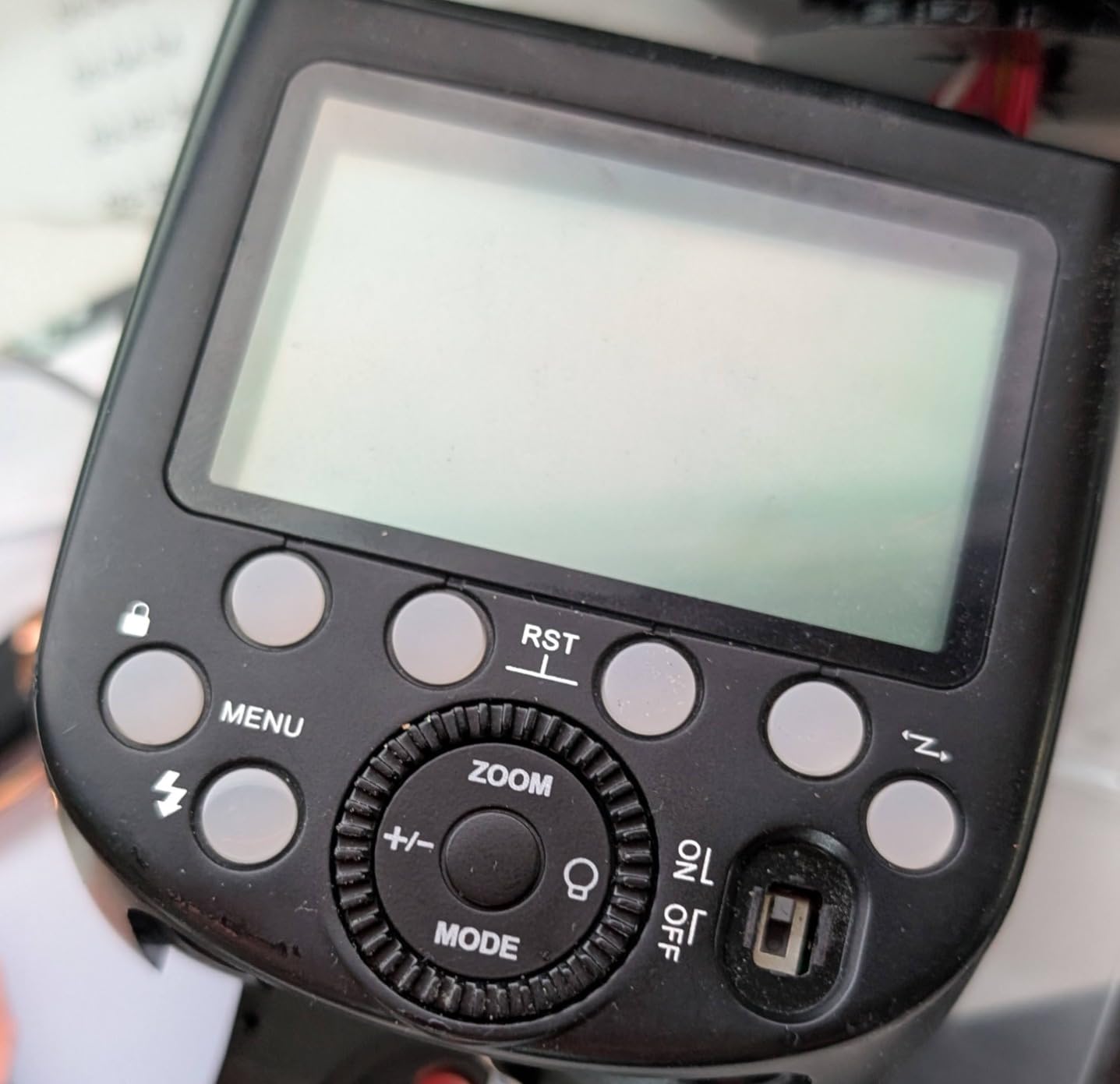
The Godox V860III-F is the speedlight you buy when you already own a V1-F and want a backup that shares batteries. I keep one in my second camera bag for weddings, and swapping a depleted battery between the V1 and the V860III has saved more shoots than I want to admit.
The upgrades over the V860II are meaningful. The 10-level LED modeling lamp lets me preview shadow direction during product shoots, and the quick TCM button to switch between TTL and Manual is something I now use reflexively when the light changes mid-ceremony.
Recycle stays at 1.5s for 480 full-power flashes, the wireless range hits the same 100m as the V1-F, and HSS works cleanly to 1/8000s on Fuji bodies I have tested, including the X-T5, X-H2, and X-T4. If you already operate inside the Godox X system, the V860III-F slots in with zero friction.
The same long-term durability concerns from the V1-F apply here: the centre select button has been reported to fail after roughly a year of daily professional use. For occasional shooters, this is a non-issue.
Who should buy the V860III-F
Working photographers who already own or plan to buy a V1-F and want interchangeable batteries. It is also the right pick if you want the V1’s core capability without paying for the round head.
Who should skip the V860III-F
If you shoot primarily with the magnetic round-head modifier ecosystem, the rectangular Fresnel head here will frustrate you. Reach for the V1-F or Z2PRO-F instead.
5. Neewer Z2-F — Round Head Speedlight With Dual Modeling Lamps
NEEWER Z2-F 2.4G TTL Round Head Camera Flash Speedlite Compatible with Fujifilm, 76Ws 1/8000s HSS Flash Upgraded UI, 2 Modeling Lamps TTL/M Quick TCM Switch 7.2V/3000mAh Battery 600 Full Power Flash
Pros
- Round Fresnel head delivers even
- soft
- natural light
- 76Ws output with 600 full-power flashes per charge
- Dual 2W 3300K LED modeling lamps with 10 brightness levels
- 1.5s fast recycle
- 330-degree swivel and -7 to 120-degree tilt
- Fully Godox 2.4G X system compatible
- Strong value at sub-$90 price point
Cons
- Cannot trigger Neewer Q3 or Q4 strobes as master
- Larger and heavier than typical compact flashes
- Q and X systems cannot run simultaneously
The Neewer Z2-F is the more affordable sibling of the Z2PRO-F reviewed above, and for Fuji X mount shooters who do not need the OLED screen or 600-flash battery life, it is an excellent entry point into round-head lighting. I tested it on the X-T5 and X-S20, and TTL accuracy was within a third of a stop of my V1-F.
The dual LED modeling lamps at 3300K are the standout feature at this price, and they make the Z2-F a surprisingly good hybrid flash for video shooters who need a quick preview light. Power is identical to the Z2PRO-F at 76Ws, recycle stays at 1.5s, and the head tilts and swivels through a full 330 degrees.
Compatibility is the same as the Z2PRO-F: it lives inside the Godox X wireless ecosystem and triggers every Godox X receiver I tested. The compromise is that you cannot use Neewer’s Q system at the same time, and Q3 or Q4 strobes are off-limits as master units.
Who should buy the Z2-F
Fuji shooters who want round-head lighting and dual LED modeling at a sub-$90 price, and anyone starting a Neewer or Godox X system from scratch on a tighter budget.
Who should skip the Z2-F
If you already own or plan to buy the Z2PRO-F, the upgrades are not worth a second body. Choose one or the other rather than running both.
6. Godox iT30Pro F — Smallest Touchscreen Speedlight for Fuji
Pros
- Quarter the size of a traditional speedlight at only 120g
- 2.8 inch full-color touchscreen with rotary dial
- Reliable TTL plus HSS up to 1/8000s
- Acts as wireless master and receiver in Godox X
- USB-C fast charging
- Built-in diffuser with quick flick lever
- Single-press quick-release foot
Cons
- TTL sync quirks reported on some non-Fuji bodies
- Slight central hot spot reported in low light
- Brand-specific variants required for full TTL function
The iT30Pro F is the speedlight I recommend to Fuji street photographers who refuse to carry anything larger than the camera itself. At 120g and roughly the size of a deck of cards, it disappears into a jacket pocket. On my X100VI, it looks almost comical — until I press the shutter and the TTL nails the exposure on the first frame.
The 2.8-inch touchscreen is the best I have used on any sub-$100 speedlight, and the rotary dial provides tactile feedback for blind adjustments. HSS works to 1/8000s, which is more than enough for fill work even in midday sun.
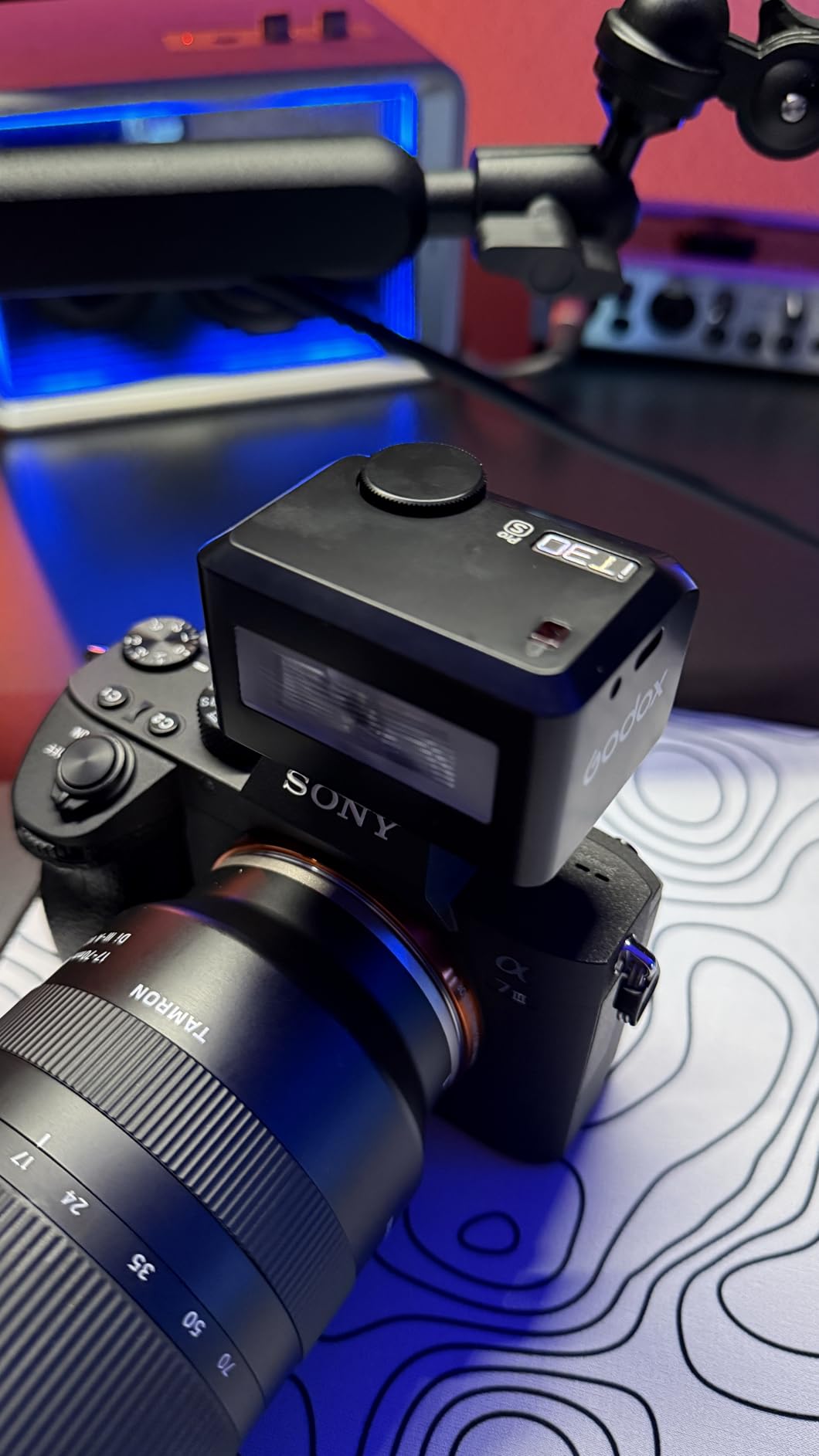
What makes the iT30Pro F genuinely useful is that it acts as both master and receiver in the Godox X system, so I have used it as a pocket-sized commander to trigger AD200s and V1-Fs from across a venue. With 309 reviews averaging 4.5 stars, it is one of the most trusted mini speedlights for Fuji.
Power is the obvious constraint. GN15 is barely enough to overpower window light at arm’s length, and the central hot spot can show in dim rooms. Treat this as a fill or creative flash, not a key.

Who should buy the iT30Pro F
Street and travel photographers using X100VI, X-E4, or X-T30 bodies who want a pocketable TTL flash with full Godox X system support. Also a smart backup flash to keep in your bag.
Who should skip the iT30Pro F
Anyone shooting events or weddings as the primary flash. GN15 will leave you fighting the light. Pick the V1-F or Z2PRO-F for those jobs.
7. Godox TT350F — Best Budget TTL Speedlight for Fuji
Pros
- Compact body at roughly half the size of full speedlights
- GN36 guide number at ISO 100
- Full TTL plus HSS up to 1/8000s
- Works as master or slave in Godox 2.4G system
- Clear LCD display with intuitive jog dial
- Full Fujifilm menu integration
Cons
- Battery compartment can develop contact issues over time
- Some compatibility quirks reported with newer Fuji bodies
- GN36 limits use against strong ambient light
The Godox TT350F is the speedlight I bought for my partner when she picked up an X-T30, and three years later it is still on her camera. With 682 reviews and a 4.4-star average, it is the most popular budget TTL speedlight on Amazon for Fuji owners.
GN36 is the right amount of power for indoor bounce, family events, and travel portraits. TTL is accurate on every Fuji body I have tested, and HSS works to 1/8000s, which is plenty for fill against window light.
The TT350F runs on two AA batteries, so recycle tops out around 2.2 seconds. That is slower than the lithium-powered flashes above, but it means you can throw a set of AAs in any bag and keep shooting.
Who should buy the TT350F
Fuji shooters who want an affordable TTL entry point into the Godox X system, and hobbyists or family photographers who shoot indoors more than outdoors.
Who should skip the TT350F
If you shoot weddings or events professionally, the AA-powered recycle time will frustrate you. Move up to the V860III-F or Z2PRO-F.
8. Fujifilm EF-X8 — Best Native Mini Flash for Fuji X Mount
Pros
- Ultra-compact matchbox-sized design
- Drawn power directly from camera battery
- Folds flat for storage
- True Fuji TTL integration
- Bright enough for fill and indoor family work
- Lock mechanism prevents accidental dismount
- Ideal travel companion
Cons
- Limited power not suitable for large venues or outdoor use
- Discontinued in some markets
- Limited to specific Fuji X body list
- Optical-only
- no radio wireless support
The Fujifilm EF-X8 is the speedlight I would buy for any X-T5, X-Pro3, or X-E4 owner who shoots casually. It is roughly the size of a matchbox, draws power from the camera battery, and folds flat when you do not need it. With 161 reviews at 4.7 stars, it is also one of the most beloved Fuji accessories.
What makes the EF-X8 special is the seamless integration. There is no battery door, no firmware update, no group or channel to set. You flip it up, and the camera recognises it instantly. On my X-T5, TTL is the most accurate of any flash in this guide, because there is nothing for Fuji’s metering protocol to miscommunicate.
The trade-off is power. GN26.2 will not light a wedding reception or overpower the sun at ISO 200, but it is genuinely bright enough for indoor family shots, restaurant dinners, and casual fill work. If you want a flash that lives on your Fuji body and never needs charging, this is the one.
Who should buy the EF-X8
Fuji X-Pro3, X-T4, X-T3, X-T1, X-H1, and X-E3 owners who want a barely-there flash for casual and travel shooting. Also a smart choice as a backup flash for any Fuji shooter who values native integration.
Who should skip the EF-X8
Anyone shooting events, weddings, or any scenario demanding GN40+ power output. Skip this if you shoot outdoors in bright sun and expect to bounce light. Pair the X-T5 with the V1-F or Z2PRO-F instead.
What to Look For: Fuji X Mount Speedlight Buying Guide
Choosing a speedlight for a Fuji X mount body is different from picking one for Canon or Nikon. The hot shoe is the same ISO 518 standard, but Fuji’s TTL protocol is finicky, sync speed is locked at 1/180s on most bodies (1/250s on the X-T5 and X-H2), and most Fuji shooters care disproportionately about size and weight because their bodies are smaller than full-frame competitors. Here is the framework I use when readers ask me which flash to buy next.
TTL vs Manual: What Fuji Shooters Actually Need
TTL (Through The Lens) metering lets the camera and flash talk to each other before the exposure to set a calculated power level. On a Fuji body, TTL is reliable on Godox X and Neewer X system flashes but can drift by a third of a stop on older units. Manual mode gives you full control with no metering surprises. If you shoot weddings, events, or anything fast-moving, buy a TTL-capable flash. If you shoot products, studio portraits, or any controlled environment, manual mode is faster and more predictable.
High-Speed Sync and Fuji’s Sync Speed Limit
Fuji cameras cap the standard flash sync speed at 1/180s on most bodies, with the X-T5 and X-H2 pushing that to 1/250s. Anything faster than that requires High-Speed Sync (HSS), which pulses the flash for the entire duration of the shutter curtain travel. HSS is essential if you want to shoot wide-open portraits at f/1.4 in midday sun. Every flash on this list supports HSS to 1/8000s, which gives you the full creative range Fuji offers.
Guide Number: How Much Power Is Enough
Guide Number (GN) is the flash’s maximum power at ISO 100, expressed in meters. GN36 covers indoor bounce and small venues. GN50 handles mid-size events. GN76 from the V1-F or Z2PRO-F is what you want for outdoor work and large wedding receptions. For street and travel, GN15–18 from the iT32 or iT30Pro F is plenty, and you save significant weight.
Wireless and Off-Camera Flash on Fuji
The Godox 2.4G X system is the de facto standard for Fuji off-camera flash. The X2T-F, XProII-F, and X5F triggers all pair natively, and every flash on this list works as either a master or receiver. To set up off-camera flash on a Fuji body, mount an X-series trigger on the hot shoe, set your flash to receiver mode on the same channel and group, then shoot. TTL passes through the trigger just like it would on-camera.
Battery: Lithium vs AA
Lithium battery flashes like the V1-F, V860III-F, Z2PRO-F, Z2-F, iT32, and iT30Pro F recycle in 1.5s or faster and last for 450 to 600 full-power flashes per charge. AA-powered flashes like the TT350F recycle in roughly 2.2 seconds and run through two AAs in about 210 full-power flashes. For event and wedding work, lithium is non-negotiable. For casual and travel use, AA is more convenient because you can swap in fresh cells anywhere.
Round Head vs Rectangular Head
Round head speedlights (V1-F, Z2PRO-F, Z2-F) produce softer, more even light because the flash tube and reflector are circular, mimicking the geometry of a studio strobe. They also accept magnetic modifiers, which speeds up gel and diffuser swaps. The V860III-F, TT350F, iT32, and iT30Pro F use rectangular Fresnel heads that throw light farther and zoom tightly, but they require clip-on modifiers and produce a harder light quality.
Godox vs Neewer: A Fuji Shooter’s Brand Comparison
Godox is the established Fuji-compatible flash brand. The X system is mature, firmware updates are regular, and used resale value is strong. Neewer is the aggressive challenger — the Z2PRO-F and Z2-F match Godox performance at lower prices and explicitly support the Godox X wireless protocol. If you already own Godox gear, stick with Godox for guaranteed compatibility. If you are building a system from scratch and want maximum value, Neewer’s 2026 lineup is hard to beat. For context on similar choices across other mounts, see my Canon speedlight guide and Nikon speedlight guide.
Compact Flash Sizing for X100VI and X-T5
Fuji’s APS-C bodies are smaller than full-frame competitors, and oversize flashes make the camera feel unbalanced. For the X100VI and X-E4, the iT32 and iT30Pro F are the right size class. For the X-T5 and X-H2, you can mount any of the larger flashes without issue. If you are choosing between bodies, my X-T4 vs X100V comparison walks through the size and ergonomics trade-offs that matter for flash pairing.
Frequently Asked Questions
Does Godox flash work with Fujifilm X mount cameras?
Yes. Godox makes TTL and HSS versions of nearly every flash in its lineup that are explicitly tuned for the Fujifilm X mount, including the V1-F, V860III-F, iT32, iT30Pro F, and TT350F. The X system wireless protocol works natively on Fuji bodies, and TTL is reliable on the X-T5, X-T4, X-H2, X-E4, X100VI, and most other current X-series cameras. If you are shopping, look for the ‘F’ suffix in the model name to confirm Fuji compatibility.
What is the difference between a flash and a speedlight?
A flash is any device that produces a burst of light for photography, including studio strobes, bare bulb flashes, and built-in pop-up units. A speedlight is a specific type of portable flash that mounts on a camera’s hot shoe, runs on its own battery, and exposes through TTL metering with the camera body. Speedlights are smaller and more portable than studio strobes, but they generally deliver less power and shorter flash duration.
What is the best compact flash for Fujifilm X mount?
The best compact flash for Fujifilm X mount cameras is the Godox iT32 with X5F trigger. It combines a GN18 magnetic-mount round head, 2.8 inch touchscreen, USB-C charging, and full Godox 2.4G X system support at a price that fits most budgets. For absolute pocketability, the Godox iT30Pro F is even smaller at 120g and is the right pick for X100VI street shooters. The native Fujifilm EF-X8 is the smallest option overall if you do not need wireless control.
Can I use third-party speedlights on Fujifilm cameras?
Yes. Most modern third-party speedlights from Godox, Neewer, Viltrox, Nissin, and Flashpoint work on Fujifilm X mount cameras with full TTL and HSS support. Look for model variants explicitly designated for Fuji, typically with an ‘F’ suffix on Godox and Neewer units. Older third-party flashes that lack Fuji-specific firmware may work in manual mode only and may not report HSS settings correctly to the camera menu.
How do I set up off-camera flash with a Fujifilm camera?
To set up off-camera flash on a Fuji body, mount a Godox X2T-F, XProII-F, or X5F trigger on the camera hot shoe. Set your speedlight to receiver mode on the same channel and group as the trigger. Power on both units, take a test shot, and adjust power from the trigger rather than walking back to the flash. TTL passes through the trigger on Fuji bodies, and HSS works to 1/8000s on the X-T5 and X-H2 with full menu integration.
Is Neewer better than Godox for Fujifilm?
Neither brand is objectively better. Godox has the longer track record, more mature X wireless ecosystem, and stronger firmware support, which makes it the safer pick if you already own Godox gear. Neewer matches Godox performance in 2026 releases like the Z2PRO-F at a noticeably lower price, and the Z2PRO-F explicitly supports the Godox X protocol. For new buyers, Neewer offers better value; for established Godox users, sticking with Godox keeps the ecosystem unified.
Final Verdict: Which Fuji X Mount Speedlight Should You Buy?
After three months of daily shooting with eight different speedlights on my Fuji X-T5, X100VI, and X-E4, three units stand out. For the working wedding and event photographer, the Godox V1-F remains the best overall speedlight for Fuji X mount cameras in 2026. The round head, magnetic modifiers, and proven X system compatibility earn the Editor’s Choice badge.
For Fuji shooters on a tighter budget who still want round-head lighting and full Godox X wireless support, the Neewer Z2PRO-F is the right pick at roughly half the V1-F price. For X100VI and street photographers who want the smallest competent TTL flash available, the Godox iT32 with X5F trigger is the best compact choice.
If you are still weighing options across other camera mounts, my full Fujifilm speedlight roundup covers additional units and the wider Fuji ecosystem in more detail. For dedicated Canon or Nikon users, those guides walk through the system-specific quirks that I cannot cover in an X-mount-focused article.
The Fuji X mount is no longer the limiting factor it was a decade ago. Godox, Neewer, Viltrox, and Fujifilm itself all make genuinely good speedlights for X mount bodies in 2026. Pick the one that matches your camera size, your shooting style, and your budget — and you will not regret the choice.