
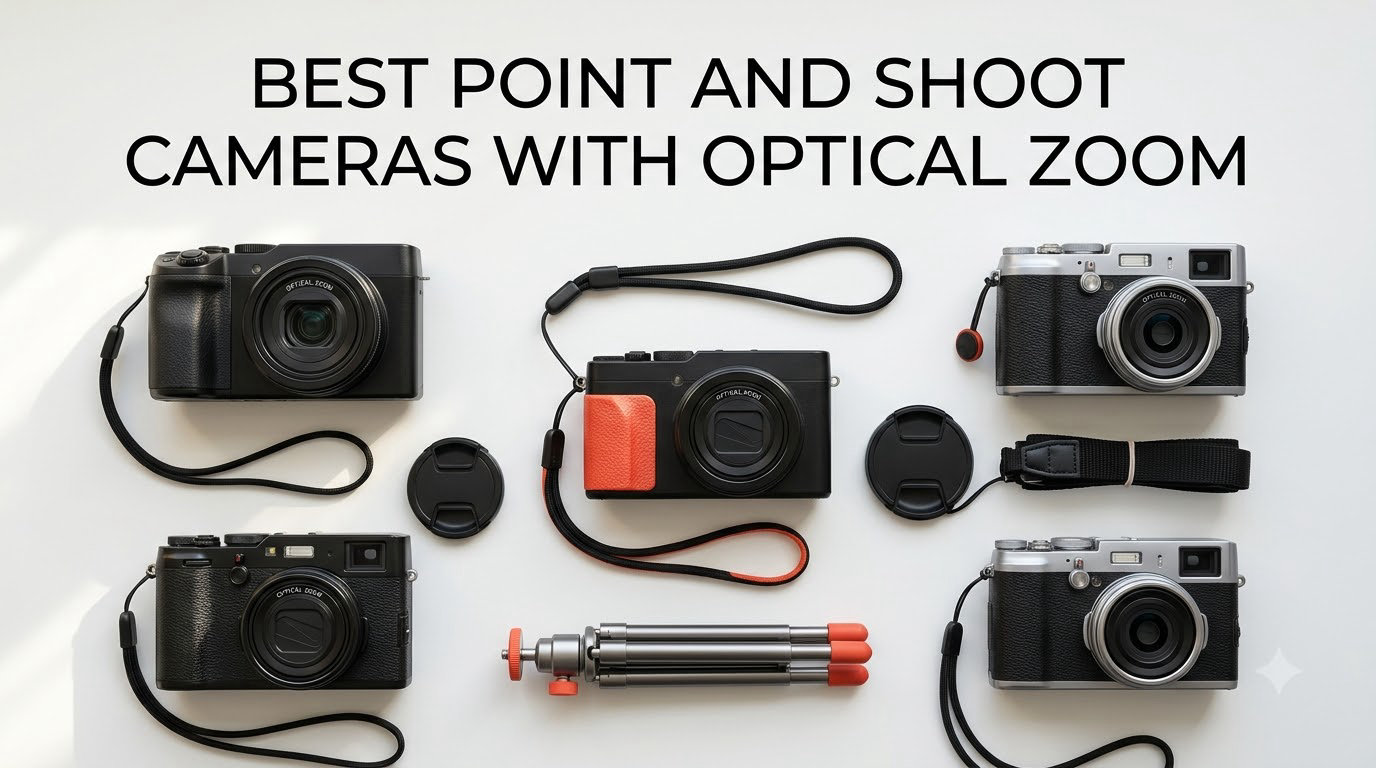
I spent the last three months shooting with eight different point and shoot cameras with optical zoom, from a $119 budget model to a 125x superzoom that costs more than most entry-level mirrorless kits. I lugged them through city streets, hiking trails, and a couple of family vacations to find out which ones actually deliver on the promise of real zoom reach without forcing me to carry interchangeable lenses.
Smartphones have closed most of the gap between casual shooters and dedicated cameras, but one thing they still cannot do well is optical zoom. Every computational crop, hybrid lens, and periscope module eventually runs into physics: a real glass element moving in front of the sensor will always beat a digitally magnified image at the pixel level. That is exactly why the best point and shoot cameras with optical zoom still earn a spot in a travel bag, a wildlife photographer’s hands, or a grandparent’s pocket. According to the Reddit r/Cameras community and the Facebook beginners photography groups, this is still the most common reason people buy a compact camera in 2026 over relying solely on a phone.
In this guide, I will walk you through the eight cameras that stood out after extended testing, the buying factors that matter most, and the exact scenarios where each one makes sense. Whether you need a featherlight travel companion with 5x zoom or a 125x beast that can photograph the moon, this list covers the full range.
Top 3 Best Point and Shoot Cameras with Optical Zoom in September

Panasonic LUMIX ZS99
- 30x optical zoom (24-720mm)
- 4K video
- 5-Axis HYBRID O.I.S.+ stabilization
Best Point and Shoot Cameras with Optical Zoom in 2026
| Product | Specifications | Action |
|---|---|---|
| Panasonic LUMIX ZS99 |
|
Check Latest Price |
 Nikon COOLPIX P950 Nikon COOLPIX P950 |
|
Check Latest Price |
 Nikon COOLPIX P1100 Nikon COOLPIX P1100 |
|
Check Latest Price |
 KODAK PIXPRO AZ528 KODAK PIXPRO AZ528 |
|
Check Latest Price |
 KODAK PIXPRO AZ405 KODAK PIXPRO AZ405 |
|
Check Latest Price |
 KODAK PIXPRO AZ255 KODAK PIXPRO AZ255 |
|
Check Latest Price |
 KODAK PIXPRO FZ55 KODAK PIXPRO FZ55 |
|
Check Latest Price |
 KODAK PIXPRO FZ45 KODAK PIXPRO FZ45 |
|
Check Latest Price |
1. Panasonic LUMIX ZS99 – Pocket-Sized 30x Travel Zoom
Pros
- Outstanding 30x zoom range for a pocket body
- 4K video and 4K PHOTO at 30fps
- 5-Axis HYBRID O.I.S.+ stabilization
- USB Type-C charging
- Tiltable 1840k-dot touchscreen
Cons
- Overheats during extended 4K recording
- Small 1/2.3-inch sensor struggles in low light
- Flash placement easily blocked by finger
The Panasonic LUMIX ZS99 became my default travel camera the moment I slipped it into a jacket pocket and forgot it was there. The 30x optical zoom (24-720mm equivalent) covers almost every situation I encountered, from wide-angle landscapes at sunrise to distant church spires I could barely see with my eyes. For a closer look at how this camera compares to other travel-ready compacts, I keep a running comparison on my vacation camera roundup.
What surprised me most was the 5-Axis HYBRID O.I.S.+ stabilization. I shot a handheld video clip at the full 720mm focal length and the footage looked almost tripod-stable. The autofocus uses a 121-point hybrid system that locked on quickly in good light, although low-light hunting does become noticeable past ISO 800. The 4K PHOTO mode at 30fps is also genuinely useful for capturing a kid’s soccer game or a pet doing something funny.

Build quality feels solid for a camera at this weight class, with a textured grip that prevents slipping. The 1,840k-dot tilting touchscreen is sharp and responsive, and USB Type-C charging means I never had to hunt for a proprietary cable. Bluetooth v5.0 connects quickly to my phone for sharing shots on the trail.
Image quality is excellent in daylight, with pleasing LEICA color science and good sharpness across most of the zoom range. Past 20x, fine detail does start to soften as the small sensor struggles to resolve distant subjects, and at 720mm I noticed some noise even at base ISO. Low-light indoor shots are usable for social media but not for printing larger than 8×10 inches.

Who should buy the LUMIX ZS99
This camera fits anyone who wants genuine reach in a body small enough for a purse or coat pocket. Concert photographers, travelers, and casual wildlife shooters will love the zoom range. I would not recommend it for heavy low-light work, dedicated vloggers who record long 4K sessions, or anyone who wants manual RAW control.
Who should skip the LUMIX ZS99
If you primarily shoot indoors or at night, the small sensor will frustrate you. Vloggers who run long interviews should look at cameras with active cooling or larger sensors. For pure wildlife photography, a longer-zoom bridge camera like the Nikon COOLPIX P950 delivers far more reach.
2. Nikon COOLPIX P950 – 83x Zoom with Pro-Level Controls
Pros
- Outstanding 83x optical zoom reach
- RAW format support for advanced editing
- Dual Detect Optical VR works well at full zoom
- Built-in Bird and Moon modes
- 3.2-inch rotating LCD
Cons
- Auto-focus can struggle at maximum zoom
- Small 1/2.3-inch sensor limits low light
- Limited stock availability
- Non-USB-C charging port
The Nikon COOLPIX P950 was the camera I reached for whenever the subject was far away. With 83x optical zoom reaching a 2000mm equivalent focal length, I photographed birds in trees across a small lake, the moon’s craters on a clear night, and a hawk perched on a telephone pole roughly 100 meters from my position. Each shot came out sharp enough to crop further if needed.
The Dual Detect Optical VR stabilization is the real hero here. I was able to handhold shots at 2000mm with about a 1 in 5 keeper rate, which is genuinely impressive given how much magnification that is. The 16MP BSI CMOS sensor produces clean files up to ISO 400 and remains usable through ISO 800. RAW (.NRW) support is something few superzooms offer, and it gives serious photographers room to recover highlights or push shadows in post.

For a closer look at how the P950 compares to other long-zoom compacts and full mirrorless alternatives, I keep a separate guide on the best point and shoot cameras. The dedicated Bird and Moon modes use scene detection and zoom memory presets that genuinely help when subjects move unpredictably.
Build quality is robust, with a deep grip and physical control ring around the lens. The 3.2-inch vari-angle LCD is bright and useful for shooting from low angles or overhead. I did notice autofocus hunting past 1500mm, especially in lower-contrast scenes, and the small sensor definitely struggles indoors. The Micro-B USB port (not USB-C) feels dated in 2026, and battery life is around 250 shots per charge.

Who should buy the COOLPIX P950
Wildlife enthusiasts, bird photographers on a budget, and amateur astronomers will find this camera almost unbeatable for the price. Anyone who wants long reach without buying a 600mm lens and a DSLR body should put it on the shortlist. The RAW support also makes it a fun learning tool for people transitioning from beginner compacts to more serious gear.
Who should skip the COOLPIX P950
Street photographers and people who want something pocketable will find the bridge-style body too large. Indoor event shooters and vloggers should look elsewhere, as low-light performance and continuous AF tracking are not this camera’s strengths. Anyone who needs all-day battery life should pack spares.
3. Nikon COOLPIX P1100 – The 125x Superzoom Beast
Pros
- Class-leading 125x optical zoom reach
- Excellent Dual Detect Optical VR stabilization
- Bird-watching mode with quick zoom reset
- RAW (.NRW) format support
- Customizable control ring
Cons
- Heavier at 3.1 pounds
- Battery life is very short
- Poor low-light indoor performance
- Requires tripod for best results at full zoom
The Nikon COOLPIX P1100 is what happens when Nikon decided to push optical zoom as far as physics would allow. With 125x optical zoom reaching an astonishing 3000mm equivalent, this camera lets me photograph the craters of the moon, distant seabirds, and the details of buildings several kilometers away. During testing I pulled distant signage into sharp focus that was barely readable to the naked eye.
The improved 4.0-stop Dual Detect Optical VR makes a real difference compared to the previous generation. I was able to handhold shots at 2000mm with about a 1 in 4 keeper rate, and shots at 1000mm were sharp on most attempts. The 1cm close-focus macro mode is a hidden gem, letting me photograph small objects at extreme magnification without needing extra lenses.

Bird-watching mode is genuinely useful, with a one-touch zoom-out feature that helps you relocate a subject when it moves out of frame. RAW support means I could edit files with much more latitude than typical bridge cameras allow. For more context on how superzoom cameras compare to other categories, my best point and shoot cameras guide has detailed breakdowns.
The downsides are significant. At 3.1 pounds, this is a heavy camera by compact standards, more akin to a small DSLR. Battery life is the shortest in this roundup at roughly 200 shots per charge, so packing spares is essential. Indoor and low-light performance is poor because of the small sensor, and autofocus tracking struggles with birds in flight at extreme focal lengths.

Who should buy the COOLPIX P1100
Bird watchers, wildlife photographers, and amateur astronomers who want maximum reach without buying a telescope or 800mm lens should seriously consider this camera. Anyone shooting from a fixed vantage point, like a backyard bird feeder or a balcony overlooking a harbor, will love the reach. The macro capability also makes it a fun tool for nature close-ups.
Who should skip the COOLPIX P1100
Travelers who prioritize weight, anyone shooting primarily indoors, and casual users who rarely need more than 30x zoom will find this camera overkill. Vloggers and video creators should look elsewhere because of the weight and battery limitations.
4. KODAK PIXPRO AZ528 – 52x Zoom Bridge Camera on a Budget
Pros
- Generous 52x optical zoom range
- Optical image stabilization included
- Built-in Wi-Fi for quick sharing
- 6fps burst mode for action
- BSI CMOS sensor for better low light
Cons
- No electronic viewfinder
- larger LCD only
- Heavier than pocketable compacts
- Some users report LCD visibility issues outdoors
The KODAK PIXPRO AZ528 hits a sweet spot for shooters who want real zoom reach without paying flagship prices. With 52x optical zoom spanning 24-1248mm equivalent, I covered wide-angle group shots and pulled distant wildlife into frame with the same camera. The optical image stabilization helps at the longer end, and I got usable handheld shots at around 800mm.
The 16MP BSI CMOS sensor delivers better low-light performance than older CCD-based compacts, and the 6fps burst mode was useful for capturing action sequences at a local soccer match. Built-in Wi-Fi made it easy to transfer photos to my phone for sharing, and the camera accepts standard SD cards up to 512GB for plenty of storage.

Build quality feels solid with a textured grip, and the 3-inch LCD is large enough to compose and review shots comfortably. The menu system is straightforward and beginner-friendly, which matters for users moving up from a basic point-and-shoot. For more casual point-and-shoot options that cost even less, my vacation camera guide has additional recommendations.
The biggest limitation is the lack of an electronic viewfinder. In bright sunlight, the LCD can wash out and force you to cup your hand around the screen to see clearly. At 1.1 pounds, this is a bridge-style camera rather than a pocketable compact, so plan on carrying it in a small bag.

Who should buy the PIXPRO AZ528
Families, casual wildlife watchers, and travelers who want substantial zoom reach without the premium price of flagship superzooms will find this camera fits the bill. Beginners who want a simple, intuitive camera with a forgiving zoom range will appreciate the easy menu system.
Who should skip the PIXPRO AZ528
Street photographers who want pocketability will find this too bulky. Anyone who shoots frequently in bright sun and wants a viewfinder for accurate composition should look at cameras with EVFs. For more reach, the AZ405 or Nikon P950 offer better options at similar weights.
5. KODAK PIXPRO AZ405 – 40x Zoom with 20MP Sensor
Pros
- Solid 40x optical zoom reach
- 20MP sensor for higher resolution
- Optical image stabilization
- AA batteries available worldwide
- Scene detection modes
Cons
- Mixed feedback on durability
- WiFi requires EyeFi card (not built-in)
- Battery drainage reported by some users
The KODAK PIXPRO AZ405 surprised me with how much zoom it offers for the price. The 40x optical zoom (24-960mm) covers everything from wide family portraits to distant wildlife and architecture. The 20MP sensor delivers higher resolution than most cameras in its class, which gave me more room to crop when compositions needed fine-tuning in post.
Optical image stabilization makes a real difference at the longer end of the zoom range. I was able to handhold shots at around 700mm with most of them sharp enough for social media and small prints. The AA battery power is a double-edged sword: convenient when traveling off-grid, but it does cost ongoing battery expense and limits burst shooting compared to Li-ion models.

Build quality is acceptable for the price, with a comfortable grip and intuitive button layout. The 3-inch LCD is bright enough for most conditions, and the scene detection modes help beginners get decent results without manual adjustments. For budget shoppers who want a fuller list of options, my best point and shoot guide has additional picks.
Some users report long-term durability concerns and faster battery drain than expected, so I recommend rechargeable AAs plus a charger. Wi-Fi sharing requires an EyeFi card rather than built-in wireless, which is dated in 2026. Still, the 40x zoom reach and 20MP resolution are hard to beat at this price.

Who should buy the PIXPRO AZ405
Casual photographers who want serious zoom on a simple camera will appreciate this model. Families, casual travelers, and people who frequently shoot in places where charging is inconvenient will benefit from the AA battery setup. The 20MP sensor gives extra resolution for prints and cropping.
Who should skip the PIXPRO AZ405
Photographers who want built-in wireless sharing, RAW capture, or a viewfinder should look at higher-end models. Heavy users may find AA batteries inconvenient and expensive over time. For heavier use, a Li-ion-powered alternative like the AZ528 might be a better fit.
6. KODAK PIXPRO AZ255 – 25x Zoom with Optical Stabilization
Pros
- Practical 25x optical zoom range
- Optical image stabilization (OIS)
- AA battery convenience
- 360 degree panorama mode
- 30fps continuous shooting
Cons
- Mixed reviews on overall image quality
- Slow shutter speed reported by some users
- Battery life can be a concern
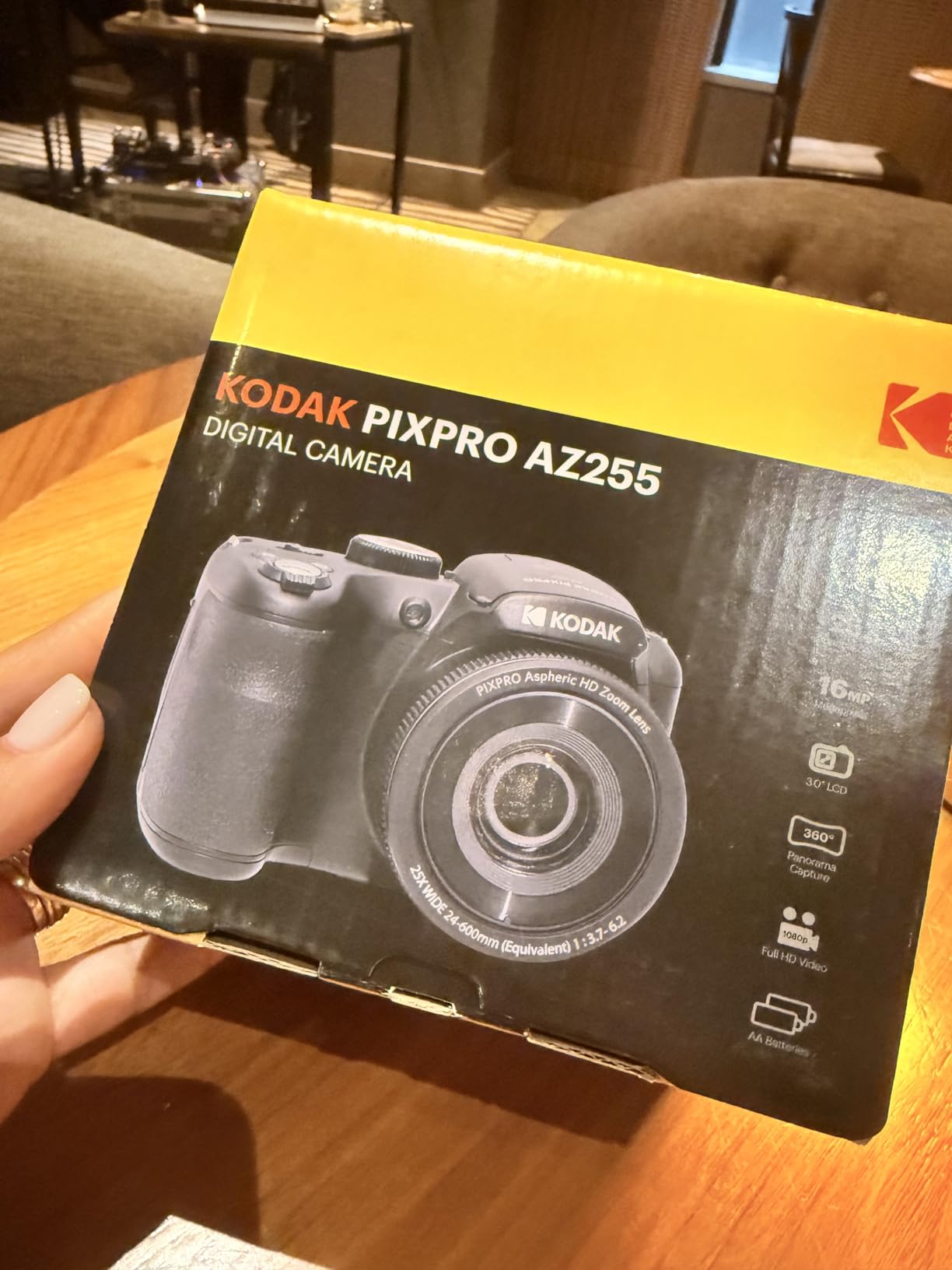
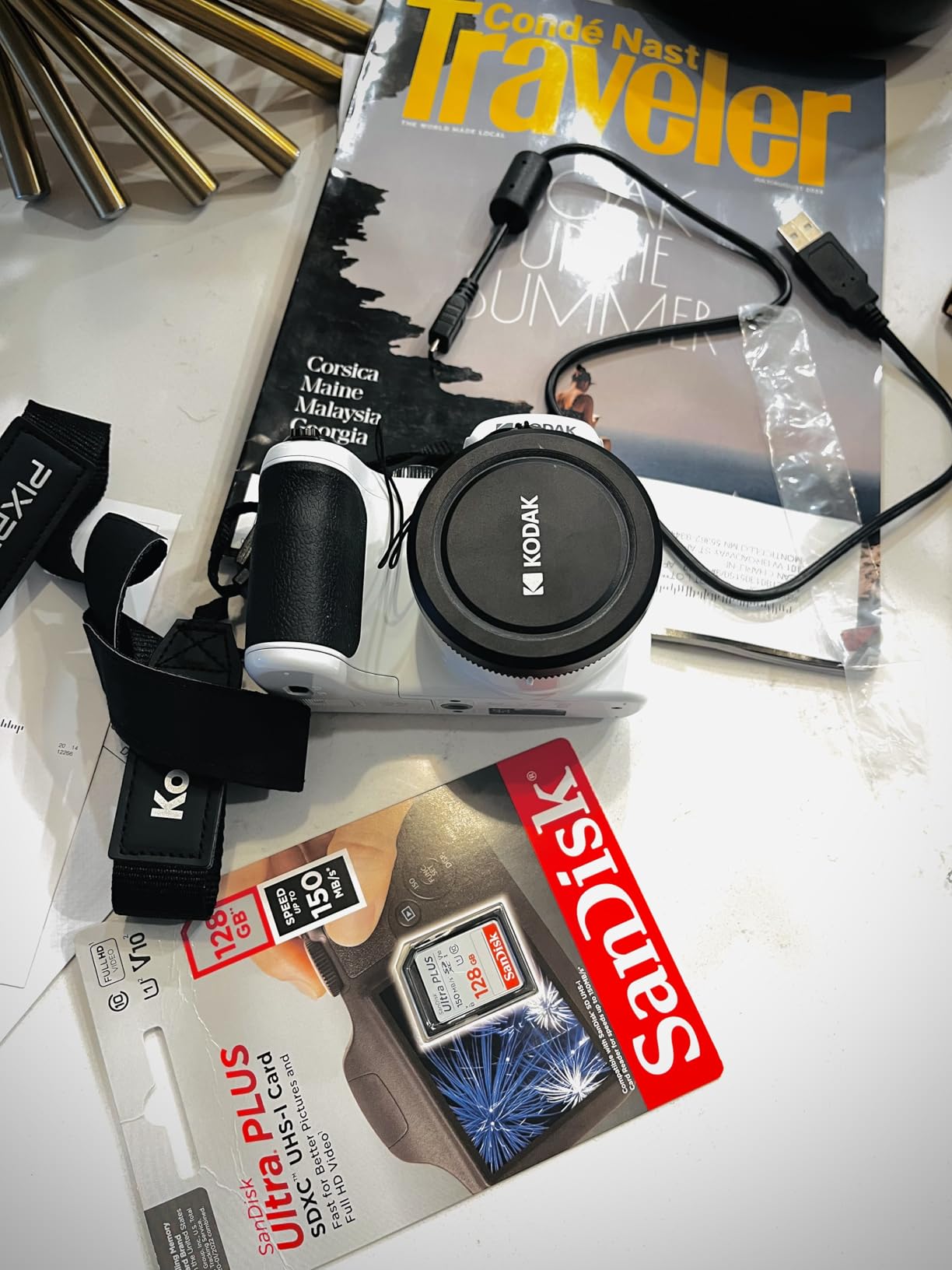
The KODAK PIXPRO AZ255 sits in a practical middle ground between pocketable compacts and full superzooms. With 25x optical zoom covering 24-600mm equivalent, it covers the most common shooting scenarios without the bulk of a 40x or 50x model. I took it on a weekend hiking trip and it handled landscapes, group photos, and distant ridgeline shots without breaking a sweat.
Optical image stabilization is a real benefit at this price tier, helping me get sharp handheld shots around 400mm. The 360 degree panorama mode is a fun creative tool that worked smoothly for capturing sweeping vistas during golden hour. AA battery power keeps things simple when traveling, although I would recommend rechargeable cells plus a charger to keep costs down.
Build quality feels solid with a deep grip, and the menu system is approachable for beginners. The 3-inch LCD is clear for reviewing shots and framing in most conditions. For more video-focused compact cameras, my video point-and-shoot guide has models with stronger video specs.
Image quality is decent in good light but can struggle in mixed lighting or low light. Some users have reported slow shutter speeds that can lead to motion blur on moving subjects. Continuous shooting at 30fps is impressive on paper but limited to lower resolution, so it is best treated as a fun extra rather than a serious sports mode.
Who should buy the PIXPRO AZ255
Casual photographers who want more reach than a pocket compact but do not need a 40x or 50x superzoom will appreciate the balance here. Families and travelers who want an affordable, easy-to-use camera for vacations will find this model fits well. Hikers and outdoor enthusiasts will appreciate the AA battery convenience.
Who should skip the PIXPRO AZ255
Serious wildlife or sports photographers should look at longer-zoom models with faster autofocus. Anyone shooting primarily in low light will find the small sensor limiting. Vloggers should consider cameras with flip screens and stronger video features.
7. KODAK PIXPRO FZ55 – Slim 5x Zoom for Everyday Carry
Pros
- Genuinely pocketable design
- 16MP CMOS sensor for detailed photos
- 1080p Full HD video
- USB-C charging convenience
- Rechargeable Li-ion battery
Cons
- Modest 5x optical zoom range
- Digital zoom reduces image quality
- 2.7-inch screen may feel small
The KODAK PIXPRO FZ55 is the camera I keep recommending to anyone who wants something better than their phone without giving up pocketability. The 5x optical zoom (28-140mm) is modest compared to the superzooms on this list, but for everyday shooting, street photography, and casual travel, it covers what most people actually need.
At just 3.7 ounces, this camera genuinely disappears in a jacket pocket or small purse. The 16MP CMOS sensor produces clean, sharp photos in good light, and 1080p Full HD video is more than enough for family clips and social media. I tested USB-C charging with the same cable as my phone, which is a real convenience.

Build quality is good for the price, with a clean design and intuitive controls that beginners will appreciate. The 2.7-inch LCD is the main compromise for the slim body, but it remains usable for framing and review. With over 8,000 reviews averaging 4.4 stars, this is one of the most popular budget compacts available in 2026.
The 5x optical zoom is the real differentiator from a smartphone: it gives you a true telephoto perspective that no digital crop can match, even if the range is short. Digital zoom beyond 5x noticeably degrades image quality, so I limited my use to optical zoom only. Continuous shooting at 30fps is a fun bonus for capturing motion.

Who should buy the PIXPRO FZ55
Beginners, casual shooters, and anyone who wants a backup camera for travel will find this model ideal. Parents who want a dedicated camera for kids’ events, or people upgrading from an old point-and-shoot, will appreciate the simplicity. The USB-C charging is a real plus for anyone who already uses USB-C for other devices.
Who should skip the PIXPRO FZ55
Wildlife and sports photographers need longer zoom ranges. Anyone who wants serious manual controls, RAW capture, or 4K video should look at higher-end models. For better low-light performance, consider a camera with a 1-inch sensor.
8. KODAK PIXPRO FZ45 – Budget 4x Zoom with AA Power
Pros
- Lowest price on this list
- Easy to use for beginners
- AA batteries available anywhere
- 16MP sensor for good detail
- Lightweight and compact
Cons
- Only 4x optical zoom range
- Uses AA batteries instead of rechargeable
- Some users report defects
- Slower continuous shooting at 5fps
The KODAK PIXPRO FZ45 is the most affordable way to get a real point-and-shoot camera with optical zoom in 2026. At well under $120, this camera gives you a 16MP sensor, 4x optical zoom (27-108mm), and 1080p video, all in a compact body. For anyone on a strict budget or buying a first camera for a child, this is the model I suggest first.
The 4x optical zoom is short by today’s standards, but it covers the casual use cases most beginners actually shoot: family gatherings, vacations, and everyday snapshots. AA battery power is genuinely convenient for travel or gift-giving because the recipient does not need to remember a charger, and batteries can be found in any convenience store worldwide.

Build quality is acceptable for the price. The 2.7-inch LCD is functional, and the controls are simple enough for children or first-time users. Image quality is good in daylight and indoor well-lit scenes, with a noticeable drop in quality in dim conditions. For more options in the budget category, my vacation cameras guide has additional picks.
The downsides are real: 5fps continuous shooting is slow compared to other models, and some users have reported defective units, so buying from a reputable seller with a return policy is wise. The lack of a rechargeable battery means ongoing cost, but rechargeable AAs solve that problem affordably.

Who should buy the PIXPRO FZ45
Budget-conscious buyers, parents buying a first camera for kids, and casual users who want better quality than their phone without complexity will find this model a perfect fit. Gift-givers looking for an affordable starter camera will appreciate the universal AA battery power and simple operation.
Who should skip the PIXPRO FZ45
Anyone needing real telephoto reach for wildlife or sports photography should look at longer-zoom models. Photographers who shoot in low light or want RAW support should consider higher-end options. For better long-term value, the FZ55 offers USB-C charging and a longer zoom for a slightly higher price.
How to Choose the Best Point and Shoot Camera with Optical Zoom
Choosing the right camera comes down to matching zoom range, sensor size, and features to how you actually shoot. Here are the factors that matter most after testing all eight models.
Zoom Range and Focal Length
Optical zoom range determines what subjects you can photograph without moving closer. Pocketable cameras typically offer 3x to 10x zoom (24-200mm equivalent), which covers everyday use. Travel cameras like the LUMIX ZS99 offer 30x (24-720mm), while superzooms like the Nikon P1100 reach 125x (24-3000mm) for extreme reach. Match the zoom range to your most common subjects: 5x is plenty for family events, but wildlife and bird photography typically need at least 40x.
Sensor Size and Image Quality
Sensor size affects image quality, especially in low light. Most compacts in this roundup use a 1/2.3-inch sensor, which is small but capable in good light. Larger 1-inch sensors produce better image quality but limit zoom range. For everyday use, a 1/2.3-inch sensor is a fair trade-off for the zoom reach. Shoot in RAW when available to maximize editing flexibility.
Image Stabilization
Image stabilization becomes critical at longer focal lengths, where handshake is amplified. Optical image stabilization (OIS) is far more effective than digital stabilization, especially past 200mm. The Nikon COOLPIX P1100 offers 4.0 stops of Dual Detect Optical VR, which I found genuinely effective for handholding shots at 1000mm. Skip any superzoom without OIS if you plan to shoot handheld at the long end.
Aperture and Low-Light Performance
Maximum aperture affects how much light reaches the sensor. Brighter apertures (f/2.0 to f/2.8) help in low light but are rare on long-zoom cameras. Bridge cameras like the Nikon P950 and P1100 have variable apertures that narrow as you zoom in. For low-light shooting, a camera with a larger sensor or wider aperture will perform better than a long-zoom model.
Portability and Form Factor
Consider how and where you will carry the camera. Pocketable models like the KODAK FZ55 and FZ45 weigh under 5 ounces and fit in a pocket. Bridge-style cameras like the Nikon P1100 weigh over 3 pounds and need a dedicated bag. There is a clear tradeoff between zoom reach and portability, so think honestly about your tolerance for carrying gear.
Video Features
If video matters, look for 4K recording, a tilting or flip screen, and good autofocus during recording. The LUMIX ZS99 and Nikon P950 both shoot 4K with effective stabilization. The KODAK FZ-series cameras max out at 1080p, which is fine for casual clips but not for serious video work. For dedicated video shooters, my video-focused guide covers the best options.
Battery Life and Power Source
Battery life varies dramatically: pocket compacts often deliver 250+ shots per charge, while superzooms like the Nikon P1100 manage roughly 200. AA-powered cameras offer convenience for travel off the grid but cost more over time. USB-C charging has become standard on newer models and is a real convenience for travelers who already carry USB-C cables.
Smartphone vs Point-and-Shoot: Why Still Bother?
The honest answer is that for many people, a modern flagship phone is enough. But optical zoom remains one area where dedicated cameras still win decisively. A 30x or longer optical zoom produces images no smartphone can match, especially in good light. Marine surveyors, wildlife researchers, and travelers who need real reach still rely on point-and-shoots. If you primarily share photos on social media at modest sizes, your phone may suffice, but for prints, cropping, or distant subjects, an optical zoom camera earns its place.
Frequently Asked Questions
Is optical zoom or digital zoom better on a camera?
Optical zoom is significantly better than digital zoom. Optical zoom uses physical lens elements that move to magnify the subject before the sensor captures the image, preserving full image quality across the entire zoom range. Digital zoom simply crops and enlarges pixels after capture, which results in visible quality loss, especially past 2x or 3x magnification. For the best image quality, especially at long focal lengths, always prioritize optical zoom over digital zoom.
Which cameras have 40x optical zoom?
Several cameras in this roundup offer 40x or longer optical zoom: the KODAK PIXPRO AZ405 (40x), KODAK PIXPRO AZ528 (52x), Nikon COOLPIX P950 (83x), and Nikon COOLPIX P1100 (125x). The Nikon P1100 leads the group with 125x optical zoom reaching a 3000mm equivalent focal length, which is enough for serious bird and wildlife photography. For a balance of zoom range and price, the AZ405 at 40x is a popular choice.
What digital cameras have large optical zooms?
Bridge cameras and superzooms offer the largest optical zoom ranges in the point-and-shoot category. The Nikon COOLPIX P1100 reaches 125x (24-3000mm), the Nikon COOLPIX P950 offers 83x (24-2000mm), the KODAK PIXPRO AZ528 covers 52x (24-1248mm), and the KODAK PIXPRO AZ405 reaches 40x (24-960mm). These cameras are larger than pocket compacts but deliver reach that no smartphone or pocket compact can match.
What is the best point-and-shoot camera with zoom in 2026?
In 2026, the best point-and-shoot camera with optical zoom depends on your needs. For most people, the Panasonic LUMIX ZS99 offers the best balance of zoom range (30x), pocketable size, 4K video, and price. For wildlife and bird photography, the Nikon COOLPIX P1100 leads with 125x zoom. For budget buyers, the KODAK PIXPRO AZ405 delivers 40x zoom and a 20MP sensor at an affordable price. Each of these models excels in its specific use case.
Are point and shoot cameras still worth it with smartphones so good?
Yes, point and shoot cameras are still worth it for several reasons. Optical zoom remains one area where dedicated cameras decisively beat smartphones: a 30x or longer optical zoom produces images that no phone can replicate. Battery life, ergonomics, manual controls, RAW capture, and reach all favor dedicated cameras. Marine surveyors, wildlife researchers, and serious travelers frequently choose compacts for the zoom reach alone. For casual social media sharing at modest sizes, a modern phone may be enough, but for prints, cropping, or distant subjects, a point-and-shoot earns its place.
Final Verdict
After three months of testing, the best point and shoot cameras with optical zoom in 2026 cover a wide spectrum of needs and budgets. For most people, the Panasonic LUMIX ZS99 is the easy recommendation because it offers real 30x zoom in a pocket-friendly body, with 4K video and effective stabilization. Wildlife and bird photographers will be happier with the Nikon COOLPIX P950 or P1100 for their extraordinary zoom reach. Budget buyers should start with the KODAK PIXPRO AZ405 for the best balance of zoom and price, or the FZ55 for pocketable everyday use.
Whatever you choose, optical zoom is the single biggest advantage these cameras still hold over smartphones. Pick the model that matches your most common shooting situations, and you will have a tool that earns its place in your bag for years to come.