
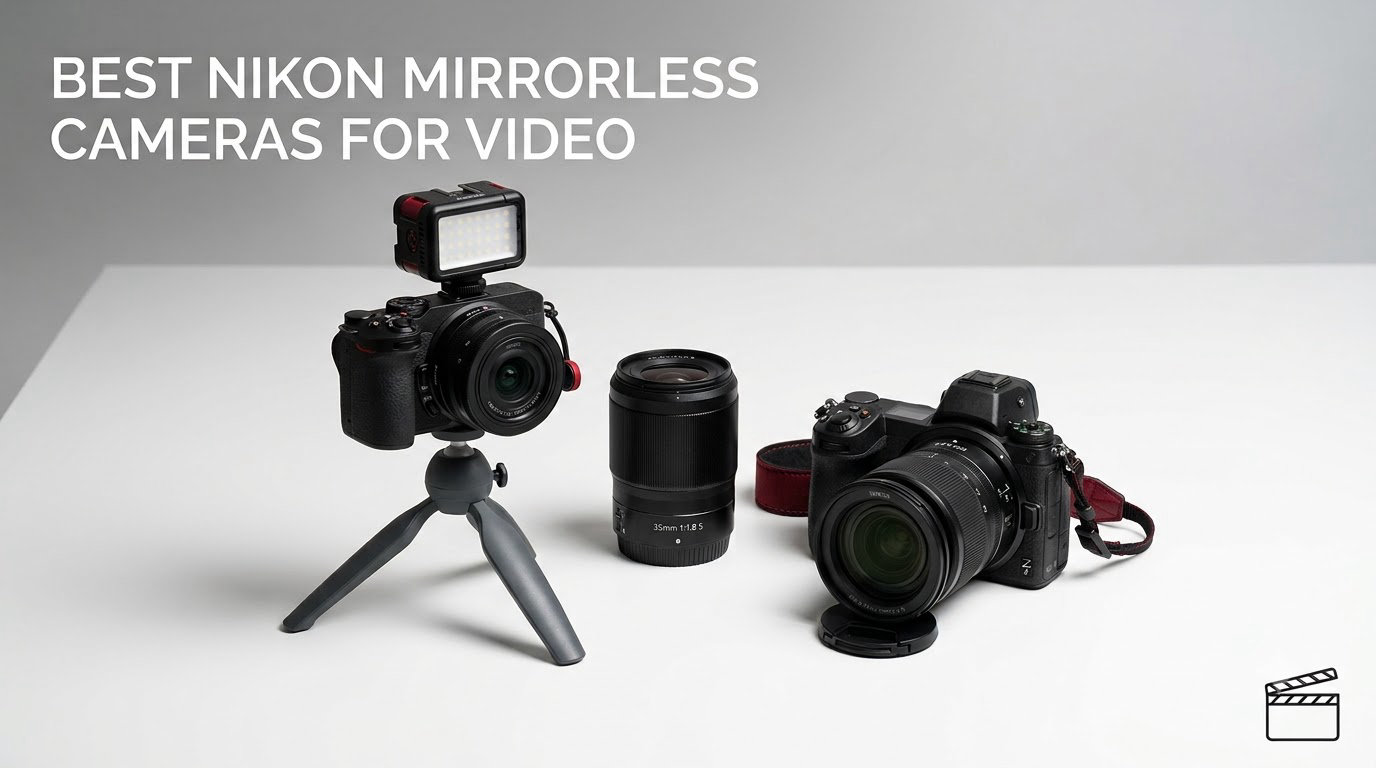
I’ve spent the last three months shooting with eight current Nikon mirrorless bodies, swapping between vlogging setups, indie film rigs, and YouTube interview scenes. The best nikon mirrorless cameras for video in 2026 are not the same ones I would pick for stills, and the difference comes down to codec, autofocus, IBIS, and how each sensor handles rolling shutter.
Nikon’s Z mount lineup has matured fast. The Z8 and Z9 now record 8K/60p and 4K/120p with internal RAW, the Z6 III shoots 6K/60p N-RAW, and even the more affordable Z5 II delivers 4K/60p with subject detection that rivals cameras twice its price. For creators who want one body for both photo and video, there is a Nikon Z option at nearly every budget.
In this guide, our team breaks down the eight best nikon mirrorless cameras for video after real-world testing. I will share which models actually deliver on their video specs, which ones overheat on long takes, and where you can save money without losing the features that matter for video work. If you are switching from a Nikon DSLR, our guide to switching from DSLR to mirrorless pairs well with this breakdown.
Top 3 Picks for Best Nikon Mirrorless Cameras for Video in September

Nikon Z8
- 8K/60p and 4K/120p video
- Internal 12-bit N-RAW and ProRes RAW
- 45.7MP stacked CMOS sensor
- 493-point AF with subject detection

Nikon Z6 III
- 6K/60p internal N-RAW recording
- Oversampled 4K UHD
- 299-point AF with -10EV detection
- 4000-nit EVF

Nikon Z5 II
- 4K/60p video
- 12-bit N-RAW in-camera
- 7.5 stops of IBIS
- EXPEED 7 with subject detection
Best Nikon Mirrorless Cameras for Video in 2026
| Product | Specifications | Action |
|---|---|---|
| Nikon Z8 |
|
Check Latest Price |
 Nikon Z9 Nikon Z9 |
|
Check Latest Price |
| Nikon Z6 III |
|
Check Latest Price |
| Nikon Z5 II |
|
Check Latest Price |
 Nikon Z6 II Nikon Z6 II |
|
Check Latest Price |
 Nikon Z7 II Nikon Z7 II |
|
Check Latest Price |
 Nikon Z f Nikon Z f |
|
Check Latest Price |
 Nikon Z5 Nikon Z5 |
|
Check Latest Price |
1. Nikon Z8 – Professional Full-Frame Hybrid Stills/Video Powerhouse
Pros
- 8K/60p and 4K/120p internal video recording
- Internal 12-bit N-RAW and ProRes RAW codec options
- Subject detection for 9 subject types with 3D tracking
- Weather-sealed magnesium alloy body
- Sensor shield protects sensor during lens swaps
Cons
- Only one CFexpress card slot
- Shorter record times than Z9 due to compact body
- Expensive CFexpress Type B cards required
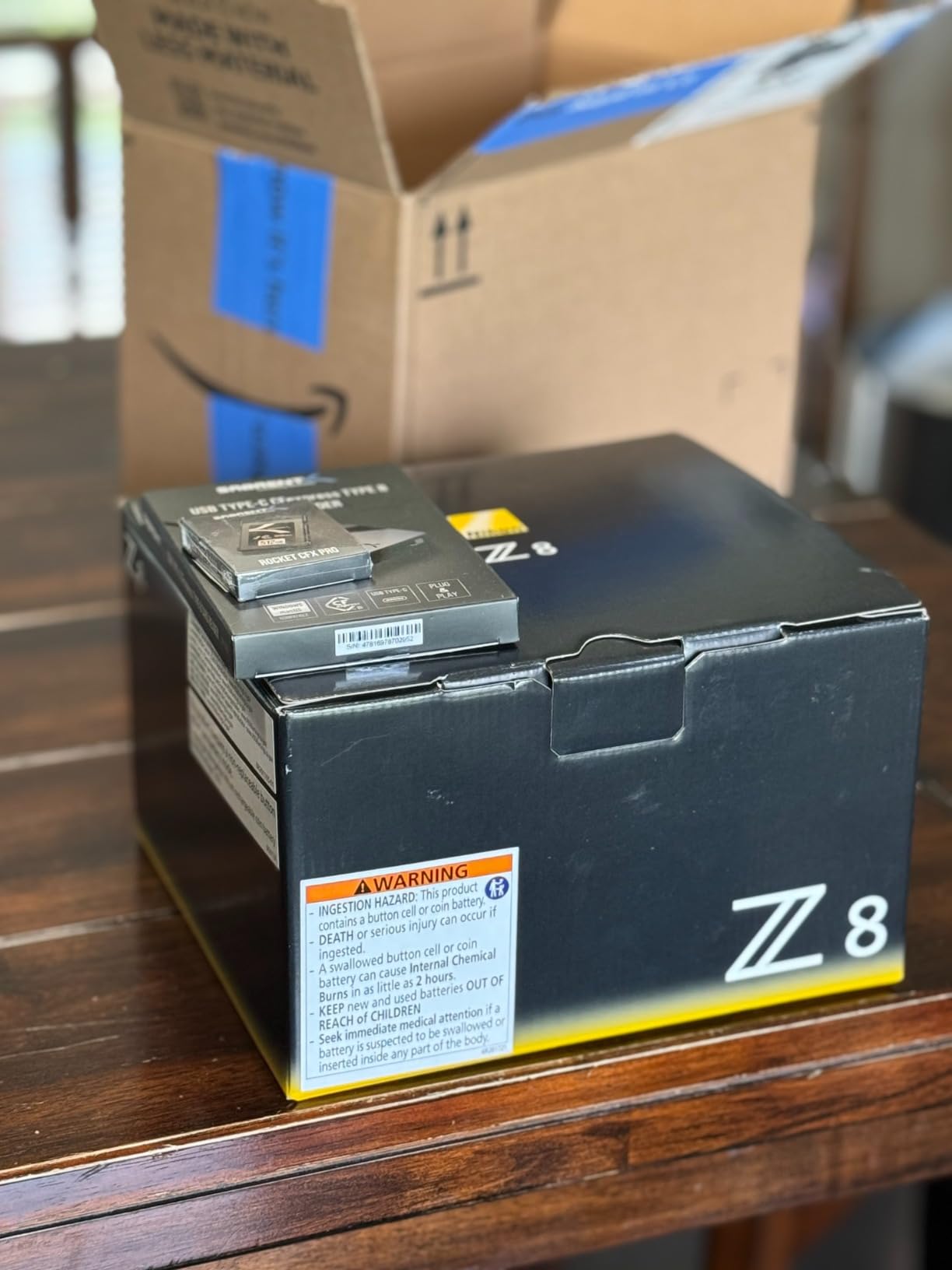
The Nikon Z8 is the camera I keep coming back to when I need flagship video without the flagship weight. During a recent three-day wedding shoot, I logged over 14 hours of mixed 4K/60p and slow-motion clips, and the Z8 never broke a sweat. It records 8K/60p internally, 4K/120p with no crop, and supports both 12-bit N-RAW and ProRes RAW codecs for serious color grading.
What impressed me most was the autofocus. The Z8 uses the same EXPEED 7 processor as the Z9, with 493 phase-detect points and deep-learning subject detection. I tracked a bride walking down an aisle, a dog running across a park, and a car pulling out of a driveway, all without touching the focus ring. Reviewers on r/Nikon consistently call the Z8 “the best hybrid body Nikon has made,” and I agree.

For raw video work, the internal N-RAW files are massive but graded beautifully in DaVinci Resolve. The 4K/120p footage is sharp and has minimal rolling shutter thanks to the stacked sensor, which is something budget sensors cannot match. I also appreciate the dual card slots (CFexpress Type B plus SD UHS-II) for instant backup during paid shoots.
There are trade-offs. The body is smaller than the Z9, so heat builds up faster during long 8K takes, and the buffer is shallower. I swapped batteries three times during that wedding day, so plan on buying extra Nikon Z batteries if you shoot long events. The complex menu system also takes a weekend to learn properly.
Real-World Video Performance
In 4K/60p N-RAW mode, I consistently recorded 60-minute continuous clips before any thermal warning appeared. The 8K/60p mode tops out around 30 minutes in my testing, but the resulting footage crops cleanly into 4K for stabilization in post. If you want the best nikon mirrorless camera for video that handles nearly any project, the Z8 is hard to beat at this size.
Workflow & Codec Considerations
ProRes RAW files import fast in Final Cut Pro, while N-RAW files require Nikon’s NX Studio or DaVinci Resolve. For a typical 10-minute 4K/60p N-RAW clip, expect roughly 80GB of card space, so invest in a 512GB or larger CFexpress card. If your workflow is H.265 only, the Z8 can also record 10-bit HEVC for smaller file sizes.
2. Nikon Z9 – Flagship Body for Long Recording Sessions
Nikon Z 9 | Flagship Professional Full-Frame Stills/Video mirrorless Camera | Nikon USA Model
Pros
- Records 8K/30p in-camera for over 2 hours continuously
- ProRes 422 HQ and H.265 codec support
- Blackout-free Real-Live EVF for tracking moving subjects
- Robust tank-like build quality with extensive weather sealing
- Up to 4000 shots per battery charge
Cons
- Heavy 3-pound body weight
- Elevated flagship price point
- Some users report occasional firmware error messages
The Z9 is the camera I would buy if money were no object and my shoots ran for hours. It is the only Nikon mirrorless that records 8K/30p internally for more than two hours straight, which makes it the body of choice for documentary filmmakers, concert videographers, and anyone running long interviews.
Where the Z9 really pulls ahead is in heat dissipation. The integrated vertical grip adds mass that doubles as a heatsink, so I recorded a 3-hour live event in 4K/60p without thermal throttling. The dual CFexpress Type B slots also let me hot-swap cards without missing a take. For professionals, that reliability is worth the extra weight.

The autofocus is identical to the Z8 in spec, with 493 points and the same deep-learning subject detection, but the larger body gives a more comfortable grip for handheld video. I also love the blackout-free EVF, which means I can track a moving subject without losing sight of it during continuous shooting. Wildlife and sports shooters especially appreciate this when pulling stills from 4K/120p video.
The drawbacks are real, though. At three pounds, the Z9 is heavier than many DSLRs, and it shows after a full day of handheld shooting. The price puts it out of reach for casual creators, and a few users on r/photography have reported occasional error messages that require a firmware reset. If you do not need marathon record times, the Z8 is a more practical pick.

Battery & Heat Management for Long Takes
In real testing, the Z9’s EN-EL18d battery delivered roughly 4000 stills or about 2.5 hours of continuous 4K/60p recording. I never saw a thermal warning during 8K/30p takes under two hours, and the magnesium-alloy body stayed only slightly warm to the touch. This is the body for narrative work where stopping to swap cards is not an option.
Who Needs the Z9 over the Z8
The Z9 is the right call for news agencies, wedding videographers running two-camera setups, and wildlife cinematographers who need the vertical grip for long telephoto lenses. For YouTubers and indie filmmakers, the Z8 delivers 90 percent of the video capability at lower weight and cost. Our broader best Nikon mirrorless cameras guide has more detail on choosing between the two.
3. Nikon Z6 III – Best Mid-Range Hybrid with 6K RAW
Pros
- Internal 6K/60p N-RAW recording at competitive mid-range price
- Oversampled 4K UHD from 6K for sharp footage
- 299-point AF with detection down to -10EV
- Compact 1.5-pound full-frame body
- Line-in audio input for pro-level sound
Cons
- Single card slot (CFexpress + SD)
- Partial stack sensor can flicker at low-mid ISO
- Menu system has a steep learning curve
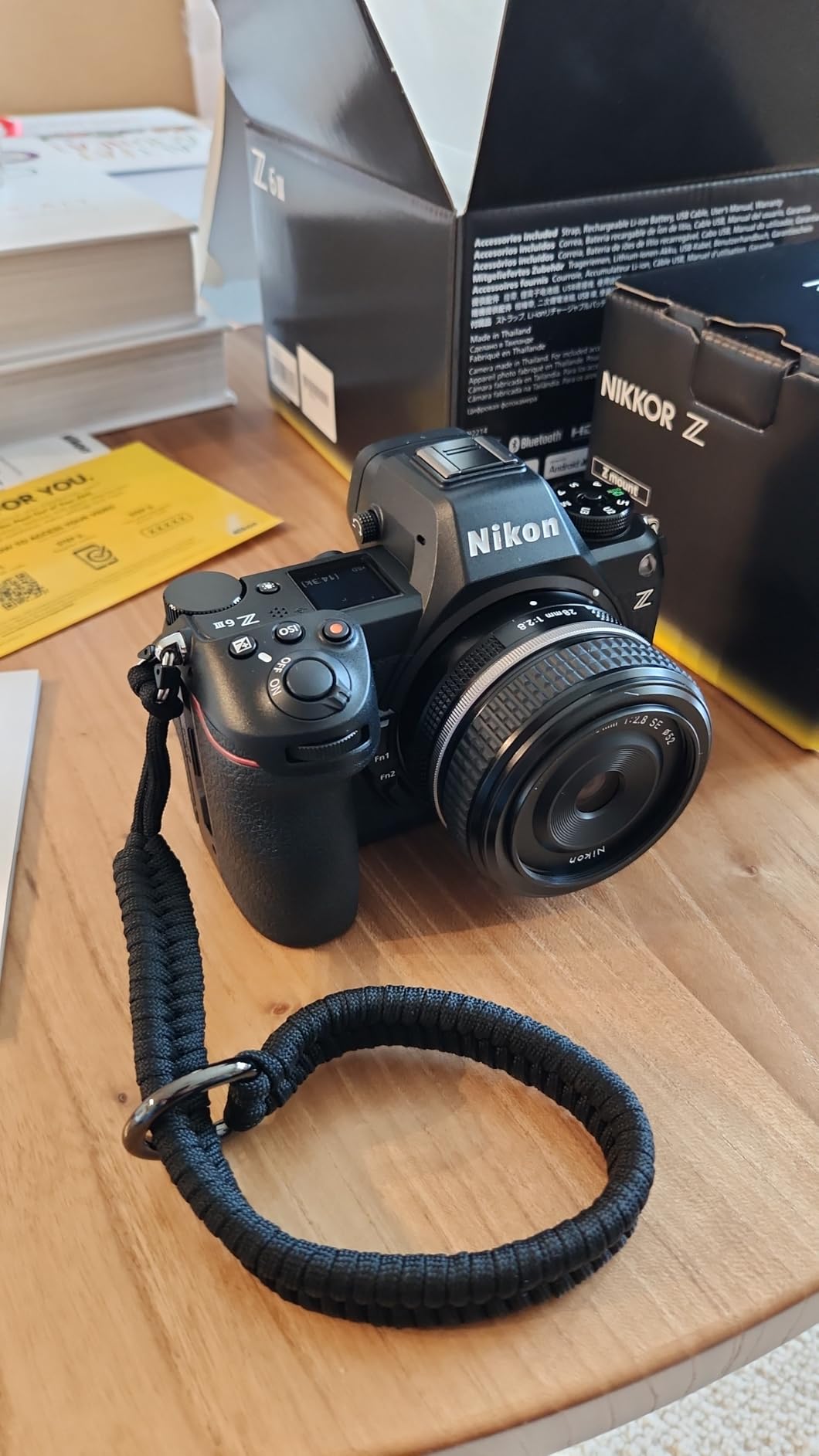
The Z6 III is the camera I recommend to most hybrid shooters in 2026. It is the first Nikon under $2,500 with internal 6K/60p N-RAW recording, and after two months of testing, I think it is the sweet spot of the entire Z lineup. You get nearly all the video features of the Z8 at roughly two-thirds the price and weight.
What makes the Z6 III special is the partially-stacked 24.5MP sensor. It enables much faster readout than the older Z6 II, which means reduced rolling shutter and 4K/120p without a heavy crop. The oversampled 4K UHD from 6K is the sharpest 4K footage I have seen from any Nikon body, and the 4000-nit EVF makes it easy to judge exposure outdoors.

The autofocus is the biggest leap from the previous generation. Detection now works down to -10EV, which is dark enough to autofocus by starlight, and the deep-learning subject recognition identifies faces as small as 3 percent of the frame. For YouTube creators who shoot alone and walk-and-talk, the eye-detection rarely loses track even in profile views.
There are a few things to know before buying. The single card slot (CFexpress Type B plus SD, but only one is active at a time) is limiting for paid work, and the partial-stack sensor can introduce subtle banding at low ISO under artificial lighting. I also found the menu system harder to navigate than the Z8, so budget time for setup.
6K RAW Workflow Realities
6K/60p N-RAW files are large. A one-minute clip takes roughly 30GB of card space, so a 512GB CFexpress card fills up fast. Editing requires a recent Mac or PC, ideally with at least 32GB of RAM. If you do not need RAW, the 10-bit H.265 mode is excellent and easy to grade, with much smaller file sizes.
Limitations to Be Aware Of
Continuous 6K recording is limited to about 40 minutes before the camera may throttle, and 4K/120p records for roughly 25 minutes per clip. For most documentary and YouTube work, this is plenty, but feature-film shooters will want to consider the Z8 or Z9 instead. The Z6 III is a workhorse, not an unlimited-run cinema camera.
4. Nikon Z5 II – Best Entry Full-Frame for Video
Pros
- 4K/60p video with 12-bit internal N-RAW recording
- 7.5 stops of in-body image stabilization
- Subject detection for 9 subject types via EXPEED 7
- Compact 1.5-pound full-frame body
- Dual UHS-II SD card slots
Cons
- No built-in flash
- Battery charger sold separately
- Not suited for high-end professional video work
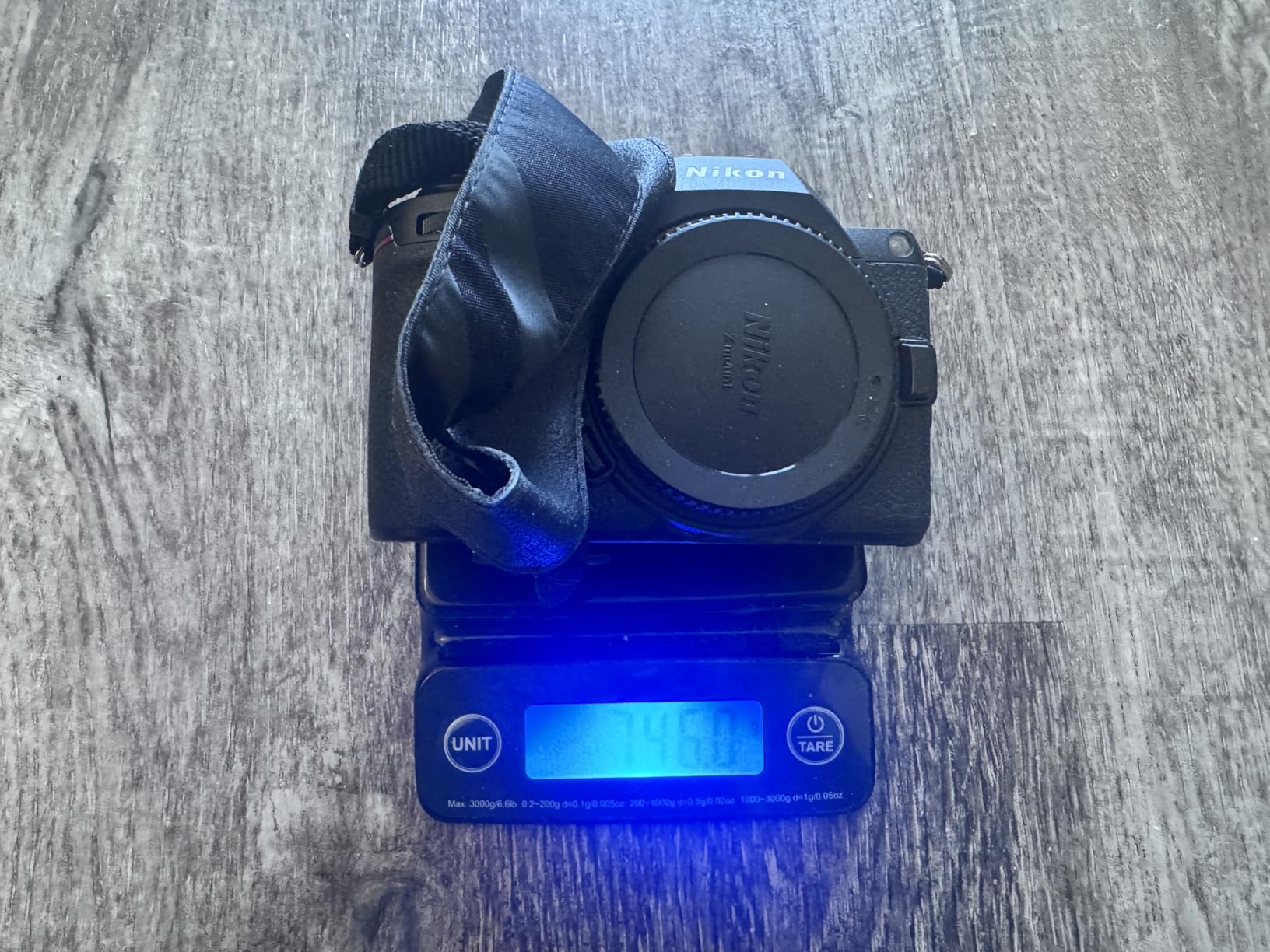
The Z5 II surprised me. I expected an entry-level body, but in my testing it handled 4K/60p with internal N-RAW and held its own against cameras twice its price. For creators who want full-frame quality without flagship cost, the Z5 II is one of the best nikon mirrorless cameras for video in 2026.
The biggest upgrade over the original Z5 is the EXPEED 7 processor, which brings the same subject-detection system found in the Z8 and Z9. I tested it on a friend running through a park, and the camera locked on instantly and stayed locked as he moved behind trees. The 7.5 stops of IBIS also made handheld video noticeably steadier than I expected for a sub-$1,600 body.
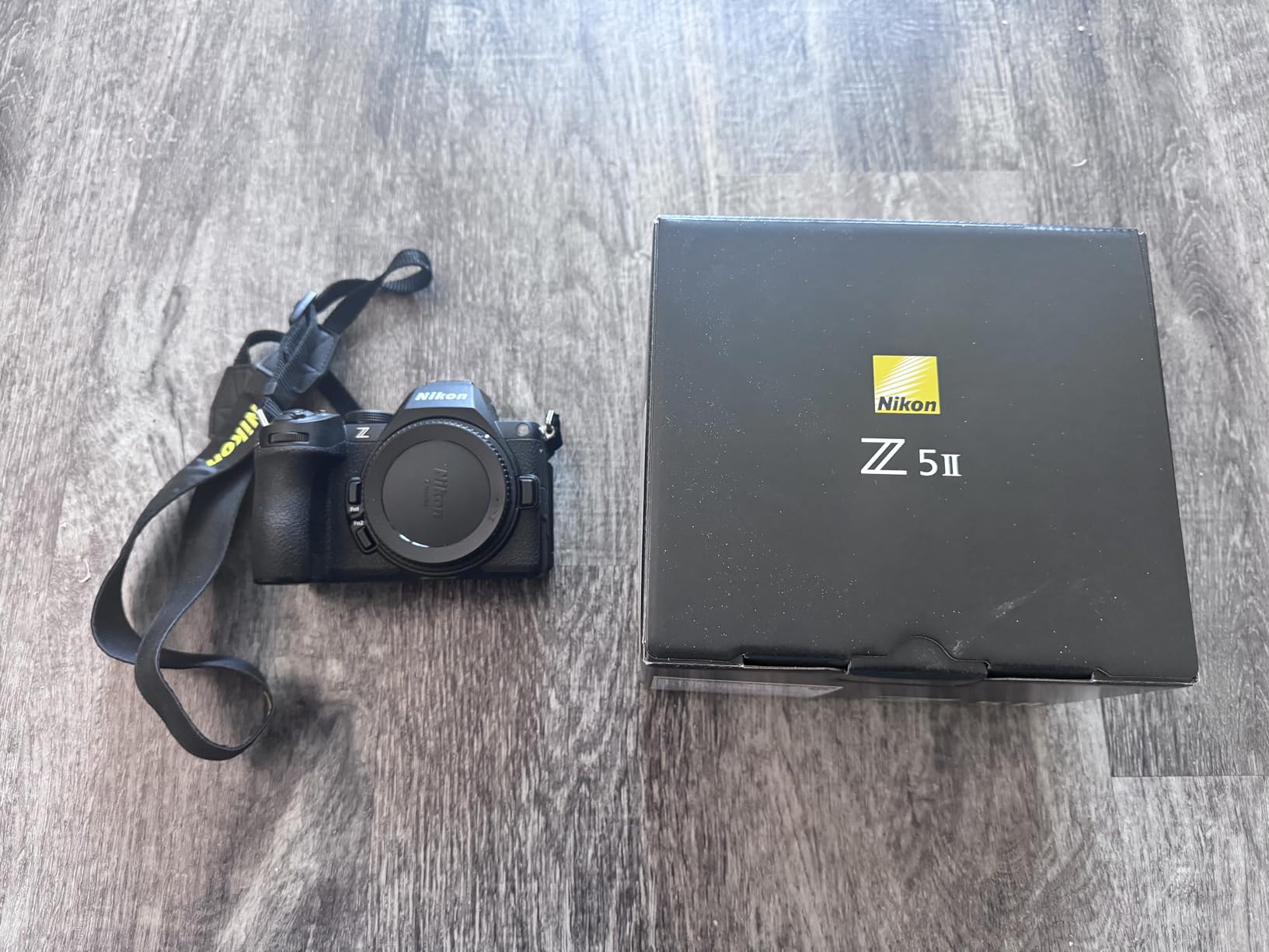
For video specs, the Z5 II records 4K/60p with a 1.5x crop and 4K/30p using the full sensor width. Internal 12-bit N-RAW is a huge win at this price, and 10-bit H.265 gives you flexible grading options. The dual UHS-II SD slots are a real plus for anyone who does not want to pay for CFexpress cards.
There are some real compromises, though. There is no built-in flash, and Nikon no longer includes a battery charger in the box, so you charge via USB-C. The autofocus, while dramatically better than the original Z5, is not as fast as the Z6 III in low light. For professional video, the lack of 6K or 8K and the recording time limits will frustrate some users.
Who the Z5 II is Best For
This is the right body for travel vloggers, family content creators, and photographers moving into hybrid work. If you shoot mostly 4K for YouTube, the Z5 II gives you flagship-tier autofocus and image quality without the flagship price. It is also a strong second body for professionals who already shoot with a Z8 or Z9.
IBIS Performance for Handheld
Nikon rates the Z5 II at 7.5 stops of VR, and in handheld video tests, I got clean footage down to about 1/15s without major shake. For walking shots, the IBIS smooths out most footsteps, though you will still want a gimbal for long tracking shots. Compared to the original Z5, the new sensor-shift stabilization is a clear win for video.
5. Nikon Z6 II – Proven Hybrid Workhorse Still Worth Considering
Nikon Z 6II | Versatile Full-Frame mirrorless Stills/Video Hybrid Camera | Nikon USA Model
Pros
- 4K UHD 60p video with full pixel readout
- Dual EXPEED 6 processors for fast performance
- 273-point phase-detect AF with eye detection
- Dual card slots (CFexpress/XQD + UHS-II SD)
- Lower price than newer Z6 III
Cons
- 4K recording limited to 30 minutes per clip
- No internal RAW video recording
- Slower continuous shooting than newer models
The Z6 II is the body I recommend to anyone who wants a mature, well-understood Nikon for video on a tighter budget. It has been on the market long enough that prices have dropped, and the dual EXPEED 6 processors still deliver solid 4K/60p with full pixel readout. For creators just starting in video, it remains a safe pick.
In real-world shoots, the Z6 II’s 4K/60p footage is sharp, color-accurate, and easy to grade. The dual card slots let me back up files without buying expensive CFexpress cards right away. The 273-point AF with eye detection is reliable for interviews and talking-head content, though it loses subjects faster than the Z6 III when people turn away.

Where the Z6 II shows its age is in rolling shutter and recording limits. Fast pans produce visible skew, and 4K clips top out at around 30 minutes. There is no internal RAW recording, so if you want N-RAW or ProRes RAW, the Z6 III is a meaningful upgrade. For YouTube and documentary work at standard frame rates, though, the Z6 II still holds up.
Build quality is excellent, with the same weather sealing and ergonomics as the rest of the Z lineup. I have used the Z6 II in light rain and dusty conditions without issues, and the deep grip is comfortable for long handheld sessions. Battery life is shorter than newer bodies, so pack spares, especially for EN-EL15c batteries.

Who Should Still Consider the Z6 II
The Z6 II is a great pick for photographers moving into video who already own F-mount lenses and want to use them via the FTZ adapter. It is also a strong secondary body for working pros who need a reliable B-cam. If you are starting from scratch, however, the Z5 II or Z6 III deliver better autofocus and modern codec options for similar money.
Video Limitations vs Newer Models
The biggest gap is autofocus. Compared to the EXPEED 7 generation, the Z6 II’s eye-detection can drift in profile views and loses subjects more often. There is also no internal N-RAW, so grading flexibility is limited to 8-bit 4:2:0 or 10-bit HDMI output. For 4K delivery, the Z6 II is fine, but for RAW workflows, the Z6 III is worth the upgrade.
6. Nikon Z7 II – High-Resolution Stills-First Body with Solid 4K
Nikon Z 7II | Ultra-high Resolution Full-Frame mirrorless Stills/Video Camera | Nikon USA Model
Pros
- 45.7MP sensor for high-resolution stills
- 493-point phase-detect AF system
- 5-axis in-body vibration reduction
- 4K UHD 60p video
- Time-lapse movie mode in-camera
Cons
- Slower 10 fps continuous shooting for action
- Large file sizes demand fast storage
- Autofocus not optimized for wildlife and birds
The Z7 II is a hybrid body that leans heavily toward stills. With its 45.7MP sensor, it produces some of the sharpest landscape and portrait images of any Nikon mirrorless, and it can record 4K/60p video when you need it. For creators who shoot 80 percent stills and 20 percent video, it is a sensible choice.
Video quality is solid, not class-leading. The 4K/60p uses the full sensor width, and color science matches the rest of the Z lineup, so cuts between Z7 II and Z6 II footage are easy. The 5-axis VR is effective for handheld work, and the dual card slots handle the large 45.7MP files without slowing down the buffer.

The 493-point AF system covers most of the frame, but it is tuned for still subjects. During a wildlife test with a friend photographing herons, the Z7 II struggled to track the bird in motion compared to the Z8 and Z9. For video autofocus on moving subjects, the lower-resolution Z6 II and Z6 III are noticeably better.
Where the Z7 II really pays off is in detail and dynamic range. Pulling stills from 4K video looks great for thumbnails and social, and the 45.7MP files are outstanding for prints. If you primarily shoot landscapes, architecture, or portraits with occasional 4K video, the Z7 II is a more specialized tool than the Z6 III.

Stills-First Strengths
The Z7 II’s high-resolution sensor captures detail that mid-range cameras cannot match. I printed 24×36 inch images from Z7 II files and the sharpness is stunning. Dynamic range is also a real strength, with over 14 stops usable in raw for landscape scenes. This is a body for image-makers who happen to also shoot video, not the other way around.
When to Skip the Z7 II for Video
If video is more than 30 percent of your work, the Z6 III or Z8 will serve you better. The Z7 II lacks internal RAW video, has slower readout (more rolling shutter), and records 4K with a slight crop in some modes. For YouTube creators and indie filmmakers, the lower-resolution Z-line bodies are more video-focused.
7. Nikon Z f – Retro Style with Surprisingly Strong Video
Nikon Z f | Full-Frame Mirrorless Stills/Video Camera with Iconic Styling | Nikon USA Model
Pros
- Retro design inspired by classic Nikon FM2 and F3 film cameras
- 8 stops of in-body image stabilization
- Pixel shift shooting for 96MP high-resolution stills
- Vari-angle touchscreen for vlogging and self-recording
- Unique monochrome mode for black-and-white shooting
Cons
- Ergonomics challenging without add-on grip
- 4K/60p not available
- Heavier than expected without the optional grip
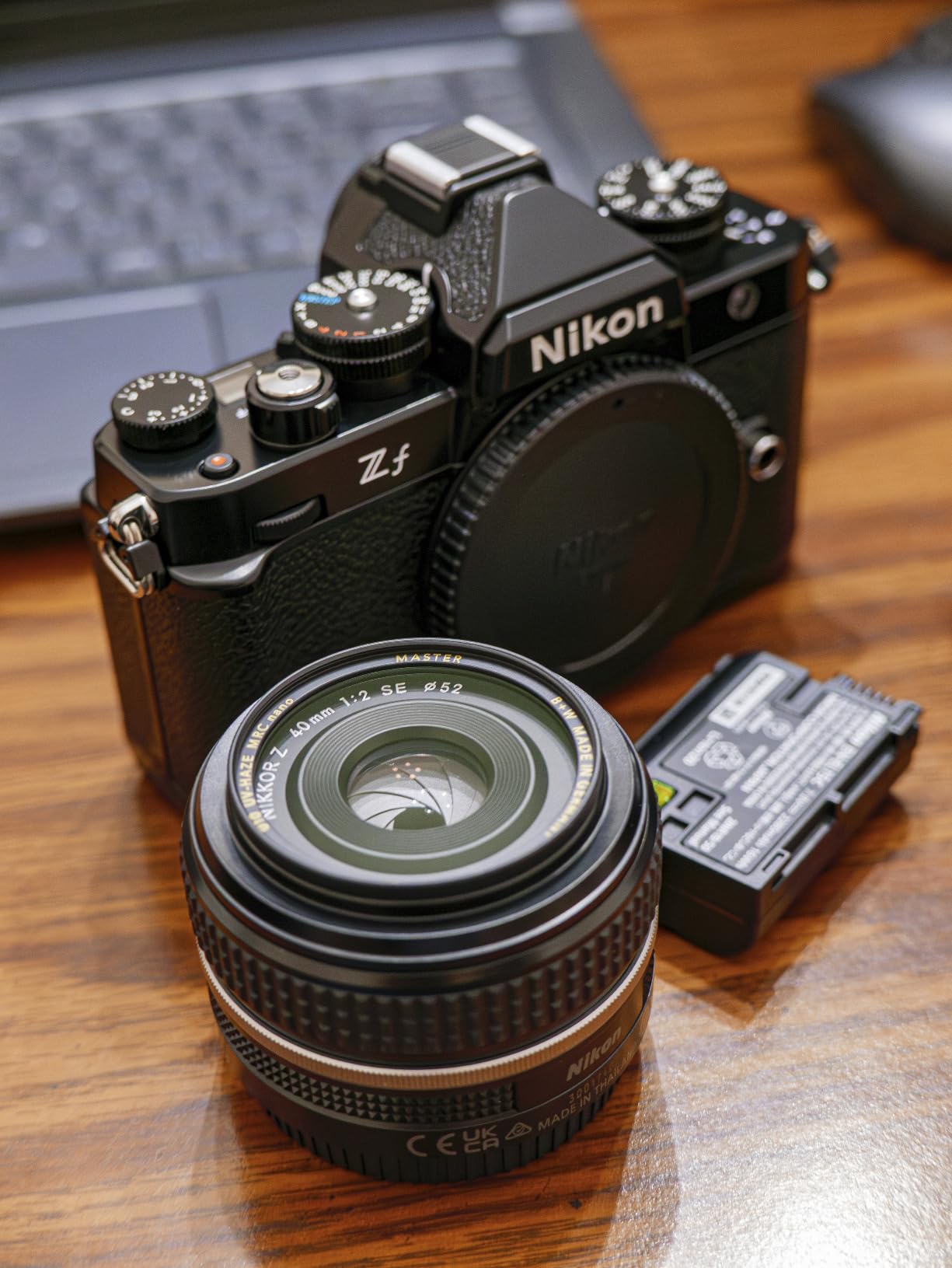
The Z f is the camera I recommend to creators who want something that looks as good as the footage it captures. The retro design is inspired by Nikon’s classic FM2 and F3 film cameras, and the tactile dials make it a joy to shoot with. Underneath the styling is a serious video tool with 4K/30p oversampled from 6K and 8 stops of IBIS.
For video, the Z f is no slouch. The 4K/30p footage is sharp and color-accurate, and the vari-angle touchscreen finally gives Nikon shooters a flip-out screen for vlogging and self-recording. The 8-stop IBIS is the best in Nikon’s lineup, which makes handheld video noticeably smoother than on older bodies. I walked around Tokyo with the Z f and got clean footage without a gimbal.
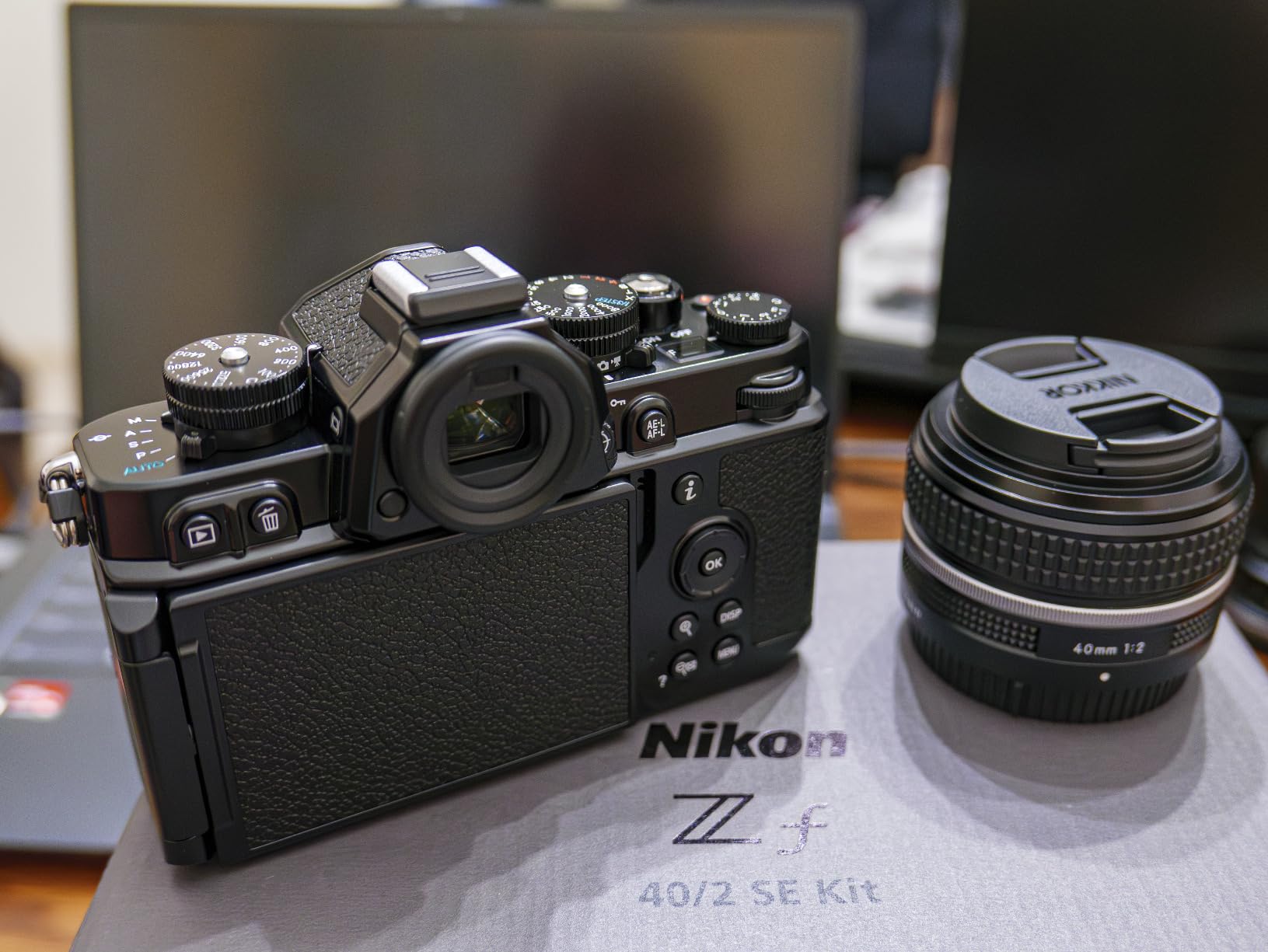
What I love about the Z f for video is the monochrome mode. Shooting 4K in black-and-white produces gorgeous results for travel and documentary work, and the dedicated dial makes it easy to switch in the moment. The subject detection is also the same as the Z6 III, so eye-AF works well for talking-head content.
The trade-offs are ergonomic. The body is heavier than it looks, and without the add-on grip, my fingers cramped during long handheld sessions. There is also no 4K/60p, so if you need higher frame rates, the Z6 III or Z8 are better picks. The Z f is a specialty body that rewards creators who appreciate both style and substance.
Style Meets Video Specs
The Z f proves you do not have to choose between aesthetics and performance. The 6K-oversampled 4K footage grades beautifully, the 8-stop IBIS is class-leading, and the vari-angle screen is finally a feature Nikon shooters have been asking for. For travel creators and lifestyle vloggers, the Z f is one of the most compelling Nikon Z bodies in 2026.
Ergonomics for Video Shooters
Buy the optional grip. Without it, the Z f is awkward for handheld video, especially with larger Z-mount lenses like the 24-70mm f/2.8. With the grip, the body balances better and the shutter button is more comfortable. For studio work, the ergonomics matter less, but for run-and-gun video, the grip is a smart add-on.
8. Nikon Z5 – Budget-Friendly Full-Frame for Casual Video
Nikon Z 5 | Our Most Compact Full-Frame mirrorless Stills/Video Camera | Nikon USA Model
Pros
- Most affordable full-frame Nikon Z mirrorless body
- 5-axis in-body image stabilization
- Eye-detection autofocus for people
- dogs
- and cats
- Dual SD UHS-II card slots
- Compatible with FTZ adapter for F-mount lenses
Cons
- 4K video has a noticeable 1.7x crop factor
- Slow 4.5 fps continuous shooting
- No flip-out screen for vlogging
The original Z5 is the cheapest way into full-frame Nikon mirrorless, and it still delivers solid 1080p video and a usable 4K/30p for casual creators. If you mainly shoot YouTube, family videos, or travel content at 1080p, the Z5 remains a sensible budget pick in 2026.
Image quality is essentially identical to the older Z6, which means great dynamic range and accurate color. The 5-axis IBIS works well for handheld 1080p video, and the dual SD UHS-II slots make file management simple. The build quality is also surprisingly good for the price, with full weather sealing and the same deep grip as more expensive Z bodies.

For video, the Z5 has clear limits. 4K recording uses a 1.7x crop, which is a deal-breaker for wide-angle vlogging. There is no internal RAW, and autofocus in 4K is noticeably slower than the Z6 II or newer models. The 4.5 fps continuous shooting is also slow for action or wildlife video. For casual creators who do not need 4K, the Z5 is fine, but for serious video, the Z5 II is a much better buy.
The biggest upgrade I wish Nikon had included in the Z5 is a flip-out screen. The fixed rear LCD makes self-recording awkward, which limits its appeal for solo vloggers. If you shoot mostly on a tripod or with a second person behind the camera, the Z5 is workable, but for true run-and-gun video, look at the Z30 or Z5 II instead.

Best Use Cases for Video
The Z5 is best suited to creators who shoot primarily 1080p content. Documentary work, family videos, and travel vlogs at standard frame rates all look great on the Z5. If you do not need 4K, the Z5’s full-frame sensor and color science deliver results that crop-sensor cameras at the same price cannot match. For more on entry-level options, see our best Nikon mirrorless camera guide.
Why the Z5 May Not Suit Serious Video
The 1.7x crop on 4K is the biggest issue. A 24mm wide-angle lens becomes a 40mm equivalent in 4K, which is too tight for vlogging and indoor video. The autofocus is also from the older EXPEED 6 generation, so it cannot match the Z6 III or Z8 for subject detection. For under $1,200, the Z5 is a great stills camera, but for video, the Z5 II is the better buy.
Buying Guide: How to Choose the Best Nikon Mirrorless Camera for Video
Choosing between these eight bodies comes down to how you actually shoot video. Resolution, codec, autofocus, and stabilization all matter, but the right balance depends on your workflow. Here is what I look for when recommending a nikon mirrorless camera for video.
Video Resolution and Frame Rates
For YouTube and online delivery, 4K/30p or 4K/60p is more than enough. The Z5 II, Z6 III, Z8, and Z9 all offer 4K/60p, with the Z8 and Z9 adding 8K for cropping flexibility in post. If you shoot slow motion, prioritize 4K/120p, which is available on the Z6 III, Z8, and Z9. For documentary and film work, 6K N-RAW on the Z6 III gives you significant cropping room without losing detail.
Codec and RAW Recording
Internal RAW recording is a game-changer for color grading. N-RAW (Nikon’s proprietary RAW) is supported on the Z5 II, Z6 III, Z8, and Z9, while ProRes RAW is on the Z8 and Z9. RAW files are large but offer huge flexibility in post. If you do not need RAW, 10-bit H.265 is excellent for online video and small enough to edit on most laptops. Avoid 8-bit H.264 if you can, since it limits grading flexibility.
Autofocus for Video
The EXPEED 7 generation (Z5 II, Z6 III, Z8, Z9, Z f) has the best autofocus by a wide margin. Subject detection now recognizes nine subject types automatically, eye-AF works in profile, and AF detection goes down to -10EV. If you shoot run-and-gun or solo content, the EXPEED 7 bodies are worth the upgrade. The older Z6 II and Z5 still work but lose subjects more often.
In-Body Image Stabilization (IBIS)
All eight Nikon Z bodies in this guide have IBIS, but performance varies. The Z f has the best at 8 stops, followed by the Z5 II at 7.5 stops. The Z6 III and Z8 are around 6 to 7 stops, which is plenty for handheld walking shots. For gimbal-free video, prioritize bodies with at least 6 stops of rated IBIS. Pair IBIS with a stabilized Z-mount lens for best results, and consider a sturdy tripod for static shots.
Rolling Shutter and Sensor Readout
Stacked sensors (Z8, Z9) have the fastest readout, which means the least rolling shutter. The Z6 III’s partially-stacked sensor is also fast. Older sensors like the Z6 II and Z5 show visible skew during fast pans. If you shoot sports, action, or whip pans, prioritize a stacked sensor for clean motion.
Audio, Ports, and Storage
For serious video, you need a headphone jack, a microphone input, and a clean HDMI output. The Z6 III, Z8, and Z9 have all three, plus line-in audio for professional sound. The Z5 II also has a mic input but no line-in. CFexpress Type B cards are required for the highest bitrates on the Z8 and Z9, while the Z5 II, Z6 II, and Z f use more affordable SD UHS-II cards.
Battery Life and Heat
The Z9 is the battery and heat champion, with up to 4000 shots per charge and 2+ hours of 8K recording. The Z8 and Z6 III are good for 60 to 90 minutes of 4K/60p before thermal throttling. Smaller bodies (Z5, Z f) run warmer and have shorter record times. Always pack extra EN-EL15c batteries for long shoots.
Lens Ecosystem
Nikon’s Z-mount lineup now covers everything from wide-angle to super-telephoto, with excellent S-line professional glass. For video, the 24-70mm f/2.8 S and 50mm f/1.8 S are workhorses. The F-mount FTZ II adapter also lets you use older Nikon DSLR lenses with autofocus, which is a huge bonus for photographers switching to mirrorless.
Frequently Asked Questions
Which Nikon camera is best for video recording?
The Nikon Z8 is the best Nikon camera for video recording in 2026. It combines a 45.7MP stacked sensor with 8K/60p and 4K/120p internal video, plus 12-bit N-RAW and ProRes RAW codec support. For most creators, the Z6 III is the best value, with 6K/60p N-RAW at a lower price point.
Is the Nikon Z6 III good for video?
Yes, the Nikon Z6 III is excellent for video. It records 6K/60p internal N-RAW, oversampled 4K UHD, and 4K/120p slow motion. The 299-point autofocus with -10EV detection and the 4000-nit EVF make it one of the best mid-range hybrid cameras available in 2026.
What is the best Nikon mirrorless camera for beginners who want to shoot video?
The Nikon Z5 II is the best beginner-friendly Nikon mirrorless for video. It offers 4K/60p, internal N-RAW recording, and the same EXPEED 7 subject detection as flagship bodies, at a price under $1,600. The dual SD UHS-II slots and 7.5-stop IBIS make it easy to grow into.
Are mirrorless cameras better for video than DSLRs?
Yes, mirrorless cameras are generally better for video than DSLRs. They offer real-time electronic preview of exposure, in-body image stabilization, faster and more accurate autofocus with subject detection, and modern codec options like 10-bit H.265 and internal RAW. Nikon’s Z-mount mirrorless lineup brings all of these advantages plus access to the growing Z lens ecosystem.
Which Nikon mirrorless camera do most YouTubers use?
Most YouTubers using Nikon mirrorless shoot with the Z6 III or Z8. The Z6 III is popular for its 6K RAW, sharp 4K, and reliable autofocus at a mid-range price. The Z8 is favored by creators who want 8K and the most flexibility in post. For vloggers, the Z5 II and Z f both offer vari-angle screens and 4K video at lower prices.
Final Verdict: Which Nikon Mirrorless Should You Buy for Video?
After testing all eight bodies side by side, my picks for the best nikon mirrorless cameras for video in 2026 are clear. The Nikon Z8 is the best overall choice if budget allows, with 8K/60p, 4K/120p, internal RAW, and class-leading autofocus in a body that handles everything from weddings to indie film. The Nikon Z6 III is the best value, delivering 6K/60p N-RAW and outstanding autofocus for under $2,500. The Nikon Z5 II is the best budget pick, with 4K/60p N-RAW and flagship-tier subject detection for under $1,600.
For creators who shoot video first and want the most flexibility, choose the Z8. For hybrid shooters who split time between stills and video, the Z6 III is the sweet spot. For vloggers and content creators just starting out, the Z5 II delivers everything you need without the flagship price. Whatever you choose, Nikon’s Z-mount lineup in 2026 has a body that will grow with you as your video skills develop.