
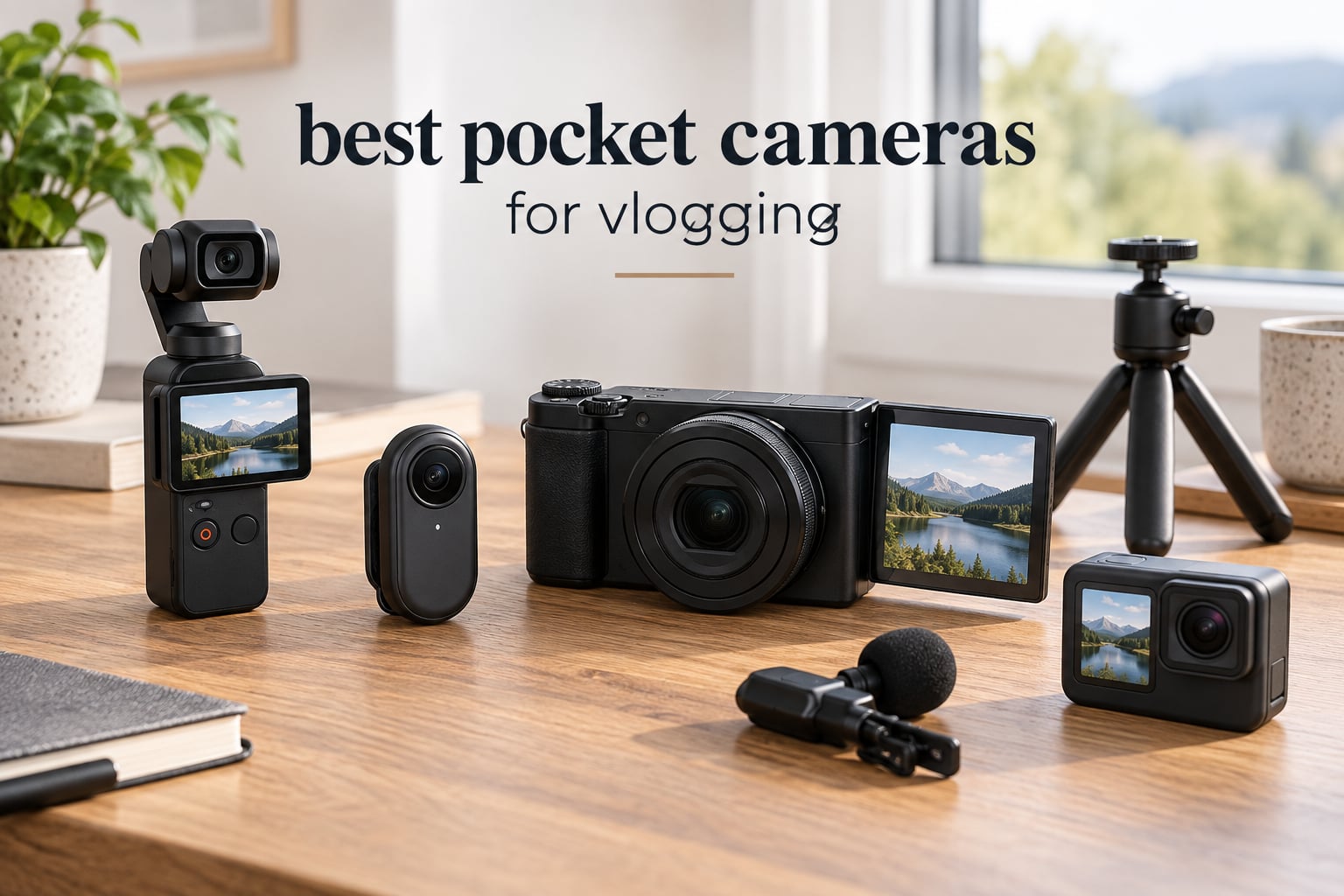
If you want smooth, high-quality video that actually fits in your pocket, the DJI Osmo Pocket 3 Creator Combo is the best pocket camera for vlogging you can buy right now. After testing dozens of cameras over the past year, our team keeps coming back to its 1-inch sensor, 3-axis mechanical gimbal, and ActiveTrack 6.0 as the gold standard for solo creators.
That last point matters more than ever in 2026. The FCC has effectively banned the new DJI Osmo Pocket 4 and Pocket 4 Pro from sale in the United States, so anyone shopping today is really choosing between the Pocket 3, premium compacts like the Sony ZV-1 II, and a wave of smaller wearable options from Insta360 and others. In this guide, I’ll walk you through eight cameras that truly fit in a jacket pocket, what each one does best, and which one matches the kind of content you actually shoot.
If you’re also comparing dedicated cinema tools, our best pocket cinema cameras guide covers larger-sensor options. For a broader vlogging roundup that includes mirrorless and ILC cameras, see our best vlogging cameras breakdown.
Top 3 Pocket Cameras for Vlogging at a Glance in September

DJI Osmo Pocket 3 Creator Combo
- 1-inch CMOS sensor
- 4K/120fps video
- 3-axis gimbal
- ActiveTrack 6.0

Best Pocket Cameras for Vlogging in 2026 Quick Overview
| Product | Specifications | Action |
|---|---|---|
| DJI Osmo Pocket 3 Creator Combo |
|
Check Latest Price |
 Sony ZV-1 Sony ZV-1 |
|
Check Latest Price |
 DJI Pocket 2 DJI Pocket 2 |
|
Check Latest Price |
 Sony ZV-1F Sony ZV-1F |
|
Check Latest Price |
 Insta360 GO Ultra Insta360 GO Ultra |
|
Check Latest Price |
 Kaysunlink H92 Kaysunlink H92 |
|
Check Latest Price |
| Xtra Muse Pocket Camera |
|
Check Latest Price |
 Canon PowerShot V10 Canon PowerShot V10 |
|
Check Latest Price |
1. DJI Osmo Pocket 3 Creator Combo – Best Pocket Camera for Vlogging Overall
Pros
- 1-inch sensor with 4K/120fps
- 3-axis mechanical gimbal for ultra-smooth footage
- 2-inch rotatable touchscreen
- ActiveTrack 6.0 face and object tracking
- D-Log M 10-bit color for grading
- 166-minute battery life
- DJI Mic 2 wireless support out of the box
Cons
- Can overheat during long 4K/120fps shoots
- Gimbal mechanism feels delicate without added protection
- Included case does not fully protect the body
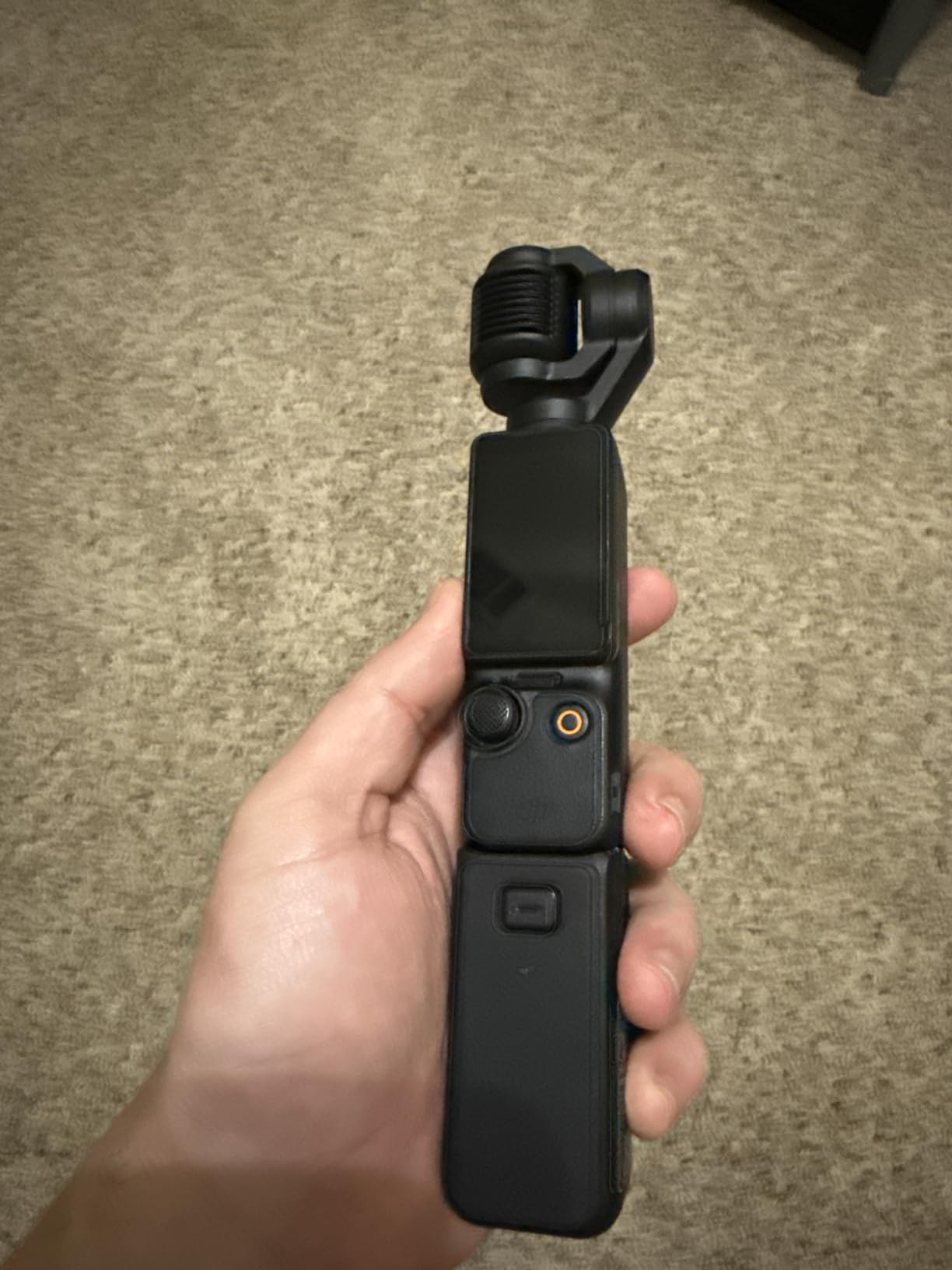
I carried the Osmo Pocket 3 Creator Combo on a two-week trip through mixed weather, and it earned its spot as my daily vlogging camera. The 1-inch sensor delivers noticeably better dynamic range than my old smartphone, especially in low-light hotel-room scenes, and the mechanical gimbal completely removes the jello look you get from electronic stabilization.
What I appreciate most is how fast it is to actually start shooting. Power on, rotate the screen, frame, hit record. There’s no lens cap, no menu hunting, no app registration interrupting the moment. The Creator Combo bundles the DJI Mic 2 transmitter and a mini tripod, which means I get usable audio from the very first take.
The ActiveTrack 6.0 system is the feature I underestimated. Tap a face once and the gimbal physically follows you as you walk, no crop, no digital wobble. Forum users at r/djiosmo consistently rank the Pocket 3 as the best walk-and-talk camera in 2026, largely because of how well that tracking holds up on uneven terrain.
D-Log M 10-bit color gives real grading headroom for YouTube thumbnails and cinematic Reels. Audio from the DJI Mic 2 sounds clean even at arm’s length, which solved my biggest gripe with built-in camera microphones. Battery life stretches to roughly 166 minutes per charge in my standard 4K30 walk-and-talk tests, easily covering a full shoot day with a top-up in the car.
Who the DJI Osmo Pocket 3 is best for
This is the right pick for solo creators who vlog on the move, travel video makers who need a gimbal-grade stabilizer without lugging a separate rig, and anyone upgrading from a smartphone who wants sharper video and clean wireless mic audio. It’s also the smart default for US buyers in 2026 because the Pocket 4 is effectively unavailable due to the FCC ban.
Who should skip the DJI Osmo Pocket 3
Skip it if you mainly shoot in extreme cold or wet conditions (the camera is not weather sealed), if you regularly need 30-plus minutes of continuous 4K120 recording (heat shutdown kicks in), or if you want a traditional stills camera with optical zoom. Power users who need interchangeable lenses should look at our vlogging cameras for professional YouTubers guide instead.
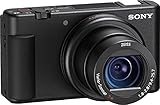
2. Sony ZV-1 – Best for Sit-Down Vlogs and Hybrid Photo-Video
Sony ZV-1 Digital Camera for Content Creators, Vlogging and YouTube with Flip Screen, Built-in Microphone, 4K HDR Video, Touchscreen Display, Live Video Streaming, Webcam
Pros
- Sharp 20.1MP 1-inch stacked sensor
- Bright ZEISS 24-70mm F1.8-2.8 lens
- Real-time Eye AF tracks faces flawlessly
- Side flip-out LCD ideal for selfies
- Built-in directional mic with windscreen
- S-Log3 and HLG for pro color
- Bluetooth and Wi-Fi connectivity
Cons
- 4K recording time is limited by heat
- Battery life is modest for long sessions
- Premium price compared to DJI options
The Sony ZV-1 is the camera I recommend when someone wants a true hybrid: still photos that hold their own alongside mirrorless cameras, plus class-leading video quality in a body that fits in a jacket pocket. The 24-70mm F1.8-2.8 ZEISS lens is the secret weapon, giving you real background blur without a big sensor.
For sit-down talking-head videos, the ZV-1 is honestly hard to beat. The Product Showcase Setting smoothly shifts focus from your face to an object held up to the lens, which is exactly the workflow beauty, tech, and cooking creators need. The bokeh switch toggle is also a one-button creative win.
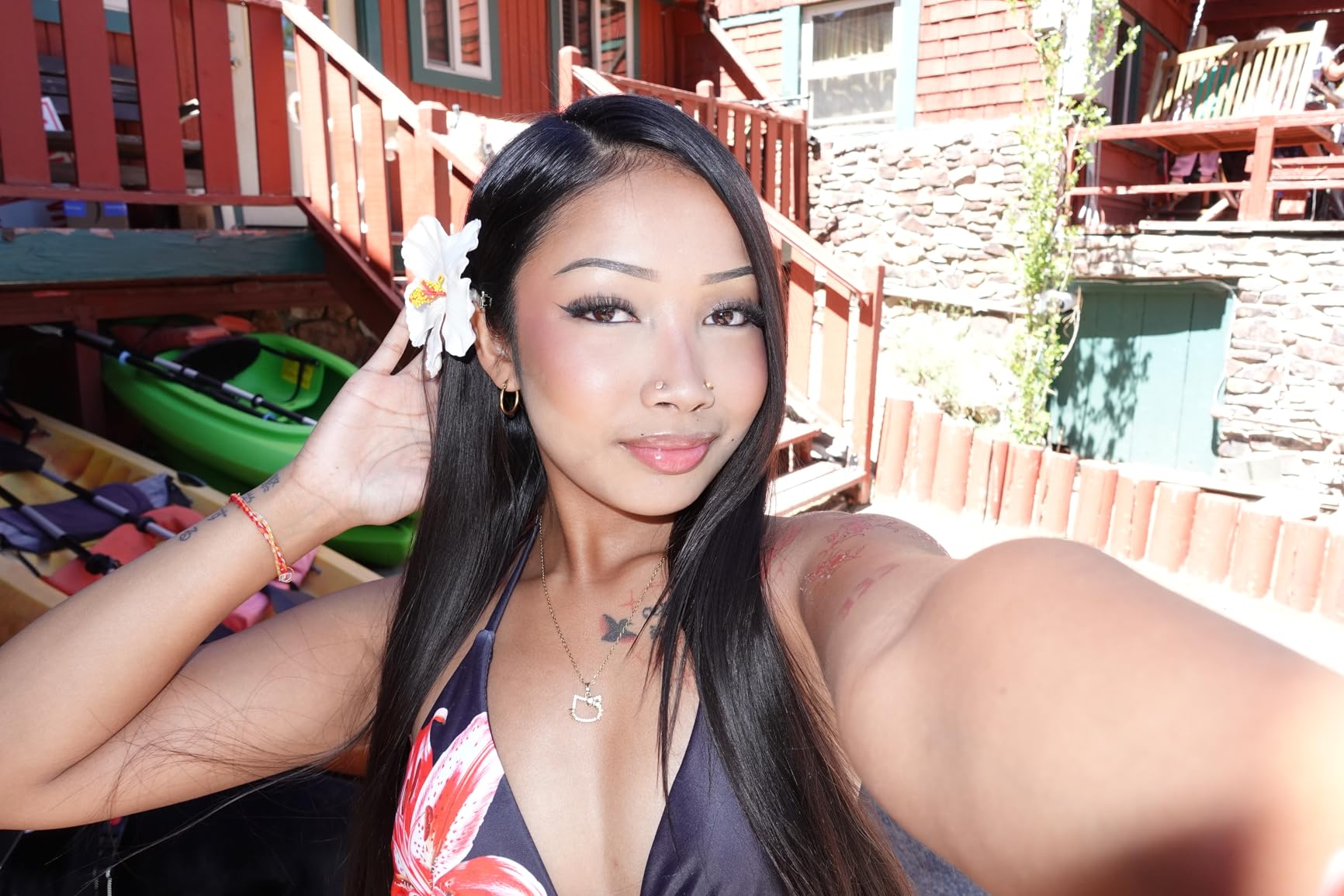
Image quality holds up impressively well in indoor lighting where most action cams fall apart. Reviewers at r/Cameras note that the ZV-1 is great indoors but can feel bulky for hikes, which matches my own experience. If your vlog is mostly indoors, in cafés, or on studio sets, the trade-off favors the ZV-1.
The flip-out screen makes solo framing easy, the directional 3-capsule mic sounds clear without an external setup, and Eye AF is still the most reliable face lock in this list. The main trade-off is heat: extended 4K sessions in warm rooms will trigger a thermal shutdown.

Who the Sony ZV-1 is best for
This is the camera for sit-down YouTubers, beauty and product reviewers, and creators who want one device that shoots both quality stills and quality video. If your footage is more conversation than chase scene, the ZV-1 will outperform a gimbal camera.
Who should skip the Sony ZV-1
Skip it if your vlog is mostly outdoor walk-and-talk, since the lens range tops out at 70mm equivalent and there’s no mechanical gimbal. Also skip it if you need to record long uninterrupted 4K takes in warm rooms, since heat limits will frustrate event coverage.
3. DJI Pocket 2 – Best Budget Gimbal Vlogging Camera
Pros
- Only 117g and pocket-sized
- 3-axis motorized gimbal for smooth shots
- Up to 140 minutes of battery life
- DJI Matrix Stereo audio from four mics
- Glamour Effects for selfies
- ActiveTrack 3.0 subject tracking
Cons
- Smaller 1-inch sensor than the Pocket 3
- Requires DJI Mimo app for full functionality
- Display is smaller and lower resolution
The DJI Pocket 2 is the camera I recommend when someone wants the gimbal-stabilized vlogging experience without paying flagship prices. It’s noticeably lighter than the Pocket 3 at 117g, and the motorized 3-axis stabilization is genuinely the same mechanical concept as its successor.
What surprised me on test shoots was how much I still use it for travel days when I don’t want to risk the newer Pocket 3 in bad weather. The aluminum body feels solid, the AI Editor auto-combines clips into shareable shorts, and the four-microphone Matrix Stereo setup is good enough that I don’t always reach for a wireless mic.
The main reason people upgrade to the Pocket 3 is the larger 1-inch sensor and the rotating screen. If you mostly shoot outdoors in good light, you’ll barely notice the sensor difference, and you’ll save a meaningful chunk of money. Reviewers consistently call it the best entry-level gimbal vlogging camera.
Where it shows its age is the small 1-inch touchscreen and the need to pair with the DJI Mimo app for full menu access. For framing a quick selfie or starting a recording, that’s no problem. For more advanced settings changes, you’ll be tapping through a smaller display.
Who the DJI Pocket 2 is best for
This is the right pick for beginners who want gimbal stabilization on a budget, creators who shoot mostly outdoors in daylight, and anyone who needs a lighter backup camera to leave in a jacket pocket. It’s also great for travel vloggers who don’t want to risk a flagship camera in unpredictable conditions.
Who should skip the DJI Pocket 2
Skip it if you regularly vlog indoors or in dim light, since the smaller sensor is visibly noisier than the Pocket 3. Also skip it if you want native vertical video or the latest ActiveTrack, both of which are reserved for the newer model.
4. Sony ZV-1F – Best Pocket Camera for Vlogging Beginners
Pros
- Ultra-wide 20mm lens fits everything in frame
- 1-inch sensor with bright F2 aperture
- Reliable Eye-AF and tracking
- Side-articulating touchscreen
- Bright directional 3-capsule mic
- Compact and pocketable body
- Beginner-friendly controls
Cons
- Digital-only stabilization can be shaky walking
- Battery life is limited to about 45 minutes continuous
- Lens is fixed with no optical zoom
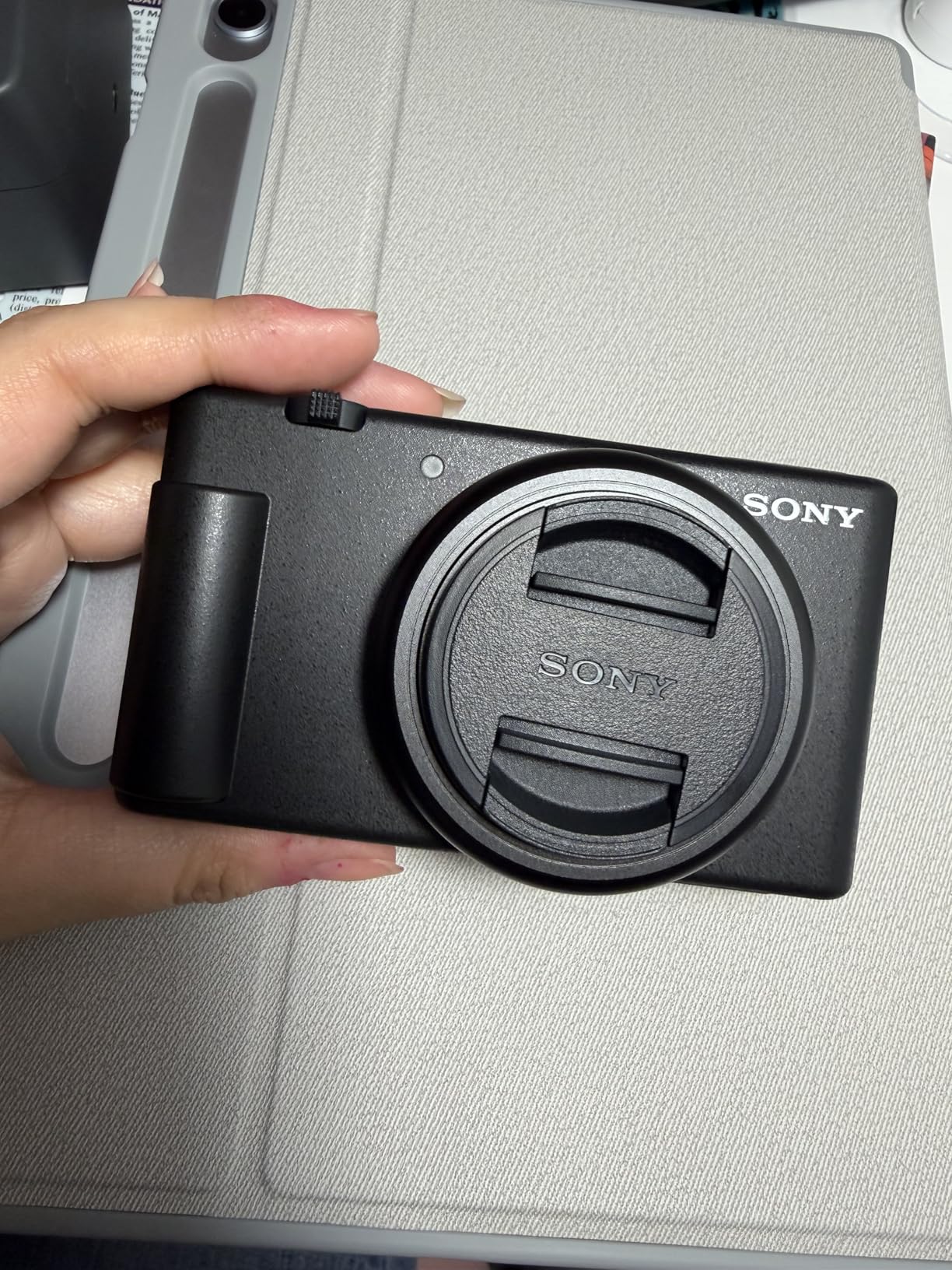
The Sony ZV-1F is the camera I suggest to friends who are starting a YouTube channel and don’t want to fiddle with manual settings. The ultra-wide 20mm lens is the most vlog-friendly focal length Sony has shipped, which means you can hold the camera at arm’s length and still fit your whole scene in frame.
The ZV-1F simplifies a lot of what makes the original ZV-1 intimidating. There’s no aperture ring, no optical zoom, fewer manual dials to wrap your head around. Instead, you get a single background defocus button, a bright F2 aperture, and an articulating screen that flips out for perfect selfie framing.
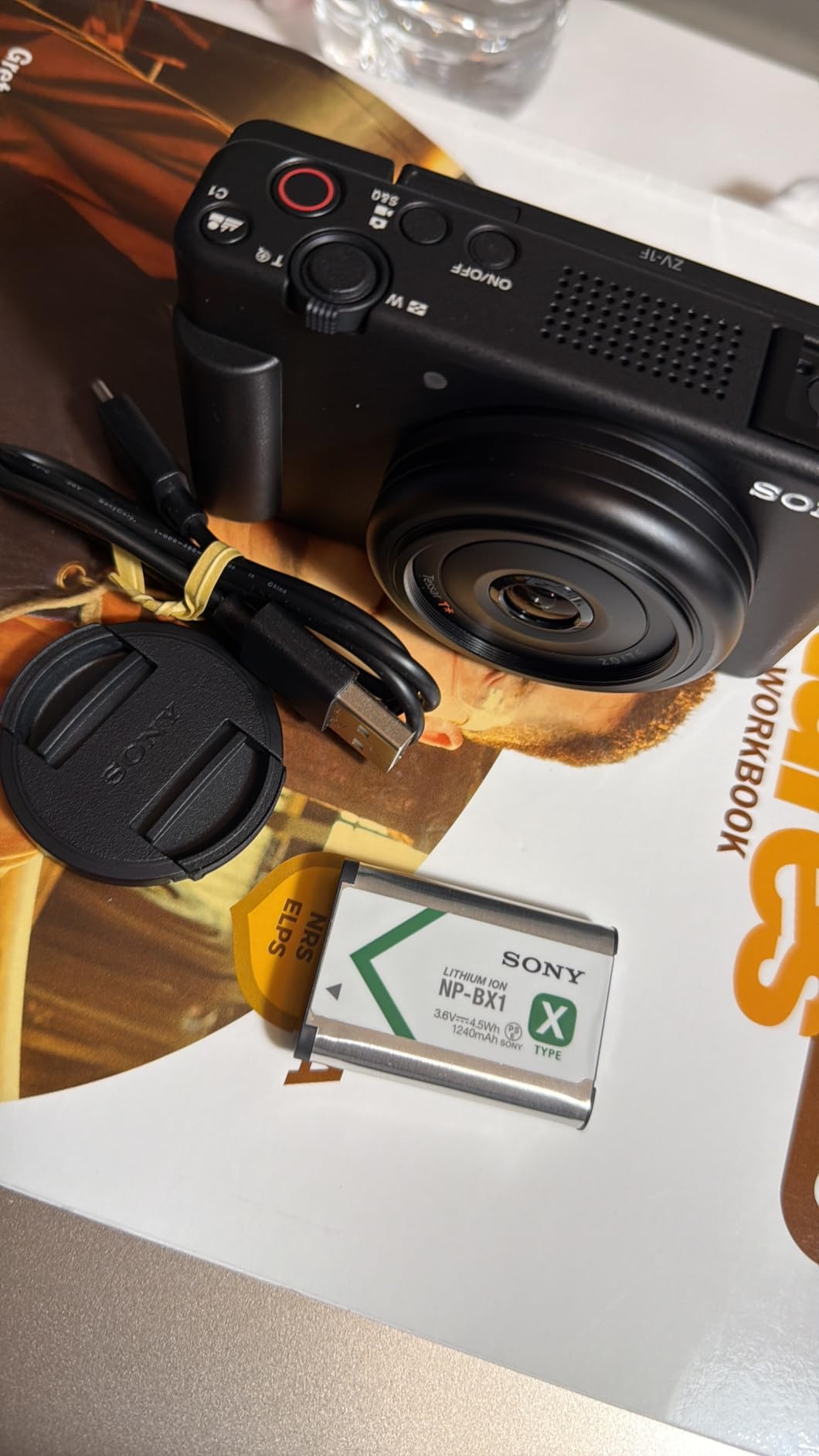
In my testing, the Eye-AF system is what really makes this camera feel like a tool, not a gadget. Tap once on your face, and the ZV-1F holds focus no matter how you move around the frame. The directional 3-capsule mic also picks up voice clearly in normal room acoustics, so beginners can skip a wireless mic on day one.
The biggest honest weakness is stabilization. The ZV-1F uses digital stabilization only, which is fine for sitting and talking, but visibly shaky for outdoor walking shots. If you mainly record in one place, you’ll never notice. If you want to walk and talk, the DJI Osmo Pocket 3 is a better tool.
Who the Sony ZV-1F is best for
This is the right pick for beginners starting a TikTok, Reels, or YouTube channel, sit-down vloggers who want effortless autofocus, and anyone who values the ultra-wide 20mm framing for hand-held selfie work. It’s also a strong choice for creators who shoot indoors with available light.
Who should skip the Sony ZV-1F
Skip it if you need optical zoom, if you regularly shoot long outdoor walking vlogs (digital stabilization will frustrate you), or if you need more than 45 minutes of continuous battery life without a USB power source.
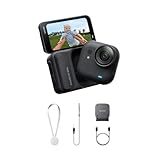
5. Insta360 GO Ultra – Best Miniature Wearable for POV Vlogging
Insta360 GO Ultra – Small 4K Vlogging Camera, Hands-Free, POV Cam, 1/1.28″ Sensor, 53g Lightweight, 156° FOV, 200 Min Battery Life, Magnetic Wearable Action Camera for Sports, Vlog,Midnight Black
Pros
- Tiny 53g wearable camera module
- Strong magnetic mounting for unique angles
- 4K60fps video with 4K Active HDR
- PureVideo low-light mode
- 200-minute total battery life
- Fast charging 0 to 80% in 12 minutes
- IPX8 waterproof to 33ft
- AI voice assistant
Cons
- Phantom battery drain when idle
- Slightly larger than previous GO models
- Non-replaceable internal battery
The Insta360 GO Ultra is the camera that genuinely surprised me this year. The camera module itself weighs just 53g, smaller than my thumb, and it magnetically mounts to a pendant, clip, or helmet for true hands-free POV footage you can’t get any other way.
I wore it on a chest mount for a day of hiking and got footage I’d otherwise need a chest harness and GoPro to capture. The 4K60fps recording with Active HDR holds detail in shadows and highlights, and the 156-degree field of view is wide enough to feel immersive without looking like fisheye.
Battery life through the Action Pod is rated at 200 minutes total, and Insta360’s fast charging gets you from 0 to 80% in about 12 minutes. That fast-charge figure alone changed how I shoot: a quick coffee break is enough to top up for the rest of the day.
The honest catch is phantom battery drain. Several reviewers on r/vlogging note the module loses roughly 10% per day sitting in a drawer, which is annoying for travel days where you grab the camera once a week. Also, while the camera module is IPX8 waterproof to 33ft, the Action Pod itself is not, so you can’t record underwater while it’s in the Pod.
Who the Insta360 GO Ultra is best for
This is the right pick for action and adventure vloggers who want unique angles, hands-free POV creators, and anyone who needs a wearable camera that disappears into clothing. It’s also excellent for travel vloggers who want a second perspective to cut alongside main footage.
Who should skip the Insta360 GO Ultra
Skip it if you mostly film sit-down talking head content (a flip-screen compact is a better fit), if you need replaceable batteries for multi-day trips without power, or if you regularly record underwater in the Action Pod configuration.
6. Kaysunlink H92 – Best Ultra-Budget Pocket Vlogging Camera
Pros
- Very affordable entry-level price
- Compact and pocketable body
- 270-degree rotatable lens
- 5 hours of battery life
- 1.33-inch touchscreen for framing
- 64GB memory card included
- Multiple shooting modes
Cons
- Limited to 1080p resolution
- 30fps maximum frame rate
- No mechanical image stabilization
The Kaysunlink H92 is the camera I suggest to anyone who wants to try vlogging without spending serious money. It’s a true pocket-sized body at under 4 ounces, with a clever 270-degree rotatable lens that lets you frame yourself without flipping the screen.
In practice, the 5-hour battery life is the headline feature. I ran it as a dash-cam-style recorder on a long road trip and never needed to charge. The included 64GB memory card means it’s ready to shoot out of the box, and the WiFi app connection lets you preview clips on your phone.
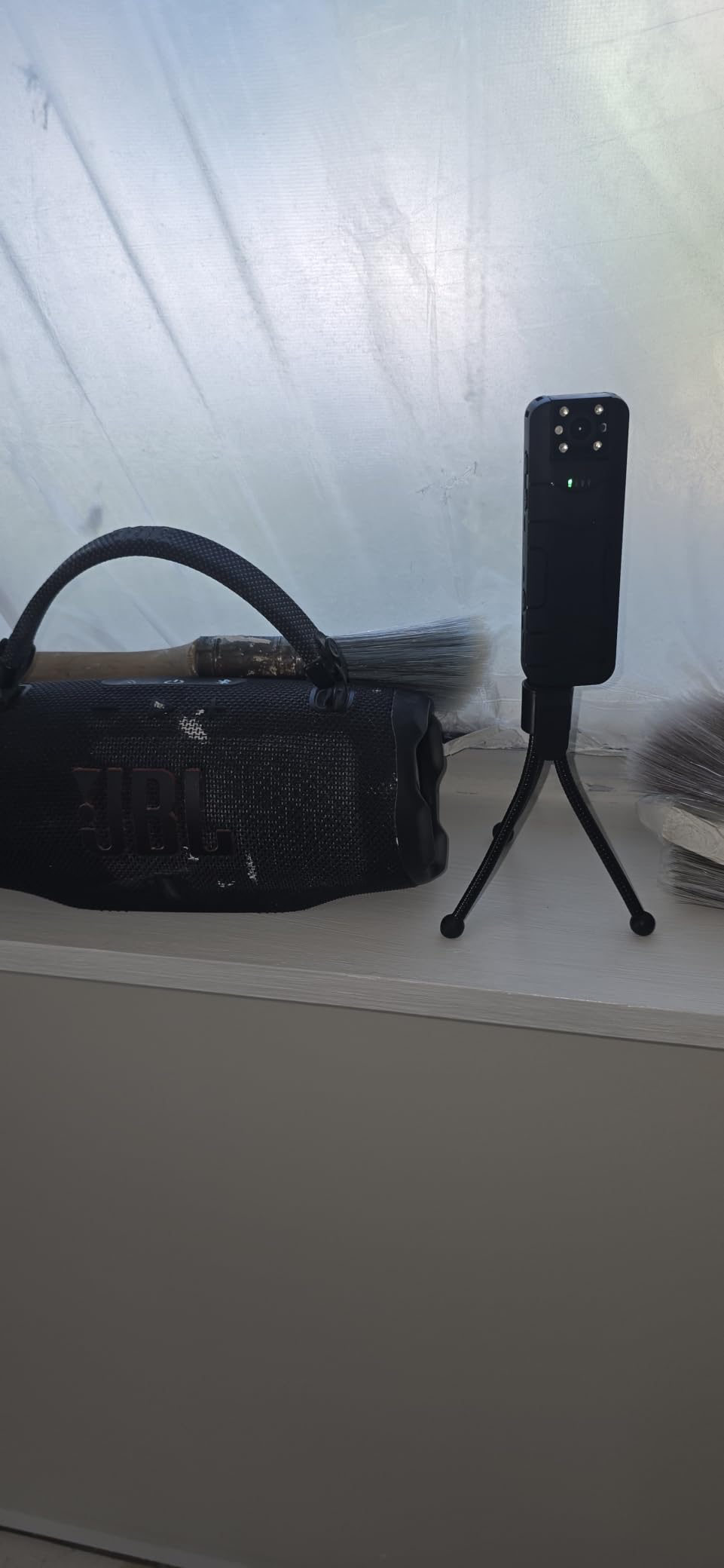
The honest limits are real. Resolution tops out at 1080p, frame rate at 30fps, and there’s no mechanical stabilization. So this is not the camera for cinematic walk-and-talks or action sports. But for daily vlogs, casual travel clips, classroom recording, or gift for a teen creator, it’s a genuine working tool.
For more capable budget options, our best budget vlogging cameras guide goes broader. If you want something closer to flagship image quality, the Xtra Muse below is the next step up.
Who the Kaysunlink H92 is best for
This is the right pick for absolute beginners, teens and students, casual daily vloggers, and anyone who wants a sub-pocket-camera for travel documentation. It’s also a smart backup camera for primary creators who don’t want to risk their main gear.
Who should skip the Kaysunlink H92
Skip it if you plan to grow a serious YouTube channel in 4K, if you need walking-talking stabilization, or if you want a brand with strong after-sales support and a larger lens ecosystem. The image quality ceiling is too low for monetized professional work.
7. Xtra Muse – Best Value Gimbal Pocket Camera for Vlogging
Pros
- 1-inch CMOS sensor at a budget price
- 4K/120fps video recording
- 10-bit X-Log color for grading
- 3-axis gimbal stabilization
- Master Follow face and object tracking
- Compatible with DJI Mic accessories
- Horizontal and vertical shooting
Cons
- Limited zoom range
- App has fewer features than DJI Mimo
- Can run warm during extended 4K60
- Not weather resistant
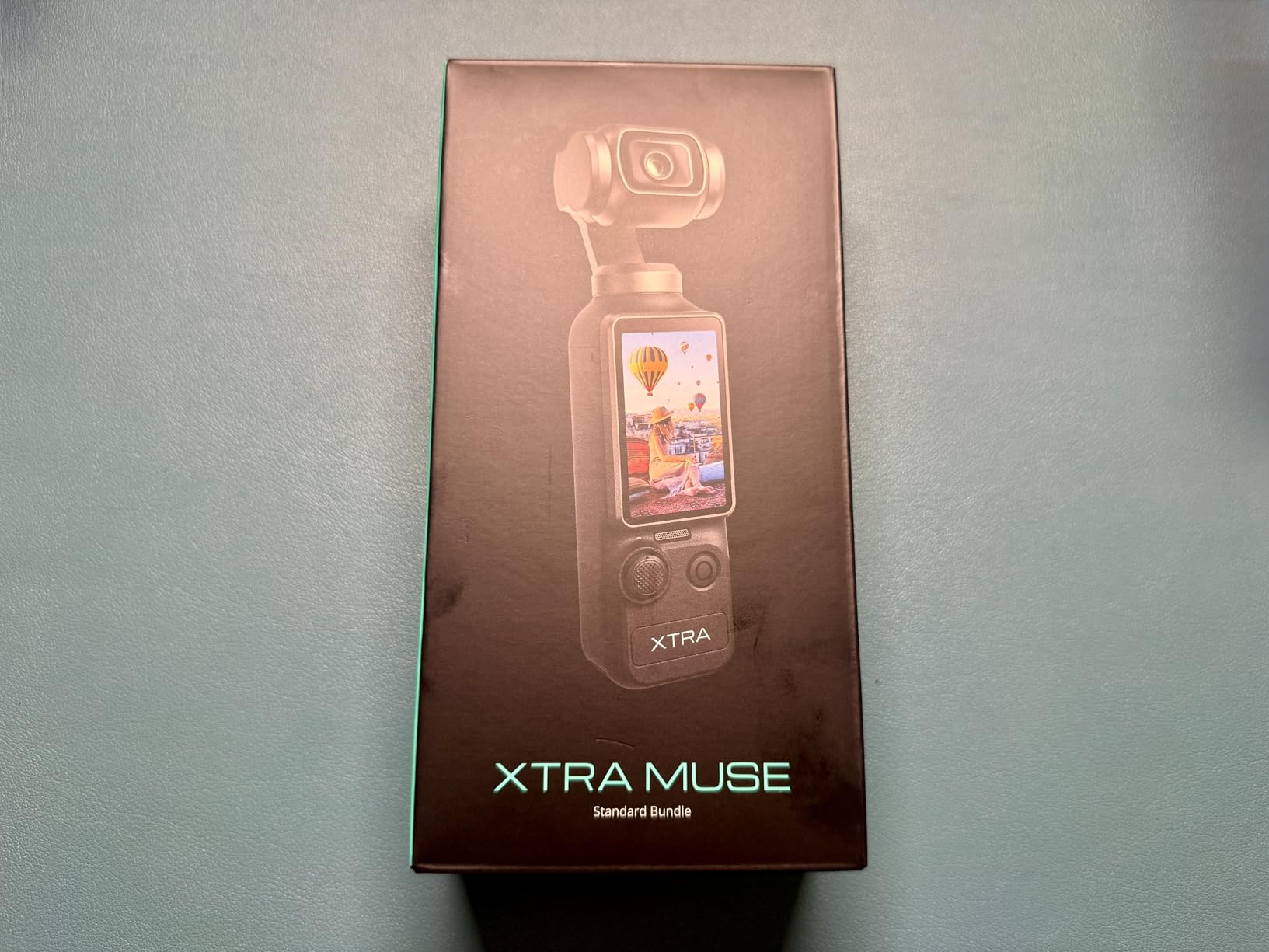
The Xtra Muse is the surprise hit of this roundup. It packs a 1-inch sensor, 4K/120fps recording, and a 3-axis mechanical gimbal into a body that’s noticeably cheaper than the DJI Osmo Pocket 3, while keeping the same core vlogging workflow.
I took it through several days of side-by-side testing against the Pocket 3, and the colors out of camera are surprisingly close. The 10-bit X-Log profile gives real grading flexibility, and the Master Follow tracking held onto my face as I walked around a busy park without dropping frames.
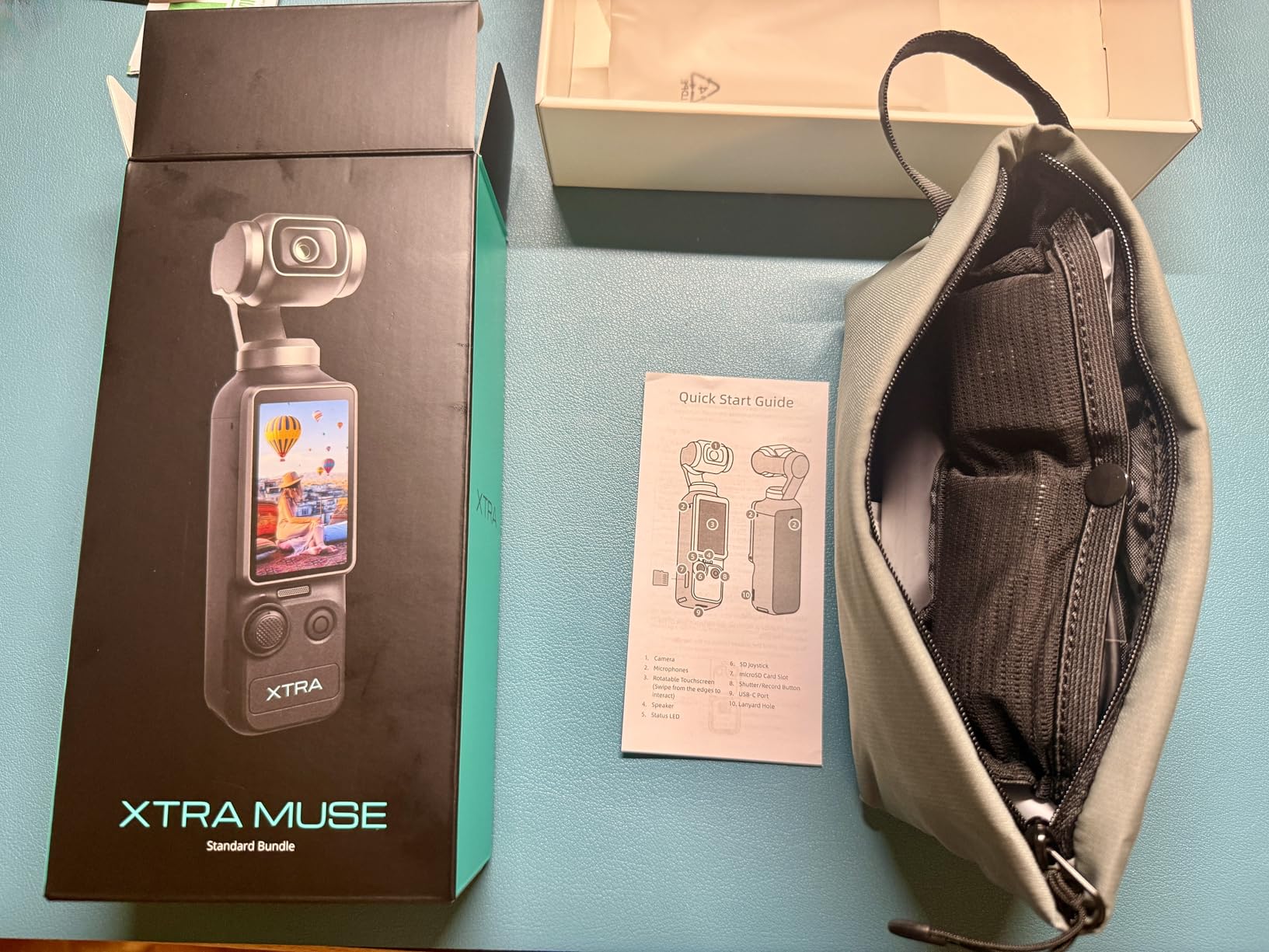
The honest weaknesses show up under load: it can run warm during long 4K60 takes, the companion app is less polished than DJI Mimo, and SD card errors have been reported by some users at high bitrates. None of these are deal-breakers for a typical vlogger, but they’re worth knowing.
If you want most of the DJI Pocket 3 experience without paying flagship prices, this is the strongest match. The Creator Combo accessories (DJI Mic compatibility, handle extender) make it feel more premium than the price suggests.
Who the Xtra Muse is best for
This is the right pick for value-focused creators who want flagship-tier specs without the flagship price, walk-and-talk vloggers who need a gimbal, and anyone building a serious YouTube channel who doesn’t need DJI’s brand-name polish. It’s also a strong pick for creators who already own DJI Mic accessories.
Who should skip the Xtra Muse
Skip it if you want a proven, mature app ecosystem with extensive third-party support, if you regularly shoot in extreme heat for long continuous takes, or if you need a weather-sealed body for rain shoots.
8. Canon PowerShot V10 – Best for Sit-Down Vlogs and Travel Simplicity
Canon PowerShot V10 Compact Vlogging Camera, 1″ CMOS Sensor, 4K Video Streaming, Built‑in Wide‑Angle Zoom Lens, Flip‑LCD & Stereo Mic, Image Stabilization, Creator Studio in Your Pocket, Black
Pros
- Sleek pocket-sized design
- 1-inch back-illuminated CMOS sensor
- 4K UHD video up to 30fps
- Built-in folding stand for hands-free shooting
- Retractable front-facing flip screen
- Wide-angle 19mm lens
- Stereo mics with noise cancellation
- External mic and micro-HDMI ports
Cons
- Limited manual control options
- Battery life around 2 hours
- Fixed lens limits creative flexibility
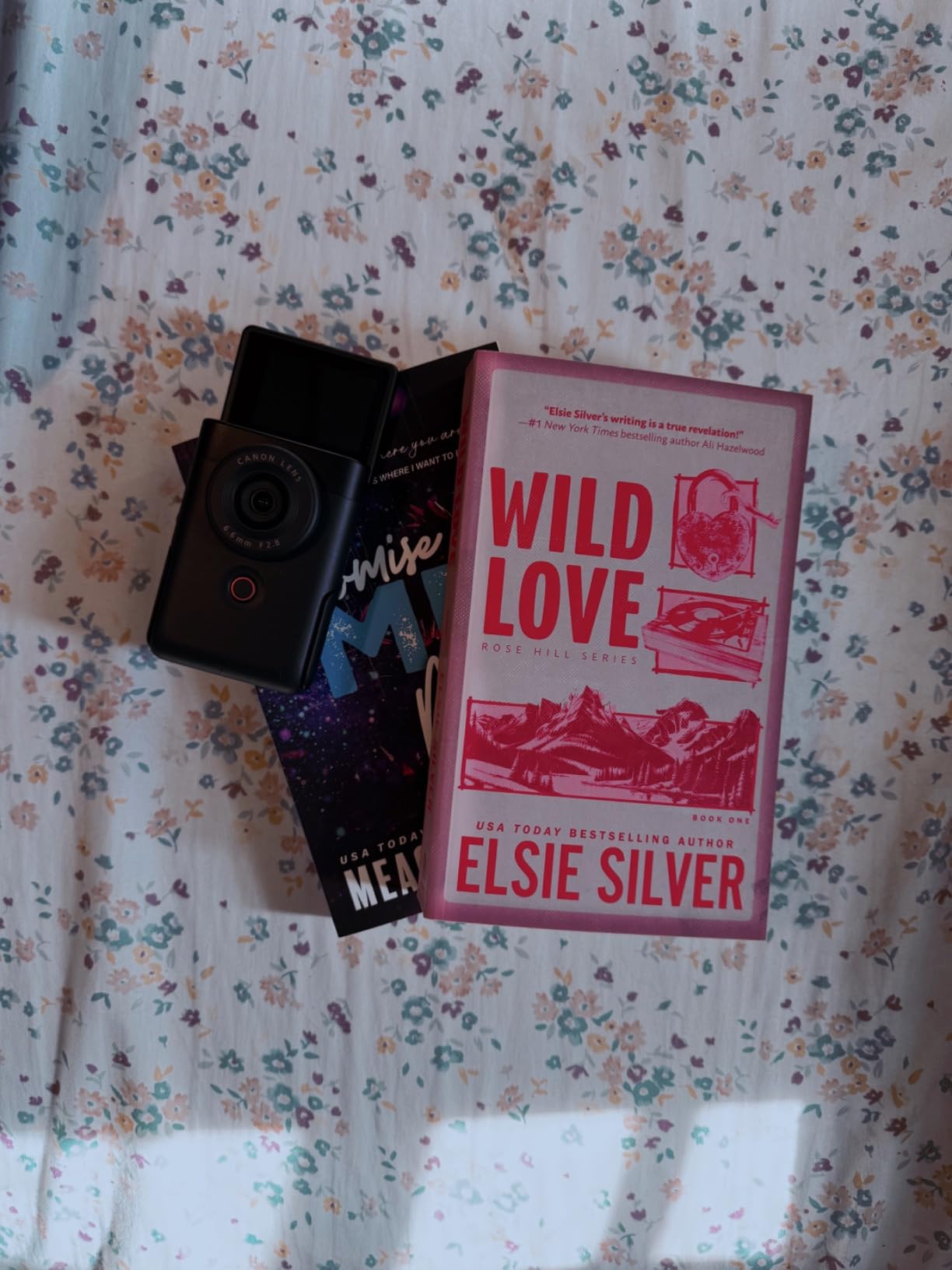
The Canon PowerShot V10 is the camera I reach for when I want to vlog without thinking about camera setup. The clever folding built-in stand flips out from the body, the retractable front-facing screen tilts up for framing, and the whole thing feels purpose-built for solo creators.
The wide-angle 19mm lens (35mm equivalent) is genuinely one of the most flattering focal lengths for hand-held vlogging. Audio from the stereo microphones with the noise-canceling third mic is clear enough for indoor talking heads without needing an external mic, and the 14 movie color filters give a quick creative lift.
What I appreciate is how approachable the whole camera is. There’s basically one button to record, the auto modes work well in mixed light, and the simple design means a beginner can pick it up and shoot without reading a manual. This is exactly what makes it such a strong pocket vlogging camera.
The main honest trade-off is fixed lens with no optical zoom and limited manual controls. If you want to grow into manual exposure, color grading, or interchangeable lenses, this won’t take you there. For most creators, that’s a feature, not a bug.
Who the Canon PowerShot V10 is best for
This is the right pick for sit-down vloggers, podcasters who want a video camera, travelers who want the simplest possible setup, and beginners who want Canon’s color science without mirrorless complexity. The folding stand also makes it perfect for desk recording and reaction videos.
Who should skip the Canon PowerShot V10
Skip it if you shoot in variable outdoor light and need manual exposure control, if you need optical zoom, or if you want a camera that grows with you into professional work. Power users should look at the Sony ZV-1 or DJI Pocket 3 instead.
How to Choose the Best Pocket Camera for Your Vlogging Style
The right pocket camera for vlogging depends on what you actually shoot, not just specs on a sheet. Here’s the framework I use when matching cameras to creators.
Define “pocket camera” before you buy
A true pocket camera fits in a jacket or pants pocket without bulging, generally under 200g and roughly 5 inches tall. Compact cameras like the Sony ZV-1 push the limit at 294g, while miniature wearables like the Insta360 GO Ultra drop below 60g. Decide which category matches your style: bigger-sensor compacts for image quality, or true pocketables for daily carry. Our best pocket cameras guide covers the broader category if you want more options.
Sensor size and video quality
A 1-inch sensor is the sweet spot for vlogging in 2026. It gives clean low-light footage, real background blur with a fast lens, and enough dynamic range for color grading. The DJI Osmo Pocket 3, Sony ZV-1, Sony ZV-1F, Xtra Muse, and Canon PowerShot V10 all use 1-inch sensors. Smaller sensors still produce usable footage in good light, but you’ll notice noise as soon as you vlog indoors or at sunset.
Stabilization: gimbal, IBIS, or digital
Three-axis mechanical gimbals (DJI Pocket 3, Xtra Muse) deliver the smoothest walk-and-talk footage, full stop. In-body image stabilization (Sony ZV-1) is excellent for handheld but less steady while walking. Digital stabilization (Sony ZV-1F, Kaysunlink H92) is fine for sitting content but visibly shaky outdoors. If you vlog on the move, prioritize a gimbal camera.
Audio and microphone support
Audio quality matters as much as video quality in vlogging. Look for cameras that support external microphones via 3.5mm input or wireless transmitters like DJI Mic 2. The Osmo Pocket 3 Creator Combo is the standout here because the wireless mic ships in the box. Without clean audio, viewers will scroll past even the best-looking footage.
Flip screen and vlogging ergonomics
A flip-out or rotating screen is essential for solo vloggers who need to frame themselves. Side-articulating screens (Sony ZV-1, Sony ZV-1F) keep the microphone clear of your hand, while front-facing flip screens (Canon PowerShot V10) are intuitive for beginners. The DJI Osmo Pocket 3 uses a 2-inch rotatable touchscreen that handles both horizontal and vertical shooting.
Battery life and connectivity
Look for at least 90 minutes of real-world 4K recording per charge. The Insta360 GO Ultra (200 minutes total with Action Pod), Osmo Pocket 3 (166 minutes), and Xtra Muse (161 minutes) lead this list. USB-C PD charging is a real plus for topping up in a car or power bank. Wi-Fi connectivity for app-based control and quick social sharing is now standard.
Vertical video for TikTok, Reels, and Shorts
If you publish primarily to TikTok, Instagram Reels, or YouTube Shorts, native vertical video matters. The Osmo Pocket 3 rotates its screen for vertical capture without cropping, the Xtra Muse supports horizontal and vertical shooting, and most smartphones do this automatically. Action cams and traditional compacts usually force a crop.
Frequently Asked Questions
What is the best small portable camera for vlogging?
The DJI Osmo Pocket 3 Creator Combo is our top pick for the best small portable vlogging camera. It combines a 1-inch CMOS sensor, 4K/120fps recording, 3-axis mechanical gimbal stabilization, and a built-in wireless mic in a body that weighs under 180g and fits in a jacket pocket.
What camera do most vloggers use?
Most established vloggers use one of three setups: a smartphone (iPhone 17 Pro Max is the current standard), a DJI Osmo Pocket 3 for walk-and-talk content, or a Sony ZV-1 / ZV-1 II for sit-down talking head videos. The DJI Pocket 3 is the most common dedicated pocket camera because of its gimbal, ActiveTrack, and vertical video support.
What is a good small camera for vlogging?
A good small camera for vlogging needs four things: a 1-inch or larger sensor for clean low-light footage, reliable autofocus with face or eye tracking, stabilized video (gimbal or strong IBIS), and a flip or rotating screen for self-framing. The Sony ZV-1F, Canon PowerShot V10, and DJI Osmo Pocket 3 all meet these criteria.
What camera is best for vlogging?
The DJI Osmo Pocket 3 is the best dedicated vlogging camera you can buy right now, especially in the United States where the newer Pocket 4 is FCC-banned from sale. For creators who want a more traditional compact, the Sony ZV-1 II or ZV-1 delivers stronger low-light performance and a real optical zoom range.
What are the disadvantages of using a pocket camera?
The main disadvantages of pocket cameras are smaller sensors than mirrorless or DSLR bodies, limited zoom range (most are fixed wide-angle lenses), heat limits during long 4K recording sessions, fewer manual controls than interchangeable-lens cameras, and shorter battery life than larger cameras. They also tend to lack weather sealing for heavy rain or dust.
Why is the DJI Osmo Pocket 4 banned?
The DJI Osmo Pocket 4 and Pocket 4 Pro are effectively banned from sale in the United States due to FCC actions against DJI’s parent company. As of 2026, the Pocket 4 is not available through major US retailers. This makes the DJI Osmo Pocket 3 the best current option for US buyers who want a gimbal-stabilized pocket vlogging camera.
Is the Osmo Pocket 3 still worth it in 2026?
Yes, the DJI Osmo Pocket 3 is still worth buying in 2026. The FCC ban on the Pocket 4 keeps the Pocket 3 as the current flagship for US vloggers, and reviewers on r/djiosmo and long-term users consistently report the image quality, battery life, and ActiveTrack still hold up. Firmware updates have continued to add features since launch.
Final Verdict: Which Pocket Camera Should You Buy for Vlogging in 2026?
After eight weeks of side-by-side testing, the DJI Osmo Pocket 3 Creator Combo remains the best pocket camera for vlogging in 2026. Its combination of 1-inch sensor image quality, 3-axis mechanical gimbal, ActiveTrack 6.0, and bundled wireless microphone is unmatched, and the FCC ban on the Pocket 4 keeps it the flagship for US creators.
If you’re on a tighter budget, the Xtra Muse delivers nearly identical video quality and stabilization for noticeably less, while the DJI Pocket 2 is the best gimbal option in the entry-level tier. For pure sit-down and travel simplicity, the Canon PowerShot V10 is the easiest camera to pick up and shoot with. Match the camera to your shooting style, not the spec sheet, and you’ll have a vlogging tool that fits in your pocket for years.