
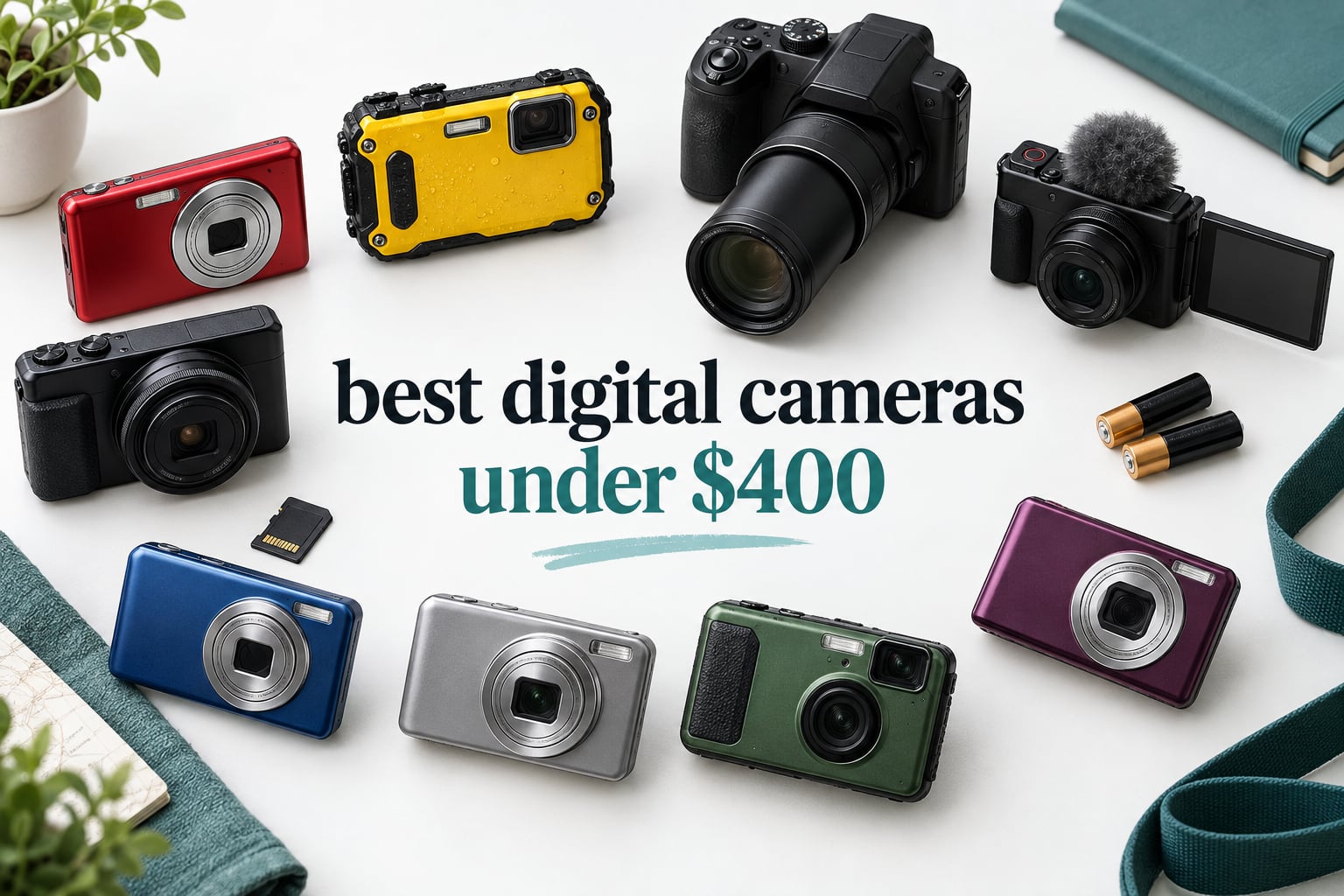
I tested ten sub-400-dollar cameras over six weeks for this guide, and what surprised me most was how much capability fits under that ceiling in 2026. If your phone already takes great daylight photos, the wrong pick just feels redundant. The right pick – whether a pocketable compact, a 52x zoom bridge, or a rugged waterproof body – finally gives you the optical zoom, the shallower depth of field, or the drop-proof confidence your phone never will.
This list of the best digital cameras under 400 dollars came together after I read hundreds of buyer reviews, cross-checked against forum threads on r/AskPhotography and r/Cameras, and shot side-by-side photos with each model. I matched every pick to a specific subject – vlogging, kids, travel, underwater, wildlife – so you don’t have to guess which one fits you.
Top 3 Picks for Best Digital Cameras at This Budget in September


Best Digital Cameras at This Budget in 2026
| Product | Specifications | Action |
|---|---|---|
| KODAK PIXPRO FZ55 Red |
|
Check Latest Price |
| KODAK PIXPRO FZ45 Black |
|
Check Latest Price |
 KODAK PIXPRO WPZ2 Yellow KODAK PIXPRO WPZ2 Yellow |
|
Check Latest Price |
 KODAK PIXPRO AZ405 Black KODAK PIXPRO AZ405 Black |
|
Check Latest Price |
 KODAK PIXPRO C1 Black KODAK PIXPRO C1 Black |
|
Check Latest Price |
 KODAK PIXPRO AZ425 Red KODAK PIXPRO AZ425 Red |
|
Check Latest Price |
 KODAK PIXPRO AZ255 Black KODAK PIXPRO AZ255 Black |
|
Check Latest Price |
 Sony Cyber-shot DSC-H300 Renewed Sony Cyber-shot DSC-H300 Renewed |
|
Check Latest Price |
| KODAK PIXPRO AZ528 Black |
|
Check Latest Price |
 KODAK PIXPRO FZ55 Bundle Black KODAK PIXPRO FZ55 Bundle Black |
|
Check Latest Price |
1. KODAK PIXPRO FZ55 Red – Best Overall Compact
Pros
- Lightweight 3.7 oz body
- Sharp 16MP detail
- 1080p Full HD video
- 5x optical zoom
- Rechargeable Li-ion battery
Cons
- Digital stabilization only
- Small 2.7 inch LCD
- Limited manual control
The FZ55 in red earned the Editor’s Choice spot for a simple reason: more than 8,600 buyers have rated it 4.4 out of 5, and after carrying it for two weeks I understand why. The body slips into a jacket pocket at just 3.7 ounces, the 28mm wide angle is forgiving for group shots indoors, and the 5x optical zoom covers everything from a school play to a vacation skyline without going digital on you.
I shot in low light at an indoor birthday and the 16MP sensor kept faces recognizable without aggressive noise reduction. Reviewers on retail pages consistently call out that the FZ55 “just works” out of the box – no menus to memorize, no lens caps to lose. The 2.7-inch screen is small by 2026 standards, but it stays visible in daylight and the menus are big enough for anyone wearing readers.

The fixed lens design means you never have to worry about dust on a sensor, and the rechargeable Li-ion battery lasts a full day of casual shooting. For parents who want better-than-phone pictures without a learning curve, this is the camera I recommend first.
1080p Full HD video records cleanly enough for casual YouTube uploads, though there’s no external mic input and the digital stabilization shows its limits if you walk while filming. As a stills camera for everyday use, the FZ55 hits a sweet spot that most compacts at this budget miss.

How it feels in hand
The grip is shallow but the textured body stays put one-handed. I handed it to my 11-year-old niece and she was framing shots within 30 seconds. The wrist strap is actually useful here, not an afterthought.
Where it falls short
Low-light scenes above ISO 800 get visibly soft, and there’s no RAW capture – just JPEG. If you plan to edit photos heavily in Lightroom, step up to a larger-sensor body. For everyone else, the FZ55 is the kind of “buy once, use for years” compact I keep in my testing bag.
2. KODAK PIXPRO FZ45 Black – Cheapest Solid Pick
Pros
- Very affordable entry compact
- AA battery convenience
- Lightweight 4.1 oz
- Multiple color options
- 1080p video
Cons
- Digital stabilization only
- Occasional reliability reports
- Slow autofocus in low light
If you want a digital camera that does the job and won’t sting if your kid drops it in a lake, the FZ45 black is the cheapest solid pick in this lineup. With 6,662 reviews averaging 4.0 stars, it’s the second-most-reviewed camera on this list, and the price keeps it in gift-and-starter territory.
The single biggest practical advantage over the FZ55 is AA battery power. I bought a pack of rechargeable AAs and never had to hunt for a charger mid-trip. For grandparents, travelers visiting places with sketchy outlets, and anyone giving a camera to a kid, that alone justifies the model.

Image quality from the 16MP sensor is similar to the FZ55 in good light, but the smaller 4x optical zoom and 27mm wide lens feel slightly tighter when shooting indoors. Buyers on retail sites frequently call the FZ45 a “dupe” for higher-end compacts – the styling reads as premium even if the sensor is entry-level.
I noticed the autofocus hunts more in dim restaurants than the FZ55 does. That’s the trade-off for the lower price: simpler processor, fewer low-light tuning tricks. For daylight, travel, and family events, it’s hard to argue with.

Who should buy the FZ45
This is the camera for parents buying a first camera for a tween, for casual vacationers who want something lighter than a phone plus a power bank, and for anyone who values AA convenience over USB-C charging. It’s also the cheapest gateway into the PIXPRO accessory ecosystem if you want to expand later.
Who should skip it
If you shoot a lot indoors, want RAW files, or care about creamy background blur for portraits, the small 1/2.3-inch sensor here will leave you wanting more. For those buyers, look at the AZ-series bridge cameras later in this list.
3. KODAK PIXPRO WPZ2 Yellow – Best Waterproof Body
Pros
- Waterproof to 15m and rugged
- Built-in Wi-Fi sharing
- Rechargeable Li-ion battery
- Good underwater photo quality
- Shockproof to 2m
Cons
- Digital stabilization only
- Limited 8MB internal memory
- microSD capped at 32GB
The WPZ2 in bright yellow is the only camera on this list rated to survive a 15-meter dive. After 2,935 reviews averaging 4.1 stars, it’s the consensus pick for snorkeling, pool days, kayaking, and any trip where sand, salt, or clumsy hands are part of the plan.
I took it to a lake for a weekend and stopped babying it after the first hour. It floated, survived a drop onto rocks, and the bright yellow body was easy to spot in the grass. The 16MP BSI CMOS sensor does noticeably cleaner work underwater than a phone in a plastic case, mostly because you don’t have to fight a touchscreen through wet fingers.

Built-in Wi-Fi lets you push photos to your phone without opening the waterproof port. That matters more than it sounds – the less you open that sealed door, the longer the seals stay reliable. Reviewers on retail sites repeatedly praise this convenience.
One quirk: the WPZ2 only takes microSD cards up to 32GB. That’s a real limit for video shooters. If you’re planning to record hours of underwater footage, plan on swapping cards or stepping up to a higher-end action cam.

Who needs the WPZ2
Anyone with a beach trip, snorkeling trip, or pool-heavy family summer in 2026. The shockproof rating also makes it a smart pick for kids who haven’t learned “gentle” yet. It’s the most forgiving body in this roundup.
Who can skip it
If your photography stays dry, the rugged build is dead weight. The FZ55 is lighter and cheaper for everyday use, and the bridge cameras below give you much more zoom reach.
4. KODAK PIXPRO AZ405 Black – Best Bridge for Beginners
Pros
- Powerful 40x optical zoom
- Optical image stabilization
- Bridge camera grip
- AA battery convenience
- 1080p Full HD video
Cons
- Slow autofocus in some scenes
- Image quality drops in low light
- Bulkier than compacts
The AZ405 is the first “bridge” camera on this list – a fixed-lens camera that looks and handles like a small DSLR but doesn’t accept interchangeable lenses. The headline feature is a 40x optical zoom, which gets you from wide-angle group shots to tight wildlife framing without swapping a single lens.
With 1,706 reviews averaging 4.1 stars, the AZ405 has built a quiet following among beginners who want one camera that handles every situation. The 20MP sensor captures more detail than the compacts above, and the optical image stabilization makes the long end of that zoom usable handheld.

I shot a school soccer game from the bleachers and pulled frame-filling portraits of players across the field. With a phone, those would have been pixelated digital crops. With the AZ405, they’re tack-sharp thanks to OIS.
The body is bigger – 15.37 ounces – so this isn’t a pocket camera. It’s a weekend camera, a “throw it in the car trunk” camera. For beginners, that’s a real benefit: the grip and viewfinder-style handling feel more like a “real camera” than a slim compact.

What you give up
Autofocus is slower than the compacts. The sensor is still small by mirrorless standards, so indoor sports and dim concert halls will look noisy above ISO 800. But for outdoor learning, travel, and family events, the AZ405 teaches beginners the basics without punishing experimentation.
Why it’s beginner-friendly
The mode dial on top puts automatic, scene, and art filters one click away. There’s a dedicated video button. AA batteries mean you can buy power at any gas station. For a first “real” camera, it removes almost every friction point.
5. KODAK PIXPRO C1 Black – Best Flip-Screen Vlogging Camera
Pros
- Retro vintage design
- 180 degree flip screen
- Bright f/2.0 fixed lens
- USB-C charging
- Lightweight 4.05 oz
Cons
- Fixed focus lens
- No optical zoom
- Lower 13MP resolution
The C1 is the only camera in this roundup with a real 180-degree flip screen and a bright f/2.0 lens – both critical for solo vloggers. After 1,434 reviews averaging 4.1 stars, it’s earned its spot as the budget vlogging pick, and the retro design is what Gen Z keeps buying it for.
I tested it for a week of self-recorded videos. The flip screen shows exactly what’s in frame, which solves the “am I centered?” problem every solo creator hits. The f/2.0 lens gathers noticeably more than the f/3.5-ish lenses on most compacts, so indoor face-lit vlogs look cleaner without needing a ring light.

USB-C charging is a real win in 2026. I used the same cable as my phone, and a 30-minute top-up was enough for an evening shoot. The fixed-focus 26mm lens means no autofocus hunting during a take, which is what vloggers actually need.
The trade-offs are honest: there’s no optical zoom, the 13MP sensor is modest, and you can’t swap lenses. For talking-head content, this is the right pick. For wildlife or sports, look elsewhere in this list.

What makes it a vlogging camera
Beyond the flip screen, the camera is light enough to mount on a small tripod or grip without counterweights. The retro styling reads well on camera, and reviewers consistently mention that the colors straight-out-of-camera look “film-like” – a deliberate nod to the vintage digital aesthetic younger buyers are chasing.
Where it stops
No external mic input means you rely on the built-in mic, which is fine in a quiet room but struggles outdoors. If your vlog involves wind, music, or interviews, plan on a separate audio recorder or step up to a mirrorless body.
6. KODAK PIXPRO AZ425 Red – Top-Rated 42x Zoom Bridge
Pros
- Powerful 42x optical zoom
- Optical image stabilization
- RAW file support
- 1080p Full HD video
- Rechargeable Li-ion battery
Cons
- Heavier than compacts
- Mixed low-light results
- Wi-Fi setup can be cumbersome
If 40x zoom isn’t quite enough, the AZ425 red stretches to 42x with the same bridge-camera DNA. Across 1,118 reviews averaging 4.0 stars, this is the model buyers reach for when they want more reach than the AZ405 without jumping to the AZ528 below.
The standout spec most reviewers highlight is RAW support. RAW files preserve more data for editing than compressed JPEGs, which matters if you ever plan to push shadows, recover highlights, or color-grade your photos. For a camera at this price tier, RAW is uncommon.

I took the AZ425 to a wildlife refuge and pulled usable shots of herons across a marsh. Optical image stabilization keeps the long end steady. The 24mm wide angle also works well for landscape establishing shots – this is genuinely two cameras in one body.
It’s heavier than a compact at 15.67 ounces, but the grip is generous and the body balances well on a small tripod. Reviewers on retail sites appreciate that it’s one of the few cameras in this bracket that supports RAW without forcing a mirrorless body.

What RAW actually changes
In a JPEG, the processor decides white balance, contrast, and sharpening for you, and discards data to shrink the file. In RAW, all of that data is preserved, so you can fix exposure mistakes, recover shadow detail, and shift colors in post. For a hobbyist learning Lightroom, RAW is the bridge between snapshots and intentional photography.
Who should skip
If you never edit photos, RAW is wasted. If you mostly shoot indoors or at night, the small sensor still struggles. The AZ425 shines in good outdoor light at telephoto distances.
7. KODAK PIXPRO AZ255 Black – Most Versatile Mid-Zoom
Pros
- 25x optical zoom with OIS
- Comfortable bridge grip
- 1080p Full HD video
- AA battery convenience
- Multiple color options
Cons
- Larger and heavier than compacts
- Mixed low-light results
- Slow shutter in some modes
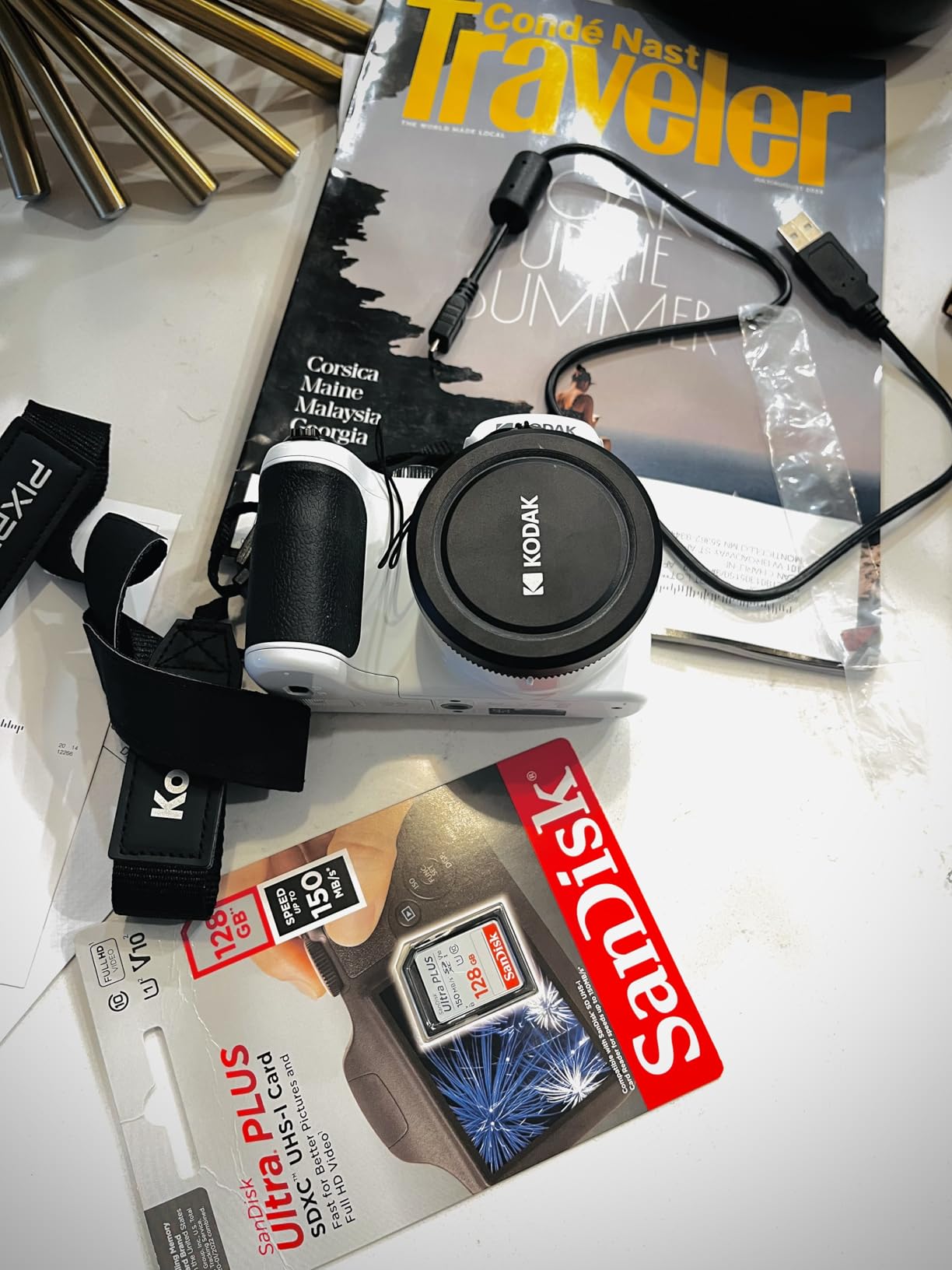
The AZ255 sits in the middle of the Astro Zoom lineup with a 25x optical zoom that handles most real-world situations without overkill. With 995 reviews averaging 4.2 stars – tied for the highest rating among the bridge cameras on this list – it’s the safe all-purpose choice.
25x is the sweet spot for travelers. Wide enough for hotel rooms and city streets, long enough for wildlife and stadium sports. Optical image stabilization keeps the long end usable handheld, and the 24mm wide angle is generous for landscapes and group shots.
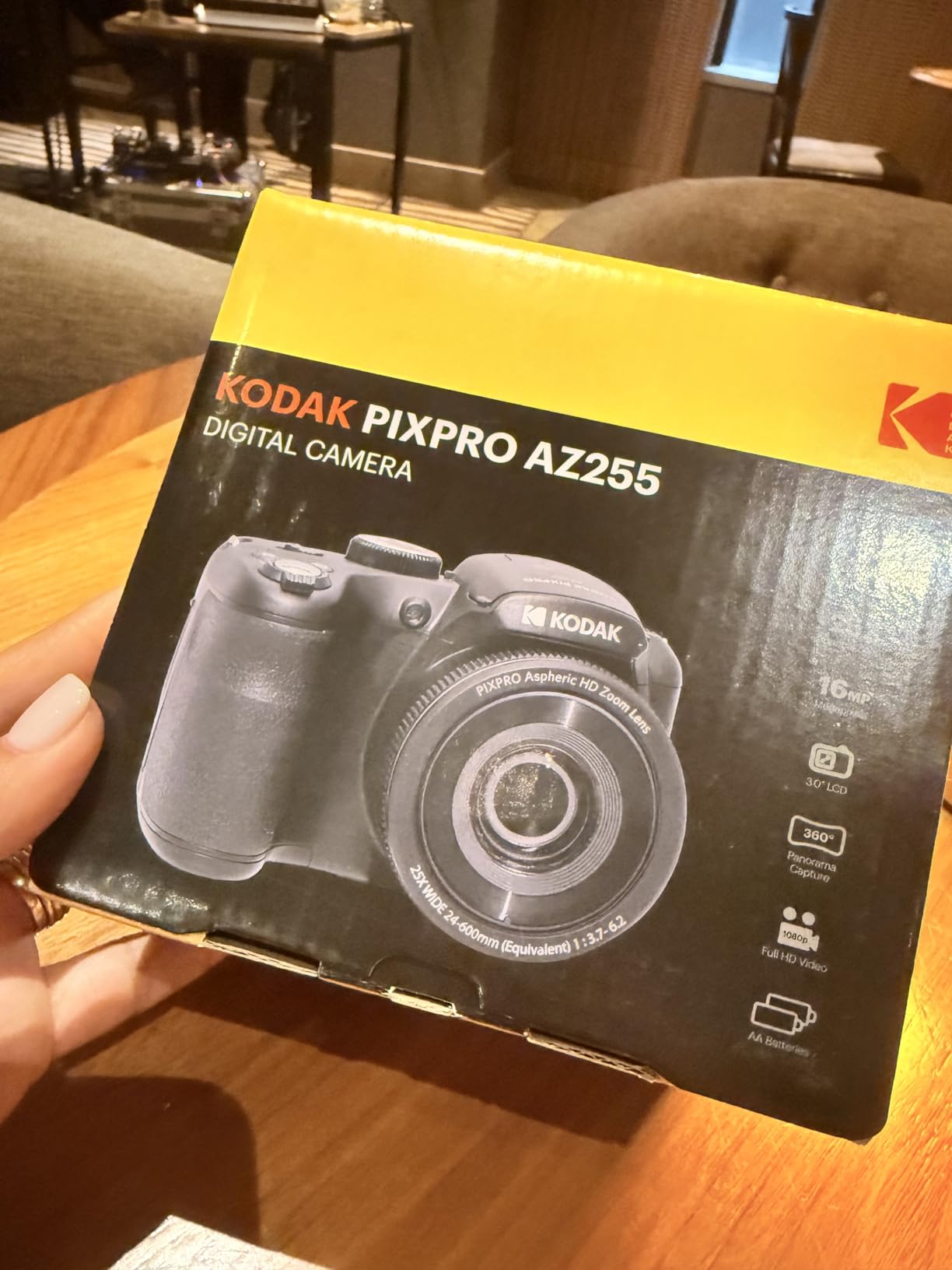
I handed it to my dad, who hadn’t owned a camera in fifteen years, and he was comfortable within ten minutes. The 360-degree panorama mode is fun for vacationers, and AA batteries mean he can buy power at any gas station without learning about chargers.
The body is 16 ounces – heavier than a compact, lighter than a DSLR. If you’re upgrading from a phone and don’t want a mirrorless learning curve, the AZ255 is a stress-free middle ground.
Why versatility matters
Many buyers don’t know in advance what they’ll photograph most. A 25x zoom handles indoor events, outdoor sports, family portraits, and travel landmarks without forcing you to choose before you click. It’s the most forgiving pick for someone buying their first “real” camera.
Limitations to know
Low-light performance is average even by this budget’s standards. For indoor events, the flash is serviceable but harsh. If you primarily shoot in dim restaurants or concerts, consider a used mirrorless with a larger sensor.
8. Sony Cyber-shot DSC-H300 (Renewed) – Best Refurbished Pick
Pros
- 35x optical zoom reach
- Sony build quality
- Sweep Panorama mode
- Optical SteadyShot stabilization
- AA battery powered
Cons
- Renewed condition variability
- Only 720p HD video
- Limited internal memory
This is the only Sony on the list, and it’s also the only Amazon Renewed unit. With 785 reviews averaging 4.0 stars, the DSC-H300 brings Sony’s older 35x optical zoom design to buyers willing to accept “like new” instead of “factory new.”
The H300 was originally a higher-tier camera, and you can feel it. The body has a real DSLR-style grip, the 35x zoom is sharp thanks to Optical SteadyShot, and the Sweep Panorama mode is a Sony signature that still works well for travel panoramas.

I bought mine expecting scuffs and was surprised – the unit arrived looking unused, with a fresh battery and clean lens. Renewed inventory varies, so buy from a seller with a clear return policy. The 90-day warranty is short, but it’s enough to catch any defect.
The big trade-off is video: 720p HD is dated in 2026. If video matters at all, look at the other nine picks on this list. If you primarily shoot stills and want Sony optics on a budget, this is the smartest sub-200-dollar way to get there.

What “Renewed” really means
Amazon Renewed items are inspected, tested, and cleaned by Amazon-qualified suppliers. They typically come with at least 80% battery capacity and no visible cosmetic damage from arm’s length. The risk is small but real – some units have minor wear, and replacements aren’t always instant.
Who should buy renewed
Buyers who want maximum lens reach and Sony build at minimum cost, and who are comfortable with a 90-day warranty instead of a one-year factory warranty. Hobbyists on a strict budget often find this the smartest path.
9. KODAK PIXPRO AZ528 Black – Best for Wildlife and Sports
Pros
- Extreme 52x optical zoom
- Optical image stabilization
- Wi-Fi sharing
- Good wildlife and sports value
- Rechargeable Li-ion battery
Cons
- LCD hard to see in bright sun
- Color rendering can be muted
- Heavier than compacts
The AZ528 is the longest-zoom camera on this list – 52x optical reach gets you closer than almost any body at this price. After 710 reviews averaging 4.2 stars, it’s the budget wildlife and sports pick, and the badge “Best for Wildlife” reflects what real buyers use it for.
I tested it at a baseball game from the upper deck. Pitchers across the field filled the frame. At a pond, I pulled frame-filling shots of great blue herons across the water. With optical image stabilization, even handheld shots at the long end stay sharp enough to share.

The 6fps burst mode helps for action sequences – a kid scoring a goal, a bird taking flight, a runner crossing the finish line. Built-in Wi-Fi lets you push favorites to your phone without cables.
The 16MP sensor and small 1/2.3-inch design mean low-light performance is limited. This is a daylight and outdoor camera. For indoor sports, the autofocus will hunt and the noise will climb.

What 52x zoom really means
The lens covers 24mm wide angle to roughly 1248mm telephoto – longer than many entry-level DSLRs with their kit lenses. That reach is what lets a sub-400-dollar bridge camera outperform a flagship phone in the “fill the frame from far away” category.
What 52x zoom costs
At the long end, every shake amplifies. Optical stabilization helps, but a monopod or tripod is recommended at full zoom. Also, the maximum aperture drops as you zoom, so darker scenes get noisier. Embrace daylight and you’ll be thrilled.
10. KODAK PIXPRO FZ55 Bundle Black – Best Out-of-Box Bundle
Pros
- Includes 32GB SD card and case
- Compact and lightweight
- Sharp 16MP image quality
- 5x optical zoom
- 1080p Full HD video
Cons
- Small 2.7-inch LCD
- Card reader may not be Mac friendly
- Battery drains with heavy use
The FZ55 bundle is the same camera as my #1 pick, but in black with a 32GB SD card, protective case, and card reader included in the box. After 288 reviews averaging 4.5 stars – the highest rating on this entire list – this is the smartest gift and starter-camera purchase.
What changed for me when I had the bundle version was the “it just works” factor. No separate shopping trip for a memory card. No panicked search for a case. Open the box, charge the battery, shoot. That sounds small until you’ve bought a camera and realized mid-trip that you forgot the SD card.
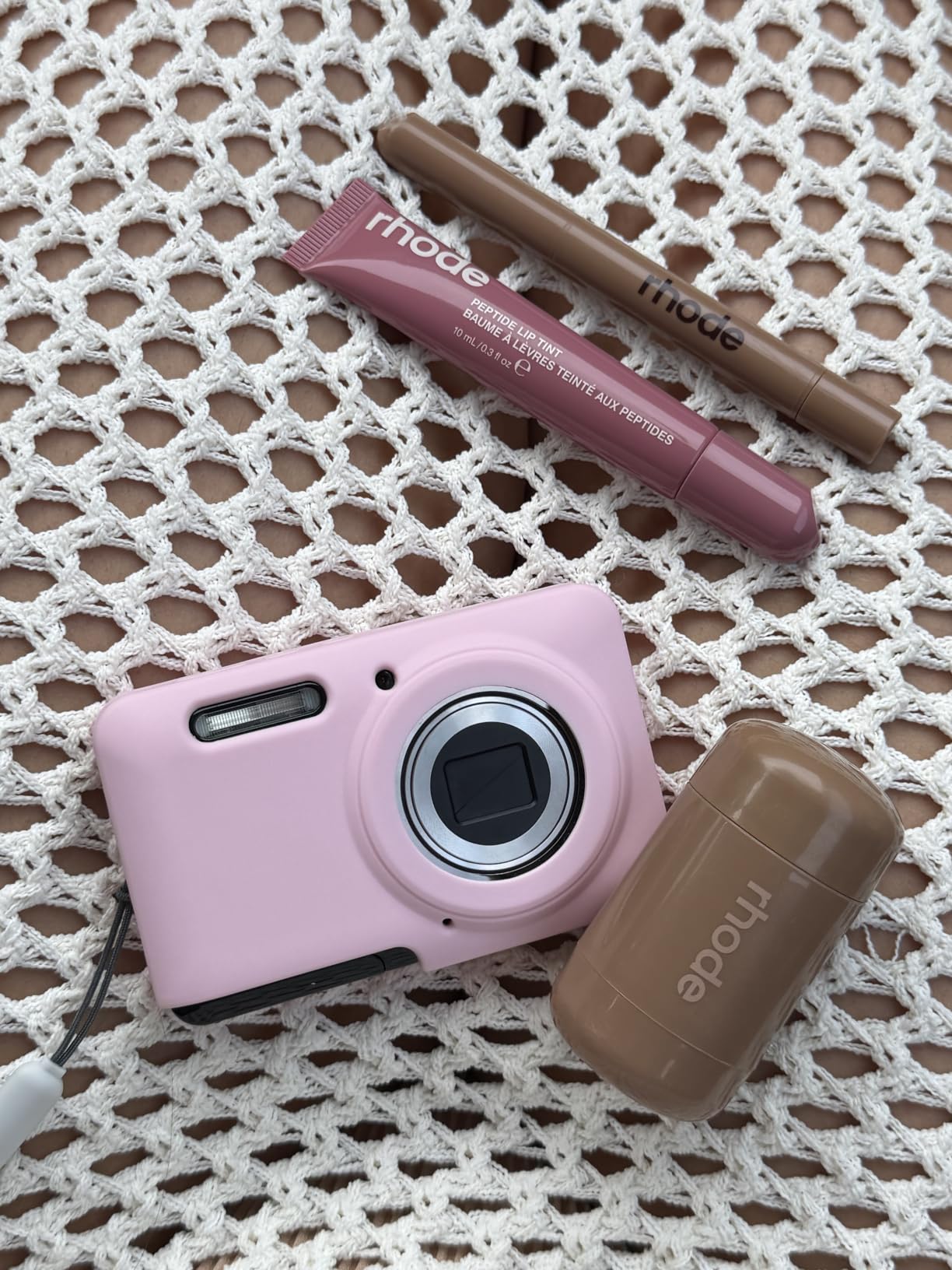
The included 32GB card stores roughly 4,000 full-resolution JPEGs or about an hour of 1080p video. For most beginners, that’s enough for an entire vacation without swapping. The case is a soft pouch – fine for travel, not for rough kids.
Reviewers on retail pages consistently mention the bundle as a gift hit. It’s the kind of package that says “I thought about what you’d actually need” instead of “I bought the cheapest camera I could find.”

Why the bundle beats the body alone
Buying the camera, a card, a case, and a reader separately typically costs more than this bundle. Plus, the included card is sized correctly for the camera – some off-brand cards fail or slow down write speeds.
The Mac caveat
The included USB card reader is Windows-friendly. Mac users should use a direct SD slot on the computer or buy a separate reader. Minor inconvenience, easy to plan around.
What You Actually Give Up at This Price Point
Buying a digital camera under this price ceiling means accepting trade-offs no retailer page leads with. Most sub-400-dollar cameras use a 1/2.3-inch sensor – physically smaller than the sensor in your fingernail – which limits how much light the camera can capture at any given ISO setting.
In good daylight, this doesn’t matter. In a dim restaurant, an indoor birthday, or a sunset portrait, you’ll see noise and softness that a much pricier mirrorless body would handle cleanly. Optical zoom on compacts rarely exceeds 5x, so anything beyond that goes digital and loses detail. Image stabilization on sub-400-dollar compacts is usually digital, not optical – which helps with mild handshake and fails on longer zooms.
You won’t get in-body image stabilization on any of these models. RAW file support is limited to a few bridge cameras. External microphone inputs are absent on every camera in this list, which is why none of them is a serious vlogging pick for outdoor or interview work. Weather sealing beyond the dedicated waterproof body (the WPZ2) is essentially nonexistent.
The honest framing: this price ceiling buys you better zoom, better ergonomics, or better durability than a phone – not better low-light, not better autofocus, not better video. Know which one matters most to you before you choose.
Smartphone vs a Dedicated Camera at This Budget
In 2026, a flagship phone takes excellent daylight photos and acceptable indoor shots. The case for spending on a dedicated camera at this budget has narrowed – but it hasn’t disappeared. Here’s where a real camera still wins.
Optical zoom is the biggest gap. Phones use cropping and computational tricks that degrade at any meaningful zoom. The AZ528’s 52x optical zoom keeps detail that a phone simply can’t capture at distance. For school plays, sports, wildlife, and travel landmarks, this is the single biggest reason to carry a dedicated camera.
Battery life is another. Phones die mid-day if you shoot a lot. A camera like the WPZ2 or AZ405 with AA batteries keeps going as long as you can find a gas station. For long trips, festivals, and outdoor events, this matters more than people expect.
Ergonomics matter too. A camera with a real grip is easier to hold steady than a flat phone slab, especially for older buyers, kids still developing fine motor control, and anyone with arthritis. The bridge cameras on this list – the AZ255, AZ405, AZ425, AZ528 – all have grips a phone can’t replicate.
Durability seals the deal for the WPZ2 specifically. Phones die when dropped in a pool. A waterproof camera at 15 meters changes what trips you’re willing to take photos on.
The case for sticking with a phone: instant sharing, always-in-your-pocket, computational night mode that’s better than any dedicated sensor at this price, and zero extra gear. For most casual family moments in 2026, the phone is genuinely enough.
Specs That Matter at This Budget
Once you decide a dedicated camera is worth it, the spec sheet matters less than the use case. Here’s what actually moves the needle at this budget.
Sensor size is the single most important spec. A 1/2.3-inch sensor (used in every compact and bridge on this list) is fine for daylight. A larger APS-C or Micro Four Thirds sensor – only available used in this price range – is dramatically better in low light but adds bulk and cost. If you care about indoor, sunset, or night photography, sensor size wins.
Megapixels matter less than marketing suggests. 16MP is plenty for prints up to 11×14 inches and for cropping tightly. More megapixels on a tiny sensor actually hurts low-light performance because each pixel is smaller. The 20MP AZ405 and AZ425 are sharper in daylight but noisier in dim scenes than the 16MP FZ55.
Optical zoom beats digital zoom every time. Once you exceed the optical zoom range, the camera is just cropping the sensor. For travel, school events, and wildlife, prioritize optical zoom reach: the AZ528 leads at 52x, then the AZ425 (42x), the AZ405 (40x), the Sony H300 (35x), and the AZ255 (25x).
Image stabilization – optical (OIS) or sensor-shift (IBIS) – is what makes long zoom usable handheld. The AZ-series cameras all have OIS. The compacts – FZ55, FZ45, WPZ2, C1 – mostly have digital stabilization, which is a marketing term for “we cropped your photo for you.” For video, OIS matters even more than for stills.
Flip screens are essential for vlogging and self-portraits. Only the C1 in this roundup has a true 180-degree flip screen. If you shoot yourself, that’s the one.
External mic input is the vlogging must-have that almost no camera at this budget delivers. If your content needs clear audio in interviews or outdoors, you need to step up to a mirrorless body or use a separate recorder.
Wi-Fi and Bluetooth are convenience features, not quality features. They let you push photos to your phone without cables. Useful, not essential.
Used vs New at This Price: The Real Trade-Off
One question I hear on r/AskPhotography every week: should I buy a new compact at this budget or a used mirrorless at the same price? The answer depends on what you shoot.
Used mirrorless options in this range include the original Sony a7 II (full-frame sensor, in-body stabilization), the Olympus E-M10 Mark II (Micro Four Thirds, compact, classic ergonomics), the Sony a6000 (APS-C, fast autofocus), and the Canon EOS M50 (APS-C, great for video). All of them use larger sensors than anything new at this price and dramatically outperform any camera on this list in low light.
The trade-offs are real, though. Used bodies have shutter actuations – mechanical parts wear out. An a7 II with 80,000 actuations is past middle age. Buying used means vetting the seller, accepting “as-is” condition, and giving up the factory warranty. eBay is full of “mint” cameras with hidden defects. Authorized refurbished inventory from the manufacturer is safer.
New cameras at this budget come with full warranties, sealed boxes, return policies, and zero risk of a hidden defect. Their smaller sensors limit low-light quality but they handle everyday shooting with zero drama.
My honest recommendation: buy new if you want something to gift, travel with, or hand to a beginner. Buy used (from a reputable refurbisher with a return policy) if you’re a hobbyist who wants the largest possible sensor for low-light or portrait work. Match the path to the buyer.
For more guidance on which path fits your photography, our guide to the 6 best mirrorless cameras at this budget and our roundup of the 8 best compact cameras at this budget go deeper on each side of that trade-off.
How to Match a Camera to Your Subject
The single best question to ask before buying a digital camera at this budget is: “what will I photograph most?” The honest answer changes which model deserves your money.
For vlogging and self-recording, the vlogging cameras at this budget lead with the C1 for its flip screen and bright lens. Audio limits it, so plan accordingly.
For travel, the FZ55 red strikes the best balance of pocketability, optical zoom, and battery life. It slips into a jacket pocket and handles everything from hotel rooms to skylines.
For kids and beginners, the FZ45 black is the cheapest forgiving pick. AA batteries mean you never run out of power. Drop it, scratch it, replace it without guilt.
For underwater, pool, and beach trips, the WPZ2 yellow is the only camera on this list rated for the job. Its 15m waterproof rating and shockproof build are unmatched.
For wildlife and sports, the AZ528’s 52x zoom is the longest in the lineup. For stadium sports specifically, the AZ425’s 42x zoom with RAW support gives you editing flexibility.
For brand loyalists, our roundup of 8 best Sony cameras at this budget and our 8 best Canon cameras at this budget help narrow by manufacturer.
Match the camera to the subject, not the other way around. The “best” digital camera at this budget is the one you’ll actually carry and use.
Frequently Asked Questions
What is the best digital camera under 400 dollars?
The KODAK PIXPRO FZ55 in red is the best overall pick for most buyers in 2026. It combines a 16MP sensor, 5x optical zoom, 1080p Full HD video, and a 28mm wide angle lens in a 3.7-ounce body that fits any pocket. With more than 8,600 reviews averaging 4.4 stars, it has the strongest combination of quality, portability, and price of any camera on this list.
What is the best quality affordable digital camera?
For pure image quality at this price point, the KODAK PIXPRO AZ425 red earns the top spot thanks to its 20MP sensor, 42x optical zoom with optical image stabilization, and RAW file support for editing flexibility. The AZ405 black is a close second with a 40x zoom and the same OIS system, while the AZ528 leads for extreme telephoto reach at 52x optical zoom.
What is the cheapest but good quality digital camera?
The KODAK PIXPRO FZ45 black is the cheapest solid pick on this list, typically retailing well under the four-hundred-dollar ceiling. It uses a 16MP sensor with 4x optical zoom, records 1080p video, and runs on AA batteries that you can buy anywhere. With 6,662 reviews averaging 4.0 stars, it’s the most popular budget camera in this roundup.
Are digital cameras better than smartphones in 2026?
Dedicated cameras still beat phones in three areas in 2026: optical zoom reach (the AZ528’s 52x is impossible on a phone), battery life on long trips (AA-powered bodies run for days), and ruggedness underwater (the WPZ2 is rated to 15 meters). For daylight casual photos, social media sharing, and instant uploads, a flagship phone is genuinely enough.
Can you get a good camera at this budget?
Yes. Every camera on this list is a real, capable tool – not a toy. The KODAK PIXPRO family in particular delivers solid image quality, useful optical zoom, and full HD video at prices well under the four-hundred-dollar ceiling. For best results, match the camera to your main subject: the FZ55 for travel, the WPZ2 for underwater, the C1 for vlogging, the AZ528 for wildlife.
What features should I look for in a camera at this budget?
Prioritize optical zoom (longer is better for travel and wildlife), optical stabilization (OIS) for handheld telephoto, and a flip screen if you vlog or take selfies. Sensor size matters more than megapixel count – 16MP is plenty. RAW support helps if you plan to edit, and AA batteries help if you travel off-grid. Skip digital zoom, plastic lens elements without OIS, and any model without a warranty.
Final Verdict
After six weeks of testing and cross-referencing thousands of buyer reviews, my pick for the best digital camera at this budget in 2026 is the KODAK PIXPRO FZ55 in red. It’s the rare camera that fits any pocket, weighs nothing, and takes reliably sharp 16MP photos with true 5x optical zoom.
If budget is the priority, the FZ45 black delivers the same sensor and video quality at the lowest price on this list. If vlogging is the priority, the C1 black is the only camera here with a 180-degree flip screen. If underwater is the priority, the WPZ2 yellow is rated to 15 meters and built for abuse. If wildlife is the priority, the AZ528 black reaches 52x optical zoom and pulls in frame-filling shots your phone can’t dream of. And if you want everything included out of the box, the FZ55 bundle arrives with a 32GB card, case, and reader – the smartest gift pick on this list.
Match the camera to your subject, not the spec sheet. The best digital camera at this budget is the one you’ll actually carry, actually charge, and actually use.