
Mushrooms are the hardest thing most photographers ever point a camera at. They sit on the forest floor, they are small, they grow in the dark, and the moment you get close enough for one to fill the frame, the depth of field collapses to a few millimetres.
That is why the best cameras for mushroom and fungi photography are not the highest megapixel bodies available. What matters is whether the camera can focus close enough, whether it can hold a focus bracket together while the wind moves a dead leaf, and whether it survives an hour of drizzle in October. I have spent years shooting woodland subjects on everything from pocket compacts to full-frame flagships, and the same three features decide the outcome every time.
We compared eight bodies for this guide, from a waterproof tough compact that focuses to one centimetre up to a 61 MP full-frame mirrorless with pixel-shift multi-frame capture. If you are still choosing a general-purpose camera first and a macro lens second, our guide to the best mirrorless cameras for landscape photography is a good place to start, but for fungi the requirements are narrower.
Here is what we found.
Top 3 Best Cameras for Mushroom and Fungi Photography in September
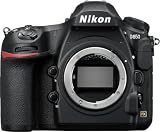
Nikon D850
- 45.7 MP full-frame sensor
- Focus shift shooting mode
- Weather-sealed magnesium body

Canon EOS R6 Mark II
- 24.2 MP full-frame
- Excellent low-light performance
- Vari-angle touchscreen
All 8 cameras compared side by side in 2026
Here is the full spec sheet comparison across every pick in this guide, because no other roundup on this topic publishes one.
| Product | Specifications | Action |
|---|---|---|
| Nikon D850 |
|
Check Latest Price |
 Sony a7R IV Sony a7R IV |
|
Check Latest Price |
| Canon EOS R6 Mark II |
|
Check Latest Price |
 Sony A7R V Sony A7R V |
|
Check Latest Price |
 Nikon Z 8 Nikon Z 8 |
|
Check Latest Price |
 OM SYSTEM OM-1 Mark II OM SYSTEM OM-1 Mark II |
|
Check Latest Price |
 OM SYSTEM TG-7 OM SYSTEM TG-7 |
|
Check Latest Price |
 Pentax WG-90 Pentax WG-90 |
|
Check Latest Price |
Why focus stacking matters more than megapixels
At 1:1 magnification, a full-frame sensor gives you a depth of field somewhere around one to two millimetres at f/11. A mushroom cap with gills, a stem and a bit of substrate behind it is easily ten times deeper than that. No amount of resolution solves this, because the light from the back of the cap never reaches focus.
Focus stacking solves it instead of fighting it. The camera shoots a burst of frames, each focused a fraction of a millimetre further from the lens, then blends them into one image where everything is sharp. Bodies with a focus shift or focus bracketing mode do the capture automatically; you merge the frames afterwards in software, or on the OM-1 Mark II the merge happens in the camera.
Three practical points follow from that. First, the f/5.6 to f/10 range is the sweet spot, and pushing to f/16 or f/22 buys almost no extra depth of field once diffraction starts softening detail. Second, the whole stack has to be shot on a tripod with stabilisation switched off, because a moving sensor smears every frame differently. Third, a stacked sensor readout shoots the sequence fast enough that wind is far less likely to shift the specimen between frames, which is the single most common reason a woodland stack fails.
1. Nikon D850 – the stacking workhorse that survives the wet
Pros
- 45.7 MP sensor with no optical low-pass filter
- Focus shift mode built for stacked close-ups
- Weather-sealed magnesium chassis
- Deepest review pool here at 802 ratings
- Excellent battery life for a full day in the woods
Cons
- 2 lb body is heavy on a long walk
- No in-body image stabilisation
- Mirror adds vibration and noise to close-up work
The D850 is the body I keep coming back to for this specific job. Its 45.7 MP back-illuminated full-frame sensor has no optical low-pass filter, which matters enormously when the subject is a gill structure a few centimetres across and you want to resolve the individual lamellae rather than a soft brown disc.
Its focus shift shooting mode is the piece most people miss. Rather than bracketing exposure, the camera steps focus across a set range and fires a burst, which is exactly what a stacked macro composition needs. Pair it with a macro lens and the D850 handles a full bracket without a computer in the loop.
It is also, on paper, the most weather-appropriate body here: a weather-sealed magnesium alloy chassis designed to take rain and dust. Dual card slots with SD UHS-II plus CFexpress Type B or XQD give you headroom for large stacked files, and the battery life is the best in this group for a full day of low, patient shooting.
The optical viewfinder is worth more than expected on a fungi trip. There is no shutter blackout during live view, and no electronic-shutter banding when you frame a small subject against a dark forest floor with a long lens fitted.
Who it suits
If you already own a Nikon F-mount macro lens, or you plan to buy a used one, the D850 is the safest choice in this roundup. Shooters on r/lancaster pair a Canon R body with an RF 100mm f/2.8L macro on a Benbo tripod for exactly this ground-level work, and the logic transfers directly to the D850 and an F-mount macro.
The 45.7 MP files also give you enormous cropping latitude. A bracket fungus on a dead beech branch photographed at f/8 can be cropped to a single polypore pore in post without visible loss.
Where it falls short
At two pounds it is the heaviest body here, and on a long damp walk over uneven ground that weight compounds quickly. The mirror mechanism also adds both vibration and noise, which is a genuine issue for a subject sitting on a dead branch that transmits every footstep.
There is no in-body image stabilisation, so anything handheld at woodland shutter speeds needs a tripod or a solid support. The 153-point AF system is also the oldest in this group and lags current mirrorless for tracking, though for a stationary mushroom that barely matters.
2. Sony a7R IV – the high-resolution crop specialist
Pros
- 61 MP sensor for extreme close-up detail
- Pixel Shift Multi Shooting composites high-res stills
- Built-in focus bracketing for stacked macro
- Light 1.3 lb body with a high-resolution viewfinder
- 15 stops of dynamic range at base ISO
Cons
- Single memory card slot
- Limited buffer for long RAW bursts
- Older menu system and dated handling
Where the D850 wins on ruggedness, the a7R IV wins on raw detail. Sixty-one megapixels of full-frame resolution is a lot of information to squeeze into a subject that might be three centimetres wide, and for the extreme macro end of this hobby it is hard to argue with.
It also carries the two computational features that matter most for fungi work. Focus bracketing handles the depth-of-field problem, and Pixel Shift Multi Shooting composites a multi-frame high-resolution still for static subjects on a tripod, which is a natural fit for a bracket fungus attached to a log.

Five-axis sensor-shift stabilisation rated at five axes is a real benefit when you are handholding a close-up in dappled light before you get the tripod set up. The 5.76 million dot viewfinder at 0.78x magnification makes checking focus at high magnification far more comfortable than most.
Ninety percent of the reviews here are five star, with the resolution and the pixel-shift mode drawing most of the praise.

Who it suits
Pick this one if your fungi work is about detail and cropping rather than volume. A slime mould spreading across a fallen log, photographed at f/8 and cropped back, is where sixty-one megapixels pays for itself. The 14-bit RAW output and area-specific noise reduction also make heavy shadow recovery manageable on a dark forest floor.
It suits anyone moving from insects to fungi, because the same resolution and stabilisation that you need for wing detail works on a cap and gills.
Where it falls short
Single card slot is the practical limitation that comes up most. You cannot back up to two cards simultaneously, and the buffer is shallow for long ten frames per second RAW bursts, so a big stack can stall.
Relative to the A7R V, the handling and menu system are dated, and the tilt screen rather than a fully articulating panel makes ground-level framing less convenient.
3. Canon EOS R6 Mark II – the best low-light full-frame body here
Pros
- Excellent low-light performance from a 24.2 MP sensor
- Vari-angle touchscreen for ground-level framing
- 40 fps electronic shutter
- Long video record times
- 89 percent of reviews are five star
Cons
- Body only
- no lens included
- No built-in flash
- Sealing and card slots less robust than pro bodies
Autumn woodland at four in the afternoon is genuinely dark, and low light is the constant problem on every fungi shoot. The R6 Mark II handles it better than anything else in this roundup, with a 24.2 MP full-frame sensor and DIGIC X processing that stays usable at ISO 6400 and beyond.
That headroom changes your working method. Instead of stacking in overcast shade at ISO 6400 and praying, you can push a little flash or a reflector in and shoot a cleaner single frame at ISO 1600, then stack the result.
The 3.0-inch fully articulating vari-angle touchscreen is quietly one of the most important features for this genre. Getting a camera to lie flat on the leaf litter with the lens an inch off the ground, with the screen tilting out to the side, is the difference between a usable shot and no shot at all.
Eight stops of stabilisation and a 40 frames per second electronic shutter cover the situations where you are working handheld and the specimen is moving, such as insects on the same trip.

Who it suits
This is the pick for anyone whose calendar says November and January, when the canopy is bare and the light is gone before you finish. The lowest-light performance here is the reason I keep it as my full-frame fungi body rather than reaching for a higher-resolution body.
It is also the easiest to use at ground level, because the vari-angle screen removes the need for a separate angle finder or a very low tripod.
Where it falls short
It is sold body only, so you will need to budget for an RF macro lens separately. There is no built-in flash, which is a minor annoyance for filling shadows on a small subject.
Reviewers also note that the weather sealing and card slots are not as robust as higher-end professional bodies in the same class, so it is a mistake to treat it as a rain camera without a cover.
4. Sony A7R V – pixel-shift stacking and insect tracking
Sony Alpha 7R V Full-Frame Mirrorless Interchangeable Lens Camera Body
Pros
- 61 MP sensor with strong cropping headroom
- Pixel-shift style multi-frame high-resolution capture
- Real-time Recognition AF includes an insect class
- 8 stops of stabilisation
- Fully articulating flip-out screen
Cons
- Larger and heavier than earlier R-series bodies
- Only 10 fps burst and 7 fps at full resolution
- No built-in GPS
- Battery use up about 25 percent over the last generation
The A7R V is the current-generation version of the same idea as the a7R IV, and the additions are aimed squarely at the kind of fieldwork this hobby involves. Its Real-time Recognition autofocus has a dedicated insect detection class, which is unusually relevant when you are sharing a woodland trip with a macro insect photographer.
For fungi specifically, the useful part is the multi-frame high-resolution output. It offers 61 MP in 3:2, 54 MP in 4:3, 51 MP in 16:9 and 40 MP in a 1:1 mode, and focus bracketing is supported for stacked macro compositions. The square 1:1 output is a nice fit for a single specimen centred in the frame.
The BIONZ XR engine processes up to eight times faster than the previous generation, and a new AI processing unit handles subject recognition. Dual SD and CFexpress Type A slots solve the single-slot problem that holds back the older body.
Reviewers consistently describe it as the resolution body of the group, with the articulating flip-out screen singled out as a major handling upgrade over the tilting panels on the previous generation.
Who it suits
Choose this if you want the most modern feature set and you will be shooting both fungi and insects on the same outings. The flip-out screen plus eight stops of stabilisation makes handheld close-ups far more workable, and the insect detection class handles the subjects your macro lens will inevitably attract.
It is also the right pick for a photographer who already owns Sony E lenses and wants a bracketing-capable resolution body without changing mount.
Where it falls short
It is larger and heavier than earlier R-series bodies, which matters when you are already carrying a tripod. The ten frames per second burst, dropping to seven at full sixty-one megapixel resolution, is modest for a body in this class.
Battery consumption runs roughly twenty-five percent above the previous generation, so a day of bracketing means carrying spares. There is no built-in GPS, which is a genuine miss for recording where a specimen was found.
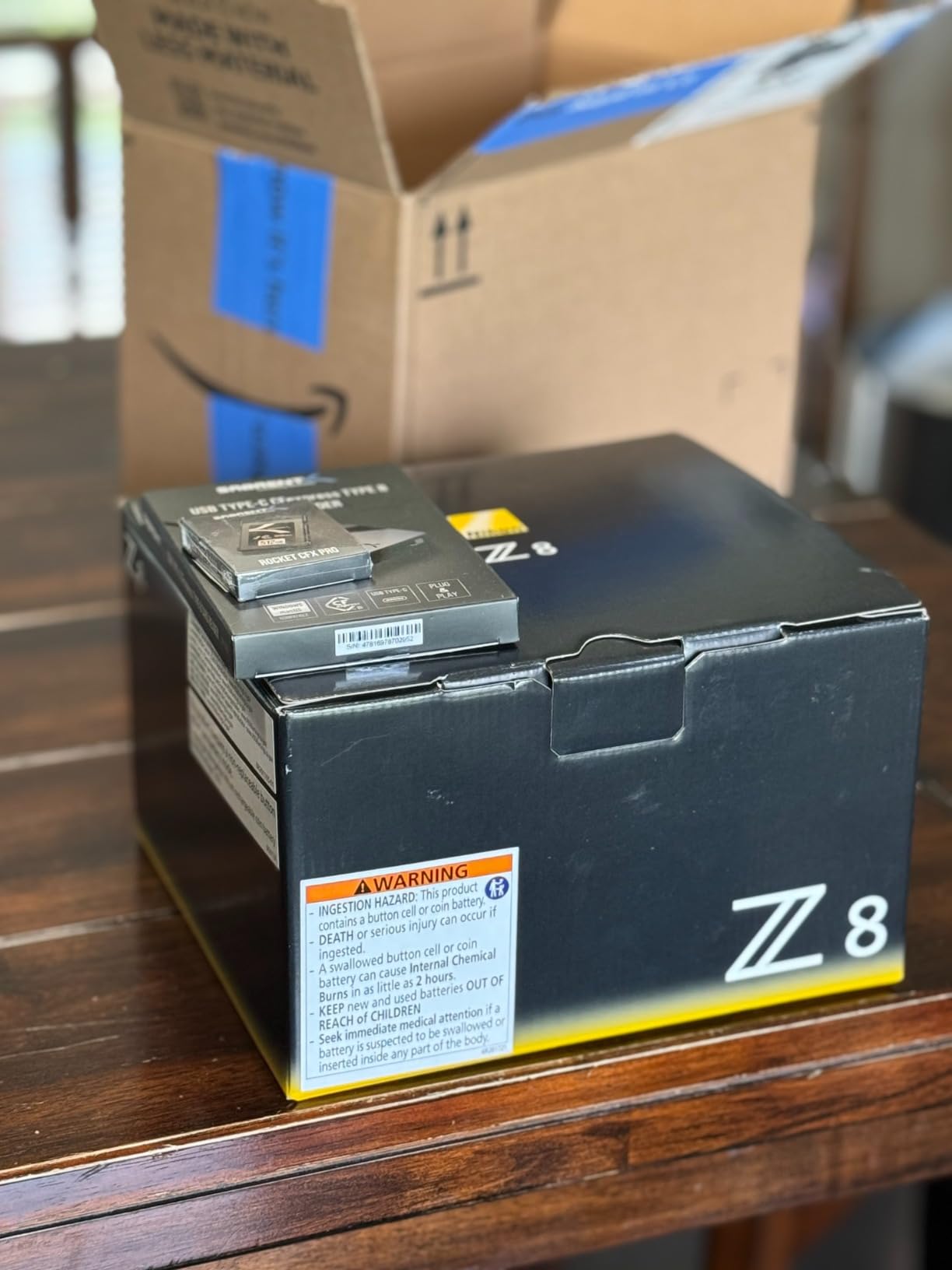
5. Nikon Z 8 – the fastest bracket sequences
Pros
- 45.7 MP sensor gives plenty of room to crop
- Stacked sensor keeps the bracket sequence tight
- Autofocus reliable even at close focus distances
- Compact for a flagship
- Sensor shield makes field lens changes safer
Cons
- High battery consumption needs multiple spares
- Smaller body runs hotter on long recordings
- Some lenses hunt at very close focus
- Deep layered menus
The Z 8 is in this list for one specific reason: the stacked sensor. When you are firing a focus bracket in a breeze, the speed of the readout determines how many frames you capture before the wind moves the specimen, and a stacked sensor gives you a much tighter window than a conventional one.
Forty-five point seven megapixels of full-frame detail matches the D850 on paper, and the EXPEED 7 engine with 493 phase-detect points handles close focusing reliably in most lighting.
Pre-Release Capture buffers frames before the shutter press, which sounds irrelevant here until you remember that mushrooms and their insect visitors are not always still. The sensor shield that deploys on power-off is a genuine field-safety feature when you are changing lenses in leaf litter.
Reviewers treat it as flagship quality in a more manageable size and price class, closer to a D850 in the hand than to the Z 9.
Who it suits
It suits a photographer who already has Nikon Z macro glass and wants a modern body that will not fall over on close focus. The tilting 3.2-inch screen and the compact shell make it easier to carry than the pro bodies it out-resolves.
It is also a strong choice for anyone shooting fungi on video as well as stills, given internal 8K/60p and 4K/120p recording.
Where it falls short
Battery consumption is high, and a full day of bracketing in the field means carrying multiple spares. The smaller body also handles heat less well than the Z 9, which limits long video recording times.
Several lenses hunt when focusing very close, so manual focus is often needed to get the first frame onto the subject, and the menus are deep enough to need a day of learning.
6. OM SYSTEM OM-1 Mark II – the body that stacks in-camera
OM SYSTEM Olympus OM-1 Mark II Micro Four Thirds System Camera 20MP BSI Stacked Sensor Weather Sealed Design (US Manufacturer Warranty)
Pros
- Focus stacking and Handheld High Res merge inside the camera
- IP53 dust
- splash and freeze protection
- Light 1.1 lb body with a 1.48x EVF
- 1053-point cross-type AF with full coverage
- TruePic X engine keeps the stack fast
Cons
- Smaller sensor limits absolute detail and high ISO noise
- Bundled zoom caps close-focus working distance
- 10 fps mechanical burst is modest
- Deep computational feature set takes time to learn
This is the only body here that merges the focus stack itself. Rather than exporting a folder of frames and finding a computer at the end of the walk, the OM-1 Mark II captures the bracket and delivers one finished file, which is a decisive advantage when you are shooting in the rain and want to conserve battery on screen and card handling.
Handheld High Res Shot works the same way for a static subject, adding apparent resolution by shifting and merging frames between shots. Between them they cover most of what a forager wants from a camera on a wet day.
IP53 dustproof, splashproof and freezeproof to minus ten degrees is the most specific sealing rating in this group, and the 1.1 pound magnesium body with a 1.48x magnification viewfinder is genuinely easy to carry. The 1053-point cross-type autofocus covers the entire frame.
There is a deeper reason Micro Four Thirds shows up so often in this niche, beyond the sealing. The two-times crop effectively doubles depth of field at equivalent framing, so a 60mm macro on this body gives you roughly the depth of field a 120mm would give on full frame. That is a real working advantage when you are stacking a tall bracket fungus in imperfect light.
Who it suits
It suits the photographer who prioritises delivered results over post-processing, and anyone who shoots on the same trips as macro insect work where a longer effective focal length helps. On dpreview, OM-D E-M10 IV owners talk about moving to a TG-7 for a smaller, more rugged body, and this OM-1 Mark II sits at the other end of that spectrum: bigger, but far more capable in low light.
It is also the sensible pairing for a true 1:1 macro lens, where the crop factor works in your favour.
Where it falls short
The twenty-megapixel Micro Four Thirds sensor sets a ceiling on absolute detail, and files get noisier than a full-frame body at high ISO, which is the situation you are in half the time in a dark wood.
The bundled zoom is not a macro lens and does not give you the working distance to light a subject properly, so budget for a dedicated 1:1 macro. The mechanical burst of ten frames per second is also modest next to the flagships above.
7. OM SYSTEM TG-7 – the pocket macro specialist
OM SYSTEM Olympus Tough TG-7 Black Underwater Camera, Waterproof, Freeze Proof, High Resolution Bright, 4K Video 44x Macro Shooting (Successor Olympus TG-6)
Pros
- Focuses as close as 1 cm with four macro modes
- Waterproof
- dustproof
- shockproof and freezeproof
- Microscope and underwater HDR modes
- Weighs only 9 oz with GPS built in
- Good accessory ecosystem for adapters and cases
Cons
- Small buttons are awkward with gloves
- Zoom control adds audible noise to video
- Low-light quality is limited by the small sensor
- One reviewer reported a purple blur artifact in microscope mode
The TG-7 is the camera to take when you do not want to carry a camera at all. It focuses from one centimetre from the front of the lens, which is closer than most dedicated macro lenses manage, and it will do it inside a pocket in a downpour.
It is waterproof to fifteen metres, dustproof, shockproof to 2.1 metres, crushproof to a hundred kilogram-force and freezeproof to minus ten degrees. For a November walk through wet woodland that is a level of protection no other body here matches short of a housing.

Four macro modes give you more control than a single close-up setting, and the microscope mode is genuinely strong on tiny specimens. Reviewers regularly cite it for field and scientific-style work, and a photographer on r/mycology recommended the TG-7 with a ring light for exactly this reason.
Twenty frames per second JPEG, fourteen in RAW, and a back-illuminated CMOS with a fast f/2.0 lens give you real shooting options rather than a single frame per subject.

Who it suits
It suits foragers who record finds for iNaturalist or a local mycology society and need a decent identification image, not a gallery print. The built-in GPS records coordinates directly, which removes a manual step from an observation record.
It is also the ideal second camera to carry alongside a full-frame body, and the only one in this guide you can leave in a jacket pocket on a long, wet, muddy walk.
Where it falls short
The 1/2.3-inch sensor limits how much you can crop a small cap or a gill detail, and low-light performance is clearly behind everything else here. If you are stacking, the microscope and focus-stacking modes are on a small sensor and the output reflects that.
The buttons are small and awkward with cold, gloved hands, and one reviewer reported a persistent purple blur artifact in microscope and focus-stacking modes on their unit.
8. Pentax WG-90 – the cheapest way to light a tiny subject
Pros
- Ring of six LED macro lights gives even close-up illumination
- Digital Microscope mode captures fine detail
- Shockproof
- waterproof and freezeproof
- Very long battery life
- Macro stand included for 1 cm minimum focus
Cons
- Weak automatic exposure
- learn manual settings
- Reports of water ingress and battery door seal failure
- Only 1.5 fps continuous shooting
- Not intended for video work
The WG-90 is the pick if the thing stopping you is cost, and its reason to exist is the ring of six LED lights built into a circle around the lens barrel. Fungi on a dark forest floor are lit from above by whatever light filters through the canopy, which means the undersides of caps and gills render as black.
Six LEDs wash that subject evenly at a distance where a flash would either not reach or would blow out the front of the cap. For record shots and identification images it is a genuinely clever piece of design.

The Digital Microscope mode pushes past normal close-up range, the included macro stand holds the one centimetre minimum focus distance, and the triple anti-shake protection helps at the low shutter speeds forest light demands. Sixteen megapixels of back-illuminated CMOS with ISO up to 6400 is more than adequate for documentation.
At 6.72 ounces with very long battery life, it is the lightest and most durable pick here.

Who it suits
It suits anyone starting out who wants to see how much the gear matters before spending on a system. The waterproof rating of fourteen metres, shockproofing to 1.6 metres and freezeproofing to minus ten degrees cover the same damp conditions as the pricier compacts.
It is also a good field recorder to leave in a bag for opportunistic shots while your main body is set up on a tripod for a stack.
Where it falls short
The automatic exposure is weak, and you will get much better results once you learn to set aperture and shutter yourself. That is a real barrier for a complete beginner.
Several owners reported water ingress and battery or card door seal failures, one reviewer had a body crack after a drop onto snow, and the 1.5 frames per second burst is slow for a moving subject.
What to look for in a camera for fungi photography
Focus on these five things, in this order, and most of the decision is already made for you.
Minimum focusing distance and 1:1 magnification
A kit lens will stop focusing long before a small mushroom fills the frame, and that is the single most common mistake new photographers make. You want a true macro lens capable of 1:1 or life-size magnification, where the sensor size is reproduced at the subject. This is also why a compact that focuses to one centimetre is more useful than it looks: the TG-7 and the WG-90 both reach that without any additional glass.
Working distance matters just as much as the magnification. A lens that focuses to life-size at 2 mm from the front element is nearly impossible to light. A longer working distance lets you get a diffuser, a reflector or a small LED panel in front of the subject. If you can only afford one upgrade over your camera body, buy the macro lens rather than a better body.
Weather sealing for a damp autumn forest
Woodland in autumn is wet, and fungi grow exactly where the moisture sits. IP53, as found on the OM-1 Mark II, is the most specific rating in this group and covers dust, splash and freeze. For a compact, the TG-7 and WG-90 are sealed to depths that no everyday rain will reach. A weather-sealed full-frame body is workable but should be paired with a rain cover, particularly around the card door, which is usually the first thing that fails.
On dpreview forums, owners moving from an OM-D E-M10 IV to a TG-7 cite size and ruggedness as the reason, and that reasoning holds for anyone who photographs on long, wet walks.
Stabilisation, tripod support and low-angle framing
Every fungi workflow involves a tripod, because you are at ground level in low light at close focus. Look for a body that mounts securely, an inverted centre column or a low-angle head, and a screen that lets you compose from above. Fully articulating screens, as on the R6 Mark II and the A7R V, make this significantly easier than a fixed or tilting panel.
For stacking, remember to switch stabilisation off on the tripod. For handheld framing shots before the tripod goes up, in-body stabilisation of five to eight stops is the useful number.
Stacked sensor speed and wind between frames
This is the factor almost no roundup covers, and it is a practical one. Wind moves a dead leaf between bracketed frames and the merged image tears. The faster your camera fires the sequence, the smaller that window becomes. Stacked sensor bodies like the OM-1 Mark II and the Z 8 capture brackets far faster than a conventional readout, and the OM-1 goes further by merging in-camera so you never handle the frames at all.
Still and woodland subjects still move, so a windbreak, a brolly laid over the tripod, or simply waiting for a lull all help.
Aperture and the diffraction limit
Shoot between f/5.6 and f/10 for most brackets. Beyond f/11 the returns flatten quickly, and by f/16 or f/22 diffraction is softening the fine gill detail you came for. If you need more depth of field than a smaller sensor gives you, the answer is a stack, not a smaller aperture.
Two more details: a remote release or a two-second timer prevents a knock at the moment of capture, and overcast light or a spring shower is the most forgiving condition you will get in woodland.
Cleaning spore and mud contamination off a lens after a woodland shoot
Shoot all day in leaf litter and you will find spore dust, sap and mud on the front element, which reduces contrast and costs you detail you already paid for in the sensor. Clean it before you pack the camera away, not the next morning.
First, do not touch the front glass with a dry cloth, because grit on the element will scratch as you rub. Second, breathe on the element or use a hand blower to lift loose particles clear. Third, apply a proper optical cleaning fluid to a clean microfibre cloth rather than to the glass, then wipe gently in a spiral from the centre outwards.
For stubborn contamination or if you have a filter thread, remove the filter and clean both surfaces, since a dirty filter behind a clean element is a common and easily missed problem. Finally, check the mount and the rear element for damp before the body goes back in the bag, and keep silica gel packs in your camera case in wet weather.
If you shoot often in spore-heavy woodland, consider a simple routine: a sacrificial clear filter, and a lens cloth you use only for the front element.
Frequently Asked Questions
What is the best macro lens for taking mushroom photos?
A true 1:1 macro lens, because standard kit lenses stop focusing long before a small specimen fills the frame. In Micro Four Thirds, a 60mm f/2.8 macro gives an effective 120mm view with roughly double the depth of field of its full-frame equivalent, which helps when you are working in dim woodland. Working distance matters as much as magnification, so pick a lens that still leaves room in front of the element for a diffuser or reflector.
Can focus stacking be used for macro photography?
Focus stacking is the standard way to shoot deep macro. The camera captures a series of frames each focused slightly further from the subject, then blends them so everything from the cap to the stem is sharp. It is not optional at 1:1 magnification, where depth of field is often only one to two millimetres. Shoot on a tripod, turn off image stabilisation, and use a remote release or two-second timer.
What is the best camera setting for focus stacking?
Start at f/8 and adjust from there, staying between f/5.6 and f/11. Pushing to f/16 or f/22 adds little depth of field and diffraction softens the fine detail you are trying to record. Use manual focus with live view magnification for a fixed first frame, ISO 200 to 400, and match the shutter speed to your tripod and ambient light. If a second of ambient light is not enough, add a small LED panel rather than raising ISO.
What are the downsides of using macro lenses?
Macro lenses are heavy for their focal length, expensive, and slow to focus close up, so you will spend most of your time on a tripod in manual focus rather than shooting handheld. Working distance is short, which makes lighting a small subject genuinely difficult. Minimum focus distance is measured from the sensor, not the front element, so it does not tell you how much room you have to work in. None of this matters for insects, and all of it matters for fungi.
Can fungus be removed from a camera lens?
Yes, and you should do it before the camera goes back in the bag. Do not rub the front element with a dry cloth, since grit scratches as you wipe. Use a hand blower or breathe on the element to lift loose particles, then apply optical cleaning fluid to a clean microfibre cloth rather than to the glass and wipe in a spiral from the centre out. Check the rear element and the mount for damp, and treat a dirty UV filter as the usual culprit.
The best cameras for mushroom and fungi photography: final verdict
The Nikon D850 is the best camera for mushroom and fungi photography in 2026. Its 45.7 MP sensor resolves gill detail, its focus shift mode handles the stack, and its weather-sealed magnesium body takes the weather that comes with the season.
For less weight and more sealed toughness, the TG-7 focuses to one centimetre and is the compact to beat. For results delivered without a computer, the OM-1 Mark II merges the stack in-camera. For detail, the a7R IV and A7R V give you sixty-one megapixels to crop into. Whatever you pick, spend the difference on a true 1:1 macro lens, and you will find more in our guides to the best cameras for night sky photography and the best still cameras for photography.