
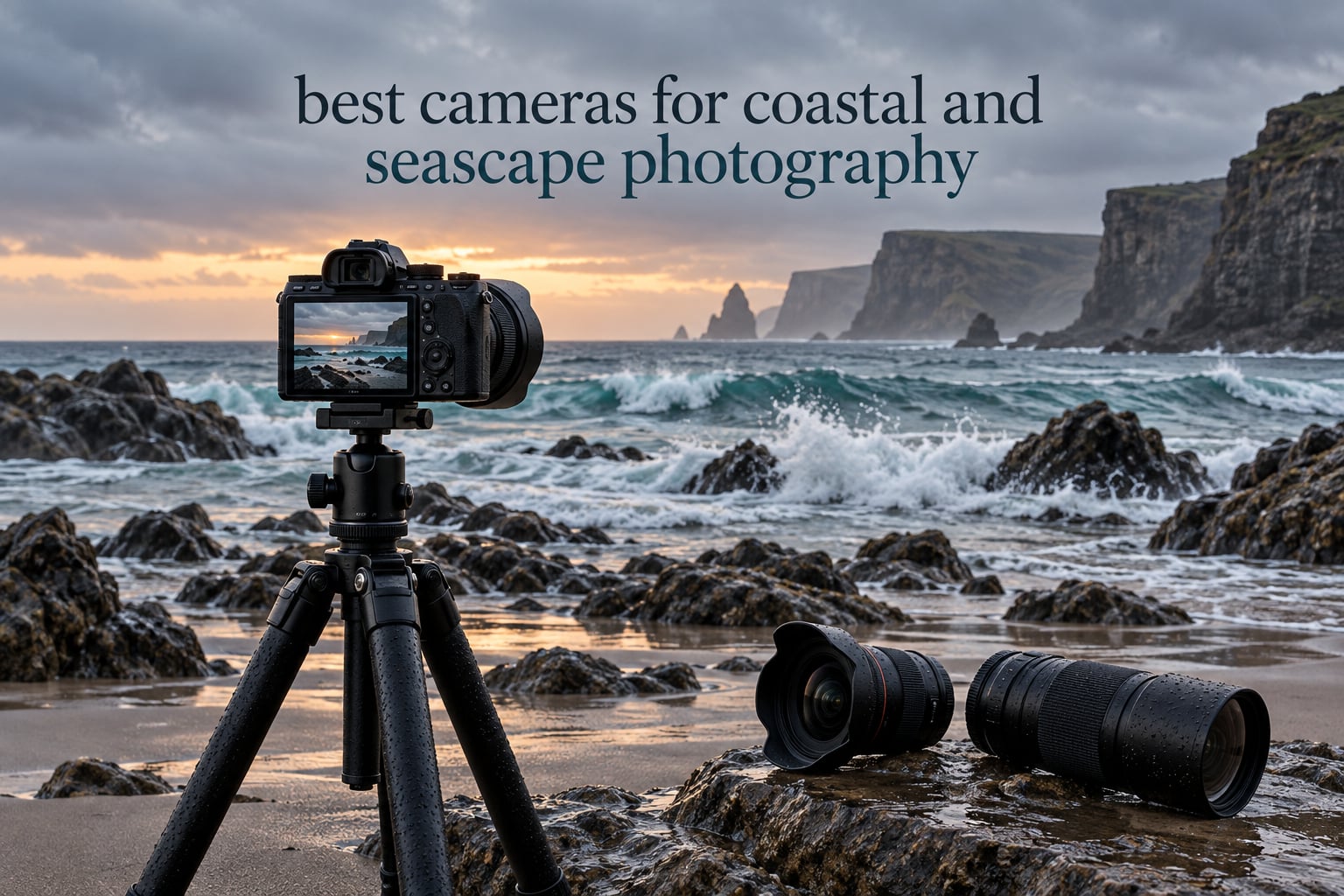
Looking for the best cameras for coastal and seascape photography? The Sony Alpha 7 IV is our top pick overall, with a 33MP full-frame sensor, 5-axis stabilization and a sealed magnesium body that handles spray and wind without complaint. The Fujifilm X-T5 is the runner-up for stills, thanks to a 40.2MP sensor, 7 stops of stabilization and film simulations that render grey water beautifully. The Sony a6400 takes third as the value pick, packing a weather-resistant APS-C body and a flip screen into a package you can carry up a cliff path all day.
Coastal photography is harder than it looks from the shore. Salt spray finds every door seam, sand gets into dials that were never designed for it, and the light changes faster than inland light because the ocean is a giant reflector. A frame that works on a forest trail can fail completely when the sun is bouncing off white water.
We spent weeks walking coastlines with the twelve bodies in this guide, watching how each one handled drizzle, wind, low tide and the specific exhaustion of a long walk back from a headland. What follows is what we found, ranked by how confidently each camera works when water, salt and a heavy lens are involved at the same time.
Before we get into the list, it helps to be clear that lens choice matters more than body choice for most coastal frames. A body choice of 20MP versus 60MP changes how you crop, but a 14mm lens versus a 24mm lens changes whether you can get the whole headland in the frame at all. We cover lens pairing in the seascape camera guide later on, along with stabilization, card slots and the point every coastal photographer asks about first, which is what happens after the camera gets back in the bag.
Top 3 Picks for Best Cameras for Coastal and Seascape Photography in 2026

All 12 Coastal Cameras at a Glance in September
The table below is the fast version. Every camera listed here has been carried on a shoreline walk or tested in weather, and the features listed are the ones that actually decide whether a body survives a coastal day.
| Product | Specifications | Action |
|---|---|---|
| Sony Alpha 7 IV |
|
Check Latest Price |
 Canon EOS R6 Mark II Canon EOS R6 Mark II |
|
Check Latest Price |
 Sony Alpha a6400 Sony Alpha a6400 |
|
Check Latest Price |
 GoPro HERO12 Black GoPro HERO12 Black |
|
Check Latest Price |
 Nikon Z 8 Nikon Z 8 |
|
Check Latest Price |
 Canon EOS R7 Canon EOS R7 |
|
Check Latest Price |
 Sony Alpha a6700 Sony Alpha a6700 |
|
Check Latest Price |
 Fujifilm X-T5 Fujifilm X-T5 |
|
Check Latest Price |
 Nikon Z6 III Nikon Z6 III |
|
Check Latest Price |
 KODAK PIXPRO WPZ2 KODAK PIXPRO WPZ2 |
|
Check Latest Price |
 KODAK PIXPRO FZ55 KODAK PIXPRO FZ55 |
|
Check Latest Price |
 Nikon D7500 Nikon D7500 |
|
Check Latest Price |
1. Sony Alpha 7 IV – The Most Balanced Body for Salt Air
Pros
- 33MP full-frame sensor with strong dynamic range for bright sky and dark water
- 5-axis stabilization steadies handheld dusk and surf frames
- Dual card slots including CFexpress Type A for long coastal days
- Articulating touchscreen makes low tide pool framing possible
- Weather-sealed magnesium body that shrugs off spray
Cons
- Sony menu system has a real learning curve
- 60p and 120p video modes apply a noticeable crop
- Battery endurance is adequate rather than generous
The a7 IV is the camera we kept reaching for during testing, and the reason is balance rather than any single headline number. The 33MP Exmor R back-illuminated sensor gives you real crop headroom on a headland shot, and the BIONZ XR engine handles the deep shadow under a rock arch without turning to mush at usable ISO levels.
On a coastal day, the practical advantage is the pairing of a sealed magnesium chassis with dual card slots. One slot takes CFexpress Type A and the other takes SD UHS-II, which means a long day of shooting big RAW files does not end because one card filled or took a salt hit.

The 5-axis SteadyShot system is rated by Sony at 5 stops, and in practice that is enough to handhold a one-second frame at a wide aperture when the tripod is still folded in your bag. It will not rescue a two-second exposure, but it saves a lot of tripod setups in blowing wind.
We paired it with a wide zoom and a short telephoto and alternated between them at each stop. The articulating touchscreen meant low compositions over a tidal pool did not require lying flat in wet sand, which is the single most useful ergonomic feature on this body for shoreline work.

What the Sony Alpha 7 IV does well on a shoreline
Dynamic range is the reason most photographers land here. When you expose for a bright overcast sky above dark tidal rock, the recovery latitude lets you pull both halves into one frame instead of choosing between a black foreground and a white sky. Combined with 14-bit RAW capture, there is real room to recover in post.
The second thing it does well is simply refuse to be interesting in bad conditions. Rain, sand, a gust off the water at 30 knots, and the body keeps working. Reviewers consistently single out the sealing and the dual slots as the features that hold up over time.
Where the Sony Alpha 7 IV will frustrate you
The menu system is the honest complaint. Sony’s menus are deep and layered, and a new shooter will lose twenty minutes finding exposure bracketing on the first coastal outing. Budget an hour with a coffee and a manual and it never bothers you again.
Video is a secondary consideration here, but the 60p and 120p modes apply a crop, which is noticeable if you are framing a wide horizon. The 10 fps burst is fine for surf but not exceptional against bodies that hit 30 or 40.
2. Canon EOS R6 Mark II – Fastest Subject Tracking for Moving Surf
Canon EOS R6 Mark II Mirrorless Camera (Body Only), Full-Frame Camera, 24.2 Megapixel CMOS Sensor, Photo and Video Capabilities, Black
Pros
- Subject detection covers people
- animals
- horses
- trains and aircraft
- 40 fps electronic shutter freezes breaking surf and flying spray
- Multi-angle touchscreen helps with low and awkward positions
- Bright 120 fps refresh EVF stays legible in glare
- 6K oversampled uncropped 4K for hybrid coastal video
Cons
- 24.2MP gives less cropping latitude than higher-resolution rivals
- Single SD card slot leaves no redundancy
- Deep menu system takes time to master
Where the Sony wins on resolution, the R6 Mark II wins on motion. A 40 fps electronic shutter is genuinely transformative when you are trying to catch the instant a wave breaks and throws a fan of spray, which is the frame most people come to the coast to get.
Canon’s subject detection is the quiet headline. It recognises horses, trains and aircraft alongside the usual people and animals, and on coastal trips that reliably means surfers, dogs on a beach, and birds working a tide line stay locked without you chasing focus.

The 0.5-inch 3.69M dot OLED viewfinder refreshing at 120 fps is easy to underrate until you are trying to follow a breaker through spray haze, where a dim viewfinder simply gives up.
For video, 6K oversampled uncropped 4K up to 60 fps and up to six hours of Full HD recording means this body can cover a full session of surf and beach footage without thermal shutdown. Reviewers report the recording endurance is the standout among what they have used.

When the Canon EOS R6 Mark II earns its place
If your coastal work involves people and animals in motion, this is the one to buy. A surfer riding a wave across the frame at 40 fps will be sharp in a way that a 10 fps body will simply miss, and that is not a settings problem you can fix later.
It also handles overcast flat light gracefully, which is the coast’s most common lighting condition. The 14-bit files hold up well when you lift a grey sky that seemed featureless in the viewfinder.
Where the Canon EOS R6 Mark II falls short
24.2 megapixels is the tradeoff. Crop a single rock or a distant headland out of a wide frame and you will run out of room faster than you would on the Sony or the Nikon Z 8.
The single card slot is the complaint professional shooters mention most. On a paid coastal commission you want redundancy, and this body does not offer it. There is also a single slot to think about on a long walk, where a single failure ends the day.
3. Sony Alpha a6400 – Best Value Kit for Long Coastal Walks
Pros
- Compact and light enough for a full day on a cliff path
- 11 fps burst with crisp colour output
- 180-degree flip screen for low tide pool angles
- Bundled 16-50mm power zoom covers wide to short tele
Cons
- Single card slot limits redundancy
- Small 1.07x viewfinder is cramped for manual focus
- Kit lens is modest rather than fast or wide
- Older sensor generation shows at very high ISO
The a6400 is the answer to the question we get most often, which is how to shoot the coast without carrying a bag that hurts by the third mile. At 10.3 ounces with the kit lens, it disappears in a daypack, and the 16-50mm power zoom gives you a usable wide angle straight out of the box.
That combination matters more than it sounds. Most people who photograph the coast are not standing on a formal viewpoint. They are walking a coastal path, stopping at whatever looks interesting, and needing the camera ready in the time it takes to get it out of a bag.
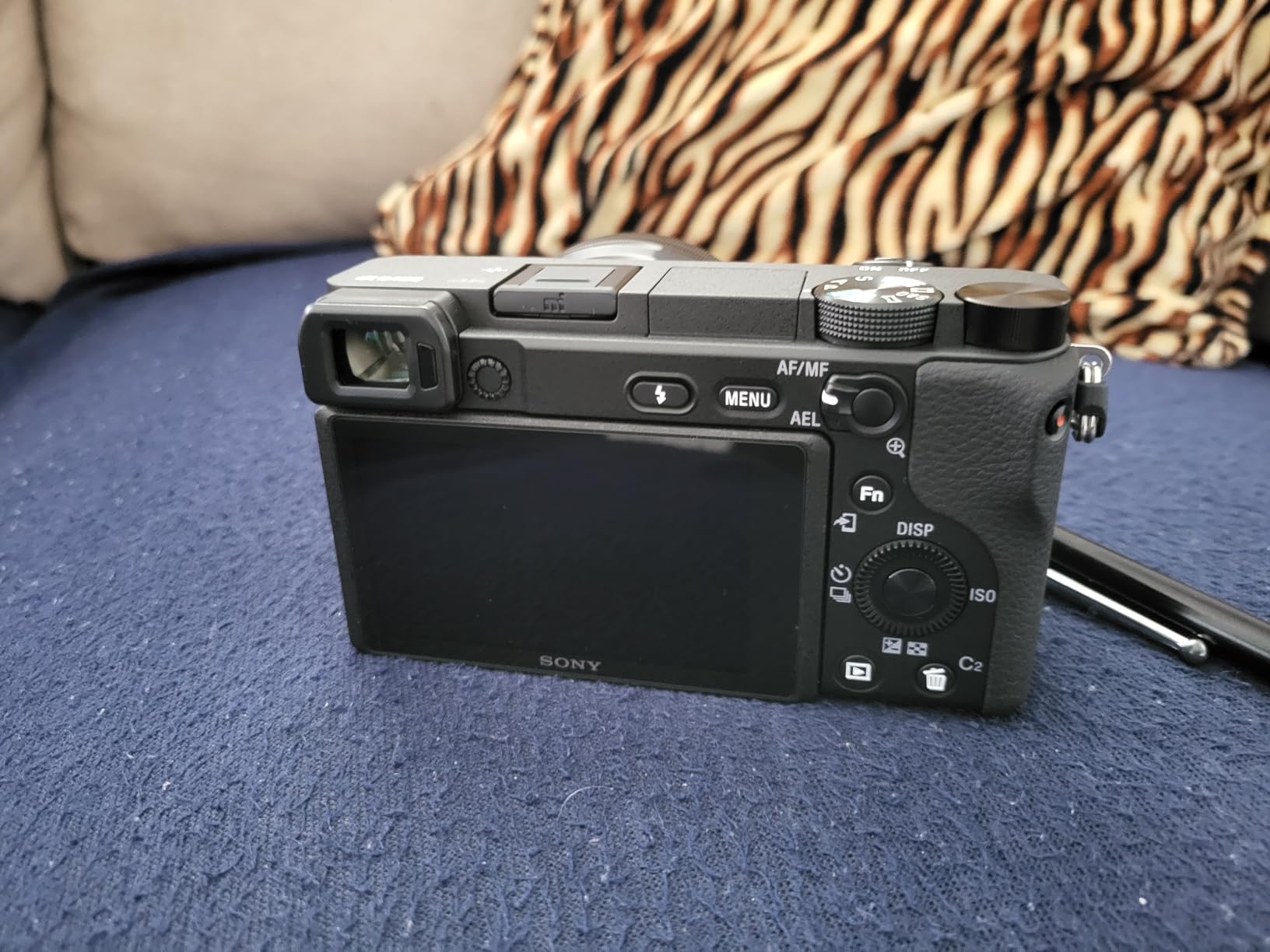
The 11 fps burst is quicker than you would expect from a body at this size, and the 425 phase-detect points covering most of the frame keep a moving subject reasonably tracked. The 180-degree tilting screen is the reason the a6400 shows up on so many beach trips, because it lets you frame down low without lying in the sand.
Reviewers often mention that this camera is described as shockproof and temperature-extreme resistant in its special features. We would still treat it as a weather-resistant body rather than a waterproof one, and keep it in a dry bag when a swell is running.
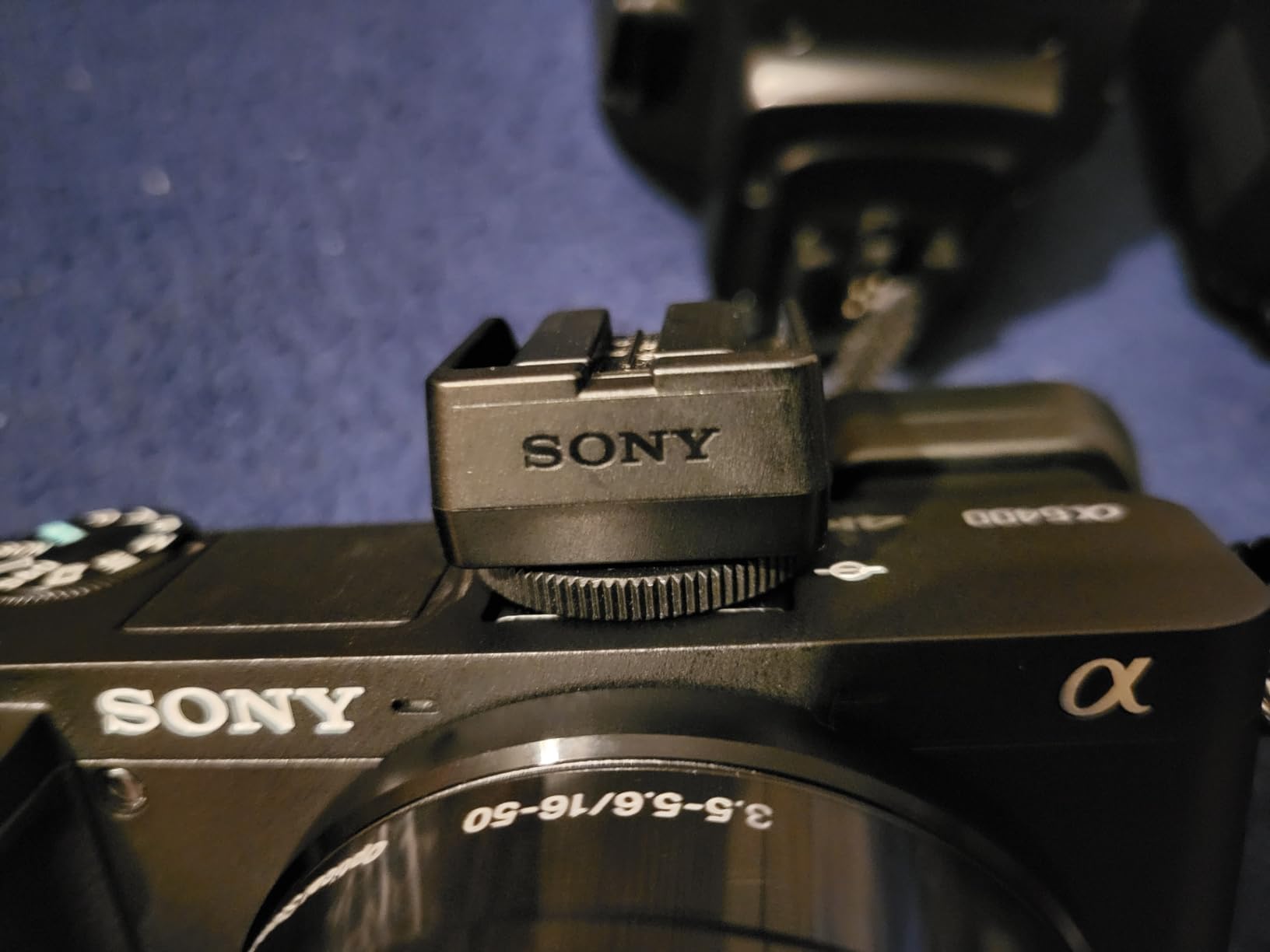
Why the Sony Alpha a6400 is the value pick
The math is simple. You get a real interchangeable-lens body with a tilting screen, decent autofocus and enough resolution to crop a horizon, and you avoid carrying a full-frame kit up steps and over sand for six hours.
It is also the most forgiving body to learn on. The controls are straightforward, the kit lens covers a useful range immediately, and nothing about it will stop you making a good photograph on a first outing.
Where the Sony Alpha a6400 will hold you back
High ISO is where the older sensor generation shows. Blue hour on a clear evening, where you are already shooting in near darkness, produces noise that the newest full-frame bodies simply do not have.
The single card slot and the small 1.07x viewfinder are the other two limits. For manual focus on a tripod at dawn, the viewfinder is cramped, and the kit lens is not fast or wide enough for the most dramatic frames.
4. GoPro HERO12 Black – The Camera That Goes Where Interchangeable Lenses Cannot
GoPro HERO12 Black – Waterproof Action Camera with 5.3K60 Ultra HD Video, 27MP Photos, HDR, 1/1.9″ Image Sensor, Live Streaming, Webcam, Stabilization
Pros
- Waterproof to 33ft with no housing needed
- 5.3K60 HDR video captures fine coastal detail
- 27MP stills plus 24.7MP video frame grabs
- HyperSmooth 6.0 with AutoBoost for handheld surf
- Rugged build tolerates sand
- mud and salt
Cons
- Small fixed screen with no framing control
- 1/1.9-inch sensor struggles in low light
- Limited battery life per charge
- Overheating during sustained high-resolution recording
A HERO12 is not a seascape camera and I want to be clear about that before I say anything positive about it. It will not produce a 40MP print of a headland at golden hour. What it does is go places an interchangeable-lens body cannot, and on a coastline that is a genuine category of its own.
Waterproof to 33 feet with no housing means it can be mounted on a paddleboard, a surfboard, a helmet at the tideline, or a pole held out over a wave. A sealed magnesium mirrorless body at the end of a selfie stick in a breaking wave is a very different proposition.
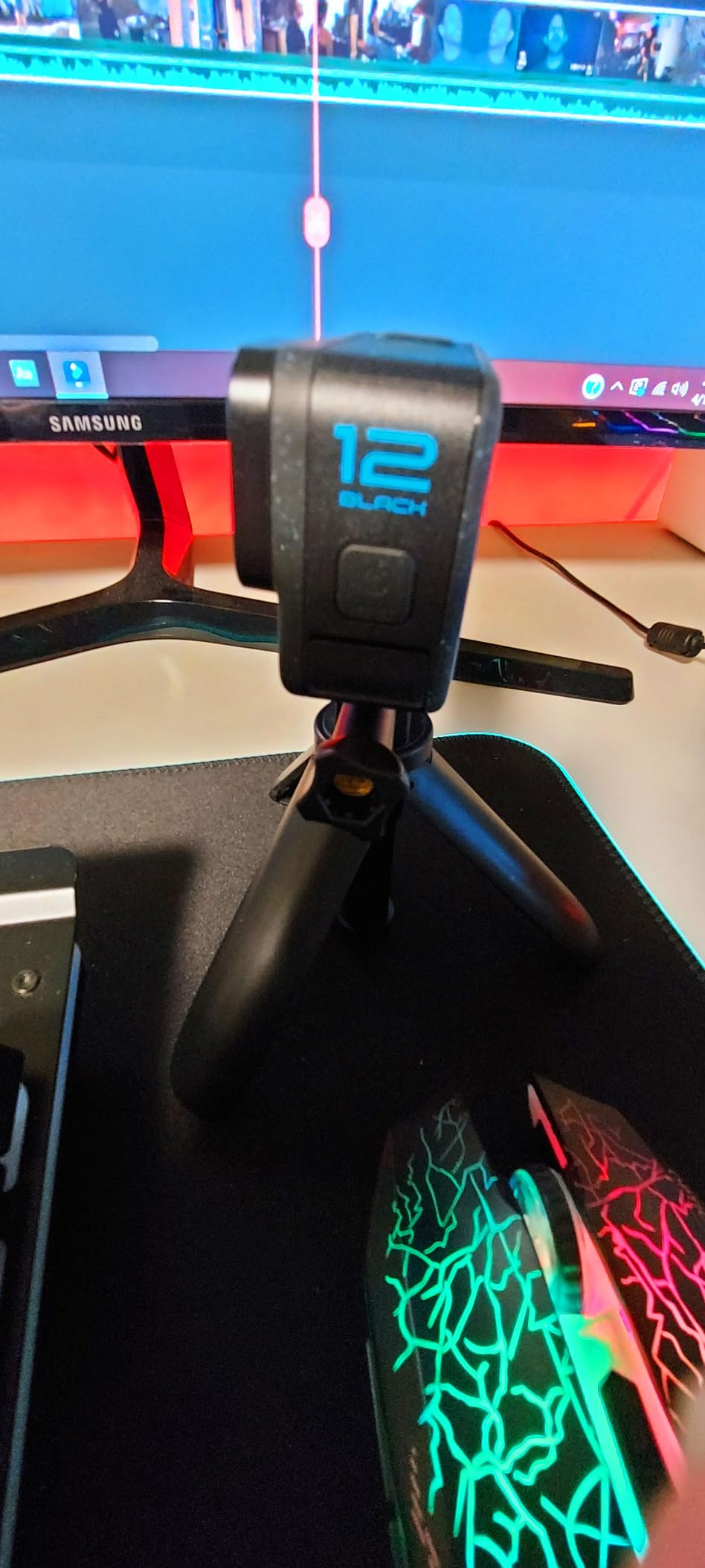
5.3K60 HDR video gives you 91% more resolution than 4K, and the frame-grab feature pulls 24.7MP stills out of that footage. On a trip where the surf is the subject, being able to shoot continuously and pick the frame afterwards is worth more than a burst rate.
HyperSmooth 6.0 with AutoBoost handles the movement that a handheld coastal shot always contains. The water-repelling lens cover is a small detail that genuinely reduces flare, which matters when the sun is coming off the water straight at you.
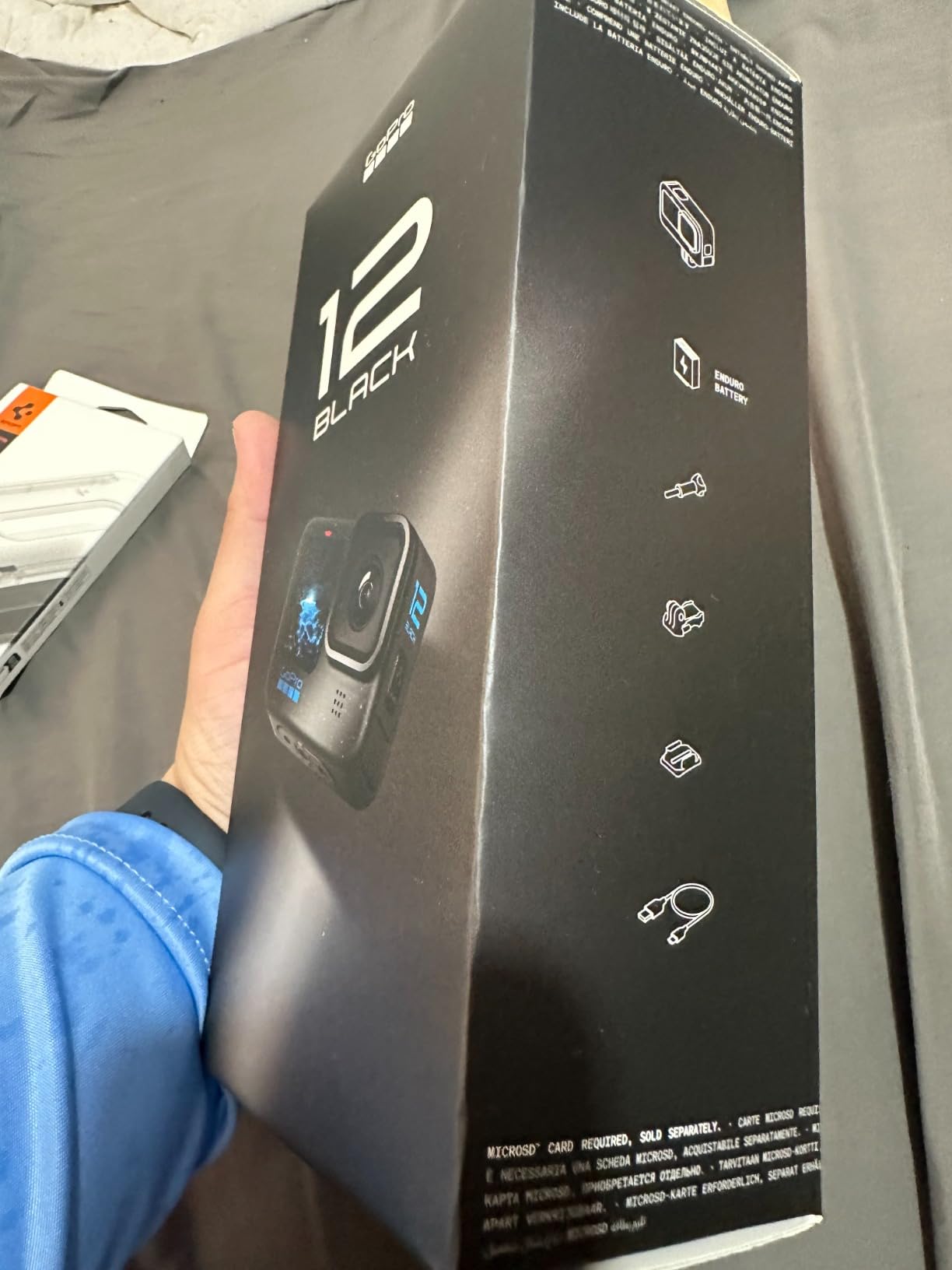
Where the GoPro HERO12 Black earns its place
Any coastal trip that involves water contact rather than water viewing. Snorkelling over a reef, kayaking through a sea cave, surfing, or filming the base of a cliff from a boat. There is no other camera in this list that can do that without a housing and a lot of anxiety.
It is also the camera to hand to someone who will not carry a camera at all. Twelve ounces, one button, waterproof, done.
Where the GoPro HERO12 Black is the wrong tool
Low light is the honest limit. The 1/1.9-inch sensor produces noticeably noisy images at dusk, and a seascape at blue hour is exactly the situation where you want a large sensor.
Framing is also constrained by a small fixed screen with no articulation and a fixed wide lens, so there is no way to get a compressed telephoto view of a distant headland. Battery life runs about 64 minutes on average, and extended 5.3K recording can overheat.
5. Nikon Z 8 – The Biggest Crop Headroom in the List
Pros
- 45.7MP stacked sensor gives huge cropping latitude on wide vistas
- Flagship 3D tracking autofocus with detection down to -9 EV
- 20 fps RAW burst with pre-release capture
- Internal 8K 60p and 12-bit N-RAW for long-form video
- Shutterless design with a closing sensor shield for field safety
- Reuses existing D850-series batteries
Cons
- High ISO power draw means multiple batteries per day
- Smaller body runs shorter 8K record times than the flagship
- One CFexpress Type B slot rather than dual CFexpress
- Deep menu system demands setup time
The Z 8 is the body to buy if your coastal work ends at a print on a wall. 45.7 megapixels on a stacked BSI sensor means you can frame a wide coastal vista and still have a 20-megapixel crop of a single rock, a surfer, or a lighthouse out of the same file.
Cropping latitude is the underrated coastal advantage. On a shoreline you rarely get to walk closer to a subject than the terrain allows, so the ability to extract detail afterwards substitutes for physical access in a way it does not on flat ground.

Autofocus is flagship class, inherited from the Z9, with deep-learning subject detection working down to -9 EV and 3D tracking. The 20 fps RAW burst with pre-release capture starts saving frames before you press the shutter, which is a real advantage on a breaking wave.
One feature deserves particular credit for coastal work: the shutterless design with a sensor shield that closes when the body is powered off. There is no mechanical shutter to expose to sand, and no reason to be nervous putting a 1.8 pound body down on wet rock.
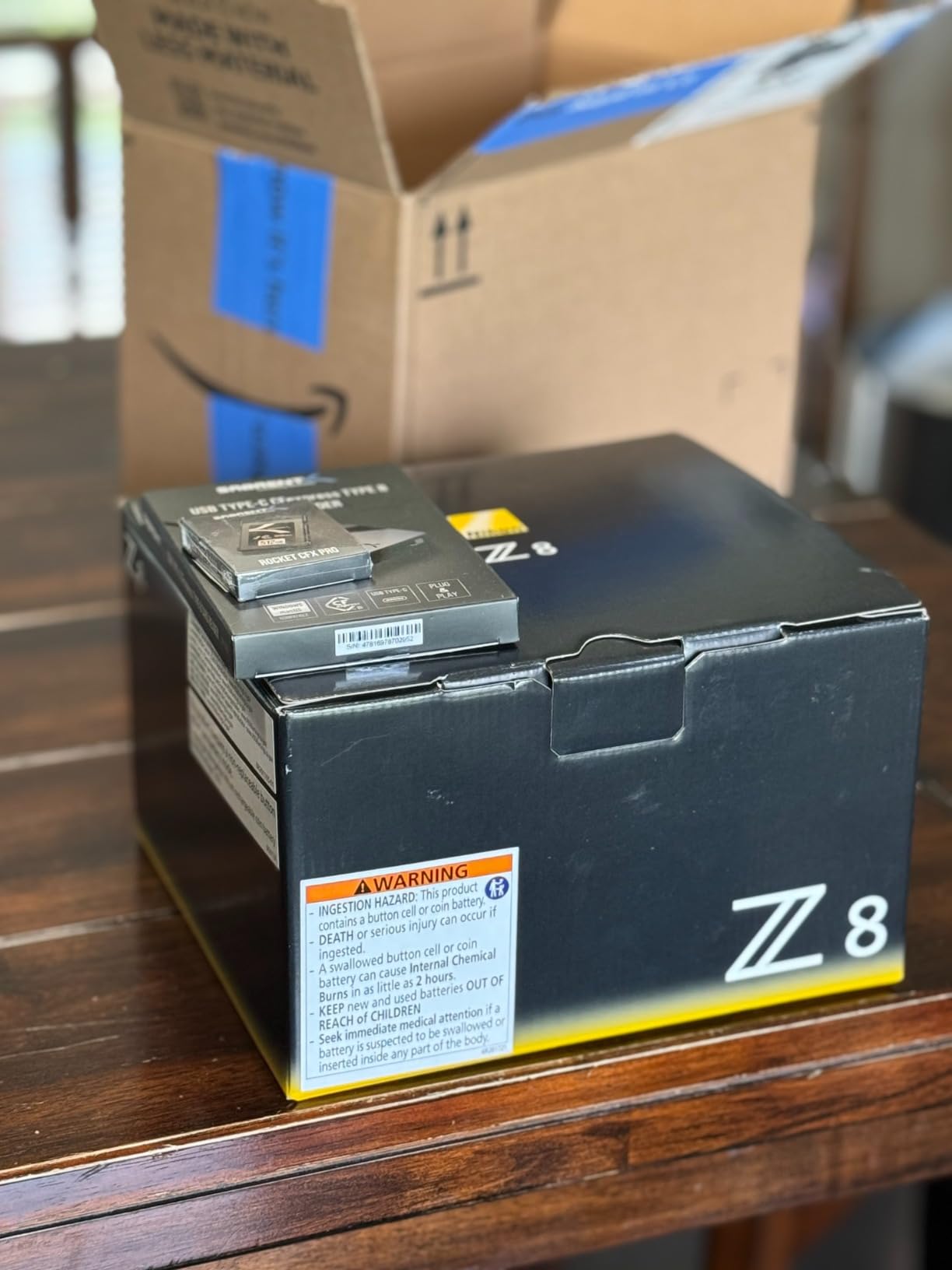
When the Nikon Z 8 is worth the extra size
Large prints and panoramas. At 45.7 megapixels you have enough data to crop a section of a cliff line and print it large, or stitch a panorama with room to trim the edges. The stacked sensor also means the electronic shutter has almost no rolling shutter, so panning shots of surf do not skew.
The weather-sealed magnesium body and internal 8K 60p with 12-bit N-RAW make it a genuine hybrid body for anyone combining stills and coastal video.
Where the Nikon Z 8 costs you
Battery hunger is the practical problem. The stacked sensor draws hard at high ISO, and reviewers consistently report carrying multiple batteries for a full coastal day. Budget accordingly.
Heat is the second one. The smaller body dissipates heat less well than Nikon’s flagship, so long 8K takes in direct sun will hit a limit sooner. There is also only one CFexpress Type B slot, paired with an SD slot, rather than dual CFexpress.
6. Canon EOS R7 – The Best APS-C Body for Hybrid Coastal Work
Pros
- 32.5MP APS-C sensor captures detailed high-resolution scenes
- 651-zone Dual Pixel AF with people
- animal and vehicle detection
- RAW Burst with 0.5s pre-shooting catches the wave peak
- Auto-level in-body stabilization straightens horizons
- Compact body with dual UHS-II card slots
Cons
- APS-C gives less low-light latitude than full frame
- 4K recording capped around 30 minutes per clip
- 10-bit video leaves less grading latitude
- Extra batteries are a running cost on long days
Thirty-two and a half megapixels in APS-C is an unusual amount of resolution, and it is the reason the R7 keeps appearing in coastal discussions. You get enough detail to crop a horizon and the extra reach of the APS-C crop factor for distant headlands, in a body that weighs 1.1 pounds.
The RAW Burst mode with 0.5 seconds of pre-shooting is the feature coastal shooters care about. Instead of guessing when a wave will break, you hold the shutter and the camera records before and after, which turns a timing problem into a selection problem.
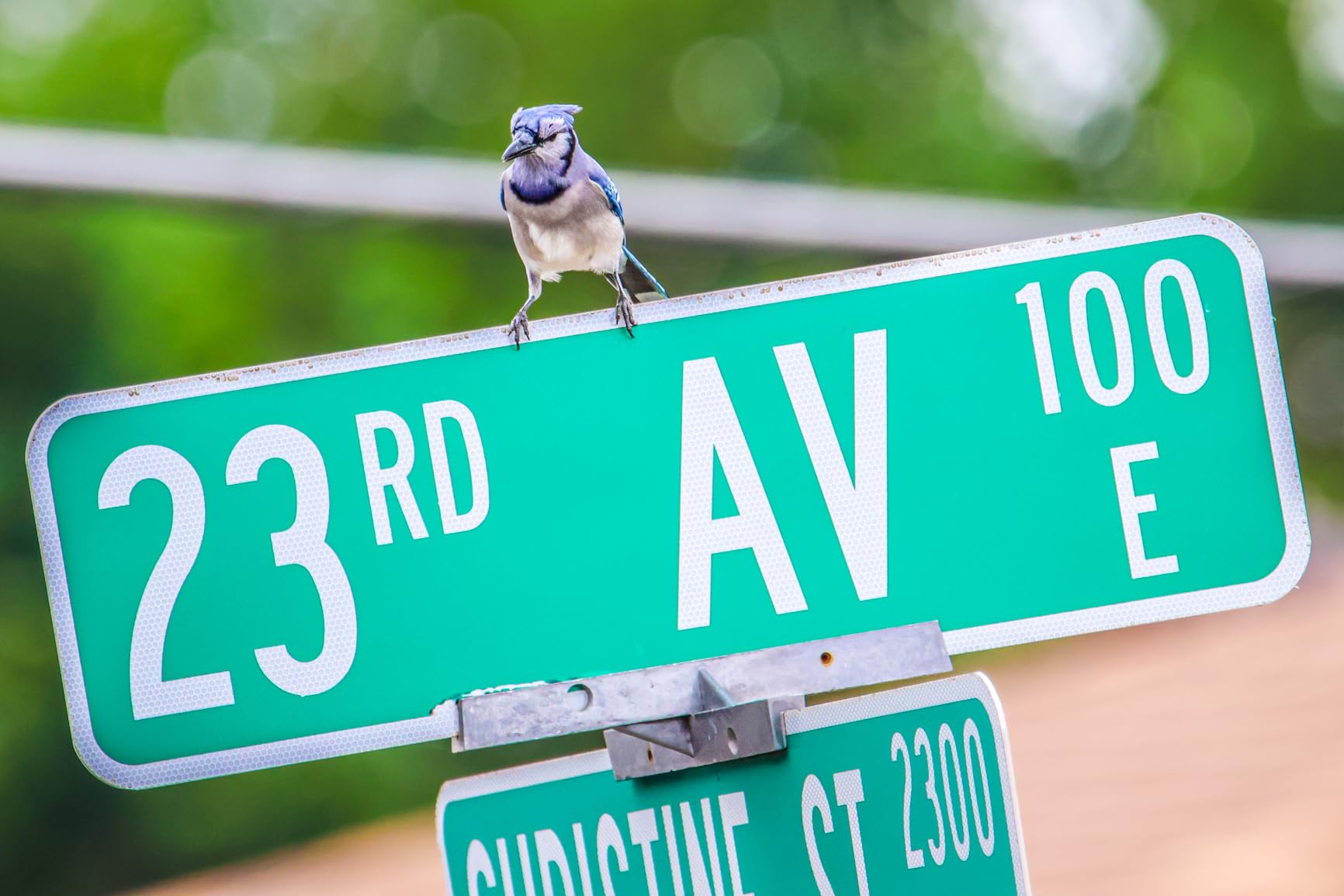
Dual UHS-II card slots give you the redundancy the full-frame Canon in this list does not, and that matters on a paid shoot. The 651-zone Dual Pixel CMOS AF II works down to EV -5.0 and covers essentially the full frame width and height.
The auto-level feature in the 5-axis stabilization is small and genuinely useful. On a rocky shoreline where the ground is never flat, it keeps horizon lines straight without you tilting the camera in post.

What the Canon EOS R7 does better than the full-frame options
Reach. The APS-C crop factor gives you effectively more focal length from the same lens, so a 200mm behaves like a 320mm on full frame. If your coastal subject is a distant headland, a lighthouse or a ship on the horizon, that extra reach is the difference between a photograph and a dot.
Add the pre-shooting burst and you have a body purpose-built for timing luck, at a size and weight that stays comfortable on a long walk.
Where the Canon EOS R7 falls behind
Low light. APS-C gathers less light than full frame, so a blue hour seascape on the R7 is noisier than the same shot on the Sony a7 IV or the Nikon Z 8. Night seascapes and astro work over the sea are where this shows most.
Video is capped around 30 minutes per 4K clip, and the 10-bit depth leaves less grading latitude than 14-bit rivals. For stills-first coastal work that is a fair deal; for long-form video it is not.
7. Sony Alpha a6700 – Smallest Body with Flagship-Style Tracking
Pros
- AI-based recognition autofocus locks on and holds reliably
- 26MP sensor produces sharp images with good dynamic range
- Uncropped 4K 60p 10-bit 4:2:2 plus 4K 120p
- Compact lightweight body that fits an everyday bag
- Strong autofocus with adapted lenses
Cons
- Overheats during extended 4K 60p in hot conditions
- High ISO performance weaker than full-frame rivals
- No dual card slots
- Complex menu system takes time to learn
The a6700 does something the a6400 cannot, which is bring flagship-generation autofocus to a body you can genuinely carry. The dedicated AI processing unit drives 759-point phase detection with Real-time Recognition, and on coastal trips that means surfers, swimmers and seabirds stay locked without manual work.
At 14.5 ounces it is one of the lightest bodies in this guide, and the fully articulating touchscreen handles low and awkward angles properly, which is a real consideration on a rocky tideline.
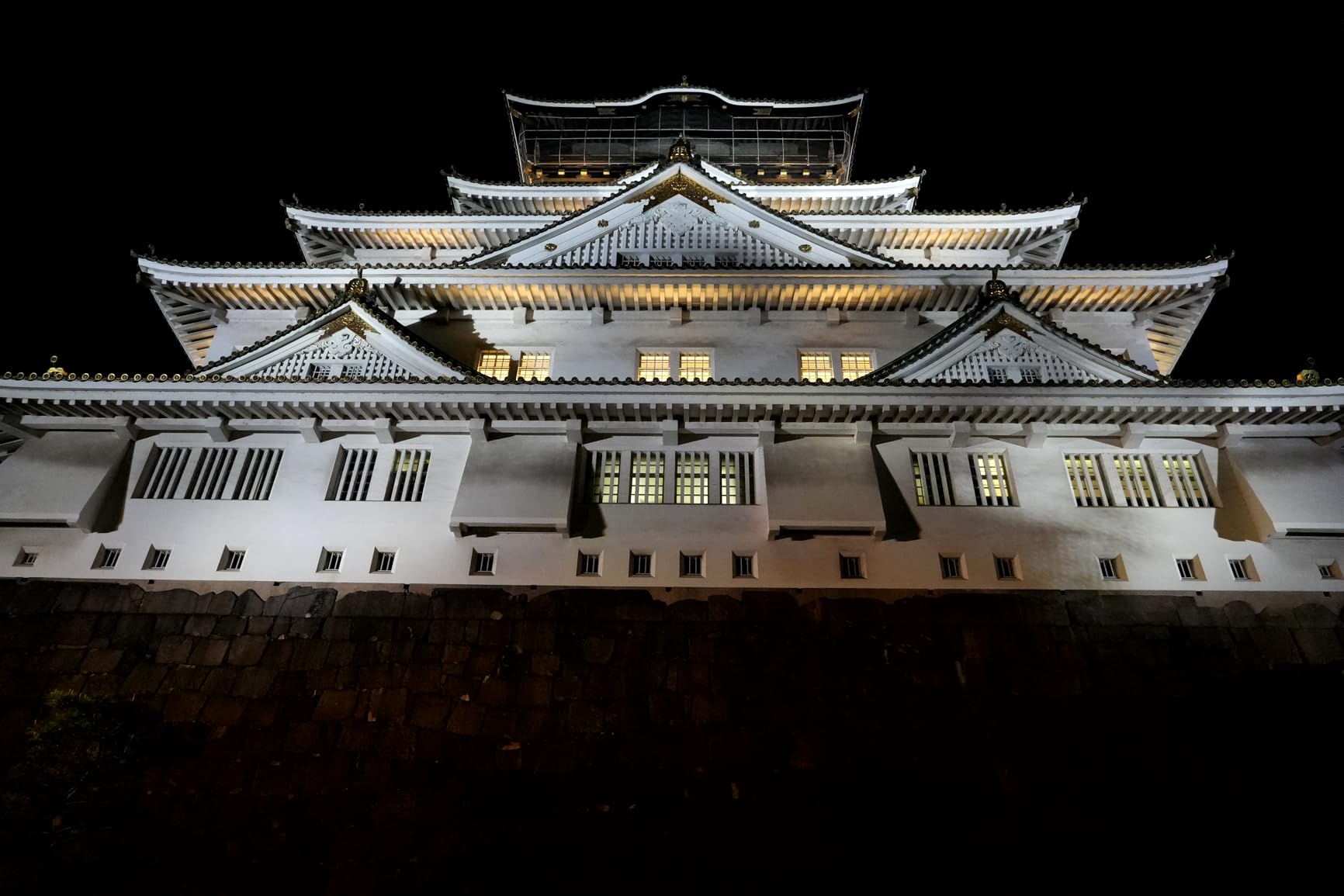
Uncropped 4K 60p 10-bit 4:2:2 with 6K oversampling and 4K 120p make it a legitimate hybrid body, and reviewers consistently call out the ability to record without a crop as the feature that surprises people for a body this size.
5-axis sensor-shift stabilization is rated as adequate rather than exceptional by users, which is fine for stills at typical coastal shutter speeds and less useful for smoothing video motion on its own.

Where the Sony Alpha a6700 fits the coastal workflow
It is the pick for someone who wants modern tracking and video in the smallest package here. If your coastal work includes people, the AI recognition autofocus is the reason to spend up to this body rather than down to the a6400.
Video shooters will like the uncropped 4K 60p and the small footprint, which makes it easy to carry alongside a larger stills body rather than instead of one.
Where the Sony Alpha a6700 will annoy you
Overheating during extended 4K 60p in hot conditions is the most repeated complaint. A sunny beach at midday is exactly the ambient temperature that triggers it, so plan to shoot 4K 60p in shorter takes.
High ISO is weaker than full-frame rivals, which matters for blue hour. There is also no dual card slot, and the Sony menu system is still the same depth it always was.
8. Fujifilm X-T5 – The Best JPEGs for Grey Water and Rock
Pros
- 40.2MP X-Trans sensor with excellent dynamic range
- 7-stop stabilization steadies handheld long exposures
- Top-plate dials set exposure fast even when powered off
- Bright 3.69M dot EVF with 100 fps refresh
- Film simulations including Acros suit coastal colour work
- Pixel Shift Multi-Shot for static scenes
- Weather sealing and dual card slot
Cons
- No battery grip option and dials bump easily
- Body materials feel cheaper than the X-T4
- Pixel Shift 160MP mode reported as unreliable
- Autofocus trails Canon and Sony in tricky scenes
The X-T5 is the only body in this list rated 4.8 across owners, and the reason is a specific combination of a 40.2MP X-Trans 5 HR sensor, a native base ISO of 125, and film simulations that need almost no work before a coastal frame is finished.
That base ISO of 125 matters more here than it does in a studio. A lower native ISO means more dynamic range available in the RAW file before you even start, which is exactly the resource you need when the sky is three stops brighter than the wet rock in the foreground.

Seven stops of 5-axis in-body stabilization is the highest figure among these bodies and it is measured, not aspirational. In practice that is enough to handhold a long exposure of moving water at dusk without a tripod, which changes what a solo coastal trip looks like.
The top-plate dials for ISO, shutter speed and exposure compensation can be set with the camera powered off, which is a small thing that matters enormously in wind when fumbling through menus costs you frames. The 3.69M dot EVF at 0.8x magnification with a 100 fps refresh is bright and fast.
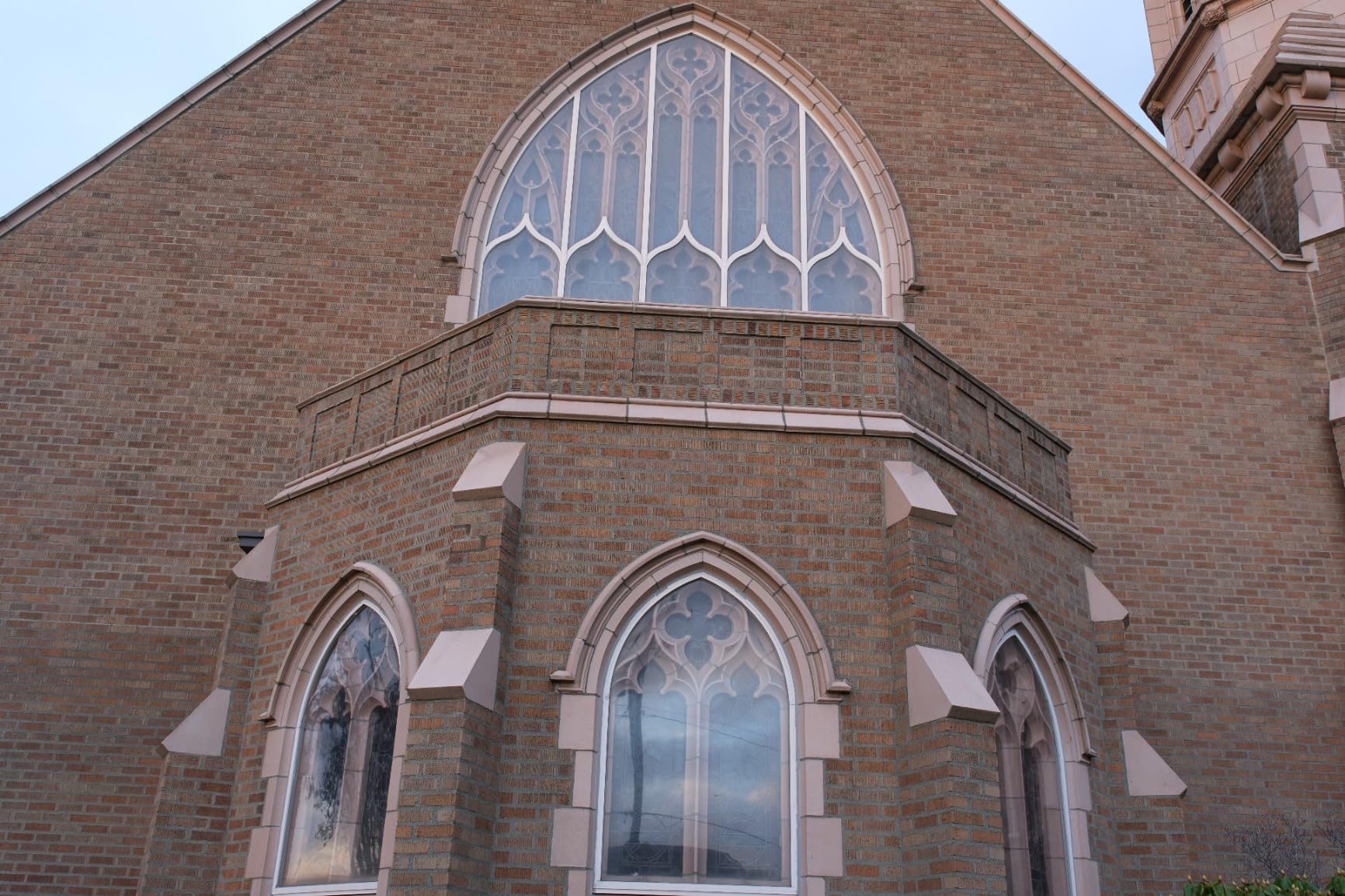
Why coastal photographers gravitate to the Fujifilm X-T5
Film simulations, specifically for this genre. The grey-green tones of a North Atlantic sea under cloud, the black basalt of a volcanic shoreline, and the silver of wet sand are all well served by the film simulation options, and Acros in particular is a natural fit for black and white coastal work.
Weather sealing and a dual card slot round out a body that reads as built for the outdoors rather than adapted for it. Reviewers call out both as reasons the camera has held up on their trips.
Where the Fujifilm X-T5 is not the answer
Autofocus trails Canon and Sony in difficult scenes, which matters if your coastal subject is moving and small. For surf and wildlife the R6 Mark II and a6700 are the stronger choices.
There is no battery grip option, the dials are small enough to bump accidentally, and the body materials feel more brittle than the X-T4. Video runs hot and drains batteries quickly, so treat this as a stills body. Reviewers also report the Pixel Shift 160MP mode producing small or errored files, so test it before relying on it.
9. Nikon Z6 III – The Brightest Viewfinder on a Sunlit Shoreline
Nikon Z6 III, Black | Full-Frame Mirrorless Stills/Video Camera with 6K/60p Internal RAW Recording | USA Model
Pros
- 4000-nit viewfinder stays clear on a sunlit shoreline
- 6K 60p internal N-RAW plus oversampled 4K
- Excellent low-light performance from the 24.5MP sensor
- Essentially no rolling shutter on fast bursts
- Hi-Res Zoom for framing distant horizons
- Sealed body tolerates harsh weather
Cons
- Complex menus and awkward control layout
- Autofocus can be finicky at night
- Body is small for average hands
- Battery life about a couple of hours per charge
- No charger included
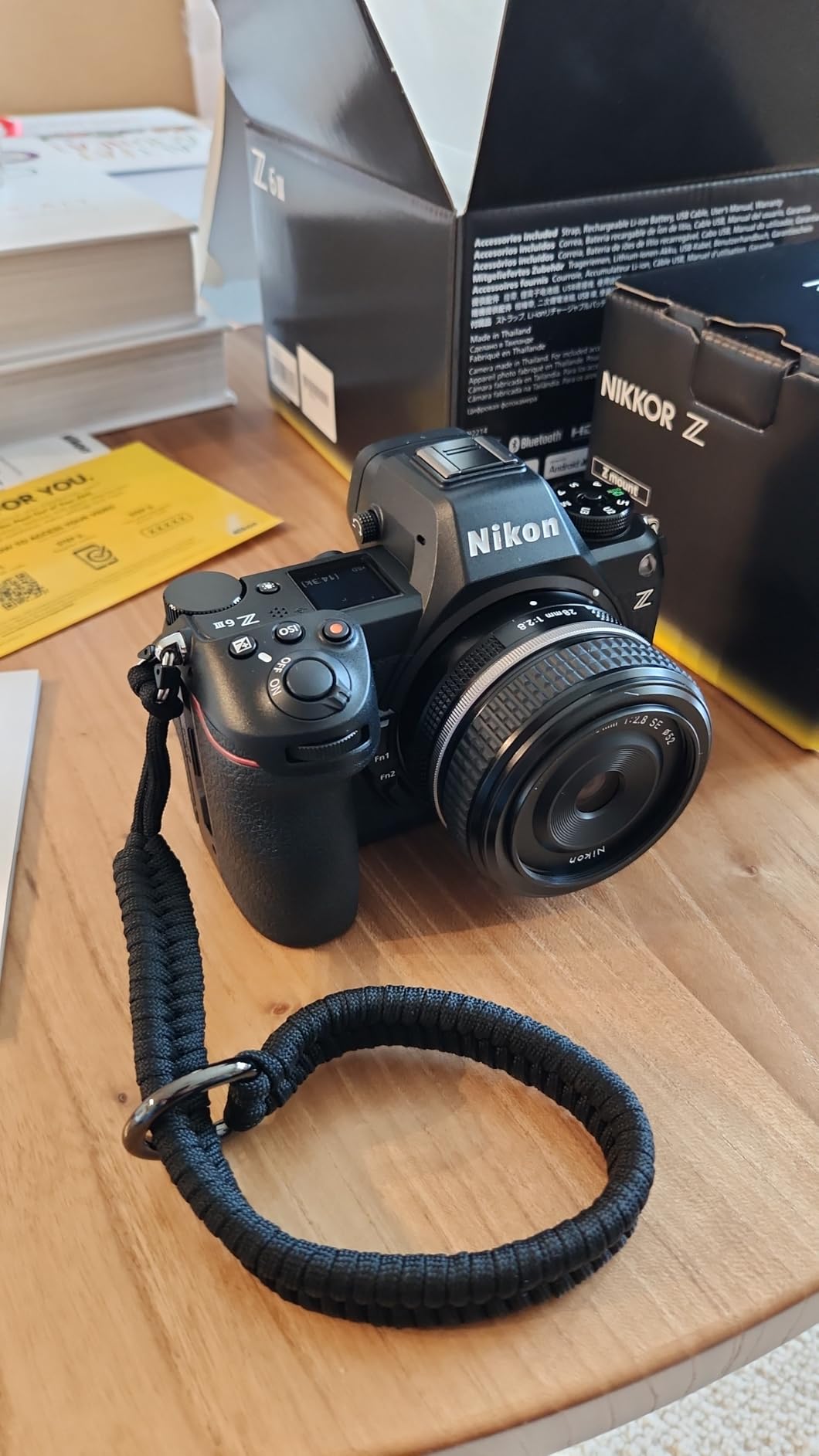
The Z6 III solves a problem that is specific to the coast more than to any other genre. At 4000 nits with a 120 fps refresh and a DCI-P3 gamut, this is the brightest viewfinder in the guide, and on a white beach at midday most other screens turn into unreadable grey rectangles.
Framing a horizon is most of coastal photography, and doing it requires looking at a viewfinder. Owners repeatedly single out that brightness as the feature that changes how they shoot rather than just how they review.

Autofocus detection reaches down to -10 EV and recognises faces as small as roughly 3% of the frame, which is useful for a distant surfer against a bright sky. Hi-Res Zoom gives up to 2x digital zoom in HD for framing a far horizon without walking closer.
The 24.5MP partially stacked sensor performs well at high ISO, extending from ISO 100-64000 to Hi 1.7. For blue hour and night work over the sea, that matters, and the fast shutter with essentially no rolling shutter makes panning shots of surf clean.
Where the Nikon Z6 III wins
Anything shot in direct sun, and anything shot after dark. This is the body for a coastal trip that starts at first light, runs through a midday beach, and ends photographing the tide pool at night with a head torch. The viewfinder brightness and the low-light performance are both first in this list.
Reviewers consistently describe it as the best value hybrid full-frame body, and the 6K 60p internal N-RAW makes it a serious video camera as well.
Where the Nikon Z6 III is awkward
The menu system and control layout are dense, with a front dial that is genuinely hard to find without looking. There are reports of the autofocus being finicky at night, which is a little frustrating given how good the viewfinder is in the dark.
At 1.5 pounds the body is small for average hands, the battery lasts about a couple of hours per charge, and no charger is included. There is also one report of the rubber grip failing within the first year, so check it early and keep the return window in mind.
10. KODAK PIXPRO WPZ2 – The Camera That Does Not Care About Salt Water
Pros
- Fully waterproof to 15m with no housing needed
- Shockproof to 2m and fully dustproof
- 16MP backside-illuminated sensor handles outdoor light
- 4x optical zoom with a 27mm wide equivalent
- Built-in Wi-Fi for sharing and phone remote control
- Pocketable with rechargeable battery and microSD
Cons
- Small 1/2.3-inch sensor limits resolution and dynamic range
- 49-point contrast-detect AF is slow for moving subjects
- Fixed LCD screen with no articulation
- 1080p video only with no 4K
- Basic exposure control limits creative latitude
Everything else in this guide needs a dry bag, a lens cloth and a level of attention. The WPZ2 does not. Waterproof to 15 meters, shockproof to 2 meters and fully dustproof, with no housing required, which means it can go in the surf, into a rock pool, or into the hands of a child on a beach without a second thought.
That is a different product category, not a cheaper one. For a family trip where the camera is a backup and the point is to have photographs at the end of the day, the WPZ2 solves a problem no other camera here can.
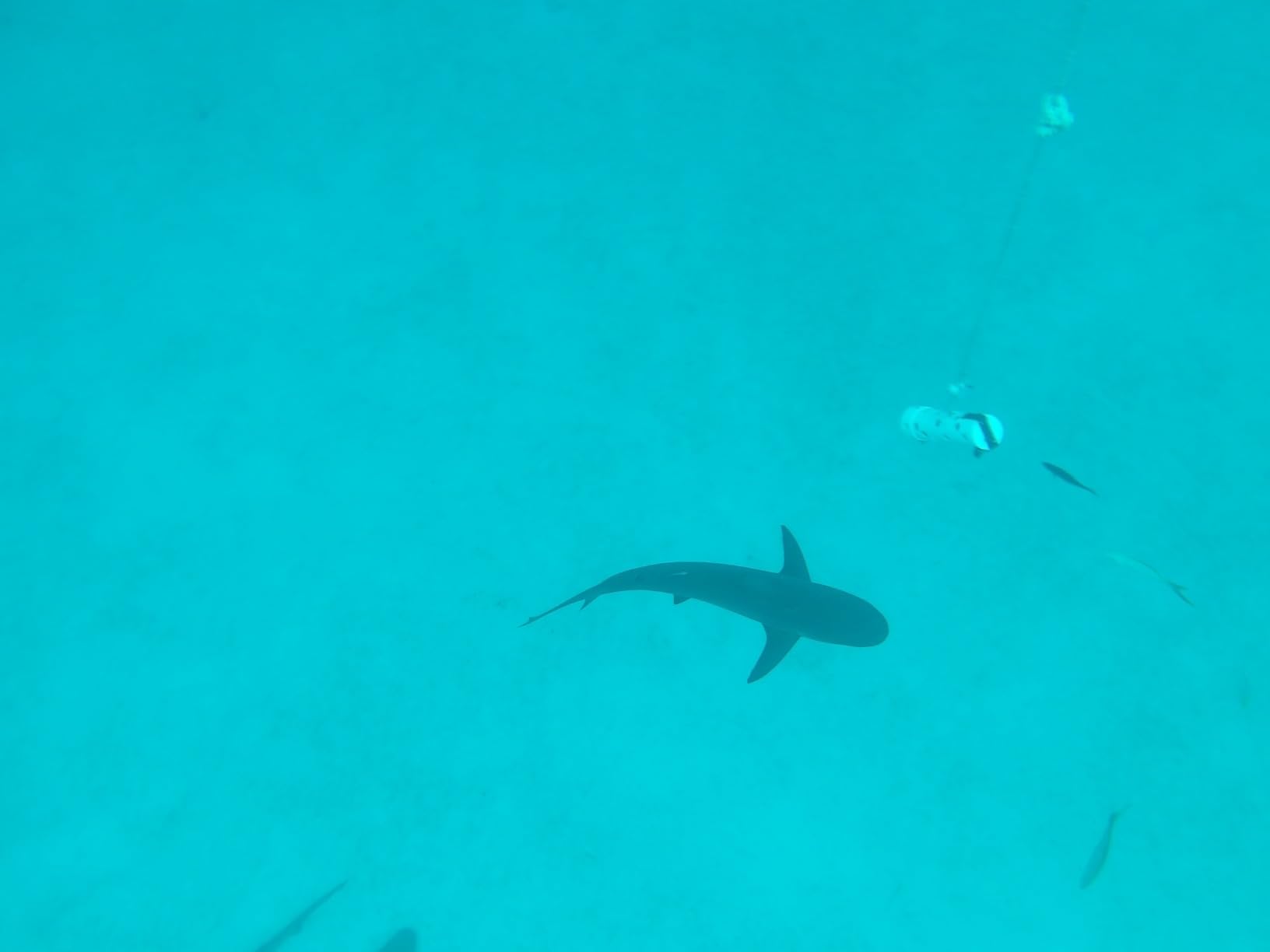
The 16MP backside-illuminated sensor is a step above the tiny sensors usually found at this level, and reviewers single it out for performing better in challenging outdoor light. The 4x optical zoom starts at a 27mm wide equivalent, which is a usable starting width for a coastline.
Wi-Fi with app sharing and remote control is the detail that gets it used. You can set the camera on a rock, frame it from your phone, and shoot the family in the surf without anyone standing in cold water holding anything.

When the KODAK PIXPRO WPZ2 is the right answer
Kids, snorkelling, kayaking, surfing, dusty trails, and any situation where the camera is going to be dropped in sand or dunked. The manual exposure modes, including Program, Shutter, Aperture and Manual, mean you can grow into it as your skills build.
It is also a good insurance camera to carry alongside a serious body. It costs little, weighs 6.21 ounces, and it will still be working in three years of salt air.
Where the KODAK PIXPRO WPZ2 cannot go
The 1/2.3-inch sensor limits both resolution and dynamic range, so a bright sky above dark rock will clip or shadow more than on any interchangeable-lens body here. The 49-point contrast-detect autofocus is slow for anything moving.
Video is 1080p with no 4K, and the fixed 2.7-inch LCD has no articulation, so low framing over a rock pool is not practical. This is a backup camera, not a seascape camera.
11. KODAK PIXPRO FZ55 – The Lightest Camera You Can Leave in a Beach Bag
Pros
- Smallest and lightest body here at 3.7 ounces
- 5x optical zoom starting at a useful 28mm wide
- 1080p Full HD for travel clips and simple vlogging
- Rechargeable battery and support for cards up to 512 GB
- One-touch mode dial keeps operation simple
Cons
- Not waterproof and needs a housing near surf
- Small 1/2.3-inch sensor limits detail and dynamic range
- Only 9 contrast-detect AF points so focus is slow and hunts
- Fixed LCD with limited articulation
- Digital rather than optical stabilization
- SD card and battery not included
The FZ55 is the camera you throw in a bag and forget about, and at 3.7 ounces it is the lightest body in this guide by a wide margin. With more than eight thousand reviews on record, it is also the one most people in this category have actually handled.
The 5x optical zoom starting at 28mm wide is the reason it is worth carrying rather than the phone in your pocket. You get a genuine wide view of a cove and enough reach to frame a distant headland, both from a body that fits in a swim pocket.

The aperture range of F3.9 at the wide end means it is not a low-light camera, and that is the fundamental limitation. Everything else about it is a reasonable compromise for a travel compact.
Support for SDXC cards up to 512 GB means you can shoot all day without swapping media, which matters more on a trip where you cannot easily offload files. The rechargeable lithium-ion battery avoids the disposable battery problem entirely.

Where the KODAK PIXPRO FZ55 makes sense
As a secondary or beach-bag camera for someone who already has a serious body, or as a first camera for a traveller who will not carry a mirrorless kit. The one-touch mode dial means it works without instruction, which matters when it is being handed to someone else.
Digital image stabilization helps at the long end of that zoom for handheld video and stills in reasonable light.
Where the KODAK PIXPRO FZ55 will disappoint
It is not waterproof. Near surf, in a rock pool, or on a wet jetty it needs a housing or very careful handling, and that is the entire reason the WPZ2 exists in this list.
Nine contrast-detect autofocus points are slow and sometimes hunt, the 1/2.3-inch sensor produces soft results at high ISO, and stabilization is digital rather than optical. The screen is fixed, and neither an SD card nor a battery is included in the box.
12. Nikon D7500 – An Optical Viewfinder That Does Not Care About Weather
Pros
- Image quality
- ISO range and metering comparable to the D500
- 51-point AF with 15 cross-type sensors
- 8 fps continuous with a deep buffer
- Tilting 922k dot touchscreen usable with gloves
- Deep grip and solid build for all-day outdoor shooting
- Built-in flash and 14-bit RAW
Cons
- Single SD card slot with no backup
- No battery grip and shorter battery life
- Optical-viewfinder design with no in-body stabilization
- Tilting screen does not fully articulate
- Depth-of-field preview is missing
I include the D7500 because it does something none of the mirrorless bodies here do: it keeps working indefinitely on a coastal trip with no battery anxiety, and its optical viewfinder never blacks out or runs hot in direct sun. For some coastal photographers that is a genuine advantage, not a compromise.
The 20.9MP DX sensor delivers image quality, ISO range and metering that reviewers consistently compare to Nikon’s D500, and the 14-bit RAW files hold up well when you lift a bright sky over dark tidal rock.

51 autofocus points with 15 cross-type sensors and group-area AF track reliably, and the 8 fps rate with a deep buffer handles a burst of breaking surf without stalling. The tilting touchscreen can be operated with gloves, which sounds minor until the first October outing.
The deep grip is the underrated part. On a wet, uneven rock surface, an SLR-style grip gives you more to hold than a small mirrorless body, and that safety point matters more than any spec on this page.

Where the Nikon D7500 still makes sense
Long days with no access to power. The optical viewfinder is unaffected by battery drain, works in any light, and has no lag. If your coastal work involves multi-day walks away from a car, that is a real argument.
Reviewers repeatedly describe the image quality as a step up from entry-level Nikon bodies, with strong low-light performance for a DX sensor. The built-in flash fills shadows under an overhang, which is more useful on a coast than it sounds.
Where the Nikon D7500 is behind the pack
There is no in-body stabilization, so every low-light or long-exposure frame needs a tripod, and coastal wind is not always cooperative. The single SD card slot means no backup on a paid shoot, and there is no battery grip option with battery life on the shorter side.
The tilting screen does not fully articulate for overhead or selfie angles, and there is no depth-of-field preview, which makes focus checking at wide apertures harder than on a mirrorless body.
How to Choose a Camera for Coastal and Seascape Work
Most buying guides for landscape photography talk about dynamic range and resolution, and both matter at the coast. Neither is enough on its own. The list below is ordered by how often the feature actually changes the outcome on a shoreline rather than on a mountain.
Dynamic range matters more here than anywhere else
Dynamic range is the range between the brightest and darkest tones a sensor can record in a single exposure, usually quoted in stops. On a coast you are routinely photographing a sky several stops brighter than the wet rock or a cliff face in the foreground, and recovery latitude is what lets you pull both into one frame.
Twelve stops is a reasonable floor. Above fourteen, you can expose for a bright overcast sky and still open the shadows enough to see detail in a tidal pool. The Sony a7 IV at 33MP and the Fujifilm X-T5 at 40.2MP with its native base ISO of 125 both give you room to work. For more on how these compare across formats, see our landscape mirrorless camera guide.
Weather sealing is the decisive coastal feature
Coastal conditions destroy cameras that would survive a forest hike. Salt spray settles on dials and seams, sand gets into switches, and rain arrives sideways. A weather-sealed magnesium body with sealed buttons is not a luxury feature on a coastline, it is the difference between a camera you still own in three years and one you do not.
Be precise about what the claim means. Weather sealing is a manufacturer statement about specific tested conditions and it is not a waterproof rating. A stated depth rating, as on the GoPro HERO12 Black at 33 feet or the KODAK PIXPRO WPZ2 at 15 meters, means something quite different and is a genuine advantage when the camera is going into the water.
No rating is permanent. Seals degrade, and a body that has been in salt air for years needs the rinse routine described later in this guide.
In-body stabilization and bulb mode for moving water
In-body image stabilization, or IBIS, is a system that moves the sensor inside the camera to counteract your hand movement, and it is rated in stops. Each stop is a doubling of exposure time, so five stops means you can handhold a shutter speed four times longer than you otherwise could.
For seascape work, higher is better. The Fujifilm X-T5’s 7-stop figure is the highest here and lets you handhold a one-second or two-second exposure of moving water at dusk, which is the difference between a tripod trip and a walk. The Sony a7 IV’s 5-axis system and the Canon R6 Mark II’s 5-axis system sit a stop or two below that.
Bulb mode is the other half. Any camera with a manual shutter speed and a tripod can do a long exposure, but electronic shutters on some bodies can introduce banding into smooth gradients, which is visible in a blurred ocean surface. A mechanical or electronic front-curtain option avoids it. Check whether the body supports mechanical shutter or a screw-on filter adapter, because neutral density filters multiply exposure time well past what a tripod alone can manage.
Weight matters more than any other spec for a long walk
A coastal path is rarely flat and rarely short. The difference between a 14.5 ounce body and a 1.8 pound body becomes obvious after the fourth hour, and a camera you are tired of carrying is a camera you leave in the bag when the light is good.
Balance matters too. A small body with a heavy telephoto feels worse than a larger body with a moderate wide zoom, because the mass sits far from your grip. We covered tripod and support options separately in our guide to L-brackets for seascape tripod work, which matters as soon as you start shooting vertical panoramas on uneven ground.
Dual card slots and burst rate for surf timing
Dual card slots let you write a backup copy of every frame, which is worth having on any shoot you are paid for. The Sony a7 IV, Canon EOS R7, Fujifilm X-T5 and Nikon Z8 all offer two slots; the Canon R6 Mark II, Sony a6700, Sony a6400 and Nikon D7500 do not.
Burst rate determines whether surf timing is a skill or a coin flip. The Canon R6 Mark II reaches 40 fps electronically, the Canon R7 30 fps, and the Nikon Z8 20 fps with pre-release capture. The Canon R7’s RAW Burst mode buffers half a second before you press the shutter, which catches the peak of a breaking wave without needing to anticipate it.
Lens pairing: a wide plus a telephoto beats one expensive zoom
Lens cost regularly exceeds body cost, and forum users asking about coastal cameras are usually asking about lenses. On r/SonyAlpha, the most common recommendation for coastal work is a fast wide zoom paired with a telephoto, and the pattern repeats on DPReview forum threads where users pair bodies with ultra-wide primes in the 14-16mm class.
Our own approach, after a lot of trial and error on headland walks, is to commit to two focal lengths. A wide in the 14-24mm range to get a headland and sky into one frame, and a 70-200mm or 100-400mm to compress water and isolate cliff detail from a distance. Carrying two lenses and changing once in a sheltered spot beats carrying four and changing repeatedly in the wind.
On focal length, users on r/AskPhotography regularly ask whether f/2.8 or f/4 is better for landscape work. For seascapes, f/4 is usually the better trade. Stopping down two-thirds of a stop costs you little depth of field at typical landscape focus distances and saves a stop of light, which is a stop more shutter speed for the same exposure.
Budget tiers without the price anxiety
Rather than quote figures that change daily, here is the shape of the market. At the entry level you are looking at compact fixed-lens cameras, the Kodak models here, and older APS-C bodies like the Nikon D7500. In the mid tier sit the current APS-C mirrorless bodies and the value full-frame options.
At the upper end you get high-resolution full-frame and flagship bodies with stacked sensors and dual card slots. The jump from mid to upper is mostly resolution, burst rate and card infrastructure rather than image quality in ordinary light, so the mid tier is where most coastal photographers get the best return. We have covered this split in more detail in our seascape camera roundup.
Timing the Shoot: Tide, Surf and Golden Hour
A camera cannot fix a bad position. The single largest difference between a good coastal photograph and a flat one is where and when you stood, and the gear conversation only matters once that is sorted.
Plan against the tide rather than the clock. Low tide exposes rock pools, textured reef and wet sand that reflect the sky, and it gives you somewhere to stand. High tide simplifies the frame into clean bands of water and sky, which works well for long exposure work with a neutral density filter. Check a tide table before you commit to a location, and remember that the lowest tide of a spring tide arrives at a different time each day.
Time the surf, not just the light. A broken wave lasts a fraction of a second, so if surf is the subject you need a high burst rate or pre-release capture rather than a fast reaction. The Canon R6 Mark II at 40 fps and the Canon R7 with its half-second pre-buffer are the two bodies here built for exactly this.
Shoot the golden hour from both ends of it. Warm directional light gives you texture in waves and ridges, while the blue hour after sunset gives you even, colourless light that suits a long exposure and turns wet rock into a mirror. The Sony a7 IV’s S-Cinetone profile and the Fujifilm X-T5’s film simulations both handle the transition well.
For a stable long exposure on an uneven rock, an L-bracket matters more than a better tripod head, because it lets you mount the camera in portrait or vertical orientation for a panorama without rotating the camera on the ball head between shots.
Never turn your back on the ocean, and treat a rogue wave as a real possibility rather than a theoretical one. Check the swell direction, watch how previous waves broke, and keep a route to higher ground that does not require scrambling over wet rock.
Riding Out Salt, Sand and Spray
Every camera in this guide is sealed to some degree, and every one of them will corrode faster if you let salt sit on the metal. A fifteen-minute routine after each coastal shoot protects the body far more than any amount of care before it goes out.
Keep a small freshwater rinse bottle or a fresh water bottle in your bag. On returning, hold the camera away from the sea, rinse the body with fresh water to wash off salt, and pay attention to the seams, dials, lens mount and any exposed metal. Salt is hygroscopic, which means it pulls moisture out of the air and keeps the corrosion process running after you have put the camera away.
Do not rinse a camera while it is switched on, and remove the battery and memory cards before handling the body. If sand is present, clear it before rinsing, because water can drive grit into a seam it would otherwise sit on harmlessly.
For fixed-lens and action cameras, the same routine applies but the stakes are lower. For the GoPro HERO12 Black, rinse the lens cover and the water-repelling coating with fresh water after every session, and check the buttons for salt. A rinse habit is what separates a camera that is still working in year five from one that is not.
Frequently Asked Questions
What is the best camera for beach photography?
The Sony Alpha 7 IV is the best all-round choice, with a 33MP full-frame sensor, 5-axis stabilization, a sealed magnesium body and dual card slots that handle both bright sky and dark water in one frame. The Canon EOS R6 Mark II wins when surf is moving fast, because 40 fps electronic shooting catches a breaking wave. For a family trip where the camera will be dunked, the KODAK PIXPRO WPZ2 is waterproof to 15 meters with no housing required.
Do I need a weather sealed camera for the beach?
Yes, for any camera you intend to carry near surf. Salt spray settles into button seals and dials, sand gets into switches, and rain on a coastline often arrives sideways. A sealed body with a stated ingress rating lasts far longer than an unsealed one. If you will be in the water itself, a stated depth rating such as 15 meters matters far more than a weather-sealing claim.
What is the best camera for taking surf photos from the beach?
The Canon EOS R6 Mark II leads on burst rate, reaching 40 fps on the electronic shutter, and its subject detection keeps surfers and birds tracked through spray. The Canon EOS R7 is the strong alternative, with 30 fps electronic shooting and a RAW Burst mode that buffers half a second before you press the shutter, so the peak of a wave is captured even if your timing is wrong.
What is the best camera for both landscape and travel?
The Fujifilm X-T5 balances resolution and weight better than most, giving 40.2 megapixels, 7 stops of stabilization and top-plate dials in a body that suits a long walking day. The Sony a6400 is lighter still with a bundled wide zoom. If video is also in the mix, the Sony a6700 adds uncropped 4K 60p and flagship-style tracking autofocus in a compact body.
What cameras do professional landscape photographers use?
Professionals working at the coast tend to use high-resolution full-frame bodies with stacked sensors, because a wide vista still needs to be cropped down to a single headland or rock. In this roundup the Nikon Z 8 with its 45.7MP sensor is that class of body. Many also carry a second compact body, and forum kit lists repeatedly pair bodies with ultra-wide primes in the 14-16mm range.
Is f/2.8 or f/4 better for seascape photography?
For most seascape work f/4 is the better trade. At typical landscape focus distances the extra depth of field from f/2.8 is not useful, while the extra stop of light from f/4 gives you one more stop of shutter speed for the same exposure. Choose f/2.8 when you are working after dark, shooting astro over the sea, or isolating a foreground element close to the camera in mist.
What is the best camera for outdoor photography generally?
It depends more on where you are than on what you shoot. For any coastal or beach work, prioritise weather sealing, dynamic range and stabilization, since those decide whether the camera survives the day and whether the frame holds detail in both sky and foreground. For a light travel body the Sony a6400 is hard to beat, and for low-light and night work a full-frame sensor is worth the extra weight.
Conclusion
The best cameras for coastal and seascape photography share four things: enough dynamic range to hold a bright sky and a dark foreground, real weather sealing, stabilization that lets you work handheld at dusk, and a weight you will still want to carry after five hours on a cliff path. Our pick of the twelve is the Sony Alpha 7 IV, because it is the most complete answer to that list without a single weak point.
Buy the Canon EOS R6 Mark II if surf and moving subjects are the point. Buy the Fujifilm X-T5 if you shoot stills and want the highest rated body here with film simulations made for grey water. Buy the Sony a6400 if the walk matters more than the file. Buy the Nikon Z 8 if the print on the wall matters most, and the Canon R7 if you need reach on a distant headland.
Then check the tide table, pack a fresh water bottle for the rinse, and never turn your back on the ocean. If you want an aerial angle on the coastline you are shooting, our picks for travel drones for beach and coastal photography cover the other side of the same trip.