
If you only want one sentence: the best cameras for bird feeder photography split into two completely different jobs, and picking the wrong one is the most common mistake people make. A smart bird feeder with a built-in camera photographs your birds for you and sends them to your phone. A handheld camera on a tripod produces photographs you composed yourself, and that is the version most people reading this guide actually want.
For deliberate stills at a fixed backyard feeder, you want roughly 400mm of effective reach, continuous autofocus with animal detection, a burst rate that keeps up with a hopping bird, and a silent shutter if the feeder sits close to a window. For a running list of species, notifications while you are indoors, and video of the feeder without you standing in the cold, a solar smart feeder with AI bird identification does the job with no photographic skill at all. Both are covered here, because the search results for this keyword mix the two categories together and leave readers guessing which one they are shopping for.
We compared the ten current-generation smart feeder cameras below, read the owner feedback closely, and sorted them by what they actually do well. We focused on models that are on sale now rather than lists of discontinued bodies, which is still what several ranking pages are serving up. If you want a broader foundation first, our guides to the best cameras for bird photography for beginners and the best affordable cameras for bird photography cover the handheld side in depth.
One honest note on method. We are working from published specifications and thousands of owner reviews, not from a controlled side-by-side shoot. Where we describe a result, we are describing what buyers consistently report, and we name the specific limitation that shows up most often rather than the marketing line.
Top 3 Best Cameras for Bird Feeder Photography in 2026

HARYMOR Smart Bird Feeder Camera
- 2K video with 120-degree lens
- 3X magnification
- 2L capacity
- Dual solar panels

NETVUE by Birdfy Smart Feeder
- 2K camera with color night vision
- 99%+ species AI
- 5200mAh battery plus solar

birdsnap PAV Bird Feeder Camera
- 2K with 155-degree lens
- 32GB card included
- Works with no subscription
Every Bird Feeder Camera Compared in September
| Product | Specifications | Action |
|---|---|---|
| HARYMOR Smart Bird Feeder with Camera |
|
Check Latest Price |
| NETVUE by Birdfy Smart Bird Feeder with 2K AI Camera |
|
Check Latest Price |
 Bird Buddy Pro Solar Smart Bird Feeder Bird Buddy Pro Solar Smart Bird Feeder |
|
Check Latest Price |
 onlyfly Smart Bird Feeder with Camera onlyfly Smart Bird Feeder with Camera |
|
Check Latest Price |
| birdsnap PAV Bird Feeder with Camera |
|
Check Latest Price |
 PEEIPM Solar Smart Bird Feeder Camera PEEIPM Solar Smart Bird Feeder Camera |
|
Check Latest Price |
 Kiwibit Smart Bird Feeder with 4K AI Camera Kiwibit Smart Bird Feeder with 4K AI Camera |
|
Check Latest Price |
 Birdkiss Smart Bird Feeder Camera Birdkiss Smart Bird Feeder Camera |
|
Check Latest Price |
 Humbirdy 4K Smart Bird Feeder, No Subscription Humbirdy 4K Smart Bird Feeder, No Subscription |
|
Check Latest Price |
 TT Nature Smart Birdhouse with Camera TT Nature Smart Birdhouse with Camera |
|
Check Latest Price |
1. HARYMOR Smart Bird Feeder with Camera – Our Overall Pick
Pros
- Clear 2K video in daylight and at night
- Dual solar panels hold charge in shaded spots
- Large 2L hopper cuts refills
- Reliable multi-device live view
Cons
- Weak tree strap mount
- Seed dispenses fast so small birds can climb inside
- No pole mount included
- Night view covers only inches around the port
The HARYMOR is the pick we keep coming back to because it is the only unit in this group that solves the two things feeder owners complain about most: hopper capacity and running out of power in a shaded yard. The 2L container holds noticeably more than the 0.9L and 1.5L hoppers in this roundup, and the two solar panels (one built in, one external) keep the battery topped up even when the feeder sits under a tree canopy.
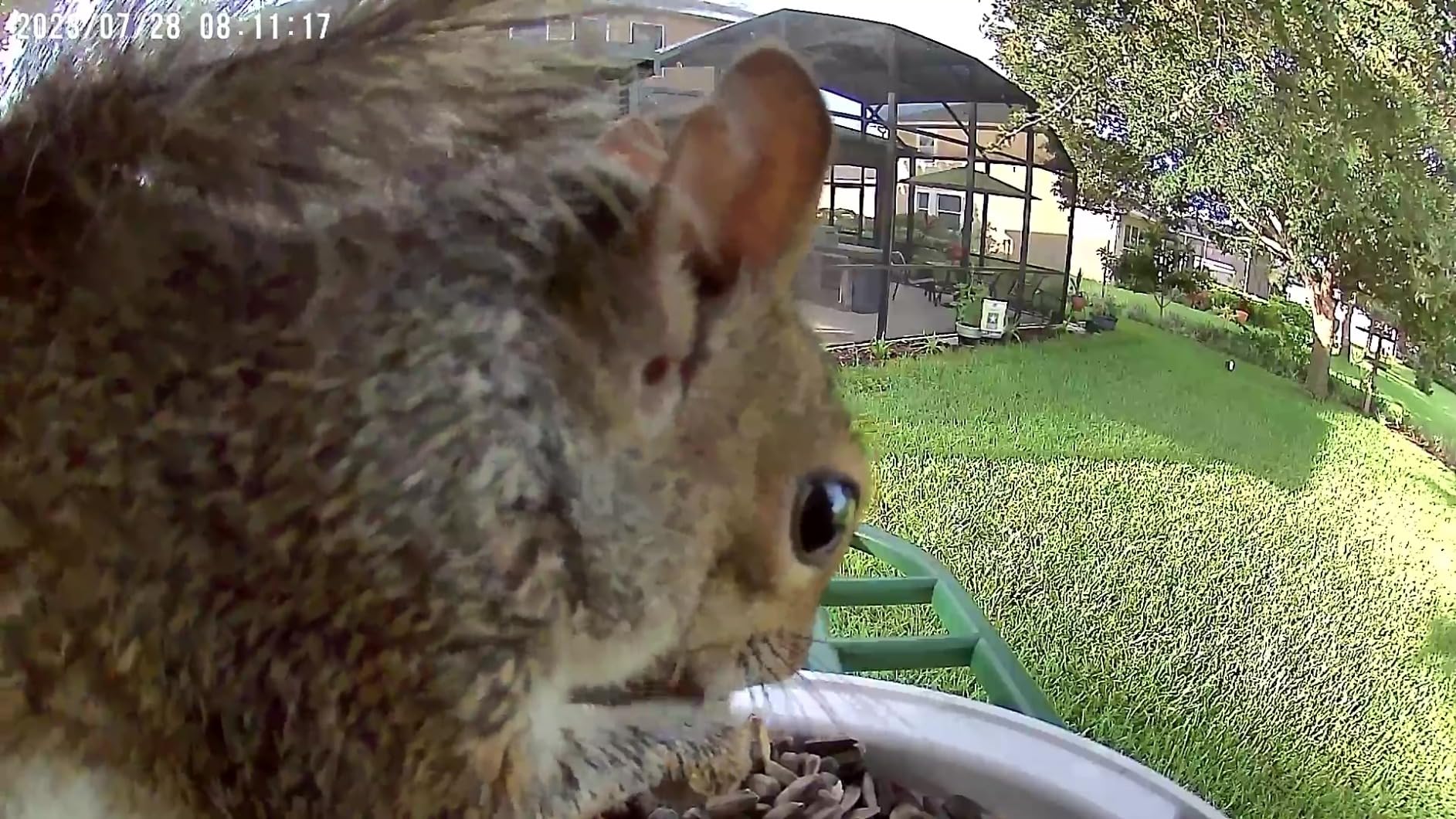
Image quality is a genuine 2K stream from a 120-degree wide-angle lens, and the built-in 3X magnification is what makes it useful as a photography tool rather than just a notification device. When a bird lands on the port at close range, that magnification gives you a framed head shot you can crop into. It is not interchangeable-lens quality, but for a fixed feeder at a fixed distance it does the job.
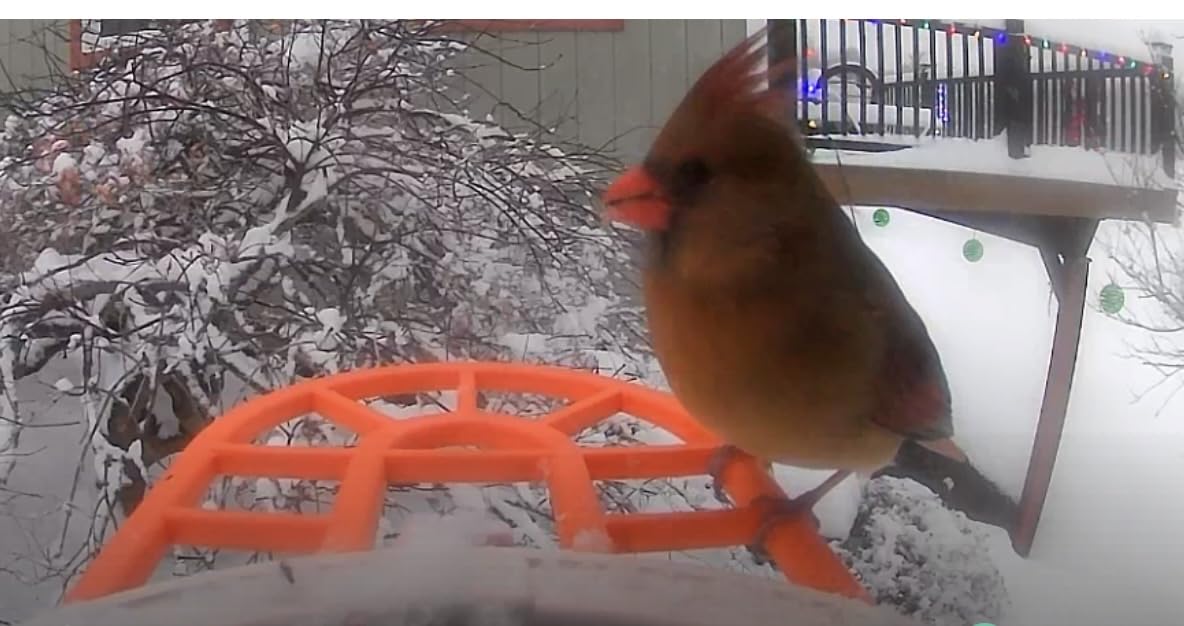
The AI identification covers more than 10,000 species and sends a snapshot with each arrival alert. Buyers report that it is broadly accurate on common North American backyard birds, which is exactly the audience this feeder is built for.
Storage runs two ways. You can use cloud recording on a rolling three-day loop, or drop in a memory card up to 128GB and keep everything locally. The Vicohome app handles setup in a couple of minutes and supports multi-user sharing, so several people can watch the same feeder.
Who this is right for
Choose this if your feeder is in partial shade, if you would rather refill once a week than daily, or if you want the 3X magnification because you actually want framed photos of the birds rather than just an alert that a bird was there. At 4.5 stars across more than 1900 reviews, it is the most proven unit here, which matters for anything exposed to weather year round.
Where it falls short
The included tree strap is the weak point, and several owners have reinforced it with a second strap or moved to a pole. Seed also dispenses quickly enough that small birds can slip into the gap and get trapped when the hopper runs dry, so check the port if a bird disappears. Night visibility is limited to a few inches around the seed port, and there is no pole mount in the box, so plan the mounting before you buy.
2. NETVUE by Birdfy Smart Bird Feeder – Sharpest Feeder Images
Pros
- Closest and sharpest feeder images in our set
- Sturdy build that handles exposure well
- Color night vision for nocturnal visitors
- Responsive support
Cons
- Clips fixed at about ten seconds
- Battery drains fast at busy feeders without solar
- 2.4GHz only Wi-Fi
- AI misidentifies out-of-range species
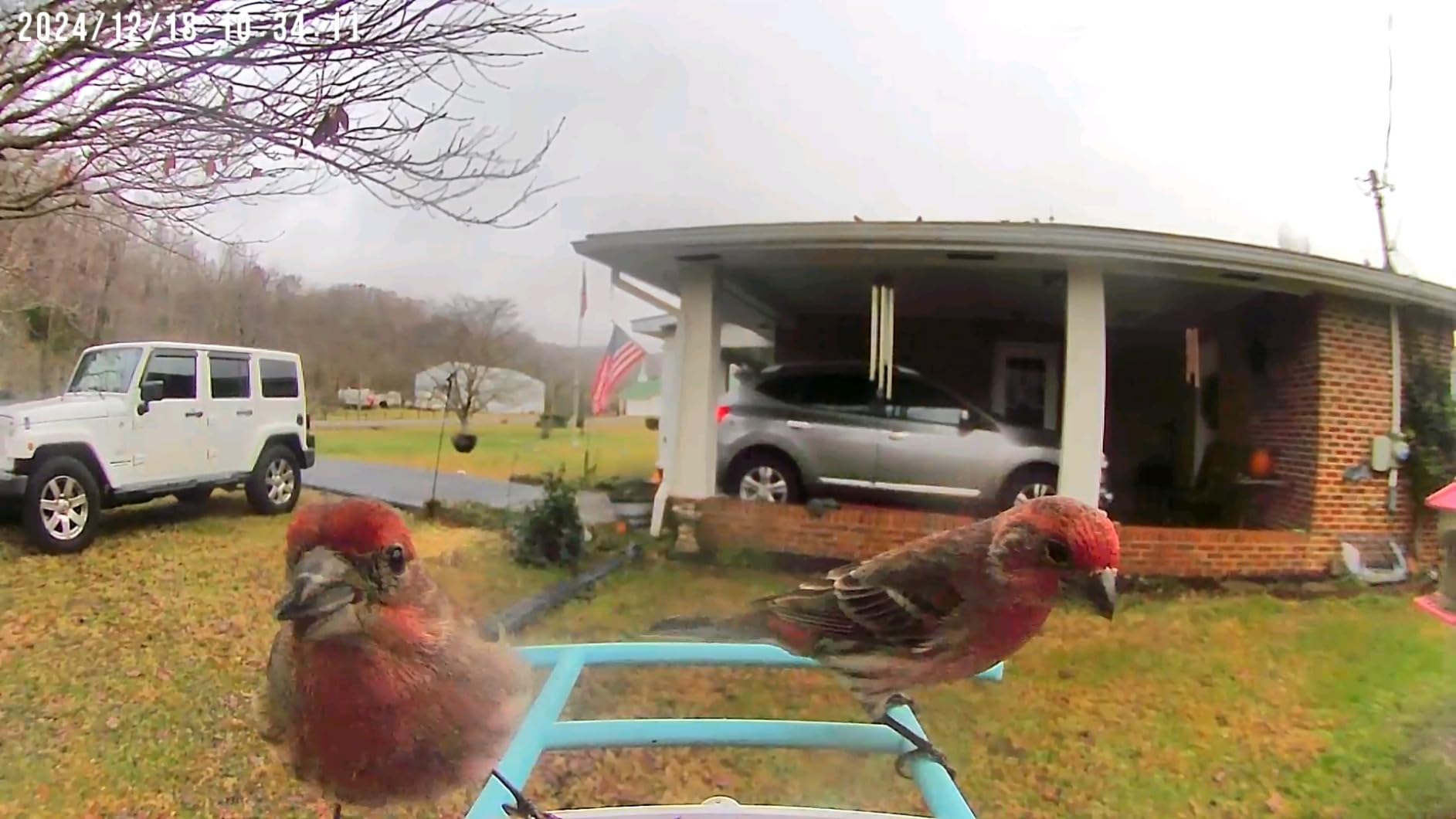
If image quality is the reason you are here, the NETVUE by Birdfy is the one buyers describe as the closest and sharpest feeder camera they have used. At 3 pounds it feels substantial rather than flimsy, and the 2K sensor holds detail on a bird at the port where softer units blur into mush.
Color night vision is the feature that separates it from most of the pack. Most feeders switch to monochrome infrared after dark, and any color in the frame is gone. This one keeps color on nocturnal visitors, which matters if you are trying to identify a warbler or a finch that only shows up after sunset.
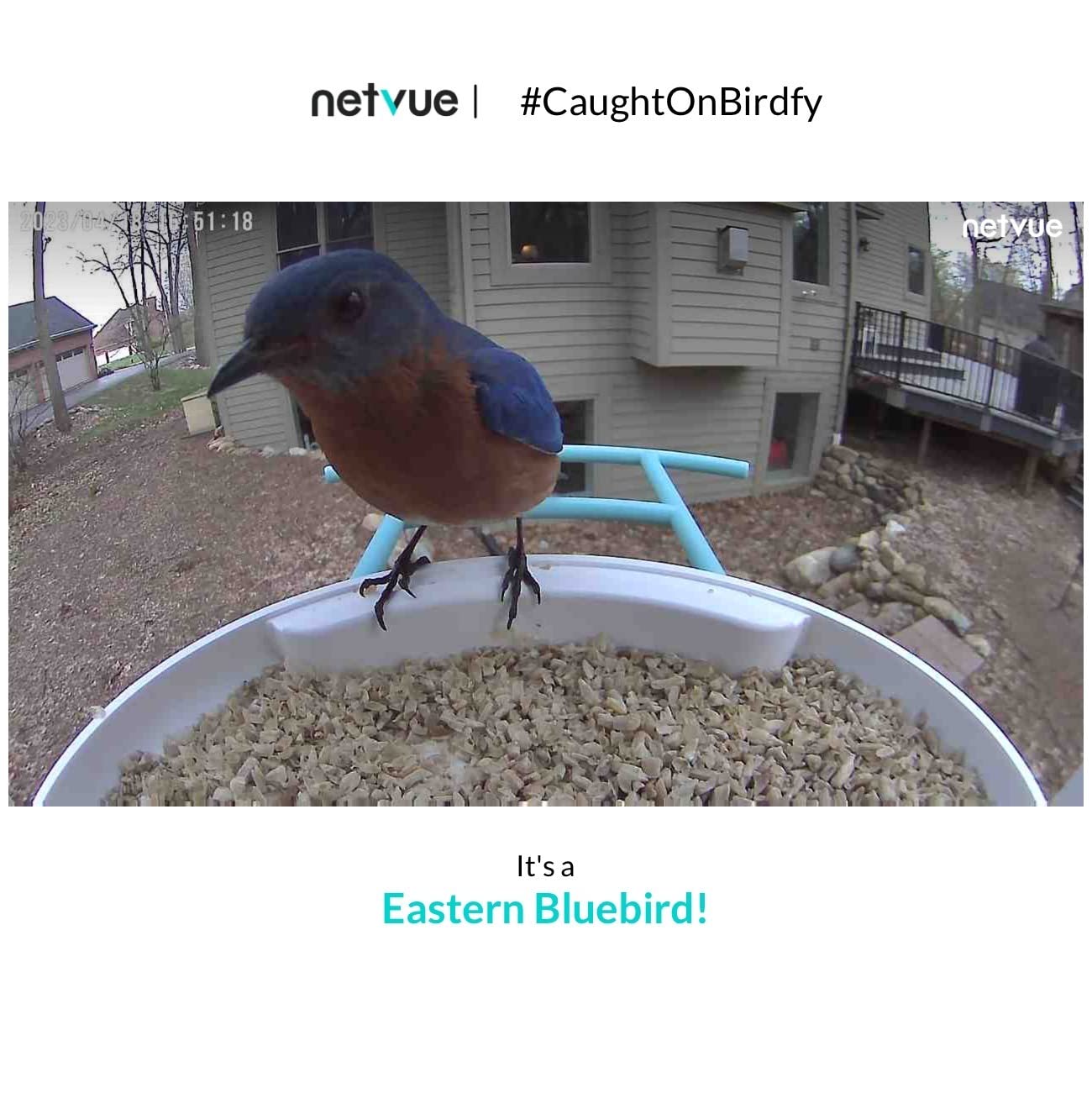
The AI claims recognition of more than 99% of known species, roughly 11,000 entries. In practice owners say it is strong on local species and weaker outside the range it was trained on, so treat the identification as a prompt to look rather than a final answer. Auto-capture with phone notifications works reliably, and the app is supported around the clock at no charge.
Power comes from a 5200mAh battery with a high-efficiency solar panel. In a busy location you should still expect the panel to be doing most of the work, because a constant stream of video drains a battery quickly. Mounting accepts wall, pole, or tree, and the build is described as weather and UV resistant.
Who this is right for
This is the one to pick if you care most about the photo and video quality of the finished file, or if you shoot nocturnal visitors. The build quality also makes it a good candidate for a feeder that has to survive a full winter of freeze and thaw cycles.
Where it falls short
The ten-second clip length is fixed, with no user adjustment, so you cannot extend a recording when a bird lingers. The AI still misidentifies species outside the local range, and pairing only works on 2.4GHz networks, which is a real annoyance on a modern dual-band router. Reviewers also note the solar panel lock washer is not stainless steel and eventually rusts, and the feeder dirties quickly.
3. Bird Buddy Pro Solar – Best for Slow-Motion Flight Video
Birdbuddy Pro Solar Smart Bird Feeder with Camera, AI Bird ID, 2K Video
Pros
- Sharp 2K video with real feather detail
- Slow-motion capture of birds in flight
- Solar roof holds charge in storms
- Three mounting options included
Cons
- Small 0.9L hopper needs frequent refills
- AI filters out many usable photos
- App is designed as a social network
- Paid subscription needed for core features
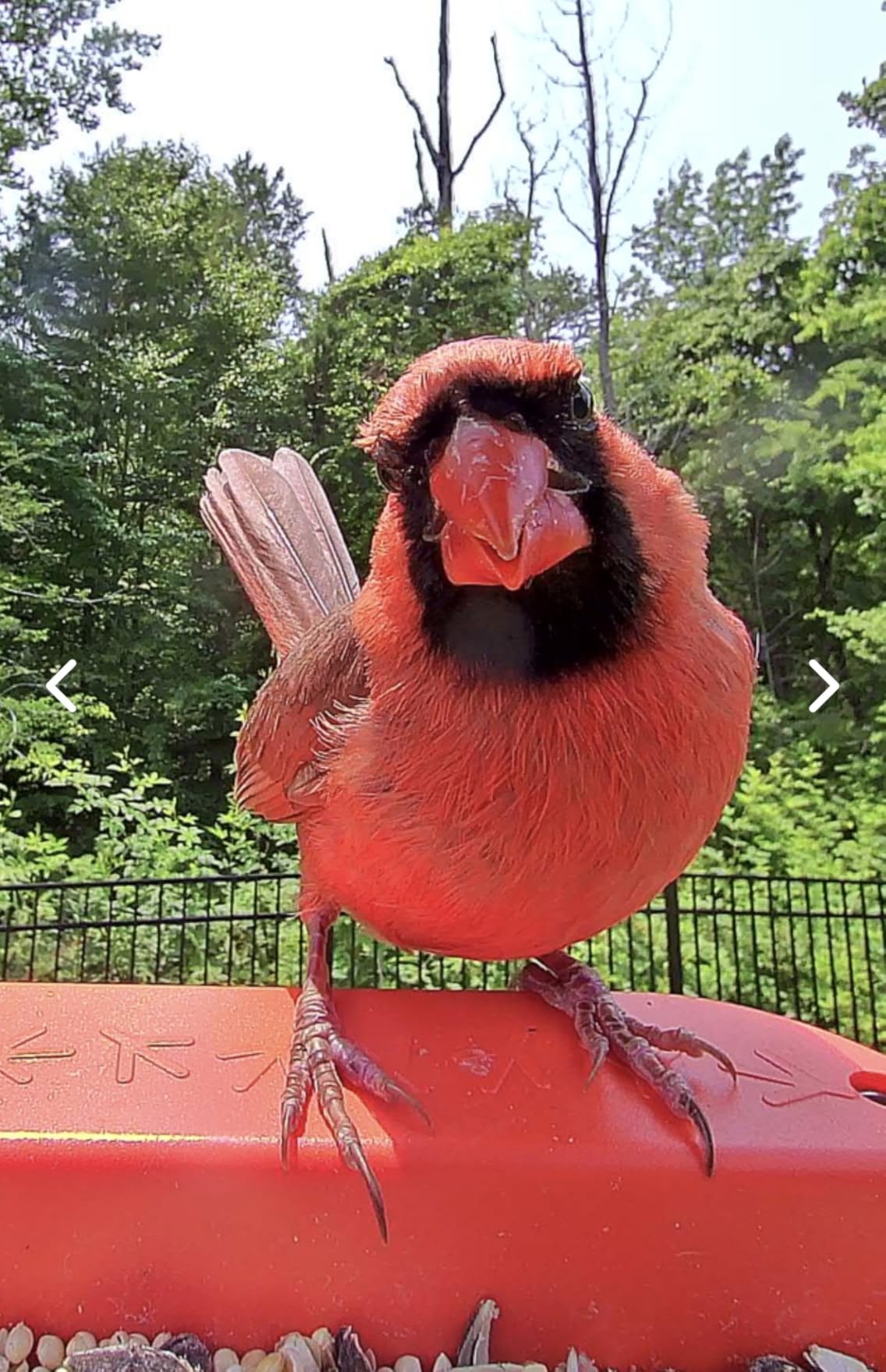
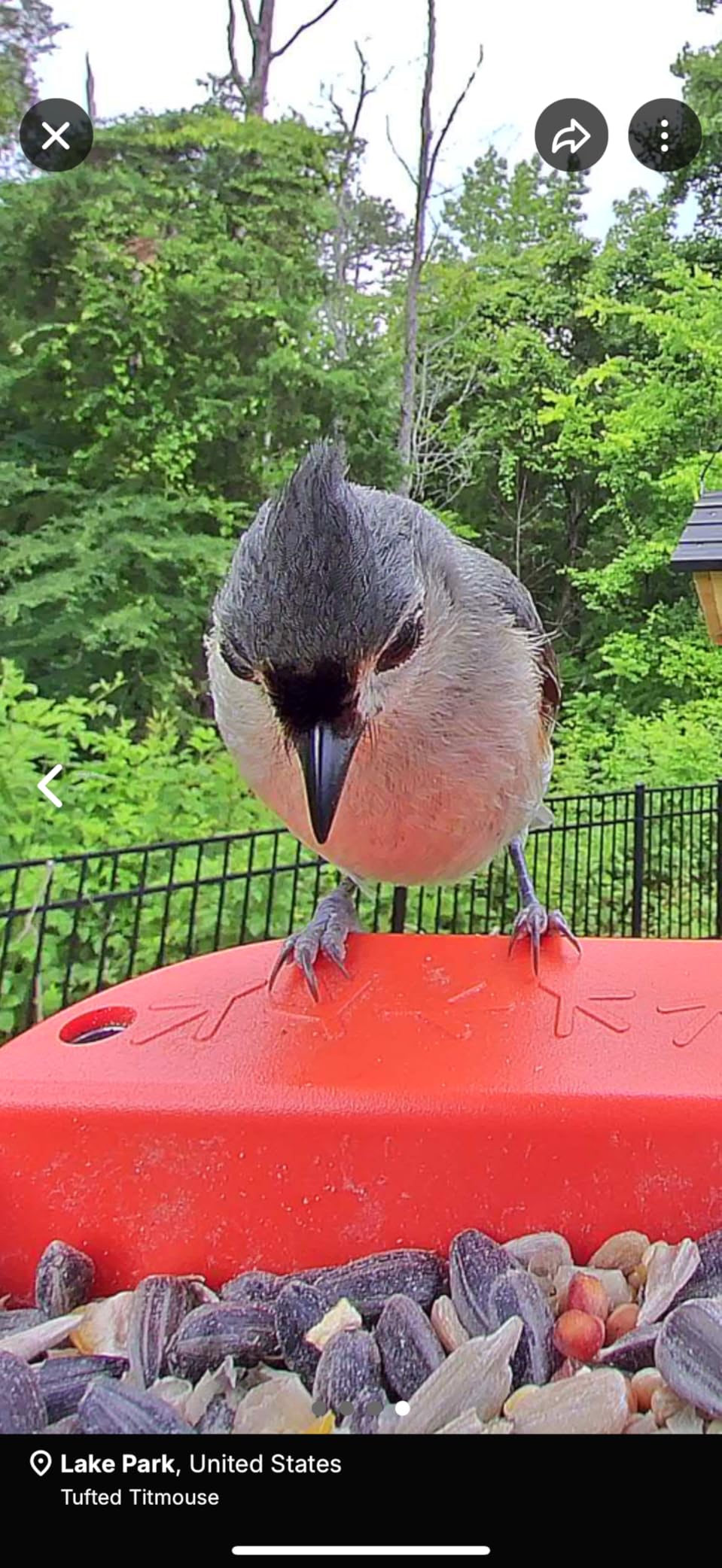
The Bird Buddy Pro is the only unit in this roundup built around a larger sensor, a 1/2.7-inch design that is twice the size of the sensors in most feeder cameras. The result is 5MP HDR stills and 2K video that holds feather detail in low light, which is where most of the cheaper units fall apart before sunrise.
Slow-motion capture is the feature that makes this worth buying for anyone who has ever missed a hummingbird or a goldfinch taking off. It records the flight rather than a two-second smear, and the app handles the playback and trimming.
Mounting is properly thought out for the first time in this group. You get a metal hanger, a universal pole mount with screws, and a solar roof, and a wall mount kit is the only piece not included. A USB-C cable is in the box, so charging indoors is a fallback rather than a daily chore.
The app deserves an honest note. It is designed as a social network first, with daily highlight reels and daily visitor recaps, and that framing has drawn real criticism from owners who wanted a private log of their own yard. In-app guidance for choosing a good feeder spot is genuinely useful, though.
Who this is right for
Pick this if you want the best stills from a built-in feeder camera, if dawn and dusk activity is your main interest, or if slow-motion flight video is a goal. The sensor advantage over cheaper units is real and shows up in the files.
Where it falls short
This is the lowest-rated product here at 4.1 stars, and the reasons are consistent. A subscription is effectively required to unlock the AI identification and cloud features that most people buy it for. The AI filtering also removes many photos that a photographer would have kept, leaving you a much smaller usable set than the actual activity. The 0.9L hopper is the smallest here and needs daily refills at a busy feeder, and the lid and hanger get in the way of filling.
4. onlyfly Smart Bird Feeder with Camera – Best for Mounting Flexibility
Smart Bird Feeder with Camera Solar Powered, 2K Live Stream for Backyard
Pros
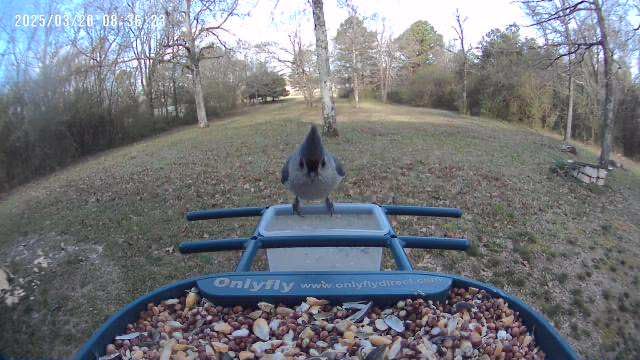
- Clear 2K imagery with smooth zoomed live view
- Roof-integrated solar keeps battery near full
- Generous 1.8L capacity with tilting lid
- Widest range of included mounting hardware
Cons
- Open tray design spills seed under grackles
- Cloud clips sometimes truncate to two seconds
- microSD driver throws read errors
- Support replies are canned
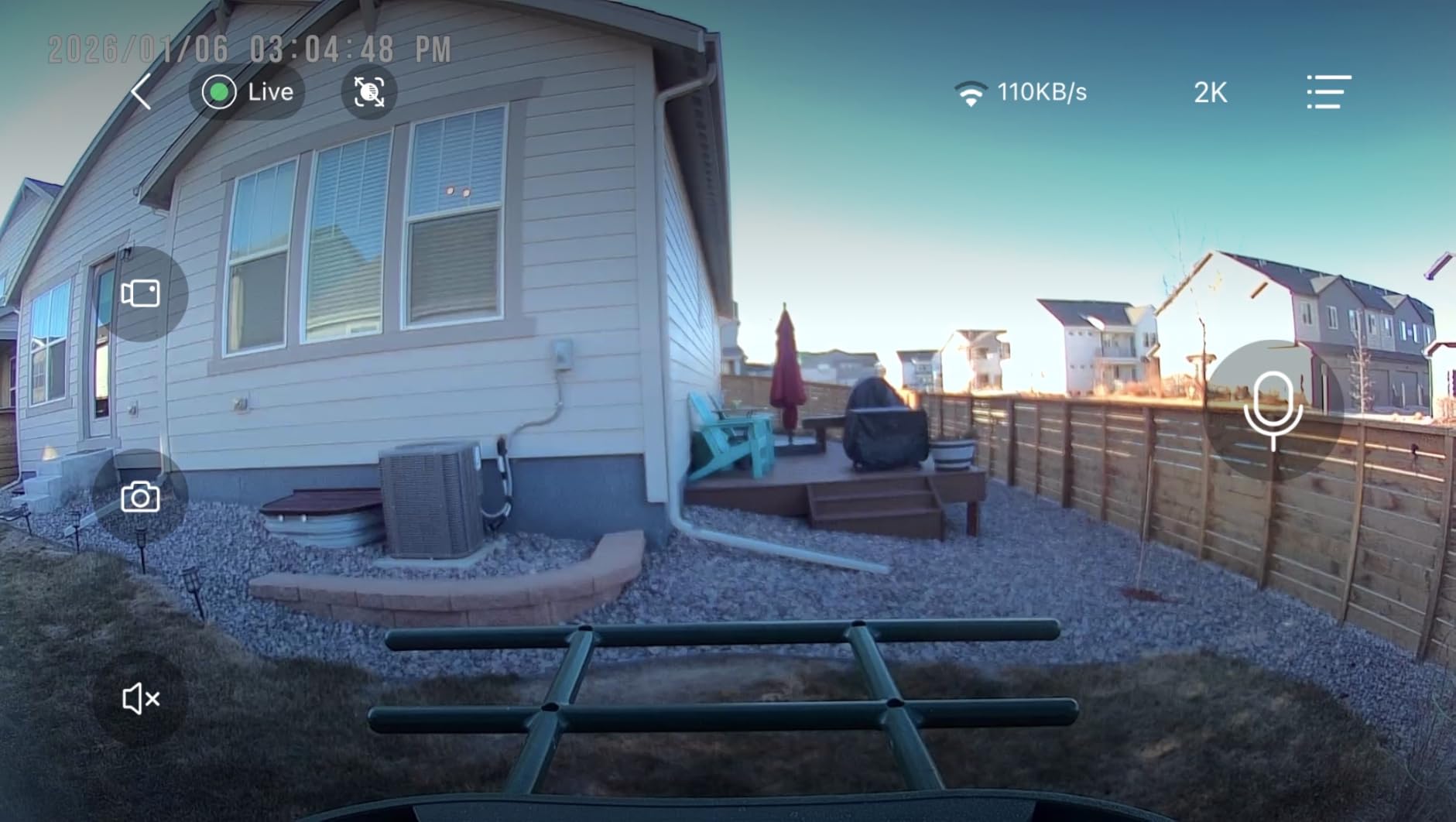
The onlyfly is the most flexible unit to install. It mounts on a wall, tree, fence, deck, or pole, and it also takes a tripod, which is the one attachment that lets you compose the angle instead of accepting whatever the mount gives you. The included kit covers every one of those, plus a stand.
The dual-sided 4W solar panels are integrated into the roof rather than dangling on a cable, so there is no exposed wire joint for squirrels to chew. Owners report the battery sitting near full without any indoor charging, and the 1.8L hopper with a tilting lid is one of the easiest to refill in this group.
Two extras stand out. It supports live sharing with up to four people at once, which makes it a good choice if the family wants to watch the same feeder from different places. It also ships with DIY nectar, fruit, and jelly add-ons, so you can turn it into a hummingbird station as well as a seed feeder.
Imaging is 2K video with 5MP stills and in-app zoom control, and the construction is ABS with a UV-protective coating for full sun exposure. AI species identification comes with a 30-day free trial before any paid plan.
Who this is right for
This suits anyone who has awkward mounting options, wants to share a live view with several people at once, or plans to add nectar and fruit feeders later. The tripod compatibility is the quiet advantage here, because it lets you lower the angle to head height and get a much better view of the port.
Where it falls short
The open tray design is a genuine wildlife problem, not just a photography one. Grackles and doves land and knock seed straight out, which means more waste, more cleaning, and a feeder that empties faster than the 1.8L capacity suggests. Reviewers also report 2K cloud clips truncating to about two seconds with retrieval errors, unreliable microSD handling that needs reformatting, and a support team described as canned.
5. birdsnap PAV Bird Feeder with Camera – Best Value
Pros
- Comes with a 32GB card so no subscription is needed
- Clear images with good black-and-white night shots
- IP65 weather-resistant build
- Speaker and light deter squirrels effectively
Cons
- Shallow seed chamber needs daily refills
- Solar cable junction gets chewed by squirrels
- Antenna can snap after about a year
- Add-on accessories feel flimsy
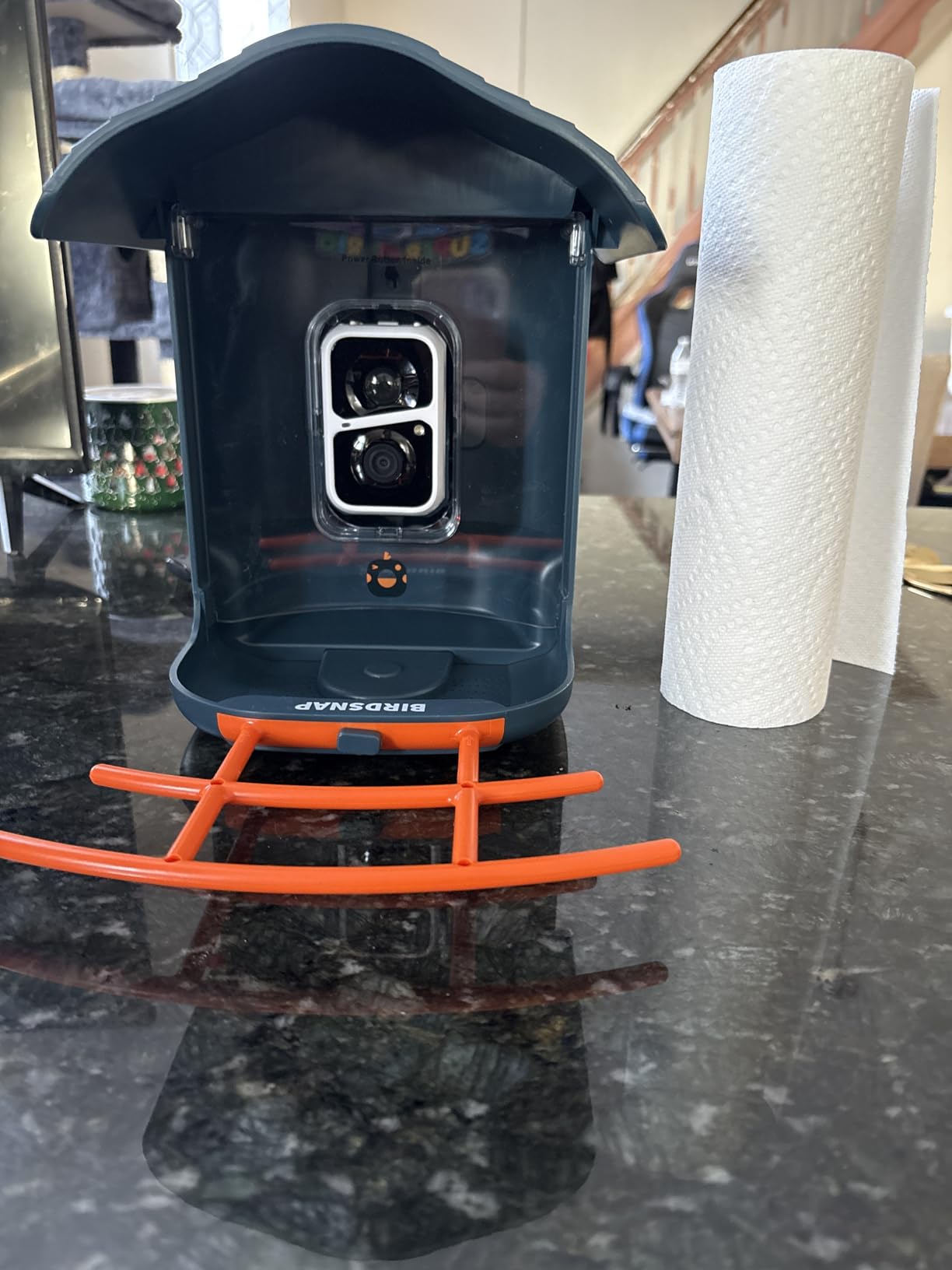
The birdsnap PAV is the pick if you refuse to pay a subscription for anything. It ships with a 32GB card, which stores more than 20,000 ten-second clips, and it exports those clips from the card when there is no useful Wi-Fi signal or no interest in cloud storage at all. That single decision removes the recurring cost that drives most complaints about this category.
The camera is a 2K sensor behind a 155-degree ultra-wide-angle lens, the widest view here, so a bird at either edge of the perch is still in frame. At night the IR and light array produces clear black-and-white shots, which is fine for identification even though it gives up color.
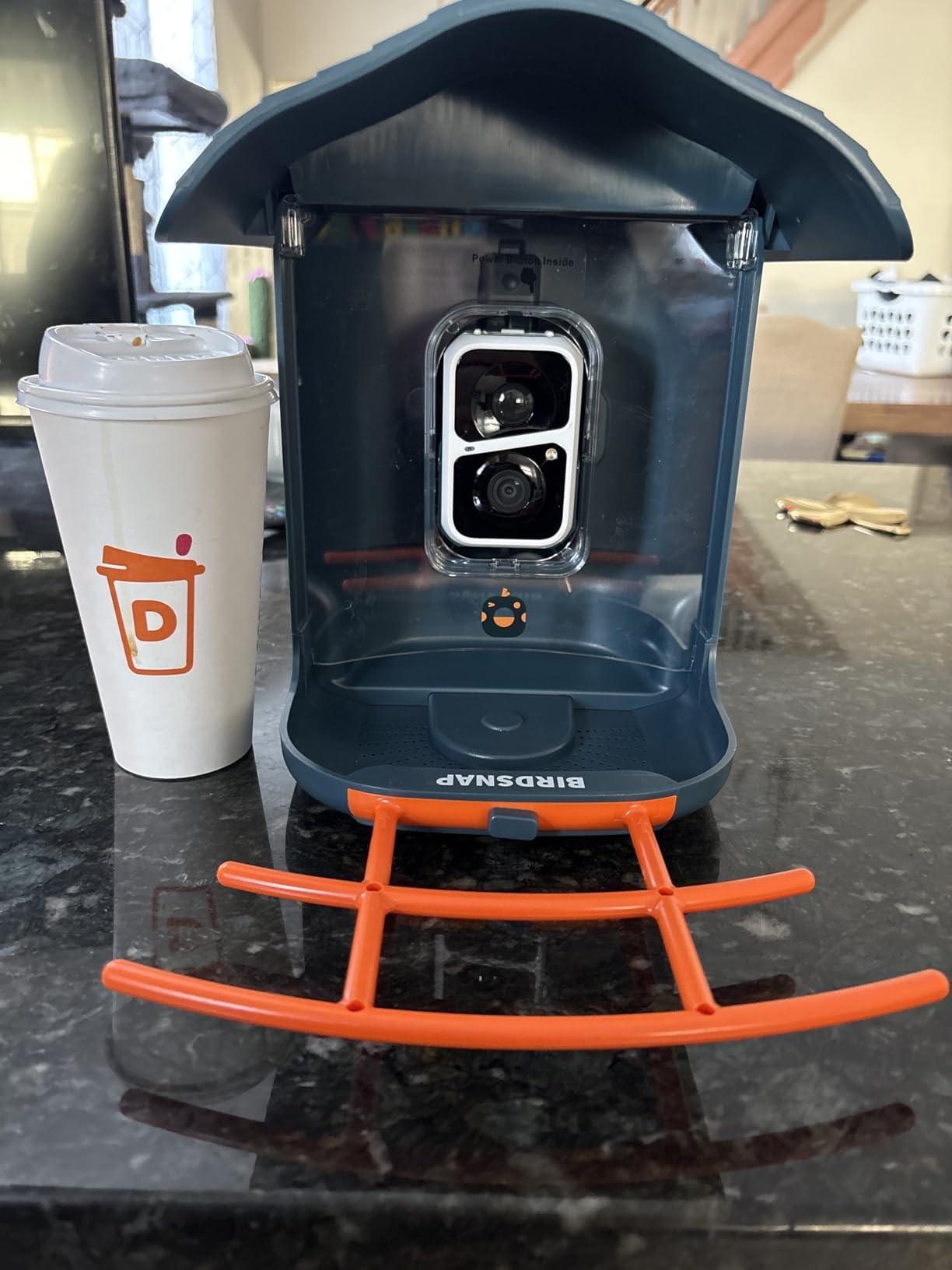
It also carries a built-in microphone and speaker, plus a light, and owners report these work well against squirrels in the first few weeks. The adjustable tilt solar panel and internal 5dB antenna round out a package that is unusually complete for the money.
Three interchangeable feeders come in the box: a fruit fork, a hummingbird feeder, and a jelly box. The hummingbird reservoir is the one to fit if you want ruby-throated hummingbirds, and those are the birds no handheld camera on a tripod will ever keep up with without a very fast shutter.
Who this is right for
This is the sensible buy for someone who wants notifications and clips with no ongoing cost, who has weak Wi-Fi at the far end of the garden, or who wants to attract hummingbirds and fruit-eating species as well as seed eaters. IP65 weather resistance is a genuine plus for year-round use.
Where it falls short
The seed chamber is shallow and partly occupied by the camera housing, so it needs daily refills and spills seed while loading. The solar panel cable connection is unreinforced and is the first thing squirrels destroy. Squirrels also learn the alarm quickly and ignore it after a while, and the antenna can snap off after about a year with replacement parts hard to find.
6. PEEIPM Solar Smart Bird Feeder Camera – Budget Pick
Pros
- Lowest entry point in the set
- Quick assembly and app setup
- Solar charges reliably
- Usable with no subscription for 30-day storage
Cons
- Soft images with color distortion when backlit
- Audio is distorted and unusable
- Notifications fire constantly
- SD recordings are lower quality than the stream
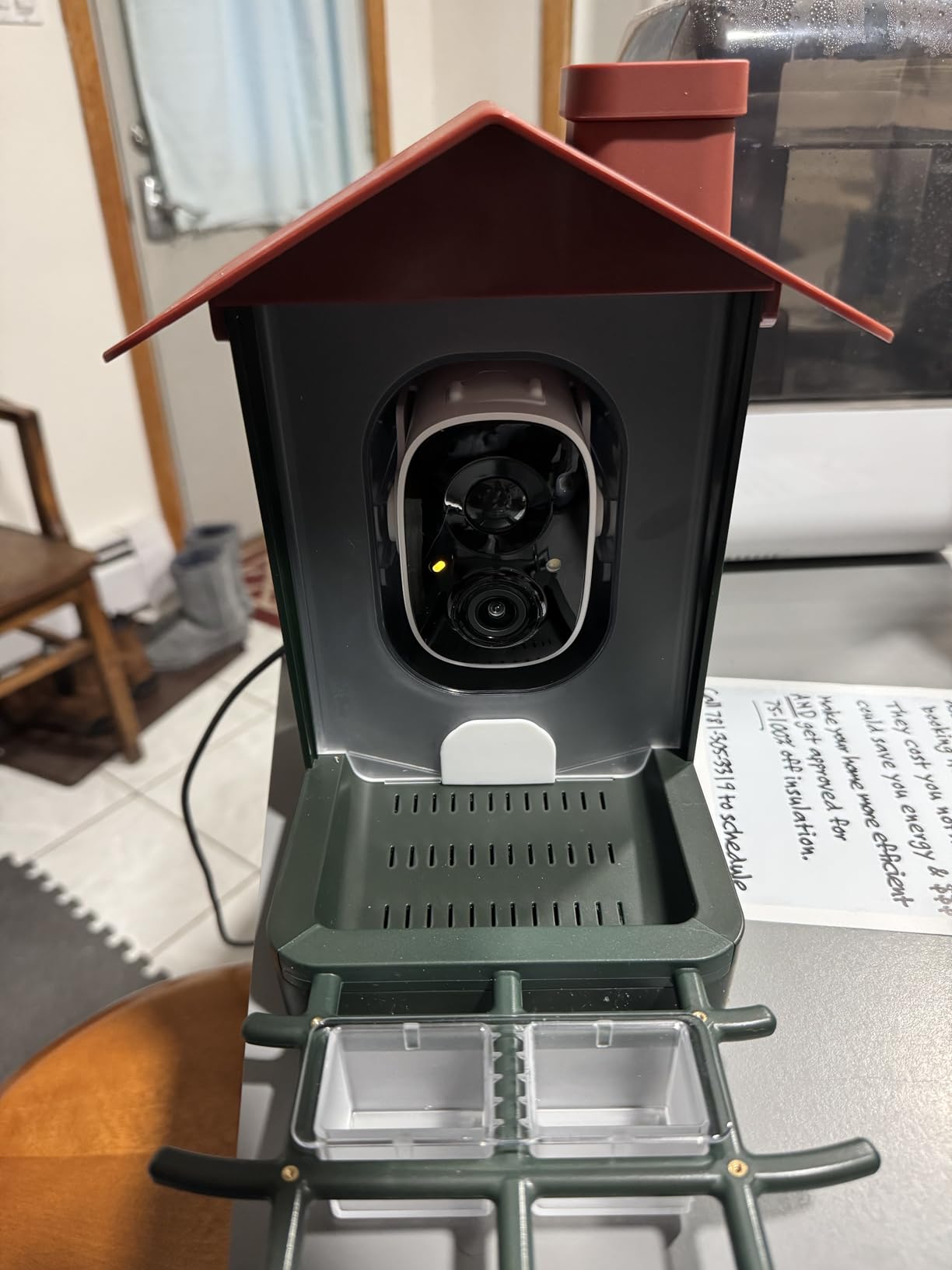
The PEEIPM is the cheapest way into this category, and reviewers consistently frame it as strong value rather than a compromise. The 2K live video is sharp enough for identification, the app pairs quickly, and the solar panel has a rubber-sealed cord entry that is better weather protection than several pricier units.
You get a visible feeding window so you can check seed levels from the house, two-way audio, and attachment points for gel, fruit, nectar, and suet. A 30-day free trial covers the AI recognition, after which a paid plan is optional rather than required for basic function.
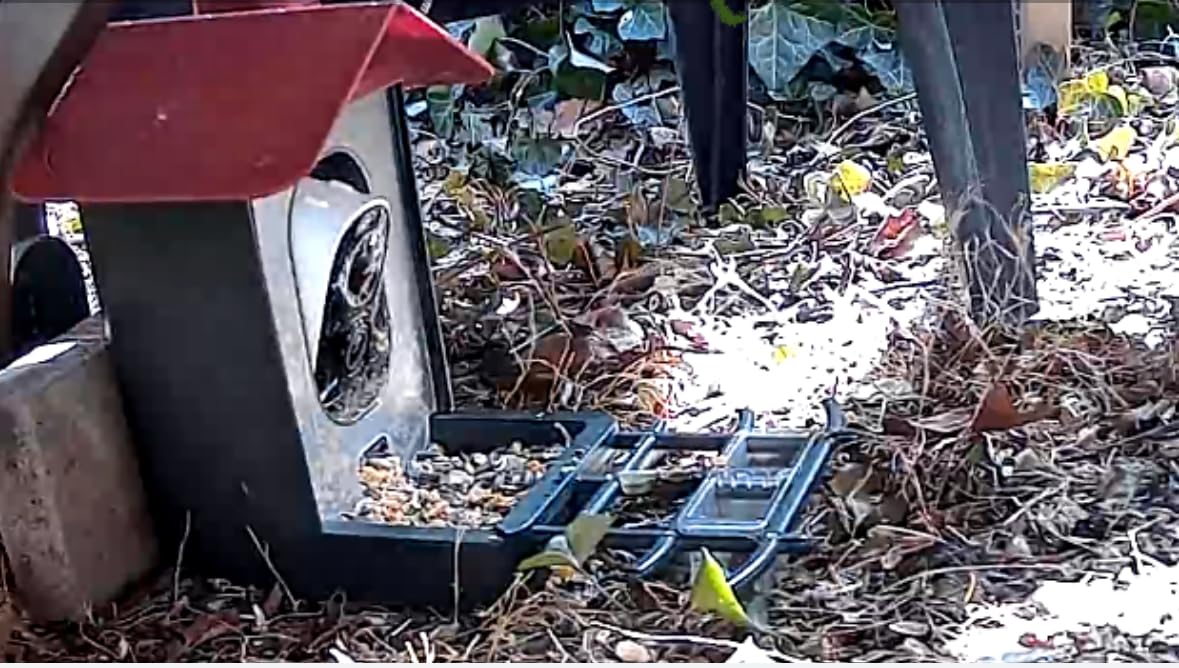
Mounting is unusually flexible for the money: strap, swivel bracket, pole mount, and ground placement are all supported. The unit is also frequently repurposed as a general backyard camera because it will alert on packages, pets, and people as well as birds, which is either a bonus or a nuisance depending on where you hang it.
At 1.88 kg it is heavy enough to stay put in a breeze, and the unit is around 8 inches square, so it does not dominate the garden the way some of the larger metal feeders do.
Who this is right for
Pick this if you want to see what is at the feeder before you commit to a more expensive unit, if you are on a tight budget, or if you want a camera that does double duty watching the rest of the garden. Thirty days of usable storage with no payment is a reasonable way to test whether you actually use the notifications.
Where it falls short
Image quality is soft, and colors can look distorted, especially when a bird is backlit against a bright sky, which is a common feeder situation. The audio is heavily distorted and cannot be used for sound-based identification. Memory card recordings are lower quality than the live stream, and notifications fire up to 35 or 40 times an hour for any movement at all, including branches.
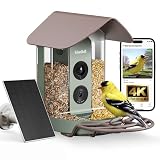
7. Kiwibit Smart Bird Feeder with 4K AI Camera – Best for 4K With Lifetime AI
Kiwibit Smart Bird Feeder with 4K AI Camera Solar Powered, No Subscription
Pros
- Sharp 4K footage and 8MP stills
- Replaceable battery means the unit never gets thrown away
- Solar panel swivels with the mount
- Detachable hopper is easy to fill and clean
Cons
- 2.4GHz only makes 4K choppy on weak signal
- Motion blur from slow shutter speed
- Low-light performance is only adequate
- Feeder must be unbolted to refill
The Kiwibit is the only unit in this roundup offering a lifetime AI option with no monthly fee, and buyers who compared several models directly describe it as the best of the five smart feeders they tried. The 4K stream at 132 degrees with HDR and 8MP photos is the second-highest resolution here, and the detail holds up on a bird at the port.
Two design decisions separate it from the pack. The 5200mAh battery is user-replaceable, so when it eventually fades you swap it rather than replace a whole feeder. And the 3W solar panel swivels with the feeder mount as one assembly, so there is no loose cable to snag or chew through.
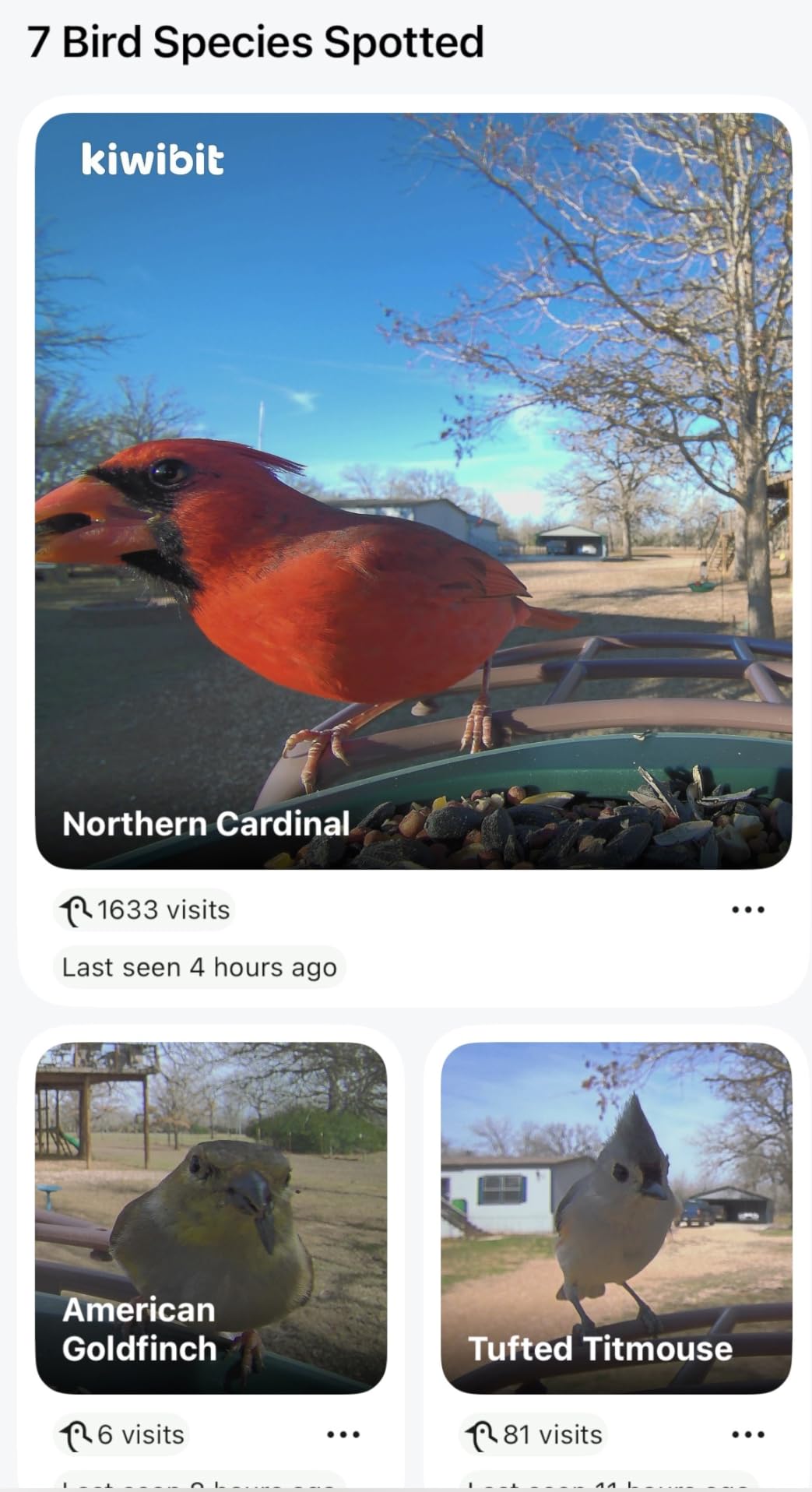
The 1.5L dual-compartment hopper detaches completely for filling and cleaning, which is a small thing that changes how often you actually maintain the feeder. Walls, strap, and pole mounts are all included, and a microSD card up to 512GB is accepted for local recording alongside the cloud option.
Weather resistance is IP65 with a stated rating from -4F to 122F, so it is rated for genuine winter use rather than just spring showers. Nuisance animal detection with an audible alarm is built in.
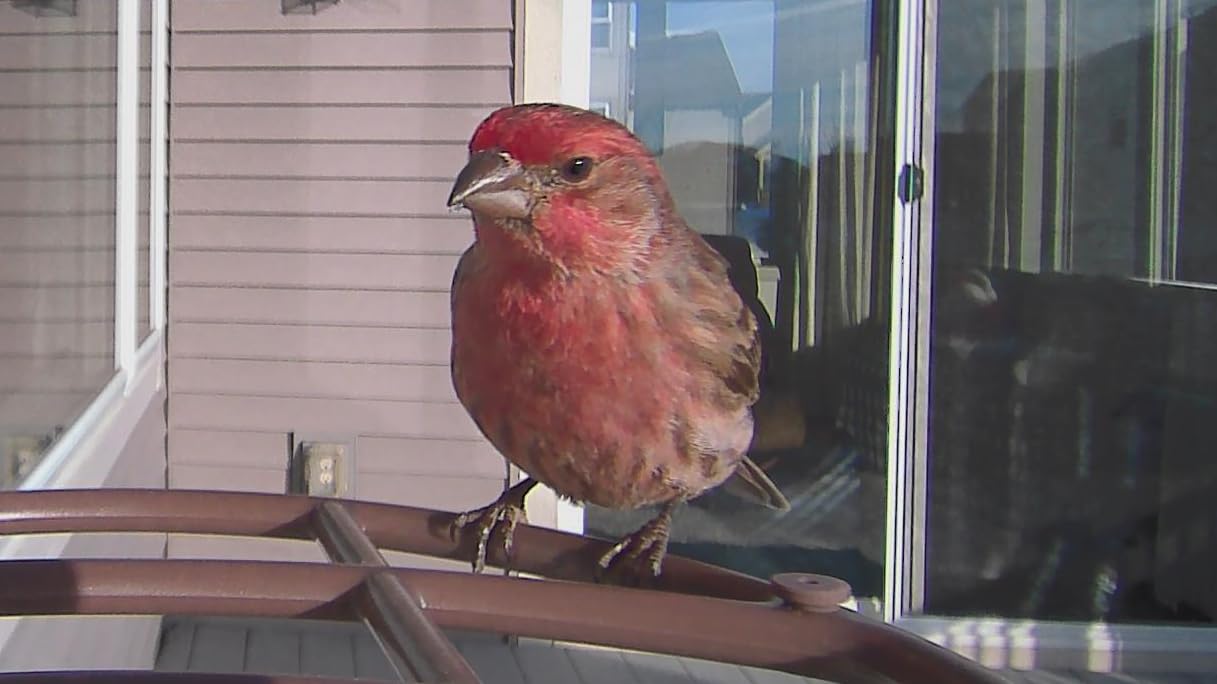
Who this is right for
This is the one to buy if you want high resolution and refuse to pay a recurring AI fee. The replaceable battery also makes it the most sustainable choice here, since a failing battery does not turn a good camera into e-waste.
Where it falls short
Wi-Fi is 2.4GHz only, and pushing a 4K stream over that band produces choppy video in weak signal areas. Shutter speed and frame rate are modest, so a bird in flight shows noticeable motion blur, and low-light performance is adequate rather than good. The AI still misidentifies some species, including the female red-winged blackbird.
8. Birdkiss Smart Bird Feeder Camera – Best for Night Capture
Birdkiss Smart Bird Feeder Camera with Solar Panel – AI Identifies Bird Species, Auto Captures Videos & App Notifications, Includes 32GB SD Card
Pros
- Clear video across the whole food tray
- Included 32GB card catches events the cloud misses
- Bird detection identified local species correctly
- Excellent support that sent a free replacement part
Cons
- Charging capped at about 2W
- Cloud recordings skip or freeze on slow Wi-Fi
- SD card downloads over Wi-Fi often fail
- AI features need a paid annual plan
The Birdkiss takes night shooting more seriously than most. Alongside the infrared LED array it carries a high-power white light, and that combination is what lets you get a usable color image of a bird on the feeder after dark instead of a grainy monochrome frame. The 135-degree wide angle covers the whole tray.
It also has the most aggressive squirrel deterrence in this group: a flashlight, a siren, and voice-command playback, plus two-way audio. A standard SMA antenna connector is a genuinely thoughtful touch, because it means you can fit a higher-gain antenna if your Wi-Fi is marginal instead of being locked to the supplied one.
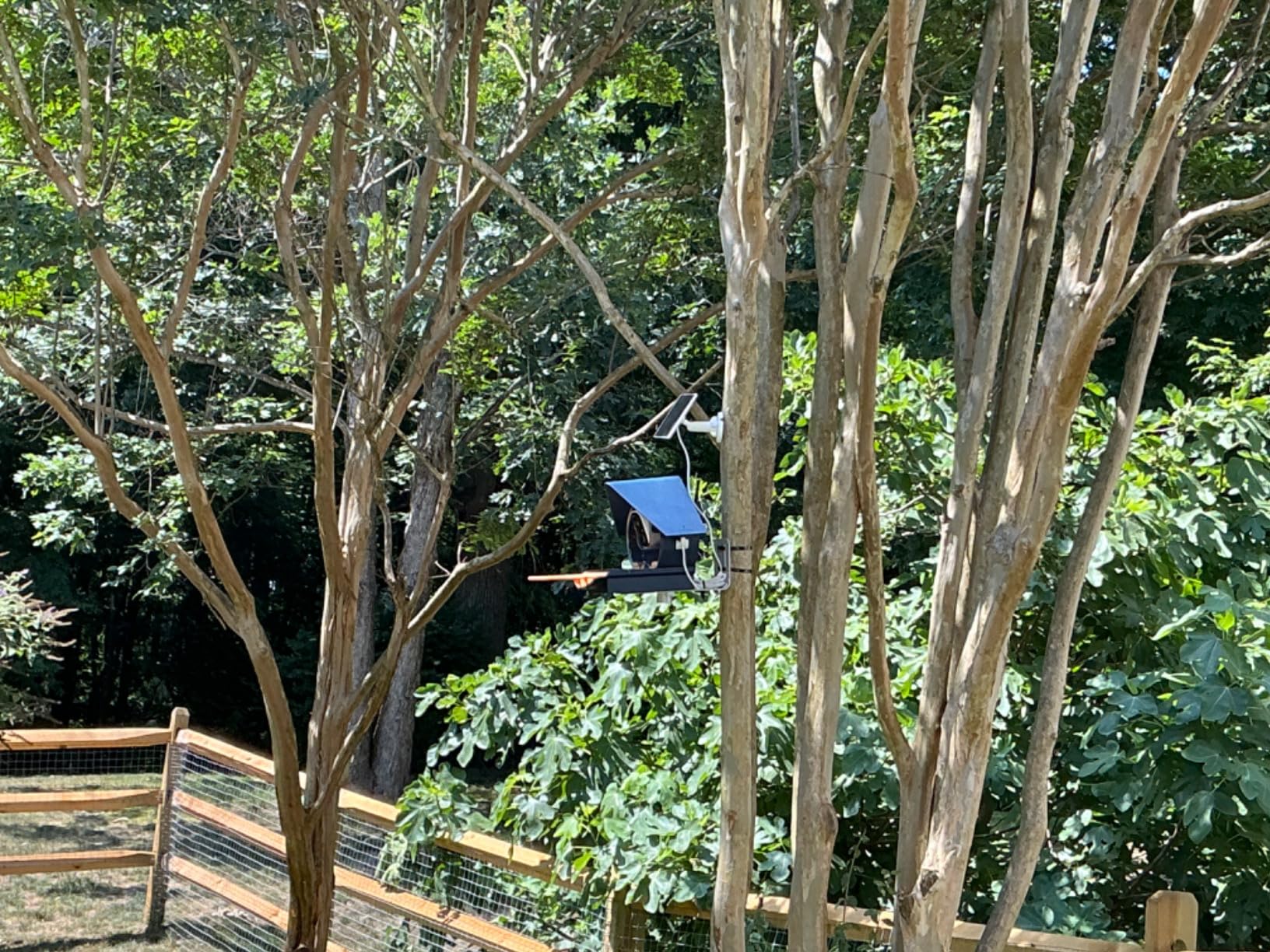
A 32GB card is included and records events locally, which catches visits that the cloud misses. The IP65 design keeps seed dry, and three DIY fruit holder add-ons are included alongside pole, tree, and wall mounting.
At 1.25L the hopper is on the smaller side, and the unit itself is heavy at 5.1 pounds, which is a warning that mounting it on a light tree strap will not end well.
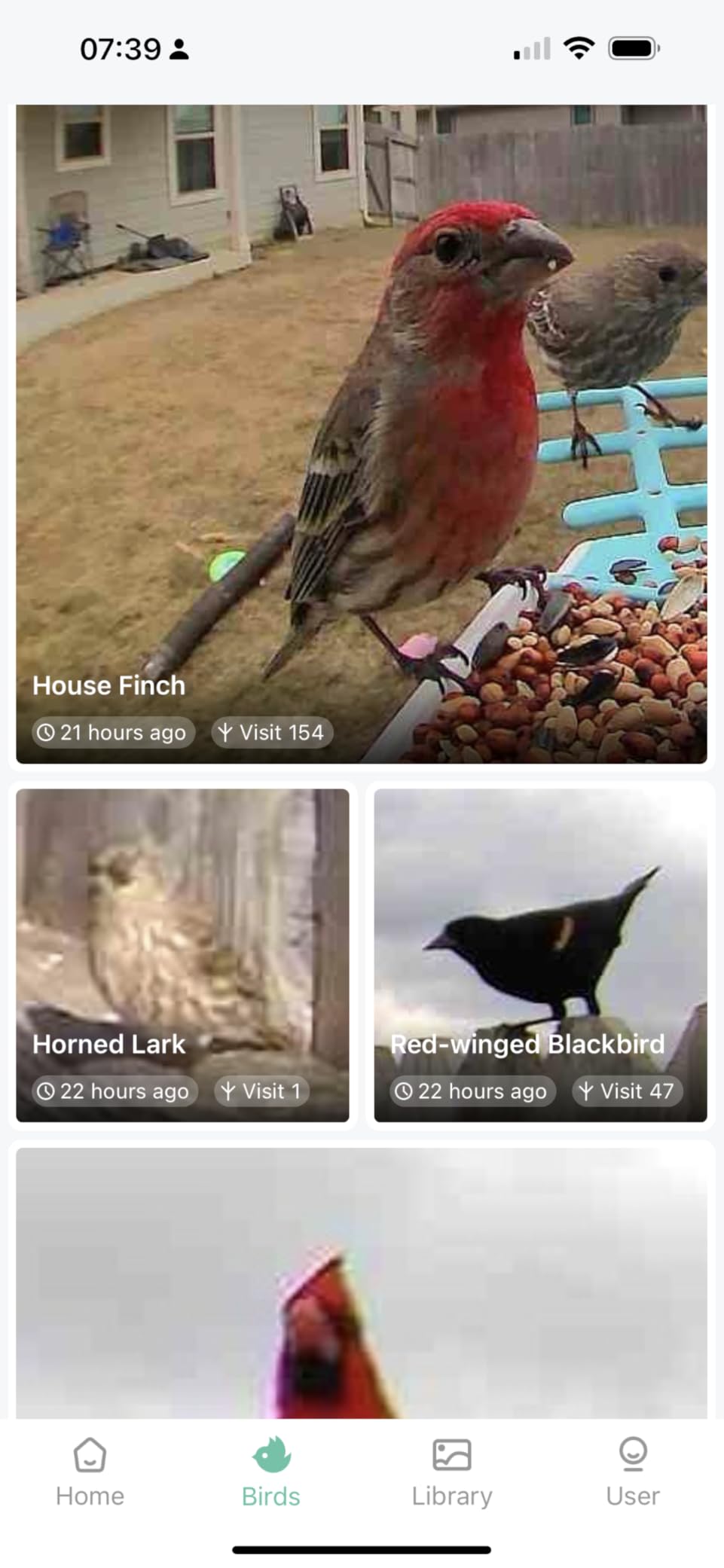
Who this is right for
Choose this if you shoot or watch at night, if squirrels are a constant problem and you want audible deterrence, or if your Wi-Fi is weak and you want the option of a better antenna. The 32GB card also means it keeps recording locally when the cloud service does not.
Where it falls short
Charging is capped at about 2W no matter what charger or port you use, which is not enough to keep the included solar panel useful, so expect to bring it indoors every couple of weeks. Cloud recordings frequently skip or freeze when Wi-Fi cannot stream fast enough, which is exactly when fast birds are most likely to be missed. Downloading full-resolution card files over Wi-Fi often fails, the printed instructions reference a discontinued app name, and AI bird detection plus cloud recording need a paid annual plan.
9. Humbirdy 4K Smart Bird Feeder – Best With No Subscription at All
Pros
- True 4K video that handles fast bird movement
- No subscription with lifetime AI and 32GB local storage
- Metal body feels far more durable than plastic
- Removable camera module for charging and cleaning
Cons
- Only 32GB internal memory with no expansion slot
- Narrow field of view misses birds at the edges
- No zoom control in the app
- Fisheye lens softens detail at close range
The Humbirdy is the highest-rated unit we cover, at 4.6 stars, and it earns that with owners who had already owned two or three competing feeders. The video is true 4K at 30fps rather than upscaled, and 8MP HDR stills cover daylight and low light.
It solves the two problems that trip up most of this category. There is no subscription at all: lifetime AI bird identification across more than 10,000 species, and 32GB of local storage you can download from and share. And it is a dual-band radio supporting both 2.4GHz and 5GHz, so it will actually pair on a modern router instead of fighting the network.

The camera module detaches for charging and cleaning, which is the same practical thinking that makes the Kiwibit’s replaceable battery worthwhile. The metal body is the other standout: it feels and sounds different from the plastic feeders, and it is the reason durability comes up so often in owner reviews.
It also records 1080P at 120fps and converts it to slow motion in the app, which is a real advantage for wingbeats and takeoffs. Triple-sensor detection is designed to filter out wind, rain, and moving branches so you are not scrolling through empty alerts.

Who this is right for
This is the pick for anyone who wants high resolution and refuses subscriptions on principle, and for anyone on a dual-band network who has fought a 2.4GHz-only pairing before. Slow-motion capture and the metal body make it strong for people who care about the files as much as the notifications.
Where it falls short
Storage is fixed at 32GB internal with no microSD slot, so it fills up quickly at a busy feeder and older clips have to be downloaded and deleted. The field of view is narrow and misses birds at the edges of the perch, which partly defeats the point of a wide feeder. There is no zoom control in the app, the fisheye lens softens detail at very close range, and detail drops noticeably on cloudy days.
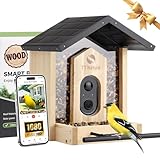
10. TT Nature Smart Birdhouse – Best Metal Construction
TT Nature Bird Feeder with Camera, Upgraded 1.5L Smart Birdhouse Al Identify for 10000 Plus Species, Auto Capture & Real-time Notifications, Ideal Gift for Bird Lovers (Iron Roof)
Pros
- Clear photos with discernible bird detail
- Iron roof and body survive full sun and heat
- Good microphone that picks up birdsong
- Support sent a free replacement shell
Cons
- AI detection is a paid add-on with no trial
- Squirrel alarm does not deter squirrels
- Small hopper and finicky refill latch
- Battery life drops after the first few weeks
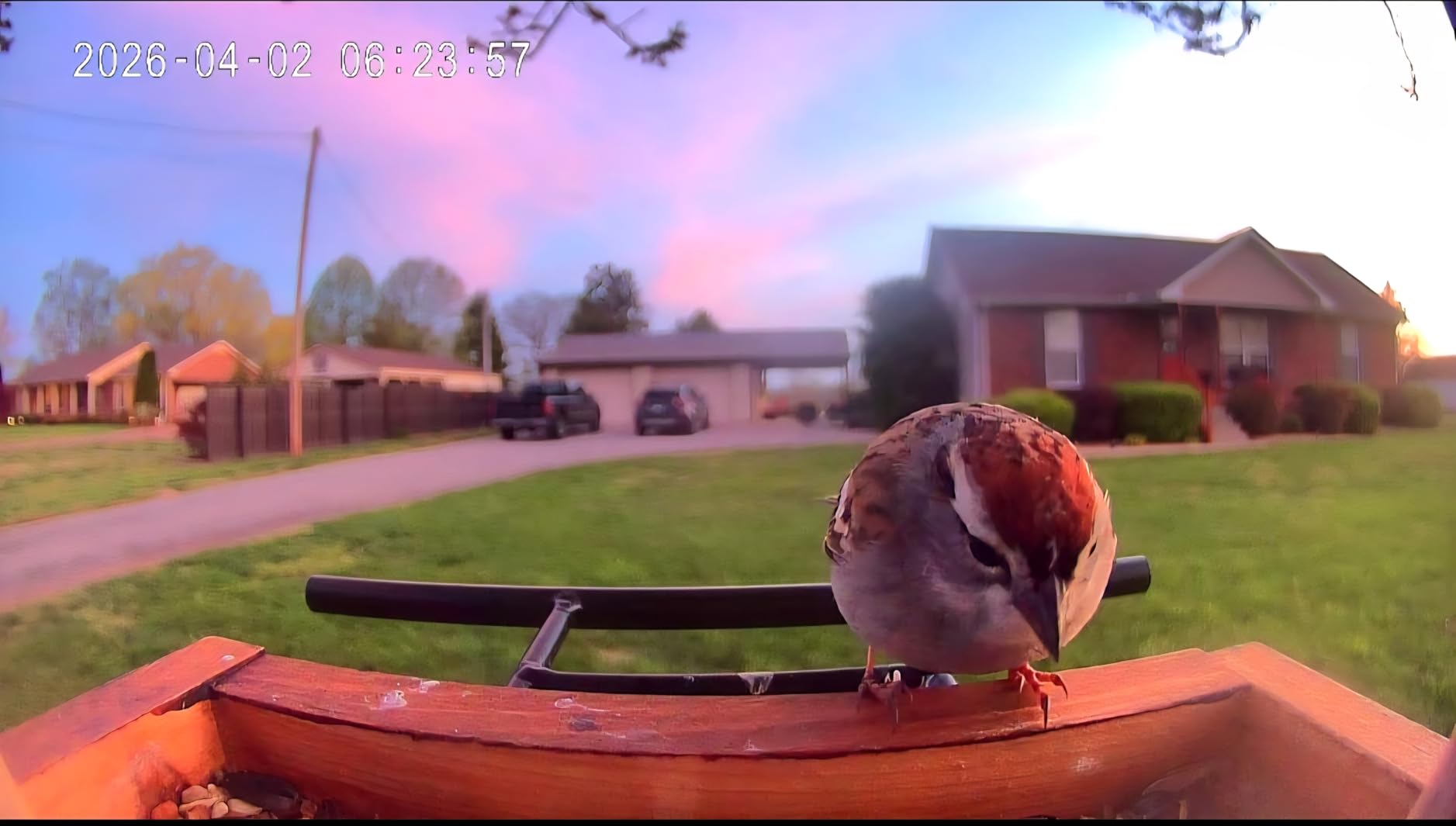
The TT Nature is a metal-roofed smart birdhouse rather than a tube or hopper feeder, and that changes the photograph you get. Birds enter an enclosed perch area, so the camera sees them close and relatively still instead of catching them side-on at a seed port. Detail is good enough to make out individual birds clearly.
Detection is fast at roughly half a second, with arrival notifications on your phone and multi-device simultaneous live viewing so several people can watch at once. A built-in microphone picks up birdsong well, which is a genuinely nice touch for anyone who wants to know what is calling outside the window.
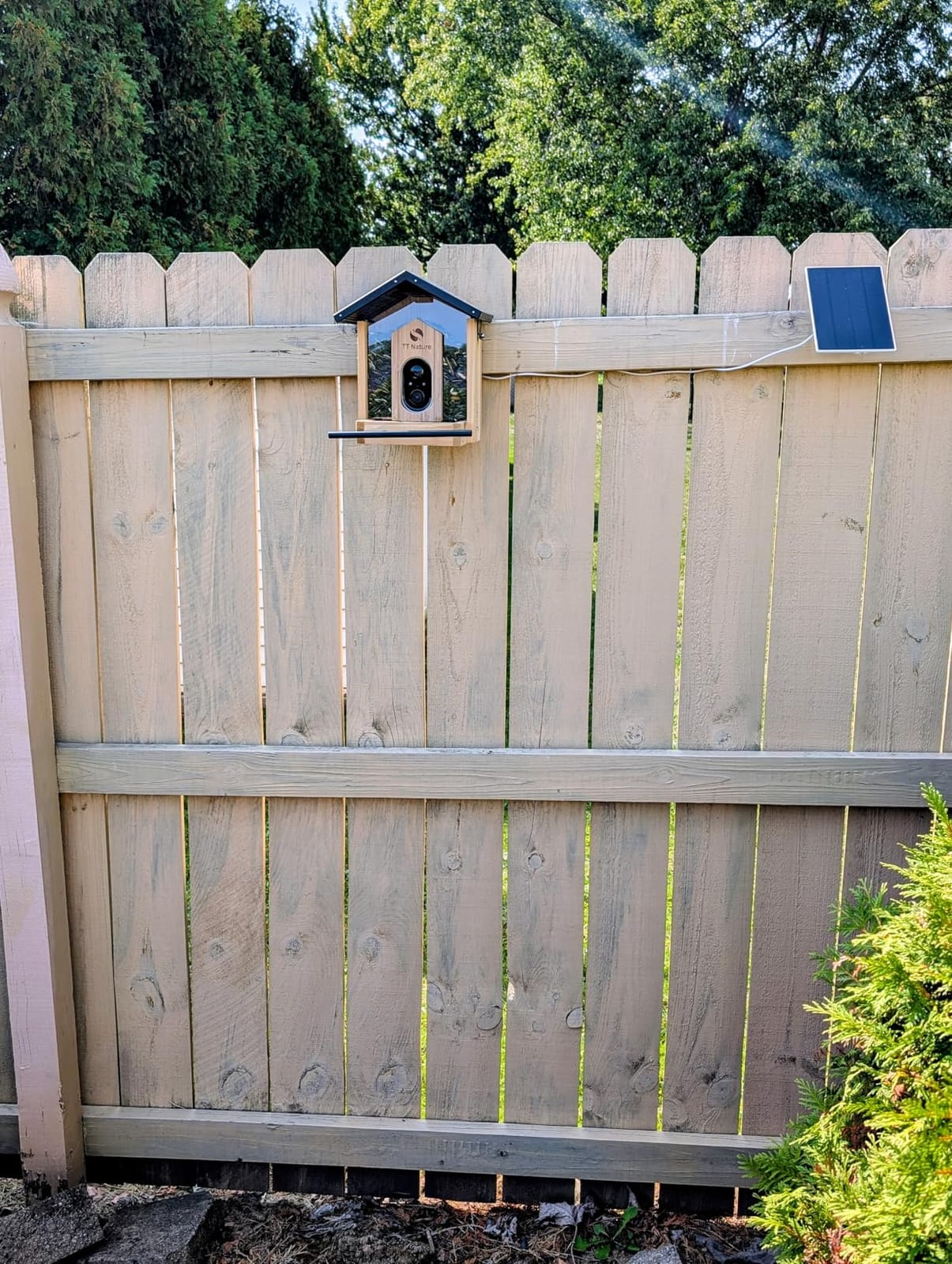
The iron roof and premium wood body hold up in heat and direct sun where plastic feeders degrade, and the unit is light enough at 2.1 pounds to hang without overloading a hook. A microSD card up to 128GB is accepted for local recording, and there is cloud storage as well.
Support is a strength here. At least one owner received a no-charge replacement shell after squirrel damage, which tells you something about how the product holds up and how the company responds when it does not.
Who this is right for
This suits a sunny garden where UV has destroyed your previous plastic feeder, and anyone who wants to photograph birds in an enclosed perch rather than at an open tray. The 1080P stills, fast detection, and good microphone make it a solid all-round yard camera.
Where it falls short
The AI bird detection is a paid add-on with no free trial, which is frustrating given that it is the headline feature. The squirrel alarm does not deter squirrels, and several owners ended up mounting on a pole with a guard after squirrels tore the feeder open and scattered seed. The 1.5L capacity needs frequent refills and the refill latch is finicky, the perch screws loosen and the holes widen with bird use, and battery life falls to around four days after the first couple of weeks.
How to Point a Camera at a Backyard Feeder
Before blaming the camera, check the geometry. Most disappointing feeder photographs are a placement problem, not a gear problem, and no sensor fixes a bird that lands against a bright sky with a busy background behind it.
Get within about 15 to 20 feet. This is the single biggest lever. At that range, roughly 400mm of effective reach fills the frame with a small bird. Back off to 40 feet and you need far more magnification than any bridge camera provides, which is why the same body can produce beautiful shots at one distance and tiny ones at another.
Put cover within a few feet of the feeder. Birds will not commit to a feeder with no escape route, and they will not sit still if they think a cat could appear. A shrub, a fence panel, or a branch screen a few feet away is what turns a feeder into a photo opportunity rather than a nervous stop.
Aim slightly below and level with the port. A low angle shows sky behind the bird and blows out the feathers. Level with the feeding port, you get background rather than sky, which is the difference between a silhouette and a photograph.
Choose perches over platforms. A tube feeder with a proper perch lets a bird stand still for a second or two. A flat platform feeder does not, and it is also the design that wildlife organisations have raised disease concerns about. Position your camera relative to a perch or a port, and you can pre-focus on a fixed zone and wait.
Clean on a schedule. Disease transmission between feeder visitors is the reason many gardens come with regular cleaning built in, and a camera-equipped feeder with a deep, complex hopper is harder to wash out than a simple tube. Never leave a camera pointed at a feeder you are not maintaining.
What to Check Before You Buy a Bird Feeder Camera
Subscription or not, and for what. This is the biggest decision. A lifetime AI plan avoids recurring cost, several units work with no subscription at all, and a few gate their best features behind an annual fee. Work out what you lose if you never pay. If the answer is AI identification and cloud storage, that is usually an acceptable loss when local card recording is included.
Resolution and sensor size, not just resolution. Every unit here claims 2K or better, which is where the numbers stop meaning much. Sensor size, low-light behavior, and whether a white light is available for color after dark separate a usable night image from a grey smudge. A 1080P unit with a decent sensor will beat a 4K unit with a bad one.
Wi-Fi band. Most of these are 2.4GHz only, and pairing failures on modern dual-band routers are the most common setup complaint in the reviews. If your router does not broadcast 2.4GHz separately, check before you buy. The dual-band unit in this roundup is the exception.
Storage you control. An included microSD card or generous internal storage means your photos survive a subscription lapse and keep working when the cloud does not. Rolling cloud loops also mean a great visit can disappear before you open the app.
Power in your specific spot. A solar panel that works in an open garden may do almost nothing under a tree canopy. Look at the panel wattage, and treat a low figure as a signal that you will be charging indoors on a regular schedule.
Mounting and hopper size. Weak tree straps, chewable cable junctions, and small hoppers that need daily refilling are the most common durability complaints. Pole mounting is the most durable option, and a tilting or detachable lid makes cleaning far more likely to actually happen.
Notification behaviour. A feeder that fires 40 alerts an hour for moving branches trains you to ignore it. Triple-sensor filtering and a real motion algorithm are worth paying for.
And if you want photographs rather than clips, remember that no built-in feeder camera will give you the framing freedom of a real lens. For deliberate stills you want roughly 400mm of effective reach on a tripod, animal-detection autofocus, and a burst rate. Our guides to cameras for bird photography on a tighter budget and to Canon bodies for bird photography cover that side. A camera pointed at a feeder will not scare birds away, provided you keep your distance and stay still.
Frequently Asked Questions
Which digital bird feeder camera is the best?
The HARYMOR Smart Bird Feeder with Camera is our top pick overall, with the largest hopper in this group, dual solar panels that work in shaded positions, and a 3X magnification mode that gives you framed close-ups rather than just alert snapshots.
What is the best bird feeder camera on the market?
It depends on what you need. The HARYMOR wins on overall balance, the NETVUE by Birdfy produces the sharpest images and the only color night vision here, the Kiwibit is the pick for 4K with a lifetime AI plan and no monthly fees, and the birdsnap PAV is the best value because it includes a 32GB card and needs no subscription at all.
Will a bird feeder camera scare birds away?
No. Birds are not disturbed by a fixed camera or lens at a normal working distance. What they are disturbed by is an exposed feeder with no cover, a feeder they cannot see coming from, or a person standing nearby. Keep the camera on a tripod at 15 to 20 feet, provide shrub cover within a few feet of the feeder, and you will not lose visitors.
Do bird feeder cameras need a subscription?
Some do and some do not. The birdsnap PAV and the Humbirdy work with no subscription, the HARYMOR records to a memory card or a rolling three-day cloud loop, and the Kiwibit offers a lifetime AI option. Check what you lose without payment before you buy, since the AI identification is what most subscriptions actually gate.
What is the best ISO setting for bird photography?
For a handheld camera at a feeder, use Auto ISO with a ceiling set around 3200 to 6400 and pair it with a shutter speed of 1/2000s or faster, an aperture near f/5.6 to f/8, continuous autofocus with animal detection, and burst mode. This covers the 1/2000s and faster range that freezes wingbeats, including the 1/4000s you need for hummingbirds.
Conclusion: Which Bird Feeder Camera Should You Buy?
Start with the HARYMOR if you want the most proven all-round unit, the largest hopper, and solar power that holds up under trees. Pick the NETVUE by Birdfy if the quality of the images is the whole point, or the Kiwibit if you want 4K with lifetime AI and a battery you can replace instead of discard. The birdsnap PAV is the value choice, and it is the one to buy if you refuse recurring fees, while the Humbirdy matches that with dual-band Wi-Fi and slow-motion video.
Whichever you choose, remember that the camera is the smaller half of the equation. Get within 15 to 20 feet, give the feeder cover a few feet away, aim level with the port, and keep it clean. If you would rather photograph than monitor, add a camera with real telephoto reach to the setup and the results change completely. That is the full answer to the best cameras for bird feeder photography in 2026: decide first whether you want to shoot the birds or be told about them, then buy the gear that matches.