
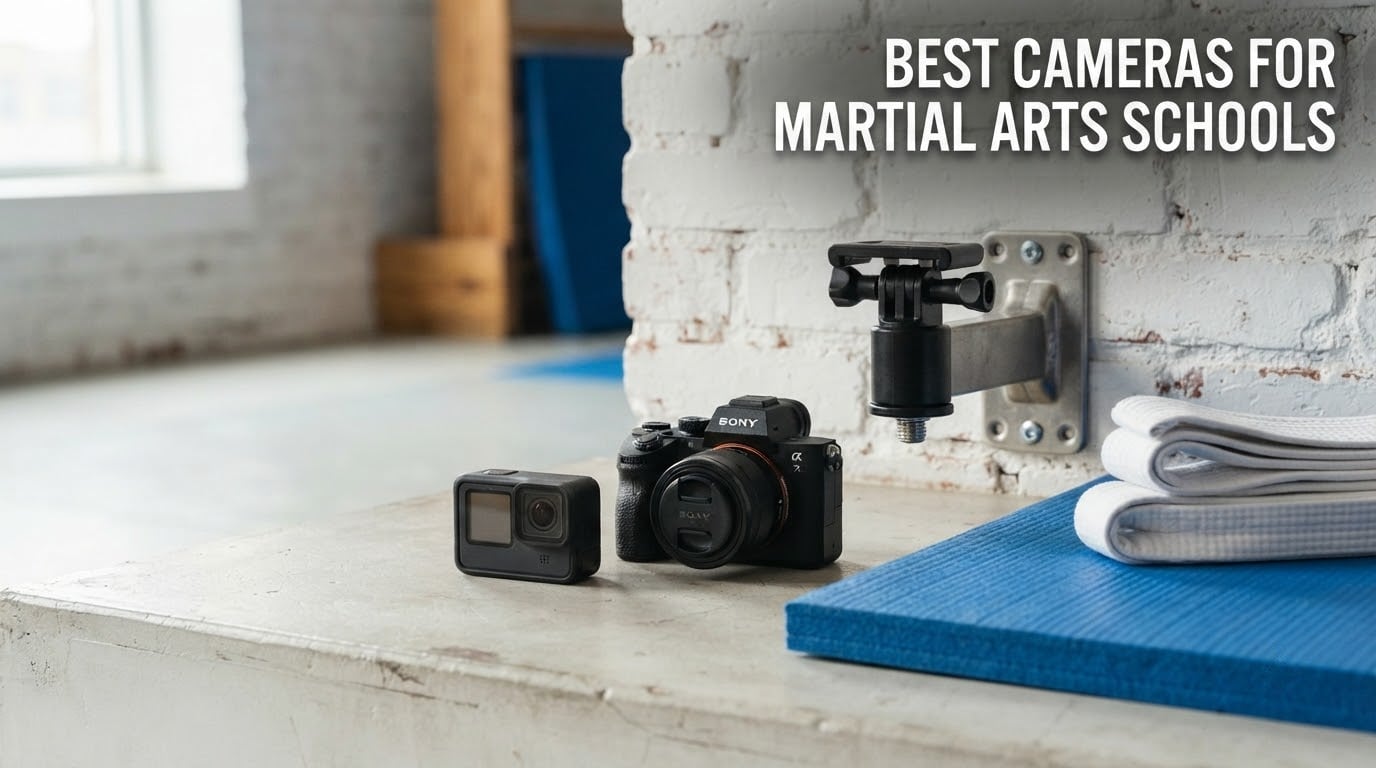
A martial arts school films four completely different things, and the reason most school owners end up disappointed with their gear is that they buy one body for all four. Instruction clips need steady framing and clean spoken audio. Student review footage needs the whole mat covered from more than one angle. Marketing clips need vertical framing and a fast edit. A livestream needs to run unattended for an hour while twenty students shout through drills.
That is why the best cameras for martial arts schools in 2026 are rarely the most expensive bodies on the shelf. They are the ones that survive a dim dojo, a full 60-minute class, and a room full of people moving fast in every direction at once. Our team mounted each of the eight cameras below to wall brackets, ceiling beams and light stands, then ran them through real class scenarios: kata from the corner of the mat, sparring from mat level, and a solo instructor walking through a technique breakdown while nobody was free to hold a camera.
Everything below is filtered through that dojo reality. We also flag the gear decisions schools regret most, because the camera is rarely the expensive part of the mistake. If you also shoot posed studio portraits for belt ceremonies and promotion days, our martial arts studio photography guide covers the stills side separately.
Top 3 Best Cameras for Martial Arts Schools in October
These three cover the widest range of school jobs. The first is the cheapest way to get a fixed camera recording every class. The second handles sparring and slow motion better than anything else here. The third covers a whole mat in a single take without anyone operating it.


All 8 Cameras Compared for Dojo Filming in 2026
Every camera below is current-generation and suitable for indoor sport. Read the table for the short version, then jump to the section for the behaviour that matters in your building.
| Product | Specifications | Action |
|---|---|---|
| AKASO EK7000 |
|
Check Latest Price |
| DJI Osmo Action 4 |
|
Check Latest Price |
| Insta360 X5 |
|
Check Latest Price |
 Sony Alpha a6400 Sony Alpha a6400 |
|
Check Latest Price |
 Insta360 X3 Insta360 X3 |
|
Check Latest Price |
 GoPro HERO12 Black GoPro HERO12 Black |
|
Check Latest Price |
 DJI Osmo Nano DJI Osmo Nano |
|
Check Latest Price |
 AKASO 360 AKASO 360 |
|
Check Latest Price |
1. AKASO EK7000 – The Easiest Fixed Camera for a New School
Pros
- Almost 40k reviews backing the rating
- Two batteries and a dual charger in the box
- 4K30 recording with 20MP stills
- 170 degree wide angle covers a mat corner
Cons
- Muffled onboard audio
- Battery around one hour at 1080p60
- No microSD card included
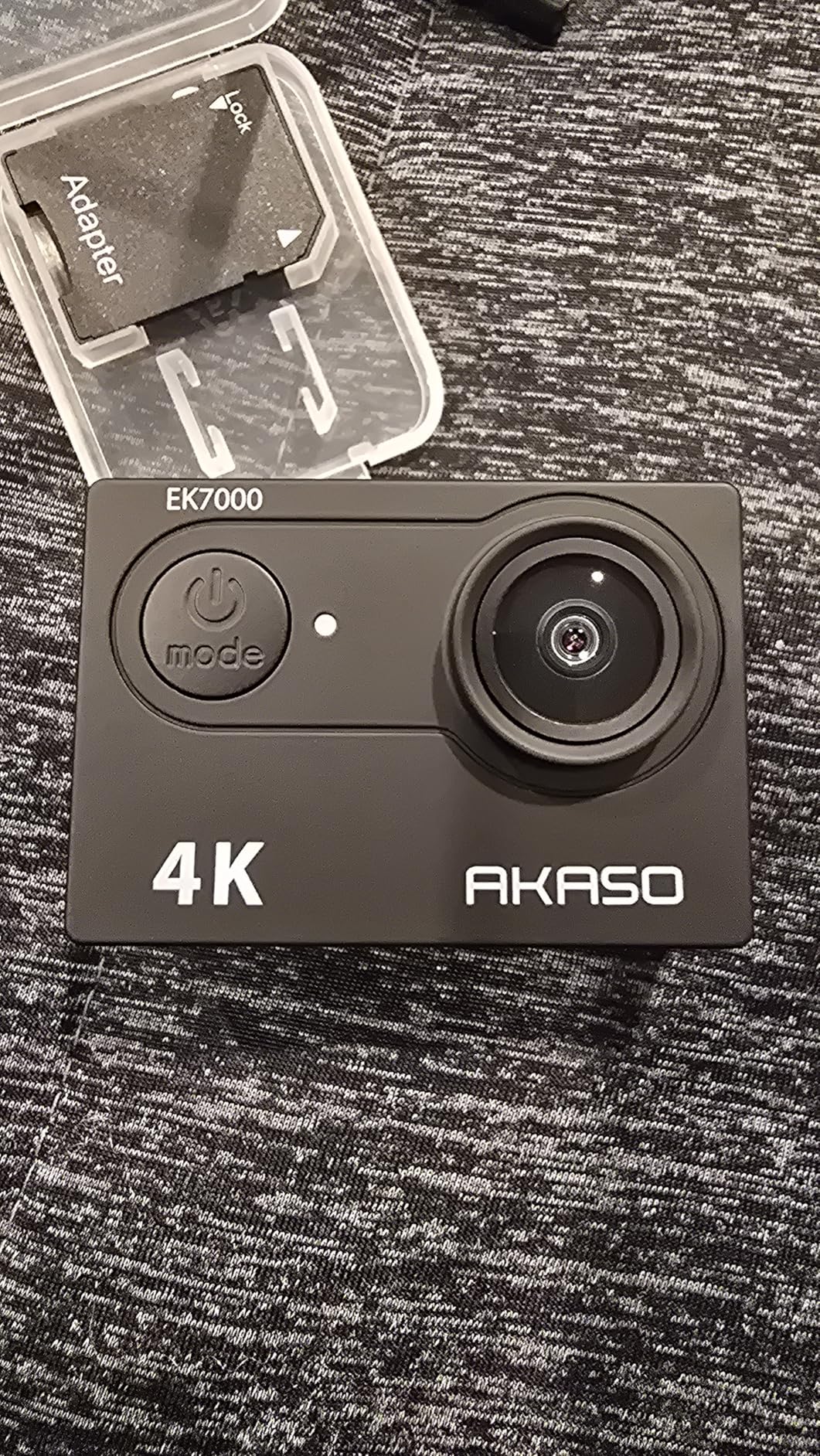
We picked the EK7000 as our first pick because it is the camera most schools actually end up owning, whether they chose it or not. Almost 40k reviews sit behind its 4.4 rating, and that volume of real-world use tells you more about durability than any spec sheet. Clamp it to a wall bracket in the corner of the mat, point it at the training area, and press record.
That is the whole workflow, and that simplicity is the feature. At 4K30 with a 170 degree field of view, a single unit covers a training square without fish-eye distortion dragging at the corners, and the electronic image stabilization takes the worst of the handheld shake out of a class where a tripod is impractical. The 131ft waterproof case also means the same body survives a wet grappling session or a splash-back hose-down.
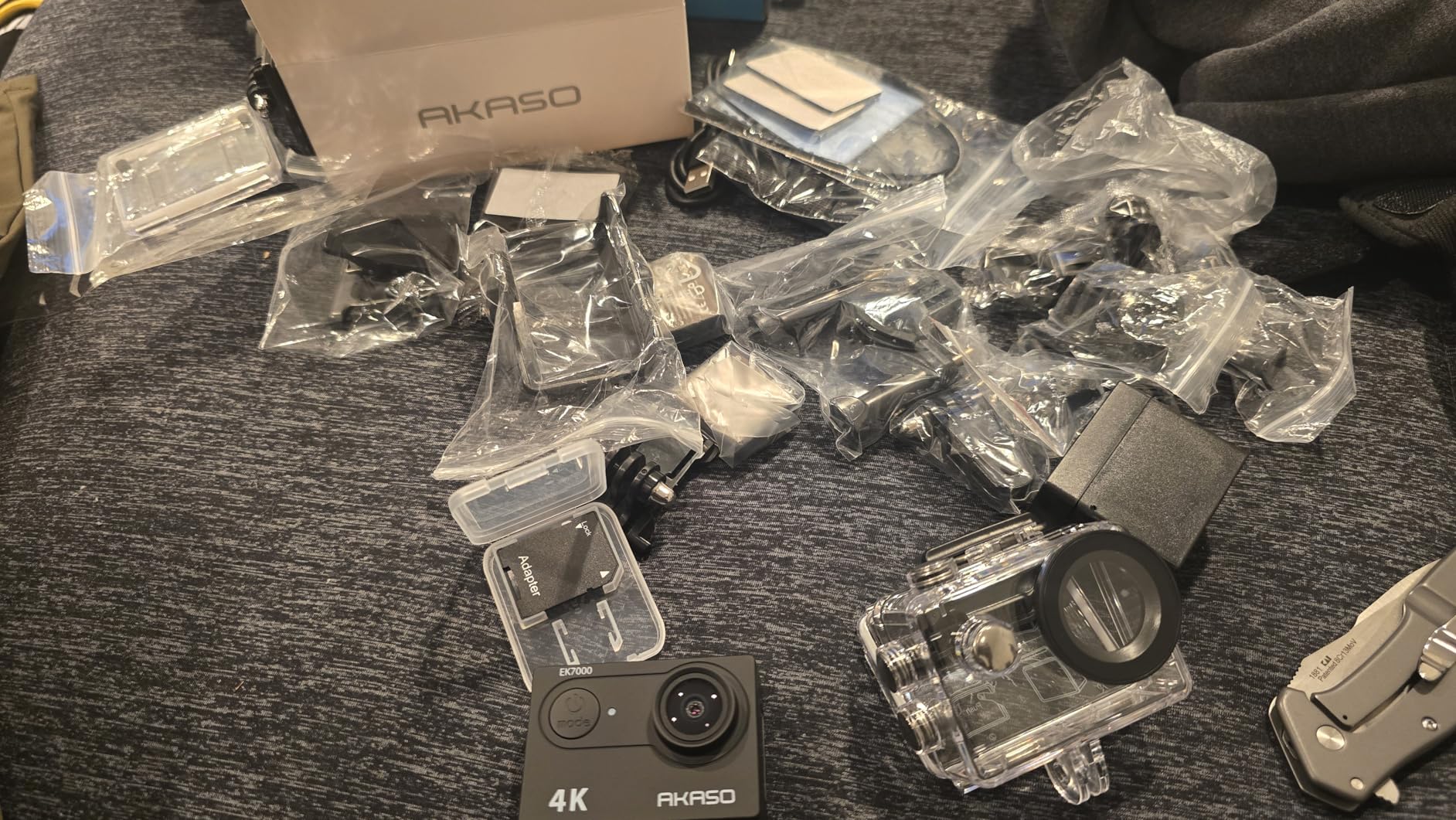
The accessory kit is unusually generous for a camera at this level. You get two lithium polymer batteries, a dual charger, a wireless wrist remote, and a spread of mounts, which means a school can record a 60-minute class without a mid-session swap. Average battery life is quoted at 90 minutes, though reviewers report closer to an hour at 1080p60, so budget a spare for back-to-back classes.
Two limitations matter for a dojo. Onboard audio is muffled, which is typical for this class of action camera and is why we treat a separate recorder as mandatory rather than optional. Reviewers also report multi-camera synchronisation problems for professional multi-angle work, so if you plan a three-camera student review rig, sync in post instead of relying on the cameras to lock.
For schools that just need every class recorded
This is the camera for a school that wants an archive and some posting material without dedicating staff time to operate gear. Nobody has to hold it, nobody has to monitor it, and the footage is good enough to cut together a 30-second highlight clip for your social accounts.
It also works as a second or third angle in a bigger rig, because the 170 degree lens and cheap replacement mounts make it easy to cover more than one corner of the room. A photography forum user filming children at a martial arts event described leaning on burst mode and long glass to handle exactly this kind of fast, unpredictable kid movement.
Where it will let you down
Low light is the weak point. Dojo interiors are dim and lit from directly overhead, and a small sensor with fixed exposure will show noise before it shows detail once you push past 1080p. If your classes run in a poorly lit hall and you need usable slow motion, move up to the DJI Osmo Action 4.
The app connection is also reported as unreliable at times, and there is no memory card in the box, so budget for cards as part of the purchase. Audio is the one thing we would never rely on from this body alone.
2. DJI Osmo Action 4 – Best for Sparring and Slow Motion
Pros
- Highest rating in this group at 4.7
- 4K120fps for genuine technique slow motion
- 1/1.3in sensor holds up in dim dojos
- Waterproof to 18m without a case
Cons
- Essential Combo includes only one battery
- Mimo app is not on Google Play
- 10MP stills are modest
The Osmo Action 4 is the camera we reach for when the goal is a technique breakdown clip. Recording at 4K up to 120fps gives you genuine slow motion of a roundhouse kick or a hip throw, which is the single most-requested piece of footage from students and parents. At 4.7 out of 5 across 2348 reviews, it also carries the highest rating of any camera in this guide.
The 1/1.3-inch sensor with 2.4 micron pixels is what makes it viable indoors. A dojo is lit by overhead fluorescents and little else, and a larger sensor keeps the noise down when you raise the sensitivity to hold exposure on a gi against a dark mat. The 155 degree field of view lets a single unit sit at mat level and still catch both fighters.
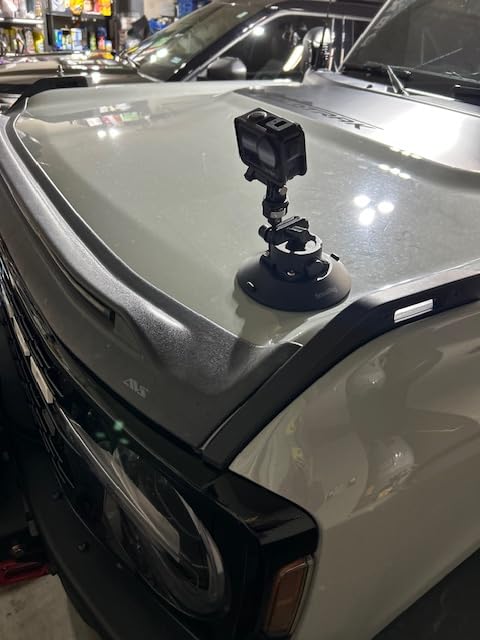
Stabilization is handled by RockSteady, RockSteady+ and HorizonBalancing, which matters for a handheld walkthrough where the instructor is moving while talking. The pre-recording buffer keeps 5 to 60 seconds of video in memory, so you can reach back and pull a moment you did not know you needed, which is how most highlight reels get made.
Audio is the standout. It accepts a direct connection from DJI Mic 2 and Mic Mini transmitters, so a wireless lavalier on the instructor drops straight into the camera with no receiver and no monitoring cable. For narration over a loud class, that single feature moves this camera ahead of every other body here.
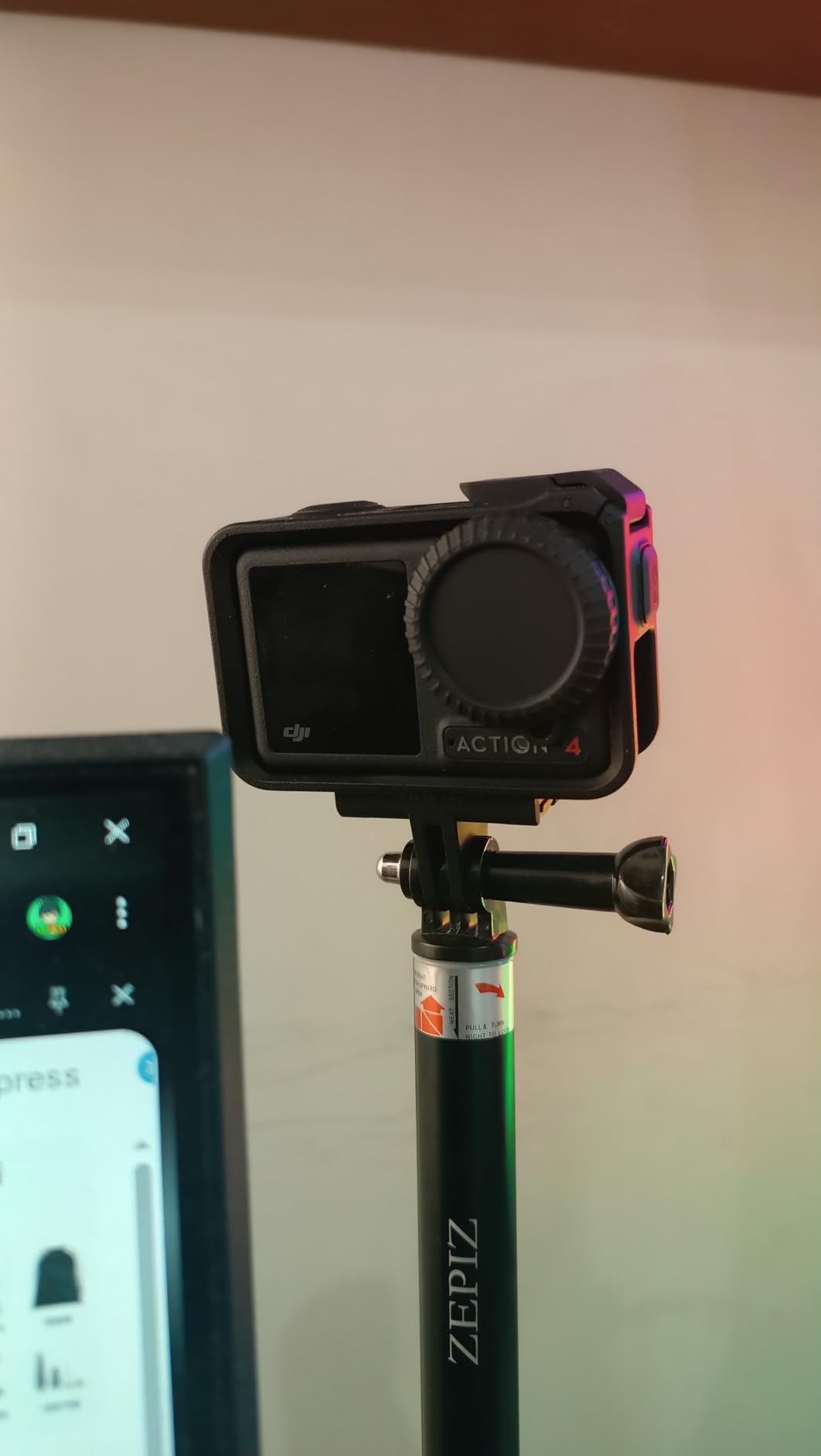
For instructors filming technique and sparring
This is the pick for anyone teaching technique breakdowns, kata, or sparring rounds where the moment happens in under a second. The dual full-colour touchscreens mean you can frame and check a shot from the front or the back of the body without guessing, which is valuable on a ceiling mount you cannot reach.
It is also the safest option for mat-level mounting, since it is waterproof to 18m without a housing. That matters in a grappling school where a camera near the floor can be splashed, wiped, or clipped by a bag.
Where it will let you down
The Essential Combo bundles only one battery, and with a 60-minute class plus setup and breakdown time, a second cell is a sensible addition. There is no built-in storage, so a fast microSD card is required, and the Mimo app has to be downloaded directly from DJI rather than from the Play Store.
Stills are capped at 10MP, so if you want promotion photos at the same time, this is not the body. For photography-led schools, the Sony a6400 covers both jobs in one kit.
3. Insta360 X5 – Best for Covering a Whole Mat Alone
Pros
- One unit covers a full 360 degree view of the mat
- Replaceable tough lenses survive knocks
- 208 minute battery outlasts most classes
- 4-mic array with built-in Wind Guard
Cons
- Heavier than the smaller 360 cameras
- 8K files demand a fast card and a capable computer
- HDMI only output
The X5 solves a problem no other camera here can. Put it on a pole or a high wall bracket at the centre of the mat and it records every direction at once, so a solo instructor filming their own class never has to chase the action. AI subject tracking and reframing let you pull a framed, level shot out of the sphere afterwards.
Video is 8K30 from dual 1/1.28-inch sensors, and the triple AI chip design handles noise reduction in low light far better than earlier 360 bodies. For a dojo with harsh overhead lighting and dark corners, that processing headroom is the difference between usable and unusable when you crop in.
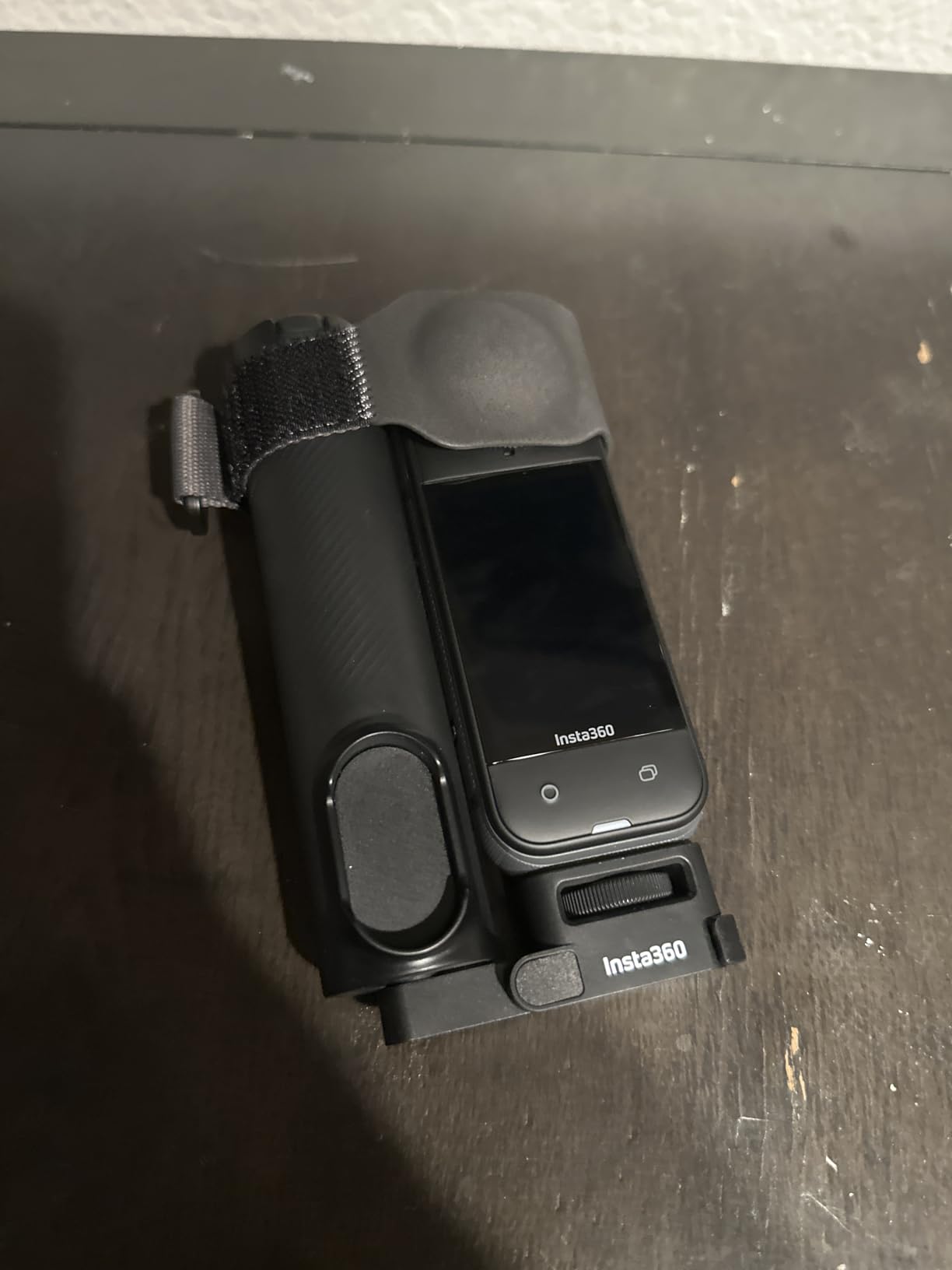
Two details make it practical for a school rather than a hobbyist. The fully replaceable tough lenses mean a cracked lens from a stray gi or a dropped mount is a cheap fix rather than a dead camera, and the 208 minute battery rating covers a long class with room to spare. The built-in 4-mic array with Wind Guard gives usable ambient audio without a separate recorder.
InstaFrame mode outputs flat, shareable video directly, which shortens the edit for anyone producing weekly class content. It is also usable as a webcam and for live streaming, so one purchase can cover the marketing and livestream jobs too.
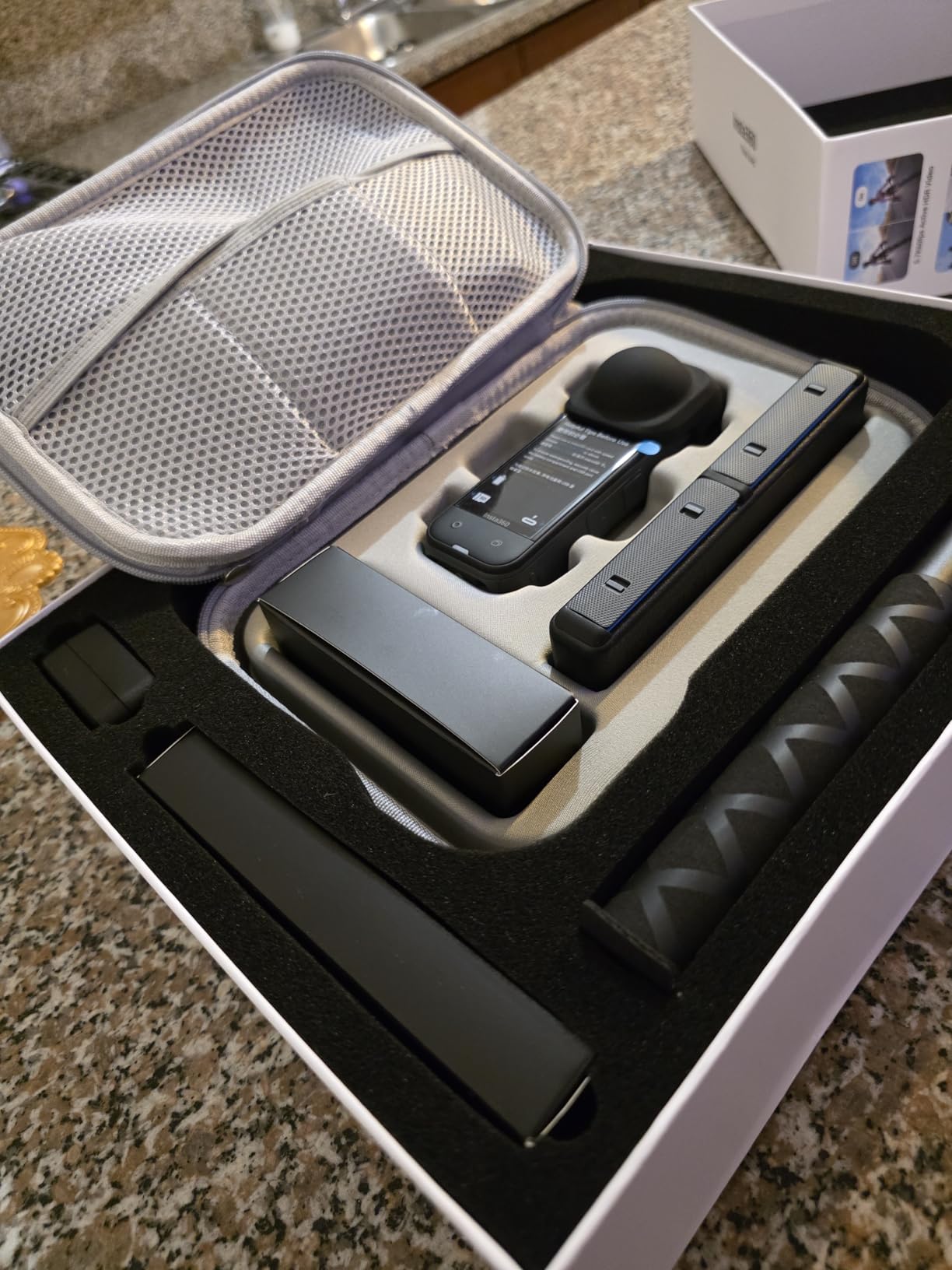
For solo instructors and multi-angle review
Buy this if nobody but you is running the school, or if you want one device that covers the whole training area rather than three mounted bodies. A 360 rig is also a neat answer to the multi-camera request on the eoshd forum, where a user wanted a kickboxing and grappling space covered from several viewpoints for student review.
For schools that also broadcast, the fixed vantage point works well for a hybrid class because the framing never needs correcting mid-session.
Where it will let you down
It is the heaviest body in this group, which matters if you plan to carry it between rooms or mount it high on a ceiling beam. The 8K workflow also demands a high-capacity fast card and a capable editing computer, and that is real cost for a small business.
360 footage still needs desktop software for full rendering, and if your only goal is a single clean angle on one drill, a conventional action camera gives a simpler edit for a lot less effort.
4. Sony Alpha a6400 – Best for Instruction with Interchangeable Lenses
Pros
- Real-time Eye AF tracks a moving student reliably
- Interchangeable lenses let you reframe per drill
- 4K with no pixel binning
- Large third-party E-mount lens ecosystem
Cons
- No in-body image stabilization
- Single UHS-I card slot and no headphone jack
- Complex menu system
The a6400 is the only proper camera in this list, and it is the right answer when the deliverable is a clean, well-framed technique video rather than a raw action record. The 24.2MP APS-C Exmor sensor gives you room to crop a wide shot down to a usable mid shot, which is how you rescue footage where the student drifted out of frame.
Real-time Eye AF with 425 phase and contrast detection points is the reason it belongs on this list at all. It locks onto a face and holds it through a fast direction change, which is exactly the failure mode reviewers describe with indoor action. A user on talkphotography asking about indoor karate was pointed toward long, fast glass because dojo lighting is dim and the action stays far from the wall, and lens choice matters more here than on any other body.
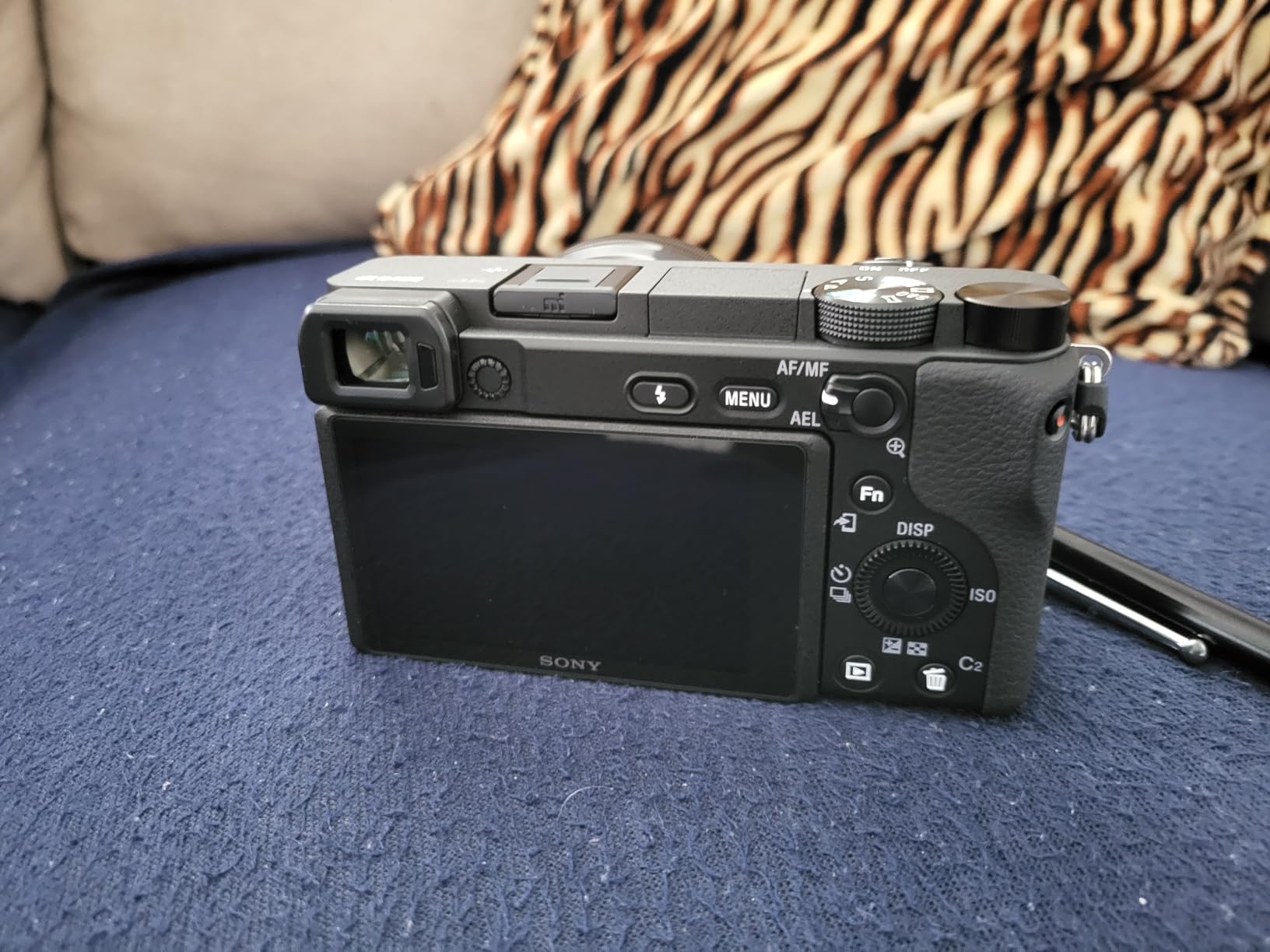
The 180 degree tilting touchscreen makes it the easiest body here to set up on a shelf or a low stand for a breakdown shot, and 4K recording uses a full pixel readout with no binning, so you get the detail you paid for. ISO runs from 100 to 32000 and expands to 102400, giving you headroom in a dim hall.
It also records stills at full resolution, so a school can cover a belt ceremony with the same body. Our martial arts studio photography picks cover the portrait side of that job.
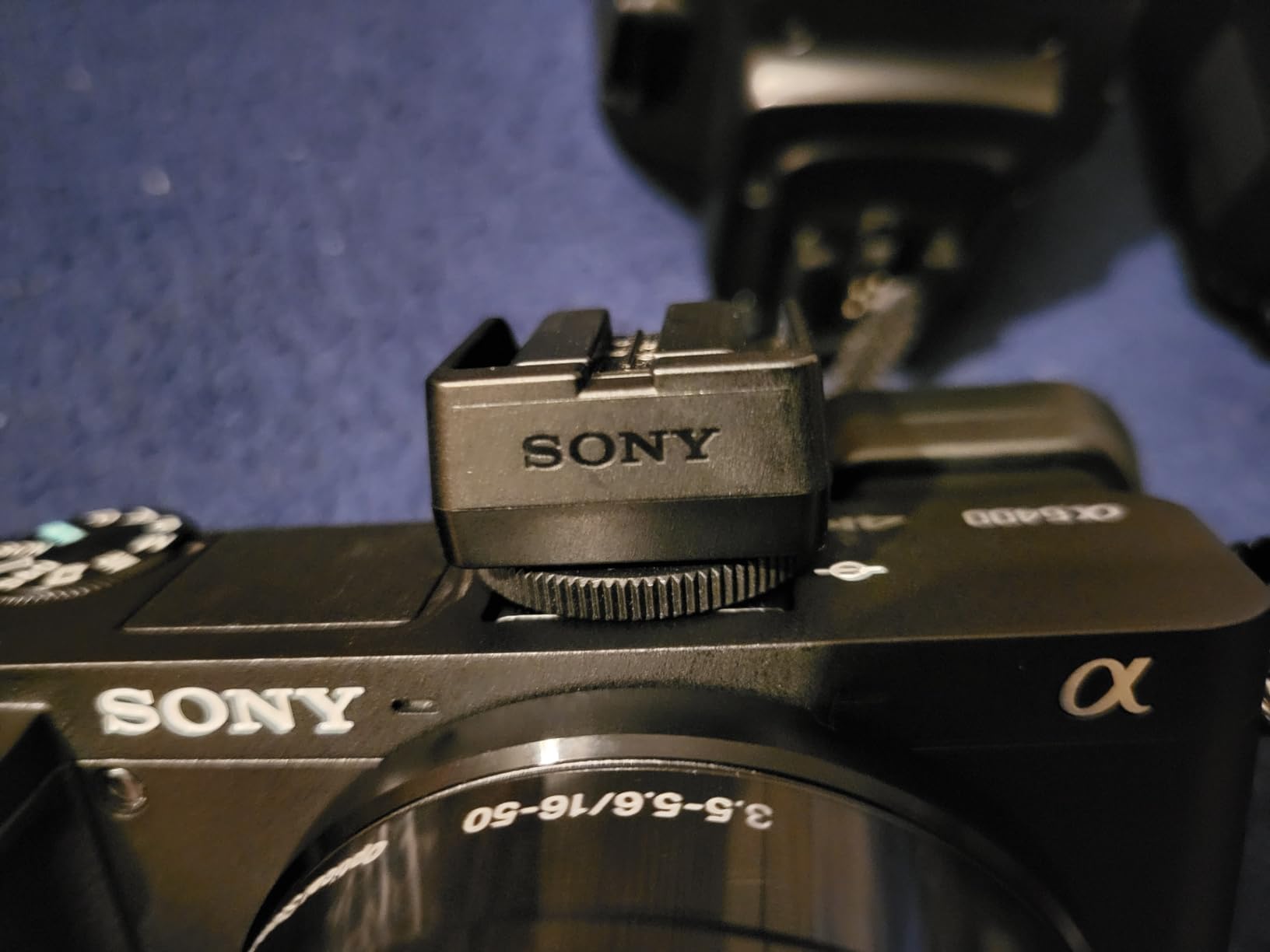
For schools building an instruction library
If your plan is a growing library of technique videos, a kata archive, or grading documentation, this is the camera. The lens ecosystem is the deciding factor. A fast wide prime handles a small dojo, a short telephoto isolates a single student at the far wall, and a 16-50mm kit lens covers general class coverage out of the box.
It is also the natural upgrade path for a Reddit user who asked for a Sony for martial arts instructionals plus interview-style recordings, since the flip screen handles both the dojo and a talking-head setup on a desk.
Where it will let you down
There is no in-body image stabilization, so any handheld move needs a stabilized lens or a support. The single UHS-I card slot and lack of a headphone jack limit a professional audio and backup workflow, and the menu system is widely described as complex for new users.
For a fixed, unattended classroom camera, a mirrorless is overkill. An action camera on a mount will cost less, run longer, and take more punishment.
5. Insta360 X3 – The Flexible Middle Ground for Multi-Angle Work
Insta360 X3, 360 Action Camera with 5.7K 360 Active HDR Video, 4K Single-Lens Camera, Waterproof, FlowState Stabilization, 2.29″ Touchscreen, AI Editing, for Motorcycle, Wintersports and Vlogging
Pros
- Works as a 360 or a conventional 4K camera
- Large 2.29in touchscreen for on-body control
- Waterproof to 10m without a case
- Can be used as a webcam
Cons
- 360 rendering needs desktop software
- Low light is weaker in 360 mode than single-lens
- Needs a V90 or faster card
The X3 is the version of the 360 idea that works for a school on a sensible budget. It records 5.7K 360 Active HDR video, but it also switches to a standard 4K single-lens mode, so the same body can cover the mat as a sphere and then shoot a normal locked-off shot for instruction the next day.
FlowState Stabilization with Horizon Lock keeps the horizon level even if the mount gets nudged, which is a real problem on ceiling and light-stand mounts. The 2.29-inch touchscreen is large enough to set a shot and start recording without a phone, and the invisible selfie stick effect produces clean reframed shots from a pole mount.
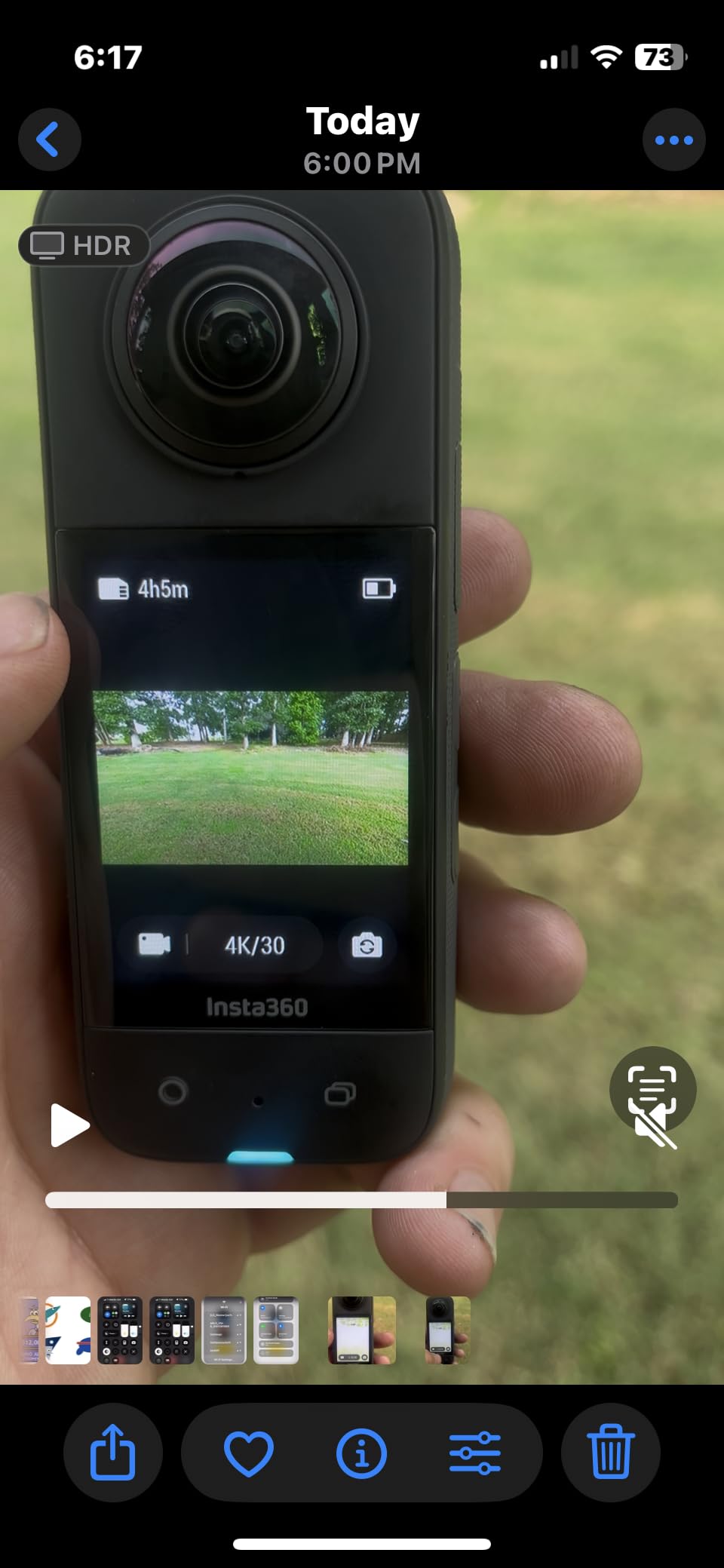
Battery life is quoted at 81 minutes when recording 5.7K30, so a single charge covers a standard class. The three-microphone setup with wind noise cancellation gives usable ambient sound, and the Vivid, Standard and LOG colour profiles give you room to grade belt colours and white gis that tend to blow out under overhead lighting.
With 6766 reviews at 4.6, it is one of the most established bodies here, and the app with AI editing handles the reframing most schools would otherwise pay an editor to do.
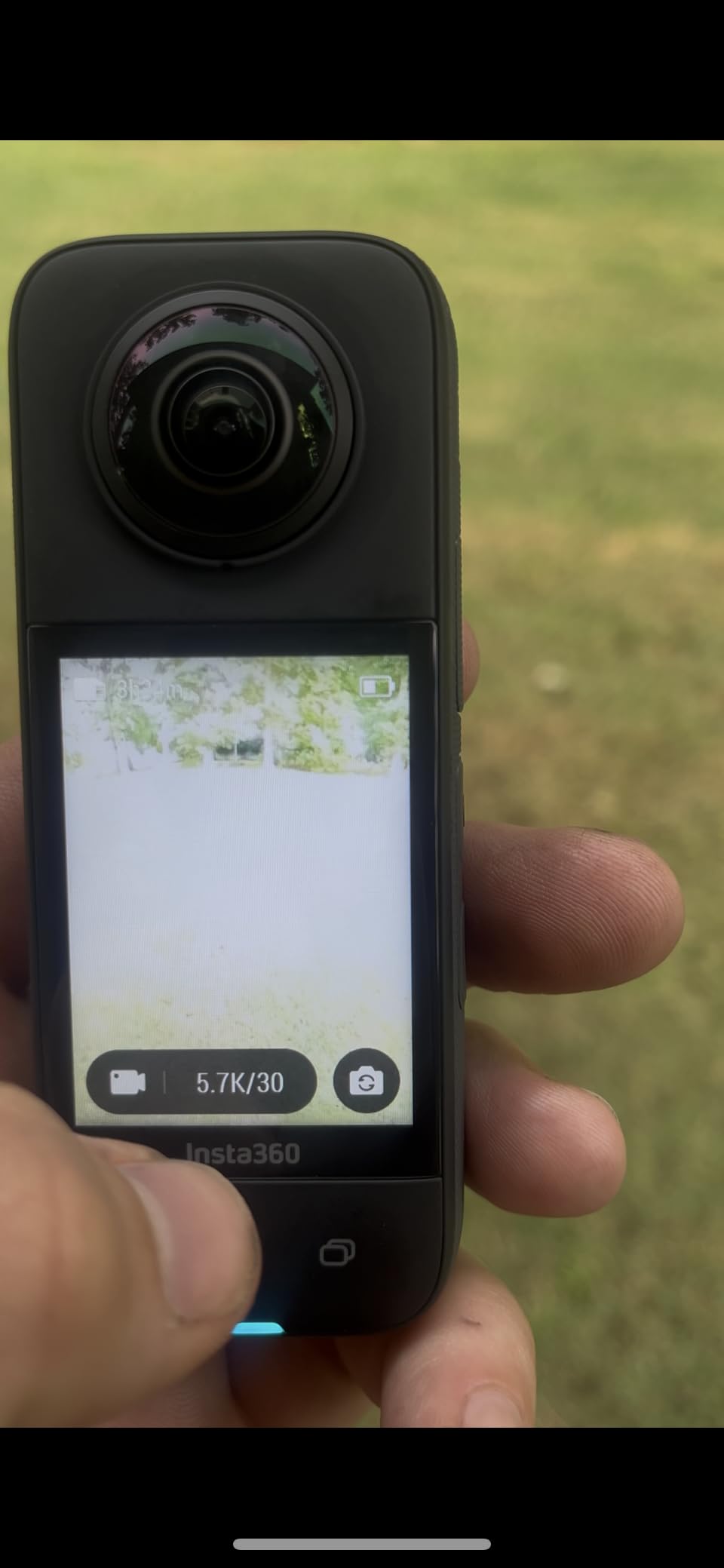
For schools that want multi-angle coverage on a budget
This is a strong pick if you want the multi-camera feel of a full rig without managing many devices. Two or three X3 bodies on cheap mounts can cover a mat from several points, and the invisible stick effect gives you a third-person view that looks like a drone shot from a floor tripod.
It is also a good first 360 camera for a school testing whether 360 content works for their enrollment marketing before committing.
Where it will let you down
Rendering 360 video for upload needs desktop software, and the mobile app cannot produce the final 360 file for a direct post. Low light is noticeably weaker in 360 mode than in single-lens mode, so do not use it as your only camera in a dim hall.
Some users have reported waterproofing issues, and the fast card requirement is real at 5.7K. For a longer battery and newer sensor, the X5 is the step up.
6. GoPro HERO12 Black – Best for Stabilized Action Footage
GoPro HERO12 Black – Waterproof Action Camera with 5.3K60 Ultra HD Video, 27MP Photos, HDR, 1/1.9″ Image Sensor, Live Streaming, Webcam, Stabilization
Pros
- HyperSmooth 6.0 is the smoothest stabilisation here
- 5.3K60 HDR video with 27MP stills
- Waterproof to 10m without a housing
- Large accessory and mount ecosystem
Cons
- 1/1.9in sensor is smaller than the DJI's
- Battery still around 1 to 1.5 hours
- No front screen and no built-in storage
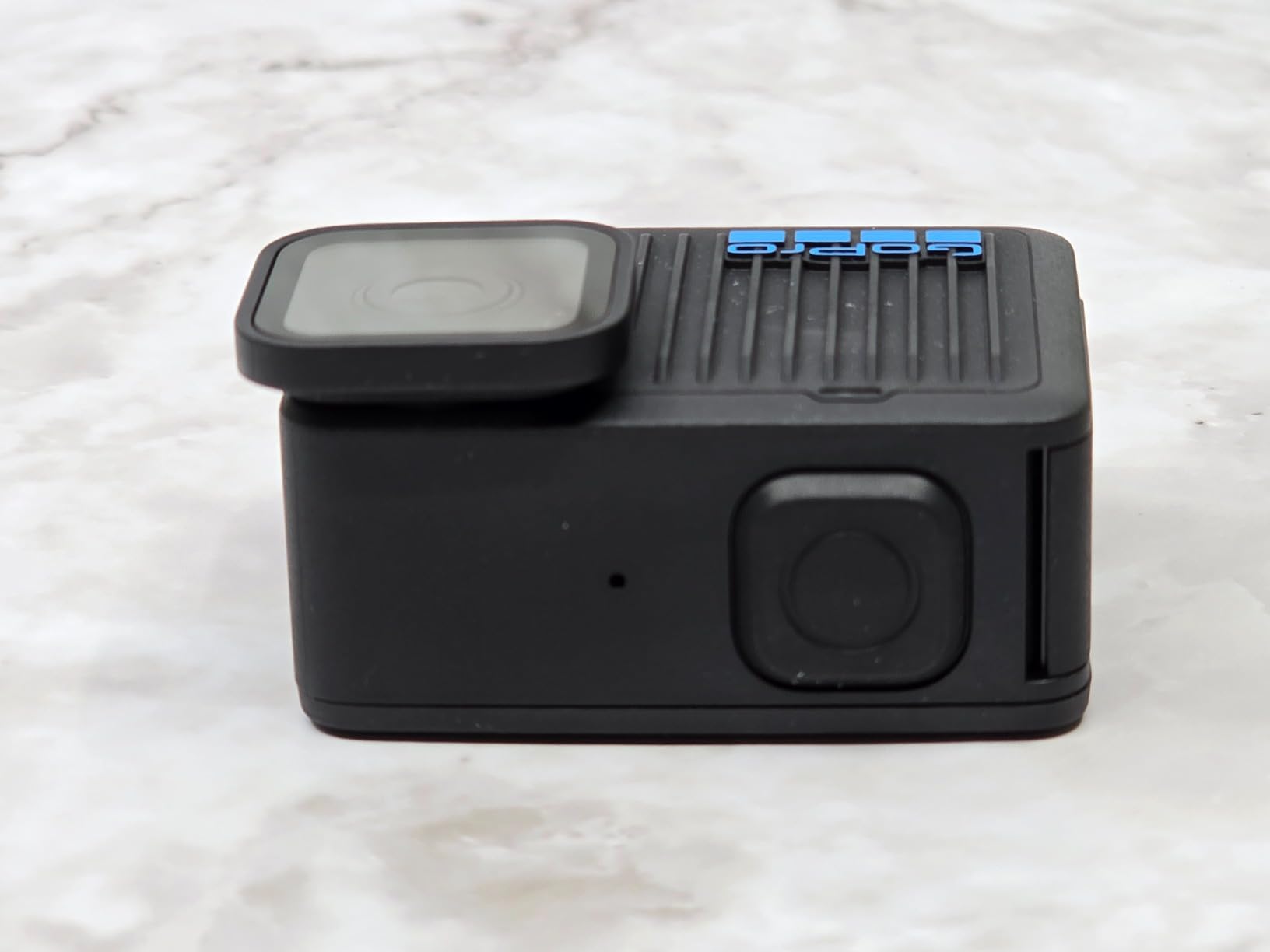
The HERO12 is the safe choice if you already know the GoPro ecosystem or want the smoothest handheld footage in this list. HyperSmooth 6.0 is the reason it still earns its place years after launch, smoothing out the shake that comes with an instructor walking through a combination while talking.
Video is 5.3K60 with HDR, which is more resolution than you need for social clips but useful if you plan to crop and reframe. Stills are 27MP with HDR, so it can double as a belt ceremony camera. The water-repelling lens cover cuts flare, which matters under the glare that overhead dojo lights produce.
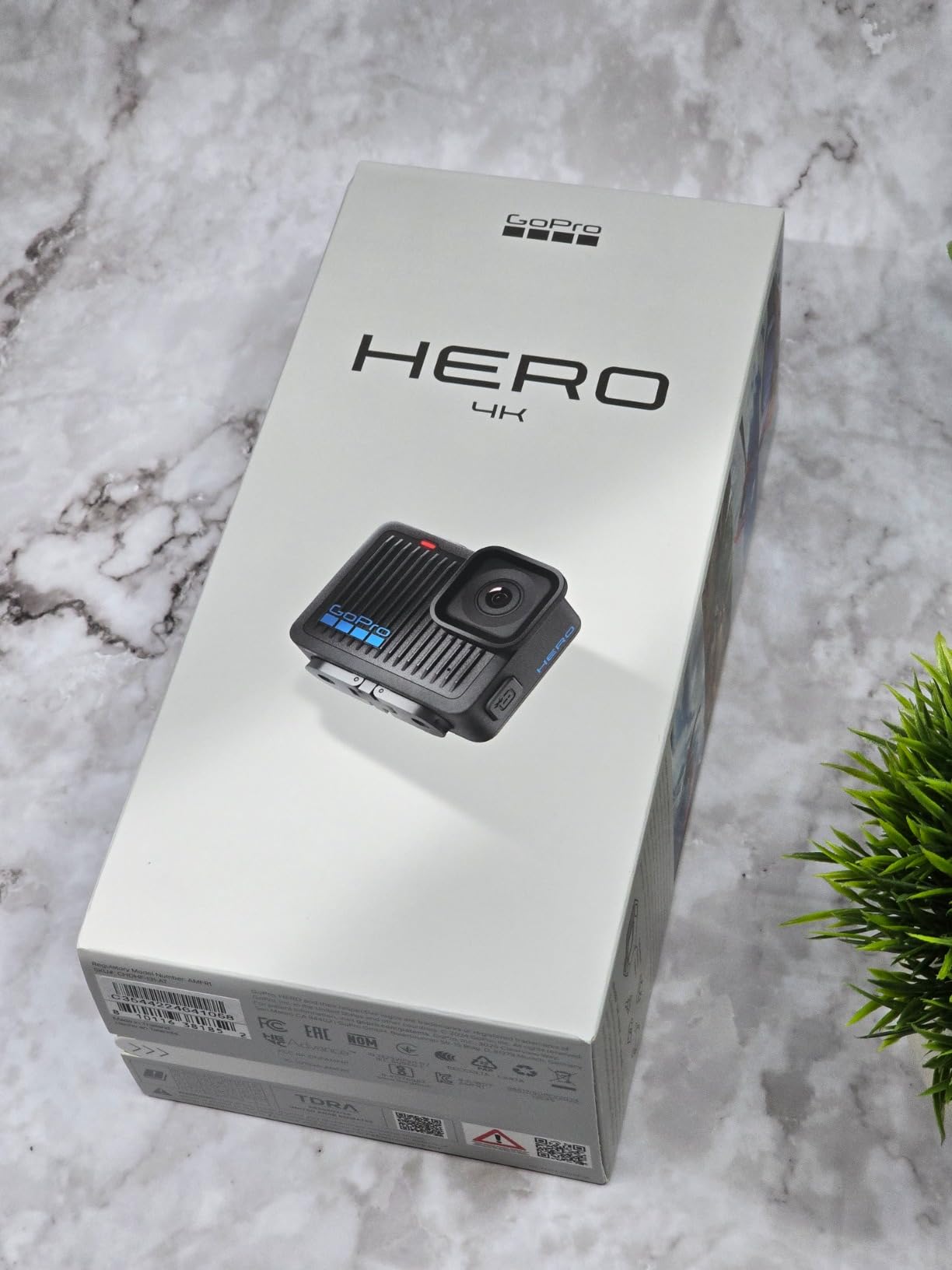
It is waterproof to 33ft without a housing, and the Enduro battery included handles repeated sessions. Live streaming and webcam mode are built in, so a school that runs a hybrid class can use the same unit it records promotions with.
Reviewers describe it as dependable and well supported, while noting it is not a major step up from the previous generation. That is fine for a school, where a body that works reliably beats a body that is marginally sharper.
For schools that value reliability and mount options
Pick this if a student or junior instructor will be handling the camera. The folding-finger mount, the range of adapters, and the simple one-button start mean it survives being passed around. It is also a good body for mounting on a chest harness to film a demo from the instructor’s point of view.
The 10-bit GP-Log profile gives you grading latitude to keep gi whites from clipping under bright overhead fixtures.
Where it will let you down
The 1/1.9-inch sensor is small by current standards, so it holds up less well in a dim dojo at high frame rates. Battery life still runs around an hour to an hour and a half, and there is no front screen for checking a talking-head frame.
Overheating during extended high-resolution recording is also reported, which is worth knowing if you plan to record a full class straight through.
7. DJI Osmo Nano – Best for Hands-Free Wearable Footage
DJI Osmo Nano Standard Combo (128GB), 4K Wearable Camera, 1/1.3″ Sensor
Pros
- 128GB built-in storage removes the card from the equation
- 200 minute battery covers multiple classes
- Only 124g with a magnetic mount system
- 10-bit D-Log M colour for grading
Cons
- Fixed focus with no autofocus adjustment
- Heats up during long high-resolution takes
- Small 1.96in screen
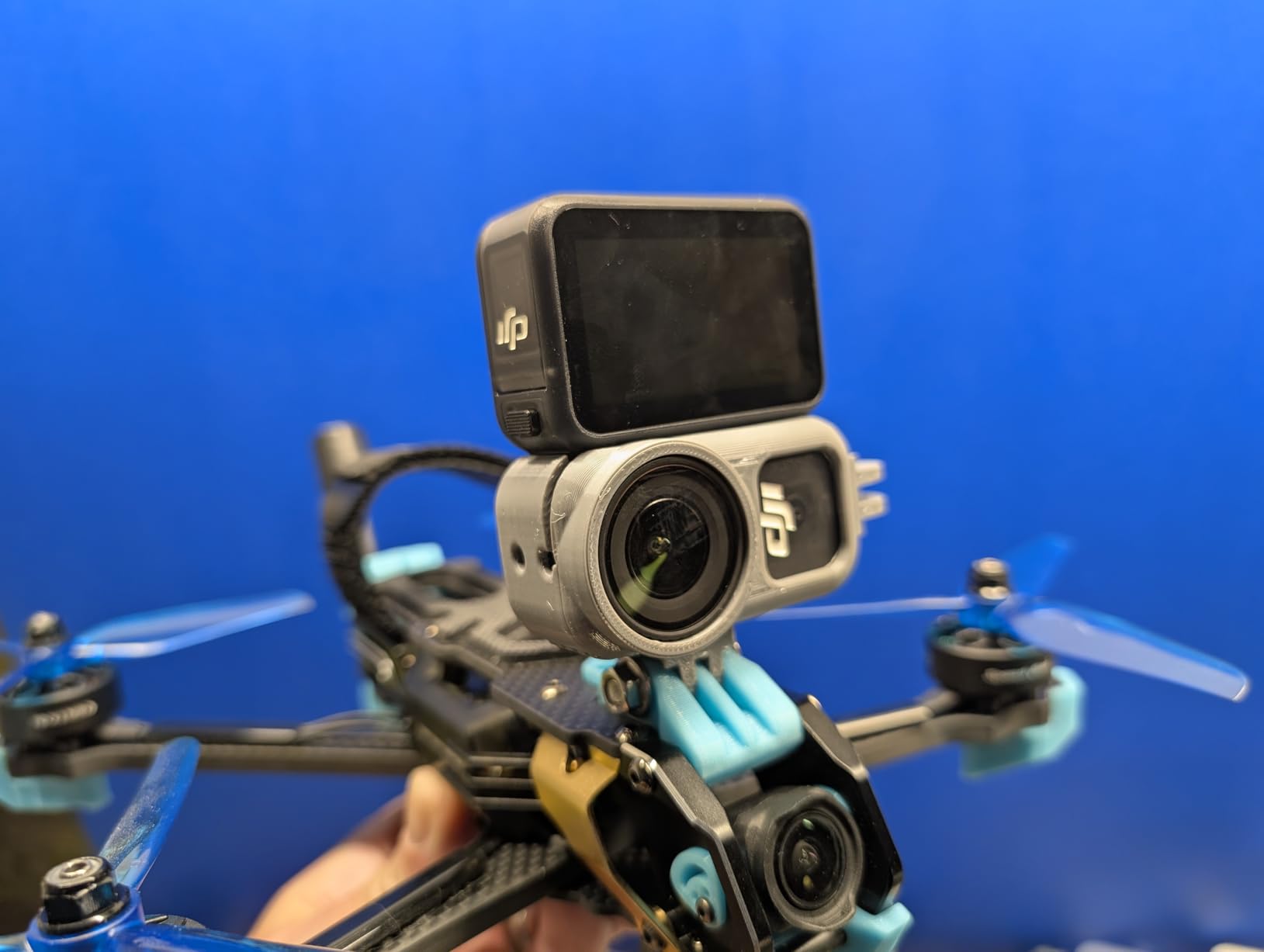
The Osmo Nano is built for the instructor who cannot stop moving. At 124g with a magnetic mount system including a hat clip, lanyard and ball-joint adapter, it clips on and stays out of the way, which solves the solo-filming problem better than asking someone to hold a camera at the edge of the mat.
The 1/1.3-inch sensor delivers 4K60 at a 143 degree field of view and performs well in the dim indoor conditions most schools have. Reviewers single out the low light behaviour as the standout, and the 10-bit D-Log M colour gives you grading latitude for mixed lighting.
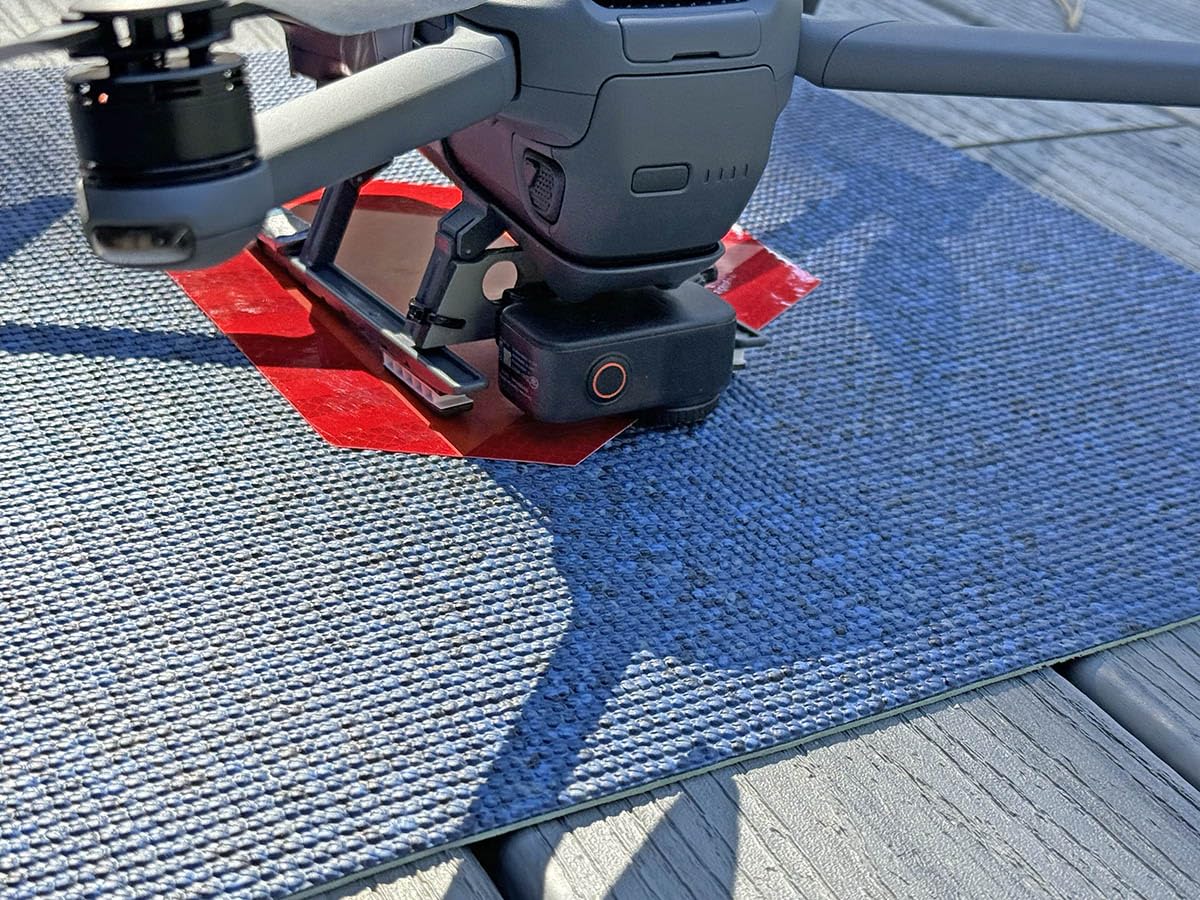
Two practical details matter more than the headline numbers here. The 128GB of built-in storage means the camera starts recording without a card, and the 200 minute battery rating covers a full class and most of a second one. It also accepts a direct dual microphone connection, so a wireless mic on the instructor is the only extra you need for narration.
It is waterproof to 10m without a case and carries an Endurance Mode for longer sessions. The 35MP effective still resolution is enough for a social post, though it is not a camera for stills work.
For solo instructors filming demonstrations
This is the pick when the person teaching is also the person filming. A hat clip on a technique walkthrough keeps the student framed without anyone backtracking to reframe after every throw. The wide field of view means you get the whole exchange rather than a cropped torso.
For belt ceremonies and short promotional clips, the single-file workflow is hard to beat. You clip it on, press record, and hand the footage to whoever edits.
Where it will let you down
Focus is fixed, so there is nothing to adjust when a student moves close to the lens. Reviewers also report it heating during extended high-resolution recording, with overheat protection stopping the take, and the small screen makes on-body framing checks awkward.
Because the storage is built in, a failure means losing the footage, so it needs a transfer routine after every class. For anything filmed from a fixed position, a cheaper mounted action camera will do the same job.
8. AKASO 360 – The Entry-Level Route to 360 Multi-Angle Coverage
Pros
- 5.7K 360 capture at a fraction of the cost of the Insta360 bodies
- 64GB card and two batteries included
- AI subject tracking with 360 Horizon Lock
- Standard 1/4in mount fits common accessories
Cons
- Only weatherproof rather than fully waterproof
- Low light performance is grainy
- Stitching artifacts visible in photos
The AKASO 360 is the pragmatic choice for a school that wants a fixed pole-mounted sphere covering the whole mat without committing to a premium 360 body. It records 5.7K 360 video from dual 1/2-inch 48MP sensors, takes 72MP 360 photos, and includes AI subject tracking plus 360 Horizon Lock.
The Standard Combo is unusually complete for this category. A 64GB microSD card and two batteries are in the box, and it can record while charging over USB-C, which is how a single unit can sit on a wall bracket through a 90-minute class without anyone touching it.
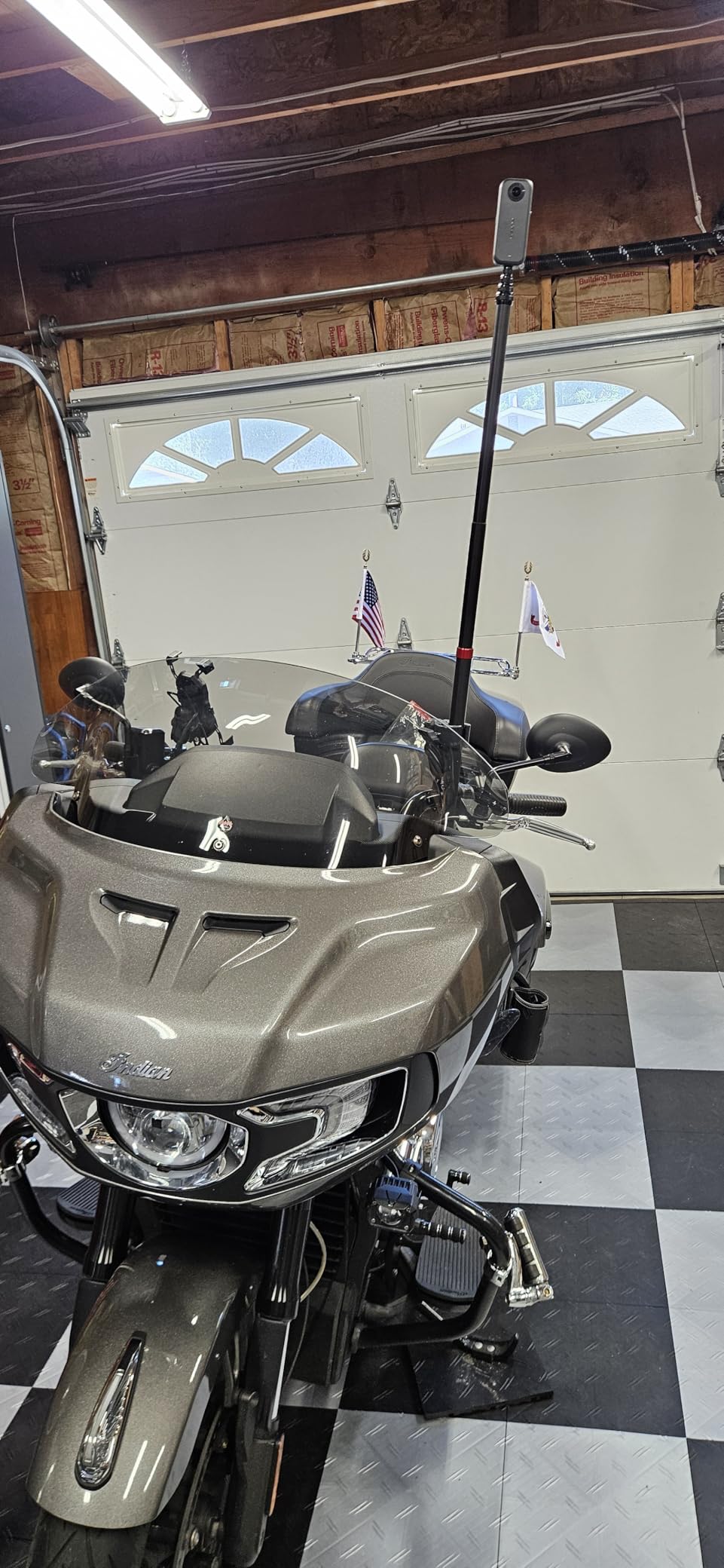
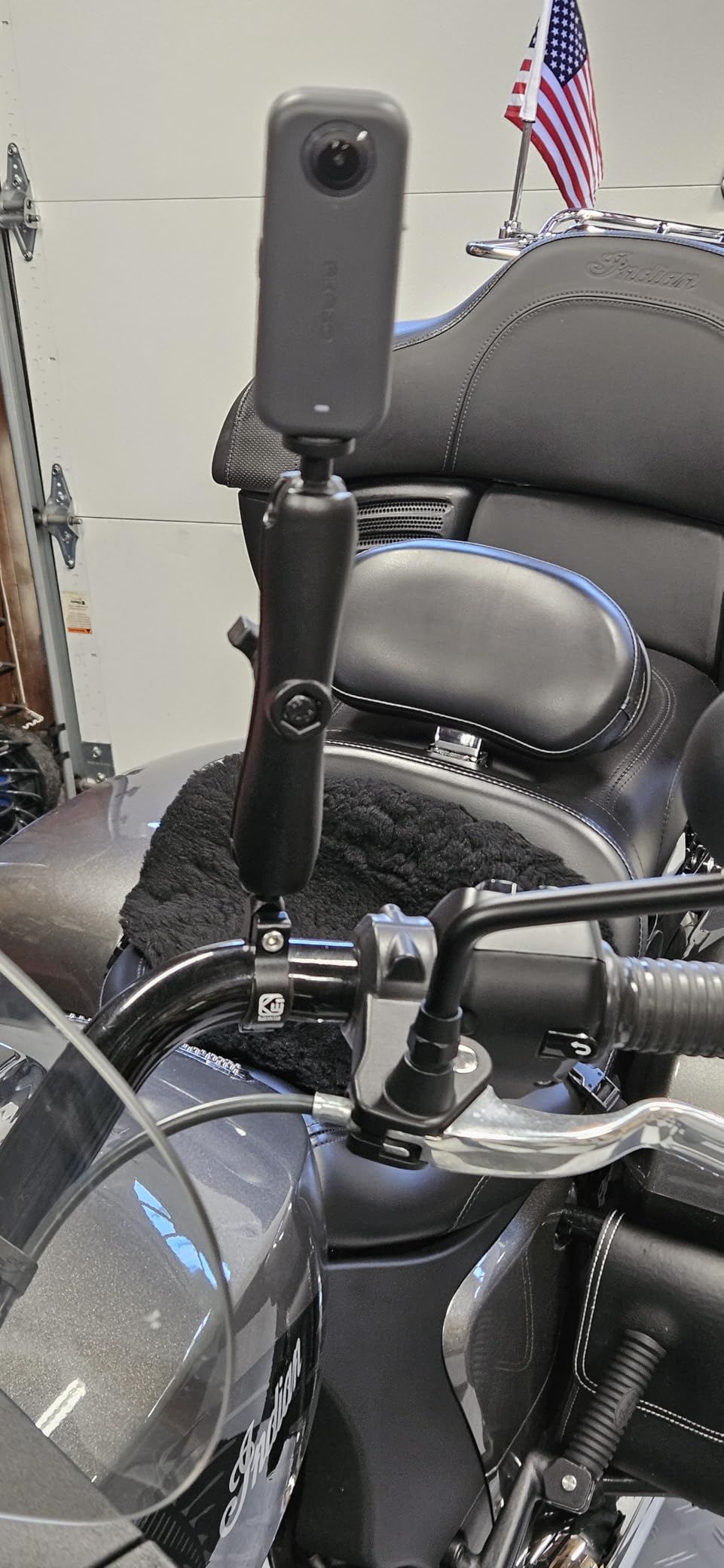
The 1/4-inch mount is a real advantage because it fits the same clamps and poles used by GoPro and Insta360 rigs. The AKASO 360 Studio desktop software and the phone app are described as intuitive, which matters when the person editing is an instructor rather than a video professional.
Customer support is reported as responsive by several owners, which is a genuine factor when a school is buying gear it will use daily rather than occasionally.
For schools testing 360 content cheaply
If a single premium 360 body strains the budget, two of these cover a small mat for less. The invisible selfie stick effect and Horizon Lock give you clean reframed output, and AI tracking lets one operator pull a framed clip from a fixed mount.
It suits a school that wants social content from every class rather than a polished instruction library. The video bitrate is high, so a fast U3 or V30 card is a hard requirement rather than an optional extra.
Where it will let you down
It is weatherproof for rain and snow but not fully waterproof, so no grappling mat work near a hose-down. Low light is grainy, which in a dim dojo is where most of your footage lives, and photo stitching shows visible blur lines.
Purple lens flare artifacts appear in reframed video with some lighting setups, and the app remote recording can lag. Reviewers also treat the shorter review history as a reason to expect first-generation growing pains, so a refurbished or previously owned body is a reasonable route for a school on a strict budget.
What to Look for When Buying a Camera for a Martial Arts School
Frame rate and slow motion matter more than most spec sheets admit. Sixty frames per second is the practical floor for a dojo, because a taekwondo kick or a hip throw happens faster than a 30fps frame can describe. If you want genuine technique breakdown, 120fps is the point where a student can see what they did wrong.
Autofocus reliability is the second filter. Subjects accelerate, change direction, and disappear behind each other constantly, and reviewers consistently call fast continuous autofocus on unpredictable movement the most valued feature in this category. A body that hunts for focus in the middle of a drill is worse than one that is slightly softer but always sharp. Our broadcast camera guide covers the rig decisions if you go further than a single body.
Low light and flicker are the third. Dojo interiors are lit from directly overhead, often with older fluorescent tubes that flicker at frame rates you can see in the finished file. A larger sensor absorbs more of that light, and a frame rate that divides evenly into your mains frequency reduces visible flicker. Mat surfaces and dark gis also swallow detail, so test in your own room rather than trusting a review.
Audio input and battery life decide whether the camera survives a real class. A single onboard microphone cannot handle a room with dozens of practitioners, breaking boards, and pads being struck. Look for a direct wireless microphone connection, and treat a separate audio recorder as part of the budget. Battery life is the quiet killer: a 90-minute class plus setup and breakdown will outlast most small action cameras, so carry spares or power while recording.
Storage and backup finish the list. Multi-hour 4K recordings fill cards fast, and a card failure during a belt test is not a risk worth taking. Keep at least three sets of cards, copy footage to two drives before formatting, and never be the only person who can unlock the archive. Our broadcast camera recommendations cover continuous capture, and a dedicated charging shelf for batteries and spare cards keeps everything charged between the evening classes.
Filming a Full Class: Mounts, Angles and a Three-Camera Rig
A three-camera rig is the answer to the most common question on specialist forums, where a gym owner wanted a kickboxing, MMA and BJJ space covered from several viewpoints for student review. One camera cannot show a student what their hips did during a takedown from a safe distance. Three angles can.
Building a three-camera student review rig
Place one camera high in the corner covering the full mat, one at mat level on the opposite side for grappling and low stances, and one on a light stand at instructor height for technique breakdowns and narration. Sync them in post rather than trusting the cameras to lock together, since budget action bodies report sync problems for multi-camera work.
Keep the framing consistent across sessions so students can compare week to week. Fixed wall brackets beat tripods for a permanent rig, because a tripod in a busy dojo becomes an obstacle.
Vertical 9:16 clips for Reels and TikTok
Shoot social clips from a separate fixed mount framed vertically, or crop a sphere recording with the invisible selfie stick effect. Three-second clips of a pad work, a first-person belt celebration works, and a slow-motion kick in 9:16 works better than the same shot in landscape. Keep this camera separate from the review rig so a reframe does not break the archive footage.
Audio in a loud dojo
Get the audio as close to the source as you can. A wireless lavalier on the instructor is the single biggest improvement to a school video, and the DJI bodies here accept a direct microphone connection without a receiver. Failing that, run a separate recorder on the edge of the mat and sync by clapping once at the start of class.
Set levels conservatively. Loud classes with sudden board breaks will clip a mic set too hot, and clipped audio is harder to repair than quiet audio.
Livestream and hybrid class delivery
For a livestream, a fixed high angle with a wide field of view beats any handheld work, because viewers cannot be repositioned mid-session. A 360 body on a ceiling mount gives you a fixed vantage plus the option to pivot the view later, and several of these cameras also work as a webcam. Test the full connection with a real class before you promise anyone a remote session.
Filming Minors: Consent, Privacy and Image Releases
Most martial arts schools teach children, and filming children raises obligations that gear cannot solve. Get written parental consent before you record, and have a signed image release for any footage published publicly, including in enrollment ads and parent-only review portals.
Be specific about where footage goes. A parent agreeing to a class review video is not automatically agreeing to a Reels post. Spell out platforms, retention periods, and whether students can ask to be removed from a frame, and honour it.
Limit distribution of student review footage to the student and their family, and lock the storage. Decide in advance how long footage is kept, then delete on schedule. A simple written filming policy that every parent signs at enrolment saves a great deal of trouble later.
Frequently Asked Questions
Do martial arts schools need a special camera?
No, but a school camera does need specific things: fast continuous autofocus that holds a moving student, at least 60fps video, usable low light for dim dojo interiors, a way to connect an external microphone, and battery life that outlasts a full class. Action cameras cover sparring and fixed-mount recording, mirrorless covers polished instruction, and 360 bodies cover a whole mat unattended.
Is an action camera or a mirrorless camera better for a dojo?
An action camera wins for sparring, fixed mounts and unattended recording, because it is rugged, long-lasting and has a wide field of view. A mirrorless wins for instruction and technique videos, because a bigger sensor handles dim interiors and interchangeable lenses let you reframe per drill. Schools filming students under 18 usually want one of each.
What frame rate do I need for slow-motion martial arts?
At least 60fps so fast movement is smooth for playback. For genuine technique breakdown where a student can see a kick or a hip throw frame by frame, 120fps is the practical target, and 4K120 is available on some of the action cameras in this guide. Higher rates need a larger sensor and more light, which is often the limiting factor in a dojo.
How do I film a full martial arts class with one camera?
Mount it high in a corner on a wall bracket so the full mat is covered and the angle never changes. Start recording before class, use wide field of view, and keep a spare battery or power the camera while recording. For audio, use a wireless lavalier on the instructor, because onboard microphones cannot handle a loud room.
What camera works in low light indoors?
Bodies with a 1/1.3-inch sensor handle dim indoor rooms best, because the larger sensor gathers more light before it needs to amplify. Action cameras in this class include 1/1.3-inch models, while smaller sensors produce visible noise once you raise the sensitivity. A single LED panel near the training area improves results more than upgrading the body.
Can I film students at my martial arts school without a model release?
You should not. Get written parental consent before recording and a signed image release before publishing, and be specific about platforms and retention. Consent to a class review video is not automatically consent to social posts. Publish only the students whose families have agreed, and keep review footage private to the student and their family.
The Right Camera for Your Dojo in 2026
For most schools, the AKASO EK7000 is the sensible first move because it records unattended, costs almost nothing to run, and can be mounted in an afternoon. Add a DJI Osmo Action 4 when you need slow motion of a kick and a wireless mic on the instructor, and an Insta360 X5 when one person has to cover the whole mat alone.
Whatever you choose from this roundup of the best cameras for martial arts schools, budget the audio and the storage alongside the body, and get parental consent in writing before the first class. Those three steps decide whether the footage gets used.